
Chapter 3: Self and Cultural Identity
Learning Objectives
When you have completed this chapter, you should be able to:
- Explain the three components that make up the concept of “self.”
- Explore the implications of identity in communication.
- Identify and describe different types of identity.
- Explain the origins of in-groups and out-groups and their roles in stereotyping, prejudice, and the neglect of differences.
- Describe how social comparison shapes self-concept.
- Define Co-Cultural Communication Theory and explain the role of in-groupers and out-groupers.
- Define culture shock and describe its characteristics.
- Discuss major theories and models of culture shock.
Introduction
On a fall weekend in Colorado, two people strike up a conversation while waiting in line for coffee. One is wearing a hoodie with a university logo. The other has on hiking boots, a beanie, and a trail map sticking out of their backpack. Within minutes, they have sized each other up. One assumes the other is a college student who recently moved to town. The other assumes they are a lifelong local who spends every weekend in the mountains.
Neither assumption is checked. Both people adjust how they speak, what they share, and even how friendly they are based on what they think they know about the other. The conversation stays polite but surface-level. Later, both walk away with quiet judgments. “They’re probably not from here.” “They’re probably one of those outdoors-only people.” In reality, both assumptions are wrong. This small interaction shows how identity operates in everyday life. We constantly make sense of ourselves and others using visible cues, stories, and social categories. In Colorado, for example, identity often gets wrapped up in being a “native” or a “transplant,” in outdoor culture, in military affiliation, in college status, in rural versus urban backgrounds, and in political or regional identities. These labels shape how people see themselves and how they are seen by others.
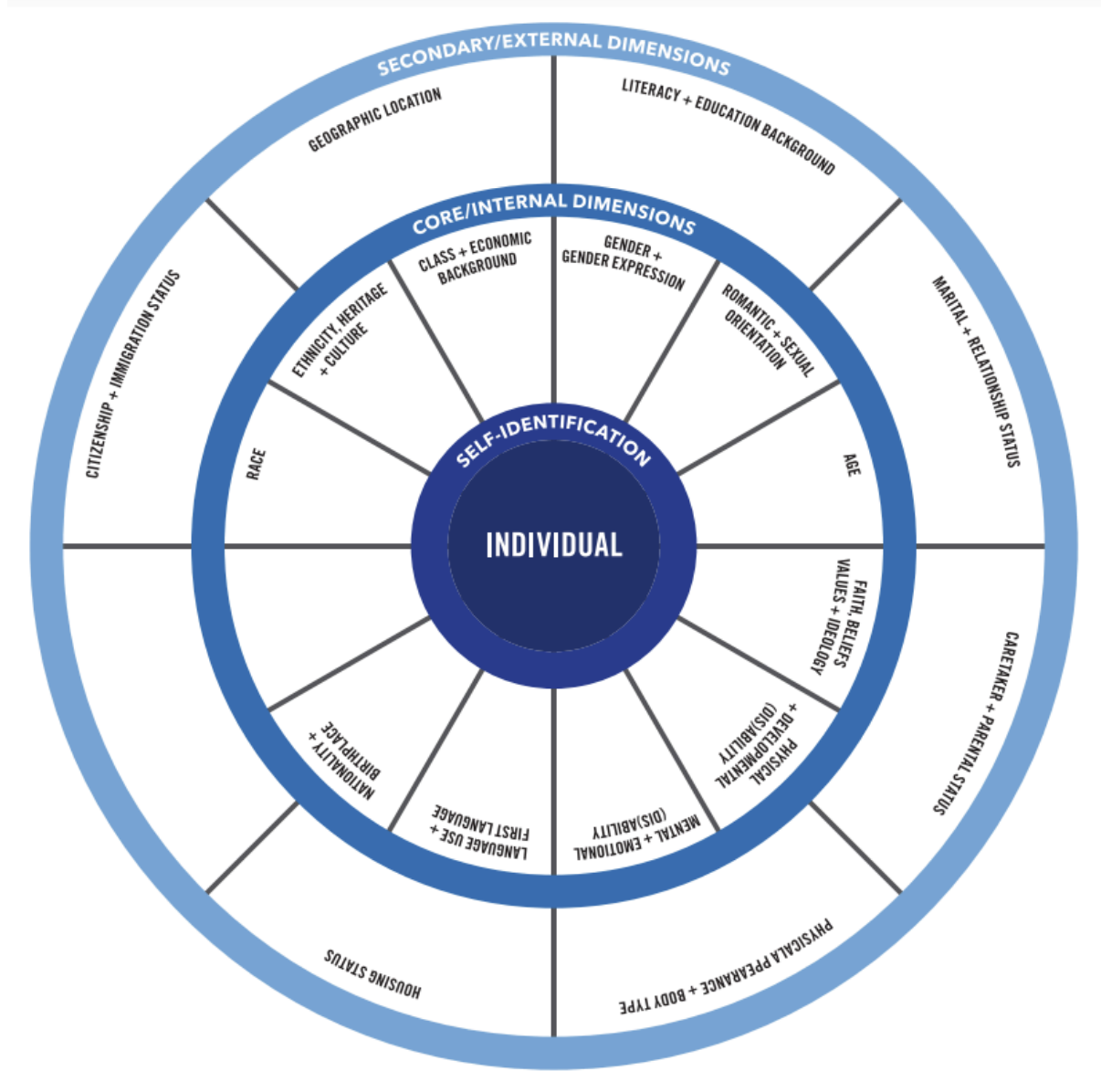
Self and cultural identity are not fixed traits. They are shaped over time through family, community, language, race, gender, class, religion, ability, nationality, and life experience. Some parts of identity feel central and deeply personal. Other parts shift depending on context. You might highlight one identity at work and another with friends or family. You might feel proud of some identities and conflicted about others. Understanding self and cultural identity is essential to intercultural communication. How you see yourself influences how you communicate. How others categorize you influences how they respond to you. When these perceptions do not match, misunderstanding, frustration, or exclusion can occur, even when no one intends harm.
This chapter focuses on how identities are formed, communicated, and how they affect interaction. By examining both personal and social dimensions of identity, you will better understand how culture shapes who you are and how you show up in relationships, classrooms, and communities.
The Self
Who Am I?
At some point in life, most of us ask the question, Who am I? Parents, friends, teachers, communities, and media all play roles in shaping our sense of self. While identity development begins at birth, in many Western societies, adolescence is a pivotal stage when people start to reflect more deeply on who they are and who they aspire to become. To understand intercultural communication, we must revisit the communication process and consider what constitutes the “self” as both a sender and receiver of messages. This includes examining identity formation, the experience of difference, the impact of culture shock, and the importance of communication competence.
Components of the Self
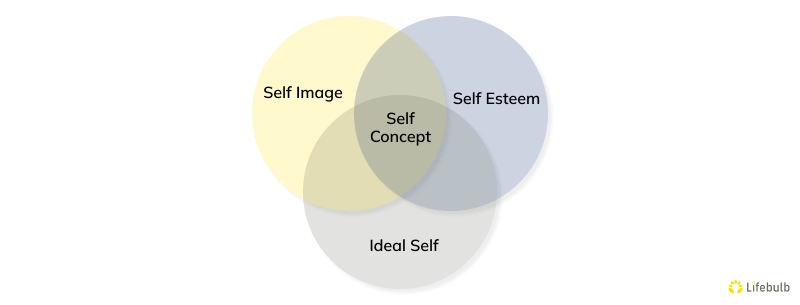
Although we often perceive ourselves as a single, unified person, our sense of self comprises three interrelated components: self-awareness, self-concept, and self-esteem.
- Self-awareness refers to conscious knowledge of one’s own character, feelings, motives, and desires. It involves being aware of your own thoughts, emotions, and behaviors. Self-awareness also includes social comparison, observing and interpreting others’ behavior, and then comparing it with your own.
- Self-concept is your overall perception of yourself. It answers the question, Who am I? Self-concept is shaped by the beliefs, attitudes, and values you hold about yourself. Identity and self-concept are closely connected.
- Self-esteem is the degree to which you value yourself. Whether you see yourself in a positive or negative light influences not only how you feel about yourself but also how you communicate with others.
The Role of Culture in Shaping Self
In addition to these three components, culture is a powerful source of identity. Culture can be thought of as a shared “collective self”—a coherent system of beliefs, values, attitudes, and practices held by a large group of people (Keesing, 1974). In this way, your sense of self is shaped not only by individual reflection but also by the cultural frameworks that surround you (Vallacher, Nowak, Froehlich, & Rockloff, 2002).

Example
Colorado culture itself is not one single culture. A student who grew up in rural southern Colorado may have different values, communication styles, and political assumptions than a student raised in downtown Denver or Boulder. Even ideas about eye contact, small talk, time, and personal space can vary. Culture is not only rational. It is regional, local, and lived.
Identity
Considering intercultural communication through the lens of self and identity carries significant implications.
- Identities are created through communication. Identities emerge as people exchange messages that are negotiated, reinforced, and sometimes challenged. The aspects of identity that are often emphasized depend on the topic of conversation and the people involved.
- Identities develop in spurts. At times, we go for extended periods without giving much thought to our identities. At other times, significant events or interactions prompt us to reevaluate our identity, leading to new insights that may reshape our perspective on ourselves.
- Most people hold multiple identities. We belong to many groups and have diverse life experiences that shape our identities. Forces such as history, economics, politics, and community dynamics also play a significant role in shaping identities.
- Identities may be assigned or chosen. Sometimes society assigns us identities; other times, we assume them voluntarily. In either case, the social and cultural forces that shape identity are constantly shifting.
- Identities are shaped differently across cultures. For example, individualistic cultures often encourage independence and self-reliance, while collectivistic cultures emphasize interdependence and belonging to groups or families.

Personal, Social, and Cultural Identities
It is tempting to think of our identities as fixed, but in reality, identity is a lifelong process. Who we are is shaped before we are born and continues to evolve after we are gone. Identity is not something we achieve once and for all; it is something we continually negotiate and express. Three related but distinct components of identity are personal, social, and cultural identities.
Personal Identity
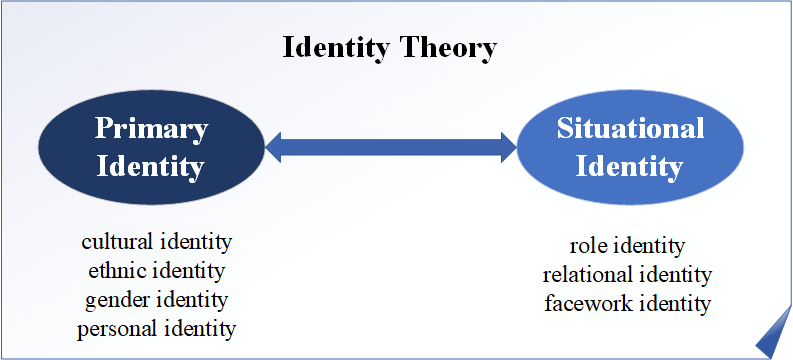
Personal identities are intrapersonal and connected to our individual life experiences. They include the unique interests, traits, and preferences that make you who you are, for example, identifying as a manga reader, a gamer, or a fan of K-pop. Personal identities can change frequently as new experiences, hobbies, and interests emerge.
Social Identity
Social identities are formed through membership in groups. These memberships may be voluntary (like joining a fraternity, sorority, or fan club) or involuntary (such as being part of a family). They may also be explicit (such as paying taxes to your local government) or implicit (such as sharing music tastes with friends).
Social identities take longer to develop than personal ones because they require commitment and investment in the group. They also communicate both who we are and who we are not by signaling belonging and difference.
Key Takeaways
Identity is not fixed. It is shaped through communication, context, and relationships.
Cultural Identity
Cultural identities are tied to socially constructed categories that teach us ways of being and expectations for behavior. Because they are often established at birth, cultural identities are generally the most enduring, even though the norms and behaviors within them can shift over time. What sets cultural identities apart from social identities is their historical roots and the process of acculturation, learning and practicing the codes and behaviors recognized by other group members (Collier, 1996). This acculturation can occur directly, as when parents explain what it means to be a man or a woman, or indirectly, through media messages and cultural symbols.
Ascribed and Avowed Identities
Personal, social, and cultural identities can be ascribed (placed on us by others) or avowed (claimed by ourselves). Sometimes ascribed identities rely on stereotypes, while avowed identities reflect how we want to be seen.
Dominant and Nondominant Identities
Throughout history, societies have drawn distinctions between dominant groups, which hold more power and resources, and nondominant groups, which have historically had fewer. These distinctions are systemic, not individual, but they shape access to privilege, influence, and opportunity.
Exercises
Watch the short BBC News video What makes you who you are? The video explores how our sense of self is shaped by multiple layers, including personal traits, group memberships, and cultural influences, and connects directly to the concepts you just read about.
While watching, ask yourself: which aspects of identity (personal, social, cultural) feel most central to you right now? Have these shifted over time, and if so, why?
If the above activity does not work, here is a link to the original video: What Makes You Who You Are? BBC News.
As later chapters will show, identity plays a central role in how people interpret messages, respond to media portrayals, experience conflict, and develop intercultural communication competence. Identity is not separate from communication; it is continually shaped and expressed through it.
Social Comparison and the Development of Self
Social comparison is a key process through which individuals develop and evaluate their sense of self. By observing others, people assess their abilities, values, and communication effectiveness (Festinger, 1954). In college environments, social comparison often intensifies as students encounter new expectations, diverse backgrounds, and unfamiliar norms. Differences in participation style, confidence, or language use can influence self-concept and self-esteem, which in turn shape communication choices. Understanding social comparison provides insight into why individuals communicate differently across contexts and over time.

Co-Cultural Communication Theory
Co-Cultural Communication Theory explains how individuals from nondominant groups navigate communication within systems shaped by dominant group norms (Orbe, 1998). Dominant norms shape expectations regarding language use, professionalism, classroom interaction, and institutional behavior. According to the theory, individuals adopt different communication strategies depending on context, goals, and perceived risk. These strategies include assimilation, accommodation, and separation. Individuals often shift strategies rather than using a single consistent approach. This framework emphasizes that communication choices are shaped by structural conditions rather than solely by personal preference.

Identity Negotiation in Everyday Communication
Identity negotiation refers to the ongoing process through which individuals express, interpret, and manage identity through interaction (Ting-Toomey, 1999). Communication behaviors signal belonging, authority, and perspective. Everyday interactions such as classroom discussions, feedback exchanges, and collaborative work provide opportunities for identities to be affirmed, challenged, or overlooked. Over time, these interactions shape individuals’ sense of participation and belonging within a community. Developing intercultural communication competence involves awareness of identity negotiation processes and intentional engagement across differences.
Why Identity Matters in Intercultural Communication
Before individuals encounter cultural adaptation in unfamiliar settings, they navigate differences in familiar ones. Educational environments introduce new norms, expectations, and communication practices that require adjustment and reflection. By examining identity, group membership, and power in everyday communication, learners develop a foundation for understanding intercultural interactions across a wide range of contexts (Ting-Toomey & Chung, 2021).
Case Check: “Different Versions of Me”
A student notices they speak differently at home, at work, and in class. At work, they sound more formal. With friends, they use slang. In class, they hesitate before speaking. They begin to wonder which version of themselves is “real.”
Reflection Questions
- How does identity shift across contexts?
- How does code-switching relate to power and belonging?
- Why is identity better understood as fluid rather than fixed?
Conclusion
Respectfully communicating across cultural differences begins with understanding the communication process. Just as important is recognizing our own identities and how they shape our perception and interaction with the world. Differences can sometimes lead to stereotyping, prejudice, or the assumption that “we’re all the same.” Yet those same differences can also serve as the starting point for developing intercultural communication competence.
By approaching others with openness and cultivating a sense of wonder, we position ourselves to grow, learn, and communicate more constructively across cultural boundaries.
Key Terms
- Self-awareness
- Self-concept
- Self-esteem
- Identity
- Personal Identity
- Social Identity
- Cultural Identity
- Ascribed Identity
- Avowed Identity
- In-groups
- Out-groups
- Stereotypes
- Prejudice
- Assumed Similarity
- Co-Cultural Communication Theory
- Berardo’s critique (routines, reactions, roles, relationships, reflections)
- Intercultural Communication Competence (ICC)
- Attitudes, Knowledge, Skills (Bennett’s ICC framework)
- Empathy
- Reflection
- Which of the three components of self (self-awareness, self-concept, self-esteem) do you feel has the most decisive influence on how you communicate? Why?
- Think about a personal, social, and cultural identity you hold. How do these different types of identity influence the way you interact with others?
- Recall a time when you noticed yourself stereotyping someone. How did that perception shape your interaction? What could you have done differently?
- Have you ever experienced culture shock, even in a small way (such as moving schools, changing jobs, or visiting a new place)? Which model (U-Curve, W-Curve, Adler, Berardo) best explains your experience?
- Bennett (2009) suggests that intercultural competence requires fostering attitudes, discovering knowledge, and developing skills. Which of these three areas feels most natural for you? Which area might you need to work on more?
- What role does cultivating a sense of wonder play in reducing prejudice and increasing intercultural competence? Can you think of an example from your own life?
References
- Bennett, M. J. (2009). Defining, measuring, and facilitating intercultural learning: A conceptual introduction to the Intercultural Education double supplement. Intercultural Education, 20(S1-2), S1–S13. https://doi.org/10.1080/14675980903370763.
- Collier, M. J. (1996). Communication competence problematics in ethnic friendships. Communication Monographs, 63(4), 314–336. https://psycnet.apa.org/doi/10.1080/03637759609376397.
- Festinger, L. (1954). A theory of social comparison processes. Human Relations, 7(2), 117–140. https://psycnet.apa.org/doi/10.1177/001872675400700202.
- Orbe, M. P. (1998). Constructing co-cultural theory: An explication of culture, power, and communication. Sage.
- Opdal, P. M. (2001). Curiosity, wonder and education seen as perspective development. Studies in Philosophy and Education, 20(4), 331–344. https://doi.org/10.1023/A:1011851211125.
- Kluckhohn, F. R., & Strodtbeck, F. L. (1961). Variations in value orientations. Row, Peterson and Company.
- Hofstede, G. (2001). Culture’s consequences: Comparing values, behaviors, institutions, and organizations across nations (2nd ed.). SAGE Publications.
- Tajfel, H., & Turner, J. C. (1986). The social identity theory of intergroup behavior. In S. Worchel & W. G. Austin (Eds.), Psychology of intergroup relations (pp. 7–24). Nelson-Hall.
- Ting-Toomey, S. (1999). Communicating across cultures. Guilford Press.
- Ting-Toomey, S., & Chung, L. C. (2021). Understanding intercultural communication (3rd ed.). Oxford University Press.
- Vallacher, R. R., Nowak, A., Froehlich, M., & Rockloff, M. (2002). The dynamics of self-evaluation. Personality and Social Psychology Review, 6(4), 370–379. https://doi.org/10.1207/S15327957PSPR0604_11.
Noticing your feelings, your reactions, your thoughts, your behaviors, and more.
Based on the beliefs, attitudes, and values that you have about yourself.
How we value and perceive ourselves.
Include the components of self that are primarily intrapersonal and connected to our life experiences.
The components of self that are derived from involvement in social groups with which we are interpersonally committed.
Based on socially constructed categories that teach us a way of being and include expectations for social behaviors or ways of acting.
The process by which people from one culture adopt practices from another culture that is not their own. Acculturation begins when two cultures meet.
The ability to influence people or events.