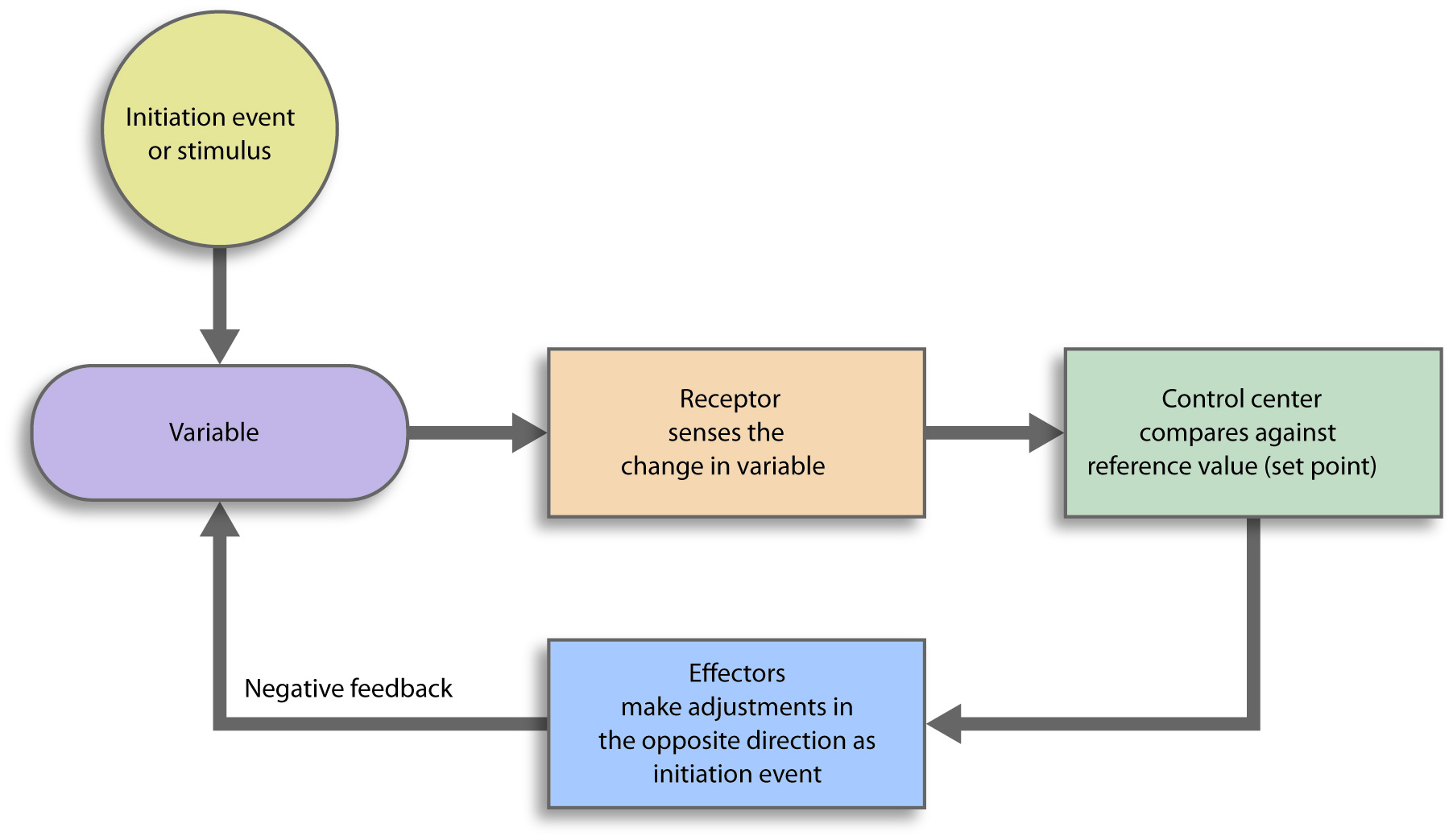
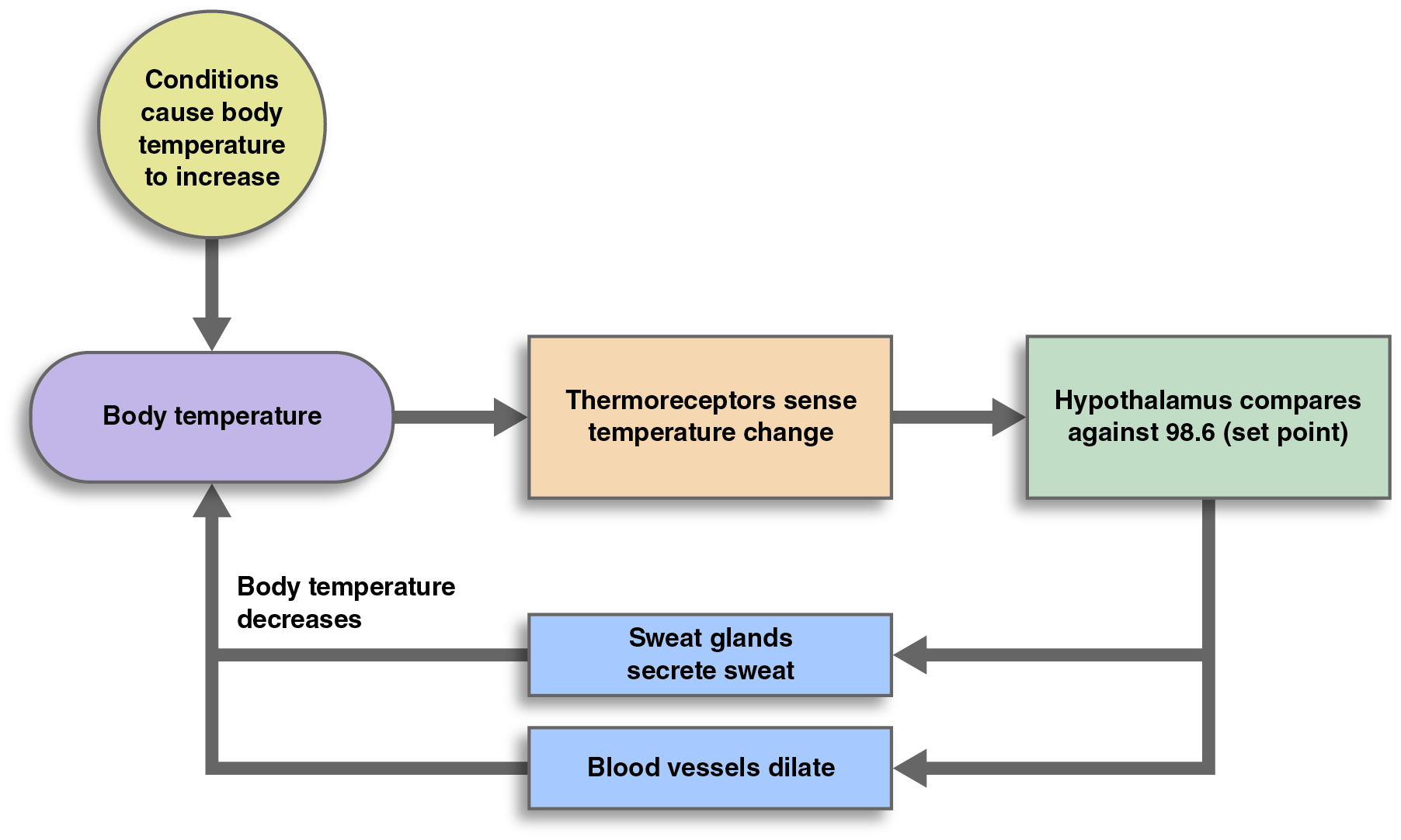
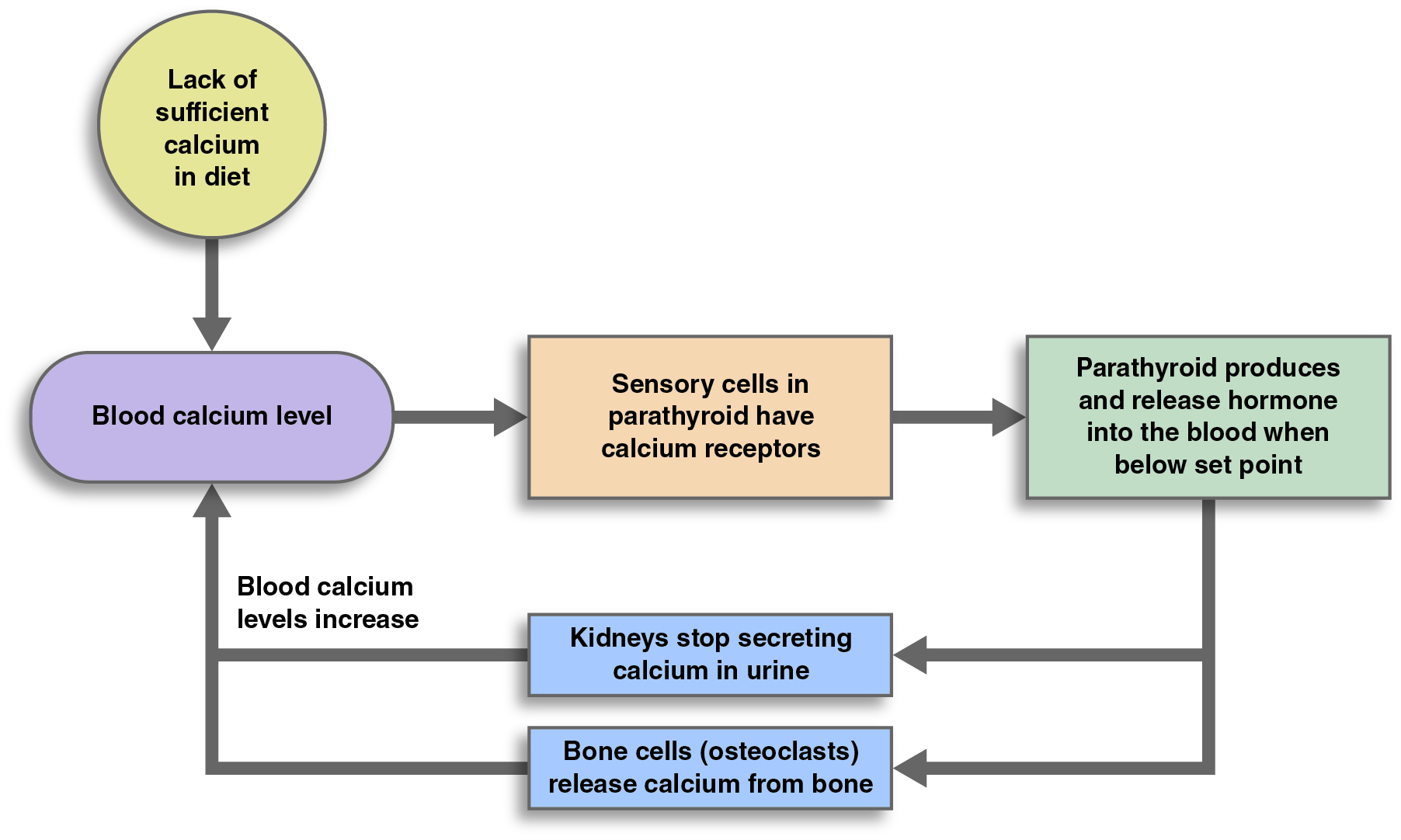
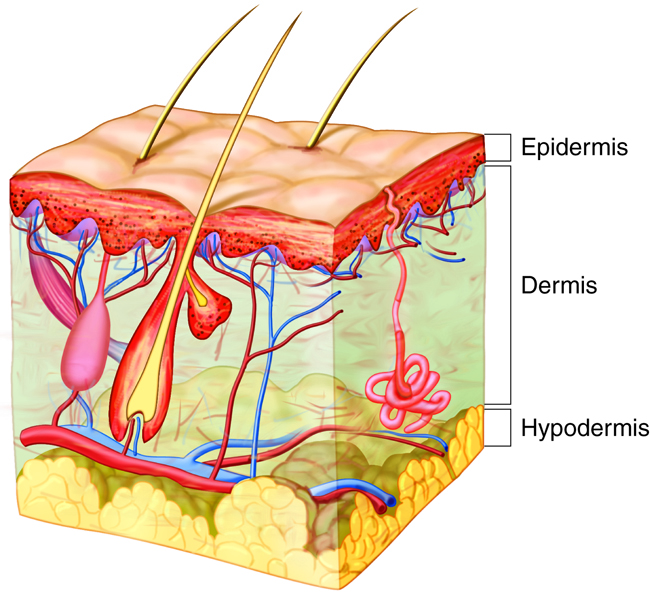
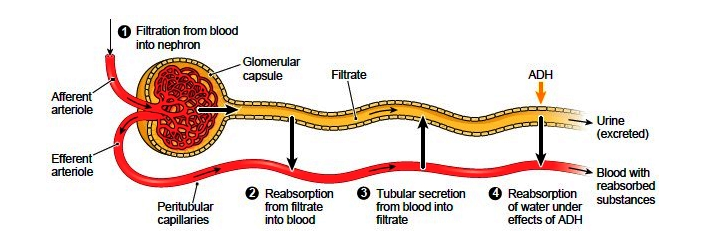
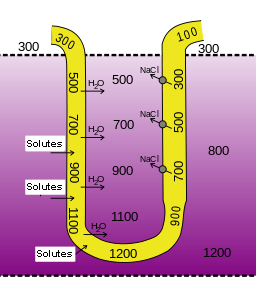
<?xml version="1.0" encoding="UTF-8"?>
<!DOCTYPE html PUBLIC "-//W3C//DTD XHTML 1.1//EN" "http://www.w3.org/TR/xhtml11/DTD/xhtml11.dtd">
<html xmlns="http://www.w3.org/1999/xhtml" xml:lang="en">
<head>
<meta content="text/html; charset=UTF-8" http-equiv="content-type" />
<meta http-equiv="Content-Language" content="en" />
<meta name="generator" content="Pressbooks 5.15.0" />
<meta name="pb-authors" content="CCCOnline" />
<meta name="pb-editors" content="" />
<meta name="pb-translators" content="" />
<meta name="pb-reviewers" content="" />
<meta name="pb-illustrators" content="" />
<meta name="pb-contributors" content="" />
<meta name="pb-title" content="Anatomy &amp; Physiology" />
<meta name="pb-language" content="en" />
<meta name="pb-cover-image" content="https://pressbooks.ccconline.org/bio106/wp-content/uploads/sites/10/2020/11/Anatomical_illustration_by_Arnauld-Eloi_Gautier-Dagoty__digitally_enhanced_by_rawpixel-com_10.jpg" />
<meta name="pb-primary-subject" content="MFC" />
<meta name="pb-copyright-holder" content="CCCOnline" />
<meta name="pb-book-license" content="cc-by-sa" />
<meta name="pb-short-title" content="BIO106 eText A&amp;P" />
<meta name="pb-custom-copyright" content="This eText has been adapted from Anatomy &amp; Physiology I &amp; II by the Open Learning Initiative with Carnegie Mellon University. This project is licensed under CC BY-NC-SA 4.0 and has been remixed with supplementary material to adapt for CCCOnline. (Any unattributed videos, charts, and images present in the course eText are also licensed under this project.)Cover Image: Rawpixel, CC BY-SA 4.0, via Wikimedia Commons" />
<title>Anatomy &amp; Physiology</title>
</head>
<body lang='en' >
<div id="half-title-page"><h1 class="title">Anatomy &amp; Physiology</h1></div>
<div id="title-page"><h1 class="title">Anatomy &amp; Physiology</h1><h2 class="subtitle"></h2><h3 class="author">CCCOnline</h3><h3 class="author"></h3><h4 class="publisher"></h4><h5 class="publisher-city"></h5></div>
<div id="copyright-page"><div class="ugc">
<div class="license-attribution"><p><img src="https://pressbooks.ccconline.org/bio106/wp-content/themes/pressbooks-book/packages/buckram/assets/images/cc-by-sa.svg" alt="Icon for the Creative Commons Attribution-ShareAlike 4.0 International License" /></p><p>Anatomy &amp; Physiology by CCCOnline is licensed under a <a rel="license" href="https://creativecommons.org/licenses/by-sa/4.0/">Creative Commons Attribution-ShareAlike 4.0 International License</a>, except where otherwise noted.</p></div>
<p>This eText has been adapted from <a href="https://oli.cmu.edu/courses/anatomy-physiology-i-ii-v2-academic/" target="_blank" rel="noopener noreferrer">Anatomy &amp; Physiology I &amp; II</a> by the <a href="http://oli.cmu.edu/" target="_blank" rel="noopener noreferrer">Open Learning Initiative</a> with Carnegie Mellon University. This project is licensed under <a href="https://creativecommons.org/licenses/by-nc-sa/4.0/" target="_blank" rel="noopener noreferrer">CC BY-NC-SA 4.0</a> and has been remixed with supplementary material to adapt for CCCOnline. (Any unattributed videos, charts, and images present in the course eText are also licensed under this project.)</p><p>Cover Image: <a href="https://commons.wikimedia.org/wiki/File:Anatomical_illustration_by_Arnauld-Eloi_Gautier-Dagoty_,_digitally_enhanced_by_rawpixel-com_10.jpg">Rawpixel</a>, <a href="https://creativecommons.org/licenses/by-sa/4.0">CC BY-SA 4.0</a>, via Wikimedia Commons</p></div></div>
<div id="toc"><h1>Contents</h1><ul><li class="front-matter miscellaneous"><a href="#front-matter-getting-started"><span class="toc-chapter-title">Getting Started</span></a><ul class="sections"><li class="section"><a href="#front-matter-95-section-1"><span class="toc-subsection-title">Important</span></a></li></ul></li><li class="part display-none"><a href="#part-main-body">Main Body</a></li><li class="part"><a href="#part-introduction-to-anatomy-and-physiology">Chapter 1: Introduction to Anatomy and Physiology</a></li><li class="chapter standard"><a href="#chapter-anatomy-and-physiology-big-picturewhy-study-anatomy-and-physiology"><span class="toc-chapter-title">Anatomy and Physiology Big Picture</span></a></li><li class="chapter standard"><a href="#chapter-vital-functions-for-human-life-2"><span class="toc-chapter-title">Vital Functions for Human Life</span></a></li><li class="chapter standard"><a href="#chapter-body-planes-and-directional-terms-2"><span class="toc-chapter-title">Body Planes and Directional Terms</span></a></li><li class="part"><a href="#part-levels-of-organization-introduction">Chapter 2 Part 1: Levels of Organization - Introduction</a></li><li class="chapter standard"><a href="#chapter-levels-of-organization"><span class="toc-chapter-title">Levels of Organization</span></a></li><li class="part"><a href="#part-levels-of-organization-chemistry">Chapter 2 Part 2: Chemistry</a></li><li class="chapter standard"><a href="#chapter-chemistry-overview"><span class="toc-chapter-title">Chemistry Overview</span></a></li><li class="chapter standard"><a href="#chapter-atoms-of-life"><span class="toc-chapter-title">Atoms of Life</span></a></li><li class="chapter standard"><a href="#chapter-chemical-bonding-and-molecules"><span class="toc-chapter-title">Chemical Bonding and Molecules</span></a></li><li class="chapter standard"><a href="#chapter-water-interactions"><span class="toc-chapter-title">Water Interactions</span></a></li><li class="chapter standard"><a href="#chapter-electrolytes-and-ph"><span class="toc-chapter-title">Electrolytes and pH</span></a></li><li class="chapter standard"><a href="#chapter-macromolecules"><span class="toc-chapter-title">Macromolecules</span></a></li><li class="part"><a href="#part-levels-of-organization-the-cell">Chapter 2 Part 3: The Cell</a></li><li class="chapter standard"><a href="#chapter-the-cell-overview"><span class="toc-chapter-title">The Cell Overview</span></a></li><li class="chapter standard"><a href="#chapter-organelles"><span class="toc-chapter-title">Organelles</span></a></li><li class="chapter standard"><a href="#chapter-membranes"><span class="toc-chapter-title">Membranes</span></a></li><li class="chapter standard"><a href="#chapter-membrane-transport"><span class="toc-chapter-title">Membrane Transport</span></a></li><li class="chapter standard"><a href="#chapter-cell-division-and-control-of-cell-number"><span class="toc-chapter-title">Cell Division and Control of Cell Number</span></a></li><li class="part"><a href="#part-levels-of-organization-higher-order-structures">Chapter 2 Part 4: Higher Order Structures</a></li><li class="chapter standard"><a href="#chapter-tissues"><span class="toc-chapter-title">Tissues</span></a></li><li class="chapter standard"><a href="#chapter-organs"><span class="toc-chapter-title">Organs</span></a></li><li class="chapter standard"><a href="#chapter-organ-systems-the-whole-body-and-populations"><span class="toc-chapter-title">Organ Systems, The Whole Body, and Populations</span></a></li><li class="part"><a href="#part-homeostasis-and-feedback-loops">Chapter 3: Homeostasis and Feedback Loops</a></li><li class="chapter standard"><a href="#chapter-homeostasisintroduction"><span class="toc-chapter-title">Homeostasis Introduction</span></a></li><li class="chapter standard"><a href="#chapter-homeostasis-terminology"><span class="toc-chapter-title">Homeostasis Terminology</span></a></li><li class="chapter standard"><a href="#chapter-feedback-loops"><span class="toc-chapter-title">Feedback Loops</span></a></li><li class="chapter standard"><a href="#chapter-homeostatic-maintenance"><span class="toc-chapter-title">Homeostatic Maintenance</span></a></li><li class="part"><a href="#part-the-integumentary-system">Chapter 4: The Integumentary System</a></li><li class="chapter standard"><a href="#chapter-integumentaryintroduction"><span class="toc-chapter-title">Introduction to the Integumentary System</span></a></li><li class="chapter standard"><a href="#chapter-integumentary-structures-and-functions"><span class="toc-chapter-title">Integumentary Structures and Functions</span></a></li><li class="chapter standard"><a href="#chapter-integumentary-levels-of-organization"><span class="toc-chapter-title">Integumentary Levels of Organization</span></a></li><li class="chapter standard"><a href="#chapter-integumentary-homeostasis"><span class="toc-chapter-title">Integumentary Homeostasis</span></a></li><li class="part"><a href="#part-chapter-5-skeletal-system">Chapter 5: Skeletal System</a></li><li class="chapter standard"><a href="#chapter-introduction-to-the-skeletal-system"><span class="toc-chapter-title">Introduction to the Skeletal System</span></a></li><li class="chapter standard"><a href="#chapter-skeletal-structures-and-functions"><span class="toc-chapter-title">Skeletal Structures and Functions</span></a></li><li class="chapter standard"><a href="#chapter-skeletal-levels-of-organization"><span class="toc-chapter-title">Skeletal Levels of Organization</span></a></li><li class="chapter standard"><a href="#chapter-skeletal-homeostasis"><span class="toc-chapter-title">Skeletal Homeostasis</span></a></li><li class="chapter standard"><a href="#chapter-skeletal-integration-of-systems"><span class="toc-chapter-title">Skeletal Integration of Systems</span></a></li><li class="part"><a href="#part-chapter-6-muscular-system">Chapter 6: Muscular System</a></li><li class="chapter standard"><a href="#chapter-muscular-system-introduction"><span class="toc-chapter-title">Muscular System Introduction</span></a></li><li class="chapter standard"><a href="#chapter-muscular-structures-and-functions"><span class="toc-chapter-title">Muscular Structures and Functions</span></a></li><li class="chapter standard"><a href="#chapter-muscular-levels-of-organization"><span class="toc-chapter-title">Muscular Levels of Organization</span></a></li><li class="chapter standard"><a href="#chapter-muscular-system-homeostasis"><span class="toc-chapter-title">Muscular System Homeostasis</span></a></li><li class="chapter standard"><a href="#chapter-muscular-integration-of-systems"><span class="toc-chapter-title">Muscular Integration of Systems</span></a></li><li class="part"><a href="#part-chapter-7-nervous-system">Chapter 7: Nervous System</a></li><li class="chapter standard"><a href="#chapter-nervous-system-introduction"><span class="toc-chapter-title">Nervous System Introduction</span></a></li><li class="chapter standard"><a href="#chapter-nervous-structures-and-functions"><span class="toc-chapter-title">Nervous Structures and Functions</span></a></li><li class="chapter standard"><a href="#chapter-nervous-system-levels-of-organization"><span class="toc-chapter-title">Nervous System Levels of Organization</span></a></li><li class="chapter standard"><a href="#chapter-nervous-sensory-functions"><span class="toc-chapter-title">Nervous Sensory Functions</span></a></li><li class="part"><a href="#part-chapter-8-cardiovascular-system">Chapter 8: Cardiovascular System</a></li><li class="chapter standard"><a href="#chapter-cardiovascular-system-introduction"><span class="toc-chapter-title">Cardiovascular System Introduction</span></a></li><li class="chapter standard"><a href="#chapter-cardiovascular-structures-and-functions"><span class="toc-chapter-title">Cardiovascular Structures and Functions</span></a></li><li class="chapter standard"><a href="#chapter-cardiovascular-levels-of-organization"><span class="toc-chapter-title">Cardiovascular Levels of Organization</span></a></li><li class="chapter standard"><a href="#chapter-cardiovascular-homeostasis"><span class="toc-chapter-title">Cardiovascular Homeostasis</span></a></li><li class="chapter standard"><a href="#chapter-cardiovascular-integration-of-systems"><span class="toc-chapter-title">Cardiovascular Integration of Systems</span></a></li><li class="part"><a href="#part-chapter-9-the-lymphatic-system-and-immunity">Chapter 9: The Lymphatic System and Immunity</a></li><li class="chapter standard"><a href="#chapter-lymphatic-system-introduction"><span class="toc-chapter-title">Lymphatic System Introduction</span></a></li><li class="chapter standard"><a href="#chapter-lymphatic-structures-and-functions"><span class="toc-chapter-title">Lymphatic Structures and Functions</span></a></li><li class="chapter standard"><a href="#chapter-lymphatic-levels-of-organization"><span class="toc-chapter-title">Lymphatic Levels of Organization</span></a></li><li class="chapter standard"><a href="#chapter-lymphatic-homeostasis"><span class="toc-chapter-title">Lymphatic Homeostasis</span></a></li><li class="chapter standard"><a href="#chapter-lymphatic-integration-of-systems"><span class="toc-chapter-title">Lymphatic Integration of Systems</span></a></li><li class="part"><a href="#part-chapter-10-endocrine-system">Chapter 10: Endocrine System</a></li><li class="chapter standard"><a href="#chapter-endocrine-system-introduction"><span class="toc-chapter-title">Endocrine System Introduction</span></a></li><li class="chapter standard"><a href="#chapter-endocrine-structures-and-functions"><span class="toc-chapter-title">Endocrine Structures and Functions</span></a><ul class="sections"><li class="section"><a href="#chapter-457-section-1"><span class="toc-subsection-title">Hormones</span></a></li></ul></li><li class="chapter standard"><a href="#chapter-endocrine-homeostasis-and-integration-of-systems"><span class="toc-chapter-title">Endocrine Homeostasis and Integration of Systems</span></a></li><li class="part"><a href="#part-chapter-11-digestive-system">Chapter 11: Digestive System</a></li><li class="chapter standard"><a href="#chapter-digestive-system-introduction"><span class="toc-chapter-title">Digestive System Introduction</span></a></li><li class="chapter standard"><a href="#chapter-digestive-structures-and-functions"><span class="toc-chapter-title">Digestive Structures and Functions</span></a></li><li class="chapter standard"><a href="#chapter-digestive-levels-of-organization"><span class="toc-chapter-title">Digestive Levels of Organization</span></a></li><li class="chapter standard"><a href="#chapter-digestive-homeostasis"><span class="toc-chapter-title">Digestive Homeostasis</span></a></li><li class="chapter standard"><a href="#chapter-digestive-integration-of-systems"><span class="toc-chapter-title">Digestive Integration of Systems</span></a></li><li class="part"><a href="#part-chapter-12-respiratory-system">Chapter 12: Respiratory System</a></li><li class="chapter standard"><a href="#chapter-introduction-to-the-respiratory-system"><span class="toc-chapter-title">Introduction to the Respiratory System</span></a></li><li class="chapter standard"><a href="#chapter-respiratory-structures-and-functions"><span class="toc-chapter-title">Respiratory Structures and Functions</span></a></li><li class="chapter standard"><a href="#chapter-respiratory-levels-of-organization"><span class="toc-chapter-title">Respiratory Levels of Organization</span></a></li><li class="chapter standard"><a href="#chapter-respiratory-homeostasis"><span class="toc-chapter-title">Respiratory Homeostasis</span></a></li><li class="chapter standard"><a href="#chapter-respiratory-integration-of-systems"><span class="toc-chapter-title">Respiratory Integration of Systems</span></a></li><li class="part"><a href="#part-chapter-13-urinary-system">Chapter 13: Urinary System</a></li><li class="chapter standard"><a href="#chapter-urinary-system-introduction"><span class="toc-chapter-title">Urinary System Introduction</span></a></li><li class="chapter standard"><a href="#chapter-urinary-structures-and-functions"><span class="toc-chapter-title">Urinary Structures and Functions</span></a></li><li class="chapter standard"><a href="#chapter-urinary-levels-of-organization"><span class="toc-chapter-title">Urinary Levels of Organization</span></a></li><li class="chapter standard"><a href="#chapter-urinary-homeostasis"><span class="toc-chapter-title">Urinary Homeostasis</span></a></li><li class="chapter standard"><a href="#chapter-urinary-integration-of-systems"><span class="toc-chapter-title">Urinary Integration of Systems</span></a></li><li class="part"><a href="#part-chapter-14-reproductive-system">Chapter 14: Reproductive System</a></li><li class="chapter standard"><a href="#chapter-reproductive-system-introduction"><span class="toc-chapter-title">Reproductive System Introduction</span></a></li><li class="chapter standard"><a href="#chapter-reproductive-structures-and-functions"><span class="toc-chapter-title">Reproductive Structures and Functions</span></a></li><li class="chapter standard"><a href="#chapter-fertilization-and-development"><span class="toc-chapter-title">Fertilization and Development</span></a></li><li class="chapter standard"><a href="#chapter-physiology-of-labor"><span class="toc-chapter-title">Physiology of Labor</span></a></li></ul></div>
<div class="front-matter miscellaneous" id="front-matter-getting-started" title="Getting Started"><div class="front-matter-title-wrap"><h3 class="front-matter-number">1</h3><h1 class="front-matter-title">Getting Started</h1></div><div class="ugc front-matter-ugc">
<p><code></code></p> <p>This interactive eText will serve as your textbook throughout the course, and will be an important resource in completing your assignments. Please be sure to refer to the course schedule to see which portions of the eText you should be reading for each module.</p> <div class="textbox textbox--key-takeaways"><div class="textbox textbox--exercises"><div class="textbox__header"><p class="textbox__title">Key Takeaways</p> </div> <div class="textbox__content">To get started reading the book, click or tap “Contents” usually located in the top left of the screen OR the “Next” banner, usually located at the bottom right of the screen.</div> </div> </div> <h1 id="front-matter-95-section-1" class="section-header">Important</h1> <p>There are exercises located throughout the eText. These exercises are ungraded, but are a nice way to self-check that you understand the concepts, and that you are able to correctly apply and expand on this knowledge for course assignments and quizzes.</p> <p>This eText has been adapted from <a href="https://oli.cmu.edu/courses/anatomy-physiology-i-ii-v2-academic/" target="_blank" rel="noopener noreferrer">Anatomy &amp; Physiology I &amp; II</a> by the <a href="http://oli.cmu.edu/" target="_blank" rel="noopener noreferrer">Open Learning Initiative</a> with Carnegie Mellon University. This project is licensed under <a href="https://creativecommons.org/licenses/by-nc-sa/4.0/" target="_blank" rel="noopener noreferrer">CC BY-NC-SA 4.0</a> and has been remixed with supplementary material to adapt for CCCOnline. (Any unattributed videos, charts, and images present in the course eText are also licensed under this project.)</p> <p>Cover Image: <a href="https://commons.wikimedia.org/wiki/File:Anatomical_illustration_by_Arnauld-Eloi_Gautier-Dagoty_,_digitally_enhanced_by_rawpixel-com_10.jpg">Rawpixel</a>, <a href="https://creativecommons.org/licenses/by-sa/4.0">CC BY-SA 4.0</a>, via Wikimedia Commons</p> 
</div></div>
<div class="part " id="part-introduction-to-anatomy-and-physiology"><div class="part-title-wrap"><h3 class="part-number">II</h3><h1 class="part-title">Chapter 1: Introduction to Anatomy and Physiology</h1></div><div class="ugc part-ugc"></div></div>
<div class="chapter standard" id="chapter-anatomy-and-physiology-big-picturewhy-study-anatomy-and-physiology" title="Anatomy and Physiology Big Picture"><div class="chapter-title-wrap"><h3 class="chapter-number">1</h3><h2 class="chapter-title">Anatomy and Physiology Big Picture</h2></div><div class="ugc chapter-ugc"> <div class="anatomy-and-physiology-big-picturewhy-study-anatomy-and-physiology?"><h2 class="import-Normal">Why Study Anatomy and Physiology?</h2> <p class="import-Normal">You probably have a general understanding of how your body works, but to truly understand the intricate functions of the human body and dispel many misconceptions that you have learned about your body over the years, you must approach the study of the body in an organized way.</p> <p class="import-Normal">This course will help you understand those intricacies and attack misconceptions head-on. This course will expose you to the complex levels of organization taking place inside the body and provide you with the information you need to delve deeply into the specific aspects of the body systems. This will prepare you for the more complex topics you will encounter in your future courses.</p> <h2>Core Principles in Anatomy and Physiology</h2> <ul><li>Living organisms are <strong><em>causal mechanisms </em></strong>whose functions are to be understood by applications of the laws of physics and chemistry.</li> <li><strong><em>The cell </em></strong>is the basic unit of life.</li> <li>Life requires <strong><em>information flow</em></strong> within and between cells and between the environment and the organism.</li> <li>Living organisms must obtain matter and energy from the external world. This matter and energy<strong><em>must be transformed and transferred </em></strong>in varied ways to build the organism and to perform work.</li> <li><strong><em>Homeostasis</em></strong> maintains the internal environment in a more or less constant state compatible with life.</li> <li>Understanding the behavior of the organism requires understanding the relationship between <strong><em>structure and function</em></strong> (at each and every level of organization).</li> <li>Living organisms carry out functions at many different <strong><em>levels of organization </em></strong>simultaneously.</li> <li>All life exists within an <strong><em>ecosystem</em></strong> made up of the physiochemical and biological worlds.</li> <li><strong><em>Evolution</em></strong> provides a scientific explanation for the history of life on Earth and the mechanisms by which changes to life have occurred.</li> </ul> <h2>Organizing Anatomy and Physiology Concepts</h2> <p class="import-Normal">The goal of this course is for you to think and speak in the language of the domain while integrating the knowledge you gain about anatomy to support explanations of physiological phenomenon. The course focuses on a few themes derived from the core principles, that when taken together, provide a full view of what the human body is capable of and the exciting processes going on inside of it. These organizational themes are:</p> <ul><li class="import-Normal"><strong><em>Structure and function</em></strong> of the body, and the connection between the two.</li> <li class="import-Normal"><strong><em>Homeostasis</em></strong>, the body’s natural tendency to maintain a stable internal environment.</li> <li class="import-Normal"><strong><em>Levels of Organization</em></strong><strong>,</strong> the major levels of organization in the human organism from the chemical and cellular levels to the tissues, organs and organ systems.</li> <li class="import-Normal"><strong><em>I</em><em>ntegration of Systems</em></strong>, concerning which systems are subsets of larger systems, and how they function together in harmony and conflict.</li> </ul> <p class="import-Normal">You can see how these themes directly relate to the core principles. As these themes are used to describe the inner workings of each of the body’s organ systems, an integrated collection of organs that function together, those systems can be categorized based on their contribution to the specific vital functions for human life. The vital functions provide the context for the whole body, and how each organ system plays a role in keeping us alive. So, the information provided for each of the organ systems is organized according to those functions that are essential to the survival of the human body. The vital functions for human life are:</p> <ul><li class="import-Normal">Exchange with the environment</li> <li class="import-Normal">Transport within the body</li> <li class="import-Normal">Structure, support, and movement</li> <li class="import-Normal">Control and regulation</li> </ul> <p class="import-Normal">All multicellular organisms need these vital functions to operate properly in order to survive. In addition to understanding the Themes and Vital Functions that help us organize our knowledge about the structure and function of the different body organ systems, knowing and using proper terminology related to body planes and directional terms will also help you in your quest for Anatomy and Physiology mastery.</p> <h2>Themes in Anatomy and Physiology</h2> <p class="import-Normal">Everyone has a body and, by adulthood, a general understanding of how it works. But to truly understand the intricate functions of the human body—and the problems that occur when something goes wrong—you must approach the study of the body in an organized way. This course will help you understand the functions of the human body. We will discuss the details of many complex functional systems, but will also look at how all of these systems work in harmony to keep you healthy. As you move through this course, you should keep four main themes in mind: structure and function, homeostasis, levels of organization, and integration of systems.</p> <h3>Structure and Function</h3> <p class="import-Normal">The first theme is the connection between structure and function. You will be studying both anatomy, which focuses on the body’s structures, and physiology, which focuses on the body’s functions. In fact, it is virtually impossible to study one without the other, because function relies so completely upon structure. For example, the structure of the bones in the skeletal system provides the support necessary for the function of walking upright. The vocal cords would not be able to fulfill their function—the production of sound—if their structure were disrupted. The large surface area of the small intestine allows it to efficiently perform its primary function: absorbing nutrients from food. And the list goes on.</p> <h3>Homeostasis</h3> <p class="import-Normal">The second theme will be homeostasis, or the body’s natural tendency to maintain a relatively stable internal environment. Most of the body’s functions are driven by homeostasis. Homeostasis occurs at all different levels. For example, body temperature is regulated around 98.6, a temperature that is optimal for cell function and organism function. To maintain this temperature, we sweat to cool down on a hot day and we shiver to increase temperature when we are cold. Other variables, like blood pressure, blood pH, blood calcium concentrations are similarly maintained within a narrow range that is optimal for human health. Many diseases occur because of disruptions in homeostasis.</p> <h3>Levels of Organization</h3> <p class="import-Normal">The third theme will be the hierarchical organization of the parts of the body. You can think of the body&#8217;s parts as being organized into a hierarchy of levels. Your body, like all things in the physical world, is built from chemical building blocks. The smallest of these building blocks are atoms of elements, which combine to form bigger and more complicated structures called molecules. These molecules, such as water, proteins, carbohydrates (glucose), and lipids are used to build cells, the smallest unit of structure capable of carrying out all life processes. Groups of related cells that work together to perform specific functions make up tissues, and tissues that work together form organs. Organs do not work independently; they are organized into organ systems that complete more complex tasks.</p> <p class="import-Normal">The digestive system, for example, includes the mouth, stomach, intestines, and many other organs—all of which are integral to proper functioning of the system as a whole. The organ systems work together to support life in the entire organism—in this case, a human being.</p> <p class="import-Normal">Understanding this hierarchy is important because disruptions might occur at any level. For example, a depletion of calcium atoms from the body can lead to weak bones. Or a single mutation in a DNA molecule can lead to organ dysfunction, such as the disturbed lung function found in individuals with cystic fibrosis.</p> <h3>Integration of Systems</h3> <p class="import-Normal">Finally, each section of the course will discuss the integration of all the body’s systems. In order to carry out its functions, every organ system relies on the healthy functioning of other systems. When these systems all work together, the organism thrives. A breakdown in one system can cause failures in other systems as well.</p> <p>&nbsp;</p> <p class="import-Normal"></p> <div class="textbox interactive-content"><span class="interactive-content__icon"></span> <p>An interactive or media element has been excluded from this version of the text. You can view it online here:<br /> <a href="https://pressbooks.ccconline.org/bio106/?p=183#pb-interactive-content" title="Ch1 Themes in Anatomy and Physiology">https://pressbooks.ccconline.org/bio106/?p=183</a> </p> </div> </div> </div></div>
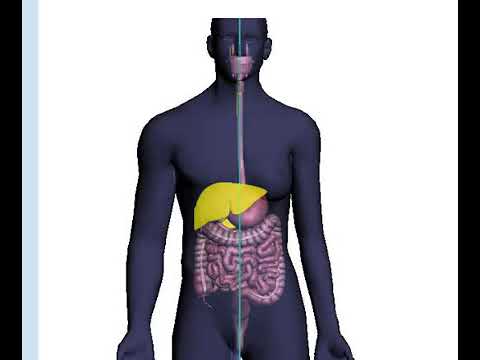
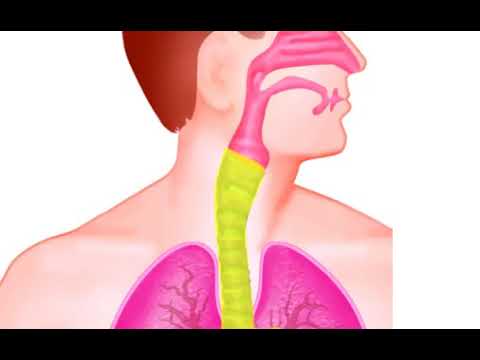
<div class="chapter standard" id="chapter-vital-functions-for-human-life-2" title="Vital Functions for Human Life"><div class="chapter-title-wrap"><h3 class="chapter-number">2</h3><h2 class="chapter-title">Vital Functions for Human Life</h2></div><div class="ugc chapter-ugc"> <div class="vital-functions-for-human-life"><p class="import-Normal">In this section, you will be introduced to the major organ systems of the body. We have grouped the organ systems according to the Vital Functions they perform. In the units that follow, with the exception of Levels of Organization, and Homeostasis, you will learn and explore each body system in-depth. To put these systems in context, we will first discuss vital functions of life. Think about your own body and its many functions. Which functions are essential? What functions does your body need to perform each day in order to survive?</p> <p class="import-Normal">Within any organism, there are a multitude of functions taking place at any given time. Humans, for example, can breathe, talk, digest food, process visual images, and move their bodies all at the same time. While all of these activities are important, some are essential to the survival of the human body itself. They are <strong><em>vital functions</em></strong> &#8211; processes or actions of the body on which life is directly dependent. An<strong><em>organ system</em></strong> <em>i</em>s an integrated collection of organs in the body that work together to perform a vital function. This course will organize the organ systems of the body based on the vital functions defined below.</p> <p class="import-Normal">All multicellular organisms need to do the following in order to survive:</p> <ul><li class="import-Normal">Exchange material with the environment</li> <li class="import-Normal">Transport fluids and materials within the body</li> <li class="import-Normal">Facilitate structure, support and movement</li> <li class="import-Normal">Regulate and control processes</li> </ul> <h2>Exchange with the Environment</h2> <p class="import-Normal">An organism constantly interacts with its environment. Every cell needs to take in nutrients and get rid of waste products. This is accomplished via processes that exchange molecules across the cell membrane. For a single-celled organism, this is accomplished through direct exchange with the environment. It gets more complicated with larger organisms where cells are not in direct contact with the “outside” environment. In such organisms, including humans, there are specialized organ systems that serve as interfaces with the environment, moving things into, and out of, the body to keep it functioning. In order to survive, the human body must obtain food, water, and oxygen from the world around it. The human body must also rid itself of wastes before they build up to toxic levels. Two organ systems are primarily responsible for exchange of material with the environment.</p> <p class="import-Normal">The <strong><em>digestive system</em></strong> brings food and water into the body and eliminates solid wastes. During digestion and metabolism, food is broken down into simpler substances (including some waste products), and some of those simpler substances—for example, simple sugars—can be metabolized in a way that they release energy, especially when oxygen is present. The products of these processes include solid waste, liquid waste, and carbon dioxide. These waste materials must be eliminated from the body to prevent illness.</p> <p class="import-Normal">The digestive system is a continuous tube (the digestive tract or alimentary canal). Areas along this tube are specialized to perform different functions related to getting the nutrients from your food to the cells that need them. Accessory organs add secretions into different areas along the tube.</p> <div class="textbox interactive-content interactive-content--oembed"><img src="https://i.ytimg.com/vi/O0rPNYFWPME/hqdefault.jpg" alt="Thumbnail for the embedded element &quot;Digestive System&quot;" title="Digestive System" /> <p>A YouTube element has been excluded from this version of the text. You can view it online here: <a href="https://pressbooks.ccconline.org/bio106/?p=184#pb-interactive-content" title="Digestive System">https://pressbooks.ccconline.org/bio106/?p=184</a> </p> </div> <p class="import-Normal">The <strong><em>respiratory system </em></strong>brings in oxygen and removes carbon dioxide. When we take a breath, air enters and exits via the respiratory system. This allows the body to obtain oxygen, which is needed for metabolic processes, and eliminate carbon dioxide, which is a metabolic waste product and can affect the body&#8217;s pH homeostasis. Like the digestive system, the respiratory system can be thought of as a tube, or rather, as a branching series of tubes that get smaller and smaller as they branch off. Unlike the digestive system, which moves solids and liquids in a single direction, the respiratory system moves gases in both directions, when we inhale and exhale.</p> <div class="textbox interactive-content interactive-content--oembed"><img src="https://i.ytimg.com/vi/zIEW-eGMIOA/hqdefault.jpg" alt="Thumbnail for the embedded element &quot;Respiratory&quot;" title="Respiratory" /> <p>A YouTube element has been excluded from this version of the text. You can view it online here: <a href="https://pressbooks.ccconline.org/bio106/?p=184#pb-interactive-content" title="Respiratory">https://pressbooks.ccconline.org/bio106/?p=184</a> </p> </div> <p class="import-Normal">The <strong><em>urinary system</em></strong> doesn’t take in anything from the environment, but does eliminate waste products of metabolism from the body fluid. One of the most important of the waste products removed from the blood is urea, the main end product of protein metabolism. Other waste products and some toxins are also removed from the blood by the kidneys. However, this is just one of several roles that the urinary system plays in maintaining homeostasis of body fluids, so it will be explored more extensively in the next vital function category involving body fluids.</p> <h2>Fluid Transport within the Body</h2> <p class="import-Normal">Single-celled organisms can absorb nutrients and oxygen directly from the environment into the cells, where they are used to support basic cell functions. Waste products are excreted from these single cells in a similar fashion. In multi-celled organisms like humans, however, most cells are not exposed directly to the outside environment. Instead, body cells rely on organ systems to transport and regulate the composition of internal fluids throughout the body. Our body constantly transports molecules from one place to another to carry out the required metabolic functions for daily living. As we take in nutrients and oxygen, these molecules must be delivered to the cells, tissues, and organs that need them for metabolic processes. Furthermore, our body must have a system for disposing of wastes generated by metabolism and foreign particles, which may potentially disturb optimal body function. Three main body systems, the <strong><em>cardiovascular system</em></strong>, the <strong><em>lymphatic system</em></strong>, and the <strong><em>urinary system</em></strong> take care of this vital bodily function. The cardiovascular and lymphatic systems also participate in the function of <strong><em>immunity</em></strong>, to help defend the body&#8217;s cells from foreign organisms that may enter the body tissues or fluids. The lymphatic system returns interstitial fluid to blood and the urinary system filters blood to regulate body fluid homeostasis, including volume, pressure, and chemical composition.</p> <p class="import-Normal">The <strong><em>cardiovascular system</em></strong> consists of the blood, heart, and blood vessels. The heart supplies the force to circulate blood throughout the body via the blood vessels. This system also helps to maintain homeostasis of fluid volume, pH, and temperature. Blood is the main fluid used to deliver nutrients to the body’s tissues and to receive wastes that will ultimately be removed from the body by the urinary system. The respiratory and cardiovascular systems work together to take oxygen in from the external environment and deliver it, via blood, to cells. In a similar fashion, these systems also use the blood to remove carbon dioxide from cells and release it into the external environment. The red blood cells or erythrocytes are responsible for the transport of respiratory gasses.</p> <p class="import-Normal">The <strong><em>lymphatic system</em></strong> consists of lymphatic vessels which are near blood vessels and several organs such as lymph nodes, the thymus gland, and spleen. It returns excess tissue fluid to the cardiovascular system while initiating immune responses to ensure that the delivered blood is not compromised, responding to foreign invasion in multiple ways. The lymphatic system is an integrated part of the immune system to cleanse body fluids of dead cells, toxins, and pathogens. Together, the transport systems of the body coordinate the efforts of nutrient delivery and removal of wastes and other harmful substances. In addition to transporting the fluid, fluid/electrolyte balance must be maintained by integrated function of these organ systems: urinary, lymphatic and cardiovascular.</p> <p class="import-Normal">Our body is in constant exchange with the environment, through breathing, eating and other activities. Therefore, it is important to screen the body and its components regularly to identify foreign invaders that might enter during these activities (or in any other manner). Further, it is important to rapidly and effectively remove these invaders before they can cause significant harm. Our body has specialized transport systems to carry out these functions. The cardiovascular and lymphatic systems work together to transport excess fluids (blood and lymph fluid, respectively) away from body tissues. Once fluid enters the lymphatic system it is termed lymph. Lymph travels through lymph vessels and passes through many lymph nodes which filter and clean the lymph. One additional function of the lymphatic system is to transport absorbed fat from the digestive system to the body cells. The <strong><em>immune system</em></strong> also produces and matures immune cells, which protect the body from invasion by agents that cause disease.</p> <p class="import-Normal">The<strong><em>urinary system </em></strong>filters blood and adjusts the composition of blood/interstitial fluid by removing excess water, salt, acid, and metabolic waste from the body as urine. This allows the urinary system to control body fluid volume, blood pressure, pH, and electrolyte balance. It is a critical system for maintaining homeostasis. The kidneys, the main organs of the urinary system, serve as a filtration and reabsorption system, where soluble substances are filtered and then those that the body needs to keep are reabsorbed.</p> <h2>Structure, Support, Protection, and Movement</h2> <p class="import-Normal">For the organs of the human body to function, they must be protected from potentially damaging substances in the environment. One level of defense is provided by the <strong><em>integumentary system</em></strong>, made up of the skin, hair, and nails. This system prevents many potentially harmful irritants from entering the body. Eyelashes, for example, help keep sand or other items out of the eyes, where they could potentially cause serious damage, and the skin prevents most pathogens (disease-causing microorganisms) from entering the body and destroying healthy body cells. Certain parts of the <strong><em>skeletal system</em></strong>, such as the skull and ribcage, also help to protect the internal organs, such as the brain, heart and lungs, from damage. The skeletal system and the <strong><em>muscular system</em></strong> also support the body and allow it to move away from danger, toward food sources, etc. The cardiovascular and lymphatic/immune systems also help defend the body’s cells from foreign organisms that may enter the body tissues or fluids through the process of immunity. The <strong><em>immune system</em></strong> produces immune cells, which protect the body from invasion by agents that cause disease.</p> <p class="import-Normal">The<strong><em>skeletal system,</em></strong> which includes the skeleton and articulations (joints), provides support and protection for soft tissues and organs, aids in movement, serves as a reservoir of calcium, and produces all blood cells. The numerous organs and structures of the skeletal system allow it to serve an important role in the support and protection of our body. Bones are very strong, yet flexible which makes them perfect for supporting our weight and allowing movement. The connective tissues such as cartilage, ligaments, and tendons aid in protecting our joints and providing stability. The red bone marrow inside the bone is vital for <strong>hematopoiesis</strong> or the production of all blood cells. Bones are also a reservoir for calcium. If your diet is deficient in calcium, a hormone will mobilize calcium from the bones to the blood, and your bones will be weaker.</p> <p class="import-Normal">The <strong><em>muscular (musculoskeletal) system</em></strong> generates force for movement of bones around articulations, facial expression, breathing, posture, and assists with temperature regulation. The muscular system contains muscle tissues and interconnects with both the nervous system and skeletal system. Nerves control the muscles and allow us to consciously direct movements. Some muscles, such as the muscles that control the pupil of your eye, cannot be controlled consciously but react to nerve stimuli. The skeletal system provides a stiff support for muscles to pull on. Muscles generate force to lift as well as to balance us. The energy produced by contracting muscles (such as when shivering) in the muscle system helps keep us warm.</p> <p class="import-Normal">The<strong><em>integumentary system</em></strong> is one of the most active parts of our body, even though we are not as aware of its activity as we are with the heart, lungs or stomach. The integumentary system encapsulates and protects the body. The skin is actually the largest organ in the body because of its large surface area. The skin integrates with muscles and allows for movements such as facial expression. It also contains many nerves that are related to the sense of touch. The skin can also be thought of as an immune system organ, since it protects the body from foreign organisms. The<strong><em>immune system </em></strong>also coordinates with other systems to respond to disease and infection. This response can provide two types of immunity:</p> <ul><li class="import-Normal">Nonspecific (innate) immunity, in which the body uses several general methods such as physical barriers (that is, the skin and mucous membranes), fever, inflammation, specific action by immune cells, and enzyme activity to protect itself against general harmful agents.</li> <li class="import-Normal">Specific (adaptive) immunity, in which specialized cells (such as T and B cells) recognize specific foreign molecules called antigens within the body and respond to them.</li> </ul> <h2>Control and Regulation</h2> <p class="import-Normal">To keep itself in a state of equilibrium, an organism must constantly gather information and react accordingly. In humans, the <strong><em>nervous system</em></strong>, made up of the brain, nerves, spinal cord and sensory organs, reacts to stimuli in the environment and signals other systems when actions are needed to bring the body back into balance. The <strong><em>endocrine system</em></strong>, which produces hormones and other regulatory substances, plays a key role in maintaining balance among chemical messengers within the body. Locally, most body cells can produce chemical messages that influence the metabolism of other cells. And there are some organs in other body systems that produce chemicals that can travel through the body to regulate metabolic processes in other organs. The nervous and endocrine systems work together to control many of the body’s other organ systems through electrical signals and chemical messengers.</p> <p class="import-Normal">The <strong><em>nervous system</em></strong> transmits signals to different parts of the body to coordinate function. The basic functional units of the nervous system that transmit messages are cells called <strong>neurons</strong>. Signals travel through a neuron as electrical impulses. Neurons release chemical substances, known as neurotransmitters, to transmit information to other neurons, to muscles, or to glands. These electrochemical signals are processed in the brain and sent down the spinal cord, which runs the length of the back. From the spinal cord, peripheral nerves send signals out to the extremities. Return signals come in through sensory nerves and either return to the spinal cord for processing or back to the brain. The spinal cord processes reflexes and repeated patterns.</p> <p class="import-Normal">The <strong><em>endocrine system </em></strong>is an equally important method of sending messages within the body for control and coordination of multiple body systems. The functional unit of the endocrine system is a gland, or a group of cells that secrete chemicals called hormones. Hormones circulate throughout the body within the bloodstream and act as long-term messengers. In comparison with neurotransmitters, hormones act over long distances for a longer time.</p> <p class="import-Normal">The systems integrate with each other, so that control systems within the nervous system regulate many activities of the endocrine system and hormones of the endocrine system can affect some of the functions of the nervous system. The chemical messengers produced by each individual system are responsible for many homeostatic functions, through feedback mechanisms. The activities of the two systems coordinate many of the body’s metabolic activities.</p> <table class="grid"><caption>Table 1: Major Organ Systems of the Body Grouped by Primary Function</caption> <tbody><tr class="TableNormal-R"><th>Function</th> <th>Organ System</th> </tr> <tr class="TableNormal-R"><td>Exchange with the Environment</td> <td><strong><em>Digestive</em></strong> System <p><strong><em>Respiratory</em></strong> System</p></td> </tr> <tr class="TableNormal-R"><td>Fluid Transport within the Body</td> <td><strong><em>Cardiovascular</em></strong> System <p><strong><em>Lymphatic</em></strong> System (immunity)</p> <p><strong><em>Urinary</em></strong> System</p></td> </tr> <tr class="TableNormal-R"><td>Structure, Support, Protection and Movement</td> <td><strong><em>Integumentary</em></strong> System <p><strong><em>Skeletal</em></strong> System</p> <p><strong><em>Muscular</em></strong> System</p> <p><strong><em>Immune</em></strong> system</p></td> </tr> <tr class="TableNormal-R"><td>Control and Regulation</td> <td><strong><em>Nervous</em></strong> System <p><strong><em>Endocrine</em></strong> System</p></td> </tr> </tbody> </table> <p class="import-Normal">As you can see, several organ systems work together to accomplish these various vital functions throughout the body. Since the organ systems are distributed throughout large regions of the human body, it is necessary to define orientation within the body and communicate the proper terminology as you study these integrated structures and functions.</p> <p>&nbsp;</p> <div class="textbox interactive-content"><span class="interactive-content__icon"></span> <p>An interactive or media element has been excluded from this version of the text. You can view it online here:<br /> <a href="https://pressbooks.ccconline.org/bio106/?p=184#pb-interactive-content" title="CH1VitalFxnHumanLife">https://pressbooks.ccconline.org/bio106/?p=184</a> </p> </div> </div> </div></div>
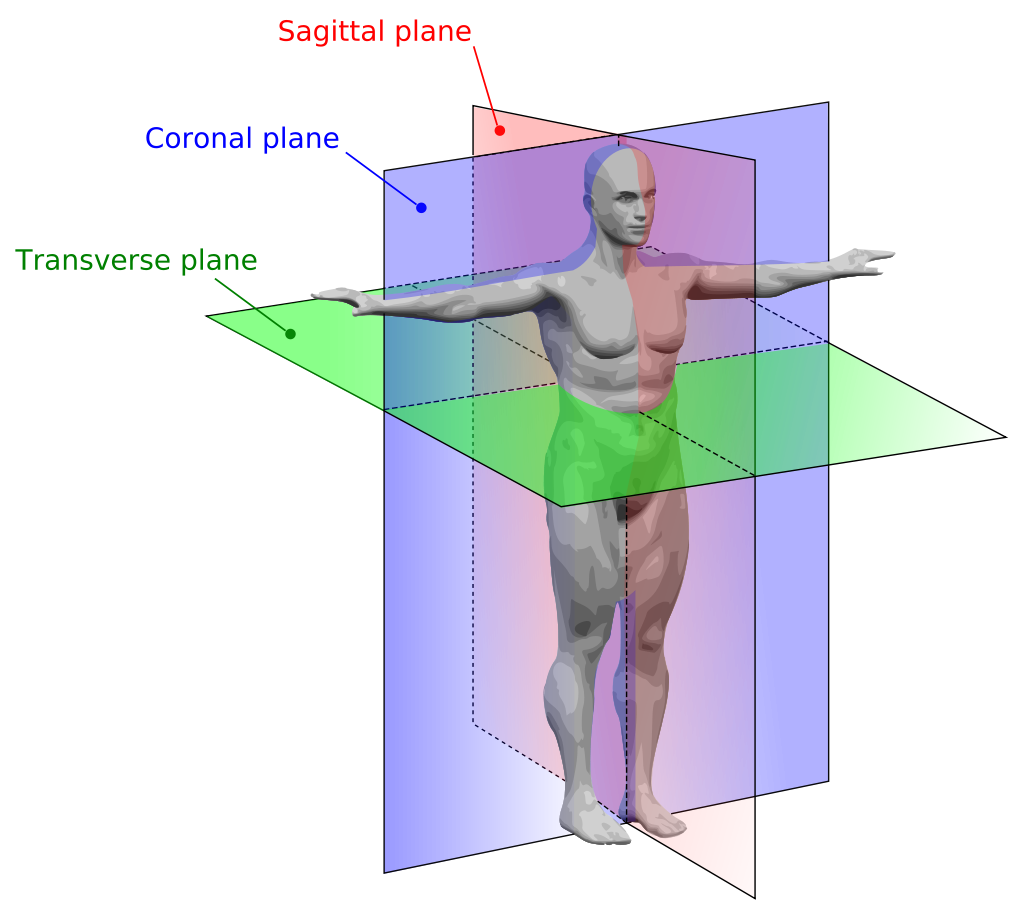
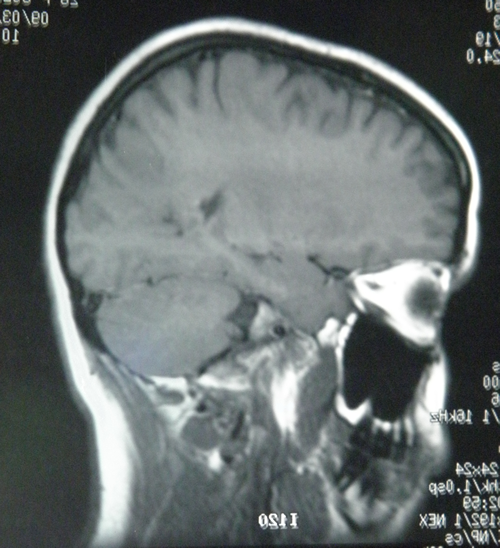
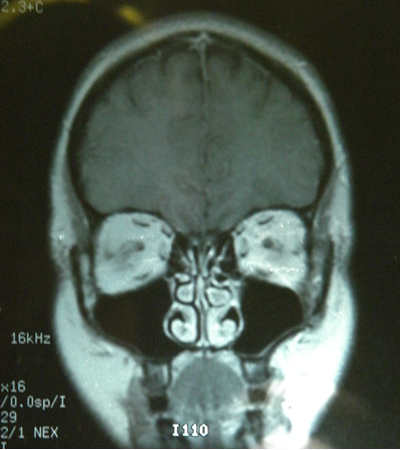
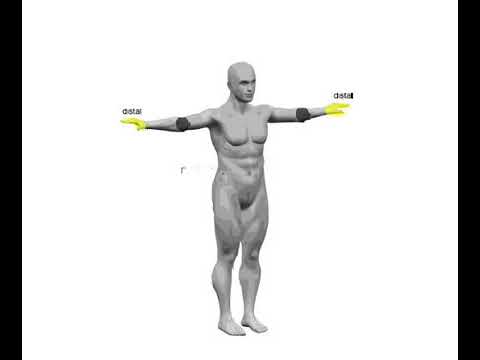
<div class="chapter standard" id="chapter-body-planes-and-directional-terms-2" title="Body Planes and Directional Terms"><div class="chapter-title-wrap"><h3 class="chapter-number">3</h3><h2 class="chapter-title">Body Planes and Directional Terms</h2></div><div class="ugc chapter-ugc"> <div class="body-planes-and-directional-terms"><div class="body-planes-and-directional-terms"><p class="import-Normal">Another commonality across body types are the body planes and directional terms. Those in the health professions must speak the same language with regard to locating and identifying specific body parts and organs. Body planes and directional terms are part of this common language. The imaginary vertical and horizontal planes run through the body, essentially cutting it into parts. This section provides an introduction to this new “language” and opportunities to practice using it in context so that you become comfortable locating and describing all organs and parts in the body and in relation to each other. Everything that you learn after body planes and directional terms will be referring to this terminology to help you visualize, identify, and locate anatomical structures.</p> <h2>Body Planes</h2> <p class="import-Normal">To better identify the locations of the organs that contribute to vital functions, you need some points of reference for description. To serve that function, we will now define different planes of the body. These imaginary flat surfaces run through the body in different directions. They are used by medical professionals to examine various internal body parts. Directional orientation is another anatomical tool used to describe how parts of the body are related to one another.</p> <p class="import-Normal">Each organ system spans large regions of the human body. It is helpful, therefore, to establish reference planes and directions that can help us describe specific locations of structures as we discuss them. To make sure everyone is talking about the same thing, anatomists and physiologists often refer to anatomical position and the body planes that penetrate it. Anatomical position describes a person standing upright, with the arms at the sides and the palms facing forward (as demonstrated in the image below). Body planes (a plane is a flat, two-dimensional surface) are imaginary surfaces that run through the body and divide it into different sections. We can talk about a specific location using the planes as reference points within the anatomical position.</p> <p class="import-Normal">There are an infinite number of planes running through the human body in all directions. However, we will focus on the three planes that are traditionally used when discussing human anatomy. First is the transverse plane, (also called the horizontal plane), which divides the body into top and bottom. In anatomical position, transverse planes are parallel to the ground. The second is the coronal plane, which is a vertical plane that divides the body into the front and back sections. If you do a “belly flop” into the water, you sink into the water via the coronal planes. Finally, we will refer to the sagittal plane, which divides the body into left and right sections with a vertical plane that passes from the front to the rear.</p> <div class="wp-caption alignnone" style="width: 1024px"><a href="https://oli.cmu.edu/repository/webcontent/546043760a0001dc3944c35ab2db3f8f/_u1_motivation_introduction/_u1_m1_introduction/webcontent/1024px-Human_anatomy_planes.png"><img src="https://oli.cmu.edu/repository/webcontent/546043760a0001dc3944c35ab2db3f8f/_u1_motivation_introduction/_u1_m1_introduction/webcontent/1024px-Human_anatomy_planes.png" alt="Sagittal, Coronal, and Transverse body planes and their intersections." width="1024" height="921" longdesc="#1_RegionsHumanBody" /></a><div class="wp-caption-text">Sagittal, Coronal, and Transverse body planes and their intersections. By YassineMrabet (<a class="rId9" href="http://upload.wikimedia.org/wikipedia/commons/archive/e/e1/20080607094342%21Human_anatomy_planes.svg" target="_blank" rel="noopener noreferrer">Human Anatomy Planes)</a>/<a class="rId10" href="http://commons.wikimedia.org/wiki/Main_Page" target="_blank" rel="noopener noreferrer">Wikimedia Commons</a>/<a class="rId11" href="http://creativecommons.org/licenses/by-sa/3.0/" target="_blank" rel="noopener noreferrer">CC-BY-SA</a>.</div></div> <p>&nbsp;</p> <div class="textbox textbox--examples"><div class="textbox__header"><p class="textbox__title">Examples: Body Imaging and Cross Sections</p> </div> <div class="textbox__content"><p class="import-Normal">Many imaging modalities used in medicine (CT scans, MRI scans and ultrasounds) image the body in cross sections. The three main planes described above are used to orient and describe where the cross section is and how it passes through the body so that the viewer knows what they are viewing. For example, the image below from a CT (or CAT) scan shows a cross section of the body that runs along the sagittal plane.</p> <div class="wp-nocaption alignnone size-medium"><img class="alignnone size-medium" src="https://oli.cmu.edu/repository/webcontent/546043760a0001dc3944c35ab2db3f8f/_u1_motivation_introduction/_u1_m1_introduction/webcontent/lateral_brain_mri.png" alt="Lateral Brain MRI" width="500" height="548" /></div> <p class="import-Normal">These images can sometimes be reconstructed in a computer to show the same body in a different plane, making some features of the body easier to see. Below is a coronal reconstruction of a CT:</p> <div class="wp-nocaption alignnone size-medium"><img class="alignnone size-medium" src="https://oli.cmu.edu/repository/webcontent/546043760a0001dc3944c35ab2db3f8f/_u1_motivation_introduction/_u1_m1_introduction/webcontent/anterior_brain_mri.png" alt="Anterior Brain MRI" width="400" height="450" /></div> </div> </div> <p>&nbsp;</p> <div class="textbox interactive-content"><span class="interactive-content__icon"></span> <p>An interactive or media element has been excluded from this version of the text. You can view it online here:<br /> <a href="https://pressbooks.ccconline.org/bio106/?p=185#pb-interactive-content" title="Intro to A&amp;P: Body Planes and Directional Terms Set 1">https://pressbooks.ccconline.org/bio106/?p=185</a> </p> </div> <h2>Directions and Orientation</h2> <p class="import-Normal">You can use other terms to further pinpoint an anatomical location. These terms are used to describe a location in relation to other structures. Some of them may be terms you have heard in everyday conversation; a lateral pass in football, for example, is a pass toward the sideline.</p> <p class="import-Normal">The following table lists all of the human anatomical directions that we will discuss. You will practice using these planes and directional terms when describing the locations of organs and organ systems in the following sections.</p> <table class="grid" style="height: 330px;"><caption>Table 1: Directional Terms and Meanings</caption> <tbody><tr style="height: 15px;"><th style="height: 15px; width: 154.3px;">Directional Term</th> <th style="height: 15px; width: 350.767px;">Meaning</th> </tr> <tr class="TableNormal-R" style="height: 30px;"><td style="height: 30px; width: 154.3px;">superior</td> <td style="height: 30px; width: 350.767px;">above (or toward the head)</td> </tr> <tr class="TableNormal-R" style="height: 30px;"><td style="height: 30px; width: 154.3px;">inferior</td> <td style="height: 30px; width: 350.767px;">below (or toward the feet)</td> </tr> <tr class="TableNormal-R" style="height: 30px;"><td style="height: 30px; width: 154.3px;">distal</td> <td style="height: 30px; width: 350.767px;">farther from the trunk or origin</td> </tr> <tr class="TableNormal-R" style="height: 30px;"><td style="height: 30px; width: 154.3px;">proximal</td> <td style="height: 30px; width: 350.767px;">closer to the trunk or origin</td> </tr> <tr class="TableNormal-R" style="height: 30px;"><td style="height: 30px; width: 154.3px;">superficial</td> <td style="height: 30px; width: 350.767px;">toward or on the surface</td> </tr> <tr class="TableNormal-R" style="height: 30px;"><td style="height: 30px; width: 154.3px;">deep (internal)</td> <td style="height: 30px; width: 350.767px;">away from the surface</td> </tr> <tr class="TableNormal-R" style="height: 30px;"><td style="height: 30px; width: 154.3px;">anterior (ventral)</td> <td style="height: 30px; width: 350.767px;">toward the front (or toward the belly)</td> </tr> <tr class="TableNormal-R" style="height: 30px;"><td style="height: 30px; width: 154.3px;">posterior (dorsal)</td> <td style="height: 30px; width: 350.767px;">toward the rear (or toward the back)</td> </tr> <tr class="TableNormal-R" style="height: 30px;"><td style="height: 30px; width: 154.3px;">medial</td> <td style="height: 30px; width: 350.767px;">toward the midline</td> </tr> <tr class="TableNormal-R" style="height: 30px;"><td style="height: 30px; width: 154.3px;">lateral</td> <td style="height: 30px; width: 350.767px;">toward the side</td> </tr> </tbody> </table> <h3>Superior, Inferior, Anterior and Posterior</h3> <p class="import-Normal">The first set of directions that we will explore are <strong><em>superior, inferior, anterior, </em></strong>and<strong><em>posterior.</em></strong></p> <p class="import-Normal">In humans, which stand upright on two feet, there are other terms that are synonymous with these four terms. Cephalic means toward the head and is the same as <strong>superior</strong> for a human in anatomical position. Caudal means toward the tail, or same as <strong>inferior</strong> for a human in anatomical position. Dorsal means toward the back and ventral means toward the belly; so dorsal and <strong>posterior</strong> are the same direction, and ventral and <strong>anterior</strong> are the same direction for a human in anatomical position. This would not be true for a four-legged animal, such as a rat or cat you might dissect in lab.</p> <h3>Medial and Lateral</h3> <p class="import-Normal">Next, we will discuss terms that relate structures to the midline. These are medial, lateral and intermediate.</p> <h3></h3> <div class="textbox interactive-content"><span class="interactive-content__icon"></span> <p>An interactive or media element has been excluded from this version of the text. You can view it online here:<br /> <a href="https://pressbooks.ccconline.org/bio106/?p=185#pb-interactive-content" title="Intro to A&amp;P: Body Planes and Directional Terms Set 2">https://pressbooks.ccconline.org/bio106/?p=185</a> </p> </div> <h3>Proximal, Distal, Superficial, Deep</h3> <p class="import-Normal">These next terms are used when referring to either appendicular parts of the body (arms and legs) or position in body relative to the external surface. These are Proximal, Distal, Superficial, Deep.</p> <p class="import-Normal"></p> <div class="textbox interactive-content interactive-content--oembed"><img src="https://i.ytimg.com/vi/PYo9Su7py54/hqdefault.jpg" alt="Thumbnail for the embedded element &quot;Body Directions (Proximal, Distal, Superficial, Deep)&quot;" title="Body Directions (Proximal, Distal, Superficial, Deep)" /> <p>A YouTube element has been excluded from this version of the text. You can view it online here: <a href="https://pressbooks.ccconline.org/bio106/?p=185#pb-interactive-content" title="Body Directions (Proximal, Distal, Superficial, Deep)">https://pressbooks.ccconline.org/bio106/?p=185</a> </p> </div> <p>&nbsp;</p> <div class="textbox interactive-content"><span class="interactive-content__icon"></span> <p>An interactive or media element has been excluded from this version of the text. You can view it online here:<br /> <a href="https://pressbooks.ccconline.org/bio106/?p=185#pb-interactive-content" title="Intro to A&amp;P: Body Planes and Directional Terms Set 3">https://pressbooks.ccconline.org/bio106/?p=185</a> </p> </div> <h3>Anatomical Regions</h3> <p class="import-Normal">You can use even more terms to describe an anatomical location. These terms are used to describe regions of the body, and often will serve as a source for names of organs in these areas. Some of the terms may be familiar, but some will likely be new to you.</p> <p class="import-Normal">Practice using the terms in parenthesis until they become familiar to you <span class="footnote">Image name: Regions of the Human Body Section: Anatomical Regions, Image description: Cephalon or head (cephalic) Frons or forehead (frontal) Cranium or skull (cranial) Facies or face (facial) Oculus or eye (orbital or ocular) Bucca or cheek (buccal) Auris or ear (otic) Nasus or nose (nasal) Oris or mouth (oral) Mentis or chin (mental) Cervicis or neck (cervical) Trunk Shoulder (acromial) Dorsum or back (dorsal) Thorcis or thorax, chest (thoracic) Mamma or breast (mammary) Abdomen (abdominal) Umbilicus or naval (umbilical) Lumbus or loin (lumbar) Sacrum (sacral) Hip (coxal) Pelvis (pelvic) Inguen or groin (inguinal) Pubis (pubic) Gluteus or buttock (gluteal) Upper limb Brachium or arm (brachial) Antecubitis or front of elbow (antecubital) Olecranon or back of elbow (olecranal) Antebrachium or forearm (antebrachial) Carpus or wrist (carpal) Manus or hand (manual) Pollex or thumb Palma or palm (palmar) Digits (phalanges) or fingers (digital or phalangeal) Lower limb Crus or leg (crural) Femur or thigh (femoral) Popliteus or back of knee (popliteal) Patella or kneecap (patellar) Sura or calf (sural) Tarsus or ankle (tarsal) Pes or foot (pedal) Calcaneus or heel of foot (calcanea) Planta or sole of foot (plantar) Digits (phalanges) or toes (digital or phalangeal) Hallux or great toe</span>.</p> <div class="wp-caption alignnone" style="width: 2347px"><img class="size-medium" src="https://openstax.org/resources/bcca4c8136f094da2cac0ab5019a59ff958141be" alt="Front and Back of Body" width="2347" height="2056" /><div class="wp-caption-text">Regions of the Human Body. This work by OpenStax is licensed under a Creative Commons Attribution License 4.0. Access for free at <a href="https://openstax.org/books/anatomy-and-physiology/pages/1-introduction" target="_blank" rel="noopener noreferrer">https://openstax.org/books/anatomy-and-physiology/pages/1-introduction</a></div></div> <h3>Body Cavities</h3> <p class="import-Normal">When you look at the human body, there are several different cavities that contain different organs. You may remember dorsal as meaning towards the back or spinal column, and ventral as being towards the belly. While posterior and anterior have replaced those in common usage, the body cavities still maintain the older terminology.</p> <h3>Dorsal Body Cavity</h3> <p class="import-Normal">The dorsal (posterior) body cavity is separated into two areas. The <strong>cranial cavity</strong> contains the brain, while the <strong>spinal cavity</strong> (or vertebral cavity) contains the spinal cord. These two spaces are continuous.</p> <h3>Ventral Body Cavity</h3> <p class="import-Normal">The ventral (anterior) body cavity is separated anatomically by the diaphragm. Superior to the diaphragm is the <strong>thoracic cavity </strong>that contains the heart and lungs. Inferior to the diaphragm is the <strong>abdominopelvic cavity</strong> that is further divided into the abdominal and pelvic cavities. This is an artificial separation, as the two spaces are continuous. The abdominal cavity contains many organs, including the liver, kidneys, spleen, pancreas, and most of the digestive organs. The pelvic cavity is within the pelvic brim, which provides a little more protection for the urinary bladder, rectum, and female reproductive system.</p> <div class="wp-caption alignnone" style="width: 1183px"><img src="https://openstax.org/resources/31b2c67b26e49d57f60ae5244033f5b4a0e7da6b" alt="Dorsal and Ventral Body Cavities" width="1183" height="685" /><div class="wp-caption-text">Dorsal and Ventral Body Cavities. This work by OpenStax is licensed under a Creative Commons Attribution License 4.0. Access for free at <a href="https://openstax.org/books/anatomy-and-physiology/pages/1-introduction" target="_blank" rel="noopener noreferrer">https://openstax.org/books/anatomy-and-physiology/pages/1-introduction</a>.</div></div> <h3>Abdominal Regions and Quadrants</h3> <p class="import-Normal">Sometimes it is helpful for doctors to connect pain in one area of the abdomen to the organ located there. One version has nine regions, and the other has four quadrants <span class="footnote">Image: Regions and Quadrants of the Peritoneal Cavity Section, Image description: Nine abdominopelvic regions subdivide the abdominal cavity using two horizontal lines (one inferior to the ribs and the other superior to the pelvis), and two vertical lines (extending down from the midpoint of each clavicle). Top region: Right hypochondriac region, Epigastric region, Left hypochondriac region Center region: Right lumbar region, Umbilical region, Left lumbar region Bottom region: Right iliac region, Hypogastric region, Left iliac region Four abdominopelvic quadrants subdivide the abdominal cavity using two lines (one horizontal and one vertical), that intersect at the naval. Right upper quadrant (RUQ), Left upper quadrant (LUQ), Right lower quadrant (RLQ), Left lower quadrant (LLQ)</span>.</p> <div class="wp-caption alignnone" style="width: 1215px"><img src="https://openstax.org/resources/11b9d612bd3cb9db6996846022f8359664d9bcd8" alt="Abdominal Regions and Quadrants" width="1215" height="627" /><div class="wp-caption-text">Regions and Quadrants of the Peritoneal Cavity. This work by OpenStax is licensed under a Creative Commons Attribution License 4.0. Access for free at <a href="https://openstax.org/books/anatomy-and-physiology/pages/1-introduction" target="_blank" rel="noopener noreferrer">https://openstax.org/books/anatomy-and-physiology/pages/1-introduction</a>.</div></div> </div> </div> </div></div>
<div class="part " id="part-levels-of-organization-introduction"><div class="part-title-wrap"><h3 class="part-number">III</h3><h1 class="part-title">Chapter 2 Part 1: Levels of Organization - Introduction</h1></div><div class="ugc part-ugc"></div></div>
<div class="chapter standard" id="chapter-levels-of-organization" title="Levels of Organization"><div class="chapter-title-wrap"><h3 class="chapter-number">4</h3><h2 class="chapter-title">Levels of Organization</h2></div><div class="ugc chapter-ugc"> <div class="levels-of-organization"><p class="import-Normal">Life is a complex continuum of flows of energy and matter. Discrete structures such as organs and cells allow us to divide life into levels of organization. This organization is to some extent artificial, and to some extent practical.</p> <p class="import-Normal">The human body is a complex, <strong><em>hierarchical</em></strong> system—that is, a system made up of smaller subsystems, which are themselves made up of even smaller systems. We commonly study these different hierarchical levels—levels of organization—separately. By breaking down the complex system into simpler parts, we can make the whole system easier to understand. This “reductionist” approach, reducing a complex system to simpler components, is central to how we practice modern science.</p> <p class="import-Normal">Regarding the body, therefore, we consider the body as a whole, then its subsystems, and then the components of these subsystems. We can model the hierarchy of organization within the body as comprised of organs, tissues, cells, cell organelles, macromolecules, molecules and finally atoms.</p> <p class="import-Normal">The levels of organization that we will consider in this course are, from smallest to largest:</p> <ul><li class="import-Normal">The <strong><em>chemical </em></strong>level, which consists of atoms, ions, and small molecules</li> <li class="import-Normal">The <strong><em>macromolecule </em></strong>level, which consists of large molecules</li> <li class="import-Normal">The <strong><em>cell </em></strong>level, which consists of individual cells; this is the smallest level that contains living entities</li> <li class="import-Normal">The <strong><em>tissue </em></strong>level, which consists of groups of related cells working together to perform a specific function</li> <li class="import-Normal">The <strong><em>organ </em></strong>level, which consists of groups of tissues working together to perform a higher-level function</li> <li class="import-Normal">The <strong><em>organ system </em></strong>level, which consists of all of the organs involved in performing a vital function</li> <li class="import-Normal">The <strong><em>organism </em></strong>or whole <strong><em>body </em></strong>level, which consists of a whole person</li> <li class="import-Normal">The <strong><em>population </em></strong>or <strong><em>environment </em></strong>level, which involves the interactions of the person with his or her environment</li> </ul> <p class="import-Normal">Although we will consider each level individually, it is important for you to keep in mind the connections between the levels. Processes and events at one level can affect other levels. An alteration in the structure of a protein (macromolecule level) can prevent a cell from functioning properly; this improper function can affect the tissues, organs, organ systems, and the whole body. And the reverse is true: changes to the body (organism level) can affect organs, tissues, cells and molecules.</p> <p class="import-Normal">For example, suppose a single nitrogenous base in DNA (chemical level) is incorrect. This mutation causes an alteration in the structure of the beta globin (β-globin) protein (macromolecule level), which is part of hemoglobin. The altered structure of β-globin causes the proteins to stick together and form fiber-like structures. Under certain physiological conditions, the fibers in turn distort the shape of red blood cells (cell level), so that the cells become curved and twisted. The abnormal cells get stuck in capillaries, reducing blood flow to tissues and organs (tissue and organ levels). Organ damage may result, permanently affecting body function (whole body level).</p> <p class="import-Normal">This example describes sickle cell anemia, a genetic blood disorder. We can clearly see the connections between levels of organization. A seemingly tiny error at the genetic (chemical) level causes significant changes in the body’s systems at higher levels. Many genetic diseases arise in this way—through small alterations in the genetic code.</p> <p class="import-Normal">But scientists are homing in on the genetic basis for some diseases, such as cancer. In some instances, our understanding may hint at genetic therapies for a disease. Such technology is still largely experimental, but it shows the practical value of looking at the levels of organization of complex systems.</p> <p class="import-Normal">At every level of organization, structure is related to function. For example water is able to perform many of its unique and life-sustaining properties because of its structure. It is a bent polar molecule that can form attractions with neighboring water molecules through hydrogen bonds. At the macromolecular level, the unique structures of enzymes allow these proteins to help speed up reactions. On the cell and tissue level, the rigid matrix structure of your bones allows them to be able to support the weight of your body. At the organ level, the &#8220;J&#8221; shape of the stomach allows for partial segregation of its contents at the early stages of digestion.</p> </div> </div></div>
<div class="part " id="part-levels-of-organization-chemistry"><div class="part-title-wrap"><h3 class="part-number">IV</h3><h1 class="part-title">Chapter 2 Part 2: Chemistry</h1></div><div class="ugc part-ugc"></div></div>
<div class="chapter standard" id="chapter-chemistry-overview" title="Chemistry Overview"><div class="chapter-title-wrap"><h3 class="chapter-number">5</h3><h2 class="chapter-title">Chemistry Overview</h2></div><div class="ugc chapter-ugc"> <div class="chemistry-overview"><p class="import-Normal">Look around you. Everything is made of chemicals of one sort or another. Life is chemistry organized into astonishing complexity and intricacy. To make sense of this organization we can look at life’s chemistry as a hierarchy—levels of organization. From simple elemental ions, to simple organic molecules, complexity rises with increasingly larger macromolecules.</p> <p class="import-Normal">A person is between 1-2 meters (m) tall, but there are many length scales and biological levels of detail which are important for understanding anatomy and physiology. For perspective on size difference, consider an atom at 10<sup>-10</sup> m. We can’t really grasp how small that is, but think big instead of small. A length of 10<sup>10</sup> m is more than the distance from the Earth to the moon.</p> <div class="wp-nocaption alignnone size-medium"><img class="alignnone size-medium" src="https://oli.cmu.edu/repository/webcontent/546043760a0001dc3944c35ab2db3f8f/_u2_levels_of_org/webcontent/Lengthscales.jpg" alt="length scales" width="942" height="80" /></div> <p class="import-Normal">The smallest length scale that we will cover is the size of individual atoms, but the movement of subatomic particles called electrons, can change atomic charge. Ions are atoms that carry either a positive or negative charge from altered numbers of electrons, and many atoms and molecules exist in the body as ions.</p> <p class="import-Normal">Ionic chemistry is important in human medicine and health. Ions play an essential role in physiological processes, particularly as they move across cell membranes. Appropriate intracellular and extracellular concentrations of sodium, potassium and calcium ions are required for nerve impulses and heart beats, enable cell-to-cell communication and initiate cellular processes. For example, release of insulin by beta cells of the pancreas is mediated by ions. Transport of ions across membranes may occur by passive diffusion, through ion channels, or through pumps. Pumps often move ions against a concentration gradient. Ionic chemistry is important in human medicine. Anesthetic drugs such as Novocain block sodium channels. Neurotoxins from some snakes and puffer fish work by blocking ion movements that normally occur in nerve transmission. Malfunctions in ionic channel or pump molecules can result in serious physiological ailments, including cystic fibrosis (mutation in a gene that codes for cell membrane chloride channel) and epilepsy.</p> <p class="import-Normal">Even subatomic particles, which are too small to see with the best microscopes in the world, play an extremely important role in maintaining proper physiology.</p> <p>&nbsp;</p> <div class="textbox interactive-content"><span class="interactive-content__icon"></span> <p>An interactive or media element has been excluded from this version of the text. You can view it online here:<br /> <a href="https://pressbooks.ccconline.org/bio106/?p=152#pb-interactive-content" title="CH2ChemOverview">https://pressbooks.ccconline.org/bio106/?p=152</a> </p> </div> </div> </div></div>
<div class="chapter standard" id="chapter-atoms-of-life" title="Atoms of Life"><div class="chapter-title-wrap"><h3 class="chapter-number">6</h3><h2 class="chapter-title">Atoms of Life</h2></div><div class="ugc chapter-ugc"> <div class="atoms-of-life"><p class="import-Normal">The key biologically relevant elements are <em>hydrogen (H)</em>, <em>carbon (C)</em>, <em>nitrogen (N)</em>, <em>oxygen (O)</em>, <em>phosphorous (P)</em> and <em>sulfur (S)</em>. These elements represent more than 95 percent of the mass of a cell. Carbon is a major component of nearly all biological molecules.</p> <p class="import-Normal">Elements are characterized by their atomic structure. While the subatomic structure of the atom is a major topic of interest in chemistry, physics and biophysics, we will only discuss the basic structure that will provide sufficient information for the construction of molecules in the context of this course. Atoms have a central nucleus with positively charged protons and neutral neutrons; negatively charged electrons circle the nucleus. The electrons that are involved in chemical bonding are those electrons in the outermost orbit, referred to as <strong><em>valence electrons</em></strong>.</p> <p class="import-Normal">Atomic mass, the sum of the number of protons and neutrons in the atomic structure, is a particularly useful measure of each element. By summing the atomic mass of all the atoms in a molecule, one can estimate the molecular mass of the molecule, which is then expressed in atomic mass units, or Daltons. This table shows the masses of the six atoms of the elements listed above.</p> </div> <table class="grid" style="height: 120px;"><caption>Table: 1 Atomic Masses of the major biological atoms</caption> <thead><tr style="height: 15px;"><th style="height: 15px; width: 36.65px;" xml:lang="">Atom</th> <th style="height: 15px; width: 35.4px;" xml:lang="">Mass</th> <th style="height: 15px; width: 122.75px;" xml:lang="">Valence Electrons</th> <th style="height: 15px; width: 114.183px;" xml:lang="">Covalent Bonds</th> </tr> </thead> <tbody><tr style="height: 15px;"><td style="height: 15px; width: 36.65px;" xml:lang="">H</td> <td style="height: 15px; width: 35.4px;" xml:lang="">1</td> <td style="height: 15px; width: 122.75px;" xml:lang="">1</td> <td style="height: 15px; width: 114.183px;" xml:lang="">1</td> </tr> <tr class="e" style="height: 15px;"><td style="height: 15px; width: 36.65px;" xml:lang="">C</td> <td style="height: 15px; width: 35.4px;" xml:lang="">12</td> <td style="height: 15px; width: 122.75px;" xml:lang="">4</td> <td style="height: 15px; width: 114.183px;" xml:lang="">4</td> </tr> <tr style="height: 15px;"><td style="height: 15px; width: 36.65px;" xml:lang="">N</td> <td style="height: 15px; width: 35.4px;" xml:lang="">14</td> <td style="height: 15px; width: 122.75px;" xml:lang="">5</td> <td style="height: 15px; width: 114.183px;" xml:lang="">3 or 4 (e.g. NH4+)</td> </tr> <tr class="e" style="height: 15px;"><td style="height: 15px; width: 36.65px;" xml:lang="">O</td> <td style="height: 15px; width: 35.4px;" xml:lang="">16</td> <td style="height: 15px; width: 122.75px;" xml:lang="">6</td> <td style="height: 15px; width: 114.183px;" xml:lang="">2</td> </tr> <tr style="height: 15px;"><td style="height: 15px; width: 36.65px;" xml:lang="">P</td> <td style="height: 15px; width: 35.4px;" xml:lang="">31</td> <td style="height: 15px; width: 122.75px;" xml:lang="">5</td> <td style="height: 15px; width: 114.183px;" xml:lang="">3</td> </tr> <tr class="e" style="height: 15px;"><td style="height: 15px; width: 36.65px;" xml:lang="">S</td> <td style="height: 15px; width: 35.4px;" xml:lang="">32</td> <td style="height: 15px; width: 122.75px;" xml:lang="">6</td> <td style="height: 15px; width: 114.183px;" xml:lang="">2</td> </tr> <tr style="height: 15px;"><td style="height: 15px; width: 36.65px;" xml:lang="">Cl</td> <td style="height: 15px; width: 35.4px;" xml:lang="">35</td> <td style="height: 15px; width: 122.75px;" xml:lang="">7</td> <td style="height: 15px; width: 114.183px;" xml:lang="">1</td> </tr> </tbody> </table> <p class="import-Normal">To calculate the mass of a molecule, we find the mass of each individual atom in the molecule and add them together. For example, a water molecule (H<sub>2</sub>O) contains one oxygen atom that has a mass of 16 amu (atomic mass units) and two hydrogen atoms that each have a mass of one amu. Therefore, the mass of a water molecule is 16 amu + 2 x 1 amu = 18 amu.</p> <p class="import-Normal">The <strong><em>electronegativity</em></strong> of an element is the degree to which an atom will attract electrons in a chemical bond. Elements with higher electronegativities, such as N, O and F (fluorine), have a strong attraction for electrons in a chemical bond and will therefore “pull” electrons away from less electronegative atoms. Elements with low electronegativity, such as metals, tend to “give away” electrons easily. The electrons are shared between two atoms, however, the two atoms don’t necessarily share the electrons equally. Some atoms are more likely to draw the shared electrons closer to themselves. Atoms have a high electronegativity if they tend to draw the electrons towards them. Electronegativity increases as one moves from the left to the right across the periodic table. In the image below of the partial periodic table, Hydrogen is moderately electronegative, with a value of 2.1, carbon is somewhat more electronegative, with a value of 2.5, and fluorine is the most electronegative atom, with a value of 4.0 <span class="footnote">Image title: Electronegativities of Biologically Important Atoms, Image description: From left to right: Top row: Hydrogen (2.1) Middle row: Lithium (1.0), Beryllium (1.5), B (2.0), Carbon (2.5), Nitrogen (3.0), Oxygen (3.5), Fluorine (4.0) Bottom row: Sodium (0.9), Magnesium (1.2), Aluminum (1.5), Silicon (1.8), Phosphorus (2.1), Sulfer (2.5), Chlorine (3.0)</span>.</p> <div class="wp-caption alignnone" style="width: 305px"><img src="https://oli.cmu.edu/repository/webcontent/546043760a0001dc3944c35ab2db3f8f/webcontent/periodic_chart_electroneg.jpg" alt="periodic chart electronegativity" width="305" height="187" /><div class="wp-caption-text">Image modified from Chart of Each Element&#8217;s Electronegativity, UC Davis ChemWiki by University of California.</div></div> <p>&nbsp;</p> <div class="textbox interactive-content"><span class="interactive-content__icon"></span> <p>An interactive or media element has been excluded from this version of the text. You can view it online here:<br /> <a href="https://pressbooks.ccconline.org/bio106/?p=127#pb-interactive-content" title="CH2AtomsofLife">https://pressbooks.ccconline.org/bio106/?p=127</a> </p> </div> </div></div>
<div class="chapter standard" id="chapter-chemical-bonding-and-molecules" title="Chemical Bonding and Molecules"><div class="chapter-title-wrap"><h3 class="chapter-number">7</h3><h2 class="chapter-title">Chemical Bonding and Molecules</h2></div><div class="ugc chapter-ugc"> <div class="chemical-bonding-and-molecules"><p class="import-Normal">Chemical bonds result when atoms of the same element (e.g., C-C) or different elements (e.g., C-O, C-N, O-H) combine into relatively strong, commonly neutral, structures. There are two major types of chemical bonds: ionic and covalent. Covalent bonds can further be divided into polar covalent and nonpolar covalent bonds. A polar covalent bond is a type of covalent bond that results in unique interaction between <strong><em>molecules</em></strong>. These polar bonds will interact with other polar bonds through an intermolecular attraction known as hydrogen bonding, such as that found between water molecules. Both the strong ionic and covalent chemical bonds and the weaker intermolecular forces are important in the functioning of the cell.</p> <h2>Ionic Bonds</h2> <p class="import-Normal"><strong><em>Ions</em></strong> form when an atom or group of atoms gains or loses one or more electrons. When an atom gains electrons, it becomes a negatively charged ion, called an <strong><em>anion</em></strong>. When an atom loses electrons, it becomes a positively charged ion called a cation. Atoms with higher electronegativities tend to gain electrons and become anions, whereas those with lower electronegativities tend to lose electrons and become cations. The electrostatic attraction between a positively charged ion and a negatively charged ion is the basis of an ionic bond.</p> <p class="import-Normal">An ionic bond generally forms between an atom of low electronegativity and an atom of high electronegativity. In many cases this will be between a metal and a nonmetal. In this situation, one or more electrons is transferred from the atom with low electronegativity, which readily “gives away” its electrons, to the atom with high electronegativity, which strongly attracts those electrons.</p> <div class="textbox textbox--examples"><div class="textbox__header"><p class="textbox__title">Example: Sodium (Na) Atom Electrons to Chlorine (CL)</p> </div> <div class="textbox__content"><p class="import-Normal">A sodium (Na) atom will transfer its one valence electron to a chlorine (Cl) atom, resulting in the formation of a sodium cation, Na<sup>+</sup>, and a chloride anion, Cl<sup>&#8211;</sup>. Because these are oppositely charged particles, they are attracted to each other and form table salt which is stable in air. When an ionic compound, like table salt, is put into water, it dissolves. This happens because the polar water molecule pulls these oppositely charged ions apart, as will be discussed further in the next module.</p> </div> </div> <h2>Covalent Bonds</h2> <p class="import-Normal">After single elemental atoms, we can think of small molecules as the next level in chemistry’s hierarchy. Molecules result from the covalent bonding of two or more elements’ atoms.</p> <p class="import-Normal">Covalent bonds are strong bonds in which electrons circling the atomic nucleus are shared. The nature of the covalent bond is determined by the number of electrons shared and the nature of the two elements sharing the bond. Two or more atoms held together by covalent bonds in a specified arrangement is called a molecule. The diagram below illustrates the covalent bond that forms between two hydrogen atoms to form a molecule of hydrogen. Nonpolar covalent bonds form between atoms of the same or similar electronegativities, most often two nonmetals.</p> <p class="import-Normal">Each atom typically forms a specific number of covalent bonds when in a molecule with other atoms. The number of bonds that a particular atom will form is based on the atom’s valence electrons. Carbon for instance, which has four valence electrons, will form four bonds when it is in a molecule, as you can see from the diagram of methane below. Nitrogen, which has five valence electrons, will form three bonds, as seen in the ammonia molecule. The number of covalent bonds that a nonmetal will typically form is provided in this table for the biologically important elements.</p> <table class="grid"><caption>Table 2: Atomic Masses of the major biological atoms</caption> <thead><tr style="height: 15px;"><th xml:lang="">Atom</th> <th xml:lang="">Mass</th> <th xml:lang="">Valence Electrons</th> <th xml:lang="">Covalent Bonds</th> </tr> </thead> <tbody><tr style="height: 15px;"><td xml:lang="">H</td> <td xml:lang="">1</td> <td xml:lang="">1</td> <td xml:lang="">1</td> </tr> <tr class="e" style="height: 15px;"><td xml:lang="">C</td> <td xml:lang="">12</td> <td xml:lang="">4</td> <td xml:lang="">4</td> </tr> <tr style="height: 15px;"><td xml:lang="">N</td> <td xml:lang="">14</td> <td xml:lang="">5</td> <td xml:lang="">3 or 4 (e.g. NH4+)</td> </tr> <tr class="e" style="height: 15px;"><td xml:lang="">O</td> <td xml:lang="">16</td> <td xml:lang="">6</td> <td xml:lang="">2</td> </tr> <tr style="height: 15px;"><td xml:lang="">P</td> <td xml:lang="">31</td> <td xml:lang="">5</td> <td xml:lang="">3</td> </tr> <tr class="e" style="height: 15px;"><td xml:lang="">S</td> <td xml:lang="">32</td> <td xml:lang="">6</td> <td xml:lang="">2</td> </tr> <tr style="height: 15px;"><td xml:lang="">Cl</td> <td xml:lang="">35</td> <td xml:lang="">7</td> <td xml:lang="">1</td> </tr> </tbody> </table> <p class="import-Normal">The number of bonds between two atoms, such as single bonds, double bonds or triple bonds, helps determine the stability of the atomic interactions. Double bonds, which share two pairs of valence electrons between two atoms, are very strong. The strong bond of carbon double bonded to oxygen is found in amino acids (these will be discussed later). The number of valence electrons shared also controls the &#8220;shape&#8221; of the atomic interactions. Carbon double bonded to oxygen forms a &#8220;flat&#8221; (planar) bond that does not rotate. This limits the shapes that the larger macromolecule, with repetitive double bonds, can form.</p> <h3>Formation of Hydrogen Molecule</h3> <div class="wp-caption alignnone" style="width: 310px"><img class="size-medium" src="https://oli.cmu.edu/repository/webcontent/546043760a0001dc3944c35ab2db3f8f/_u2_levels_of_org/webcontent/bonds/hydrogenmolecule.png" alt="hydrogen molecule" width="310" height="93" /><div class="wp-caption-text">A covalent bond is formed between two hydrogen atoms.</div></div> <h3>Formation of Methane and Ammonia Molecules</h3> <div class="wp-nocaption alignnone size-medium"><img class="alignnone size-medium" src="https://oli.cmu.edu/repository/webcontent/546043760a0001dc3944c35ab2db3f8f/_u2_levels_of_org/webcontent/bonds/covalentBond2.jpg" alt="covalent bond" width="322" height="213" /></div> <p>&nbsp;</p> <div class="textbox interactive-content"><span class="interactive-content__icon"></span> <p>An interactive or media element has been excluded from this version of the text. You can view it online here:<br /> <a href="https://pressbooks.ccconline.org/bio106/?p=128#pb-interactive-content" title="CH2ChemBondMolecules1">https://pressbooks.ccconline.org/bio106/?p=128</a> </p> </div> <h2>Polar Covalent Bonds</h2> <p class="import-Normal">In a molecule such as hydrogen, the electrons are shared equally because each atom has the same electronegativity. However, in some molecules one atom is more electronegative than another, in which case the electrons are not shared equally. For example, in a water molecule, one oxygen atom is covalently bonded to two hydrogen atoms. Because an oxygen atom is more electronegative than a hydrogen atom, the oxygen atom draws the electrons being shared toward itself and away from the less electronegative hydrogen. When electrons in a covalent bond are shared in an unequal manner it is termed a polar, or polar covalent, bond. This unequal sharing of electrons results in the more electronegative element, in this example the oxygen atom, having a slightly negative charge and the less electronegative element, in this example the hydrogen atom, having a slightly positive charge. Molecules with polar bonds have characteristics of both ionic and covalent bonds. Whether or not a molecule is polar has significant implications on how that molecule interacts with other molecules and ions in biological systems.</p> <h2>Water and Hydrogen Bonding</h2> <p class="import-Normal">Water is the basis of life. Without it, life is not possible. Water accounts for up to 75 percent of the weight of the human body. Water provides a relatively stable medium in which chemical reactions can take place. Water’s unique chemical properties (as a solvent with a high boiling point and high heat capacity) make it essential for homeostasis. The body’s thermoregulation relies on water’s high heat capacity to buffer it against swings in external temperature. Cooling of the body is carried out by evaporative water loss—perspiration. Water is also vital as a transport medium. Oxygen is carried by red blood cells suspended in serum, which is mostly water. Nutritional substances are dissolved in water and transported to cells. Water is used to dissolve and dilute waste molecules. If the body is deprived of water for very long, death will result.</p> <p class="import-Normal">Water has several properties that contribute to its suitability to support life as we know it. One of these properties is that water is a <strong><em>polar molecule</em></strong>. Oxygen is more electronegative than hydrogen and draws the electrons that it shares in the covalent bond towards itself. Because water is polar, the partial positive end of one water molecule will be attracted to the partial negative end of a neighboring water molecule. This attraction is called a <strong><em>hydrogen bond</em></strong>. <strong><em>Hydrogen bonding </em></strong>occurs between partially negatively charged atoms with high electronegativity—oxygen, nitrogen or fluorine—and partially positively charged hydrogen atoms that are bonded to oxygen, nitrogen or fluorine atoms.</p> <p class="import-Normal">Hydrogen bonding, which is referred to as an intermolecular attraction, is a critical interaction within the cell. It is the principal force that holds the tertiary structure of proteins, carbohydrates and nucleic acids together and the overall stability of these molecules is due in part to the cumulative effect of the large number of hydrogen bonds found in the functional structures. Hydrogen bonds are found in and between a variety of molecules. For example, the enormous number of hydrogen bonds between strands of plant cellulose provide the strength and structure of the plant cell wall. As another example, wool (sheep hair) has lots of proteins with an enormous number of hydrogen bonds that provide the curly structure of individual wool fibers. These curly fibers trap air spaces which makes wool such a good insulator. When washed at high temperatures, these hydrogen bonds are broken and the wool fibers will lose their shape, probably damaging any wool clothing.</p> <div class="wp-caption alignnone" style="width: 355px"><img src="https://oli.cmu.edu/repository/webcontent/546043760a0001dc3944c35ab2db3f8f/webcontent/biochem_bonding_water.png" alt="biochem bonding water" width="355" height="353" /><div class="wp-caption-text">The electronegative oxygen (red, large center circle) draws electrons to it, creating the partial negative charge on oxygen and partial positive charge on hydrogen. δ- and δ+ represent a partial negative and partial positive charge, respectively.</div></div> <p class="import-Normal">A water molecule attracts four other water molecules towards itself. One molecule to each of the two free pairs of electrons in the oxygen atom valence shell, and one to each of the hydrogen atoms covalently bonded to the oxygen. As the water molecules associate with each other they have a defined structure dictated by the tetrahedral geometry of the electrons around the oxygen atom as seen in the figure below. The partially positive hydrogen atoms are attracted to the free electron pairs from other water molecules while the partially negative charge on the oxygen&#8217;s free electron pairs are attracted to the partially positive hydrogen atoms from another water molecule.</p> <p class="import-Normal">The polar character of water that results in its ability to form extensive hydrogen bonding networks gives rise to several properties of water that are important to sustaining life. The following is a list of a few of these properties.</p> <ul><li class="import-Normal">Water has a high surface tension. This allows it to enter small structures (capillary action), allowing water to be transported in plants.</li> <li class="import-Normal">Ice is less dense than water. If ice were more dense, lakes would freeze from the bottom up, never completely thawing in the summer.</li> <li class="import-Normal">High heat is required for vaporization of water (a large amount of heat is required to convert liquid water to a gas). The high heat required for vaporization of water allows an organism to cool via evaporation of sweat. It also prevents the body from losing too much water due to evaporation (sweating) when you run a fever or are in a hot climate.</li> <li class="import-Normal">Water has a high specific heat capacity (a large amount of heat is required to raise the temperature of one gram of water one degree Celsius). This means that heat produced by biochemical reactions within an organism doesn’t raise the temperature of the organism.</li> <li class="import-Normal">Water has a high dielectric constant (a measure of the polarity of the polar covalent bond). This reduces ionic attraction, allowing salts to dissolve.</li> </ul> <p>&nbsp;</p> <div class="textbox interactive-content"><span class="interactive-content__icon"></span> <p>An interactive or media element has been excluded from this version of the text. You can view it online here:<br /> <a href="https://pressbooks.ccconline.org/bio106/?p=128#pb-interactive-content" title="CH2ChemBondMolecules2">https://pressbooks.ccconline.org/bio106/?p=128</a> </p> </div> </div> </div></div>
<div class="chapter standard" id="chapter-water-interactions" title="Water Interactions"><div class="chapter-title-wrap"><h3 class="chapter-number">8</h3><h2 class="chapter-title">Water Interactions</h2></div><div class="ugc chapter-ugc"> <div class="water-interactions"><h2>Water and Ions</h2> <p class="import-Normal">The attraction between oppositely charged ions in an ionic compound is strong. However, because of the polarity of water, when many ionic compounds are in aqueous solutions they become dissociated into ions. For instance, when an ionic compound such as table salt (NaCl) is dissolved in water, it separates into Na<sup>+</sup> and Cl<sup>&#8211;</sup> ions. The water molecules surround the ions to form polar interactions such that the positive ends of the water molecules are arranged around negative ions and the negative ends of the water molecules surround positive ions. Thus the ions become encapsulated by water spheres, which are called <strong><em>spheres of hydration</em></strong>. The biological world is very ionic, and spheres of hydration are important in a cell because they maintain the separation of the many ions of the cell from each other. The sphere of hydration must be broken in order for binding to take place with a specific binding partner.</p> <h2>Hydrophilic Interaction</h2> <p class="import-Normal">The nature of polar molecules is that they contain highly electronegative atoms. Consequently, many are capable of hydrogen bonding with aqueous or polar solvents. Because polar molecules are generally water soluble, they are referred to as being <strong><em>hydrophilic</em></strong>, or water-loving. The one-carbon alcohol, methanol, is an example of a polar molecule.</p> <h2>Hydrophobic Interaction</h2> <p class="import-Normal">The final type of interaction occurs between neutral <strong><em>hydrophobic</em></strong>, or water-fearing, molecules. These nonpolar molecules do not interact with water and are characterized by atoms with the same or nearly the same electronegativities. In aqueous solutions, the hydrophobic molecules are driven together to the exclusion of water. For example, shaking a bottle of oil and vinegar (acetic acid in water), such as in a salad dressing, results in the oil being dispersed as tiny droplets in the vinegar. As the mixture settles, the oil collects in larger and larger drops until it only exists as a layer, or phase, above the vinegar.</p> <p class="import-Normal">A similar effect occurs in biological systems. As a protein folds to its final three-dimensional structure, the hydrophobic parts of the protein are forced together and away from the aqueous environment of the cell. Similarly, biological membranes are stabilized by the exclusion of water between layers of lipids as we will see later.</p> <p class="import-Normal"><strong><em>Amphipathic</em></strong> molecules are molecules that have a distinct nonpolar, or hydrophobic, region, and a distinct polar region. These molecules do not form true solutions in water. Rather, the nonpolar parts are forced together into a nonpolar aggregate, leaving the polar part of the molecule to interact with the aqueous phase. Detergents and long-chain carboxylic acids are examples of amphipathic molecules.</p> <p>&nbsp;</p> <div class="textbox interactive-content"><span class="interactive-content__icon"></span> <p>An interactive or media element has been excluded from this version of the text. You can view it online here:<br /> <a href="https://pressbooks.ccconline.org/bio106/?p=129#pb-interactive-content" title="Levels of Organization: Chemistry: Water Interactions">https://pressbooks.ccconline.org/bio106/?p=129</a> </p> </div> <h2>Energy Associated with Bonds</h2> <p class="import-Normal">Each of the bond types represents a measurable amount of energy. To break a bond, the equivalent amount of energy must be expended. In metabolism, bonds are broken in molecules, such as glucose, to &#8220;release&#8221; the energy. The cell utilizes this energy to drive other energy-consuming reactions. The covalent bond has the most energy associated with it, on average approximately 100 kilocalories/mole (kcal/mol). The noncovalent bonds, ionic and hydrogen, and hydrophobic interactions, have approximately five kcal/mol associated with each of them.</p> <p class="import-Normal">It should be noted here that throughout the presentation of this course approximations will be used for certain values so that estimations can be made as we move to more complex systems. It is to be acknowledged that very precise values for each of the measurements are not available.</p> <p class="import-Normal">Thus the noncovalent bonds that have been introduced have approximately 20 times less energy associated with them and, thus, are more easily broken individually. However, hydrogen bonds generally form extensive networks, and the total energy associated with the network is the sum of the individual interactions (van der Waals force). As anyone who has done a &#8220;belly flop&#8221; into a swimming pool knows, breaking a large surface area of water is extremely difficult (and painful).</p> <table class="grid"><caption>Table 1: Energy associated with the different bonds</caption> <tbody><tr class="TableNormal-R" style="height: 26px;"><th>Bond</th> <th>Energy, kcal/mol</th> </tr> <tr class="TableNormal-R" style="height: 26px;"><td>Covalent</td> <td>100</td> </tr> <tr class="TableNormal-R" style="height: 26px;"><td>Ionic</td> <td>5</td> </tr> <tr class="TableNormal-R" style="height: 26px;"><td>Hydrogen</td> <td>5</td> </tr> <tr class="TableNormal-R" style="height: 26px;"><td>Hydrophobic interactions</td> <td>5</td> </tr> <tr class="TableNormal-R" style="height: 26px;"><td>van der Waals</td> <td>5 (depends on surface area)</td> </tr> </tbody> </table> <p class="import-Normal">When NaCl dissolves in water, each ion becomes surrounded by at least 20 water molecules. As NaCl there is 5 kcal/mol of energy associated with the ionic attraction of the cation and anion, but when a Na ion is surrounded by 20 water molecules, there is 100 kcal/mol of energy associated with just the Na ion. Thus, NaCl in an aqueous solution is energetically more favored than NaCl as the ionically bonded molecule due to the resulting hydrated state. You will explore what happens to molecules that only partially dissociate in water, or weak electrolytes, in the next module.</p> <div class="textbox textbox--examples"><div class="textbox__header"><p class="textbox__title">Example: Salt Crystals and Nonpolar Solvent</p> </div> <div class="textbox__content"><p class="import-Normal">How would you explain what happens to a salt crystal that remains in a nonpolar solvent or a protein that finds itself buried in a sea of lipids?</p> <p class="import-Normal">The salt crystal won’t dissolve because the nonpolar solvent cannot interact favorably with the individual ions. A water soluble protein, if found in a sea of lipids, is likely to unfold, because the nonpolar residues that are in the core of the protein are no longer driven to the core by the hydrophobic effect; they are “solvated” by the nonpolar part of the membrane.</p> </div> </div> </div> </div></div>
<div class="chapter standard" id="chapter-electrolytes-and-ph" title="Electrolytes and pH"><div class="chapter-title-wrap"><h3 class="chapter-number">9</h3><h2 class="chapter-title">Electrolytes and pH</h2></div><div class="ugc chapter-ugc"> <div class="electrolytes-and-ph"><h2>Electrolytes</h2> <p class="import-Normal">An electrolyte is any fluid that contains free ions. You have already learned about ions and ionic properties. Important ions in physiology include sodium, potassium, calcium, chloride and phosphate. These ions are used in maintaining protein structure and in cell communication, and generally can help maintain water balances throughout the body. We get electrolytes through ingestion. Drinks with “electrolytes” have salts (sodium and potassium) that help maintain ion levels for athletes that lose ions through sweat. Electrolytes are essential for life, but many people get too much (like too much sodium from salt in processed food), which can also disrupt proper physiological function.</p> <h2>pH</h2> <p class="import-Normal">The hydrogen ion concentration (H<sup>+</sup>) of a solution is an important property, because biological systems contain functional groups whose properties are changed by changes in the hydrogen ion concentration.</p> <p class="import-Normal">Since the hydrogen ion concentrations are usually much less than one, and can vary over many orders of magnitude, a different scale is used to describe the hydrogen ion concentration—the pH scale. The pH is the negative logarithm (-log) of the proton concentration:pH = &#8211; log (H<sup>+</sup>). The log conversion reduces a tenfold change in hydrogen ion concentration to a one unit change in pH. The minus sign changes the negative numbers that would be obtained from log(H<sup>+</sup>) to positive ones. Since the pH scale is an inverse scale, the concentration of protons is high at low pH and low at high pH. A solution is said to be acidic if the pH is less than 7.0, and basic if the pH is more than 7.0. A solution is neutral if its pH is equal to 7.0.</p> <p class="import-Normal">The image below shows the pH of a number of common fluids.</p> <h3>pH of various compounds<span class="footnote">Image: pH of Various Compounds Section: pH, Image description: Concentration of Hydrogen ions compared to distilled water, along with examples of solutions and their respective pH. pH 0 Concentration: 10,000,000. Example: battery acid pH 1 Concentration: 1,000,000. Examples: hydrochloric acid secreted from the stomach lining (1) pH 2 Concentration: 100,000. Examples: lemon juice (2.3), and vinegar (2.9) pH 3 Concentration: 10,000. Examples: grapefruit and orange juice, soft drinks pH 4 Concentration: 1,000. Example: tomato juice (4.1) pH 5 Concentration: 100. Examples: acid rain (5.6), black coffee (5) pH 6 Concentration: 10. Examples: urine (6), milk (6.6) pH 7 Concentration: 0. Example: “pure” water (7) pH 8 Concentration: 1/10. Examples: baking soda (8.4), seawater, eggs pH 9 Concentration: 1/100. Example: toothpaste (9.9) pH 10 Concentration: 1/1000. Example: milk of magnesium (10.5) pH 11 Concentration: 1/10,000. Example: household ammonia (11.9) pH 12 Concentration: 1/100,000. Example: soapy water pH 13 Concentration: 1/1,000,000. Examples: bleach, oven cleaner pH 14 Concentration: 1/10,000,000. Examples: liquid drain cleaner, caustic soda</span></h3> <div class="wp-caption alignnone" style="width: 902px"><img src="https://oli.cmu.edu/repository/webcontent/546043760a0001dc3944c35ab2db3f8f/_u2_levels_of_org/webcontent/pH_Scale.jpg" alt="pH Scale" width="902" height="542" /><div class="wp-caption-text">Examples of solutions with their pH listed, and concentration of Hydrogen ions compared to distilled water. For comparison, other biologically relevant solutions include the pH of pancreatic juice, which is 8.8, and seminal fluid, which has a pH of 7.8. By ChemEd DL (<a class="rId7" href="http://chemteacher.chemeddl.org/joomla/index.php?option=com_content&amp;view=article&amp;id=97" target="_blank" rel="noopener noreferrer">pH Scale</a>)/<a class="rId8" href="http://creativecommons.org/licenses/by-sa/3.0/" target="_blank" rel="noopener noreferrer">CC-BY-SA</a>.</div></div> <p>&nbsp;</p> <div class="textbox interactive-content"><span class="interactive-content__icon"></span> <p>An interactive or media element has been excluded from this version of the text. You can view it online here:<br /> <a href="https://pressbooks.ccconline.org/bio106/?p=130#pb-interactive-content" title="CH2ElectrolytespH">https://pressbooks.ccconline.org/bio106/?p=130</a> </p> </div> <h2>Acid Dissociation and pH</h2> <p class="import-Normal">For our studies, the Bronsted definition of an acid will be used. Here, we will define an acid as a proton donor and a <strong><em>base</em></strong> as a proton acceptor. Hydrochloric acid, like sodium chloride, is a strong electrolyte because it completely dissociates in aqueous solution into charged ions. Hydrochloric acid is also a strong acid, because when it completely dissociates it also completely donates all of its protons.</p> <p class="import-Normal">Many molecules are weak electrolytes and exist in an equilibrium (indicated by ⇌ in the general equation below) between the starting molecule and its dissociated parts. Thus dissociation can be seen as an <strong><em>acid</em></strong> (HA) in equilibrium with a <strong><em>proton</em></strong> (H<sup>+</sup>) and the corresponding <strong><em>conjugate</em></strong> base (A<sup>&#8211;</sup>).</p> <p class="import-Normal">In general: HA ⇌ A<sup>&#8211;</sup> + H<sup>+</sup></p> <p class="import-Normal">Specifically for acetic acid: CH<sub>3</sub>COOH ⇌CH<sub>3</sub>COO<sup>&#8211;</sup> + H<sup>+</sup></p> <p class="import-Normal"></p></div> </div></div>
<div class="chapter standard" id="chapter-macromolecules" title="Macromolecules"><div class="chapter-title-wrap"><h3 class="chapter-number">10</h3><h2 class="chapter-title">Macromolecules</h2></div><div class="ugc chapter-ugc"> <div class="macromolecules"><h2>Overview</h2> <p class="import-Normal">Macromolecules are giants of the atomic world. The prefix “macro-” means &#8220;very large scale.&#8221; Indeed, macromolecules dwarf other molecules involved in life’s chemistry, such as table salt (NaCl) or water (H<sub>2</sub>O). Macromolecules are typically comprised of at least 1,000 atoms, with repeated structures of smaller components. The process of polymerization links together the smaller components (monomers). It’s the extent of repetition that leads to large size.</p> <p class="import-Normal">It’s the large size of macromolecules that dictates their importance in living systems. They are the basis of complex cellular life. Macromolecules are not intrinsically stable. They are not created in the absence of life, nor can they persist for long outside living systems.</p> <p class="import-Normal">Essentially, a macromolecule is a single molecule that consists of many covalently linked subunit molecules. A polymer is a single molecule composed of similar monomers. In physiology, the four major macromolecules are:</p> <ul><li class="import-Normal">nucleic acids &#8211; made of nucleotide subunits linked through their phosphate backbone.</li> <li class="import-Normal">proteins &#8211; made of amino acid subunits linked between carbon and nitrogen.</li> <li class="import-Normal">lipids &#8211; typically large molecules comprised of nonpolar bonds, making them hydrophobic. Some lipids contain covalently attached polar groups, which may act as attachment points for multiple hydrophobic lipid molecules.</li> <li class="import-Normal">carbohydrates &#8211; have covalently linked sugar groups.</li> </ul> <p class="import-Normal">So far, we have discussed the major elements and types of bonds that are important in the functioning of a cell. Together these elements and bonds define the major properties of the four classes of macromolecules that make up a cell: carbohydrates, proteins, lipids and nucleic acids. In this module, we will explore these macromolecules.</p> <p class="import-Normal">Carbohydrates, proteins and nucleic acids are all examples of polymers. <strong><em>Polymers</em></strong> are very large molecules composed of smaller units joined by covalent bonds using a common set of chemical reactions. Proteins are linear polymers of amino acids all joined by peptide bonds. Polysaccharides are the carbohydrates joined through glycosidic bonds in sometimes quite complex branched structures. DNA and RNA are polymers of nucleic acids linked by phosphodiester bonds. This module includes a discussion of the structures of these organic macromolecules.</p> <h2>Carbohydrates</h2> <p class="import-Normal">The simplest of the macromolecules are carbohydrates, also called saccharides. The name is descriptive of the character of this class of molecules, since they all have the general formula of a hydrated carbon.</p> <p style="padding-left: 40px;">(C(H<sub>2</sub>O))<sub>n</sub></p> <p class="import-Normal">This represents a 2:1 ratio of hydrogen to oxygen atoms(as in water)but in this case, they are attached to a carbon backbone. the constituent atoms of carbohydrates can be configured in virtually endless configurations, so carbohydrate molecules come in a multitude of different shapes and sizes.</p> <p class="import-Normal"><strong><em>Monosaccharides</em></strong> are the most basic units of carbohydrates. These are simple sugars, including glucose, fructose, and others. They contain between three and seven carbon atoms, have a sweet taste and are used by the body for energy.</p> <p class="import-Normal"><strong><em>Polysaccharides</em></strong> are long polymers of monosaccharide sugars that are covalently bonded together. Polysaccharides are often used to store the energy of the monosaccharide. These include starch (in plants) and <strong><em>glycogen</em></strong> (in humans and animals). Polysaccharides can also be used for structure in plants and other lower organisms. Carbohydrates are also critical components in the backbone of DNA, with one monosaccharide found in each nucleotide. With 3 billion DNA nucleotides per cell, that is a lot of monosaccharides in the body! Polysaccharides can be conjugated with other macromolecules. For example, complex carbohydrates can be linked with proteins or lipids to form glycoproteins and glycolipids, respectively.</p> <p class="import-Normal">Carbohydrates are best known as energy storage molecules. Their primary function is as a source of energy. Cells readily convert carbohydrates to usable energy. You will recall that molecules are a collection of atoms connected by covalent bonds. Table sugar, or sucrose, is the best-known carbohydrate. The most common carbohydrate in nature is glucose, which has the general formula (C(H<sub>2</sub>O))<sub>6</sub> and which is a common source of energy for many living organisms.</p> <p class="import-Normal">However, the body does not need dietary carbohydrates for energy. Proteins and fats can meet the body&#8217;s needs, and the body can convert molecules into carbohydrates needed for energy and other cellular functions. But carbohydrates require minimal processing for use as energy. For example, a simple enzymatic reaction converts sucrose into blood sugar, which can be used directly as a source of cellular energy.</p> <h2>Proteins</h2> <p class="import-Normal">After nucleic acids, proteins are the most important macromolecules. Structurally, proteins are the most complex macromolecules. A protein is a linear molecule comprised of amino acids. Twenty different amino acids are found in proteins. The sequence of a protein&#8217;s amino acids is determined by the sequence of bases in the DNA coding for the synthesis of this protein. A single protein molecule may be comprised of hundreds of amino acids. This sequence of amino acids is a protein&#8217;s <strong><em>primary structure</em></strong>. The protein&#8217;s size, shape and reactive properties depend on the number, type and sequence of amino acids. The amino acid chain can remain in its primary linear structure, but often it folds up and in on itself to form a shape. This <strong><em>secondary structure</em></strong> forms from localized interactions (hydrogen bonding) of amino acid side chains. These include alpha helix and beta sheet structures. The alpha helix is dominant in hemoglobin, which facilitates transport of oxygen in blood. Secondary structures are integrated along with twists and kinks into a three-dimensional protein. This functional form is called the <strong><em>tertiary structure</em></strong> of the protein. An additional level of organization results when several separate proteins combine to form a protein complex—called <strong><em>quaternary structure </em></strong><span class="footnote">Image: Protein Structures, Image description: The primary structure is the sequence of amino acids that make up the polypeptide chain. The secondary structure is maintained by hydrogen bonds between amino acids in different regions of the original strand. The tertiary structure occurs as a result of further folding and bonding of the secondary structure, and is the functional form of the protein. The quaternary structure is formed as a result of interactions between two or more tertiary polypeptide chains.</span>.</p> <div class="wp-caption alignnone" style="width: 511px"><img src="https://oli.cmu.edu/repository/webcontent/546043760a0001dc3944c35ab2db3f8f/_u2_levels_of_org/webcontent/amino_acids/protein_structures.jpg" alt="protein structures" width="511" height="512" /><div class="wp-caption-text">Visit the section footnote for long description of image.</div></div> <p class="import-Normal">Proteins perform numerous essential functions within the cell. Many proteins serve as <strong><em>enzymes</em></strong>, which control the rate of chemical reactions, and hence the responsiveness of cells to external stimuli. An enzyme can fast-forward a reaction that would take millions of years under normal conditions and make it happen in just a few milliseconds. Enzymes are important in DNA replication, transcription and repair. Digestive processes are also largely facilitated by enzymes, which break down molecules that would otherwise be too large to be absorbed by the intestines. Enzymatic proteins also play a role in muscle contractions.</p> <p class="import-Normal">Other proteins are important in cell signaling and cell recognition. Receptor proteins recognize substances as foreign and initiate an immune response. Through cell signaling, proteins mediate cell growth and differentiation during development. Several important proteins provide mechanical support for the cell, scaffolding that helps the cell maintain its shape. Other proteins comprise much of the body’s connective tissue and structures such as hair and nails.</p> <p class="import-Normal">For protein production in cells the body needs amino acids, which we ingest. It seems a bit inefficient, but we eat proteins, break them down into amino acids, distribute the amino acids inside the body and then build up new proteins. Our cells can synthesize some amino acids from similar ones, but essential amino acids must be obtained from the diet, since they cannot be synthesized. Deficiencies of protein in the diet result in malnutrition diseases such as kwashiorkor, which is common in developing countries. In cases of kwashiorkor, protein deficiency causes edema (swelling) which leads to a distended abdomen. Proteins are eventually metabolized into ammonia and urea, which are excreted by the kidneys. Kidney disease can cause these waste products to accumulate in the body, causing someone to become very ill, ultimately leading to death. A low protein diet can help those whose kidneys have a low level of function.</p> <p class="import-Normal">Unlike nucleic acids, which must remain unchanged in the body for the life of the organism, proteins are meant to be transient—they are produced, do their functions and then are recycled. Proteins are also readily denatured (unfolding of the secondary and tertiary structures) by extremes of heat or pH. When you boil an egg, the yolk and white stiffen and change color. When you cook meat, the flesh changes color and becomes firm. These changes arise because the constituent proteins denature, changing the properties of the tissues.</p> <h2>Amino Acids</h2> <p class="import-Normal">Amino acids are the building blocks of proteins. The sequence of amino acids in individual proteins is encoded in the DNA of the cell. The physical and chemical properties of the 20 different naturally occurring amino acids dictate the shape of the protein and its interactions with its environment. Certain short sequences of amino acids in the protein also dictate where the protein resides in the cell. Proteins are composed of hundreds to thousands of amino acids. As you can imagine, protein folding is a complicated process and there are many potential shapes due to the large number of combinations of amino acids. By understanding the properties of the amino acids you will gain an appreciation for the limits of protein folding and will learn how to predict the potential higher-order structure of the protein.</p> <p class="import-Normal">All amino acids have the same backbone structure, with an amino group (the α-amino, or alpha-amino, group), a carboxyl group, an α-hydrogen, and a variety of<strong><em>functional groups</em></strong> (R) all attached to the α-carbon.</p> <div class="wp-caption alignnone" style="width: 550px"><img src="https://oli.cmu.edu/repository/webcontent/546043760a0001dc3944c35ab2db3f8f/_u2_levels_of_org/webcontent/amino_acids/single_amino_acid.jpg" alt="single amino acid" width="550" height="150" /><div class="wp-caption-text">The general structure of an α-amino acid. The acidic group is a carboxylic acid. The carbon that is attached to the carboxylic acid is the α-carbon. If the R group were a carbon atom, it would be the β-carbon.</div></div> <p class="import-Normal">If all of the amino acids have the same basic structure with an amino, a carboxyl and a hydrogen fixed to the alpha-carbon, then the large variation in the properties and structure of the amino acids must come from the fourth group attached to the alpha carbon. This group is referred to as the side chain of the amino acid or the R group. The side-chain groups of amino acids contain many common groups of atoms called functional groups. The majority of functional groups, such as the hydroxyl group (–OH), are commonly polar, allowing them to interact with water. Functional groups can be neutral or charged. Functional groups can be acidic, neutral, or basic.</p> <p>&nbsp;</p> <p class="import-Normal"></p> <div class="textbox interactive-content"><span class="interactive-content__icon"></span> <p>An interactive or media element has been excluded from this version of the text. You can view it online here:<br /> <a href="https://pressbooks.ccconline.org/bio106/?p=131#pb-interactive-content" title="Levels of Organization: Chemistry: Macromolecules">https://pressbooks.ccconline.org/bio106/?p=131</a> </p> </div> <h3>Peptide Bonds</h3> <p class="import-Normal">Proteins are polymers of amino acids. The amino acids are joined together by a condensation reaction. Each amino acid in the polymer is referred to as a &#8220;residue.&#8221; Individual amino acids are joined together by the attachment of the nitrogen of an amino group of one amino acid to the carbonyl carbon (C=O) of the carboxyl group of another amino acid, to create a covalent peptide bond and yield a molecule of water, as shown below.</p> </div> <div class="macromolecules"><div class="wp-caption alignnone" style="width: 550px"><img class="size-medium" src="https://oli.cmu.edu/repository/webcontent/546043760a0001dc3944c35ab2db3f8f/_u2_levels_of_org/webcontent/amino_acids/peptide_bond.jpg" alt="peptide bond" width="550" height="290" /><div class="wp-caption-text">Peptide bond formation occurs by a dehydration reaction. The amino group of the second amino acid attaches to the carbonyl carbon of the first, forming the peptide bond and releasing water. The resultant dipeptide has an amino terminus (left) and a carboxyterminus (right). The main-chain atoms, which are the same for each residue in the peptide, include the nitrogen and its proton, the α-carbon and its hydrogen, and the C=O group. The R groups form the side-chain atoms.</div></div> <p class="import-Normal">The resulting peptide chain is linear with defined ends. Short polymers (less than 50 residues or amino acids) are usually referred to as peptides, and longer polymers as polypeptides. Several polypeptides together can form some large proteins. Because the synthesis takes place from the alpha-amino group of one amino acid to the carboxyl group of another amino acid, the result is that there will always be a free amino group on one end of the growing polymer (the N-terminus) and a free carboxyl group on the other end (the C-terminus).</p> <p class="import-Normal">Note that after the amino acid has been incorporated into the protein, the charges on the amino and carboxy termini have disappeared, thus the main-chain atoms have become polar functional groups. Since each residue in a protein has exactly the same main-chain atoms, the functional properties of a protein must arise from the different side-chain groups.</p> <p class="import-Normal">By convention, the sequences of peptides and proteins are written with the N-terminus on the left and the C-terminus on the right. The name of the N-terminal residue is always the first amino acid. The name of each amino acid then follows. The <strong><em>primary sequence </em></strong>of a protein refers to its amino acid sequence.</p> <p>&nbsp;</p> <p class="import-Normal"></p> <div class="textbox interactive-content"><span class="interactive-content__icon"></span> <p>An interactive or media element has been excluded from this version of the text. You can view it online here:<br /> <a href="https://pressbooks.ccconline.org/bio106/?p=131#pb-interactive-content" title="Levels of Organization: Chemistry: Macromolecules (peptide bonds)">https://pressbooks.ccconline.org/bio106/?p=131</a> </p> </div> <h2>Nucleic Acids</h2> <p class="import-Normal">Primarily located in the cell nucleus (hence the name) <strong><em>nucleic acids </em></strong>are replicating macromolecules. The most important are DNA and RNA. Without them, cells could not replicate, making life impossible. These molecules store the cell’s “software”—the instructions that govern its function, processes and structure. The code is comprised of sequences of four bases—adenine, cytosine, guanine and thymine (uracil in RNA). These are arranged in sets of three called triplets. Each triplet specifies an amino acid, which in turn is a component of a protein macromolecule. All the intricate complexity of the human body arises from the information encoded by just four chemicals in a single long DNA macromolecule.</p> <p class="import-Normal">In humans, mistakes in the structures of DNA and RNA cause diseases, including sickle cell anemia, hemophilia, Huntingdon&#8217;s chorea and some types of cancer. Even a small error can result in a dramatic effect. Sickle cell disease is caused when just one amino acid in the DNA base sequence is changed. Through directing chemical processes, nucleic acids instruct cells how to differentiate into various organs. During development, whole sets of DNA sequences are shut down or activated to drive specific processes. These processes lead to different kinds of cells that form organs such as the heart, liver, skin and brain.</p> <p class="import-Normal">Within the cell, nucleic acids are in turn organized into higher-level structures called chromosomes. You can see chromosomes with a light microscope, using an appropriate stain. Early study of chromosomes helped scientists discover and understand the role of nucleic acids in cellular reproduction. Errors in chromosomal structure lead to malfunctions of life processes. For example, in humans, an extra chromosome 21 results in Down Syndrome.</p> <p class="import-Normal"><strong>The Backbone</strong><span class="footnote">Image: Structure of RNA and DNA, Image description: The nucleobases of Ribonucleic acid (RNA) are adenine, cytosine, guanine, and uracil. The nucleobases of Deoxyribonucleic acid (DNA) are adenine, cytosine, guanine, and thymine. RNA consists of a single strand with a sugar-phosphate backbone, while DNA has two sugar-phosphate backbones, which twist to form its characteristic double helix shape.</span><strong>:</strong></p> <div class="wp-caption alignnone" style="width: 427px"><img class="size-medium" src="https://oli.cmu.edu/repository/webcontent/546043760a0001dc3944c35ab2db3f8f/webcontent/DNA_1.png" alt="DNA" width="427" height="377" /><div class="wp-caption-text">Structure of RNA and DNA</div></div> <p class="import-Normal">Our genetic code is determined by only four bases in DNA (G, C, A, T), which are repeated and arranged in a special order. For example,</p> <p class="import-Normal">1 agccctccag gacaggctgc atcagaagag gccatcaagc agatcactgt ccttctgcca</p> <p class="import-Normal">61 tggccctgtg gatgcgcctc ctgcccctgc tggcgctgct ggccctctgg ggacctgacc</p> <p class="import-Normal">121 cagccgcagc ctttgtgaac caacacctgt gcggctcaca cctggtggaa gctctctacc</p> <p class="import-Normal">DNA is organized into a linear polymer in a double helix and maintains the inherited order of bases or genetic code. The &#8220;steps&#8221; of the DNA ladder have the code that ultimately directs the synthesis of our proteins. This linear polymer of genetic code is maintained when double strand DNA is transcribed to single strand RNA.</p> <div class="wp-caption alignnone" style="width: 203px"><img src="https://oli.cmu.edu/repository/webcontent/546043760a0001dc3944c35ab2db3f8f/webcontent/nucleotide.png" alt="Structure of a nucleotide, highlighting the phosphate group, the furanose sugar group, and the nitrogenous base." width="203" height="165" /><div class="wp-caption-text">Structure of a nucleotide, highlighting the phosphate group, the furanose sugar group, and the nitrogenous base.</div></div> <p class="import-Normal">The fundamental unit of DNA is the <strong><em>nucleotide</em></strong>. The nucleotide contains a phosphate group (shown in orange), which will eventually give the DNA polymer its charge and interconnect nucleotides on the backbone. The furanose sugar group is a five-sided sugar (shown in purple). The nitrogenous base (shown in yellow) determines the type of nucleotide formed.</p> <p class="import-Normal">The major difference in the polymer backbones between DNA and RNA is the sugar used in the formation of the polymer. In DNA (<em>D</em>eoxyribo<em>N</em>ucleic <em>A</em>cid) the 2&#8242; position of the furanose has a hydrogen. In RNA (<em>R</em>ibo<em>N</em>ucleic <em>A</em>cid), the 2&#8242; position of the furanose has an OH (hydroxyl) and the sugar is the monosaccharide ribose in the furanose conformation.</p> <p class="import-Normal">The DNA double helix is held in place with the hydrogen bonding of purines to pyrimidines. Recall that hydrogen bonds are weak interactions, not like the covalent bonds of the phosphate-furanose backbone. Thus, DNA is held together, but can be pulled apart for transcription to RNA or for DNA replication.</p> <h3>DNA Transcription</h3> <p class="import-Normal"><strong><em>DNA replication</em></strong><strong>: </strong>Every time a cell divides, all of the DNA of the genome is duplicated (called replication) so that each cell after the division (called a daughter cell) has the same DNA as the original cell (called the mother cell).</p> <div class="wp-nocaption alignnone size-medium"><img class="alignnone size-medium" src="https://oli.cmu.edu/repository/webcontent/546043760a0001dc3944c35ab2db3f8f/_u2_levels_of_org/webcontent/DNATranscription/DNA-Transcription.jpg" alt="DNA Transcription" width="438" height="53" /></div> <p class="import-Normal"><strong><em>DNA transcription</em></strong><strong>:</strong> For the genetic code to become a protein, it goes through a transcription step. DNA is transcribed into RNA (a single-strand nucleic acid). The RNA is then shuttled away from the DNA to the region of protein synthesis.</p> <div class="wp-nocaption alignnone size-medium"><img class="alignnone size-medium" src="https://oli.cmu.edu/repository/webcontent/546043760a0001dc3944c35ab2db3f8f/_u2_levels_of_org/webcontent/DNATranscription/CD-Transcription.jpg" alt="CD Transcription" width="504" height="86" /></div> <p class="import-Normal"><strong><em>RNA translation</em></strong><strong>:</strong> RNA is translated from a nucleic acid code into the amino acid sequence of a protein.</p> <div class="wp-nocaption alignnone size-medium"><img class="alignnone size-medium" src="https://oli.cmu.edu/repository/webcontent/546043760a0001dc3944c35ab2db3f8f/_u2_levels_of_org/webcontent/DNATranscription/CD-Translation.jpg" alt="CD Translation" width="504" height="81" /></div> <p class="import-Normal">Thus, the DNA gene code is able to duplicate to maintain consistency throughout the person&#8217;s body and throughout the person&#8217;s life. DNA is also used to make proteins through the use of an RNA intermediate.</p> <h2>Lipids</h2> <p class="import-Normal">Lipids include fats and waxes. Several vitamins, such as A, D, E and K, are lipid soluble. Perhaps the most important role of lipids is in forming the membranes of cells and organelles. In this way, lipids enable isolation and control of chemical processes. They also play a role in energy storage and cell signaling.</p> <p class="import-Normal">Lipid molecules forming cell membranes are comprised of a hydrophilic “head” and hydrophobic “tail.” A phospholipid bilayer is formed when the two layers of phospholipid molecules organize with the hydrophobic tails meeting in the middle. Scientists believe that the formation of cell-like globules of lipids was a vital precursor to the origin of cellular life, since membranes physically separate intracellular components from the extracellular environment. Thus, lipid membranes enclose other macromolecules, confine volumes to increase the possibility of reaction, and protect chemical processes. Proteins with hydrophobic regions float within the lipid bilayer. These molecules govern transport of charged or lipophobic molecules in and out of the cell, such as energy molecules and waste products. Some of these lipids also have attached carbohydrate molecules jutting out of the membrane are important for cell recognition as mentioned previously.</p> <p class="import-Normal">Lipids are also vital energy storage molecules. Carbohydrates can be used right away, and lipids provide long-term energy storage. Lipids accumulate in adipose cells (fat cells) in the body. As part of the catabolic process, from the days when humans had to forage for food, excess carbohydrates can be converted into lipids, which are then stored in fatty tissue. Ultimately, too many ingested carbohydrates and lipids lead to obesity.</p> <p>&nbsp;</p> <p class="import-Normal"></p> <div class="textbox interactive-content"><span class="interactive-content__icon"></span> <p>An interactive or media element has been excluded from this version of the text. You can view it online here:<br /> <a href="https://pressbooks.ccconline.org/bio106/?p=131#pb-interactive-content" title="Levels of Organization: Chemistry: Macromolecules (lipids)">https://pressbooks.ccconline.org/bio106/?p=131</a> </p> </div> </div> </div></div>
<div class="part " id="part-levels-of-organization-the-cell"><div class="part-title-wrap"><h3 class="part-number">V</h3><h1 class="part-title">Chapter 2 Part 3: The Cell</h1></div><div class="ugc part-ugc"></div></div>
<div class="chapter standard" id="chapter-the-cell-overview" title="The Cell Overview"><div class="chapter-title-wrap"><h3 class="chapter-number">11</h3><h2 class="chapter-title">The Cell Overview</h2></div><div class="ugc chapter-ugc"> <div class="the-cell-overview"><p class="import-Normal">Cells are the basis of life—the basic structural unit of living things. Molecules such as water and amino acids are not alive but cells are! All life is comprised of cells of one type or another.</p> <p class="import-Normal">One of the hallmarks of living systems is the ability to maintain homeostasis, or a relatively constant internal state. The cell is the first level of complexity able to maintain homeostasis, and it is the unique structure of the cell that enables this critical function.</p> <p class="import-Normal">In this section of the course, you will learn about the cell and all the parts that make it functional. You will also focus on the cell membrane, which is the structure that surrounds the cell and separates its internal environment from the external environment. It is a critical component because it controls what can enter and exit the cell. This section will also describe how cells reproduce to maintain homeostasis.</p> <p class="import-Normal">The current cell theory states that:</p> <ul><li class="import-Normal">All known living things are composed of one or more cells.</li> <li class="import-Normal">All new cells are created by pre-existing cells dividing in two.</li> <li class="import-Normal">The cell is the most basic unit of structure and function in all living organisms.</li> </ul> <p class="import-Normal">Modern cell theorists assert that all functions essential to life occur within the cell; and that, during cell division, the cell contains and transmits to the next generation the information necessary to conduct and regulate cell functioning.</p> <div class="wp-nocaption alignnone size-medium"><img class="alignnone size-medium" src="https://oli.cmu.edu/repository/webcontent/546043760a0001dc3944c35ab2db3f8f/_u2_levels_of_org/webcontent/cell_example.jpg" alt="cell example" width="450" height="384" /></div> <p class="import-Normal">Let’s begin our study of the cell by investigating the basic anatomy of an animal cell. Each cell consists of three components, which are indicated to some extent in the image above.</p> <ul><li class="import-Normal">A cell membrane which surrounds and protects the cell</li> <li class="import-Normal">The cytoplasm which is the watery interior of the cell which contains ions, proteins, and organelles</li> <li class="import-Normal">Organelles which carry out all activities necessary for the cell to live, grow, and reproduce</li> </ul> <p class="import-Normal">Within the body, cells represent a level of organization between organelles and tissues. Organelles in turn are comprised of specialized macromolecules whereas tissues are collections of specialized cells. Tissues can vary between organs, as well as within organs based on the structure and function of their constituent cells. Thus, the cells comprising each tissue type vary in shape, size and interior structure to permit their specific physiological function within the tissue. One important concept to keep in mind as you study anatomy and physiology is that <strong><em>structure determines function</em></strong>. When you look at the shape of a cell, it gives you a clue to its function.</p> <p>&nbsp;</p> <div class="textbox interactive-content"><span class="interactive-content__icon"></span> <p>An interactive or media element has been excluded from this version of the text. You can view it online here:<br /> <a href="https://pressbooks.ccconline.org/bio106/?p=156#pb-interactive-content" title="The Cell Overview">https://pressbooks.ccconline.org/bio106/?p=156</a> </p> </div> </div> </div></div>
<div class="chapter standard" id="chapter-organelles" title="Organelles"><div class="chapter-title-wrap"><h3 class="chapter-number">12</h3><h2 class="chapter-title">Organelles</h2></div><div class="ugc chapter-ugc"> <div class="organelles"><p class="import-Normal">Each cell process is carried out in a specific location in the cell, with most processes occurring in or around an <strong><em>organelle</em></strong>. Think of an organelle as a level of organization between macromolecules and the cell. Organelles carry out specialized tasks within the cell, localizing functions such as replication, energy production, protein synthesis, and processing of food and waste. The hundreds of cell types in the body differ in the arrangement and number of organelles, along with differing in their physical structure as seen on the previous page.</p> <p class="import-Normal">The focus of this section is to explain where organelles are commonly found within a cell, how they interact with each other, and how they function during transport, growth and division in the cell. You will learn about the controlled chemical environment a cell maintains and what restrictions this places on the types of chemical reactions it can perform. This background is vital to understanding key processes such as how a cell releases energy from glucose, makes and folds proteins, and goes through growth and cell division.</p> <p class="import-Normal">Think of a city and the various jobs within a city. A cell is similar with each organelle serving a specific purpose. There are organelles whose job is to provide shape and structure to the cell, much like the city streets and bridges. These protein rich organelles include intermediate filaments, microtubules, and microfilaments. Some of these actually move other organelles around the cell or change the shape of the cell. When a muscle cell contracts or shortens it does so by using the microfilaments made up of the proteins actin and myosin. One special organelle composed of microtubules is located in an area near the nucleus, the <strong><em>centrosome</em></strong>. The centrosome contains a pair of microtubule bundles known as the <strong><em>centrioles</em></strong>. Centrioles are important because they move chromosomes to opposite ends of the cell during cell replication (mitosis). Neurons do not have centrioles and therefore cannot replicate.</p> <div class="wp-caption alignnone" style="width: 400px"><img src="https://oli.cmu.edu/repository/webcontent/546043760a0001dc3944c35ab2db3f8f/_u2_levels_of_org/webcontent/eukaryotic_animal_cell_400px.jpg" alt="Cell organelles/structures from top right, clockwise: Ribosomes, Plasma Membrane, Golgie Apparatus, Nuclear Pore, Nucleolus, Nucleoplasm, Nuclear Envelope, Chromatin, Rough Endoplasmic Reticulum, Mitochondrion, Secretory Vesicles, Smooth Endoplasmic Reticulum, Microtubules, Cilium, Peroxisome, Microfilaments, Centrosome, Lysosome, Cytoplasm." width="400" height="250" /><div class="wp-caption-text">The Organelles of a Eukaryotic Animal Cell.</div></div> <p class="import-Normal">Other organelles help synthesize the proteins needed by the cell. These protein factories are called <strong><em>ribosomes</em></strong>. They can be scattered within the cell or attached to a membrane channel system called the <strong><em>endoplasmic reticulum</em></strong> or ER. When the ER has ribosomes attached to it, it is termed the rough ER (the ribosomes give it a rough or grainy appearance). When the ER lacks ribosomes it is termed the smooth ER and functions for lipid synthesis and breakdown of toxins. When a protein is manufactured it often needs be folded into a specific shape to work. Additional side chains of carbohydrates or lipids may also be added to these proteins, and then some proteins need to be delivered to specific locations, such as the cell membrane or another organelle. This “processing” is done through a system that starts in the ER where the protein is formed, and then continues as the protein is carried through the <strong><em>golgi</em></strong><strong><em>apparatus,</em></strong> which is the distributing plant for the cell. The golgi apparatus completes any protein processing and then packages it into a <strong><em>vesicle</em></strong> for transport to its destination. The golgi apparatus also makes a special type of vesicle termed a <strong><em>lysosome</em></strong>. The lysosome is the garbage man of the cell. It takes in cell debris and waste and destroys it. The lysosome contains very powerful hydrolytic enzymes to accomplish this. It is very important that the enzymes remain in the lysosome or they would destroy the cell.</p> <p class="import-Normal">The power plant of the cell is the <strong><em>mitochondria</em></strong>. This organelle generates the ATP or energy for the cell. Mitochondria even have their own DNA termed mitochondrial DNA (mDNA) and can replicate.</p> <p class="import-Normal">Finally there is the controller of the cell, the nucleus. Not all cells have a nucleus and those that don&#8217;t are termed anucleate. If you look at the image of the red blood cells you will see that they do not have a nucleaus. The nucleus is ejected when they mature. Some cells have more than one nucleus and are termed multinucleate. Skeletal muscle cells are very large cells and are multinucleate. The nucleus contains the DNA of the cell as well as the nucleolus. The <strong><em>nucleolus</em></strong> is an organelle that makes ribosomes while the DNA is your genetic code. The DNA in the nucleus of your cells contain the genes that provide the instructions for making every protein in your body. The nucleus is surrounded by it’s own membrane with tiny holes termed nuclear pores. The membrane is called the <strong><em>nuclear membrane</em></strong> or nuclear envelope.</p> </div> </div></div>
<div class="chapter standard" id="chapter-membranes" title="Membranes"><div class="chapter-title-wrap"><h3 class="chapter-number">13</h3><h2 class="chapter-title">Membranes</h2></div><div class="ugc chapter-ugc"> <div class="membranes"><h2>Membrane Lipids</h2> <p class="import-Normal">The cell membrane is a dynamic structure composed of lipids, proteins, and carbohydrates. It protects the cell by preventing materials from leaking out, controls what can enter or leave through the membrane, provides a binding site for hormones and other chemicals, and serves as an identification card for the immune system to distinguish between “self” and “non-self” cells. We will first investigate the anatomy of the cell membrane and then continue on to study the physiology of membrane transport.</p> <p class="import-Normal">The <strong><em>phospholipid bilayer</em></strong> is the main fabric of the membrane. The bilayer&#8217;s structure causes the membrane to be semi-permeable. Remember that phospholipid molecules are amphiphilic (amphipathic), which means that they contain both a nonpolar and polar region. Phospholipids have a polar head (it contains a charged phosphate group) with two nonpolar hydrophobic fatty acid tails. The tails of different phospholipids face each other in the core of the membrane while the polar heads face either the exterior of interior of the cell. Having the polar heads oriented toward the external and internal sides of the membrane allows them to interact with the polar water molecules found on each side of the membrane. The hydrophobic core blocks the diffusion of <strong><em>hydrophilic</em></strong> <strong><em>ions</em></strong> and polar molecules. Small <strong><em>hydrophobic</em></strong> molecules and gases, which can dissolve in the membrane&#8217;s core, cross it with ease.</p> <p class="import-Normal">Other molecules require proteins to transport them across the membrane. <strong><em>Proteins</em></strong> determine most of the membrane&#8217;s specific functions. The plasma membrane and the membranes of the various organelles each have unique collections of proteins. For example, to date more than 50 kinds of proteins have been found in the plasma membrane of red blood cells <span class="footnote">Image: The Composition of a Cell Membrane, Image description: The cell membrane separates the interior of a cell from the outer environment. Cell membranes also regulate which materials can pass through in either direction. The cell membrane is composed of a phospholipid bilayer with many different molecular components attached, including proteins, cholesterol, and carbohydrate groups. The phospholipid bilayer consists of two layers of phospholipids (phosphatidylcholines). Each one of these lipids has a phosphate group hydrophilic “head” and a hydrophobic “tail” made up of fatty acid chains. The phospholipids are arranged in parallel layers, forming a flat sheet, with the tails associating in the interior of the membrane, and the heads oriented outwards, in contact with the environment inside and outside of the cell.</span>.</p> <div class="wp-caption alignnone" style="width: 600px"><img src="https://oli.cmu.edu/repository/webcontent/546043760a0001dc3944c35ab2db3f8f/_u2_levels_of_org/webcontent/cell_membrane.png" alt="cell membrane" width="600" height="704" /><div class="wp-caption-text">The composition of a cell membrane. Visit section footnote for longer description.</div></div> <h3>Importance of Phospholipid Membrane Structure</h3> <p class="import-Normal">What is important about the structure of a phospholipid membrane? First, it is fluid. This allows cells to change shape, permitting growth and movement. The fluidity of the membrane is regulated by the types of phospholipids and the presence of cholesterol. Second, the phospholipid membrane is selectively permeable.</p> <p class="import-Normal">The ability of a molecule to pass through the membrane depends on its polarity and to some extent its size. Many non-polar molecules such as oxygen, carbon dioxide, and small hydrocarbons can flow easily through cell membranes. This feature of membranes is very important because hemoglobin, the protein that carries oxygen in our blood, is contained within red blood cells. Oxygen must be able to freely cross the membrane so that hemoglobin can get fully loaded with oxygen in our lungs, and deliver it effectively to our tissues.</p> <p class="import-Normal">Most polar substances are stopped by a cell membrane, except perhaps for small polar compounds like the one carbon alcohol, methanol. Glucose is too large to pass through the membrane unassisted and a special transporter protein ferries it across. One type of diabetes is caused by misregulation of the glucose transporter. This decreases the ability of glucose to enter the cell and results in high blood glucose levels.</p> <p class="import-Normal">Charged ions, such as sodium (Na+) or potassium (K+) ions seldom go through a membrane, consequently they also need special transporter molecules to pass through the membrane. The inability of Na+ and K+ to pass through the membrane allows the cell to regulate the concentrations of these ions on the inside or outside of the cell. The conduction of electrical signals in your neurons is based on the ability of cells to control Na+ and K+ levels.</p> <p class="import-Normal">Selectively permeable membranes allow cells to keep the chemistry of the cytoplasm different from that of the external environment. It also allows them to maintain chemically unique conditions inside their organelles.</p> <p>&nbsp;</p> <div class="textbox interactive-content"><span class="interactive-content__icon"></span> <p>An interactive or media element has been excluded from this version of the text. You can view it online here:<br /> <a href="https://pressbooks.ccconline.org/bio106/?p=158#pb-interactive-content" title="CH2TheCellMembrane">https://pressbooks.ccconline.org/bio106/?p=158</a> </p> </div> <h2>Fluidity of Cell Membranes</h2> <p class="import-Normal">The cell membrane is not a static structure. It is a dynamic structure that allows for the lateral movement of phospholipids and proteins. Fluidity is a term used to describe the ease of movement of molecules in the membrane and is an important characteristic for cell function. Fluidity is dependent on the temperature (increased temperatures increase fluidity and decreased temperatures decrease fluidity), and the concentrations of saturated fatty acids and unsaturated fatty acids. Saturated fatty acids make the membrane less fluid while unsaturated fatty acids make it more fluid. The correct ratio of saturated to unsaturated fatty acids keeps the membrane fluid at any temperature conducive to life. In animal cells, cholesterol helps to prevent the packing of fatty acid tails and thus lowers the requirement of unsaturated fatty acids. This helps maintain the fluid nature of the cell membrane without it becoming too liquid at body temperature.</p> <p class="import-Normal">The lipid bilayer is the main fabric of the membrane, and its structure creates a semipermeable membrane. The hydrophobic core impedes the diffusion of hydrophilic structures such as ions and polar molecules, but allows hydrophobic molecules, which can dissolve in the membrane, to cross it with ease. The lipids in the membrane are in random bulk flow moving about 22 µm (micrometers) per second. Phospholipids freely move in the same layer of the membrane and rarely flip to the other layer. Flipping of phospholipids from one layer to the other rarely occurs because flipping requires the hydrophilic head to pass through the hydrophobic region of the bilayer.</p> <h2>Membrane Proteins</h2> <p class="import-Normal">Membranes also contain proteins, which carry out many of the functions of the membrane. Some functions of membrane proteins are:</p> <ul><li class="import-Normal"><strong><em>Transport</em></strong><em>.</em> Because the plasma membrane provide a barrier to the movement of many molecules, the cell needs a way to transport larger materials and hydrophilic molecules into and out of the cell.</li> <li class="import-Normal"><strong><em>Communication</em></strong><em>.</em> Because the plasma membrane is the border of the cell, this is where the cell communicates with its environment. Membrane proteins are able to receive signals from outside the cell and begin a chain of events that cause the cell to respond to these signals.</li> <li class="import-Normal"><strong><em>Metabolism</em></strong><em>.</em> Membrane proteins can be enzymes that are involved in the chemical reactions of metabolism. These are the processes that allow the cell to grow, obtain energy, and eliminate wastes.</li> <li class="import-Normal"><strong><em>Adhesion</em></strong><em>.</em> Membrane proteins help cells bind to each other so that they can form tissues. One example of this is skin cells, which must form a tight, waterproof connection between the cells in order to maintain proper integrity of the skin as an organ. Membrane proteins also bind to structural molecules inside and outside the cell so that cellular structure can be maintained.</li> </ul> <p class="import-Normal">Membrane proteins are classified into two major categories: integral proteins and peripheral proteins. <strong><em>Integral membrane proteins</em></strong> are those proteins that are embedded in the lipid bilayer and are generally characterized by their solubility in nonpolar, hydrophobic solvents. <strong><em>Transmembrane proteins</em></strong> are examples of integral proteins with hydrophobic regions that completely span the hydrophobic interior of the membrane. The parts of the protein exposed to the interior and exterior of the cell are hydrophilic. Integral proteins can serve as pores that selectively allow ions, nutrients, and wastes into or out of the cell. They can also transmit signals across the membrane.</p> <p class="import-Normal">Unlike integral proteins that span the membrane, <strong><em>peripheral proteins</em></strong> reside on only one side of the membrane and are often attached to integral proteins. Some peripheral proteins serve as anchor points for the cytoskeleton or extracellular fibers. Proteins are much larger than lipids and move more slowly than phospholipids in the membrane. Some move in a seemingly directed manner, while others drift. Some are glycoproteins which have a carbohydrate group attached to the protein. These are on the outside of the membrane and important for cell recognition, they work like a cellular identification card.</p> <div class="wp-caption alignnone" style="width: 640px"><img src="https://oli.cmu.edu/repository/webcontent/546043760a0001dc3944c35ab2db3f8f/webcontent/proteins_mobility.gif" alt="Proteins move at varying speeds and directions within a cell membrane." width="640" height="409" /><div class="wp-caption-text">The Mobility of Membrane Proteins</div></div> <p>&nbsp;</p> <div class="textbox interactive-content"><span class="interactive-content__icon"></span> <p>An interactive or media element has been excluded from this version of the text. You can view it online here:<br /> <a href="https://pressbooks.ccconline.org/bio106/?p=158#pb-interactive-content" title="CH2TheCellMembranes">https://pressbooks.ccconline.org/bio106/?p=158</a> </p> </div> </div> </div></div>
<div class="chapter standard" id="chapter-membrane-transport" title="Membrane Transport"><div class="chapter-title-wrap"><h3 class="chapter-number">14</h3><h2 class="chapter-title">Membrane Transport</h2></div><div class="ugc chapter-ugc"> <div class="membrane-transport"><h2>Selective Permeability</h2> <p class="import-Normal">The plasma membrane is the boundary of the cell; it determines what enters and exits the cell, and how the cell interacts with its environment. The cell membrane separates the extracellular and intracellular fluids, and each of these fluids contain thousands of substances. These substances often differ between the two fluids, or are at least found in very different concentrations. In order to maintain these differences, the cells need to be <strong><em>selectively permeable</em></strong>, regulating what moves in and out. Therefore cell membranes only allow some molecules through. This characteristic is why cell membranes are selectively permeable. They are not impermeable (meaning they do not prevent passage of all molecules) nor are they freely permeable (meaning they don’t let all molecules freely move across the membrane). This quality allows a cell to control what enters and exits it.</p> <h2>Passive and Active Passage Across (Through) the Cell Membrane</h2> <p class="import-Normal">There are two categories used to describe the passage of substances through a cell membrane. They are categorized as <strong><em>passive</em></strong> (the cell does not have to use ATP), but needs some sort of driving force, and <strong><em>active</em></strong> (the cell must use ATP).</p> <p class="import-Normal">While passive processes do not use ATP, they do need some sort of driving force. This usually comes from kinetic energy in the form of a <strong><em>concentration gradient</em></strong>. Molecules will tend to move from high to low concentrations by the random movement of molecules. There are 2 main types of passive processes that occur across cell membranes.</p> <ul><li class="import-Normal">Diffusion and facilitated diffusion</li> <li class="import-Normal">Osmosis and tonicity</li> </ul> <p class="import-Normal">There is also a passive process, <strong><em>filtration</em></strong>, that occurs across vessel membranes (such as capillary walls and the walls of lymphatic vessels), but it should be noted that it does not generally occur across cell membranes.</p> <h2>Diffusion</h2> <p class="import-Normal">Diffusion relies on kinetic energy and a concentration gradient. Kinetic energy is affected by temperature, size of molecules, magnitude (steepness) of the gradient, and the medium (for example, the type of solution) the molecules are in. Anything that increases the kinetic energy of the molecules will increase the rate of diffusion.</p> <p class="import-Normal"><strong><em>Diffusion</em></strong> is the movement of molecules from an area of high concentration to an area of lower concentration. When referring to diffusion of molecules across a cell membrane, diffusion can be divided into simple diffusion and facilitated diffusion. In simple diffusion, the molecule passes directly through the phospholipid bilayer without the aid of a protein, whereas in facilitated diffusion a channel or carrier protein is used. Simple diffusion occurs with either very small or lipid soluble molecules that can pass directly through the hydrophobic region of the phospholipid bilayer of the cell membrane. Some examples of substances that use this process are oxygen (O<sub>2</sub>), carbon dioxide (CO<sub>2</sub>), and lipids. Facilitated diffusion occurs with molecules such as glucose, which may have a lower concentration inside of the cell than in the extracellular space, but that require the aid of a membrane protein for entry.</p> <p class="import-Normal">Diffusion will occur as long as there is a concentration gradient and path for movement. Once the concentration gradient no longer exists, it means that equilibrium has been reached and net diffusion ceases. This doesn’t mean that molecules still won’t move, but it does indicate that the movements are balanced in each direction and no more changes in concentration will occur.</p> <p class="import-Normal">Diffusion most commonly occurs in gasses and liquids. For example, waking up to the smell of coffee or bacon in the morning can occur because the chemicals (odorants) diffuse from the higher concentration in your kitchen to you! In the human body the diffusion of O<sub>2</sub> and CO<sub>2</sub> are critical for gas exchange. O<sub>2</sub> levels are higher in your arterial blood than your tissue cells so O<sub>2</sub> will diffuse out of the blood into your cells. CO<sub>2</sub> has the opposite concentration gradient. CO<sub>2</sub> levels are highest in your tissue cells (your mitochondria produce CO2 as a waste product from cellular respiration) and CO<sub>2</sub> diffuses out of the cell into the blood. These molecules are small enough to pass through the phospholipid bilayer and therefore are examples of simple diffusion.</p> <p class="import-Normal">The following animation depicts the process of simple diffusion, showing the molecules moving from an area of high concentration to an area of low concentration. In time, the concentration gradient dissipates and equilibrium is reached.</p> <p>&nbsp;</p> <div class="textbox interactive-content"><span class="interactive-content__icon"></span> <p>An interactive or media element has been excluded from this version of the text. You can view it online here:<br /> <a href="https://pressbooks.ccconline.org/bio106/?p=159#pb-interactive-content" title="Levels of Org: The Cell: Membrane Transport Diffusion 1">https://pressbooks.ccconline.org/bio106/?p=159</a> </p> </div> <h3>Diffusion Across the Membrane</h3> <p class="import-Normal">Molecules can be divided into four categories with regard to their ability to cross the plasma membrane. The first category is nonpolar molecules. These hydrophobic molecules can easily cross the membrane because they interact favorably with the nonpolar lipids. Note that these molecules can accumulate in the membrane because they interact so well with the lipids. The second category is small polar molecules. Although they don’t interact with the lipids, their small size allows them to pass through small temporary holes in the membrane. The third category is large polar molecules. These have difficulty crossing the membrane because of their size and poor interaction with the lipids. The last category is ionic compounds. Their charge interacts very unfavorably with the lipids, making it very difficult for them to cross the membrane.</p> <p class="import-Normal">The size, polarity, and charge of a substance will determine whether or not the substance can cross the cell membrane by diffusion. For example, even large, nonpolar substances (such as cholesterol) will freely enter the the nonpolar environment of the lipid bilayer, and some will pass through to the other side, while others will stay within the cell membrane. Small amphipathic molecules such as ethanol on the other hand, diffuse through the membrane. The lipid bilayer is much less permeable to ions because the charges are strongly excluded from the hydrophobic regions. As a general rule, charged molecules are much less permeable to the lipid bilayer.</p> <div class="wp-caption alignnone" style="width: 133px"><img src="https://oli.cmu.edu/repository/webcontent/546043760a0001dc3944c35ab2db3f8f/_u2_levels_of_org/webcontent/_u3_m2_cell_membrane-convert/chol_key_v2.png" alt="Key to video showing water, cholesterol, and ion molecules" width="133" height="112" /><div class="wp-caption-text">Use this key when watching the exercise video.</div></div> <p>&nbsp;</p> <div class="textbox interactive-content"><span class="interactive-content__icon"></span> <p>An interactive or media element has been excluded from this version of the text. You can view it online here:<br /> <a href="https://pressbooks.ccconline.org/bio106/?p=159#pb-interactive-content" title="Levels of Org: The Cell: Membrane Transport Diff Acr Membr">https://pressbooks.ccconline.org/bio106/?p=159</a> </p> </div> <h3>Facilitated Diffusion</h3> <p class="import-Normal">Cells must be able to move large polar and charged molecules across the lipid bilayer of the membrane in order to carry out life processes. To allow these molecules, which are not soluble in the lipid bilayer, to pass across the hydrophobic barrier it is necessary to provide ports, channels or holes through the membrane. The molecules will still move spontaneously down a concentration gradient from <strong><em>high to low </em></strong>concentration. Some of these channels can remain open at all times, allowing the molecules to move freely according to the concentration gradient. Others can be gated channels that open and close in response to the needs of the cell. In most cases these channels are very discriminatory and will only allow specific molecules to pass. The process of moving impermeable molecules across a membrane (down their concentration gradients) using channels or pores is referred to as facilitated diffusion. Because the molecules are moving down a concentration gradient, the process is driven by simple diffusion and does not require the input of additional energy from the cell.</p> <h2>Osmosis</h2> <p class="import-Normal">Cells continually encounter changes in their external environment. Most cells have a similar blend of solutes within them, but interstitial or extracellular fluid can vary. What will happen if there is a strong concentration gradient between a cell&#8217;s interior and the fluid outside? As you know, molecules will tend to move down their concentration gradients until equilibrium is reached. You might think that solutes will flow into our out of the cell until the solute concentrations are equal across the membrane. However, not all molecules can pass through the cell membrane. The plasma membrane (lipid bilayer) is significantly less permeable to most solutes than it is to water. Therefore the WATER tends to flow in a way that establishes an equal concentration of solutes on either side of the membrane. The water flows down its own concentration gradient, with a net movement toward the region that has a higher concentration of solutes. This movement of water across a semipermeable membrane in response to an imbalance of solute is called <strong><em>osmosis</em></strong>.</p> <p class="import-Normal">The relationship between the solute concentration and amount of water is an inverse relationship. The more concentrated a solution is, the less water it contains. The fewer solutes, the more water – i.e. it is more dilute. Water follows gradients and moves from an area of more water to less water but in reality water is moved to the area with the greater number of solutes. This creates a pressure termed<strong><em>osmotic pressure</em></strong>. Cells cannot actively move water, it must follow osmotic gradients. Solutions that have a greater solute concentration will pull water via osmotic pressure. This depends on the total number of solutes, not the type. Note that some water can pass through the cell membrane but most water passes through protein membrane channels termed <strong><em>aquaporins</em></strong>.</p> <p class="import-Normal">Cells may find themselves in three different sorts of solutions. The terms <strong><em>isotonic, hypertonic, and hypotonic </em></strong>refer to the concentration of solutes outside the cell relative to the solute concentration inside the cell. In an isotonic solution, solutes and water are equally concentrated within and outside the cell. 0.9% NaCl (physiologic saline) and 5% dextrose are two common isotonic solutions used.The cell is bathed in a solution with a solute concentration that is similar to its own cytoplasm. Many medical preparations (saline solutions for nasal sprays, eye drops, and intravenous drugs) are designed to be isotonic to our cells. A hypotonic solution has a low solute concentration and a high concentration of water compared to the cell&#8217;s cytoplasm. Distilled (pure) water is the ultimate hypotonic solution. If a cell is placed in a hypotonic solution, it will tend to gain water. The solutes will &#8220;stay put&#8221; within the cell, but water molecules will diffuse such that their net flow is toward the area with a higher concentration of solutes. A hypertonic solution has a high solute concentration (lower water concentration) compared to the cell cytoplasm. Very salty or sugary solutions (brines or syrups) are hypertonic to living cells. If a cell is placed in such a solution, water tends to flow spontaneously out of the cell.</p> <p>&nbsp;</p> <div class="textbox interactive-content"><span class="interactive-content__icon"></span> <p>An interactive or media element has been excluded from this version of the text. You can view it online here:<br /> <a href="https://pressbooks.ccconline.org/bio106/?p=159#pb-interactive-content" title="Ch2TheCellMembranesTransp">https://pressbooks.ccconline.org/bio106/?p=159</a> </p> </div> <h2>Filtration</h2> <p class="import-Normal">Filtration is another passive process of moving material through a cell membrane. While diffusion and osmosis rely on concentration gradients, filtration uses a <strong><em>pressure gradient</em></strong>. Molecules will move from an area of higher pressure to an area of lower pressure. Filtration is non-specific. This means that it doesn’t sort the molecules, they pass due to pressure gradients and their size. If molecules are small enough to pass through the membrane, they will. The force that pushes the molecules is termed <strong><em>hydrostatic pressure.</em></strong></p> <p class="import-Normal">Filtration is one of the main methods used for capillary exchange. Blood pressure provides the driving force or hydrostatic pressure to force materials out of capillaries to cells or to form the filtrate (fluid in the nephron of the kidney). Hydrostatic pressure is countered by <strong><em>osmotic pressure</em></strong>. Remember osmotic pressure is created due to increased solute concentration and will pull water toward the area of higher solutes. These two pressures must be in balance for homeostasis of fluid volumes. In our body large molecules such as plasma proteins and red blood cells should not pass out of the blood through the cell membranes lining the capillaries. If they pass through and end up in in the tissues or in the kidney and later the urine it is abnormal and a sign of disease.</p> <h2>Active Transport</h2> <p class="import-Normal">You have just finished investigating the passive methods of transport, now let’s look at active methods. In active methods the cell must expend energy (ATP) to do the work of moving molecules. Active transport often occurs when the molecule is being moved against its concentration gradient or when moving very large molecules into our out of the cell. There are 3 main types of active processes.</p> <ul><li class="import-Normal">Primary Active Transport or Solute Pumps</li> <li class="import-Normal">Endocytosis and Exocytosis</li> </ul> <h3>Primary Active Transport</h3> <p class="import-Normal">One form of active transport involves moving ions from an area of low concentration to an area of higher concentration. If you need to roll a rock it’s much easier to roll it downhill rather than uphill, right? Active transport is moving the rock uphill and requires energy to do so. The best example of this involves the sodium (Na<sup>+</sup>)/potassium (K<sup>+</sup>) exchange pump. The interior of a cell contains a low Na<sup>+</sup> concentration compared to the extracellular fluid. The interior of the cell (intracellular fluid or ICF) contains more K<sup>+</sup> than the extracellular fluid (ECF). This creates an imbalance in these ions. Na<sup>+</sup> has a concentration gradient to enter the cell, since there is more Na<sup>+</sup> in the ECF. K<sup>+</sup> has a concentration gradient for it to leave the cell. The cell membrane is not impermeable to these ions and some of them escape following their concentration or diffusion gradients. You will later study why it is important to maintain these ion concentrations. The Na<sup>+</sup>/K<sup>+</sup> pump is an active transport pump that moves Na<sup>+ </sup>“uphill” back out of the cell against its concentration gradient, and at the same time moves K<sup>+</sup> back into the cell against its concentration gradient. This pump requires ATP, a membrane protein transporter, and enzymes, to function.</p> <p class="import-Normal">Another form of active transport is termed secondary active transport. While primary active transport directly uses ATP, secondary active transport relies on the energy from electrochemical gradients to move molecules against their gradients. Primary active transport sets this up because it actively pumps ions such as Na<sup>+</sup> out of the cell, thereby creating an electrochemical gradient for Na<sup>+</sup> across the cell membrane. Protein transporters in the cell membrane use the energy from electrochemical gradients to transport molecules. If the molecules move in the same direction this is known as co-transport or <strong><em>symport</em></strong>. If they are moved in opposite directions this is known as counter transport or <strong><em>antiport</em></strong>. One common occurrence in the human body is the Na<sup>+</sup>/glucose transport protein known as SGLT1 which co-transports 1 glucose and 2 sodium ions into a cell. The electrochemical gradient for Na<sup>+</sup> into the cell allows glucose to ride with it. When glucose moves into a cell, it rides the energy from the “coat tails” of the sodium ions.</p> <h2>Endocytosis and Exocytosis</h2> <p class="import-Normal">Facilitated diffusion and active transport are not the only ways that materials can enter or leave cells. Through the processes of endocytosis and exocytosis, materials can be taken up or ejected in bulk, without passing through the cell&#8217;s plasma membrane.</p> <p class="import-Normal">In <strong><em>endocytosis</em></strong>, material is engulfed within an infolding of the plasma membrane and then brought into the cell within a cytoplasmic vesicle. To begin endocytosis, a particle encounters the cell surface and produces a dimple or pit in the membrane. The pit deepens, invaginates further, and finally pinches off to form a vesicle in the cytoplasm of the cell. Note that during the process the inside surface of the newly formed vesicle is the same as the exterior surface of the cell. Thus the integrity of the cytoplasm and the orientation of the plasma membrane are preserved. Once internalized, this new vesicle containing extracellular materials may fuse with a lysosome so that its solid contents are digested. The resulting molecules may be released to the cytoplasm for use within the cell.</p> <p class="import-Normal">There are two general forms of endocytosis: <strong><em>phagocytosis</em></strong> and <strong><em>pinocytosis</em></strong>. Phagocytosis is the uptake of large solid particles such as bacteria or cellular debris. Pinocytosis is the uptake of fluid and any small molecules dissolved within it. Cells are also capable of recognizing specific particles and engulfing them in a more targeted way, a process called receptor-mediated endocytosis. In this case, the particle first binds to a membrane protein receptor on the surface of the cell. Binding of the target particle induces the cell to engulf it.</p> <p class="import-Normal"><strong><em>Exocytosis</em></strong> is just the reverse of endocytosis. In exocytosis, an internal vesicle fuses with the plasma membrane and releases its contents to the outside. The balance of exocytosis and endocytosis preserves the size of the plasma membrane and keeps the cell&#8217;s size constant.</p> <p class="import-Normal">How are endocytosis and exocytosis important to everyday life? Immune cells protect animals by recognizing and destroying foreign objects such as bacteria. Disease-causing bacteria are recognized by proteins called receptors on the surface of the immune cell. The phagocytic immune cell will then engulf the bacterial cells (phagocytosis). The vesicle that contains these bacterial cells is called a phagosome (&#8220;phago&#8221; means &#8220;eating&#8221; and &#8220;-some&#8221; refers to &#8220;body&#8221;). The phagosome next fuses with lysosomes. Finally, the digested bacterial products are excreted through the process of exocytosis <span class="footnote">Image: Phagocytosis of a Bacterium, Image description: A bacterium is engulfed via phagocytosis, moving into the cell within a cytoplasmic vesicle called a phagosome. Next, the phagosome will fuse with lysosomes, forming a phagolysosome for digestion of solid contents. Lastly, the digested bacterial products are excreted via exocytosis, where the vesicle will fuse with the plasma membrane to release digested bacterial products (soluble debris) outside the cell.</span>.</p> <div class="wp-caption alignnone" style="width: 800px"><img src="https://oli.cmu.edu/repository/webcontent/546043760a0001dc3944c35ab2db3f8f/_u2_levels_of_org/webcontent/image3.png" alt="exocytosis" width="800" height="562" /><div class="wp-caption-text">Phagocytosis of a Bacterium. Visit section footnote for longer description of image.</div></div> <p>&nbsp;</p> <p class="import-Normal"></p> <div class="textbox interactive-content"><span class="interactive-content__icon"></span> <p>An interactive or media element has been excluded from this version of the text. You can view it online here:<br /> <a href="https://pressbooks.ccconline.org/bio106/?p=159#pb-interactive-content" title="Levels of Organization: The Cell: Membrane Transport">https://pressbooks.ccconline.org/bio106/?p=159</a> </p> </div> </div> </div></div>
<div class="chapter standard" id="chapter-cell-division-and-control-of-cell-number" title="Cell Division and Control of Cell Number"><div class="chapter-title-wrap"><h3 class="chapter-number">15</h3><h2 class="chapter-title">Cell Division and Control of Cell Number</h2></div><div class="ugc chapter-ugc"> <div class="cell-division-and-control-of-cell-number"><p class="import-Normal">Even though we may not feel any changes from day to day, we are constantly repairing and replacing cells within our bodies. It’s estimated that approximately 300 million cells die every minute in our body! These cells must be replaced by identical functional cells for us to survive and maintain homeostasis. The process of cell proliferation or cell division is termed <strong><em>mitosis</em></strong>. Mitosis produces two daughter cells that are identical (clones) to the parent cell.</p> <p class="import-Normal">Cell division is a carefully regulated process. There are “check-points” between phases, in which the cell “self-checks.” Through molecular interactions, the cell makes sure that it is ready to divide; for example, it checks to see that its DNA has not been damaged. If all criteria are met, the cell moves forward through the cell cycle. Normal cells usually divide only a limited number of times, and usually do so when stimulated by certain molecular signals. For example, if you move to higher altitude, your body will produce more red blood cells in order to supply enough oxygen despite the thinner air.</p> <p class="import-Normal">Mitosis is also regulated by genes. Some genes become active to stimulate mitosis and other genes act as the brakes to turn it off (suppressor genes). If our body loses control over mitosis the result would be the production of too many (hyperplasia) abnormal cells and would form a tumor. If the tumor is encapsulated it is termed benign. If not, the mutated cells can spread and it is known as cancer. Cancer cells, on the other hand, have lost the normal cell cycle controls, and therefore can divide indefinitely. (More on this in the below section.)</p> <p class="import-Normal">When a cell is performing its normal day-to-day functions it is in a state termed <strong><em>interphase</em></strong>. When it is time for that cell to replicate, genes become active and stimulate it to begin mitosis. Mitosis is characterized by four phases. Remember if a cell is going to form 2 new identical cells it must first replicate its DNA and organelles. It is during interphase that the DNA is replicated to form 2 identical strands. These strands of identical DNA are termed <strong><em>chromatids</em></strong> and are held together with a <strong><em>centromere</em></strong>.</p> <p class="import-Normal">The major stages of mitosis are:</p> <ul><li>Prophase</li> <li>Metaphase</li> <li>Anaphase</li> <li>Telophase</li> </ul> <p class="import-Normal"><strong><em>Optional:</em></strong></p> <p class="import-Normal"><strong>For more details on each stage, you can view the below video.</strong></p> <div class="textbox interactive-content interactive-content--oembed"><img src="https://i.ytimg.com/vi/ofjyw7ARP1c/hqdefault.jpg" alt="Thumbnail for the embedded element &quot;MITOSIS - MADE SUPER EASY - ANIMATION&quot;" title="MITOSIS - MADE SUPER EASY - ANIMATION" /> <p>A YouTube element has been excluded from this version of the text. You can view it online here: <a href="https://pressbooks.ccconline.org/bio106/?p=160#pb-interactive-content" title="MITOSIS - MADE SUPER EASY - ANIMATION">https://pressbooks.ccconline.org/bio106/?p=160</a> </p> </div> <p>Daily Med Ed. (2015). <em>Mitosis &#8211; Made Super Easy &#8211; Animation</em> [Video file]. Retrieved from <a href="https://youtu.be/ofjyw7ARP1c" target="_blank" rel="noopener noreferrer">https://youtu.be/ofjyw7ARP1c</a>.</p> <h2>Apoptosis</h2> <p class="import-Normal">How does a single fertilized cell develop into something as marvelous and intricate as the human body? Part of the answer is apoptosis, or programmed cell death. For example, the early hand of an embryo is a stubby appendage. As cells between the fingers selectively die off, they sculpt the hand, leaving behind the separate fingers. In adults, apoptosis is one way that tissues maintain their integrity. Cells selectively die off to allow renewal of tissues such as the stomach, lungs, liver and so on. If apoptosis ceases in the tissue’s cells, a tumor can form, perhaps becoming cancerous. Apoptosis is distinguished from <strong><em>necrosis</em></strong>, which is cell death as a result of injury. Much like proliferation, there is a series of tightly regulated events that lead to apoptosis. Apoptosis is a cellular program that is internally determined, and billions of cells die this way every day. However, external trauma, toxins or infection cause a different type of cell death called necrosis. Even though both mechanisms lead to dead cells, apoptosis is a program to maintain cell number whereas necrosis is a consequence of intense cell damage.</p> <h2>Cancer and the Cell Cycle</h2> <p><em>This section is adapted from Cancer and the Cell Cycle, by Tina B. Jones. Licensed under CC BY-NC-SA 4.0. Retrieved from </em><a href="https://www.oercommons.org/courseware/lesson/57002/overview" target="_blank" rel="noopener noreferrer"><em>https://www.oercommons.org/courseware/lesson/57002/overview.</em></a> <em>For more info about this section, you can visit the <a href="https://www.oercommons.org/courseware/lesson/57002/overview">OERCommons</a> page for all the works cited.</em></p> <p class="import-Normal">Cancer is basically a disease of <strong><em>uncontrolled cell division</em></strong>. Its development and progression are usually linked to a series of changes in the activity of cell cycle regulators. For example, inhibitors of the cell cycle keep cells from dividing when conditions aren’t right, so too little activity of these inhibitors can promote cancer. Similarly, positive regulators of cell division can lead to cancer if they are too active. In most cases, these changes in activity are due to mutations in the genes that encode cell cycle regulator proteins.</p> <div class="wp-caption alignnone" style="width: 780px"><img src="https://oercommons.s3.amazonaws.com/media/thumbnails/3d/70/3d70c688bbc5403d4baa9615e46b9a2c.jpg" alt="Scanning electron micrograph" width="780" height="782" /><div class="wp-caption-text">Opening Photo: Scanning electron micrograph. Pore of the lymphatic system in cancer. Tumor cells in the lumen of the pore and on the surface of the peritoneum. Credit: GANTSEV SHAMIL via Wikimedia Commons [CC BY-SA 4.0 (<a href="https://creativecommons.org/licenses/by-sa/4.0" target="_blank" rel="noopener noreferrer">https://creativecommons.org/licenses/by-sa/4.0</a>)]</div></div> <h3>What’s Wrong with Cancer Cells?</h3> <p class="import-Normal">Cancer cells behave differently than normal cells in the body. Many of these differences are related to cell division behavior.</p> <p class="import-Normal">For example, cancer cells can multiply in culture (outside of the body in a dish) without any growth factors, or growth-stimulating protein signals, being added. This is different from normal cells, which need growth factors to grow in culture.</p> <p class="import-Normal">Cancer cells may make their own growth factors, have growth factor pathways that are stuck in the &#8220;on&#8221; position, or, in the context of the body, even trick neighboring cells into producing growth factors to sustain them<sup>1</sup>.</p> <div class="wp-caption alignnone" style="width: 2779px"><img src="https://cdn.kastatic.org/ka-perseus-images/27093facf25713adaa649e3921d32f74ab733a7f.png" alt="Visit image caption." width="2779" height="1006" /><div class="wp-caption-text">Normal Cells vs. Cancer Cells: Growth Factors. In culture, normal cells require growth factors to divide, while cancer cells can divide and multiply with or without growth factors.</div></div> <p class="import-Normal">Cancer cells also ignore signals that should cause them to stop dividing. For instance, when normal cells grown in a dish are crowded by neighbors on all sides, they will no longer divide. Cancer cells, in contrast, keep dividing and pile on top of each other in lumpy layers.</p> <p class="import-Normal">The environment in a dish is different from the environment in the human body, but scientists think that the loss of <strong><em>contact inhibition</em></strong> in plate-grown cancer cells reflects the loss of a mechanism that normally maintains tissue balance in the body<sup>2</sup>.</p> <p class="import-Normal">Another hallmark of cancer cells is their<strong><em>&#8220;replicative immortality,&#8221;</em></strong> a fancy term for the fact that they can divide many more times than a normal cell of the body. In general, human cells can go through only about 40-60 rounds of division before they lose the capacity to divide, &#8220;grow old,&#8221; and eventually die<sup>3</sup>.</p> <p class="import-Normal">Cancer cells are also different from normal cells in other ways that aren’t directly cell cycle-related. These differences help them grow, divide, and form tumors. For instance, cancer cells gain the ability to migrate to other parts of the body, a process called <strong><em>metastasis</em></strong>, and promote growth of new blood vessels, a process called <strong><em>angiogenesis</em></strong> (which gives tumor cells a source of oxygen and nutrients). Cancer cells also fail to undergo programmed cell death, or <strong><em>apoptosis</em></strong>, under conditions when normal cells would (e.g., due to DNA damage). In addition, emerging research shows that cancer cells may undergo metabolic changes that support increased cell growth and division<sup>5</sup>.</p> <div class="wp-caption alignnone" style="width: 1763px"><img src="https://cdn.kastatic.org/ka-perseus-images/3ce36e4344afc09823195b45d8ca765191f2e0d0.png" alt="Visit image caption." width="1763" height="1246" /><div class="wp-caption-text">Normal Cells vs. Cancer Cells: Apoptosis. Normal cells undergo programmed cell death, or apoptosis, due to unfixable DNA damage. Cancer cells fail to undergo apoptosis and continue to divide.</div></div> <p class="import-Normal">Cells have many different mechanisms to restrict cell division, repair DNA damage, and prevent the development of cancer. Because of this, it’s thought that cancer develops in a multi-step process, in which multiple mechanisms must fail before a critical mass is reached and cells become cancerous. Specifically, most cancers arise as cells acquire a series of <strong><em>mutations</em></strong> (changes in DNA) that make them divide more quickly, escape internal and external controls on division, and avoid programmed cell death<sup>6</sup><sub>.</sub></p> <p class="import-Normal">How might this process work? In a hypothetical example, a cell might first lose activity of a cell cycle inhibitor, an event that would make the cell’s descendants divide a little more rapidly. It’s unlikely that they would be cancerous, but they might form a <strong><em>benign tumor</em></strong>, a mass of cells that divide too much but don’t have the potential to invade other tissues (metastasize)<sup>7</sup>.</p> <p class="import-Normal">Over time, a mutation might take place in one of the descendant cells, causing increased activity of a positive cell cycle regulator. The mutation might not cause cancer by itself either, but the offspring of this cell would divide even faster, creating a larger pool of cells in which a third mutation could take place. Eventually, one cell might gain enough mutations to take on the characteristics of a cancer cell and give rise to a <strong><em>malignant tumor</em></strong>, a group of cells that divide excessively and can invade other tissues<sup>7</sup>.</p> <div class="wp-caption alignnone" style="width: 3531px"><img src="https://cdn.kastatic.org/ka-perseus-images/4f237bc84437d542100c486dd20bd59dd884036b.png" alt="hypothetical series of mutations leading to cancer" width="3531" height="2631" /><div class="wp-caption-text">Hypothetical Series of Mutations Leading to Cancer. An initial mutation inactivates a negative cell cycle regulator within a cell. A subsequent mutation in a descendent cell over-activates a positive cell cycle regulator. A third mutation in the offspring of this cell inactivates a genome stability factor. Additional mutations accumulate rapidly, and a descendent cell may gain enough mutations to become cancerous.</div></div> <h4 class="import-Normal"><strong><em>Optional Video: Incident and Etiology of Cancer &#8211; Introduction to the Biology of Cancer #3<br /> </em></strong></h4> <div class="textbox interactive-content interactive-content--oembed"><img src="https://i.ytimg.com/vi/IiOt3n3m8ak/hqdefault.jpg" alt="Thumbnail for the embedded element &quot;Incidence and Etiology of Cancer - Introduction to the Biology of Cancer #3&quot;" title="Incidence and Etiology of Cancer - Introduction to the Biology of Cancer #3" /> <p>A YouTube element has been excluded from this version of the text. You can view it online here: <a href="https://pressbooks.ccconline.org/bio106/?p=160#pb-interactive-content" title="Incidence and Etiology of Cancer - Introduction to the Biology of Cancer #3">https://pressbooks.ccconline.org/bio106/?p=160</a> </p> </div> <p class="import-Normal">Johns Hopkins University. (2019). <em>Incidence and Etiology of Cancer &#8211; Introduction to the Biology of Cancer #3.</em> [Video file]. Coursera. Retrieved from <a href="https://youtu.be/IiOt3n3m8ak" target="_blank" rel="noopener noreferrer">https://youtu.be/IiOt3n3m8ak</a></p> <p class="import-Normal"></p></div> </div></div>
<div class="part " id="part-levels-of-organization-higher-order-structures"><div class="part-title-wrap"><h3 class="part-number">VI</h3><h1 class="part-title">Chapter 2 Part 4: Higher Order Structures</h1></div><div class="ugc part-ugc"></div></div>
<div class="chapter standard" id="chapter-tissues" title="Tissues"><div class="chapter-title-wrap"><h3 class="chapter-number">16</h3><h2 class="chapter-title">Tissues</h2></div><div class="ugc chapter-ugc"> <div class="tissues"><p class="import-Normal">In the body&#8217;s organizational hierarchy, tissues occupy a place between cells and organs. That is, a tissue is a group of cells with a similar shape and function. In turn, organs (which make up the body) are comprised of various tissues.</p> <p class="import-Normal">The component cells of a tissue are a specific cell type. A tissue’s cells may be identical, but are not necessarily so. Several tissues will comprise an organ. For example, the contractile cells of skeletal muscle are bundled together to make muscle fiber tissue. In turn, endomysium cells form enclosing tissue that wraps around bundles of muscle fibers, like a tortilla around the filling of a burrito. Several of these structures are in turn wrapped by another tissue, perimysium. Finally, bundles of these are surrounded by a sheath of yet another tissue, epimysium, which covers the outside of the whole muscle. Yet more tissue is necessary for the muscle to function in the body. Connective tissue comprising ligaments attaches the muscle to the skeleton, and nerve tissue conducts impulses from the nervous system to signal the muscle to contract.</p> <p class="import-Normal">Skeletal muscle is only one kind of tissue. The body is made of dozens of different tissues, but broadly speaking there are four types of tissues.</p> <ul><li class="import-Normal"><strong>Muscle tissue</strong> (in turn divided into skeletal, smooth and cardiac) is contractile. It allows locomotion of the body. It also allows necessary contractions of various organs such as the heart and of respiratory and digestive systems.</li> <li class="import-Normal"><strong>Nerve tissue </strong>comprises the body’s wiring system. It conducts signals between the nervous system and various organs.</li> <li class="import-Normal"><strong>Connective tissue </strong>holds the body together. It is found in most organs, anchoring them to the skeleton and other organs. Types of connective tissue include fibrous tissue, fatty tissue, loose tissue and cartilage. Connective tissue also includes bone, blood and lymph.</li> <li class="import-Normal"><strong>Epithelial tissue </strong>is the body’s protection against the outside environment. Skin tissue helps to maintain homeostasis. It helps monitor and control temperature, and resists abrasion, foreign bodies and damaging chemicals. Internally, epithelial tissue lines most internal cavities, secreting or absorbing nutrients.</li> </ul> <div class="wp-caption alignnone" style="width: 700px"><img src="https://oli.cmu.edu/repository/webcontent/546043760a0001dc3944c35ab2db3f8f/_u2_levels_of_org/webcontent/L_M5_1.jpg" alt="connective tissue, epithelial tissue, muscle tissue, nervous tissue" width="700" height="524" /><div class="wp-caption-text">Diagrams of the four types of tissue: connective tissue, epithelial tissue, muscle tissue, and nervous tissue.</div></div> <p class="import-Normal">Tissues form during development. Stem cells in the embryo differentiate into various cell types. The necessary genes in the cells turn on or off, resulting in the production of proteins that characterize a cell’s structure and function. Early in embryonic growth, the cells migrate to the appropriate location in the body. Once there, they proliferate so that the tissue can perform its needed function.</p> <p class="import-Normal">Different tissues arise from the source cells in each of the three primary germ cell layers. For example, the epithelium is derived from the ectoderm and endoderm. Connective tissue arises largely from the mesoderm. Gastrointestinal and respiratory tissues arise mostly from the endoderm. Programmed cell death, or apoptosis, may take place to eliminate transitory tissues in the embryo, such as the pronephros, a simple excretory organ that is later replaced by the kidney.</p> <p>&nbsp;</p> <div class="textbox interactive-content"><span class="interactive-content__icon"></span> <p>An interactive or media element has been excluded from this version of the text. You can view it online here:<br /> <a href="https://pressbooks.ccconline.org/bio106/?p=217#pb-interactive-content" title="CH2HigherOrderStructuresTissues">https://pressbooks.ccconline.org/bio106/?p=217</a> </p> </div> <p>&nbsp;</p> </div> </div></div>
<div class="chapter standard" id="chapter-organs" title="Organs"><div class="chapter-title-wrap"><h3 class="chapter-number">17</h3><h2 class="chapter-title">Organs</h2></div><div class="ugc chapter-ugc"> <div class="organs"><p class="import-Normal">The organ level of organization in the body may be the most familiar to us from our everyday experiences. Many of the common ailments we hear about—an upset stomach, a broken bone, lung disease, skin cancer—are named for the organs they affect.</p> <p class="import-Normal">An organ is made up of tissues that work together to perform a specific function for the body as a whole. Groups of organs that perform related functions are organized into organ systems, which perform more general functions. The table below describes the structures and functions of some common organs.</p> <table class="grid"><caption>Table 1: Organs, Functions, Tissues, and Systems Parts</caption> <tbody><tr class="TableNormal-R"><th style="width: 127.3px;">Organ</th> <th style="width: 358.033px;">Primary function(s)</th> <th style="width: 216.817px;">Tissues it contains</th> <th style="width: 283.983px;">Organ system(s) it is a part of</th> </tr> <tr class="TableNormal-R"><td style="width: 127.3px;">brain</td> <td style="width: 358.033px;">control of body systems and behavior; cognition</td> <td style="width: 216.817px;">nervous, connective, epithelial</td> <td style="width: 283.983px;">nervous system; endocrine system</td> </tr> <tr class="TableNormal-R"><td style="width: 127.3px;">skin</td> <td style="width: 358.033px;">protection; support and containment; temperature and fluid regulation</td> <td style="width: 216.817px;">epithelial, nervous, connective, muscular</td> <td style="width: 283.983px;">integumentary system</td> </tr> <tr class="TableNormal-R"><td style="width: 127.3px;">stomach</td> <td style="width: 358.033px;">chemical and mechanical digestion of food</td> <td style="width: 216.817px;">epithelial, connective, muscular, nervous</td> <td style="width: 283.983px;">digestive system</td> </tr> <tr class="TableNormal-R"><td style="width: 127.3px;">sternum (breastbone)</td> <td style="width: 358.033px;">support; protection; blood cell production</td> <td style="width: 216.817px;">epithelial, connective, nervous</td> <td style="width: 283.983px;">skeletal system; immune system; cardiovascular system</td> </tr> <tr class="TableNormal-R"><td style="width: 127.3px;">kidney</td> <td style="width: 358.033px;">waste removal; fluid regulation</td> <td style="width: 216.817px;">epithelial, connective, nervous</td> <td style="width: 283.983px;">urinary system</td> </tr> </tbody> </table> </div> </div></div>
<div class="chapter standard" id="chapter-organ-systems-the-whole-body-and-populations" title="Organ Systems, The Whole Body, and Populations"><div class="chapter-title-wrap"><h3 class="chapter-number">18</h3><h2 class="chapter-title">Organ Systems, The Whole Body, and Populations</h2></div><div class="ugc chapter-ugc"> <div class="organ-systems,-the-whole-body,-and-populations"><p class="import-Normal">Organ systems are made up of organs that work together to perform a specific function for the body as a whole. The table below describes the organ systems and their primary organs and physiological functions.</p> <table class="grid" style="height: 737px;"><caption>Table 1: Organ Systems, Key Organs, Primary Functions</caption> <tbody><tr class="TableNormal-R" style="height: 28px;"><th style="height: 15px; width: 145.3px;">Organ system</th> <th style="height: 15px; width: 325.083px;">Key organ(s)</th> <th style="height: 15px; width: 529.717px;">Primary function(s)</th> </tr> <tr class="TableNormal-R" style="height: 73px;"><td style="height: 60px; width: 145.3px;">integumentary</td> <td style="height: 60px; width: 325.083px;">skin</td> <td style="height: 60px; width: 529.717px;">support; protection; regulation of fluid levels and temperature</td> </tr> <tr class="TableNormal-R" style="height: 58px;"><td style="height: 60px; width: 145.3px;">skeletal</td> <td style="height: 60px; width: 325.083px;">bones, cartilage</td> <td style="height: 60px; width: 529.717px;">support; protection; movement; blood cell production</td> </tr> <tr class="TableNormal-R" style="height: 58px;"><td style="height: 60px; width: 145.3px;">muscular</td> <td style="height: 60px; width: 325.083px;">muscles, tendons</td> <td style="height: 60px; width: 529.717px;">support; movement</td> </tr> <tr class="TableNormal-R" style="height: 58px;"><td style="height: 60px; width: 145.3px;">urinary</td> <td style="height: 60px; width: 325.083px;">kidneys, bladder, urethra</td> <td style="height: 60px; width: 529.717px;">waste removal; regulation of fluid levels</td> </tr> <tr class="TableNormal-R" style="height: 73px;"><td style="height: 76px; width: 145.3px;">digestive</td> <td style="height: 76px; width: 325.083px;">tongue, esophagus, stomach, small intestine, large intestine, gallbladder, rectum</td> <td style="height: 76px; width: 529.717px;">digestion of food; waste removal</td> </tr> <tr class="TableNormal-R" style="height: 58px;"><td style="height: 60px; width: 145.3px;">respiratory</td> <td style="height: 60px; width: 325.083px;">trachea, lungs</td> <td style="height: 60px; width: 529.717px;">gas exchange; regulation of temperature</td> </tr> <tr class="TableNormal-R" style="height: 73px;"><td style="height: 60px; width: 145.3px;">cardiovascular</td> <td style="height: 60px; width: 325.083px;">heart, blood vessels</td> <td style="height: 60px; width: 529.717px;">transport of materials through the body; regulation of temperature</td> </tr> <tr class="TableNormal-R" style="height: 28px;"><td style="height: 60px; width: 145.3px;">nervous</td> <td style="height: 60px; width: 325.083px;">brain, spinal cord</td> <td style="height: 60px; width: 529.717px;">control of behavior and body systems; cognition</td> </tr> <tr class="TableNormal-R" style="height: 28px;"><td style="height: 60px; width: 145.3px;">endocrine</td> <td style="height: 60px; width: 325.083px;">glands</td> <td style="height: 60px; width: 529.717px;">control of body systems and development</td> </tr> <tr class="TableNormal-R" style="height: 28px;"><td style="height: 60px; width: 145.3px;">immune</td> <td style="height: 60px; width: 325.083px;">thymus, tonsils, spleen</td> <td style="height: 60px; width: 529.717px;">defense against infection</td> </tr> <tr class="TableNormal-R" style="height: 28px;"><td style="height: 60px; width: 145.3px;">lymphatic</td> <td style="height: 60px; width: 325.083px;">lymph nodes, lymphatic vessels</td> <td style="height: 60px; width: 529.717px;">immunity; regulating fluid balance</td> </tr> <tr class="TableNormal-R" style="height: 28px;"><td style="height: 31px; width: 145.3px;">reproductive</td> <td style="height: 31px; width: 325.083px;">penis, testes, prostate (males); uterus, ovaries, vagina (females)</td> <td style="height: 31px; width: 529.717px;">reproduction</td> </tr> </tbody> </table> <h2>The Whole Body</h2> <p class="import-Normal">The organ systems of the body all work together to maintain proper physiological functions. Many times in the arena of anatomy and physiology, including in this course, we closely examine the molecules, cells, tissues and organs of the body to learn their forms and functions. However, it is important to consider that every molecule works as part of the entire system. Endocrine disorders such as diabetes affect glucose levels in the body. Altered blood glucose levels can affect many organ systems. For example, the immune system may not heal as well, the urinary system may experience kidney damage, and the cardiovascular system can experience vascular damage, even to the point of causing blindness. In the body, everything is interconnected.</p> <h2>Populations</h2> <p class="import-Normal">Beyond the body, populations and environment can impact physiology and health. Some diseases and disorders are common to certain populations, most likely because of genetic connections. Also, environmental conditions can impact health. Particulates in the air can impact respiratory function. We are also affected by foods, exercise, sun exposure and other environmental conditions.</p> <p class="import-Normal"></p></div> </div></div>
<div class="part " id="part-homeostasis-and-feedback-loops"><div class="part-title-wrap"><h3 class="part-number">VII</h3><h1 class="part-title">Chapter 3: Homeostasis and Feedback Loops</h1></div><div class="ugc part-ugc"></div></div>
<div class="chapter standard" id="chapter-homeostasisintroduction" title="Homeostasis Introduction"><div class="chapter-title-wrap"><h3 class="chapter-number">19</h3><h2 class="chapter-title">Homeostasis Introduction</h2></div><div class="ugc chapter-ugc"> <div class="introduction"><p class="import-Normal">Homeostasis relates to dynamic physiological processes that help us maintain an internal environment suitable for normal function. Homeostasis is <em>not</em> the same as chemical or physical equilibrium. Such equilibrium occurs when no net change is occurring: add milk to the coffee and eventually, when equilibrium is achieved, there will be no net diffusion of milk in the coffee mug. Homeostasis, however, is the process by which internal variables, such as body temperature, blood pressure, etc., are kept within a range of values appropriate to the system. When a stimulus changes one of these internal variables, it creates a detected signal that the body will respond to as part of its ability to carry out homeostasis.</p> <h2>Homeostasis</h2> <p class="import-Normal"><em>(Definition)</em> Homeostasis is the tendency of biological systems to maintain relatively constant conditions in the internal environment while continuously interacting with and adjusting to changes originating within or outside the system.</p> <p class="import-Normal">Consider that when the outside temperature drops, the body does not just &#8220;equilibrate&#8221; with (become the same as) the environment. Multiple systems work together to help maintain the body’s temperature: we shiver, develop &#8220;goose bumps&#8221;, and blood flow to the skin, which causes heat loss to the environment, decreases.</p> <p class="import-Normal">Many medical conditions and diseases result from altered homeostasis. This section will review the terminology and explain the physiological mechanisms that are associated with homeostasis. We will discuss homeostasis in every subsequent system. Many aspects of the body are in a constant state of change—the volume and location of blood flow, the rate at which substances are exchanged between cells and the environment, and the rate at which cells are growing and dividing, are all examples. But these changes actually contribute to keeping many of the body&#8217;s variables, and thus the body&#8217;s overall internal conditions, within relatively narrow ranges. For example, blood flow will increase to a tissue when that tissue becomes more active. This ensures that the tissue will have enough oxygen to support its higher level of metabolism.</p> <p class="import-Normal">Maintaining internal conditions in the body is called homeostasis(from homeo-, meaning similar, and stasis, meaning standing still). The root &#8220;stasis&#8221; of the term &#8220;homeostasis&#8221; may seem to imply that nothing is happening. But if you think about anatomy and physiology, even maintaining the body at rest requires a lot of internal activity. Your brain is constantly receiving information about the internal and external environment, and incorporating that information into responses that you may not even be aware of, such as slight changes in heart rate, breathing pattern, activity of certain muscle groups, eye movement, etc. Any of these actions that help maintain the internal environment contribute to homeostasis.</p> <div class="textbox textbox--examples"><div class="textbox__header"><p class="textbox__title">Example: Physical Exercise</p> </div> <div class="textbox__content"><p class="import-Normal">We can consider the maintenance of homeostasis on a number of different levels. For example, consider what happens when you exercise, which can represent challenges to various body systems. Yet instead of these challenges damaging your body, our systems adapt to the situation. At the whole-body level, you notice some specific changes: your breathing and heart rate increase, your skin may flush, and you may sweat. If you continue to exercise, you may feel thirsty. These effects are all the result of your body trying to maintain conditions suitable for normal function:</p> <p class="import-Normal">Your muscle cells use oxygen to convert the energy stored in glucose into the energy stored in ATP (adenosine triphosphate), which they then use to drive muscle contractions. When you exercise, your muscles need more oxygen. Therefore, to maintain an adequate oxygen level in all of the tissues in your body, you breathe more deeply and at a higher rate when you exercise. This allows you to take in more oxygen. Your heart also pumps faster and harder, which allows it to deliver more oxygen-rich blood to your muscles and other organs that will need more oxygen and ATP.</p> <p class="import-Normal">As your muscles carry out cellular respiration to release the energy from glucose, they produce carbon dioxide and water as waste products. These wastes must be eliminated to help your body maintain its fluid and pH balance. Your increased breathing and heart rates also help eliminate a great deal of carbon dioxide and some of the excess water.</p> <p class="import-Normal">Your muscles use the energy stored in ATP molecules to generate the force they need to contract. A byproduct of releasing that energy is heat, so exercising increases your body temperature. To maintain an appropriate body temperature, your body compensates for the extra heat by causing blood vessels near your skin to dilate and by causing sweat glands in your skin to release sweat. These actions allow heat to more easily dissipate into the air and through evaporation of the water in sweat.</p> <p class="import-Normal">As you exercise for longer periods of time, you lose more and more water and salts to sweat (and, to a smaller extent, from breathing more). If you exercise too long, your body may lose enough water and salt that its other functions begin to be affected. Low concentrations of water in the blood prompt the release of hormones that make you feel thirsty. Your kidneys also produce more concentrated urine with less water if your fluid levels are low. These actions help you maintain fluid balance.</p> </div> </div> <p>&nbsp;</p> </div> </div></div>
<div class="chapter standard" id="chapter-homeostasis-terminology" title="Homeostasis Terminology"><div class="chapter-title-wrap"><h3 class="chapter-number">20</h3><h2 class="chapter-title">Homeostasis Terminology</h2></div><div class="ugc chapter-ugc"> <div class="homeostasis-terminology"><p class="import-Normal">The maintenance of homeostasis in the body typically occurs through the use of <strong><em>feedback loops</em></strong> that control the body&#8217;s internal conditions.</p> <h2>Feedback Loop</h2> <p class="import-Normal">(Definition) A system used to control the level of a variable in which there is an identifiable receptor (sensor), control center (integrator or comparator), effectors, and methods of communication.</p> <p class="import-Normal">We use the following terminology to describe feedback loops:</p> <ul><li class="import-Normal"><strong><em>Variables</em></strong> are parameters that are monitored and controlled or affected by the feedback system.</li> <li class="import-Normal"><strong><em>Receptors</em></strong> (sensors) detect changes in the variable.</li> <li class="import-Normal"><strong><em>Control centers</em></strong> (integrators) compare the variable in relation to a set point and signal the effectors to generate a response. Control centers sometimes consider information other than just the level of the variable in their decision-making, such as time of day, age, external conditions, etc.</li> <li class="import-Normal"><strong><em>Effectors</em></strong> execute the necessary changes to adjust the variable.</li> <li class="import-Normal"><strong><em>Methods of communication</em></strong> among the components of a feedback loop are necessary in order for it to function. This often occurs through nerves or hormones, but in some cases receptors and control centers are the same structures, so that there is no need for these signaling modes in that part of the loop.</li> </ul> <div class="wp-caption alignnone" style="width: 2070px"><img src="https://oli.cmu.edu/repository/webcontent/546043760a0001dc3944c35ab2db3f8f/_u3_homeostasis/webcontent/feedback_terms.jpg" alt="Feedback Terms in a flowchart. Visit caption for more information." width="2070" height="1043" /><div class="wp-caption-text">Feedback Loop Diagram. An initiation event or stimulus causes a change in a variable. The feedback loop begins when a receptor detects the change in the variable, and this information flows to the control center, where it can be combined with other information. The information then flows to the effector, which makes the necessary changes to adjust the variable.</div></div> <p class="import-Normal">Terminology in this area is often inconsistent. For example, there are cases where components of a feedback loop are not easily identifiable, but variables are maintained in a range. Such situations are still examples of homeostasis and are sometimes described as a<strong><em>feedback cycle</em></strong> instead of a feedback loop.</p> <h2>Feedback Cycle</h2> <p class="import-Normal"><em>(Definition) </em>Any situation in which a variable is regulated and the level of the variable impacts the direction in which the variable changes (i.e. increases or decreases), even if there is not clearly identified loop components.</p> <p class="import-Normal">With this terminology in mind, homeostasis then can be described as the totality of the feedback loops and feedback cycles that the body incorporates to maintain a suitable functioning status.</p> <div class="textbox textbox--examples"><div class="textbox__header"><p class="textbox__title">Example: Air Conditioning</p> </div> <div class="textbox__content"><p class="import-Normal">Air conditioning is a technological system that can be described in terms of a feedback loop. The thermostat senses the temperature, an electronic interface compares the temperature against a set point (the temperature that you want it to be). If the temperature matches or is cooler, then nothing happens. If the temperature is too hot, then the electronic interface triggers the air-conditioning unit to turn on. Once the temperature is lowered sufficiently to reach the set point, the electronic interface shuts the air-conditioning unit off. For this example, identify the steps of the feedback loop.</p> </div> </div> <p>&nbsp;</p> <h2>Terms Applied to Temperature</h2> <p class="import-Normal">Consider one of the feedback loops that controls body temperature.</p> <div class="wp-caption alignnone" style="width: 1804px"><img src="https://oli.cmu.edu/repository/webcontent/546043760a0001dc3944c35ab2db3f8f/_u3_homeostasis/webcontent/feedback_lowtemp.jpg" alt="feedback, low temperature flowchart. Visit caption for more information." width="1804" height="1082" /><div class="wp-caption-text">Body Temperature feedback loop. Conditions initiate a decrease in body temperature (variable). Thermoreceptors sense the temperature change, and this information travels by nerve impulses to the hypothalamus, where it is compared against the set point of 98.6 degrees. The hypothalamus then controls numerous effectors that respond to a decrease in body temperature. Skeletal muscles shiver and blood vessels constrict, which increases the body temperature (variable), back toward the set point.</div></div> <p class="import-Normal"><em>Variable</em></p> <p class="import-Normal">In this instance, the variable is body temperature.</p> <p class="import-Normal"><em>Receptors</em></p> <p class="import-Normal">Thermoreceptors detect changes in body temperature. For example, thermoreceptors in your internal organs can detect a lowered body temperature and produce nerve impulses that travel to the control center, the hypothalamus.</p> <p class="import-Normal"><em>Control Center</em></p> <p class="import-Normal">The hypothalamus controls a variety of effectors that respond to a decrease in body temperature.</p> <p class="import-Normal"><em>Effectors</em></p> <p class="import-Normal">There are several effectors controlled by the hypothalamus.</p> <ul><li class="import-Normal">blood vessels near the skin constrict, reducing blood flow (and the resultant heat loss) to the environment.</li> <li class="import-Normal">Skeletal muscles are also effectors in this feedback loop: they contract rapidly in response to a decrease in body temperature. This shivering helps to generate heat, which increases body temperature.</li> </ul> <p>&nbsp;</p> <div class="textbox interactive-content"><span class="interactive-content__icon"></span> <p>An interactive or media element has been excluded from this version of the text. You can view it online here:<br /> <a href="https://pressbooks.ccconline.org/bio106/?p=231#pb-interactive-content" title="CH4HomeoFeedbackTerminology">https://pressbooks.ccconline.org/bio106/?p=231</a> </p> </div> <p>&nbsp;</p> </div> </div></div>
<div class="chapter standard" id="chapter-feedback-loops" title="Feedback Loops"><div class="chapter-title-wrap"><h3 class="chapter-number">21</h3><h2 class="chapter-title">Feedback Loops</h2></div><div class="ugc chapter-ugc"> <div class="feedback-loops"><p class="import-Normal">Remember that homeostasis is the maintenance of a relatively stable internal environment. When a stimulus, or change in the environment, is present, feedback loops respond to keep systems functioning near a set point, or ideal level.</p> <h2>Feedback</h2> <p class="import-Normal">(Definition)</p> <p class="import-Normal">Feedback is a situation when the output or response of a loop impacts or influences the input or stimulus.</p> <div class="wp-caption alignnone" style="width: 1804px"><img src="https://oli.cmu.edu/repository/webcontent/546043760a0001dc3944c35ab2db3f8f/_u3_homeostasis/webcontent/feedback_1-color.jpg" alt="feedback flowchart" width="1804" height="1043" /><div class="wp-caption-text">General Feedback Loop. An initiation event or stimulus causes a change in a variable. The receptor senses the change in the variable. The control center compares this value against a reference value (set point). Effectors make adjustments to the variable.</div></div> <p class="import-Normal">Typically, we divide feedback loops into two main types:</p> <ul><li class="import-Normal"><strong>positive feedback</strong> loops, in which a change in a given direction causes additional change in the same direction. For example, an increase in the concentration of a substance causes feedback that produces continued increases in concentration.</li> <li class="import-Normal"><strong>negative feedback</strong> loops, in which a change in a given direction causes change in the opposite direction. For example, an increase in the concentration of a substance causes feedback that ultimately causes the concentration of the substance to decrease.</li> </ul> <p class="import-Normal">Positive feedback loops are inherently unstable systems. Because a change in an input causes responses that produce continued changes in the same direction, positive feedback loops can lead to runaway conditions. The term positive feedback is typically used as long as a variable has an ability to amplify itself, even if the components of a loop (receptor, control center and effector) are not easily identifiable. In most cases, positive feedback is harmful, but there are a few instances where positive feedback, when used in limited fashion, contributes to normal function. For example, during blood clotting, a cascade of enzymatic proteins activates each other, leading to the formation of a fibrin clot that prevents blood loss. One of the enzymes in the pathway, called thrombin, not only acts on the next protein in the pathway but also has an ability to activate a protein that preceded it in the cascade. This latter step leads to a positive feedback cycle, where an increase in thrombin leads to further increases in thrombin. It should be noted that there are other aspects of blood clotting that keep the overall process in check, such that thrombin levels don’t rise without limit. But if we just consider the effects of thrombin on itself, it is considered a positive feedback cycle. Although some may consider this a positive feedback loop, such terminology is not universally accepted.</p> <p class="import-Normal">Negative feedback loops are inherently stable systems. Negative feedback loops, in conjunction with the various stimuli that can affect a variable, typically produce a condition in which the variable oscillates around the set point. For example, negative feedback loops involving insulin and glucagon help to keep blood glucose levels within a narrow concentration range. If glucose levels get too high, the body releases insulin into the bloodstream. Insulin causes the body&#8217;s cells to take in and store glucose, lowering the blood glucose concentration. If blood glucose gets too low, the body releases glucagon, which causes the release of glucose from some of the body&#8217;s cells.</p> <p class="import-Normal">When you exercise, your muscle cells use oxygen to convert the energy stored in glucose into the energy stored in ATP, which they then use to drive muscle contractions. During exercise, your muscles need more oxygen. Therefore, to maintain an adequate oxygen level in all of the tissues in your body, you increase respiration rate and depth. This allows you to take in more oxygen. Your heart rate increases, which allows it to deliver more oxygenated blood to your muscles and other organs that will need more oxygen. This is an example of a<strong><em>negative feedback loop</em></strong> because the body is maintaining a set level of oxygen in the bloodstream. As the muscles use the available blood oxygen (stimulus), the body works to replace this oxygen by breathing in more oxygen (increased intake) and transporting it more quickly throughout the entire body (quickened heartbeat). This system is inherently stable because when you modify your exercise, your body modifies its responses to maintain a set level of oxygen available to all tissues in the body.</p> <h2>Positive Feedback</h2> <p class="import-Normal">In a positive feedback mechanism, the output of the system stimulates the system in such a way as to further increase the output. Common terms that could describe positive feedback loops or cycles include &#8220;snowballing&#8221; and &#8220;chain reaction&#8221;. Without a counter-balancing or &#8220;shut-down&#8221; reaction or process, a positive feedback mechanism has the potential to produce a runaway process. As noted, there are some physiologic processes that are commonly considered to be positive feedback, although they may not all have identifiable components of a feedback loop. In these cases, the positive feedback loop always ends with counter-signaling that suppresses the original stimulus.</p> <div class="wp-caption alignnone" style="width: 1804px"><img src="https://oli.cmu.edu/repository/webcontent/546043760a0001dc3944c35ab2db3f8f/_u3_homeostasis/webcontent/feedback_pos.jpg" alt="positive feedback flowchart" width="1804" height="1043" /><div class="wp-caption-text">Positive Feedback Loop. An initiation event or stimulus causes a change in a variable. The receptor senses the change in the variable. The control center compares against a reference value (set point). Effectors then make adjustments in the same direction as the initiation event. This positive feedback further increases the output.</div></div> <div class="textbox textbox--examples"><div class="textbox__header"><p class="textbox__title">Example: Birth Contractions</p> </div> <div class="textbox__content"><p class="import-Normal">A good example of positive feedback involves the amplification of labor contractions. The contractions are initiated as the baby moves into position, stretching the cervix beyond its normal position. The feedback increases the strength and frequency of the contractions until the baby is born. After birth, the stretching stops and the loop is interrupted.</p> </div> </div> <p>&nbsp;</p> <div class="wp-caption alignnone" style="width: 1804px"><img src="https://oli.cmu.edu/repository/webcontent/546043760a0001dc3944c35ab2db3f8f/_u3_homeostasis/webcontent/feedback_birth.jpg" alt="feedback, birth contractions flowchart" width="1804" height="1043" /><div class="wp-caption-text">Positive Feedback Loop: Birth Contractions. The baby moves toward the cervix, which stretches the tissue (initiation event). This causes cervical tissue tension (variable), which stimulates the stretch receptors. These receptors signal to the hypothalamus (control center) to stimulate release of the hormone oxytocin from the posterior pituitary. Oxytocin causes the smooth muscle in the uterus wall to contract (effector). The cervix is stretched more as the baby is pushed, which causes cervical tissue tension (variable), and amplifies labor contractions.</div></div> <h4>Lactation</h4> <p class="import-Normal">Another example of positive feedback occurs in lactation, during which a mother produces milk for her infant. During pregnancy, levels of the hormone prolactin increase. Prolactin normally stimulates milk production, but during pregnancy, progesterone inhibits milk production. At birth, when the placenta is released from the uterus, progesterone levels drop. As a result, milk production surges. As the baby feeds, its suckling stimulates the breast, promoting further release of prolactin, resulting in yet more milk production. This positive feedback ensures the baby has sufficient milk during feeding. When the baby is weaned and no longer nurses from the mother, stimulation ceases and prolactin in the mother’s blood reverts to pre-breastfeeding levels.</p> <p>&nbsp;</p> <div class="textbox interactive-content"><span class="interactive-content__icon"></span> <p>An interactive or media element has been excluded from this version of the text. You can view it online here:<br /> <a href="https://pressbooks.ccconline.org/bio106/?p=232#pb-interactive-content" title="M1 Feedback Loops: Lactation Feedback">https://pressbooks.ccconline.org/bio106/?p=232</a> </p> </div> <p>&nbsp;</p> <p class="import-Normal">The above provide examples of beneficial positive feedback mechanisms. However, in many instances, positive feedback can be potentially damaging to life processes. For example, blood pressure can fall significantly if a person loses a lot of blood due to trauma.</p> <div class="textbox textbox--examples"><div class="textbox__header"><p class="textbox__title">Example: Heart Failure</p> </div> <div class="textbox__content"><p class="import-Normal">Blood pressure is a regulated variable that leads to the heart increasing its rate (i.e. heart rate increases) and contracting more strongly. These changes to the heart cause it to need more oxygen and nutrients, but if the blood volume in the body is too low, the heart tissue itself will not receive enough blood flow to meet these increased needs. The imbalance between oxygen demands of the heart and oxygen supply can lead to further heart damage, which actually lowers blood pressure, providing a larger change in the variable (blood pressure). The loop responds by trying to stimulate the heart even more strongly, leading to further heart damage&#8230;and the loop goes on until death ensues.</p> </div> </div> <p>&nbsp;</p> <h2>Negative Feedback</h2> <p class="import-Normal">Most biological feedback systems are negative feedback systems. Negative feedback occurs when a system&#8217;s output acts to reduce or dampen the processes that lead to the output of that system, resulting in less output. In general, negative feedback loops allow systems to self-stabilize. Negative feedback is a vital control mechanism for the body’s homeostasis.</p> <div class="wp-caption alignnone" style="width: 1804px"><img src="https://oli.cmu.edu/repository/webcontent/546043760a0001dc3944c35ab2db3f8f/_u3_homeostasis/webcontent/feedback_neg.jpg" alt="Negative feedback loop flowchart" width="1804" height="1043" /><div class="wp-caption-text">Negative Feedback Loop. An initiation event or stimulus causes a change in a variable. The receptor senses the change in the variable. The control center compares against a reference value (set point). Effectors then make adjustments in the opposite direction as the initiation event. This negative feedback decreases the output.</div></div> <div class="textbox textbox--examples"><div class="textbox__header"><p class="textbox__title">Example: Temperature Homeostasis</p> </div> <div class="textbox__content"><p class="import-Normal">You saw an example of a feedback loop applied to temperature and identified the components involved. This is an important example of how a negative feedback loop maintains homeostasis is the body’s thermoregulation mechanism. The body maintains a relatively constant internal temperature to optimize chemical processes. Neural impulses from heat-sensitive thermoreceptors in the body signal the hypothalamus. The hypothalamus, located in the brain, compares the body temperature to a set point value.</p> <p class="import-Normal">When body temperature drops, the hypothalamus initiates several physiological responses to increase heat production and conserve heat:</p> <ul><li class="import-Normal">Narrowing of surface blood vessels (vasoconstriction) decreases the flow of heat to the skin.</li> <li class="import-Normal">Shivering commences, increasing production of heat by the muscles.</li> <li class="import-Normal">Adrenal glands secrete stimulatory hormones such as norepinephrine and epinephrine to increase metabolic rates and hence heat production.</li> </ul> <p class="import-Normal">These effects cause body temperature to increase. When it returns to normal, the hypothalamus is no longer stimulated, and these effects cease.</p> <p>&nbsp;</p> <div class="wp-nocaption alignnone size-medium"><img class="alignnone size-medium" src="https://oli.cmu.edu/repository/webcontent/546043760a0001dc3944c35ab2db3f8f/_u3_homeostasis/webcontent/feedback_lowtemp.jpg" alt="Low body temperature feedback loop flowchart" width="1804" height="1082" /></div> <p class="import-Normal">When body temperature rises, the hypothalamus initiates several physiological responses to decrease heat production and lose heat:</p> <ul><li class="import-Normal">Widening of surface blood vessels (vasodilation) increases the flow of heat to the skin and get flushed.</li> <li class="import-Normal">Sweat glands release water (sweat) and evaporation cools the skin.</li> </ul> <p class="import-Normal">These effects cause body temperature to decrease. When it returns to normal, the hypothalamus is no longer stimulated, and these effects cease.</p> <div class="wp-nocaption alignnone size-medium"><img class="alignnone size-medium" src="https://oli.cmu.edu/repository/webcontent/546043760a0001dc3944c35ab2db3f8f/_u3_homeostasis/webcontent/feedback_hightemp.jpg" alt="High body temperature feedback loop flowchart" width="1804" height="1082" /></div> <p class="import-Normal">Many homeostatic mechanisms, like temperature, have different responses if the variable is above or below the set point. When temperature increases, we sweat, when it decreases, we shiver. These responses use different effectors to adjust the variable. In other cases, a feedback loop will use the same effector to adjust the variable back toward the set point, whether the initial change of the variable was either above or below the set point. For example, pupillary diameter is adjusted to make sure an appropriate amount of light is entering the eye. If the amount of light is too low, the pupil dilates, if it is too high, the pupil constricts.</p> </div> </div> <div class="textbox textbox--examples"><div class="textbox__header"><p class="textbox__title">Example: Blood Pressure Homeostasis</p> </div> <div class="textbox__content"><p class="import-Normal">Blood pressure is measured as the circulating blood puts pressure on the walls of the body’s arteries. Blood pressure is created initially by the contraction of the heart. Changes in the strength and rate of contraction will be directly related to changes in blood pressure. Changes in the volume of blood would also be directly related to changes in blood pressure. Changes in the diameter of the vessels that blood travels through will change resistance and have an opposite change on blood pressure. Blood pressure homeostasis involves receptors monitoring blood pressure and control centers initiating changes in the effectors to keep it within a normal range.</p> <p class="import-Normal">If blood volume were to fall, any associated drop in blood pressure would be detected by <strong><em>baroreceptors</em></strong>, which monitor blood pressure specifically in the aorta and carotid arteries. The cardiovascular center and vasomotor centers in the brainstem would then determine the changes that are needed to compensate for the change in blood volume to maintain blood pressure homeostasis. The effectors (heart and blood vessels) will then respond by increasing heart rate and constricting vessels. This would compensate for decreased blood volume by increasing blood pressure.</p> </div> </div> <p>&nbsp;</p> <p class="import-Normal"></p> <div class="textbox interactive-content"><span class="interactive-content__icon"></span> <p>An interactive or media element has been excluded from this version of the text. You can view it online here:<br /> <a href="https://pressbooks.ccconline.org/bio106/?p=232#pb-interactive-content" title="M1 Feedback Loops: Blood Pressure Homeostasis">https://pressbooks.ccconline.org/bio106/?p=232</a> </p> </div> </div> </div></div>
<div class="chapter standard" id="chapter-homeostatic-maintenance" title="Homeostatic Maintenance"><div class="chapter-title-wrap"><h3 class="chapter-number">22</h3><h2 class="chapter-title">Homeostatic Maintenance</h2></div><div class="ugc chapter-ugc"> <div class="homeostatic-maintenance"><p class="import-Normal">You have read about general and specific examples of homeostasis, including positive and negative feedback, and have learned the terminology that is used to describe parts of the feedback loops. It is important to become comfortable with the terminology since it will be used to introduce new concepts in upcoming sections of this course.</p> <p class="import-Normal">Maintaining homeostasis within the body is important for proper physiological function. It is important to recognize the mechanisms of homeostasis in the body, as well as the consequences of homeostasis dysfunction.</p> <p class="import-Normal">In the following examples, you will learn to identify homeostasis at different levels of organization, such as how the body maintains tight control over small molecules, and the importance of maintaining cell number.</p> <h2>Homeostasis of Ions</h2> <p class="import-Normal">Body functions such as regulation of the heartbeat, contraction of muscles, activation of enzymes, and cellular communication require tightly regulated calcium levels. Normally, we get a lot of calcium from our diet. The small intestine absorbs calcium from digested food.</p> <p class="import-Normal">The endocrine system is the control center for regulating blood calcium homeostasis. The parathyroid and thyroid glands contain receptors that respond to levels of calcium in the blood. In this feedback system, blood calcium level is the variable, because it changes in response to the environment. Changes in blood calcium level have the following effects:</p> <p class="import-Normal">When blood calcium is low, the parathyroid gland secretes <strong><em>parathyroid hormone</em></strong>. This hormone causes effector organs (the kidneys and bones) to respond. The kidneys prevent calcium from being excreted in the urine. Osteoclasts in bones breakdown bone tissue and release calcium. When blood calcium levels are high, less parathyroid hormone is released. Parathyroid hormone is the main controller of blood plasma calcium levels in adults.</p> <div class="wp-caption alignnone" style="width: 1804px"><img src="https://oli.cmu.edu/repository/webcontent/546043760a0001dc3944c35ab2db3f8f/_u3_homeostasis/webcontent/calcium.jpg" alt="Blood Calcium levels increase, feedback loop flowchart" width="1804" height="1082" /><div class="wp-caption-text">Parathyroid Feedback Loop. Lack of sufficient calcium in diet (initiation event) leads to a change in blood calcium level (variable). Sensory cells in the parathyroid with calcium receptors respond to the altered level of calcium in the blood. The parathyroid gland (control center) produces and releases parathyroid hormone into the blood when the variable is below the set point. This hormone causes the kidneys to stop secreting calcium in urine (effector), and bone cells (osteoclasts) to release calcium from bone (effector). As a result, blood calcium levels increase.</div></div> <p class="import-Normal">A second hormone that contributes to calcium regulation is called <strong><em>calcitonin</em></strong>. It is released from the thyroid gland when blood calcium levels are high. Calcitonin prevents bone breakdown and causes the kidneys to reabsorb less calcium from the filtrate, allowing excess calcium to be removed from the body in urine.</p> <p class="import-Normal">Calcium imbalance in the blood can lead to disease or even death. <strong><em>Hypocalcemia</em></strong> refers to low blood calcium levels. Signs of hypocalcemia include muscle spasms and heart malfunctions. <strong><em>Hypercalcemia</em></strong> occurs when blood calcium levels are higher than normal. Hypercalcemia can also cause heart malfunction as well as muscle weakness and kidney stones.</p> <h2>Homeostasis of Molecules</h2> <p class="import-Normal">Glucose is an important energy source used by most cells in the body, especially muscles. Without glucose, the body &#8220;starves&#8221;, but if there is too much glucose, problems occur in the kidneys, eyes, and even with the immune response. Insulin is a hormone produced by the pancreas in response to increased blood glucose levels. When the pancreas releases insulin, it acts as a key to open passageways for glucose to enter all body cells, where it is used for energy production. The liver also plays an important role in this feedback loop. Excess glucose is used by liver and muscle cells to synthesize glycogen for storage. The pancreas also produces the hormone glucagon. Glucagon is released when blood glucose levels decrease and stimulates liver cells to catabolize glycogen back to glucose, which is then released into the blood to bring blood glucose levels back up.</p> <h2>Control of Cell Number</h2> <p class="import-Normal">Although homeostasis is often carried out by a negative feedback loop with an identifiable receptor, control center and effectors, it more broadly means maintaining variables in a range suitable for optimal function. This includes the regulation of cell number in our tissues so that we don’t have too few or too many. It may be hard to identify specific components of a feedback loop, but it is clear that there are at least negative feedback cycles that help maintain cell numbers. This negative feedback is known to occur through cell-to-cell communications of neighboring cells and an ability to sense the levels of nutrients and matrix in the area they are growing in. Normally cells will stop dividing when there is an appropriate number of cells in a tissue or space. If a neighboring cell is lost or if there is an inadequate number of cells, cells may be stimulated to divide. Cells with too many neighbors trigger an internal response to die in a regulated programmed way called apoptosis. When cells sense they have no neighbors, signals in the nucleus cause division of the cell.</p> <h2>Homeostasis Integration of Systems</h2> <p class="import-Normal">Each organ system performs specific functions for the body, and each organ system is typically studied independently. However, the organ systems also work together to help the body maintain homeostasis.</p> <div class="textbox textbox--examples"><div class="textbox__header"><p class="textbox__title">Example: Water Levels</p> </div> <div class="textbox__content"><p class="import-Normal">For example, the cardiovascular, urinary, and lymphatic systems all help the body control water balance. The cardiovascular and lymphatic systems transport fluids throughout the body and help sense both solute and water levels and regulate pressure. If the water level gets too high, the urinary system produces more dilute urine (urine with a higher water content) to help eliminate the excess water. If the water level gets too low, more concentrated urine is produced so that water is conserved. The digestive system also plays a role with variable water absorption. Water can be lost through the integumentary and respiratory systems, but that loss is not directly involved in maintaining body fluids and is usually associated with other homeostatic mechanisms.</p> </div> </div> <h3>Internal Temperatures</h3> <p class="import-Normal">Similarly, the cardiovascular, integumentary, respiratory, and muscular systems work together to help the body maintain a stable internal temperature. If body temperature rises, blood vessels in the skin dilate, allowing more blood to flow near the skin&#8217;s surface. This allows heat to dissipate through the skin and into the surrounding air. The skin may also produce sweat if the body gets too hot; when the sweat evaporates, it helps to cool the body. Rapid breathing can also help the body eliminate excess heat. Together, these responses to increased body temperature explain why you sweat, pant, and become red in the face when you exercise hard. (Heavy breathing during exercise is also one way the body gets more oxygen to your muscles, and gets rid of the extra carbon dioxide produced by the muscles.)</p> <p class="import-Normal">Conversely, if your body is too cold, blood vessels in the skin contract, and blood flow to the extremities (arms and legs) slows. Muscles contract and relax rapidly, which generates heat to keep you warm. The hair on your skin rises, trapping more air, which is a good insulator, near your skin. These responses to decreased body temperature explain why you shiver, get &#8220;goose bumps,&#8221; and have cold, pale extremities when you are cold.</p> <p class="import-Normal">Development of a fever is an interesting situation. Although it may appear that fever is caused by a disrupted feedback loop, it is actually a situation in which the temperature set point of the body changes and the feedback loop continues to operate normally. This causes body temperature to increase similar to the way that the temperature in your home will increase if you turn up the thermostat.</p> <p class="import-Normal">In extreme cases, a fever can be a medical emergency; but fever is an adaptive physiological response of our body to certain infectious agents. <strong><em>Pyrogens</em></strong> are molecules that cause the temperature set point to change. These pyrogens can come from microorganisms that infect you, or they can be produced by your body cells in response to an infection of some sort.</p> <h3>Fuel for Body Functions</h3> <p class="import-Normal">As you have learned, blood glucose homeostasis is regulated by two hormones from the pancreas. This glucose provides the fuel for ATP production by all body cells. But the endocrine system is not the only system involved.</p> <p class="import-Normal">Many body cells respond to insulin and glucagon, but the liver of the digestive system plays in important role in ensuring the availability of fuel in-between meals. Under the influence of insulin, the anabolic process of glycogenesis (-genesis means “origin” or “birth”) in the liver converts excess glucose entering liver cells to polymerize into glycogen for storage. Under the influence of glucagon, the reverse catabolic reaction of glycogenolysis (-lysis means “break up”) will convert the glycogen back into glucose for release into the blood stream. The liver cells can also perform gluconeogenesis (-neo means “new”), which creates glucose from non-carbohydrate sources, mainly from specific amino acids.</p> <p class="import-Normal">The nervous system also plays a role in maintaining blood glucose levels. When the stomach is empty and blood glucose levels are low, the digestive system receptors and the brain respond by making you feel hungry—your stomach may &#8220;growl,&#8221; and you may feel pain or discomfort in your midsection. These sensations prompt you to eat, which provides new nutrient sources to raise blood glucose levels. The exocrine part of the pancreas is also part of the digestive system. It produces enzymes that help digest the nutrients you have eaten so they can be absorbed by the small intestine into the blood. The circulatory system is important in transporting the glucose and pancreatic hormones in blood to all body cells.</p> <h3>Blood Calcium Levels</h3> <p class="import-Normal">As you have learned, proper calcium levels are important for normal function of several systems. Calcium ions are used for blood clotting, the contraction of muscles, the activation of enzymes, and cellular communication. The parathyroid gland of the endocrine system is the main receptor and control center for blood calcium levels. When the parathyroid glands detect low blood calcium levels, they communicate with several organ systems and alter their function to restore blood calcium levels back to normal. The skeletal, urinary, and digestive systems all act as effectors to achieve this goal through negative feedback.</p> <p class="import-Normal">The release of parathyroid hormone from the endocrine system triggers osteoclasts of the skeletal system to breakdown (resorb) bone and release calcium into the blood. Similarly, this hormone causes the kidneys of the urinary system to reabsorb calcium and return it to the blood instead of excreting calcium into the urine. Through altered function of the kidneys to form active vitamin D, the small intestine of the digestive system increases the absorption of calcium.</p> <p class="import-Normal">When blood calcium levels are elevated, the parathyroid gland senses that as well. But in this case, instead of increasing its secretion of parathyroid hormone, it decreases secretion of the hormone. This decreases bone resorption, increases calcium levels in the urine and decreases calcium absorption in the intestines.</p> <p class="import-Normal"></p></div> </div></div>
<div class="part " id="part-the-integumentary-system"><div class="part-title-wrap"><h3 class="part-number">VIII</h3><h1 class="part-title">Chapter 4: The Integumentary System</h1></div><div class="ugc part-ugc"></div></div>
<div class="chapter standard" id="chapter-integumentaryintroduction" title="Introduction to the Integumentary System"><div class="chapter-title-wrap"><h3 class="chapter-number">23</h3><h2 class="chapter-title">Introduction to the Integumentary System</h2></div><div class="ugc chapter-ugc"> <div class="introduction"><p class="import-Normal">The integumentary system is one of the main protective systems of the human body. It’s not a commonly known system. It contains your skin, hair, nails, and several glands. Did you know your skin is the largest organ in your body? It makes up approximately 7% of your body weight! The skin is also known as your integument or covering. Have you ever heard the expression that “beauty is only skin deep”? It’s an interesting statement because everything you see on another person’s appearance is dead! The layer of skin and hairs that are visible are actually dead epithelial cells!</p> <p class="import-Normal">The skin is actually formed from two layers: the superficial epidermis layer which is composed of epithelial tissue and the deeper connective tissue layer known as the dermis. The hypodermis is below the dermis and composed of loose connective tissue. When you give a subcutaneous (or sub-Q) injection you inject the drug into the hypodermis layer. Subcutaneous means below the cutaneous membrane which is another term for your skin. One medication commonly given via this method is insulin.</p> <p>&nbsp;</p> <div class="textbox interactive-content"><span class="interactive-content__icon"></span> <p>An interactive or media element has been excluded from this version of the text. You can view it online here:<br /> <a href="https://pressbooks.ccconline.org/bio106/?p=247#pb-interactive-content" title="CH4IntegumentarySystemIntro1">https://pressbooks.ccconline.org/bio106/?p=247</a> </p> </div> <h2>The Integumentary System and Homeostasis</h2> <div class="textbox textbox--examples"><div class="textbox__header"><p class="textbox__title">Example: Case Study with Tori and You</p> </div> <div class="textbox__content"><p class="import-Normal">Let’s check out the integumentary system in action in the following case study.</p> <p class="import-Normal"><em>You and your friend, Tori, are baking cookies. It’s the end of the semester and you both have been craving chocolate chip goodness. While the cookies are in the oven, you and Tori decide to study your anatomy and physiology. You are currently studying the integumentary system. The timer goes off and Tori jumps up, very excited, grabs a dish towel and pulls the cookie sheet out of the over. “OW!” Tori yells – as she drops the cookie sheet onto the table. “I just burned my hand on the cookie sheet”.</em></p> <p class="import-Normal"><em>You reply, “Quick, rinse it under cold water, I think that is supposed to stop the burn.”</em></p> <p class="import-Normal"><em>“It really hurts!” Tori exclaims while running her hand under the cool water from the faucet.</em></p> <p class="import-Normal"><em>“Let me see your hand” you tell Tori.</em></p> <p class="import-Normal"><em>When she shows you, you notice a couple blisters beginning to form on her fingers and palm. “I think you burned through your epidermis layer and maybe to the dermis. Don’t blisters mean you have a </em><em>second degree</em> <em>burn?” you ask her.</em></p> <p class="import-Normal"><em>“What does that mean?” Tori asks. “Should I go to that prompt care place?”</em></p> <p class="import-Normal"><em>“Let’s look it up, I think if you keep it clean you will be ok. There are several layers of cells in the epidermis, aren’t there?” you ask. “Our textbook says if the skin blisters it is a sign of a </em><em>second degree</em> <em>burn. These burns don’t typically damage the lower layer, the dermis.”</em></p> <p class="import-Normal"><em>“It’s a good thing it didn’t burn through the dermis, then I would be more prone to other infections, wouldn’t I? Didn’t we read about the skin protecting us from microbes around us?” </em><em>Tori asks?</em></p> </div> </div> <p class="import-Normal">The integumentary system is vital for our body’s homeostasis. As we saw with Tori, the skin is an important barrier for protection. If the skin is damaged from a burn, or torn, it opens up an entry point for microbes to enter our body. This is why we always wear protective gloves when handling body fluids. The gloves protect us in case there are any openings in our skin. It’s better to be extra cautious about this. Our epidermis is multi-layered to make it better suited for protection. If Tori’s burn had penetrated deeper it also would have increased fluid loss and dehydration. The skin functions as a cover to keep interstitial fluids inside rather than seeping out. Every day we lose a small amount of water through our skin and our lungs from breathing. This water loss is termed insensible perspiration and is accelerated when in dry air. Our cells in the epidermis produce a protein known as keratin that helps to decrease water loss from our skin. If skin becomes dry, it cracks and creates an opening in our defenses. When you think of maintaining homeostasis, protection is probably one of the first processes you think of and the skin is vital for this.</p> <p class="import-Normal">The integumentary system is also crucial for body temperature regulation. When we are too warm, blood vessels going to the skin open up (vasodilate) and more blood flows to the surface of the skin to release heat to cool the body. Our skin turns pink or red when this happens. If body temperature continues to rise, our sweat glands become active and we sweat to cool off (this is termed sensible perspiration). When we are cold, the blood vessels shrink (vasoconstrict) to decrease blood flow, and consequently heat loss, from our skin. Our skin might turn blue from the decrease in blood flow. We also have a layer of body hair covering our body which insulates and helps us retain heat. It’s a good idea to wear a hat when in cold weather to reduce heat loss from our head!</p> <p class="import-Normal">Another function of the skin, isn’t commonly known. The skin produces vitamin D in response to sunlight or UV radiation. Vitamin D is a very important vitamin, it’s crucial for calcium absorption from our food, and has recently been shown to have anti-cancer properties. If our vitamin D levels fall, this could impact our skeletal system by decreasing the absorption of calcium, and consequently the amount that gets to our bones.</p> <p class="import-Normal">Our skin is also tied into our nervous system. One of our main senses – touch is dependent on numerous receptors located in our skin. We can feel and process information regarding pressure, temperature, light touch, and pain through our skin. If Tori didn’t feel pain when she touched the hot cookie sheet, she wouldn’t have dropped it to reduce the damage from the heat.</p> <p>&nbsp;</p> <div class="textbox interactive-content"><span class="interactive-content__icon"></span> <p>An interactive or media element has been excluded from this version of the text. You can view it online here:<br /> <a href="https://pressbooks.ccconline.org/bio106/?p=247#pb-interactive-content" title="CH4IntegumentarySystemIntro2">https://pressbooks.ccconline.org/bio106/?p=247</a> </p> </div> <h2>The Components of the Integumentary System</h2> <p class="import-Normal">The integumentary system is composed not only of the skin, but also nails, glands, and hair. The most numerous component of the integumentary system is the integument or skin. The skin contains the superficial epidermis, which consists of epithelial tissue, and the deeper dermis which is formed from dense irregular connective tissue. The epidermis contains nerve endings for pain, which is why Tori felt the pain of the burn. The epidermis is avascular, which means it doesn’t have blood capillaries. Nutrients get to the epidermis from the vascular dermal layer. Only those cells closest to the dermis are able to receive the nutrients and these cells have rapid mitotic rates. The cells in the epidermis migrate to the surface, and then are shed daily. They are constantly being replaced by the cells deeper. The dermis contains the blood vessels, sweat and oil glands. The dermis also has receptors for touch. Below the dermis is the hypodermis layer. This is the fatty layer that anchors the skin to your body. The hypodermis is technically not part of the integumentary system.</p> <p class="import-Normal">The skin also contains sweat and oil (sebaceous) glands. Sweat glands release sensible perspiration to cool us when we overheat. Sweat is mostly water but also contains electrolytes and a waste product known as urea. Urea is one of the main components of urine too! Sebaceous glands produce oil, otherwise known as sebum. Sebum and sweat form a chemical barrier on our skin to decrease bacterial growth on our skin.</p> <p class="import-Normal">Hair and nails are additional structures associated with the integumentary system. Body hair takes up space to compete with pathogens for room on our skin. Body hair also insulates us. Did you know that there are approximately 100,000 hairs on your head and 30,000 in a man’s beard? Fingernails and toenails provide leverage and protection when we grab and manipulate objects.</p> <p class="import-Normal">The epidermis contains the pigment <strong><em>melanin</em></strong>, which protects our cells from UV radiation. Melanin is also responsible for our hair, skin and eye color. Keratin was previously mentioned and is important for decreasing water loss from our skin. Many skin lotions contain keratin to prevent dry skin. Another important protein is collagen. Collagen provides strength to our skin. Collagen has a white appearance and often when the skin heals extra collagen is placed at the site. Sometimes this results in a white scar.</p> <p class="import-Normal">When you study the integumentary system, you will learn about the chemical and cellular components which work together to maintain the integrity of the system. As consumers, we spend a lot of money on products meant to make our skin and hair look better, younger, and healthier. As you read through this topic, think about whether those products really can make a difference or if they are just the result of well-played marketing campaigns!</p> <p>&nbsp;</p> <div class="textbox interactive-content"><span class="interactive-content__icon"></span> <p>An interactive or media element has been excluded from this version of the text. You can view it online here:<br /> <a href="https://pressbooks.ccconline.org/bio106/?p=247#pb-interactive-content" title="CH4IntroIntegumentarySystem">https://pressbooks.ccconline.org/bio106/?p=247</a> </p> </div> </div> </div></div>
<div class="chapter standard" id="chapter-integumentary-structures-and-functions" title="Integumentary Structures and Functions"><div class="chapter-title-wrap"><h3 class="chapter-number">24</h3><h2 class="chapter-title">Integumentary Structures and Functions</h2></div><div class="ugc chapter-ugc"> <div class="integumentary-structures-and-functions"><h2>Gross Anatomy of the Integumentary System</h2> <p class="import-Normal">The skin is made up of two mutually dependent layers that are distinguished based on their structure and location. These layers – the epidermis and the dermis – contain a variety of structures, including blood vessels, hair follicles, and sweat glands. Beneath the dermis lies the hypodermis (subcutis). It is composed mainly of fatty tissue.</p> <div class="wp-caption alignnone" style="width: 650px"><img src="https://oli.cmu.edu/repository/webcontent/546043760a0001dc3944c35ab2db3f8f/_u7_integumentary/webcontent/IU_M1_1.jpg" alt="Epidermis, Dermis, and Hypodermis illustration" width="650" height="594" /><div class="wp-caption-text">Layers of the skin. The epidermis is the outermost layer of the skin (top of image). The dermis is located beneath the epidermis. Blood vessels, sensory receptors, and connective tissue components are seen here. Hair follicles in the dermis extend up through the epidermis, and hair shafts protrude out from the skin surface. The hypodermis layer is located beneath the dermis.</div></div> <p class="import-Normal">The most superficial layer, the <strong><em>epidermis</em></strong>, is composed of stratified squamous epithelia that are keratinized at the outermost surface, melanocytes, immune cells (Langerhans that modulate immune response) and sensory receptors (Merkel cells that detect light touch). The function of the epidermis layer is &#8220;protection.&#8221; The keratinocytes and immune cells help protect the skin.</p> <p class="import-Normal">The <strong><em>dermis</em></strong> lies beneath the epidermis and is composed of two layers of connective tissue: a loose layer (papillary) and a dense irregular layer (reticular). Both layers of the dermis contain connective tissue components (collagen, elastin, fibroblasts), plus blood vessels, sensory receptors and lymphatics. The dermis is a &#8220;functional&#8221; layer. The dermis is connective tissue that can stretch and retract because of the strong and elastic extracellular matrix. The dermis also contains nerves.</p> <p class="import-Normal">Beneath these two layers lies the hypodermis, composed of loose connective tissue (adipose and areolar). The hypodermis is the &#8220;connection&#8221; layer. It connects the integument (epidermis and dermis) to organs and muscles in the body. This layer contains adipose tissue and connective tissue as well as blood vessels, nerves and immune cells.</p> <p>&nbsp;</p> <div class="textbox interactive-content"><span class="interactive-content__icon"></span> <p>An interactive or media element has been excluded from this version of the text. You can view it online here:<br /> <a href="https://pressbooks.ccconline.org/bio106/?p=248#pb-interactive-content" title="CH4IntegumentaryStrucFxn">https://pressbooks.ccconline.org/bio106/?p=248</a> </p> </div> </div> </div></div>
<div class="chapter standard" id="chapter-integumentary-levels-of-organization" title="Integumentary Levels of Organization"><div class="chapter-title-wrap"><h3 class="chapter-number">25</h3><h2 class="chapter-title">Integumentary Levels of Organization</h2></div><div class="ugc chapter-ugc"> <div class="integumentary-levels-of-organization"><p>The levels of organization of the skin and its accessory structures are listed below. You will be exploring these further in the coming pages.</p> <ul><li><em>Molecular level</em> – keratin, melanin and vitamin D</li> <li><em>Microscopic level</em> – stem cells and skin cells</li> <li><em>Tissue level</em> – epithelial and connective tissue</li> <li><em>Organ level</em> – skin, consisting of the epidermis, dermis, and hypodermis, as well as hair, nails and glands</li> </ul> </div> <h2>Molecular Level</h2> <h3>Keratin and Melanin</h3> <p class="import-Normal"><strong><em>Keratin</em></strong> is a group of fibrous proteins that give hair, nails, and skin their tough, water-resistant properties. Keratins are filaments formed from the polymerization of intermediate filament proteins. In addition to intra- and intermolecular hydrogen bonds, keratins have large amounts of the sulfur-containing amino acid cysteine, which forms disulfide bridges that confer additional strength.</p> <p class="import-Normal">Keratins are an excellent example of protein assembly. Keratins have an alpha-helix secondary structure in the central rod domain. Two keratin proteins then come together and the helices wind around themselves to form a quaternary structure of a coiled-coil dimer. These dimers then assemble into protofilaments and then filaments. The twists of twists are similar to fibers inside of ropes. However, keratins aren&#8217;t twisted by machines; they self assemble based on their primary structure.</p> <div class="wp-caption alignnone" style="width: 300px"><img src="https://oli.cmu.edu/repository/webcontent/546043760a0001dc3944c35ab2db3f8f/_u7_integumentary/webcontent/IU_M2_2.jpg" alt="Keratins, showing the protein assembly" width="300" height="593" /><div class="wp-caption-text">The Structure of Keratin. Demonstration of protein assembly: keratin is made up of a polypeptide chain that forms an <strong>alpha-helix</strong> secondary structure. Two keratin alpha-helices can twist together to form a coiled coil dimer. A pair of coiled coils can then assemble into a <strong>protofilament</strong>, two protofilaments form a <strong>protofibril</strong>, and four right-hand twisted protofibrils form a rope-like intermediate filament.</div></div> <div class="wp-nocaption alignnone"><img class="alignnone" src="https://oli.cmu.edu/repository/webcontent/546043760a0001dc3944c35ab2db3f8f/_u7_integumentary/webcontent/IU_M2_3.jpg" alt="Keratins, showing the protein assembly" width="300" /></div> <p class="import-Normal"><strong><em>Melanin</em></strong> is a class of photopigment (&#8220;photo,&#8221; meaning &#8220;light,&#8221; and &#8220;pigment,&#8221; meaning&#8221;colored material&#8221;) with a molecular structure that allows it to absorb UV (ultraviolet) radiation from the sun. Melanin transforms the energy from the radiation into harmless heat, and melanin prevents the indirect DNA damage from the sun that is responsible for many skin cancers. Melanin also gives skin, hair and eyes their color. Melanin is produced by specialty cells called melanocytes, inside special vesicles called melanosomes. About 10 days after initial sun exposure, melanin synthesis peaks, which is why pale-skinned individuals tend to suffer sunburns of the epidermis initially.</p> <div class="textbox textbox--examples"><div class="textbox__header"><p class="textbox__title">Example; Albinism</p> </div> <div class="textbox__content"><p class="import-Normal"><strong><em>Albinism</em></strong> is a genetic disorder that affects (completely or partially) the coloring of skin, hair, and eyes. The defect is primarily due to the inability of melanocytes to produce melanin. Individuals with albinism tend to appear white or very pale due to the lack of melanin in their skin and hair. Melanin protects the DNA of skin cells from the harmful effects of UV rays from the sun. Individuals with albinism need more protection from the sun and must limit their outdoor activities. Treatment of this disorder usually involves addressing the symptoms.</p> </div> </div> <h2>Molecular Level</h2> <h3>Vitamin D</h3> <p class="import-Normal">The epidermal layer of human skin synthesizes the precursor to vitamin Dwhen exposed to UV radiation. In the presence of sunlight, an isomer of vitamin D<sub>3</sub>, cholecalciferol, is synthesized from a derivative of the steroid cholesterol in the skin. The liver converts cholecalciferol to calcidiol, which is then converted to calcitriol (the active chemical form of the vitamin) in the kidneys. Vitamin D, which is really a hormone, is essential for normal absorption of calcium and phosphorous, which are required for healthy bones. In the present day, this hormone is added as a supplement to many foods including milk and orange juice, compensating for the need for sun exposure.</p> <p class="import-Normal">In addition to affecting bone health, Vitamin D is essential for general immunity against bacterial, viral and fungal infections. Recent studies are also finding a link between insufficient vitamin D and cancer.</p> <div class="textbox textbox--examples"><div class="textbox__header"><p class="textbox__title">Example: Rickets</p> </div> <div class="textbox__content"><div class="wp-nocaption alignnone"><img class="alignnone" src="https://oli.cmu.edu/repository/webcontent/546043760a0001dc3944c35ab2db3f8f/_u5_skeletal/webcontent/Rickets.jpg" alt="Normal anatomy vs. Rickets" width="730" height="415" /></div> <p class="import-Normal">Rickets is a disease of bone deterioration often caused by insufficient vitamin D, leading to insufficient calcium absorption. Children are especially prone to effects from this vitamin deficiency due to their rapid bone turnover and formation. In adults, the deficiency of vitamin D is called osteomalacia. Typically rickets is found in developing countries where malnutrition would prevent proper supply of calcium and dietary vitamin D.</p> </div> </div> <p>&nbsp;</p> <div class="textbox interactive-content"><span class="interactive-content__icon"></span> <p>An interactive or media element has been excluded from this version of the text. You can view it online here:<br /> <a href="https://pressbooks.ccconline.org/bio106/?p=249#pb-interactive-content" title="CH4IntegumentarySystemLevels1">https://pressbooks.ccconline.org/bio106/?p=249</a> </p> </div> <h2>Microscopic Level &#8211; Cells of the Epidermis</h2> <p class="import-Normal">The <strong><em>epidermis</em></strong> (or epithelial layer) is stratified squamous epithelia, composed of four to five layers (depending on body region) of epithelial cells. The top layers of the epidermis are made up of <strong><em>keratinocytes</em></strong>, which are cells containing the protein <strong><em>keratin</em></strong>. The keratinocytes on the most superficial layer of the epidermis are dead, and periodically slough away, being replaced by cells from the deeper layers. As keratinocytes move superficially from the deeper layers, they lose cytoplasm and become flattened, allowing for many layers in a relatively small space.</p> <div class="wp-caption alignnone" style="width: 500px"><img src="https://oli.cmu.edu/repository/webcontent/546043760a0001dc3944c35ab2db3f8f/_u7_integumentary/webcontent/IU_M2_4.jpg" alt="Layers of the epidermis showing Keratinocyte, Langerhans cell, Melanocyte, Merkel cell, Basal cells, and Sensory neuron" width="500" height="1000" /><div class="wp-caption-text">Cells of the Epidermis. Cells of the epidermis (from superficial to deep): keratinocyte, Langerhans cell, melanocyte, Merkel cell, basal cell, and sensory neuron</div></div> <p class="import-Normal"><strong><em>Basal cells </em></strong>are an example of tissue-specific <strong><em>stem cells</em></strong>, meaning they can turn into a variety of cell types found in that tissue. Under normal conditions, daughter basal cells most commonly replace lost keratinocytes.</p> <p class="import-Normal">The deepest layer of the epidermis and the most superficial layer of the dermis give out projections that interlock with each other (like Velcro) and strengthen the bond between the epidermis and the dermis. The projections originating in epithelial cells of the bottom layer of the epidermis are called <strong><em>desmosomes</em></strong>, and the ones originating in the dermis are called dermal <strong><em>papillae</em></strong>. Think of the projections as a formation of folds of cellular matter. The greater the fold, the stronger the connections made.</p> <p class="import-Normal"><strong><em>Merkel cells </em></strong>are sensory receptors that detect light touch. They form synaptic connections with sensory nerves that carry touch information to the brain. These cells are abundant on the surface of the hands and feet.</p> <p class="import-Normal"><strong><em>Melanocytes</em></strong> are cells in the bottom layer of epidermis that produce the pigment <strong><em>melanin</em></strong>, which gives hair and skin its color. Individuals whose melanocytes produce more melanin have darker skin color. Cellular extensions of the melanocytes reach up in between the keratinocytes.</p> <p class="import-Normal"><strong><em>Dendritic</em></strong> or <strong><em>Langerhans</em></strong> <strong><em>cells</em></strong> are tissue macrophages that contribute to the immune function of the skin. They engulf foreign organisms and signal to the immune system. Since the skin is in constant contact with the environment, it is important to have immune cells to help destroy any pathogens that might get past the cell barrier of the epidermis.</p> <div class="textbox textbox--examples"><div class="textbox__header"><p class="textbox__title">Example: Eczema</p> </div> <div class="textbox__content"><p class="import-Normal"><em>Eczema </em>is an allergic reaction that manifests as dry, itchy patches of skin that resemble rashes. Normally it is useful to have immune cells in the skin, but they can also lead to dysfunction if they become overactive. In eczema, this excess activity may be accompanied by swelling of the skin, flaking, and in severe cases, bleeding. Other allergic (immune-mediated) reactions include hives. Symptoms of these conditions are usually managed with moisturizers and topically with corticosteroid or antihistamine creams that reduce the inflammatory immune response.</p> <p class="import-Normal">Some studies report that children who are raised in “overly clean” homes are more likely to develop eczema. It is theorized that if the Langerhans cells don’t experience regular contact with antigens during early childhood development they then will be more likely to become overactive and begin to attack the body’s own cells.</p> <p>&nbsp;</p> </div> </div> <p>&nbsp;</p> <div class="textbox interactive-content"><span class="interactive-content__icon"></span> <p>An interactive or media element has been excluded from this version of the text. You can view it online here:<br /> <a href="https://pressbooks.ccconline.org/bio106/?p=249#pb-interactive-content" title="CH4IntegumentarySystemLevels2">https://pressbooks.ccconline.org/bio106/?p=249</a> </p> </div> <h3>Skin Cancer</h3> <p class="import-Normal"><strong><em>Cancer</em></strong> in general is initiated because of DNA damage that accumulates in a particular cell over time. Exposure to UV rays from the sun can ultimately lead to mutations in the genomes of various skin cells. Accumulation of genetic mutations over a period of time, in addition to other possible causes, can trigger cells to grow out of control. The normal signals that control cell divisions (even stem cells have these controls) are lost, and cells grow to form a <strong><em>tumor</em></strong>, or mass of cells. While some tumors are benign (stay in one place), some produce cells that dislodge from the tumor and establish tumors in other areas of the body. In other words, they <strong><em>metastasize</em></strong> and form secondary tumors.</p> <div class="wp-caption alignnone" style="width: 600px"><img src="https://oli.cmu.edu/repository/webcontent/546043760a0001dc3944c35ab2db3f8f/_u7_integumentary/webcontent/IU_M2_5.jpg" alt="Layers of epidermis showing Keratinocytes: squamous cell carcinoma, Melanocyte: melanoma, and Basal cells: basal cell carcinoma" width="600" /><div class="wp-caption-text">Cells of the epidermis (from superficial to deep) and their associated type of skin cancer. Keratinocytes: squamous cell carcinoma, melanocytes: melanoma, and basal cells: basal cell carcinoma.</div></div> <h4>Basal Cell Carcinoma</h4> <p class="import-Normal"><strong><em>Basal cell carcinoma </em></strong>is caused by mutations that lead to lack of control over the growth of stem cells located in the stratum basale. It is the most common form of all cancers that occur in the United States. The head, neck, arms, and back are most susceptible, due to long-term sun exposure. Although UV radiation is the main culprit, exposure to other agents, such as electromagnetic radiation or carcinogenic chemicals, can also lead to this type of cancer. Injury to the skin due to open sores, tattoos, burns, etc. may be predisposing factors as well. Basal cell carcinoma usually starts as an uneven patch, bump, growth, or scar on the skin surface and responds best to treatment when caught early. Complete surgical excision of the lesion usually cures this form of cancer.</p> <div class="wp-caption alignnone" style="width: 575px"><img class="size-medium" src="https://upload.wikimedia.org/wikipedia/commons/4/4f/Basal_cell_carcinoma.jpg" alt="Basal cell carcinoma" width="575" height="383" /><div class="wp-caption-text">Basal cell carcinoma, source Wikimedia Commons by John Hendrix, MD.</div></div> <div class="integumentary-levels-of-organization"><h4>Squamous Cell Carcinoma</h4> <p class="import-Normal"><strong><em>Squamous cell carcinoma </em></strong>is the second most common skin cancer, and affects the keratinocytes. Lesions are usually scaly and red and are most common on the scalp, ears, and hands. If not removed, they can metastasize. Surgery and radiation are used to cure squamous cell carcinoma.</p> <div class="wp-caption alignnone" style="width: 358px"><img class="size-medium" src="https://upload.wikimedia.org/wikipedia/commons/3/35/Squamous_Cell_Carcinoma1.jpg" alt="Squamous cell carcinoma" width="358" height="347" /><div class="wp-caption-text">US government derivative work: James Heilman, MD (talk) &#8211; Squamous_Cell_Carcinoma.jpg, Public Domain</div></div> <h4>Melanoma</h4> <p class="import-Normal"><strong><em>Melanoma</em></strong> affects melanocytes, the pigment-producing cells in the epidermis. It is the most fatal of all skin cancers, as it is highly metastatic and can be difficult to detect before it has spread. Melanomas usually appear as asymmetrical brown and black patches with uneven borders and a raised surface. Treatment typically involves surgical excision and immunotherapy.</p> <p class="import-Normal">Early lesions may exhibit some of the following symptoms:</p> <ul><li>A=Asymmetry, where one side of the mass is unequal to the other side</li> <li>B=Borders are irregular and not smooth</li> <li>C=Color, where the mass has more than one color present</li> <li>D=Diameter of more than 6mm (about the size of an old wooden pencil eraser)</li> </ul> <p class="import-Normal">If you or a loved one has a mole with these symptoms, please consider visiting a dermatologist.</p> <p class="import-Normal">Part of the ABCDs for detection of melanoma. On the left side from top to bottom: melanomas showing (A) Asymmetry, (B) a border that is uneven, ragged, or notched, (C) coloring of different shades of brown, black, or tan and (D) diameter that had changed in size. The normal moles on the right side do not have abnormal characteristics (no asymmetry, even border, even color, no change in diametry). Source images:</p> <table class="grid"><caption>Table 1: Source Images</caption> <tbody><tr style="height: 15px;"><td style="width: 50%; height: 15px;"><div class="wp-caption alignnone" style="width: 240px"><img src="https://visuals.nci.nih.gov/images/2362-preview.jpg" alt="Asymmetrical Melanoma" width="240" height="160" /><div class="wp-caption-text">Asymmetrical Melanoma, https://visuals.nci.nih.gov/details.cfm?imageid=2362</div></div> </td> <td style="width: 50%; height: 15px;"><div class="wp-caption alignnone" style="width: 240px"><img class="size-medium" src="https://visuals.nci.nih.gov/images/2358-preview.jpg" alt="Normal Mole with No Asymmetry" width="240" height="160" /><div class="wp-caption-text">Normal Mole with No Asymmetry, https://visuals.nci.nih.gov/details.cfm?imageid=2358</div></div> </td> </tr> <tr style="height: 15px;"><td style="width: 50%; height: 15px;"><div class="wp-caption alignnone" style="width: 240px"><img class="size-medium" src="https://visuals.nci.nih.gov/images/2363-preview.jpg" alt="Melanoma with Uneven Border" width="240" height="160" /><div class="wp-caption-text">Melanoma with Uneven Border, https://visuals.nci.nih.gov/details.cfm?imageid=2363</div></div> </td> <td style="width: 50%; height: 15px;"><div class="wp-caption alignnone" style="width: 240px"><img class="size-medium" src="https://visuals.nci.nih.gov/images/2359-preview.jpg" alt="Normal Mole with Border" width="240" height="160" /><div class="wp-caption-text">Normal Mole with Border, https://visuals.nci.nih.gov/details.cfm?imageid=2359</div></div> </td> </tr> <tr style="height: 15px;"><td style="width: 50%; height: 15px;"><div class="wp-caption alignnone" style="width: 240px"><img class="size-medium" src="https://visuals.nci.nih.gov/images/2364-preview.jpg" alt="Melanoma with Color Differences" width="240" height="160" /><div class="wp-caption-text">Melanoma with Color Differences, https://visuals.nci.nih.gov/details.cfm?imageid=2364</div></div> </td> <td style="width: 50%; height: 15px;"><div class="wp-caption alignnone" style="width: 240px"><img class="size-medium" src="https://visuals.nci.nih.gov/images/2360-preview.jpg" alt="Normal Mole with No Color Differences" width="240" height="156" /><div class="wp-caption-text">Normal Mole with No Color Differences, https://visuals.nci.nih.gov/details.cfm?imageid=2360</div></div> </td> </tr> <tr style="height: 15px;"><td style="width: 50%; height: 15px;"><div class="wp-caption alignnone" style="width: 240px"><img class="size-medium" src="https://visuals.nci.nih.gov/images/2365-preview.jpg" alt="Melanoma with Diameter Change" width="240" height="160" /><div class="wp-caption-text">Melanoma with Diameter Change, https://visuals.nci.nih.gov/details.cfm?imageid=2365</div></div> </td> <td style="width: 50%; height: 15px;"></td> </tr> </tbody> </table> </div> <div class="integumentary-levels-of-organization"><p class="import-Normal">Source: http://visuals.nci.nih.gov</p> <h2>Tissue Level</h2> <h3>Epithelial Tissue</h3> <p class="import-Normal">The skin contains many tissue types. The epidermis is classified as epithelial tissue composed of stratified squamous epithelia. The dermis is made of different types of connective tissues including areolar and dense irregular connective tissue, and histiocytes (tissue macrophages). The hypodermis contains areolar connective tissue, adipose tissue, and glands.</p> <p class="import-Normal">The epidermis is mainly made up of stratified (layered) squamous (flat) epithelial cells. Epithelial cells found in the different layers of the epidermis have different shapes. Stratification (layering) is important in the epithelial tissue of the integumentary system, which forms a barrier. Epithelial cells found in other systems have other surface cell shapes, including cube-like (cuboid) and column-like (columnar) in a single layer (simple) or multiple cell layers (stratified).</p> <div class="wp-caption alignnone" style="width: 650px"><img src="https://oli.cmu.edu/repository/webcontent/546043760a0001dc3944c35ab2db3f8f/_u7_integumentary/webcontent/IU_M2_6.jpg" alt="Types of Epithelium: Simple squamous, simple cuboidal, simple columnar, stratified squamous, stratified cuboidal, pseudostratified columnar, transitional" width="650" height="276" /><div class="wp-caption-text">Types of Epithelium. Epithelial tissues are classified based on cell shape and the number of cell layers. Simple squamous (flat), simple cuboidal (cube-like), and simple columnar (rectangular) tissues consist of a single layer of cells. Stratified squamous, stratified cuboidal, and transitional tissues contain several layers of cells. (Transitional epithelium contains layers of cells with various shapes.) Pseudostratified tissues contain a single layer of cells, but the irregular shape of these cells gives a “false” appearance of multiple layers.</div></div> <p class="import-Normal">The epidermis contains several cell types of different origins, including keratinocytes (95 percent of the cells are keratinocytes), melanocytes, Langerhans cells and Merkel cells. The epidermis does not contain blood vessels or nerves, but Merkel cells provide signals to the sensory neurons below this layer in the dermis. Since there are no blood vessels, living cells of the epidermis are nourished by diffusion from the capillaries of the dermal papillae below.</p> <h3>Connective Tissue</h3> <p class="import-Normal">While the epidermis is composed of epithelial cells, the dermis is composed of <strong><em>connective tissue</em></strong>. The dermis connects the epidermis to the hypodermis and provides structure and elasticity from collagen and elastin fibers. These proteins are made by fibroblasts found in the dermis. Collagen and elastin work together: collagens provide strength; elastins, as the name implies, are elastic and allow for distension. The skin must remain strong to protect you from abrasions and other cuts. However, the skin also needs to be able to deform and, hopefully, return to its original shape.</p> <div class="textbox textbox--examples"><div class="textbox__header"><p class="textbox__title">Example: Wrinkles</p> </div> <div class="textbox__content"><p class="import-Normal">The permanent folds in the skin caused by a lack of &#8220;retraction&#8221; are called wrinkles. Wrinkling in the skin is caused by habitual facial expressions, aging, sun damage, smoking, poor hydration, and various other factors. Wrinkling is a surprisingly complex phenomenon. Primarily, sun or other damage to the skin causes a breakdown in collagen and elastin as well as a breakdown in the replacement of these extracellular matrix proteins in the dermis.</p> </div> </div> <p>&nbsp;</p> <div class="textbox textbox--examples"><div class="textbox__header"><p class="textbox__title">Example: Stretch Marks</p> </div> <div class="textbox__content"><p class="import-Normal">Stretch marks usually accompany rapid weight gain during puberty and pregnancy as well as during the rapid gain of muscle associated with weight lifting. When the dermis (and possibly the hypodermis) is stretched beyond its limits of elasticity, the skin stretches to accommodate the excess pressure. In some cases, the dermis can’t adequately fill in over the stretched areas and may actually tear, causing the epidermis to become thin and making the underlying blood vessels more visible. They initially have a reddish hue, but lighten over time as the tissue repairs itself and heals. Other than for cosmetic reasons, treatment of stretch marks is not required. They occur most commonly over the hips and abdomen.</p> </div> </div> <p>&nbsp;</p> <div class="textbox interactive-content"><span class="interactive-content__icon"></span> <p>An interactive or media element has been excluded from this version of the text. You can view it online here:<br /> <a href="https://pressbooks.ccconline.org/bio106/?p=249#pb-interactive-content" title="CH4IntegumentarySystemLevels3">https://pressbooks.ccconline.org/bio106/?p=249</a> </p> </div> <h3>Pigmentation of the Skin</h3> <p class="import-Normal">Skin contains different types of melanin, including pheomelanin, which is reddish, and eumelanin, which is dark brown. The amount and types of melanin produced is under genetic control. The combinations of the different types of melanin result in the wide range of skin colors and tones seen in humans. While the number of melanocytes do not vary too much between individuals, the skin tone depends on the amount and type of melanin produced by these cells. If a person has more eumelanin producing melanocytes, that person would have darker skin color. The predominance of pheomelanin is responsible for the reddish coloration of hair in some individuals.</p> <p class="import-Normal">Exposure to the sun causes melanin to build up, because sun exposure stimulates keratinocytes to secrete a peptide hormone that in turn stimulates melanocytes into producing melanin. The melanocytes produce and then transfer the melanin to keratinocytes. This buildup of melanin results in the darkening of the skin, or a tan. Increased melanin also protects the skin’s DNA from UV ray damage to some extent, although even very dark-skinned individuals can get skin cancer. Melanin synthesis does not peak until about 10 days after initial sun exposure, which is why pale-skinned individuals tend to suffer sunburns of the epidermis initially. Individuals with darker skin can also get sunburns, but are more protected than light-pigmented individuals.</p> <p class="import-Normal"><strong><em>Melanosomes</em></strong>, the cellular organelles that contain melanin, are temporary structures and are eventually destroyed by fusion with <strong><em>lysosomes</em></strong>, which makes tanning impermanent. Too much sun exposure can eventually lead to wrinkling of the skin due to destruction of the cellular structure of the skin, and in severe cases it can cause sufficient DNA damage to result in skin cancer. An uneven distribution of melanocytes in the skin results in the appearance of freckles.</p> <h4>Sunscreen and UVA and UVB Radiation</h4> <p class="import-Normal">&#8220;UV&#8221; is an abbreviation for &#8220;ultraviolet.&#8221; Ultraviolet radiation is a portion of the electromagnetic spectrum between visible light and x-rays. The sun emits two ranges of ultraviolet light that penetrate earth&#8217;s atmosphere: UVA and UVB. UVB radiation is partially absorbed by the ozone layer, but some still reaches the surface of the Earth. UVA radiation is not filtered, and all of it reaches the surface of the Earth. One of the functions of our integumentary system is to protect us from this UV radiation. Exposure to this radiation can cause skin damage and cancer. Sunscreens are designed to protect our skin from UV radiation. Sunscreens with a sun protection factor (SPF) of 15 or more provide good protection from UVB radiation. To be protected from UVA radiation, you must have a “broad-spectrum” product.</p> <p>&nbsp;</p> <div class="textbox interactive-content"><span class="interactive-content__icon"></span> <p>An interactive or media element has been excluded from this version of the text. You can view it online here:<br /> <a href="https://pressbooks.ccconline.org/bio106/?p=249#pb-interactive-content" title="CH4IntegumentarySystemLevels4">https://pressbooks.ccconline.org/bio106/?p=249</a> </p> </div> <h2>Organ Level</h2> <h3>Skin (Epidermis and Dermis)</h3> <p class="import-Normal">The skin, the integumentary system&#8217;s organ, is composed of the epidermis (epithelial tissue) and dermis (connective tissues), with an underlying hypodermis that is technically not part of the skin organ. Several layers of keratinocytes at the surface form the epidermis. The topmost layer is dead and sheds continuously. It is progressively replaced by stem cells that divide in the basal layer (stratum basale). The dermis connects the epidermis to the hypodermis and provides strength and elasticity due to the presence of collagen and elastin fibers. The hypodermis is the name for the layer of connective tissue that connects the dermis to the underlying organs. It also harbors adipose tissue for fat storage. Let&#8217;s look at the structure and function of these parts of the skin organ in detail.</p> <p class="import-Normal">The <strong><em>epidermis</em></strong> (or epithelial layer) is made up of four or five distinct layers (strata), depending on the region of the body. From deep to superficial, they are named the stratum basale, stratum spinosum, stratum granulosum, stratum lucidum, and stratum corneum. The stratum lucidum is unique to areas like the palms of the hand (palmar surfaces) and soles of the feet (plantar surfaces), where the skin is thicker than it is in the rest of the body. The stratum basale is made up of the many cell types already discussed, including basal cells, melanocytes, Langerhans cells and Merkel cells. As you look at the more superficial layers, you see that they become mostly (or completely) composed of keratinocytes, which protect and waterproof the body. As the cells are pushed superficially (toward the surface) they make keratin. As the cells begin to fill with keratin, they become increasingly impervious to water, and it becomes more difficult for osmosis and diffusion to occur inside the cell. In addition, as cells enter each superficial layer(further away from the dermis, which contains the blood supply), the distance across which oxygen and other nutrients must diffuse increases, making it harder for the cells to get the nutrients they need. The keratinocytes in the stratum corneum (the most superficial layer) are usually inert, or dead, and periodically slough away, being replaced by cells from the deeper layers.</p> <div class="wp-caption alignnone" style="width: 500px"><img src="https://oli.cmu.edu/repository/webcontent/546043760a0001dc3944c35ab2db3f8f/_u7_integumentary/webcontent/IU_M2_7.jpg" alt="Epidermis layers: Stratum corneum, stratum lucidum, stratum granulosum, stratum spinosum, stratum basale, dermis" width="500" height="2145" /><div class="wp-caption-text">Layers of the epidermis (from superficial to deep): stratum corneum, stratum lucidum, stratum granulosum, stratum spinosum, and stratum basale. The underlying dermis is also visible.</div></div> <h4>Stratum Basale</h4> <p class="import-Normal">The <strong><em>stratum </em></strong><strong><em>basale</em></strong> (also called stratum germinativum) is the deepest epidermal layer and attaches the epidermis to the basal lamina, below which lie the layers of the dermis. The stratum basale is primarily made up of a single layer of basal cells. These cells are considered to be stem cells. The function of this layer is to divide to replicate the cells that are lost from the surface. The daughter cells then differentiate into keratinocytes. Merkel cells and melanocytes are also dispersed among the basal cells in the stratum basale.</p> <p class="import-Normal">Fingerprints form in the growing fetus where the basal cells of the stratum basale meet the connective tissue of the underlying dermal layer (papillary layer). The basal cells form strong cell-to-cell junctions called desmosomes not only with adjacent cells, but also with the basal lamina between themselves and the underlying connective tissue. During development, some areas of basal cells divide at a different rate, forming epidermal ridges that extend down in the dermis, and the dermal tissue proliferates to form dermal papillae. This results in the formation of deep ridges that get transmitted through the other layers of the skin to form fingerprints on the surface. Fingerprints are unique to every individual and are used for forensic analysis because the patterns do not change with the growth and aging processes. Even identical twins with the same genes will have different fingerprints because of this random process.</p> <h4>Stratum Spinosum</h4> <p class="import-Normal">As the name suggests, the stratum spinosum is spiny in appearance due to the polyhedral shape of the cells and desmosomes visible when tissue is prepared for microscope slides. As basal cells divide at different rates, keratinocytes get pushed up but maintain these strong cell-to-cell connections, changing cell shapes and forming a protective barrier. This stratum is composed of eight to 10 layers of keratinocytes, formed as a result of cell division in the stratum basale. Interspersed among the keratinocytes of this layer are the Langerhans cells, which help with immunity.</p> <h3>Stratum Granulosum</h3> <p class="import-Normal">The <strong><em>stratum granulosum</em></strong> has a grainy appearance due to further changes to the keratinocytes as they move up from the stratum spinosum. The cells (three to five layers deep) become flatter, and their cell membranes thicken. At this point, the keratinocytes generate large amounts of the proteins keratin and keratohyalin in the cytoplasm and, with other lipids and enzymes, form vesicles called lamellar granules, which may be secreted by exocytosis. The cellular secretions act to retard water loss and entry of foreign materials. These two proteins eventually make up the entire mass of the keratinocytes in the stratum granulosum (the nuclei and other cell organelles disintegrate) and mark the transition between the metabolically active strata and the dead cells of the superficial strata.</p> <h4>Stratum Lucidum</h4> <p class="import-Normal">The<strong><em>stratum lucidum </em></strong>appears lucid, or clear, and is not present throughout the body, but only on parts with thick skin, such as the surface of the palms and the soles of the feet. The stratum lucidum is a smooth, clear, thin layer, just superficial to the stratum granulosum. The keratinocytes in this layer are derived from the stratum granulosum, and mainly consist of keratin fibers. They are flat and densely packed.</p> <h4>Stratum Corneum</h4> <p class="import-Normal">The <strong><em>stratum corneum</em></strong> is the most superficial layer of the epidermis, and is the layer that is exposed to the environment. The increased keratinization (also called &#8220;cornification&#8221;) of the cells in this layer gives it its name. There are usually 15 to 30 layers of dead cells in the stratum corneum. This dry, dead layer prevents the growth of microbes and keeps the rest of the underlying layers healthy. It is also resistant to penetration by water and protects the inner layers from environmental damage. Dead cells in this layer are shed periodically (approximately every two weeks) and are replaced by cells from the stratum granulosum (or stratum lucidum in the case of the palms and soles).</p> <p class="import-Normal">Epidermal layers</p> <div class="wp-caption alignnone" style="width: 350px"><img class="size-medium" src="https://upload.wikimedia.org/wikipedia/commons/4/4d/Epidermal_layers.svg" alt="stratum corneum, stratum lucidum, stratum granulosum, stratum spinosum, stratum basale, dermis" width="350" /><div class="wp-caption-text">&#8220;File: Epidermal layers.svg&#8221; by Mikael Häggström, based on work by Wbensmith is licensed with CC BY 3.0. To view a copy of this license, visit https://creativecommons.org/licenses/by/3.0</div></div> <div class="textbox textbox--examples"><div class="textbox__header"><p class="textbox__title">Example; Exfoliation</p> </div> <div class="textbox__content"><p class="import-Normal"><strong><em>Exfoliation</em></strong> is the removal of the outermost layer of dead cells. Cosmetic procedures like microdermabrasion or chemical peels help remove some of the dry upper layer of the skin and aim to keep the skin looking “fresh” and healthy. The ancient Egyptians are credited with first discovering the beauty effects of exfoliation. Too much exfoliation can cause damage to underlying, living tissue.</p> </div> </div> <p>&nbsp;</p> <div class="textbox interactive-content"><span class="interactive-content__icon"></span> <p>An interactive or media element has been excluded from this version of the text. You can view it online here:<br /> <a href="https://pressbooks.ccconline.org/bio106/?p=249#pb-interactive-content" title="CH4IntegumentarySystemLevels5">https://pressbooks.ccconline.org/bio106/?p=249</a> </p> </div> <h3>Thick Versus Thin Skin</h3> <p class="import-Normal">The thickness of thick skin is a function of the four upper layers of the epidermis: the stratum spinosum, stratum granulosum, stratum lucidum, and stratum corneum. The stratum corneum, consisting of keratin-packed dead cells, is substantially thicker in thick skin than in thin skin (more than 300 layers versus 15 layers of cells). The palms of your hands, soles of your feet, and your lips have thick skin. Thick skin is adapted to specialized activities, including gripping, walking and suckling, and the wear and tear that goes with those activities. Thick skin does not have hair, and has few glands.</p> <p class="import-Normal">Most of the rest of your skin is thin. The stratum lucidum isn’t even present in thin skin. The packed keratin provides most of the protective properties associated with the epidermis. Whereas the stratum corneum of thin skin may be completely shed and replaced in about a week, this replacement may take about a month in thick skin.</p> <p class="import-Normal">What is the advantage of not having oil on regions of thick skin including the hands?</p> <p class="import-Normal">Areas on the body that have thick skin require traction that would be prevented by oil, such as the hand gripping something.</p> <div class="textbox textbox--examples"><div class="textbox__header"><p class="textbox__title">Example: Calluses</p> </div> <div class="textbox__content"><p class="import-Normal">When you wear shoes that do not fit well and are a constant source of abrasion on your toes, you tend to form <strong><em>calluses</em></strong> at the point of contact. This occurs because the basal stem cells in the stratum basale are triggered to divide more often. This increases the thickness of the skin at the point of abrasion so as to provide greater protection to the underlying tissue. Calluses can also form on your fingers if they are subject to constant mechanical stress like long periods of writing or playing stringed instruments or video games. The formation of calluses is an example of how tissues can adapt to a minor or local stress. <strong><em>Corns</em></strong> are a specialized form of calluses. They are formed due to the abrasion on the skin as a result of an elliptical-type motion.</p> </div> </div> <p>&nbsp;</p> <div class="textbox interactive-content"><span class="interactive-content__icon"></span> <p>An interactive or media element has been excluded from this version of the text. You can view it online here:<br /> <a href="https://pressbooks.ccconline.org/bio106/?p=249#pb-interactive-content" title="CH4IntegumentarySystemLevels6">https://pressbooks.ccconline.org/bio106/?p=249</a> </p> </div> <h2>Organ Level</h2> <h3>Dermis</h3> <p class="import-Normal">The skin&#8217;s <strong><em>dermis</em></strong> is made up of two distinct layers of connective tissue. The <strong><em>papillary layer</em></strong> is made up of areolar connective tissue and the underlying <strong><em>reticular layer</em></strong> is composed of dense irregular connective tissue. This dermal part of the skin (organ) is vasculated (has blood vessels) and is innervated (has nerves). As described earlier, the dermis is sparsely populated with fibroblasts that produce collagen and elastin fibers in the extracellular matrix. This leads to a strong and elastic tissue structure. The matrix can also contain mast cells involved in allergic reactions.</p> <h4>Papillary Layer</h4> <p class="import-Normal">The fibroblasts are dispersed within the collagen and elastin fibers of the areolar tissue (loose connective tissue) of the papillary layer. This forms a loose mat, which contains an abundance of small blood vessels. The dermal papillae with blood capillaries interdigitate (become interlocked) with the epidermal ridges of the stratum basale. In addition, the papillary layer contains phagocytes — defensive cells that help fight bacteria or other infections that have breached the skin. This layer is also interspersed with lymph vessels and sensory receptors.</p> <h4>Reticular Layer</h4> <p class="import-Normal">The reticular layer appears “reticulated” (net-like) because it is composed of a mesh of collagen fibers and elastin fibers. Fibrocytes form the bundles of collagen that extend into the papillary layer and the hypodermis, making these layers hard to distinguish. The flexible collagen provides structure and strength, while elastin lends limited elasticity to the skin. Collagen also binds with water, keeping the skin hydrated. Water is necessary to maintain the normal elasticity and resiliency (called&#8221;turgor&#8221;) of the skin. Dehydration causes a loss of turgor; if the skin of a dehydrated person is pinched it remains domed and does not immediately flatten out.</p> <p class="import-Normal">Collagen injections and Retin-A creams help restore skin turgor by introducing collagen externally in the former case or by stimulating blood flow and repair of the dermis in the latter case.Hypodermis</p> <p class="import-Normal">The <strong><em>hypodermis</em></strong> (also called the subcutis or <strong><em>subcutaneous layer</em></strong>) functions to connect the integument (epidermis and dermis) to the underlying muscles and organs. The hypodermis is not considered part of the skin, but has several important functions. Like the dermis, the hypodermis is made up of areolar tissue, collagen, and elastic fibers, providing it with some elasticity. Additionally, it contains <strong><em>adipose tissue</em></strong>, which functions as a mode of fat storage. The hypodermis is vascular and contains arteries, veins, and blood capillaries.</p> <p class="import-Normal">Adipose tissue present in the hypodermis accumulates fat, which serves as an energy reserve, insulates the body, and prevents heat loss. The fat distribution changes as our bodies mature and age. It is also hormone-dependent. Men tend to accumulate fat in different areas (neck, arms, lower back, and abdomen) than do women (breasts, hips, thighs, and buttocks). Physical inactivity due to a lack of exercise and sedentary jobs, combined with the consumption of high-calorie foods, has resulted in the highest rates of obesity ever seen in our country. While accumulation of fat provided an evolutionary advantage to our ancestors, who experienced unpredictable bouts of famine, it is now considered a major health threat. Improved diet and increased exercise are the best ways to control body fat accumulation, especially when it gets to levels that increase the risk of heart disease.</p> <p>&nbsp;</p> <div class="textbox interactive-content"><span class="interactive-content__icon"></span> <p>An interactive or media element has been excluded from this version of the text. You can view it online here:<br /> <a href="https://pressbooks.ccconline.org/bio106/?p=249#pb-interactive-content" title="Ch 4 Integumentary Levels of Organization - Organ Level">https://pressbooks.ccconline.org/bio106/?p=249</a> </p> </div> <h3>Accessory Structures</h3> <p class="import-Normal">Accessory structures of the skin include hair, nails, sweat glands, and sebaceous glands. Although these structures appear to be part of the dermis, they are actually derived from the epidermis. The hair shaft is made of dead, keratinized cells and gets its color from melanin pigments. Nails are also keratinized and protect the extremities of our fingers and toes from mechanical damage. Sweat glands and sebaceous glands produce sweat and sebum, respectively. Each of these fluids has a role to play in maintaining homeostasis. Sweat helps the body remove excess fluids and electrolyte wastes and also cools down the body surface when it gets overheated. Sebum acts as a natural moisturizer of the dead, flaky outer keratin layer of skin and hair. Sebum is also known for its microbicidal and microbiostatic properties.</p> <p>&nbsp;</p> <div class="textbox interactive-content"><span class="interactive-content__icon"></span> <p>An interactive or media element has been excluded from this version of the text. You can view it online here:<br /> <a href="https://pressbooks.ccconline.org/bio106/?p=249#pb-interactive-content" title="CH4IntegumentarySystemLevels7">https://pressbooks.ccconline.org/bio106/?p=249</a> </p> </div> <h4>Hair</h4> <div class="wp-caption alignnone" style="width: 1961px"><img src="https://oli.cmu.edu/repository/webcontent/546043760a0001dc3944c35ab2db3f8f/_u7_integumentary/webcontent/IU_M2_8.jpg" alt="graphic of hair shafts, epidermis, dermis, and hypodermis" width="1961" height="1499" /><div class="wp-caption-text">The Anatomy of Hair. Layers of the skin and associated structures. Hair follicles originate in the dermis and extend up through the epidermis, and hair shafts protrude out from the skin surface. Dermal papillae are formed from proliferation of the dermal tissue. Structures contained within the dermis include sebaceous glands, Pacini corpuscles, arrector pili muscles, and eccrine sweat glands. The hypodermis contains adipose tissue.</div></div> <p class="import-Normal"><strong><em>Hair</em></strong> is part of the integumentary system. Strands of hair originate from the base of the downward extension of living epithelial cells into the dermis that is called the <strong><em>hair follicle</em></strong>. Hair follicles are surrounded by the dermis, but the cells are part of the epidermis and are separated from the dermis by basal lamina layer. Hair forms in a manner similar to the skin: rapid division and differentiation of stem cells into keratinocytes that get pushed up and become flattened, dead, keratinized cells. The part of hair that is exposed on the skin surface is called the <strong><em>hair shaft</em></strong>, and the rest of the follicle is called the <strong><em>hair root</em></strong>. The bulge at the base of the hair root is called the <strong><em>hair bulb</em></strong>, which is made up of a layer of basal cells called the <strong><em>hair matrix</em></strong>. The hair matrix contains the cells that rapidly divide to form the hair. The hair bulb surrounds the <strong><em>hair papilla</em></strong> (made up of connective tissue, blood capillaries and nerve endings).</p> <table style="border-collapse: collapse; width: 100%;"><tbody><tr><td style="width: 50%;"><div class="wp-caption alignnone" style="width: 480px"><img style="color: #373d3f; font-weight: bold; font-size: 1em;" src="https://oli.cmu.edu/repository/webcontent/546043760a0001dc3944c35ab2db3f8f/_u7_integumentary/webcontent/IU_M2_9a.jpg" alt="hair bulb" width="480" height="300" /><div class="wp-caption-text">Microscopic View of a Hair Bulb and Hair Follicle. Microscopic view of a hair bulb. A melanocyte and melanin granules are also labeled. With permission from Jesus Lozano and Lorena Monarrez (172X10_hair_bulb_labelled)</div></div> </td> <td style="width: 50%;"><div class="wp-caption alignnone" style="width: 704px"><img style="color: #373d3f; font-weight: bold; font-size: 1em;" src="https://oli.cmu.edu/repository/webcontent/546043760a0001dc3944c35ab2db3f8f/_u7_integumentary/webcontent/IU_M2_9b.jpg" alt="hair follicle" width="704" height="200" /><div class="wp-caption-text">Microscopic view of a hair follicle. The hair follicle, external root sheath, and dermal papilla are shown. Also labeled: the epidermis, dermis, arrector pili muscle, and sebaceous gland. With permission from Jesus Lozano and Lorena Monarrez (172-1x-Hair_follicle_labelled)</div></div> </td> </tr> </tbody> </table> <p class="import-Normal">Just as the layers of the skin form on the inner layers and get pushed out to the surface as the dead skin on the surface sheds, basal cells in the center of the hair bulb divide to form layers of keratinocytes that form the <strong><em>medulla</em></strong>, <strong><em>cortex</em></strong>, and <strong><em>cuticle</em></strong> of the hair bulb. These layers are visible in a longitudinal section of the hair follicle. Keratin formation starts in the cells of the medulla and the keratin continues to be produced in the cortex and cuticle. Keratinization is completed as the cells are pushed to the skin surface to form the shaft of hair that is externally visible. The external hair is composed entirely of keratin.</p> <p class="import-Normal">Additionally, the hair follicle is made up of three concentric layers that make up the wall of the follicle — the <strong><em>internal root sheath</em></strong>, the <strong><em>external root sheath</em></strong>, and the <strong><em>glassy membrane</em></strong>. The cells of the internal root sheath are derived from the basal cells of the hair matrix. This layer does not surround the entire hair strand, but stops short at the base of the hair shaft. The external root sheath, which encloses the hair root, is made up of basal cells at the base of the hair root and tends to be more keratinous in the upper regions. The glassy membrane is a thick, clear connective tissue sheath covering the hair root and connecting it to the tissue of the dermis.</p> <p class="import-Normal">Hair serves a variety of functions. For example, hair on the head protects it from the sun and from heat loss; and hair in the nose and ears and around the eyes (eyelashes) defends the body by trapping dust particles that may contain allergens and microbes. Hair on the eyebrows prevents sweat and other particles from bothering the eyes. Hair also has a sensory function due to innervation of the hair papilla. Hair is extremely sensitive to changes in the environment, much more so than the skin surface. The hair root is connected to smooth muscles called <strong><em>arrector pili</em></strong> that contract in response to stimuli, making the external hair shaft “stand up.” This is visible in humans as goose bumps and even more obvious in animals, such as when a frightened cat’s fur puffs out. In many animals, the puffing out makes the animal appear larger, and could possibly enable it to scare off a predator. Another advantage of this ability to cause the hair to stand up is that it can trap air and can act as an insulator, decreasing heat loss.</p> <p class="import-Normal">Hairs grow during a phase called anagen, and they are eventually shed, only to be replaced by newer ones. When hair is naturally ready to be shed, the follicle becomes inactive during a phase called catagen. The follicle then becomes smaller, and becomes detached from the dermal papilla at the base, during the phase called telogen. The basal cells in the hair matrix then produce a new hair follicle during anagen. Hair typically grows at the rate of 0.3 mm per day and can continue growing for two to five years before being shed. About 50 hairs may be lost and replaced per day. Hair loss occurs if there is more hair shed than what is replaced, and it can happen due to hormonal or dietary changes.</p> <div class="wp-caption alignnone" style="width: 2002px"><img src="https://oli.cmu.edu/repository/webcontent/546043760a0001dc3944c35ab2db3f8f/_u7_integumentary/webcontent/IU_M2_11.jpg" alt="hair follicle in phases: Anagen, Catagen, Telogen, Return to anagen" width="2002" height="866" /><div class="wp-caption-text">Growth Phases of Hair. From left to right, in chronological order: anagen (active growth phase, 2-6 years), catagen (transition phase, 1-2 weeks), and telogen (resting phase, 5-6 weeks). In the telogen phase, the dermal papilla separates from the follicle. Then the anagen phase begins again as the hair matrix starts to form a new hair.</div></div> <p class="import-Normal">Just like the skin, hair gets its color from the pigment melanin, produced by melanocytes in the hair matrix. Different hair color results from differences in the type of melanin, which is genetically determined. As a person ages, the melanin production decreases and hair tends to lose its color, becoming gray and/or white.</p> <div class="textbox textbox--examples"><div class="textbox__header"><p class="textbox__title">Example: Alopecia</p> </div> <div class="textbox__content"><p class="import-Normal">Many individuals can experience hair thinning and/or loss with advanced age. This is called <strong><em>alopecia</em></strong>. This can lead to complete hair loss, called baldness. Most baldness is caused by a genetic sensitivity of hair follicles to the androgen hormone dihydrotestosterone (DHT). DHT causes the hair follicle to receive less blood flow, so that the hair follicle begins to atrophy and any hair that is produced is thin.</p> <p class="import-Normal">A common form of baldness is male pattern baldness, which results from a mutation on the X chromosome. It is seen more often in men because men only receive one copy of the X chromosome. Many women may be carriers of this trait, having one normal X chromosome and one X chromosome that has the male pattern baldness gene. Women usually do not exhibit the balding patterns seen in men.</p> </div> </div> <p>&nbsp;</p> <div class="textbox interactive-content"><span class="interactive-content__icon"></span> <p>An interactive or media element has been excluded from this version of the text. You can view it online here:<br /> <a href="https://pressbooks.ccconline.org/bio106/?p=249#pb-interactive-content" title="CH4IntegumentarySystemLevels8">https://pressbooks.ccconline.org/bio106/?p=249</a> </p> </div> <h4>Nails</h4> <div class="wp-caption alignnone" style="width: 700px"><img src="https://oli.cmu.edu/repository/webcontent/546043760a0001dc3944c35ab2db3f8f/_u7_integumentary/webcontent/IU_M2_12.jpg" alt="Nail parts" width="700" height="443" /><div class="wp-caption-text">Anatomy of the Nail. Dorsal view of a nail: the nail body forms at the nail root, located at the proximal end of the nail bed, and extends distally to the free edge of the nail (in the direction of growth). At the base of the nail bed, a layer of epithelium creates a crescent-shaped region called the lunula. The nail fold that meets the proximal end of the nail body forms the nail cuticle (eponychium). Sagittal view of a nail: The stratum corneum extends over the nail root, and a fold of the stratum corneum forms the cuticle (eponychium). The nail body extends distally from the nail root to the free edge of the nail. The area beneath the free edge is called the hyponychium.</div></div> <p class="import-Normal">The nail is a specialized structure of the epidermis that occurs at the tips of our fingers and toes. The <strong><em>nail body</em></strong> is formed on the <strong><em>nail bed</em></strong>, and it is designed to protect the tips of our fingers and toes, as they are the farthest extremities and the parts of the body that experience the maximum mechanical stress. The epidermis in this part of the body has evolved a specialized structure upon which nails can form. The nail body forms at the<strong><em>nail root</em></strong>. Lateral <strong><em>nail folds</em></strong>, folds of skin that overlap the nail on its side, help anchor the nail body. The nail fold that meets the proximal end of the nail body forms the <strong><em>nail cuticle</em></strong>, also called the eponychium. The nail bed is rich in blood vessels, making it appear pink, except at the base, where there is a crescent-shaped region called the <strong><em>lunula</em></strong>. The nail body is composed of keratin-rich, densely packed dead keratinocytes. The area beneath the free edge of the nail, where debris gets lodged, is called the <strong><em>hyponychium</em></strong>.</p> <h4>Skin Glands and Secretions</h4> <h5>Sweat (Sudoriferous Glands)</h5> <p class="import-Normal">When the body becomes overheated, sweat is produced to cool the body&#8217;s temperature and prevent overheating. There are two types of sweat glands responsible for excreting sweat —<strong><em>eccrine (merocrine)</em></strong> <strong><em>sweat glands</em></strong> and <strong><em>apocrine sweat glands</em></strong>. Eccrine glands are present throughout the skin surface, especially on the palms of the hand, the soles of the feet, and the forehead. Like hair and nails, they are derived from the epidermis. They are coiled glands that lie in the dermis, with the duct opening to a pore on the skin surface, where the sweat is released(although some may open into hair follicles, like sebaceous glands). The sweat released by eccrine sweat glands is mostly water, with some salt, antibodies, traces of metabolic waste, and a microbe-killing compound called dermcidin. The main function of eccrine sweat glands is to help regulate body temperature through evaporation.</p> <p class="import-Normal">Eccrine glands are controlled by the sympathetic division of the autonomic nervous system. The sympathetic division is known as the &#8220;fight or flight&#8221; division. When you are nervous, you might notice that your palms sweat. This is because when the sympathetic division is activated, it triggers sweating.</p> <p class="import-Normal">Apocrine glands are usually associated with hair follicles and are activated in densely hairy areas like armpits and genitals. They are larger than merocrine sweat glands and lie deeper in the dermis, sometimes even reaching the hypodermis. They release a thicker fluid due to a higher concentration of fatty acids, which may give it a whitish color. These fats are often decomposed by bacteria on the skin, resulting in an unpleasant odor, commonly called body odor. Apocrine glands do not begin to function until puberty. Apocrine sweat glands are stimulated during emotional stress and sexual excitement.</p> <h5>Sebaceous Glands</h5> <p class="import-Normal"><strong><em>Sebaceous glands</em></strong> are oil glands that are found all over the body. Most are associated with hair follicles. They generate and excrete a mixture of lipids, called sebum, onto the hair and skin surface, thereby naturally lubricating the dry and dead layer of keratinized cells of the stratum corneum and hair shaft. Sebum also has antibacterial properties, and prevents water loss from the skin in low-humidity environments. The secretion of sebum is stimulated by hormones, many of which do not become active until puberty. Thus, sebaceous glands are relatively inactive during childhood and become active only after puberty has occurred.</p> <div class="textbox textbox--examples"><div class="textbox__header"><p class="textbox__title">Example: Acne</p> </div> <div class="textbox__content"><p class="import-Normal"><strong><em>Acne</em></strong> is a skin disturbance that typically occurs on areas of the skin that are rich in sebaceous glands (the face and back). It is most common during the onset of puberty due to associated hormonal changes, but can continue into adulthood. Hormones such as androgen and other sex steroid hormones stimulate the release of sebum. When sebaceous glands overproduce and get blocked with sebum, it leads to the formation of blackheads<em>. </em>Blackheads are the result of hyperkeratinization of the area, which causes the formation of a keratin plug and blockage of hair follicles in the area. Blackheads are prone to infection by acne-causing bacteria (i.e. <em>Propionibacterium</em>and <em>Staphylococcus</em>), which leads to redness and swelling. In severe cases, acne can lead to scarring due to the production of scar tissue during the wound healing process.</p> </div> </div> <p>&nbsp;</p> <div class="textbox interactive-content"><span class="interactive-content__icon"></span> <p>An interactive or media element has been excluded from this version of the text. You can view it online here:<br /> <a href="https://pressbooks.ccconline.org/bio106/?p=249#pb-interactive-content" title="CH4IntegumentarySystemLevels9">https://pressbooks.ccconline.org/bio106/?p=249</a> </p> </div> <p>&nbsp;</p> </div> </div></div>
<div class="chapter standard" id="chapter-integumentary-homeostasis" title="Integumentary Homeostasis"><div class="chapter-title-wrap"><h3 class="chapter-number">26</h3><h2 class="chapter-title">Integumentary Homeostasis</h2></div><div class="ugc chapter-ugc"> <div class="integumentary-homeostasis"><p class="import-Normal">In earlier sections, you learned about the amazing regenerative capacity of skin: Basal cells divide and differentiate to form keratinocytes, which move superficially to the surface and change their structure along the way. There are some cases where this regenerative property can cause problems, and some traumas where regeneration is put to the test.</p> <div class="textbox textbox--examples"><div class="textbox__header"><p class="textbox__title">Example: Psoriasis</p> </div> <div class="textbox__content"><p class="import-Normal">Psoriasis is an autoimmune disorder where too many skin cells are produced. Skin rapidly accumulates and looks silvery-white in appearance. Plaques from plaque psoriasis frequently occur on the skin of the elbows and knees, but can affect any area, including the scalp, palms of hands and soles of feet, and genitals. The disorder is a chronic recurring condition that varies in severity from minor localized patches to complete body coverage.</p> </div> </div> <h2>Wound Repair and Scarring</h2> <p class="import-Normal">The first step to repairing damaged skin is the formation of a blood clot that scabs over with time. Many different types of cells are involved in wound repair, especially if the surface area that needs repair is extensive. Before the basal stem cells of stratum basale can re-create the epidermis, fibroblasts and mesenchymal cells mobilize and divide rapidly to repair the damaged tissue, forming a loose, highly vascular tissue called granulation tissue. This increased vascular network helps deliver the oxygen and nutrients necessary for further repair. Immune cells, like macrophages, roam the area and engulf any foreign matter, reducing the chance of infection while also clearing away any tissue debris.</p> <p class="import-Normal"><strong><em>Scars</em></strong> occur when there is repair of skin damage, but the healing process prevents regeneration of the original skin structure. Almost every cut or wound, with the exception of ones that only scratch the surface (epidermal wounds), leads to some degree of scar formation. As the tissue tries to repair itself to the original state, fibroblasts often generate a greater density of collagen fibers than were in the original tissue, which is what results in scar formation. This dense, fibrous structure (connective tissue) has few cells and does not allow for the regeneration of accessory structures (epithelial tissue) like hair follicles, sweat glands, or sebaceous glands.</p> <p class="import-Normal">Sometimes, scarring does not stop when the wound is healed. This results in the formation of a raised or hypertrophic scar called a <strong><em>keloid</em></strong>. In contrast, scars that result from acne and chickenpox have a sunken appearance and are called atrophic scars.</p> <p class="import-Normal">Scarring of skin after wound healing is a natural process and does not need to be treated further. Application of oil and lotions may reduce the formation of scar tissue by keeping the skin soft and pliable as it heals, allowing the separate edges to be pulled together. However, modern cosmetic procedures like dermabrasion, laser treatments, and filler injections have been invented as remedies for severe scarring. All of these procedures try to reorganize the structure of the epidermis and underlying collagen in the connective tissue to make it look more natural.</p> <h2>Burns</h2> <p class="import-Normal"><strong><em>Burns</em></strong> are wounds that result when the skin is exposed to intense heat, radiation, electrical current, or caustic chemicals. Burns cause skin cells to die, disrupting the epithelial barrier that normally prevents fluid loss. Depending on the severity of the burn, dehydration, electrolyte imbalance, and renal and circulatory failure may follow. Burn patients are treated with intravenous fluids to offset the dehydration, as well as intravenous nutrients that enable the body to repair tissues and replenish lost proteins. Another serious threat to a burn patient is the high possibility of infection. Burned skin is extremely susceptible to bacteria and other pathogens, as the loss of body covering provides a direct pathway for the entry of microorganisms.</p> <p class="import-Normal">Burns are classified by the degree of their severity. In <strong><em>first-degree burns</em></strong>, only the epidermis is damaged. Although painful, these burns typically heal on their own within a few days. A typical sunburn is a first-degree burn. <strong><em>Second-degree burns </em></strong>destroy both the epidermis and the dermis. They result in painful blistering of the skin. It is important for individuals with second-degree burns to keep the area clean and sterile in order to prevent infection. If this is done, the burns heal on their own within several weeks.</p> <p class="import-Normal"><strong><em>Third-degree burns </em></strong>are more serious and penetrate the full thickness of the skin, including the subcutaneous (hypodermis) layer. The skin may appear white, red, or black. <strong><em>Fourth-degree burns </em></strong>are the most severe, affecting the underlying muscle and bone as well. Third- and fourth-degree burns are usually not as painful because the nerve endings themselves are damaged. However, a third- or fourth-degree burn results in rapid water loss and infection due to the exposure of the underlying tissue, and requires emergency trauma care. Full-thickness burns cannot be repaired locally because the local repair machinery itself is damaged. Full-thickness burns require excision of the affected tissue (amputation in severe cases), followed by grafting of skin from an unaffected part of the body, or from skin grown in tissue culture for grafting purposes.</p> <h2>Changes in the Integumentary System</h2> <h3>Puberty</h3> <p class="import-Normal">During puberty, the changes in the endocrine system produce hormones that regulate aspects of the integumentary system. Sebaceous glands, apocrine sweat glands and hair growth become active or more active.</p> <h3>Advanced Aging</h3> <p class="import-Normal">All organ systems in the body, including the integumentary system, undergo subtle changes over time that add up as a person ages. Reductions in metabolic activity and cell division, lowered blood circulation, and decreased hormonal levels are some of the basic changes that occur in the human body as it ages.</p> <p class="import-Normal">The epidermis is made up of several layers of cells that are shed and replaced by basal stem cell division. With aging, these cells divide less reliably and aging skin becomes thinner. The dermis, which is responsible for the elasticity and resilience of the skin, also weakens since elastin fibers become cross-linked and don’t stretch. Repair of wounds occurs more slowly as a person ages. The hypodermis, which stores fats in its adipose tissue, loses its structure due to the reduction and redistribution of fat, which in turn is affected by hormonal levels. The accessory structures also have lowered activity, generating thinner hair and nails, and reduced amounts of sebum and sweat. Reduced sweating ability causes the elderly to be unable to tolerate extreme heat. Other cells in the skin, such as melanocytes and dendritic cells, also become less active, leading to a paler appearance and lowered immunity. Wrinkling of skin occurs mainly due to the breakdown of collagen and elastin, the weakening of muscles under the skin, and the inability of the skin to retain adequate moisture.</p> <p class="import-Normal">Many anti-aging products line the shelves of stores today. These products (mainly composed of tretinoin, or Retin-A) try to introduce more structure into the skin, first by rehydrating the skin with moisturizers, and then by triggering mitotic activity of the underlying cells to encourage tissue formation and regeneration. Some products contain epidermal growth factor, which induces collagen synthesis, the end-product of wound healing, to give the skin a healthier look.</p> <h2>Thermoregulation and Thermal Homeostasis</h2> <p class="import-Normal">The integumentary system regulates body temperature through several different means. Recall that sweat glands — accessory structures to the skin — excrete water, salt, and other substances to cool the body when it becomes warm. This is termed &#8220;sensible perspiration.&#8221; Even if the body does not appear to be noticeably sweating, approximately 500 mL of sweat are secreted a day. If the body becomes excessively warm due to high temperatures, vigorous activity, or a combination of the two, the blood vessels in the integumentary system dilate and sweat glands produce large amounts of sweat — up to three gallons a day. As the sweat evaporates from the skin surface, the body is cooled; in a way, the skin surface acts like the radiator of a car. The dilated blood vessels in the dermis that account for the redness that many people experience when exercising on a hot day also help in the dissipation of body heat by increasing the superficial blood flow.</p> <p class="import-Normal">When temperatures are cold, the adipose tissue of the hypodermis helps insulate the body. Goosebumps and the arrector pili muscles help to insulate by trapping air on the surface of the skin. Additionally, the dermal blood vessels constrict to decrease blood flow (and heat loss) at the skin.</p> <h2>The Sense of Touch</h2> <p class="import-Normal">The fact that you can feel an ant crawling on your skin, causing you to flick it off before it bites, is due to the fact that the sensory receptors in the skin (especially the hair root plexus associated with the hair in the follicles) can sense changes in the environment. This occurs via sensory receptors that convert physical or chemical stimuli into electrical signals that are sent to the central nervous system (CNS; brain and spinal cord). The CNS then processes this sensory input and generates a voluntary response to the ant. The skin acts as a <strong><em>sense organ</em></strong> because the dermis and hypodermis contain <strong><em>sensory receptors</em></strong> that extend into the epidermis. These receptors, such as Merkel discs, are more concentrated at the fingertips and lips, which are most sensitive to touch. Examples of other sensory receptors present in the skin are <strong><em>tactile (Meissner&#8217;s) corpuscles </em></strong>and <strong><em>lamellated (Pacinian) corpuscles</em></strong> that respond to pressure and vibration, respectively, and free nerve endings that are sensitive to temperature (hot or cold) and pain.</p> <h3>Skin Conditions and General Health</h3> <p class="import-Normal">There are a variety of conditions that can change the appearance of the skin. In <strong><em>vitiligo</em></strong>, the melanocytes in certain areas lose the ability to produce melanin, possibly due to an autoimmune reaction, leading to loss of pigmentation in patches. Liver disease or liver cancer can cause an accumulation of bile and the yellow pigment bilirubin, leading to the skin appearing yellow or jaundiced (&#8220;jaune&#8221; is French for &#8220;yellow&#8221;). Tumors of the pituitary gland can result in the secretion of large amounts of corticotropin-releasing hormone (CRH), which can stimulate excessive levels of melanocyte-stimulating hormone (MSH) and adrenocorticotropic hormone (ACTH). In <strong><em>Addison’s disease</em></strong><em>,</em> excessive CRH stimulates production of adrenocorticotropic hormone (ACTH) and MSH. In these diseases, the skin takes on a deep bronze color.</p> <p class="import-Normal">The oxygen content of blood in the dermal vascular system is reflected in skin hue. Healthy individuals who have adequate supplies of the red-colored oxygen-bound hemoglobin usually have a pink hue to their cheeks and lips. Indeed, hemoglobin and the vasculature of the skin also contributes to skin color in people with fairer skin. A sudden drop in oxygenation of the skin can initially cause the skin to turn ashen (or white). If there is a prolonged reduction in oxygen levels, it makes the skin appear blue (<strong><em>cyanosis</em></strong>), which happens when a person has a limited oxygen supply to the body. The blue color is most obvious in areas where blood capillaries are close to the surface, like the lips and nail beds. Blue lips are a sign of hypoxia and hypothermia, which lead to drastically reduced peripheral circulation, or of any other condition that prevents adequate oxygenation of the blood, which can occur in a variety of lung diseases. At the other extreme, elevated blood levels of carbon monoxide can cause the lips and oral mucosa to appear bright cherry red because the carbon monoxide molecule binds to hemoglobin tighter than oxygen, giving the hemoglobin in the red blood cells the bright red color. Carbon monoxide poisoning is fatal, and prompt treatment with pure oxygen is indicated.</p> </div> </div></div>
<div class="part " id="part-chapter-5-skeletal-system"><div class="part-title-wrap"><h3 class="part-number">IX</h3><h1 class="part-title">Chapter 5: Skeletal System</h1></div><div class="ugc part-ugc"></div></div>
<div class="chapter standard" id="chapter-introduction-to-the-skeletal-system" title="Introduction to the Skeletal System"><div class="chapter-title-wrap"><h3 class="chapter-number">27</h3><h2 class="chapter-title">Introduction to the Skeletal System</h2></div><div class="ugc chapter-ugc"> <div class="introduction-to-the-skeletal-system"><p class="import-Normal">Did you know that there are approximately 206 bones in an adult body? The smallest bones are in your middle ear (malleus, incus, and stapes) and the largest bone is in the thigh (femur). These bones form the bulk of the skeletal system and have many important functions. They are critical for maintaining our structure and body shape. Skeletal muscles insert on bones and pull them for movement.</p> <p class="import-Normal">Bones are living tissues formed from cells, proteins (mainly collagen), and minerals (calcium and phosphate). The skeletal system consists of bones, but also cartilage and ligaments. Bones will grow longitudinally (lengthwise) until approximately ages 18 (for women) and 21 (for men), after that people generally won’t get any taller. But bone tissue is active and becomes stronger when stress is placed on it. Exercise stimulates a type of bone growth that causes thickening of the bones (appositional growth), which makes bones stronger. If you are a couch potato, your bones actually become weaker!</p> <p class="import-Normal">Bones also protect organs. Think about how easy trauma could damage your brain, spinal cord, heart, and lungs if they were not protected by bone. Bone is very strong yet typically has some flexibility, which makes it the perfect tissue for this function.</p> <p class="import-Normal">One other important role of bones is in hemopoiesis (hematopoeisis). Bone tissue contains red bone marrow which contains the stem cells for the formation of all blood cells. The stem cell is known as the hemocytoblast and ultimately forms all red blood cells, white blood cells, and platelets. Red blood cells are critical for transporting oxygen and carbon dioxide in the blood. White blood cells are the main cellular component of our immune response, and platelets are necessary for hemostasis (blood clotting).</p> <h2>Components of the Skeletal System</h2> <p class="import-Normal">The skeletal system consists of bones, cartilage, and ligaments, which all fall into the category of connective tissue. Bones are classified by their shape. Some are long, some are short, others are flat, and the rest have an irregular shape. There are two types of bone (osseous) tissue. One is <strong><em>cancellous</em></strong> (nicknamed spongy bone due to its sponge-like appearance) and the other is more dense and known as <strong><em>compact</em></strong> bone. Both types of bone are found in every bone (note there is a difference between bone tissue and a bone), but compact bone (a tissue) is stronger and always found on the outside of the bone.</p> <p class="import-Normal">All bone consists of bone cells of various functions. These are osteocytes, osteoblasts, osteoclasts, and osteoprogenitor cells. Notice they all have the prefix “osteo”. Osteo is derived from the Greek word (osteon) for bone. The suffix “blast” means “to make” while the suffix “clast” means “to break down”. Osteoblasts are important for forming bone while osteoclasts break down bone and remove calcium. These cells will be studied in additional detail in this unit.</p> <p class="import-Normal">Besides bones, the other two structures considered as parts of the skeletal system are cartilage and ligaments. A specific type of cartilage, hyaline cartilage, is found covering the ends of bones that move with respect to one another. The areas of the bone surfaces that interact in these movements are called the articular surfaces (articulate means “to join”) and the hyaline cartilage in these same areas is called articular cartilage. Here it reduces friction and cushions the surfaces of the joint. The degeneration of this cartilage is the cause of osteoarthritis.</p> <p class="import-NormalWeb">Hyaline cartilage is also important for longitudinal bone growth. In this case it is not hyaline cartilage, as it is not located on the surface of the bone, but instead is a thin band of hyaline cartilage within the end of the long bone, in an area known as the epiphyseal plate (or growth plate). During growth, the layer of cartilage first expands, before developing into new bone tissue.</p> <p class="import-NormalWeb">Ligaments are a type of dense regular connective tissue that is very strong, and inelastic. Ligaments join bones together to provide stability to the joint. A sprain occurs when a ligament is damaged. Ligaments consist mainly of the structural protein collagen and have a white appearance.</p> </div> <p>&nbsp;</p> <div class="textbox interactive-content"><span class="interactive-content__icon"></span> <p>An interactive or media element has been excluded from this version of the text. You can view it online here:<br /> <a href="https://pressbooks.ccconline.org/bio106/?p=272#pb-interactive-content" title="CH5SkeleltalSystemIntro">https://pressbooks.ccconline.org/bio106/?p=272</a> </p> </div> <div class="introduction-to-the-skeletal-system"><p>&nbsp;</p> <p class="import-Normal"></p></div> </div></div>
<div class="chapter standard" id="chapter-skeletal-structures-and-functions" title="Skeletal Structures and Functions"><div class="chapter-title-wrap"><h3 class="chapter-number">28</h3><h2 class="chapter-title">Skeletal Structures and Functions</h2></div><div class="ugc chapter-ugc"> <div class="skeletal-structures-and-functions"><h2>Bones and Their Articulations</h2> <p class="import-Normal">Bones are the primary organs in the skeletal system. Their functions include:</p> <ul><li class="import-Normal">protection of vital structures, such as the spinal cord, brain, heart, and lungs.</li> <li class="import-Normal">support of body structures.</li> <li class="import-Normal">body locomotion through coordination with the muscular system.</li> <li class="import-Normal">hematopoiesis, or generation of blood cells, within the red marrow spaces of bones.</li> <li class="import-Normal">storage and release of the inorganic minerals calcium and phosphorous, which are needed for functions such as muscle contraction and neural signal conduction.</li> </ul> <p class="import-Normal">It&#8217;s common to think of the skeletal system as being made up of only bones, but the skeletal system contains many types of structures. In addition to localizing blood cell formation and storing calcium, bones come together at locations called <strong><em>articulations</em></strong> (or joints) to allow for locomotion and work. In any complex system that moves (such as a bicycle or car), allowing functional, repetitive motion requires a lot of control and support.</p> <p class="import-Normal"><strong>Connective Tissues</strong></p> <p class="import-Normal">In addition to bones, the skeletal system contains other important connective tissues including cartilage and ligaments. <strong><em>Tendons</em></strong>, technically a structure of the muscular system, are also an important connective tissue for stabilizing joints and supporting structures.</p> <p class="import-Normal"><strong><em>Cartilage</em></strong> is a firm yet pliable substance that performs a variety of functions: protection, shape maintenance and support, lubrication, and shock absorption. Its primary function is to coat the end of the bones where they articulate with one another, providing a smooth, cushioned surface. Furthermore, cartilage can serve as a template for bone formation during development and bone healing (this will be further discussed in the section about bone ossification).</p> <div class="wp-nocaption alignnone size-medium"><img class="alignnone size-medium" src="https://oli.cmu.edu/repository/webcontent/546043760a0001dc3944c35ab2db3f8f/_u5_skeletal/webcontent/knee_cartilage.jpg" alt="knee cartilage" width="243" height="264" /></div> <p class="import-Normal">Ligaments and tendons support articulations and control the muscle attachment to the bones. Ligaments connect bones to one another and stabilize articulations. Tendons connect bones to muscles.</p> <div class="wp-nocaption alignnone size-medium"><img class="alignnone size-medium" src="https://oli.cmu.edu/repository/webcontent/546043760a0001dc3944c35ab2db3f8f/_u5_skeletal/webcontent/tendon-lig.jpg" alt="tendon ligaments" width="408" height="351" /></div> <p class="import-Normal">The structures of ligaments and tendons are similar, in that both tissues are made of fibrous proteins aligned in the direction of force. The types of proteins and differences in stretch and recoil distinguish the mechanical behavior of ligaments and tendons. Ligaments are stiffer, but deform more, since they stabilize articulations. Tendons are wrapped with a continuation of the fascia that surrounds muscle cells to help transmit and dissipate force.</p> <p>&nbsp;</p> <div class="textbox interactive-content"><span class="interactive-content__icon"></span> <p>An interactive or media element has been excluded from this version of the text. You can view it online here:<br /> <a href="https://pressbooks.ccconline.org/bio106/?p=273#pb-interactive-content" title="Ch 5 Skeletal Structures - Functions ACL performs">https://pressbooks.ccconline.org/bio106/?p=273</a> </p> </div> <h2>Axial Skeleton Anatomy</h2> <p class="import-Normal">The adult human skeletal system is composed of 206 bones. The skeleton is divided into two functional groupings—the <em>axial skeleton</em> and the <em>appendicular skeleton</em>.</p> <div class="wp-caption alignnone" style="width: 303px"><img style="color: #373d3f; font-weight: bold; font-size: 1em;" src="https://oli.cmu.edu/repository/webcontent/546043760a0001dc3944c35ab2db3f8f/_u5_skeletal/webcontent/axial_skeleton_diagram.jpg" alt="The Axial Skeleton" width="303" height="249" /><div class="wp-caption-text">The Axial Skeleton</div></div> <p class="import-Normal">The axial skeleton is composed of the skull, hyoid bone, vertebral column, and the thorax (ribs and sternum). The axial skeleton functions to protect and support organs of the head, neck, and trunk.</p> <p class="import-Normal">The <strong><em>skull</em></strong> consists of 22 facial and cranial bones that interlock to form openings for the eyes and protection for the brain. The <strong><em>cranium</em></strong>, a collection of bones that protect the brain, and the <strong><em>mandible</em></strong> are the two major parts of the skull.</p> <p class="import-Normal">The <strong><em>hyoid bone</em></strong> is not attached to any other bone and is located in the neck, and it supports tongue movement.</p> <p class="import-Normal">The<strong><em>vertebral column </em></strong>consists of individual vertebrae separated by cartilagenous disks. The vertebral column forms the middle axis of the skeleton.</p> <p class="import-Normal">The <strong><em>thoracic cage</em></strong> protects the internal organs of the thorax and upper abdomen. The thoracic cage consists of the ribs and the sternum. The ribs articulate anteriorly with the sternum and posteriorly with the vertebrae of the thorax.</p> <p class="import-Normal">The table below lists the location and function of the major bones of the axial skeleton:</p> <table class="grid"><caption>Table 1: Location and Function of Major Bones of Axial Skeleton</caption> <tbody><tr class="TableNormal-R"><th>Bone(s)</th> <th>Location</th> <th>Function</th> <th>Major grouping of axial skeleton</th> </tr> <tr class="TableNormal-R"><td>Cranium</td> <td>Head</td> <td>Supports facial structures, encloses and protects the brain, provides muscle attachments for chewing and moving the head</td> <td>Skull</td> </tr> <tr class="TableNormal-R"><td>Mandible</td> <td>Lower jaw</td> <td>Permits chewing</td> <td>Skull</td> </tr> <tr class="TableNormal-R"><td>Vertebrae</td> <td>Spine</td> <td>Permit mechanical stability for the body and protect the spinal cord</td> <td>Vertebral column</td> </tr> <tr class="TableNormal-R"><td>Ribs</td> <td>Chest wall</td> <td>Provide protection for the organs of the upper body</td> <td>Thoracic cage</td> </tr> <tr class="TableNormal-R"><td>Sternum</td> <td>Center of the chest</td> <td>Provides attachment for many (not all) ribs</td> <td>Thoracic cage</td> </tr> </tbody> </table> <h2>Appendicular Skeleton Anatomy</h2> <div class="wp-nocaption alignnone size-medium"><img class="alignnone size-medium" src="https://oli.cmu.edu/repository/webcontent/546043760a0001dc3944c35ab2db3f8f/_u5_skeletal/webcontent/appendicular_skeleton_diagram.jpg" alt="Appendicular Skeleton Diagram" width="420" height="544" /></div> <p class="import-Normal">The appendicular skeleton is composed of the upper limbs, lower limbs, pectoral girdle, and pelvic girdle. The appendicular skeleton functions to anchor the limbs to the axial skeleton.</p> <p class="import-Normal">The <strong><em>pectoral girdle </em></strong>consists of a scapula and clavicle on each side of the body. The pectoral (shoulder) girdle permits movement of the upper limbs by connecting the upper limbs to the axial skeleton.</p> <p class="import-Normal">The <strong><em>upper limbs</em></strong> of the appendicular skeleton are composed of the humerus or upper arm bone, the radius and ulna, which complement each other to form the forearm, and the wrist. The hand subdivides into smaller bones of the palm and fingers.</p> <p class="import-Normal">The <strong><em>pelvic girdle</em></strong> of the appendicular skeleton is composed of two coxal bones (fused ilium, ischium and pubis bones), which attach to the vertebral column and the lower limbs.</p> <p class="import-Normal">The <strong><em>lower limbs </em></strong>each consist of the femur, or thigh bone; the tibia, or shinbone and the fibula, or calf bone; and the foot. The patella is the bone located at the point where the femur and tibia articulate with each other. The foot subdivides into smaller bones of the ankle, instep, and toes.</p> <p class="import-Normal">The table below lists the location and function of the major bones of the appendicular skeleton:</p> <table class="grid"><caption>Table 2: Location and Function of Major Bones of Appendicular Skeleton</caption> <tbody><tr class="TableNormal-R"><th>Bone(s)</th> <th>Location</th> <th>Function</th> <th>Major grouping of appendicular skeleton</th> </tr> <tr class="TableNormal-R"><td>Scapula</td> <td>Flat, triangular bone located on the posterior side of each shoulder</td> <td>Articulates with the clavicle and humerus</td> <td>Pectoral girdle</td> </tr> <tr class="TableNormal-R"><td>Clavicle</td> <td>Located in each shoulder at the base of the neck</td> <td>Helps to keep the shoulders in place as part of the pectoral girdle</td> <td>Pectoral girdle</td> </tr> <tr class="TableNormal-R"><td>Humerus</td> <td>Extends from the scapula to the elbow</td> <td>Provides attachments for muscles that move the shoulder and upper arm at the proximal end; articulates with the radius and ulna at the distal end</td> <td>Upper limbs</td> </tr> <tr class="TableNormal-R"><td>Radius</td> <td>Located on the lateral side of the forearm between the elbow and wrist</td> <td>Provides attachment for muscles that rotate and bend the arm at the elbow and muscles that allow movement of the wrist</td> <td>Upper limbs</td> </tr> <tr class="TableNormal-R"><td>Ulna</td> <td>Located on the medial side of the forearm between the elbow and wrist</td> <td>Provides attachment for muscles that bend and straighten the arm at the elbow and muscles that allow movement of the wrist</td> <td>Upper limbs</td> </tr> <tr class="TableNormal-R"><td>Ilium</td> <td>Located on the superior portion of the coxal bone</td> <td>Connects the bones of the lower limbs to the axial skeleton</td> <td>Pelvic girdle</td> </tr> <tr class="TableNormal-R"><td>Femur</td> <td>Extends from the hip to the knee</td> <td>Provides attachment for muscles of the lower limbs and buttocks; distal end articulates with the tibia and patella</td> <td>Lower limbs</td> </tr> <tr class="TableNormal-R"><td>Tibia</td> <td>Located on the medial side of the leg between the knee and the ankle</td> <td>Articulates with the femur, on its superior side, to form the knee joint; articulates with the fibula on the lateral side; articulates with the patella on the anterior side; and the tarsals to form the ankle joint</td> <td>Lower limbs</td> </tr> <tr class="TableNormal-R"><td>Fibula</td> <td>Located on the lateral side of the tibia between the knee and ankle</td> <td>Forms the lateral part of the ankle joint</td> <td>Lower limbs</td> </tr> <tr class="TableNormal-R"><td>Patella</td> <td>Located on the anterior surface of the articulation between the femur and tibia</td> <td>Supports movement of the knee joint</td> <td>Lower limbs</td> </tr> </tbody> </table> <p>&nbsp;</p> <div class="textbox interactive-content"><span class="interactive-content__icon"></span> <p>An interactive or media element has been excluded from this version of the text. You can view it online here:<br /> <a href="https://pressbooks.ccconline.org/bio106/?p=273#pb-interactive-content" title="Ch 5 Skeletal Structures - Appendicular Skeleton">https://pressbooks.ccconline.org/bio106/?p=273</a> </p> </div> <h2>Bone Classifications</h2> <h3>Classification by Microscopic Structure</h3> <div class="wp-nocaption alignnone size-medium"><img class="alignnone size-medium" src="https://oli.cmu.edu/repository/webcontent/546043760a0001dc3944c35ab2db3f8f/_u5_skeletal/webcontent/Bone_cross-section.jpg" alt="Bone cross-section" width="1935" height="471" /></div> <p class="import-Normal">The bones of your body are mineralized structures that make up a major portion of your skeleton. In the broad sense, a bone is composed of bone tissue, cartilage, ligaments, tendons, vasculature, and nervous tissue. Bone tissue is a collection of specialized cells (osteoblasts, osteoclasts, osteocytes), organic extracellular matrix proteins (collagen and proteoglycans) and inorganic salt crystals that work together to provide strength and flexibility.</p> <p class="import-Normal">Although all bones have a similar composition, their large-scale structures and functions differ. One way to classify bone tissue is based on their microscopic structure.</p> <ul><li class="import-Normal">Bone tissue with a tightly packed microstructure arranged into rings is called <strong><em>compact bone</em></strong> (also called cortical or lamellar bone). Compact bone structure gives bones their stiffness. However, if bone structures were made only of compact bone, they would be very heavy and brittle.</li> <li class="import-Normal">Bone tissue with a porous microstructure is <strong><em>spongy bone </em></strong>(also called cancellous or trabecular bone). Spongy bone consists of branching bone structures called <strong><em>trabeculae</em></strong>. Spongy bone helps to reduce the weight and brittleness of bone, and is found at the ends of bone where forces are high. Spongy bone allows bones to bend a slight amount without cracking.</li> </ul> <div class="wp-nocaption alignnone size-medium"><img class="alignnone size-medium" src="https://oli.cmu.edu/repository/webcontent/546043760a0001dc3944c35ab2db3f8f/_u5_skeletal/webcontent/compact-spongy.png" alt="Cortical (Compact) bone and Trabecular (spongy) bone" width="532" height="301" /></div> <p class="import-Normal">Most bones of the body are composed of both spongy and compact bone tissues, so that they are stiff, resilient and lightweight.</p> <p>&nbsp;</p> </div> <div class="textbox interactive-content"><span class="interactive-content__icon"></span> <p>An interactive or media element has been excluded from this version of the text. You can view it online here:<br /> <a href="https://pressbooks.ccconline.org/bio106/?p=273#pb-interactive-content" title="CH5SkeletalSystemStrucFxn">https://pressbooks.ccconline.org/bio106/?p=273</a> </p> </div> <div class="skeletal-structures-and-functions"><h3>Classification by Shape</h3> <p class="import-Normal">A common way to classify individual bones of the skeletal system is based on their shapes. The table below describes the four main shapes of bones.</p> <table class="grid"><caption>Table 3: Four Main Shapes of Bones</caption> <tbody><tr class="TableNormal-R"><th>Shape</th> <th>Description</th> <th>Examples</th> </tr> <tr class="TableNormal-R"><td>long bones</td> <td>significantly longer in one direction than in either of the other two directions</td> <td>humerus (upper arm); femur (thigh)</td> </tr> <tr class="TableNormal-R"><td>short bones</td> <td>similar length in all directions</td> <td>most carpal (wrist) and tarsal (ankle) bones</td> </tr> <tr class="TableNormal-R"><td>flat bones</td> <td>flat and plate-like</td> <td>bones of the skull</td> </tr> <tr class="TableNormal-R"><td>irregular bones</td> <td>not regular or systematic in shape</td> <td>vertebrae; hip bones</td> </tr> </tbody> </table> <h4 class="import-Normal">Components of Long Bones</h4> <p class="import-Normal">A typical long bone, such as the femur, has three main components:</p> <ul><li class="import-Normal">the <strong><em>diaphysis</em></strong> or shaft;</li> <li class="import-Normal">the <strong><em>epiphyses</em></strong> (singular, epiphysis), found at the bone ends;</li> <li class="import-Normal">and the <strong><em>metaphyses</em></strong> (singular, <strong><em>metaphysis</em></strong>), transitional areas between the diaphysis and epiphyses.</li> </ul> <div class="wp-caption alignnone" style="width: 770px"><img class="size-medium" src="https://oli.cmu.edu/repository/webcontent/546043760a0001dc3944c35ab2db3f8f/_u5_skeletal/webcontent/S_M10_5.jpg" alt="Components of long bones" width="770" height="1064" /><div class="wp-caption-text">Components of long bones. This work by Cenveo is licensed under a Creative Commons Attribution 3.0 United States (<a href="http://creativecommons.org/licenses/by/3.0/us/" target="_blank" rel="noopener noreferrer">http://creativecommons.org/licenses/by/3.0/us/</a>).</div></div> <p class="import-Normal">The diaphysis or shaft is the longest part of a long bone. The epiphyses (epiphysis if singular) are the ends of a long bone that articulate (connect) with other bones at articulations or joints. The transitional area between the diaphysis and epiphysis is the metaphysis (meta- means &#8220;in between&#8221;). The <strong><em>medullary cavity</em></strong>, which houses yellow bone marrow in adults, begins at the boundary between the metaphysis and diaphysis of each bone end and runs throughout the shaft or diaphysis of the bone. This marrow is rich in fat which is why it is termed <strong><em>yellow bone marrow</em></strong>. The epiphyses contain mainly spongy (cancellous) bone and red bone marrow. In children, the junction between the epiphysis and metaphysis contains a layer of hyaline cartilage, termed the <strong><em>epiphyseal plate.</em></strong> You may have heard of this as the growth plate. This layer of cartilage is what allows bone to continue to lengthen. The cartilage cells undergo mitosis and move away from the centerline of the epiphyseal plate. The margins of the plate are then converted to bone tissue. In adult bone, the entire epiphyseal plate has become calcified such that there is no longer active cartilage in this area. At this point it is referred to as the <strong><em>epiphyseal line</em></strong>. After the calcification of the epiphyseal plate occurs (typically around the age of 20), the only area of hyaline cartilage left is on the outer edge of each epiphysis. This cartilage is termed<strong><em>articular cartilage </em></strong>and functions to cushion and reduce friction between bones at articulations.</p> <div class="wp-nocaption alignnone size-medium"><img class="alignnone size-medium" src="https://oli.cmu.edu/repository/webcontent/546043760a0001dc3944c35ab2db3f8f/_u5_skeletal/webcontent/640px-Bone_cross-section_new.png" alt="Bone cross section" width="640" height="320" /></div> <h2>Articulations</h2> <p class="import-Normal">It&#8217;s common to think of the skeletal system as being made up of only bones, and performing only the function of supporting the body. However, the skeletal system also contains other structures, and performs a variety of functions for the body.</p> <p class="import-Normal">While the bones of the skeletal system are fascinating, it is our ability to move segments of the skeleton in relation to one another that allows us to move around. Each connection of bones is called an articulation or a joint. Articulations are classified based on material at the joint and the movement allowed at the joint.</p> <h3>Synarthrosis Articulations</h3> <p class="import-Normal">Immovable articulations are <strong><em>synarthrosis</em></strong> articulations (&#8220;syn&#8221; means together and &#8220;arthrosis&#8221; means joint); immovable articulations sounds like a contradiction, but all regions where bones come together are called articulations, so there are articulations that don&#8217;t move, including in the skull, where bones have fused, and where your teeth meet your jaw. These synarthroses are joined with fibrous connective tissue. Some synarthroses are formed by hyaline cartilage, such as the articulation between the first rib and the sternum (via costal cartilage). This immoveable joint helps stabilize the shoulder girdle and the cartilage can ossify in adults with age. The epiphyseal plate or “growth plate” at the end of long bones is also a synarthrosis until hyaline cartilage ossification is completed around the time of puberty.</p> <div class="wp-nocaption alignnone size-medium"><img class="alignnone size-medium" src="https://oli.cmu.edu/repository/webcontent/546043760a0001dc3944c35ab2db3f8f/_u5_skeletal/webcontent/synathrosis_joints.jpg" alt="synathrosis joints in the skull" width="504" height="596" /></div> <h3>Amphiarthrosis Articulations</h3> <p class="import-Normal">There are some articulations which have limited motion called <strong><em>amphiarthrosis</em></strong> articulations. They are held in place with fibrocartilage or fibrous connective tissue. The anterior pelvic girdle joint between pubic bones (pubic symphysis) and the intervertebral joints of the spinal column (discs) are examples of cartilaginous amphiarthroses. The two parallel bones in the arms and legs are considered amphiarthrosis articulations with a sheet-like interosseous membrane. The lateral distal articulation between tibia and fibula at ankle is also an amphiarthrosis with a fibrous ligament.</p> <div class="wp-nocaption alignnone size-medium"><img class="alignnone size-medium" src="https://oli.cmu.edu/repository/webcontent/546043760a0001dc3944c35ab2db3f8f/_u5_skeletal/webcontent/articulation.jpg" alt="pubic symphysis and intervertebral discs" width="720" height="481" /></div> <h3>Diarthrosis Articulations</h3> <p class="import-Normal">The articulations that people are most familiar with are <strong><em>diarthrosis</em></strong> articulations, which have wide ranges of motion. Diarthrotic articulations are said to be freely moveable and have a joint cavity. A joint cavity is a structure that consists of a joint capsule which surrounds the joint, and a synovial membrane which is inside the joint and produces a fluid known as synovial fluid. These joints are known as synovial joints and are further classified according to the type of movement allowed at the joint.</p> <h3>Nonaxial Joints</h3> <p class="import-Normal">Nonaxial joints do not have a pivot or axis of movement. An example are gliding joints, also known as plane joints. These joints do not allow much movement other than sliding and twisting. These are often found in certain articulations in the wrist and ankle.</p> <div class="wp-caption alignnone" style="width: 750px"><img src="https://oli.cmu.edu/repository/webcontent/546043760a0001dc3944c35ab2db3f8f/_u5_skeletal/webcontent/gliding_wrist.jpg" alt="gliding wrist" width="750" height="703" /><div class="wp-caption-text">Gliding joint of the wrist</div></div> <div class="wp-caption alignnone" style="width: 640px"><img src="https://oli.cmu.edu/repository/webcontent/546043760a0001dc3944c35ab2db3f8f/webcontent/ankle_(1).gif" alt="ankle movement" width="640" height="312" /><div class="wp-caption-text">Ankle movement</div></div> <h3>Uniaxial or Monoaxial Joints</h3> <div class="wp-caption alignnone" style="width: 700px"><img style="color: #373d3f; font-weight: bold; font-size: 1em;" src="https://oli.cmu.edu/repository/webcontent/546043760a0001dc3944c35ab2db3f8f/_u5_skeletal/webcontent/hinge_elbow.jpg" alt="elbow joint" width="700" height="398" /><div class="wp-caption-text">Elbow Joint</div></div> <div class="wp-caption alignnone" style="width: 640px"><img style="color: #373d3f; font-weight: bold; font-size: 1em;" src="https://oli.cmu.edu/repository/webcontent/546043760a0001dc3944c35ab2db3f8f/webcontent/elbow-flex.gif" alt="Elbow flex" width="640" height="346" /><div class="wp-caption-text">Flexing the elbow</div></div> <div class="wp-caption alignnone" style="width: 750px"><img style="color: #373d3f; font-weight: bold; font-size: 1em;" src="https://oli.cmu.edu/repository/webcontent/546043760a0001dc3944c35ab2db3f8f/_u5_skeletal/webcontent/pivot_vertabra.jpg" alt="Cross section of vertebra" width="750" height="417" /><div class="wp-caption-text">Cross section of vertebra</div></div> <div class="wp-caption alignnone" style="width: 640px"><img style="color: #373d3f; font-weight: bold; font-size: 1em;" src="https://oli.cmu.edu/repository/webcontent/546043760a0001dc3944c35ab2db3f8f/webcontent/neck.gif" alt="Neck movement" width="640" height="512" /><div class="wp-caption-text">Neck movement</div></div> <h3>Biaxial Joints</h3> <p class="import-Normal">Biaxial joints have two axes of movement and therefore allow more movements than uniaxial joints. One example of a biaxial joint are saddle joints, such as the thumb. These joints were appropriately named because they look like saddles; there are two curved surfaces that meet and allow limited motion in many directions.</p> <div class="wp-caption alignnone" style="width: 750px"><img src="https://oli.cmu.edu/repository/webcontent/546043760a0001dc3944c35ab2db3f8f/_u5_skeletal/webcontent/saddle_thumb.jpg" alt="Saddle Thumb" width="750" height="1172" /><div class="wp-caption-text">Saddle Thumb</div></div> <div class="wp-caption alignnone" style="width: 640px"><img style="color: #373d3f; font-weight: bold; font-size: 1em;" src="https://oli.cmu.edu/repository/webcontent/546043760a0001dc3944c35ab2db3f8f/webcontent/thumb-joint.gif" alt="Thumb Joint" width="640" height="324" /><div class="wp-caption-text">Thumb Joint</div></div> <p>&nbsp;</p> <p class="import-Normal">Another example of a biaxial joint is an ellipsoid or condlyar joint. Ellipsoid articulations, also called condyloid articulations, have oddly shaped or elliptical interactions that articulate to allow movement in two planes with no rotation. These are present in the fingers and toes.</p> <div class="wp-caption alignnone" style="width: 176px"><img style="color: #373d3f; font-weight: bold; font-size: 1em;" src="https://oli.cmu.edu/repository/webcontent/546043760a0001dc3944c35ab2db3f8f/_u5_skeletal/webcontent/Ellipsoid_finger.jpg" alt="Ellipsoid finger" width="176" height="846" /><div class="wp-caption-text">Ellipsoid finger</div></div> <p>&nbsp;</p> <div class="wp-caption alignnone" style="width: 640px"><img class="size-medium" src="https://oli.cmu.edu/repository/webcontent/546043760a0001dc3944c35ab2db3f8f/webcontent/finger-joint.gif" alt="Finger Joint" width="640" height="324" /><div class="wp-caption-text">Finger Joint</div></div> <h3>Triaxial Joints</h3> <p class="import-Normal">As you can guess, triaxial joints are the most moveable with three axes of movement. The ball and socket joints such as the shoulder and hip, have the widest range of motion. They are aptly named as the head of the bone resembles a &#8220;ball&#8221; and the articulating bone of the joint (either the scapula or coxal bone) has a deep pit for the &#8220;socket&#8221;.</p> <div class="wp-caption alignnone" style="width: 600px"><img style="color: #373d3f; font-weight: bold; font-size: 1em;" src="https://oli.cmu.edu/repository/webcontent/546043760a0001dc3944c35ab2db3f8f/_u5_skeletal/webcontent/ball-socket_hip.jpg" alt="Hip Joint" width="600" height="685" /><div class="wp-caption-text">Hip Joint</div></div> <div class="wp-caption alignnone" style="width: 640px"><img style="color: #373d3f; font-weight: bold; font-size: 1em;" src="https://oli.cmu.edu/repository/webcontent/546043760a0001dc3944c35ab2db3f8f/webcontent/hip_(1).gif" alt="Hip movement" width="640" height="732" /><div class="wp-caption-text">Hip movement</div></div> <p>&nbsp;</p> <div class="textbox interactive-content"><span class="interactive-content__icon"></span> <p>An interactive or media element has been excluded from this version of the text. You can view it online here:<br /> <a href="https://pressbooks.ccconline.org/bio106/?p=273#pb-interactive-content" title="Ch 5 Skeletal Structures - Biaxial Joints">https://pressbooks.ccconline.org/bio106/?p=273</a> </p> </div> </div> </div></div>
<div class="chapter standard" id="chapter-skeletal-levels-of-organization" title="Skeletal Levels of Organization"><div class="chapter-title-wrap"><h3 class="chapter-number">29</h3><h2 class="chapter-title">Skeletal Levels of Organization</h2></div><div class="ugc chapter-ugc"> <div class="skeletal-levels-of-organization"><p class="import-Normal">The skeletal system is organized into the following structural hierarchy, from microstructure to gross anatomy:</p> <ul><li class="import-Normal"><em>Chemistry and molecular scale</em> &#8211; Water, minerals, collagen, and other proteins.</li> <li class="import-Normal"><em>Nanoscale</em> &#8211; Mineral crystals are embedded within collagen to form composite fibers.</li> <li class="import-Normal"><em>Submicron scale</em> &#8211; Mineralized fibrils are organized into a <strong><em>lamella</em></strong> (plural is &#8220;lamellae&#8221;).</li> <li class="import-Normal"><em>Micron (micrometer) scale</em> &#8211; Lamellae form osteons in compact bone or trabeculae in spongy bone.</li> <li class="import-Normal"><em>Macroscale</em> &#8211; Compact and spongy bone combine together to form whole bones, and bones combine at articulations to form the skeletal system.</li> </ul> <p class="import-Normal">Bones constantly store and release calcium, phosphate, proteins, and other matrix components of bone. Within the matrix, the mineral crystals resist compression but are very brittle. The organic components, such as the collagen fibers and the cells, help give the bone some flexibility. The hierarchical organization of the skeletal system at different scales is important for its mechanical, biological, and chemical functions.</p> <p class="import-Normal">On a <em>chemical</em> level minerals such as calcium and phosphate form crystals that are able to resist compression of the bones. However, by themselves, these minerals can make the bones brittle. These crystals can be embedded within the macromolecules, mainly collagen, which add flexibility to the bone. The cellular level of bone includes osteoblasts, osteoclasts and osteocytes, which build bone, resorb bone and sense forces, respectively. Together the minerals, macromolecules and cells for a tissue that provides structural integrity, responds to its surroundings, and stores minerals.</p> <p>&nbsp;</p> <div class="textbox interactive-content"><span class="interactive-content__icon"></span> <p>An interactive or media element has been excluded from this version of the text. You can view it online here:<br /> <a href="https://pressbooks.ccconline.org/bio106/?p=274#pb-interactive-content" title="Ch 5 - Skeletal System Skeletal Levels of Organization - structural hierarchy, from microstructure to gross anatomy of the skeletal system">https://pressbooks.ccconline.org/bio106/?p=274</a> </p> </div> <h2>Molecules and Macromolecules</h2> <p class="import-Normal">The major components of bone tissue at the molecular scale are minerals, water, collagen, and other proteins. At the next level of organization, small crystals of hydroxyapatite made of calcium and phosphate are embedded within collagen fibers to produce a composite (blended) material with high compressive and tensile strength.</p> <p class="import-Normal">The skeletal system protects and supports vital organs, allows our body to move, stores important minerals, and produces blood cells. There are several chemical elements and molecules required to maintain the many functions of the skeletal system. The chemical properties of these components support bone structure and function. On a chemical level, bone is divided into inorganic and organic (carbon-containing) components.</p> <p class="import-Normal">The primary inorganic components of bone are:</p> <ul><li class="import-Normal"><strong><em>calcium</em></strong>, which is required for many functions throughout the body;</li> <li class="import-Normal"><strong><em>phosphorus</em></strong> (in the form of phosphate ions), which is a component of buffer systems and energy-rich molecules; and</li> <li class="import-Normal"><strong><em>water</em></strong>, which contributes to the compressive resistance of bone and contributes to the fluid matrix of bone.</li> </ul> <p class="import-Normal">The primary organic components of bone are:</p> <ul><li class="import-Normal"><strong><em>collagen</em></strong>, the major structural protein (type I in bone and type II in cartilage); and</li> <li class="import-Normal"><strong><em>proteoglycans</em></strong>, which are negatively charged glycosylated proteins (glycosylated means having carbohydrate sugar groups modifying the protein).</li> </ul> <p class="import-Normal">Bone is approximately 60 to 70 percent inorganic mineral and 10 percent water by weight. The remaining 20 to 30 percent of bone is organic matrix (osteoid), such as collagen and proteoglycans. Your body contains 1 to 2 kilograms of calcium and nearly 600 grams of phosphorous. Nearly 99 percent of the calcium and 86 percent of the phosphorous is stored in your bones.</p> <h2>Components of Bone</h2> <h3>Inorganic Components of Bone</h3> <p class="import-Normal"><strong><em>Calcium ions</em></strong> (Ca<sup>2+</sup>) are stored in bone tissue, but can be released into the bloodstream when blood levels fall below optimal. Blood calcium is important for muscle contractions, nerve impulses, and blood clotting.</p> <p class="import-Normal">In bone, <strong><em>phosphorous</em></strong> (P) is found in the form of phosphate ions (H<sub>2</sub>PO<sub>4</sub><sup>&#8211;</sup>). Outside of bone, phosphorous plays roles in energy storage (such as in ATP), and is required for the formation of DNA and RNA. Therefore, it is required for cellular growth, maintenance, and tissue repair.</p> <p class="import-Normal">When combined with hydrogen, phosphorous forms dihydrogen phosphate ions (H<sub>2</sub>PO<sub>4</sub><sup>&#8211;</sup>). Dihydrogen phosphate acts as a buffer to maintain a constant pH balance by acting as either a hydrogen ion donor (acid) or a hydrogen ion acceptor (base). In all cells, a constant pH must be maintained to carry out cell functions.</p> <p class="import-Normal">As mentioned in previous sections, <strong><em>hydroxyapatite</em></strong> is an inorganic calcium phosphate mineral that is a primary component of bone. Crystal hydroxyapatite has the chemical formula: Ca<sub>10</sub>(PO<sub>4</sub>)<sub>6</sub>(OH)<sub>2</sub>.</p> <p class="import-Normal">During bone formation, the collagen fiber matrix is formed. Next, mineralization of the matrix occurs when calcium, phosphate, and water from the extracellular fluids combine to form insoluble hydroxyapatite. The hydroxyapatite incorporates into the small pores within collagen fibrils and crystallizes into long, thin, nanosized plates within the collagen network. The incorporation of hydroxyapatite within the collagen fibers contributes to the overall compressive strength of bone. Because the crystals are nanosized, they have a large surface area. The large surface area of the crystals makes it easy to release ions into the extracellular fluids when blood levels decrease.</p> <p class="import-Normal">Sometimes bones contain fluoride. <strong><em>Fluoride</em></strong> is similar to the hydroxyl ion in charge and size. When fluoride replaces the hydroxyl ion in hydroxyapatite crystals, it forms fluoroapatite. Fluoroapatite is a more compact and less soluble crystal than hydroxyapatite. Therefore, ion exchange at the crystal surface is slower. The primary role of fluoride in bone is to strengthen bone mineral.</p> <p class="import-Normal"><strong><em>Water</em></strong> is an important molecular component of bone matrix. Water is initially present in the spaces within the collagen matrix of the unmineralized bone extracellular matrix (osteoid). As crystals fill in the spaces between collagen fibrils, the bone is mineralized and the water is displaced. The water that remains in bone after this process is complete forms hydrogen bonds with polar, hydrophilic components of collagen. Water also assists with the compressive resistance of bone due to osmotic interactions caused by negatively charged proteoglycans.</p> <p class="import-Normal">In addition to calcium, phosphorous, water, and fluoride, the inorganic parts of bone also contain sodium, potassium, carbonate, and magnesium. Although these molecules do not form their own crystals, they are bound to hydroxyapatite crystals within bone mineral.</p> <p>&nbsp;</p> <div class="textbox interactive-content"><span class="interactive-content__icon"></span> <p>An interactive or media element has been excluded from this version of the text. You can view it online here:<br /> <a href="https://pressbooks.ccconline.org/bio106/?p=274#pb-interactive-content" title="Ch 5 - Skeletal System Skeletal Levels of Organization - Which of the following inorganic molecule is correctly matched with its function?">https://pressbooks.ccconline.org/bio106/?p=274</a> </p> </div> <h3>Organic Components of Bone</h3> <p class="import-Normal">You can think of the hydroxyapatite in bones as being similar to concrete. The chemical structure of hydroxyapatite gives it a high mechanical strength under compression (squeezing force), but little strength under tension (pulling force). If our bones were made only of hydroxyapatite, they would be very fragile, like concrete. They would break easily under tension. The organic components of bone help to give it additional strength and flexibility.</p> <p class="import-Normal"><strong><em>Collagen</em></strong>, a ropelike, fibrous protein, is the major organic component of bone. Like rope, collagen has significant mechanical strength under tension. Therefore, collagen provides tensile strength to the bones. The spiral arrangement of collagen in combination with its ECM (extracellular matrix) components, such as water and specialized proteins, also makes bone more elastic and less brittle, so that it can absorb shock more easily.</p> <p class="import-Normal">Bone matrix is a network of collagen fibers and hydroxyapatite. It is strong under both tension and compression. Furthermore, the collagen contributes to its ability to absorb sudden forces without breaking.</p> <p class="import-Normal">Collagens are a class of fibrous proteins found in bone, cartilage, and other connective tissues. The primary structure of collagen has repeats of glycine-proline-X, where X can be any other amino acid. This repeated arrangement gives collagen a unique helical secondary structure. The tertiary structure of collagen is a triple helix fibril, which further twists into a quaternary structure of a collagen fiber. The resulting &#8220;twisted, twisted, twist&#8221; is similar to the higher-ordered structures in rope.</p> <p class="import-Normal">Type I collagen is the primary form of collagen found in bone. The collagen fibers in bone are approximately 300 nanometers long, and are arranged in a staggered pattern. During bone formation, the collagen fiber matrix is deposited first. Proteoglycans are a second class of organic components found in bone. Proteoglycans are macromolecules composed of proteins with negatively charged glycosylated modifications. There are a number of proteoglycans, which are classified by the type of side chains on the core protein. The side chains on the proteoglycans are linear carbohydrates. As with cartilage, the presence of the negatively charged proteoglycans contributes to the resilience of the tissue and retention of water within the matrix. Proteoglycans also bind and release molecules for cell signaling.</p> <p>&nbsp;</p> <div class="textbox interactive-content"><span class="interactive-content__icon"></span> <p>An interactive or media element has been excluded from this version of the text. You can view it online here:<br /> <a href="https://pressbooks.ccconline.org/bio106/?p=274#pb-interactive-content" title="Ch 5 Skeletal Levels of Organization - Org Comp of Bone">https://pressbooks.ccconline.org/bio106/?p=274</a> </p> </div> <h3>Organic and Inorganic Combination</h3> <p class="import-Normal">Mineralization of the bone matrix occurs when calcium, phosphate, and water from the extracellular fluids combine to form insoluble hydroxyapatite. The hydroxyapatite incorporates into the small pores within collagen fibrils and crystallizes into long, thin, nanosized plates within the collagen network. The incorporation of hydroxyapatite within the collagen fibers contributes to the overall compressive strength of bone. Within the bone matrix, the minerals, water, collagens, and proteoglycans function together to provide strength in tension and compression. Additionally, this unique environment binds and releases chemicals into the extracellular fluids for use throughout the body.</p> <div class="textbox textbox--examples"><div class="textbox__header"><p class="textbox__title">Example: Osteogenesis Imperfecta</p> </div> <div class="textbox__content"><p class="import-Normal"><strong><em>Osteogenesis</em></strong> <strong><em>imperfecta</em></strong> (from <em>osteo</em><em>&#8211;</em>, meaning bone, and <em>genesis</em>, meaning production or beginning) is a congenital (genetic) disorder that affects the structure and strength of bones. The condition is primarily caused by genetic mutations that affect the structure and/or quantity of type I collagen produced by the body. Remember that collagen is an important component of the extracellular matrix of bone tissue. In people with osteogenesis imperfecta, the lack of collagen (or presence of defective collagen) prevents the extracellular matrix from forming correctly. The mineral structure of the bone is weakened, and as a result, the bones are unusually brittle.</p> <p class="import-Normal">The bones of people with osteogenesis imperfecta break extremely easily, sometimes with only small amounts of pressure. The bones&#8217; brittleness reduces their ability to support and protect the body. They also typically take longer to heal and may be more prone to infection.</p> <p class="import-Normal">Bones become stronger and thicker when they are exposed to regular stress. Conversely, bones that do not experience regular stress may lose extracellular matrix and become less dense. In a person with osteogenesis imperfecta, bones that break often (and therefore spend a lot of time immobilized in casts or restraints) are exposed to much less stress. As a result, they may lose even more extracellular matrix and become even more brittle.</p> </div> </div> </div> <h3 class="skeletal-levels-of-organization">Extracellular Matrix in Bone</h3> <div class="skeletal-levels-of-organization"><p>You have already learned about the hydroxyapatite and collagen combination, which is responsible for giving bones their rigidity. The skeletal system is an excellent example of a system that is primarily composed of extracellular matrix. Generally, cells of the body function within a matrix to hold them together. In the case of bone, the extracellular matrix (ECM) is composed of crystals of hydroxyapatite and long collagen proteins. The hydroxyapatite and collagen work together to give bone its unique properties of strength, compressive resistance, and flexibility.</p> <p class="import-Normal">The previous section described the importance of the bone matrix components calcium and hydroxyapatite in maintaining bone rigidity. However, bone remodeling is equally important to maintaining bone health. Throughout your lifetime, your bones are constantly remodeled and repaired. There are three main cell types in bone, which maintain bone balance and strength:</p> <ul><li class="import-Normal"><strong><em>osteoclasts</em></strong>, which break down and reabsorb bone;</li> <li class="import-Normal"><strong><em>osteoblasts</em></strong>, which deposit and build new bone; and</li> <li class="import-Normal"><strong><em>osteocytes</em></strong>, which are mature bone cells that act as sensors for repair.</li> </ul> <p class="import-Normal">Think of the bones of your body as a rapidly expanding city. When the old buildings get outdated, they are either remodeled to make enhancements or knocked down to make room for the new ones. As soon as a building is knocked down, a new one is erected in its place. The construction crew recycles the old building materials. Many city planners constantly monitor the building progress and talk with one another about which sections of the city will get the available resources.</p> <p class="import-Normal"><strong><em>Osteoclasts</em></strong> secrete an acid that dissolves the inorganic components of bone: calcium and phosphate. Osteoclasts also contain enzymes that digest the organic components of the bone matrix, such as the proteins and proteoglycans. Bone resorption (osteolysis) is complete when small cavities remain on the bone surface. Osteoclast activity is important for creating the medullary cavities of diaphyses, which house bone marrow. (Remember that the diaphysis is the main shaft of a long bone.) Osteoclasts are important for removing calcium from bones if the blood calcium levels fall, such as when a diet is deficient in calcium. Remember calcium is critical for life and if levels fall, it could be fatal if it wasn&#8217;t taken from the bones.</p> <p class="import-Normal"><strong><em>Osteoblasts</em></strong> build bone and fill in the cavities created by osteoclasts. Osteoblast cells secrete osteoid (the organic portion of the bone matrix) around them, and then mineralize the matrix to generate rigid bone tissue. Bone mineralization occurs through osteoblast secretion of an enzyme called alkaline phosphatase. Alkaline phosphatase cleaves phosphate groups to provide the necessary phosphate for building hydroxyapatite. Osteoblasts are stimulated when blood calcium levels increase. The excess calcium is deposited into the bones for storage.</p> <p class="import-Normal">After bone mineralization, osteoblasts trapped within the matrix differentiate into osteocytes. <strong><em>Osteocytes</em></strong> have long processes (outgrowths or protrusions) for connection to other osteocytes within the bone. This arrangement allows osteocytes to act as mechanical sensors. Osteocytes sense mechanical strain within bone and regulate the activity of osteoblasts or osteoclasts, depending on needs for calcium and phosphate. To maintain bone strength, bone resorption and bone deposition must be in constant balance with each other.</p> <p>&nbsp;</p> <div class="textbox interactive-content"><span class="interactive-content__icon"></span> <p>An interactive or media element has been excluded from this version of the text. You can view it online here:<br /> <a href="https://pressbooks.ccconline.org/bio106/?p=274#pb-interactive-content" title="Ch 5 - Skeletal System Skeletal Levels of Organization - When would osteoblasts be activated?">https://pressbooks.ccconline.org/bio106/?p=274</a> </p> </div> <h2>Macroscopic Structures of the Skeletal System</h2> <p class="import-Normal">You have learned that bone tissue is classified into two types based on structure: compact bone and spongy bone. The parallel arrays of lamellae are organized into different arrangements depending on the bone structure. The lamellae in compact bone form tubular structures, called osteons. The osteons of compact bone are oriented in the direction of the load-bearing axis. The osteons also create a central canal for the passage of blood vessels. Osteocytes in the osteons are embedded in small cavities called lacunae (singular is <strong><em>lacuna</em></strong>), and are oriented around the central canal parallel with the lamellae on the load-bearing axis. The diaphyses of long bones are stronger on their long axis than in any other direction, because of the parallel array of osteons and osteocytes.</p> <p class="import-Normal">The lamellae in spongy bone form a random mesh-like structure of interconnecting plates called <strong><em>trabeculae</em></strong>. Likewise, osteocytes within spongy bone are randomly arranged. The strongest trabeculae in spongy bone are arranged on the bone axis that undergoes the most stress. Flat bones of the skull are primarily made of spongy bone and are good at resisting forces from many directions because of the trabecular arrangement.</p> <p class="import-Normal">In both types of bone tissue, the mineral components, calcium and phosphate, combine with collagen to provide the compressive and tensile strength of bone. Spongy and compact bone tissues are combined to create bones, which store and release calcium and phosphate into the blood through constant resorption and deposition. Many bones then articulate with each other to form the skeletal system.</p> <p>&nbsp;</p> <p class="import-Normal"></p> <div class="textbox interactive-content"><span class="interactive-content__icon"></span> <p>An interactive or media element has been excluded from this version of the text. You can view it online here:<br /> <a href="https://pressbooks.ccconline.org/bio106/?p=274#pb-interactive-content" title="Ch 5 Skeletal Levels of Organization - Macroscopic Structures">https://pressbooks.ccconline.org/bio106/?p=274</a> </p> </div> <h2>Ossification Process and Bone Repair Mechanisms</h2> <p class="import-Normal">Bones form in two ways. A process known as <strong><em>intramembranous ossification </em></strong>forms bones that develop from layers of connective tissue. Flat bones such as those found in the skull develop through this process. <strong><em>Endochondral ossification</em></strong> (from the word roots <em>endo</em>-, meaning &#8220;within,&#8221; and <em>chondral</em>, meaning &#8220;cartilage&#8221;) is bone formation from a hyaline cartilage blueprint or template, which determines the future bone shape. Bones of the limbs and extremities develop through endochondral ossification. For example, an infant&#8217;s arm and leg bones contain only small amounts of actual hard bone material; they are primarily made of cartilage. As the child grows, bone replaces the cartilage.</p> <p class="import-Normal">Ossification is the process of forming bone. You learned that there are two types of ossification:</p> <ul><li class="import-Normal"><strong><em>intramembranous ossification</em></strong>, which is direct synthesis of bone by specialized stem cells (mesenchymal cells) from fibrous connective tissue; and</li> <li class="import-Normal"><strong><em>endochondral ossification,</em></strong> which is synthesis of bone from a (hyaline) cartilage template.</li> </ul> <h3>Intramembranous Ossification</h3> <p class="import-Normal">Intramembranous ossification is the process that forms and repairs the flat bones of the skull, clavicles and other irregularly shaped bones. In some situations of bone repair and adaptation to excessive force, intramembranous ossification generates new bone.</p> <p class="import-Normal">The process of intramembranous ossification involves multiple steps:</p> <ul><li class="import-Normal">Increased vascularization.</li> <li class="import-Normal">Recruitment of mesenchymal stem cells</li> <li class="import-Normal">Differentiation</li> <li class="import-Normal">Secretion of osteoid</li> <li class="import-Normal">Mineralization</li> <li class="import-Normal">Formation of trabeculae</li> </ul> <p class="import-Normal">The site for future bone formation increases in vascularization—new blood vessels form near the site where the bones will grow. <strong><em>Mesenchymal</em></strong><strong><em>stem cells</em></strong>, which originate in the embryonic mesoderm, become active and travel through the blood vessels to the future site of bone formation. Chemical messages then cause the mesenchymal stem cells to differentiate: they change into osteoprogenitor cells, which may divide and differentiate into osteoblasts. The osteoblasts deposit osteoid (the unmineralized bone extracellular matrix) and are then trapped in the matrix, where they differentiate into osteocytes. Inorganic salts in the blood travel through the blood vessels to mineralize the bone matrix. As a result, hydroxyapatite crystals form within the osteoid. On the interior of the tissue, small clusters of bone begin to connect with other clusters to form trabeculae. Osteoblasts near the surface of the bone deposit matrix in organized lamellae and form a thin outer layer of compact bone. The <strong><em>periosteum</em></strong> (&#8220;peri-&#8221; means &#8220;surrounding&#8221; and &#8220;osteum&#8221; means &#8220;bone&#8221;) is living membrane composed of fibrous connective tissue that forms on the outside of the compact bone. Its inside layer has osteoblasts for bone growth and repair.</p> <h3>Endochondral Ossification</h3> <p class="import-Normal">Most bones of the skeleton below the skull develop through endochondral ossification.</p> <p class="import-Normal">This process involves the following steps:</p> <ul><li class="import-Normal">Formation of a cartilage template</li> <li class="import-Normal">Growth of the template</li> <li class="import-Normal">Differentiation</li> <li class="import-Normal">Vascularization</li> <li class="import-Normal">Calcification</li> <li class="import-Normal">Bone formation</li> </ul> <p class="import-Normal">The first step is formation of a hyaline cartilage template, which is the shape of the desired new bone. The cartilage template grows in size and thickens through the production of new chondroblasts at the perichondrium. The perichondrium is the cartilage equivalent of the periosteum. Chondroblasts differentiate into chondrocytes, which produce chemical messages that stimulate the increase of vascular supply at the perichondrium. This increase in vascular supply brings in inorganic salts, which mineralize the central cartilage matrix.</p> <p class="import-Normal">Cartilage is laid down as a template that provides some mechanical stability. This is like when designers and architects build a template out of balsa wood, clay or foam because it is easy to quickly remodel and manipulate those substances. Then, once the template is worked out, they will remodel it using a stronger material. In bone, the &#8216;model&#8217; cartilage is remodeled over time and osteoblasts produce a full bone matrix with new collagen and hydroxyapatite. In this way, biology works more efficiently than any engineered tissue graft.</p> <p>&nbsp;</p> <div class="textbox interactive-content"><span class="interactive-content__icon"></span> <p>An interactive or media element has been excluded from this version of the text. You can view it online here:<br /> <a href="https://pressbooks.ccconline.org/bio106/?p=274#pb-interactive-content" title="Ch 5 - Skeletal System Skeletal Levels of Organization - Identify if the following descriptions are part of intramembranous ossification, endochondral ossification, or both. Part 1">https://pressbooks.ccconline.org/bio106/?p=274</a> </p> </div> <div class="textbox interactive-content"><span class="interactive-content__icon"></span> <p>An interactive or media element has been excluded from this version of the text. You can view it online here:<br /> <a href="https://pressbooks.ccconline.org/bio106/?p=274#pb-interactive-content" title="Ch 5 - Skeletal System Skeletal Levels of Organization - Identify if the following descriptions are part of intramembranous ossification, endochondral ossification, or both. Part 2">https://pressbooks.ccconline.org/bio106/?p=274</a> </p> </div> <div class="textbox interactive-content"><span class="interactive-content__icon"></span> <p>An interactive or media element has been excluded from this version of the text. You can view it online here:<br /> <a href="https://pressbooks.ccconline.org/bio106/?p=274#pb-interactive-content" title="Ch 5 - Skeletal System Skeletal Levels of Organization - Identify if the following descriptions are part of intramembranous ossification, endochondral ossification, or both. Part 3">https://pressbooks.ccconline.org/bio106/?p=274</a> </p> </div> <div class="textbox interactive-content"><span class="interactive-content__icon"></span> <p>An interactive or media element has been excluded from this version of the text. You can view it online here:<br /> <a href="https://pressbooks.ccconline.org/bio106/?p=274#pb-interactive-content" title="Ch 5 - Skeletal System Skeletal Levels of Organization - Identify if the following descriptions are part of intramembranous ossification, endochondral ossification, or both. Part 4">https://pressbooks.ccconline.org/bio106/?p=274</a> </p> </div> <h2>Bone Mechanics, Formation, and Aging</h2> <p class="import-Normal">After bone formation, bone <strong><em>resorption</em></strong> and bone <strong><em>deposition</em></strong> occur continually in a process called <strong><em>bone remodeling </em></strong>to allow for skeletal response to mechanical use, nutritional status and as part of the bone repair and healing process. In the absence of malnutrition or disease, this process maintains homeostasis of both total bone mass and inorganic substances such as calcium and phosphate.</p> <p class="import-Normal">As bones age, they tend to decrease in density and, as a consequence, decrease in strength. In some people, especially women, the bones become very brittle and easily broken. The result is a disorder called <strong><em>osteoporosis</em></strong>. Within bones affected by osteoporosis, bone mass and mineral content decrease. As a result, the bones develop canals filled with fibrous and fatty tissues. This leads to an increased risk of bone fracture because the bone organization that is important to weight bearing is lost.</p> <div class="wp-caption alignnone" style="width: 720px"><img class="size-medium" src="https://oli.cmu.edu/repository/webcontent/546043760a0001dc3944c35ab2db3f8f/_u5_skeletal/webcontent/osteoporosis.jpg" alt="Normal bone v. Osteoporosis" width="720" height="481" /><div class="wp-caption-text">Normal Bone v. Osteoporosis</div></div> </div> <p>&nbsp;</p> <p><code></code></p> <div class="textbox interactive-content"><span class="interactive-content__icon"></span> <p>An interactive or media element has been excluded from this version of the text. You can view it online here:<br /> <a href="https://pressbooks.ccconline.org/bio106/?p=274#pb-interactive-content" title="Ch 5 - Skeletal System Skeletal Levels of Organization - Bones affected by osteoporosis lose bone mass and mineral content. Which of the following could result in the same loss of bone mass and mineral content?">https://pressbooks.ccconline.org/bio106/?p=274</a> </p> </div> <p></p> <div class="skeletal-levels-of-organization"><h2>Fractures</h2> <p class="import-Normal">The microscale structure of a bone gives it significant strength and rigidity, but extreme forces can cause bones to break, or <strong><em>fracture</em></strong>. The table below describes the most common types of fractures.</p> <table class="grid"><caption>Table 1: Common Types of Fractures</caption> <tbody><tr class="TableNormal-R" style="height: 30px;"><th>Type of fracture</th> <th>Description</th> </tr> <tr class="TableNormal-R" style="height: 30px;"><td>Simple fracture (also called a closed fracture)</td> <td>A fracture in which a bone breaks completely, but the broken ends do not penetrate the skin</td> </tr> <tr class="TableNormal-R" style="height: 30px;"><td>Compound fracture (also called an open fracture)</td> <td>A fracture in which the ends of the broken bone break through the skin</td> </tr> <tr class="TableNormal-R" style="height: 30px;"><td>Comminuted fracture</td> <td>A fracture in which the bone is shattered or broken into several pieces</td> </tr> <tr class="TableNormal-R" style="height: 30px;"><td>Greenstick fracture</td> <td>A fracture that occurs in children when one side of a bone breaks, and the other side bends</td> </tr> <tr class="TableNormal-R" style="height: 30px;"><td>Impacted fracture</td> <td>A fracture in which one end of the fractured bone is forced into the interior of the other end</td> </tr> <tr class="TableNormal-R" style="height: 30px;"><td>Stress fracture</td> <td>A set of tiny fractures or fissures in a bone caused by repeated stress on the bone</td> </tr> </tbody> </table> <p class="import-Normal">A bone fracture affects the bone on several levels of organization. A fracture involves a physical break in the mineral structure of the bone. Fractures typically cause blood vessels in the bone to rupture, reducing the blood flow to the bone tissue. As a result, some of the cells in the surrounding bone die. These dead cells and the related cellular debris are removed by immune cells and osteoclasts. Over time, various cell types—fibroblasts, chondroblasts, and osteoblasts—work together to repair the mineralized bone tissue.</p> <p class="import-Normal">Fractures weaken bone, making it less able to perform its functions of support and protection, although once healed, the site of the fracture is stronger than the remaining bone. A fracture may cause a change in the shape of the bone. If that happens, then the way the bone responds to a contracted muscle may change. As a result, fractures can prevent bones from moving correctly when muscles pull on them.</p> <p class="import-Normal">There are pain receptors and nerves in the bone. The pain experienced when a fractured bone moves is one way the body reacts to help itself heal. Bones heal more quickly and thoroughly if they are kept immobilized (which is why the typical treatment for a broken bone is to put it in a cast or other restraint). Because we instinctively avoid actions that cause pain, the pain that occurs when a broken bone is moved causes us to minimize the movement of that bone. This, in turn, helps keep the bone stable while it heals.</p> <p class="import-Normal">Severe fractures, such as compound fractures or comminuted fractures, can cause long-term or permanent disruptions to the body&#8217;s homeostasis. Because a compound fracture breaks through the skin, bacteria and other pathogens can enter the body after a compound fracture. Those pathogens can enter the bone, blood, muscles, or other tissues or organs, causing severe infection. Severe fractures are also less likely to heal correctly without medical (typically surgical) intervention. Improperly healed fractures can cause changes in the bone&#8217;s reaction to force, leading to changes in body motion (such as a limp).</p> </div> </div></div>
<div class="chapter standard" id="chapter-skeletal-homeostasis" title="Skeletal Homeostasis"><div class="chapter-title-wrap"><h3 class="chapter-number">30</h3><h2 class="chapter-title">Skeletal Homeostasis</h2></div><div class="ugc chapter-ugc"> <div class="skeletal-homeostasis"><p class="import-Normal">The skeletal system provides an excellent example of homeostasis. From the time that we are born, our skeleton must be sufficiently robust to provide stature, protect our soft internal organs and provide a mechanical resistance for our muscles to pull on. However, in addition to the constant need for the skeleton to maintain its function, it must also constantly remodel, otherwise we could not grow. Even in adulthood we constantly develop microfractures that need to be repaired.</p> <h2>Maintaining Calcium Levels in the Bone</h2> <p class="import-Normal">The body uses the bones not only for structure and protection, but also for calcium storage. Approximately 99 percent of the body&#8217;s calcium is stored in the bone, and calcium plays an important role in most of the body&#8217;s functions. Free calcium levels must remain at a set point for proper body functions. The extracellular levels of calcium are affected by calcium intake from foods, excretion of calcium as waste, and the storage and release of calcium from the bones. Hormones regulate these processes to maintain balanced calcium levels in the extracellular fluid, which is necessary to maintain homeostasis.</p> <p class="import-Normal">Small changes in blood calcium levels can have significant effects on body function. For example, if extracellular calcium levels are too low, the nervous system becomes overexcited, resulting in tetany (rigid, locked muscles). On the other hand, if calcium levels in the body are above normal, the nervous system becomes sluggish. Muscle activity of the heart and gastrointestinal tract slows down.</p> <p class="import-Normal">Milk and dark green vegetables are rich in calcium, and an adequate supply of calcium helps maintain healthy bones. When we eat calcium-rich foods, some calcium is absorbed into the small intestinal wall, and some of the calcium becomes soluble in the blood stream. However, calcium and other divalent cations (ions that are missing two electrons) are poorly absorbed by the small intestine. For this reason, vitamin D is an important dietary supplement. Vitamin D increases calcium absorption in the small intestine.</p> <p class="import-Normal">By altering the function of the osteoblasts and osteoclasts, hormones help regulate calcium levels in the blood. There are three hormones that control osteoblast and osteoclast activity:</p> <ul><li class="import-Normal"><strong><em>parathyroid hormone</em></strong> or PTH, which increases bone resorption by stimulating osteoclasts, leading to increased calcium release from bone.</li> <li class="import-Normal"><strong><em>calcitonin</em></strong>, which acts in children to decrease bone resorption, leading to less calcium entering the blood.</li> <li class="import-Normal"><strong><em>calcitriol</em></strong>, (vitamin D) which increases absorption of dietary calcium.</li> </ul> <div class="wp-nocaption alignnone"><img class="alignnone" src="https://oli.cmu.edu/repository/webcontent/546043760a0001dc3944c35ab2db3f8f/_u3_homeostasis/_u3_m1_feedback/webcontent/feedback_1.gif" alt="Initiation event &gt; stimulus &gt; receptor senses the stimulus&gt; stimulus compared against reference in the control center &gt; effectors make adjustments to the stimulus &gt; stimulus (and feedback loop starts again)." width="453" height="347" /></div> <p class="import-Normal">Parathyroid hormone (produced in the parathyroid glands) controls extracellular calcium by regulating how calcium is reabsorbed in the intestines, excreted from the body, and exchanged between the extracellular fluid and the bone. The cells of the parathyroid gland synthesize and release parathyroid hormone in response to low blood calcium levels. To bring blood calcium levels into the normal range, the release of parathyroid hormone stimulates osteoclasts to reabsorb bone mineral, therefore releasing calcium into the blood. Parathyroid hormone also enhances calcium absorption by the intestines, and prevents calcium loss in urine to increase calcium levels in the blood. When parathyroid cells sense that blood calcium levels are above normal, cellular receptors are activated and the synthesis and release of parathyroid hormone is inhibited.</p> <p class="import-Normal">Calcitonin is produced in the thyroid gland. The function of this hormone is to decrease bone resorption and retain calcium in the bones. Therefore, the effects of calcitonin counteract the effects of parathyroid hormone. When blood calcium levels are high, the thyroid releases calcitonin into the blood. Calcitonin decreases bone resorption by decreasing the activity of osteoclasts and decreasing the formation of new osteoclasts. In this way, calcitonin shifts the bone balance in favor of bone deposition, which requires the removal of calcium from the blood and into the bone. Calcitonin also has minor effects on how the intestines and kidney tubules handle calcium. In adult humans, calcitonin has weak effects on the regulation of calcium levels. We know this because if the thyroid gland is removed, calcium levels are not adversely affected.</p> <p>&nbsp;</p> <div class="textbox interactive-content"><span class="interactive-content__icon"></span> <p>An interactive or media element has been excluded from this version of the text. You can view it online here:<br /> <a href="https://pressbooks.ccconline.org/bio106/?p=275#pb-interactive-content" title="Ch 5 Skeletal Homeostasis - Maintaining Calcium Levels">https://pressbooks.ccconline.org/bio106/?p=275</a> </p> </div> <h2>Other Important Regulatory Factors</h2> <p class="import-Normal"><strong><em>Vitamin D </em></strong>is a group of lipid soluble compounds involved in calcium regulation. Vitamin D can be made in the skin through exposure to sunlight, or acquired from the diet and dietary supplements. Under the influence of the parathyroid hormone, vitamin D is converted to an active molecule, calcitriol. Calcitriol circulates through the blood to maintain normal blood calcium levels. When your body does not have sufficient levels of calcitriol, the intestines do not absorb as much calcium, and blood calcium levels decrease. Vitamin D also inhibits calcium loss in urine.</p> <p class="import-Normal">The activity of osteoblasts and osteoclasts in the bone is tightly regulated by the activity of the parathyroid hormone, calcitonin and vitamin D. Nutritional deficiencies in vitamin D, calcium or phosphate lead to a disease called osteomalacia.</p> <p class="import-Normal"><strong><em>Osteomalacia</em></strong> (from <em>osteo</em><em>&#8211;</em>, meaning &#8220;bone,&#8221; and <em>mal-</em>, meaning &#8220;bad&#8221;), also known as rickets when it occurs in children, is a disease that is most commonly caused by a lack of vitamin D in the body. Remember that vitamin D helps to increase the amount of calcium that the body absorbs and, as a result, helps the body build the mineralized extracellular matrix in bone tissue. If a person lacks sufficient vitamin D, calcium absorption is slowed, and bone growth is affected.</p> <p class="import-Normal">In children, the lack of calcium absorption prevents new bone tissue from ossifying properly. As a result, the bones become weak and rubbery. Because their bones are less able to support the body and withstand the pressure of the body&#8217;s weight, children with rickets may develop bowed legs and deformed skeletons.</p> <p class="import-Normal">In adults, osteomalacia prevents bones from healing and remodeling properly. Recall that bone tissue is being continually formed and broken down by osteoblasts and osteoclasts. If insufficient calcium is available, the new bone that forms may not calcify properly. As a result, the bones may become painful and brittle.</p> <div class="wp-nocaption alignnone"><img class="alignnone" src="https://oli.cmu.edu/repository/webcontent/546043760a0001dc3944c35ab2db3f8f/_u5_skeletal/webcontent/Rickets.jpg" alt="Normal Anatomy v. Rickets" width="730" height="415" /></div> <p class="import-Normal"><strong><em>Osteoporosis</em></strong> is a condition in which the balance between calcium deposition and calcium loss in bones is disrupted. In people with osteoporosis, the bones lose more calcium than they deposit. As a result, the bones become brittle and break easily.</p> <p class="import-Normal">Osteoporosis is most common in post-menopausal women. As a woman goes through menopause, her levels of estrogen decrease significantly. Estrogen and testosterone are important hormones that affect the reproductive system, but they also can stimulate osteoblast activity. As concentrations of these hormones decrease, osteoblasts become less active, and less calcium is deposited in the extracellular matrix. In addition to resulting in weak bones, this is also an issue because there is a reduced reserve of calcium in the body for other tissues.</p> <p class="import-Normal">Osteoporosis can be affected by diet and lifestyle. People who consume very little calcium and vitamin D are at increased risk of osteoporosis. (For example, women with anorexia nervosa, who eat very little, may develop osteoporosis in their late twenties and thirties.) Weight-bearing exercise, such as running, helps to build bone mass and can reduce the chances of developing osteoporosis.</p> <h2>Bone Response to Force</h2> <p class="import-Normal">You learned that osteocytes become embedded within bone matrix during mineralization. Within bone lamellae, osteocytes interact with each other through a network of cellular extensions. These extensions, found in a network of canals referred to as canaliculi, allow external mechanical information to be rapidly transmitted to many osteocytes. The response of osteocytes to mechanical force allows our skeletal system to maintain itself.</p> <p class="import-Normal">When bone experiences a mechanical force, this force is transmitted to the fluids and cells within the bone. The forces on the fluids are then transferred through the spaces of the canaliculi down to the osteocytes. In response to the received forces, osteocytes generate a force on the bone tissue. Therefore, the cells and bone matrix constantly respond to each other’s mechanical force input.</p> <p class="import-Normal">Osteocytes in bone tissue act as mechanical strain sensors to convert information about mechanical force into chemical messages. These chemical messages control osteoblast and osteoclast activity and can result in either bone deposition or bone resorption, also known as osteolysis. In response to mechanical force, a two-step process occurs. First, mechanically sensitive membrane proteins on the surface of the osteocytes are activated. Second, chemical pathways within the osteocytes are activated. Activation of these intracellular pathways stimulates osteoblast activity and inhibits osteoclast activity.</p> <p class="import-Normal">As you learned earlier, bone ECM (extracellular matrix) maintains the mechanical structure and functional properties of bone tissue. The collagen fibers of bone ECM are under constant tension so that the bone ECM is always ready to respond to mechanical force. Because osteocytes are attached to the ECM, the tension felt by the collagen fibers is balanced by the tension that osteocytes place on the ECM. Therefore, osteocytes sense mechanical force and transmit this force to the surrounding ECM. Bone ECM is constantly remodeled to maintain optimal strength for applied mechanical force.</p> <p class="import-Normal">Mechanical forces control osteoblast and osteoclast activity through feedback from the osteocytes and the ECM. One common type of mechanical force is physical activity. Another force that is not as obvious is body mass. With increased mechanical force, such as physical activity or weight gain, bone ECM increases to support the force. When the mechanical force applied to bone is too high, osteocytes within bone matrix signal for remodeling through bone resorption and bone deposition.</p> <p class="import-Normal">People who routinely lift heavy loads have very strong bones, but the body spends a lot of energy to maintain these stronger bones. On the other hand, sedentary individuals may lose bone density and strength. However, that can be a problem: a lack of exercise, extended bed rest and space travel (for astronauts), during which there is little or no force on bones because of inactivity or weightlessness, can cause a significant loss of bone mass.</p> <p>&nbsp;</p> <p><code></code></p> <div class="textbox interactive-content"><span class="interactive-content__icon"></span> <p>An interactive or media element has been excluded from this version of the text. You can view it online here:<br /> <a href="https://pressbooks.ccconline.org/bio106/?p=275#pb-interactive-content" title="Ch 5 - Skeletal Homeostasis - Canaliculi in bones allow for what?">https://pressbooks.ccconline.org/bio106/?p=275</a> </p> </div> <p></p> <h2>Homeostasis of Cartilage</h2> <p class="import-Normal">You have learned in relation to ossification how cartilage and bone are inherently integrated. Both tissue types are also some of the most force-responsive in the body. This is necessary to maintain stature. Chondrocytes sense force and changes in water movement—associated with the force-induced movement of water—and secrete the appropriate collagen and proteoglycan extracellular matrix proteins.</p> <p class="import-Normal">Recall that cartilage is composed primarily of a network of elastic <strong><em>type II collagen</em></strong> fibers embedded in gel-like <strong><em>proteoglycans</em></strong>. Water, electrolytes, and chondrocytes are interspersed within the network. The physical properties of collagen and proteoglycans are largely responsible for the ability of cartilage to respond flexibly to force.</p> <p class="import-Normal">Collagen fibers have significant <strong><em>tensile strength,</em></strong> which means that they can withstand a lot of tension (pulling) without damage. However, collagen fibers have very little <strong><em>compressive strength</em></strong>—that is, under compression (squeezing), they bend easily. You can think of a collagen fiber as a rubber band or string. If you pull on a rubber band, it stretches easily, and then returns to its original shape when you stop pulling. However, if you push on the ends of the rubber band, it folds up easily—it has minimal strength.</p> <p class="import-Normal">Collagen fibers are what give cartilage its strength. The cartilage in different areas of the body contains fibers that are arranged in different ways. The orientation and arrangement of the collagen fibers helps to give each region of cartilage strength to withstand specific types of stress. For example, <strong><em>articular cartilage</em></strong>—the cartilage that forms the articulating surfaces of joints, such as the knee—contains two main regions of collagen fiber orientation. At the surface of the cartilage, the fibers are arranged primarily parallel to the surface. Further from the surface, the fibers are arranged primarily perpendicular to the surface.</p> <p class="import-Normal">Proteoglycans are gel-like, elastic substances. They are highly resilient, which means that they deform easily under stress, but return to their original shape when the stress is removed. Proteoglycans give cartilage its resiliency and elasticity.</p> <p class="import-Normal">The combination of strength and elasticity allows cartilage to respond flexibly and quickly to forces placed on it. For example, the cartilage in your knee can support up to eight to 10 times your body weight for short periods without being damaged. As more force acts on the cartilage, it compresses. Its elasticity allows it to distribute the force evenly, and its strength allows it to withstand the stress without breaking or collapsing. When the stress is removed, the cartilage returns to its original shape. The physical movement of the water in the cartilage also helps to distribute the force of compression.</p> <p class="import-Normal">Cartilage is less complex in response to force than bone, which has multiple integrated cell types. Cartilage is less regulated by hormones, is difficult to overgrow, and grows extremely slowly. Part of the reason for slow growth is a limited amount of nutrients. Cartilage is avascular (a- means &#8220;none&#8221;), so there are no blood vessels or blood supply to the interior of the cartilage, so nutrient travel is limited to diffusion, and growth is limited.</p> <p class="import-Normal"><strong><em>Arthritis</em></strong> (from <em>arthro</em><em>&#8211;</em>, meaning &#8220;joint,&#8221; and <em>–</em><em>itis</em>, meaning &#8220;inflammation&#8221;) is any inflammation of the cartilage and/or bone tissue within a joint. The most common form of arthritis is <strong><em>osteoarthritis</em></strong>, which is caused primarily by physical damage to the cartilage that cushions many joints. The damage may be caused by a decrease in cartilage flexibility and water content as a person ages, but it may also be a secondary result of a variety of other conditions (including diabetes and mechanical injury to the joint). Osteoarthritis is most common in the elderly, but can affect younger people as well.</p> <div class="wp-nocaption alignnone"><img class="alignnone" src="https://oli.cmu.edu/repository/webcontent/546043760a0001dc3944c35ab2db3f8f/_u5_skeletal/webcontent/osteoarthritis.jpg" alt="Normal joint v. Osteoarthritis v. Rheumatoid arthritis" width="770" height="421" /></div> <p class="import-Normal">Osteoarthritis begins with physical damage to cartilage tissue in the joints. The damage may be cellular (such as damage cause by an infection), or it may occur at the tissue level. The damage causes the cartilage to break down. As the cartilage breaks down, friction within the joint increases; in severe cases, the ends of the bones themselves may rub together, causing severe pain. Loss of cartilage can also reduce the flexibility of the joint. Pain and loss of flexibility typically cause a person to move the joint less; as a result, the muscles, tendons, and ligaments near the joint may weaken. This in turn can cause additional difficulty moving the joint.</p> <p class="import-Normal">A different form of arthritis that also causes joint pain, rheumatoid arthritis, is caused by inflammation of the membranes of the synovial capsule, not the articular cartilage.</p> <p>&nbsp;</p> <div class="textbox interactive-content"><span class="interactive-content__icon"></span> <p>An interactive or media element has been excluded from this version of the text. You can view it online here:<br /> <a href="https://pressbooks.ccconline.org/bio106/?p=275#pb-interactive-content" title="Ch 5 Skeletal Homeostasis - Homeostasis of Cartilage">https://pressbooks.ccconline.org/bio106/?p=275</a> </p> </div> </div> </div></div>
<div class="chapter standard" id="chapter-skeletal-integration-of-systems" title="Skeletal Integration of Systems"><div class="chapter-title-wrap"><h3 class="chapter-number">31</h3><h2 class="chapter-title">Skeletal Integration of Systems</h2></div><div class="ugc chapter-ugc"> <div class="skeletal-integration-of-systems"><p class="import-Normal">The homeostatic control of blood (plasma) calcium levels requires interactions between several body systems. Roughly 1000 mg of calcium per day is taken into the body by ingestion, 350 mg of calcium per day is absorbed into the digestive system and the rest is excreted. Of the calcium absorbed by the digestive system and from there into the cardiovascular system, some is processed through the urinary system. Calcium exchange between cells, extracellular fluid and the bones is partly regulated by the endocrine system, which directs bone degradation if more calcium is needed in other parts of the body. The endocrine system also stimulates osteoclasts, which are cells derived from the precursor cells of the immune system. The calcium liberated by the bones is used by the nervous system and the muscular system to keep many of their functions working appropriately.</p> <p class="import-Normal">Systems within the body are integrated with respect to dysfunction as well. Osteoarthritis is the most common form of arthritis, and as you have learned, it is caused by mechanical damage to the cartilage. <strong><em>Rheumatoid arthritis</em></strong>, in contrast, is an <strong><em>autoimmune disease</em></strong>—that is, a disease in which the body&#8217;s immune system attacks normal tissue. In rheumatoid arthritis, the immune system attacks healthy cartilage and synovial membranes.</p> <div class="wp-caption alignnone" style="width: 770px"><img class="size-medium" src="https://oli.cmu.edu/repository/webcontent/546043760a0001dc3944c35ab2db3f8f/_u5_skeletal/webcontent/rheumatoid_arthritis.jpg" alt="Rheumatoid Arthritis" width="770" height="549" /><div class="wp-caption-text">Rheumatoid Arthritis</div></div> <p class="import-Normal">Immune cells attack the synovial membranes in synovial joints, causing inflammation. As the membrane becomes inflamed and thickened, synovial fluid begins to accumulate in the joints. The joints can become swollen and painful, and it becomes more difficult for the bones in the joint to slide past one another. Over time, fibrous tissue forms in the joint. Eventually, the fibrous tissue fuses the two bones together, preventing the joint from moving.</p> <p>&nbsp;</p> <div class="textbox interactive-content"><span class="interactive-content__icon"></span> <p>An interactive or media element has been excluded from this version of the text. You can view it online here:<br /> <a href="https://pressbooks.ccconline.org/bio106/?p=276#pb-interactive-content" title="CH5 - Skeletal Integration of Systems - How do you think common treatments for rheumatoid arthritis affect the rest of the body?">https://pressbooks.ccconline.org/bio106/?p=276</a> </p> </div> </div> </div></div>
<div class="part " id="part-chapter-6-muscular-system"><div class="part-title-wrap"><h3 class="part-number">X</h3><h1 class="part-title">Chapter 6: Muscular System</h1></div><div class="ugc part-ugc"></div></div>
<div class="chapter standard" id="chapter-muscular-system-introduction" title="Muscular System Introduction"><div class="chapter-title-wrap"><h3 class="chapter-number">32</h3><h2 class="chapter-title">Muscular System Introduction</h2></div><div class="ugc chapter-ugc"> <div class="muscular-system-introduction"><p class="import-Normal">When you think of muscles you probably have a picture in your mind of some muscular people who are pleasing to the eye. Did you know that you have over 650 muscles in your body? That sounds like a lot but a caterpillar has even more, around 4000 muscles! Without muscles we would never be able to move. The main function of the muscular system is movement. But did you know that muscle contractions generate 85% of our body heat? Muscles also protect our organs. Your abdominal muscles keep your “guts” and internal organs in place. Some muscles are circular, such as the one that encircles your mouth for kissing or puckering. Other circular muscles form sphincters which control when you defecate or urinate. One important muscle, known as your diaphragm, is necessary for breathing. If your diaphragm stopped working you would die in minutes because you would not breathe.</p> <h2>The Muscular System and Homeostasis</h2> <div class="textbox textbox--examples"><div class="textbox__header"><p class="import-Normal">Case Study: Let’s check out the muscular system in action in the following case study.</p> </div> <div class="textbox__content"><p class="import-Normal">Seymour is a nineteen year old power lifter and college student. You sit next to Seymour in psychology class and have gotten to know him this semester. On Monday, he sits down next to you and lets out a wince of pain as he takes his seat. You ask him, “What’s wrong?”</p> <p class="import-Normal">He replies, “Oh, it’s probably nothing, but my stomach has been hurting especially when I lift something heavy.”</p> <p class="import-Normal">“Don’t you work at The Dark Horse Tavern? And work out a lot? I bet that must be tough on you. Do you think you pulled a muscle?” you ask him.</p> <p class="import-Normal">Seymour answers, “I don’t know, I’ve never felt this kind of pain before, it hurt a lot at work and I haven’t been able to lift as much at the gym.”</p> <p class="import-Normal">“Why don’t we check this out on my iPhone, we still have 5 minutes before class begins” you reply.</p> <p class="import-Normal">Seymour suggests going to WebMD.com for a quick look. “Hmm, I don’t see anything specific for stomach pain while exercising,” you tell him. “What other symptoms do you have?”</p> <p class="import-Normal">“Well, it’s kind of embarrassing but I have noticed this lump in my navel especially while lifting.”</p> <p class="import-Normal">“My cousin had something like that before, I think it was called a hernia, let’s Google that. Oh – man, it sounds like something called an umbilical hernia, it says that the bulge might be your intestines!” you whisper to him. “Seymour, you better get to your doctor right away, this can’t be good.”</p> <p class="import-Normal">Seymour goes a little pale and says, “I’m going to call my mom right after class.”</p> </div> </div> <p class="import-Normal">The muscular system is mainly composed of skeletal muscle, such as those that cover the anterior portion of your abdomen and help compress the abdominopelvic cavity and digestive organs. As we saw with Seymour, if these muscles are weakened, they might separate and allow the underlying organs to protrude. Seymour’s constant exposure to high intra-abdominal pressure has weakened the muscle. If a piece of Seymour’s intestine is bulging through his abdominal muscles this can have serious consequences. The small intestine is a critical component of the digestive system and if it is pinched off that section could become necrotic and die.</p> <p class="import-Normal">There are two other types of muscle tissue that are necessary for life: cardiac and smooth muscle. <strong><em>Cardiac muscle</em></strong> is found in the heart and its rhythmic contraction is responsible for your heart beat, while smooth muscle is found in many organs and blood vessels. <strong><em>Smooth muscle</em></strong> is a significant part of your cardiovascular system (blood vessels), respiratory system (bronchioles), digestive system (esophagus, stomach, small and large intestines), urinary system (ureters and urinary bladder), and your reproductive system (uterus, vas deferens).</p> <p class="import-Normal">As stated earlier, skeletal muscle has many important functions in maintaining our homeostasis. Skeletal muscle contractions are critical in producing heat for our body. In fact, when you are very cold your skeletal muscles increase contractions to generate more heat to warm you – this is known as shivering. When you exercise and your skeletal muscles are more active you produce more body heat and your body temperature increases. Your body will sweat to help cool itself.</p> <p class="import-Normal">The diaphragm is a skeletal muscle that contracts to allow us to inhale, we exhale when it relaxes. Any disruption in this important muscle’s function can be fatal. The diaphragm is a critical organ of the respiratory system.</p> <p class="import-Normal">Clearly, skeletal muscle and muscle tissue is much more important than just giving us a “buff” body!</p> <h2>The Components of the Muscular System</h2> <p class="import-Normal">The muscular system consists of skeletal muscle connected to bones via tendons. <strong><em>Tendons</em></strong> are a type of dense regular connective tissue that joins muscles to bone. The abdominal muscles are also held with broad tendon sheaths termed aponeuroses. In Seymour’s case either the muscle separated or pulled away from its aponeurosis that helped to anchor the muscle fibers together.</p> <p class="import-Normal">As mentioned, there are three types of muscle tissue. <strong><em>Skeletal muscle </em></strong>attaches to bones, is voluntary, and has a striped (striated) appearance. <strong><em>Cardiac muscle</em></strong> is found in the heart, is involuntary and is striated. Smooth, sometimes known as visceral muscle, is found in many organs and blood vessels, is not striated but is involuntary.</p> <p class="import-Normal">All muscle tissue is composed of muscle cells known as muscle fibers. These fibers are bundled and held together with connective tissue. The basic unit of the muscle cell is the sarcomere. Muscles contract because sarcomeres shorten. Calcium is essential for all types of muscle tissue to function properly. You will investigate the role of calcium in muscle contraction in this module.</p> <p class="import-Normal">Muscle contains many proteins, mainly myosin and actin. Skeletal muscle is under control of the nervous system and will not contract unless a neural command reaches the muscle and instructs it to do so. The nervous system communicates with skeletal muscle via chemical messengers known as neurotransmitters. The neurotransmitter, acetylcholine, is responsible to stimulating skeletal muscle so it contracts. The process of muscle contraction occurs at the cellular level and will be studied in this unit.</p> <p class="import-Normal">Muscle fibers or cells are not all alike. There are cells that are specialized for endurance events, these are known as slow-twitch fibers. There are also cells or fibers that are better suited for power and sprinting. These fatigue a lot faster and are known as fast-twitch fibers.</p> <p class="import-Normal">When you study the muscular system you will need to understand the microscopic anatomy and physiology so you can learn how muscle contracts. You will also study the gross anatomy of muscles, their names, locations, and functions in the human body. The muscular system is a fascinating system. Enjoy your journey as you discover it!</p> <p>&nbsp;</p> <div class="textbox interactive-content"><span class="interactive-content__icon"></span> <p>An interactive or media element has been excluded from this version of the text. You can view it online here:<br /> <a href="https://pressbooks.ccconline.org/bio106/?p=277#pb-interactive-content" title="Ch 6 Muscular System - Introduction">https://pressbooks.ccconline.org/bio106/?p=277</a> </p> </div> </div> </div></div>
<div class="chapter standard" id="chapter-muscular-structures-and-functions" title="Muscular Structures and Functions"><div class="chapter-title-wrap"><h3 class="chapter-number">33</h3><h2 class="chapter-title">Muscular Structures and Functions</h2></div><div class="ugc chapter-ugc"> <div class="muscular-structures-and-functions"><h2>Muscle Tissue Function</h2> <p class="import-Normal">Skeletal muscles (organs) are almost never completely relaxed. Even if a muscle is not producing movement, some of the muscle fibers (cells) in the organ contract to produce <strong><em>muscle tone</em></strong>. The tension produced by muscle tone prevents the muscle from becoming weak, allowing the muscle to stabilize joints and maintain posture. Muscle tone is accomplished by the contraction of a small fraction of muscle cells so muscles won&#8217;t fatigue completely; some cells can recover while others are active. This can help with stronger movements, as the motor units being used to maintain tone can produce a quicker, stronger contraction than the motor units that are resting, avoiding the <strong><em>treppe</em></strong> that occurs with muscle fibers that are stimulated from a state of rest.</p> <p class="import-Normal">The absence of the low-level contractions that lead to muscle tone is referred to as <strong><em>hypotonia</em></strong>. Hypotonia can be caused by nervous system dysfunction or imbalances in certain ions in the blood stream. Hypotonic muscles have a flaccid appearance and display functional impairments. Conversely, excessive muscle tone is referred to as <strong><em>hypertonia</em></strong>. This takes two forms: spasticity, which is a type of stiffness related to uncontrolled reflexes, and rigidity, a stiffness not associated with reflexes.</p> <h3>Isometric and Isotonic</h3> <p class="import-Normal">There are two main types of skeletal muscle contractions: isotonic and isometric. When a muscle exerts a force, it exerts this force on a load. At the molecular level, cross-bridge formation occurs in both isotonic and isometric contractions, but the whole muscle acts differently depending on the load and the outcome to be achieved. In <strong><em>isotonic</em></strong> (iso- same, tonic &#8211; tension) contractions, a load is moved as the length of the muscle changes.</p> <div class="wp-nocaption alignnone size-medium"><img class="alignnone size-medium" src="https://oli.cmu.edu/repository/webcontent/546043760a0001dc3944c35ab2db3f8f/_u6_muscular/webcontent/Muscle_20.jpg" alt="Muscle contracts (isotonic contraction)" width="770" height="316" /></div> <p class="import-Normal">There are two types of isotonic contraction: concentric and eccentric. <strong><em>Concentric</em></strong> contractions involve the muscle shortening to move a load. An example of this is the biceps muscle shortening as a hand weight is brought upward and the angle of the elbow decreases. <strong><em>Eccentric</em></strong> contractions occur as the muscle lengthens. Eccentric contractions do not produce adequate force to move a load but are used for movement, balance, and resisting movement. An example of an eccentric contraction is the movement of a bicep as it performs the lowering portion of a biceps curl. A concentric contraction brings the arm upward, reducing the angle of the elbow, and then an eccentric contraction lowers the arm, resisting gravity and increasing the elbow angle slowly. The same muscle tension is required whether the muscle is shortening or lengthening.</p> <p class="import-Normal"><strong><em>Isometric</em></strong> (iso- same, metric- length) contractions occur as the muscle produces tension without changing length. Isometric contractions do not produce movement or lift loads; these contractions maintain posture and joint stability. For example, pushing against a wall produces no movement because the muscle simply cannot produce enough force and thus does not result in changes in muscle length. Conversely, holding your head in an upright position occurs not because the muscles cannot move the head, but because the goal is to remain stationary and not produce movement. In both of these cases, cross-bridge cycling occurs in the same manner as it would if the load had been moved. Most actions are the result of a combination of isotonic and isometric contractions working together to produce a wide range of outcomes.</p> <div class="wp-nocaption alignnone size-medium"><img class="alignnone size-medium" src="https://oli.cmu.edu/repository/webcontent/546043760a0001dc3944c35ab2db3f8f/_u6_muscular/webcontent/Muscle_21.jpg" alt="muscle contracts (isometric contraction)" width="770" height="275" /></div> <p class="import-Normal">All of the contraction that occurs before a load is lifted is isometric. Even when muscles carry no load, they must still develop a tension equal to the muscles&#8217; own weight before they can shorten. When contractile forces exceed the weight of the load, muscles begin shortening. Shortening stops when active tension falls to the point that it can no longer overcome and move the load. This converts it back to an isometric contraction.</p> <p class="import-Normal">Take the example of lifting a glass of water. It’s relatively easy for someone to lift the glass. However, holding a glass of water at arm’s length for one full minute is difficult. A concentric isotonic contraction is required to lift a glass. The bicep will shorten as the glass is lifted. Cross-bridges are formed and will be released as you set the glass back down. In order to hold a glass of water at arm’s length for one minute you are using an isometric contraction. You are attempting to maintain stability at your shoulder and elbow joints in a position that is not “resting” for an extended time.</p> <p>&nbsp;</p> </div> <p><code></code></p> <div class="textbox interactive-content"><span class="interactive-content__icon"></span> <p>An interactive or media element has been excluded from this version of the text. You can view it online here:<br /> <a href="https://pressbooks.ccconline.org/bio106/?p=278#pb-interactive-content" title="CH6 - Muscular Structures and Functions - Which of the following movements is not properly matched with its function?">https://pressbooks.ccconline.org/bio106/?p=278</a> </p> </div> <p></p> <div class="muscular-structures-and-functions"><h2>Skeletal Muscle Organ Anatomy</h2> <p class="import-Normal">Skeletal muscles, which are the organs of the skeletal muscle system, include three layers of connective tissue that enclose and provide structure to the muscle as a whole. The outer layer of each muscle fiber is wrapped with a layer of connective tissue called the <strong><em>epimysium</em></strong> (&#8220;epi-&#8221; means &#8220;outside&#8221; or &#8220;over,&#8221; and &#8220;-mysium&#8221; refers to &#8220;muscle&#8221;). The epimysium allows muscle to contract and move powerfully while maintaining its structural integrity; it also separates muscle from other tissues and organs. It is composed of a thick layer of collagen fibers. The epimysium is surrounded by <strong><em>fascia</em></strong>, which is a type of connective tissue that is found around body organs. Deep fascia surrounds groups of muscles, sometimes joining with tendons to strengthen the bone attachment, whereas superficial fascia lies between muscle and skin. Some fascia contain adipose tissue that insulates and protects muscle.</p> <p class="import-Normal">Inside each skeletal muscle, muscle fibers (a single muscle cell is called a muscle fiber; not to be confused with fibers found in connective tissue) are organized into groups called fascicles, or bundles of muscle fibers (cells). Some of these fascicles can be seen without a microscope when a muscle is cut open. Each fascicle contains many long muscle fibers bound by a middle layer of connective tissue called the <strong><em>perimysium</em></strong> (&#8220;peri-&#8221; means &#8220;around&#8221;). Similar to the epimysium, the perimysium contains collagen fibers, but the perimysium also contains elastic fibers.</p> <p class="import-Normal">Inside each fascicle, each individual muscle fiber is encased in a connective tissue layer called the <strong><em>endomysium</em></strong> (&#8220;endo-&#8221; means &#8220;inside&#8221;). The endomysium forms a thinner layer than the dense epimysium and perimysium, and contains areolar and reticular tissues which form loose, delicate networks. The endomysium of muscle fibers connect to each other to form a loose complex within a fascicle. Small blood vessels and motor neurons pass through the endomysium to support and activate each muscle fiber.</p> <p class="import-Normal">The plasma membrane, or sarcolemma, of a skeletal muscle fiber is located just under the endomysium. The sarcolemma is the site of action potential conduction, which triggers muscle contraction. Within the sarcolemma is the sarcoplasm, the cytoplasm of the muscle cell.</p> <div class="wp-nocaption alignnone"><img class="alignnone" src="https://oli.cmu.edu/repository/webcontent/546043760a0001dc3944c35ab2db3f8f/_u6_muscular/webcontent/Muscle_23.jpg" alt="Muscle Organ Anatomy" width="531" height="390" /></div> <div class="textbox textbox--examples"><div class="textbox__header"><p class="textbox__title">Example: Muscular Dystrophy</p> </div> <div class="textbox__content"><p class="import-Normal">Muscular Dystrophy (MD) is a progressive weakening of skeletal muscles. Duchenne’s Muscular Dystrophy (DMD), the most common type of MD, is caused by a mutation in the dystrophin gene. Dystrophin helps the thin filaments of myofibrils bind to the sarcolemma and maintains equal force transmission through the muscle tissue. Without sufficient dystrophin, muscle contractions cause the sarcolemma to tear, causing an influx of Ca<sup>2+</sup>, leading to cellular damage and muscle fiber degradation. Over time, muscles are damaged and functional impairments develop.</p> <p class="import-Normal">DMD is an inherited disorder caused by an abnormal gene found on the X chromosome. It is one of many genetic diseases which are referred to as X-linked; X-linked disorders affect males since they only carry one copy of the X chromosome, which they inherited from their mother. Girls inherit one X chromosome from their mother and one from their father, so they are usually not affected. DMD is usually diagnosed in early childhood. It usually first appears as difficulty with balance and motion, and then progresses to an inability to walk. It continues progressing upwards in the body from the lower extremities to the upper body, where it affects the muscles responsible for breathing. It ultimately causes death due to respiratory failure, and those afflicted do not usually live past their twenties.</p> </div> </div> <p>&nbsp;</p> <div class="textbox interactive-content"><span class="interactive-content__icon"></span> <p>An interactive or media element has been excluded from this version of the text. You can view it online here:<br /> <a href="https://pressbooks.ccconline.org/bio106/?p=278#pb-interactive-content" title="Ch 6 Muscular System - Muscular Structures and Functions">https://pressbooks.ccconline.org/bio106/?p=278</a> </p> </div> <h2>Muscle Fiber Organization</h2> <div class="wp-nocaption alignnone size-medium"><img class="alignnone size-medium" src="https://oli.cmu.edu/repository/webcontent/546043760a0001dc3944c35ab2db3f8f/_u6_muscular/webcontent/Muscle_24.jpg" alt="Sphincter" width="770" height="538" /></div> <p class="import-Normal">The fascicles of parallel muscles are arranged parallel to the long axis of the muscle. They are equidistant and run in the same direction. The majority of skeletal muscles in the body follow this type of organization. With muscles that seem to be plump, the large mass of tissue located in the middle of the muscle is known as the central body, but its more common name is the belly. When the muscle contracts, the contractile fibers shorten into a large bulge. To see this, extend and then flex your biceps muscle. The large mass of the muscle is called the belly; tendons emerge from both ends of the muscle. When a muscle contracts, it is the pulling on the tendon by the muscle that actually produces the movement.</p> <p class="import-Normal">The fascicles of circular muscles, also called sphincters, are arranged around an opening in rings. When the muscle contracts, the size of the sphincter opening decreases. The orbicularis oris muscle is a circular muscle around the mouth under the lips. Another example is the orbicularis oculi (&#8220;ocular&#8221; means &#8220;eye&#8221;), which surrounds each eye. The circular muscles expand and contract in a circular way. The circular muscles contract and relax in a circular way. Think about how you can contract and shape your lips to whistle or pucker.</p> <p class="import-Normal">In convergent muscle, the fascicles extend from a broad, fan-shape area and converge on single attachment site where the muscle interacts with a tendon. .The large muscle on the chest, the pectoralis major, is an example of a convergent muscle. Because of the arrangement of motor units within a convergent muscle, it can be stimulated in different, smaller areas. This can change the direction of the muscle force slightly from when the entire muscle contracts at once.</p> <p class="import-Normal"><strong><em>Pennate</em></strong> muscles are feather-shaped and form different fascicle arrangements at an angle to the tendon. Contracting pennate muscles pull at an angle and can produce high tension, but don’t move tendons very far. There are three subtypes of pennate muscles: <strong><em>unipennate</em></strong><strong><em>, </em></strong><strong><em>bipennate</em></strong><strong><em>, and </em></strong><strong><em>multipennate</em></strong> muscles. In unipennate muscles, such as the extensor digitorum in the forearm, the fascicles are located on one side of the tendon. A bipennate muscle, such as the rectus femoris in the thigh, has fascicles on both sides of the tendon. If the tendon branches within a pennate muscle, as it does in the deltoid muscle of the shoulder, the muscle is referred to as multipennate.</p> <p class="import-Normal">Some parallel muscles are <strong><em>fusiform</em></strong> and have fascicles that are spindle-shaped to give the muscle a large belly, such as the biceps brachii, whereas triangular muscles can be convergent or multipennate to create triangular shapes. <strong><em>Triangular</em></strong> muscles include the trapezius, which extends from the head down the back and out to the shoulder.</p> <h2>Skeletal Muscle Movement</h2> <p class="import-Normal">Skeletal muscles, which are the organs of the skeletal muscle system, generally act by pulling on bones to produce movement. To pull the bone, muscles need to attach to the bone, either directly or indirectly. The epimysium of a muscle can attach directly to bone or cartilage to form a direct attachment. An indirect attachment is formed when the connective tissue layers, the epimysium, perimysium, and endomysium form a complex at the end of the muscle.</p> <p class="import-Normal">For connections, muscles require either a tendon or a broader sheet of connective tissue called an aponeurosis. Muscles connect to muscles via <strong><em>aponeuroses</em></strong>, and muscles attach to bones via tendons or aponeuroses. Thus, when a muscle contracts, the force of movement is transmitted through the attachment, which pulls on the bone to produce skeletal movement.</p> <p class="import-Normal">Tendons also help to stabilize the joints. Tendons are a common form of attachment because the collagen fibers are more resistant to tearing than direct muscle tissue attachment to bone would be, and the compact form of the tendon requires a small amount of space. Tendons can be easily seen as the hand is flexed, causing the thick, cordlike tendons of the forearm to stand out prominently. The calcaneal (Achilles) tendon is visible from the heel to the calf. Some tendons are also surrounded by a connective tissue layer called a tendon sheath, which protects the tendon as it moves. Fluid-filled sacs called <strong><em>bursae</em></strong> also join to tendons to reduce friction as the tendon moves. Bursae are present in connective tissue near bone, where tendons experience friction, but they occasionally arise in other areas due to stress caused by movement.</p> <div class="textbox textbox--examples"><div class="textbox__header"><p class="textbox__title">Examples: Bursae Inflammation as Bursitis</p> </div> <div class="textbox__content"><p class="import-Normal">Bursae can become inflamed, a condition known as bursitis. This is usually caused by overuse of a joint or by other mechanical stress, which can result in pain and swelling. Bursitis is common in knees, elbows, and shoulders.</p> <p class="import-Normal">Keep in mind that the range of motion produced by muscles is restricted by the anatomy of the bones and other support structures involved in a particular joint. Consider the movements of the hip and shoulder joints, both of which are freely moveable. The hip is the attachment point for the thigh and leg. The shoulder is the attachment point for the arm and forearm. The shoulder can produce movements that the hip cannot because of the anatomy of the bones involved and the ligaments (connective tissue) associated with the joint. Hold your arm out to the side and move your thumb around the axis of the arm in a 360-degree circle. Can you do that with your hip and leg? No, you can’t. There are some people who appear to be “double-jointed&#8221;; they are able to push their joints past the normal limits of movement. The reason they can do this is because the ligaments of their joints are “loose” compared with someone who is not “double-jointed.” This ability appears to have a genetic basis.</p> <p class="import-Normal">For muscles attached to the bones of the skeleton, the location of the connection determines the force, speed, and type of movement. These characteristics depend on each other and can explain the general organization of the muscular and skeletal systems.</p> </div> </div> <h2>Levers and Movement</h2> <p class="import-Normal">We can consider the mechanisms by which muscles act on bones using descriptions based on levers. A lever is a rigid structure, in this case a bone, that moves on a fixed point called the fulcrum, in this case an articulation. A lever moves when an applied force or effort is sufficient to overcome any load or resistance that would otherwise oppose or prevent such movement. In the body, each bone is a lever and each joint is a fulcrum, and muscles supply the applied forces. Movement of the skeleton occurs at joints, so there has to be sufficient muscle power to move all the bones at these joints.</p> <p class="import-Normal">Levers can change the direction and effective strength of a force as well as the distance and speed of movement produced by the force. Imagine a seesaw in a playground. You and a friend could sit on opposite ends of it. You would then take turns pushing off the ground with your legs as you each went up in the air. A seesaw is an example of a first-class lever, and there are three classes of levers. The fulcrum (F) lies at the midpoint of the seesaw, between the applied force (AF) and the load (L). What this means is that the seesaw balances you and your friend, as you both provide the applied force with the push of your legs and the load with the weight of your bodies.</p> <div class="wp-nocaption alignnone"><img class="alignnone" src="https://oli.cmu.edu/repository/webcontent/546043760a0001dc3944c35ab2db3f8f/_u6_muscular/webcontent/Muscle_22a.jpg" alt="First, second and third class levers" width="1564" height="521" /></div> <div class="wp-nocaption alignnone size-medium"><img class="alignnone size-medium" src="https://oli.cmu.edu/repository/webcontent/546043760a0001dc3944c35ab2db3f8f/_u6_muscular/webcontent/Muscle_22b.jpg" alt="1st, 2nd, and 3rd class levers and example muscles" width="1891" height="1133" /></div> <p class="import-Normal">The body has only a few <strong><em>first-class</em></strong> levers. One is involved in head flexion (pulling the head down toward the chest) and head extension (pulling the head back up into normal position). The fulcrum is where the head moves in the sagittal plane on the first cervical vertebrae. The load is the weight of the head, and the applied force comes from the muscles. Extension occurs when the muscles pull the head back up. Moving your head forward and backward mirrors the action of a seesaw.</p> <p class="import-Normal">In a <strong><em>second-class</em></strong> lever, the load is located between the applied force and the fulcrum. When you move a load in a wheelbarrow, you lift upward on the handle and the wheel acts as the fulcrum. The force is further from the fulcrum than the load is, so you can move a larger weight with less effort. In the body, you achieve the same effect by standing on your toes. The fulcrum is on the ball of the foot, the load is your body weight, and the effort comes from the muscles in the back of the leg.</p> <p class="import-Normal">In <strong><em>third-class</em></strong> levers the force is applied between the load and the fulcrum. We don’t often see these types of levers in artificial machines, but they are the most common levers in the body. Speed and distance traveled are increased at the expense of force. For the biceps brachii in the arm, the load will be located in or around the hand. The biceps muscle applies the force, while the fulcrum is the elbow. For instance, when you pick up a full bag of groceries, you can lift it quickly using the third-class lever of the biceps brachii and the forearm. However, the location of fulcrum prevents great enhancements of load carrying.</p> <p>&nbsp;</p> <p><code></code></p> <div class="textbox interactive-content"><span class="interactive-content__icon"></span> <p>An interactive or media element has been excluded from this version of the text. You can view it online here:<br /> <a href="https://pressbooks.ccconline.org/bio106/?p=278#pb-interactive-content" title="CH6 - Muscular Structures and Functions - Why is the following statement true: A muscle could not lift anything without being attached to a bone. Part 1">https://pressbooks.ccconline.org/bio106/?p=278</a> </p> </div> <p></p> <h2>Muscle Movement and Gross Anatomy</h2> <p>Skeletal muscles are arranged in pairs for balance and to work efficiently.</p> <p>Some muscles function as agonists, or prime movers. An antagonist is a muscle that opposes the action of the agonist. When an agonist contracts to produce a movement, the corresponding antagonist will be stretched and contract with sufficient tension to control the movement. For instance, when your biceps muscle acts to flex your forearm, the triceps muscle contracts slightly to prevent you from flexing your forearm too quickly or too strongly.</p> <p>Agonist and antagonist muscles work against one another to control and balance movements. Other muscles, called synergists (from synergy, to work together), improve the efficiency of an agonist muscle. Synergists may provide additional pull or stabilization, and their assistance to a particular movement may change throughout the progression of the movement.</p> <p>This table provides examples of agonist-antagonist combinations.</p> <table class="grid" style="height: 221px; border: 1px none;"><caption>Table 1: Agonist-Antagonist Combinations</caption> <tbody><tr style="height: 35px;"><th style="height: 35px; width: 364px;"><strong>Agonist</strong></th> <th style="height: 35px; width: 311.033px;"><strong>Antagonist</strong></th> <th style="height: 35px; width: 678.067px;"><strong>Movement</strong></th> </tr> <tr style="height: 62px;"><td style="height: 62px; width: 365px;"><em>Biceps </em><em>brachii</em>—located on the anterior surface of the upper arm</td> <td style="height: 62px; width: 312.033px;"><em>Triceps </em><em>brachii</em>—located on the posterior surface of the upper arm</td> <td style="height: 62px; width: 679.067px;">The biceps brachii flexes the forearm, while the triceps brachii extends it.</td> </tr> <tr style="height: 62px;"><td style="height: 62px; width: 365px;"><em>Hamstrings</em>—group of three muscles located on the posterior of the thigh</td> <td style="height: 62px; width: 312.033px;"><em>Quadriceps </em><em>femoris</em>—group of four muscles located on the anterior of the thigh</td> <td style="height: 62px; width: 679.067px;">The hamstrings flex the lower leg. The quadriceps femoris extend the lower leg.</td> </tr> <tr style="height: 62px;"><td style="height: 62px; width: 365px;"><em>Flexor </em><em>digitorum</em> <em>superficialis</em> and <em>flexor </em><em>digitorum</em> <em>profundus</em>—located in and around the hand</td> <td style="height: 62px; width: 312.033px;"><em>Extensor </em><em>digitorum</em>—located in and around the hand</td> <td style="height: 62px; width: 679.067px;">The flexor digitorum superficialis and flexor digitorum profundus flex the fingers and the hand at the wrist while the extensor digitorum extends the fingers and the hand at the wrist.</td> </tr> </tbody> </table> <h3>Gross Anatomy of Muscles</h3> <p>Nomenclature for skeletal muscles is based on numerous criteria including: the location of the muscle, the shape, the orientation, the number of the muscle in a group, the action it generates and the location of its origin(s) and insertion(s). The origin is the unmoving, stable connection of the muscle to a structure, usually a bone. The insertion is the moveable end of the muscle, and it inserts onto various structures in the body.</p> <p><strong><em>Location</em></strong><em>:</em> Some muscle names indicate the bones or body region with which the muscle is associated. For example, the frontalis muscle is located on top of the frontal bone of the skull. The rectus femoris (femur) and brachioradialis (arm and radius) are also good examples.</p> <p><strong><em>Shapes</em></strong><em>:</em> Muscles with distinctive shapes are often named for the shape. The trapezius in the neck and back is similar to a trapezoid. You have already learned about muscles that have “orbicularis” in the name. The size of the muscle is the source of the names of the muscles of the buttocks: gluteus maximus (largest), gluteus medius (medium) and gluteus minimus (smallest). There are also muscles with names that contain brevis (short), longus (long), lateralis (lateral side or away from midline) and medialis (toward the midline). Some practice with the names of common muscles will help you with the descriptions that indicate muscle size or location.</p> <p><strong><em>Orientation</em></strong><em>:</em> The direction of the muscle fibers and fascicles relative to the midline are also used to describe muscles, such as the rectus (straight) abdominis or the internal and external oblique (at an angle) muscles of the abdomen.</p> <p><strong><em>Numbers in a group:</em></strong> Some muscles are named according to the number of muscles in a “group.” One example of this is the quadriceps, a group of four muscles located on the anterior (front) of the thigh. Other muscle names can give you a clue as to how many origins a particular muscle has, such as the biceps brachii or triceps brachii. Bi- indicates that the muscle has two origins and tri- indicates three.</p> <p><strong><em>Action:</em></strong> When muscles are named for the movement they produce, you will find action words in their name. Some examples are flexor (decreases the angle at the joint), extensor (increases the angle at the joint), abductor (moves the bone away from the midline) or adductor (moves the bone toward the midline).</p> <p><strong><em>Attachments:</em></strong> The location of a muscle’s orientation and insertion can also be used in its name. For this classification, the origin is always named first. For instance, the sternocleidomastoid muscle of the neck has a dual origin on the sternum (<em>sterno</em>) and clavicle (<em>cleido</em>) and it inserts on the mastoid process of the temporal bone.</p> <p>The following table lists important muscle terminology.</p> <table class="grid"><caption>Table 2: Important Muscle Terminology</caption> <tbody><tr><th style="width: 93px;"><strong>Name</strong></th> <th style="width: 296px;"><strong>Definition</strong></th> <th style="width: 208px;"><strong>Example</strong></th> </tr> <tr><td style="text-align: center; width: 624.933px;" colspan="3"><em>Direction Relative to the Midline of the Body</em></td> </tr> <tr><td style="width: 93px;">rectus</td> <td style="width: 296px;">straight</td> <td style="width: 208px;">rectus abdominis</td> </tr> <tr><td style="width: 93px;">transverse</td> <td style="width: 296px;">at right angle</td> <td style="width: 208px;">transverse abdominis</td> </tr> <tr><td style="width: 93px;">oblique</td> <td style="width: 296px;">diagonal</td> <td style="width: 208px;">external oblique</td> </tr> <tr><td style="text-align: center; width: 624.933px;" colspan="3"><em>Relative Size</em></td> </tr> <tr><td style="width: 93px;">maximus</td> <td style="width: 296px;">largest</td> <td style="width: 208px;">gluteus maximus</td> </tr> <tr><td style="width: 93px;">medius</td> <td style="width: 296px;">medium</td> <td style="width: 208px;">gluteus medius</td> </tr> <tr><td style="width: 93px;">minimus</td> <td style="width: 296px;">smallest</td> <td style="width: 208px;">gluteus minimus</td> </tr> <tr><td style="width: 93px;">longus</td> <td style="width: 296px;">long</td> <td style="width: 208px;">longus capitis</td> </tr> <tr><td style="width: 93px;">brevis</td> <td style="width: 296px;">short</td> <td style="width: 208px;">extensor carpi radialis brevis</td> </tr> <tr><td style="width: 93px;">latissimus</td> <td style="width: 296px;">widest</td> <td style="width: 208px;">latissimus dorsi</td> </tr> <tr><td style="width: 93px;">longissimus</td> <td style="width: 296px;">longest</td> <td style="width: 208px;">longissimus thoracis</td> </tr> <tr><td style="width: 93px;">magnus</td> <td style="width: 296px;">large</td> <td style="width: 208px;">adductor magnus</td> </tr> <tr><td style="width: 93px;">major</td> <td style="width: 296px;">larger</td> <td style="width: 208px;">rhomboid major</td> </tr> <tr><td style="width: 93px;">minor</td> <td style="width: 296px;">smaller</td> <td style="width: 208px;">rhomboid minor</td> </tr> <tr><td style="width: 93px;">vastus</td> <td style="width: 296px;">huge</td> <td style="width: 208px;">vastus medialis</td> </tr> <tr><td style="text-align: center; width: 624.933px;" colspan="3"><em>Relative Shape</em></td> </tr> <tr><td style="width: 93px;">deltoid</td> <td style="width: 296px;">triangular</td> <td style="width: 208px;">deltoid</td> </tr> <tr><td style="width: 93px;">trapezius</td> <td style="width: 296px;">trapezoidal</td> <td style="width: 208px;">trapezius</td> </tr> <tr><td style="width: 93px;">serratus</td> <td style="width: 296px;">serrated</td> <td style="width: 208px;">serratus anterior</td> </tr> <tr><td style="width: 93px;">rhomboid</td> <td style="width: 296px;">diamond-shaped</td> <td style="width: 208px;">rhomboid minor</td> </tr> <tr><td style="width: 93px;">orbicularis</td> <td style="width: 296px;">circular</td> <td style="width: 208px;">orbicularis oris</td> </tr> <tr><td style="width: 93px;">pectinate</td> <td style="width: 296px;">comb-like</td> <td style="width: 208px;">pectineus</td> </tr> <tr><td style="width: 93px;">piriformis</td> <td style="width: 296px;">pear-shaped</td> <td style="width: 208px;">piriformis</td> </tr> <tr><td style="width: 93px;">platys</td> <td style="width: 296px;">flat</td> <td style="width: 208px;">platysma</td> </tr> <tr><td style="width: 93px;">quadratus</td> <td style="width: 296px;">four-sided and square</td> <td style="width: 208px;">quadratus lumborum</td> </tr> <tr><td style="width: 93px;">gracilis</td> <td style="width: 296px;">slender</td> <td style="width: 208px;">gracilis</td> </tr> <tr><td style="text-align: center; width: 624.933px;" colspan="3"><em>Action</em></td> </tr> <tr><td style="width: 93px;">flexor</td> <td style="width: 296px;">decreases the angle at a joint</td> <td style="width: 208px;">flexor digitorum superficialis</td> </tr> <tr><td style="width: 93px;">extensor</td> <td style="width: 296px;">increases the angle at a joint</td> <td style="width: 208px;">extensor digitorum</td> </tr> <tr><td style="width: 93px;">abductor</td> <td style="width: 296px;">moves the bone away from the midline</td> <td style="width: 208px;">abductor pollicis longus</td> </tr> <tr><td style="width: 93px;">adductor</td> <td style="width: 296px;">moves the bone toward the midline</td> <td style="width: 208px;">adductor magnus</td> </tr> <tr><td style="width: 93px;">levator</td> <td style="width: 296px;">elevates a body part</td> <td style="width: 208px;">levator scapulae</td> </tr> <tr><td style="width: 93px;">depressor</td> <td style="width: 296px;">lowers a body part</td> <td style="width: 208px;">depressor labii inferioris</td> </tr> <tr><td style="width: 93px;">supinator</td> <td style="width: 296px;">turns the palm anteriorly</td> <td style="width: 208px;">supinator</td> </tr> <tr><td style="width: 93px;">pronator</td> <td style="width: 296px;">turns the palm posteriorly</td> <td style="width: 208px;">pronator teres</td> </tr> <tr><td style="width: 93px;">sphincter</td> <td style="width: 296px;">decreases the size of an opening</td> <td style="width: 208px;">external anal sphincter</td> </tr> <tr><td style="width: 93px;">tensor</td> <td style="width: 296px;">tenses a body part</td> <td>tensor fasciae latae</td> </tr> <tr><td style="width: 93px;">rotator</td> <td style="width: 296px;">rotates a bone around its longitudinal axis</td> <td style="width: 208px;">rotator</td> </tr> <tr><td style="text-align: center; width: 624.933px;" colspan="3"><em>Number of Origins</em></td> </tr> <tr><td style="width: 93px;">biceps</td> <td style="width: 296px;">two</td> <td style="width: 208px;">biceps brachii</td> </tr> <tr><td style="width: 93px;">triceps</td> <td style="width: 296px;">three</td> <td style="width: 208px;">triceps brachii</td> </tr> <tr><td style="width: 93px;">quadriceps</td> <td style="width: 296px;">four</td> <td style="width: 208px;">quadriceps femoris</td> </tr> </tbody> </table> <div class="textbox textbox--examples"><div class="textbox__header"><p class="textbox__title">Example: Explicit Muscle Anatomy: Axial Muscles of the Face, Neck, and Head</p> </div> <div class="textbox__content"><div class="textbox__content"><p class="import-Normal">There are more than 600 individually identified skeletal muscles in the human body. An entire course could be spent just learning the names, origins, insertions and actions of skeletal muscles and muscle groups of the body. This course presents an example of integrated muscle units, so that you can appreciate the complex integration of muscle anatomy and physiology.</p> <p class="import-Normal">Muscles can be classified either as axial or appendicular muscles, depending on whether they act on bones of the axial or appendicular skeleton, respectively. If we just look at the axial muscles, we can further divide them into groups on the basis of location, function, or both. Some of the axial muscles may seem to blur the boundaries due to the fact that they cross over to the appendicular skeleton. The muscles of the head and neck would be considered a subgroup of the axial muscles based on location.</p> <p class="import-Normal">This group can also be divided into those that insert into skin or those that insert on bones. The muscles in the face create facial expressions by inserting into the skin rather than onto bone. These muscles include the occipitofrontalis, orbicularis oris, buccinators, orbicularis oculi, and corrugator supercilii among others.</p> </div> </div> </div> <p>&nbsp;</p> <div class="textbox interactive-content"><span class="interactive-content__icon"></span> <p>An interactive or media element has been excluded from this version of the text. You can view it online here:<br /> <a href="https://pressbooks.ccconline.org/bio106/?p=278#pb-interactive-content" title="Ch 6 Muscular System - Muscular Structures and Functions - Explicit Muscle Anatomy">https://pressbooks.ccconline.org/bio106/?p=278</a> </p> </div> </div> </div></div>
<div class="chapter standard" id="chapter-muscular-levels-of-organization" title="Muscular Levels of Organization"><div class="chapter-title-wrap"><h3 class="chapter-number">34</h3><h2 class="chapter-title">Muscular Levels of Organization</h2></div><div class="ugc chapter-ugc"> <div class="muscular-levels-of-organization"><p class="import-Normal">The force generation required for skeletal muscle function occurs at the molecular level. You can develop a better understanding of the properties of cells and tissues by studying the molecular mechanisms common to the cells involved:</p> <ul><li class="import-Normal"><em>Molecular level</em> — actin and myosin</li> <li class="import-Normal"><em>Microscopic level</em> — sarcomere and myofibrils</li> <li class="import-Normal"><em>Cell level</em> — myoblasts and myofibers</li> <li class="import-Normal"><em>Tissue level</em> — neuromuscular junctions and fascicles</li> <li class="import-Normal"><em>Organ level</em> — major skeletal muscles of the body</li> </ul> <h2>Molecular Level &#8211; Actin and Myosin</h2> <div class="wp-caption alignnone" style="width: 677px"><img src="https://oli.cmu.edu/repository/webcontent/546043760a0001dc3944c35ab2db3f8f/_u6_muscular/webcontent/Muscle_2.jpg" alt="need alt text" width="677" height="442" /><div class="wp-caption-text">ATP and ADP Conversion</div></div> <p class="import-Normal"><strong><em>Myosin</em></strong> is a protein that converts the chemical energy stored in the bonds of ATP into the kinetic energy of movement. Myosin is the force-generating protein in all muscle cells, and a coordinated effort among many myosin molecules pulling on actin, generates force for movement. Myosin molecules have two main structural parts. The tail of a myosin molecule consists of two polypeptide subunits wound together, whereas the head is composed of two globular subunits. The tail of a myosin molecule connects with other myosin molecules to form the central region of a thick filament, whereas the heads align on either end of the thick filament where thin filaments overlap with the thick filament. The point at which the head and tail of the molecule meet is flexible and allows the head to move back and forth. This allows myosin to “walk” and pull on <strong><em>actin</em></strong> filaments. Actin filaments are made of individual globular (spherical) protein subunits that assemble linearly into helical (twisted) filaments.</p> <p class="import-Normal">ATP binding to myosin causes it to release actin, allowing actin and myosin to detach from each other. After this occurs, ATP is converted to ADP and Pi. The binding site on myosin that hydrolyzes ATP to ADP is called <strong><em>ATPase</em></strong>. The energy released during ATP hydrolysis changes the angle of the myosin head into a “cocked” position. The myosin head is then in a position for further movement, possessing potential energy; however, ADP and Pi are still attached.</p> <p class="import-Normal"><strong><em>Cross-bridge formation</em></strong> occurs at this point, as actin binds while ADP and Pi are still bound to myosin. Pi is then released, causing myosin to form a stronger attachment to actin, and the myosin head moves toward the M line, pulling actin along with it. As actin is pulled, the filaments move approximately 10 nanometers toward the M line. This movement is called the <strong><em>power stroke</em></strong>, as the thin filament “slides” over the myosin and ADP is released during this step.</p> <p class="import-Normal">When the myosin head is “cocked,” myosin is in a high-energy configuration. This energy is expended as the myosin head moves through the power stroke. At the end of the power stroke, the myosin head is in a low-energy position. Each myosin molecule may form many cross-bridges during muscle contraction. The collection of power strokes and cross-bridges allows collections of individual molecules to generate large forces.</p> <div class="wp-caption alignnone" style="width: 750px"><img src="https://oli.cmu.edu/repository/webcontent/546043760a0001dc3944c35ab2db3f8f/_u6_muscular/webcontent/Muscle_3.jpg" alt="need alt text" width="750" height="419" /><div class="wp-caption-text">Tropomyosin and Troponin</div></div> <p class="import-Normal">In skeletal muscle, <strong><em>tropomyosin</em></strong> and <strong><em>troponin</em></strong> regulate contraction by controlling the interaction between actin and myosin filaments. Tropomyosin acts to block myosin binding sites on the actin filament, preventing cross-bridge formation and thus preventing contraction in a relaxed muscle. Calcium triggers muscle contraction by binding to troponin and altering its shape so that tropomyosin does not block the myosin binding sites on actin, thus allowing muscle contraction to occur. Calcium is generally an important molecule in muscle function, as we will discuss later.</p> <p class="import-Normal"><strong><em>Titin</em></strong>, as the name implies, is a very large structural protein in muscle cells. Unlike actin and myosin, which bundle together to form a multiprotein complex, titin is a single protein that holds large structures together. Thus, titin is a large, multifunctional protein (hundreds of times bigger than these other proteins) that forms an elastic filament. Titin helps align the myosin proteins and allows the muscle cell to maintain structural integrity by resisting extreme stretching, preventing damage due to overstretching.</p> <p class="import-Normal"><strong><em>Dystrophin</em></strong> is a protein that helps bind actin to the muscle cell membrane. Insufficient dystrophin production results in an inability to transfer the force of the organized actin-myosin contraction to the muscle cell membrane and ultimately to the tendons. Loss or insufficient production of this molecule causes Duchenne muscular dystrophy (DMD).</p> <div class="textbox textbox--examples"><div class="textbox__header"><p class="textbox__title">Example: Rigor and Rigor Mortis</p> </div> <div class="textbox__content"><p class="import-Normal">At the end of the power stroke, the actin-myosin cross-bridge is still in place (until ATP binds to the myosin head to change its shape). When energy is depleted, ATP is no longer available to bind to myosin; without ATP, actin remains bound to myosin, making both relaxation and further contraction impossible. This state, with an intact cross-bridge and depleted ATP, is called rigor.</p> <p class="import-Normal">This situation is exemplified during rigor mortis, which occurs after death. Dead cells can no longer produce ATP. Without ATP, the myosin heads can not detach from actin. Recall that ATP is required for the myosin to come off of the actin. Rigor mortis eventually subsides as proteins in the body, including actin and myosin, degrade.</p> </div> </div> <h2>Microscopic Level &#8211; The Sarcomere</h2> <p class="import-Normal">The fundamental functional unit of muscle is called a <strong><em>sarcomere</em></strong>. One muscle may contain as many as 100,000 of the repeating sarcomere units. In the sarcomere, the myofilaments (thick filaments and thin filaments) are organized into parallel units. Sarcomeres were first identified by imaging (histology), and the nomenclature described below reflects their microscopic &#8220;appearance.&#8221;</p> <div class="wp-caption alignnone" style="width: 770px"><img src="https://oli.cmu.edu/repository/webcontent/546043760a0001dc3944c35ab2db3f8f/_u6_muscular/webcontent/Muscle_04.jpg" alt="need alt text" width="770" height="787" /><div class="wp-caption-text">Sarcomere Anatomy</div></div> <h3>Molecular Organization of Muscle</h3> <p class="import-Normal"><strong><em>Myofilaments</em></strong> are organized structures in muscle cells that contain the actin and myosin. The organized globular proteins of actin in muscle cells form a <strong><em>thin filament</em></strong>, and bundles of over 200 myosin proteins form a <strong><em>thick filament</em></strong>. The thick filament myosin heads “walk” along the actin thin filaments. A single thin filament is composed of 300-400 globular actins with 40-60 troponin and tropomyosin molecules. A single thick filament is composed of more than 200 myosin molecules.</p> <p class="import-Normal">Actin filaments are thin, causing the actin &#8220;rope&#8221; to appear skinny. The myosin filament contains many myosins bundled up with all of the head groups sticking out, so that it looks “fluffy.” That fluffiness makes it look thick.</p> <h3>Sarcomere Anatomy—H Zone, M Line, Z Disc, I Band and A Band</h3> <div class="wp-caption alignnone" style="width: 2928px"><img src="https://oli.cmu.edu/repository/webcontent/546043760a0001dc3944c35ab2db3f8f/_u6_muscular/webcontent/Muscle_6.jpg" alt="need alt text" width="2928" height="1752" /><div class="wp-caption-text">H Zone, M Line, Z Disc, I Band and A Band. H zone and I band both shorten.</div></div> <p class="import-Normal">Histological sections of muscle show the anatomical features of the sarcomeres. Thick filaments, composed of myosin, are visible as the <strong><em>A band</em></strong> of a sarcomere. Thin filaments, composed of actin, attach to a protein in the <strong><em>Z disc</em></strong> (or <strong><em>Z line</em></strong>) called alpha-actinin, and they are present across the entire length of the <strong><em>I band</em></strong> and a portion of the A band. The region where thick and thin filaments overlap has a dense appearance, as there is little space between the filaments. This zone where thin and thick filaments overlap is very important to muscle contraction, as it is the site where filament movement starts. Thin filaments do not extend completely into the A bands, leaving a central region of the A band that only contains thick filaments. This central region of the A band looks slightly lighter than the rest of the A band, and is called the <strong><em>H zone</em></strong>. The middle of the H zone has a vertical line called the <strong><em>M line</em></strong>, where accessory proteins hold together thick filaments.</p> <table class="grid"><caption>Table 1: Microscopically Visible Features of Sarcomere Anatomy</caption> <tbody><tr><th>Microscopically Visible Feature</th> <th>Composition</th> </tr> <tr><td>A band</td> <td>Region of thick-filament myosin proteins</td> </tr> <tr><td>H zone</td> <td>Central region of the A band with no overlapping actin proteins when muscle is relaxed</td> </tr> <tr><td>I band</td> <td>Region of thin-filament actin proteins, with no myosin</td> </tr> <tr><td>M line</td> <td>M line accessory proteins in center of myosin thick filament perpendicular to the sarcomere</td> </tr> <tr><td>Z disc</td> <td>Zig-zag line of Z line proteins and actin binding proteins perpendicular to the sarcomere</td> </tr> </tbody> </table> <p><code></code></p> <div class="textbox interactive-content"><span class="interactive-content__icon"></span> <p>An interactive or media element has been excluded from this version of the text. You can view it online here:<br /> <a href="https://pressbooks.ccconline.org/bio106/?p=279#pb-interactive-content" title="CH6 - Muscular Levels of Organization - Which of the following describes the orientation of both thick and thin filaments in the sarcomere?">https://pressbooks.ccconline.org/bio106/?p=279</a> </p> </div> <p></p> <h2>Microscopic Level &#8211; Organelles and Cell Structures</h2> <div class="wp-caption alignnone" style="width: 523px"><img src="https://oli.cmu.edu/repository/webcontent/546043760a0001dc3944c35ab2db3f8f/_u6_muscular/webcontent/Muscle_07.jpg" alt="need alt text" width="523" height="340" /><div class="wp-caption-text">Sarcomere Anatomy</div></div> <p class="import-Normal">Muscle cells contain organelles found in all cells, including nuclei, the endoplasmic reticulum, mitochondria and the Golgi apparatus. The amount and organization of organelles and structures is slightly different in muscle cells. Actin is found inside every cell in the body, but actin is specially organized within the sarcomeres of muscle cells. Muscle cells also have extremely high numbers of mitochondria to produce ATP for force generation. Recall that an ATP molecule is required for one myosin to perform one power stroke.</p> <h3>Organelles and Structures Specific to Muscle Cells</h3> <div class="wp-caption alignnone" style="width: 396px"><img src="https://oli.cmu.edu/repository/webcontent/546043760a0001dc3944c35ab2db3f8f/_u6_muscular/webcontent/Muscle_07a.jpg" alt="Need alt text." width="396" height="309" /><div class="wp-caption-text">Skeletal Muscle Fiber Detail</div></div> <div class="wp-caption alignnone" style="width: 1548px"><img src="https://oli.cmu.edu/repository/webcontent/546043760a0001dc3944c35ab2db3f8f/_u6_muscular/webcontent/Muscle_7b.jpg" alt="Alt text needed" width="1548" height="716" /><div class="wp-caption-text">Skeletal Muscle Fiber Histology</div></div> <p class="import-Normal">The image is a light microscopic image of skeletal muscle in cross section showing a group muscle cells, each surrounded by epimysium and the group surrounded by perimysium. Blood vessels are seen passing through the image and in cross section on the right. The magnified image shows cross section of a single cell (fiber) at higher magnification with many myofibrils visible (small dark circles).</p> <p class="import-Normal">Each skeletal muscle fiber is a single cell produced from the fusion of many precursor cells. These fused cells are therefore functionally quite large, with diameters of up to 100 micrometers and lengths of up to 30 centimeters. Compare this with a cell of the skin which is a cube of 20 micrometers in nearly every diameter. In muscle fibers, sarcomeres arrange into parallel structures called <strong><em>myofibrils</em></strong>, so both the Z disc and the M line hold myofilaments in place to maintain the structural arrangement and layering. Myofibrils are connected to each other by intermediate, or desmin, filaments that attach to the Z disc.</p> <p class="import-Normal">There is some special nomenclature associated with these fused cells. Each skeletal muscle fiber cell has more than one nucleus, which is called <strong><em>multinucleate</em></strong>. The plasma membrane of this fused skeletal muscle cell is called the <strong><em>sarcolemma</em></strong>. The muscle interacts with the nerves that stimulate the muscle at the sarcolemma, and we will describe this interaction later. Within the sarcolemma is the <strong><em>sarcoplasm</em></strong>, which is the cytoplasm of the fused muscle fiber. The sarcoplasm has most of the same components as standard cytoplasm in addition to high levels of the protein myoglobin, which stores oxygen.</p> <p class="import-Normal">Also, the sarcolemma contains many structures similar to the plasma membrane of other cells, but it also possesses structures unique to muscle cells. The sarcolemma has transverse tubules, or <strong><em>T tubules</em></strong>, which are indentations of the sarcolemma into the interior of the cell along the length of the muscle cell. The T tubules are filled with extracellular fluid, and they conduct the action potential from the nerve deep into the interior of the muscle cells, which can be very large. With T-tubules, nerves can stimulate entire muscles and muscle groups quickly and effectively. Without T tubules, action potential conduction into the interior of the cell would happen much more slowly, causing delays between neural stimulation and muscle contraction, resulting in slower, weaker contractions.</p> <p class="import-Normal">Inside skeletal muscle fibers is a network of membranous tubules called the sarcoplasmic reticulum (SR), which is similar to the smooth endoplasmic reticulum found in other cells. SR tubules are filled with high-calcium fluid, and they surround each myofibril. <strong><em>Terminal cisternae</em></strong> are dilated regions of the SR that form on either side of each T tubule extending into the cell. A grouping consisting of a T tubule, from the outside of the muscle fiber, and two terminal cisternae, from the inside of the muscle fiber, is called a <strong><em>triad</em></strong>.</p> <p class="import-Normal">T tubules conduct an action potential along the surface of the muscle fiber into triads that trigger the release of Ca<sup>2+</sup> ions from the nearby terminal cisternae. This, in turn, triggers muscle contraction when the calcium ions in the sarcoplasm can bind to the troponin of the sarcomeres.</p> <p>&nbsp;</p> <p><code></code></p> <div class="textbox interactive-content"><span class="interactive-content__icon"></span> <p>An interactive or media element has been excluded from this version of the text. You can view it online here:<br /> <a href="https://pressbooks.ccconline.org/bio106/?p=279#pb-interactive-content" title="CH6 - Muscular Levels of Organization - Below are descriptions that relate to one of the major structures of a skeletal muscle fiber. Please match the description to the proper part of the muscle fiber. Part 1">https://pressbooks.ccconline.org/bio106/?p=279</a> </p> </div> <p></p> <p><code></code></p> <div class="textbox interactive-content"><span class="interactive-content__icon"></span> <p>An interactive or media element has been excluded from this version of the text. You can view it online here:<br /> <a href="https://pressbooks.ccconline.org/bio106/?p=279#pb-interactive-content" title="CH6 - Muscular Levels of Organization - Below are descriptions that relate to one of the major structures of a skeletal muscle fiber. Please match the description to the proper part of the muscle fiber. Part 2">https://pressbooks.ccconline.org/bio106/?p=279</a> </p> </div> <p></p> <p><code></code></p> <div class="textbox interactive-content"><span class="interactive-content__icon"></span> <p>An interactive or media element has been excluded from this version of the text. You can view it online here:<br /> <a href="https://pressbooks.ccconline.org/bio106/?p=279#pb-interactive-content" title="CH6 - Muscular Levels of Organization - Below are descriptions that relate to one of the major structures of a skeletal muscle fiber. Please match the description to the proper part of the muscle fiber. Part 3">https://pressbooks.ccconline.org/bio106/?p=279</a> </p> </div> <p></p> <p><code></code></p> <div class="textbox interactive-content"><span class="interactive-content__icon"></span> <p>An interactive or media element has been excluded from this version of the text. You can view it online here:<br /> <a href="https://pressbooks.ccconline.org/bio106/?p=279#pb-interactive-content" title="CH6 - Muscular Levels of Organization - Below are descriptions that relate to one of the major structures of a skeletal muscle fiber. Please match the description to the proper part of the muscle fiber. Part 4">https://pressbooks.ccconline.org/bio106/?p=279</a> </p> </div> <p></p> <h2>Skeletal Muscle Cells</h2> <h3>Skeletal Myocytes—Myoblast Fusion, Myotube Organization in Skeletal Muscle Tissue and Satellite Cells</h3> <div class="wp-caption alignnone" style="width: 508px"><img class="size-medium" src="https://oli.cmu.edu/repository/webcontent/546043760a0001dc3944c35ab2db3f8f/_u6_muscular/webcontent/Epithelial_Cell.jpg" alt="Epithelial Cell" width="508" height="368" /><div class="wp-caption-text">Epithelial Cell</div></div> <div class="wp-caption alignnone" style="width: 587px"><img class="size-medium" src="https://oli.cmu.edu/repository/webcontent/546043760a0001dc3944c35ab2db3f8f/_u6_muscular/webcontent/Myotube_Myofiber.jpg" alt="Myotube Myofiber" width="587" height="862" /><div class="wp-caption-text">Myotube Myofiber</div></div> <p class="import-Normal">Each skeletal muscle fiber is a single skeletal muscle cell, also known as a skeletal myocyte (&#8220;myo-&#8221; refers to &#8220;muscle&#8221; and &#8220;-cyte&#8221; refers to &#8220;cell&#8221;), that is formed from the fusion of precursor cells. As described before, cell fusion leads to multinucleation of each mature muscle fiber. Each myoblast, the embryonic cell type that differentiates into muscle, contributes one nucleus when the muscle fiber is formed during development.</p> <p class="import-Normal">During development, individual <strong><em>myoblasts</em></strong> (&#8220;-blast&#8221; refers to &#8220;building&#8221; … like osteoblasts), migrate to different regions in the body and then fuse to form a <strong><em>myotube</em></strong>. A myotube is a type of syncytium, which is the term used for a group of fused cells. Skeletal muscle cells are multinucleate because the syncytium (&#8220;syn-&#8221; means &#8220;same&#8221; and &#8220;cyt&#8221; refers to &#8220;cytoplasm&#8221;) fusion retains the nucleus of each contributing myoblast. This syncytium leads to the collective sarcoplasm and sarcolemma, described above.</p> <p class="import-Normal">Mature muscle does not grow by this process. Mature cells can change in size, but new cells are not formed when muscles grow. Instead, structural proteins are added to muscle fibers in a process called <strong><em>hypertrophy</em></strong>. The reverse, when structural proteins are lost and muscle mass decreases, is called <strong><em>atrophy</em></strong>. Cellular components of muscles can also undergo changes in response to changes in muscle use.</p> <p class="import-Normal">Although the number of muscle cells is set during development, <strong><em>satellite cells </em></strong>help to repair skeletal muscle fibers. Satellite cells are similar to myoblasts in that they are able to divide, fuse and differentiate. These satellite cells are located outside the muscle fibers and are stimulated to grow and fuse with muscle cells by growth factors that are released by muscle fibers under certain forms of stress. Satellite cells can regenerate muscle fibers to a very limited extent, but they primarily help to repair damage in living cells. Satellite cells facilitate the protein synthesis required for repair and growth. If a cell is damaged to a greater extent than can be repaired by satellite cells, the muscle fibers are replaced by scar tissue in a process called <strong><em>fibrosis</em></strong>. Because scar tissue cannot contract, muscle that has sustained significant damage loses strength and cannot produce the same amount of force or endurance as it could before being damaged.</p> <p>&nbsp;</p> <p class="import-Normal"></p> <div class="textbox interactive-content"><span class="interactive-content__icon"></span> <p>An interactive or media element has been excluded from this version of the text. You can view it online here:<br /> <a href="https://pressbooks.ccconline.org/bio106/?p=279#pb-interactive-content" title="Ch 6 Muscular System - Levels of Organization - Skeletal Muscle Cells">https://pressbooks.ccconline.org/bio106/?p=279</a> </p> </div> <h2>Cardiac Muscle Cells (Myocytes)</h2> <p class="import-Normal">Cardiac tissue is only found in the walls of the heart chambers, where it provides the muscle contractions required to pump blood throughout the body. At the tissue level, cardiac muscle is striated (or striped) since, like skeletal muscle, it has organized sarcomeres. However, cardiac muscle fibers are shorter than skeletal muscle fibers and usually contain only one nucleus, which is located in the central region of the cell.</p> <div class="wp-caption alignnone" style="width: 2322px"><img src="https://oli.cmu.edu/repository/webcontent/546043760a0001dc3944c35ab2db3f8f/_u6_muscular/webcontent/Muscle_9a.jpg" alt="" width="2322" height="1324" /><div class="wp-caption-text">Cardiac Muscles and Fibers</div></div> <div class="wp-caption alignnone" style="width: 1460px"><img src="https://oli.cmu.edu/repository/webcontent/546043760a0001dc3944c35ab2db3f8f/_u6_muscular/webcontent/Muscle_9b.jpg" alt="" width="1460" height="1340" /><div class="wp-caption-text">Cardiac Muscle Cells and Fibers Under a Microscope</div></div> <p class="import-Normal">Cardiac muscle fibers are branched, whereas skeletal muscle fibers are unbranched. This branching allows individual cells to contact several adjacent cells at specialized cell junctions called <strong><em>intercalated discs</em></strong>. Intercalated discs are part of the sarcolemma and contain two structures important in cardiac muscle contraction: gap junctions and desmosomes. <strong><em>Gap junctions</em></strong> are tunnels or protein channels in the cell membrane connecting adjacent cardiac muscle cells, allowing ions involved in electric currents to move quickly from one cell to the next. This is called <strong><em>electric coupling</em></strong>, and in cardiac muscles, it allows the quick transmission of action potentials and synchronized contraction of the entire heart. Desmosomes are especially strong cell-to-cell junctions that help maintain structural integrity at the connections between these contractile cardiac muscle cells.</p> <h3>Cardiac Cell Specialization</h3> <p class="import-Normal">There are two specialized types of cardiac cells: the contractile cells and the pacemaker cells. The contractile cells that produce the force for the beating of the heart have the capability to beat on their own, but for useful organ level contractions, the cells must beat as a unit. The stimulus for contraction is normally provided by the pacemaker cells and this stimulus is passed through gap junctions to synchronize the signals. These electrically conductive pacemaker cells are important for electrical stimulation since cardiac muscle cells are not under voluntary control. Pacemaker cells are spontaneously depolarizing at set intervals (faster than contractile cells would do on their own), starting a wave of depolarization that then spreads throughout the heart and triggers contraction. Because the pacemaker cells are located in the heart, the heart is said to control its own contraction, which is called <strong><em>autorhythmicity</em></strong> (or <strong><em>automaticity</em></strong>). Pacemaker cells depolarize at set intervals, and the heart beats a steady, predictable 60 to 80 beats per minute at rest. These repetitive contractions ensure a constant blood supply to all body cells.</p> <p>&nbsp;</p> <div class="textbox interactive-content"><span class="interactive-content__icon"></span> <p>An interactive or media element has been excluded from this version of the text. You can view it online here:<br /> <a href="https://pressbooks.ccconline.org/bio106/?p=279#pb-interactive-content" title="Ch 6 Muscular System - Levels of Organization - Cardiac Cell">https://pressbooks.ccconline.org/bio106/?p=279</a> </p> </div> <h2>Smooth Muscle Cells</h2> <p class="import-Normal">Smooth muscle tissue is found in many different body systems, including as part of organs in the digestive, respiratory, and reproductive tracts and in the walls of blood vessels. Smooth muscle cells are approximately the same size as cardiac muscle cells and also have only one nucleus. However, smooth muscle cells are not branched and, unlike both cardiac and skeletal muscle, smooth muscle cells don&#8217;t have sarcomeres. Smooth muscle cells form layers that are usually arranged so that one runs parallel to an organ and the other wraps around it. These two muscle layers then contract in turn, causing alternating dilation and contraction or lengthening and shortening of the organ, moving substances through internal passages. This is called <strong><em>peristalsis</em></strong> and is displayed in the process of digestion as food moves through the gastrointestinal tract.</p> <p class="import-Normal">Similar to skeletal and cardiac muscle cells, smooth muscle can undergo hypertrophy to increase in size. Unlike the other two muscle types, mature smooth muscle cells can also divide to produce more cells, a process called <strong><em>hyperplasia</em></strong>. This can be observed in the uterus, which responds to increased estrogen levels by producing more uterine muscle cells.</p> <p class="import-Normal">Smooth muscle cells also do not possess T tubules and do not have a very extensive sarcoplasmic reticulum. Smooth muscle has actin and myosin but they are not organized into sarcomeres, so there are no obvious bands or striations. Instead, actin and myosin is organized into <strong><em>dense bodies</em></strong> attached to the sarcolemma, shortening the muscle cell as thin filaments slide past thick filaments. Thin and thick filaments are aligned in a diagonal pattern across the cell so that contraction produces a twisting or corkscrew motion, rotating one way as it contracts and the other way as it relaxes. Cross-bridge formation and filament sliding processes are the same in smooth muscle as they are in skeletal and cardiac muscle. Actin, myosin, and tropomyosin are all present, but smooth muscle cells do not possess troponin as their regulatory protein. Instead, a molecule called calmodulin binds to calcium and activates myosin cross-bridge formation. There is also a greater ratio of actin to myosin in smooth muscle, meaning that there are more thin filaments for every thick filament.</p> <p class="import-Normal">Most smooth muscles must function for long periods without rest, so their power output is relatively low, but contractions can continue without utilizing large amounts of energy. This occurs because the ATPase in myosin works at a relatively slow rate, meaning that high levels of ATP are not available for powerful contractions but a steady supply is produced for sustained contractions. Smooth muscle can also maintain contractions through a <strong><em>latch state</em></strong>, during which actin and myosin remain locked together, or latched, in the absence of Ca2+ ions. This does not require ATP, thereby producing sustained contractions without using energy. This allows smooth muscles to keep your blood vessels partially contracted for your entire life without them fatiguing.</p> <h3>Pacesetter cells</h3> <p class="import-Normal">Similar to cardiac muscle, smooth muscle is not under voluntary control. In addition to spontaneous stimulation, smooth muscle can be stimulated by <strong><em>pacesetter cells</em></strong> that are similar to pacemaker cells and trigger waves of action potentials in smooth muscle. Smooth muscle can also be stimulated by the autonomic nervous system or hormones. Neuromuscular junctions are not present in smooth muscle, but <strong><em>varicosities</em></strong>, enlargements along autonomic nerves, release neurotransmitters into synaptic clefts. Smooth muscle can respond to a variety of neurotransmitters to produce different effects at different locations.</p> <p class="import-Normal">Smooth muscle can be divided into two types based on how depolarization and muscle contraction occur. <strong><em>Single-unit smooth muscle cells</em></strong> contain gap junctions, which allow the cells to be electrically coupled. Electric couplings allow action potentials to spread quickly from one cell to the next, permitting coordinated depolarization and contraction. In this manner, groups of muscle cells act as a single unit, contracting in unison. This type of smooth muscle is found in hollow organs, including the gastrointestinal tract, and in the walls of small blood vessels, and it is often stimulated spontaneously or by stretching, to produce an action potential.</p> <p class="import-Normal"><strong><em>Multiunit smooth muscle cells</em></strong> rarely possess gap junctions, so they are not electrically coupled. Stimuli for multiunit smooth muscles come from autonomic nerves or hormones but not from stretching. This type of tissue is found in the walls of large blood vessels, in the respiratory airways, and connected to hair follicles (to make your hair &#8220;stand up”), among other places.<code><br /> </code></p> <p>&nbsp;</p> <p><code></code></p> <div class="textbox interactive-content"><span class="interactive-content__icon"></span> <p>An interactive or media element has been excluded from this version of the text. You can view it online here:<br /> <a href="https://pressbooks.ccconline.org/bio106/?p=279#pb-interactive-content" title="CH6 - Muscular Levels of Organization - Which system does not contain smooth muscle cells?">https://pressbooks.ccconline.org/bio106/?p=279</a> </p> </div> <p></p> <table class="grid"><caption>Table 2: Comparative Anatomy of Three Types of Muscle Cells</caption> <tbody><tr><td></td> <th>Skeletal Muscle</th> <th>Cardiac Muscle</th> <th>Smooth Muscle</th> </tr> <tr><td><em>Location in the body</em></td> <td>Primarily attached to bones</td> <td>Only in the heart</td> <td>Walls of blood vessels and visceral organs</td> </tr> <tr><td><em>Cellular anatomy</em></td> <td>Large fibers of multinucleated cells with sarcomere striations</td> <td>Mononucleated branched cells with sarcomere striations</td> <td>Single mononucleated cells with no striations</td> </tr> <tr><td><em>Other anatomical features</em></td> <td>Connective tissues within, between and around fibers</td> <td>Connection to fibers of the heart</td> <td>Loose connections within a fascicle</td> </tr> </tbody> </table> <h2>Neuromuscular Junctions</h2> <p class="import-Normal">Skeletal muscle cell contraction occurs after a release of calcium ions from internal stores, which is initiated by a neural signal. Each skeletal muscle fiber is controlled by a motor neuron, which conducts signals from the brain or spinal cord to the muscle.</p> <div class="wp-caption alignnone" style="width: 770px"><img src="https://oli.cmu.edu/repository/webcontent/546043760a0001dc3944c35ab2db3f8f/_u6_muscular/webcontent/Muscle_11.jpg" alt="" width="770" height="512" /><div class="wp-caption-text">Skeletal Muscle Cell Contraction</div></div> <p class="import-Normal">The following list presents an overview of the sequence of events involved in the contraction cycle of skeletal muscle:</p> <ul><li class="import-Normal">The action potential travels down the neuron to the presynaptic axon terminal.</li> <li class="import-Normal">Voltage-dependent calcium channels open and Ca<sup>2+</sup> ions flow from the extracellular fluid into the presynaptic neuron&#8217;s cytosol.</li> <li class="import-Normal">The influx of Ca<sup>2+</sup> causes neurotransmitter (acetylcholine)-containing vesicles to dock and fuse to the presynaptic neuron&#8217;s cell membrane.</li> <li class="import-Normal">Vesicle membrane fusion with the nerve cell membrane results in the emptying of the neurotransmitter into the synaptic cleft; this process is called exocytosis.</li> <li class="import-Normal">Acetylcholine diffuses into the synaptic cleft and binds to the <strong><em>nicotinic acetylcholine receptors</em></strong> in the motor end-plate.</li> <li class="import-Normal">The nicotinic acetylcholine receptors are ligand-gated cation channels, and open when bound to acetylcholine.</li> <li class="import-Normal">The receptors open, allowing sodium ions to flow into the muscle&#8217;s cytosol.</li> <li class="import-Normal">The electrochemical gradient across the muscle plasma membrane causes a local depolarization of the motor end-plate.</li> <li class="import-Normal">The receptors open, allowing sodium ions to flow into and potassium ions to flow out of the muscle&#8217;s cytosol.</li> <li class="import-Normal">The electrochemical gradient across the muscle plasma membrane (more sodium moves in than potassium out) causes a local depolarization of the motor end-plate.</li> <li class="import-Normal">This depolarization initiates an action potential on the muscle fiber cell membrane (sarcolemma) that travels across the surface of the muscle fiber.</li> <li class="import-Normal">The action potentials travel from the surface of the muscle cell along the membrane of T tubules that penetrate into the cytosol of the cell.</li> <li class="import-Normal">Action potentials along the T tubules cause voltage-dependent calcium release channels in the sarcoplasmic reticulum to open, and release Ca<sup>2+</sup> ions from their storage place in the cisternae.</li> <li class="import-Normal">Ca<sup>2+</sup> ions diffuse through the cytoplasm where they bind to troponin, ultimately allowing myosin to interact with actin in the sarcomere; this sequence of events is called excitation-contraction coupling.</li> <li class="import-Normal">As long as ATP and some other nutrients are available, the mechanical events of contraction occur.</li> <li class="import-Normal">Meanwhile, back at the neuromuscular junction, acetylcholine has moved off of the acetylcholine receptor and is degraded by the enzyme acetylcholinesterase (into choline and acetate groups), causing termination of the signal.</li> <li class="import-Normal">The choline is recycled back into the presynaptic terminal, where it is used to synthesize new acetylcholine molecules.</li> </ul> <p class="import-Normal">This video also explains how muscle contraction is signaled:</p> <div class="textbox interactive-content interactive-content--oembed"><img src="https://i.ytimg.com/vi/CepeYFvqmk4/hqdefault.jpg" alt="Thumbnail for the embedded element &quot;How a muscle contraction is signalled - Animation&quot;" title="How a muscle contraction is signalled - Animation" /> <p>A YouTube element has been excluded from this version of the text. You can view it online here: <a href="https://pressbooks.ccconline.org/bio106/?p=279#pb-interactive-content" title="How a muscle contraction is signalled - Animation">https://pressbooks.ccconline.org/bio106/?p=279</a> </p> </div> <p class="attribution" style="text-align: center;">Dongem Biology. (2009). How a muscle contraction is signaled &#8211; Animation. https://www.youtube.com/watch?v=CepeYFvqmk4&amp;feature=emb_logo</p> <h3>The Anatomy and Physiology of the Neuromuscular Junction</h3> <div class="wp-caption alignnone" style="width: 600px"><img src="https://oli.cmu.edu/repository/webcontent/546043760a0001dc3944c35ab2db3f8f/_u6_muscular/webcontent/Muscle_12a.jpg" alt="" width="600" height="449" /><div class="wp-caption-text">Neurons from the Spinal Cord Excite Skeletal Muscle</div></div> <div class="wp-caption alignnone" style="width: 800px"><img src="https://oli.cmu.edu/repository/webcontent/546043760a0001dc3944c35ab2db3f8f/_u6_muscular/webcontent/Muscle_12b-d.jpg" alt="Image of three squares showing 1) neurons in motor end-plat 2) Neuron interacting with sarcolemma and 3)Neurotransmitters binding to ion channels. Caption contains long description." width="800" height="251" /><div class="wp-caption-text">Neurons lie within the folded motor end-plate. The neuron interacts with the sarcolemma via the synaptic cleft. Neurotransmitters bind to ion channels in the sarcolemma.</div></div> <div class="wp-caption alignnone" style="width: 450px"><img src="https://oli.cmu.edu/repository/webcontent/546043760a0001dc3944c35ab2db3f8f/_u6_muscular/webcontent/Muscle_12e.jpg" alt="" width="450" height="392" /><div class="wp-caption-text">Many Neurons Stimulate Coordinated Muscle Contraction</div></div> <p class="import-Normal">We stimulate skeletal muscle contraction voluntarily. Electrical signals from the brain through the spinal cord travel through the axon of the motor neuron. The axon then branches through the muscle and connects to the individual muscle fibers at the <strong><em>neuromuscular junction</em></strong>. The folded sarcolemma of the muscle fiber that interacts with the neuron is called the <strong><em>motor end-plate</em></strong>; the folded sarcolemma increases surface area contact with receptors. The ends of the branches of the axon are called the synaptic terminals, and do not actually contact the motor end-plate. A <strong><em>synaptic cleft </em></strong>separates the synaptic terminal from the motor end-plate, but only by a few nanometers.</p> <p class="import-Normal">Communication occurs between a neuron and a muscle fiber through neurotransmitters. Neural excitation causes the release of neurotransmitters from the synaptic terminal into the synaptic cleft, where they can then bind to the appropriate receptors on the motor end-plate. The motor end-plate has folds in the sarcolemma, called junctional folds, that create a large surface area for the neurotransmitter to bind to receptors. Generally, there are many folds and invaginations that increase surface area including junctional folds at the motor endplate and the T-tubules throughout the cells.</p> <p>&nbsp;</p> <p><code></code></p> <div class="textbox interactive-content"><span class="interactive-content__icon"></span> <p>An interactive or media element has been excluded from this version of the text. You can view it online here:<br /> <a href="https://pressbooks.ccconline.org/bio106/?p=279#pb-interactive-content" title="CH6 - Muscular Levels of Organization - Which of the following is the correct order of a signal being passed from a neuron to a muscle?">https://pressbooks.ccconline.org/bio106/?p=279</a> </p> </div> <p></p> <h4 class="import-Normal"><strong>Physiology</strong></h4> <div class="wp-caption alignnone" style="width: 830px"><img src="https://oli.cmu.edu/repository/webcontent/546043760a0001dc3944c35ab2db3f8f/_u6_muscular/webcontent/Muscle_13a.jpg" alt="" width="830" height="696" /><div class="wp-caption-text">Electrical Signals Propogate Down the Neuron</div></div> <div class="wp-caption alignnone" style="width: 800px"><img src="https://oli.cmu.edu/repository/webcontent/546043760a0001dc3944c35ab2db3f8f/_u6_muscular/webcontent/Muscle_13b-d.jpg" alt="" width="800" height="250" /><div class="wp-caption-text">Influx of Calcium and Release of Acetylcholine</div></div> <div class="wp-caption alignnone" id="attachment_310" aria-describedby="caption-attachment-310" style="width: 638px"><img class="wp-image-310 size-full" src="https://pressbooks.ccconline.org/bio106/wp-content/uploads/sites/10/2020/10/Muscle_13e.jpg" alt="" width="638" height="522" srcset="https://pressbooks.ccconline.org/bio106/wp-content/uploads/sites/10/2020/10/Muscle_13e.jpg 638w, https://pressbooks.ccconline.org/bio106/wp-content/uploads/sites/10/2020/10/Muscle_13e-300x245.jpg 300w, https://pressbooks.ccconline.org/bio106/wp-content/uploads/sites/10/2020/10/Muscle_13e-65x53.jpg 65w, https://pressbooks.ccconline.org/bio106/wp-content/uploads/sites/10/2020/10/Muscle_13e-225x184.jpg 225w, https://pressbooks.ccconline.org/bio106/wp-content/uploads/sites/10/2020/10/Muscle_13e-350x286.jpg 350w" /><div class="wp-caption-text" id="caption-attachment-310">The Muscle Contracts</div></div> <p class="import-Normal">The neurotransmitter <strong><em>acetylcholine</em></strong> is released when an action potential travels down the axon of the motor neuron, resulting in altered permeability of the synaptic terminal and an influx of calcium into the neuron. The calcium influx triggers synaptic vesicles, which package neurotransmitters, to bind to the presynaptic membrane and to release acetylcholine into the synaptic cleft by exocytosis.</p> <p class="import-Normal">The balance of ions inside and outside a resting membrane creates an electric potential difference across the membrane. This means that the inside of the sarcolemma has an overall negative charge relative to the outside of the membrane, which has an overall positive charge, causing the membrane to be polarized. Once released from the synaptic terminal, acetylcholine diffuses across the synaptic cleft to the motor end-plate, where it binds to acetylcholine receptors, primarily the nicotinic acetylcholine receptors. This binding causes activation of ion channels in the motor end-plate, which increases permeability of ions via activation of ion channels: sodium ions flow into the muscle and potassium ions flow out. Both sodium and potassium ions contribute to the voltage difference while ion channels control their movement into and out of the cell. As a neurotransmitter binds, these ion channels open, and Na+ ions enter the membrane. This reduces the voltage difference between the inside and outside of the cell, which is called <strong><em>depolarization</em></strong>. As acetylcholine binds at the motor-end plate, this depolarization is called an end-plate potential. It then spreads along the sarcolemma, creating an action potential as voltage-dependent (voltage-gated) sodium channels adjacent to the initial depolarization site open. The action potential moves across the entire cell membrane, creating a wave of depolarization.</p> <p class="import-Normal">After depolarization, the membrane needs to be returned to its resting state. This is called repolarization, during which sodium channels close and potassium channels open. Because positive potassium ions (K<sup>+</sup>) move from the intracellular space to the extracellular space, this allows the inside of the cell to again become negatively charged relative to the outside. During repolarization, and for some time after, the cell enters a <strong><em>refractory period</em></strong>, during which the membrane cannot become depolarized again. This is because in order to have another action potential, sodium channels need to return to their resting state, which requires an intermediate step with a delay.</p> <p class="import-Normal">Propagation of an action potential and depolarization of the sarcolemma comprise the excitation portion of <strong><em>excitation-contraction coupling</em></strong>, the connection of electrical activity and mechanical contraction. The structures responsible for coupling this excitation to contraction are the T tubules and sarcoplasmic reticulum (SR). The T tubules are extensions of the sarcolemma and thus carry the action potential along their surface, conducting the wave of depolarization into the interior of the cell. T tubules form triads with the ends of two SR called terminal cisternae. SRs, and especially terminal cisternae, contain high concentrations of Ca<sup>2+</sup> ions inside. As an action potential travels along the T tubule, the nearby terminal cisternae open their voltage-dependent calcium release channels, allowing Ca<sup>2+</sup> to diffuse into the sarcoplasm. The influx of Ca<sup>2+</sup> increases the amount of calcium available to bind to troponin. Troponin bound to Ca<sup>2+</sup> undergoes a conformational change that results in tropomyosin moving on the actin filament. When tropomyosin moves, the myosin binding site on the actin is uncovered. This continues as long as excess Ca<sup>2+ </sup>is available in the sarcoplasm. When there is no more free Ca<sup>2+</sup> available to bind to troponin, the contraction will stop. To restore Ca<sup>2+</sup>levels back to a resting state, the excess Ca<sup>2+</sup> is actively transported back into the SR. In a resting state, Ca<sup>2+</sup> is retained inside the SR, keeping sarcoplasmic Ca<sup>2+</sup> levels low. Low sarcoplasmic calcium levels prevent unwanted muscle contraction.</p> <p>&nbsp;</p> <p><code></code></p> <div class="textbox interactive-content"><span class="interactive-content__icon"></span> <p>An interactive or media element has been excluded from this version of the text. You can view it online here:<br /> <a href="https://pressbooks.ccconline.org/bio106/?p=279#pb-interactive-content" title="CH6 - Muscular Levels of Organization - What would happen to a person who had abnormally high Ca2+ concentration in their sarcoplasm?">https://pressbooks.ccconline.org/bio106/?p=279</a> </p> </div> <p></p> <h2>Neurotransmitters</h2> <div class="wp-caption alignnone" style="width: 500px"><img src="https://oli.cmu.edu/repository/webcontent/546043760a0001dc3944c35ab2db3f8f/_u6_muscular/webcontent/Muscle_14.jpg" alt="" width="500" height="500" /><div class="wp-caption-text">Diagram and Structure of Acetylcholine</div></div> <p class="import-Normal"><strong><em>Acetylcholine</em></strong>, often abbreviated as <strong><em>ACh</em></strong>, is a neurotransmitter released by motor neurons that binds to receptors in the motor end-plate. It is an extremely important small molecule in human physiology. On the neuron side of the synaptic cleft, there are typically 300,000 vesicles waiting to be exocytosed at any time and each vesicle contains up to 10,000 molecules of acetylcholine.</p> <p class="import-Normal">ACh is produced by the reaction of Acetyl coenzyme A (CoA) with a choline molecule in the neuron cell body. After it is packaged, transported, and released, it binds to the acetylcholine receptor on the motor end-plate; it is degraded in the synaptic cleft by the enzyme acetylcholinesterase (AChE) into acetate (and acetic acid) and choline. The choline is recycled back into the neuron. AChE resides in the synaptic cleft, breaking down ACh so that it does not remain bound to ACh receptors, which would interrupt normal control of muscle contraction. In some cases, insufficient amounts of ACh prevent normal muscle contraction and cause muscle weakness.</p> <div class="textbox textbox--examples"><div class="textbox__header"><p class="textbox__title">Example: Botulinum&#8217;s Effect on ACh</p> </div> <div class="textbox__content"><p class="import-Normal">Botulinum toxin prevents ACh from being released into the synaptic cleft. With no ACh binding to its receptors at the motor end-plate, no action potential is produced, and muscle contraction cannot occur. Botulinum toxin is produced by <em>Clostridium </em><em>botulinum</em>, a bacterium sometimes found in improperly canned foods. Ingestion of very small amounts can cause botulism, which can cause death due to the paralysis of skeletal muscles, including those required for breathing.</p> </div> </div> <p>&nbsp;</p> <div class="textbox interactive-content"><span class="interactive-content__icon"></span> <p>An interactive or media element has been excluded from this version of the text. You can view it online here:<br /> <a href="https://pressbooks.ccconline.org/bio106/?p=279#pb-interactive-content" title="Ch 6 Muscular System - Levels of Organization - Neurotransmitters">https://pressbooks.ccconline.org/bio106/?p=279</a> </p> </div> <h2>Cellular Muscle Contraction</h2> <p class="import-Normal">ATP supplies the energy for muscle contraction to take place. In addition to its direct role in the cross-bridge cycle, ATP also provides the energy for the active-transport Na<sup>+</sup>/K<sup>+</sup> and Ca<sup>2+</sup> pumps. Muscle contraction does not occur without sufficient amounts of ATP. The amount of ATP stored in muscle is very low, only sufficient to power a few seconds worth of contractions. As it is broken down, ATP must therefore be regenerated and replaced quickly to allow for sustained contraction. One ATP moves one myosin head one step.</p> <p class="import-Normal">There are three mechanisms by which ATP can be regenerated: creatine phosphate metabolism, anaerobic glycolysis, and aerobic respiration.</p> <p class="import-Normal"><strong><em>Creatine</em></strong><strong><em>phosphate</em></strong> is a phosphagen, which is a compound that can store energy in its phosphate bonds. In a resting muscle, excess ATP (adenosine triphosphate) transfers its energy to creatine, producing ADP (adenosine diphosphate) and creatine phosphate. When the muscle starts to contract and needs energy, creatine phosphate and ADP are converted into ATP and creatine by the enzyme creatine kinase. This reaction occurs very quickly; thus, phosphagen-derived ATP powers the first few seconds of muscle contraction. However, creatine phosphate can only provide approximately 15 seconds worth of energy, at which point another energy source has to be available.</p> <p class="import-Normal">After the available ATP from creatine phosphate is depleted, muscles generate ATP using glycolysis. <strong><em>Glycolysis</em></strong> is an anaerobic process that breaks down glucose (sugar) to produce ATP; however, glycolysis cannot generate ATP as quickly as creatine phosphate. The sugar used in glycolysis can be provided by blood glucose or by metabolizing glycogen that is stored in the muscle. Each glucose molecule produces two ATP and two molecules of <strong><em>pyruvate</em></strong>, which can be used in aerobic respiration or converted to lactic acid.</p> <p class="import-Normal">If oxygen is available, pyruvic acid is used in aerobic respiration. However, if oxygen is not available, pyruvic acid is converted into <strong><em>lactic acid</em></strong>, which may contribute to muscle fatigue and pain. This occurs during strenuous exercise when high amounts of energy are needed but oxygen cannot be delivered to muscle at a rate fast enough to meet the whole need. Anaerobic glycolysis cannot be sustained for very long (approximately one minute of muscle activity), but it is useful in facilitating short bursts of high-intensity output. Glycolysis does not utilize glucose very efficiently, producing only two ATP molecules per molecule of glucose, and the by-product lactic acid contributes to muscle fatigue as it accumulates.</p> <p class="import-Normal"><strong><em>Aerobic respiration</em></strong> is the breakdown of glucose in the presence of oxygen to produce carbon dioxide, water, and ATP. Aerobic respiration in the mitochondria of muscles uses glycogen from muscle stores, blood glucose, pyruvic acid, and fatty acids. Approximately 95 percent of the ATP required for resting or moderately active muscles is provided by aerobic respiration. Aerobic respiration is much more efficient than anaerobic glycolysis, producing approximately 38 ATP molecules per molecule of glucose. However, aerobic respiration does not synthesize ATP as quickly as anaerobic glycolysis, meaning that the power output of muscles declines, but lower-power contractions can be sustained for longer periods.</p> <p class="import-Normal">This combination of different energy sources is important for different types of muscle activity. As an analogy, a cup of coffee with lots of sugar provides a quick burst of energy but not for very long. A balanced meal with complex carbohydrates, protein and fats takes longer to impact us, but provides sustained energy.</p> <p class="import-Normal">Muscles require a large amount of energy, and thus require a constant supply of oxygen and nutrients. Blood vessels enter muscle at its surface, after which they are distributed through the entire muscle. Blood vessels and capillaries are found in the connective tissue that surrounds muscle fascicles and fibers, allowing oxygen and nutrients to be supplied to muscle cells and metabolic waste to be removed. Myoglobin, which binds oxygen similarly to hemoglobin and gives muscle its red color, is found in the sarcoplasm.</p> <div class="textbox textbox--examples"><div class="textbox__header"><p class="textbox__title">Example: Exercise and Energy</p> </div> <div class="textbox__content"><p class="import-Normal">After the first few seconds of exercise, available ATP is used up. After the next few minutes, cellular glucose and glycogen are depleted. After the next 30 minutes, the body&#8217;s supply of glucose and glycogen are depleted. After that time, fatty acids and other energy sources are used to make ATP. That’s why we should exercise for more than 30 minutes to lose weight (i.e. lose fat). Sometimes, time is important.</p> </div> </div> <h2>Sarcomere Contraction</h2> <p class="import-Normal">You have already learned about the anatomy of the sarcomere, with its coordinated actin thin filaments and myosin thick filaments. For a muscle cell to contract, the sarcomere must shorten in response to a nerve impulse. The thick and thin filaments do not shorten, but they slide by one another, causing the sarcomere to shorten while the filaments remain the same length. This process is known as the <strong><em>sliding filament model </em></strong>of muscle contraction. The mechanism of contraction is accomplished by the binding of myosin to actin, resulting in the formation of cross-bridges that generate filament movement.</p> <p class="import-Normal">When a sarcomere shortens, some regions shorten while others remain the same length. A sarcomere is defined as the distance between two consecutive Z discs or Z lines. When a muscle contracts, the distance between the Z discs is reduced. The H zone, the central region of the A zone, contains only thick filaments and shortens during contraction. The I band contains only thin filaments and also shortens. The A band does not shorten; it remains the same length, but A bands of adjacent sarcomeres move closer together during contraction. Thin filaments are pulled by the thick filaments towards the center of the sarcomere until the Z discs approach the thick filaments. The zone of overlap, where thin filaments and thick filaments occupy the same area, increases as the thin filaments move inward.</p> <div class="wp-caption alignnone" style="width: 2928px"><img src="https://oli.cmu.edu/repository/webcontent/546043760a0001dc3944c35ab2db3f8f/_u6_muscular/webcontent/Muscle_6.jpg" alt="" width="2928" height="1752" /><div class="wp-caption-text">H Zone, M Line, Z Disc, I Band and A Band</div></div> <p class="import-Normal">With large numbers of relatively weak molecular motors, we can more easily adjust the force to meet our needs. Otherwise, we would regularly be producing too little or too much force for most of our tasks. Also, molecules are only capable of generating small forces based on their molecular structure.</p> <p>&nbsp;</p> <p><code></code></p> <div class="textbox interactive-content"><span class="interactive-content__icon"></span> <p>An interactive or media element has been excluded from this version of the text. You can view it online here:<br /> <a href="https://pressbooks.ccconline.org/bio106/?p=279#pb-interactive-content" title="CH6 - Muscular Levels of Organization - Which of the following does not shorten during sarcomere contraction?">https://pressbooks.ccconline.org/bio106/?p=279</a> </p> </div> <p></p> <h3>Neural Stimulation of Contraction</h3> <p class="import-Normal">You have already learned about how the information from a neuron ultimately leads to a muscle cell contraction.</p> <div class="wp-caption alignnone" style="width: 735px"><img src="https://oli.cmu.edu/repository/webcontent/546043760a0001dc3944c35ab2db3f8f/_u6_muscular/webcontent/Muscle_18.jpg" alt="" width="735" height="453" /><div class="wp-caption-text">Neural Stimulation of Contraction</div></div> <p class="import-Normal">One action potential in a motor neuron produces one contraction. This contraction is called a <strong><em>twitch</em></strong>. We think of &#8220;muscle twitches&#8221; as spasms that we can’t control, but in physiology, a twitch is a technical term describing a muscle response to stimulation. A single twitch does not produce any significant muscle contraction. Multiple action potentials (repeated stimulation) are needed to produce a muscle contraction that can produce work. Normal muscle contraction is more sustained, and it can be modified to produce varying amounts of force. This is called a <strong><em>graded muscle response</em></strong>. The tension produced in a skeletal muscle is a function of both the frequency of neural stimulation and the number of motor neurons involved.</p> <p class="import-Normal">The strength of contractions is controlled not only by the frequency of stimuli but also by the number of<strong><em>motor units </em></strong>involved in a contraction. A motor unit is defined as a single motor neuron and the corresponding muscle fibers it controls. Increasing the frequency of neural stimulation can increase the tension produced by a single motor unit, but this can only produce a limited amount of tension in a skeletal muscle. To produce more tension in an entire skeletal muscle, the number of motor units involved in contraction must be increased. This process is called <strong><em>recruitment</em></strong>.</p> <p class="import-Normal">All of the motor units in a muscle can be active simultaneously, producing a very powerful contraction. This cannot last for very long because of the energy requirements of muscle contraction. To prevent complete muscle fatigue, typically motor units in a given muscle are not all simultaneously active, but instead, some motor units rest, while others are active, allowing for longer muscle contractions by the muscle as a whole.</p> <p class="import-Normal">The action potentials produced by pacemaker cells in cardiac muscle are longer than those produced by motor neurons that stimulate skeletal muscle contraction. Thus, cardiac contractions are approximately ten times longer than skeletal muscle contractions. Because of long refractory periods, new action potential cannot reach a cardiac muscle cell before it has entered the relaxation phase, meaning that the sustained contractions of tetanus are impossible. If tetanus were to occur, the heart would not beat regularly, interrupting the flow of blood through the body.</p> <h2>Skeletal Muscle Tissue and Fiber Types</h2> <p class="import-Normal">Muscle contractions are among the largest energy-consuming processes in the body, which is not surprising considering the work that muscles constantly do. Skeletal muscles move the body in obvious ways such as walking and in less noticeable ways such as facilitating respiration. The structure of muscle cells at the microscopic level allows them to convert the chemical energy found in ATP into the mechanical energy of movement. The proteins actin and myosin play large roles in producing this movement.</p> <h3>Skeletal Muscle Fiber Types</h3> <p class="import-Normal">There are three main types of skeletal muscle fibers (cells): <strong><em>slow oxidative </em></strong>(SO), which primarily uses aerobic respiration; <strong><em>fast oxidative </em></strong>(FO), which is an intermediate between slow oxidative and fast glycolytic fibers; and <strong><em>fast glycolytic</em></strong> (FG), which primarily uses anaerobic glycolysis. Fibers are defined as slow or fast based on how quickly they contract. The primary metabolic pathway used determines whether a fiber is oxidative or glycolytic. If a fiber primarily produces ATP through aerobic pathways, it is oxidative. Glycolytic fibers primarily create ATP through anaerobic glycolysis.</p> <p class="import-Normal">Most muscles (organs) possess a mixture of each fiber (cell) type. The predominant fiber type in a muscle is determined by the primary function of the muscle. Large muscles used for powerful movements contain more fast fibers than slow fibers. As such, different muscles have different speeds and different abilities to maintain contraction over time. The proportion of these different kinds of muscle fibers will vary among different people and can change within a person with conditioning.</p> <h2>Skeletal Muscle Anatomy</h2> <p class="import-Normal">Recall all of the structures of the fused skeletal muscle cell. If you need to, review organelles and structures specific to the skeletal muscle cells.</p> <p class="import-Normal"><strong>Structures analogous to other cell organelles:</strong></p> <ul><li class="import-Normal"><strong><em>Sarcolemma</em></strong>—the <em>membrane</em> of the fused skeletal fiber.</li> <li class="import-Normal"><strong><em>Sarcoplasm</em></strong>—the <em>cytoplasm</em> of the fused skeletal fiber.</li> <li class="import-Normal"><strong><em>Sarcoplasmic reticulum</em></strong>—the <em>endoplasmic reticulum</em> of the fused skeletal fiber.</li> <li class="import-Normal"><em>Specialized structures in muscle cells:</em></li> <li class="import-Normal"><strong><em>Transverse tubules (T tubules)</em></strong>—sarcolemma tubes filled with extracellular fluid that coordinate conduction in large muscle cells.</li> <li class="import-Normal"><strong><em>Terminal cisternae</em></strong>—enlarged sarcoplasmic reticulum structures store calcium and surround T tubules.</li> <li class="import-Normal"><strong><em>Triad</em></strong>—one T tubule and two terminal cisternae.</li> </ul> <p class="import-Normal"></p></div> </div></div>
<div class="chapter standard" id="chapter-muscular-system-homeostasis" title="Muscular System Homeostasis"><div class="chapter-title-wrap"><h3 class="chapter-number">35</h3><h2 class="chapter-title">Muscular System Homeostasis</h2></div><div class="ugc chapter-ugc"> <div class="muscular-system-homeostasis"><p class="import-Normal">Skeletal muscles contribute to maintaining temperature homeostasis in the body by generating heat. Muscle contraction requires energy and produces heat as a byproduct of metabolism. All types of muscle produce heat, but because of the large amount of skeletal muscle present in the body, skeletal muscle contributes most greatly to heat production. This is very noticeable during exercise, when sustained muscle movement causes body temperature to rise. In cases of extreme cold, shivering produces random skeletal muscle contractions to generate heat as part of the negative feedback mechanism of maintaining body temperature.</p> <div class="textbox textbox--examples"><div class="textbox__header"><p class="textbox__title">Example: Malignant Hyperthermia</p> </div> <div class="textbox__content"><p class="import-Normal">Our body can use skeletal muscle contractions to maintain body temperature when we are cold, but excessive contractions can lead to the body overheating to the point that the body’s metabolic reactions are interrupted. This can occur in a condition called malignant hyperthermia, which develops in genetically susceptible individuals who are administered a specific combination of anesthetic agents during surgery. In these individuals, a drastic increase in skeletal muscle calcium leads to sustained contractions and heat generation. Because the individuals are anesthetized, they have little ability to cool themselves. If proper interventions are not administered, they will die due to a greatly increased body temperature. Because this condition is genetic, patients are asked prior to surgery if there is a family history of such problems occurring.</p> </div> </div> <p><code></code></p> <div class="textbox interactive-content"><span class="interactive-content__icon"></span> <p>An interactive or media element has been excluded from this version of the text. You can view it online here:<br /> <a href="https://pressbooks.ccconline.org/bio106/?p=280#pb-interactive-content" title="CH6 - Muscular System Homeostasis - Negative feedback occurs when environmental conditions move the body away from optimal conditions. Part 1">https://pressbooks.ccconline.org/bio106/?p=280</a> </p> </div> <p></p> <p><code></code></p> <div class="textbox interactive-content"><span class="interactive-content__icon"></span> <p>An interactive or media element has been excluded from this version of the text. You can view it online here:<br /> <a href="https://pressbooks.ccconline.org/bio106/?p=280#pb-interactive-content" title="CH6 - Muscular System Homeostasis - Negative feedback occurs when environmental conditions move the body away from optimal conditions. Part 2">https://pressbooks.ccconline.org/bio106/?p=280</a> </p> </div> <p></p> <p><code></code></p> <div class="textbox interactive-content"><span class="interactive-content__icon"></span> <p>An interactive or media element has been excluded from this version of the text. You can view it online here:<br /> <a href="https://pressbooks.ccconline.org/bio106/?p=280#pb-interactive-content" title="CH6 - Muscular System Homeostasis - Negative feedback occurs when environmental conditions move the body away from optimal conditions. Part 3">https://pressbooks.ccconline.org/bio106/?p=280</a> </p> </div> <p></p> <h2>Muscle Homeostasis and Growth</h2> <p class="import-Normal">Physical training alters the appearance of skeletal muscles and can produce changes in muscle performance. Conversely, a lack of use can result in decreased performance and muscle appearance. As you learned earlier, mature muscle cells grow from hypertrophy, not cell division. The loss of structural proteins and muscle mass occurs during atrophy. Cellular components of muscles can also undergo changes in response to changes in muscle use.</p> <div class="textbox textbox--examples"><div class="textbox__header"><p class="textbox__title">Example: Sarcopenia</p> </div> <div class="textbox__content"><p class="import-Normal">Although atrophy due to disuse can often be reversed with exercise, muscle atrophy that comes with age is irreversible. This is why even highly trained athletes succumb to declining performance with age, although extensive training may slow the decline. This is especially noticeable in sports that require an explosion of strength and power over a very short period of time. Examples of these kinds of sports include sprinting, competitive weight lifting, gymnastics and diving. The effects of age are less noticeable in endurance sports such as marathon running or long-distance cycling. Age-related muscle atrophy is called sarcopenia. As muscles age, muscle fibers die, and they are replaced by connective tissue and adipose tissue. Because those tissues cannot contract as muscle can, muscles lose the ability to produce powerful contractions. The decline in muscle mass causes a loss of strength, including strength required for posture and mobility.There may also be a reduction in motor units, resulting in fewer fibers being stimulated and less muscle tension being produced.</p> </div> </div> <div class="textbox textbox--examples"><div class="textbox__header"><p class="textbox__title">Example: Anabolic Steroids</p> </div> <div class="textbox__content"><p class="import-Normal">Some athletes attempt to boost their performance by using various agents that may enhance muscle performance. Anabolic steroids are one of the more widely known agents used to boost muscle mass and increase power output. Anabolic steroids are a form of testosterone, a male sex hormone that stimulates muscle formation, leading to increased muscle mass. They have been used by athletes in many sports, but sprinting is one sport in which the effects of steroids are readily apparent. Because a 100-meter dash can last less than 10 seconds, incredible amounts of power need to be created by the muscles. Increasing the muscle mass increases the numbers of actin and myosin cross-bridges, increasing the power that can be produced by a muscle, which provides a competitive advantage in a sport measured in hundredths of seconds. Similarly, creatine has become a substance used by some athletes to increase power output. Because creatine phosphate provides quick bursts of ATP to muscles in the initial stages of contraction, increasing the amount available to cells is thought to produce more ATP and therefore increase explosive power output. The use of these substances can be controversial in terms of legality in sports and considerations of safety. Current research on the health impacts and current rulings by sports governing bodies should be consulted for the most accurate information.</p> </div> </div> <h2>Muscle and Blood Flow</h2> <p class="import-Normal">Slow fibers are predominantly used in endurance exercises that require little force but involve numerous repetitions. The aerobic metabolism used by slow-twitch fibers allows them to maintain contractions over long periods. Endurance training modifies these slow fibers to make them even more efficient by producing more mitochondria to enable more aerobic metabolism and more ATP production. Endurance exercise can also increase the amount of myoglobin in a cell, as increased aerobic respiration increases the need for oxygen. Myoglobin is found in the sarcoplasm and stores oxygen. Endurance training can also trigger the formation of more extensive capillary networks around the fiber, a process called <strong><em>angiogenesis</em></strong>, to supply oxygen and remove metabolic waste. To allow these capillary networks to supply the deep portions of the muscle, muscle mass does not greatly increase, maintaining a shorter distance for the diffusion of nutrients and gases. All of these cellular changes result in the ability to sustain low levels of muscle contraction for greater periods of time without fatiguing.</p> <div class="textbox textbox--examples"><div class="textbox__header"><p class="textbox__title">Example: EPO</p> </div> <div class="textbox__content"><p class="import-Normal">Endurance athletes also engage in drug use, but instead of trying to add muscle mass or produce power, they focus on substances that increase muscle endurance and reduce fatigue. This includes trying to boost the availability of oxygen to muscles to increase aerobic respiration by using substances such as erythropoietin, or EPO. EPO is a hormone that triggers the production of red blood cells, which carry oxygen in the blood. This oxygen can then be used by muscles for aerobic respiration. Human growth hormone is another commonly used agent, and although it can facilitate building muscle mass, its main role is to promote the healing of muscle and other tissues after strenuous exercise. Increased growth hormone allows for faster recovery after muscle damage, reducing the rest required after exercise, and allowing for more sustained high-level performance. As with creatine and steroids, these substances are harmful to the body and can negatively impact the homeostasis of other systems.</p> </div> </div> <p class="import-Normal">As discussed previously, there are a number of proteins that are important in regulating and carrying out the contractile process. Thus there are genetic disorders that lead to altered protein formation and dysfunction of the muscular system. Such dysfunction tends to affect many body systems, of which the respiratory system may be most important. Without the ability to appropriately contract the skeletal muscles of respiration, people cannot live very long. The skeletal muscular system is also very dependent upon a constant supply of ATP. Like many other systems, this requires the intracellular pathways to convert glucose into energy.</p> </div> </div></div>
<div class="chapter standard" id="chapter-muscular-integration-of-systems" title="Muscular Integration of Systems"><div class="chapter-title-wrap"><h3 class="chapter-number">36</h3><h2 class="chapter-title">Muscular Integration of Systems</h2></div><div class="ugc chapter-ugc"> <div class="muscular-integration-of-systems"><p class="import-Normal">Think of all of the activities you do that require function of your muscular system. These include walking, chewing, swallowing, breathing, talking, etc. Dysfunctions of this system (such as weakness or hypertonia) can prevent the body from carrying out any of these activities normally. This in turn can affect many other systems. For example, if we can’t bring in appropriate nutrients and oxygen, every other system in the body would be affected, as they are all dependent on fuel sources.</p> <p class="import-Normal">Muscles require a large amount of energy and thus require a constant supply of oxygen and nutrients. Blood vessels enter muscle at its surface, after which they are distributed through the entire muscle. Blood vessels are found in the connective tissue that surrounds muscles, allowing oxygen and nutrients to be supplied to muscle and metabolic waste to be removed. The epimysium houses the arteries and veins that allow blood to enter and exit muscle. The blood vessels then branch into the epimysium to serve each fascicle and then further branch in the endomysium to form a capillary network that contacts each muscle fiber. The flexible, extensively branched capillary networks are able to withstand muscle contractions without being damaged.</p> <p class="import-Normal">Skeletal muscles are under neural control, which means that nerves must be present for the muscle to function. The epimysium contains nerve fibers that branch through the perimysium and epimysium to connect neurons to individual muscle fibers.</p> <h2>Cardiac and Smooth Muscles</h2> <p class="import-Normal">Although this unit has primarily focused on skeletal muscle, don&#8217;t forget about cardiac and smooth muscle, both of which play vital roles in the cardiovascular system (and smooth muscle in other systems as well). Your heart needs to continuously contract in order to keep blood flowing to your organs, and in turn, supply them with needed oxygen and nutrients. But smooth muscle also plays a vital role. It is found in the walls of all blood vessels except for capillaries, and its function is to dilate or constrict, depending on the needs of the body and the downstream tissues. For example, if the skeletal muscles in your legs increase their metabolic rate because you start running, smooth muscle cells in the arteries feeding these muscles will relax. This dilates these arteries, allowing for a greater blood flow to the muscles of the legs. In fact, arteries to other regions (such as the gastrointestinal tract) may partially constrict in an effort to shunt more blood toward the legs. It is these smooth muscles that play a vital role in sending higher amounts of blood to where it is needed most. Skeletal muscles also play a role within the cardiovascular system. The heart acts as the pump to move blood out to the body cells, but the skeletal muscles assist with the movement of blood back to the heart. Because of valves in the veins that prevent back flow, the contraction of skeletal muscles around the major veins helps move the blood from one compartment to the next, slowly returning blood back to the heart.</p> <p>&nbsp;</p> <p><code></code></p> <div class="textbox interactive-content"><span class="interactive-content__icon"></span> <p>An interactive or media element has been excluded from this version of the text. You can view it online here:<br /> <a href="https://pressbooks.ccconline.org/bio106/?p=281#pb-interactive-content" title="CH6 - Muscular Integration of Systems - Varicose veins occur when valves are not functioning properly and blood that should be flowing towards the heart pools in the vein. Varicose veins are more common in the legs.">https://pressbooks.ccconline.org/bio106/?p=281</a> </p> </div> <p></p> <h2>Muscles in the Digestive System</h2> <p class="import-Normal">Muscles are extremely important in the digestive system as well. The muscles of our mouth, tongue and jaw are responsible for biting and chewing our food. Within our digestive tract, sphincters located throughout the digestive system are responsible for compartmentalizing the digestive processes within discrete organs. We are most familiar with the anal sphincter that we are able to control to excrete waste from the digestive system. Also, throughout the digestive system, smooth muscle helps generate small forces to mix food in the stomach and help maintain movements throughout the digestive process.</p> </div> </div></div>
<div class="part " id="part-chapter-7-nervous-system"><div class="part-title-wrap"><h3 class="part-number">XI</h3><h1 class="part-title">Chapter 7: Nervous System</h1></div><div class="ugc part-ugc"></div></div>
<div class="chapter standard" id="chapter-nervous-system-introduction" title="Nervous System Introduction"><div class="chapter-title-wrap"><h3 class="chapter-number">37</h3><h2 class="chapter-title">Nervous System Introduction</h2></div><div class="ugc chapter-ugc"> <div class="nervous-system-introduction"><p class="import-Normal">In this unit, we’ll explore the structure and function of the nervous system. The nervous system is often referred to as the master controller of the human body. Like the endocrine system, the other internal control system of the human body, the nervous system is specialized for communication of information from one part of the body to another. The nervous system communicates quickly using neurons, the specialized cells of the nervous system. <strong><em>Neurons</em></strong> can convey and process information using electrical and chemical signals. Ultimately, neural communication helps coordinate body activities and ensures we maintain homeostasis.</p> <h2>The Components of the Nervous System</h2> <p class="import-Normal">Imagine that you decide to bake a cake for your Anatomy and Physiology professor’s birthday. You find a recipe, locate the ingredients and then one by one, measure and add each to the mixing bowl. You stir the mixture and before you know it, the cake is in the oven and you can return to your homework. You start to salivate as a yummy chocolate aroma wafts through the room. The timer goes off, but unfortunately, when removing the pan from the oven you burn your hand through a hole in the hot pad. Rather than dropping the cake, you make a split second decision to hold on, enduring the pain so that you can set the cake pan down safely even though the consequences of a burnt hand will be with you for a few days. All aspects of baking a cake from your decision to bake a cake, to reading the recipe, measuring and mixing ingredients, smelling a delicious chocolate aroma and automatically starting to salivate in case you decide to sneak a piece of cake, and withdrawing your hand to prevent a burn are functions of the nervous system. Although quite different behaviors, they all include the general functions of the nervous system listed below:</p> <ul><li class="import-Normal"><em>The nervous system detects changes in our internal and external environment (stimuli) using specific neurons or specialized cells communicating with neurons called </em><strong><em>sensory receptors</em></strong>. Sensory receptors can detect a variety of different external and internal stimuli such as: skin temperature, light (for vision), sound, chemicals in food (taste) and air (smells), pressure, pain, blood pH, core body temperature, bladder distension as well as many other stimuli.</li> <li class="import-Normal"><em>Sensory receptors transform stimuli into </em><strong>electric signals </strong><em>that our nervous system can understand. </em>The nervous system cannot directly interpret stimuli like light, heat or sound. The information has to be transformed into an electrical signal for the nervous system to receive and process the information.</li> <li class="import-Normal"><strong>Sensory neurons</strong> <em>transmit the electrical signals from the periphery to the </em><strong>central nervous system</strong> <em>(brain and spinal cord). </em>This information travels from the sensory receptor (the site of transformation) along neural processes called axons towards the central nervous system (<strong><em>CNS</em></strong>).</li> <li class="import-Normal"><em>The central nervous system (brain and spinal cord) processes incoming sensory information to generate “appropriate” responses and also to give us the perception of the stimulus. </em>The signal can be compared to a normal value (set point) or related to past experiences to determine if the stimulus requires a response. Processing of the signal is called <strong><em>integration</em></strong>. In order to perceive a stimulus, the sensory information must be transmitted to specific areas of the brain.</li> <li class="import-Normal"><em>The central nervous system sends commands (electrical signals passed along neurons) out to the target tissues to produce the response. </em>The target tissues of the nervous system are muscles and glands.</li> </ul> </div> </div></div>
<div class="chapter standard" id="chapter-nervous-structures-and-functions" title="Nervous Structures and Functions"><div class="chapter-title-wrap"><h3 class="chapter-number">38</h3><h2 class="chapter-title">Nervous Structures and Functions</h2></div><div class="ugc chapter-ugc"> <div class="nervous-structures-and-functions"><h2 class="import-Normal"><strong>The </strong><strong>Brain</strong></h2> <p class="import-Normal">The large brain of humans is perhaps the most important evolutionary advance for the species. At the minimum, it is the characteristic most of us consider the distinguishing characteristic of a human. This module outlines the structural and functional relationships of the human brain.</p> <div class="wp-caption alignnone" style="width: 615px"><img src="https://oli.cmu.edu/repository/webcontent/546043760a0001dc3944c35ab2db3f8f/_u14_nervous/webcontent/Nerv_63.jpg" alt="Superior view of the brain" width="615" height="648" /><div class="wp-caption-text">Superior view of the brain. This work by Cenveo is licensed under a Creative Commons Attribution 3.0 United States (<a href="http://creativecommons.org/licenses/by/3.0/us/" target="_blank" rel="noopener noreferrer">http://creativecommons.org/licenses/by/3.0/us/</a>).</div></div> <div class="wp-caption alignnone" style="width: 608px"><img src="https://oli.cmu.edu/repository/webcontent/546043760a0001dc3944c35ab2db3f8f/_u14_nervous/webcontent/Nerv_64.jpg" alt="Lateral view of the brain." width="608" height="461" /><div class="wp-caption-text">Lateral view of the brain. This work by Cenveo is licensed under a Creative Commons Attribution 3.0 United States (<a href="http://creativecommons.org/licenses/by/3.0/us/" target="_blank" rel="noopener noreferrer">http://creativecommons.org/licenses/by/3.0/us/</a>).</div></div> <p class="import-Normal">The dominant portion of the human brain is the cerebrum. It is the large upper part of the brain, distinguished by the <strong><em>gyri</em></strong> (folds) and <strong><em>sulci</em></strong> (folds) of the surface. The cerebrum is clearly split into left and right <strong><em>hemispheres</em></strong>; the split is the deep <strong><em>longitudinal fissure</em></strong>. The cerebrum sits atop and around the <strong><em>midbrain</em></strong>, which leads into the <strong><em>brainstem</em></strong>. Situated essentially behind the midbrain and under the cerebrum is the distinctive <strong><em>cerebellum</em></strong>.</p> <p class="import-Normal">The inside of the brain is characterized by regions of <strong><em>gray matter </em></strong>and <strong><em>white matter</em></strong>. The gray matter is mostly cell bodies, dendrites, and synapses and forms a cortex over the cerebrum and cerebellum, and also forms some nuclei deeper in the cerebrum. White matter is myelinated axons forming tracts. (These definitions and components of gray and white matter are similar to the ones for the spinal cord, although their arrangement will be different as you will discover later in this unit.)</p> <p class="import-Normal">The cerebral white matter tracts are classified as</p> <ul><li class="import-Normal">Projection tracts &#8211; from higher to lower, from cerebrum to brainstem and spinal cord</li> <li class="import-Normal">Commissural &#8211; across hemispheres</li> <li class="import-Normal">Association &#8211; within same hemisphere</li> </ul> <p class="import-Normal">The gray matter of the cerebral cortex includes:</p> <ul><li class="import-Normal">Stellate cells &#8211; receive sensory input and process information locally</li> <li class="import-Normal">Pyramidal cells &#8211; extend to other parts of the CNS</li> <li class="import-Normal">Neocortex &#8211; 6 layered tissue of recent evolutionary origin</li> </ul> <h3><code></code></h3> <p><code></code></p> <div class="textbox interactive-content"><span class="interactive-content__icon"></span> <p>An interactive or media element has been excluded from this version of the text. You can view it online here:<br /> <a href="https://pressbooks.ccconline.org/bio106/?p=283#pb-interactive-content" title="CH7 - Nervous Structures and Functions - Which part of the brain has noticeable superior and lateral gyri (folds) that increase surface area for cortical gray matter?">https://pressbooks.ccconline.org/bio106/?p=283</a> </p> </div> <p></p> <h3>Meninges, Cerebrospinal Fluid and Blood Supply</h3> <p class="import-Normal">Like the spinal cord, the brain is covered and partially protected by connective tissue <strong><em>meninges</em></strong>. From outermost (bordering the skull bones) to the innermost (adjacent to the nervous tissue) they are the <strong><em>dura</em></strong><strong><em>mater, arachnoid mater, </em></strong>and <strong><em>pia</em></strong><strong><em>mater</em></strong>. The dura mater folds into two layers, a periosteal layer fused to the skull bones, and a meningeal layer. In some areas, these layers are separated by a dural sinus, a space used to collect blood. Some areas may also contain a <strong><em>subarachnoid space</em></strong> or a <strong><em>subdural space</em></strong>.</p> <div class="wp-caption alignnone" style="width: 752px"><img src="https://oli.cmu.edu/repository/webcontent/546043760a0001dc3944c35ab2db3f8f/_u14_nervous/webcontent/Nerv_67.jpg" alt="Meninges." width="752" height="485" /><div class="wp-caption-text">Meninges.</div></div> <p class="import-Normal"><strong style="text-align: initial; font-size: 1em;"><em>Cerebrospinal fluid </em></strong><span style="text-align: initial; font-size: 1em;">(CSF) is a clear, colorless liquid that bathes the external surfaces of the brain. It is constantly produced, flows through the network of </span><strong style="text-align: initial; font-size: 1em;"><em>ventricles</em></strong><span style="text-align: initial; font-size: 1em;">, and is reabsorbed. CSF functions in cushioning and supporting the brain by buoyance, and in chemical stability of the brain, by transporting nutrients and wastes respectively.</span></p> <p>&nbsp;</p> <p><code></code></p> <div class="textbox interactive-content"><span class="interactive-content__icon"></span> <p>An interactive or media element has been excluded from this version of the text. You can view it online here:<br /> <a href="https://pressbooks.ccconline.org/bio106/?p=283#pb-interactive-content" title="CH7 - Nervous Structures and Functions - Which of the following gray or white matter brain structures is correctly paired with its description?">https://pressbooks.ccconline.org/bio106/?p=283</a> </p> </div> <p></p> <p>&nbsp;</p> <p class="import-Normal">The ependymal cells lining the ventricles produce the CSF. Then the CSF flows throughout the brain in the ventricles. Each cerebral hemisphere contains a <strong><em>lateral ventricle</em></strong>. Each lateral ventricle drains through an <strong><em>interventricular</em></strong><strong><em>foramen</em></strong> into the<strong><em>third ventricle</em></strong>. The third ventricle sits in the midbrain region. The CSF then flows into the cerebral aqueduct to the <strong><em>fourth ventricle</em></strong>. Before being reabsorbed, the CSF enters one of two lateral apertures or a median aperture, and then fills the subarachnoid space. Reabsorption of CSF occurs there by the <strong><em>arachoid</em></strong><strong><em>villi</em></strong> and enters the venous blood.</p> <div class="wp-caption alignnone" style="width: 772px"><img src="https://oli.cmu.edu/repository/webcontent/546043760a0001dc3944c35ab2db3f8f/_u14_nervous/webcontent/Nerv_69.jpg" alt="CSF flow through the ventricles." width="772" height="477" /><div class="wp-caption-text">CSF flow through the ventricles.</div></div> <p class="import-Normal"><span style="text-align: initial; font-size: 1em;">The </span><strong style="text-align: initial; font-size: 1em;"><em>choriod</em></strong><strong style="text-align: initial; font-size: 1em;"><em>plexus</em></strong> <span style="text-align: initial; font-size: 1em;">is the network of blood vessels and ependymal cells on surface of the ventricles. The ependymal cells of this choroid plexus secrete the CSF. Overall the close proximity of ependymal cells and blood vessels create a </span><strong style="text-align: initial; font-size: 1em;"><em>blood-brain barrier </em></strong><span style="text-align: initial; font-size: 1em;">(BBB). The brain requires large amounts of oxygen and glucose but other items in blood may harm it, hence the barrier. At the capillaries there is a BBB of tight endothelial cells and basement membrane; at the choriod plexus the blood-CSF barrier due to tight junctions between ependymal cells</span></p> <p class="import-Normal">Next, the main structural areas of the brain will be surveyed with some of their major functions. We will go in general order of most primitive brain region to most evolutionary advanced region, or, in other words, from basic functions to more advanced functions.</p> <p>&nbsp;</p> <p class="import-Normal"></p> <div class="textbox interactive-content"><span class="interactive-content__icon"></span> <p>An interactive or media element has been excluded from this version of the text. You can view it online here:<br /> <a href="https://pressbooks.ccconline.org/bio106/?p=283#pb-interactive-content" title="Ch 7 Nervous Structures and Functions - Meninges, Cerebrospinal Fluid and Blood Supply">https://pressbooks.ccconline.org/bio106/?p=283</a> </p> </div> <h3>Hindbrain and Midbrain</h3> <p class="import-Normal">The most inferior part of the brain, the <strong><em>medulla oblongata</em></strong>, appears as a thickening of the spinal cord. Many of the cranial nerves originate here (see below). The medulla oblongata contains nuclei that control many basic functions, including the cardiac center, the vasomotor center, the respiratory centers, and many other involuntary functions such as swallowing, coughing, salivating, sweating, and gastrointestinal secretion.</p> <div class="wp-caption alignnone" style="width: 723px"><img src="https://oli.cmu.edu/repository/webcontent/546043760a0001dc3944c35ab2db3f8f/_u14_nervous/webcontent/Nerv_72.jpg" alt="Posterolateral view of the brainstem" width="723" height="494" /><div class="wp-caption-text">Posterolateral view of the brainstem</div></div> <p class="import-Normal"><span style="text-align: initial; font-size: 1em;">In humans, the </span><strong style="text-align: initial; font-size: 1em;"><em>pons</em></strong> <span style="text-align: initial; font-size: 1em;">is the next most superior feature of the brain; the pons looks like a forward-facing bulge in the brainstem above the medulla oblongata. The pons relays signals between cerebrum and cerebellum, including sleep, hearing, taste, and posture to name a few.</span></p> <p class="import-Normal">The <strong><em>cerebellum</em></strong> is a smaller, highly folded structure in the back of the brain, behind the pons. Like the cerebrum, it is split into hemispheres, with a flattened area down the center called the <strong><em>vermis</em></strong>. The folds are <strong><em>folia</em></strong> and grooves are <strong><em>sulci</em></strong>. The white matter forms a distinctive <strong><em>arbor vitae</em></strong> (&#8220;tree of life&#8221;). The cerebellum is concerned with muscular coordination, special perception, and tactile perception, and some planning and scheduling tasks.</p> <p class="import-Normal">The <strong><em>midbrain</em></strong> is a small region of gray matter nuclei involved in different motor and sensory functions and connecting white matter pathways. These structures include:</p> <ul><li class="import-Normal">Cerebral peduncles &#8211; anchor cerebrum to brainstem</li> <li class="import-Normal">Tegmentum &#8211; to/from cerebellum for motor control</li> <li class="import-Normal">Substantia nigra &#8211; inhibitory relay (the area destroyed in Parkinson disease)</li> <li class="import-Normal">Central gray matter &#8211; pain awareness</li> <li class="import-Normal">Tectum &#8211; include the<strong><em>inferior and superior </em></strong><strong><em>colliculi</em></strong> for hearing and vision</li> <li class="import-Normal">Red nucleus &#8211; subconscious motor commands and muscle tone</li> </ul> <p class="import-Normal">The<strong><em>reticular formation</em></strong> is a series of gray matter extensions from the midbrain through the cerebellum. They are involved in</p> <ul><li class="import-Normal">Somatic motor control, including the pattern generators</li> <li class="import-Normal">Cardiovascular control</li> <li class="import-Normal">Pain modulation</li> <li class="import-Normal">Sleep and consciousness, including habituation</li> </ul> <p>&nbsp;</p> <div class="textbox interactive-content"><span class="interactive-content__icon"></span> <p>An interactive or media element has been excluded from this version of the text. You can view it online here:<br /> <a href="https://pressbooks.ccconline.org/bio106/?p=283#pb-interactive-content" title="Ch 7 Nervous Structures and Functions - Hindbrain and Midbrain">https://pressbooks.ccconline.org/bio106/?p=283</a> </p> </div> <h3>Forebrain</h3> <p class="import-Normal">The forebrain is the large overarching region of the brain. In the center, above the midbrain are the thalamus and hypothalamus.</p> <div class="wp-caption alignnone" style="width: 722px"><img src="https://oli.cmu.edu/repository/webcontent/546043760a0001dc3944c35ab2db3f8f/_u14_nervous/webcontent/Nerv_77.jpg" alt="Nuclei of the thalamus." width="722" height="513" /><div class="wp-caption-text">Nuclei of the thalamus.</div></div> <p class="import-Normal">The thalamus is a set of nuclei mainly involved in the relay of sensory signals. Those will be covered in more depth in sensory units. Other thalamic nuclei are involved in memory and emotions.</p> <p class="import-Normal">The hypothalamus is a set of nuclei situated underneath the thalamus. The main function of the hypothalamus is control of the endocrine system and as such will be covered in more detail there. Other nuclei of the hypothalamus are involved in many autonomic functions such as thermoregulation, food and water intake, biological cycles, and emotions.</p> <p class="import-Normal">The <strong><em>cerebrum</em></strong> is the major anatomic feature of the human brain. The cerebrum is made of lobes. The frontal lobe is from the frontal bone to central sulcus and is involved in voluntary motor functions, planning and foresight, memory, mood, emotion, social judgment, and aggression.</p> <p class="import-Normal">The <strong><em>parietal lobe </em></strong>is the upper part of brain in each hemisphere from the central sulcus to parietal-occipital sulcus; this lobe is primarily involved in sensory reception and integration.</p> <p class="import-Normal">The <strong><em>temporal lobe</em></strong> of each hemisphere sits under the parietal lobe and the lateral sulcus; this lobe has roles in hearing, smell, learning, memory, visual recognition and emotional behavior.</p> <p class="import-Normal">The lobe furthest to the rear of the head is the <strong><em>occipital lobe</em></strong>, and it contains the visual center.</p> <p class="import-Normal">The <strong><em>insula</em></strong> is a mass of cortex underneath the outer lobes, found beneath the frontal and temporal lobes.</p> <div class="wp-caption alignnone" style="width: 652px"><img src="https://oli.cmu.edu/repository/webcontent/546043760a0001dc3944c35ab2db3f8f/_u14_nervous/webcontent/Nerv_81.jpg" alt="Locations of the basal nuclei" width="652" height="468" /><div class="wp-caption-text">Locations of the basal nuclei</div></div> <p class="import-Normal">The basal nuclei are clusters of cell bodies found at the bottom (base) of the cerebrum, surrounding the thalamus. They include the caudate nucleus, and the putamen, and globus pallidus, (last two collectively known as the <strong><em>lentiform</em></strong><strong><em>nucleus </em></strong>and all 3 are sometimes referred to as the<strong><em>corpus striatum</em></strong>) and are involved in motor control.</p> <p class="import-Normal">The limbic system is a loop of cortical structures in temporal lobe surrounding corpus callosum and thalamus. These structures include the hippocampus, amygdala, fornix, and cingulate gyrus. More on the hippocampus and amygdala later in the presentation of higher level functions.</p> <p>&nbsp;</p> <div class="textbox interactive-content"><span class="interactive-content__icon"></span> <p>An interactive or media element has been excluded from this version of the text. You can view it online here:<br /> <a href="https://pressbooks.ccconline.org/bio106/?p=283#pb-interactive-content" title="Ch 7 Nervous Structures and Functions - Forebrain">https://pressbooks.ccconline.org/bio106/?p=283</a> </p> </div> <h3>Brain Regions</h3> <p class="import-Normal">Higher brain functions are ones generally assigned to regions in the forebrain. Most of these locations were discovered by studying people who had lesions in these regions, and as a result, were defective in one of these functions.</p> <p class="import-Normal">For most functions, there is a localization between the left and right hemispheres, called <strong><em>cerebral lateralization</em></strong>. The left hemisphere generally is stronger in motor, mathematical, and language skills, while the right hemisphere generally emphasizes spatial and tactile skills. The two hemispheres are connected by the <strong><em>corpus callosum</em></strong>.</p> <p class="import-Normal"><strong><em>Cognition</em></strong> is awareness perception, thinking, knowledge, and memory. Its most basic definition is the integration of sensory and motor systems. The cerebral lobes contain most of the regions associated with cognition. An important memory forming center is the hippocampus.</p> <p class="import-Normal"><strong><em>Emotion</em></strong> is deeper feeling, resulting from memory and learned behavior. Many emotions are rooted in the hypothalamus and amygdala.</p> <div class="wp-caption alignnone" style="width: 780px"><img src="https://oli.cmu.edu/repository/webcontent/546043760a0001dc3944c35ab2db3f8f/_u14_nervous/webcontent/Nerv_84.jpg" alt="Location of the motor (precentral gyrus) and sensory (postcentral gyrus)." width="780" height="510" /><div class="wp-caption-text">Location of the motor (precentral gyrus) and sensory (postcentral gyrus).</div></div> <p class="import-Normal"><strong style="text-align: initial; font-size: 1em;"><em>Sensation</em></strong> <span style="text-align: initial; font-size: 1em;">is the perception of one of the senses. Here, we will simply point out the importance of the </span><strong style="text-align: initial; font-size: 1em;"><em>post-central </em></strong><strong style="text-align: initial; font-size: 1em;"><em>gyrus</em></strong> <span style="text-align: initial; font-size: 1em;">for the interpretation of </span><strong style="text-align: initial; font-size: 1em;"><em>general senses.</em></strong> <span style="text-align: initial; font-size: 1em;">General senses are ones from widely distributed receptors, such as touch, pressure, temperature, pain. These pathways end at the post-central gyrus, or sensory cortex. The cortex exhibits </span><strong style="text-align: initial; font-size: 1em;"><em>somatotophy</em></strong><span style="text-align: initial; font-size: 1em;">: point by point correspondence of body locations to brain locations. The point by point correspondence gives more area of the cortex to regions that are well innervated with sensory receptors, such as fingers, and face; meanwhile regions that do not have large sensory innervation have correspondingly smaller areas on the sensory cortex.</span></p> <p class="import-Normal">The special senses are interpreted in their own specialized cortical regions, and are discussed in another section of this course.</p> <p class="import-Normal">Motor control refers to the initiation and proper coordination of the movement of a muscle. For a skeletal muscle, the intent to contract a skeletal muscle begins in motor association area (frontal lobe). The signal is then sent to the <strong><em>precental</em></strong> <strong><em>gyrus</em></strong> or <strong><em>primary motor area</em></strong>, which is the origin of the upper motor neuron. The precentral gyrus also exhibits somatotophy. Body areas, such as lips and fingers, which have fine motor control, have a large area dedicated on the primary motor cortex while areas that do not have fine control have a correspondingly smaller area.</p> <p class="import-Normal">Language includes abilities such as reading, writing, speaking, and comprehending words. At least two major areas are involved in the recognition and formation of language. <strong><em>Wernicke’s area</em></strong>, within the parietal and temporal lobes, is involved in the recognition of language. <strong><em>Broca’s area </em></strong>is involved in the formation of words.</p> <p>&nbsp;</p> <p><code></code></p> <div class="textbox interactive-content"><span class="interactive-content__icon"></span> <p>An interactive or media element has been excluded from this version of the text. You can view it online here:<br /> <a href="https://pressbooks.ccconline.org/bio106/?p=283#pb-interactive-content" title="CH7 - Nervous Structures and Functions - Which part of the cerebral cortex contains the visual center?">https://pressbooks.ccconline.org/bio106/?p=283</a> </p> </div> <p></p> <h3>Cranial Nerves</h3> <p class="import-Normal">The cranial nerves provide input to and output from the brain. The numbers, names, and a short functional description are below.</p> <div class="wp-caption alignnone" style="width: 660px"><img src="https://oli.cmu.edu/repository/webcontent/546043760a0001dc3944c35ab2db3f8f/_u14_nervous/webcontent/Nerv_88.jpg" alt="Orientation of the cranial nerves." width="660" height="418" /><div class="wp-caption-text">Orientation of the cranial nerves.</div></div> <h3>Cranial Nerve Functions</h3> <ul><li>Olfactory: sensory for smell</li> <li>Optic: sensory, process visual information</li> <li>Oculomotor: motor, movement of eyes and smooth muscles controlling pupil and lens</li> <li>Trochlear: motor, eye movements</li> <li>Trigeminal: sensory of upper, and mid face and upper jaw; motor for muscles of chewing</li> <li>Abducens: motor, eye movements</li> <li>Facial: motor for facial expression, tears and salivary glands; sensory for taste</li> <li>Vestibulocochlear: sensory, hearing and equilibrium</li> <li>Glossopharyngeal: motor for mouth (swallowing) and for regulation of blood pressure; sensory for tongue and pharynx and outer ear</li> <li>Vagus: motor for swallowing, speech, cardivascular and digestive regulation; hunger and fullness; sensory from visceral organs and taste. Main parasympathetic nerve</li> <li>Accessory: swallowing, and head, neck, shoulder movement</li> <li>Hypoglossal: tongue movements</li> </ul> <h2>The Spinal Cord</h2> <p class="import-Normal">The nervous system is critical to many of our homeostatic feedback loops. In most of these loops, the structures of the nervous system make up more than one component, and carry out more than one function in these loops. For example, specialized nerve endings often act as sensors (<strong><em>receptors</em></strong>), information is carried along nerves and/or <strong><em>tracts</em></strong> of the spinal cord, integration occurs within the CNS, and spinal cord tracts and nerves carry the responding information back out to the effectors. The spinal cord is a nervous system structure dedicated to relaying information from the periphery to the brain and back, as well as carrying out certain levels of integration, such as those found in many reflexes. The structure of the spinal cord aids it in carrying out these relaying and integrative functions.</p> <p class="import-Normal">The spinal cord is a central nervous system structure that extends inferiorly from the brain stem and into the lower back. Throughout its length, it is enclosed within the <strong><em>spinal column</em></strong>, with the cord passing through the <strong><em>vertebral foramen</em></strong> of the <strong><em>vertebrae</em></strong>. In an adult, the spinal cord itself terminates at a point called the medullary cone, at approximately the level of the first lumbar vertebrae (L1). Below the medullary cone, the vertebral canal contains a bundle of nerve roots called the <strong><em>cauda</em></strong> <strong><em>equina</em></strong><strong><em>.</em></strong></p> <div class="wp-caption alignnone" style="width: 233px"><img src="https://oli.cmu.edu/repository/webcontent/546043760a0001dc3944c35ab2db3f8f/_u14_nervous/webcontent/Nerv_91.jpg" alt="Spinal cord." width="233" height="800" /><div class="wp-caption-text">Spinal cord.</div></div> <p class="import-Normal">This figure shows other important features of the spinal cord, many of them related to the spinal cord&#8217;s function of relaying information. Starting between the base of the skull and the first <strong><em>cervical</em></strong> vertebrae, and continuing into the <strong><em>sacral region</em></strong> of the spinal column, a pair of spinal nerves extend from the spinal cord (although information is transmitted in both directions on sensory and motor neurons within these mixed nerves). All but the first <strong><em>spinal nerve</em></strong> (C1) pass through the <strong><em>intervertebral foramen</em></strong> of the spinal cord, whereas spinal nerve C1 passes between the occipital bone and vertebrae C1. In all there are 31 pairs of spinal nerves that carry information to and from the spinal cord and the periphery of the body. Note that not all of the spinal nerves arise from the cord at the level of the vertebrae between which they pass. This is most obvious when considering those spinal nerves arising in the lower lumbar and sacral regions. The nerve roots for these nerves arise from the spinal cord at, or near, the medullary cone, which you will recall is near the L1 vertebrae. These roots are contained within the cauda equina until passing out of the spinal column. Because the spinal nerve roots don’t always originate at the level of the vertebrae that they pass through, the segments of the spinal cord are named for the spinal nerve to which they give rise. For example, segment S2 of the spinal cord would be located near the T12 vertebrae.</p> <p class="import-Normal">Because the spinal cord terminates near vertebrae L1, and there is a lot of body tissue that needs to be innervated below this level, there are a significant number of nerves arising from the lower aspect of the spinal cord. This leads to an area of increased spinal cord thickness in the <strong><em>lumbosacral regions</em></strong> of the spinal cord (corresponding to a region associated with the inferior thoracic vertebrae) called the <strong><em>lumbar enlargement.</em></strong> There is a corresponding <strong><em>cervical enlargement </em></strong>in the cervical segments that give rise to nerves innervating the upper limbs.</p> <p>&nbsp;</p> <p><code></code></p> <div class="textbox interactive-content"><span class="interactive-content__icon"></span> <p>An interactive or media element has been excluded from this version of the text. You can view it online here:<br /> <a href="https://pressbooks.ccconline.org/bio106/?p=283#pb-interactive-content" title="CH7 - Nervous Structures and Functions - Which of the following descriptions of the spinal cord gross anatomy is correct?">https://pressbooks.ccconline.org/bio106/?p=283</a> </p> </div> <p></p> <p><code></code></p> <div class="textbox interactive-content"><span class="interactive-content__icon"></span> <p>An interactive or media element has been excluded from this version of the text. You can view it online here:<br /> <a href="https://pressbooks.ccconline.org/bio106/?p=283#pb-interactive-content" title="CH7 - Nervous Structures and Functions - Which of the following descriptions of the spinal nerve gross anatomy is correct?">https://pressbooks.ccconline.org/bio106/?p=283</a> </p> </div> <p></p> <h3>Spinal Cord Structure</h3> <p class="import-Normal">Recall that the central nervous system tissues can generally be divided into white matter and gray matter. White matter is the myelin-containing region composed of axons, which make up the tracts of the CNS. These carry information between different regions and structures in the CNS. Gray matter contains the cell bodies and dendrites and therefore is the site of synaptic transmission.</p> <p class="import-Normal">In the cortex of the brain, gray matter makes up the cortical (outer) regions, while the white matter tracts tend to make up the majority of the deep tissues of the brain, although there are exceptions to the latter, such as the deep basal and thalamic nuclei that are composed of gray matter. In contrast to this general arrangement of the brain, the spinal cord is arranged with the white matter surrounding the central gray matter, indicating that the spinal tracts carry information up and down the cord along the outer aspects, while synaptic transmission tends to occur more centrally.</p> <div class="wp-caption alignnone" style="width: 654px"><img src="https://oli.cmu.edu/repository/webcontent/546043760a0001dc3944c35ab2db3f8f/_u14_nervous/webcontent/Nerv_92.jpg" alt="Cross-sectional view of a spinal cord segment." width="654" height="395" /><div class="wp-caption-text">Cross-sectional view of a spinal cord segment.</div></div> <p class="import-Normal">In the image above, you can see how the central gray matter is somewhat butterfly shaped, with each side of the “butterfly” containing a <strong><em>posterior (dorsal) horn</em></strong> and an <strong><em>a<strong>nterior</strong> (ventral) horn</em></strong>. Each of the horns is contiguous with the posterior and anterior spinal nerve roots, respectively. The posterior root of the nerve carries sensory information into the posterior horn, often synapsing there. The anterior horn contains the cell bodies of <strong><em>somatic motor neurons</em></strong>, and it sends its <strong><em>axons</em></strong> out the anterior root of the spinal nerve to the muscle cells it innervates. The lateral horn is not found at all levels of the spinal cord, but is limited to thoracic and lumber segments of the cord. This is because the lateral horns contain the neurons of the <strong><em>sympathetic nervous system</em></strong>, which leave the cord only in these segments. Even though the cell bodies are found in the lateral horns, their axons leave via the anterior nerve roots, just like those that control skeletal muscle. The matched horns on each side of the “butterfly” are connected via the gray commissure, which also surrounds the cerebrospinal fluid filled central canal.</p> <p class="import-Normal">The white matter of the spinal cord is divided into columns. Each segment of the cord contains matched <strong><em>posterior</em></strong>, <strong><em>lateral</em></strong> and <strong><em>anterior columns</em></strong>. The anterior columns and posterior columns are partially separated by the <strong><em>anterior median fissure</em></strong> and <strong><em>posterior median sulcus</em></strong>, respectively. Each pair is also connected by a commissure of white matter that runs adjacent to the gray commissure, termed the anterior and posterior commissures. The columns are further divided into tracts that carry sensory information up the spinal cord (<strong><em>ascending tracts</em></strong>) and motor information down the spinal cord (<strong><em>descending tracts</em></strong>).</p> <h3>Spinal Cord Tracts</h3> <p class="import-Normal">The white matter of the spinal cord is divided into the paired posterior (dorsal), lateral, and anterior (ventral) columns. These columns are sometimes called <strong><em>funiculi</em></strong> (or <strong><em>funiculus</em></strong> when singular) and are made up of axons that are traveling up (ascending) or down (descending) the spinal cord. The ascending tracts generally carry sensory information from the periphery to the brain, while the descending tracts carry motor signals to muscles and glands.</p> <p class="import-Normal">The columns can be further divided into tracts (sometimes called <strong><em>fasciculi</em></strong>), which is a way of functionally grouping the neurons based on similar origin, destination and function. These tracts are often named for the structures that they connect. For example, the <strong><em>spinothalamic</em></strong> <strong><em>tract</em></strong> indicates that the fibers are carrying information from the spinal cord to the thalamus of the brainstem. You may note from its name that it is an ascending tract, so the information that it carries is sensory.</p> <p class="import-Normal">Some of the tracts cross over (<strong><em>decussate</em></strong>) either in the spinal cord or brainstem, and when this occurs, the relationship between the origin and destination is termed <strong><em>contralateral</em></strong>. Much of our motor control is contralateral. For example, your right arm is mainly controlled by the motor area in your left brain. When the origin and destination of a tract are on the same side of the body, it is referred to as an <strong><em>ispsilateral</em></strong> relationship.</p> <div class="wp-caption alignnone" style="width: 500px"><img src="https://oli.cmu.edu/repository/webcontent/546043760a0001dc3944c35ab2db3f8f/_u14_nervous/webcontent/Nerv_94.jpg" alt="Cross-section of the spinal cord, indicating how the white matter columns can be divided into various tracts." width="500" height="340" /><div class="wp-caption-text">Cross-section of the spinal cord, indicating how the white matter columns can be divided into various tracts.</div></div> <h3>Spinal Cord Communication</h3> <p class="import-Normal">The spinal cord acts as a conduit for information traveling up and down its length. But because most of this information has to either exit the spinal cord to send signals to peripheral tissues (<strong><em>efferent transmission</em></strong>), or information from peripheral tissues needs to be carried into the spinal cord (<strong><em>afferent transmission</em></strong>), there must be appropriate structures for these types of transmission to occur. It is the 31 pairs of spinal nerves and their related structures that provide the pathways for this interaction.</p> <p class="import-Normal">Sensory and motor fibers enter and exit the cord via <strong><em>rootlets</em></strong> that arise from both the posterior and anterior aspects of the cord. Anterior rootlets carry motor information out of the spinal cord (i.e. they contain efferent fibers) while the posterior rootlets carry sensory information into the spinal cord (i.e. they contain afferent fibers). Several posterior rootlets merge together to form the posterior root, while several anterior rootlets similarly converge to form the anterior root.</p> <p class="import-Normal">Along the posterior root is a <strong><em>ganglion</em></strong>, where cell bodies of many of the sensory neurons are found. These are unipolar neurons, such that their dendrites extend out to the peripheral tissues, and their axons project into the dorsal horn of the spinal cord, where they synapse. These unipolar peripheral neurons are considered first order neurons in the sensory pathway, while the neurons they synapse with in the posterior horn are considered the second order neurons of the sensory pathway. It is the axons of these second order neurons that make up the various ascending white matter tracts.</p> <p class="import-Normal">The anterior root does not contain a ganglion. This is because motor control is typically a two neuron pathway. It starts with an upper motor neuron, whose cell body is in the cerebral cortex or gray matter of the brainstem. This neuron projects its axon via a descending white matter tract to a point in the spinal cord where it synapses in the ventral horn with a lower motor neuron. The cell body of the lower motor neuron is in the gray matter of the spinal cord, and it projects its axon out one of the anterior rootlets and through the anterior root. Ganglia are only found where neuron cell bodies are outside the CNS.</p> <p class="import-Normal">Distal to the posterior root ganglion, the fibers of the anterior and posterior root merge together and pass through the dura to become the spinal nerve. Because the spinal nerves contain both sensory and motor fibers, they are considered a <strong><em>mixed nerve</em></strong>, as opposed to either a sensory or motor nerve.</p> <p class="import-Normal">Just distal to the intervertebral foramen of the spinal column, the spinal nerve branches into <strong><em>rami</em></strong> (singular: ramus). In general, the posterior ramus communicates with structures posterior to the cord, while the anterior ramus communicates with structures anterior to the cord. In spinal nerves T1-L2, the anterior ramus gives rise to a communicating ramus that communicates with the sympathetic ganglia in the region. The sympathetic motor pathway involves two motor neurons, so this ganglion houses the second motor neuron’s cell body. In various regions of the body, the anterior rami from several spinal nerves join together and then branch again, in a complex network of nerves called a <strong><em>plexus</em></strong>.</p> <h3>Spinal Plexus</h3> <p class="import-Normal">A <strong><em>plexus</em></strong> is a network of anterior rami from neighboring spinal nerves that come together in a weblike or tangled network adjacent to the spinal cord, and from which new nerves arise. These nerves contain fibers from several spinal nerves. The four main plexuses are the <strong><em>cervical</em></strong>, <strong><em>brachial</em></strong>, <strong><em>lumbar</em></strong> and <strong><em>sacral</em></strong>. Some people consider the <strong><em>coccygeal plexus</em></strong> a fifth plexus, although it is much smaller than the others.</p> <p class="import-Normal">The plexuses are complex networks, with four or more spinal nerve rami contributing to each of the four main plexuses, and with several nerves arising from each. The following table lists the four main plexuses, the spinal nerves that contribute to each, and some of the main nerves that arise from them.</p> <table class="grid"><caption>Table 1: Four Main Plexuses</caption> <tbody><tr class="TableNormal-R" style="height: 97px;"><th>Plexus</th> <th>Spinal Nerves that Contribute</th> <th>Example Nerves Arising From</th> </tr> <tr class="TableNormal-R" style="height: 120px;"><td>Cervical</td> <td>C1-C5</td> <td>Lesser Occipital <p>Great Auricular</p> <p>Supraclavicular</p> <p>Phrenic</p></td> </tr> <tr class="TableNormal-R" style="height: 151px;"><td>Brachial</td> <td>C5-C8, T1</td> <td>Axillary <p>Radial</p> <p>Musculocutaneous</p> <p>Median</p> <p>Ulnar</p></td> </tr> <tr class="TableNormal-R" style="height: 90px;"><td>Lumbar</td> <td>T1-T4</td> <td>Femoral <p>Saphenous</p> <p>Obturator</p></td> </tr> <tr class="TableNormal-R" style="height: 90px;"><td>Sacral</td> <td>L4-L5, S1-S4</td> <td>Superior gluteal <p>Inferior gluteal</p> <p>Tibial</p></td> </tr> </tbody> </table> <p class="import-Normal">So what could be a functional significance of having spinal plexuses? Damage to a single spinal nerve is less likely to result in complete loss of some critical motor functions, such as the phrenic nerve that goes to the diaphragm for breathing, or others innervating the upper and lower limbs. These peripheral body parts would still be able to send sensory and receive motor control through the spinal cord via alternate spinal nerves superior or inferior to the damage. If, however, the spinal cord itself was damaged, the plexus would not be able to compensate.</p> <h2>Nervous Structures and Functions Review</h2> <p class="import-Normal">Consider again the learning objectives for this module. Could you demonstrate each of these objectives? If not, consider reviewing content related to these objectives.</p> <ul><li class="import-Normal">Describe the basic (overall) structure of the human brain.</li> <li class="import-Normal">Explain the roles of CSF, ventricles, and the blood brain barrier.</li> <li class="import-Normal">Correlate hindbrain and midbrain regions to their major function(s).</li> <li class="import-Normal">Correlate forebrain regions to their major functions(s).</li> <li class="import-Normal">Assign function(s) to each of the cranial nerves.</li> <li class="import-Normal">Describe the gross anatomy of the spinal cord and spinal nerves and specify their location relative to the anatomy of the vertebral column.</li> <li class="import-Normal">Contrast the relative position of gray matter and white matter in the spinal cord with the corresponding arrangement of gray and white matter in the brain.</li> <li class="import-Normal">Compare and contrast the anatomical features of the spinal cord in the cervical, thoracic and lumbar regions.</li> <li class="import-Normal">Identify how spinal structures relate to each other: tract, root, ganglion, nerve, ramus, plexus.</li> </ul> </div> </div></div>
<div class="chapter standard" id="chapter-nervous-system-levels-of-organization" title="Nervous System Levels of Organization"><div class="chapter-title-wrap"><h3 class="chapter-number">39</h3><h2 class="chapter-title">Nervous System Levels of Organization</h2></div><div class="ugc chapter-ugc"> <div class="nervous-system-levels-of-organization"><p class="import-Normal">The nervous system consists of two major divisions:</p> <ol><li class="import-Normal">The <strong>central nervous system</strong> (CNS) consists of the brain and the spinal cord, which are enclosed in the skull and vertebral column, respectively.</li> <li class="import-Normal">The <strong>peripheral nervous system</strong> (PNS) consists of all the neural tissue outside of the brain and spinal cord. The PNS includes the cranial nerves and spinal nerves, sensory receptors and ganglia (cell bodies (somas) of neurons that lie outside the CNS). The nerves connect all other parts of the body with the CNS.</li> </ol> <div class="wp-caption alignnone" style="width: 770px"><img src="https://oli.cmu.edu/repository/webcontent/546043760a0001dc3944c35ab2db3f8f/_u14_nervous/webcontent/Nerv_1.jpg" alt="Divisions of the Nervous System." width="770" height="545" /><div class="wp-caption-text">This work by Cenveo is licensed under a Creative Commons Attribution 3.0 United States (<a href="http://creativecommons.org/licenses/by/3.0/us/" target="_blank" rel="noopener noreferrer">http://creativecommons.org/licenses/by/3.0/us/</a>).</div></div> <p class="import-Normal">The peripheral nervous system has several subdivisions. It is first divided based on function into sensory (afferent) and motor (efferent) divisions. Each of these is further subdivided into somatic and autonomic (visceral) divisions.</p> <div class="wp-caption alignnone" style="width: 770px"><img src="https://oli.cmu.edu/repository/webcontent/546043760a0001dc3944c35ab2db3f8f/_u14_nervous/webcontent/Nerv_2.jpg" alt="Subdivisions of the Nervous System." width="770" height="590" /><div class="wp-caption-text">Subdivisions of the Nervous System. This work by Cenveo is licensed under a Creative Commons Attribution 3.0 United States (<a href="http://creativecommons.org/licenses/by/3.0/us/" target="_blank" rel="noopener noreferrer">http://creativecommons.org/licenses/by/3.0/us/</a>).</div></div> <p class="import-Normal">The nerves that comprise the peripheral nervous system can be divided into two divisions based on whether information is traveling into the CNS or information is leaving the CNS. The <strong><em>sensory division </em></strong>of the PNS contains nerves carrying sensory information into the CNS. These sensory nerves are also called <strong><em>afferents</em></strong> (carrying toward). The <strong><em>motor division </em></strong>contains nerves carrying information out of the CNS to target organs. These motor nerves are also called <strong><em>efferents</em></strong> (carrying away).</p> <p class="import-Normal">The <strong><em>sensory</em></strong> (afferent) division of the PNS has two subdivisions. The <strong><em>somatic sensory division </em></strong>conducts signals from receptors located in the skeletal muscles and skin. The <strong><em>visceral</em></strong> or <strong><em>autonomic</em></strong> <strong><em>sensory division</em></strong> conducts signals predominantly from organs contained in the thoracic and abdominopelvic cavities (ex. heart, lungs, intestines, bladder, etc.).</p> <p class="import-Normal">The <strong><em>motor</em></strong> (efferent) division of the PNS is also subdivided into somatic and visceral divisions. The <strong><em>somatic motor division</em></strong> controls the voluntary actions of the skeletal muscles in the body. The visceral motor division, more commonly called the <strong><em>autonomic nervous system</em></strong>, controls the actions of cardiac muscle, smooth muscle, and glands. The responses in these targets are usually involuntary.</p> <p class="import-Normal">The autonomic nervous system (ANS) is further subdivided into the <strong><em>sympathetic division</em></strong> and the <strong><em>parasympathetic division</em></strong>. Generally, the sympathetic division is involved in getting the body ready to respond to a physical challenge or an emotional threat, classified historically as the “fight or flight” division of the ANS. The parasympathetic division functions in opposition to the sympathetic nervous system. It is responsible for &#8220;rest and digest&#8221; activities, and is involved in salivation, digestion, urination and defecation.</p> <p>&nbsp;</p> <p class="import-Normal"></p> <div class="textbox interactive-content"><span class="interactive-content__icon"></span> <p>An interactive or media element has been excluded from this version of the text. You can view it online here:<br /> <a href="https://pressbooks.ccconline.org/bio106/?p=284#pb-interactive-content" title="Ch 7 Nervous Structures and Functions - Levels of Organization">https://pressbooks.ccconline.org/bio106/?p=284</a> </p> </div> <h2>Neurons</h2> <p class="import-Normal">Neurons are considered the simplest functional unit of nervous tissue. They are long-lived (most live for your entire life), electrically active cells that consume a lot of energy. Neurons are capable of responding to stimulation, conducting electrical signals, and secreting chemicals that allow them to communicate with other cells. They cannot usually regenerate if damaged since most neurons do not retain the ability to divide. Neurons have anatomically and functionally distinct regions for receiving, integrating and sending information from one part of the body to another.</p> <div class="wp-caption alignnone" style="width: 770px"><img src="https://oli.cmu.edu/repository/webcontent/546043760a0001dc3944c35ab2db3f8f/_u14_nervous/webcontent/Nerv_3.jpg" alt="Like epithelia, neurons are polarized with anatomically and chemically distinct regions." width="770" height="391" /><div class="wp-caption-text">Like epithelia, neurons are polarized with anatomically and chemically distinct regions. This work by Cenveo is licensed under a Creative Commons Attribution 3.0 United States (<a href="http://creativecommons.org/licenses/by/3.0/us/" target="_blank" rel="noopener noreferrer">http://creativecommons.org/licenses/by/3.0/us/</a>).</div></div> <p class="import-Normal">A typical neuron, like that shown above, has two distinct processes or cytoplasmic extensions on either side of a soma (cell body). On one side of the soma are short, tapering processes called <strong><em>dendrites</em></strong> (Greek, dendreon – tree). Most neurons have many, highly branched dendrites, although they may have as few as one. Dendrites receive information from other neurons and transfer it to the cell body. The greater the number of dendrites, the more information the neuron can collect to use during decision making.</p> <p class="import-Normal">The <strong><em>soma (cell body)</em></strong> is the region of the neuron that integrates all the incoming information from the dendrites. The cell body is somewhat spherical in shape and for humans, typically ranges in size from 5 – 100 microns in diameter. The soma contains the neuron’s nucleus and housekeeping organelles (e.g. mitochondria, lysosomes, Golgi complex, rough endoplasmic reticulum, etc.). The soma is the only site in a neuron that can synthesize proteins, neurotransmitters, or materials needed for cell maintenance and repair. The soma is similar to the dendrites in that it can also receive inputs from other neurons. The incoming information is coded as electrical signals that are integrated to determine what, if any, response is required. If the incoming signal is large enough, it travels to the process on the other side of the soma called the axon. If the incoming signal is small, it dies out before it reaches the axon.</p> <p class="import-Normal">The axon functions like a cable, relaying electrical signals away from the cell body towards other neurons or cells (e.g. muscles, glands). Axons are also called nerve fibers. The axon has three regions. As it emerges from the cell body, the axon forms a structure called the <strong><em>axon hillock</em></strong>, a tapered region that contains the initial segment, or <strong><em>trigger zone</em></strong>, where propagating electrical signals called action potentials are initiated or generated. The next part of the axon is the longest, typically a single, thin (.5 &#8211; 3 microns), almost constant diameter process that extends to a target. Axons can be long, short or in between.</p> <p class="import-Normal">The axon may travel to its target as a single fiber, but some axons form branches called collaterals, so that they can interact with not just one, but many target cells. The third region of the axon is found when it reaches its target. Here the axon branches extensively forming the <strong><em>synaptic terminals</em></strong> (terminal arborization). Each branch ends with a small swelling called a <strong><em>synaptic knob</em></strong>, which contains vesicles filled with chemical messengers (<strong><em>neurotransmitters</em></strong>) that conduct the signal to the next cell.</p> <p>&nbsp;</p> <p><code></code></p> <div class="textbox interactive-content"><span class="interactive-content__icon"></span> <p>An interactive or media element has been excluded from this version of the text. You can view it online here:<br /> <a href="https://pressbooks.ccconline.org/bio106/?p=284#pb-interactive-content" title="CH7 - Nervous System Levels of Organization - Which part of the neuron has plasma membrane proteins that will initiate an action potential a long distance away toward its target, if the signal reaches a strong enough level called the threshold?">https://pressbooks.ccconline.org/bio106/?p=284</a> </p> </div> <p></p> <h3>Neuron Anatomy</h3> <p class="import-Normal">Neurons are classified according to 2 different characteristics: their morphology (anatomical or structural features) and their function. Although we describe both here, the functional classification will be used predominantly in later units.</p> <div class="wp-caption alignnone" style="width: 770px"><img src="https://oli.cmu.edu/repository/webcontent/546043760a0001dc3944c35ab2db3f8f/_u14_nervous/webcontent/Nerv_5.jpg" alt="Neurons can be classified according to their function." width="770" height="309" /><div class="wp-caption-text">Neurons can be classified according to their function. This work by Cenveo is licensed under a Creative Commons Attribution 3.0 United States (<a href="http://creativecommons.org/licenses/by/3.0/us/" target="_blank" rel="noopener noreferrer">http://creativecommons.org/licenses/by/3.0/us/</a>).</div></div> <p class="import-Normal">Functional classification of neurons is based on the direction of information flow along axons relative to the CNS. Based on this criterion, there are 3 types of neurons: sensory neurons, interneurons, and motor neurons.</p> <p class="import-Normal"><strong><em>Sensory (afferent) neurons </em></strong>are specialized for detection of sensory information (e.g. light, pressure, vibration, temperature, chemicals, etc.). They transduce physical and chemical stimuli into electrical signals and transfer this information from the periphery towards the central nervous system for processing. In many cases, sensory neurons have their dendrites, soma and a part of their axon residing outside the CNS with axon terminals forming connections (synapses) with other neurons within the CNS.</p> <p class="import-Normal"><strong><em>Interneurons (association neurons)</em></strong> are located entirely within the central nervous system (with the dendrites, soma and axons of the cell all residing within the CNS). Interneurons are also referred to as association neurons, in part because they are sandwiched between sensory and motor neurons where they integrate and distribute sensory information and coordinate motor output. Interneurons account for 90% of all neurons of the CNS and therefore are the most numerous neurons in the body. Almost all interneurons are multipolar (see below).</p> <p class="import-Normal"><strong><em>Motor (efferent) neurons</em></strong> carry impulses or motor commands away from the central nervous system to effectors/target organs (e.g. muscles and glands). Most motor neurons have dendrites and cell bodies in the CNS and axons that exit the CNS to form peripheral nerves that travel to effectors (targets).</p> <p class="import-Normal">The structural classification of neurons is based on the number of processes that extend from the soma. There are 4 basic neuronal structures like those shown in the figure below though there are many subtle variations on each theme.</p> <div class="wp-caption alignnone" style="width: 626px"><img src="https://oli.cmu.edu/repository/webcontent/546043760a0001dc3944c35ab2db3f8f/_u14_nervous/webcontent/Nerv_6.jpg" alt="Neurons can be classified according to their structure." width="626" height="1239" /><div class="wp-caption-text">Neurons can be classified according to their structure. This work by Cenveo is licensed under a Creative Commons Attribution 3.0 United States (<a href="http://creativecommons.org/licenses/by/3.0/us/" target="_blank" rel="noopener noreferrer">http://creativecommons.org/licenses/by/3.0/us/</a>).</div></div> <p class="import-Normal"><strong><em>Bipolar neurons </em></strong>have a single dendrite extending from one side of the cell body and a single axon extending from the other side. Bipolar neurons are small cells, typically extending for less than 30 microns from dendrite to axon terminal. There are not many true bipolar cells in the body. A few examples are found in the special sense organs for vision and olfaction (smell).</p> <p class="import-Normal"><strong><em>Unipolar</em></strong> or <strong><em>pseudounipolar</em></strong><strong><em>neurons</em></strong> have a single process that emanates from the cell body. The single process has dendrites on one end and the rest of the process is an axon. Most sensory neurons of the peripheral nervous system are unipolar neurons. The dendrites are located in the periphery, where stimuli are detected. The sensory information travels on the dendrite toward the soma (usually located ganglia just outside the CNS).. The axon stretches into the CNS at the spinal cord.</p> <p class="import-Normal"><strong><em>Multipolar neurons</em></strong> have two or more dendrites on one side and a single axon on the other side of the soma. Multipolar neurons are the most common neurons in the CNS. One example are motor neurons which have dendrites and somas located in the spinal cord and axons that leave the CNS to innervate skeletal muscles.</p> <p class="import-Normal"><strong><em>Anaxonic</em></strong><strong><em>neurons </em></strong>are small, stellate (star-shaped) cells with processes that all look alike with no apparent axon. Anaxonic neurons can be found in the central nervous system, the retina, and in the adrenal medulla. Their functions are not well understood.</p> <p>&nbsp;</p> <div class="textbox interactive-content"><span class="interactive-content__icon"></span> <p>An interactive or media element has been excluded from this version of the text. You can view it online here:<br /> <a href="https://pressbooks.ccconline.org/bio106/?p=284#pb-interactive-content" title="Ch 7 Levels of Organization -Neuron Anatomy">https://pressbooks.ccconline.org/bio106/?p=284</a> </p> </div> <h2>Glial Cells</h2> <p class="import-Normal">Most neurons are surrounded by glial cells (neuroglia), the other cell type found in the nervous tissue. Glial cells are the supportive cells of the nervous system and are 10 times more numerous than neurons. The most well defined role for neuroglia is to provide structure to the delicate nervous tissue. They fill the space between neurons, serving as mortar or “glue” and thus hold nervous tissue together. Unlike neurons, glial cells retain the ability to divide throughout one’s lifetime. When neurons are injured, neuroglia are stimulated to divide and form glial scars. Glial cells have different shapes and sizes and their processes are indistinguishable in contrast to the distinct axon and dendrites found in neurons.</p> <p class="import-Normal">There are 6 types of glial cells, 4 types are found in the CNS and 2 types in the PNS. The CNS neuroglia are: <strong><em>astrocytes</em></strong>; <strong><em>oligodendrocytes</em></strong>; <strong><em>microglia</em></strong>, and <strong><em>ependymal cells</em></strong>. The 2 types of glia found only in the peripheral nervous system (PNS) are <strong><em>satellite cells</em></strong> and <strong><em>Schwann cells</em></strong>.</p> <div class="wp-caption alignnone" style="width: 770px"><img src="https://oli.cmu.edu/repository/webcontent/546043760a0001dc3944c35ab2db3f8f/_u14_nervous/webcontent/Nerv_7.jpg" alt="There are 6 types of glial cells: 4 found in CNS and 2 in the PNS." width="770" height="458" /><div class="wp-caption-text">There are 6 types of glial cells: 4 found in CNS and 2 in the PNS. This work by Cenveo is licensed under a Creative Commons Attribution 3.0 United States (<a href="http://creativecommons.org/licenses/by/3.0/us/" target="_blank" rel="noopener noreferrer">http://creativecommons.org/licenses/by/3.0/us/</a>).</div></div> <h3>CNS Glial Cells</h3> <p class="import-Normal"><strong><em>Astrocytes</em></strong> are star-shaped neuroglia and are the most numerous cells in the central nervous system. They make up half of all cells in the brain. Astrocytes provide a structurally supportive framework for neurons with their processes wrapping most non-synaptic regions of neurons in gray matter and covering the entire outer surface of the brain to form the glial – pia (connective tissue meninx) interface. Astrocytes help form the protective blood-brain barrier by encircling CNS capillary endothelial cells and stimulating the cells to form tight-junctions. They help to maintain the concentration of chemicals in the extracellular space and remove excess signaling molecules. Astrocytes also react to neural tissue damage by forming scar tissue in the damaged space.</p> <p class="import-Normal"><strong><em>Oligodendrocytes</em></strong> are glial cells of the CNS that wrap and insulate axons and give the CNS white matter its characteristic glossy, white appearance. Oligodendrocytes have a large soma with up to 15 processes. The processes reach out to axons of nearby neurons and wrap around them (like wrapping tape around a pencil) forming a high resistance sheath called <strong><em>myelin</em></strong>. Myelin insulates a small region of the axon (prevents ions from leaking out into the extracellular fluid), which facilitates signal propagation down the axon towards the synaptic terminal. A single oligodendrocyte’s processes will wrap axons of numerous different neurons. Processes from many different oligodendrocytes contribute to the myelin sheath of a single neuron’s axon.</p> <p class="import-Normal"><strong><em>Microglia</em></strong> are small highly mobile, phagocytic neuroglia that protect nervous tissue from pathogen infection, remove debris and waste, and may play a role in remodeling of the synapse that occurs during development and with learning. About 10-15% of CNS glial cells are microglia. Microglia are derived from monocytes and thus are more closely related to white blood cells than to the other glial cells. Since cells of the immune system cannot penetrate the blood brain barrier, microglia serve as brain macrophages, destroying foreign invaders, promoting inflammation and destroying cancer cells and cells infected with virus. Clusters of microglia in nervous tissue provide pathologists with evidence of recent injury.</p> <p class="import-Normal"><strong><em>Ependymal cells</em></strong> are cuboidal-shaped glial cells that are joined together to form a continuous sheet lining the fluid-filled ventricles and central canal of the brain and spinal cord. Ependymal cells produce and secrete cerebrospinal fluid (CSF), the fluid that bathes the tissues of the CNS. The basal side of the cell has rootlets that anchor the cells to the underlying tissue. The apical surface is marked by cilia, which helps circulate the CSF.</p> <h3>PNS Glial Cells</h3> <p class="import-Normal">The remaining two glial cells, <strong><em>Schwann cells </em></strong>and <strong><em>satellite cells</em></strong>, are found solely in the peripheral nervous system.</p> <p class="import-Normal">Schwann cells are analogous in function to oligodendrocytes (found in the CNS). They insulate the axons of peripheral nerves in one of two ways. A Schwann cell can wind its way round and round the axon (up to 100 times), while squeezing its cytoplasm out of the way (much like a toothpaste tube could be wrapped around a pencil), forming a myelin sheath. Like myelinating a single fiber in the CNS, which requires many oligodendrocytes, a complete myelin sheath in the PNS requires many Schwann cells. Schwann cells can also envelop PNS axons without forming a myelin sheath. Instead of wrapping a single axon many times, the Schwann cell forms an envelope around a bundle of unmyelinated axons.</p> <p class="import-Normal">Additionally, Schwann cells can also assist in the regeneration of a damaged peripheral nerve. If a peripheral nerve is damaged, it may regenerate if its soma is undamaged and the <strong><em>neurilemma</em></strong> (the plasma membrane of the Schwann cell) enveloping it is intact.</p> <p class="import-Normal">Satellite cells are found surrounding neural somas in peripheral <strong><em>ganglia</em></strong> (collections of cell bodies located outside the CNS). Satellite cells resemble CNS astrocytes and are thought to have similar functions, providing structural support and regulating the chemical environment.</p> <p>&nbsp;</p> <p><code></code></p> <div class="textbox interactive-content"><span class="interactive-content__icon"></span> <p>An interactive or media element has been excluded from this version of the text. You can view it online here:<br /> <a href="https://pressbooks.ccconline.org/bio106/?p=284#pb-interactive-content" title="CH7 - Nervous System Levels of Organization - The main difference between oligodendrocytes and Schwann cells is…">https://pressbooks.ccconline.org/bio106/?p=284</a> </p> </div> <p></p> <h3>Axons: White and Gray Matter</h3> <p class="import-Normal">Neuronal axons in the CNS and PNS can be devoid of a glial cell wrap (unmyelinated) or they can be discontinuously wrapped by glial cells along their entire length (myelinated). In a myelinated axon, the bare regions where the sheath is interrupted are called <strong><em>Nodes of Ranvier.</em></strong> The myelinated segments between consecutive nodes of Ranvier are called <strong><em>internodes</em></strong>. The myelin sheath changes the appearance of axons as well as their electrical properties. Myelinated axons appear white when viewed by the naked eye in contrast to areas where neuronal cell bodies are concentrated which appear gray.</p> <h2>Neurophysiology</h2> <p class="import-Normal">Neurons produce electrical signals as a way of conveying information from one place in the body to another place very quickly, at speeds up to 100 meters/second (200 miles per hour). These rapidly traveling electrical signals allow you to perceive sensory stimuli, like the sound of a passing fire truck blasting its siren. Electrical signals, travelling in different neural pathways, coordinate motor responses that allow you to move your car out of the way of the fire truck, withdraw your hand from a dangerously hot pan, and rhythmically contract your diaphragm to breathe. Electrical signals arise as a result of movement of ions back and forth across the cell membrane of neurons. As ions move down their electrochemical gradients, they carry their charge with them, creating very miniscule but physiologically important electrical currents. These ionic currents flowing across membranes are the basis for the propagating electrical signals that underlie all nervous system functions. In this section, we’ll explore how neurons generate these electrical signals.</p> <h3>Cell Membrane Voltage</h3> <p class="import-Normal">All living, eukaryotic cells have a <strong><em>transmembrane</em></strong><strong><em>potential</em></strong> (a difference in charges between the intracellular and extracellular fluid)<em>. </em>While the cell is at rest (i.e., unstimulated), the transmembrane potential is stable and is called the <strong><em>resting membrane potential (RMP)</em></strong>. Right at the cell membrane, there is a little excess negative charge on the inside of the cell membrane and a little excess of positive charge on the outside. Because separation of charges creates a voltage, a very small probe on a voltmeter can be used to measure the voltage across the cell membrane. By convention the voltage outside the cell is set to zero. In a typical cell, the voltage recorded across the membrane is between -60 and -90 millivolts(-.06 to -.09 volts) with the negative sign indicating that the inside of the cell is negative with respect to the outside. Some cells have the ability to transiently alter their transmembrane potential (excitable cells), while others do not (non-excitable cells).</p> <p class="import-Normal"><strong><em>Non-excitable cells</em></strong> (ex: intestinal epithelial cells) have a stable and unchanging RMP. <strong><em>Excitable cells</em></strong>, like neurons and muscle, have a membrane potential that can fluctuate under certain conditions, with each fluctuation representing a signal produced by the cell. These fluctuations may be small and local to a region of a cell membrane (often called local or graded potentials) or larger in magnitude and travel along the length of the cell. These latter potentials, called <strong><em>action potentials</em></strong>, always lead to some response by the cells. In a neuron, action potentials lead to neurotransmitter release.</p> <div class="wp-caption alignnone" style="width: 652px"><img src="https://oli.cmu.edu/repository/webcontent/546043760a0001dc3944c35ab2db3f8f/_u14_nervous/webcontent/Nerv_40.jpg" alt="The resting membrane potential (measured as a voltage) is an energy gradient across the cell membrane due to a slight separation of charge right along the cell membrane." width="652" height="324" /><div class="wp-caption-text">The resting membrane potential (measured as a voltage) is an energy gradient across the cell membrane due to a slight separation of charge right along the cell membrane. This work by Cenveo is licensed under a Creative Commons Attribution 3.0 United States (<a href="http://creativecommons.org/licenses/by/3.0/us/" target="_blank" rel="noopener noreferrer">http://creativecommons.org/licenses/by/3.0/us/</a>).</div></div> <h3>Ion Concentrations</h3> <p class="import-Normal">To understand the basis of the resting membrane potential, we must first investigate the composition of body fluids &#8211; intracellular fluid (ICF) and extracellular fluid (ECF). Recall that ICF and ECF are composed of salts like NaCl and KCl that dissociate into their ionic components when placed in aqueous solutions. These ions are the mobile charges in body fluids that move between compartments to generate electrical currents along cell membranes.</p> <div class="wp-caption alignnone" style="width: 629px"><img src="https://oli.cmu.edu/repository/webcontent/546043760a0001dc3944c35ab2db3f8f/_u14_nervous/webcontent/Nerv_41.jpg" alt="NaCl dissociates in water to form ions, mobile charge carriers used to generate electrical currents in living organisms" width="629" height="411" /><div class="wp-caption-text">NaCl dissociates in water to form ions, mobile charge carriers used to generate electrical currents in living organisms. This work by Cenveo is licensed under a Creative Commons Attribution 3.0 United States (<a href="http://creativecommons.org/licenses/by/3.0/us/" target="_blank" rel="noopener noreferrer">http://creativecommons.org/licenses/by/3.0/us/</a>).</div></div> <p class="import-Normal">The ECF and ICF have high concentrations of different salts, which leads to differing concentrations of individual ions in the ECF versus the ICF. Recall from your earlier studies that sodium (Na<sup>+</sup>), chloride (Cl<sup>&#8211;</sup>), and calcium (Ca<sup>2+</sup>) are more highly concentrated in the ECF, while potassium (K<sup>+</sup>) and large anions (An<sup>&#8211;</sup>) are more highly concentrated in the ICF.</p> <table class="grid"><caption>Table 1: Ionic Composition of the ECF versus the ICF</caption> <tbody><tr class="TableNormal-R"><th>Ion</th> <th>Extracellular Fluid (mM)</th> <th>Intracellular Fluid (mM)</th> </tr> <tr class="TableNormal-R"><td>K+</td> <td>5</td> <td>150</td> </tr> <tr class="TableNormal-R"><td>Na+</td> <td>145</td> <td>15</td> </tr> <tr class="TableNormal-R"><td>Cl-</td> <td>108</td> <td>10</td> </tr> <tr class="TableNormal-R"><td>Ca2+</td> <td>1</td> <td>0.0001 <p>&nbsp;</p></td> </tr> </tbody> </table> <p class="import-Normal">This table does not include all the ions, but only those that are major contributors to the membrane potential and changes in the membrane potential.</p> <h3>Neuron Resting Membrane Potential</h3> <p class="import-Normal">The resting membrane potential arises due to the combined effects of three factors, which determine what ions move across the cell membrane in an unstimulated cell (at rest).</p> <p class="import-Normal">Ions are not evenly distributed between the inside and the outside of a cell. As we just learned, sodium is nearly 10 times more concentrated outside the cell than inside. Conversely, potassium is nearly 30 times more concentrated inside the cell than outside. The uneven distribution of ions leads to concentration gradients across the cell membrane. Given the opportunity, ions will move down their concentration gradient (i.e., from an area where they are highly concentrated to an area where they are less concentrated). So, given the chance, sodium ions would move into the cell and potassium ions would move out of the cell based on their respective concentration gradients.</p> <p class="import-Normal">The ionic composition of body fluids is tightly regulated. Small increases or decreases in ion concentrations can disrupt normal functions of the brain, heart, skeletal muscle or other organs. In many instances, you or one of your loved ones may need to receive treatment for an electrolyte imbalance. These situations might be as simple as that restoring blood lost in an accident, or receiving fluids to rehydrate you following a soccer tournament.</p> <p class="import-Normal">However, the cell membrane is not freely permeable to ions. Ions cannot freely cross the plasma membrane because of its structure. The lipid core of the cell membrane is hydrophobic and does not allow charged molecules to pass through it. Rather the cell membrane is selectively permeable, meaning it allows certain ions to pass. You know that the ions do not pass directly through the cell membrane, but rather pass through ion channels. The membrane is permeable to a specific ion if there are open channels for that ion. Recall that ion channels open and close based on the presence of electrical or chemical stimuli. Voltage-gated channels open at specific membrane potentials and are either inactivated (while the stimulus persists) or close when the membrane potential changes. Ligand-gated channels open when they bind chemicals and close when the chemical is no longer bound.</p> <p class="import-Normal">At rest, the cell membrane is most permeable to potassium because there are more open potassium channels at the resting membrane potential than channels for any other ion. As a result, potassium “leaks” out of the resting cell. The resting membrane is less permeable to sodium, and, at rest, a small amount of sodium “leaks” into the cell.</p> <p class="import-Normal">If these were the only things happening in the resting cell, the resting membrane potential would not be stable, but rather the net movement of potassium ions would cause the membrane potential to change. Ions move not only based on their individual concentration gradients, but they also move based on charge attraction and repulsion. Ions move away from like charges (ex. sodium and potassium ions move away from each other) and move towards opposite charges (ex. potassium ions would move toward chloride ions). The net movement of a particular ion is influenced by its <strong><em>electrochemical gradient</em></strong> (the balance of its concentration gradient and any charge attraction or repulsion).</p> <p class="import-Normal">One final factor also plays a role in determining the RMP. The sodium potassium pump operates continually in living cells. At maximum capacity, it pumps 3 sodium ions out of the cell and 2 potassium ions into the cell, and hydrolyzes 1 ATP to provide the energy for the ion transport.</p> <div class="wp-caption alignnone" style="width: 1000px"><img src="https://oli.cmu.edu/repository/webcontent/546043760a0001dc3944c35ab2db3f8f/_u14_nervous/webcontent/Nerv_42.jpg" alt="The sodium potassium pump transports 3 Na+ to the ECF and 2 K+ to the ICF." width="1000" height="449" /><div class="wp-caption-text">The sodium potassium pump transports 3 Na+ to the ECF and 2 K+ to the ICF. By Mariana Ruiz Villarreal (<a href="https://commons.wikimedia.org/wiki/File:Scheme_sodium-potassium_pump-en.svg#/media/File:Scheme_sodium-potassium_pump-en.svg" target="_blank" rel="noopener noreferrer">https://commons.wikimedia.org/wiki/File:Scheme_sodium-potassium_pump-en.svg#/media/File:Scheme_sodium-potassium_pump-en.svg</a>) Public Domain.</div></div> <p class="import-Normal">The sodium potassium pump is <strong><em>electrogenic</em></strong> (there are an uneven number of charges transported into and out of the cell resulting in a net charge associated with each exchange cycle). Since 3 sodium ions leave the cell and only 2 potassium ions enter the cell, there is a net negative charge on the inside of the cell due to the sodium potassium pump.</p> <h3>Neuron Electrical Response</h3> <p class="import-Normal">Neurons can be excited by various stimuli such as light, chemicals, heat or pressure. These stimuli, which are typically received at the dendrites, cause small, localized changes in membrane voltage. The stimuli open ion channels in the membrane, which allows specific ions to flow in or out of the cell. This ion movement produces a change in the membrane voltage around the area of the open channels. These local shifts in membrane potential are called local (or graded) potentials. Local potentials have the following characteristics:</p> <p class="import-Normal">They are <strong><em>graded</em></strong>, which means the change in membrane voltage that occurs is proportional to the size of the stimulus. A stronger stimulus can open more ion channels. A stimulus that lasts for a long time can either open more ion channels or keep channels open for a longer time. In either case, more ions are able to cross the cell membrane, which produces a larger change in membrane voltage.</p> <p class="import-Normal">They are <strong><em>decremental</em></strong>, meaning that the signal grows weaker as it moves farther from the site of stimulation. Ion channels are opened at the site of stimulation and that is where ions move across the cell membrane. As a result, there is a high concentration of ions right around the ion channels. Once the ions cross the membrane, they diffuse away from the channel and there are fewer and fewer ions as they move away from the open channels. Fewer ions results in a smaller change in membrane potential.</p> <p class="import-Normal">They are <strong><em>reversible</em></strong>. If the stimulus comes to an end, the ion channels close and resting membrane potential is re-established before the signal travels very far.</p> <p class="import-Normal">They can either <em>excite the cell</em> or <em>inhibit the cell</em> depending on what type of ion channel is opened. If the stimulus opens a sodium channel, sodium enters the cell and <strong><em>depolarizes</em></strong> (make the membrane potential less negative) the membrane around the open channels. If the stimulus opens a chloride channel, chloride ions enter the cell and make the local membrane potential more negative than the RMP (<strong><em>hyperpolarizes</em></strong> the cell). Depolarization excites the cell and makes it more likely to send a signal to other cells. Hyperpolarization inhibits the cell and makes it less likely to send a signal to other cells.</p> <p class="import-Normal">A stimulus can also affect potassium channels. If the stimulus causes potassium channels to open, the effect will be hyperpolarization of that area of cell membrane. Potassium leaves the cell through the open channels, which removes positive charges from the ICF making the inside of the cell more negative. If the stimulus closes potassium channels, the membrane will depolarize around the closed channels because fewer potassium ions are leaving the cell.</p> <p class="import-Normal">Neurons generally receive multiple stimuli at the same time – some may be excitatory and others inhibitory. The overall response of the neuron will depend on the net effect of all the stimuli. In some cases, the neuron will produce a signal that will travel to other cells. In other cases, no signal will be sent from the neuron.</p> <h3>Action Potentials</h3> <p class="import-Normal">If there is adequate excitatory stimulation of a neuron, a signal called an <strong><em>action potential </em></strong>is generated. An action potential is a transient and marked shift in membrane potential that occurs when voltage-gated ion channels in the membrane open. A series of action potentials can rapidly carry information from the neural soma along the axon to the axon terminal. A sufficient number of voltage-gated channels must be present in the cell membrane to initiate an action potential. The dendrites and most of the soma lack enough voltage-gated ion channels for this. However, at the <strong><em>trigger zone</em></strong>, where the soma interfaces with the axon, there is a high concentration of voltage-gated channels. To create an action potential in a neuron, an excitatory local potential must reach the trigger zone and <strong><em>depolarize</em></strong> (a shift in membrane potential making it less negative or even positive) it to the threshold voltage needed to open the ion channels.</p> <p class="import-Normal">Two types of voltage-gated channel are responsible for the propagating action potentials in most neurons – a <strong><em>fast Na</em></strong><sup><strong><em>+ </em></strong></sup><strong><em>channel </em></strong>(a voltage-gated Na<sup>+ </sup>channel that opens quickly when stimulated) and a <strong><em>slow K</em></strong><sup><strong><em>+ </em></strong></sup><strong><em>channel </em></strong>(a voltage-gated K<sup>+ </sup>channel that opens slowly when stimulated) . Let’s take a closer look at the specific events of an action potential.</p> <p class="import-Normal">Excitatory local potentials reach the trigger zone and depolarize it. If the local potentials depolarize the membrane to threshold (the membrane voltage at which the voltage-gated channels are stimulated to open), these voltage-gated channels begin to open. The fast Na<sup>+ </sup>channel opens quickly, increasing the permeability of the membrane to Na<sup>+</sup> that flows into the cell down its electrochemical gradient leading to further depolarization. This causes more fast Na<sup>+ </sup>channels to open, further depolarizing the membrane. As the membrane potential reaches 0 mV, the fast Na<sup>+ </sup>channels become “inactivated.” A second gate that works like a timer closes the channel. By the time all the fast Na<sup>+ </sup>channels are inactivated the membrane voltage has reached its peak.</p> <p class="import-Normal">As the fast Na<sup>+ </sup>channels are being inactivated, the slow K<sup>+ </sup>channels are finally opening. This increases the permeability of the membrane to K<sup>+</sup>. Potassium ions leave the cell moving down their electrochemical gradient, and the efflux of positive charge causes the membrane voltage to return toward the resting membrane potential (<strong><em>repolarization</em></strong>).</p> <p class="import-Normal">Slow K<sup>+ </sup>channels stay open longer than fast Na<sup>+ </sup>channels, so more K<sup>+ </sup>leaves the cell than Na<sup>+ </sup>entered. The removal of excess potassium ions causes the membrane potential to become more negative than the resting membrane potential. When this happens, we say the membrane is <strong><em>hyperpolarized</em></strong>.</p> <p class="import-Normal">The changes in membrane permeability and their relationship to the membrane potential can be seen in the following figure.</p> <h4 class="import-Normal">Action Potential Refractory Period</h4> <p class="import-Normal">The duration of time that the membrane is hyperpolarized following an action potential is termed its <strong><em>refractory period.</em></strong> The refractory period is an interval of time during which that part of the membrane cannot be excited (to produce another action potential) or requires a larger than normal stimulus to be excited. The refractory period is divided into two parts based on whether or not the membrane can be stimulated to produce an action potential. During the <strong><em>absolute refractory period</em></strong>, the membrane cannot be stimulated to produce another action potential regardless of the strength of the stimulus. During the <strong><em>relative refractory period</em></strong>, the membrane can be stimulated to produce an action potential, but a stronger than normal stimulus is required.</p> <p class="import-Normal">The absolute refractory period lasts from the beginning of the action potential (when the membrane reaches the threshold voltage) until the fast Na<sup>+ </sup>channels reset to their resting state. As long as the Na<sup>+ </sup>channels are open or inactivated, a new action potential cannot be generated.</p> <p class="import-Normal">The relative refractory period continues from the end of the absolute refractory period until the membrane is no longer hyperpolarized (returns to the resting membrane potential). During hyperpolarization, slow K<sup>+ </sup>channels are still open, but are in the process of closing. In order to stimulate an action potential during this time, a very strong stimulus is needed to overcome the effect of potassium flowing out of the cell and depolarize the cell.</p> <p class="import-Normal">Action potentials within a particular cell are all identical regardless of stimulus strength. If the membrane at the trigger zone reaches the threshold voltage or a voltage above the threshold, a maximal action potential will be generated. If the threshold voltage is not attained, no action potential is generated (no signal is propagated). In this way, action potentials are <strong><em>all-or-none</em></strong> – a cell either fires a full action potential or no action potential at all.</p> <p class="import-Normal">The action potential at the axon terminal looks exactly like the action potential that was initially generated at the trigger zone. Since the signal does not change as it travels the length of the axon it is <strong><em>nondecremental</em></strong>. It should be noted that the action potential at the axon terminal is not the same one that originated at the trigger zone. Rather, a series of identical action potentials are generated as the signal travels toward the axon terminal.</p> <p class="import-Normal">If the membrane reaches threshold, an action potential will be initiated and the signal will be propagated down the entire axon. Once the events are set in motion there is no stopping them. The process is <strong><em>irreversible</em></strong>.</p> <p class="import-Normal">In contrast to local potentials, which can either excite or inhibit the membrane, action potentials are all excitatory (cause an initial depolarization of the membrane).</p> <h2>Synapses</h2> <p class="import-Normal"><strong><br style="clear: both;" /></strong>Several neurons are generally needed to transmit a signal from one place in the body to another. So how does the signal pass from one neuron to the next along a neural pathway? The signal must be transmitted across the interface between successive neurons and we will learn how that is accomplished in this next section.</p> <div class="wp-caption alignnone" id="attachment_320" aria-describedby="caption-attachment-320" style="width: 284px"><img class="wp-image-320 size-medium" src="https://pressbooks.ccconline.org/bio106/wp-content/uploads/sites/10/2020/10/Nerv_46-284x300.jpg" alt="Synapse cells." width="284" height="300" srcset="https://pressbooks.ccconline.org/bio106/wp-content/uploads/sites/10/2020/10/Nerv_46-284x300.jpg 284w, https://pressbooks.ccconline.org/bio106/wp-content/uploads/sites/10/2020/10/Nerv_46-768x811.jpg 768w, https://pressbooks.ccconline.org/bio106/wp-content/uploads/sites/10/2020/10/Nerv_46-65x69.jpg 65w, https://pressbooks.ccconline.org/bio106/wp-content/uploads/sites/10/2020/10/Nerv_46-225x238.jpg 225w, https://pressbooks.ccconline.org/bio106/wp-content/uploads/sites/10/2020/10/Nerv_46-350x370.jpg 350w, https://pressbooks.ccconline.org/bio106/wp-content/uploads/sites/10/2020/10/Nerv_46.jpg 850w" /><div class="wp-caption-text" id="caption-attachment-320">Synapse cells. By Miserlou at en.wikipedia (<a href="http://upload.wikimedia.org/wikipedia/commons/3/3e/Neurons_big1.jpg" target="_blank" rel="noopener noreferrer">http://upload.wikimedia.org/wikipedia/commons/3/3e/Neurons_big1.jpg</a>)</div></div> <p class="import-Normal">The term <strong><em>synapse</em></strong> means “coming together.” Where two structures or entities come together, they form a synapse. Although one can use the word synapse to mean any cellular junction, in physiology we traditionally limit its usage to: the junction of two neurons, the junction between a neuron and a target cell (for example, the neuromuscular junction), or the interface between adjacent cardiac muscle cells or adjacent smooth muscle cells. In the nervous system, a synapse is the structure that allows a neuron to pass an electrical or chemical signal to another cell.</p> <h3>Synapse Cells</h3> <p class="import-Normal">The cell that delivers the signal to the synapse is the <strong><em>presynaptic cell.</em></strong> The cell that will receive the signal once it crosses the synapse is the<strong><em>postsynaptic cell</em></strong>. Since most neural pathways contain several neurons, a postsynaptic neuron at one synapse may become the presynaptic neuron for another cell downstream.</p> <p class="import-Normal">A presynaptic neuron can form one of three types of synapses with a postsynaptic neuron. The most common type of synapse is an axodendritic synapse, where the axon of the presynaptic neuron synapses with a dendrite of the postsynaptic neuron. If the presynpatic neuron synapses with the soma of the postsynaptic neuron it is called an axosomatic synapse, and if it synapses with the axon of the postsynaptic cell it is an axoaxonic synapse. Although our illustration shows a single synapse, neurons typically have many (even 10,000 or more) synapses.</p> <h3>Synapse Transmission</h3> <p class="import-Normal">There are two types of synapses found in your body: electrical and chemical. Electrical synapses allow the direct passage of ions and signaling molecules from cell to cell. In contrast, chemical synapses do not pass the signal directly from the presynaptic cell to the postsynaptic cell. In a chemical synapse, an action potential in the presynaptic neuron leads to the release of a chemical messenger called a <strong><em>neurotransmitter</em></strong>. The neurotransmitter then diffuses across the synapse and binds to receptors on the postsynaptic cell. Binding of the neurotransmitter leads to the production of an electrical signal in the postsynaptic cell.</p> <p class="import-Normal">Why does the body have two types of synapses? Each type of synapse has functional advantages and disadvantages. An electrical synapse passes the signal very quickly, which allows groups of cells to act in unison. A chemical synapse takes much longer to transmit the signal from one cell to the next; however, chemical synapses allow neurons to integrate information from multiple presynaptic neurons, determining whether or not the postsynaptic cell will continue to propagate the signal. Neurons respond differently based on information transmitted by multiple chemical synapses. Let’s take a closer look at the structure and function of each type of synapse.</p> <p class="import-Normal"><strong><em>Electrical synapses</em></strong> transmit action potentials via the direct flow of electrical current at <strong><em>gap junctions</em></strong>. Gap junctions are formed when two adjacent cells have transmembrane pores that align. The membranes of the two cells are linked together and the aligned pores form a passage between the cells. Consequently, several types of molecules and ions are allowed to pass between the cells. Due to the direct flow of ions and molecules from one cell to another, electrical synapses allow bidirectional flow of information between cells. Gap junctions are crucial to the functioning of the <strong><em>cardiac </em></strong><strong><em>myocytes</em></strong> and smooth muscles.</p> <p class="import-Normal"><strong><em>Chemical synapses </em></strong>comprise most of the synapses in your body. In a chemical synapse, a <strong><em>synaptic gap </em></strong>or cleft separates the pre- and the postsynaptic cells. An action potential propagated to the axon terminal results in the secretion of chemical messengers, called neurotransmitters, from the axon terminals. The neurotransmitter molecules diffuse across the synaptic cleft and bind to receptor proteins on the cell membrane of the postsynaptic cell. Binding of the neurotransmitter to the receptors on the postsynaptic cell leads to a transient change in the postsynaptic cell’s membrane potential.</p> <div class="wp-caption alignnone" style="width: 699px"><img src="https://oli.cmu.edu/repository/webcontent/546043760a0001dc3944c35ab2db3f8f/_u14_nervous/webcontent/Nerv_49.jpg" alt="Structure of a chemical synapse." width="699" height="465" /><div class="wp-caption-text">Structure of a chemical synapse. (<a href="http://creativecommons.org/licenses/by/3.0/us/" target="_blank" rel="noopener noreferrer">http://creativecommons.org/licenses/by/3.0/us/</a>).</div></div> <p class="import-Normal">The process of synaptic transmission at a chemical synapse between two neurons follows these steps:</p> <ol><li class="import-Normal">An action potential, propagating along the axon of a presynaptic neuron, arrives at the axon terminal.</li> <li class="import-Normal">The depolarization of the <strong><em>axolemma</em></strong> (the plasma membrane of the axon) at the axon terminal opens Ca<sup>2+ </sup>channels and Ca<sup>2+ </sup>diffuses into the axon terminal.</li> <li class="import-Normal">Ca<sup>2+ </sup>bind with <strong><em>calmodulin</em></strong>, the ubiquitous intracellular calcium receptor, causing the <strong><em>synaptic vesicles</em></strong> to migrate to and fuse with the presynaptic membrane.</li> <li class="import-Normal">The neurotransmitter is released into the synaptic cleft by the process of <strong><em>exocytosis</em></strong>.</li> <li class="import-Normal">The neurotransmitter diffuses across the synaptic cleft and binds with <strong><em>receptors</em></strong> on the postsynaptic membrane.</li> <li class="import-Normal">Binding of the neurotransmitters to the postsynaptic receptors causes a response in the postsynaptic cell.</li> </ol> <p class="import-Normal">The response can be of two kinds:</p> <ol><li class="import-Normal">A neurotransmitter may bind to a receptor that is associated with a specific ion-channel which, when opened, allows for diffusion of an ion through the channel. If Na<sup>+ </sup>channels are opened, Na<sup>+ </sup>rapidly diffuses into the postsynaptic cell and depolarizes the membrane towards the threshold for an action potential. If K<sup>+ </sup>channels are opened, K<sup>+ </sup>diffuses out of the cell, depressing the membrane polarity below its resting potential (hyperpolarization). If Cl<sup>&#8211; </sup>channels are opened, Cl<sup>&#8211; </sup>moves into the cell leading to hyperpolarization.</li> <li class="import-Normal">The neurotransmitter may bind to a transmembrane receptor protein, causing it to activate a G-protein on the inside surface of the postsynaptic membrane. A cascade of events leads to the appearance of a second messenger (calcium ion, cyclic AMP (cAMP), or IP<sub>3</sub>) in the cell. Second messengers can have diverse effect on the cell ranging from opening an ion channel to changing cell metabolism to initiating transcription of new proteins.</li> </ol> <p>&nbsp;</p> <p><code></code></p> <div class="textbox interactive-content"><span class="interactive-content__icon"></span> <p>An interactive or media element has been excluded from this version of the text. You can view it online here:<br /> <a href="https://pressbooks.ccconline.org/bio106/?p=284#pb-interactive-content" title="CH7 - Nervous System Levels of Organization - For the presynaptic vesicles to fuse with the presynaptic membrane and release a neurotransmitter into the synaptic area, ___________ ions have to be present in the axoplasm.">https://pressbooks.ccconline.org/bio106/?p=284</a> </p> </div> <p></p> <h3>Neurotransmitter Effects</h3> <p class="import-Normal">The response of the postsynaptic cell to a neurotransmitter depends on the specific receptors that are present on its cell membrane. Most neurotransmitters can bind to more than one receptor found in the body and the cell’s response is dependent on which receptor is bound. Different receptors produce different cellular responses because they activate processes in the cell.</p> <div class="textbox textbox--examples"><div class="textbox__header"><p class="textbox__title">Example: Cholinergic Receptors</p> </div> <div class="textbox__content"><p class="import-Normal">Let’s look at an example. Receptors that can bind the neurotransmitter acetylcholine (ACh) are termed cholinergic receptors – this is the type of receptor. There is more than one cholinergic receptor – the different cholinergic receptors are termed subtypes. One subtype, the nicotinic cholinergic receptor, opens a sodium channel when it binds ACh. Stimulation of a nicotinic cholinergic receptor leads to depolarization of the cell. Another subtype, the muscarinic cholinergic receptor, opens a potassium channel when it binds ACh. Stimulation of a muscarinic cholinergic receptor leads to cell hyperpolarization. Acetylcholine can either excite or inhibit the postsynaptic cell depending on whether that cell has the nicotinic or muscarinic receptor subtype.</p> </div> </div> <p>&nbsp;</p> <div class="wp-caption alignnone" style="width: 783px"><img src="https://oli.cmu.edu/repository/webcontent/546043760a0001dc3944c35ab2db3f8f/_u14_nervous/webcontent/Nerv_50.jpg" alt="Cholinergic receptors that open ion channels cause changes in membrane potential." width="783" height="1014" /><div class="wp-caption-text">Cholinergic receptors that open ion channels cause changes in membrane potential. This work by Cenveo is licensed under a Creative Commons Attribution 3.0 United States (<a href="http://creativecommons.org/licenses/by/3.0/us/" target="_blank" rel="noopener noreferrer">http://creativecommons.org/licenses/by/3.0/us/</a>).</div></div> <p class="import-Normal">In the example we just considered, both receptor subtypes were linked to distinct ion channels. It is also possible for one receptor subtype to be linked to an ion channel while another subtype leads to the production of a second messenger. In this case, the timing of the postsynaptic cell’s response is different. Opening an ion channel takes very little time compared to the complex signaling that occurs with a second messenger. The response is fast with a receptor linked to an ion channel and is slow with a receptor that leads to a second messenger cascade. Although slower, second messenger cascades can produce more diverse cellular effects and have the advantage of amplification. Binding of a single molecule of neurotransmitter can produce many molecules of the second messenger. In contrast, if the receptor opens an ion channel, a single molecule of neurotransmitter (or sometimes two molecules) is needed to open a single ion channel in the postsynaptic cell.</p> <div class="wp-caption alignnone" style="width: 655px"><img src="https://oli.cmu.edu/repository/webcontent/546043760a0001dc3944c35ab2db3f8f/_u14_nervous/webcontent/Nerv_51.jpg" alt="A receptor that produces a second messenger in the postsynaptic cell. Second messengers can lead to a wide range of effects in the postsynaptic cell." width="655" height="854" /><div class="wp-caption-text">A receptor that produces a second messenger in the postsynaptic cell. Second messengers can lead to a wide range of effects in the postsynaptic cell. This work by Cenveo is licensed under a Creative Commons Attribution 3.0 United States (<a href="http://creativecommons.org/licenses/by/3.0/us/" target="_blank" rel="noopener noreferrer">http://creativecommons.org/licenses/by/3.0/us/</a>).</div></div> <p>&nbsp;</p> <p><code></code></p> <div class="textbox interactive-content"><span class="interactive-content__icon"></span> <p>An interactive or media element has been excluded from this version of the text. You can view it online here:<br /> <a href="https://pressbooks.ccconline.org/bio106/?p=284#pb-interactive-content" title="CH7 - Nervous System Levels of Organization - How can a specific neurotransmitter, such as norepinephrine, excite one type of cell in the body causing increased metabolic activity, but inhibit another cell elsewhere in the body at the same time?">https://pressbooks.ccconline.org/bio106/?p=284</a> </p> </div> <p></p> <p><code></code></p> <div class="textbox interactive-content"><span class="interactive-content__icon"></span> <p>An interactive or media element has been excluded from this version of the text. You can view it online here:<br /> <a href="https://pressbooks.ccconline.org/bio106/?p=284#pb-interactive-content" title="CH7 - Nervous System Levels of Organization - Which type of ion channel is opened when acetylcholine binds to an inhibitory muscarinic receptor?">https://pressbooks.ccconline.org/bio106/?p=284</a> </p> </div> <p></p> <h3>Neurotransmitter Classes</h3> <p class="import-Normal">Neurotransmitters are organic molecules that allow neurons to communicate with each other and with target cells. Neurotransmitters fall into four classes based on their chemical makeup.</p> <p class="import-Normal"><strong><em>Acetylcholine (</em></strong><strong><em>ACh</em></strong><strong><em>) </em></strong>is a small molecule formed from acetate and choline. It is in a class by itself. Acetylcholine is the sole neurotransmitter used at the neuromuscular junction and is also the neurotransmitters used by the parasympathetic nervous system.</p> <p class="import-Normal">Some amino acids act as neurotransmitters. Glycine and γ-aminobutyric acid (GABA) are the most common inhibitory neurotransmitters in the spinal cord and brain, respectively. Glutamate (glutamic acid) and aspartate are excitatory neurotransmitters found in the brain and spinal cord, respectively.</p> <p class="import-Normal"><strong><em>Biogenic amines</em></strong> (monoamines) are formed from amino acids from which the carboxyl terminus is removed. Three of the biogenic amines, called the <strong><em>catecholamines</em></strong>, are grouped together as they are all derived from the same amino acid, L-tyrosine. The catecholamines include: <strong><em>norepinephrine</em></strong> (noradrenalin), <strong><em>epinephrine</em></strong> (adrenalin) and <strong><em>dopamine</em></strong> (dopamine can also be made from phenylalanine). Norepinephrine (NE) is the neurotransmitter of the sympathetic nervous system (your fight or flight response). Epinephrine (E) has similar effects to NE, but is less abundant. Dopamine is best known for its role in motor inhibition. Loss of dopamine producing neurons in Parkinson disease leads to dyskinesias (movement disorders). Catecholamines bind to adrenergic receptors. Other biogenic amines include serotonin and histamine.</p> <div class="wp-caption alignnone" style="width: 912px"><img src="https://oli.cmu.edu/repository/webcontent/546043760a0001dc3944c35ab2db3f8f/_u14_nervous/webcontent/Nerv_54.jpg" alt="The structures of the biogenic amine neurotransmitters." width="912" height="794" /><div class="wp-caption-text">The structures of the biogenic amine neurotransmitters. This work by Cenveo is licensed under a Creative Commons Attribution 3.0 United States (<a href="http://creativecommons.org/licenses/by/3.0/us/" target="_blank" rel="noopener noreferrer">http://creativecommons.org/licenses/by/3.0/us/</a>).</div></div> <p class="import-Normal"><strong><em>Neuropeptides</em></strong> are small proteins that function as neurotransmitters. They are the largest neurotransmitters and can range from just a couple of amino acids to as many as 40. An example of neuropeptide neurotransmitters is β-endorphin, the chemical associated with the elevated mood experienced with exercise.</p> <div class="wp-caption alignnone" style="width: 897px"><img src="https://oli.cmu.edu/repository/webcontent/546043760a0001dc3944c35ab2db3f8f/_u14_nervous/webcontent/Nerv_55.jpg" alt="Examples of neuropeptide neurotransmitters." width="897" height="902" /><div class="wp-caption-text">Examples of neuropeptide neurotransmitters. This work by Cenveo is licensed under a Creative Commons Attribution 3.0 United States (<a href="http://creativecommons.org/licenses/by/3.0/us/" target="_blank" rel="noopener noreferrer">http://creativecommons.org/licenses/by/3.0/us/</a>).</div></div> <h2>The Autonomic Nervous System</h2> <div class="textbox textbox--examples"><div class="textbox__header"><p class="textbox__title">Example: The Autonomic Nervous System at Work</p> </div> <div class="textbox__content"><p class="import-Normal">Josie is sitting, having an outdoor lunch with friends when a large spider lands on her plate. She immediately freezes, the food in her mouth begins to feel like a wad of dry hay, and she nearly gags as she tries to swallow it. She feels her heart race and pound in her chest. After swallowing her food, it seems stuck in her throat and chest.</p> <p class="import-Normal">In this scenario, Josie had been sitting, relaxed and enjoying a meal. In this relaxed state, the body would have a heart rate that is at rest, active peristalisis (activity in muscles of the digestive system), ample activity in salivary glands and in digestive gland secretions, and bronchi that are not dilated. In this relaxed state, food can be easily processed due to ample amounts of saliva and digestive enzymes in the saliva released by the salivary glands into the mouth.. Salivation also facilitates swallowing by providing lubrication to the back of the throat and the esophagus. In this relaxed state, digestive fluids and enzymes in the intestines are actively produced and secreted so that food can be further processed and broken down (catabolized) for absorption of nutrients and glucose. While relaxed, Josie&#8217;s heart beats imperceptibly and her breathing is deep.</p> <p class="import-Normal">With the sudden appearance of the spider, the rate of Josie&#8217;s heart beat becomes more rapid, and it contracts more powerfully. In this vigilant state, Josie senses her rapid heart rate as well as the increased force of the contraction of her heart. She also senses a shift to rapid, shallow breathing that she tries to control. Her food seems lodged near the back of her throat as she struggles to swallow her food safely.</p> <p class="import-Normal">Within seconds of seeing the spider, Josie&#8217;s body systems shifted from reflecting calm to a state of panic and hyper-vigilance. These responses to the external threat prepare Josie to either fight or flee the situation. In the hyper-vigilant state, Josie&#8217;s pupils widen, she sweats and more blood is pumped through her blood vessels which permits more blood, chemicals, and hormones to flow to her skeletal muscles and respiratory system. As you can see, the effects on organ systems when in either of the states, relaxed or hyper-vigilant, are nearly opposite. These two states are controlled by two subsets of neural pathways that are part of the peripheral nervous system.</p> </div> </div> <p class="import-Normal">The <strong><em>peripheral nervous system</em></strong> itself has two main functional parts. These are the <strong><em>somatic nervous system</em></strong>, which controls voluntary movements of skeletal muscles, and the <strong><em>autonomic nervous system</em></strong>, which is the involuntary motor division of the nervous system.</p> <div class="wp-caption alignnone" style="width: 641px"><img src="https://oli.cmu.edu/repository/webcontent/546043760a0001dc3944c35ab2db3f8f/_u14_nervous/_u14_ans/webcontent/nervous_division.png" alt="The central nervous system and its divisions" width="641" height="594" /><div class="wp-caption-text">The central nervous system and its divisions</div></div> <p class="import-Normal">The autonomic nervous system is further divided into the sympathetic nervous system and the parasympathetic nervous system. It is the complementarity of these two latter branches of the autonomic nervous system that drove the physiological changes in the “Spider Sat Down Beside Her” scenario above.</p> <p class="import-Normal">As evident from the impact of the sight of the spider on Josie&#8217;s ability to eat her meal, activity in the parasympathetic system is associated with a relaxing meal; on the other hand, activity in the sympathetic system is associated with alertness and vigilance. In keeping with the complementary functionality of the two systems, they have been given nick names. The parasympathetic branch works for “rest and repose” (also commonly known as “rest and digest”); the sympathetic branch is known for the “fight or flight” response (variously also known as “fight, flight or freeze;” “hyperarousal;” “acute stress”).</p> <p class="import-Normal">It will also be evident in later sections that both parasympathetic and sympathetic branches influence most organs, typically in opposition to each other. However, as will also be clear from the discussion going forward, physiologically this opposition is more complementary than antagonistic. One can give an example of a car, where the accelerator and brake are both necessary for its operation. The balancing that goes on between these two divisions of the ANS requires that most organs receive inputs from both. This is referred to as <strong><em>dual innervation</em></strong>. We will see examples of this later.</p> <h3>The Role of the ANS</h3> <p class="import-Normal">The peripheral nervous system is divided into two functional subdivisions:</p> <ul><li class="import-Normal">Somatic Nervous System (SNS)</li> <li class="import-Normal">Autonomic Nervous System (ANS)</li> </ul> <p class="import-Normal">The autonomic nervous system is further divided into the sympathetic and parasympathetic branches.</p> <div class="wp-caption alignnone" style="width: 409px"><img src="https://oli.cmu.edu/repository/webcontent/546043760a0001dc3944c35ab2db3f8f/_u14_nervous/_u14_ans/webcontent/nervous_division2.png" alt="Division of the Nervous System into Peripheral NS and Central NS" width="409" height="260" /><div class="wp-caption-text">Division of the Nervous System into Peripheral NS and Central NS</div></div> <p class="import-Normal">The somatic nervous system (SNS) deals with sensory input and voluntary motor (efferent) activities, while the autonomic nervous system (ANS) deals only with efferent (motor) signals from the CNS to control activities in the body that are distinct from those under conscious voluntary control. The targets of efferents are called effectors, and these are organs, muscles or glands. The autonomic nervous system is also called the visceral nervous system because it controls smooth muscle, cardiac muscle, and glands, which make up the viscera of the body.</p> <p class="import-Normal">Sensory information from internal organs (namely, the blood vessels, the heart, and the abdominopelvic organs) reaches the CNS levels of medulla, pons and hypothalamus, often without ever reaching sensory cortex of your cerebrum and, thereby, not reaching conscious awareness. These inputs elicit reflex responses through the efferent autonomic nerves. As necessary, the ANS neurons elicit appropriate reactions of the heart, the vascular system, and all the organs of the body in response to variations in the environment – physical or biochemical.</p> <p class="import-Normal">The following table compares basic structural and functional features of the SNS and the ANS:</p> <table class="grid" style="height: 253px;"><caption>Table 2: Comparison of the Somatic and the Autonomic Divisions of the Nervous System</caption> <tbody><tr class="TableNormal-R" style="height: 30px;"><th style="height: 16px; width: 403.25px;">Somatic</th> <th style="height: 16px; width: 610.817px;">Autonomic</th> </tr> <tr class="TableNormal-R" style="height: 30px;"><td style="height: 16px; width: 403.25px;">Involves both afferent and efferent pathways</td> <td style="height: 16px; width: 610.817px;">Involves only the efferent pathway</td> </tr> <tr class="TableNormal-R" style="height: 46px;"><td style="height: 32px; width: 403.25px;">Voluntary activities, including locomotion (effectors are skeletal muscles)</td> <td style="height: 32px; width: 610.817px;">Involuntary activities (effectors are cardiac muscle, smooth muscles, fat cells, and glands)</td> </tr> <tr class="TableNormal-R" style="height: 46px;"><td style="height: 47px; width: 403.25px;">Efferent signals originate at the cerebral cortex as a conscious decision and activate neurons in the brainstem or spinal cord</td> <td style="height: 47px; width: 610.817px;">Unconscious signals originate in hypothalamus, brain stem, and spinal cord and activate target neurons that lie in the peripheral nervous system</td> </tr> <tr class="TableNormal-R" style="height: 77px;"><td style="height: 63px; width: 403.25px;">Brainstem and spinal cord neuron exerts direct control over skeletal muscle (one neuron system, where there are no intermediate synapses between the CNS and the target organs)</td> <td style="height: 63px; width: 610.817px;">Target neurons in the peripheral nervous system are grouped in ganglia and their axons exert direct control over smooth muscle, cardiac muscle, glands, and fat cells (two neuron system, where the efferent neurons synapse once outside the CNS before the signals reach the target organs.)</td> </tr> <tr class="TableNormal-R" style="height: 30px;"><td style="height: 31px; width: 403.25px;">Efferent axons are myelinated (fast conduction)</td> <td style="height: 31px; width: 610.817px;">Postsynaptic axons are non-myelinated (slow conduction); presynaptic axons are myelinated</td> </tr> <tr class="TableNormal-R" style="height: 30px;"><td style="height: 16px; width: 403.25px;">Neuromuscular junctions are specific and localized</td> <td style="height: 16px; width: 610.817px;">Synapses at the target organs for the axons of the ANS may be diffuse (varicosities).</td> </tr> <tr class="TableNormal-R" style="height: 46px;"><td style="height: 32px; width: 403.25px;">Target organs (skeletal muscles) are always stimulated into action</td> <td style="height: 32px; width: 610.817px;">ANS used several different neurotransmitter molecules (predominantly ACh and norepinephrine, NE)</td> </tr> </tbody> </table> <h3>Anatomy of Parasympathetic and Sympathetic Systems</h3> <p class="import-Normal">The two parts of the autonomic nervous system are organized differently. The parasympathetic nervous system is derived from preganglionic neurons in the brainstem and from preganglionic neurons in the lateral horn of the spinal cord at sacral levels. Preganglionic neurons of the sympathetic nervous system lie in the lateral horn of the spinal cord at thoracic and lumbar levels of the spinal cord. This differential distribution of the preganglionic neurons of the two systems gives rise to the names “craniosacral division” for the parasympathetic nervous system and “thoracolumbar division” for the sympathetic division.</p> <div class="wp-nocaption alignnone size-medium"><img class="alignnone size-medium" src="https://oli.cmu.edu/repository/webcontent/546043760a0001dc3944c35ab2db3f8f/_u14_nervous/_u14_ans/webcontent/ans_diagram4.png" width="800" height="549" alt="image" /></div> <h3>Effects of the ANS</h3> <div class="wp-caption alignnone" style="width: 877px"><img src="https://oli.cmu.edu/repository/webcontent/546043760a0001dc3944c35ab2db3f8f/_u14_nervous/webcontent/Nerv_57.jpg" alt="ANS Pathways." width="877" height="833" /><div class="wp-caption-text">ANS Pathways. This work by Cenveo is licensed under a Creative Commons Attribution 3.0 United States (<a href="http://creativecommons.org/licenses/by/3.0/us/" target="_blank" rel="noopener noreferrer">http://creativecommons.org/licenses/by/3.0/us/</a>)</div></div> <p class="import-Normal">When we are faced with a situation that demands our earnest attention – that is, whether to “fight or flee,” our brain needs to receive as much oxygen as it can get (for processing sensory information); our respiratory passageways need to open up for moving as much air as possible; and the heart needs to pump more blood to move oxygen to the needed organs (brain and skeletal muscles). When we are faced with such a situation, it is unlikely that we will have time to eat (or even feel like eating), nor will we have the time to waste on going to the bathroom; hence, these functions will not be facilitated.</p> <p class="import-Normal">Within the autonomic nervous system, the sympathetic (“fight or flight”) and the parasympathetic (“rest and digest”) functions may be viewed as opposing each other. In general, the parasympathetic branch tends to exert an inhibitory effect on the target cells, while the sympathetic branch has an excitatory effect. Most organs, therefore, are innervated by both these branches of the autonomic nervous system to facilitate maintenance of homeostatic balance. As we learn more about these two systems, their modes of action will be clearer. The following table summarizes the major parasympathetic and/or sympathetic physiological effects on target cells, glands, and muscles. Note that many organs are dually innervated, while others are innervated only by the sympathetic branch. Blood vessels of abdominal viscera, skin of the limbs, and skeletal muscles are constricted by sympathetic nervous system activation; blood vessels are minimally impacted by activation of the parasympathetic nervous system except for certain areas of the body such as the blood vessels of the face that are associated with blushing.</p> <table class="grid"><caption>Table 3: Effects of the two branches of the ANS</caption> <tbody><tr class="TableNormal-R" style="height: 30px;"><th>Organ</th> <th>Sympathetic Effect</th> <th>Parasympathetic Effect</th> </tr> <tr class="TableNormal-R" style="height: 30px;"><td>Pupil</td> <td>Dilation</td> <td>Constriction</td> </tr> <tr class="TableNormal-R" style="height: 30px;"><td>Lens</td> <td>Far focus (lower curvature)</td> <td>Near focus (increased curvature)</td> </tr> <tr class="TableNormal-R" style="height: 30px;"><td>Salivary Gland secretion</td> <td>High in viscosity</td> <td>Serous</td> </tr> <tr class="TableNormal-R" style="height: 30px;"><td>Heart</td> <td>Increased rate and pressure</td> <td>Lower rate and pressure</td> </tr> <tr class="TableNormal-R" style="height: 46px;"><td>Lungs</td> <td>Dilation of respiratory passages</td> <td>Constriction of respiratory passages</td> </tr> <tr class="TableNormal-R" style="height: 30px;"><td>Gastrointestinal</td> <td>Decreased motility</td> <td>Increased motility</td> </tr> <tr class="TableNormal-R" style="height: 30px;"><td>Kidneys</td> <td>Decreased filtration rate</td> <td>Increased filtration rate</td> </tr> <tr class="TableNormal-R" style="height: 30px;"><td>Male genitalia</td> <td>Ejaculation</td> <td>Erection</td> </tr> <tr class="TableNormal-R" style="height: 30px;"><td>Vascular smooth muscle</td> <td>Variable depending on the neurotransmitter</td> <td>Relaxation</td> </tr> <tr class="TableNormal-R" style="height: 30px;"><td>Sweat glands</td> <td>Increased activity</td> <td>No innervation</td> </tr> <tr class="TableNormal-R" style="height: 30px;"><td>Arteries to skeletal muscle</td> <td>Dilation</td> <td>No innervation</td> </tr> <tr class="TableNormal-R" style="height: 30px;"><td>Veins</td> <td>Variable depending on the neurotransmitter</td> <td>No innervation</td> </tr> </tbody> </table> <h3>Homeostasis and Integrated Function</h3> <p class="import-Normal">As noted previously, a balance of function in the autonomic nervous system is required to maintain a living organism. Activity in the autonomic nervous system is not a conscious endeavor that most people can normally control (however, with practice, autonomic nervous system can be controlled to some extent such as in deep meditation). Sympathetic and parasympathetic functions that maintain homeostatic balance and other internal body states are listed below.</p> <h4 class="import-Normal">Parasympathetic Functions:</h4> <ul><li>Stimulates visceral activity</li> <li>Decreases metabolic rate Decreases heart rate and blood pressure</li> <li>Conserves energy and promotes sedentary activities</li> <li>Increased salivary gland secretion (serous, and hence dilute)</li> <li>Increased digestive secretions</li> <li>Increased motility and blood flow in digestive tract</li> <li>Facilitation of urination and defecation.</li> </ul> <h4 class="import-Normal">Sympathetic Functions:</h4> <ul><li class="import-Normal">Heightened mental alertness</li> <li class="import-Normal">Increased metabolic rate</li> <li class="import-Normal">Increased respiratory rate and dilation of respiratory passageways.</li> <li class="import-Normal">Viscous saliva secretion (higher protein content, less water)</li> <li class="import-Normal">Increased heart rate and blood pressure</li> <li class="import-Normal">Energy reserves activated</li> <li class="import-Normal">Reduced digestive and urinary functions</li> <li class="import-Normal">Sweat glands activated</li> </ul> <h3>Dual Innervation</h3> <p class="import-Normal">As you might expect, certain organs and tissues receive innervation from both the sympathetic and parasympathetic nervous systems. These organs are said to be “dually innervated.” An example of this is how the parasympathetic division facilitates micturition and defecation, while sympathetic input activates sphincters of the bladder and the rectum, impending micturition and defecation, respectively.</p> <p class="import-Normal">Everybody is familiar with asthma. Whatever the causality, asthma is characterized by bronchoconstriction due to increased sensitivity to irritating stimuli (which could be due to allergic response to certain antigens or due to irritants in the environment like coal dust, exhaust fumes, etc.). Increased mucus secretions rapid bronchoconstriction leads to labored breathing which we know as “asthma.”</p> <h3>Sympathetic and Parasympathetic Effectors</h3> <p class="import-Normal">There are certain effectors in your body that are not dually innervated. Sweat glands, arrector pili muscles, adrenal medula, liver, adipocytes, lacrymal glands, radial muscle of the iris, juxtaglomerular apparatus, uterus and most vascular smooth muscles have only sympathetic innervation. In contrast to the sympathetic system, there are relatively few organs that function only with parasympathetic stimulation. Examples of such organs are the circular muscle of iris which causes pupillary constriction and the parietal cells of the stomach that secrete gastric acid.</p> <p class="import-Normal">Most vasculature of smooth muscles receive only sympathetic innervations. The balance of vascular constriction and dilation is mediated by sympathetic tone. The tone of a single vessel is proportional to the sympathetic stimulation it is receiving. More stimulation leads to more constriction, and, as sympathetic input to the vessel decreases, the vessel relaxes. Also, it is important to recognize that the impact of the release of epinephrine or norepinephrine on blood vessels is dependent on the subtype of neurotransmitter receptor on those blood vessels. For example, sympathetic activation leads to constriction of most vasculature in the body (mediated through stimulation of alpha-type receptors), but leads to dilation of coronary vessels supplying the heart (mediated through stimulation of beta-type receptors). The difference in how the vessel responds is due to the type of <strong><em>adrenergic</em></strong> receptor, and, ultimately, what type of intracellular signaling pathways are engaged to drive the vascular response. Adrenergic receptors are stimulated by either norepinephrine or epinephrine.</p> <p class="import-Normal">Most vessels in the body have the alpha-type receptor for binding norepinephrine, which results in vasoconstriction. Vasculature of the heart, on the other hand, has beta-type receptors for binding norepinephrine, which results in vasodilation. Also, recall that sympathetic nervous system activation causes release of epinephrine by chromaffin cells of adrenal medullae. Epinephrine has a greater effect on stimulating beta receptors than does norepinephrine, which means that epinephrine has a stronger effect on cardiac stimulation and a much weaker effect on blood vessels in muscles. Stimulation of beta receptors in the heart causes dilation of coronary blood vessels supplying the heart, increase heart rate, and increase in the strength of contraction of cardiac muscle. Blood vessels in skeletal muscles express alpha and beta adrenergic receptors. During exercise, blood vessels in skeletal muscle dilate, and, among many possible factors (ATP, lactic acid, carbon dioxide, oxygen, adenosine) that could cause this vasodilation, circulating epinephrine released into the bloodstream by chromaffin cells in the adrenal medullae is one other possible factor.</p> <h2>Nervous Levels of Organization Review</h2> <p class="import-Normal">Neurons are considered the simplest functional unit of nervous tissue. The soma (cell body) is the region of the neuron that integrates all the incoming information from the dendrites. On one side of the soma are short, tapering processes called dendrites (Greek, dendreon – tree). Most neurons have many, highly branched dendrites, although they may have as few as one. Dendrites receive information from other neurons and transfer it to the cell body. The soma is similar to the dendrites in that it can also receive inputs from other neurons. The incoming information is coded as electrical signals that are integrated to determine what, if any, response is required. If the incoming signal is large enough, it travels to the process on the other side of the soma called the axon. The axon functions like a cable, relaying electrical signals away from the cell body towards other neurons or cells (e.g. muscles, glands). The axon may travel to its target as a single fiber, but some axons form branches called collaterals, so that they can interact with not just one, but many target cells.</p> <p class="import-Normal">Neurons are classified according to 2 different characteristics: their morphology (anatomical or structural features) and their function. Sensory (afferent) neurons are specialized for detection of sensory information (e.g. light, pressure, vibration, temperature, chemicals, etc.). They transduce physical and chemical stimuli into electrical signals and transfer this information from the periphery towards the central nervous system for processing. Interneurons (association neurons) are located entirely within the central nervous system (with the dendrites, soma and axons of the cell all residing within the CNS). Interneurons are also referred to as association neurons, in part because they are sandwiched between sensory and motor neurons where they integrate and distribute sensory information and coordinate motor output. Motor (efferent) neurons carry impulses or motor commands away from the central nervous system to effectors/target organs (e.g. muscles and glands). Most motor neurons have dendrites and cell bodies in the CNS and axons that exit the CNS to form peripheral nerves that travel to effectors (targets). Most neurons are surrounded by glial cells (neuroglia), the other cell type found in the nervous tissue. Glial cells are the supportive cells of the nervous system and are 10 times more numerous than neurons.</p> <p class="import-Normal">Consider again the learning objectives for this module. Could you demonstrate each of these objectives? If not, consider reviewing content related to these objectives.</p> <ul><li class="import-Normal">Classify the organs that are part of the nervous system as belonging to the central nervous system (CNS) or the peripheral nervous system (PNS).</li> <li class="import-Normal">Within a neuron, identify the soma, axon and dendrite and describe the main function of each region.</li> <li class="import-Normal">Identify neurons based on anatomical features: unipolar, bipolar, multipolar and anaxonic and based on functional properties: sensory, motor, interneuron.</li> <li class="import-Normal">List the four types of CNS glial cells and describe their function.</li> <li class="import-Normal">List the two types of PNS glial cells and describe their function. Describe the anatomical relationship between the glial cells and the PNS.</li> <li class="import-Normal">Compare the structure of myelinated vs. unmyelinated axons. Distinguish between white matter and gray matter.</li> <li class="import-Normal">Describe the transmembrane potential or voltage across the cell membrane and how it is measured.</li> <li class="import-Normal">Contrast the relative concentrations of ions in body solutions inside and outside of a cell (sodium, potassium, calcium and chloride ions).</li> <li class="import-Normal">Explain how four factors determine a neuron’s resting membrane potential.</li> <li class="import-Normal">Explain action potential.</li> <li class="import-Normal">Identify the presynaptic and postsynaptic cells at a synapse.</li> <li class="import-Normal">Explain synaptic transmission in terms of the structural and functional features of electrical and chemical synapses.</li> <li class="import-Normal">Explain how a single neurotransmitter may have different effects at different postsynaptic cells.</li> <li class="import-Normal">Identify the four classes of neurotransmitters and identify the most common excitatory and inhibitory neurotransmitters.</li> <li class="import-Normal">Explain the role of the autonomic nervous system as a motor division of the nervous system.</li> <li class="import-Normal">Compare the somatic and autonomic nervous systems.</li> <li class="import-Normal">Contrast the anatomy of the parasympathetic and sympathetic systems.</li> <li class="import-Normal">Describe major parasympathetic and sympathetic physiological effects on target organs.</li> </ul> </div> </div></div>
<div class="chapter standard" id="chapter-nervous-sensory-functions" title="Nervous Sensory Functions"><div class="chapter-title-wrap"><h3 class="chapter-number">40</h3><h2 class="chapter-title">Nervous Sensory Functions</h2></div><div class="ugc chapter-ugc"> <div class="nervous-sensory-functions"><p class="import-Normal">Recall that the nervous system often plays important roles in homeostasis, including our ability to respond to both our internal and external environment. In order to respond and maintain homeostasis, we must be able to detect that a change has happened in the first place. The nervous system is well adapted to carry out this specific function, by converting various internal and external stimuli into electrical signals in the form of post-synaptic potentials or action potentials. Any action potentials generated are then carried along neurons, and various forms of electrical signals at synapses and neural networks are integrated for decision making purposes. Not all stimuli are used only for homeostasic maintenance, with sensory input playing a role in all kinds of reflex and conscious responses as well.</p> <p class="import-Normal">In this section we will look more closely at how the nervous system converts physical and chemical signals such as touch, taste, light, sound, and others into electrical signals that can be interpreted and processed by the central nervous system in a manner that allows us to perceive them. This overall process of sensing and interpreting these signals is called sensation. For the purposes of study, sensation is typically divided into general and special senses. Regardless of whether it is a general or special sense, the signal is received by receptors that then convey information to the CNS.</p> <h2>Types of Receptors</h2> <p class="import-Normal">Sensory receptors <em>enable</em> us to learn about the environment around us or about the state of our internal environment. Stimuli from varying sources, and of different types, must be received and changed into the electrochemical signals of the nervous system represented by changes in the membrane potential. The sensory information is relayed to the central nervous system where it is integrated with other sensory information, or sometimes higher cognitive functions, to become a conscious perception of that stimulus. The central integration may then lead to a motor response.</p> <h3>Sensory Receptors</h3> <p class="import-Normal">Stimuli in the environment activate specialized receptors in the peripheral nervous system. The classification of receptors into types can be based on three different criteria: structure of the receptors, location of the receptors relative to the stimuli they sense, and by the types of stimuli to which they respond. Regardless of type, the function of these receptors is to <strong><em>transduce</em></strong> a stimulus from one form of energy (chemical, physical, etc.) into a change in the cell membrane potential that may or may not create an action potential.</p> <h3>Structural Receptor Types</h3> <p class="import-Normal">The cells that detect a change in the environment can be neurons with <strong><em>free nerve endings</em></strong>, where the dendrites are exposed to the surrounding tissue; neurons with <strong><em>encapsulated endings</em></strong>, where supporting cells aid in the reception of stimuli; or specialized receptor cells, which have specific structural components for detecting stimuli. Examples of neurons with free nerve endings are the pain and temperature receptors in the dermis of the skin. Also in the dermis are encapsulated nerve endings such as the lamellar corpuscle that senses pressure. The cells in the retina that receive light stimuli are an example of specialized <strong><em>photoreceptor cell</em></strong>s, not neurons, that in turn can stimulate an associated sensory neuron.</p> <div class="wp-caption alignnone" style="width: 770px"><img src="https://oli.cmu.edu/repository/webcontent/546043760a0001dc3944c35ab2db3f8f/_u14_nervous/webcontent/Nerv_8.jpg" alt="Structural Receptor Classification." width="770" height="606" /><div class="wp-caption-text">Structural Receptor Classification. This work by Cenveo is licensed under a Creative Commons Attribution 3.0 United States (<a href="http://creativecommons.org/licenses/by/3.0/us/" target="_blank" rel="noopener noreferrer">http://creativecommons.org/licenses/by/3.0/us/</a>).</div></div> <p class="import-Normal">Receptors can also be classified based on their location relative to the stimuli. <strong><em>Exteroceptors</em></strong> are receptors that receive input from the external environment, such as the lameller corpuscles of the dermis and photoreceptors of the eye that have already been mentioned. <strong><em>Interoceptors</em></strong> are those that sense stimuli from the internal organs. Examples would include a stretch receptor in the wall of an organ, such as those that sense the increase in blood pressure in the aorta or carotid artery or detects stretch as the bladder fills with urine. Finally, <strong><em>proprioceptors</em></strong> are widely distributed receptors in muscles, tendons and joint capsules that the body uses to determine position and movement of structures, such as its limbs and fingers. Proprioceptors allow you to touch your finger to your nose, even with your eyes closed.</p> <p>&nbsp;</p> <div class="textbox interactive-content"><span class="interactive-content__icon"></span> <p>An interactive or media element has been excluded from this version of the text. You can view it online here:<br /> <a href="https://pressbooks.ccconline.org/bio106/?p=285#pb-interactive-content" title="Ch 7 Nervous Sensory Functions - Structural Receptor Types">https://pressbooks.ccconline.org/bio106/?p=285</a> </p> </div> <h3>Functional Receptor Types</h3> <p class="import-Normal">Lastly, receptors can be classified by the types of signals they transduce into changes in membrane potential.</p> <p class="import-Normal"><strong>Chemoreceptors</strong> sense chemical stimuli, examples being taste, smell and the osmotic pressure of the body’s extracellular fluids (the latter sensed by osmoreceptors).</p> <p class="import-Normal"><strong>Nociceptors</strong> are pain receptors. Although pain is primarily a chemical sense that detects the presence of chemicals released during tissue damage, nociceptors are typically considered in a functional category of their own. Nociceptors are found in most tissues throughout the body, exceptions being the brain and possibly certain internal structures of organs.</p> <p class="import-Normal"><strong>Mechanoreceptors</strong> sense physical stimuli, such as pressure and vibration, as well as the sensation of sound and pull of gravity. A specific example of a mechanoreceptor is the baroreceptors (pressure receptors) found in the carotid arteries, which sense blood pressure.</p> <p class="import-Normal"><strong>Thermoreceptors</strong> are specific to sensing temperature and changes in temperature. Thermoreceptors are found in two forms, those that respond most strongly to temperatures below normal body temperature (cold thermoreceptors), and those that respond most strongly at temperatures above normal body temperature (warm thermoreceptors). At normal body temperature, both types of receptors are active, but there is generally no awareness of cold or warmth.</p> <p class="import-Normal"><strong>Photoreceptors</strong> respond to electromagnetic radiation (light). Humans have the ability to sense electromagnetic waves at wavelengths between 400 and 700 nanometers, with different wavelengths corresponding to different colors.</p> <h2>Introduction to the General (Somesthetic) Senses</h2> <p class="import-Normal">Because the central nervous system <em>requires</em> a significant amount of input in order to carry out homeostatic functions, receptors are numerous. Some of these receptors are widely distributed throughout body tissues (general or <strong><em>somesthetic</em></strong><strong><em>senses)</em></strong>, while others are localized to special sense organs of the head, such as the eye or ear (<strong><em>special senses</em></strong>). Collectively, the receptors and associated neurons that sense and process information related to our somesthetic senses are called the <strong><em>somatosensory system</em></strong>. We will first review the general categories of receptors found in this system, along with their distribution.</p> <div class="wp-caption alignnone" style="width: 739px"><img src="https://oli.cmu.edu/repository/webcontent/546043760a0001dc3944c35ab2db3f8f/_u14_nervous/webcontent/Nerv_9.jpg" alt="Anatomical divisions of the general senses." width="739" height="627" /><div class="wp-caption-text">Anatomical divisions of the general senses. This work by Cenveo is licensed under a Creative Commons Attribution 3.0 United States (<a href="http://creativecommons.org/licenses/by/3.0/us/" target="_blank" rel="noopener noreferrer">http://creativecommons.org/licenses/by/3.0/us/</a>).</div></div> <p class="import-Normal">The widely distributed receptors of the somesthetic senses can be classified based on the anatomical structures in which they are located. They are termed <strong><em>somatic senses</em></strong> when they are located in, and sense information from, the somatic structures of skin, muscles, joints (including the related structures of tendons and ligaments) and organ capsules. The somesthetic senses also include <strong><em>visceral senses</em></strong>, the ability to sense the chemical environment of our blood and body fluids. Visceral senses also include monitoring the “state” of internal organs (ex. pressure and stretch receptors in vessels and in organs other than skin, muscles and joints). Visceral senses are particularly important to the function of the autonomic nervous system, whose function is to maintain many of these variables near a set point.</p> <div class="wp-caption alignnone" style="width: 770px"><img src="https://oli.cmu.edu/repository/webcontent/546043760a0001dc3944c35ab2db3f8f/_u14_nervous/webcontent/Nerv_10.jpg" alt="Sensory receptors vary in distribution and anatomical types in the skin." width="770" height="566" /><div class="wp-caption-text">Sensory receptors vary in distribution and anatomical types in the skin. This work by Cenveo is licensed under a Creative Commons Attribution 3.0 United States (<a href="http://creativecommons.org/licenses/by/3.0/us/" target="_blank" rel="noopener noreferrer">http://creativecommons.org/licenses/by/3.0/us/</a>).</div></div> <p class="import-Normal">Within an organ, receptors will be found in various places. For example, in the skin, there are sensory receptors in both the epidermis and dermis; and in skeletal muscles, sensory receptors are found embedded in the contractile elements as well as in the tendons.</p> <h3>Sensory Modalities and Adaptation</h3> <p class="import-Normal">The receptors that provide information for somesthetic senses come in a variety of anatomical and functional types. Each specific receptor will respond to only one type of functional signal (such as mechanical or chemical, but not both). If the information is transmitted all the way to the brain’s cortex, we perceive a sensation. The type of perception that this information leads to is called a <strong><em>modality</em></strong>. There are four main modalities typically recognized as part of the somesthetic senses. These include temperature, touch, pain (<strong><em>nociception</em></strong>), and position and movement (<strong><em>proprioception</em></strong>). Yet each of these can be further subdivided into sub-modalities (sometimes called <strong><em>stimulus modalities</em></strong>). For example, the modality of pain can be subdivided into sharp, dull and aching.</p> <p class="import-Normal">There is not general agreement over how sensory modalities should be categorized and subcategorized. In some classification schemes the general sense of touch is replaced with pressure. In others, there may be differences in the subcategories of touch. For example, there is evidence that a tickle occurs with simultaneous activation of certain touch and pain receptors – as long as other conditions are appropriate. As you are probably aware, others can tickle you, but you generally cannot tickle yourself, even if you can activate the same sensory receptors. Thus input from other systems seems to be able to affect our sensations. There is still a lot for scientists to learn about sensory perception.</p> <h4 class="import-Normal"><strong>Sensory Adaptation</strong></h4> <p class="import-Normal">When first jumping into cool water, you may endure a wave of sensory information “reminding you” that the water is cool. Yet minutes later, you may be “used to” the water temperature, or have adapted to it. This change in perception did not occur because the water warmed up, but because the sensory receptors that originally responded to the change in temperature are no longer sending signals to the CNS, or are sending them at a decreased rate. This example indicates how a rapidly adapting receptor might function; it provides significant signals to the CNS about the original change in temperature that the body experiences, but then adapts such that it sends fewer signals thereafter.</p> <p class="import-Normal">Not all sensory receptors are rapidly adapting. Certain pain receptors seem to have little adaptation, or are very slowly adapting, so that as long as the pain stimulus is applied, the person continues to “get the message”! The general rates of adaptation for specific sensory receptors are indicated in the above table.</p> <h2>Pain</h2> <h3>Pain and Nociceptors</h3> <p class="import-Normal">We have all felt pain, and although uncomfortable, it likely provided us important information about tissue damage &#8212; damage that may have gotten worse if pain had not made us aware of the problems at hand. In response to pain we tend to “protect” the damaged tissue from further use and seek appropriate medical attention. Thus pain is a critical sensation for alerting us to problems within the body such that they can be appropriately addressed.</p> <p class="import-Normal">Pain receptors, called <strong><em>nociceptors</em></strong>, are spread throughout most of the body’s tissues, with the exception of the central nervous system. They respond to nociceptive, or noxious, stimuli that lead to our perception of pain. These receptors vary in the specific stimuli that they respond to, as well as how quickly they transmit information to the central nervous system.</p> <p class="import-Normal">You likely realize that there are many noxious stimuli. Extreme temperature, a pinch, blunt impact, cuts, intestinal gas, overuse of joints, and others can all elicit the sensation of pain. This is because all of these stimuli have the ability to either directly activate nociceptors, or cause tissue damage that leads to the release of chemical substances that will activate nociceptors. You also appreciate that the sensation of pain can change over time, where an injury may start out with stinging pain, become dull, and even revert to stinging again under certain conditions, such as when someone touches the injured area. The combination of nociceptors stimulated helps determine the characteristics of the pain that is felt. Examples of nociceptor locations and types are listed in table below.</p> <table class="grid"><caption>Table 1: Types of Nociceptors</caption> <tbody><tr class="TableNormal-R" style="height: 27px;"><th>Location</th> <th>Nociceptor type</th> <th>Activated by:</th> </tr> <tr class="TableNormal-R" style="height: 27px;"><th>Skin</th> <td>Mechano-</td> <td>Intense mechanical stimulation</td> </tr> <tr class="TableNormal-R" style="height: 27px;"><td></td> <td>Chemo-</td> <td>Many chemical mediators released during tissue damage, including prostaglandins and histamine</td> </tr> <tr class="TableNormal-R" style="height: 27px;"><td></td> <td>Thermo-</td> <td>Mechanical and thermal stimuli</td> </tr> <tr class="TableNormal-R" style="height: 27px;"><td></td> <td>Polymodal</td> <td>High intensity stimuli of various types</td> </tr> <tr class="TableNormal-R" style="height: 27px;"><td></td> <td>Silent</td> <td>Mechanical stimulation after inflammation has set in</td> </tr> <tr class="TableNormal-R" style="height: 27px;"><th>Viscera</th> <td>Mechano-</td> <td>Intense mechanical stimulation</td> </tr> <tr class="TableNormal-R" style="height: 27px;"><td></td> <td>Thermo-</td> <td>Mechanical and thermal stimuli</td> </tr> <tr class="TableNormal-R" style="height: 27px;"><td></td> <td>Chemo-</td> <td>Many chemical mediators released during tissue damage, including prostaglandins and histamine</td> </tr> <tr class="TableNormal-R" style="height: 27px;"><td></td> <td>Silent</td> <td>Mechanical stimulation after inflammation has set in</td> </tr> <tr class="TableNormal-R" style="height: 27px;"><th>Joints</th> <td>Mechano-</td> <td>High intensity mechanical stimulation</td> </tr> <tr class="TableNormal-R" style="height: 27px;"><td></td> <td>Polymodal</td> <td>Various</td> </tr> <tr class="TableNormal-R" style="height: 27px;"><td></td> <td>Silent</td> <td>Mechanical stimulation after inflammation has set in</td> </tr> </tbody> </table> <p class="import-Normal">The silent (sleep) nociceptors listed in the table have the unique property that they are normally unresponsive to stimulation until turned “on” by chemicals released during the inflammatory process. This is one reason why, after you have stubbed your toe, or pinched your finger, you may have thought to yourself “this is going to hurt”. You know that once the tissue inflames (swells up), throbbing pain is likely to set in as further nociceptors become activated.</p> <h4 class="import-Normal"><strong>Categories of Pain</strong></h4> <p class="import-Normal">Because there are multiple types of nociceptors that can transmit information at different rates, our pain sensation is not always the same. Scientists generally recognize three different pain categories (sensations or stimulus modalities), as described in table below.</p> <table class="grid"><caption>Table 2: Pain Categories</caption> <tbody><tr class="TableNormal-R"><th>Pain Category</th> <th>Description</th> </tr> <tr class="TableNormal-R"><td>Fast pain/pricking pain/sensory pain</td> <td>Sharp, stinging pain that is well localized. Arises mainly from the skin.</td> </tr> <tr class="TableNormal-R"><td>Burning pain/ soreness pain</td> <td>Elicited by inflammation secondary to damaged tissue (hit thumb with hammer, etc.). Arises mainly from skin, but also from tissues such as muscle. It is more diffuse and longer in duration than fast pain.</td> </tr> <tr class="TableNormal-R"><td>Aching pain</td> <td>Poorly localized pain arising from deep structures (joints and viscera).</td> </tr> </tbody> </table> <h3>Characteristics of Pain</h3> <h4 class="import-Normal"><strong>Hyperalgesia</strong> <strong>and Analgesia</strong></h4> <p class="import-Normal">Notice that because chemical and silent nociceptors are activated after tissue injury has set in, our sensations of pain can change over time. An initial cut will activate mechano-nociceptors, sending the fast pain signals along A-delta fibers to the brain. After inflammation in the area has set in, the chemical and/or silent nociceptors may send information along C fibers, producing a different pain sensation. If these silent nociceptors become sensitized by the inflammatory mediators, then we might experience <strong><em>hyperalgesia</em></strong>, where tissue stretch to an injured area can be sensed as a more intense pain.</p> <p class="import-Normal">Our ability to provide <strong><em>analgesia</em></strong> (reduce or block pain) is usually directed at inhibiting the local formation of the mediators that activate chemical nociceptors (this is how aspirin and ibuprofen work), blocking the transmission of signals along peripheral pain fibers (local anesthetics), or interrupting the transmission of pain signals in the CNS (endogenous or exogenous opioids as well as general anesthesia). You may have had experience with a local anesthetic during dental work or when stitches were put in. They act by blocking the ability of nerve fibers to conduct action potentials. Local anesthetics block C fibers more easily, but in time the A-delta fibers are also blocked. This is why the dentist waits awhile after giving the local anesthetic before commencing the work that would otherwise cause pain – you want to make sure your A-delta fibers are fully blocked as well!</p> <h3>CNS Role in Pain &#8211; Dermatomes</h3> <p class="import-Normal">Although the focus of this section has been on the peripheral sensation and transmission of resulting action potentials, keep in mind that the processing of pain, such as pain sensation, localization and the physical and emotional responses to pain, are functions of the CNS.</p> <p class="import-Normal">Individual sensory neurons that are in proximity to each other are bundled together into nerves that enter the spinal cord through its posterior root or horn. The region of the skin that each spinal nerve carries information from is called its dermatome. Because there are 31 spinal nerves, there are an equal number of <strong><em>dermatomes</em></strong>, each named for the spinal nerve to which it sends information.</p> <div class="wp-caption alignnone" style="width: 650px"><img src="https://oli.cmu.edu/repository/webcontent/546043760a0001dc3944c35ab2db3f8f/_u14_nervous/webcontent/Nerv_14.jpg" alt="Dermatomes." width="650" height="600" /><div class="wp-caption-text">Dermatomes. By Mikael Haggstrom (<a href="https://en.wikipedia.org/wiki/Dermatome_(anatomy)" target="_blank" rel="noopener noreferrer">en.wikipedia.org/wiki/Dermatome_(anatomy)</a> Public Domain.</div></div> <p class="import-Normal">A dermatome map is particularly useful in the diagnosis of spinal cord injuries that interrupt spinal cord transmission. An injured person will lose sensation from all their dermatomes below the level of injury.</p> <p>&nbsp;</p> <p><code></code></p> <div class="textbox interactive-content"><span class="interactive-content__icon"></span> <p>An interactive or media element has been excluded from this version of the text. You can view it online here:<br /> <a href="https://pressbooks.ccconline.org/bio106/?p=285#pb-interactive-content" title="CH7 - Nervous Sensory Functions - Referred pain is a phenomenon....">https://pressbooks.ccconline.org/bio106/?p=285</a> </p> </div> <p></p> <p><code></code></p> <div class="textbox interactive-content"><span class="interactive-content__icon"></span> <p>An interactive or media element has been excluded from this version of the text. You can view it online here:<br /> <a href="https://pressbooks.ccconline.org/bio106/?p=285#pb-interactive-content" title="CH7 - Nervous Sensory Functions - Shingles is a painful condition...">https://pressbooks.ccconline.org/bio106/?p=285</a> </p> </div> <p></p> <h2>Reflexes</h2> <p class="import-Normal">So far we have discussed the types and distribution of somesthetic receptors, now let’s consider what the central nervous system might do with the information it is receiving from these receptors. One option is to make conscious decisions about how to react to the information, such as deciding how to change our behavior if we are cold or in pain. As discussed in the section on the autonomic nervous system, another option is to use this sensory information to inform a <strong><em>visceral reflex arc</em></strong>, like those involved in the regulation of blood pressure or body temperature. Here we will consider using sensory information to inform <strong><em>somatic reflexes</em></strong>, where automatic motor responses occur as a result of the sensory stimuli.</p> <p class="import-Normal">No matter which type of CNS mediated reflex or response we are referring to, the general model is the same. Sensory information activates a receptor that sends information to the CNS via an afferent neuron, some level of synaptic or higher level processing occurs, and, if a response is necessary or appropriate, the response is initiated through efferent neurons. You might recognize this as the same model used to maintain homeostasis. Reflexes are a unique category of responses because they do not require the higher centers used for conscious or voluntary responses. Instead reflexes are involuntary, stereotyped (they are repeatable under the same stimulus conditions) responses that occur quickly.</p> <h3>Categories of Reflexes</h3> <p class="import-Normal">As mentioned, reflexes can either be visceral or somatic. <strong><em>Visceral reflexes</em></strong> involve a glandular or non-skeletal muscular response carried out in internal organs such as the heart, blood vessels, or structures of the GI tract. In contrast, <strong><em>somatic reflexes</em></strong> involve unconscious skeletal muscle motor responses. Somatic reflexes can either be intrinsic (present at birth) or learned. We will be focusing on <strong><em>intrinsic reflexes</em></strong>, which occur as the result of normal human development. Learned reflexes are much more complicated in their anatomical structure and result from repetitive actions, such as athletic training. Reflexes can also be categorized by the number of synapses they involve (monosynaptic reflex versus polysynaptic reflex) or the relative position of the sensory receptors to the responding muscles (<strong><em>ipsilateral</em></strong> = same side of the body, <strong><em>contralateral</em></strong> = opposite sides of the body).</p> <h3>Stretch Reflex</h3> <p class="import-Normal">One of the simplest reflexes is a <strong><em>stretch reflex</em></strong>. In this reflex, when a skeletal muscle is stretched, a muscle spindle in the belly of the muscle is activated. The axon from this receptor travels to the spinal cord where it synapses with the motor neuron controlling the muscle, stimulating it to contract. This is a rapid, monosynaptic, ipsilateral reflex that helps to maintain the length of muscles and contributes to joint stabilization. A common example of this reflex is the knee jerk reflex that is elicited by a rubber hammer striking against the patellar tendon, such as during a physical exam. When the hammer strikes, it stretches the tendon, which pulls on the quadriceps femoris muscle. Because bones and tendons do not typically pull muscles, the muscle “thinks” it is stretching very rapidly, and the reflex acts to counteract this stretch. In doing so, the “knee jerk” occurs.</p> <div class="wp-caption alignnone" style="width: 770px"><img src="https://oli.cmu.edu/repository/webcontent/546043760a0001dc3944c35ab2db3f8f/_u14_nervous/webcontent/Nerv_15.jpg" alt="Stretch Reflex. When a muscle is stretched (1), muscle spindles (2) send information to the spinal cord (3) where it synapses on motor neuron of the same muscle (4) causing it to contract (5). At the same time, stimulation of an inhibitory interneuron (6) prevents contraction of the antagonistic muscle (7 and 8)." width="770" height="481" /><div class="wp-caption-text">Stretch Reflex. When a muscle is stretched (1), muscle spindles (2) send information to the spinal cord (3) where it synapses on motor neuron of the same muscle (4) causing it to contract (5). At the same time, stimulation of an inhibitory interneuron (6) prevents contraction of the antagonistic muscle (7 and 8). This work by Cenveo is licensed under a Creative Commons Attribution 3.0 United States (<a href="http://creativecommons.org/licenses/by/3.0/us/" target="_blank" rel="noopener noreferrer">http://creativecommons.org/licenses/by/3.0/us/</a>).</div></div> <h3>Flexor (Withdrawal) Reflex</h3> <p class="import-Normal">Recall from the beginning of this unit that when you touch a hot stove, you reflexively pull your hand away. Sensory receptors in the skin sense extreme temperature and the early signs of tissue damage. To avoid further damage, information travels along the sensory fibers from the skin and into the posterior (dorsal) horn of the spinal cord. Once in the spinal cord, the sensory fibers synapse with a variety of interneurons that mediate the responses of the reflex. These responses included a strong initial withdrawal of the flexor muscle (caused by activation of the alpha motor neurons), inhibition of the extensor muscle (mediated through inhibitory interneurons), and sustained contraction of the flexor (mediated by a spinal cord neuronal circuit). And as already discussed, the sensory information will also travel to the brain to develop a conscious awareness of the situation such that conscious decision-making can take over immediately after the reflex occurs.</p> <h3>Crossed-Extensor Reflex</h3> <p class="import-Normal">Imagine what would happen if, when you stepped on a sharp object, it elicited a strong withdrawal reflex of your leg. You would likely topple over. In order to prevent this from happening, as the flexor (withdrawal) reflex involving the injured leg happens, an extension reflex of the opposite (contralateral) leg occurs at the same time, creating a crossed-extensor reflex. In this case, the ipsilateral limb reacts with a withdrawal reflex (stimulating flexor muscles and inhibiting extensor muscles on same side), but the contralateral extensor muscles contract so that the person can appropriately shift balance to the opposite foot during the reflex.</p> <div class="wp-caption alignnone" style="width: 770px"><img src="https://oli.cmu.edu/repository/webcontent/546043760a0001dc3944c35ab2db3f8f/_u14_nervous/webcontent/Nerv_16.jpg" alt="Crossed-Extensor Reflex. In this reflex, as withdrawal from the damaging stimulus occurs in the ipsilateral leg, extension occurs in the contralateral leg as a way of maintaining balance." width="770" height="985" /><div class="wp-caption-text">Crossed-Extensor Reflex. In this reflex, as withdrawal from the damaging stimulus occurs in the ipsilateral leg, extension occurs in the contralateral leg as a way of maintaining balance. This work by Cenveo is licensed under a Creative Commons Attribution 3.0 United States (<a href="http://creativecommons.org/licenses/by/3.0/us/" target="_blank" rel="noopener noreferrer">http://creativecommons.org/licenses/by/3.0/us/</a>).</div></div> <h2>Special Senses: Vision</h2> <h3>Anatomy of the Eye</h3> <p class="import-Normal">The eyes are located within the skull orbits, which provide protection for the eyes, aswell as provide a place to anchor the soft tissues that support the functions of the eye. The eyelids, with lashes at their leading edges, help to protect the eye from abrasions by blocking particles that may get onto its surface. From the inner surface of each lid, a thin mucous membrane known as the conjunctiva folds in andcovers the surface of the eye. Tears are produced by the lacrimalglands, which are superior and lateral to the orbit in each eye, and they flow over theconjunctiva to wash away particles that may have gotten past the lashes and the lids. Tears flow down through the lacrimal ducts, located on the medialside of each orbit, into the nasal cavity.</p> <div class="wp-caption alignnone" style="width: 770px"><img src="https://oli.cmu.edu/repository/webcontent/546043760a0001dc3944c35ab2db3f8f/_u14_nervous/webcontent/Nerv_17.jpg" alt="Anatomical features of the tissues surrounding the eye (a) andlacrimal system (b)." width="770" height="396" /><div class="wp-caption-text">Anatomical features of the tissues surrounding the eye (a) andlacrimal system (b). This work by Cenveo is licensed under a Creative Commons Attribution 3.0 United States (<a href="http://creativecommons.org/licenses/by/3.0/us/" target="_blank" rel="noopener noreferrer">http://creativecommons.org/licenses/by/3.0/us/</a>).</div></div> <h4 class="import-Normal">Components of the Eye</h4> <p class="import-Normal">The eye itself is a hollow sphere composed of three layers of tissue. The outermost layer is the <strong><em>fibrous tunic</em></strong> which is the white <strong><em>sclera</em></strong> and clear <strong><em>cornea</em></strong>. The two parts of the fibrous tunic are continuous, though they have different properties. The sclera accounts for 5/6 of the surface of the eye, most of which is not visible (though humans are unique in having so much of the “white of the eye” visible). The cornea covers the anterior region of the eye and allows light to pass into the eye where it will eventually stimulate photoreceptors. The next layer of the eye is the <strong><em>vascular tunic</em></strong>, which is mostly composed of the <strong><em>choroid</em></strong>, a highly vascularized connective tissue that provides a blood supply to the adjacent tissue. The choroid is posterior to the <strong><em>ciliary</em></strong><strong><em>body</em></strong>, a muscular structure that is attached to the lens by the <strong><em>suspensory ligament</em></strong>. The ciliary body focuses light on the back of the eye. Overlaying the ciliary body, and visible in the anterior eye, is the iris, the colored part of the eye that opens in the center as the <strong><em>pupil</em></strong>. The innermost layer of the eye is the <strong><em>neural tunic</em></strong>, which is the <strong><em>retina</em></strong> or the nervous tissue that is responsible for photoreception.</p> <div class="wp-caption alignnone" style="width: 770px"><img src="https://oli.cmu.edu/repository/webcontent/546043760a0001dc3944c35ab2db3f8f/_u14_nervous/webcontent/Nerv_18.jpg" alt="Anatomical features of the eye." width="770" height="474" /><div class="wp-caption-text">Anatomical features of the eye. This work by Cenveo is licensed under aCreative Commons Attribution 3.0 United States (<a href="http://creativecommons.org/licenses/by/3.0/us/" target="_blank" rel="noopener noreferrer">http://creativecommons.org/licenses/by/3.0/us/</a>).</div></div> <h5 class="import-Normal"><strong>Chambers of the Eye</strong></h5> <p class="import-Normal">The eye is also divided into two cavities, the anterior and posterior. The anterior chamber, of anterior cavity, is the space between the cornea and iris. The posterior chamber sits between the iris and the lens. Both the anterior and posterior chambers are filled with a watery fluid called the <strong><em>aqueous humor</em></strong>. The posterior vitreous chamber (also posterior cavity) is posterior to the lens and is filled with a more viscous fluid called the <strong><em>vitreous humor</em></strong> (vitreous body).</p> <h5 class="import-Normal"><strong>Eye Movement</strong></h5> <p class="import-Normal">Movement of the eye within the orbit is accomplished by the contraction of six extraocular muscles that originate from the bones of the orbit and insert into the surface of the eye.</p> <div class="wp-caption alignnone" style="width: 770px"><img src="https://oli.cmu.edu/repository/webcontent/546043760a0001dc3944c35ab2db3f8f/_u14_nervous/webcontent/Nerv_19.jpg" alt="Muscles that Control Eye Movement." width="770" height="365" /><div class="wp-caption-text">Muscles that Control Eye Movement. This work by Cenveo is licensed under a Creative Commons Attribution 3.0 United States (<a href="http://creativecommons.org/licenses/by/3.0/us/" target="_blank" rel="noopener noreferrer">http://creativecommons.org/licenses/by/3.0/us/</a>).</div></div> <h3>Focusing Light on the Retina</h3> <p class="import-Normal">The retina, where the photoreceptors are found, is located at the posterior aspect of the eye. In order for the retina to transmit the most appropriate information to the brain, the light rays must land on the retinal cells in focus and with appropriate intensity. The <strong><em>cornea</em></strong><em>, </em><strong><em>pupil</em></strong> (the center of the iris) and the <strong><em>lens</em></strong> are responsible for meeting these requirements.</p> <p class="import-Normal">When light moves from one medium (such as air) into another medium (such as the cornea or lens), any rays not entering at a 90 degree angle will be refracted, or bent. Because both the cornea and lens have curved surfaces, they refract some of the light rays entering the eye. In doing so, they compress the image of what we see so that a large amount of visual information can be processed by a small amount of retinal tissue. The cornea refracts more light than the lens does because its surface is more curved, but the lens has the ability to change its shape, and therefore fine-tune the amount of refraction necessary to focus the light rays on the retina. This process is known as accommodation.</p> <div class="wp-caption alignnone" style="width: 770px"><img src="https://oli.cmu.edu/repository/webcontent/546043760a0001dc3944c35ab2db3f8f/_u14_nervous/webcontent/Nerv_20.jpg" alt="The refraction of light rays as they pass from one medium to another (a), such as through the cornea and lens (b)." width="770" height="679" /><div class="wp-caption-text">The refraction of light rays as they pass from one medium to another (a), such as through the cornea and lens (b). This work by Cenveo is licensed under a Creative Commons Attribution 3.0 United States (<a href="http://creativecommons.org/licenses/by/3.0/us/" target="_blank" rel="noopener noreferrer">http://creativecommons.org/licenses/by/3.0/us/</a>).</div></div> <p class="import-Normal">The lens changes its shape in response to changes in tension of the ciliary muscles on the <strong><em>suspensory ligaments</em></strong> (also called zonules) that hold the lens in place. When the ciliary muscles contract, the suspensory ligaments are less taught, causing the lens to become slightly more spherical and refract light more. This is what happens when objects that are being viewed are close, or moved closer. Light coming from objects that are far away do not require as much refraction and are viewed with the ciliary muscles relaxed and more tension on the lens, which makes it more oblong.</p> <div class="wp-caption alignnone" style="width: 770px"><img src="https://oli.cmu.edu/repository/webcontent/546043760a0001dc3944c35ab2db3f8f/_u14_nervous/webcontent/Nerv_21.jpg" alt="Accommodation of the lens with distant and near vision." width="770" height="259" /><div class="wp-caption-text">Accommodation of the lens with distant and near vision. This work by Cenveo is licensed under a Creative Commons Attribution 3.0 United States (<a href="http://creativecommons.org/licenses/by/3.0/us/" target="_blank" rel="noopener noreferrer">http://creativecommons.org/licenses/by/3.0/us/</a>).</div></div> <p class="import-Normal">Along with accommodation of the lens when objects are near, the pupil also tends to constrict to allow less peripheral light to enter the posterior chamber of the eye. In doing so, objects can be viewed more crisply. The pupil will also constrict when conditions are bright and dilate under low light conditions. This way the retina can receive an appropriate amount of light to activate its photoreceptors without bleaching them with too much light.</p> <h3>The Retina</h3> <p class="import-Normal">The retina is composed of a several layers and contains specialized cells for the initial processing of visual stimuli, with the rest of the visual processing occuring in the central nervous system.</p> <p class="import-Normal">The photoreceptors are found in the retinal layer closest to the back of the eye (outermost layer). When stimulated by light energy, they change their membrane potential and alter the amount of neurotransmitter released onto the <strong><em>bipolar cells</em></strong>. The bipolar cells connect to the <strong><em>retinal ganglion cells</em></strong> (RGC) where <strong><em>amacrine</em></strong><strong><em>cells</em></strong> also contribute to retinal processing such as contrast enhancement and edge detection. The axons of RGCs, which are lying at the innermost aspect of the retina, collect at the <strong><em>optic disc</em></strong> and leave the eye as the optic nerve. Because of the axons passing through the wall of the eye at the optic disc, there are no photoreceptors resulting in a “blind spot” in the retina. The blind spot in either retina falls in the medial retina and does not process corresponding regions of the visual field.</p> <div class="wp-caption alignnone" style="width: 770px"><img src="https://oli.cmu.edu/repository/webcontent/546043760a0001dc3944c35ab2db3f8f/_u14_nervous/webcontent/Nerv_23.jpg" alt="Layers of the retina in stained tissue (a) and as a drawing (b)." width="770" height="429" /><div class="wp-caption-text">Layers of the retina in stained tissue (a) and as a drawing (b). This work by Cenveo is licensed under a Creative Commons Attribution 3.0 United States (<a href="http://creativecommons.org/licenses/by/3.0/us/" target="_blank" rel="noopener noreferrer">http://creativecommons.org/licenses/by/3.0/us/</a>).</div></div> <p class="import-Normal">At the exact center of the retina is a point where light is focused by the lens and the greatest visual acuity is found. This is known as the <strong><em>fovea</em></strong> and it is a small dimple in the layers of the retina where there are no blood vessels, ganglion cells or bipolar cells to interrupt light reaching the receptor cells. Because more light passes to the receptor cells at the fovea, it is in this region that visual acuity is the greatest. From this central point of the retina, visual acuity drops off towards the peripheral retina.</p> <h3>Photoreceptor Cells</h3> <p class="import-Normal">Light falling on the retina causes chemical changes to pigment molecules (called <strong><em>opsins</em></strong>) in photoreceptors, ultimately leading to a change in the activity of the retinal ganglion cells. Photoreceptor cells have two parts, the inner segment and the outer segment.</p> <div class="wp-caption alignnone" style="width: 770px"><img src="https://oli.cmu.edu/repository/webcontent/546043760a0001dc3944c35ab2db3f8f/_u14_nervous/webcontent/Nerv_25.jpg" alt="Structure of the photoreceptor cells." width="770" height="439" /><div class="wp-caption-text">Structure of the photoreceptor cells. This work by Cenveo is licensed under a Creative Commons Attribution 3.0 United States (<a href="http://creativecommons.org/licenses/by/3.0/us/" target="_blank" rel="noopener noreferrer">http://creativecommons.org/licenses/by/3.0/us/</a>).</div></div> <p class="import-Normal">The inner segment contains the nucleus and other common organelles of a cell while the outer segment is a specialized region of the cell where photoreception takes place. There are two types of photoreceptors, <strong><em>rods</em></strong> and <strong><em>cones</em></strong>, based on the shape of their outer segment. The rod-shaped outer segments of rod photoreceptors contain a stack of membrane-bound discs that contain a photosensitive opsin pigment called <strong><em>rhodopsin</em></strong>, which is sensitive to a wide bandwidth of light (white light). The cone-shaped outer segments of cone cells contain one of three photosensitive opsin pigments, called <strong><em>photopsins</em></strong>. Each of the three photopsins are sensitive to a particular bandwidth of light, corresponding to the colors of red, green or blue, allowing for the ability to distinguish color.</p> <h3>Processing Visual Information</h3> <p class="import-Normal">The photoreceptors, and other neuronal cells of the retina, send varied types of information to the brain. These include light intensity, colors and the spatial distribution of the information received. All of this information is then carried along the optic nerve and into the optic tract to be distributed to nuclei in the brain. At the point where the optic nerve becomes the optic tract, the optic chiasm is found. At this point, fibers carrying information from the nasal half of the retina on each side decussate (cross over), such that the information from the nasal half of the retina of the left eye crosses over to the right side of the brain and vice versa. In doing so, the left side of the brain receives information from the right visual field of each eye, and the right side of the brain receives information from the left visual field of each eye. This matches the sidedness of the brain to motor control. For example, visual information from the left side of the body, and motor control of the left limbs, are both processed by the right hemisphere of the brain.</p> <div class="wp-caption alignnone" style="width: 650px"><img src="https://oli.cmu.edu/repository/webcontent/546043760a0001dc3944c35ab2db3f8f/_u14_nervous/webcontent/Nerv_27.jpg" alt="Depiction of how visual information has sidedness in the brain. The diagram shows how information from the right visual field is delivered to the left brain and how information from the left visual field is delivered to the right side of the brain." width="650" height="683" /><div class="wp-caption-text">Depiction of how visual information has sidedness in the brain. The diagram shows how information from the right visual field is delivered to the left brain and how information from the left visual field is delivered to the right side of the brain. This work by Cenveo is licensed under a Creative Commons Attribution 3.0 United States (<a href="http://creativecommons.org/licenses/by/3.0/us/" target="_blank" rel="noopener noreferrer">http://creativecommons.org/licenses/by/3.0/us/</a>).</div></div> <p class="import-Normal">Visual information from the optic tract is sent to a variety of nuclei in the brain. The majority of the visual information flows through the lateral geniculate nucleus of the thalamus into the <strong><em>occipital lobe</em></strong> for perception of vision. From here fibers will carry some information to regions of the parietal and temporal lobes, called the visual association areas. These areas contribute to object recognition (such as recognizing a face) and motion processing (such as catching a moving ball).</p> <h2>Special Senses: Hearing (Audition) and Balance</h2> <h3>Structures and Functions of the Outer and Middle Ear</h3> <p class="import-Normal">Hearing is the transduction of sound waves into a neural signal that relies on the structures of the ear. The outwardly visible structure that is often referred to as the ear is more correctly referred to as the<strong><em>outer ear </em></strong>(external ear), or the <strong><em>auricle</em></strong>. The C-shaped curves of the auricle direct sound waves towards the ear canal, which enters into the skull through the external auditory meatus of the temporal bone. At the end of the ear canal is the <strong><em>tympanic membrane</em></strong>, or ear drum, which vibrates with the movement of air in sound waves.</p> <div class="wp-caption alignnone" style="width: 770px"><img src="https://oli.cmu.edu/repository/webcontent/546043760a0001dc3944c35ab2db3f8f/_u14_nervous/webcontent/Nerv_28.jpg" alt="Anatomy of the Ear. The outer ear is the auricle and ear canal through to the tympanic membrane. The middle ear contains the ossicles and is connected to the pharynx by the auditory tube. The inner ear is the cochlea and vestibule which are responsible for hearing and equilibrium, respectively." width="770" height="478" /><div class="wp-caption-text">Anatomy of the Ear. The outer ear is the auricle and ear canal through to the tympanic membrane. The middle ear contains the ossicles and is connected to the pharynx by the auditory tube. The inner ear is the cochlea and vestibule which are responsible for hearing and equilibrium, respectively. This work by Cenveo is licensed under a Creative Commons Attribution 3.0 United States (<a href="http://creativecommons.org/licenses/by/3.0/us/" target="_blank" rel="noopener noreferrer">http://creativecommons.org/licenses/by/3.0/us/</a>).</div></div> <p class="import-Normal">Along the length of the ear canal are <strong><em>ceruminous</em></strong> <strong><em>glands</em></strong> that contribute to the production of <strong><em>cerumen</em></strong> (earwax). Because cerumen is sticky it can help prevent small particles from finding their way to the tympanic membrane. Cerumen also helps prevent bacterial growth, waterproofs the auditory canal and tympanic membrane, and may be a deterrent to small insects.</p> <p class="import-Normal">The <strong><em>middle ear </em></strong>consists of a space spanned by three small bones, the <strong><em>ossicles</em></strong>, which amplify the movements of the tympanic membrane. These small bones are the <strong><em>malleus</em></strong>, <strong><em>incus</em></strong>, and <strong><em>stapes</em></strong>, which are Latin names that roughly translate to hammer, anvil, and stirrup. The malleus is attached to the tympanic membrane and articulates with the incus, which articulates with the stapes. The stapes is then attached to the inner ear where the sound waves will be transduced to a neural signal.</p> <p class="import-Normal">The middle ear is also connected to the pharynx through the <strong><em>auditory tube</em></strong> (Eustachian tube) that helps equilibrate air pressure across the tympanic membrane. When flying, you may have experienced what happens when the pressures across the tympanic membrane are not equal. As the plane climbs, pressure on the outside of the membrane decreases. If there is not a corresponding decrease in pressure in the middle ear, the pressure difference will cause the eardrum to push outward, causing pain and muffled hearing. The auditory tube is normally closed, but will typically open when muscles of the pharynx contract during swallowing or yawning. For this reason, chewing gum or drinking as the plane climbs will often relieve these symptoms. The auditory tube also provides a pathway of drainage for fluids that accumulate during middle ear infections (otitis media). Unfortunately, it is also the auditory tubes that play a role in causing otitis media, as microorganisms can use this path to move from the pharynx into the middle ear. This is especially common in children.</p> <h3>Structure and Function of the Inner Ear</h3> <p class="import-Normal">The inner ear is entirely enclosed within the temporal bone. It has two separate regions, the <strong><em>cochlea</em></strong> and <strong><em>vestibule</em></strong>, which are responsible for hearing and balance, respectively. The neural signals from the two regions of the inner ear are relayed to the brainstem through separate fiber bundles, but which run together as the vestibulocochlear nerve.</p> <p class="import-Normal">Sound information is transmitted from the middle ear to the inner ear via the stapes attachment to the <strong><em>oval window</em></strong>, which is a membrane at the beginning of the cochlea. As the tympanic membrane vibrates from sound waves, the ossicles amplify that vibration, and then the oval window moves with the same vibrations. The oval window is at the beginning of a tube that runs the length of the cochlea to its tip (<strong><em>helicotrema</em></strong>) and back alongside itself to end at another membrane called the <strong><em>round window </em></strong>(secondary tympanic membrane).</p> <div class="wp-caption alignnone" style="width: 770px"><img src="https://oli.cmu.edu/repository/webcontent/546043760a0001dc3944c35ab2db3f8f/_u14_nervous/webcontent/Nerv_29.jpg" alt="(a) Simplified Anatomy of the Cochlea. The cochlea can be modeled as a long tube running from the oval window, out to the helicotrema, and back. (b). Sound Wave Transmitted into the Cochlea. As sound is transmitted from air to the cochlea through the oval window, it creates a wave within the fluid of the cochlea (often called a standing wave). This wave creates displacement in the membranes of the cochlear duct, where sound is sensed." width="770" height="741" /><div class="wp-caption-text">(a) Simplified Anatomy of the Cochlea. The cochlea can be modeled as a long tube running from the oval window, out to the helicotrema, and back. (b). Sound Wave Transmitted into the Cochlea. As sound is transmitted from air to the cochlea through the oval window, it creates a wave within the fluid of the cochlea (often called a standing wave). This wave creates displacement in the membranes of the cochlear duct, where sound is sensed. This work by Cenveo is licensed under a Creative Commons Attribution 3.0 United States (<a href="http://creativecommons.org/licenses/by/3.0/us/" target="_blank" rel="noopener noreferrer">http://creativecommons.org/licenses/by/3.0/us/</a>).</div></div> <p class="import-Normal">As the oval window is pushed in by sound waves, fluid within this tube is pushed along its length and the round window at its other end can bulge out as a result of that movement. Likewise, when the oval window is pulled back, the fluid inside this tube is drawn back and the round window can pucker in to compensate. As vibrations of the tympanic membrane are transmitted through the ossicles, a wave (often referred to as standing wave because of its properties) is created within the fluid in the cochlea that displaces sections of the cochlear partition (cochlear duct and basilar membrane). It is these waves that are detected by the sensing cells found attached to the basilar membrane.</p> <p class="import-Normal">The tube running from the oval to the round window in the cochlea is separated into two spaces. From the oval window to the tip of the cochlea the tube is referred to as the scala vestibuli and from the tip of the cochlea back to the round window it is the scala tympani. These spaces can be seen in a cross-section of one turn of the cochlea.</p> <div class="wp-caption alignnone" style="width: 770px"><img src="https://oli.cmu.edu/repository/webcontent/546043760a0001dc3944c35ab2db3f8f/_u14_nervous/webcontent/Nerv_30.jpg" alt="Anatomy of the Cochlea. The cochlea is a spiral structure (a) divided into three chambers (b). The middle chamber, the cochlear duct, contains the spiral organ that has hair cells (c) for sensing the vibrations we perceive as sound." width="770" height="605" /><div class="wp-caption-text">Anatomy of the Cochlea. The cochlea is a spiral structure (a) divided into three chambers (b). The middle chamber, the cochlear duct, contains the spiral organ that has hair cells (c) for sensing the vibrations we perceive as sound. This work by Cenveo is licensed under a Creative Commons Attribution 3.0 United States (<a href="http://creativecommons.org/licenses/by/3.0/us/" target="_blank" rel="noopener noreferrer">http://creativecommons.org/licenses/by/3.0/us/</a>).</div></div> <p class="import-Normal">The two spaces are on either side of the <strong><em>cochlear duct</em></strong>, which is the space that contains the structures that transduce sound into the neural signal. Those structures are contained within the <strong><em>spiral organ</em></strong> or <strong><em>organ of </em></strong><strong><em>Corti</em></strong>, which lies on top of the basilar membrane that separates it from the scala tympani. The spiral organ contains hair cells with <strong><em>stereocilia</em></strong> on their apical membrane. The stereocilia bend in response to movement of the basilar membrane relative to the partially fixed tectorial membrane. Depending on which direction the stereocilia bend, they open or close ion channels, leading to signal changes in the cochlear nerve.</p> <p class="import-Normal">The cochlea encodes auditory stimuli based on frequency between 20 Hz and 20,000 Hz, the range of human hearing. Higher frequencies (higher pitch) cause the basilar membrane close to the base of the cochlea to move and lower frequencies (lower pitch) cause the basilar membrane closer to the tip of the cochlea to move. Loudness, or sound intensity, is determined by the number of hair cells in an area that are stimulated. A louder sound produces greater displacement of the basilar membrane, leading to a greater number of stereocilia responding.</p> <p class="import-Normal">The information sensed by the <strong><em>spiral organ</em></strong> of the cochlea is transmitted into the brain via the vestibulocochlear nerve (cranial nerve VIII) to nuclei in the pons. At the level of the pons and related connections in the midbrain, some processing of auditory information occurs, including identifying where a sound is coming from and responding to loud noises. From the pons and midbrain, fibers carrying auditory information project to the thalamus and then, from there to the primary auditory cortex of the temporal lobe. It is here that the conscious perception of sound is located.</p> <h3>Dynamic Equilibrium</h3> <p class="import-Normal">Along with hearing, the inner ear is responsible for encoding information about equilibrium (the sense of balance), which it does in the vestibular apparatus.</p> <p class="import-Normal">Similar to the cochlea, the vestibular structures use hair cells with stereocilia to detect movement of fluid, in this case, in response to changes in head position or acceleration. Detection of head position when the body is stationary is termed <strong><em>static equilibrium</em></strong>. The information for static equilibrium comes from the utricle and saccule. <strong><em>Dynamic equilibrium</em></strong> is the perception of acceleration. Information for dynamic equilibrium can come from the utricle and saccule, which detect linear acceleration, and/or the semicircular canals, which detect angular acceleration. The neural signals generated from the vestibule are transmitted to the brainstem and cerebellum from sensory neurons in the vestibular ganglion.</p> <p class="import-Normal">The saccule and utricle each contain a sense organ, called the <strong><em>macula</em></strong>, where stereocilia and their supporting cells are found. These maculae (plural) are oriented 90 degrees to one another so that they respond to positions in different planes.</p> <div class="wp-caption alignnone" style="width: 770px"><img src="https://oli.cmu.edu/repository/webcontent/546043760a0001dc3944c35ab2db3f8f/_u14_nervous/webcontent/Nerv_33.jpg" alt="Structure of the Maculae. The macula utriculi (macula of the utricle) lies horizontally while the macula sacculi lies vertically (a). If the head is tilted, the dense otolithic membrane will cause the stereocilia of the hair cells to move from the straight position (b) to the bent position (c), sending signals to the central nervous system that the head has been tilted forward." width="770" height="661" /><div class="wp-caption-text">Structure of the Maculae. The macula utriculi (macula of the utricle) lies horizontally while the macula sacculi lies vertically (a). If the head is tilted, the dense otolithic membrane will cause the stereocilia of the hair cells to move from the straight position (b) to the bent position (c), sending signals to the central nervous system that the head has been tilted forward. This work by Cenveo is licensed under a Creative Commons Attribution 3.0 United States (<a href="http://creativecommons.org/licenses/by/3.0/us/" target="_blank" rel="noopener noreferrer">http://creativecommons.org/licenses/by/3.0/us/</a>).</div></div> <p class="import-Normal">At the base of each semicircular canal, where it meets with the vestibule is an enlarged region known as the <strong><em>ampulla</em></strong>, which contains a hair-cell containing structure, called the <strong><em>crista </em></strong><strong><em>ampullaris</em></strong> that responds to rotational movement. The stereocilia of the hair cells extend into the <strong><em>cupula</em></strong>, a membrane that attaches to the top of the ampulla.</p> <div class="wp-caption alignnone" style="width: 770px"><img src="https://oli.cmu.edu/repository/webcontent/546043760a0001dc3944c35ab2db3f8f/_u14_nervous/webcontent/Nerv_34.jpg" alt="Structure and Function of the Semicircular Canals. The three canals each have an ampulla containing a crista ampullaris and cupula (a). When the head is stationary, the cupula, and embedded stereocilia, are not bent (b). When the head rotates in the same plane as one of the canals, the fluid in the canal (endolymph) lags, leading to bending of the stereocilia in the cupula, which initiates nerve impulses." width="770" height="592" /><div class="wp-caption-text">Structure and Function of the Semicircular Canals. The three canals each have an ampulla containing a crista ampullaris and cupula (a). When the head is stationary, the cupula, and embedded stereocilia, are not bent (b). When the head rotates in the same plane as one of the canals, the fluid in the canal (endolymph) lags, leading to bending of the stereocilia in the cupula, which initiates nerve impulses. This work by Cenveo is licensed under a Creative Commons Attribution 3.0 United States (<a href="http://creativecommons.org/licenses/by/3.0/us/" target="_blank" rel="noopener noreferrer">http://creativecommons.org/licenses/by/3.0/us/</a>).</div></div> <h3>Vestibular Nerve Impulses</h3> <p class="import-Normal">Information from the vestibular apparatus projects to a wide range of structures in the brain. The information enters the brain via the vestibulocochlear nerve (cranial nerve VIII) where it synapses at vestibular nuclei in the pons and medulla. From here, information travels to a number of other regions to stimulate reflexes and develop our conscious awareness of position and movement.</p> <h2>Special Senses: Taste (Gustation)</h2> <p class="import-Normal">Taste, or <strong><em>gustation</em></strong>, is a sense that develops through the interaction of dissolved molecules with taste buds. Currently five sub-modalities (tastes) are recognized, including sweet, salty, bitter, sour, and <strong><em>umami</em></strong> (savory taste or the taste of protein). Umami is the most recent taste sensation described, gaining acceptance in the 1980s. Further research has the potential to discover more sub-modalities in this area, with some scientists suggesting that a taste receptor for fats is likely.</p> <p class="import-Normal">Taste is associated mainly with the tongue, although there are taste (gustatory) receptors on the palate and epiglottis as well. The surface of the tongue, along with the rest of the oral cavity, is lined by a stratified squamous epithelium. In the surface of the tongue are raised bumps, called <strong><em>papilla</em></strong>, that contain the taste buds. There are three types of papilla, based on their appearance: vallate, foliate, and fungiform.</p> <div class="wp-caption alignnone" style="width: 770px"><img src="https://oli.cmu.edu/repository/webcontent/546043760a0001dc3944c35ab2db3f8f/_u14_nervous/webcontent/Nerv_35.jpg" alt="Structures Associated with Taste. The tongue is covered with papillae (a), which contain taste buds (b and c). Within the taste buds are specialized taste cells (d) that respond to chemical stimuli dissolved in the saliva and, in turn, activate sensory nerve fibers in the facial and glossopharyngeal nerves." width="770" height="562" /><div class="wp-caption-text">Structures Associated with Taste. The tongue is covered with papillae (a), which contain taste buds (b and c). Within the taste buds are specialized taste cells (d) that respond to chemical stimuli dissolved in the saliva and, in turn, activate sensory nerve fibers in the facial and glossopharyngeal nerves. This work by Cenveo is licensed under a Creative Commons Attribution 3.0 United States (<a href="http://creativecommons.org/licenses/by/3.0/us/" target="_blank" rel="noopener noreferrer">http://creativecommons.org/licenses/by/3.0/us/</a>).</div></div> <p class="import-Normal">The number of taste buds within papillae varies, with each bud containing several specialized taste cells (<strong><em>gustatory receptor cells</em></strong>) for the transduction of taste stimuli. These receptor cells release neurotransmitters when certain chemicals in ingested substances (such as food) are carried to their surface in saliva. Neurotransmitter from the gustatory cells can activate the sensory neurons in the facial and glossopharyngeal cranial nerves.</p> <h3>Primary Taste Sensations</h3> <p class="import-Normal">As previously mentioned, five different taste sensations are currently recognized. The first, salty, is simply the sense of Na<sup>+ </sup>concentration in the saliva. As the Na<sup>+ </sup>concentration becomes high outside the taste cells, a strong concentration gradient drives their diffusion into the cells. This depolarizes the cells, leading them to release neurotransmitter.</p> <p class="import-Normal">The sour taste is transduced similar to that of salty, except that it is a response to the H<sup>+ </sup>concentration released from acidic substances (those with low pH), instead of a response to Na<sup>+</sup>. For example, orange juice, which contains citric acid, will taste sour because it has a pH value of about 3. Of course, it is often sweetened so that the sour taste is masked. As the concentration of the hydrogen ions increases because of ingesting acidic compounds, the depolarization of specific taste cells increases.</p> <p class="import-Normal">The other three tastes; sweet, bitter and umami are transduced through G-protein coupled cell surface receptors instead of the direct diffusion of ions like we discussed with salty and sour. The sweet taste is the sensitivity of taste cells to the presence of glucose dissolved in the saliva. Molecules that are similar in structure to glucose will have a similar effect on the sensation of sweetness. Other monosaccharides such as fructose or artificial sweeteners like aspartame (Nutrasweet™), saccharine, or sucralose (Splenda™) will activate the sweet receptors as well. The affinity for each of these molecules varies, and some will taste “sweeter” than glucose because they bind to the G-protein coupled receptor differently.</p> <p class="import-Normal">The bitter taste can be stimulated by a large number of molecules collectively known as <strong><em>alkaloids</em></strong>. Alkaloids are essentially the opposite of acids, they contain basic (in the sense of pH) nitrogen atoms within their structures. Most alkaloids originate from plant sources, with common examples being hops (in beer), tannins (in wine), tea, aspirin, and similar molecules. Coffee contains alkaloids and is slightly acidic, with the alkaloids contributing the bitter taste to coffee. When enough alkaloids are contained in a substance it can stimulate the gag reflex. This is a protective mechanism because alkaloids are often produced by plants as a toxin to deter infectious microorganisms and plant eating animals. Such molecules may be toxic to animals as well, so we tend to avoid eating bitter foods. When we do eat bitter foods, they are often combined with a sweet component to make them more palatable (cream and sugar in coffee, for example).</p> <p class="import-Normal">The taste known as umami is often referred to as the savory taste. The name was created by the Japanese researcher who originally described it. Like sweet and bitter, it is based on the activation of G-protein coupled receptors, in this case by amino acids, especially glutamine. Thus, umami might be considered the taste of proteins, and is most associated with meat containing dishes.</p> <h3>Gustatory Nerve Impulses</h3> <p class="import-Normal">Once the taste cells are activated by molecules liberated from the things we ingest, they release neurotransmitters onto the dendrites of sensory neurons. These neurons are part of the facial and glossopharyngeal cranial nerves, as well as a component within the vagus nerve dedicated to the gag reflex. The facial nerve connects to taste buds in the anterior third of the tongue. The glossopharyngeal nerve connects to taste buds in the posterior two thirds of the tongue. The vagus nerve connects to taste buds in the extreme posterior of the tongue, verging on the pharynx, which are more sensitive to noxious stimuli like bitterness.</p> <p class="import-Normal">Axons from the three cranial nerves carrying taste information travel to the medulla. From there much of the information is carried to the thalamus and then routed to the primary gustatory cortex, located near the inferior margin of the post-central gyrus. It is the primary gustatory cortex that is responsible for our sensations of taste. And, although this region receives significant input from taste buds, it is likely that it also receives information about the smell and texture of food, all contributing to our overall taste experience. The nuclei in the medulla also send projections to the hypothalamus and amygdalae, which are involved in autonomic reflexes such as gagging and salivation.</p> <h2>Special Senses: Smell (Olfaction)</h2> <p class="import-Normal">The other special sense responsive to chemical stimuli is the sense of the smell, or olfaction. The olfactory receptor neurons are incorporated into a limited region of the nasal epithelium in the superior nasal cavity.</p> <div class="wp-caption alignnone" style="width: 624px"><img src="https://oli.cmu.edu/repository/webcontent/546043760a0001dc3944c35ab2db3f8f/_u14_nervous/webcontent/Nerv_36.jpg" alt="Anatomy of the Structures Involved in Smell (Olfaction). The olfactory bulb (1) contains mitral cells (2) that receive information from the olfactory cells (6). The olfactory cells are found within the nasal epithelium (4) and pass their information through the cribriform plate (3) of the ethmoid bone." width="624" height="884" /><div class="wp-caption-text">Anatomy of the Structures Involved in Smell (Olfaction). The olfactory bulb (1) contains mitral cells (2) that receive information from the olfactory cells (6). The olfactory cells are found within the nasal epithelium (4) and pass their information through the cribriform plate (3) of the ethmoid bone. This work by Cenveo is licensed under a Creative Commons Attribution 3.0 United States (<a href="http://creativecommons.org/licenses/by/3.0/us/" target="_blank" rel="noopener noreferrer">http://creativecommons.org/licenses/by/3.0/us/</a>).</div></div> <p class="import-Normal">This region is referred to as the <strong><em>olfactory epithelium </em></strong>and contains bipolar sensory neurons with dendrites extending from the apical surface of the epithelium into the mucus lining the nasal cavity. As airborne molecules are inhaled through the nose, they pass over the olfactory epithelium and dissolve into the mucus. The <strong><em>odorant</em></strong> molecules bind to proteins that keep them dissolved in the mucus and help transport them to the olfactory dendrites. The odorant-protein complex binds to a receptor protein on the membrane of the olfactory cell. The olfactory odorant receptors are G-protein coupled receptors that will cause a transient depolarization in membrane potential that will lead to an action potential if the stimulus is strong enough.</p> <h3>Olfactory Nerve Impulses</h3> <p class="import-Normal">The axons of the olfactory neurons extend from the basal surface of the epithelium, through an olfactory foramen in the cribriform plate of the ethmoid bone, and into the olfactory bulb, located on the ventral surface of the frontal lobe. Collectively the axons that pass through the cribriform plate are called the olfactory nerve. From the olfactory bulb, axons project to structures within the limbic cortex, including the cortex in the temporal lobe associated with long-term memory formation.</p> <div class="wp-caption alignnone" style="width: 770px"><img src="https://oli.cmu.edu/repository/webcontent/546043760a0001dc3944c35ab2db3f8f/_u14_nervous/webcontent/Nerv_37.jpg" alt="Central Nervous System Regions that Receive Information from the Olfactory Bulb." width="770" height="551" /><div class="wp-caption-text">Central Nervous System Regions that Receive Information from the Olfactory Bulb. This work by Cenveo is licensed under a Creative Commons Attribution 3.0 United States (<a href="http://creativecommons.org/licenses/by/3.0/us/" target="_blank" rel="noopener noreferrer">http://creativecommons.org/licenses/by/3.0/us/</a>).</div></div> <p class="import-Normal">Smell is the one sensory modality that does not require a synaptic connection in the thalamus before connecting to the cerebral cortex. Smell can often be a potent trigger for memories because of this intimate connection of the olfactory system with the cerebral cortex. It can also trigger visceral reflexes through connections within the reticular formation. For example, some people will vomit at the smell of another person’s vomit.</p> <p class="import-Normal">Because of the noxious chemicals that are inhaled into the nasal cavity, these cells need to be replaced on a regular basis. The nasal epithelium, including the olfactory cells, can be harmed by airborne toxic chemicals. To reduce the risk of olfactory neurons being harmed by these toxins, they have a limited lifespan of about 60 days. Because of this imposed cell death, stem cells within the nasal epithelial layer differentiate into new olfactory cells. In doing so, axons of the new neurons have to find their way to the targets in the olfactory bulb. They are able to do this by growing along the axons that are already in place in the cranial nerve. This is the only place in the body where we continually make new neuronal cells.</p> <h3>Olfactory System Dysfunctions</h3> <p class="import-Normal">If any event, such as blunt force trauma of a car accident, leads to the loss of the olfactory nerve, the sense of smell can be lost. This condition is known as <strong><em>anosmia</em></strong>. One way this condition can develop is if the brain moves relative to the ethmoid bone, which is likely to shear (tear) the axons of the olfactory cells. Professional fighters can have anosmia as a result repeated trauma to the head. Certain pharmaceuticals, such as antibiotics, can cause anosmia because they can kill off all the olfactory neurons at once. If no axons are in place within the olfactory nerve, then the axons cannot grow back into the olfactory bulb leaving the person with a long-term loss of smell. There are temporary causes of anosmia, as well, usually based on inflammatory responses in relation to infection or allergy.</p> <p class="import-Normal">You have probably noticed that when you have a cold, the associated loss of smell usually results in food tasting bland. Since taste is comprised of only a small number of sensations, we use the olfactory system to recognize differences between many foods, especially in terms of the spices used. If we lack the numerous smells to enrich the taste experience, we often add extra seasonings to further stimulate the tongue.</p> <p class="import-Normal">The ability of olfactory neurons to be replaced by stem cells can be lost with age leading to age-related anosmia. When this affects an elderly person, they often turn to using increased salt on their food. Unfortunately, increased sodium intake also leads to an increase in blood volume and blood pressure.</p> <h2>Nervous Sensory Functions Review</h2> <p class="import-Normal">Stimuli in the environment activate specialized receptors in the peripheral nervous system. The classification of receptors into types can be based on three different criteria: structure of the receptors, location of the receptors relative to the stimuli they sense, and by the types of stimuli to which they respond. Regardless of type, the function of these receptors is to transduce a stimulus from one form of energy (chemical, physical, etc.) into a change in the cell membrane potential that may or may not create an action potential. Collectively, the receptors and associated neurons that sense and process information related to our somesthetic senses are called the somatosensory system. Make sure you understand the different categories of receptors within this system.</p> <p class="import-Normal">Consider again the learning objectives for this module. Could you demonstrate each of these objectives? If not, consider reviewing content related to these objectives.</p> <ol><li class="import-Normal">Classify receptors based on structure, location relative to the stimulus, and types of signals they transduce.</li> <li class="import-Normal">Explain the distribution of receptors involved in providing information for our general (somesthetic) senses.</li> <li class="import-Normal">Describe the types of information (modality) detected by the receptors associated with the somesthetic senses and the phenomenon of adaptation.</li> <li class="import-Normal">Explain pain function, nociceptor distribution, and distinguish the fiber types that carry their signals.</li> <li class="import-Normal">Describe pain in terms of hyperalgesia, analgesia, and receptive field.</li> <li class="import-Normal">Define dermatome and explain how dermatomes can be used in neurological exams for diagnosing nerve damage.</li> <li class="import-Normal">Describe reflexes, reflex responses, and distinguish types of reflexes.</li> <li class="import-Normal">Describe the structures and functions of the eye.</li> <li class="import-Normal">Explain how the path of light through the eye causes vision.</li> <li class="import-Normal">Trace the path of nerve impulses from the retina to various parts of the brain.</li> <li class="import-Normal">Identify the hearing structures of the outer, middle and inner ear and describe their functions.</li> <li class="import-Normal">Describe the path of nerve impulses from the ear to various parts of the brain.</li> <li class="import-Normal">Distinguish between static and dynamic equilibrium, describe the structures involved, and their functions.</li> <li class="import-Normal">Explain the gustation and describe the structures involved.</li> <li class="import-Normal">Explain how odorants activate olfactory receptors.</li> <li class="import-Normal">Predict the types of problems that would occur in the body if the olfactory system was not functioning normally.</li> </ol> <p class="import-Normal"></p></div> </div></div>
<div class="part " id="part-chapter-8-cardiovascular-system"><div class="part-title-wrap"><h3 class="part-number">XII</h3><h1 class="part-title">Chapter 8: Cardiovascular System</h1></div><div class="ugc part-ugc"></div></div>
<div class="chapter standard" id="chapter-cardiovascular-system-introduction" title="Cardiovascular System Introduction"><div class="chapter-title-wrap"><h3 class="chapter-number">41</h3><h2 class="chapter-title">Cardiovascular System Introduction</h2></div><div class="ugc chapter-ugc"> <div class="cardiovascular-system-introduction"><p class="import-NormalWeb" style="background-color: #ffffff">All metabolic processes in the body require nutrients and oxygen, and produce waste products. Nutrients are absorbed through the digestive system and oxygen is acquired through the respiratory system. The cardiovascular system transports nutrients, oxygen, ions, proteins, hormones and other signaling molecules, as well as waste products like carbon dioxide. This system also helps to maintain homeostasis of fluid volume, pH, and temperature. The primary components of the cardiovascular system are blood, the heart, and the vessels of the circulatory system.</p> <div class="wp-caption alignnone" style="width: 560px"><img src="https://oli.cmu.edu/repository/webcontent/546043760a0001dc3944c35ab2db3f8f/_u1_motivation_introduction/_u1_m2_intro_systems_00/webcontent/Circulatory_System_labeled.jpg" alt="Diagram of the Cardiovascular System" width="560" height="1080" /><div class="wp-caption-text">Diagram of the Cardiovascular System</div></div> <h2>Common Dysfunctions of the Cardiovascular System</h2> <h3>Blood Disorders</h3> <p class="import-Normal">The variety of disorders that affects blood highlights how physiology can be impacted by genetics, environmental changes, pathogens or a combination of all of these factors. For example, digestive diseases or prolonged poor nutrition can lead to a loss of blood protein called <strong><em>hypoalbuminemia</em></strong>. There are numerous genetic conditions in blood which cause coagulation (blood clots) inside the body, which can be exacerbated by poor diet and lack of exercise. Also, there are numerous genetic <strong><em>anemias</em></strong> (insufficient number of red blood cells) including thalassemia that are found in regions of the word prone to malaria infection. Malaria is an example of a pathogenic infection of blood cells.</p> <h3>Vascular Disorders</h3> <p class="import-Normal">Vascular disorders including hypertension (high blood pressure) are primarily a function of lifestyle including diet, exercise and stress. Recent studies have shown that genetics also plays a role in the presence and progression of these disorders.</p> <h3>Disorders of the Heart</h3> <p class="import-Normal">Your heart will beat billions of times in your life, on average once per second; an electrical impulse will cause a mechanical contraction. If the heart conduction system or mechanical system falters, it can lead to devastating changes in heart physiology and whole body physiology. Even if the heart weakens over time it can have damaging effects since the heart never gets a chance to rest.</p> <p class="import-Normal"></p></div> </div></div>
<div class="chapter standard" id="chapter-cardiovascular-structures-and-functions" title="Cardiovascular Structures and Functions"><div class="chapter-title-wrap"><h3 class="chapter-number">42</h3><h2 class="chapter-title">Cardiovascular Structures and Functions</h2></div><div class="ugc chapter-ugc"> <div class="cardiovascular-structures-and-functions"><h2>The Blood</h2> <h3>Overview of Blood</h3> <p class="import-NormalWeb">The adult human body contains approximately 5 liters of blood (8 percent of the body’s weight), which courses through the heart, arteries, veins, and capillaries. As blood courses through blood vessels it carries out essential functions in the body, such as transporting nutrients, gases, hormones, and heat toward the body’s tissues and carrying waste material, carbon dioxide and excess heat away from these same tissues. The blood also plays an important role in protecting the body against microbial infection and forming clots to protect against blood loss. It takes about 60 seconds for blood to travel completely through the body and return back to the heart.</p> <h4>Blood Properties: color, pH, specific gravity and viscosity</h4> <p class="import-NormalWeb">Arterial blood that flows into the aorta from the left ventricle is fully oxygenated so that it can deliver the oxygen necessary for the tissues to make adequate ATP. The combination of oxygen bound to the heme groups in the red blood cells gives this blood a red pigment. Venous blood, which returns to the right side of the heart after having exchanged nutrients in the tissues, appears darker in color because it contains a larger fraction of hemoglobin that is no longer combined with oxygen. In the pulmonary circulation, it is the pulmonary artery blood that is less oxygenated, and therefore darker in color in compared to the brighter red blood in the pulmonary veins.</p> <p class="import-NormalWeb">The heme groups in the red blood cells are part of larger hemoglobin molecules, which are found in high concentration within red blood cells (RBCs). These oxygen carrying cells typically make up 35-45% of blood volume. Together with a small fraction of white blood cells (WBCs) and platelets, they collectively make up the formed elements of the blood. The rest of the blood is composed of a fluid fraction called <strong class="import-term"><em>plasma</em></strong>. Plasma is composed of water and other substances such as proteins, salts, and gases. The pH of blood plasma ranges from 7.35 to 7.45. It has a specific gravity between 1.050 and 1.060 in adults. Specific gravity is a measure of blood density related to pure water (water has a specific gravity of 1.000), so blood is about 5-6% more dense than water. The specific gravity of blood may vary and can be affected by certain diseases that change the concentration of cells within the plasma.</p> <p class="import-NormalWeb">Besides specific gravity, <strong class="import-term"><em>viscosity</em></strong> is another fluid property that may be of importance in blood. Viscosity is the internal friction liquid exhibits when it tries to flow. For example, honey and syrup have a much higher viscosity than water, and they flow slower under similar conditions than water would. The viscosity of pure water is 1.00, whereas the viscosity of blood can be roughly three to five times that because it contains cells and proteins.</p> <p class="import-NormalWeb">Blood helps in the regulation of body temperature. The blood entering the body’s core (the area in which thoracic and abdominal organs are located) is immediately warmed to a temperature of approximately 38°C (100.4°F). Depending on body temperature, this blood may end up traveling to the skin where it can transfer some of this heat to the external environment.</p> <h3>Overview of Plasma</h3> <p class="import-NormalWeb"><strong class="import-term"><em>Plasma</em></strong> is the fluid portion of blood with no cells. <strong class="import-term"><em>Serum</em></strong> is the portion of plasma that does not contain any blood-clotting proteins. Plasma consists of mainly water (90 percent). Other substances found in plasma include proteins, respiratory gases (O<sub>2 </sub>and CO<sub>2</sub>), electrolytes (sodium, chloride, calcium, and bicarbonate), nutrients, and waste products (e.g., urea and uric acid). The most abundant of the proteins is albumin, which helps retain water in the vascular compartment. The function of plasma is to transport dissolved nutrients and gases, regulate pH, and contribute to fluid and electrolyte balance.</p> <h4>Plasma Proteins</h4> <p class="import-NormalWeb"><strong class="import-term"><em>Plasma proteins</em></strong>, which make up approximately 7 to 9 percent of plasma, consist of albumin, globulins, and fibrinogen. These molecules carry out several important functions within the body. <strong class="import-term"><em>Albumin</em></strong> is the smallest, yet it accounts for the majority of these plasma proteins (60 percent). Albumin is synthesized by the liver and functions to maintain colloid osmotic pressure in the blood compartment. This helps prevent the leakage of fluid into the surrounding interstitial spaces, and helps prevent <strong class="import-term"><em>edema</em></strong> (swelling). Three types of <strong class="import-term"><em>globulins</em></strong> make up about 36 percent of the plasma proteins: alpha, beta, and gamma. The alpha and beta globulins transport lipids and metals in blood. Gamma globulins are the antibodies released by immune cells that attack microorganisms and other foreign molecules. <strong class="import-term"><em>Fibrinogen</em></strong> makes up about 4 percent of plasma proteins and is important in the formation of blood clots.</p> <table class="grid"><caption>Table 1: Plasma Proteins and their Functions</caption> <tbody><tr class="TableNormal-R" style="height: 0;"><th colspan="2">Protein</th> <th>Site of Origin</th> <th>Function</th> <th>Percentage of Plasma</th> </tr> <tr class="TableNormal-R" style="height: 0;"><td>Albumin</td> <td colspan="2">Liver</td> <td>Maintains colloid osmotic pressure and contributes to the viscosity of blood</td> <td>60</td> </tr> <tr class="TableNormal-R" style="height: 0;"><td>Fibrinogen</td> <td colspan="2">Liver</td> <td>Contributes to blood clotting</td> <td>4</td> </tr> <tr class="TableNormal-R" style="height: 0;"><td colspan="4">Globulins (Alpha, Beta, Gamma)</td> <td>36</td> </tr> <tr class="TableNormal-R" style="height: 0;"><td>Alpha</td> <td colspan="2">Liver</td> <td>Transport lipids and fat-soluble vitamins</td> <td></td> </tr> <tr class="TableNormal-R" style="height: 0;"><td>Beta</td> <td colspan="2">Liver</td> <td>Transport lipids and other molecules</td> <td></td> </tr> <tr class="TableNormal-R" style="height: 0;"><td>Gamma</td> <td colspan="2">Lymphocytes</td> <td>Immunity</td> <td></td> </tr> </tbody> </table> <h4><br style="clear: both;" />Disorders of Blood Plasma: Hypoalbuminemia</h4> <p class="import-NormalWeb">Albumin is a transport protein that carries various small molecules, such as bilirubin, metals, hormones, and medications, through blood. Another important function of albumin is to prevent plasma from leaking into tissues. If albumin levels are low, fluid will leak into the tissues, resulting in edema (swelling). Serum albumin levels typically decrease secondary to liver disease (including hepatitis and cirrhosis), loss of albumin in the urine, poor nutrition, or gastrointestinal disorders (celiac, Crohn’s and Whipple’s disease) that interrupt normal nutrient absorption. Levels may be increased with increased concentration of hormones such as steroids, growth hormone or insulin. The levels of albumin can be measured with a serum albumin test; with normal levels between 3.4 and 5.4 g/dL.</p> <p class="import-NormalWeb">A consequence associated with hypoalbuminemia is that medications that are carried by albumin may have an increased concentration of unbound drug in the plasma. It is the unbound fraction that is active, such that even normal doses may seem like an “overdose”. Hypoalbuminemia occurs in acute and chronic inflammatory responses. As a result, a serum albumin plays an important prognostic role among hospitalized patients; as it is correlated with an increase risk of morbidity and mortality. Hypoalbuminemia commonly occurs among older adults who live in long-term care facilities, hospitalized patients with chronic illnesses, and malnourished children.</p> <h2>The Heart</h2> <p class="import-NormalWeb">The heart resides just left of the midline of the body in the chest cavity (thorax), and is protected by the rib cage. It is made of two pumps that are connected by a series of tube-like blood vessels that create the <strong class="import-term"><em>circulatory system</em></strong>; the system of arteries, capillaries, and veins that transport the blood to and from the heart. These pumps are separated by a thick wall called the <strong class="import-term"><em>septum</em></strong>. The circulatory system can be divided into two parts, the <strong class="import-term"><em>pulmonary circulation</em></strong>, which connects the heart to the lungs; and the <strong class="import-term"><em>systemic circulation</em></strong>, which connects the heart to the rest of the body.</p> <p class="import-Normal">The heart pumps continuously to provide tissues and organs with needed oxygen and remove cellular waste materials. On average, the heart pumps 70 to 72 beats per minute, every minute of every day. It is able to pump close to the entire volume of blood in your body every minute. This means that on a daily basis, almost 7200 liters of blood are pumped by the heart. This amount increases when you exercise.</p> <h3>Gross Anatomy and Physiology: The Heart</h3> <p class="import-Normal">The heart is separated from the lungs inside the thorax by a membranous sack called the <strong><em>parietal pericardium</em></strong>. This sack is continuous with the outermost layer of the heart called the visceral <strong><em>epicardium</em></strong>. Just deep to the pericardium is the <strong><em>myocardium</em></strong>, which is the muscle layer of the heart. It comprises 99% of the mass of the heart. The <strong><em>endocardium</em></strong> is the innermost layer of the heart tissue that lines the heart chambers and is continuous with the endothelium lining blood vessels.</p> <p class="import-NormalWeb">The heart is made of two pumps, each containing an atrium and a ventricle that is separated by a thick wall called a <strong><em>septum</em></strong>. The heart pumps blood in one direction through the circulatory system to provide oxygen to organs and to remove metabolic waste from the tissues. Each heart beat forces blood through the circulatory system and back to the heart. Gas exchange, which involves releasing carbon dioxide and acquiring oxygen, occurs within capillaries of the lungs.</p> <h4>Chambers of the Heart</h4> <p class="import-NormalWeb">Blood enters the right side of the heart by streaming into the <strong class="import-term"><em>right atrium</em></strong>, the chamber of the heart that receives blood from the superior vena cava, inferior vena cava, and the coronary sinus. From the right atrium, it flows into the <strong class="import-term"><em>right ventricle</em></strong>. Blood then exits the heart and enters <strong class="import-term"><em>pulmonary circulation</em></strong>, traveling through the <strong class="import-term"><em>pulmonary artery</em></strong> (that carries blood from the heart to the lungs) to the lungs where gases are exchanged. Freshly re-oxygenated blood returns to the <strong class="import-term"><em>left atrium</em></strong> traveling through the <strong class="import-term"><em>pulmonary vein</em></strong> (that carries blood from the lungs to the heart). From the left atrium, it flows into the <strong class="import-term"><em>left ventricle</em></strong> before exiting the heart into the <strong class="import-term"><em>aorta</em></strong> to enter the systemic circulation to be transported throughout the body. This oxygen-rich blood flows through the arteries to the organs where oxygen is delivered and metabolic waste is removed. From the organs, oxygen-poor (more specifically, less oxygenated) blood returns to the heart, carried by the veins, and enters the right atrium again.</p> <div class="wp-caption alignnone" style="width: 391px"><img src="https://oli.cmu.edu/repository/webcontent/546043760a0001dc3944c35ab2db3f8f/_u9_cardio/_u9_m3_Levels_Org/webcontent/C_M2_15.jpg" alt="Diagram of Blood Flow and Heart Structures" width="391" height="368" /><div class="wp-caption-text">Diagram of Blood Flow and Heart Structures</div></div> <p class="import-NormalWeb">While these muscular pumps work together in the heart, they are not equal in the size of their musculature. The left side contains thicker muscles than the right side. Why? The right side has to generate less pressure in order to pump the blood through the short circulatory pathway of the lungs. This does not require as much pressure as pumping to the systemic circulation, like the left ventricle has to do.</p> <p>&nbsp;</p> <div class="textbox interactive-content"><span class="interactive-content__icon"></span> <p>An interactive or media element has been excluded from this version of the text. You can view it online here:<br /> <a href="https://pressbooks.ccconline.org/bio106/?p=353#pb-interactive-content" title="Ch 8 Cardiovascular Structures and Functions - The Heart">https://pressbooks.ccconline.org/bio106/?p=353</a> </p> </div> <h5>Diseases of the Heart: Atrial Septal Defects</h5> <p class="import-NormalWeb">Have you ever heard of having a hole in the heart? A small percentage of people have just that, a hole in the wall (septum) that separates the right and left atria. Medically, this is known as an <strong class="import-term"><em>atrial septal defect</em></strong>. This defect is a congenital disease, meaning it is present at birth. When a fetus is still developing, the septum between the right and left atrium is not fully formed. The atria are connected together by a hole, called the foramen ovale, between the two chambers. This opening allows blood in the fetal heart to be shunted from the right atrium into the left atrium. This shunted blood does not get pumped into the pulmonary artery, as this is not necessary in the fetus. Instead, the fetus receives oxygen (and nutrients) from the placenta via the umbilical cord. When delivery occurs and the newborn takes his or her first breath, the lungs inflate. This changes the pressure distribution in the heart and causes a flap of tissue to close the foramen ovale, which then grows into a completed septum. When the foramen ovale does not close properly, or if there are similar congenital defects, the child is left with an atrial septal defect or, in other words, a hole in his or her heart.</p> <p class="import-NormalWeb">Whether or not this problem needs to be corrected is mainly dependent on the size of the hole. This is because some blood from the left atrium will move through the atrial septal defect into the right atrium, causing it to recirculate through the pulmonarycirculation. If too much blood is shunted back through the lungs it can cause pulmonary hypertension and ultimately heart failure.</p> <p class="import-NormalWeb">Most of the time, symptoms are very mild or not even noticed. Sometimes, symptoms do not develop until much later in life. Atrial septal defects can be treated with surgical closure of the defect.</p> <h4>Valves of the Heart</h4> <p class="import-NormalWeb">As mentioned earlier, blood flows through the heart in one direction. What prevents blood from flowing in the opposite direction? The answer is the heart’s valves. These valves maintain unidirectional flow by preventing backward (retrograde) flow when the pressure gradients change during the heart cycle. These valves are found in matched pairs in two locations of the heart. The first set, the <strong class="import-term"><em>atrioventricular (AV) valves</em></strong>, separate the atria from the ventricles. The second, the <span class="import-term">semilunar valves</span>, are located between the ventricles and the arteries they feed.</p> <p class="import-NormalWeb">Following the path of blood flow through heart, the first valve is the <strong class="import-term"><em>tricuspid valve</em></strong> found separating the right atrium from the right ventricle. This AV valve is so named because it has three flaps: the <span class="import-term">anterior cusp</span>, the <span class="import-term">medial cusp</span>, and the <span class="import-term">posterior cusp</span>. On the ventricle side of the valve are long muscular cords, called chordate tendinae, that extend from the inferior side of each cusp. The chordate tendinae attach to each cusp on one end and to the <strong class="import-term"><em>papillary muscle</em></strong>, which is connected to the inner wall of the ventricle, on the other end. These muscles prevent the valves from inverting back into the atria during ventricular contraction.</p> <div class="wp-caption alignnone" style="width: 488px"><img src="https://oli.cmu.edu/repository/webcontent/546043760a0001dc3944c35ab2db3f8f/_u9_cardio/_u9_m3_Levels_Org/webcontent/C_M2_16.jpg" alt="Cross-section side view diagram of the heart, close-up diagram of valve structure" width="488" height="310" /><div class="wp-caption-text">Cross-section side view diagram of the heart, close-up diagram of valve structure</div></div> <p class="import-NormalWeb">Most of the blood flows passively into the atria, through the tricuspid valve, and into the right ventricle. Atrial contractions then push most of the remaining atrial blood into the ventricle. As the right ventricle fills, the pressure inside it increases. This increased pressure, coupled with the right atria moving into its relaxation phase, causes the ventricular pressures to be greater than atrial pressures. This causes the tricuspid AV valves to close. In this closed position, the chordae tendinae that are attached to the ventricular side of the valves are fully extended and taut, like a stretched bungee cord. The chordae tendinae prevent the higher pressure in the ventricle from forcing the valve to open back into the atria, thus preventing the backflow of blood through the tricuspid valve.</p> <p class="import-NormalWeb">As the blood flows from the right ventricle into the pulmonary artery, it passes through the <strong class="import-term"><em>pulmonary semilunar valve</em></strong> (pulmonary valve). Opposite to the tricuspid, the pulmonary semilunar valve remains closed when the ventricle is filling and opens during ventricular contraction. Again, this is because the valves work by opening when the pressure is higher on their proximal side and close when the pressure is higher on their distal side.</p> <p class="import-NormalWeb">On its return from the lungs, blood enters the left atrium. As the blood passes from the left atrium into the left ventricle, it passes through the <strong class="import-term"><em>bicuspid valve</em></strong>, often referred to as the <strong class="import-term"><em>mitral valve</em></strong>. This valve is similar in structure and function to the tricuspid, but only contains two cusps, the anterior and posterior cusps. It, too, is open when the pressure in the atria exceeds the ventricle and it, too, has chordae tendinae and papillary muscles that prevent its inversion upon ventricular contraction. The release of blood from the left ventricle into the aorta is regulated by the <strong class="import-term"><em>aortic semilunar valve</em></strong>, which is most commonly referred to as the <strong class="import-term"><em>aortic valve</em></strong>. It is similar in structure and function to the pulmonary semilunar valve. Because they regulate the flow of blood through the heart and prevent its backflow, these valves are indispensable for the proper function of the heart.</p> <p>&nbsp;</p> <div class="textbox interactive-content"><span class="interactive-content__icon"></span> <p>An interactive or media element has been excluded from this version of the text. You can view it online here:<br /> <a href="https://pressbooks.ccconline.org/bio106/?p=353#pb-interactive-content" title="Ch 8 Cardiovascular Structures and Functions - The Heart 2">https://pressbooks.ccconline.org/bio106/?p=353</a> </p> </div> <h5>Diseases of the Heart: Ruptured Chordae Tendinae</h5> <p class="import-NormalWeb">The chordae tendinae perform an important function by keeping the cusps of the atrioventricular valves tethered to the interior wall of the ventricles. Without these tendons, and their associated papillary muscles, the valves could become inverted when the pressure in the ventricle increases, causing the blood to rush back into the atria.</p> <p class="import-NormalWeb">Although this happens infrequently, the chordae tendinae can rip or rupture. When this happens, the cusps of the tricuspid or mitral valves are no longer properly tethered to the wall of the ventricle. As the blood presses back against the valves during ventricular contraction, the valves may not remain closed. If many of these connections are ruptured or if the thicker ones are affected, the valves can open in the reverse direction, and blood can backflow into the atria. This results in increased pressure in the atria and, if the backflow is significant enough, congestive heart failure could develop.</p> <p class="import-NormalWeb">Rupture of the chordae tendinae occurs when a patient suffers from a myocardial infarction (heart attack), heart valve infection, or from trauma to the chest. Damage can range from minor to major depending on the number of chordae affected. It is diagnosed by hearing a murmur, or a characteristic whooshing noise, upon auscultation (listening to heart sounds with a stethoscope or other device) of the heart. Ruptured chordate tendinae, and their associated conditions, commonly lead to heart failure.</p> <p class="import-NormalWeb">Rupture of the chordae tendinae attached to the mitral valve is most common, although rupture of those bound to the tricuspid valve can also occur. Rupture of the mitral valve chordae tendinae can result in a rapid increase in left atrial pressure. This can subsequently increase the pressure in the pulmonary circulation, ultimately producing pulmonary edema; which is retention of fluid in the lungs. An echocardiogram can provide a more detailed look into the condition of the heart and the degree of damage to the chordae tendinae.</p> <h4>Pericardium, Myocardium and Endocardium</h4> <p class="import-NormalWeb">The heart is protected by the ribcage in the chest cavity. It is enclosed in a sack that provides increased protection. This sack, or <strong class="import-term"><em>pericardium</em></strong>, is a fluid-filled, (although the space is very small, so the volume of fluid is very low) membranous structure that separates the heart from the lungs within the chest. It is made up of the visceral pericardium, which is actually the outer epicardial layer of the heart, and the parietal pericardium. At times, the pericardium can become inflamed, which is a condition called <strong class="import-term"><em>pericarditis</em></strong>.</p> <div class="wp-caption alignnone" style="width: 595px"><img src="https://oli.cmu.edu/repository/webcontent/546043760a0001dc3944c35ab2db3f8f/_u9_cardio/_u9_m3_Levels_Org/webcontent/C_M2_18.jpg" alt="Pericardium" width="595" height="447" /><div class="wp-caption-text">Pericardium</div></div> <p class="import-NormalWeb">The heart is made of three layers, the endocardium, the myocardium, and the epicardium. The <strong class="import-term"><em>endocardium</em></strong> is the innermost layer of the heart that forms a barrier between the muscle layers of the heart and blood. The <strong class="import-term"><em>myocardium</em></strong> is the thickest of the three layers of heart tissue. It is the cardiac muscle layer that contracts and generates force to pump the blood. The outermost layer of the heart is the <strong class="import-term"><em>epicardium</em></strong>. It is a thin layer of cells that covers the outside of the heart and forms the visceral layer of the pericardium. The epicardium protects the heart within the thorax.</p> <h5>Diseases of the Heart: Cardiac Tamponade</h5> <p class="import-NormalWeb">Inflammation of the pericardium can result in <strong class="import-term"><em>cardiac tamponade</em></strong>. When the pericardium gets infected fluids or blood can accumulate between the layers of the pericardium. This increases the pressure that is exerted on the outside of the heart and prevents the heart from filling appropriately during diastole. If the heart does not fill normally, the stroke volume decreases. The body can try to compensate with an increased heart rate and force of contraction (both effects of the sympathetic nervous system), but if this is not enough, the person will go into heart failure.</p> <h3>Blood Flow Through the Heart</h3> <p class="import-NormalWeb">Blood circulates in a closed system. It flows from the heart, through the lungs, back to the heart, and then to the rest of the body. The blood always returns to the heart. The amount of blood that circulates and the rate blood circulates is controlled by the pumping of the heart. The system is similar to having a rubber ball filled with water and a tube connected on both sides of it. When the ball is squeezed, the water enters the tube on one side. When the ball is relaxed, water is drawn into it through the other side. Squeeze again, and more water is ejected into the tube. Relax again, and water is drawn into the ball. The valves between the opening of the tube and the ball, which only open one way, control the entry of water into the tube and prevent its tendency to move backwards.</p> <p class="import-NormalWeb">Blood continuously flows in a circle. Oxygen-poor blood enters the lungs where carbon dioxide, a waste product of cells, is exchanged for oxygen. This oxygen-rich blood returns to the heart by way of the pulmonary veins. When it arrives from the lungs, it enters the left atrium. Some of the blood flows passively through the bicuspid (or mitral) valve into the left ventricle. When the left atrium contracts, the remaining blood in the left atrium is pushed through the bicuspid valve into the powerful left ventricle.</p> <p class="import-NormalWeb">After the left ventricle contracts, the blood exits through the aortic valve into the aorta to be circulated throughout the body. The first section of the aorta is the ascending aorta, which runs only a short way before becoming the aortic arch at the apex of an inverted U, from which vessels branch to supply the head, neck and arms. After the aortic arch turns downward it becomes the descending aorta. The thoracic aorta supplies blood to the thorax above the diaphragm and the abdominal aorta supplies blood to the region below the diaphragm. Arteries that branch off of the aorta continue to branch into smaller and smaller arterioles and eventually form the capillaries within the organ. It is within the capillaries that the gas exchange occurs. In the organs, oxygen is provided and carbon dioxide is removed. This is the opposite of gas exchange in the lungs where carbon dioxide is removed and oxygen is provided.</p> <div class="wp-caption alignnone" style="width: 770px"><img style="color: #373d3f; font-weight: bold; font-size: 1em;" src="https://oli.cmu.edu/repository/webcontent/546043760a0001dc3944c35ab2db3f8f/_u9_cardio/_u9_m3_Levels_Org/webcontent/C_M2_17.jpg" alt="Pulmonary Veins and Arteries" width="770" height="490" /><div class="wp-caption-text">Pulmonary Veins and Arteries</div></div> <p class="import-NormalWeb">Once exchange has occurred, oxygen-poor blood exits the capillaries, flowing into venules, or small veins. These venules combine to form veins, which eventually return the blood to the right atrium. The blood from the head, neck and arms returns to the right atrium through the <strong class="import-term"><em>superior vena cava</em></strong>, while the blood from the lower body returns through <strong><em>the </em></strong><strong class="import-term"><em>inferior vena cava</em></strong>. The right atrium contracts and blood passes through the tricuspid valve into the right ventricle. From the right ventricle, the blood is ejected through the pulmonary semilunar valve into the pulmonary artery to travel to the lung arterioles and capillaries. Oxygen-rich blood flows into the venules and back to the heart through the pulmonary vein and is ready to enter the left atrium again and circulate around the body again.</p> <p>&nbsp;</p> <p class="import-Normal"></p> <div class="textbox interactive-content"><span class="interactive-content__icon"></span> <p>An interactive or media element has been excluded from this version of the text. You can view it online here:<br /> <a href="https://pressbooks.ccconline.org/bio106/?p=353#pb-interactive-content" title="Ch 8 Cardiovascular Structures/Funct - Blood Flow Thru Heart">https://pressbooks.ccconline.org/bio106/?p=353</a> </p> </div> <h4>Venous Return</h4> <p class="import-NormalWeb">The volume of blood in the systemic veins that is flowing back to the heart is called <span class="import-term">venous return</span>. Blood returns to the heart through veins because of the difference in pressure between venules (approximately 16 mmHg, on average) and the right ventricle (0 mmHg). Any pressure increase in the right ventricle or right atrium lessens venous return. A leaky (&#8220;incompetent&#8221;) tricuspid valve raises right atrial pressure, because it allows blood to flow backward (&#8220;regurgitate&#8221;) when the ventricles contract. The resulting reduction in venous return is accompanied by an accumulation of blood in veins of the systemic circulation.</p> <p class="import-NormalWeb">In the upright individual, return of venous blood from the lower body is particularly challenged. This is because the flow of blood has to overcome the effects of gravity as well as the normal resistance of the vessels. Therefore, two additional factors help force blood toward the heart: the skeletal muscle pump and the respiratory pump. Both mechanisms rely on venous valves to operate.</p> <p class="import-Normal" style="background-color: #ffffff;">The <strong><em>skeletal muscle pump </em></strong>uses muscle contractions in the legs to force venous blood upwards toward the heart. The peripheral veins in the legs have one-way valves that route blood away from the legs and toward the heart. When standing still, these valves prevent the backflow of blood that might otherwise occur due to gravitational pull. When muscles of the legs contract, they tend to “squeeze” the veins of the legs; propelling blood. Because of the one-way valves, blood will only move toward the heart, helping maintain venous return. Lack of use of this skeletal muscle pump contributes to the lower leg edema common in people who are bedridden or confined to a wheelchair. When flow in the legs is not maintained, the venous system there becomes congested. This leads to increased capillary hydrostatic pressure and resultant edema.</p> <p class="import-Normal" style="background-color: #ffffff;">Sequential compression and decompression of veins also drives the <strong><em>respiratory pump</em></strong>, which operates on abdominal and thoracic veins. When you inhale, downward movement of the diaphragm reduces the pressure in the thoracic cavity and increases the pressure in the abdominal cavity. The resulting compression of abdominal veins pushes blood into the decompressed thoracic veins and then into the right atrium. When you exhale, the pressures reverse, and the one-way valves in the veins prevent blood from flowing back to the abdominal veins from the thoracic veins.</p> <h4>The Fetal Circulation</h4> <p class="import-NormalWeb">The path that blood takes through the fetal circulatory system and heart differs somewhat from that in the postpartum state. In particular, a majority of the blood passes through three shunts, bypassing the liver and lungs that do not require as much blood in the fetus as they do after birth. These shunts include the ductus venosus, which bypasses the liver, and two shunts that bypass the lungs; the foramen ovale and the ductus arteriosus.</p> <p class="import-NormalWeb">The lungs are also not functional in the fetus, as the placenta carries out the functions of gas exchange. In fact, the lungs are deflated, with the alveoli collapsed. This condition also narrows the vessels of the pulmonary vasculature, creating high resistance to blood flow. To keep the workload on the right heart from becoming too high in the fetus, most of the blood bypasses the lungs. This occurs via two shunts. The first is an opening between the right and left atria called the foramen ovale. Because the pressures are higher in the right heart than the left heart in the fetus (due to the high pulmonary resistance), blood moves from the right atrium to the left atrium through this shunt. The remaining blood moves into the right ventricle where it is pumped into the pulmonary artery. But even from here most blood will not go through the remainder of the pulmonary circulation. Instead, it travels from the pulmonary artery to the aorta through the ductus arteriosus.</p> <p class="import-NormalWeb">Soon after birth the lungs inflate, greatly reducing the resistance through pulmonary circulation and lowering the pressures on the right side of the heart. This briefly reverses flow through the foramen ovale, pushing two flaps of tissue over the opening, closing it. These flaps grow into the atrial septum, leaving a slight depression called the fossa ovalis. The decreased pressure in the pulmonary artery also triggers the ductus arteriosus to collapse, converting it into the connective ligamentum arteriosum over the next three months or so. The ductus venosus become a connective tissue remnant, called the ligamentum venosum, found on the inferior surface of the liver.</p> <h4>Vessels of the Heart</h4> <p class="import-NormalWeb">Force generating cells of the heart require energy to beat constantly and the conductive cells require energy to maintain electrical potentials. So the heart, itself, requires a large supply of blood. It is the role of the <strong class="import-term"><em>coronary circulation</em></strong> to deliver this blood to the heart. In this circulation, the coronary arteries deliver the oxygen-rich blood to the myocardium while the cardiac veins are responsible for returning the blood back to the right atrium.</p> <p class="import-NormalWeb">Coronary arteries on the surface of the heart are called epicardial coronary arteries. These arteries are commonly affected by atherosclerosis and can become blocked, causing angina or heart attack. The branches of the coronary arteries penetrate the myocardium and work their way inward, ending up as subendocardial arteries.</p> <p class="import-NormalWeb">The right and left <strong class="import-term"><em>coronary arteries</em></strong> originate from the aortic sinuses, which exit from the aorta right after it leaves it heart. The <strong class="import-term"><em>posterior interventricular branch</em></strong> of the right coronary artery supplies the right and left ventricles. The right ventricle also receives blood from the second branch of the right coronary artery, the <span class="import-term">marginal branch</span>. The left coronary artery has two branches: the <strong class="import-term"><em>anterior interventricular branch</em></strong> (<span class="import-term">left anterior descending branch</span>), which supplies both ventricles, and the <strong class="import-term"><em>circumflex branch</em></strong>, which supplies the left ventricle and left atrium.</p> <h5>Aging and the Heart: Valvular Stenosis</h5> <p class="import-NormalWeb">If any of the four valves within the heart become stiff, the valves are unlikely to open to the fullest extent. Blood flow is impeded and the pressure in at least one of the heart chambers increases.</p> <p class="import-NormalWeb">Mitral valve stenosis increases the stiffness of the mitral valve that separates the left atrium from the left ventricle. This results in increased pressure in the left atrium, which backs up into the pulmonary circulation, causing edema there. If the atria can’t compensate enough to maintain flow through the narrowed mitral valve, heart failure will develop. People with untreated mitral stenosis typically develop atrial hypertrophy in an effort to generate enough atrial pressure to maintain this flow. Similar results and compensatory mechanisms occur in tricuspid valve stenosis.</p> <p class="import-NormalWeb">Aortic valve stenosis occurs when the aorta valve stiffens. This increases the pressure in the left ventricle and increases the stress developed in the wall of the left ventricle during ejection. The stroke volume is reduced as the left ventricle has to contract more forcefully to eject the blood into the aorta. This causes left ventricular hypertrophy, although this is not always enough to maintain flow.</p> <p>&nbsp;</p> <div class="textbox interactive-content"><span class="interactive-content__icon"></span> <p>An interactive or media element has been excluded from this version of the text. You can view it online here:<br /> <a href="https://pressbooks.ccconline.org/bio106/?p=353#pb-interactive-content" title="Ch 8 Cardiovascular Structures/Funct - Blood Flow Thru Heart 2">https://pressbooks.ccconline.org/bio106/?p=353</a> </p> </div> <h3>Heart Calculations</h3> <h4>Cardiodynamics and Cardiac Output</h4> <p class="import-NormalWeb">Cardiac output is one measure of the heart&#8217;s efficiency. It is the amount of blood pumped per minute. Heart rate fluctuations are one way for the body to adjust the cardiac output so that it can appropriately meet the demands of the body. When resting, the body doesn’t have as high of a demand for oxygen because the muscles and organs are at a lowered metabolic rate compared to when they are in a state of exertion. Therefore, the heart rate is low. Similarly, if the body is actively exercising, the demand for oxygen and the need to get rid of carbon dioxide are both quite high. The heart rate, and therefore the cardiac output, increases accordingly.</p> <h4>Control of Cardiac Output Through a Changing Stroke Volume</h4> <p class="import-NormalWeb">Cardiac output is the product of heart rate (beats per minute) and stroke volume (volume of pumped blood per beat). Although the heart has the intrinsic ability to generate a consistent heart rate, we have already learned that the autonomic nervous system exerts significant control over this variable. Similarly, there are factors that affect the stroke volume of the heart. The amount of blood that flows into the heart is termed <strong class="import-term"><em>preload</em></strong>. Besides preload, the stroke volume of the heart can also be affected by myocardial contractility, and, under certain conditions, <strong><em>afterload</em></strong>, which is the pressure the ventricle needs to develop to eject blood.</p> <p class="import-NormalWeb">We have already discussed heart rate. It is the pace the heart beats or the number of beats per minute. It is easy to see how an increase or decrease in the number of beats can affect the overall cardiac output. If the heart beats more often, more blood will be pumped through the heart. If the cardiac output is a function of heart rate times the stroke volume, then as the heart rate increases, so does the cardiac output. At least this is true up to a point. At very high heart rates the heart may not have time to fill appropriately during diastole, which can actually decrease cardiac output. This is one of the risks of tachyarrhythmias (tachycardias).</p> <h2>Circulatory Pathways: Blood Vessels</h2> <p class="import-Default">The human cardiovascular system consists of two separate circulatory routes, the <strong class="import-term"><em>pulmonary circuit</em></strong> and the <strong class="import-term"><em>systemic circuit</em></strong>. In each circuit, several levels of blood vessels work in sequence to receive blood from the heart, deliver it to the appropriate tissues and cells, and then return blood to the heart. The sole function of the pulmonary circuit is to carry blood to the alveoli of the lungs so that gases can be exchanged. The function of the systemic circuit is to deliver oxygenated blood and nutrients to the entire body, with the exception of the lungs. The pump for the pulmonary circuit is the right side of the heart, which receives oxygen-poor- blood from the systemic circulation. The pump for the systemic circuit is the left side of the heart, which also collects the oxygen-rich blood returning from the lungs.</p> <div class="wp-caption alignnone" style="width: 522px"><img src="https://oli.cmu.edu/repository/webcontent/546043760a0001dc3944c35ab2db3f8f/_u9_cardio/_u9_m3_Levels_Org/webcontent/C_M3_21.jpg" alt="Diagram of the pulmonary and systemic circuits" width="522" height="680" /><div class="wp-caption-text">Diagram of the pulmonary and systemic circuits</div></div> <p class="import-NormalWeb">There are two important differences between the systemic circulation and pulmonary circulation. The first is that blood in the systemic circulation must be pumped farther than blood in the pulmonary circulation. The second is that, in pulmonary arteries, the diameter is larger, the walls are thinner, and the tissue is more elastic than in systemic arteries. Because of the characteristics of pulmonary arteries, there is very low resistance to blood flow in the pulmonary circuit, and thus pressures do not need to be very high to move blood through the lungs. In the right ventricle, the peak systolic pressure is typically one-fifth that in the left ventricle.</p> <p class="import-NormalWeb">In general, the <strong class="import-term"><em>arteries</em></strong> and <strong class="import-term"><em>arterioles</em></strong> of the systemic circuit deliver blood, rich with oxygen and nutrients, to <span class="import-term">capillary</span> networks interspersed within the organs and tissues. The systemic <strong class="import-term"><em>venules</em></strong> and <strong class="import-term"><em>veins</em></strong> drain the capillary networks and return the blood, high in carbon dioxide and waste products, to the right side of the heart. In contrast, the arteries and arterioles of the pulmonary circuit deliver oxygen-poor blood to the capillaries surrounding the <strong class="import-term"><em>alveoli</em></strong> (singular: alveolus) of the lungs. After carbon dioxide is exchanged for oxygen, the pulmonary venules and veins return oxygen-rich blood to the left side of the heart. The arteries, arterioles, capillaries, venules, and veins are categorized by wall structure, location in the circuit, and function. Blood in systemic arteries is bright red in color. Blood in capillaries is dark red, because it has lost some oxygen and gained carbon dioxide.</p> <h3>Gross Anatomy and Physiology: Blood Vessels</h3> <p class="import-NormalWeb">Systemic circulation begins when blood from the left ventricle is pumped into the aorta. The aorta and its branches deliver blood to all body tissues except for those in the lungs. Venous blood from the systemic circuit is returned to the right atrium by way of the venae cavae and the coronary sinus. The superior vena cava receives blood from veins that drain the head, neck, chest, and upper limbs. The inferior vena cava receives blood from veins that drain the abdomen, pelvis, and lower limbs. The coronary sinus drains the myocardium.</p> <div class="wp-caption alignnone" style="width: 770px"><img src="https://oli.cmu.edu/repository/webcontent/546043760a0001dc3944c35ab2db3f8f/_u9_cardio/_u9_m3_Levels_Org/webcontent/C_M3_22.jpg" alt="Labeled structures of the heart" width="770" height="678" /><div class="wp-caption-text">Labeled structures of the heart</div></div> <p class="import-NormalWeb">The aorta is divided into the ascending aorta, the arch of the aorta, the thoracic aorta, and the abdominal aorta. Branches off of the ascending aorta supply the atria and ventricles of the heart. The aortic arch has three major branches: the brachiocephalic trunk, left common carotid artery, and left subclavian artery. These arteries and their branches supply the head, neck, brain, and upper limbs. Branches of the thoracic aorta and abdominal aorta supply structures of the thorax and abdomen, respectively. Branches of the abdominal aorta also supply the lower limbs.</p> <div class="wp-caption alignnone" style="width: 681px"><img src="https://oli.cmu.edu/repository/webcontent/546043760a0001dc3944c35ab2db3f8f/_u9_cardio/_u9_m3_Levels_Org/webcontent/C_M3_23.jpg" alt="Main divisions of the aorta" width="681" height="500" /><div class="wp-caption-text">Main divisions of the aorta</div></div> <p class="import-NormalWeb">The arterial supply of the brain includes an arrangement of arteries called the arterial circle (circle of Willis). These vessels provide collateral pathways that ensure uninterrupted blood supply to the brain if some arteries are blocked. The venous drainage of the brain is unique in that blood drains first into large chambers called dural sinuses instead of veins.</p> <div class="wp-caption alignnone" style="width: 652px"><img src="https://oli.cmu.edu/repository/webcontent/546043760a0001dc3944c35ab2db3f8f/_u9_cardio/_u9_m3_Levels_Org/webcontent/C_M3_24.jpg" alt="Arterial blood supply of the brain" width="652" height="507" /><div class="wp-caption-text">Arterial blood supply of the brain</div></div> <p class="import-NormalWeb">The arterial supply of the thorax and abdomen includes both visceral and parietal branches. The visceral branches perfuse the organs, and the parietal branches perfuse the wall structures. Venous drainage of the digestive organs includes the hepatic portal circulation, which sends blood to the liver for nutrient processing and toxin removal before it is returned to the systemic circulation.</p> <div class="wp-caption alignnone" style="width: 675px"><img src="https://oli.cmu.edu/repository/webcontent/546043760a0001dc3944c35ab2db3f8f/_u9_cardio/_u9_m3_Levels_Org/webcontent/C_M3_25.jpg" alt="Arterial blood supply of the thorax and abdomen" width="675" height="500" /><div class="wp-caption-text">Arterial blood supply of the thorax and abdomen</div></div> <p class="import-NormalWeb">The arterial supply of the upper limbs is primarily a continuing sequence of vessels rather than branches of other vessels. The subclavian artery continues as the axillary artery, which continues as the brachial artery.</p> <p class="import-NormalWeb">The pelvis and lower limbs are supplied by the internal and external iliac arteries, respectively. These arteries are branches of the right and left common iliac arteries, which are the terminal branches of the abdominal aorta.</p> <div class="wp-caption alignnone" style="width: 411px"><img src="https://oli.cmu.edu/repository/webcontent/546043760a0001dc3944c35ab2db3f8f/_u9_cardio/_u9_m3_Levels_Org/webcontent/C_M3_26.jpg" alt="Locations of major arteries and veins in the body" width="411" height="686" /><div class="wp-caption-text">Locations of major arteries and veins in the body</div></div> <h4>The Aorta and Its Major Branches</h4> <p class="import-NormalWeb">The <strong class="import-term"><em>aorta</em></strong> is the biggest artery in the body, with a diameter of approximately 3 cm (1 in.). All systemic arteries branch off the aorta. The aorta has four major segments: <strong class="import-term"><em>ascending aorta</em></strong>, <strong class="import-term"><em>arch of the aorta</em></strong> (or aortic arch), <strong class="import-term"><em>thoracic aorta</em></strong>, and <strong class="import-term"><em>abdominal aorta</em></strong>. Arteries that branch off each section of the aorta divide into smaller arteries that supply different organs. These arteries then divide into arterioles within the organs, and finally into capillaries that supply all systemic tissues except the alveoli of the lungs.</p> <p class="import-NormalWeb">The ascending aorta, which is approximately 5 cm (2 in.) long, is the first section of the aorta. It begins at the aortic valve, at the upper part of the base of the left ventricle. It has three dilations called aortic sinuses. The right and left <strong class="import-term"><em>coronary arteries</em></strong> originate from the right and left aortic sinuses.</p> <p class="import-NormalWeb">The ascending aorta curves to the left and becomes the arch of the aorta, which is about 4–5 cm (2 in.) long. It runs downward and ends in front of the border between the fourth and fifth thoracic vertebrae. The arch of the aorta gives rise to three major branches: the <strong><em>brachiocephalic trunk</em></strong>, <strong><em>left common carotid artery</em></strong>, and <strong><em>left subclavian artery</em></strong>.</p> <p class="import-NormalWeb">As the aorta continues its descent, it passes through the aortic hiatus, an opening in the diaphragm. The part of the aorta between the arch of the aorta and the diaphragm is called the thoracic aorta. It is approximately 20 cm (8 in.) long and starts at the border between the fourth and fifth thoracic vertebrae. The thoracic aorta gives rise to a number of small arteries. The <strong class="import-term"><em>visceral branches</em></strong> supply the viscera, and the <strong class="import-term"><em>parietal branches</em></strong> supply the body wall structures of the thorax.</p> <div class="wp-caption alignnone" style="width: 1179px"><img src="https://oli.cmu.edu/repository/webcontent/546043760a0001dc3944c35ab2db3f8f/_u9_cardio/webcontent/abfdiagrams3.png" alt="Branches of the Thoracic Aorta" width="1179" height="918" /><div class="wp-caption-text">Branches of the Thoracic Aorta</div></div> <p class="import-NormalWeb">The abdominal aorta is the part of the aorta between the diaphragm and its <strong class="import-term"><em>bifurcation</em></strong> (division into two branches) into the two common iliac arteries at the level of the fourth lumbar vertebra. The abdominal aorta is about 13 cm (5.1 in.) long. Like the thoracic aorta, the abdominal aorta gives off visceral and parietal branches.</p> <div class="wp-caption alignnone" style="width: 1233px"><img src="https://oli.cmu.edu/repository/webcontent/546043760a0001dc3944c35ab2db3f8f/_u9_cardio/webcontent/abfdiagrams4.png" alt="Branches of the Abdominal Aorta" width="1233" height="1071" /><div class="wp-caption-text">Branches of the Abdominal Aorta</div></div> <h4>Arteries</h4> <p class="import-NormalWeb"><strong><em>Arteries</em></strong> are vessels that carry blood away from the heart. The tunica media is the thickest tunic in arteries, although all three layers are present. The smooth muscle cells in the tunica media of arteries are innervated by fibers of the autonomic nervous system. When stimulated, the muscle cells contract and cause <span class="import-term">vasoconstriction</span>, a decrease in the diameter of the blood vessel lumen. Relaxation of the muscle cells causes <span class="import-term">vasodilation</span>, an increase in diameter of the lumen. Damage to an artery also triggers vasoconstriction to help prevent blood loss. As arteries move blood away from the heart, they branch into smaller and smaller vessels.</p> <h5>Artery Types</h5> <p class="import-NormalWeb">Arteries are typically classified by location, but they can also be described by their function.</p> <h6 class="import-NormalWeb"><em class="import-Emphasis">Elastic Arteries</em></h6> <p class="import-NormalWeb">As the name indicates, <span class="import-term">elastic arteries</span> have vast capacity for expansion and retraction. These properties are due to the internal and external elastic laminae and extensive elastic fiber sheets interspersed within the muscle cells. The arteries with the largest diameters in the body are elastic arteries. The elastic arteries that receive blood from the heart, such as the aorta, the common carotids, and the pulmonary trunk, play a critical role in regulating the pulsing blood that is ejected from the heart. These vessels temporarily store blood by expanding and then slowly recoiling. This action propels the blood forward at a more consistent rate than is delivered during systole and also helps to maintain blood pressure during diastole. The elastic arteries are also called <span class="import-term">conducting arteries</span> because they direct blood to the next smallest diameter vessels, the muscular arteries.</p> <h6 class="import-NormalWeb"><em class="import-Emphasis">Muscular Arteries</em></h6> <p class="import-NormalWeb">Compared to elastic arteries, <span class="import-term">muscular arteries</span> have a smaller diameter and a higher percent of muscle cells to elastic fibers in the tunica media. Muscular arteries are typically medium-sized vessels with a very thick tunica media. The extensive smooth muscle cells in muscular arteries allow for greater vasoconstriction and vasodilation. This property of muscular arteries contributes to the regulation of blood flow. Muscular arteries are also called <span class="import-term">distributing arteries</span> because they direct blood into the various organs, continuing to branch into smaller and smaller diameter vessels. Some examples of muscular arteries are the brachial, radial, ulnar, and coronary arteries.</p> <h5>Arteries of the Head and Neck</h5> <p class="import-NormalWeb">The head and neck are supplied by the paired common carotid arteries and three paired branches of the right and left subclavian arteries: the vertebral arteries, thyrocervical trunks, and costocervical trunks.</p> <p class="import-NormalWeb">Branches of the <strong><em>common carotid arteries</em></strong> supply blood to the head and brain. The right common carotid originates from the brachiocephalic trunk. The left common carotid is the second branch of the aortic arch. At the &#8220;Adam&#8217;s apple,&#8221; the common carotids divide into the external and internal carotid arteries. The <strong><em>external carotid artery</em></strong> supplies most external head structures, except the orbits. The <strong><em>internal carotid artery</em></strong> supplies the orbits and more than 80 percent of the cerebrum. The internal carotid arteries have a carotid sinus with baroreceptors that help regulate BP. Pressure on the neck near the carotid sinuses can cause unconsciousness, because it simulates high blood pressure, eliciting a reflex vasodilation and interfering with blood flow to the brain.</p> <p class="import-NormalWeb">Branches of the <strong><em>vertebral arteries</em></strong> supply blood to the neck structures and the spinal cord. They originate from the <strong><em>subclavian arteries</em></strong> at the base of the neck and unite in the brain stem to form the basilar artery. <strong class="import-term"><em>Costocervical trunks</em></strong> arise from the subclavian arteries and supply blood to the deep neck muscles and some intercostal muscles of superior rib cage.</p> <h5>Arteries of the Thorax</h5> <p class="import-NormalWeb">The wall of the thorax is supplied by a collection of arteries, some of which originate directly from the thoracic aorta and others from branches of the subclavian artery. Two <strong><em>bronchial arterie</em></strong><strong><em>s</em></strong> on the left and one on the right deliver systemic blood to the lung structures, including the visceral pleura, esophagus, and bronchi of lungs. Blood is also delivered to the esophagus by the four or five <strong><em>esophageal arteries</em></strong>. Numerous small <strong><em>mediastinal arteries</em></strong> deliver blood to the posterior mediastinal structures. Nine pairs of posterior <strong><em>intercostal arteries</em></strong> wrap around the rib cage before anastomosing anteriorly with the anterior intercostal arteries.</p> <h5>Arteries of the Abdomen</h5> <p class="import-NormalWeb">Arteries that supply the abdominal organs and abdominal wall structures originate from the abdominal aorta. About half of resting cardiac output flows through these vessels. The abdominal arteries are all in pairs, except for the superior and inferior mesenteric arteries, the celiac trunk, and the median sacral artery.</p> <div class="wp-caption alignnone" style="width: 1233px"><img src="https://oli.cmu.edu/repository/webcontent/546043760a0001dc3944c35ab2db3f8f/_u9_cardio/webcontent/abfdiagrams4.png" alt="Major Arteries of the Abdomen" width="1233" height="1071" /><div class="wp-caption-text">Major Arteries of the Abdomen</div></div> <h5>Arteries of the Upper Limbs</h5> <p class="import-NormalWeb">The three major arteries that supply the upper limbs are a continuing sequence of vessels, not branches of other vessels. The <strong><em>axillary artery</em></strong> is a continuation of the subclavian artery, and the <strong><em>brachial artery</em></strong> is a continuation of the axillary artery. The right and left <strong><em>subclavian arteries</em></strong> send branches off to the neck. Both arteries then run laterally between the clavicle and first rib into the axilla, where they become the axillary arteries.</p> <h5>Arteries of the Pelvis and Lower Limbs</h5> <p class="import-NormalWeb">The right and left <strong><em>common iliac arteries</em></strong> are the terminal branches of the abdominal aorta. Each of these arteries branches into internal and external iliac arteries. The internal iliac arteries and their branches supply the pelvis, while the external iliac arteries and their branches perfuse the lower limbs.</p> <div class="wp-caption alignnone" style="width: 1444px"><img src="https://oli.cmu.edu/repository/webcontent/546043760a0001dc3944c35ab2db3f8f/_u9_cardio/webcontent/abfdiagrams5.png" alt="Arteries of the Pelvis and Lower Limbs" width="1444" height="1121" /><div class="wp-caption-text">Arteries of the Pelvis and Lower Limbs</div></div> <h4>Arterioles, Metarterioles, Capillaries, and Venules</h4> <h5>Arterioles</h5> <p class="import-NormalWeb">The smallest of the vessels that carry blood away from the heart, the<span class="import-term">arterioles</span>, direct blood into the capillary networks. Both thetunica interna and tunica externa of arterioles are thin and the tunica media consists of only one or two layers of muscle cells that encircle the vessel. However, these arterioles are particularly important in regulating the amount of flow delivered to the tissues that they feed. These arterioles have a rich supply of sympathetic nerve fibers. When they receive a high number of signals from the sympathetic nervous system (i.e. a high degree of sympathetic tone), the arterioles constrict, increasing resistance to blood flow. If the signals from the sympathetic nervous system decrease (i.e. decreased sympathetic tone), the arterioles dilate, reducing the resistance to flow. Arterioles can also adjust their diameters in response to hormonal signals (such as angiotensin II) and local signaling molecules (such as prostaglandins). Fine adjustments to the diameter of the arteriole lumen have a direct effect on the flow of blood into the capillary network supplied by that particular arteriole. Arterioles are numerous and do not have individual names as the elastic and muscular arteries do.</p> <div class="wp-caption alignnone" style="width: 770px"><img src="https://oli.cmu.edu/repository/webcontent/546043760a0001dc3944c35ab2db3f8f/_u9_cardio/_u9_m3_Levels_Org/webcontent/C_M3_29.jpg" alt="Layers (tunics) of an artery, arteriole, and capillary" width="770" height="685" /><div class="wp-caption-text">Layers (tunics) of an artery, arteriole, and capillary</div></div> <div class="wp-caption alignnone" style="width: 770px"><img src="https://oli.cmu.edu/repository/webcontent/546043760a0001dc3944c35ab2db3f8f/_u9_cardio/_u9_m3_Levels_Org/webcontent/C_M3_35.jpg" alt="Normal blood flow and constricted blood flow of the digital arteries" width="770" height="451" /><div class="wp-caption-text">Normal blood flow and constricted blood flow of the digital arteries</div></div> <h5>Metarterioles</h5> <p class="import-NormalWeb"><strong class="import-term"><em>Metarterioles</em></strong> are short vessels that connect arterioles to thecapillary networks. Metarterioles do not have a true tunica media. Instead, at the metarteriole-capillary junctions a single smooth muscle cell forms a ring around the metarteriole. Each encircling muscle cell acts as a <span class="import-term">precapillary sphincter</span>, regulating the flow of blood into thecapillaries that branch from the metarteriole. In response to stimuli, the muscle cell encircling the metarteriole contracts, reducing the size of the lumen. This prevents the flow of blood into the capillaries fed by that metarteriole. If most or all of the precapillary sphincters associated with a capillary network contract simultaneously, blood is moved directly from the arterial to the venous system through the metarteriole. In this situation, the metarteriole is acting as a thoroughfare channel, and the entire capillary network is bypassed. Because each metarteriole regulates blood flow into a specific number of capillaries, blood flow through any tissue is finely controlled. Blood delivery to a particular tissue can be quickly increased, decreased, or even temporarily halted in order to respond to the current metabolic activity of the tissues they supply.</p> <div class="wp-caption alignnone" style="width: 770px"><img src="https://oli.cmu.edu/repository/webcontent/546043760a0001dc3944c35ab2db3f8f/_u9_cardio/_u9_m3_Levels_Org/webcontent/C_M3_30.jpg" alt="Capillary network" width="770" height="519" /><div class="wp-caption-text">Capillary network</div></div> <h5>Capillaries</h5> <p class="import-NormalWeb">The smallest of all the vessels, the <strong class="import-term"><em>capillaries</em></strong> form extensive networks throughout the entire body. Capillary networks form the connections between the arterial and venous systems. The complexity of each capillary network varies in response to the metabolic needs of the tissues served. Tissues with high oxygen requirements, such as skeletal muscle, have 8 or 10 capillaries branching from each metarteriole. Tissues with lower needs, such as the intestinal tract have 2 or 3 capillaries from each metarteriole. There are even some tissues, such as nail beds, with metabolic needs so low that the ratio of metarteriole to capillary is one to one.</p> <p class="import-NormalWeb">In addition to capillary network design, capillary wall construction further facilitates the rapid exchange of gases and solutes. Capillary walls consist of only a tunica interna. Decreasing the distance that substances must travel increases the diffusion rate. The artery and arteriole wall thickness prevents diffusion of gases and solutes from the blood until it arrives at the target tissue. In some tissues the demand for oxygen and nutrients is so high that even the thin barrier of the tunica interna prevents adequate diffusion rates. To accommodate the specific needs of each tissue and organ, there are three different types of capillaries, based on wall structure. Following the exchange of gases and solute, capillary networks drain into postcapillary venules.</p> <p class="import-NormalWeb">Capillaries are classified by the structure and arrangement of their endothelial cells and the underlying basement membrane. The three types, <span class="import-term">continuous</span> <span class="import-term">capillary</span>, <span class="import-term">fenestrated capillary</span>, and <span class="import-term">sinusoid</span> <span class="import-term">capillary</span>, each have a characteristic structure that dictates the level of permeability. <strong><em>Continuous capillaries</em></strong> have the lowest permeability rate of the three types and are common in muscle, nervous, and connective tissues. <strong><em>Fenestrated capillaries</em></strong> allow for faster solute exchange but still exclude larger molecules from passing through. The endothelial cells of fenestrated capillaries have numerous <strong><em>fenestrae</em></strong> (“windows”). They are common in areas that require rapid absorption or filtration such as the small intestines, the kidneys and the choroid plexuses of the brain. <strong><em>Sinusoid capillaries</em></strong> are limited to areas where blood cells move in and out of the bloodstream. The endothelial cells are widely separated and contain large pores without membrane coverings. Sinusoid capillaries are found where blood cells are formed, such as red bone marrow, and where large proteins enter the bloodstream, such as the liver.</p> <h5>Venules</h5> <p class="import-NormalWeb">At the venous end of a capillary network, the capillaries that branch from asingle metarteriole reunite and empty into a <strong class="import-term"><em>venule</em></strong>. As blood moves into the venules, and thus the venous system, the return trip to the heart begins. The walls of venules and veins are much thinner than those of arteries and arterioles. Without blood within, arteries retain their shape but veins collapse. The postcapillary venules collect blood from the capillary networks. These smallest and most porous of the venules are involved in solute and gas exchange in the tissues along with the capillary networks. Postcapillary venules are also the site of white blood cell exit from the bloodstream in response to inflammation or infection. In a reversal of the branching of arteries into smaller and smaller vessels, venules coalesce to form larger and larger vessels, gaining vessel wall components and thickness as they enlarge.</p> <div class="wp-caption alignnone" style="width: 770px"><img src="https://oli.cmu.edu/repository/webcontent/546043760a0001dc3944c35ab2db3f8f/_u9_cardio/_u9_m3_Levels_Org/webcontent/C_M3_33.jpg" alt="Table showing average lumen diameter, wall thickness, and relative tissue makeup of different vessel types" width="770" height="500" /><div class="wp-caption-text">Table showing average lumen diameter, wall thickness, and relative tissue makeup of different vessel types</div></div> <h4>Veins</h4> <p class="import-NormalWeb">Although all three tunics are present in veins, the tunica interna and tunica media are quite thin, and both the internal and external elastic laminae are absent, or very thin. These features render the veins capable of great expansion to hold the variable volume of blood passing through them. At any given time, there is three times as much blood volume in the venous system than there is in the arterial system. However, veins are not designed to handle the high blood pressure commonly found in arteries. Due to the relatively large lumen and thin walls, veins will appear flattened in a micrograph since the vessel collapses when it is not filled with blood.</p> <p class="import-NormalWeb">Blood pressure in the venous system is much lower than blood pressure in the arterial system (10 mm Hg compared to 90–100 mm Hg). Therefore, the flow of blood back to the heart from the capillary networks, called venous return, cannot depend on pressure alone. One feature of veins that augments venous return is the presence of <strong class="import-term"><em>venous valves</em></strong> within the vessels, most commonly in the limbs. The valves of veins are formed by extensions of the tunica interna that form flaps into the vessel lumen. These valves close when blood in a vein tries to move backward, away from the heart. The closed valve forms a barrier to the backward flow of blood.</p> <div class="wp-caption alignnone" style="width: 562px"><img src="https://oli.cmu.edu/repository/webcontent/546043760a0001dc3944c35ab2db3f8f/_u9_cardio/_u9_m3_Levels_Org/webcontent/C_M3_34.jpg" alt="Structure of a venous valve" width="562" height="600" /><div class="wp-caption-text">Structure of a venous valve</div></div> <p class="import-NormalWeb">Along with the differences in wall structure, the venous system has some unique features. One of these is the presence of <strong class="import-term"><em>venous sinuses</em></strong>, large-diameter veins with extremely thin walls that contain no smooth muscle. Support is instead provided by the dense connective tissue surrounding the vessel. Venous sinuses are collection points for oxygen-poor blood that is headed back to the heart. Examples are the coronary sinus of the cardiac venous system and the dural sinuses in the brain. In addition, veins are more numerous than arteries. Often two veins will accompany a single artery. Between the veins are connecting channels, called <strong class="import-term"><em>anastomoses</em></strong>. Anastomoses are most commonly found in the limbs, and the veins that form them are not always associated with arteries. In the upper and lower limbs, superficial veins are present where arteries are not. Anastomoses connect the superficial veins to the deeper veins which are accompanied by arteries. Also unique to the venous system are <strong class="import-term"><em>portal veins</em></strong>. Portal veins drain one capillary network, travel to another organ or tissue, and empty into another capillary network. The hepatic portal vein carries nutrient-rich blood from the gastrointestinal tract and spleen to the liver.</p> <h5>Veins that Return Blood to the Heart</h5> <p class="import-NormalWeb">Venous blood from the systemic circuit is returned to the right atrium by way of the venae cavae and the coronary sinus. The superior vena cava receives veins that drain the head, neck, chest, and upper limbs. The inferior vena cava receives veins that drain the abdomen, pelvis, and lower limbs. The coronary sinus drains the myocardium.</p> <p class="import-NormalWeb">The majority of blood that returns to the heart flows through the superior and inferior venae cavae. The names of these veins are derived from the location of their tributaries. <strong><em>The </em></strong><strong class="import-term"><em>superior vena cava</em></strong> collects blood from veins located superior to (above) the diaphragm, with the exception of the wall of the heart and the alveoli of the lungs. The superior vena cava, which delivers blood to the right atrium, is formed by the merger of the right and left <strong class="import-term"><em>brachiocephalic veins</em></strong>. Each of these veins, in turn, is formed by the union of the <span class="import-term">internal jugular vein</span> and <span class="import-term">subclavian vein</span> on the right or left side of the body. The <strong class="import-term"><em>inferior vena cava</em></strong>, which is the largest-diameter blood vessel in the body, collects blood from veins located inferior to (below) the diaphragm and delivers it to the right atrium. This vein is located directly to the right of the abdominal aorta. Its distal end is created by the merger of the paired <strong class="import-term"><em>common iliac veins</em></strong>. Blood that drains from the myocardium of the heart empties into cardiac veins and returns to the right atrium via the <strong class="import-term"><em>coronary sinus</em></strong>.</p> <h5>Veins of the Head and Neck</h5> <p class="import-NormalWeb">The three major vein pairs that drain blood from the head and neck are the <strong class="import-term"><em>internal and external jugular veins</em></strong> and the <strong class="import-term"><em>vertebral veins</em></strong>. The courses and interconnections of these veins are significantly different than the arterial system that supplies the head. Most of the veins that drain the brain empty into the dural sinuses. These large, interconnected chambers lie between the dura mater layers.</p> <p class="import-NormalWeb">The <strong class="import-term"><em>internal jugular veins</em></strong> originate from the dural venous sinuses and drain most blood from the brain. They collect blood from deep face and neck vein branches of the facial and <span class="import-term">superficial temporal veins</span>. The right and left internal jugular veins merge with the subclavian veins to form the right and left brachiocephalic veins.</p> <p class="import-NormalWeb">The <strong class="import-term"><em>external jugular veins</em></strong> are superficial veins (right and left) that empty into the <strong><em>subclavian veins</em></strong>. When venous pressure increases (e.g., during coughing or conditions such as congestive heart failure), these veins bulge conspicuously at the side of the neck. They drain the scalp, as well as superficial and deep regions of the face. Deep structures of the neck are also drained by the vertebral veins. Right and left vertebral veins run through transverse foramina of the first six cervical vertebrae before exiting at the sixth cervical vertebrae and entering the brachiocephalic veins at the base of the neck.</p> <h5>Veins of the Thorax</h5> <p class="import-NormalWeb">The <strong class="import-term"><em>brachiocephalic vein</em></strong> of the thorax carries blood that is on its way back from the head, neck and upper limbs, as well as collects blood from the mammary glands and from the first two or three intercostals spaces. The right and left brachiocephalic veins unite to form the superior vena cava. The left brachiocephalic vein is longer than the right because of the superior vena cava&#8217;s location to the right of the body&#8217;s midline.</p> <p class="import-NormalWeb">Most blood from the thoracic wall and tissues empties into an amalgamation of veins called the <strong class="import-term"><em>azygos system</em></strong>. This system offers a collateral pathway for draining areas served by the inferior vena cava, including the abdominal wall. A variety of anastomoses connect the azygos system with the inferior vena cava. The veins of the azygos system border the vertebral column laterally. Large veins draining the lower limbs and abdomen empty into the azygos system. The azygos system can drain venous blood from the lower body if the inferior vena cava or hepatic portal veins are damaged.</p> <h5>Veins of the Abdomen</h5> <p class="import-NormalWeb">Blood from the abdominal walls and abdominal (and pelvic) organs returns to the heart via the inferior vena cava. Blood from the digestive organs empties into veins that drain into the <strong class="import-term"><em>hepatic portal vein</em></strong>. This common vessel carries the venous blood into the liver. The <span class="import-term">hepatic veins</span> then carry the blood from the liver to the vena cava. This hepatic portal system includes two sets of capillary beds located between the arterial supply and the ultimate venous drainage. Capillary beds in the stomach and intestines empty into tributaries of the hepatic portal vein, which carries the blood to the capillary bed in the liver. The hepatic portal system also includes a variety of tributary vessels from the stomach and pancreas, including the superior and inferior mesenteric veins and the splenic vein. The <strong class="import-term"><em>superior mesenteric vein</em></strong> collects blood from all of the small intestine, the ascending and transverse colons of the large intestine, and the stomach. The <strong class="import-term"><em>splenic vein</em></strong> drains the spleen and portions of the pancreas and stomach. This vein unites with the superior mesenteric vein to create the hepatic portal vein. Blood from the distal parts of the large intestine and rectum drains into the <strong class="import-term"><em>inferior mesenteric vein</em></strong>, which unites with the splenic vein immediately prior to its merger with the superior mesenteric vein to form the hepatic portal vein.</p> <div class="wp-caption alignnone" style="width: 1164px"><img src="https://oli.cmu.edu/repository/webcontent/546043760a0001dc3944c35ab2db3f8f/_u9_cardio/webcontent/abfdiagrams9.png" alt="Major Veins of the Abdomen" width="1164" height="956" /><div class="wp-caption-text">Major Veins of the Abdomen</div></div> <h5>Veins of the Upper Limbs</h5> <p class="import-NormalWeb">The deep veins of the upper limbs have similar courses and names as their companion arteries. The superficial veins are not paired with arteries, but provide an anastomotic network for draining the limbs. The large superficial veins in the upper limbs are visible just below the skin.</p> <h5>Veins of the Pelvis and Lower Limbs</h5> <p class="import-NormalWeb">Most of the veins that drain the pelvis and lower limbs have the same names as the arteries they accompany. All of these veins empty into the inferior vena cava, which returns the blood to the heart.</p> <div class="wp-caption alignnone" style="width: 1359px"><img src="https://oli.cmu.edu/repository/webcontent/546043760a0001dc3944c35ab2db3f8f/_u9_cardio/webcontent/abfdiagrams8.png" alt="Major Veins of the Pelvis and Lower Limbs" width="1359" height="1070" /><div class="wp-caption-text">Major Veins of the Pelvis and Lower Limbs</div></div> <h3>Blood Pressure and Pulse Measurements</h3> <p class="import-NormalWeb">Pulse rate and blood pressure are good indicators of the functioning of the circulatory system. After every systole of the left ventricle, arteries expand and recoil. This creates a moving wave of pressure called the <strong class="import-term"><em>pulse</em></strong>. The pulse rate matches the heart rate, which is from 70 to 80 beats per minute when the body is at rest. Your pulse can be checked in any artery that is close to the skin surface and that can be compressed against a solid structure such as a bone. The pulse rate is commonly checked at the site of the radial artery at the inner wrist or at the site of the carotid artery at the neck. The pulse can also be strongly felt at the femoral artery in the groin, at the brachial artery between the bicep and tricep, and at the dorsalis pedis artery on the top of the foot. The strongest pulse is in arteries near the heart. A rapid resting heart rate, indicated by a rapid pulse rate, of over 100 beats per minute is called <strong class="import-term"><em>tachycardia</em></strong>. A slow resting heart/pulse rate of less than 50 beats per minutes is called <strong class="import-term"><em>bradycardia</em></strong>. Bradycardia is normal in endurance-trained athletes such as marathon runners.</p> <p class="import-NormalWeb">Blood pressure is typically assessed in the brachial artery of the left arm. An inflatable rubber cuff with attached squeezable bulb used to measure BP is called a <strong class="import-term"><em>sphygmomanometer</em></strong>. The bulb is squeezed until compression stops the flow of blood in the brachial artery. Then the cuff is slowly deflated. When the artery reopens, blood spurts through the vein, making a sound that corresponds to systolic blood pressure. With continuing deflation, the sound of the flowing blood ultimately goes away, which corresponds with diastolic blood pressure.</p> <div class="wp-caption alignnone" style="width: 770px"><img src="https://oli.cmu.edu/repository/webcontent/546043760a0001dc3944c35ab2db3f8f/_u9_cardio/_u9_m2_structures/webcontent/C_M3_44.jpg" alt="Measurement of blood pressure with a sphygmomanometer and stethoscope" width="770" height="522" /><div class="wp-caption-text">Measurement of blood pressure with a sphygmomanometer and stethoscope</div></div> <p class="import-NormalWeb">The total volume of circulating blood also affects BP. You may recall the the total amount of blood in the vascular system contributes to venous return. If there is significant bleeding, volume decreases. If the blood volume reduction is less than 10 percent, homeostatic mechanisms kick in to help normalize BP. If blood volume drops by more than 10 percent, the decrease in venous return causes BP to fall. Similarly, conditions that increase blood volume (for example, water retention) usually result in an increased BP – as long as the individual has a healthy heart to pump this extra blood.</p> <h4>Factors Influencing Blood Pressure</h4> <h5>Vascular Resistance</h5> <p class="import-NormalWeb"><strong class="import-term"><em>Resistance</em></strong> refers to the factors that oppose the flow of blood. Resistance is caused by friction as blood moves through a vessel. The resistance to blood flow as it moves from the aorta to the vena cavae is known as <strong class="import-term"><em>total peripheral</em></strong> <span class="import-term">(i.e., systemic) </span><strong class="import-term"><em>resistance</em></strong>. This is in contrast to the pulmonary vascular resistance that the right ventricle pumps into. Although resistance is commonly calculated across the entire circulation, it can also be calculated for a particular type of vessel in the body (such as the systemic arterioles), an organ, or a single specific blood vessel, as long as the pressure drop across the region and the blood flow rate are known.</p> <h5>Vessel Lumen Size</h5> <p class="import-NormalWeb">The smaller the lumen, the greater the resistance. Most of the changes in lumen size are due to the vasoconstriction and vasodilation of arteries and arterioles. As a vessel constricts, the lumen size decreases. This increases resistance, which is inversely proportional to the change in radius. This means that even small changes in radius can have large affects on resistance. And, if the flow rate is kept constant when radius decreases, then the pressure change (drop) along the length of the vessel will increase. Because our systemic vasculature is made up of millions of vessels, they each contribute in some way to the overall resistance of the system, called systemic vascular resistance (SVR) or total peripheral resistance.</p> <h5>Blood Viscosity</h5> <p class="import-NormalWeb"><strong class="import-term"><em>Viscosity</em></strong> is a measurement of a fluid&#8217;s internal resistance (how easily the fluid particles can slide past each other), which determines its ability to flow. Viscosity depends on the thickness or stickiness of a fluid. A fluid with a low viscosity flows quickly; a fluid with a high viscosity flows slowly. When the viscosity is high, it is hard to maintain fluid movement, and molecules cannot freely slip past each other. The viscosity of blood is mostly dependent on the ratio of red blood cells to blood plasma. The more red blood cells in a given volume of blood, the more viscous the blood. The amount of plasma proteins in the blood also affects viscosity. If blood viscosity increases, resistance increases proportionally. If blood flow stays the same, an increased viscosity requires that the heart generate more pressure to move the flow through the system.</p> <h5>Blood Vessel Length</h5> <p class="import-NormalWeb">There is a direct correlation between the length of a blood vessel and the amount of resistance. As length increases, so does resistance. This may be obvious if we consider the pulmonary circulation versus the systemic circulation. Each circulation receives the same amount of blood flow, but the pulmonary circulation requires much less pressure to maintain this flow rate. A major reason for this is that the path length for blood flow is much shorter through the pulmonary circulation than it is through the systemic circulation.</p> <p class="import-NormalWeb">Resistance to blood flow increases in people who are overweight because even a kilogram or two of excess fat requires miles of additional small vessels to supply it with blood. This increased vessel length dramatically increases the amount of peripheral resistance. A common consequence of obesity is hypertension.</p> </div> </div></div>
<div class="chapter standard" id="chapter-cardiovascular-levels-of-organization" title="Cardiovascular Levels of Organization"><div class="chapter-title-wrap"><h3 class="chapter-number">43</h3><h2 class="chapter-title">Cardiovascular Levels of Organization</h2></div><div class="ugc chapter-ugc"> <div class="cardiovascular-levels-of-organization"><h2>Capillary Exchange</h2> <p class="import-NormalWeb">The ultimate goal of the cardiovascular and respiratory systems is to deliver oxygen-rich and nutrient-rich blood to the capillary networks. Although the amount of blood within the capillaries at any given time is only about 5 percent of the total volume, it is the most important blood in the body. It is at the level of the capillaries that <strong class="import-term"><em>capillary exchange</em></strong> occurs. The thin and porous construction of capillary walls provides an avenue for substances such as oxygen and glucose to move out of the blood plasma and into the interstitial fluids surrounding the tissue cells. The reverse process, uptake of substances such as carbon dioxide and wastes from the interstitial fluids into the plasma, occurs simultaneously. In addition to the back-and-forth exchange of solutes, water also moves between the bloodstream and interstitial fluid in both directions within the capillary networks. There are three mechanisms by which substances enter and leave capillaries: <span class="import-term">diffusion</span>, <span class="import-term">transcytosis</span>, and <span class="import-term">bulk flow</span>.</p> <h3>Diffusion</h3> <p class="import-NormalWeb"><strong class="import-term"><em>Diffusion</em></strong>, the movement of a solute from an area of high concentration to an area of low concentration, is a passive process. Diffusion is the driving force for the exchange of solutes at the capillary tissue interface. Thus, the oxygen and glucose, whose concentrations are high in the blood, will move out of the vessels into the interstitial fluids. Carbon dioxide levels are high in the interstitial fluid due to diffusion from the tissue cells. Carbon dioxide will move across the capillary walls into the blood plasma, where the concentration is lower. The physical characteristics of each solute determine the route by which that solute will diffuse. Small water-soluble molecules, such as glucose and amino acids, diffuse primarily through the intercellular clefts between the endothelial cells in continuous capillaries or through the fenestrations of fenestrated capillaries. Lipid-soluble molecules, such as oxygen and steroid hormones, can diffuse through the plasma membranes of the endothelial cells. Larger, lipid-insoluble substances must move down their concentration gradients via transcytosis.</p> <h3>Transcytosis</h3> <p class="import-NormalWeb"><strong class="import-term"><em>Transcytosis</em></strong> is a combination of endocytosis and exocytosis that is necessary when the substance to be transported cannot be exposed to the cytoplasm of an intervening cell. Transcytosis is important in moving large lipid-insoluble molecules such as proteins across the capillary endothelial cells. A protein, for instance albumin or insulin, which is high in concentration in the blood plasma, will be enclosed in tiny vesicles formed from the endothelial plasma membrane. This process is considered pinocytosis because the molecules dissolved in the blood plasma are taken up randomly along with the fluid. These molecules are transported within the vesicles across the endothelial cell. At the opposite plasma membrane surface, the vesicle merges with the membrane, and the molecules are released into the interstitial fluid. In the developing fetus, certain plasma proteins and antibodies are moved from maternal to fetal circulation via transcytosis.</p> <h3>Bulk Flow</h3> <p class="import-NormalWeb"><strong class="import-term"><em>Bulk flow</em></strong> is the movement of fluids due to pressure gradients. Fluids will move <em class="import-Emphasis">en masse </em>from an area of high pressure to an area of low pressure. While diffusion is most important in the transfer of larger solutes, bulk flow controls the movement of fluids plus the ions and other small particles that are dissolved within the fluid. The movement of fluids from the capillaries into the interstitial fluid at the arterial end of the capillary bed is called <strong class="import-term"><em>filtration</em></strong>. The movement of fluids from the interstitial fluid into the capillaries at the venous end of the capillary bed is called <strong class="import-term"><em>reabsorption</em></strong>.</p> <h3>Filtration and Reabsorption</h3> <p class="import-NormalWeb">Bulk flow follows the same principles as any other type of pressure gradient. High pressure in one area promotes movement of fluid to an area of lower pressure. Capillary exchange is driven by two types of pressures. Physical or <strong class="import-term"><em>hydrostatic pressure</em></strong> is caused by fluid pressing against the confining vessel walls or other physical barrier. This is the same as the blood pressure measured within the capillary. <strong class="import-term"><em>Osmotic pressure</em></strong> is caused by the presence of non-diffusing solutes within the fluid. Nearly all small molecules, such as ions, freely diffuse across the capillary wall; as such, they don’t contribute to osmotic pressure differences between plasma and interstitial space like they do across cell membranes. Instead, it is the large plasma proteins that are responsible for the osmotic pressure differences across the capillary wall. The name given to the osmotic pressure caused by these proteins is <strong class="import-term"><em>colloid osmotic pressure</em></strong>. Depending on the location, the sum of the hydrostatic and colloid osmotic pressure, called the <strong class="import-term"><em>net filtration pressure</em></strong> <span class="import-term">(NFP)</span>, can promote filtration or reabsorption, or all the pressures can be at equilibrium and neither filtration nor reabsorption occurs. There are four pressures to consider when determining NFP, two on each side of the capillary wall: <strong class="import-term"><em>blood hydrostatic pressure</em></strong> <span class="import-term">(BHP)</span>, <strong class="import-term"><em>interstitial fluid hydrostatic pressure</em></strong> <span class="import-term">(IFHP)</span>, <strong class="import-term"><em>blood colloid osmotic pressure</em></strong> <span class="import-term">(BCOP)</span>, and <strong class="import-term"><em>interstitial fluid colloid osmotic pressure</em></strong> <span class="import-term">(IFCOP)</span>.</p> <div class="wp-caption alignnone" style="width: 770px"><img src="https://oli.cmu.edu/repository/webcontent/546043760a0001dc3944c35ab2db3f8f/_u9_cardio/_u9_m2_structures/webcontent/C_M3_45.jpg" alt="Compartments of capillary fluid movement" width="770" height="362" /><div class="wp-caption-text">Compartments of capillary fluid movement</div></div> <p class="import-NormalWeb">A high BHP promotes fluids moving from the capillaries into the interstitial fluid around the tissues. Alternatively, IFHP is very low throughout the tissues surrounding the capillary network. This is because local lymphatic vessels are constantly removing fluid from the interstitial space, keeping pressure very low. IFHP is so close to zero that it cannot counter the movement of fluid into the interstitial fluid under the effects of a high BHP. Due to this, IFHP is not typically considered in determining NFP. If there was not another force to counteract the hydrostatic pressure difference across the capillary wall, there would be a huge outflow of fluid from the capillary into the interstitial space. In order to provide balance and prevent this from happening, the high colloid osmotic pressure in the capillaries helps retain fluid in the vascular space. Most plasma proteins, such as albumin, fibrinogen and immune globulins are too large to diffuse from the bloodstream except at sinusoid capillaries. Therefore, the concentration of proteins or colloids is much greater in the capillaries than in the interstitial fluid. The result of this imbalance is an osmotic gradient that moves fluid from the interstitial fluid into the capillaries. The osmotic pressures show little variation along the length of the capillary network.</p> <h3>Disorders of Capillary Exchange: Edema</h3> <p class="import-NormalWeb">The accumulation of excess fluid in the tissues is called <strong class="import-term"><em>edema</em></strong>. There are various physiological causes of edema, including standing too long without moving your feet and legs, and pregnancy. Edema can also come about as a side effect of certain medications and can, in some cases, be a sign of a serious underlying medical condition, such as heart failure. Each cause leads to an imbalance in the rates of filtration and reabsorption during capillary exchange. When fluid is filtered from the capillaries more quickly than it can be reabsorbed, or if the lymphatic capillaries cannot remove normal amounts of interstitial fluid, the interstitial fluid begins to collect within the affected tissue or organ. If the volume of the interstitial fluid exceeds 30 percent above normal levels, edema can be detected as swelling of the affected area.</p> <p class="import-NormalWeb">Most commonly, edema is caused by venous congestion (increased venous pressures) caused by increased resistance to blood flow through major veins, reduced pumping ability of the right heart, or excessive fluid levels in the body. Pregnancy and liver disease can make it harder for blood to return through the venous system from the legs or abdomen, respectively. In each case edema will occur in the tissues with impeded flow. Pregnancy commonly causes edema in the legs, while liver disease causes abdominal edema, called ascites. Right heart failure leads to a more generalized edema, as venous flow from the entire body is affected. In each case, BHP is greatly increased within the capillaries. Because BHP is the driving force of filtration, the rate of fluid leaving the capillaries escalates with increasing BHP. High BHP also opposes reabsorption. Despite the rise in IFHP due to extra fluid within the tissues, the high BHP results in less fluid reabsorption at the venous end of the capillary network. A high BHP also puts uncommon pressure on the walls of the capillaries, forcing the epithelial cells apart, and the intercellular gaps become wider. Plasma proteins normally confined to the blood vessels spill into the interstitial fluid. This causes IFOP to increase and BCOP to decrease, causing fluid to accumulate even more rapidly. Edema can only be resolved by intervention to prevent the filtration/reabsorption imbalance and time for the lymph system to collect the excess fluids.</p> <h2>Hemostasis and Blood Clotting</h2> <p class="import-NormalWeb"><span class="import-term">Hemostasis</span> (<em class="import-Emphasis">hemo</em>&#8211; blood and <em class="import-Emphasis">stasis</em> – standing still) is a protective process in which the body undergoes a cascade of steps in order to stop the bleeding from a damaged blood vessel. The process of hemostasis is incredibly complex so that blood clots form where and when we need them to. We have all seen that small cuts on our skin begin the healing process with a clot. However, clots are not always beneficial. The formation of blood clots within an intact blood vessel can lead to heart attacks and strokes. Thus, this process has to be well regulated. Hemostasis is a multi-step process, characterized by three major activities: vasoconstriction, platelet aggregation, and formation of a fibrin clot.</p> <p class="import-NormalWeb">When a blood vessel is torn, the first response is a vascular (vascular refers to blood vessels) spasm, which is the constriction of the blood vessel at its site of injury. This vascular constriction is initiated by activation of pain receptors that reflexively cause constriction of local smooth muscle cells.</p> <p class="import-NormalWeb">Second, platelets (a type of cell fragment) stick to the collagen fibers that become exposed when the endothelial cell lining of the blood vessels is damaged during injury. In doing so, they begin to plug up the hole. These bound platelets also become activated and release secretory granules that contain <strong class="import-term"><em>adenosine diphosphate</em></strong> <span class="import-term">(ADP)</span>, serotonin, prostaglandins, and phospholipids. These signaling molecules lead to binding of more platelets at the site of injury. This process continues until enough platelets have aggregated to form a platelet plug. <strong class="import-term"><em>Serotonin</em></strong>, a neurotransmitter, and <strong class="import-term"><em>thromboxane A2</em></strong>, a prostaglandin produced by activated platelets, both facilitate vasoconstriction at the site. The released phospholipids activate the clotting factors. In the end, the platelets at the site of injury form of loose meshwork of interconnected platelets.</p> <p class="import-NormalWeb">Third, a more stable plug called a clot, or <strong class="import-term"><em>thrombus</em></strong>, forms via <strong class="import-term"><em>coagulation</em></strong> (blood clotting). Coagulation occurs as a series of reactions that result in the formation of the fibrin protein. This fibrin protein can cross-link to other fibrin proteins, as well as to platelets, providing strength to the thrombus. The end product of coagulation is a clot, or thrombus, consisting of a fibrinous gel that encloses trapped blood cells. During the coagulation process the clotting cascade amplifies itself, making this a classic example of a homeostatic feedback loop that uses positive feedback (although in a limited manner).</p> <div class="wp-caption alignnone" style="width: 600px"><img src="https://oli.cmu.edu/repository/webcontent/546043760a0001dc3944c35ab2db3f8f/_u9_cardio/_u9_m3_Levels_Org/webcontent/C_M1_02.jpg" alt="Formation of a thrombus" width="600" height="408" /><div class="wp-caption-text">Formation of a thrombus</div></div> <p><strong class="import-term"><em>Fibrin</em></strong> is formed from the plasma protein fibrinogen. This conversion occurs only after a cascade of enzymatic reactions involving various plasma proteins called <strong class="import-term"><em>clotting factors</em></strong>. The 13 clotting factors are named in the order of their discovery as I through XIII. Two separate pathways exist in the clotting pathway: an extrinsic and intrinsic pathway. The majority of the reactions that occur in both the extrinsic and intrinsic pathways require calcium in order for the steps to occur. Coagulation can be inhibited by adding a <strong class="import-term"><em>chelating agent</em></strong>, such as citrate, that binds to calcium making it unavailable to facilitate blood clotting. This is a way to prevent freshly drawn blood from clotting.</p> <h3>Problems in Blood Clotting</h3> <p class="import-NormalWeb">Normal hemostasis can be reduced by a number of conditions, including decreased platelet levels, genetic defects leading to insufficient or abnormal clotting factors (hemophilias), or lack of production of clotting factors in the liver (where many are formed). Certain clotting factors require <strong class="import-term"><em>vitamin K</em></strong>, a fat-soluble nutrient that is synthesized by bacteria in the large intestine. Conditions that result in the malabsorption of fat lead to the deficiency of vitamin K and correspondingly increased bleeding times.</p> <p class="import-NormalWeb">Blood clots can break free from sites of injury. These <strong class="import-term"><em>thromboemboli</em></strong> then get trapped within small blood vessels, blocking flow through the vessels. Thromboemboli that originate in the venous circulation travel until they reach the small blood vessels in the lungs where they lodge as pulmonary emboli. If these thromboemboli are large enough, the person will have abnormal breathing or may die.</p> <h2>Blood Cells</h2> <p class="import-NormalWeb">There are three main types of blood cells that flow through the blood stream, with each type serving specialized functions. Red blood cells primarily carry oxygen and remove carbon dioxide, white blood cells are immune cells that patrol the blood and body tissues for pathogens and platelets, which are involved in hemostasis, as described previously.</p> <div class="wp-caption alignnone" style="width: 602px"><img src="https://oli.cmu.edu/repository/webcontent/546043760a0001dc3944c35ab2db3f8f/_u9_cardio/_u9_m3_Levels_Org/webcontent/C_M1_03.jpg" alt="Microscopic image showing a red blood cell, platelet, and white blood cell" width="602" height="461" /><div class="wp-caption-text">Microscopic image showing a red blood cell, platelet, and white blood cell</div></div> <div class="wp-caption alignnone" style="width: 436px"><img src="https://oli.cmu.edu/repository/webcontent/546043760a0001dc3944c35ab2db3f8f/_u9_cardio/_u9_m3_Levels_Org/webcontent/C_M1_04.jpg" alt="Microscopic image showing white blood cells and red blood cells" width="436" height="493" /><div class="wp-caption-text">Microscopic image showing white blood cells and red blood cells</div></div> <p class="import-NormalWeb"><strong class="import-term"><em>Red blood cells</em></strong> <span class="import-term">(RBCs)</span> are one of the most abundant formed elements in blood. Also called <span class="import-term">erythrocytes</span>, red blood cells are specialized for oxygen transport and function primarily in gas exchange. Red blood cells bring oxygen to tissues and pick up carbon dioxide (the gaseous waste product of cells), bringing it back to the lungs. Red blood cells contain hemoglobin, a protein that contains iron, to which both oxygen and carbon dioxide are able to bind. In the lungs, red blood cells pick up the oxygen that they transport.</p> <p class="import-NormalWeb">The various types of <strong class="import-term"><em>white blood cells</em></strong> <span class="import-term">(WBCs)</span>, or <strong class="import-term"><em>leukocytes</em></strong>, are readily distinguished by whether or not they possess granules within their cytoplasm. Granulocytes, as their name suggests, possess numerous granules in their cytoplasm, whereas agranulocytes do not. The shapes of the nuclei of granulocytes and agranulocytes also differ. Leukocytes mainly function to protect the body from microbial invasion and toxins. WBCs readily travel through the bloodstream. However, most leukocytes can also travel from the bloodstream into the interstitial tissues in order to attack foreign agents in those spaces.</p> <p class="import-NormalWeb"><strong class="import-term"><em>Platelets</em></strong> are smaller fragments of larger cells called <strong class="import-term"><em>megakaryocytes</em></strong>, and they are sometimes not even classified as cells. Megakaryocytes are large nucleated cells off of which numerous platelets bud. Platelets lack a nucleus but do have a plasma membrane surrounding a cytoplasm and a few organelles. As described previously, platelets play a role in hemostasis.</p> <p>&nbsp;</p> <div class="textbox interactive-content"><span class="interactive-content__icon"></span> <p>An interactive or media element has been excluded from this version of the text. You can view it online here:<br /> <a href="https://pressbooks.ccconline.org/bio106/?p=368#pb-interactive-content" title="Ch 8: Cardiovascular Levels of Organization - Blood Cells">https://pressbooks.ccconline.org/bio106/?p=368</a> </p> </div> <h3>Red Blood Cells</h3> <p class="import-NormalWeb"><strong class="import-term"><em>Red blood cells</em></strong> <span class="import-term">(RBCs)</span>, also called <strong class="import-term"><em>erythrocytes</em></strong> (<em class="import-Emphasis">erythro</em>&#8211; red and <em class="import-Emphasis">cytes</em> –cells), are disc like cells that are the most abundant cell types in blood. Red blood cells transport the oxygen from our lungs to all of our body’s cells that carry out aerobic respiration. RBCs also pick up carbon dioxide (the gaseous waste product of cells) from metabolically active cells, bringing it back to the lungs. Red blood cells contain a special protein that contains iron, called <strong class="import-term"><em>hemoglobin</em></strong> <span class="import-term">(Hbg)</span>, to which both oxygen and carbon dioxide are able to bind. Red blood cells do not have nuclei or many other organelles, which leaves more room in cytoplasm for hemoglobin needed for the cell&#8217;s job to transport these molecules.</p> <div class="wp-caption alignnone" style="width: 232px"><img src="https://oli.cmu.edu/repository/webcontent/546043760a0001dc3944c35ab2db3f8f/_u9_cardio/_u9_m3_Levels_Org/webcontent/C_M1_05a.jpg" alt="Microscopic image of erythrocytes" width="232" height="363" /><div class="wp-caption-text">Microscopic image of erythrocytes</div></div> <p class="import-NormalWeb">Hemoglobin consists of four <strong class="import-term"><em>heme</em></strong> groups (non-protein) and four globin (protein) molecules. Each heme group is composed of an iron structure surrounded by carbon rings containing nitrogen. Heme, in combination with oxygen, is responsible for the red pigment of blood. Each hemoglobin molecule can transport up to four oxygen atoms, one bound to each heme group, when the hemoglobin is said to be fully saturated. In fetuses and infants, hemoglobin is mainly composed of two alpha and two gamma globin chains (there are very few beta chains). As an infant develops, the gamma chains are replaced by beta globin chains. In an adult, hemoglobin consists of two alpha and two beta globin chains. A single erythrocyte has about a quarter of a billion hemoglobin molecules, which demonstrates the amazing capacity of red blood cells to transport oxygen.</p> <div class="wp-caption alignnone" style="width: 685px"><img src="https://oli.cmu.edu/repository/webcontent/546043760a0001dc3944c35ab2db3f8f/_u9_cardio/_u9_m3_Levels_Org/webcontent/C_M1_05b.jpg" alt="Structure of hemoglobin" width="685" height="464" /><div class="wp-caption-text">Structure of hemoglobin</div></div> <p class="import-NormalWeb">Blood passing through the lungs is exposed to high oxygen levels, and when red blood cells pick up this oxygen the hemoglobin is called <strong class="import-term"><em>oxyhemoglobin (HbO</em></strong><sub class="import-term"><strong><em>2</em></strong></sub><strong class="import-term"><em>)</em></strong>. As blood passes through other tissues, oxygen-carrying RBCs drop off a fraction of this oxygen (typically 25%). The hemoglobins that are no longer carrying oxygen are called <strong class="import-term"><em>deoxyhemoglobin (Hb)</em></strong>.</p> <p class="import-NormalWeb">If hemoglobin has lost a fraction of its bound oxygen, then a small amount of carbon dioxide can bind to the protein sections of Hb (versus oxygen that binds to the heme), and can be transported from tissues to the lungs. This hemoglobin is referred to as <strong class="import-term"><em>carbaminohemoglobin</em></strong> <span class="import-term">(HbCO</span><sub class="import-term">2</sub><span class="import-term">)</span>, which accounts for 25 percent of the carbon dioxide transported in in the blood. However, the bulk of carbon dioxide collected from tissues throughout the body is transported in the form of <strong class="import-term"><em>bicarbonate</em></strong> <strong class="import-term"><em>(HCO</em></strong><sub class="import-term"><strong><em>3</em></strong></sub><sup class="import-term"><strong><em>&#8211;</em></strong></sup><strong class="import-term"><em>)</em></strong> in the plasma. The enzyme <strong class="import-term"><em>carbonic anhydrase</em></strong>, found in high concentration in erythrocytes, catalyzes the conversion of carbon dioxide and water into bicarbonate. This bicarbonate then moves into the plasma in an exchange with chloride across the RBC membrane.</p> <h4>Life Cycle of Red Blood Cells</h4> <p class="import-NormalWeb"><strong class="import-term"><em>Erythropoiesis</em></strong> is the process by which bone marrow stem cells develop into erythroblasts that differentiate further into reticulocytes, and then mature before being released into the circulation (Figure 8). This process of making RBCs occurs continuously and at a high rate, with approximately 2.5 million RBCs produced every second. This matches the breakdown rate of RBCs, as old ones are removed and destroyed by the liver and spleen. Erythropoietin is the hormone from the liver and kidney that regulates the rate of RBC production.</p> <p class="import-NormalWeb">Mature red blood cells are disc-shaped structures with a flattened center. They do not possess a nucleus or other organelles, but instead use the space for hemoglobin. The depressed center also maximizes the surface area of red blood cells, which facilitates the exchange of O<sub>2 </sub>and CO<sub>2</sub>. The flattened shape of RBCs allows them to navigate through narrow capillaries, which are often of similar (or smaller) diameter than the RBCs. The lack of a nucleus also means that RBCs lack the genetic material (DNA) necessary to reproduce, grow, and carry out functions of maintenance and repair. This limits the lifespan of these cells.</p> <div class="wp-caption alignnone" style="width: 632px"><img src="https://oli.cmu.edu/repository/webcontent/546043760a0001dc3944c35ab2db3f8f/_u9_cardio/_u9_m3_Levels_Org/webcontent/C_M1_06a.jpg" alt="Erythropoiesis" width="632" height="260" /><div class="wp-caption-text">Erythropoiesis</div></div> <p class="import-NormalWeb">Red blood cells have a typical lifespan of 120 days. Over time, red blood cells accumulate cellular damage. Once they get to a point where they cannot deform appropriately when moving through narrow channels, they are removed from the circulation by specialized cells, called macrophages, in the spleen or liver. Macrophages <strong class="import-term"><em>phagocytose</em></strong> (engulf) the old RBCs, separating the protein (globin) and non-protein (heme) portions of hemoglobin. The protein chains are further degraded into amino acids and dispersed within the blood plasma. Iron is extracted from heme and is either stored or enters the bloodstream. Stored iron is attached to proteins <strong class="import-term"><em>ferritin</em></strong> and <strong class="import-term"><em>hemosiderin</em></strong>, preventing the buildup of toxic free iron. Iron entering the bloodstream is also attached to a molecule called a <strong class="import-term"><em>transferrin</em></strong>; which can be picked up for use by various tissue types such as muscle cells, or even bone marrow, where it is used to generate new erythrocytes.</p> <h4>Blood Groups</h4> <p class="import-NormalWeb">You are probably aware that if an individual is transfused with non-compatible blood that negative consequence, such as the clumping together (agglutination) or destruction (hemolysis), of the donated red cells might result. Compatibility is determined by the lack of interaction between antigens on the donor red blood cells and antibodies in the plasma of the recipient. People of different blood groups (types) vary in the red blood cell antigens and plasma antibodies they have.</p> <p class="import-NormalWeb">Although there are many blood groups, the ones that are the most important when it comes to transfusions are the ABO and Rh groups. These groups are genetically determined, with a single gene coding for protein synthesis being responsible for each. The alleles inherited determine which if any protein antigen(s) (sometimes called agglutinogens) are expressed and embedded in the RBC membrane. In the case of the ABO blood group, the two alleles of the gene can each be one of 3 different variants, O (i), A (I<sup>A</sup>), or B (I<sup>B</sup>). The A and B alleles are dominant to the O allele, while the A and B alleles (AB or IAIB genotype) are codominant, creating the AB blood group when inherited together. The O or null allele results in no antigen being created (so A blood group could be either AA or AO genotype). For the Rh group the dominant D allele determines if a person is Rh+ with possible genotypes of either DD, Dd, or dd.</p> <p class="import-NormalWeb">Note that these two blood groups are distinct from one another such that they are used in combination, and not one or the other. For example, those with blood type O- express neither antigen A or B or D, while those with type A+ blood express the A antigen and the D antigen on their red cells.</p> <p class="import-NormalWeb">Besides the antigens, the ABO blood group also determines the antibodies (sometimes called agglutinins) that are present in the person’s plasma. These antibodies start forming soon after birth, likely in response to bacteria with similar membrane antigens that start inhabiting the gut. Those with type O blood will make both anti-A and anti-B antibodies, those with type AB blood will not produce either antibody, while those with either type A or type B blood will make antibodies against the antigen not found on their red cells. In contrast, those that are Rh-, do not make anti-D antibodies unless exposed to a significant amount of blood containing the D antigen.</p> <div class="wp-caption alignnone" id="attachment_420" aria-describedby="caption-attachment-420" style="width: 1024px"><img class="wp-image-420 size-large" src="https://pressbooks.ccconline.org/bio106/wp-content/uploads/sites/10/2020/10/2-1280px-ABO_blood_type.svg_-1024x658.png" alt="ABO blood group antigens present on red blood cells and IgM antibodies present in the serum" width="1024" height="658" srcset="https://pressbooks.ccconline.org/bio106/wp-content/uploads/sites/10/2020/10/2-1280px-ABO_blood_type.svg_-1024x658.png 1024w, https://pressbooks.ccconline.org/bio106/wp-content/uploads/sites/10/2020/10/2-1280px-ABO_blood_type.svg_-300x193.png 300w, https://pressbooks.ccconline.org/bio106/wp-content/uploads/sites/10/2020/10/2-1280px-ABO_blood_type.svg_-768x494.png 768w, https://pressbooks.ccconline.org/bio106/wp-content/uploads/sites/10/2020/10/2-1280px-ABO_blood_type.svg_-65x42.png 65w, https://pressbooks.ccconline.org/bio106/wp-content/uploads/sites/10/2020/10/2-1280px-ABO_blood_type.svg_-225x145.png 225w, https://pressbooks.ccconline.org/bio106/wp-content/uploads/sites/10/2020/10/2-1280px-ABO_blood_type.svg_-350x225.png 350w, https://pressbooks.ccconline.org/bio106/wp-content/uploads/sites/10/2020/10/2-1280px-ABO_blood_type.svg_.png 1280w" /><div class="wp-caption-text" id="caption-attachment-420">Diagram of ABO blood groups and the IgM antibodies present in each, By InvictaHOG (Own work) [CC BY-SA 3.0 (<a href="http://creativecommons.org/licenses/by-sa/3.0" target="_blank" rel="noopener noreferrer">http://creativecommons.org/licenses/by-sa/3.0</a>)], via Wikimedia Commons</div></div> <p class="import-NormalWeb">As mentioned, in order for a blood transfusion to be compatible, the donor blood cannot contain antigens that will cross react with recipient plasma antibodies. The most obvious way to prevent transfusion reactions is to infuse donor red blood cells (which is more common than using whole blood) that are of the same type as the recipients. But in some cases other red blood cells can be used as well. For example, because those individuals who are blood type AB do not have any anti-A or anti-B antibodies in their plasma, they can accept blood from any other ABO blood type (as long as the RH factor matches as well), making them the universal acceptor.</p> <h4>Red Blood Cell Disorders</h4> <h5>Anemia</h5> <p class="import-NormalWeb">Anemia is a condition in which the oxygen carrying capacity of the blood is reduced. It is indicated by a low hemoglobin concentration, and typically presents with a decrease in the number of red blood cells.</p> <table class="grid"><caption>Table 1: Example Forms, Causes, and Clinical Features of Anemia</caption> <tbody><tr class="TableNormal-R" style="height: 0;"><th>Types of Anemia</th> <th>Clinical Features</th> <th>Origin of Anemia</th> </tr> <tr class="TableNormal-R" style="height: 0;"><td>Iron deficiency anemia</td> <td>Failure to synthesize adequate amounts of RBCs</td> <td>Poor dietary intake of iron, blood loss</td> </tr> <tr class="TableNormal-R" style="height: 0;"><td>Pernicious anemia</td> <td>Failure to synthesize adequate amounts of RBCs</td> <td>Poor intestinal absorption of B12, a vitamin necessary for RBC production</td> </tr> <tr class="TableNormal-R" style="height: 0;"><td>Folic acid deficiency anemia</td> <td>Failure to synthesize adequate amounts of RBCs</td> <td>Poor intake of dietary folic acid; inability to absorb folic acid; medications (metformin is a diabetic drug that can interferes with folic acid utilization)</td> </tr> <tr class="TableNormal-R" style="height: 0;"><td>Hemolytic anemia</td> <td>Rapid degradation of RBCs</td> <td>Genetic or acquired diseases that alter the shape of RBCs; toxins or drugs</td> </tr> <tr class="TableNormal-R" style="height: 0;"><td>Sickle cell anemia</td> <td>A form of hemolytic anemia in which RBCs are degraded after they assume a sickled shape. When sickled, RBCs clump together and block blood vessels.</td> <td>Inherited disease in which RBCs develop a sickle shape;most common among African Americans</td> </tr> <tr class="TableNormal-R" style="height: 0;"><td>Thalassemias</td> <td>A form of hemolytic anemia resulting from a family of disorders associated with abnormal hemoglobin. There are several variants of the disease depending on if it is the alpha or beta chains that are affected, and whether the individual is homozygous or heterozygous for an abnormal gene.</td> <td>Inherited diseases that are most common in individuals from Greek, Italian, Asian, African or Middle Eastern descent</td> </tr> </tbody> </table> <h3>White Blood Cells</h3> <p class="import-NormalWeb"><strong class="import-term"><em>White blood cells</em></strong>, or <strong class="import-term"><em>leukocytes</em></strong>, are immune cells that are present in the blood. The detailed mechanisms of immune function are covered in the immunity unit, but we will discuss the classes here. There are five common types of leukocytes (and some of those types have subgroups). One way of categorizing these five is by whether or not they contain granules in their cytoplasm when the cells are stained. If they do, they are a type of granulocyte. If not, they fall into the category of agranulocytes. Another way of distinguishing leukocytes from one another is by the morphology (shape and patten) of their nuclei. Granulocytes have multilobulated nuclei and agranulocytes have a spherical (nonlobulated) nucleus. The lifespan of a granulocyte ranges from about 12 hours to 4 days, but the agranulocyte survives for approximately 100 to 300 days.</p> <p class="import-NormalWeb">Leukocytes mainly function to protect the body from microbial invasion and toxins. WBCs readily travel through the bloodstream. However, certain leukocytes have the ability to move into the interstitial spaces of the body’s tissues in order to attack foreign agents to protect the body from infection. They leave the capillalry by squeezing through the pores in the capillary walls via a process called <span class="import-term">diapedesis</span>. This is due to the ability of these leukocytes to rearrange cytoskeletal matrix in a manner that changes their shape.</p> <h4>Granulocytes</h4> <p class="import-NormalWeb">Granulocytes contain many granules within the cytoplasm, and they have a multilobular, irregularly shaped nucleus. There are three types of granulocytes: neutrophils, eosinophils, and basophils. Each granulocyte is identified by specific stains used to reveal the granules in their cytoplasm. Granulocytes are responders of the nonspecific immune system, which means that the cells respond to injury and build up an inflammatory response against microbes or toxins regardless of whether the body has been previously invaded by the foreign agent. That is to say, granulocytes do not possess memory when mounting an immune response.</p> <table class="grid"><caption>Table 2: Nonspecific Immune Response Leukocytes</caption> <tbody><tr class="TableGrid-R" style="height: 268px;"><td>Neutrophil</td> <td><img src="https://oli.cmu.edu/repository/webcontent/546043760a0001dc3944c35ab2db3f8f/_u9_cardio/_u9_m3_Levels_Org/webcontent/C_M1_07a.jpg" alt="Neutrophil" width="275" height="266" /></td> <td><img src="https://oli.cmu.edu/repository/webcontent/546043760a0001dc3944c35ab2db3f8f/_u9_cardio/_u9_m3_Levels_Org/webcontent/C_M1_07b.jpg" alt="Neutrophil" width="167" height="184" /></td> </tr> <tr class="TableGrid-R" style="height: 29px;"><td>Eosinophil</td> <td><img src="https://oli.cmu.edu/repository/webcontent/546043760a0001dc3944c35ab2db3f8f/_u9_cardio/_u9_m3_Levels_Org/webcontent/C_M1_07c.jpg" alt="Eosinophil" width="220" height="210" /></td> <td><img src="https://oli.cmu.edu/repository/webcontent/546043760a0001dc3944c35ab2db3f8f/_u9_cardio/_u9_m3_Levels_Org/webcontent/C_M1_07d.jpg" alt="Eosinophil" width="179" height="153" /></td> </tr> <tr class="TableGrid-R" style="height: 29px;"><td>Basophil</td> <td><img src="https://oli.cmu.edu/repository/webcontent/546043760a0001dc3944c35ab2db3f8f/_u9_cardio/_u9_m3_Levels_Org/webcontent/C_M1_07e.jpg" alt="Basophil" width="220" height="192" /></td> <td><img src="https://oli.cmu.edu/repository/webcontent/546043760a0001dc3944c35ab2db3f8f/_u9_cardio/_u9_m3_Levels_Org/webcontent/C_M1_07f.jpg" alt="Basophil" width="154" height="140" /></td> </tr> <tr class="TableGrid-R" style="height: 29px;"><td>Monocyte</td> <td><img src="https://oli.cmu.edu/repository/webcontent/546043760a0001dc3944c35ab2db3f8f/_u9_cardio/_u9_m3_Levels_Org/webcontent/C_M1_07g.jpg" alt="Monocyte" width="220" height="200" /></td> <td><img src="https://oli.cmu.edu/repository/webcontent/546043760a0001dc3944c35ab2db3f8f/_u9_cardio/_u9_m3_Levels_Org/webcontent/C_M1_07h.jpg" alt="Monocyte" width="201" height="195" /></td> </tr> </tbody> </table> <h5><em class="import-Emphasis">Neutrophils</em></h5> <p class="import-NormalWeb"><span class="import-term">Neutrophils</span> are the most abundant type of granulocyte (50 to 70 percent of circulating WBCs). The multi-lobular shape of the nucleus often classifies neutrophils as <span class="import-term">polymorphonuclear leukocytes (PMNs)</span>. During a bacterial infection, neutrophils are the first responders. The PMNs arrive at the site of infection through a process known as <strong class="import-term"><em>chemotaxis</em></strong> in which chemicals released by damaged cells draw neutrophils. The neutrophils attack bacteria by engulfing them via the process of phagocytosis. Once the bacteria are contained within the neutrophils, the granules release antimicrobial compounds called <strong class="import-term"><em>defensins</em></strong> and <strong class="import-term"><em>lysozymes</em></strong> to destroy the microbes. Pus is the culmination of destroyed neutrophils, bacteria, and dead tissue.</p> <h5><em class="import-Emphasis">Eosinophils</em></h5> <p class="import-NormalWeb">Unlike neutrophils, <strong><em>eosinophils</em></strong> stain red with an eosin dye; the dye is acidic and is picked up by the cytoplasmic granules that contain digestive enzymes. Eosinophils also engulf foreign molecules attacking the body, particularly in parasitic infection and allergic reactions. They also play a role in modulating the activity of basophils.</p> <h5><em class="import-Emphasis">Basophils</em></h5> <p class="import-NormalWeb">The nucleus of <strong class="import-term"><em>basophils</em></strong> can contain two to five U- or S-shaped lobules. These leukocytes pick up basic dyes that cause their granules to have a blue-purple appearance. The granules of basophils contain histamine, serotonin, and heparin. The cells release histamine during an inflammatory response to tissue damage and microbial invasion. Basophils are similar in appearance and function with mast cells, which are strictly localized in connective tissue.</p> <h4>Agranulocytes</h4> <p class="import-NormalWeb">Unlike granulocytes, <strong class="import-term"><em>agranulocytes</em></strong> do not have granules within their cytoplasm and lack a lobulated nucleus. Under a microscope agranulocytes are observed to have a nucleus that composes the bulk of its cellular volume. Agranulocytes include lymphocytes, which are responsible for the specific immune response, meaning that they have memory and build up a vigorous response against toxins or microorganisms that the body has encountered before. The other agranulocyte is the monocyte, which is an immature form of the non-specific macrophage.</p> <h5><em class="import-Emphasis">Lymphocytes</em></h5> <p class="import-NormalWeb"><strong class="import-term"><em>Lymphocytes</em></strong> can be categorized by their size (small, medium, and large). These cells have a round nucleus that virtually fills up the cell leaving very little blue-staining cytoplasm surrounding it (when stained in a standard manner). Lymphocytes are the only WBCs that reenter the bloodstream after moving into tissue to attack foreign agents.</p> <p class="import-NormalWeb">There are two types of lymphocytes: <strong class="import-term"><em>T lymphocytes</em></strong> <span class="import-term">(T cells)</span> and <strong class="import-term"><em>B lymphocytes</em></strong> <span class="import-term">(B cells)</span>.</p> <p class="import-NormalWeb">They both originate in the bone marrow, but T cells grow and mature within the thymus gland while B cells typically mature in bone marrow then move to lymph nodes and similar tissue. T cells attack abnormal cells in the body, such as virally infected cells, tumor cells, and donor transplant cells. B cells sense and attack invading antigens (foreign substance in the body) such as toxins, viruses, or bacteria. In response to antigens, B cells divide into plasma cells that make antibodies aimed at neutralizing and destroying these antigens.</p> <h5><em class="import-Emphasis">Monocytes</em></h5> <p class="import-NormalWeb">The nuclei of <strong class="import-term"><em>monocytes</em></strong> are also large, but have a kidney shape. The cytoplasm of monocytes is greater in quantity compared to lymphocytes, and it stains in a bluish-gray color. Monocytes have the capacity to leave the bloodstream and enter tissue, where they mature into cells called <strong class="import-term"><em>macrophages</em></strong>. Macrophages phagocytose (phagocytize) microbes and tissue debris.</p> <h4>White Blood Cell Disorders</h4> <p class="import-NormalWeb">There are three types of disorders that affect WBCs: leukocytosis, leukopenia, and leukemia. <strong class="import-term"><em>Leukocytosis</em></strong> is a condition characterized by an abnormally high number of mature WBCs. A common type of leukocytic illness is <span class="import-term">mononucleosis</span>, in which monocyte numbers greatly increase as a result of a viral infection. Signs of this condition include enlarged spleen and lymph nodes. <strong class="import-term"><em>Leukopenia</em></strong> is an abnormally low level of WBCs and commonly occurs with the use of steroids such as cortisone. Like leukocytosis, <strong class="import-term"><em>leukemia</em></strong> is also characterized by a high number of WBCs; however, this high number is a result of cancerous proliferation of immature, nonfunctional WBCs.</p> <p class="import-NormalWeb"><strong class="import-term"><em>Neutropenia</em></strong> is a condition in which neutrophils are abnormally low in the body. Because these granulocytes play an important role in fighting infection, individuals with neutropenia are more susceptible to infections. These infections are also more likely to develop into life-threatening conditions. Neutropenia often occurs in people undergoing chemotherapy or radiation therapy. Physicians may suspect neutropenia in patients who frequently develop infections.</p> <h3>Platelets</h3> <p class="import-NormalWeb"><strong class="import-term"><em>Platelets</em></strong>, as we described earlier are primarily involved in hemostasis. Platelets are smaller fragments of larger cells called <strong class="import-term"><em>megakaryocytes</em></strong>. Megakaryocytes are large nucleated cells off of which numerous platelets bud. Platelets, like red blood cells, also lack a nucleus. They do, however, have a plasma membrane surrounding a cytoplasm and a few organelles. Platelets are the smallest formed elements of blood with a diameter of only 1 to 2 micrometers. Platelets are the cellular component in the process of <strong class="import-term"><em>hemostasis</em></strong> in which a clot is ultimately formed to stop blood loss from a damaged blood vessel. Under normal circumstances, platelets are repeled by the endothelial lining of blood vessels. This is due to the endothelial cells releasing the prostaglandin prostacyclin. Upon vascular injury prostacyclin levels fall, and, along with exposed collagen as a binding site, platelets start adhering to the damaged area. Through a series of further steps, platelets and other proteins will seal the damaged blood vessel wall by forming a blood clot.</p> <div class="wp-caption alignnone" style="width: 530px"><img src="https://oli.cmu.edu/repository/webcontent/546043760a0001dc3944c35ab2db3f8f/_u9_cardio/_u9_m3_Levels_Org/webcontent/C_M1_08.jpg" alt="Image of a platelet as a fragment of a megakaryocyte" width="530" height="354" /><div class="wp-caption-text">Image of a platelet as a fragment of a megakaryocyte</div></div> <p>&nbsp;</p> <p class="import-Normal"></p> <div class="textbox interactive-content"><span class="interactive-content__icon"></span> <p>An interactive or media element has been excluded from this version of the text. You can view it online here:<br /> <a href="https://pressbooks.ccconline.org/bio106/?p=368#pb-interactive-content" title="What makes up the largest fraction of blood?">https://pressbooks.ccconline.org/bio106/?p=368</a> </p> </div> <h3>Hematopoiesis and Stem Cells</h3> <p class="import-NormalWeb"><strong class="import-term"><em>Hematopoiesis</em></strong>, or the formation of blood cells, occurs in the red bone marrow of the body. Recall that seven different cell types (including platelets) circulate in the blood, yet their lineage can all be traced to stem cells in the bone marrow. As these stem cells produce new cells via mitosis, the daughter cells may follow different maturational paths, depending on the needs of the body. Two common paths are the myeloid cell line and the lymphoid cell line. The myeloid line gives rise to red blood cells, granular leukocytes, platelets, and monocytes. The lymphoid cell line produces T and B lymphocytes. Although most myeloid cells mature in the myeloid tissues of the red bone marrow of the skull, vertebrae and rib cage (as well as long bones in children), lymphoid derived cells typically mature in lymphoid tissues throughout the body, such as the spleen, tonsils and lymph nodes.</p> <div class="wp-caption alignnone" style="width: 770px"><img src="https://oli.cmu.edu/repository/webcontent/546043760a0001dc3944c35ab2db3f8f/_u9_cardio/_u9_m3_Levels_Org/webcontent/C_M2_09.jpg" alt="Hematopoiesis" width="770" height="601" /><div class="wp-caption-text">Hematopoiesis</div></div> <p class="import-NormalWeb">During embryonic development the formation of blood cells occurs in the liver, spleen, and yolk sac. However, after birth, the infant’s liver and spleen become the locations for destroying blood cells. All blood cells, whether they end up in the myeloid or lymphoid family, begin as hemocytoblasts, stem cells that develop from embryonic mesenchyme.</p> <p class="import-Normal"><em>Formation of the Seven Cell Types in the Blood</em></p> <table class="grid" style="height: 120px;"><caption>Table 3: Formation of the Seven Cell Types in the Blood</caption> <tbody><tr class="TableNormal-R" style="height: 16.55pt;"><th>Progenitor Cell</th> <th>Formed Element</th> <th>Function</th> </tr> <tr class="TableNormal-R" style="height: 16.55pt;"><td>Proerythroblasts</td> <td>Red blood cells</td> <td>Transport oxygen and carbon dioxide</td> </tr> <tr class="TableNormal-R" style="height: 16.55pt;"><td rowspan="3">Myeloblasts</td> <td>Neutrophils</td> <td>Phagocytic</td> </tr> <tr class="TableNormal-R" style="height: 16.55pt;"><td>Basophils</td> <td>Release heparin (anticoagulant)</td> </tr> <tr class="TableNormal-R" style="height: 16.55pt;"><td>Eosinophils</td> <td>Phagocytic</td> </tr> <tr class="TableNormal-R" style="height: 16.55pt;"><td>Lymphoblasts</td> <td>Lymphocytes</td> <td>Provide specific immune response</td> </tr> <tr class="TableNormal-R" style="height: 16.55pt;"><td>Monoblasts</td> <td>Monocytes</td> <td>Phagocytic</td> </tr> <tr class="TableNormal-R" style="height: 16.55pt;"><td>Megakaryoblasts</td> <td>Platelets (thrombocytes)</td> <td>Hemostasis</td> </tr> </tbody> </table> <h2>Cells of the Vessels</h2> <p class="import-NormalWeb">Within a blood vessel there are three main layers, which we will consider in vascular tissue, described later. Endothelial cells are on the inside (lumen) of a blood vessel. In some vessels, they are wrapped by smooth muscle cells. Fibroblasts secrete extracellular matrix in the large vessels, creating a connective tissue outer layer.</p> <div class="wp-caption alignnone" style="width: 537px"><img src="https://oli.cmu.edu/repository/webcontent/546043760a0001dc3944c35ab2db3f8f/_u9_cardio/_u9_m3_Levels_Org/webcontent/C_M2_13.jpg" alt="Layers of a vessel" width="537" height="630" /><div class="wp-caption-text">Layers of a vessel</div></div> <h3>Endothelial Cells</h3> <p class="import-NormalWeb">Any surface that comes in contact with blood, including the inside of the heart and every blood vessel, is lined with a special cell called an <span class="import-term">endothelial</span> (endo-inside) <span class="import-term">cell</span>. Vascular endothelium line the blood vessels, and there are special endothelial cells of the lymph system. Endothelium of the interior surfaces of the heart chambers are called endocardium.</p> <p class="import-NormalWeb">The layer of endothelium is only one layer thick, and these cells have several important functions.</p> <h4><em class="import-Emphasis"><em>Mechanical-chemical Stimulation</em></em></h4> <p class="import-NormalWeb">Endothelial cells sense changes in local chemical and mechanical environment, and signal to the underlying muscle cells. For example, under certain conditions, increased force on the vessels cause endothelial cells to release vasodilator chemicals (such as nitric oxide) which cause the smooth muscle cells to relax, leading to a dilated (expanded) vessel.</p> <h4><em class="import-Emphasis"><em>Immune Response</em></em></h4> <p class="import-NormalWeb">When tissues have been compromised by damage or invasion of pathogens, the immune system releases chemical signals (cytokines) into the region. These cytokines activate the endothelial cells to promote association with circulating immune cells. Also, pores open up between endothelial cells to allow immune cells from the circulation to leave the lumen of the vessel and invade the tissue.</p> <h3>Smooth Muscle Cells</h3> <p class="import-NormalWeb">Smooth muscle tissue is found throughout the body, including around organs in the digestive, respiratory, and reproductive tracts and around blood vessels. In the cardiovascular system, smooth muscle cells form a layer outside of the endothelial cells. Here they provide strength to blood vessels and provide a mechanism for vessel adaptation.</p> <p class="import-NormalWeb">Smooth muscle cells contract via the actin-myosin contraction mechanism described in the muscular unit. Smooth muscle cells adjust their contraction based on sensed stretch or the concentration of various chemical factors. For example, hormones related to exercise or anxiety can cause vessel constriction and nitric oxide can cause vasodilation.</p> <h3>Extra-Cellular Matrix of the Vessels</h3> <p class="import-NormalWeb">Besides the endothelial lining found in all blood vessels, and the smooth muscle cell layer found in most vessels, all vessels except capillaries also have one or more layers of connective tissue associated with them. These vessels have an outer connective tissue layer (tunica externa, or adventitia), while some also have a thin layer of connective tissue, called the internal elastic lamina that is found between the endothelial layer and smooth muscle layer. The types and concentrations of molecules in these connective tissue layers provide structure, support, and determine how easily the vessels will passively (without relaxation of muscle cells) expand.</p> <h4><em class="import-Emphasis"><em>Elastin</em></em></h4> <p class="import-NormalWeb">Even without active changes in smooth muscle tension, blood vessels need an ability to deform and return to form when internal or external pressures are applied. The elastin molecule in the connective tissue layers of blood vessels gives them this property. <span class="import-term">Elastin</span>, when combined with other extracellular components, helps blood vessels and other tissues, including skin, to return to their original shapes after expansion or deformation. Elastin molecules are disorganized, entangled and crosslinked. When stretched, these fibers straighten out, but will recoil back to normal when force is released on the tissues.</p> <h4><em class="import-Emphasis"><em>Collagen</em></em></h4> <p class="import-NormalWeb"><span class="import-term">Collagen </span>is a stiff, filamentous extracellular protein found in most connective tissues. Collagen filaments are composed of twisted protofilaments, and protofilaments themselves are also twisted. Thus, collagen has ropelike qualities that provide stiffness. In blood vessels, collagen is found in the tunicia externa and provides stiffness to the blood vessel to prevent rupture. Arteries contain blood at higher pressure than veins so they have a thicker layer of collagen than veins.</p> <h3>Blood as a Connective Tissue</h3> <p class="import-NormalWeb"><span class="import-term">Blood</span> is a liquid connective tissue. Connective tissues are defined as tissues with multiple cell types and a large extracellular matrix component. The blood cells, described before, serve different functions and the plasma acts as the extracellular matrix. Blood is a unique, complex fluid with various physical characteristics and functions needed to maintain a stable internal environment in the body. <strong class="import-term"><em>Blood volume</em></strong> is the combination of hematocrit (45 percent) and <span class="import-term">plasma volume</span> (55 percent). <span class="import-term">Hematocrit (hct)</span> is the fraction of blood that is composed of red blood cells (RBCs). Besides RBC, leukocytes (white cells) and platelets make up the rest of the formed elements. The process of producing blood cells is called <span class="import-term">hematopoiesis</span>. <strong class="import-term"><em>Stem cells</em></strong> are nascent cells in the bone marrow that differentiate into various types of formed elements in blood.</p> <h2>Muscle Cells of the Heart</h2> <p class="import-NormalWeb">There are three types of cells that comprise the myocardium: the pacemaker, the conducting, and the myocardial cells. The <strong class="import-term"><em>pacemaker cells</em></strong>, also called the nodal cells, are the cells found within the sinoatrial (SA) and the atrioventricular (AV) nodes. These cells spontaneously depolarize, creating the action potentials (or electrical impulses) that start the signal for atrial and ventricular contraction. Specialized <strong class="import-term"><em>conducting cells</em></strong> carry the action potentials at a high rate from the SA to the AV node, and then from the AV node to the rest of the ventricular cells. Some of these specialized conducting cells have been named after the people who described them. For example, once action potentials move through the septum in the proximal part of the AV node, they enter the <strong class="import-term"><em>Bundle of His</em></strong> and then move rapidly through the <strong class="import-term"><em>Purkinje fibers</em></strong> that terminate in the ventricles. Conducting cells are necessary to coordinate contraction by disseminating the electrical signal through the ventricles.</p> <h3>Pacemaker Depolarization</h3> <p class="import-NormalWeb">The pacemaker cells in the nodes have the ability to spontaneously depolarize until they reach their threshold value. In this way, they can produce action potentials without the aid of nerves, neurotransmitters or neighboring cells. Each of the action potentials they generate spreads through the heart and results in a contraction. Because the SA node spontaneously depolarizes at a faster rate than the AV node it typically paces the heart, a process called overdrive suppression.</p> <p class="import-NormalWeb">When the threshold voltage is achieved, the action potential is initiated. In skeletal muscle cells and neurons, the rapid depolarization at the beginning of the action potential is due to the opening of voltage-gated sodium channels; however, in cardiac pacemaker cells, these channels do not open. Instead, <strong class="import-term"><em>L-type calcium channels</em></strong> open, allowing calcium to rapidly flow into the cells to generate the upstroke. This dependence on external calcium to generate an action potential instead of sodium is an important distinction between cardiac and skeletal or neuronal cells.</p> <h3>Myocardial Cells</h3> <p class="import-NormalWeb">The third type of cell in the heart is the <strong class="import-term"><em>myocardial cell</em></strong>. Comprising 99% of the mass of the heart, these cells are the <strong class="import-term"><em>cardiac muscle</em></strong><strong><em>cells</em></strong> that contract and carry out the flow generating function of the heart. Without these cells, there would be no contraction.</p> <p class="import-NormalWeb">Cardiac muscle cells are connected together by <span class="import-term">intercalated discs</span>. These disks physically connect adjacent cells, and include a set of specialized proteins called gap junctions, that can directly pass electrical signals. Because of this, depolarization of one cell can ultimately cause depolarization of all the cells within the heart. This means that cardiac cells act together as a single unit, allowing the heart to function as a whole to contract properly and pump the blood efficiently. In the heart, gap junctions allow ions such as calcium to flow quickly and unimpeded from one cardiac cell to the next. The presence of intercalated disks and gap junctions increase the electrical conductivity of the heart, allowing the action potential to rapidly spread throughout all the cells of the heart.</p> <h2>Heart Conduction</h2> <p class="import-NormalWeb">The heart’s ability to generate its own beat is an intrinsic quality. Inside the superior wall of the right atrium a group of specialized cells called <strong><em>the </em></strong><strong class="import-term"><em>sinoatrial (SA) node</em></strong> spontaneously depolarize, creating a signal that passes to the atria and the ventricles, causing their contraction. Because the SA node repeatedly creates this signal, it is often called the pacemaker of the heart. These action potentials create the rhythmic contraction of the heart that pushes blood through the heart and circulatory system.</p> <p class="import-NormalWeb">If the SA node becomes dysfunctional, the <strong class="import-term"><em>atrioventricular (AV) node</em></strong>, found in the septal wall between the atria and ventricles can take over the pacing of the heart. Its cells also exhibit the property of spontaneous depolarization, but it does so at a slower rate than the SA node; thus the SA node typically “wins” the pacing race by generating action potentials at a higher rate. This is called <strong class="import-term"><em>overdrive suppression</em></strong><strong><em>.</em></strong></p> <p class="import-NormalWeb">Because of this intrinsic quality, the heart is said to have <strong class="import-term"><em>automaticity</em></strong>, meaning it is able to self-generate a beat. The heart also has <strong class="import-term"><em>rhythmicity</em></strong>, which means it can generate its own pace of beating. In fact, if a healthy heart is removed from a person or animal, it will continue to beat outside of the body as long as it is put in a medium that supplies it with energy. This occurs as hearts are transported for transplantation.</p> <div class="wp-caption alignnone" style="width: 580px"><img src="https://oli.cmu.edu/repository/webcontent/546043760a0001dc3944c35ab2db3f8f/_u9_cardio/_u9_m2_structures/webcontent/C_M3_36.jpg" alt="Figure 1: Numbers indicating muscle excitation after SA impulse" width="580" height="680" /><div class="wp-caption-text">Numbers indicating muscle excitation after SA impulse</div></div> <h3>Action Potentials and Spontaneous Depolarization</h3> <p class="import-Normal">Although the heart can intrinsically generate its own rate of spontaneous depolarization (and therefore heart rate), this rate is under significant influence by the autonomic nervous system. The sympathetic and parasympathetic branches of the autonomic nervous system innervate the SA and AV nodes, adjusting their rates of depolarization. The sympathetic nervous system will increase SA node depolarization rates, increasing heart rate. The parasympathetic nervous system has the opposite effect. At rest, the parasympathetic nervous system exhibits greater control of heart rate. If this parasympathetic influence is removed, the heart rate typically increases to about 100 beats per minute. Similarly, the pacemaker cells within the AV node also spontaneously depolarize, but they do so at a rate of about 50 beats per minute.</p> <h3>Electrical Conductance of the Heart</h3> <p class="import-NormalWeb">When the cells in the SA node depolarize, the action potential that is initiated is spread throughout the heart. The signal travels through the heart muscle in two ways: (1) from node to node along the conducting cells through the <strong class="import-term"><em>internodal conducting pathway</em></strong> and (2) directly by cell–to-cell spread. The internodal conducting pathway is actually made up of 3 separate paths of conducting cells that connect the SA node with the AV node. Once the signal reaches the AV node, it passes through the septum by conducting through the Bundle of His and into the Purkinje Fibers. From here the signals are distributed throughout the ventricular myocardium in rapid fashion.</p> <p class="import-NormalWeb">Not only do action potentials travel through the internodal conducting cells from node to node, but they also travel directly from cell to cell in the atria and ventricles themselves. Therefore, when cells of the SA node depolarize, the cells surrounding the SA node also depolarize. Because of the gap junctions between the cells, the electrical signal travels quickly throughout all the individual muscle cells of the atria.</p> <p>&nbsp;</p> <div class="textbox interactive-content"><span class="interactive-content__icon"></span> <p>An interactive or media element has been excluded from this version of the text. You can view it online here:<br /> <a href="https://pressbooks.ccconline.org/bio106/?p=368#pb-interactive-content" title="Ch 8: Cardiovascular Levels of Organization - Electrical Conductance of the Heart">https://pressbooks.ccconline.org/bio106/?p=368</a> </p> </div> <h3>Measuring Heart Electricity</h3> <p class="import-NormalWeb">The <strong class="import-term"><em>electrocardiogram</em></strong>, also called an ECG or EKG, measures the electrical activity associated with the heart. By placing a minimum of three electrodes on the skin in three locations—for example, the left arm, the right arm, and left leg—the electrical signals that initiate contraction of the atria and ventricles can be recorded. These recordings, or waveforms, are seen on a monitor and are called a <strong class="import-term"><em>tracing</em></strong>. The resultant waveform consists of <strong class="import-term"><em>P, QRS, and T waves</em></strong>. These deflection waves are indicative of the depolarization electrical activity just before the contraction of the atria (P wave), the depolarization electrical activity stimulating ventricular contraction (QRS complex), and repolarization of ventricles prior to relaxation (T wave).</p> <div class="wp-caption alignnone" style="width: 770px"><img src="https://oli.cmu.edu/repository/webcontent/546043760a0001dc3944c35ab2db3f8f/_u9_cardio/_u9_m2_structures/webcontent/C_M3_37.jpg" alt="Waveforms of electrical signals associated with different parts of the heart" width="770" height="440" /><div class="wp-caption-text">Waveforms of electrical signals associated with different parts of the heart</div></div> <p class="import-NormalWeb">ECG tracings can provide information about the anatomy and placement of the heart in the chest cavity. It provides information about the size of the chambers and the rhythm of contraction. Importantly, ECGs are used to detect changes that have occurred in heart function. Example changes include changes in the rhythm, changes in the conduction pathway of electrical signals, or the development of ischemic areas (areas lacking oxygen) that result from narrowed or occluded coronary arteries.</p> <p class="import-NormalWeb">Changes in the tracing can be used to diagnose many diseases. The P-R interval measures the time from atrial to ventricular contraction. Alterations to the length of this interval can be indicative of damage in AV conductance that is caused by inflammation or medications. The QRS wave shows the electrical activity that initiates ventricular contraction or ventricular systole. Lengthening of this interval can indicate problems with ventricular electrical conduction. During the S-T interval, the ventricles are depolarized and contracting. Normally, the EKG reads zero voltage during the S-T interval, and a value higher or lower than this can indicate that underlying ischemic damage to the heart may have occurred. Ischemic damage results when there is a lack of sufficient oxygen to the heart. The duration of the S-T interval varies with heart rate, decreasing at higher rates.</p> <div class="wp-caption alignnone" style="width: 677px"><img src="https://oli.cmu.edu/repository/webcontent/546043760a0001dc3944c35ab2db3f8f/_u9_cardio/_u9_m2_structures/webcontent/C_M3_38.jpg" alt="ECG trace with the component waves labeled" width="677" height="261" /><div class="wp-caption-text">ECG trace with the component waves labeled</div></div> <table class="grid" style="height: 255px;"><caption>Table 4: Component Amplitute (mV) Duration (sec)</caption> <tbody><tr class="TableNormal-R" style="height: 15.6pt;"><td class="TableNormal-C" style="vertical-align: middle; padding: 0.75pt; width: 173.967px; height: 30px;"><p class="import-Normal"><strong><em>Component</em></strong></p> </td> <td class="TableNormal-C" style="vertical-align: middle; padding: 0.75pt; width: 199.967px; height: 30px;"><p class="import-Normal"><strong><em>Amplitude (mV)</em></strong></p> </td> <td class="TableNormal-C" style="vertical-align: middle; padding: 0.75pt; width: 179.967px; height: 30px;"><p class="import-Normal"><strong><em>Duration (sec)</em></strong></p> </td> </tr> <tr class="TableNormal-R" style="height: 15.6pt;"><td class="TableNormal-C" style="vertical-align: middle; padding: 0.75pt; width: 173.967px; height: 30px;"><p class="import-Normal">P wave</p> </td> <td class="TableNormal-C" style="vertical-align: middle; padding: 0.75pt; width: 199.967px; height: 30px;"><p class="import-Normal">0.2</p> </td> <td class="TableNormal-C" style="vertical-align: middle; padding: 0.75pt; width: 179.967px; height: 30px;"><p class="import-Normal">0.10</p> </td> </tr> <tr class="TableNormal-R" style="height: 15.6pt;"><td class="TableNormal-C" style="vertical-align: middle; padding: 0.75pt; width: 173.967px; height: 30px;"><p class="import-Normal">QRS complex</p> </td> <td class="TableNormal-C" style="vertical-align: middle; padding: 0.75pt; width: 199.967px; height: 30px;"><p class="import-Normal">1.0</p> </td> <td class="TableNormal-C" style="vertical-align: middle; padding: 0.75pt; width: 179.967px; height: 30px;"><p class="import-Normal">0.08-0.12</p> </td> </tr> <tr class="TableNormal-R" style="height: 15.6pt;"><td class="TableNormal-C" style="vertical-align: middle; padding: 0.75pt; width: 173.967px; height: 30px;"><p class="import-Normal">T wave</p> </td> <td class="TableNormal-C" style="vertical-align: middle; padding: 0.75pt; width: 199.967px; height: 30px;"><p class="import-Normal">0.2-0.3</p> </td> <td class="TableNormal-C" style="vertical-align: middle; padding: 0.75pt; width: 179.967px; height: 30px;"><p class="import-Normal">0.16-0.27</p> </td> </tr> <tr class="TableNormal-R" style="height: 15.6pt;"><td class="TableNormal-C" style="vertical-align: middle; padding: 0.75pt; width: 173.967px; height: 30px;"><p class="import-Normal">P-Q interval</p> </td> <td class="TableNormal-C" style="vertical-align: middle; padding: 0.75pt; width: 199.967px; height: 30px;"><p class="import-Normal">N/A</p> </td> <td class="TableNormal-C" style="vertical-align: middle; padding: 0.75pt; width: 179.967px; height: 30px;"><p class="import-Normal">0.12-0.21</p> </td> </tr> <tr class="TableNormal-R" style="height: 15.6pt;"><td class="TableNormal-C" style="vertical-align: middle; padding: 0.75pt; width: 173.967px; height: 30px;"><p class="import-Normal">Q-T interval</p> </td> <td class="TableNormal-C" style="vertical-align: middle; padding: 0.75pt; width: 199.967px; height: 30px;"><p class="import-Normal">N/A</p> </td> <td class="TableNormal-C" style="vertical-align: middle; padding: 0.75pt; width: 179.967px; height: 30px;"><p class="import-Normal">0.30-0.43</p> </td> </tr> <tr class="TableNormal-R" style="height: 16.6pt;"><td class="TableNormal-C" style="vertical-align: middle; padding: 0.75pt; width: 173.967px; height: 30px;"><p class="import-Normal">T-Q segment</p> </td> <td class="TableNormal-C" style="vertical-align: middle; padding: 0.75pt; width: 199.967px; height: 30px;"><p class="import-Normal">N/A</p> </td> <td class="TableNormal-C" style="vertical-align: middle; padding: 0.75pt; width: 179.967px; height: 30px;"><p class="import-Normal">0.55-0.70</p> </td> </tr> <tr class="TableNormal-R" style="height: 16.6pt;"><td class="TableNormal-C" style="vertical-align: middle; padding: 0.75pt; width: 173.967px; height: 30px;"><p class="import-Normal">R-R interval</p> </td> <td class="TableNormal-C" style="vertical-align: middle; padding: 0.75pt; width: 199.967px; height: 30px;"><p class="import-Normal">N/A</p> </td> <td class="TableNormal-C" style="vertical-align: middle; padding: 0.75pt; width: 179.967px; height: 30px;"><p class="import-Normal">0.85-1.00</p> </td> </tr> </tbody> </table> <p>&nbsp;</p> <div class="textbox interactive-content"><span class="interactive-content__icon"></span> <p>An interactive or media element has been excluded from this version of the text. You can view it online here:<br /> <a href="https://pressbooks.ccconline.org/bio106/?p=368#pb-interactive-content" title="Identify the electrical and mechanical event associated with each ECG waveform.">https://pressbooks.ccconline.org/bio106/?p=368</a> </p> </div> <p class="import-NormalWeb">If the SA node fires rapidly, the person has tachycardia. In one form of tachycardia, atrial tachycardia, the atrial rate of contraction might actually be much higher than the ventricular rate of contraction. This can happen because the AV node can limit the number of action potentials that pass from the atria to the ventricles. On an ECG this would be detected as more P waves than QRS complexes. If the ventricles are continuously firing without a consistently preceding P wave, then the person would have <strong class="import-term"><em>ventricular tachycardia</em></strong>. In this case the QRS complexes also look abnormal due to the pathway of conduction having changed. These are just a few examples of the many abnormalities that can be diagnosed using ECG tracings.</p> <h3>Diseases of the Heart: Arrhythmias</h3> <p class="import-NormalWeb"><strong class="import-term"><em>Arrhythmias</em></strong> (or dysrhythmias) are the abnormal rhythms in heart rate or conduction pathway. Some tend to be harmless while others can be fatal. Arrhythmias can range from having an occasional extra beat or a skipped beat to having fibrillation of the atria or ventricles. Arrhythmias can also arise when the heart either beats too slowly (bradycardia) or too quickly (tachycardia).</p> <p class="import-NormalWeb">Arrhythmias are much more serious and deadly when the ventricle beats in an uncontrolled manner. This arrhythmia, called ventricular fibrillation, does not produce a productive heart contraction and will be fatal if not corrected. Atrial fibrillation, on the other hand, is a common arrhythmia arising when multiple cells outside of the SA node spontaneously depolarize at high rates. In this case the atria quiver instead of beat, but because most of the blood in atria move into the ventricles passively due to pressure differences even before the atria contract, it is not nearly as damaging as ventricular fibrillation. People at risk of atrial fibrillation still need to be managed because the condition increases their risk of thromboemboli (blood clots that move to other parts of the body) and stroke. Both atrial and ventricular fibrillation can be diagnosed on an ECG tracing as they will present with either a complete lack of P waves or QRS complexes, respectively.</p> <h2>Cardiac Cycles</h2> <p class="import-NormalWeb">The <span class="import-term">cardiac cycle </span>can be divided into two distinct phases, diastole and systole. During <span class="import-term">diastole</span>, the muscles are relaxed and the chambers fill passively with blood. Although there is both an atrial and a ventricular diastole, which differ slightly in their timing, the word diastole is commonly used in reference to ventricular diastole. <span class="import-term">Systole </span>is when the heart muscles contract. Atrial systole helps fill the ventricles while ventricular systole is responsible for pushing the blood into the pulmonary artery and aorta.</p> <div class="wp-caption alignnone" style="width: 669px"><img src="https://oli.cmu.edu/repository/webcontent/546043760a0001dc3944c35ab2db3f8f/_u9_cardio/_u9_m2_structures/webcontent/C_M3_40.jpg" alt="Table showing the phases of the cardiac cycle with associated structures" width="669" height="369" /><div class="wp-caption-text">Table showing the phases of the cardiac cycle with associated structures</div></div> <h3>Diastole: Relaxation</h3> <p class="import-NormalWeb">During atrial diastole blood enters the left atrium from the pulmonary vein and the right atrium from the inferior and superior vena cava. As ventricular diastole begins, the atria are already well into their diastolic period. The ventricles have just finished contracting, so the ventricular pressure is dropping as relaxation begins. When the pressure within the ventricles drops below the atrial pressure, the AV valves open. Blood passively pours into the atria and flows through the open AV valves into the ventricles. As the blood collects in the ventricle, the pressure builds. In order to continue filling the ventricle , the SA node depolarizes, initiating atrial systole. The contraction of the atrium forces more blood into the ventricle in diastole. Nearly 90% of the blood passively flows into the ventricles while the remaining 10% enter due to atrial systole.</p> <h3>Systole: Contraction</h3> <p class="import-NormalWeb">The increasing volume of blood in the ventricles increases the pressure in the ventricles. When this pressure exceeds that in the atria, the AV valves are forced closed. The closing of these AV valves creates the <strong class="import-term"><em>first heart sound</em></strong> (lub). By this time, the atria have finished systole and have entered their diastolic period. There is a delay of about 0.1 sec (100 milliseconds) between the contraction of the atria and the contraction of the ventricles. This delay provides enough time for the atria to complete their contraction before the ventricles begin their turn and prevents the chambers from competing with each other. Imagine if the atria and ventricles contracted all at once. The blood flow would not be as controlled or efficient.</p> <p class="import-NormalWeb">The heart contracts in a repeatable sequence. First the atria contracts (as described above), then the ventricles. This, along with the heart valves, allows the blood to flow in one direction. When the ventricles begin to contract at the onset of systole, both the AV and semilunar valves on either side of the ventricles are closed. This is called <strong class="import-term"><em>isovolumetric contraction</em></strong>. The volume of blood in the ventricles does not change because all the valves are closed, so there is no place for the blood to go. As a result, isovolumetric contraction increases the pressure in the ventricles. When the ventricular pressures exceed the arterial pressures (pulmonary and aortic), the pulmonary and aortic semilunar valves open, ejecting blood into the respective blood vessels. Once the ventricles enter diastole, the ventricular pressures fall. When these pressures fall below that in their respective arteries, the valves close again. This creates the <strong class="import-term"><em>second heart sound</em></strong> (dub). Systole is now over and another diastole has begun; the cycle continues again.</p> <div class="wp-caption alignnone" style="width: 770px"><img src="https://oli.cmu.edu/repository/webcontent/546043760a0001dc3944c35ab2db3f8f/_u9_cardio/_u9_m2_structures/webcontent/C_M3_41.jpg" alt="Graph of pressure and volume changes during the cardiac cycle" width="770" height="575" /><div class="wp-caption-text">Graph of pressure and volume changes during the cardiac cycle</div></div> <h2>Vascular Tissue</h2> <p class="import-NormalWeb">The structural variations between the five major vessel types are due to the relative thickness and composition of three vessel wall layers called <strong class="import-term"><em>tunics</em></strong>. The specific function of each vessel type is dependent on the presence or absence of the three tunics, as well as the extent of the tunic structures. The three tunics, from inside to outside, are the <span class="import-term">tunica interna</span>, <span class="import-term">tunica media</span>, and <span class="import-term">tunica externa</span>.</p> <h3>Tunica Interna</h3> <p class="import-NormalWeb">The tunica interna forms the interior lining of blood vessels and is in direct contact with the blood. This layer consists of <strong class="import-term"><em>endothelium</em></strong>, which forms a continuous sheet of cells that lines the lumen of vessels. The endothelial cells are involved in many vessel-related activities. The endothelium is physically supported by the underlying basement membrane. The <strong class="import-term"><em>basement membrane</em></strong> is composed largely of collagen fibers that provide both strength and flexibility. The basement membrane anchors the endothelium to the outermost component of the tunica interna, the <strong class="import-term"><em>internal elastic lamina</em></strong>. The internal elastic lamina is a sheet of elastic fibers with numerous openings that allow movement of solutes between the layers. The internal elastic lamina adheres the tunica interna to the tunica media.</p> <h3>Tunica Media</h3> <p class="import-NormalWeb">The tunica media shows the greatest variation among the five vessel types. This layer is composed of smooth muscle and connective tissue layers. In most vessel types this is the thickest tunic. The smooth muscle cells of the tunica media are oriented such that they encircle the <strong class="import-term"><em>lumen</em></strong> of the vessel. These cells regulate the size of the vessel lumen by contracting or relaxing upon stimulus of associated neurons, circulating hormones or local signaling molecules. The flow and distribution of blood, as well as blood pressure, are controlled by the dilation and contraction of blood vessels. The connective tissue of the tunica media is composed of elastic fibers that are interspersed within the muscle cell layers and that also form a separate sheet-like layer, the <strong class="import-term"><em>external elastic lamina</em></strong>, between the tunica media and tunica externa. The elastic fibers allow vessels to expand and recoil without loss of tension.</p> <h3>Tunica Externa</h3> <p class="import-NormalWeb">This tunic forms the outermost layer, merging with the surrounding tissues and anchoring the blood vessel in place. The tunica externa is composed of mostly collagen fibers. There are many nerves in the tunica externa and, in larger vessels, a system of vessels that supply the vessel tissues called the <strong class="import-term"><em>vasa vasorum</em></strong>.</p> </div> </div></div>
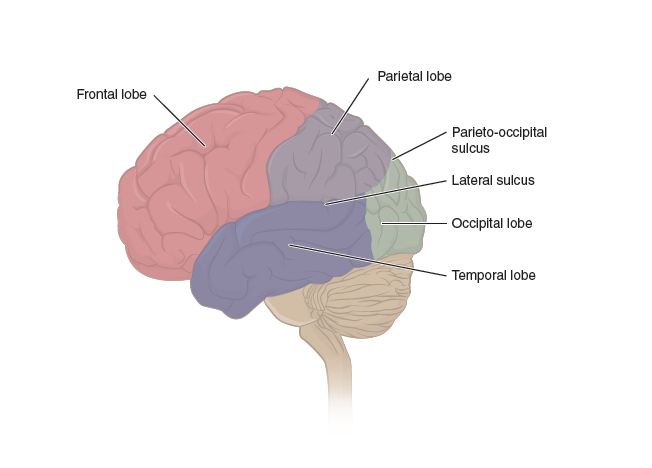
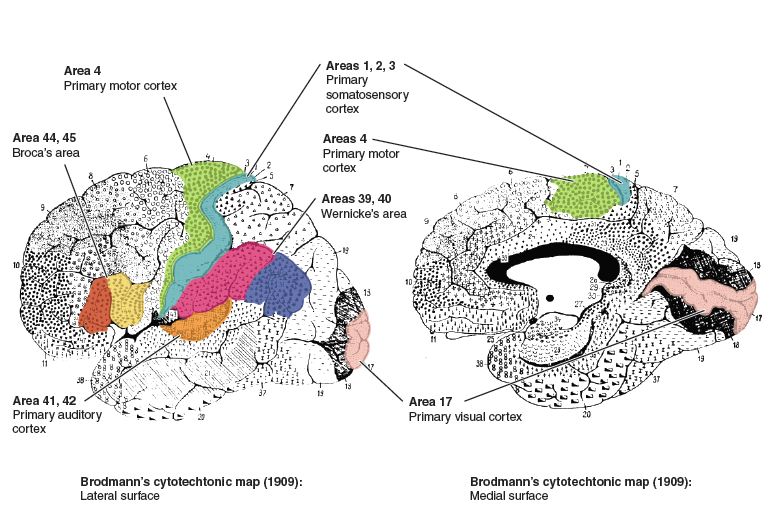
<div class="chapter standard" id="chapter-cardiovascular-homeostasis" title="Cardiovascular Homeostasis"><div class="chapter-title-wrap"><h3 class="chapter-number">44</h3><h2 class="chapter-title">Cardiovascular Homeostasis</h2></div><div class="ugc chapter-ugc"> <div class="cardiovascular-homeostasis"><h2>Local Control of Blood Flow</h2> <p class="import-NormalWeb"><strong class="import-term"><em>Autoregulation</em></strong> refers to a tissue&#8217;s ability to meet its metabolic needs by automatically altering its blood flow. Autoregulation is particularly important in organs such as the heart and skeletal muscles, whose need for oxygen, nutrients, and the removal of wastes during exercise can be up to 10 times higher than when the body is at rest. In addition to increasing perfusion in the heart and muscles during physical activity, autoregulation manages regional blood flow to other tissues as well, including the brain. Individual mental and physical tasks require significantly different patterns of blood distribution. When a person is on the telephone, for example, motor speech areas of the brain receive more blood when talking, and auditory areas get more blood flow when listening. Autoregulatory changes in blood flow occur in response to local signaling molecules that cause constriction or dilation of local arterioles.</p> <h3>Vasoconstrictors and Vasodilators</h3> <p class="import-NormalWeb">The diameter of blood vessels can be changed by chemicals secreted by various cells, such as white blood cells, smooth muscle cells, platelets, endothelial cells, and macrophages. Metabolically active tissue cells can release vasodilating chemicals such as potassium ions, hydrogen ions, lactic acid, and adenosine. Endothelial cells can also release the vasodilator nitric oxide. Tissue that is injured or inflamed secrete vasodilating compounds of the prostaglandin family. Chemicals that cause vasoconstriction include serotonin (released from platelets) and endothelins (from endothelial cells).</p> <p class="import-NormalWeb">Changes in local oxygen concentrations elicit two very different autoregulatory reactions in the pulmonary and systemic circulations. In the systemic circulation, decreased oxygen levels in the tissues cause blood vessels to dilate, increasing the delivery of oxygen. In the pulmonary circulation, low oxygen levels in poorly ventilated alveoli cause the blood vessels feeding those alveoli to constrict. As a result, blood avoids most of the alveoli in the lungs that have poor ventilation. Instead, most blood flows to well-ventilated alveoli.</p> <h2>Heart Attack and Congestive Heart Failure</h2> <p class="import-NormalWeb">Cardiac output is homeostatically maintained throughout our lifetime so that it constantly meets the needs of the body’s tissues. When the heart becomes damaged, such as after a heart attack, it may not be able to maintain adequate flow. This causes blood pressure to fall, initiating homeostatic feedback loops to try to bring blood pressure (and cardiac output) back to normal.</p> <p class="import-NormalWeb">One way that the heart can become damaged is through a heart attack. This occurs when coronary blood vessels, which supply the cells of the heart itself with oxygen and nutrients, become significantly narrowed or completely blocked with a combination of plaque and thrombus (clot). During a heart attack, cells lack oxygen, causing them to die. If enough heart muscle cells die, the heart weakens so that it can’t pump as much blood, leading to the various negative effects associated with this condition.</p> <p class="import-NormalWeb">Congestive heart failure is another common condition affecting cardiac output. It may develop after someone has a heart attack, or as a consequence of many other cardiac conditions. The problem with congestive heart failure is that the heart muscle is weakened to the point that it doesn’t do a good job pumping out the blood that is flowing into it (the blood flowing into the heart is called venous return). In fact, one of the main feedback loops that regulates blood pressure does so by adjusting the amount of blood in the body. This is because the more blood we have, the greater our venous return, and the higher the cardiac output – assuming a healthy heart. With the weakened heart associated with congestive heart failure, more venous return can actually lead to less cardiac output. A lowered cardiac output decreases blood pressure, signaling the body to increase blood volume, increasing venous return, and making cardiac output lower still. Because this loop continually makes the problem with cardiac output and blood pressure worse, it is a positive feedback loop – and not one we want to experience. Treatment focuses on preventing further progression and easing symptoms with methods such as oxygen delivery, medications, and palliative care.</p> <h2>Aging and The Circulatory System</h2> <p class="import-NormalWeb">Arterial walls change with age. Arteries that undergo significant changes include the large elastic vessels such as the aorta, the coronary arteries, and the carotid arteries. <strong class="import-term"><em>Arteriosclerosis</em></strong> refers to conditions that make arteries less elastic (commonly referred to as hardening of the arteries). This commonly occurs as we age because of calcium deposition in the walls of vessels (calcific arteriosclerosis), or degenerative loss of elastic fibers with age (senile arteriosclerosis).</p> <p class="import-NormalWeb"><strong class="import-term"><em>Atherosclerosis</em></strong> is a specific type of arteriosclerosis that involves the formation of plaques on arterial walls that make them stiffer. Plaques are made of fatty material containing cholesterol. This fatty substance may eventually be replaced with connective tissue and deposits of calcium. Plaques can rupture, initiating a blood clot at the site. Both arteriosclerosis and atherosclerosis increase resistance to blood flow. Atherosclerosis in blood vessels that supply the brain can reduce blood flow to the brain, causing brain cells to malfunction or die if the reduction in flow is severe enough. Arteriosclerosis and atherosclerosis can also lead to poor wound healing. These conditions are usually firmly diagnosed with vascular imaging methods.</p> <div class="wp-caption alignnone" style="width: 770px"><img src="https://oli.cmu.edu/repository/webcontent/546043760a0001dc3944c35ab2db3f8f/_u9_cardio/_u9_m3_Levels_Org/webcontent/C_M3_27.jpg" alt="Progression of atherosclerosis" width="770" height="386" /><div class="wp-caption-text">Progression of atherosclerosis</div></div> <div class="wp-caption alignnone" style="width: 770px"><img src="https://oli.cmu.edu/repository/webcontent/546043760a0001dc3944c35ab2db3f8f/_u9_cardio/_u9_m3_Levels_Org/webcontent/C_M3_28.jpg" alt="Cross-section of an atherosclerotic artery" width="770" height="519" /><div class="wp-caption-text">Cross-section of an atherosclerotic artery</div></div> <p class="import-NormalWeb">A main contributor to the development of atherosclerosis is high levels of low density lipoprotein (LDL or “bad” cholesterol) in the bloodstream. LDL typically rises with increased dietary saturated fat and decreased exercise. Because atherosclerosis is the main culprit of coronary artery disease, which is a leading cause of heart disease and death in the elderly, it is recommended that cholesterol levels be monitored with lipid profiles conducted every five years beginning at the age of 20.</p> <h2>Other Homeostatic Imbalances of the Cardiovascular System</h2> <p class="import-NormalWeb">We have discussed mechanisms within the heart that regulate cardiac output. For example, an increased heart muscle contraction will increase with an increase in venous return. Thus the healthy heart can pump more blood when there is more blood to pump.</p> <p class="import-NormalWeb">There are other controls of heart function and cardiac output from the nervous system and endocrine system, which we will discuss in the integration of systems. It is important to note that we do not consciously change our heart rate or cardiac output. Instead we can indirectly adjust the nervous and endocrine feedback loops by initiating activities such as exercise or relaxation techniques.</p> <h3>Homeostatic Imbalances of the Plasma Constituents</h3> <p class="import-NormalWeb">Although most people realize the importance of red blood cells in distributing oxygen to the body’s tissues, it is important to realize that the plasma (non-cellular) fraction of blood is also critically important. One function of the plasma is to form blood clots when blood vessels are cut or torn in order to prevent excessive blood loss. Blood clotting needs to be limited to the vessels that are damaged in order for the system to function appropriately. <strong class="import-term"><em>Disseminated intravascular coagulation</em></strong> <span class="import-term">(DIC)</span> is a serious condition in which the clotting cascade becomes activated in many non-injured blood vessels at one time. This occurs secondary to a significant insult to the body such as burns, cancer, infections, etc. With this generalized activation of the clotting cascade, small blood clots are formed, some of which limit or block off the flow of blood within vessels. This cuts off the flow of oxygen to organs, and if prolonged, can results in tissue necrosis (cell death), and the organ may stop functioning altogether. The random coagulation throughout the body leads to the coagulation proteins, as well as platelets, being used up, lowering the concentration of the essential clotting factors in the plasma. Once the coagulation process is disrupted, the patient suffers from abnormal bleeding from GI tract, respiratory tracts, and from the tiniest wounds in the body.</p> <h3>Homeostatic Imbalances of Red Blood Cell Concentration</h3> <p class="import-NormalWeb">Red blood cell concentration is sensitive to changes in oxygen levels. Prolonged exposure to low oxygen causes increased production of RBCs, raising the concentration of red blood cells in the blood (known as hematocrit), in order to maintain homeostatic oxygenation of the tissues. However, hematocrit levels that get too high can also lead to dysfunction, leading to a condition called <strong class="import-term"><em>polycythemia</em></strong>. With polycythemia, the blood will have increased viscosity, making it thicker and harder for the heart to pump this blood through the body. This can lead to heart failure in severe cases. Polycythemia can either be primary, where it is associated with an abnormality in the bone marrow that causes overproduction of red blood cells, or secondary, where red blood cell production is normally stimulated, but continues to the point of developing polycythemia.</p> <p class="import-NormalWeb">An example of secondary polycythemia is <strong><em>chronic mountain sickness</em></strong> (Monge’s disease), which is an uncommon condition that occurs in certain people living at high altitudes (above 12,000 feet) for months or years. At higher altitudes, the atmospheric pressure decreases, resulting in less oxygen availability due to lower partial pressure of oxygen in the atmosphere. This stimulates RBC production to bring people to a slightly higher hematocrit, which then levels off. In those that develop polycythemia, their RBC production continues over time, making their hematocrit very high. As mentioned previously, as their hematocrit increases, so does blood viscosity. An increase in viscosity makes it more difficult for blood to move through blood vessels and results in the heart pumping vigorously to get blood circulating through the body. This increased resistance of blood places an excessive strain on the heart that may lead to inadequate pumping of blood and decreased oxygenation of tissue. This can lead to cardiac ischemia and hypertension due to the body’s effort to return to homeostasis. Treating chronic altitude illness requires the removal of blood (about a pint) as a form of temporary relief. However, the only effective form of treatment is to descend to a lower altitude.</p> <h3>Homeostatic Imbalances Caused by Vessel Dysfunction</h3> <p class="import-NormalWeb">The tissues throughout the body regulate flow to themselves by sending signals that can constrict or dilate the blood vessels that “feed” them. If these vessels don’t have an ability to make the adjustments, the tissues won’t be able to appropriately match blood flow with their metabolic activity.</p> <p class="import-NormalWeb">One example of this is stable angina, where people experience chest pain on exertion. Stable angina is associated with atherosclerotic plaque that has developed in the main coronary arteries, which deliver flow to the cardiac muscle. Because of the plaque, these vessels can’t dilate appropriately when the needs of the heart muscle increases. Any type of increase in physical activity is not met with the normal coronary artery vasodilation in these individuals. This leads to low oxygen levels in their tissues, which can cause pain, as well as prevent the heart from functioning optimally, limiting their activity level.</p> </div> </div></div>
<div class="chapter standard" id="chapter-cardiovascular-integration-of-systems" title="Cardiovascular Integration of Systems"><div class="chapter-title-wrap"><h3 class="chapter-number">45</h3><h2 class="chapter-title">Cardiovascular Integration of Systems</h2></div><div class="ugc chapter-ugc"> <div class="cardiovascular-integration-of-systems"><h2>Blood Flow to Organ Systems</h2> <p class="import-NormalWeb">Our cardiac output varies with our level of activity, decreasing when resting and increasing when we are more active. For example, cardiac output can increase from the typical 5 L/min at rest up to 15-20 L/min during maximal exercise. When we experience such changes in cardiac output it is important to realize that not all organs and tissues will experience similar changes in blood flow. So when your cardiac output triples, you will not experience a tripling of flow to each organ. Instead, flow is directed to those tissues that need it most, typically based on their metabolic state. If you are sprinting, your cardiac output might triple, but the flow to the muscles in your legs might go up six or eight fold, while flow to your digestive organs can actually decrease. Thus flow is directed to those capillary beds surrounded by cells with the greatest requirement for oxygen and nutrients.</p> <p class="import-NormalWeb">There are some organs in the body where their level of blood flow is not as dependent on their metabolic need, but because they are important in processing and/or interacting with blood in other ways. Examples include the kidneys, which process the blood by removing metabolic wastes, the lungs, which participate in gas exchange, the liver, which processes the substances absorbed in the GI tract, glands, which release hormones into the bloodstream, and the skin, which helps regulate body temperature. In the case of the liver and the pituitary gland, they interact with the blood through a portal system, where the vascular network in these tissues contains two capillary beds along the path of blood flow. The kidney blood flow also involves two capillary beds, but these are connected by an arteriole.</p> <p class="import-NormalWeb">The portal system involving the liver plays an important role in processing substances absorbed by the capillaries along the intestines. These capillary beds in the intestines absorb nutrients and other chemicals. This same blood then travels to the liver where it enters the liver sinusoids (a second capillary bed) before returning to the venous circulation. Specific functions occurring in the liver include storing glucose as glycogen, repackaging lipids into lipoproteins and detoxification of harmful, and even useful, chemicals, such as drugs. In fact, when discussing the ability of orally administered drugs to distribute throughout the body, the effect of the liver is known as the “first pass” effect.</p> <p class="import-NormalWeb">The kidney actually contains two capillary beds in the same organ, where the first capillary bed (the glomerular capillaries) filters the blood and the second (either the peritubular or vasa recta capillaries) reabsorbs most of the original filtrate.</p> <p class="import-NormalWeb">The cells of the anterior pituitary gland respond to chemical signals secreted into capillaries of the hypothalamus. Once the blood from the hypothalamus enters the anterior pituitary, it enters a second capillary bed so that the cells of the anterior pituitary can sense these signals and respond by secreting their own hormones if necessary.</p> <h2>Neural Regulation of the Cardiovascular System</h2> <p class="import-NormalWeb">As you have learned, homeostasis relies on communication between body systems, which is primarily carried out by the nervous and endocrine systems. To convey information, the nervous system uses neural impulses, and the endocrine system uses hormones released into the blood. Most homeostatic controls involve negative feedback mechanisms, in which the output of a process either terminates or lessens the original change.</p> <h3>Neural Regulation of Cardiac Output</h3> <p class="import-NormalWeb">Both the parasympathetic and sympathetic branches of the <strong class="import-term"><em>autonomic nervous system</em></strong> <span class="import-term">(ANS)</span> alter the cardiac output as necessary. The ANS modulates the heart rate and force of contraction (contractility) of the myocardium.</p> <p class="import-NormalWeb">The <strong class="import-term"><em>parasympathetic nervous system</em></strong> decreases the heart rate. The <strong class="import-term"><em>vagus nerve</em></strong> (the 10th cranial nerve) innervates the SA and AV nodes of the heart. It is the parasympathetic branch of the ANS that sets the heart rate under normal resting condition. This is commonly referred to as the “vagal tone” as it is the vagus nerve that is responsible for this basal cardiac function. The effect of the parasympathetic system is to decrease the rate at which action potentials are generated at the SA and AV nodes and also to slow down the conduction speed between the SA and the AV nodes. Increasing parasympathetic activity increases the P-R interval of the ECG. Because the parasympathetic nervous system does not innervate the ventricular cells, it does not significantly affect the level of contractility of the ventricular myocardium. Conversely, the heart rate is increased through the actions of the <strong class="import-term"><em>sympathetic nervous system</em></strong>. The sympathetic nerves run from the sympathetic chain ganglia, found along the thoracic region of the spinal cord to the SA node, the AV node, and the myocytes of the ventricles. The sympathetic nerves increase the heart rate by increasing the spontaneous depolarization rate of the SA and AV nodes, and increases the rate of conduction through the AV node. Sympathetic innervation of the ventricular myocytes can be used to increase the contractility of the heart.</p> <h2>Hormonal Regulation of the Cardiovascular System</h2> <p class="import-NormalWeb">A number of hormones are involved in the regulation of blood flow and BP. They work by changing cardiac output, systemic vascular resistance, or total blood volume.</p> <h3>The Renin-Angiotensin-Aldosterone System</h3> <p class="import-NormalWeb">The <strong class="import-term"><em>renin-angiotensin-aldosterone</em></strong> <strong class="import-term"><em>system</em></strong> is set in motion when decreases in blood pressure or renal blood flow stimulate cells in the kidney to secrete <strong class="import-term"><em>renin</em></strong> into the blood. This leads to a pathway that ultimately produces the hormone <strong class="import-term"><em>angiotensin II</em></strong>, which increases BP in two ways. First, as a vasoconstrictor, angiotensin II increases BP by increasing peripheral vascular resistance. Second, it causes the kidney tubules to reabsorb sodium. High plasma angiotensin is also a trigger for higher levels of <span class="import-term">aldosterone</span> synthesis by the adrenal cortex. This hormone also acts on the kidneys to increase the reabsorption of sodium ions. The increased reabsorption of Na+ leads to enhanced water reabsorption at the kidneys, and this causes the total blood volume to rise, elevating the BP and leading to an increase in venous return. This increase in the amount of blood flowing into the heart also increases cardiac output.</p> <h3>Epinephrine and Norepinephrine</h3> <p class="import-NormalWeb">Sympathetic stimulation promotes the release of <strong class="import-term"><em>epinephrine</em></strong> and <strong class="import-term"><em>norepinephrine</em></strong> by the adrenal medulla. As described above, these hormones (or neurotransmitters) increase the heart rate (chronotropy) and force of contraction (inotropy). As the force of contraction increases the stroke volume also increases. Because cardiac output (CO) is the product of HR and SV, CO increases. The increase is CO will also lead to an increase in arterial pressure, as described earlier. Epinephrine (or norepinephrine) also has the effect of constricting arterioles and veins in the abdominal organs and skin, while dilating vessels in the heart and skeletal muscle. This results in increased blood flow to muscles during physical activity.</p> <h3>Antidiuretic Hormone</h3> <p class="import-NormalWeb">Decreased blood volume or dehydration prompts an increased release of <strong class="import-term"><em>antidiuretic hormone</em></strong> <span class="import-term">(ADH)</span> from the posterior pituitary. This hormone, which is produced by the hypothalamus and stored in the posterior pituitary, causes the kidney to retain water. This retention can lead to an increase in blood volume and increasing preload similarly to the renin-angiotensin system. At very high levels (such as those released during circulatory shock) it also causes peripheral blood vessels to constrict, helping to raise the BP. This is why antidiuretic hormone is also known as <strong class="import-term"><em>vasopressin</em></strong>.</p> <h3>Atrial Natriuretic Peptide (ANP)</h3> <p class="import-NormalWeb"><strong class="import-term"><em>Atrial natriuretic peptide</em></strong> <span class="import-term">(ANP)</span>, which is secreted by the myocytes of the atria of the heart, decreases blood pressure in two ways. First, it dilates blood vessels. Second, it reduces blood volume by increasing the excretion of salt. This is a peptide hormone that is secreted in response to higher blood volume that stretches the atrial walls. The effect of ANP is to ultimately lower blood pressure. To achieve that, ANP facilitates glomerular filtration pressure, increases excretion of sodium and urea, inhibits aldosterone secretion, and inhibits the renin-angiotensin system.</p> </div> </div></div>
<div class="part " id="part-chapter-9-the-lymphatic-system-and-immunity"><div class="part-title-wrap"><h3 class="part-number">XIII</h3><h1 class="part-title">Chapter 9: The Lymphatic System and Immunity</h1></div><div class="ugc part-ugc"></div></div>
<div class="chapter standard" id="chapter-lymphatic-system-introduction" title="Lymphatic System Introduction"><div class="chapter-title-wrap"><h3 class="chapter-number">46</h3><h2 class="chapter-title">Lymphatic System Introduction</h2></div><div class="ugc chapter-ugc"> <div class="lymphatic-system-introduction"><p class="import-NormalWeb" style="background-color: #ffffff;">Take any anatomy and/or physiology textbook or course, and chances are that the chapter dedicated to the lymphatic system will be short and lacking detail when compared to its mighty and well known sibling, the cardiovascular system. Maybe because of the prominence and the romantic notions ascribed to the heart and blood, the cardiovascular system has been studied much more extensively. Since its original description by Hippocrates, the lymphatic system has been neglected by both scientific and medical communities because of its vagueness in structure and function. “Rediscovered” in the 1600s as the venae albae et lacteae (“milky veins”), the lymphatic system was for long considered a secondary vascular system that supports the blood vascular system.</p> <p class="import-Normal">In fact, the lymphatic system has important functions ranging from transport of fats, returning leaked fluids to the blood, to housing the cells and many organs of the immune response. The immune system coordinates the activities required to respond to disease and infection. This response can provide two types of immunity:</p> <p class="import-Normal" style="background-color: #ffffff;"><strong><em>Specific immunity</em></strong>, in which specialized cells (such as T and B cells) recognize specific foreign molecules called antigens within the body and respond to them.</p> <p class="import-Normal" style="background-color: #ffffff;"><strong><em>Nonspecific immunity</em></strong>, in which the body uses several general methods such as physical barriers (that is, the skin and mucous membranes), fever, inflammation, specific action by immune cells, and enzyme activity to protect itself against general harmful agents.</p> <p>&nbsp;</p> <div class="textbox interactive-content"><span class="interactive-content__icon"></span> <p>An interactive or media element has been excluded from this version of the text. You can view it online here:<br /> <a href="https://pressbooks.ccconline.org/bio106/?p=371#pb-interactive-content" title="Ch 8 Lymphatic System Introduction">https://pressbooks.ccconline.org/bio106/?p=371</a> </p> </div> <h2>Components of the Lymphatic System and Immunity</h2> <p class="import-Normal" style="background-color: #ffffff;">Our body is in constant exchange with the environment, through breathing, eating and other activities. Therefore, it is important to screen the body and its components regularly to identify foreign invaders that might enter during these activities (or in any other manner). Further, it is important to rapidly and effectively remove these invaders before they can cause significant harm. Our body has specialized transport systems to carry out these functions. The cardiovascular and lymphatic systems work together to transport excess fluids (blood and lymph fluid, respectively) away from body tissues. The cardiovascular and lymphatic systems also participate in the function of immunity, helping defend the body&#8217;s cells from foreign organisms that may enter the body tissues or fluids.</p> <div class="wp-caption alignnone" style="width: 770px"><img src="https://oli.cmu.edu/repository/webcontent/546043760a0001dc3944c35ab2db3f8f/_u1_motivation_introduction/_u1_m2_intro_systems_00/webcontent/Lymphatic_system_organs_thru-Skin_400px.jpg" alt="Organs of the Lymphatic System" width="770" height="729" /><div class="wp-caption-text">Organs of the Lymphatic System</div></div> <p class="import-Normal" style="background-color: #ffffff;">The major organs of the lymphatic and immune systems can be classified based on their role in lymphocyte maturation. Maturation of lymphocytes takes place within the red bone marrow and the thymus gland, which are primary lymphoid organs. Antigens become trapped within secondary lymphoid organs such as the lymph nodes, spleen, and tonsils. These organs are sites that contain lymphocytes for destruction of invading pathogens.</p> <table class="grid"><caption>Table 1: Organs and Descriptions</caption> <tbody><tr class="TableNormal-R" style="height: 0;"><th>Organ</th> <th>Description</th> </tr> <tr class="TableNormal-R" style="height: 0;"><td>Tonsils and Adenoids</td> <td>Adenoids are one of three sets of tonsils. They trap pathogens that enter through the mouth and nose. Also, the tonsils monitor the external environment that the mouth and nose are exposed to, and can react with an appropriate immune response for certain pathogens.</td> </tr> <tr class="TableNormal-R" style="height: 0;"><td>Thymus</td> <td>A lobular (of or pertaining to a lobe) structure, which contains many immature, inactive lymphocytes. As the lymphocytes mature, they leave the thymus to attack infected cells in lymphatic tissues throughout the body.</td> </tr> <tr class="TableNormal-R" style="height: 0;"><td>Spleen</td> <td>The largest of the lymphatic organs, it houses lymphocytes for potential immune response. Also, the resident phagocytes within the spleen perform the most basic function of removing cell debris from the blood.</td> </tr> <tr class="TableNormal-R" style="height: 0;"><td>Lymph Nodes</td> <td>These house lymphocytes and macrophages, which destroy foreign material contained in the lymph fluid.</td> </tr> <tr class="TableNormal-R" style="height: 0;"><td>Lymph Vessels</td> <td>These transport lymph fluid throughout the lymphatic system.</td> </tr> <tr class="TableNormal-R" style="height: 0;"><td>Red Bone Marrow</td> <td>All of our blood cells are generated from red bone marrow stem cells. These stem cells differentiate into red blood cells, platelets, and several cells that play roles in immunity. These “immune cells” include lymphocytes, which carry out specific immunity, and neutrophils and macrophages (macrophages start as monocytes and mature into macrophages in the tissues), which are nonspecific phagocytic cells.</td> </tr> </tbody> </table> <p class="import-Normal" style="background-color: #ffffff;">While many people know that we are protected from foreign micro-organisms by an immune system, few people realize how the immune system is able to patrol the entire body. White blood cells of the immune system are produced in the red bone marrow and travel through the blood. They can leave blood capillaries to travel through tissues. White blood cells are then able to remove dead or damaged cells and &#8220;foreign&#8221; organisms they encounter and recognize specific foreign organisms again if necessary. Additionally, lymph collects from tissues and circulates through lymph vessels, making &#8220;rest stops&#8221; in discrete points throughout the body called lymph nodes or lymph organs. In these nodes and organs, including the spleen, tonsils and other tissue clusters, there are large collections of white blood immune cells. Lymph slowly travels through these organs ensuring that the lymphocytes have plenty of time to react to these foreign organisms in the lymph before returning it to the blood.</p> </div> </div></div>
<div class="chapter standard" id="chapter-lymphatic-structures-and-functions" title="Lymphatic Structures and Functions"><div class="chapter-title-wrap"><h3 class="chapter-number">47</h3><h2 class="chapter-title">Lymphatic Structures and Functions</h2></div><div class="ugc chapter-ugc"> <div class="lymphatic-structures-and-functions"><h2>Major Functions of the Lymphatic System</h2> <p class="import-NormalWeb" style="background-color: #ffffff;">The lymphatic system is essential for our survival. This system has three main functions:</p> <ul><li class="import-NormalWeb" style="background-color: #ffffff;">To collect and recycle the excess interstitial fluid and its dissolved substances</li> <li class="import-NormalWeb" style="background-color: #ffffff;">To absorb fats and other substances from the digestive tract (this topic will be discussed in the Digestive System Unit)</li> <li class="import-NormalWeb" style="background-color: #ffffff;">To initiate and coordinate an immune response to remove cellular debris, bacteria, toxins, fungi, parasites, and viruses that accumulate in our bodies</li> </ul> <p class="import-NormalWeb" style="background-color: #ffffff;">Because this system has the two very different functions of maintaining the proper fluid balance in the body and protecting the body from harmful infections, we will begin its study by 1) investigating the lympathic vessels and lymph which function in fluid balance and then 2) investigate how these structures along with lymphatic cells, tissues and organs function in protecting the body from infections. <strong class="import-term"><em>Infection</em></strong> can be viewed as the invasion and multiplication of microorganisms that are not normally present within the body. An infection may remain at the location where it entered the body, or it may spread through the body via blood or lymphatic vessels. <strong class="import-term"><em>Immunity</em></strong> is the state of having sufficient defenses (resistance) against infections that might disrupt homeostasis. Immunity involves both non-specific, inherent components (<strong class="import-term"><em>innate immunity</em></strong>) and specific, acquired from previous exposure components (<strong class="import-term"><em>adaptive immunity</em></strong>).</p> <p class="import-NormalWeb" style="background-color: #ffffff;">It is important to realize that although immunity will be considered here in the context of human anatomy and physiology, it is not restricted to humans or animals. The ability to defend itself from “non-self” invaders appears as early as in bacteria defending themselves from viral attacks, and it is an inherent homeostatic mechanism present in all types of cells, plants, and animals. As organisms evolved, so did the immune system. Thus, while the innate system is present in all animals, only vertebrates present the adaptive response.</p> <p>&nbsp;</p> <p class="import-NormalWeb" style="background-color: #ffffff;"></p> <div class="textbox interactive-content"><span class="interactive-content__icon"></span> <p>An interactive or media element has been excluded from this version of the text. You can view it online here:<br /> <a href="https://pressbooks.ccconline.org/bio106/?p=384#pb-interactive-content" title="Which of the processes below do not fit into the category of innate immunity?">https://pressbooks.ccconline.org/bio106/?p=384</a> </p> </div> <p>&nbsp;</p> <p class="import-Normal" style="background-color: #ffffff;"><strong class="import-Heading3Char">Lymph Tissue and Lymphatic Vessels</strong><br style="clear: both;" /><br style="clear: both;" />Like the circulatory system that carries blood throughout the body, the lymphatic system is made of a series of vessels, capillaries, and organs. These structures collect excess fluid and cellular debris from the tissues and return them back to the blood.</p> <p class="import-Normal" style="background-color: #ffffff;">In the circulatory system, blood flows from arteries, through capillaries and into veins to be returned to the heart. On its way through the capillaries, some of the fluid passes out across the capillary wall and into the interstitial fluid in a process called capillary filtration. This filtration tends to occur across the arterial end of the capillary, with most of the filtered fluid being reabsorbed at the venous end of the capillary. This leaves a small amount of fluid that remains in the interstitial spaces between cells. This filtered fluid is mostly plasma plus any plasma proteins that might have leaked from the blood vessel as well. This excess interstitial fluid is collected by the lymphatic system. The fluid flows through the lymphatic vessels until it is returned to the circulatory system to again become a component of blood. Once interstitial fluid passes into lymphatic vessels, it is called lymph. Lymph is a clear, pale-yellow fluid connective tissue.</p> <p class="import-Normal" style="background-color: #ffffff;">The lymphatic system consists of many different tissues and organs that are found throughout the body. Some organs provide the environment for the development and maturation of leukocytes. Other tissues and organs trap pathogen and are the sites where leukocytes can interact with the pathogen. The circulatory and lymphatic systems interact to connect these organs and tissues.</p> <div class="wp-caption alignnone" style="width: 770px"><img src="https://oli.cmu.edu/repository/webcontent/546043760a0001dc3944c35ab2db3f8f/_u1_motivation_introduction/_u1_m2_intro_systems_00/webcontent/LymphaticSystem_with_components.jpg" alt="Vessels and Organs of the Lymphatic System" width="770" height="673" /><div class="wp-caption-text">Vessels and Organs of the Lymphatic System</div></div> <p class="import-Normal" style="background-color: #ffffff;">Fluid moves from blood capillaries into the interstitial spaces. Most of the fluid returns to the blood, but some of the fluid moves from the interstitial spaces into lymphatic capillaries to become lymph. To collect the lymph from the interstitial space, lymph capillaries originate in the blood capillary beds, and lymph vessels run parallel to the veins. At intervals along the lymphatic vessels, lymph flows through lymph nodes. Fluid collected in the lymph system is returned to the heart via veins in the chest. Unlike the circulatory system, the lymphatic system does not flow through a closed, circular system. There are no lymph arteries. Lymph fluid is not pumped around the body. Instead, the lymph system collects the lymph into vein-like structures called lymph vessels and returns it to the bloodstream.</p> <h3>Lymph Vessels and Capillaries</h3> <p class="import-Normal">The lymphatic system contains both capillaries and vessels. Lymphatic vessels begin as capillaries. Both of these structures are thin walled, which allows lymph to be transported across the membrane and collected in the vessels. Lymphatic capillaries have greater permeability than blood capillaries and can absorb large molecules such as proteins and lipids. The endothelial cells that make up the wall of a lymphatic capillary lack a basement membrane, loosely attach to each other and slightly overlap. Interstitial fluid enters the lymphatic vessel when the pressure is greater in the interstitial fluid than in lymph and nothing in the interstitial fluid is excluded from entering the lymphatic capillaries. When pressure is greater inside the lymphatic capillary, the endothelial cells prevent lymph from passing back into the interstitial spaces by acting like a one-way swinging door. Lymphatic capillaries are found wherever blood capillaries are located except in the central nervous system and bone marrow.</p> <div class="wp-caption alignnone" style="width: 770px"><img src="https://oli.cmu.edu/repository/webcontent/546043760a0001dc3944c35ab2db3f8f/_u13_lymphatic/_u13_m1_structures/webcontent/Lymph_1.jpg" alt="Interaction of Blood and Lymphatic Vessels" width="770" height="571" /><div class="wp-caption-text">Interaction of Blood and Lymphatic Vessels</div></div> <div class="wp-caption alignnone" style="width: 770px"><img src="https://oli.cmu.edu/repository/webcontent/546043760a0001dc3944c35ab2db3f8f/_u13_lymphatic/_u13_m1_structures/webcontent/Lymph_2.jpg" alt="Anatomy of a Lymphatic Vessel" width="770" height="559" /><div class="wp-caption-text">Anatomy of a Lymphatic Vessel</div></div> <p class="import-Normal" style="background-color: #ffffff;">Lymphatic capillaries unite to form larger lymphatic vessels. Structurally, lymphatic vessels are similar to veins because they also have one way valves that function like gates to ensure the lymph only flows in one direction. Like veins, skeletal muscle contraction exerts pressure on the lymph vessels and forces the lymph forward through them. Lymph vessels are like one-way roads, with the lymph being collected at the capillary beds and travels through the body into the thoracic cavity. Lymph is deposited in one of two large ducts in the chest region: the right lymphatic duct and the thoracic duct. The lymph then travels from these ducts into venous circulation via the subclavian and jugular veins.</p> <div class="wp-caption alignnone" style="width: 770px"><img src="https://oli.cmu.edu/repository/webcontent/546043760a0001dc3944c35ab2db3f8f/_u13_lymphatic/_u13_m1_structures/webcontent/Lymph_4.jpg" alt="Regional Lymph Nodes " width="770" height="751" /><div class="wp-caption-text">Regional Lymph Nodes</div></div> <p class="import-Normal" style="background-color: #ffffff;">Unlike the cardiovascular circulation, the lymphatic circulation lacks a pump like the heart. Lymphatic vessels are low pressure vessels similar to veins and the same muscle pump and respiratory pump that promote venous return also facilitate lymph flow. Therefore, even though there is some smooth muscle in lymphatic vessels, movement of the body is important to lymph circulation.</p> <p>&nbsp;</p> <div class="textbox interactive-content"><span class="interactive-content__icon"></span> <p>An interactive or media element has been excluded from this version of the text. You can view it online here:<br /> <a href="https://pressbooks.ccconline.org/bio106/?p=384#pb-interactive-content" title="Ch 9 Lymphatic Structures and Functions - Lymph Vessels and Capillaries">https://pressbooks.ccconline.org/bio106/?p=384</a> </p> </div> <h3>Common Dysfunctions of the Lymphatic Circulation</h3> <p class="import-Normal">Anything that would disrupt the flow of lymph could contribute to significant swelling of tissues (edema). <strong><em>Lymphedema</em></strong> is a condition of localized fluid retention and a tissue swelling caused by a compromised lymphatic system. Lymphedema can be primarily caused genetically or secondarily due to injury or obstruction of lymphatic vessels. It is most frequently seen after lymph node dissection, surgery and/or radiation, in which lymphatic system damage is caused during the treatment of cancer, usually breast cancer. Lymphedema may also be associated with parasitic infections in which parasites obstruct lymph vessels. Symptoms may include fatigue, a swollen limb or localized fluid accumulation in other body areas, including the head and neck, discoloration of the skin overlying the swollen tissue and eventually deformity (elephantiasis).</p> <h2>Immunity</h2> <h3>Historical Perspective and Overview of Immunity</h3> <p class="import-Normal" style="background-color: #ffffff;">In relative terms, the study of immunity is a new science that started with Edward Jenner’s discovery in 1796, that individuals exposed to cowpox were often resistant to human smallpox. He also observed that people who had recovered from even a mild case of smallpox were seldom infected a second time. Jenner experimented with placing weakened (attenuated) strains of disease-causing agents into otherwise healthy individuals to provide protection from disease. He called his procedure vaccination. Adding to Jenner&#8217;s work, in the 1880s, Robert Koch and Louis Pasteur showed that most infectious diseases were caused by microorganisms. Today it is generally accepted that these disease-causing agents (pathogens) may be microscopic like viruses, bacteria, protozoa and yeast or larger like molds and helminths. Scientists discovered a substance in the serum of vaccinated individuals, which they termed antibodies, that could bind to the pathogen that was used in the vaccination. It was shown that <em>anti</em>bodies could be <em>gen</em>erated against a variety of substances and the term <strong>antigen </strong>was created to describe these substances. As we will learn shortly, not all antigens stimulate the immune system to produce antibodies so a more general use of the term antigen refers to any substance capable of being recognized during the immune response.</p> <div class="wp-caption alignnone" style="width: 400px"><img src="https://oli.cmu.edu/repository/webcontent/546043760a0001dc3944c35ab2db3f8f/_u13_lymphatic/_u13_m1_structures/webcontent/image1.jpeg" alt="Edward Jenner vaccinating James Phipps, a boy of eight, on May 14, 1796" width="400" height="483" /><div class="wp-caption-text"><a href="https://fr.wikipedia.org/wiki/Fichier:Melingue_Jenner.jpg" target="_blank" rel="noopener noreferrer">Edward Jenner vaccinating James Phipps, a boy of eight, on May 14, 1796</a>, by Gaston Mélingue. Public domain.</div></div> <p class="import-NormalWeb" style="background-color: #ffffff;">Basically the immune system, as part of the lymphatic system, can be viewed as may subsystems constantly guarding its host against microbial invasion. These systems may be viewed both as an armory (chemical substances), with it tools and weapons, and as an army (cells) capable of using these tools and weapons in defense of the host. Immunity (resistance) has an <strong><em>innate component </em></strong>and an <strong><em>adaptive component</em></strong>. Both of these components depend on the responses of <strong><em>white blood cells</em></strong> (<strong><em>leukocytes</em></strong>).</p> <p class="import-Normal" style="background-color: #ffffff;">Innate immunity is the natural resistance with which a person is born and is the result of actions of both external and internal systems. First lines of defense against infection include mechanical and chemical barriers, such as skin and saliva, the effectiveness of which is enhanced by antimicrobial substances. Microbes that succeed in passing the external barriers next encounter the second line of defense, the internal systems. The internal system includes antimicrobial substances and subsets of leukocytes called granulocytes and macrophages. Granulocytes contain an arsenal of cytoplasmic granules that can be released during an immune response. Several of these granulocytes and the macrophages are <strong><em>phagocytic </em></strong>which means they are able to ingest and destroy pathogens. They use <strong><em>pattern-recognition receptors (PRRs)</em></strong><strong><em> </em></strong>to recognize pathogens. These receptors recognize and bind to molecules found on a wide variety of microbial cells and on damaged or infected host cells. Thus they recognize in a broad and general way the presence of harmful microbes and can quickly attack and usually prevent the spread of the microbes. In addition, the innate immune system includes <strong><em>complement</em></strong>, a set of soluble molecules that can bind to certain molecules common to microbial cells. This binding can lead to the direct destruction of the microbe and can also trigger increased activity of phagocytic cells against the microbe.</p> <p class="import-Normal" style="background-color: #ffffff;">A bridge between the innate and the adaptive components is the <strong><em>inflammatory response</em></strong>. Although many soluble factors, blood proteins and cells participate in this response, the main purpose of all of the factors is to enable phagocytic leukocytes and plasma components to leave the blood circulation and enter into damaged and/or infected tissues. The phagocytes in the tissue carry out an array of activities at the inflamed site, the main one being to rid the area of microorganisms and damaged tissue and thus to set the stage for healing. As will be described more completely in a later module, all events between the initial damage and the final restoration of the tissue may be considered parts of the inflammatory response.</p> <p class="import-Normal" style="background-color: #ffffff;">Sometimes, however, the innate immune components cannot quickly eliminate the infectious agents especially viral infections. In such instances, cells of the innate system interact with <strong><em>T </em></strong><strong><em>lymphocytes</em></strong> (<strong><em>T cells</em></strong>) and <strong><em>B lymphocytes</em></strong> (<strong><em>B cells</em></strong>) to initiate adaptive immune responses against the threatening pathogens. The lymphocytes of the adaptive immune response have receptors that are generated by random rearrangement of DNA segments. Such receptors are able to identify and bind a far greater range of substances than can be detected by the PRRS of the innate response. Lymphocytes can detect, with great specificity, threats and proliferate rapidly to act against them in a targeted manner.</p> <p class="import-Normal" style="background-color: #ffffff;">The interaction between the innate and adaptive immune responses begins when macrophages and dendritic cells process pathogens and display them in a way that leads to activation of a subset of T lymphocytes (<strong><em>helper T cells</em></strong>). The activated T helper cells can then interact with a variety of other cells, including another subset of T lymphocytes (<strong><em>cytotoxic T cells</em></strong>) and the B lymphocytes. Some cytotoxic T cells become directly involved in attacks against the infection, while the B lymphocytes produce antigen-specific antibodies. The function of antibodies in the immune system is to recognize and neutralize microbes. Once inititated by cells of the innate response, adaptive responses lead to an expansion of the numbers of lymphocytes able to recognize and bind the pathogen in question. In responding to the pathogen, the lymphocytes not only act directly on the substance providing the threat, but may also recruit cells, for example phagocytic cells, and molecules, for example complement, from the innate system and together both the innate and the adaptive immune responses focus their destructive capabilities on removing the threat. Unlike the innate response that operates at a relatively constant level, adaptive immune responses generate memory B and T lymphocytes that produce more vigorous responses upon subsequent encounters with the same microbe.</p> <p class="import-Normal" style="background-color: #ffffff;">One essential component of the immune response is that it must be able to distinguish self, which belongs in the body, from nonself (foreign). Agents or molecules classified as nonself may enter the body from the outside or represent an unacceptable change within the body (for example, a virus infected self-cell or a self-cell becoming cancerous). B lymphocyte receptors recognize foreign molecules not associated with self-cells (for example bacterial cells or their toxins). However, T lymphocyte receptors recognize foreign molecules <em>only </em>in association with self-cells (for example a virus-infected cell). Therefore, this recognition involves two considerations: self versus nonself and threat versus nonthreat. Immune cells distinguish self from nonself through cell-surface receptors. All nucleated cells of the body express <strong><em>major histocompatibility complex</em></strong> (<strong><em>MHC</em></strong>) molecules. MHC molecules associated with foreign proteins allow T lymphocytes to recognize self that is threatened and needs to be removed by immune responses.</p> <p class="import-Normal" style="background-color: #ffffff;">In summary, because of the wide variety of pathogens located within the body and at its surfaces, host defense requires a wide variety of recognition and defense mechanisms. Innate immunity serves the first line of defense, but is unable to recognize certain pathogens and unable to provide improved defenses that prevents re-infection. Adaptive immunity is based on lymphocytes with receptors that can potentially recognize any foreign antigen. In addition to the adaptive immune response that can eliminate a pathogen, memory lymphocytes are generated that can produce a more rapid and effective response on re-infection.</p> <h3>Common Dysfunctions of the Immune Response</h3> <p class="import-Normal" style="background-color: #ffffff;">The immune system works remarkably well. Unfortunately, at times it breaks down and fails to function properly. Autoimmune diseases, such as systemic lupus erythematosus (SLE), celiac disease and diabetes mellitus type I, arise from an inappropriate immune response against components normally present in the body. Allergies arise from an exaggerated immune reaction to agents that are not normally harmful and lead to release of chemicals such as histamine. Acquired Immunodeficiency Syndrome (AIDS) is caused by the human immunodeficiency virus (HIV). HIV infects a subset of T cells in the body, thus compromising the immune system. Cancers that affect either T or B cells are collectively called lymphomas. Some are aggressive and fast-growing lymphomas, while others are non-aggressive and slow growing. In a later module we’ll take a closer look at these immune problems of clinical significance.</p> </div> </div></div>
<div class="chapter standard" id="chapter-lymphatic-levels-of-organization" title="Lymphatic Levels of Organization"><div class="chapter-title-wrap"><h3 class="chapter-number">48</h3><h2 class="chapter-title">Lymphatic Levels of Organization</h2></div><div class="ugc chapter-ugc"> <div class="lymphatic-levels-of-organization"><p>Your exploration of immunity in the following modules will extend from the simplest to the most complex. Although the levels of organization are introduced in modules, the functional interconnections between the organizational levels will build throughout the development of modules within this unit.</p> <ul><li><em class="import-Emphasis">Molecular level</em> of organization (includes 4 general categories of molecules): <ul><li>Three main types of antimicrobial substances (interferon, complement, iron-binding transferrins)</li> <li>Substances that contribute to aspects of inflammation (histamine, kinins, prostaglandins, leukotrienes, and complement)</li> <li>Molecules present on pathogens and infected self-cells (pathogen-associated molecular patterns, antigens and major histocompatibility complex) that are recognized by receptors (pattern recognition receptors, B-cell receptor, T-cell receptor) on immune cells</li> <li>Small protein hormones, called cytokines that stimulate or inhibit normal cell functions such differentiation and growth</li> </ul> </li> <li><em class="import-Emphasis">Cell level</em> – Neutrophils, Eosinophils, Basophils, Monocytes, Macrophages, Dendritic cells, Natural killer cells and B and T Lymphocytes</li> <li><em class="import-Emphasis">Tissue level</em> – lymph and lymph nodules such as mucosa-associated lymph tissue and tonsils</li> <li><em class="import-Emphasis">Organ level</em> – lymph capillaries and vessels, primary lymph organs such as bone and thymus, secondary lymph organs such as lymph nodes, and spleen</li> <li><em class="import-Emphasis">System level</em> &#8211; all components that function together to drain excess interstitial fluid and carry out immune responses</li> </ul> <h2>Molecular Level of Organization</h2> <h3>Types of Antimicrobial Proteins</h3> <p>Blood and interstitial fluids contain three main types of antimicrobial proteins that interfere with microbial growth: 1) interferons, 2) complement, and 3) iron-binding proteins.</p> <p>Virus-infected cells produce proteins called <strong class="import-term"><em>interferons </em></strong>(<strong class="import-term"><em>IFNs</em></strong>). IFNs diffuse through the interstitial fluid to uninfected neighboring cells. These proteins then cause the uninfected cells to synthesize antiviral proteins that interfere with viral replication. Viruses can cause disease only if they can replicate within body cells. Although IFNs do not prevent attachment and penetration of viruses to host cells, they do stop replication. Some interferons also have important immunoregulatory and anti-tumor effects. There are three families of IFNs; α-, β- and δ-IFN.</p> <p>The complement system consists of 30 proteins. These proteins are produced by the liver and circulate in the plasma. When activated, the complement proteins collectively can cause cytolysis (bursting) of cells, promote phagocytosis and contribute to inflammation. Most complement proteins are designated by an uppercase letter C and a number; and a few complement proteins referred to as factors B, D and P (properdin). C1-C9 complement proteins act in a cascade. Complement activation may begin by three different pathways: <em class="import-Emphasis">classical pathway</em> requires antibodies bound to antigen, <em class="import-Emphasis">alternate pathway</em> involves factors B, D and P interacting with microbial molecules, and the <em class="import-Emphasis">lectin pathway</em> requires lectin binding on the surface of the microbe. In all three pathways, C3 is activated and splits into fragments C3b and C3a. Although the process of phagocytosis is discussed in another module, C3b enhances phagocytosis by binding to the microbial membrane (<strong class="import-term"><em>opsonization</em></strong>): phagocytic cells have receptors for C3b enhancing the interaction between microbe and phagocyte. C3b fragments together with proteins C5b-C9 initiates a series of reactions that bring about cytolysis through formation of a pore shaped <strong class="import-term"><em>membrane attack complex</em></strong> (<strong class="import-term"><em>MAC</em></strong>) inserted into the microbial membrane. C3a and C5a bind to mast cells and cause histamine release and the resulting increased permeability of blood vessels. C5a also attracts phagocytes to the site of inflammation.</p> <p>Iron is an important micronutrient most bacteria need to survive. By reducing the amount of iron available, iron-binding proteins called <strong><em>transferrins</em></strong> can inhibit the growth of certain bacteria.</p> <div class="wp-caption alignnone" style="width: 770px"><img src="https://oli.cmu.edu/repository/webcontent/546043760a0001dc3944c35ab2db3f8f/_u13_lymphatic/_u13_m2_LOO/webcontent/Lymph_13.jpg" alt="Complement pathways" width="770" height="550" /><div class="wp-caption-text">Complement pathways</div></div> <h3>Substances that Contribute to Inflammation</h3> <p>Although the process of inflammation will be detailed in another module, two immediate changes occur in blood vessels in the region of tissue damage and/or infection; vasodilation of arterioles and increased permeability of capillaries. Local immune cells release chemical substances that increase the permeability of the local capillaries. Plasma and leukocytes circulating in the blood can now move through the capillary wall and into the interstitial space. Localized swelling, redness, heat and pain are produced. Among the substances that contribute to these cardinal signs of inflammation are: 1) histamine, 2) kinins, 3) prostaglandins (PGs), 4) leukotrienes (LTs) and 5) complement.</p> <ul><li><strong class="import-term"><em>Histamines</em></strong> are released by mast cells found in connective tissue, basophils found in tissues where allergic reactions are occurring and platelets found in blood in response to tissue injury. Histamine promotes vasodilation and increased permeability of capillaries.</li> <li><strong class="import-term"><em>Kinins</em></strong> form in the blood from inactive precursor proteins called kininogens. In addition to promoting vasodilation and increased permeability, kinins attract phagocytes into inflamed tissues. Bradykinin is an example of a kinin. Kinins affect some nerve endings causing much of the pain associated with inflammation.</li> <li><strong class="import-term"><em>Prostaglandins</em></strong> (<strong class="import-term"><em>PGs</em></strong>) are lipids released by damaged cells that intensify the effects of histamine and kinins. PG may also stimulate movement (chemotaxis) of phagocytes through the capillary wall, regulate smooth muscle contraction and intensify and prolong the pain associated with inflammation.</li> <li><strong class="import-term"><em>Leukotrienes</em></strong> (<strong class="import-term"><em>LTs</em></strong>) are produced by basophils and mast cells and promote increased permeability of capillaries. They also function in chemotaxis and pathogen adherence of phagocytes.</li> <li><strong class="import-term"><em>Complement</em></strong> components (C3b and C5a) stimulate histamine release, function in chemotaxis and phagocytosis.</li> </ul> <p>&nbsp;</p> <div class="textbox interactive-content"><span class="interactive-content__icon"></span> <p>An interactive or media element has been excluded from this version of the text. You can view it online here:<br /> <a href="https://pressbooks.ccconline.org/bio106/?p=411#pb-interactive-content" title="Match the chemical to the description.">https://pressbooks.ccconline.org/bio106/?p=411</a> </p> </div> <h2>Molecules Mediating Cell-Cell Recognition</h2> <h3>Antigens and Antigen Receptors</h3> <p><strong><em>Antigens</em></strong> are substances that bind to receptors on immune cells. Entire microbes or parts of microbes may act as <strong><em>antigens</em></strong>. The term antigen is derived from its function as an <em>anti</em>body <em>gen</em>erator. Chemical components of bacterial structures such as flagella, cell walls and bacterial toxins, viral capsules, pollen, and incompatible blood cells and tissue transplants can all act as antigens. Typically, just small parts of a large antigen molecule act as the triggers for immune responses. These small parts are call <strong><em>epitopes</em></strong> or <strong><em>antigenic determinants</em></strong>. Antigens are most often large, complex molecules such as proteins, however, nucleic acids, lipoprotein, glycoprotein and some polysaccharides may also act as antigens. Simple, repeating subunits, like cellulose and most plastics are not usually antigenic. <em>Antigenicity</em> is the ability to combine specifically with the secreted antibodies and/or surface receptors on T-cells.</p> <div class="wp-caption alignnone" style="width: 770px"><img src="https://oli.cmu.edu/repository/webcontent/546043760a0001dc3944c35ab2db3f8f/_u13_lymphatic/_u13_m2_LOO/webcontent/Lymph_17.jpg" alt="Antigen recognition" width="770" height="398" /><div class="wp-caption-text">Antigen recognition</div></div> <p>T and B lymphocytes, also called T and B cells, are the mediators of the adaptive immune response. They are lymphocytes with receptors that bind to antigens. Individual T and B cells recognize only one antigenic determinant. This is like a lock and key system where only one key can open the lock. The antigenic determinant is the key. The lock is the receptor on the T or B cell. This <strong><em>T cell receptor</em></strong> (<strong><em>TCR</em></strong>) or <strong><em>B cell receptor</em></strong> (<strong><em>BCR</em></strong>) only fits that one key and opens it (activates it) to initiate an immune. Because T and B cells only recognize one antigen, each T and B cell is said to be antigen-specific.</p> <p>One feature of the human immune system is its ability to recognize and bind to a least a billion different antigens. Before an antigen enters the body, a small number of T and B cells that can recognize and respond to that intruder are ready and waiting. The diversity of antigen receptors in both T and B cells results from shuffling and rearranging gene segments. This process is called <strong><em>genetic recombination</em></strong>. As the lymphocytes are developing in the bone marrow or thymus, gene segments are put together in different combinations. The situation is similar to having a deck of 52 cards and dealing out three cards. If you did this over and over you could generate many more than 52 sets of three cards. Because of genetic recombination, each T and B cell has now created a unique gene that codes for its unique antigen receptor. Because this random rearrangement of gene segments could produce a TCR or BCR against self antigens, B and T cells must be selected for self-recognition and tolerance. While developing in the bone marrow, B cells that have an antigen receptor that recognizes self-antigens are deleted. T cells that have an antigen receptor that recognizes self-antigens are deleted in the thymus. However, to function properly T cells do not just recognize antigen alone. They must have the ability to recognize antigen in association with their own MHC complex.</p> <h3>Major Histocompatibility Complex (MHC)</h3> <p>Located in the plasma membrane of all nucleated body cells are thousands of transmembrane glycoproteins called <strong><em>major histocompatibility complex</em></strong> (<strong><em>MHC</em></strong>) antigens. Because they were first identified on leukocytes they are also called <strong><em>human leukocyte antigens</em></strong> (<strong><em>HLA</em></strong>). Unless you have an identical twin your MHC antigens are unique. MHC molecules mediate interactions of leukocytes with other leukocytes or body cells. Their normal function is to mark your cells as “self” cells, as T cells will recognize those MHC molecules that do not match your own as foreign. Such recognition can be one of the first steps in any adaptive immune response. Protein molecules are continually made and broken down in a cell. Each MHC molecule combines with a small part of a protein present in the cell (epitope), similar to a hot dog (epitope) in a bun (MHC). The MHC then displays this complex on its membrane surface. The epitope that is presented can either be self or nonself. MHC molecules will become transmembrane molecules only after they associate with an epitope.</p> <p>The membrane bound MHC fall into two subgroups. <strong><em>Class I MHC</em></strong> (<strong><em>MHC-I</em></strong>) are inserted into the plasma membrane of all nucleated cells of the body. <strong><em>Class II MHC</em></strong> (<strong><em>MHC-II</em></strong>) are only present on antigen-presenting cells (APCs) such as macrophages and B cells.</p> <div class="wp-caption alignnone" style="width: 770px"><img src="https://oli.cmu.edu/repository/webcontent/546043760a0001dc3944c35ab2db3f8f/_u13_lymphatic/_u13_m2_LOO/webcontent/Lymph_26.jpg" alt="Role of Major Histocompatibility Complex" width="770" height="396" /><div class="wp-caption-text">Role of Major Histocompatibility Complex</div></div> <h3>Antibodies</h3> <p>Unlike T cells, B cells do not recognize antigen associated with MHC. Their B cell receptor (BCR) binds to antigen that is circulating freely in the body fluids. Involvement of a B cell in an adaptive immune response is called an <strong><em>antibody-mediated immune response</em></strong>. This is because when activated, B cells produce <strong><em>antibodies</em></strong>.</p> <p>Antibodies are Y shaped molecules consisting of four polypeptide chains; two identical heavy chains and two identical light chains. The end of each “arm” of the antibody is the <strong><em>variable region</em></strong> and is the part the binds with the antigen with a “lock and key” specificity. The variable region is unique to only those antibodies produced from one activated B cell. Thousands of variable regions exist. The rest of the antibody is the <strong><em>constant region</em></strong>.</p> <div class="wp-caption alignnone" style="width: 760px"><img src="https://oli.cmu.edu/repository/webcontent/546043760a0001dc3944c35ab2db3f8f/_u13_lymphatic/_u13_m2_LOO/webcontent/Lymph_37.jpg" alt="Antibody molecule" width="760" height="410" /><div class="wp-caption-text">Antibody molecule</div></div> <p>Different from the variable region of the antibody, only five different constant regions exist: IgG, IgM, IgE, IgD, and IgA. The constant regions are referred to by the Greek letters gamma, mu, epsilon, delta and alpha. When the region is on an immunoglobulin molecule it is referred to as Ig. Therefore, immunoglobulin is another term for antibody. These constant regions, also called <strong><em>isotypes</em></strong>, are identical between antibodies.</p> <p>Therefore every different antibody with an IgM constant region will have the same exact IgM constant region, even though the antibodies have different antigen specificity on its variable region. There is no variability in the constant region. Antibodies may exist as single molecules (IgG, IgE and IgD) or may link with another like antibody to form a dimer (IgA) or five like antibodies may join as a pentamer (IgM). Single IgG function well to neutralize, immobilize, clump together, or mark pathogens; dimer IgA are secreted in body fluids; and pentamer IgM activates complement. Each immunoglobulin type is found with different types of infection or location.</p> <p>The actions of the classes of immunoglobulins differ somewhat, but all of them act to disable antigens in some way. Actions of antibodies include the following:</p> <ul><li>Neutralizing antigen of some bacterial toxins and prevents attachment of some viruses to body cells.</li> <li>Immobilizing cilia or flagella of motile bacteria thereby limiting their spread into nearby tissues.</li> <li>Agglutinating or clumping together pathogens by antigen-antibody cross-linking.</li> <li>Activating the classical pathway of the complement system</li> <li>Enhancing the activity of phagocytes by “marking” the pathogen as foreign (opsonization)</li> <li>Binds to immune cells and stimulates chemical secretion</li> </ul> <div class="wp-caption alignnone" style="width: 770px"><img src="https://oli.cmu.edu/repository/webcontent/546043760a0001dc3944c35ab2db3f8f/_u13_lymphatic/_u13_m2_LOO/webcontent/Lymph_39.jpg" alt="Antibody Effector Functions" width="770" height="552" /><div class="wp-caption-text">Antibody Effector Functions</div></div> <table class="grid"><caption>Table 1: Isotypes, Plasma Concentration and Immune Function</caption> <tbody><tr class="TableNormal-R" style="height: 0;"><th>Isotypes</th> <th>Plasma concentration and immune function</th> </tr> <tr><td>IgM</td> <td>5-10% Predominant antibody secreted on first exposure to antigen. Activates complement and agglutinates pathogen</td> </tr> <tr><td>IgG</td> <td>80-85% Predominant antibody secreted on second exposure to antigen. Enhances phagocytosis, neutralizes toxins, activates complement, crosses placenta</td> </tr> <tr><td>IgA</td> <td>10-19% Mainly found in secretions such as tears, saliva, mucus, and breast milk. Neutralizes and immobilizes pathogen</td> </tr> <tr><td>IgE</td> <td>Less than 0.1% IgE activate mast cells, basophils and eosinophils. Involved in allergic reactions and provides protection against parasitic infections</td> </tr> <tr><td>IgD</td> <td>0.2% Function not well understood. Present on plasma membrane of B cells and may be involved in their activation</td> </tr> </tbody> </table> <p>&nbsp;</p> <div class="textbox interactive-content"><span class="interactive-content__icon"></span> <p>An interactive or media element has been excluded from this version of the text. You can view it online here:<br /> <a href="https://pressbooks.ccconline.org/bio106/?p=411#pb-interactive-content" title="Which of the following is not a function of antibodies?">https://pressbooks.ccconline.org/bio106/?p=411</a> </p> </div> <p>&nbsp;</p> <p><span style="font-family: 'Cormorant Garamond', serif; font-size: 1.602em; font-weight: bold;">Proteins Mediating Cell-to-Cell Communication</span></p> </div> <p>Low-molecular weight proteins, called cytokines, stimulate or inhibit many cell functions such as cell growth and differentiation. These proteins are secreted by white blood cells and various other cells in the body such as endothelial cells, fibroblasts, liver cells and kidney cells. The two principle regulators of the immune response are helper T cells and macrophages. Cytokines bind to specific receptors on the membrane of cells. Sometimes cytokines bind to receptors in the secreting cell, resulting in self-stimulation. In general, cytokines regulate the intensity and duration of the immune response. Cytokines affect the immune response by stimulating or inhibiting the activation, proliferations and/or differentiation of various cells and by regulating the secretion of antibodies and other cytokines. Some cytokines attract other immune cells to sites of infection, promoting phagocytosis and inflammation.</p> <p class="import-Normal">There are over 200 different cytokines. Cytokines are sometimes named for the cells producing them or for their function. <strong><em>Interleukins </em></strong>are produced by leukocytes and <strong><em>lymphokines</em></strong> by lymphocytes. <strong><em>Chemokines</em></strong> promote movement of cells toward chemicals (chemotaxis). <strong><em>Interferons </em></strong>interfere with viral replication and <strong><em>inflammatory cytokines</em></strong> promote inflammation.</p> <h2>Cellular Level of Organization</h2> <p>Specialized immune cells that reside within the tissues and organs of the lymphatic system recognize foreign pathogens and initiate a local and/or systemic response. These cells are derived from a common precursor cell found in the red bone marrow called the hematopoietic stem cell. These pluripotent hematopoietic stem cells can divide and mature into one of a number of different types of cells. Therefore, they are termed pluripotent, or able to produce a broad variety of cells. This means that many different cells result from the same precursor cell. When cells divide, they mature into different cell types in a process called <strong><em>differentiation</em></strong>. As with all stem cells, the type of cells they differentiate into is controlled by signals in the environment where they reside. Hematopoietic stem cells differentiate into the red blood cells (erythrocytes), platelets and two categories of white blood cells (leukocytes), the myeloid and lymphoid lineages. These leukocytes participate in the immune response and further differentiate into mast-cells, granulocytes (neutrophils, eosinophils and basophils), monocytes (macrophages), dendritic cells and lymphocytes (natural killer cells, B-cells and T-cells).</p> <h3>Cells of the Innate Immune Response</h3> <h4>Mast cells</h4> <p>When an infection occurs, local immune cells react and emit signals or chemicals to recruit other immune cells. Among the first to respond are the mast cells that are found surrounding tissues and lymphatic vessels. When bacteria infect tissues, mast cells recognize parts of the bacterial cell wall and release cytokines that recruit neutrophils, eosinophils, basophils and T cells. As part of adaptive immunity, IgE antibodies mediate release of granules, a combination of chemicals that cause vasodilation (histamine, bradykinin), anti-coagulation (heparin), or cell lysis (lysozymes). In this way, mast cell orchestrate allergic responses.</p> <h4>Monocytes and Macrophages</h4> <p>Monocytes circulate in the blood. Chemokines and cytokines signal for the influx of monocytes to a specific area. The cells circulate to the location, migrate into the tissues and differentiate into macrophages. Macrophages reside in almost all tissues. Macrophages engulf pathogens and assist in the immune response by presenting antigenic peptides to helper T cells. Macrophages secrete cytokines that promote inflammation and fever.</p> <div class="wp-caption alignnone" style="width: 770px"><img src="https://oli.cmu.edu/repository/webcontent/546043760a0001dc3944c35ab2db3f8f/_u13_lymphatic/_u13_m2_LOO/webcontent/Lymph_19.jpg" alt="Interaction of Innate and Adaptive Immunity" width="770" height="1067" /><div class="wp-caption-text">Interaction of Innate and Adaptive Immunity</div></div> <h4><span class="import-term">Neutrophils</span></h4> <p>Neutrophils are the most abundant circulating white blood cell, comprising 50 &#8211; 70% of all infiltrating leukocytes. Tissue damage from an infection results in the release of chemokines and other chemical attractant agents called cytokines. These chemokines and cytokines signal for the influx of neutrophils to a specific area. Neutrophils engulf bacteria, digest it and eliminate the infection in a process called phagocytosis.</p> <h4>Eosinophils</h4> <p>Eosinophils target parasitic infections and are abundant in allergic reactions, although eosinophils only constitute a small percentage (1-6%) of leukocytes. The granules of eosinophils include cytotoxic and neurotoxin proteins that can be released to kill multicellular worm parasites. Eosinophils release their toxic and inflammatory mediators through an adaptive immune response. Antibodies (IgE) mediate release of their granules.</p> <h4>Basophils</h4> <p>Basophils are the least abundant circulating white blood cell, constituting only 1–2% of leukocytes. Basophils are recruited by cytokines from the blood to sites of infection. Basophils release histamine, a vasodilator, and heparin, an anti-coagulant, that aid in the infiltration of leukocytes from the bloodstream to site of infection. Basophils are activated through innate receptors and IgE antibodies.</p> <h4>Dendritic cells</h4> <p>Dendritic cells are large, motile cells with long, cytoplasmic extensions. There are several kinds of dendritic cells. These cells migrate through the blood stream from bone marrow and enter tissues. They engulf particulate matter and continually ingest large amounts of extracellular fluid and its contents. Like macrophages and neutrophils, they degrade the pathogens, but their main role is not the clearance of microorganisms. Instead, encounter with pathogen stimulates dendritic cells to activate a particular class of T lymphocytes.</p> <div class="wp-caption alignnone" style="width: 666px"><img src="https://oli.cmu.edu/repository/webcontent/546043760a0001dc3944c35ab2db3f8f/_u13_lymphatic/_u13_m2_LOO/webcontent/Lymph_10.jpg" alt="Dendritic Cell " width="666" height="557" /><div class="wp-caption-text">Dendritic Cell</div></div> <h4>Natural killer cells</h4> <p>Natural killer cells or NK cells are leukocytes that are critically important in the lysis of viral-infected cells. It is thought that NK cells are also able to lyse and eliminate tumor cells. Therefore, many researchers are trying to learn how NK cells function to eliminate tumors in order to design better anti-cancer agents. Binding of NK cells to a target cell, causes the release of granules containing toxic substances. Some granules contain a protein called <strong><em>perforin</em></strong>. These perforin proteins insert into the plasma membrane of the target cell and create holes in the membrane. Extracellular fluid flows through these channels and the cell bursts. Other granules of NK cells release <strong><em>granzymes</em></strong> which induces the tumor or infected cell to undergo self-destruction (apotosis). Unlike traumatic cell death (necrosis), apoptosis is a controlled cell death that produces cell fragments that can be quickly removed before there is damage to the surrounding cells.</p> <table class="grid"><caption>Table 2: White Blood Cells and Their Function in Innate Immunity</caption> <tbody><tr><th>Cell</th> <th>Function</th> </tr> <tr><td>Mast cell</td> <td>release chemicals to initiate an immune response and orchestrate allergic response</td> </tr> <tr><td>Macrophages</td> <td>phagocytosis of pathogen and release cytokines to orchestrate immune response</td> </tr> <tr><td>Neutrophils</td> <td>phagocytosis of pathogen</td> </tr> <tr><td>Eosinophils</td> <td>destruction of worm parasites and abundant in allergic response</td> </tr> <tr><td>Basophils</td> <td>release chemicals to initiate an inflammatory response</td> </tr> <tr><td>Dendritic cells</td> <td>phagocytosis and presentation of pathogen as bridge between innate and adaptive immune responses</td> </tr> <tr><td>Natural killer cells</td> <td>release chemicals to kill virally infected cells and cancer cells</td> </tr> </tbody> </table> <p>&nbsp;</p> <div class="textbox interactive-content"><span class="interactive-content__icon"></span> <p>An interactive or media element has been excluded from this version of the text. You can view it online here:<br /> <a href="https://pressbooks.ccconline.org/bio106/?p=411#pb-interactive-content" title="Match the function to the cell.">https://pressbooks.ccconline.org/bio106/?p=411</a> </p> </div> <h2>Cells of the Adaptive Immune Response</h2> <h4>B Lymphocytes</h4> <p>B lymphocytes (B cells) leave the red bone marrow mature and express a unique membrane receptor (BCR) that recognizes a specific antigen. After interacting with antigen, the B cell proliferates and these cells differentiate into specific antibody-secreting <strong><em>plasma cells</em></strong> or <strong><em>memory cells</em></strong> which remain waiting for the next exposure to the exact same antigen.</p> <div class="wp-caption alignnone" style="width: 770px"><img src="https://oli.cmu.edu/repository/webcontent/546043760a0001dc3944c35ab2db3f8f/_u13_lymphatic/_u13_m2_LOO/webcontent/Lymph_20.jpg" alt="Activation and Proliferation of B Cell" width="770" height="880" /><div class="wp-caption-text">Activation and Proliferation of B Cell</div></div> <h4>T Lymphocytes</h4> <p>T lymphocytes (T cells) leave the red bone marrow as pre-T cells, mature in the thymus gland and express several distinctive proteins one of which is a membrane receptor. This unique T-cell receptor (TCR) only recognizes a specific antigen that is complexed with a MHC molecule. Several subpopulations of T lymphocytes are recognized such as <strong class="import-term"><em>helper T</em></strong> and <strong class="import-term"><em>cytotoxic T</em></strong> cells. Activated helper T cells provide signals (cytokines) that promote immune responses. There are two subsets of helper T cells. The first subset, Th1, are also called <em class="import-Emphasis">inflammatory T cells</em> and recruit macrophages to sites of infection. The second subset, Th2, are usually referred to as helper T cells and assist B cells in antibody mediated immunity. The cytotoxic T cells destroy target cells when activated.</p> <h4>Antigen Presenting Cells (APC)</h4> <p><strong class="import-term"><em><br style="clear: both;" /></em></strong>Dendritic cells, macrophages and B cells constitue the main APCs. These cells present antigen to helper T cells. APCs can process and present antigenic peptides in association with class II MHC molecules and deliver the co-stimulatory signal necessary for T-cell activation.</p> <div class="wp-caption alignnone" style="width: 770px"><img src="https://oli.cmu.edu/repository/webcontent/546043760a0001dc3944c35ab2db3f8f/_u13_lymphatic/_u13_m2_LOO/webcontent/Lymph_31.jpg" alt="T Cell Activation" width="770" height="696" /><div class="wp-caption-text">T Cell Activation</div></div> <table class="grid"><caption>Table 3: White Blood Cells and Their Main Function in Adaptive Immunity</caption> <tbody><tr class="TableNormal-R" style="height: 0;"><th>Cell</th> <th>Function</th> </tr> <tr><td>B lymphocytes (B cell)</td> <td>Recognize foreign antigen and secrete antibodies</td> </tr> <tr><td>T lymphocytes (T cell)</td> <td>Helper T cells provide signals that promote immune responses; cytotoxic T cells kill target cells</td> </tr> <tr><td>Antigen Presenting Cell (APC)</td> <td>Present antigen to helper T cells and include dendritic cells, macrophages and B cells</td> </tr> </tbody> </table> <h2>Tissue Level of Organization</h2> <p>Recall that the lymph and lymph vessels serve as a means of transporting proteins, lipids and pathogens from intersitial fluid to the lymph tissues. Once mature lymphocytes have been generated they circulate in the blood and migrate to lymph tissues where the leukocytes may interact with the trapped pathogen. Lymphatic tissue surrounded by a connective tissue capsule is said to be encapsulated and include lymph organs such as lymph nodes, spleen and thymus. Nonencapsulated lymphatic tissue includes diffuse lymphatic tissue, lymphatic nodules, and the tonsils. Nonencapsulated lymphatic tissue is found in and beneath the mucous membranes lining the digestive, respiratory, urinary and reproductive tracts. In these locations, the lymphatic tissue is strategically located to intercept pathogens that may enter the body.</p> <p><strong><em>Diffuse lymphatic tissue</em></strong> has no clear boundary and contains dispersed lymphocytes, macrophages, dendritic cells and other cells. It may be located deep to mucous membranes, around lymphatic nodules and within lymph nodes and spleen.</p> <p><strong><em>Lymphoid nodules</em></strong> are denser arrangements of lymphatic tissue organized into spherical structures, ranging in size from a few hundred microns to a few millimeters or more in diameter. Until it is infiltrated by antigen, lymphoid nodules mainly consist of resting B cells and antigen presenting cells (APCs). After antigenic challenge, the nodules consist of antibody-producing B cells (plasma cells) and helper T cells interspersed with macrophages and APCs. Many lymphatic nodules are scattered throughout the connective tissue of mucous membranes lining the respiratory, gastrointestinal, urinary and reproductive tracts. These lymphatic nodules are referred to as <strong><em>mucosa-associated lymphatic tissue (MALT</em></strong>). Although lymph nodules can occur in solitary, many occur in large aggregations. Among these are the <strong><em>Peyer’s patches</em></strong> in the ileum of the small intestine and aggregations in the appendix. Lymphatic nodules may also be located in the lymph nodes and the spleen. In lymph nodes. these nodules receive the name lymphoid follicles, and they contain proliferating B cells called <strong><em>germinal centers</em></strong>.</p> <p><strong><em>Tonsils</em></strong> are large groups of lymphatic nodules located deep to the mucous membranes within the pharynx. They are strategically positioned forming a ring in the pharyngeal and oral cavity where they can stimulate immune responses against inhaled or swallowed pathogens. The adenoid is embedded in the nasopharynx, the two palatine tonsils are on either side of the oral cavity, and the paired lingual tonsils are located at the base of the tongue. When infected, tonsils can become inflamed. It is possible to survive without the tonsils.</p> <p>&nbsp;</p> <div class="textbox interactive-content"><span class="interactive-content__icon"></span> <p>An interactive or media element has been excluded from this version of the text. You can view it online here:<br /> <a href="https://pressbooks.ccconline.org/bio106/?p=411#pb-interactive-content" title="What is the major difference between lymph and interstitial fluid?">https://pressbooks.ccconline.org/bio106/?p=411</a> </p> </div> <h2>Organ Level of Organization</h2> <p>The lymphatic system consists of many different tissues and organs that are found throughout the body. Some organs provide the environment for the development and maturation of leukocytes. Other tissues and organs trap pathogen and are the sites where leukocytes can interact with the pathogen. The circulatory and lymphatic systems interact together to connect these organs and tissues.</p> <p>Several morphologically and functionally diverse organs have various functions in the development of immune responses. These can be distinguished by function as primary and secondary lymphoid organs. The red bone marrow and thymus gland are the primary lymphoid organs, where maturation of B and T lymphocytes occurs. It is in the secondary lymphoid organs and tissues where the immune responses take place. Secondary lymphoid organs include the lymph nodes and spleen.</p> <h3>Bone Marrow</h3> <p><br style="clear: both;" />The <strong><em>red bone marrow</em></strong> is the site where hematopoietic stem cells are found. Hematopoietic stem cells differentiate into the red blood cells (erythrocytes), platelets (thrombocytes) and white blood cells (leukocytes). Leukocytes participate in the immune response and further differentiate into mast cells, granulocytes (neutrophils, eosinophils and basophils), monocytes (macrophages), dendritic cells and lymphocytes (natural killer cells, B-cells and T-cells).</p> <p class="import-Normal" style="background-color: #ffffff;">After birth, generation of mature B cells occurs in the bone marrow. During B cell development, random gene rearrangement produces an immature or pre-B cell expressing a B cell receptor (BCR). Maturation of pre-B cells involves a positive and negative selection process. Pre-B cells capable of an immune response survive positive selection and cells incapable of an immune response undergo apoptosis. Negative selection causes lymphocytes acting against self-antigens to undergo apoptosis or stimulates them to change their receptor specificity (receptor editing).</p> <h3>Thymus</h3> <p>The <strong><em>thymus</em></strong> is located in the chest, just in front of the heart and behind the sternum of the rib cage. The thymus is comprised of two lobes that are further divided into lobules. Structural thymic tissue consists of epithelial cells joined by desmosomes. This framework of cells form small, irregularly shaped compartments filled with lymphocytes. In addition, the network of epithelial cells surrounds capillaries to form a blood-thymus barrier which prevents the entry of foreign antigens into the thymus. Each lobule consists of an outer cortex and an inner medulla. Immature, pre-T cells (thymocytes) migrate from the red bone marrow to the cortex of the thymus where they mature. Thymocytes pass through a series of stages maked by changes in expression of the TCR and cell-surface proteins such as CD4 and CD8. Epithelial cells in the thymus assist in the maturation process of T cells in the thymic cortex in a process called <strong><em>positive selection</em></strong>. In this process immature T cells express T-cell receptors (TCRs) that interact with class I MHC complexed with self proteins on epithelial cells in the cortex. Cells that recognize the MHC part of the complex survive due to <strong><em>self-recognition</em></strong>. T cells that <em>do not</em> recognize self MHC undergo apoptosis. At the junction of the cortex and the medulla, the development of <strong><em>self-tolerance</em></strong> occurs. The development of self-tolerance occurs in a process called <strong><em>negative selection </em></strong>in which the T cells interact with dendritic cells presenting class I MHC complexed with self proteins. T cells whose TCRs recognize the MHC and <em>also</em> recognize self proteins undergo apoptosis. This process is referred to as <strong><em>clonal deletion</em></strong>. In this way the surviving T cells recognize self MHC (self-recognition) and lack reactivity to self proteins (self-tolerance). The surviving T cells enter the medulla of the thymus and eventually leave the thymus via the blood and migrate to lymph nodes, the spleen and other lymphatic tissues where they colonize parts of these organs. Functionally the thymus continues to mature until puberty. As a person ages the funtional portion of the thymus gland atrophies considerably. However, before the thymus atrophies, it populates the secondary lymphatic organs and tissues with T cells. Like the spleen and tonsils, it is possible to survive without a thymus since the secondary lymphatic organs have already been populated with mature T cells, but the ability to initiate an immune response is diminished.</p> <h3>Lymph Nodes</h3> <p class="import-Normal" style="background-color: #ffffff;">As the lymph fluid moves from the capillary beds through the lymphatic vessels, and before it flows back into the general circulation it enters into areas of small swellings in the vessels called <strong><em>lymph nodes</em></strong>. Lymph nodes are oval shaped structures that are enclosed in a fibrous outer capsule. Superficial lymph nodes are in the subcutaneous tissue and include inguinal nodes in the groin, axillary nodes in the armpit and cervical nodes in the neck. Deep lymph nodes are everywhere else in the body where there are lymph vessels. Nodes collect and filter lymph from several afferent vessels, and several efferent vessels carry the lymph out from the node. The lymph fluid enters the lymph node and slowly filters through the cortex and medullary regions. Any microbes that were collected in the lymph are detected by the immune cells in the lymph nodes.</p> <p class="import-Normal" style="background-color: #ffffff;">Lymph nodes are primarily a site for immune system activation. Specialized immune cells, including B lymphocytes, T lymphocytes, and macarophages, leave the bone marrow or thymus gland and reside within the lymph node. Just inside the fibrous capsule is the outer cortex region that contains the lymphatic nodules, a place where the B lymphocytes encounter antigen and the product of B cells, called antibodies, are generated. Memory B cells persist after an initial encounter in the lymphatic node. The inner cortex (paracortex) contains T cells and dendritic cells that enter a lymph node from other tissues. The dendritic cells present antigens associated with MHC class II to Helper T cells causing their proliferation. At the interior of the lymph node is the medulla, where antibody producing B cells (called plasma cells) are located. Antibodies leave the lymph nodes via the lymph.</p> <h3>Spleen</h3> <p class="import-Normal" style="background-color: #ffffff;">In addition to lymph nodes, the lymphatic system includes the <strong><em>spleen</em></strong>. The spleen is located in the left, superior corner of the abdominal cavity, just posterior to the stomach, and protected by the rib cage. Although it is about the size of a clenched fist, it is one of the largest immune organ. Shaped like a big lymph node, the spleen similarly contains macrophages and lymphocytes. Instead of lymph flowing through it, the spleen contains blood. In fact, it serves as a reservoir for blood which can be used for a small increase in circulating red blood cells during exercise or emergency situations. Splenic macrophages can phagocytize cellular debris from defective red blood cells. Foreign substances in the blood passing through the spleen can stimulate an immune response because of the presence of lymphocytes.</p> <p class="import-Normal" style="background-color: #ffffff;">The spleen consists of two different kinds of tissue called white pulp and red pulp. Blood flowing into the spleen through the splenic arteries enters the central arteries of the white pulp. Within this pulp, B and T cells carry out immune functions similar to lymph nodes. White pulp also contains macrophages that can remove blood-borne pathogens by phagocytosis. Within the red pulp, macrophages can remove worn-out red blood cells and platelets.</p> <p class="import-Normal" style="background-color: #ffffff;">It is possible to survive without a spleen if it is damaged. However, removal of the spleen does diminish the ability to mount an immune response.</p> <p>&nbsp;</p> <div class="textbox interactive-content"><span class="interactive-content__icon"></span> <p>An interactive or media element has been excluded from this version of the text. You can view it online here:<br /> <a href="https://pressbooks.ccconline.org/bio106/?p=411#pb-interactive-content" title="Lymph tissue, and particularly the organs of the lymphoid system">https://pressbooks.ccconline.org/bio106/?p=411</a> </p> </div> <h2>System Level of Organization</h2> <p class="import-Normal">As you have learned, the lymphatic system and immunity are closely related. Immune responses originate in the lymph organs and tissues. The immune system constantly surveys our body for invading bacteria, viruses, or other foreign pathogens. When it encounters a foreign substance, the immune system is activated to destroy the pathogen. Although fully integrated, the immune response is divided into two categories: the innate immune response and the adaptive immune response. The innate immune response is activated immediately (within hours to days) and is always the same. It responds to non-specific cues from the invading pathogens like highly conserved protein peptides that are expressed by many different types of pathogens, and are not expressed on mammalian cells. For example, each time a bacterial cell enters the body it is recognized and phagocytized with the same speed and efficiency. The innate immune response can be so efficient that signs or symptoms of disease never develop.</p> <p class="import-Normal">The adaptive immune response is slow (days to weeks) on first exposure to pathogens, but improves with subsequent exposure. On first exposure, cells of the adaptive immune response identifies a specific pathogen based on the specific proteins in that pathogen and mounts a targeted response to eliminate it. This type of response takes longer to establish and damaged tissues produce signs and symptoms of disease. However, during this time the most important aspect of our adaptive immune response is that it has memory, also called immunological memory. The adaptive immune response produces memory cells so that it is able to recognize foreign substances it has seen before and eliminate the threat both faster and with greater efficiency. Consequently, no signs or symptoms of disease develop and an immunity to that pathogen now exists. Vaccines have been created to take advantage of the immune memory. Because of this, the immune system can be used to prevent many infections and to ward off many diseases, including cancers.</p> <div class="wp-caption alignnone" style="width: 770px"><img src="https://oli.cmu.edu/repository/webcontent/546043760a0001dc3944c35ab2db3f8f/_u13_lymphatic/_u13_m2_LOO/webcontent/Lymph_22.jpg" alt="Primary Immune Response" width="770" height="938" /><div class="wp-caption-text">Primary Immune Response</div></div> <h2>Innate Immunity</h2> <p class="import-NormalWeb" style="background-color: #ffffff;">Immunity can be seen as a state of protection from infectious disease and has both a less specific innate response and more specific adaptive response. Innate and adaptive immunity are intimately linked. The less specific component provides the first line of defense against infection, most of which fall into the category of innate immunity. Barriers, antimicrobial compounds and phagocytic cells all play important roles in innate immunity and are uniform in all members of a species.</p> <p class="import-NormalWeb" style="background-color: #ffffff;">Innate immunity includes mechanisms that are not specific to a particular pathogen but include molecular and cellular components that recognize classes of molecules peculiar to frequently encountered pathogens.</p> <p class="import-NormalWeb" style="background-color: #ffffff;">Innate immunity can be seen to comprise five types of defensive mechanisms:</p> <ul><li class="import-NormalWeb" style="background-color: #ffffff;">anatomic barriers</li> <li class="import-NormalWeb" style="background-color: #ffffff;">physiologic barriers</li> <li class="import-NormalWeb" style="background-color: #ffffff;">phagocytosis</li> <li class="import-NormalWeb" style="background-color: #ffffff;">inflammation</li> <li class="import-NormalWeb" style="background-color: #ffffff;">fever</li> </ul> <div class="wp-caption alignnone" style="width: 770px"><img src="https://oli.cmu.edu/repository/webcontent/546043760a0001dc3944c35ab2db3f8f/_u13_lymphatic/_u13_m2_LOO/webcontent/Lymph_11.jpg" alt="Innate Defense System" width="770" height="1084" /><div class="wp-caption-text">Innate Defense System</div></div> <h3>Anatomical and Physiological Barriers</h3> <p class="import-Normal" style="background-color: #ffffff;">Our immune system is constantly preventing infection by potential invaders. The vast majority of the time we are unaware of any potential threat. The first lines of defense our bodies have against infection are the physical and anatomical barriers. Most infections are avoided because the pathogen cannot penetrate the barriers in place in our body.</p> <h4>The Skin</h4> <p class="import-Normal" style="background-color: #ffffff;">The largest of the anatomical barriers is our skin. Our skin not only covers and protects the internal organs, it also acts as a shield to prevent infection from invading foreign pathogens. Two layers of cells make up the skin; the innermost layer or <strong><em>dermis</em></strong>, and the outermost layer or <strong><em>epidermis</em></strong>. Within these layers are sweat glands, hair follicles, nerves, and blood vessels that collectively serve to prevent entry into the body, to eliminate excess heat from the body, and to inform the body about the external environment.</p> <p class="import-Normal" style="background-color: #ffffff;">Invading pathogens cannot penetrate the epidermal layer of the skin. This makes the skin an incredibly important organ involved with the immune response. Only if the integrity of the skin is broken or damaged can pathogens gain entry. Further, this is only when the wounds are open. Once wound repair has begun and scabbing has occurred, the skin returns to its impenetrable state.</p> <h4>The Brain</h4> <p class="import-Normal" style="background-color: #ffffff;">Unlike the other organs of the body, the brain does not contain lymphatic vessels. Therefore, the brain lacks a system to filter out invading pathogens. Instead, a physical barrier between the brain and the rest of the body exists. To prevent infection, subset of glial cells in the brain called <strong><em>astrocytes </em></strong>surround the capillaries in the brain to slow or prevent the movement of some proteins and pathogens from the blood into the brain. These cells add another layer that molecules or pathogens have to cross in order to gain access into the brain, called the <strong><em>blood-brain barrier</em></strong>. Because of their size and the thickness of the cell layer, pathogens can rarely cross this barrier. Therefore the brain is protected from infection even though it lacks a lymphatic system. Due to the presence of the blood-brain barrier, the brain is considered an immunologically privileged organ. This means that only certain proteins can gain access to the brain. Sometimes even beneficial medications cannot cross the blood brain barrier.</p> <h4>Physiological Barriers</h4> <p class="import-Normal" style="background-color: #ffffff;">Potentially infectious pathogens can gain access into the body through any of the openings, including the eyes, ears, nose, mouth, lungs, anus, vagina, or urethra openings. To avoid infection, each of these openings has mechanisms in place to prevent entry. For example, the eyes are protected by the eye lashes, the lid, fluid around the eye, and by tears. Tears not only flush potentially infectious pathogens from the eye, they also contain anti-microbial proteins such as <strong><em>lysozyme</em></strong>.</p> <p class="import-Normal" style="background-color: #ffffff;">Ears have small hairs and produce ear wax to trap and remove pathogens. Likewise, nasal passages contain hair to trap pathogens. Nerve endings in the nose can be stimulated by foreign particles, resulting in the sneeze reflex that forcibly blows pathogens from the nasal opening. The mouth secretes lysozymes in response to foreign pathogens. Lysozyme destroys the bacterial cell wall and kills the invading bacteria. If a pathogen successfully evades the barriers and passes through the mouth or nose, it can be trapped in the mucus membrane that lines the lungs. Small microtubules, called cilia, sweep back and forth in a whip-like motion to push the mucus up and out of the lung. This is referred to as the ciliary escalator and helps remove small particles, smoke particulates, and pathogens from the lung. Mucus that exits the lung is usually swallowed and enters the esophagus.</p> <p class="import-Normal" style="background-color: #ffffff;">Mucus, tight sphincters, and secretions with low pH reside within the openings of the urogenital tract that prevent infection and kill invading pathogens by physically blocking, trapping, or lysing the cells.</p> <p class="import-Normal" style="background-color: #ffffff;">Other physiological events help remove potentially harmful pathogens including vomiting, coughing, diarrhea, and urinating. Because of the high or low pH, and force and speed of expulsion, these mechanisms help flush the body of harmful agents quickly and prevent digestion or absorption through the GI or respiratory system.</p> <h3>Cells in Innate Immunity</h3> <p class="import-Normal" style="background-color: #ffffff;">Both innate and adaptive immune responses depend on responses of white blood cells. Thesecells all originate in the bone marrow. There are two main lineages of leukocytes, the <strong><em>myeloid</em></strong> and <strong><em>lymphoid</em></strong>. Most of the cells of innate immunityare derived from the myeloid lineage. The common myeloid progenitor is the precursor of the macrophages (the mature form of the monocyte), mast cells, dendritic cells and granulocytes. Granulocytes can further differentiate into neutrophils, eosinophils, and basophils. Collectively, these cells are referred to as the <strong><em>inflammatorycells</em></strong>. Influx of these cells into an infected area produces inflammation thatis characterized by redness, heat, pain and swelling.</p> <p class="import-Normal" style="background-color: #ffffff;">When an infection occurs, local immune cells react and emit signals or chemicals torecruit other immune cells. Among the first to respond are the nonmotile mast cells that are found near capillaries in the connective tissue of the skin, lungs, gastrointestinal tract and urogenital tract. Through PPRs, mast cells are stimulated to release cytokines that recruit neutrophils, eosinophils, basophils and T cells.</p> <p class="import-Normal" style="background-color: #ffffff;">In addition to mast cells, other specialized immune cells including a group of cells,called the granulocytes, respond to infection. Granulocytes include <strong><em>neutrophils</em></strong>, <strong><em>eosinophils</em></strong>, and <strong><em>basophils</em></strong>.Neutrophils are the most abundant white blood cell, comprising 50 &#8211; 70% of all infiltrating leukocytes. Neutrophils are usually the first cells to leave the blood and enter infected tissues in large numbers. They are especially effective in engulfing and digesting bacteria as a way of combating infections. Neutrophils are programmed to die by apoptosis after ingesting bacteria. <strong><em>Pus</em></strong> is an accumulation of deadneutrophils, dead pathogens, tissue debris and fluid. Eosinophils target parasitic infections and are abundant in allergic reactions, although eosinophils only constitute a small percentage (1-6%) of leukocytes. Eosinophils release chemical factors called <strong><em>chemokines</em></strong>. These are chemicals that attract other immune cells andinitiate an adaptive immune response. Basophils are the least abundant, constituting only 1–2% of leukocytes. Basophils release histamine, a vasodilator, and heparin, an anti-coagulant, that aid in the infiltration of leukocytes from the bloodstream to site of infection.</p> <p class="import-Normal" style="background-color: #ffffff;"><strong><em>Monocytes</em></strong> circulate in the blood and continually migrate into tissues wherethey mature into macrophages. Macrophages are large motile cells that leave the blood and accumulate in infected tissues after neutrophils. They outlive neutrophils and can ingest more and larger substances than neutrophils can. They are responsible for most of the activity in the late stages of an infection, including the cleanup of dead neutrophils and general debris. Macrophages are also permanent residents beneath the free surfaces of the body and around blood and lymphatic vessels. In these locations macrophages provide protection by trapping and destroying pathogens entering the tissues. Macrophages are waiting within the lymph nodes, spleen, bone marrow and liver as well. An additional role of macrophages is to coordinate immune responses: they induce inflammation, which we will see is a prerequisite to a successful immune response, and they secrete cytokines that activate and recruit other immune system cells into an immune response. Although macrophages can activate naïve T cells through antigen presentation, they often present antigens to T cells to be activated themselves. Some microorganisms, such as mycobacteria, are intracellular pathogens that grow primarily in the phagosomes of macrophages. Peptides derived from such microorganisms can be presented on the macrophage surface by MHC class II molecules. These complexes are recognized by the T-cell receptor of the TH<sub>1</sub> subset. The T cells synthesizemolecules that stimulate the macrophage and enable it to eliminate the pathogen. This antimicrobial boost to the macrophage is known as <strong><em>macrophage activation</em></strong>.This coordination between T cells and macrophages results in the formation of the immune reaction call <strong><em>granuloma</em></strong>, in which microbes are held at bay within a centralarea of macrophages surrounded by activated T lymphocytes.</p> <p class="import-Normal" style="background-color: #ffffff;">Dendritic cells have almost all of the innate immunity receptors and are extremelysensitive to the presence of pathogens. Stimulation of innate immunity receptors promotes the ingestion and digestion of the pathogen. As part of innate immunity, dendritic cells produce cytokines that attract other immune cells to sites of infection and interferons that inhibit viral infection. Dendritic cells in the skin are called Langerhans cells.</p> <p class="import-Normal" style="background-color: #ffffff;">The lymphoid progenitor in the bone marrow gives rise to the antigen-specific lymphocytesof the adaptive immune system and also a type of lymphocyte that responds to the presence of infection but is not specific for antigen, and so it is considered to be part of the innate immune system. These large cells have distinctive granular cytoplasm and are called a <strong><em>natural killer cells</em></strong> (<strong><em>NK cells</em></strong>). These cellsrecognize and kill some abnormal cells, such as tumor cells and cells infected with viruses, and are thought to be important in controlling viral infections until the adaptive immune response has a chance to kick in.</p> <h3>Cellular Physiology of Innate Immunity</h3> <h4>Phagocytosis</h4> <p class="import-NormalWeb" style="background-color: #ffffff;">Phagocytes are specialized cells that engulf and ingest microbes or other particles such as cellular debris. This process is termed <strong class="import-term"><em>phagocytosis</em></strong>. The two main types of phagocytes are neutrophils and macrophages. When an infection occurs, these cells migrate to the infected area. During this migration macrophages enlarge and develop into wandering macrophages. Fixed macrophages stand guard in specific tissues; such as histocytes in connective tissue, Kuppfer cells in the liver and tissue macrophages in the spleen and lymph nodes. In addition to being an innate defense mechanism, phagocytosis by macrophages and dendritic cells plays a vital role in antigen presentation in adaptive immunity.</p> <p class="import-NormalWeb" style="background-color: #ffffff;">As part of innate immunity, phagocytosis occurs in four phases:</p> <ul><li class="import-NormalWeb" style="background-color: #ffffff;"><strong class="import-term"><em>Chemotaxis</em></strong>. Chemicals from invading microbes, damaged tissue cells, leukotrienes from basophils and mast cells or activated complement proteins stimulate movement of phagocytes to a site of damage.</li> <li class="import-NormalWeb" style="background-color: #ffffff;"><strong class="import-term"><em>Adherence</em></strong>. Phagocyte attaches to the microbe or other foreign material. Leukotrienes, complement proteins and antibodies bound to the pathogen will enhance adherence (opsonization).</li> <li class="import-NormalWeb" style="background-color: #ffffff;"><strong class="import-term"><em>Ingestion</em></strong>. Plasma membrane extensions (pseudopods) of the phagocyte would engulf the microbe, surround it and internalize the microbe in a sac called a phagosome.</li> <li class="import-NormalWeb" style="background-color: #ffffff;"><strong class="import-term"><em>Digestion</em></strong>. In the cytoplasm the phagosome and vesicles filled with digestive enzymes and lethal oxidants called lysosomes fuse into a larger vesicle called a phagolysosome. This chemical onslaught quickly kills many microbes.</li> </ul> <h5 class="import-Normal" style="background-color: #ffffff;"><strong class="import-Heading4Char"><em>Inflammation</em></strong></h5> <p class="import-Normal" style="background-color: #ffffff;">When pathogens breach the epithelial barrier and enter a tissue, they encounter the resident mast cell, macrophages and dendritic cells. The macrophages and dendritic cells phagocytize the pathogen. The macrophage and mast cells release cytokines that attract neutrophils to the site of infection. This is the beginning of a complex innate immune response called inflammation. Inflammation results in the activation and accumulation of immune cells, the release of inflammatory chemicals and the activation of complement.</p> <p class="import-NormalWeb" style="background-color: #ffffff;">The four characteristic or cardinal signs and symptoms of inflammation are redness, heat, swelling and pain. Loss of function may also occur at the site depending on the extent of the injury. Inflammation is an attempt to restore tissue homeostasis by removing microbes, toxins or debris at the site of injury and to prepare the site for repair. Inflammation is a normal response to tissue damage and a vital part of tissue repair.</p> <p class="import-NormalWeb" style="background-color: #ffffff;">Whether the injury was due to abrasion, burns or viral infection, the inflammatory response has three basic stages:</p> <ol><li class="import-NormalWeb" style="background-color: #ffffff;">Vasodilation and increased permeability of blood vessels. Vasodilation is an increase in blood vessel diameter that allows more blood to flow to the site of injury. Increased permeability permits proteins such as antibodies, clotting factors and complement to enter the injured area because they can leak out of the capillaries.</li> <li class="import-NormalWeb" style="background-color: #ffffff;">Emigration of phagocytes. Emigration is the movement of phagocytes from the blood into interstitial fluid. Phagocytes remove pathogens and dead tissue.</li> <li class="import-NormalWeb" style="background-color: #ffffff;">Tissue repair. In response to injury, mast cells in connective tissue and basophils in blood release histamine. Neutrophils and macrophages attracted to the site of injury also stimulate the release of histamine, which causes vasodilation and increased permeability of blood vessels. Leukotrienes (LTs) produced by basophils and mast cells increase permeability and are chemotactic agents that stimulate emigration. Other substances that contribute to vasodilation and increased permeability are blood kinins and complement components and prostaglandins released by damaged cells. Prostaglandins also intensify and prolong the pain associated with inflammation.</li> </ol> <div class="wp-caption alignnone" style="width: 770px"><img src="https://oli.cmu.edu/repository/webcontent/546043760a0001dc3944c35ab2db3f8f/_u13_lymphatic/_u13_m2_LOO/webcontent/Lymph_14.jpg" alt="Inflammation" width="770" height="581" /><div class="wp-caption-text">Inflammation</div></div> <table class="grid"><caption>White Blood Cells and their Functions in Innate Immunity</caption> <tbody><tr class="TableNormal-R" style="height: 0;"><th>Cell</th> <th>Function</th> </tr> <tr class="TableNormal-R" style="height: 0;"><td>Mast cell</td> <td>release chemicals to initiate a allergic inflammation</td> </tr> <tr class="TableNormal-R" style="height: 0;"><td>Neutrophils</td> <td>phagocytosis of infected cells and bacteria</td> </tr> <tr class="TableNormal-R" style="height: 0;"><td>Eosinophils</td> <td>destruction of parasites</td> </tr> <tr class="TableNormal-R" style="height: 0;"><td>Basophils</td> <td>release chemicals to initiate a allergic inflammation</td> </tr> <tr class="TableNormal-R" style="height: 0;"><td>Natural Killer cells</td> <td>release chemicals to kill tumor or virally infected cells</td> </tr> <tr class="TableNormal-R" style="height: 0;"><td>Macrophages</td> <td>phagocytosis and orchestration of immune responses</td> </tr> <tr class="TableNormal-R" style="height: 0;"><td>Dendritic cells</td> <td>phagocytosis and antigen presentation</td> </tr> </tbody> </table> <h4>Fever</h4> <p class="import-Normal">Fevers usually occur in response to infection or inflammation. Fever is an elevated core body temperature (37.2-37.5 C or 99.0-99.5 F in adults) that occurs because a thermostat in the hypothalamus is reset to a higher setpoint. Many bacterial toxins can elevate body temperature by triggering release of fever-causing cytokines (pyrogens) such as interleukin-1 from macrophages. Positive benefits of this elevated body temperature include, inhibiting the growth of some microbes and speeding up chemical reactions involved in the immune response.</p> <h4>The Complement System</h4> <p class="import-Normal">The complement system is activated in response to local inflammation. This system can be activated through three different pathways: the classical, alternative, and the MB/Lectin pathways. Activation of any of these pathways results in the creation of a <strong><em>membrane attack complex </em></strong>or MAC. The MAC is made up of 9 proteins that assemble in the presence of an infected cell. They form a complex that can bind to the surface of an invading pathogen or infected cell. MACs are a part of the innate immune response that non-specifically recognize pathogen proteins and bind to the cell surface. When bound, the MAC pokes holes in the membrane of the pathogen and lyses it. Therefore, assembly and activation of the MAC destroys an invading pathogen.</p> <div class="wp-caption alignnone" style="width: 548px"><img src="https://oli.cmu.edu/repository/webcontent/546043760a0001dc3944c35ab2db3f8f/_u13_lymphatic/_u13_m2_LOO/webcontent/Lymph_15.jpg" alt="Effector function of complement proteins" width="548" height="352" /><div class="wp-caption-text">Effector function of complement proteins</div></div> <h3>Review of Innate Immunity</h3> <p class="import-Normal">The innate immune response system produces a non-specific response to invading pathogens. Immune cells, such as mast cells, macrophages and dendritic cells, recognize protein patterns on the surface of pathogens and mount a localized immune response. Local immune cells release chemical mediators, including chemokines, interferons, and other chemicals that increase the permeability of the local capillaries. These chemicals attract leukocytes, such as neutrophils circulating in the blood, and facilitates their transport across the cell membrane into the tissue. As leukocytes enter the infected area, localized swelling, pain, redness, and heat are produced. These are the hallmark signs of inflammation and may also lead to immobilization of loss of function. Macrophages are also recruited. These are phagocytes that engulf pathogenic organisms, in essence eating the invading pathogens. In addition, non-specific signaling cascades like the complement system are activated. This produces chemical mediators to facilitate influx of leukocytes and assemble the membrane attack complex (MAC) that punches holes in the membrane of the pathogen to lyse the cells.</p> <p>&nbsp;</p> <div class="textbox interactive-content"><span class="interactive-content__icon"></span> <p>An interactive or media element has been excluded from this version of the text. You can view it online here:<br /> <a href="https://pressbooks.ccconline.org/bio106/?p=411#pb-interactive-content" title="Which of the following mechanisms are ALL considered innate immunity?">https://pressbooks.ccconline.org/bio106/?p=411</a> </p> </div> <h2>Adaptive Immunity</h2> <p class="import-Normal" style="background-color: #ffffff;">Recall that immune cells that are part of the innate immune response have receptors that recognize molecules on the surface of invading pathogens that are common to many different pathogens. Since they are common, they also have not significantly changed over thousands to millions of years. Some pathogens, however, have developed mechanisms to protect the molecules on their outer membranes and shield them from the immune system. For example, some bacteria and viruses have added an extra layer to their outer protein coat. This coating helps the pathogen evade detection by the phagocytic cells of the innate immune system.</p> <p class="import-Normal" style="background-color: #ffffff;">Adaptive responses are initiated when antigen and antigen-presenting cells, particularly dendritic cells presenting antigens picked up at sites of infection, enter into secondary lymphoid tissue. Dendritic cells have pattern recognition receptors that recognize molecular patterns common to microorganisms. Binding to receptors stimulates dendritic cells to engulf and degrade the microbe intracellularly. Dendritic cells can also take up extracellular material, including viruses and bacteria in a manner that is receptor-independent. The dendritic cells then migrate to secondary lymph tissue and present this antigen to T lymphocytes. This process will be discussed in more detail in a later module. Free antigen can also stimulate antigen receptors of B cells, but most B cells require help from activated helper T cells. The activation of naïve T lymphocytes is therefore an essential first step in adaptive immune responses. For the adaptive immune response to occur, naïve lymphocytes first have to recognize antigens. After recognition, the naïve lymphocytes divide and differentiate, producing a large number of lymphocytes capable of responding to the antigen.</p> <p class="import-Normal" style="background-color: #ffffff;">The innate and adaptive immune responses have two important differences. First is time. Recall that most components of innate immunity are present before the onset of infection. In contrast, adaptive immunity does not come into play until after the onset of infection. Adaptive immunity responds with a high degree of specificity. Because the adaptive immune response is initiated in response to the recognition of a specific part of a pathogen, it takes 7-10 days to mount an effective response. Contrast this to an innate immune response that is established immediately, and enhanced within minutes to hours. The second difference is the creation of immunological memory. Adaptive immune responses remember that a specific pathogen has been detected before. When the pathogen is encountered again, the immune response that is elicited is both faster and more robust.</p> <h3>T Cells, B Cells, and Clonal Expansion</h3> <p class="import-Normal" style="background-color: #ffffff;">T and B lymphocytes are the mediators of the adaptive immune response. T and B cells are able to identify a specific pathogen and initiate an immune response. Any molecule that can bind specifically to an antibody or generate peptide fragments that are recognized by a T-cell receptor is called an antigen. Lymphocytes do not recognize an entire antigen. Antigenic determinants, or <strong><em>epitopes</em></strong>, are specific regions of a given antigen to which an antibody or antigen receptor will bind. Because antigens are larger molecules a variety of epitopes could be found on a single antigen. Each T and B cell recognizes only one epitope. All the lymphocytes of a given clone have identical antigen receptors, which combine with a specific epitope. This is like a lock and key system. The pathogen has a protein that is broken down into a protein fragment (peptide). This peptide is the epitope that acts like a key that only fits one lock. That lock is the receptor on the T or B cell. When the epitope (key) is inserted into the matching T cell receptor or B cell receptor (lock) it initiates a series of events (turning the key) which activates the immune response that will affect the microbe expressing that one epitope. Because T and B cells only recognize one antigen, each T and B cell is said to be antigen-specific. In order to recognize all the different antigens, thousands and thousands of different T and B cells are created and circulate in our bodies. If a T or B cell encounters its target pathogen, then that T or B cell becomes stimulated and begins to rapidly divide. Each mitotic division produces an exact copy of the parent cell (clone). Thousands of clones are created in a process called clonal expansion. This produces thousands of daughter cells that all have receptors specific for the same epitope. Adaptive immunity occurs later than innate immunity because the few B cells and T cells specific for the pathogen must first undergo clonal expansion before they differentiate into effector cells and migrate to the site of infection.</p> <p class="import-Normal" style="background-color: #ffffff;">A naïve lymphocyte is a mature helper T cell, cytotoxic T cell or B cell that has not yet bound to the epitope to which its receptor is specific. Naïve lymphocytes continually pass through peripheral lymphatic tissues where they may encounter an antigen. For example a naïve lymphocytes can pass from one lymph node to blood and be carried to another peripheral lymhatic tissue. Naïve T and B cells continuously circulate in the blood, the tissues, and the lymph vessels and nodes. When they encounter and recognize a pathogen within the lymph system, they stop circulating and begin to clonally expand.</p> <div class="wp-caption alignnone" style="width: 770px"><img src="https://oli.cmu.edu/repository/webcontent/546043760a0001dc3944c35ab2db3f8f/_u13_lymphatic/_u13_m2_LOO/webcontent/Lymph_30.jpg" alt="T cell activation and clonal expansion" width="770" height="336" /><div class="wp-caption-text">T cell activation and clonal expansion</div></div> <p>&nbsp;</p> <div class="textbox interactive-content"><span class="interactive-content__icon"></span> <p>An interactive or media element has been excluded from this version of the text. You can view it online here:<br /> <a href="https://pressbooks.ccconline.org/bio106/?p=411#pb-interactive-content" title="Memory cells are an essential part of the adaptive immune response. What cell type can become a memory cell?">https://pressbooks.ccconline.org/bio106/?p=411</a> </p> </div> <h3>Cell-Mediated Immune Response</h3> <p class="import-Normal" style="background-color: #ffffff;">Antigens are brought from infected tissues to peripheral lymphatic tissues by dendritic cells, which capture antigens in two ways. Stimulation of innate immunity receptors on the dendritic cell by the pathogen promotes phagocytosis by the dendritic cell and the display of antigens with MHC class II molecules. It is also possible that the dendritic cell is infected by an intracellular pathogen, such as a virus, which results in antigen display by MHC class I molecules. In response to the antigen display with MHC, dendritic cells become mobile and move along with lymph to the nearest lymphatic tissue, where they present the antigen to naïve lymphocytes.</p> <p class="import-Normal" style="background-color: #ffffff;">Antigens in lymph and blood can also enter peripheral lymphatic tissues and stimulate the innate immunity receptors of macrophages, which phagocytize the antigens and display epitopes with MHC class II molecules.</p> <p class="import-Normal">Dendritic cells and macrophages expose naïve T cells to their epitopes, resulting in their activation. Activated helper T cells assist in the activation of B cells and cytotoxic T cells.</p> <div class="wp-caption alignnone" style="width: 770px"><img src="https://oli.cmu.edu/repository/webcontent/546043760a0001dc3944c35ab2db3f8f/_u13_lymphatic/webcontent/Lymph_20.jpg" alt="Activation and Proliferation of B Cells" width="770" height="880" /><div class="wp-caption-text">Activation and Proliferation of B Cells</div></div> <h4>Antigen Processing and Presentation</h4> <p class="import-Normal">T cells only recognize fragments of antigenic proteins that are processed and presented by specific immune cells. In antigenic processing, antigenic proteins are broken down into peptide fragments that then associate with MHC molecules . Next the MHC:epitope complex is inserted into the plasma membrane of a body cell. The insertion of the complex into the plasma membrane is called antigen presentation. Antigen processing and presentation occurs in two ways depending on whether the antigen is located intracellular or extracellular.</p> <h4>Processing of Exogenous Antigens</h4> <p class="import-Normal">Foreign antigens present in fluids outside body cells are termed exogenous antigens. Examples include intruders such as bacteria and bacterial toxins, viruses that have not yet infected a cell, parasitic worms, and inhaled pollens. Antigen-presenting cells (APCs) process and present exogenous antigens. They are located in places where antigens are likely to penetrate the innate barriers and enter the body. Such places include the the skin (for example, Langerhans cells are dendritic cells) and mucous membranes that line the respiratory, gastrointestinal, urinary and reproductive tracts. After processing antigen, APCs migrate from tissues via lymphatic vessels to lymph nodes where they will present their MHC:epitope complex to T lymphocytes.</p> <p class="import-NormalWeb">The steps in the processing and presenting an exogenous antigen by an APC occur as follows:</p> <ul><li class="import-NormalWeb">Ingestion of the antigen by phagocytosis or endocytosis.</li> <li class="import-NormalWeb">Digestion of antigen into peptide fragments within the phagosome or endosome by protein-digesting enzymes.</li> <li class="import-NormalWeb">Synthesis of class II MHC molecules (MHC-II) in the endoplasmic reticulum.</li> <li class="import-NormalWeb">Packaging of MHC-II molecules into vesicles by the Golgi complex.</li> <li class="import-NormalWeb">Fusion of the phagosome or endosome containing the antigen fragments with the vesicle containing the MHC-II.</li> <li class="import-NormalWeb">Binding of the peptide fragment to MHC-ll molecules.</li> <li class="import-NormalWeb">Insertion of the MHC-II/epitope complex into the plasma membrane of the APC by exocytosis.</li> </ul> <p class="import-NormalWeb">It is important to note that exogenous antigens are always enclosed in vesicles when they are brought into the cell. In this way normal cellular peptides are not complexed with class II MHC, only foreign peptides. After processing an antigen, the APC migrates to lymphtic tissue to present the antigen to helper T cells. This informs T cells that specific intruders are present in the body and that immune responses should begin.</p> <div class="wp-caption alignnone" style="width: 723px"><img src="https://oli.cmu.edu/repository/webcontent/546043760a0001dc3944c35ab2db3f8f/_u13_lymphatic/webcontent/Lymph_36.jpg" alt="Scanning electron micrograph of a Tc cell killing a cancer cell" width="723" height="453" /><div class="wp-caption-text">Scanning electron micrograph of a Tc cell killing a cancer cell</div></div> <h4>Processing of Endogenous Antigens</h4> <p class="import-Normal">Antigens that are present inside the body cells are called endogenous antigens. All nucleated cells of the body have the ability to present antigens complexed with a class I MHC molecule. When a peptide fragment comes from a self-protein, T cells ignore the MHC-I/epitope complex. However, if the peptide fragment comes from a foreign protein, T cells recognize the MHC-I/epitope complex and an immune response occurs. Such foreign antigens may be viral proteins produced after a virus infects the cell and takes over the cell&#8217;s metabolic machinery, toxins produced from intracellular bacteria, or abnormal proteins synthesized by a cancerous cell.</p> <p class="import-Normal">Most cells of the body can process and present endogenous antigens. The display of an endogenous self-antigen bound to an MHC-I molecule signals that a cell is normal, however, an endogenous foreign antigen bound to a MHC-I signals that a cell has been infected or is abnormal and needs attention. Cytotoxic T cells have receptors for foreign MHC-I/epitope complex.</p> <h4>Activation of T Cells and Immune Responses</h4> <p class="import-Normal">T lymphocytes come in several varieties. They are helper T (Th) cells and cytotoxic T cells (Tc). Each type plays an important role in the adaptive immune response. Helper T cells bind to cells and release cytokines needed for coordinating virtually all immune responses. Cytotoxic T cells bind to cells and lyse them to destroy them. There are several subsets of cytotoxic and helper T cells that employ different techniques to recognize and eliminate pathogens. Ultimately T cells all function to specifically recognize and destroy pathogens associated with a self-cell and by recruitment of immune cells, hence the term <strong><em>cell-mediated responses</em></strong>.</p> <p class="import-Normal">Most mature T cells are naïve because they have not yet encountered a pathogen. However, when an antigen enters the body only a select few T cells have T-cell receptors (TCRs) that can recognize and bind to that specific antigen. Recall that TCRs recognize and bind only to foreign antigen fragments that are presented in MHC/epitope complex. Antigen recognition also involves other surface proteins on T cells.</p> <p class="import-Normal">Inactive helper T cells recognize exogenous antigen fragments associated with class II MHC molecules on the surface of APCs. With the aid of the CD4 proteins, a subset of helper T cells becomes activated. Once activated the CD4+helper T cell undergoes mitotic divisions forming identical copies of itself (clones). This proliferation and differentiation of T helper cells produces both active helper T cells and memory helper T cells. Within hours of activation, active T helper cells start secreting cytokines. Cytokines secreted by these helper T cells act as costimulators for resting helper T cells or cytotoxic T cells, and these cytokines also enhance activation and proliferation of B cells, macrophages and natural killer cells. <strong><em>Memory helper T </em></strong>cells are not active during this current immune response, however, if the same antigen enters the body again, many memory helper T cells can rapidly proliferate and differentiate into active helper T cells and memory helper T cells.</p> <div class="wp-caption alignnone" style="width: 770px"><img src="https://oli.cmu.edu/repository/webcontent/546043760a0001dc3944c35ab2db3f8f/_u13_lymphatic/webcontent/Lymph_24.jpg" alt="Activation and differentiation of helper T cell" width="770" height="1215" /><div class="wp-caption-text">Activation and differentiation of helper T cell</div></div> <p class="import-Normal">Most T cells that display CD8 glycoproteins develop into cytotoxic T cells. Cytotoxic T cells are most effective against pathogens that live inside the cells of the body. Cytotoxic T cells recognize endogenous antigen fragments associated with class I MHC molecules displayed on the surface of nucleated cells (target cells) infected with a pathogen, some tumor cells displaying tumor antigens, or cells of a tissue transplant.</p> <div class="wp-caption alignnone" style="width: 770px"><img src="https://oli.cmu.edu/repository/webcontent/546043760a0001dc3944c35ab2db3f8f/_u13_lymphatic/_u13_m2_LOO/webcontent/Lymph_35.jpg" alt="Killing of target cell by cytotoxic T cell" width="770" height="537" /><div class="wp-caption-text">Killing of target cell by cytotoxic T cell</div></div> <p class="import-Normal">Once activated, a cytotoxic T cell recognizes a target cell infected with intracellular pathogens through its TCR, which binds to MHC-I/epitope complexes on the target cell. The cytotoxic T cell binds to the target cell and releases perforin and granzyme proteins on to the surface of the target cell. The perforin inserts into the plasma membrane of the target cell and creates channels in the membrane. This allows extracellular fluid and granulysin to flow into the cell causing bursting of the cell (cytolysis). Additional granzyme molecules released by the cytotoxic T cell activate enzymes in the target cell that cause fragmentation of its DNA and apoptosis. Cytotoxic T cells also secrete gamma-interferon that attracts phagocytes to the site. After detaching from the target cell, a cytotoxic T cell can continue to seek and destroy other target cells. Memory cytotoxic T cells are inactive during this immune response but can proliferate and differentiate into active cytotoxic T cells if the infection returns.<br style="clear: both;" /><br style="clear: both;" /></p> <div class="wp-caption alignnone" style="width: 770px"><img src="https://oli.cmu.edu/repository/webcontent/546043760a0001dc3944c35ab2db3f8f/_u13_lymphatic/_u13_m2_LOO/webcontent/Lymph_35.jpg" alt="Killing of target cell by cytotoxic T cell" width="770" height="537" /><div class="wp-caption-text">Killing of target cell by cytotoxic T cell</div></div> <h4>Antibody-Mediated (Humoral) Immune Response</h4> <p class="import-Default">Antibody mediated immunity works mainly against extracellular pathogens, which include any bacteria, fungi or viruses that are in the extracellular fluids of the body. Antibody-mediated immunity involves antibodies that bind to antigens in body fluids. Cytotoxic T cells leave lymphatic tissues to seek out and destroy a foreign antigen, however, B cells remain in lymphatic tissues. In the presence of antigen, B cells in mucous associated lymph tissue (MALT), lymph nodes or spleen become activated. Although B cells can respond to an unprocessed antigen present in lymph or interstitial fluid, their response is more intense if they process the antigen and present it to helper T cells.</p> <div class="wp-caption alignnone" style="width: 770px"><img src="https://oli.cmu.edu/repository/webcontent/546043760a0001dc3944c35ab2db3f8f/_u13_lymphatic/webcontent/Lymph_32.jpg" alt="Role of helper T cell in humoral immunity" width="770" height="586" /><div class="wp-caption-text">Role of helper T cell in humoral immunity</div></div> <p class="import-Normal">The requirement for T-cell help means that before a B cell can be induced to make antibody against the molecules of an infecting microbe, CD4+ T cells specific for peptides from this microbe must be activated to produce helper T cells. The helper T cell secretes interleukins, especially IL-4, which stimulates the B cell to proliferate identical copies of itself (clones) that differentiate into antibody producing <strong><em>plasma cells </em></strong>and <strong><em>memory B cells</em></strong>. Memory B cells that encounter the same antigen in the future results in a rapid proliferation and differentiation of memory B cells into antibody-producing plasma cells and new memory B cells.</p> <p class="import-Normal">All of the plasma cells of a particular clone are capable of secreting antibodies specific for the antigen that originally stimulated the BCR of the B cell. IgM is the first antibody secreted by activated B cells, but makes up less than 10% of the immunoglobulin found in plasma; IgG is the most abundant. Much of the antibody in plasma has therefore been produced by plasma cells derived from B cells that have undergone isotype switching. Recall that the isotype refers to the constant region of the antibody and determines the action that the antibody takes to defend the body from this pathogen. So the early stages of the immune response are dominated by IgM antibodies, later IgG and IgA predominate, with IgE contributing a small but important part of the immune response.</p> <h3>Immunological Memory</h3> <p class="import-Normal">The most significant difference between an innate and adaptive immune response is immunological memory. This process only occurs with adaptive immunity. Innate responses do not produce any memory cells. Therefore, each and every time an innate immune response is initiated, new cells are recruited and the same degree of response occurs. When an adaptive response is initiated and the T and B cells proliferate, specialized memory cells are created along with the effector cells. Now, present in the tissues, are many long-surviving cells able to recognize the antigen. If the antigen enters the body a subsequent time, a rapid and more robust immune response occurs.</p> <p class="import-Normal">The first time the adaptive immune system encounters an antigen, the primary response will take 5 –7 days before clonal expansion is complete and the lymphocytes have differentiated into effector cells. During the initial primary exposure IgM is the most prominent antibody secreted. The second and all subsequent times that the adaptive immune system encounters this same antigen, the immune response will only take 1–3 days to reach its maximal level and IgG is the prominent antibody secreted. Memory cells can live for years and even decades. Therefore, as long as memory T or B cells are circulating in the body, a faster, more robust immune response can be established. This helps to eliminate the infection faster and more efficiently.</p> <p class="import-Normal">It is possible to acquire the immunological memory of adaptive immunity naturally or artificially. Natural immunity results from natural exposure to an antigen. For example, someone sneezes the influenza virus into the air and then it is breathed it into another person’s nasal passageway. Although not always, but symptoms of the exposure usually develop because the person is not immune during the first exposure. In artificial immunity, an antigen is deliberately introduced into an individual to stimulate an immune response. This introduced antigen is a vaccine and the process is vaccination. Both of these immune responses are considered active processes and can persist for weeks to a lifetime because memory cells have been produced. Passive immunity is not long-lasting because the individual does not produce memory cells. Instead, this temporary immunity results from the transfer of antibodies from a donor to a recipient. An example of passive immunity results from a mother to her child as antibodies move across the placenta before birth.</p> <div class="textbox textbox--examples"><div class="textbox__header"><p class="textbox__title">Example: Clinical Connection: Vaccines</p> </div> <div class="textbox__content"><p class="import-Normal">Without immunological memory, vaccines would not work. Vaccines can prevent or decrease the severity of infections. The mechanism underlying vaccination is that exposure of the adaptive immune system to a small dose of an antigen will produce an initial immune response. More importantly, this small dose of antigen establishes a population of memory T and B cells that will live long-term in the body. When that antigen is encountered again, the immune system is already primed. Upon a subsequent exposure, a more robust and faster response is established and the pathogen is destroyed faster. Thereby preventing clinical manifestations of the infection or greatly reducing the clinical manifestations.</p> <p class="import-Normal">There are two types of vaccines commonly used: live-attenuated (viable) vaccines and killed vaccines. Live-attenuated vaccines are living organisms that have been modified in such a way that they will grow poorly in the human host and will therefore produce immunity but not disease. People who receive the flu vaccine may have mild flu-like symptoms for a few days but do not get the symptoms of disease that may last for two weeks or more. Killed vaccines have been killed, usually by irradiation, prior to administration. Both types of vaccination contain antigenic proteins that will create memory cells to protect the person from future infection.</p> <p class="import-Normal">Typically, use of live but weakened microorganisms in vaccines produces a more robust immune response than does killed vaccines. Until now, the underlying reason why has remained unknown. Recently, however, it was discovered that immune cells are able to recognize whether a bacterium is live-attenuated or not (Sander et al, 2011). The presence (and detection) of prokaryotic mRNA signals to the immune system that the invading bacteria is live and, therefore, potentially infectious. As a result, a strong immune response is initiated. It is not just presence of prokaryotic mRNA, however, but specifically, the immune cells recognize a lack of the 3’-polyA tail on the prokaryotic mRNA. This means that vaccines that are augmented with prokaryotic mRNA might be able to produce an enhanced immune response in the future. This could have a significant impact on vaccine design and development.</p> </div> </div> <p>&nbsp;</p> <div class="textbox textbox--examples"><div class="textbox__header"><p class="textbox__title">Example: Clinical Connection: Self-Recognition and Self-Tolerance</p> </div> <div class="textbox__content"><p class="import-Normal">If cells are created to attack a foreign antigen, how does the immune system avoid attacking itself? The immune system produces a powerful response to foreign pathogens, but does not attack its own cells or molecules. To avoid attacking self, several mechanisms have been established. The phagocytic cells can differentiate between pathogenic organisms (bacteria, viruses, parasites and fungus) and human cells. Pathogens express pathogen-specific signatures (PAMPs) that are not found on mammalian cells. During development, B and T cells that recognize self-proteins are eliminated during a process called clonal deletion. If a T cell does bind to its antigen, but does not receive the proper costimulatory molecule stimulation, the T cell is rendered inactive or tolerant. The T cell is <strong><em>anergic </em></strong>and unable to properly initiate an immune response.</p> <p class="import-Normal">Both the innate and the adaptive immune responses have mechanisms in place to avoid the destruction of their own tissues. Rarely, these mechanisms go awry and an immune response to self-protein occurs. When they do malfunction, auto-immune diseases arise. These are diseases where the immune system considers one’s own molecules as foreign. Most of these diseases have a genetic component to them (they tend to run in families), but also may require an environmental trigger.</p> </div> </div> <p>&nbsp;</p> <div class="textbox interactive-content"><span class="interactive-content__icon"></span> <p>An interactive or media element has been excluded from this version of the text. You can view it online here:<br /> <a href="https://pressbooks.ccconline.org/bio106/?p=411#pb-interactive-content" title="Where are T cell receptors that are self-directed deleted?">https://pressbooks.ccconline.org/bio106/?p=411</a> </p> </div> <h3>Review of Adaptive Immunity</h3> <p class="import-Normal">Unlike the innate immune response, the adaptive immune response responds to a specific pathogen. During the adaptive response, B cell receptors recognize pathogens free in body fluids. Additionally, these B cells and dendritic cells engulf and digest the pathogen into peptide fragments. These peptides are bound to a cellular protein called the major histocompatability complex (MHC) and carried together to the surface of the phagocytic cell. This process is called antigen presentation. These peptides presented in the context of (bound to) MHC proteins are recognized by helper T cells. The helper T cell receptors bind to the peptide and MHC protein and become activated releasing cytokines. Cytotoxic T cell receptors recognize foreign peptides that were produced in the cell and associated with MHC such as occurs in infected or tumor cells. Activated T cells, called lymphoblasts, and activated B cells, called plasma cells, begin to divide, creating hundreds of clones of the antigen-specific T or B cell. These clones mount a cellular-mediated immune response or an antibody-mediated immune response to rid the body of the pathogen. Memory T and B cells are also created, which remain in the body and initiate an immune response if the antigen is detected again. Vaccines are effective because of memory cells.</p> <div class="wp-caption alignnone" style="width: 770px"><img src="https://oli.cmu.edu/repository/webcontent/546043760a0001dc3944c35ab2db3f8f/_u13_lymphatic/webcontent/Lymph_42.jpg" alt="Overview of Innate and Adaptive Immunity" width="770" height="1164" /><div class="wp-caption-text">Overview of Innate and Adaptive Immunity</div></div> </div></div>
<div class="chapter standard" id="chapter-lymphatic-homeostasis" title="Lymphatic Homeostasis"><div class="chapter-title-wrap"><h3 class="chapter-number">49</h3><h2 class="chapter-title">Lymphatic Homeostasis</h2></div><div class="ugc chapter-ugc"> <div class="lymphatic-homeostasis"><p class="import-Normal" style="background-color: #ffffff">The proper functioning of body cells depends on precise regulation of the composition of the interstitial fluid surrounding them. The composition of interstitial fluid changes as substances move back and forth between it and blood and lymph. In addition, some disruptions come from the external environment. Fortunately, the body has mechanisms to try to inhibit foreign substances from entering the internal environment of the body and if they do get in, immune responses help to remove or neutralize the invader before the disruption leads to disease. Unfortunately, some factors or situations affecting the lymphatic system and immune responses could disrupt homeostasis.</p> <h2>Inflammatory Response and Clinical Disruptions to Homeostasis</h2> <h3>Lymph Nodes</h3> <p class="import-Normal" style="background-color: #ffffff">Lymph nodes play key roles in the body’s immune function. Lymph nodes filter harmful bacteria and other pathogens from the lymph, preventing them from reaching the blood and circulating throughout the body.</p> <p class="import-Normal" style="background-color: #ffffff">Sometimes, however, the lymph nodes and appendix become overwhelmed by these tasks, resulting in homeostatic imbalance. Lymph nodes can become swollen and tender as the pathogen they are designed to fight infect them and result in inflammation. This is a common symptom of many illnesses, and is often (incorrectly) referred to as having “swollen glands.” Swollen lymph nodes often occur behind the ears, on the neck, near the jaw or chin, and in the armpits. Colds, the flu, tonsillitis, ear infections, and mononucleosis are common causes of this swelling. Although pain and tenderness associated with swollen lymph nodes typically diminishes within a few days of onset, the swelling can last for several weeks after the onset of infection. After the infection has been eradicated from the body, the lymph nodes return to their normal size.</p> <h3>Appendix</h3> <p class="import-Normal" style="background-color: #ffffff">The lymph tissue of the appendix helps control microbes in the colon from moving into the small intestine. Both of these structures activate the immune system to mount an attack against these pathogens.</p> <p class="import-Normal" style="background-color: #ffffff">Acute inflammation of the appendix, termed appendicitis, can be preceded by a number of possible causes. It is characterized by pain, high fever, and increased white blood count. The infection results in edema and ischemia and my progress to gangrene and perforation within 24 hours. Removal of the appendix may be recommended.</p> <h3>Ruptured Spleen</h3> <p class="import-Normal" style="background-color: #ffffff">Homeostatic imbalances can also afflict the spleen, another lymph organ. Although the ribs protect the spleen from trauma, direct blows to the left upper abdominal area or even severe infection can result in rupture. When this happens, the spleen spills blood into the peritoneal cavity. As a result, it has been customary for such injuries to result in splenectomy, or total removal of the spleen to prevent excessive blood loss or further infection. In recent years, however, it has been found that the spleen has a significant capacity for self-repair. As a result, splenectomies have become less common, as doctors elect to leave part or all of damaged spleens in patients in the hopes the tissue will repair itself. In severe cases, when the spleen has completely ruptured and/or there is a high risk of infection, the spleen is still removed. The liver and bone marrow take over many of the spleen’s functions, although immune responses may be less robust in individuals without spleens.</p> <h3>Graft Versus Host Disease and Transplant Rejection</h3> <p class="import-Normal" style="background-color: #ffffff">A bone marrow transplant is a procedure in which damaged or destroyed bone marrow (the soft, flexible tissue inside bones) is replaced with healthy bone marrow stem cells from a donor. Bone marrow is important because it is where blood cells—including lymphocytes—are produced. When bone marrow stem cells becomes damaged, as a result of certain types of cancer, chemotherapy, aplastic anemia, or other diseases, a bone marrow transplant or stem cell transplant is needed so that the body can continue to produce blood cells.</p> <p class="import-Normal" style="background-color: #ffffff">Graft versus host disease (GVHD) occurs when a patient receives a stem cell or bone marrow transplant from someone who is not closely histocompatible. The transplanted material attacks the recipient’s body. As mentioned previously, bone marrow contains stem cells that produce white blood cells and other immune system cells. No two people, except identical twins, have the same tissue type. Therefore, each individual expresses unique proteins on their cells that are a unique subset of major histocompatability complex (MHC) proteins. These unique proteins help signal to the T and B cells that the cells are yours and should not be attacked and destroyed. When a person receives a bone marrow transplant, they are receiving some else’s immune cells. These cells may not recognize the host cells as their own. As a result, the new immune cells can attack the host cells, resulting in fever, weight loss, pain, rashes, and of primary concern, the patient becomes more vulnerable to infection. Immunosuppressant medication is typically given to patients in order to reduce the chances of GVHD developing. If GVHD does occur, it is treated with high doses of corticosteroids. GVHD occurs in about 30–40% of patients who receive donations from relatives, and 60–80% of patients for whom the donor is not a relative.</p> <p class="import-Normal" style="background-color: #ffffff">Transplant rejection is a process in which a transplanted organ or tissue is attacked by the recipient’s immune system. For example, a person receiving a new kidney will require immunosuppressant drugs to prevent their immune cells from attacking and destroying the new, foreign kidney. Transplant rejection can be lessened by determining the MHC similarities between the donor tissue and the transplant recipient and trying to match them as closely as possible. Rejection is a cellular immune response via cytotoxic T cells inducing lysis of transplanted cells as well as an antibody mediated response via activated B cells secreting antibodies. The actions of the adaptive immune responses are joined by components of innate immune responses via phagocytes and soluble immune proteins.</p> <h2>Imbalances of Immune Function</h2> <h3>Autoimmune Disorders</h3> <p class="import-Normal" style="background-color: #ffffff">Finally, homeostatic imbalance can occur if the immune system fails to distinguish self from non-self, resulting in attack on self-cells and organs by auto-antibodies and self-reactive T cells. Autoimmune disease appears to be caused by failure of the tolerance processes to protect the host from the action of self-reactive lymphocytes. In an organ specific autoimmune disease, the immune response is directed to an epitope unique to a single organ or gland. Hashimoto’s thyroiditis, insulin-dependent diabetes mellitus (pancreas), myasthenia gravis (acetycholine receptors on muscles) and Crohn’s disease (GI) are examples of organ specific autoimmune diseases. Autoimmune diseases can also be directed toward a broad range of epitopes and involve a number of organs and tissues. Systemic lupus erythematosus, multiple sclerosis and rheumatoid arthritis are examples of systemic autoimmune diseases. A variety of mechanisms have been proposed for induction of autoimmunity and evidence exists for each of these mechanisms. Indeed there may be different pathways leading to autoimmune reactions. Current treatments include immunosuppressive drugs, thymectomy and plasmapheresis for diseases involving immune complexes. Also, blockers of some cytokines show success in several autoimmune diseases.</p> <p class="import-Normal" style="background-color: #ffffff"><strong><em>Systemic Lupus Erythematosus (SLE)</em></strong>, or lupus, is an autoimmune disease that results from an improper immune cell balance. It is a chronic inflammatory immune disorder that results from an increase in a subset of helper T cells, and an improper activation of B cells and macrophages. This results in the activation of B cells that produce antibodies targeting the nucleic acids in the cells of several organs in the body. Depending on the B cells that are activated, many different locations can be affected including the brain, digestive tract, heart, lung, skin, or kidneys. Arthritis in the joints is a common symptom on patients with SLE.</p> <p class="import-Normal" style="background-color: #ffffff">SLE is more prevalent in women than in men. Symptoms can arise between the ages 10 to 50 and range in severity. Depending on the affected organ, symptoms can include chest pain, headache, migraine, fever, fatigue, vomiting, arrhythmias, malaise, hair loss, mouth sores, and the characteristic butterfly skin rash. This rash occurs in about 50% of all cases. The cause (etiology) of SLE is still unknown and an active area of research. There is no cure for SLE, but in most patients the disease can be managed and outcome (prognosis) for patients has been improving over the years.</p> <p class="import-Normal" style="background-color: #ffffff"><strong><em>Acquired Immunodeficiency Syndrome (AIDS) </em></strong>is caused by the retrovirus, human immunodeficiency virus (HIV). HIV infects T cells, specifically the T helper 2 subset (Th2) of T cells, in the human host. These Th2 cells are also called CD4+ cells because of the presence of the CD4 protein on its surface. Once inside the cell, HIV hijacks the host transcriptional machinery to replicate the virus nucleic acids. After the nucleic acids have been replicated the synthesis of virus proteins can occur. These newly synthesized viruses exit the cell and infect another T cell. In the process, HIV destroys the CD4+ cells in the body. By removing this population of immune cells, the immune system of an infected person can no longer function properly. Recall that the cytokines secreted by activated CD4+ helper T cells provide the second signal for activation of cytotoxic T cells and also enhances activation and proliferation of B cells and natural killer cells. Over time, as the CD4+ T cell population drops, other viruses, bacteria, or fungi take advantage of the weakened immune system and can gain access and proliferate in the host. Therefore, people infected with HIV will commonly also be infected with herpes simplex virus, pneumocystic pneumonia, tuberculosis, Candida, and more. Certain cancers, including Karposi’s sarcoma and lymphomas involving the B cells of the lymphatic system, are more prevalent in HIV infected patients. These co-afflictions contribute to illness and further damages the immune system of the patient. When the CD4 subset becomes very low, wasting syndrome, AIDS dementia, and other diseases that destroy the organs develop. While there is no cure for AIDS, medications to manage the disease exist. These long-term medications have greatly decreased the short-term mortality rate by maintaining CD4 cell counts, and patients with HIV are able to live much longer and more productive life.</p> <h3>Lymphoma</h3> <p class="import-Normal" style="background-color: #ffffff">There are many types of cancer that affect either T or B cells. These are collectively called <strong><em>lymphomas</em></strong>. More than 30 types of lymphomas have been detected. Some are aggressive and fast-growing lymphomas, while others are less aggressive and slow growing. Lymphomas can arise at any age and occur within the germinal centers of lymph organs and nodes. Chromosomal changes can occur during any stage of development of the T or B cells. The most common form of lymphoma is the diffuse large B cell lymphoma (DLBCL). There are actually three subtypes of DLBCL, depending of the stage of development of chromosomal changes. DLBCL is an aggressive, fast-growing lymphoma that occurs in 30-40% of all lymphoma patients. In DLBCL, B cells continuously proliferate and do not undergo apoptosis. Chemotherapy is available to treat this disease.</p> <p class="import-Normal" style="background-color: #ffffff">Follicular lymphoma occurs in 20% of lymphoma patients. B cells in different stages of development undergo chromosomal changes leading to their uncontrolled growth. Unlike DLBCL, follicular lymphoma is a slow growing, non-aggressive cancer. Patients can live for a few years to greater than 20 years with this disease. Specific chromosomal changes occur in follicular lymphoma, and therefore it is detectable by a molecular test.</p> <p class="import-Normal" style="background-color: #ffffff">Mantle cell lymphoma is the least common lymphoma, occurring in approximately 5% of cases. Unlike the DLBCL and follicular lymphomas that arise from the cells in the germinal center, mantle cell lymphomas arise from cells in the mantle region of the node. Mantle cell lymphoma displays alterations in the cell cycle that controls the progression of the cell through replication and division. Mantle cell lymphoma is an aggressive disease. Patient survival generally is only 2–5 years.</p> <h3>Leukemia</h3> <p class="import-Normal" style="background-color: #ffffff">Most people who hear the word leukemia consider it an ominous word. It means “white blood,” a term coined by one of the fathers of oncology, Rudolf Virchow, in 1847. Over the past two centuries, research has shown cancer to have many types with many different outcomes. Leukemia itself has many varieties depending on the cell type that proliferates (divides) abnormally, from acute aggressive to chronic, slowly developing types.</p> <p class="import-Normal" style="background-color: #ffffff"><strong><em>B-cell chronic lymphocytic leukemia</em></strong> is the most common form of leukemia. It affects B cell lymphocytes, which are produced in the bone marrow and develop in lymph nodes. Their primary function is to fight infections by producing a variety of antibodies. In this form of leukemia, abnormal B cells begin to grow out of control and accumulate &#8211; effectively crowding out healthy blood cells.</p> <p class="import-Normal" style="background-color: #ffffff">Leukemia patients have a tendency to suffer from repeated infections. During infections, microorganisms such as bacteria, viruses, fungi, or parasites penetrate the body’s defenses causing diseases. When healthy, the immune system is remarkably efficient keeping invaders at bay.</p> <h3>Allergy</h3> <p class="import-Normal" style="background-color: #ffffff">Allergy or hypersensitivity reaction is an immune reaction to agents that are not normally harmful. These could be substances like strawberries, pollen, cat dander, or cockroach casings. Immediate hypersensitivities are allergic reactions that require prior exposure to the antigen. In this first exposure helper T cells produce IL-4, which drives the plasma cells to produce antibodies of the IgE isotype. The IgE binds to receptors present of mast cells for this isotype. Once enough IgE antibodies are present on mast cells, exposure to the same antigen induces mast cells to respond with an inflammatory response that releases histamine, a chemical that increases the dilation of the lymph and blood vessels. In addition, histamine produces watery eyes, itchy nose, and cough. Delayed hypersensitivities take hours to days to develop and are caused by T cells. The most common types result from contact of a substance with the skin or mucous membranes. For example, poison ivy, soaps, and drugs can cause a delayed hypersensitivity reaction. The substance is absorbed by the epithelial cells, which are then destroyed by T cells. The inflammation and tissue destruction causes intense itching.</p> <p class="import-Normal" style="background-color: #ffffff"></p></div> </div></div>
<div class="chapter standard" id="chapter-lymphatic-integration-of-systems" title="Lymphatic Integration of Systems"><div class="chapter-title-wrap"><h3 class="chapter-number">50</h3><h2 class="chapter-title">Lymphatic Integration of Systems</h2></div><div class="ugc chapter-ugc"> <div class="lymphatic-integration-of-systems"><p class="import-Normal" style="background-color: #ffffff;">All of the systems of the human body functioning together comprise the total human organism, the highest level of organization. All body systems influence and interact with one another. They work together to maintain health and provide protection from disease. The lymphatic system returns filtered fluids to blood preventing plasma loss and interstitial edema. Water and solute must be correctly proportioned in the various compartments of the body to maintain fluid balance. Fluid balance allows for healthy circulation of substances throughout the body, optimal distances for diffusion of ions and molecules, and proper ion concentration for excitable tissues. In addition, the lymphatic system helps protect the whole organism from external invasion of foreign substances into the body that may cause disease and also removes damaged or worn out body cells as a normal component of tissue repair and maintenance.</p> <p class="import-Normal" style="background-color: #ffffff;">The following table highlights some of the lymphatic system interaction with several other body systems.</p> <table class="grid"><caption>Table 1: Highlights of the Lymphatic System&#8217;s Interactions with Several Other Body Systems</caption> <tbody><tr class="TableNormal-R" style="height: 0;"><th>Body System</th> <th>Lymphatic System Support</th> <th>Lymphatic System Benefits/Effects</th> </tr> <tr class="TableNormal-R" style="height: 0;"><td>Cardiovascular</td> <td>Returns filtered fluids and proteins to blood preventing interstitial edema and loss of plasma volume.</td> <td>Provides transport for white blood cells from site of their origin to their effector site.</td> </tr> <tr class="TableNormal-R" style="height: 0;"><td>Endocrine</td> <td>Thymus gland produces hormones that regulate T cell maturation</td> <td>Hormones coordinate leukopoesis; Cortisol is an immune suppressant</td> </tr> <tr class="TableNormal-R" style="height: 0;"><td>Muscular</td> <td>Fluid balance provides proper ion concentration and subsequent membrane potentials for contraction</td> <td>Skeletal muscle pumps help lymph flow through lymphatic vessels</td> </tr> <tr class="TableNormal-R" style="height: 0;"><td>Nervous</td> <td>Source of microglial cells which remove debris from CNS. Cytokines promote sleep; cytokines target temperature regulation setpoint in hypothalamus during fever production</td> <td>Sleep optimizes immune response; hypothalamus resets body temperature during fever production to enhance immune response; hypothalamus releases corticotropin which activates the pathway for cortisol release which has anti-inflammatory effects</td> </tr> <tr class="TableNormal-R" style="height: 0;"><td>Reproductive</td> <td>Antibodies cross placenta providing passive immunity to fetus and antibodies in mother&#8217;s milk provide passive immunity to newborn</td> <td>Immune system undergoes important modifications during pregnancy; critical that mother tolerate fetus (foreign graft); sex hormones may be anti-inflammatory but may exacerbte antibody mediated autoimmunity</td> </tr> <tr class="TableNormal-R" style="height: 0;"><td>Respiratory</td> <td>Prevents interstitial fluid accumulation so that distance for gas exchange is optimal; MALT, alveolar macrophages inhibits pathogens that penetrate mucous and alveolar membranes</td> <td>Gas exchanges in lungs provides oxygen to lymphatic cells and removes waste carbon dioxide from these cells necessary for viability of cells</td> </tr> <tr class="TableNormal-R" style="height: 0;"><td>Skeletal</td> <td>Osteoclast, which helps regulate calcium balance, is derived from monocyte</td> <td>Red bone marrow is site of white blood cell formation</td> </tr> <tr class="TableNormal-R" style="height: 0;"><td>Integumentary</td> <td>Assists in interstitial fluid volume balance. Leukocytes remove pathogens and help wound repair</td> <td>Anatomic and chemical barrier component of innate body defenses</td> </tr> <tr class="TableNormal-R" style="height: 67.95pt;"><td>Urinary</td> <td>Assists kidneys in fluid balance by helping maintain fluid in the vascular compartments; MALT helps defend against pathogens</td> <td>Urine flow helps prevent pathogen entrance into body as part of innate immunity</td> </tr> <tr class="TableNormal-R" style="height: 79.65pt;"><td>Digestive</td> <td>Lymphatic lacteals transport dietary lipids from small intestine to blood; GALT inhibits pathogen that penetrate mucous membranes</td> <td>Provides nutrients for lymphoid organs; gastric acidity is component of innate immunity</td> </tr> </tbody> </table> </div> </div></div>
<div class="part " id="part-chapter-10-endocrine-system"><div class="part-title-wrap"><h3 class="part-number">XIV</h3><h1 class="part-title">Chapter 10: Endocrine System</h1></div><div class="ugc part-ugc"></div></div>
<div class="chapter standard" id="chapter-endocrine-system-introduction" title="Endocrine System Introduction"><div class="chapter-title-wrap"><h3 class="chapter-number">51</h3><h2 class="chapter-title">Endocrine System Introduction</h2></div><div class="ugc chapter-ugc"> <div class="endocrine-system-introduction"><p class="import-NormalWeb">Maintaining homeostasis within the body requires the coordination of many different systems and organs. Communication between neighboring cells, and between cells and tissues in distant parts of the body, is done through either the nervous system or the endocrine system. The nervous system utilizes electrochemical impulses to regulate muscles and glands. These signals, carried by neurons, elicit responses in target cells within milliseconds. However, the duration of those responses is very brief unless neuronal signalling continues. The <strong class="import-term"><em>endocrine system</em></strong> regulates biological processes through the release of chemicals called <strong class="import-term"><em>hormones</em></strong>. Hormones are released into body fluids—usually blood, which carries these chemicals to their target cells, where they elicit a response. The responses elicited by hormones usually take several seconds to several days to occur, and the duration of the response can last just as long without further signalling. Unlike nearly instantaneous nerve impulses, hormones of the endocrine system can regulate functions of the body on longer time scales to maintain homeostasis.</p> <p class="import-NormalWeb">The major function of the endocrine system is to participate in homeostatic feedback loops by acting as a means of communication between integrators and effectors, and sometimes acting as the sensor as well. Since the function of the endocrine system is to maintain homeostasis, there will be many system level examples at the end of this chapter. This is an excellent time to review the concept and formal structure of homeostasis:</p> <p class="import-NormalWeb">The endocrine system is also involved with growth, development and adaptation. Within all of these changing processes, our bodies tolerate fluctuations within certain limits but still overall homeostasis needs to be maintained.</p> <h2>Common Dysfunctions of the Endocrine System</h2> <p class="import-NormalWeb">We feel the effects of changes in the endocrine system at various points in our lives. Hormone levels fluctuate during puberty, and even after we eat a meal. Common dysfunctions of the endocrine system include an inability to regulate glucose, called <strong><em>diabetes mellitus</em></strong>, and an inability to regulate calcium levels in the bones, which may lead to <strong><em>osteoporosis</em></strong>. Other common disorders of the endocrine system include over- or under-production of thyroid hormone (hyperthyroidism and hypothyroidism, respectively), which impacts energy metabolism. In this unit, you will learn about dysfunctions of the endocrine system and the downstream results of such dysfunctions.</p> </div> </div></div>
<div class="chapter standard" id="chapter-endocrine-structures-and-functions" title="Endocrine Structures and Functions"><div class="chapter-title-wrap"><h3 class="chapter-number">52</h3><h2 class="chapter-title">Endocrine Structures and Functions</h2></div><div class="ugc chapter-ugc">
<h1 id="chapter-457-section-1" class="section-header">Hormones</h1> <p class="import-Normal">Hormones are the chemical messengers of the endocrine system. They elicit specific responses by binding to receptors on or in target cells.</p> <p class="import-Normal">The amount of a hormone circulating at any one time is affected by:</p> <ul><li class="import-Normal">the rate of hormone production</li> <li class="import-Normal">the rate of secretion from endocrine glands</li> <li class="import-Normal">the rate of blood flow delivering the hormone to its target cells with specific receptors</li> <li class="import-Normal">the availability and number of hormone receptors</li> <li class="import-Normal">the rate of biochemical degradation and elimination of the hormone</li> </ul> <p class="import-Normal">The time it takes the body to degrade 50 percent of a predetermined amount of hormone is called the hormone’s half-life. A hormone with a long half-life would persist in the blood long after the endocrine gland had stopped releasing it.</p> <p class="import-Normal">Many of these factors are a function of the type of hormone produced. Although there are many different hormones in the human body, they can be divided into three classes based on their chemical structure: lipid-derived hormones, amino acid-derived hormones, and peptide hormones.</p> <h2>Lipid-Derived Hormones</h2> <p class="import-NormalWeb">The <span class="import-term">lipid-derived hormones</span> include steroid hormones and eicosanoids. <strong class="import-term"><em>Steroid</em></strong><strong><em>hormones</em></strong>, the primary class of lipid hormones in humans, are derived from cholesterol and show structural similarity to that molecule. Examples of steroid hormones include estrogen and testosterone, which are released by reproductive organs, and aldosterone and cortisol, which are released by the adrenal glands.</p> <p class="import-NormalWeb">Steroid hormones are released as synthesized. They are insoluble in water, so to circulate through the blood they bind to transport proteins in serum. Since they are bound to carrier proteins, steroid hormones typically remain in circulation longer than other classes of hormones. Recall that the “lifetime” of a molecule from production to destruction is called the half-life. The steroid hormone cortisol has a half-life of 60 to 90 minutes, whereas epinephrine, an amino acid-derived hormone, has a half-life of approximately one minute. They are eventually degraded and excreted in urine or bile.</p> <p class="import-NormalWeb"><span class="import-term">Eicosanoids</span> are a class of signalling molecules derived from polyunsaturated fatty acids. They are typically released as paracrine signals upon stimulation and are only active for a few seconds.</p> <div class="wp-caption alignnone" style="width: 757px"><img src="https://openstax.org/resources/ddea01dceab2e6fc1af364a5ce935fb3499cf3b0" alt="The structures of (a) cholesterol (b) testosterone and (c) estradiol." width="757" height="586" /><div class="wp-caption-text">The structures of (a) cholesterol (b) testosterone and (c) estradiol. This image by OpenStax is licensed under a Creative Commons Attribution License 4.0. Access for free at <a href="https://openstax.org/books/biology-2e/pages/1-introduction" target="_blank" rel="noopener noreferrer">https://openstax.org/books/biology-2e/pages/1-introduction</a></div></div> <p class="import-Normal"><strong><em>Eicosanoids</em></strong> are a class of signalling molecules derived from polyunsaturated fatty acids. They are typically released as paracrine signals upon stimulation and are only active for a few seconds.</p> <h2>Amino Acid-Derived Hormones</h2> <p class="import-Normal">Of the <strong><em>amino acid-derived hormones</em></strong>, some circulate for only a few minutes while others may circulate for days. The amino acid tyrosine is the precursor for two groups of hormones: the thyroid hormones, produced in the thyroid gland; and the catecholamines (epinephrine and norepinephrine), produced in the adrenal medullae. The amino acid tryptophan is the precursor for the hormone melatonin, secreted by the pineal gland, and the hormone serotonin, which is quite widespread in the body. Some of these hormones have a circulating half-life of a few days (thyroid hormones) while some are rapidly degraded (catecholamines).</p> <div class="wp-nocaption alignnone"><img class="alignnone" src="https://oli.cmu.edu/repository/webcontent/546043760a0001dc3944c35ab2db3f8f/_u10_endocrine/_u10_m1_LOO/webcontent/E_M1_3a.jpg" alt="The structure of epinephrine" width="304" height="173" /><img class="alignnone" src="https://oli.cmu.edu/repository/webcontent/546043760a0001dc3944c35ab2db3f8f/_u10_endocrine/_u10_m1_LOO/webcontent/E_M1_3d.jpg" alt="The structure of thyroxine" width="411" height="284" /></div> <div class="endocrine-structures-and-functions"><h2>Peptide-Derived Hormones</h2> <p class="import-Normal"><strong><em>Peptide hormones</em></strong> are short peptides and polypeptide chains. Recall that peptides are usually made up of fewer than 50 amino acids and proteins are typically longer than that. Some peptide hormones of longer lengths can have secondary structures. Protein hormones, being much longer than peptides, can have more extensive three-dimensional structures and can even be globular.</p> <p class="import-Normal">Peptide hormones are a diverse group and include molecules that are only a few amino acids, such as antidiuretic hormone and oxytocin (each with 9 amino acids), produced by the pituitary gland. This class also includes proteins, such as growth hormone (191 amino acids), and glycoproteins, such as follicle-stimulating hormone (92 amino acids with glycosylation). Peptide hormones can either be released as produced or stored and released in response to stimulus. Most are water soluble and are easily transported in blood plasma, but some also bind to transport proteins. Most have a half life of minutes.</p> <div class="wp-caption alignnone" style="width: 1120px"><img src="https://openstax.org/resources/dbb271ed37f6ebbb9d75243f9df7550c0d20821e" alt="The structures of peptide hormones (a) oxytocin, (b) growth hormone, and (c) follicle-stimulating hormone." width="1120" height="475" /><div class="wp-caption-text">The structures of peptide hormones (a) oxytocin, (b) growth hormone, and (c) follicle-stimulating hormone. This image by OpenStax is licensed under a Creative Commons Attribution License 4.0. Access for free at <a href="https://openstax.org/books/biology-2e/pages/1-introduction" target="_blank" rel="noopener noreferrer">https://openstax.org/books/biology-2e/pages/1-introduction</a></div></div> <p>&nbsp;</p> <p class="import-Normal"></p> <div class="textbox interactive-content"><span class="interactive-content__icon"></span> <p>An interactive or media element has been excluded from this version of the text. You can view it online here:<br /> <a href="https://pressbooks.ccconline.org/bio106/?p=457#pb-interactive-content" title="Ch 10 Endocrine Structures and Functions - Peptide Derived Hormones">https://pressbooks.ccconline.org/bio106/?p=457</a> </p> </div> <h2>Control of Hormone Production</h2> <p class="import-Normal">Hormone production can be regulated by positive and negative feedback pathways. In positive feedback systems, the release of a hormone leads to an action that stimulates release of more of the same hormone.</p> <div class="textbox textbox--examples"><div class="textbox__header"><p class="textbox__title">Example: Positive Feedback Loop in the Endocrine System</p> </div> <div class="textbox__content"><p>Oxytocin released by the pituitary gland prior to childbirth stimulates contraction of the uterus and increases pressure on the cervix. The increased pressure signals the pituitary to release even more oxytocin, which increases force of contractions, leading to even more cervical pressure. This amplification cycle continues until childbirth is complete. After the baby is born, the stretch receptors are no longer stimulated and the release of oxytocin decreases.</p> <p>In a hormonal negative feedback loop, when a stimulus causes the release of a hormone (Hormone A), the hormone binds to the target cell receptor, causing the necessary metabolic change toward homeostasis. In a negative loop, the effect of this metabolic change is to counter the stimulus that caused the release of Hormone A. Once the cause of the stimulus returns to normal range, the production of that hormone stops and plasma level of that hormone returns to the normal (pre-stimulus) level. In this way, the concentration of most hormones in blood is maintained within a narrow range.</p> </div> </div> <div class="textbox textbox--examples"><div class="textbox__header"><p class="textbox__title">Example: Negative Feedback Loop in the Endocrine System</p> </div> <div class="textbox__content"><p class="import-Normal">The hypothalamus monitors the plasma level of thyroid hormones, among others. When the level drops, the hypothalamus stimulates the anterior pituitary to release a hormone (Thyroid Stimulating Hormone, or Thyrotropin) that stimulates the thyroid to release thyroid hormones. Increased levels of the thyroid hormones in the blood then feed back to the hypothalamus and anterior pituitary to inhibit further stimulation of the thyroid gland. Other homeostatic imbalances, such as low body temperature, can also stimulate the hypothalamus to stimulate the anterior pituitary to release thyrotropin. Thyroid hormones play an important role in metabolic heat production via ATP production.</p> </div> </div> <p>&nbsp;</p> <p class="import-Normal"></p> <div class="textbox interactive-content"><span class="interactive-content__icon"></span> <p>An interactive or media element has been excluded from this version of the text. You can view it online here:<br /> <a href="https://pressbooks.ccconline.org/bio106/?p=457#pb-interactive-content" title="Ch 10 Endocrine Structures and Functions - Control of Hormone Production">https://pressbooks.ccconline.org/bio106/?p=457</a> </p> </div> <h3>Stimuli Regulating Hormone Production</h3> <p class="import-Normal">There are three mechanisms by which endocrine glands are stimulated to synthesize and release hormones: <strong><em>humoral</em></strong> regulation, <strong><em>hormonal</em></strong> regulation, and <strong><em>neural</em></strong> regulation.</p> <h4>Humoral Stimuli</h4> <p class="import-Normal">The term <em>humoral</em> is derived from the term <em>humor</em>, which refers to bodily fluids such as blood and other extracellular fluids. Humoral stimuli regulate the release of hormones in response to specific changes in extracellular fluids, such as the concentration of a particular ion or solute in the blood or even the overall solute levels in the blood.</p> <div class="textbox textbox--examples"><div class="textbox__header"><p class="textbox__title">Example: Blood Glucose Level Rise Triggers Pancreatic Release of Insulin</p> </div> <div class="textbox__content">A rise in blood glucose level triggers the pancreatic release of insulin. Insulin causes blood glucose levels to drop, which signals the pancreas to decrease insulin production through a negative feedback loop. Similarly, low blood calcium stimulates the release of parathyroid hormone from the parathyroid gland which stimulates the release of calcium from bone, decreases calcium excretion in urine and promotes calcium absorption in the digestive system.</div> </div> <h4>Tropic Hormonal Stimuli</h4> <p class="import-Normal">With tropic hormonal stimuli, a hormone is produced and released by an endocrine gland in response to another hormone (known as “tropic hormones”). These hormones controlling release of another hormone are called tropic (meaning “turn toward,” pronounced “tro’-pick”; not same as geographical “trop-ic”).</p> <div class="textbox textbox--examples"><div class="textbox__header"><p class="textbox__title">Example: Hypothalamus and Hormones</p> </div> <div class="textbox__content"><p class="import-Normal">The hypothalamus produces hormones that stimulate the anterior pituitary. The anterior pituitary in turn releases hormones that regulate hormone production by other endocrine glands. For example, the anterior pituitary releases thyroid-stimulating hormone, which stimulates the thyroid gland to produce the hormones T<sub>3</sub> and T<sub>4</sub>. As blood concentrations of T<sub>3</sub> and T<sub>4</sub> rise, they inhibit further hormone production by both the pituitary and the hypothalamus in a negative feedback loop.</p> </div> </div> <p class="import-NormalWeb">Note… Sometimes students get confused between tropic and trophic hormones. Tropic hormones stimulate release of other hormones from endocrine cells, such as those discussed here. Trophic (meaning “nourishment or nurse”) hormones stimulate non-endocrine cell growth and development, such as growth hormone, estrogen and testosterone.</p> <h4>Neural Stimuli</h4> <p class="import-Normal">The nervous system can also directly stimulate endocrine glands to release hormones through a mechanism known as neural stimuli.</p> <div class="textbox textbox--examples"><div class="textbox__header"><p class="textbox__title">Example: Neuronal Signaling from Sympathetic Nervous System</p> </div> <div class="textbox__content"><p class="import-Normal">Neuronal signaling from the sympathetic nervous system directly stimulates the adrenal medulla to release the hormones epinephrine and norepinephrine in response to stress.</p> </div> </div> <h4>Distance of Hormonal Signaling</h4> <p class="import-Normal">Cells communicate with one another via chemical messengers. The communication may happen between cells close by or far away from the cells that produces the messenger (signal). For example, released hormones travel throughout the body and affect any cells with receptors for the specific hormones. <strong><em>Autocrine signaling</em></strong> (<em>auto-</em> means self) affects the cells that released the signaling molecule. <strong><em>Paracrine signaling</em></strong> (<em>para-</em> means alongside) affects local cells other than the secreting cells. While traditionally a hormone is thought to have its effect at a distance from where it is secreted, the definition of hormones now include paracrine and autocrine mechanisms as well. The all-inclusive term, Endocrine signaling, includes all types of communication where chemical molecules produced from a cell affect the metabolism of another cell (paracrine or endocrine) or that of its own (autocrine).</p> <h2>Hormone Receptors</h2> <p class="import-Normal">Hormones mediate changes in cells by binding to specific <strong><em>receptors</em></strong>; individual hormones have their own unique receptor or class of receptors. A cell that has a receptor for a specific hormone is called a target cell. A hormone can, therefore circulate throughout the body, contacting many different cell types, but affecting only those cells that possess the specific receptor. A receptor is a protein (cell membrane or intracellular) that binds specifically to a particular hormone. Receptors for a specific hormone may be found in or on many different target cells, or may be limited to a small number of specialized cells.</p> <div class="textbox textbox--examples"><div class="textbox__header"><p class="textbox__title">Example: Thyroid Hormones</p> </div> <div class="textbox__content">Thyroid hormones act on almost all cells of the body, stimulating metabolic activity throughout the body. However, thyroid stimulating hormone (TSH) acts only on the endocrine cells of the thyroid gland. Cells can have many receptors for the same hormone, but may also possess receptors for many different types of hormones. Follical stimulating hormone (FSH), which is produced by the anterior pituitary gland in the brain and circulates throughout the body, primarily impacts reproductive tissues in men and women, and these tissues also have receptors for thyroid hormones.</div> </div> <p class="import-Normal">The number of receptors that respond to a hormone determine the cell’s potential sensitivity to that hormone and the resulting cellular response. The number of receptors that respond to a hormone can change, resulting in increased or decreased cell sensitivity. Since alcohol (ethanol) inhibits glutamate receptor channels, people with high alcohol levels show higher number of glutamate receptors in a classic example of <strong><em>up-regulation</em></strong> that makes the cells more sensitive to the hormone to try to maintain the normal level of response to glutamate (homeostasis). The number of cell surface receptors can also decrease in response to rising hormone levels, called <strong><em>down-regulation</em></strong>, leading to reduced cellular response to the hormone. Thus, the action of a hormone can be regulated either by the amount of hormone in circulation or by the number of receptors (either inside the cell or on the cell surface) available at that time for that hormone.</p> <p class="import-Normal">Hormones bind to receptors and cause changes in cellular function. Receptors can be found either inside the cell (<strong><em>intracellular receptors</em></strong>) or on the cell’s surface <strong><em>(plasma membrane receptors</em></strong>). Knowing the location of a specific receptor provides important information about the mechanism that specific hormone uses to affect cell physiology.</p> <p>&nbsp;</p> <p class="import-Normal"></p> <div class="textbox interactive-content"><span class="interactive-content__icon"></span> <p>An interactive or media element has been excluded from this version of the text. You can view it online here:<br /> <a href="https://pressbooks.ccconline.org/bio106/?p=457#pb-interactive-content" title="Ch 10 Endocrine Structures and Functions - Hormone Receptors">https://pressbooks.ccconline.org/bio106/?p=457</a> </p> </div> <h3>Intracellular Hormone Receptors</h3> <p class="import-Normal">Steroid hormones are lipophilic and need transport proteins in the blood. Once released from their transport protein, the non-polar hormone is able to diffuse across the plasma membrane of cells. Recall that the lipid bilayer of the plasma membrane of cells uses amphiphilic phospholipids to compartmentalize the cytoplasm of a cell. When a steroid hormone crosses the plasma membrane of a target cell, it binds to an<strong><em>intracellular hormone receptor</em></strong> in the cytoplasm, on intracellular membrane system (ER) or, within the nucleus of the cell. The receptor/hormone complex can then bind to a specific site on DNA and act as a transcription regulator to increase or decrease the synthesis of particular mRNA molecules coded by these specific genes. This, in turn, alters mRNA production, which determines the amount of corresponding protein that is synthesized. The steroid hormone regulates specific cell processes. The rate of transcription and protein synthesis is directly proportional to the amount of hormone forming receptor/hormone complexes; so if the hormone production increases, so does the physiological effect in the body.</p> <p class="import-Normal">The thyroid hormones, T<sub>3</sub> and T<sub>4</sub>, also use plasma transport proteins and intracellular DNA-binding receptors. There are, however, some important physiological differences with the steroid hormone mechanism. The target cells have membrane transport proteins that transport the thyroid hormones into the cell. The Thyroid hormone receptor is found bound to a transcription repressor protein on the DNA. The binding of the hormone with the receptor-repressor complex to form the receptor/hormone complex causes the repressor protein to dissociate, and a transcription activator protein becomes associated with the receptor. This, in turn, initiates transcription.</p> <div class="wp-caption alignnone" style="width: 937px"><img src="https://openstax.org/resources/f36fc1fbf21d3fb9a2b89c733f4fe7f288874b05" alt="Binding of Lipid-Soluble Hormones" width="937" height="621" /><div class="wp-caption-text">Binding of Lipid-Soluble Hormones. This image by OpenStax is licensed under a Creative Commons Attribution License 4.0. Access for free at <a href="https://openstax.org/books/anatomy-and-physiology/pages/1-introduction" target="_blank" rel="noopener noreferrer">https://openstax.org/books/anatomy-and-physiology/pages/1-introduction</a></div></div> <h3>Plasma Membrane Hormone Receptors</h3> <p class="import-Normal">Most peptide and amino acid hormones are polar and therefore cannot diffuse through the plasma membrane of cells. So, they bind to <strong><em>plasma membrane hormone receptors</em></strong> on the outer surface of the plasma membrane. Unlike steroid hormones, polar hormones also alter intracellular processes and can also affect the target cell’s transcription. Since they cannot enter the cell and act directly on any DNA-binding proteins, they exert their transcriptional effects through intermediate molecules called second messengers as described below. Catecholamines (amine class) and polar eicosanoids (lipid-derived class) also bind to cell-surface hormone receptors.</p> <p class="import-Normal">Binding of these hormones to a cell membrane surface receptor results in activation of a signaling pathway that triggers a cascade of intracellular activity and specific effects associated with the hormone. Most hormones that bind at the surface receptor remain outside the target cell. Some hormones are taken into the cell by endocytosis to initiate the intracellular biochemical response from within vesicles. The hormone that initiates the signaling pathway, the first messenger, activates a second messenger within the cell.</p> <div class="wp-caption alignnone" style="width: 965px"><img src="https://openstax.org/resources/f1cbb3d650243dca17e57977066fee3889f99252" alt="Binding of Water-Soluble (Polar) Hormones" width="965" height="731" /><div class="wp-caption-text">Binding of Water-Soluble (Polar) Hormones. This image by OpenStax is licensed under a Creative Commons Attribution License 4.0. Access for free at <a href="https://openstax.org/books/anatomy-and-physiology/pages/1-introduction" target="_blank" rel="noopener noreferrer">https://openstax.org/books/anatomy-and-physiology/pages/1-introduction</a></div></div> <div class="textbox textbox--examples"><div class="textbox__header"><p class="textbox__title">Example: Blood Sugar and Glucagon</p> </div> <div class="textbox__content">Glucagon is produced when blood sugar drops. The glucagon binds to its receptor on target liver cells and stimulates two different metabolic reactions inside the cell. The liver cells will be stimulated to break down stored glycogen to glucose and to synthesize new glucose from some amino acids. As a result, glucose is released into the blood and blood sugar returns to normal.</div> </div> <h3>G-protein-coupled Receptors</h3> <p class="import-Normal">G-proteins are a class of trans-membrane cell surface proteins that can be activated by hormones or ions and other chemicals for cell signaling. G-proteins remain inactive unless a hormone is bound to its cell surface receptor. Inactive G-proteins are bound to GDP on its cytoplasmic side. When a hormone binds to the cell surface receptor the bound GDP is replaced by GTP.</p> <p class="import-Normal">Activated G-proteins can have different functions depending on the hormone receptor: it can open a membrane protein channel; it can release a small molecule; or it can activate a membrane-bound enzyme. There is a large variety of G-protein-induced effects. For example, G-protein-linked ion channels can stimulate movements of ions across the membranes. There are specific channels for potassium, sodium, calcium or chloride.</p> <p class="import-Normal">For G-protein activated membrane-bound enzymes, there are large numbers of activated enzymes. One of the membrane bound enzymes that the G-Protein coupled receptor (GPCR) activates upon binding to a hormone molecule is the adenylate cyclase. This enzyme catalyzes the conversion of ATP to <strong><em>cyclic AMP (cAMP)</em></strong>, which, in turn, activates a class of enzymes called <strong><em>protein</em></strong> <strong><em>kinases</em></strong>. These kinases transfer a phosphate group from ATP to a substrate molecule in a process called <strong><em>phosphorylation</em></strong>. The phosphorylation of a substrate molecule changes its shape, thereby activating it. This chain of reactions, where hormone binding to the GPCR leads to the appearance of cAMP in the cytoplasm as the second messenger which, in turn, leads to the activation of protein kinase is an example of a “reaction cascade.” In this case, since a signal from the exterior of the cell is transferred to the interior via the formation of a “second messenger,” the process is called “signal transduction cascade.” Other second messengers that can be involved as a result of hormone binding to a cell membrane receptor include cyclic GMP (derived from guanosine triphosphate), tyrosine kinases, inositol phospholipids, and even calcium ions. Cellular responses to hormone binding of a cell membrane receptor include altering membrane permeability, activating metabolic pathways, stimulating synthesis of proteins and enzymes, and hormone release.</p> <p class="import-Normal">The binding of a hormone at a single cell membrane receptor causes the activation of many G-proteins, which can catalyze many reactions simultaneously. Thus, the effect of a peptide hormone is amplified as the signaling cascade progresses. A small amount of hormone can trigger the formation of a large amount of cellular product. To stop hormone activity, the cascading chemical reaction is interrupted; for example cAMP is deactivated by the cytoplasmic enzyme <strong><em>phosphodiesterase (PDE)</em></strong>. PDE is always present in the cell, and it breaks down cAMP spontaneously, preventing overproduction of cellular products. The specific response of a cell to a lipid-insoluble hormone depends on the type of receptors that are present on the cell membrane and the substrate molecules present in the cell cytoplasm.</p> <h2>Endocrine Glands</h2> <h3>The Pituitary Gland and Hypothalamus</h3> <div class="wp-caption alignnone" style="width: 770px"><img src="https://oli.cmu.edu/repository/webcontent/546043760a0001dc3944c35ab2db3f8f/_u10_endocrine/_u10_m1_LOO/webcontent/E_M1_7.jpg" alt="Diagram of the Endocrine System Glands" width="770" height="794" /><div class="wp-caption-text">Diagram of the Endocrine System Glands</div></div> <p class="import-Normal">The pituitary-hypothalamus axis links the nervous system with the endocrine system. The <strong><em>hypothalamus</em></strong> is a region of the brain that is located inferior to the thalamus. It coordinates signals from internal organs and other regions of the brain and regulates a response from the endocrine system via the pituitary. The hypothalamus secretes both <strong><em>releasing hormones</em></strong> that stimulate the anterior pituitary to secrete a hormone and <strong><em>inhibiting hormones</em></strong> that inhibit the release of a hormone from the anterior pituitary.</p> <p class="import-Normal">The <strong><em>pituitary gland</em></strong> is a pea-sized gland located at the base of the brain attached to the hypothalamus via a stalk called the <strong><em>infundibulum</em></strong>. The pituitary gland is primarily regulated by nerve impulses or hormones released by neurosecretory cells of the hypothalamus. The pituitary, in turn, releases hormones that either have a direct effect on target cells or regulate hormone production by other endocrine glands. Those hormones that control the release of another hormone from an endocrine gland are called <strong><em>tropic hormones</em></strong>. The pituitary has two distinct regions: the anterior pituitary, and the posterior pituitary.</p> <div class="wp-caption alignnone" style="width: 1077px"><img src="https://openstax.org/resources/ed5522dd5b4d052d9576384dbf168d12ebcf9229" alt="The Hypothalamus-Pituitary Complex" width="1077" height="626" /><div class="wp-caption-text">The Hypothalamus-Pituitary Complex. This image by OpenStax is licensed under a Creative Commons Attribution License 4.0. Access for free at <a href="https://openstax.org/books/anatomy-and-physiology/pages/1-introduction" target="_blank" rel="noopener noreferrer">https://openstax.org/books/anatomy-and-physiology/pages/1-introduction</a></div></div> <p class="import-Normal">The <strong><em>anterior pituitary</em></strong> secretes seven different peptide or protein hormones: growth hormone(GH), prolactin (PRL), thyroid-stimulating hormone (TSH), adrenocorticotropic hormone (ATCH), follicle-stimulating hormone (FSH), luteinizing hormone (LH), and melanocyte stimulating hormone (MSH). The posterior pituitary is an extension of the brain and releases hormones produced by the hypothalamus. The <strong><em>posterior pituitary</em></strong> releases antidiuretic hormone (ADH) (also known as vasopressin) and oxytocin. The pituitary looks like one gland because the anterior and posterior pituitary do not have externally visible distinctions, but from a cell and tissue perspective, they are really two different and distinct organs.</p> <p>&nbsp;</p> <p class="import-Normal"></p> <div class="textbox interactive-content"><span class="interactive-content__icon"></span> <p>An interactive or media element has been excluded from this version of the text. You can view it online here:<br /> <a href="https://pressbooks.ccconline.org/bio106/?p=457#pb-interactive-content" title="Ch 10 Endocrine Structures and Functions - Endocrine Glands">https://pressbooks.ccconline.org/bio106/?p=457</a> </p> </div> <h4>Anterior Pituitary</h4> <p class="import-Normal">The anterior pituitary gland, or <strong><em>adenohypophysis</em></strong>, is surrounded by a capillary network. This capillary network is a part of the hypophyseal portal system that carries substances from the hypothalamus directly to the anterior pituitary. Remember that substances such as hormones can only leave or enter the circulatory system at capillaries, and portal systems (portal systems are also found in the digestive system) move material from one capillary bed to another without returning it to the main circulation. Anterior pituitary hormones then enter the capillaries and travel to the heart and through the systemic system in the same way other hormones do.</p> <p class="import-Normal">Several anterior pituitary hormones (TSH, ACTH) are tropic hormones, because they control the functioning of other endocrine glands. While these hormones are produced by the anterior pituitary, their production is controlled by regulatory hormones produced by the hypothalamus. Negative feedback mechanisms regulate how much of these regulatory hormones is released, and how much anterior pituitary hormone is secreted.</p> <h4>Posterior Pituitary</h4> <p class="import-Normal">The posterior pituitary is significantly different in structure and function from the anterior pituitary. As its name implies, the posterior pituitary is behind the anterior pituitary (toward the back). It contains mostly axons of secretory neurons and neuroglial cells; the cell bodies of these neurons are in the hypothalamus. The posterior pituitary and the infundibulum together are referred to as the <strong><em>neurohypophysis</em></strong>.</p> <p class="import-Normal">The posterior pituitary does not produce hormones, but stores hormones produced by the hypothalamus and releases them into the bloodstream. The hormones antidiuretic hormone (ADH) and oxytocin are produced by neurons in the hypothalamus and transported within these axons along the infundibulum to the posterior pituitary. They are released into the posterior pituitary capillaries in response to neural signaling from the hypothalamus. These hormones are considered to be posterior pituitary hormones, even though they are produced by the hypothalamus, because that is where they are released into the circulatory system.</p> <h3>Thyroid Gland</h3> <p class="import-Normal">The <strong><em>thyroid gland</em></strong> possesses two lobes that are connected by the isthmus. It is located in the neck, just below the larynx with the isthmus in front of and lobes lateral to the trachea. It has a dark red color due to its extensive vasculature. When the thyroid increases in size due to dysfunction, it can be felt under the skin of the neck. The main function of the thyroid gland is the synthesis and storage of thyroid hormones that are involved in maintaining metabolic homeostasis.</p> <p class="import-Normal">The thyroid gland is made up of many spherical thyroid follicles, which are lined with simple cuboidal epithelium. These follicles contain a viscous fluid called <strong><em>colloid</em></strong> that stores the glycoprotein <strong><em>thyroglobulin</em></strong>, the precursor to the two thyroid hormones. Thyroglobulin is not normally released into circulation unless the thyroid gland is damaged due to disease or injury. Other endocrine cells, called parafollicular cells, are located between adjacent follicles and produce a different hormone, calcitonin, that is involved in blood calcium homeostasis.</p> <div class="wp-nocaption alignnone size-medium"><img class="alignnone size-medium" src="https://oli.cmu.edu/repository/webcontent/546043760a0001dc3944c35ab2db3f8f/_u10_endocrine/_u10_m1_LOO/webcontent/E_M1_10.jpg" width="770" height="1131" alt="image" /></div> <h4>Synthesis of Thyroid Hormones</h4> <p class="import-Normal">Unlike most endocrine glands, the thyroid gland stores large amounts of some of the hormones it synthesizes. Thyroglobulin is produced and secreted by follicle cells into the lumen of follicles as a colloid. There it undergoes post-translational modification to produce functioning thyroid hormones. Iodide molecules are added to the thyroglobulin precursor to produce the hormones thyroxine and triiodothyronine. Thyroxine is also known as T<sub>4</sub> because it contains four atoms of iodine, and triiodothyronine is also known as T<sub>3</sub> because it contains three atoms of iodine. In developed countries, the iodide required for hormone synthesis is obtained primarily from iodized salt. However, seafood and plants grown in iodine rich soil at lower elevations also provide the required iodide. Since iodine as a molecule is quite volatile, the food grown in higher elevations (lower atmospheric pressure) lacks sufficient iodine. Iodide ions are actively transported into the follicular lumen from the capillaries by follicle cells. Follicle cells are stimulated to release stored T<sub>3</sub> and T<sub>4</sub> from the lumen into the blood capillaries by thyroid stimulating hormone (TSH), which is produced by the anterior pituitary. Follicle cells also begin synthesizing more T<sub>3</sub> and T<sub>4</sub> in response to TSH stimulation.</p> <div class="wp-caption alignnone" style="width: 411px"><img src="https://oli.cmu.edu/repository/webcontent/546043760a0001dc3944c35ab2db3f8f/_u10_endocrine/_u10_m1_LOO/webcontent/E_M1_11a.jpg" alt="Structure of Thyroxine" width="411" height="280" /><div class="wp-caption-text">Structure of Thyroxine</div></div> <p class="import-Normal">A third hormone, <strong><em>calcitonin</em></strong>, is produced by parafollicular cells, or C cells of the thyroid. Calcitonin release is not controlled by TSH, but instead is released when calcium ion concentrations in the blood rise. Calcium ions bind to specific receptor on the C cell and stimulate release of calcitonin. Calcitonin acts primarily in children to lower blood calcium levels when levels get too high. Calcitonin causes decreased tubular reabsorption of Ca<sup>2+</sup> in the kidneys, leading to calcium loss in urine. It inhibits bone resorption activity of osteoclasts and calcium absorption in intestine to also reduce plasma calcium levels. It is also suspected to have an indirect effect stimulating osteoblast activity and development. However, in adult humans it appears to play only a minor role in calcium homeostasis because abnormalities in calcitonin production do not appear to be associated with specific plasma calcium imbalances. Research has implicated its role during times of high calcium demands, such as pregnancy and lactation.</p> <h3>Parathyroid Glands</h3> <p class="import-Normal">The four <strong><em>parathyroid glands</em></strong> are each the size of a grain of rice and are usually located on the posterior surface of the thyroid gland. The exact location and number of parathyroid glands can vary from person to person. The parathyroid glands are named for their proximity to the thyroid gland (para- means next to), often seeming to be part of the same gland; however, their cells are distinct from those of the thyroid gland.</p> <div class="wp-caption alignnone" style="width: 700px"><img src="https://oli.cmu.edu/repository/webcontent/546043760a0001dc3944c35ab2db3f8f/_u10_endocrine/_u10_m1_LOO/webcontent/E_M1_12.jpg" alt="Side view of parathyroid glands" width="700" height="210" /><div class="wp-caption-text">Side view of parathyroid glands</div></div> <p class="import-Normal">Each parathyroid gland is covered by connective tissue and contains many secretory cells called <strong><em>chief cells</em></strong>, which synthesize and secrete <strong><em>parathyroid hormone (PTH)</em></strong>. Another type of cell, oxyphil cells, can be distinguished histologically in the parathyroid but they are not clearly understood. They appear to increase during renal failure, but their function is still a subject of clinical research.</p> <p class="import-Normal">PTH is synthesized as a pro-peptide that is cleaved into an active hormone, which is vital in maintaining blood calcium levels. Calcium is required for nerve impulse transmission, for muscle contractions and for many cellular processes–including signal transduction. Therefore, plasma calcium concentrations must be maintained within a narrow normal range of 9–10 mg/dL. PTH functions by increasing blood calcium concentrations when calcium ion levels fall below normal. Calcium ions bind to specific receptors on the chief cell and inhibit release of PTH; when the plasma calcium level falls, PTH secretion is stimulated. PTH stimulates reabsorption of calcium from filtrate during urine formation, increased absorption in the intestines from digested products and increased activity of osteoclasts to release calcium (and phosphate) from bone matrix into the plasma. There is some evidence that it may also indirectly inhibit osteoblast activity.</p> <p class="import-Normal">A parathyroid adenoma is a benign tumor of the parathyroid gland that can cause an overproduction of PTH leading to hyperparathyroidism. Hyperparathyroidism results in hypercalcemia, which can lead to kidney stones. Additionally, increased rate of bone resorption due to higher osteoclast activity due to this condition may also lead to osteoporosis. Usually only one of the four parathyroid glands is affected and can be surgically removed without any adverse effects. However, removal of all the parathyroid glands will cause an imbalance in blood calcium levels resulting in death.</p> <h3>Adrenal Glands</h3> <p class="import-Normal">The <strong><em>adrenal glands</em></strong> help regulate the body’s response to stress, controlling blood pressure, and maintaining the body’s water, sodium, and potassium levels. The adrenal glands are associated with the pair of kidneys which are retroperitoneal and lateral to the spinal column ; one gland is located on the superior surface of each kidney (hence they are also known as suprarenal glands). The adrenal glands consist of an outer <strong><em>adrenal cortex</em></strong> (cortex means outer layer) and an inner <strong><em>adrenal medulla</em></strong> (medulla means middle). Functionally and anatomically the adrenal gland is really two glands packaged together. The cells of the cortex are endocrine and those of the medulla are neurosecretory. The cells look very different and embryologically they come from different tissues. These regions secrete different hormones: the adrenal cortex produces steroid hormones, and the adrenal medulla produces catecholamine hormones.</p> <div class="wp-caption alignnone" style="width: 693px"><img src="https://oli.cmu.edu/repository/webcontent/546043760a0001dc3944c35ab2db3f8f/_u10_endocrine/_u10_m1_LOO/webcontent/E_M1_13.jpg" alt="Location of the kidneys, pancreas, and adrenal glands" width="693" height="279" /><div class="wp-caption-text">Location of the kidneys, pancreas, and adrenal glands</div></div> <p class="import-Normal">The adrenal glands have a large blood supply. They receive arterial blood from the renal arteries, the phrenic arteries, and suprarenal arteries from the aorta. Arterial blood enters the adrenal glands at the adrenal cortex and drains into venules in the adrenal medulla. The suprarenal vein of the right adrenal gland drains into the inferior vena cava, and the suprarenal vein of the left adrenal gland drains into the left renal vein.</p> <h4>Adrenal Cortex</h4> <p class="import-Normal">The adrenal cortex is the outer layer of the adrenal gland and is made up of layers of epithelial cells and associated capillary networks. These layers form three distinct regions that secrete different steroid hormones: the outer zona glomerulosa produces mineralocorticoids (influence salt and water balance), the middle zona fasciculata produces glucocorticoids (impact metabolism and inflammation), and the inner zona reticularis produces androgens (regulate catabolism and sexual characteristics).</p> <p class="import-Normal">The main <strong><em>mineralocorticoid</em></strong> is aldosterone, which regulates the concentration of ions in urine, sweat, and saliva. Aldosterone release from the adrenal cortex can be triggered by a number of things including decrease in blood concentrations of sodium ions, blood volume, or blood pressure, or an increase in blood potassium levels.</p> <p class="import-Normal">The three main <strong><em>glucocorticoids</em></strong> are cortisol, corticosterone, and cortisone. The glucocorticoids stimulate the synthesis of glucose from non-glycogen sources, and they promote the release of fatty acids from adipose tissue. These hormones increase blood glucose levels to maintain levels within a normal range between meals. They are secreted in response to ACTH, and levels are regulated by negative feedback.</p> <p class="import-Normal"><strong><em>Androgens</em></strong> are a class of hormones and that affect sexual characteristics. Testosterone is associated with male sexual characteristics, while progesterone and estrogen are associated with female reproductive function; androstenedione is an intermediate molecule in the synthetic pathways of these and many of the steroid hormones.</p> <div class="wp-caption alignnone" style="width: 770px"><img src="https://oli.cmu.edu/repository/webcontent/546043760a0001dc3944c35ab2db3f8f/_u10_endocrine/_u10_m1_LOO/webcontent/E_M1_14a.jpg" alt="Adrenal cortex and medulla" width="770" height="545" /><div class="wp-caption-text">Adrenal cortex and medulla</div></div> <h4>Adrenal Medulla</h4> <p class="import-Normal">The adrenal medulla is the inner layer of the adrenal glands and contains <strong><em>chromaffin cells</em></strong>, which are large, irregularly shaped cells that are closely associated with blood vessels. These cells are innervated by autonomic (involuntary) nerve fibers from the central nervous system, which allows for quick hormone release.</p> <p class="import-Normal">Chromaffin cells of the adrenal medulla produce epinephrine (adrenaline) and norepinephrine (noradrenaline). Epinephrine is the primary adrenal medulla hormone accounting for 75–80 percent of its secretions. Epinephrine and norepinephrine increase heart rate, breathing rate, cardiac muscle contractions, and blood glucose levels. They also accelerate the breakdown of glucose in skeletal muscles and stored fats in adipose tissue.</p> <p class="import-Normal">Both are stored in vesicles or granules in the adrenal medulla, very similar to the way posterior pituitary cells store the neurosecretory hormones from hypothalamus for release. The release of epinephrine and norepinephrine into the blood is stimulated by neural impulses from the sympathetic nervous system. These neural impulses originate from the hypothalamus in response to stress to prepare the body for the fight-or-flight response.</p> <h3>Pineal Gland</h3> <p class="import-Normal">The <strong><em>pineal gland</em></strong> is located between the cerebral hemispheres of the brain. It is attached to the roof of the third ventricle in the diencephalon. The pineal gland consists of secretory cells, called <strong><em>pinealocytes</em></strong>, that secrete the hormone melatonin. <strong><em>Melatonin</em></strong> is derived from serotonin (a neuropeptide) and is regulated in response to the light and dark of the environment (the diurnal cycle). Photons, packets of light, are detected by the retinas of the eyes, which initiate a nerve impulse that is detected by the pineal gland. This mechanism is similar to the process in the posterior pituitary or adrenal medulla. The pineal gland synthesizes the highest levels of melatonin during the night, when light levels are the lowest, and the increased blood concentrations of melatonin makes us sleepy. Blood concentrations of melatonin are lowest during the day, when light exposure inhibits the synthesis of the hormone.</p> <p class="import-Normal">The target cells of melatonin are located in the <strong><em>suprachiasmatic nucleus (SCN)</em></strong> of the brain. The SCN functions as a biological clock that regulates physiological processes such as the sleep-wake cycle, appetite, and body temperature. Melatonin is thought to inhibit the release of gonadotropins from the anterior pituitary, which affect the onset of puberty.</p> <p class="import-Normal">Higher melatonin levels at night make us sleepy, and a disruption in melatonin synthesis can disrupt the sleep cycle. Travel across several time zones can result in disruptions to the sleep cycle, or jet lag. This is due to the change in the dark-light cycle that the body is accustomed to, and it can take several days for melatonin synthesis to adapt to the change. Melatonin supplements are available to treat jet lag as well as other sleep disorders; however, their efficacy has not been conclusively established.</p> <h3>The Pancreas</h3> <p class="import-Normal">The pancreas is an elongated organ that plays a central role in energy metabolism, storage, and utilization of glucose (carbohydrate). It is located slightly dorsal to the stomach and between the stomach and the small intestine. The tapered distal end lies in contact with the spleen, while the ducts from broader proximal end enter the duodenum at gastro-duodenal junction. The pancreas contains both exocrine cells that excrete digestive enzymes and endocrine cells that release hormones. Approximately 99 percent of pancreatic cells are exocrine cells that are arranged around ducts in clusters called acini (singular is acinus).</p> <p class="import-Normal">The endocrine cells of the pancreas form clusters called pancreatic islets or the islets of Langerhans (islets are small islands) with associated blood capillaries. The pancreatic islets contain two major cell types: alpha cells, which constitute 20 percent of the total mass of the islets and produce the hormone glucagon, and beta cells, which constitute 75 percent of the total mass of the islets and produce the hormone insulin. These hormones regulate blood glucose levels. Alpha cells release glucagon as blood glucose levels decline below the set point. When blood glucose levels rise, alpha cells stop secreting glucagon, and beta cells then release insulin. When blood glucose levels drop below the set point (which does not happen under normal conditions), beta cells stop secreting insulin.</p> <p class="import-Normal">Pancreatic cells also contain two minor populations of cells: delta cells, which constitute 4 percent of the total mass of the islets and secrete somatostatin, and F (or PP) cells, which constitute 1 percent of the total mass of the islets and secrete pancreatic polypeptide. They have specific paracrine regulator effects in the pancreas. Pancreatic polypeptide is secreted after a high protein meal or fasting and inhibits pancreatic exocrine secretion and stimulates gastric juice secretion (opposite effect of cholecystokinin, CCK, of the small intestine). It also stimulates both alpha and beta cells.</p> <div class="wp-caption alignnone" style="width: 770px"><img src="https://oli.cmu.edu/repository/webcontent/546043760a0001dc3944c35ab2db3f8f/_u10_endocrine/_u10_m1_LOO/webcontent/E_M1_15.jpg" alt="Detailed view of the pancreas" width="770" height="999" /><div class="wp-caption-text">Detailed view of the pancreas</div></div> <h3>Gonads</h3> <p class="import-Normal">The <strong><em>gonads</em></strong>, the male <strong><em>testes</em></strong> (<em>sing.</em> testis) and female <strong><em>ovaries</em></strong>, function in production of gametes (sperm and ovum) and also produce steroid hormones. The testes produce androgens, testosterone being the most prominent. Testosterone stimulates the development of male secondary sex characteristics and the production of sperm cells. The testes also produce the hormone <strong><em>inhibin</em></strong>, which inhibits the release of the tropic hormone from the anterior pituitary follicle-stimulating hormone (FSH) needed for the development of sperm (spermatogenesis).</p> <p class="import-Normal">The ovaries produce the hormones estrogen and progesterone, which stimulate the development of female secondary sex characteristics, regulate the menstrual cycle, and prepare the body for childbirth. The ovaries also produce the hormone inhibin, which inhibits the release of FSH.</p> <p class="import-Normal">The placenta, which supplies the necessary nutrients to the fetus, is also an endocrine organ. It synthesizes and secretes a number of hormones that are crucial for the maintenance of pregnancy. The <strong><em>human chorionic gonadotropin hormone (hCG)</em></strong>, that is the basis of urine pregnancy tests is another of the placental hormones. As the fetus develops, the placenta takes over the production of estrogen and progesterone to maintain pregnancy. The high level of estrogen facilitates the growth of the uterus and the mammary glands during gestation. Progesterone is important in suppressing maternal immune response towards the fetus and inhibiting uterine smooth muscle contraction. The placenta also produces <strong><em>relaxin</em></strong>, that affects collagen metabolism and softens the pubic symphysis to facilitate birthing. It also produces <strong><em>lactogen</em></strong>, which is structurally similar to prolactin and growth hormone (pituitary hormones), but its role, if any, in human lactation is still being investigated.</p> <div class="wp-caption alignnone" style="width: 608px"><img src="https://oli.cmu.edu/repository/webcontent/546043760a0001dc3944c35ab2db3f8f/_u10_endocrine/_u10_m1_LOO/webcontent/E_M1_16.jpg" alt="Location of the ovaries and testes" width="608" height="215" /><div class="wp-caption-text">Location of the ovaries and testes</div></div> <h3>Review of the Endocrine Glands and Hormones</h3> <div class="wp-caption alignnone" style="width: 770px"><img src="https://oli.cmu.edu/repository/webcontent/546043760a0001dc3944c35ab2db3f8f/_u10_endocrine/_u10_m1_LOO/webcontent/E_M1_7.jpg" alt="Diagram of the Endocrine System Glands&nbsp;" width="770" height="794" /><div class="wp-caption-text">Diagram of the Endocrine System Glands</div></div> <table class="grid"><caption>Table 1: Endocrine System Glands, Hormones, and Main Effects</caption> <tbody><tr><th>Endocrine Gland</th> <th>Associated Hormones</th> <th>Main Effect</th> </tr> <tr><td rowspan="6">Pituitary (Anterior)</td> <td>Growth hormone</td> <td>Promotes growth of body tissues</td> </tr> <tr><td>Prolactin</td> <td>Promotes milk production</td> </tr> <tr><td>Thyroid-stimulating hormone (TSH)</td> <td>Stimulates thyroid hormone release</td> </tr> <tr><td>Adrenocorticotropic hormone (ACTH)</td> <td>Stimulates hormone release by adrenal cortex</td> </tr> <tr><td>Follicle-stimulating hormone (FSH)</td> <td>Stimulates gamete production</td> </tr> <tr class="TableNormal-R" style="height: 0;"><td>Luteinizing hormone (LH)</td> <td class="TableNormal-C" style="border: 0.75pt solid #000000; height: 15px; width: 361.85px;">Stimulates androgen/estrogen production by gonads</td> </tr> <tr class="TableNormal-R" style="height: 0;"><td class="TableNormal-C" style="border: 0.75pt solid #000000; height: 15px; width: 361.85px;" rowspan="2"><em>Pituitary (Posterior)</em></td> <td class="TableNormal-C" style="border: 0.75pt solid #000000; height: 15px; width: 361.85px;">Antidiuretic hormone (ADH; also called vasopressin)</td> <td class="TableNormal-C" style="border: 0.75pt solid #000000; height: 15px; width: 361.85px;">Stimulates water reabsorption by kidneys</td> </tr> <tr class="TableNormal-R" style="height: 0;"><td class="TableNormal-C" style="border: 0.75pt solid #000000; height: 15px; width: 361.85px;">Oxytocin</td> <td class="TableNormal-C" style="border: 0.75pt solid #000000; height: 15px; width: 361.85px;">Stimulates uterine contractions during childbirth</td> </tr> <tr class="TableNormal-R" style="height: 0;"><td class="TableNormal-C" style="border: 0.75pt solid #000000; height: 15px; width: 361.85px;" rowspan="3"><em>Thyroid</em></td> <td class="TableNormal-C" style="border: 0.75pt solid #000000; height: 15px; width: 361.85px;">Thyroxine, triiodothyronine</td> <td class="TableNormal-C" style="border: 0.75pt solid #000000; height: 15px; width: 361.85px;">Stimulate metabolism</td> </tr> <tr class="TableNormal-R" style="height: 0;"><td class="TableNormal-C" style="border: 0.75pt solid #000000; height: 30px; width: 194.183px;">Calcitonin</td> <td class="TableNormal-C" style="border: 0.75pt solid #000000; height: 30px; width: 362.85px;">Reduces blood Ca<sup>2+</sup>&nbsp;levels, primarily in children</td> </tr> <tr class="TableNormal-R" style="height: 0;"><td class="TableNormal-C" style="height: 30px; width: 194.183px;">Parathyroid hormone (PTH)</td> <td class="TableNormal-C" style="height: 30px; width: 362.85px;">Increases blood Ca<sup>2+</sup>&nbsp;levels</td> </tr> <tr class="TableNormal-R" style="height: 0;"><td class="TableNormal-C" style="border: 0.75pt solid #000000; height: 46px; width: 95.6667px;" rowspan="2"><em>Adrenal (Cortex)</em></td> <td class="TableNormal-C" style="border: 0.75pt solid #000000; height: 46px; width: 194.183px;">Aldosterone</td> <td class="TableNormal-C" style="border: 0.75pt solid #000000; height: 46px; width: 362.85px;">Increases blood Na<sup>+</sup>&nbsp;levels, and related water conservation by kidneys, Decreases blood K<sup>+</sup>&nbsp;levels</td> </tr> <tr class="TableNormal-R" style="height: 0;"><td class="TableNormal-C" style="border: 0.75pt solid #000000; height: 30px; width: 194.183px;">Cortisol, corticosterone, cortisone</td> <td class="TableNormal-C" style="border: 0.75pt solid #000000; height: 30px; width: 362.85px;">Increase blood glucose levels</td> </tr> <tr class="TableNormal-R" style="height: 0;"><td class="TableNormal-C" style="border: 0.75pt solid #000000; height: 30px; width: 95.6667px;"><em>Adrenal (Medulla)</em></td> <td class="TableNormal-C" style="border: 0.75pt solid #000000; height: 30px; width: 194.183px;">Epinephrine, norepinephrine</td> <td class="TableNormal-C" style="border: 0.75pt solid #000000; height: 30px; width: 362.85px;">Stimulate fight-or-flight response</td> </tr> <tr class="TableNormal-R" style="height: 0;"><td class="TableNormal-C" style="border: 0.75pt solid #000000; height: 30px; width: 95.6667px;"><em>Pineal</em></td> <td class="TableNormal-C" style="border: 0.75pt solid #000000; height: 30px; width: 194.183px;">Melatonin</td> <td class="TableNormal-C" style="border: 0.75pt solid #000000; height: 30px; width: 362.85px;">Regulates sleep cycles</td> </tr> <tr class="TableNormal-R" style="height: 0;"><td class="TableNormal-C" style="border: 0.75pt solid #000000; height: 30px; width: 95.6667px;" rowspan="2"><em>Pancreas</em></td> <td class="TableNormal-C" style="border: 0.75pt solid #000000; height: 30px; width: 194.183px;">Glucagon</td> <td class="TableNormal-C" style="border: 0.75pt solid #000000; height: 30px; width: 362.85px;">Increases blood glucose levels</td> </tr> <tr class="TableNormal-R" style="height: 0;"><td class="TableNormal-C" style="border: 0.75pt solid #000000; height: 30px; width: 194.183px;">Insulin</td> <td class="TableNormal-C" style="border: 0.75pt solid #000000; height: 30px; width: 362.85px;">Decreases blood glucose levels</td> </tr> <tr class="TableNormal-R" style="height: 0;"><td class="TableNormal-C" style="border: 0.75pt solid #000000; height: 30px; width: 95.6667px;" rowspan="2"><em>Testes</em></td> <td class="TableNormal-C" style="border: 0.75pt solid #000000; height: 30px; width: 194.183px;">Testosterone</td> <td class="TableNormal-C" style="border: 0.75pt solid #000000; height: 30px; width: 362.85px;">Stimulates development of male secondary sex characteristics and sperm production</td> </tr> <tr class="TableNormal-R" style="height: 0;"><td class="TableNormal-C" style="border: 0.75pt solid #000000; height: 30px; width: 194.183px;">Inhibin</td> <td class="TableNormal-C" style="border: 0.75pt solid #000000; height: 30px; width: 362.85px;">Inhibits secretion of FSH</td> </tr> <tr class="TableNormal-R" style="height: 0;"><td class="TableNormal-C" style="border: 0.75pt solid #000000; height: 46px; width: 95.6667px;" rowspan="2"><em>Ovaries</em></td> <td class="TableNormal-C" style="border: 0.75pt solid #000000; height: 46px; width: 194.183px;">Estrogen and progesterone</td> <td class="TableNormal-C" style="border: 0.75pt solid #000000; height: 46px; width: 362.85px;">Stimulates development of female secondary sex characteristics, egg production and preparation of the body for childbirth</td> </tr> <tr class="TableNormal-R" style="height: 0;"><td class="TableNormal-C" style="border: 0.75pt solid #000000; height: 30px; width: 194.183px;">Inhibin</td> <td class="TableNormal-C" style="border: 0.75pt solid #000000; height: 30px; width: 362.85px;">Inhibits secretion of FSH</td> </tr> </tbody> </table> <div class="endocrine-structures-and-functions"><p>&nbsp;</p> <div class="textbox interactive-content"><span class="interactive-content__icon"></span> <p>An interactive or media element has been excluded from this version of the text. You can view it online here:<br /> <a href="https://pressbooks.ccconline.org/bio106/?p=457#pb-interactive-content" title="Ch 10 Endocrine Structures and Functions - Review of the Endocrine Glands and Hormones">https://pressbooks.ccconline.org/bio106/?p=457</a> </p> </div> <h2>Organs with Secondary Endocrine Function</h2> <p class="import-Normal">There are several organs whose primary functions are non-endocrine but that also possess endocrine functions. These include the heart, gastrointestinal tract, kidneys, adipose tissue, skin, and thymus.</p> <h3>Heart and Cardiovascular System</h3> <p class="import-Normal">The heart possesses specialized cardiac muscle cells, which are endocrine cells in the walls of the atria. These cells respond to increased blood volume by releasing the hormone <strong><em>atrial natriuretic peptide (ANP)</em></strong>. Natrium is the name for sodium in many languages and is the reason that Na is the chemical symbol for sodium. High blood volume causes the cells to be stretched, opening stretch-activated membrane channels, resulting in hormone release. ANP acts on the kidneys to reduce the reabsorption of Na<sup>+</sup>, causing Na<sup>+</sup> and water to be excreted in the urine. ANP also reduces the amounts of renin released by the kidneys and aldosterone released by the adrenal cortex, further preventing the retention of water. In this way, ANP reduces the concentration of Na<sup>+</sup> in the blood and causes a reduction in blood volume and blood pressure. Another natriuretic hormone, BNP (misnamed brain natriuretic because it was first isolated from pig brains) from the heart ventricle, enhances the effect of ANP.</p> <p class="import-Normal">Endothelial cells lining the cardiovascular system also have an endocrine function. They produce paracrine <strong><em>endothelin</em></strong>, a vasodilator and stimulator of ANP secretion, and <strong><em>nitric oxide (NO)</em></strong>, a vasodilator and inhibitor of ANP secretion.</p> <h3>Digestive System</h3> <p class="import-Normal">The digestive system produces several hormones that aid in digestive and metabolic homeostasis. Endocrine cells are located in the mucosa of the GI tract throughout the stomach and small intestine. Hormone secretion is controlled by receptors monitoring the chemical content of the digestive lumen. Some of the hormones produced include <strong><em>gastrin</em></strong> (from stomach), <strong><em>secretin</em></strong>, and <strong><em>cholecystokinin CCK</em></strong> (from small intestine) that act on the GI tract and accessory organs such as the pancreas, gallbladder, and liver. They trigger the release of digestive juices that help to break down and digest food in the GI tract. The GI tract also produces the hormones glucose-dependent insulinotropic peptide (GIP) (from stomach) and glucagon-like peptide 1 (GLP-1) (from small intestine). These hormones are secreted in response to glucose in the intestinal lumen. GIP and GLP-1 target cells are beta cells in the pancreas, which are stimulated to release insulin and alpha cells that are inhibited from releasing glucagon. The stomach also produces <strong><em>ghrelin</em></strong> that mediates hunger, stimulating appetite and growth hormone release.</p> <p class="import-Normal">The liver, as an accessory organ of the digestive system, also has an endocrine function in production of <strong><em>insulin-like growth factor (IGFs)</em></strong> and <strong><em>thrombopoietin (THPO)</em></strong>. IGFs work with growth hormone to regulate cell metabolism while THPO triggers the formation of platelets in the blood. The liver also produces prohormones (angiotensinogen and calcidiol, vitamin D) and plasma proteins that transport many of the hormones.</p> <h3>Kidneys and Urinary System</h3> <p class="import-Normal">The adrenal glands associated with the kidneys are major endocrine glands, and the kidneys themselves also possess endocrine functions. <strong><em>Renin</em></strong> (<em>‘renal’</em> generally describes aspects of the kidney) is released in response to decreased blood volume or pressure and is part of the renin-angiotensin system that is responsible for the formation of angiotensin II and ultimately leads to the release of aldosterone. Both angiotensin II and aldosterone then causes the retention of Na<sup>+</sup> and water, raising blood volume. The kidneys also release the steroid hormone <strong><em>calcitriol</em></strong>, which is the biologically active form of vitamin D that aids in the absorption of Ca<sup>2+</sup>. <strong><em>Erythropoietin (EPO)</em></strong> is a protein hormone that triggers the formation of red blood cells in the bone marrow. EPO is released in response to low oxygen levels. Because red blood cells are oxygen carriers, increased production results in greater oxygen delivery throughout the body. The banned substance EPO had been used by athletes at one point to improve performance, as greater oxygen delivery to muscle cells allows for greater endurance. Because red blood cells increase the viscosity of blood, artificially high levels can cause severe health risks.</p> <h3>Adipose Tissue</h3> <p class="import-Normal">Adipose tissue is a connective tissue found throughout the body. It produces the hormone leptin (Greek “leptos” means “thin”) in response to food intake. <strong><em>Leptin</em></strong> binds to neuropeptide Y in the CNS neurons, producing a feeling of satiety after eating, thus affecting appetite and reducing the urge for further eating. Note that it has the opposite effect of ghrelin secretion from the stomach, but when leptin levels drop, the brain detects a state of starvation and the feeling of hunger increases. These two hormones are the subject of much research related to obesity.</p> <h3>Skin</h3> <p class="import-Normal">Skin produces <strong><em>cholecalciferol</em></strong>, which is an inactive hormone form of vitamin D3. It is formed when cholesterol molecules in the skin, in the form of 7-dehydrocholesterol, are exposed to ultraviolet radiation. Cholecalciferol then enters the bloodstream and is modified in the liver to form calcifediol. Calcifediol is then modified in the kidneys to form calcitriol, which is the active form of vitamin D<sub>3</sub>. Vitamin D plays an important role in bone formation.</p> <h3>Bone</h3> <p class="import-Normal">Bones not only respond to hormones to maintain blood calcium homeostasis, but recent research shows they also have an endocrine function. Osteocytes have been found to produce two hormones (<strong><em>fibroblast growth factor 23</em></strong> and <strong><em>osteocalcin</em></strong>) that act on kidney, pancreas and other body tissues influencing Vitamin D and glucose homeostasis.</p> <h3>Thymus</h3> <p class="import-Normal">The <strong><em>thymus</em></strong> is an organ that is found behind the sternum and is most prominent in infants, becoming smaller in size through adulthood, replaced by adipose tissue that continues to produce angiogenic factors. The thymus is part of the immune system, with a role in maturation and immunocompetence of T-lymphocytes. The thymus also produces a group of hormones called <strong><em>thymosins</em></strong>, because they were first discovered from the thymus, but now are understood to be produced by many different tissues in the body. They appear to have an anti-inflammatory effect and stimulate tissue repair. Thymosin is also involved in neuroplasticity, and they may have clinical implications in the treatment of cardiovascular, infectious and autoimmune diseases as well as cancer.</p> <table class="grid"><caption>Review of Organs with Secondary Endocrine Function</caption> <tbody><tr class="TableNormal-R" style="height: 0;"><th>Organ</th> <th>Associated Hormones</th> <th>Main Effect</th> </tr> <tr class="TableNormal-R" style="height: 0;"><td>Heart</td> <td>Atrial Natriuretic Peptide (ANP)</td> <td>Reduces blood volume, pressure, and Na+&nbsp;concentration</td> </tr> <tr class="TableNormal-R" style="height: 0;"><td>Gastrointestinal Tract</td> <td>Gastrin, Secretin, and Cholecystokinin</td> <td>Aid in the digestion of food</td> </tr> <tr class="TableNormal-R" style="height: 0;"><td rowspan="3">Kidneys</td> <td>Renin</td> <td>Stimulates production of angiotensin II</td> </tr> <tr class="TableNormal-R" style="height: 0;"><td>Calcitriol</td> <td>Aids in the absorption of Ca2+</td> </tr> <tr class="TableNormal-R" style="height: 0;"><td>Erythropoietin</td> <td>Triggers the formation of red blood cells in the bone marrow</td> </tr> <tr class="TableNormal-R" style="height: 0;"><td>Adipose Tissue</td> <td>Leptin</td> <td>Promotes satiety signals in the brain</td> </tr> <tr class="TableNormal-R" style="height: 0;"><td>Skin</td> <td>Cholecalciferol</td> <td>Modified to form vitamin D</td> </tr> <tr class="TableNormal-R" style="height: 0;"><td>Thymus</td> <td>Thymosins</td> <td>Aid in the development of the immune system</td> </tr> </tbody> </table> </div> </div> 
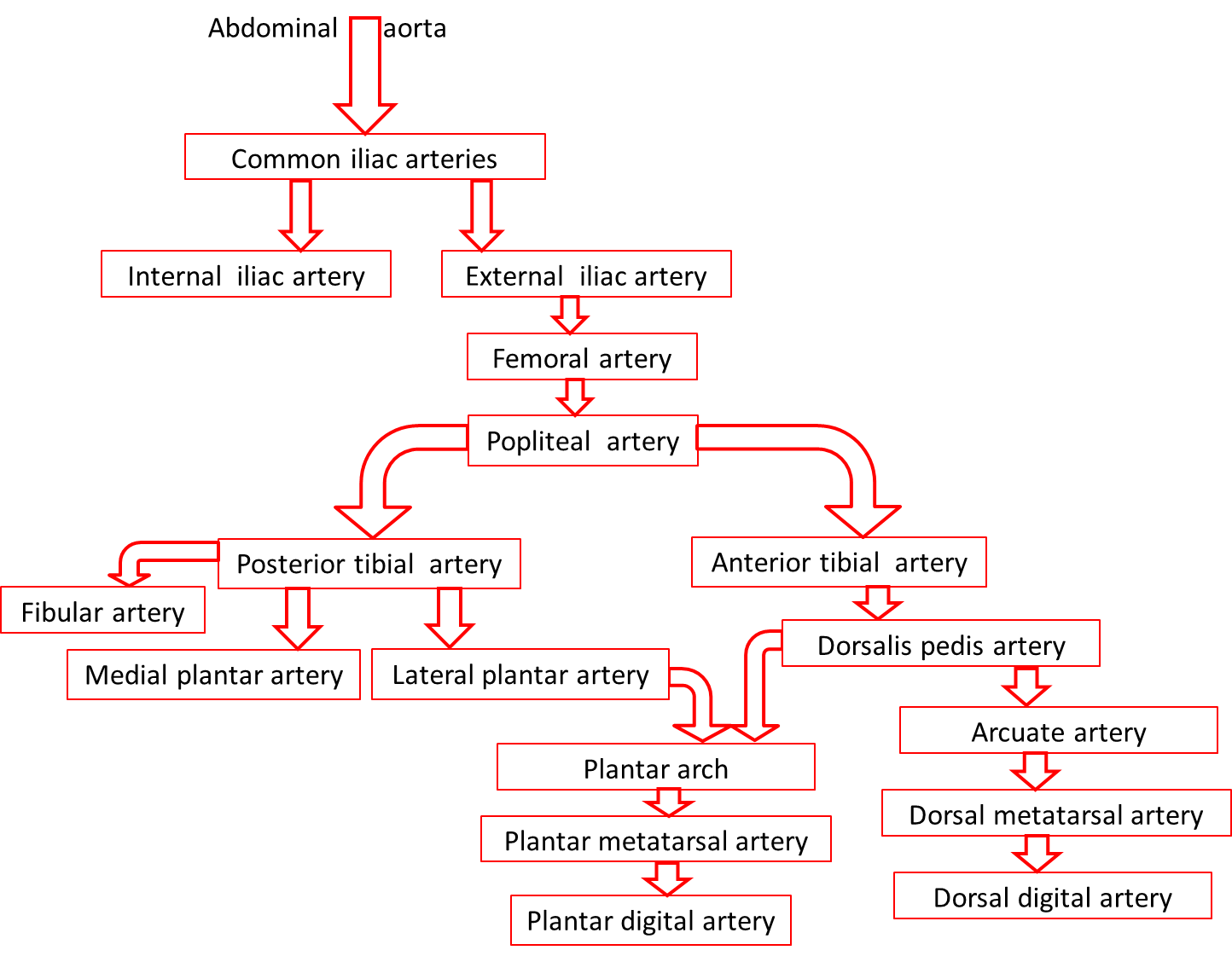
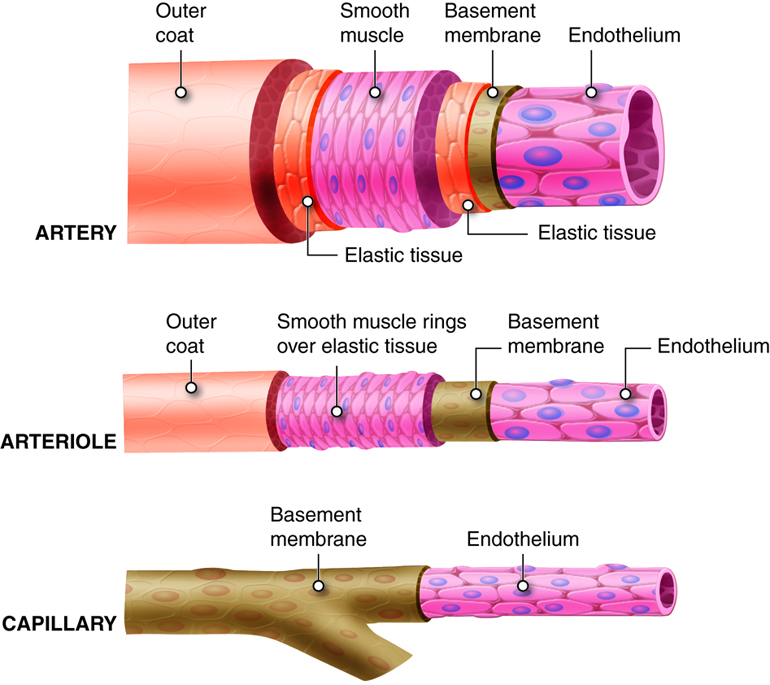
</div></div>
<div class="chapter standard" id="chapter-endocrine-homeostasis-and-integration-of-systems" title="Endocrine Homeostasis and Integration of Systems"><div class="chapter-title-wrap"><h3 class="chapter-number">53</h3><h2 class="chapter-title">Endocrine Homeostasis and Integration of Systems</h2></div><div class="ugc chapter-ugc"> <div class="endocrine-homeostasis-and-integration-of-systems"><p class="import-Normal">Hormones have a wide range of effects and modulate many different body processes. The key processes that will be examined in this section are hormonal regulation of the excretory system, the reproductive system, metabolism, blood calcium concentrations, growth, and the stress response.</p> <p class="import-Normal">We will see how hormones help the body to maintain homeostasis, by integrating different organ systems.</p> <h2>Hormonal Regulation of Fluid Balance</h2> <p class="import-Normal">Maintaining a proper water balance in the body is important to avoid dehydration or excess water. The water concentration of the body is monitored by <strong><em>osmoreceptors</em></strong> in the hypothalamus, which detect the concentration of electrolytes in the blood. The concentration of electrolytes in the blood rises when there is water loss due to excessive perspiration, inadequate water intake, or low blood volume due to blood loss. An increase in blood electrolyte levels results in a neural signal being sent from the osmoreceptors to the hypothalamus. The hypothalamus produces <strong><em>antidiuretic hormone (ADH)</em></strong>, which is transported to, and released from, the posterior pituitary. It is also known as vasopressin. The target cells for ADH are the distal tubule cells in the kidneys, which are stimulated to absorb more water from urine, resulting in an increase in the water level of blood and making urine which is more concentrated.</p> <p class="import-Normal">Chronic underproduction of ADH results in <strong><em>diabetes insipidus</em></strong>. If the posterior pituitary does not release enough ADH, water cannot be retained by the kidneys and is eliminated in the urine. This causes increased thirst, but water taken in is lost again, and water must be continually consumed. If the condition is not severe, dehydration may not occur, but severe cases can lead to electrolyte imbalances due to dehydration.</p> <p class="import-Normal">Another hormone responsible for maintaining electrolyte concentrations in extracellular fluids is <strong><em>aldosterone</em></strong>, a steroid hormone that is produced by the adrenal cortex. In contrast to ADH, which promotes the reabsorption of water to maintain proper water balance, aldosterone maintains proper water balance by enhancing Na<sup>+</sup> reabsorption from extracellular fluids. Because it affects the concentrations of minerals, Na<sup>+</sup>, aldosterone is referred to as a mineralocorticoid. Aldosterone release is stimulated by a decrease in blood sodium levels, blood volume, or blood pressure, or an increase in blood potassium levels. Aldosterone targets the renal tubules of the kidneys, where it causes the reabsorption of Na<sup>+</sup> from urine and the secretion of K<sup>+</sup> into the urine. It also prevents the loss of Na<sup>+</sup> from sweat, saliva, and gastric juice. The reabsorption of Na<sup>+</sup> also results in the osmotic reabsorption of water, which alters blood volume and blood pressure.</p> <p class="import-Normal">Aldosterone production can be stimulated by low blood pressure, which triggers a sequence of chemical releases. When blood pressure drops, cells in the juxtaglomerular apparatus of the kidney detect this and release <strong><em>renin</em></strong>. Renin circulates in the blood and reacts with a protein produced by the liver called angiotensinogen. When angiotensinogen is cleaved by renin, it produces angiotensin I, which is then converted into angiotensin II. Angiotensin II impacts water and Na<sup>+</sup> reabsorption and causes the release of aldosterone by the adrenal cortex with a similar effect; ultimately these increase blood pressure. Angiotensin II also causes an increase in ADH and increased thirst, which both help to increase fluids and raise blood pressure.</p> <h2>Hormonal Regulation of the Reproductive System</h2> <p class="import-Normal">Regulation of the reproductive system is a process that requires the action of hormones from the pituitary gland, the adrenal cortex, and the gonads. During puberty in both males and females, the hypothalamus produces <strong><em>gonadotropin-releasing hormone (GnRH)</em></strong>, which stimulates the release of <strong><em>follicle-stimulating hormone (FSH)</em></strong> and <strong><em>luteinizing hormone (LH)</em></strong> from the anterior pituitary. These hormones regulate the gonads (testes in males and ovaries in females) and therefore are called <strong><em>gonadotropins</em></strong>. In both males and females, FSH stimulates gamete production, and LH stimulates production of hormones by the gonads. An increase in gonad hormone levels inhibits GnRH production through a negative feedback loop.</p> <h3>Regulation of the Male Reproductive System</h3> <p class="import-NormalWeb">In males, FSH and LH regulates the maturation of sperm cells. FSH stimulates the support cells in the testes called <strong><em>Sertoli (sustentacular) cells</em></strong>. These cells nourish and regulate the maturation of the sperm and produce androgen binding protein (ABP). ABP keeps the level of testosterone high within the testes, relative to the plasma levels. FSH production is inhibited by the hormone <strong class="import-term"><em>inhibin</em></strong>, which is also released by the Sertoli cells in the testes. LH stimulates production of the sex hormones (<span class="import-term">androgens</span>) by the interstitial or Leydig cells of the testes and therefore is also called interstitial cell-stimulating hormone (ICSH).</p> <p class="import-NormalWeb">The most important androgen in males is <strong class="import-term"><em>testosterone</em></strong>. Testosterone promotes the production and maturation of sperm and determines secondary sex characteristics. The adrenal cortex of both males and females also produces small amounts of testosterone, although the role of this additional hormone production in males is not well understood.</p> <h3>Regulation of the Female Reproductive System</h3> <p class="import-NormalWeb">In females, FSH stimulates development of support cells around the egg, which develop into structures called <strong><em>follicles</em></strong>. LH regulates the development and release of the egg from the follicle. Follicle cells initially produce the hormone <strong class="import-term"><em>estrogen</em></strong> that has effects on the hypothalamus and anterior pituitary, as well as the uterus. LH stimulates the egg to mature within the growing follicle. As estrogen levels rise, it triggers the anterior pituitary to release a surge of LH that stimulates ovulation. The follicle cells remaining in the ovary become the corpus luteum and now produce both estrogen and progesterone as well as inhibin, all of which inhibit the anterior pituitary.</p> <p class="import-NormalWeb">Estrogen and <strong class="import-term"><em>progesterone</em></strong> are steroid hormones that prepare the body for pregnancy. Estrogen produces secondary sex characteristics in females, while both estrogen and progesterone together regulate the uterine menstrual cycle.</p> <h4>Regulation of Childbirth</h4> <p class="import-NormalWeb">In addition to producing FSH and LH, the anterior pituitary also produces the hormone <strong class="import-term"><em>prolactin (PRL)</em></strong>. In females, prolactin stimulates the production of milk by the mammary glands following childbirth. Prolactin levels are regulated by the hypothalamic hormones <span class="import-term">prolactin-releasing hormone (PRH)</span> and <span class="import-term">prolactin-inhibiting hormone (PIH)</span>, the latter of which is now known to be dopamine. Usually prolactin production is inhibited, but PRH, estrogen and infant suckling stimulation remove the inhibition. Males can produce small amounts of prolactin and its role in other aspects of reproduction and immunity are not well understood but are being investigated in humans.</p> <p class="import-NormalWeb">The posterior pituitary releases the hormone <strong class="import-term"><em>oxytocin</em></strong>, which stimulates contractions during childbirth. The uterine smooth muscles are not very sensitive to oxytocin until late in pregnancy when the number of oxytocin receptors in the uterus peaks. Stretching of tissues in the uterus and vagina stimulates oxytocin release in childbirth. Contractions increase in intensity as blood levels of oxytocin rise until the birth is complete. Oxytocin also stimulates the contraction of myoepithelial cells around the milk-producing cells of the mammary glands. As these cells contract, milk is forced from the secretory alveoli into milk ducts and is ejected from the breasts in a milk let-down reflex. Oxytocin release is stimulated by the suckling of an infant, which triggers the synthesis of oxytocin in the hypothalamus and its release into circulation at the posterior pituitary.</p> <h2>Hormonal Regulation of Metabolism</h2> <p class="import-NormalWeb">Blood glucose levels vary widely over the course of a day as periods of food consumption alternate with periods of fasting. Insulin and glucagon are the two hormones that are primarily responsible for maintaining homeostasis of blood glucose levels. Additional regulation is mediated by the thyroid hormones.</p> <h3>Regulation of Blood Glucose Levels by Insulin and Glucagon</h3> <p class="import-NormalWeb">Cells of the body require nutrients in order to function, and they obtain these nutrients through feeding. In order to manage nutrient intake, storing excess and utilizing stores when necessary, the body uses hormones to modulate energy metabolism. <strong class="import-term"><em>Insulin</em></strong> is produced by the beta cells of the pancreas, which are stimulated to release insulin as blood glucose levels rise, for example, after a meal is consumed. Insulin lowers blood glucose levels by enhancing glucose uptake by most body target cells, which utilize glucose for ATP production; muscle cells are a good example. It also stimulates the liver to convert glucose to glycogen, which is then stored by cells for later use. Increased glucose uptake occurs through an insulin-mediated increase in the number of glucose transporter proteins in cell membranes, which remove glucose from circulation by facilitated diffusion. As insulin binds to its target cell, it triggers the cell to incorporate transport proteins into its membrane. This allows glucose to enter the cell, where it can be used as an energy source. However, this does not always occur in all body cells, as some cells in the kidneys and brain have been shown to regularly access glucose without the use of insulin. Insulin also stimulates the conversion of glucose to fat in adipocytes and the synthesis of proteins. The actions of insulin which cause blood glucose concentrations to fall, called a hypoglycemic effect, inhibit further insulin release from beta cells through a negative feedback loop.</p> <p class="import-NormalWeb">Decreased insulin production or reduced sensitivity of cells to insulin can lead to a condition called <strong class="import-term"><em>diabetes mellitus</em></strong>. This prevents glucose from being absorbed by cells, causing high levels of glucose in the blood, or <strong class="import-term"><em>hyperglycemia</em></strong>. High blood glucose levels make it difficult for the kidneys to reabsorb all the filtered glucose, resulting in glucose being lost in urine. High glucose levels also result in less water being reabsorbed by the kidneys because the water is retained in the urine to osmotically balance the high levels of excess glucose. This causes increased urination, which may result in dehydration. Over time, high blood glucose levels can cause nerve damage to the eyes and peripheral body tissues, as well as damage to the kidneys and cardiovascular system. On the other hand, over-secretion of insulin can lead to low blood glucose levels, or <strong class="import-term"><em>hypoglycemia</em></strong>. This causes insufficient glucose availability to cells, often leading to muscle weakness, and can sometimes cause unconsciousness or death if left untreated.</p> <div class="wp-caption alignnone" style="width: 2101px"><img src="https://openstax.org/resources/e56fbc3cc3feb6deac24cc36418839e1dcf8aa95" alt="Homeostatic regulation of blood glucose levels. The concentration of blood glucose is tightly maintained between 70 mg/dL and 110 mg/dL. When the blood glucose concentration rises above this range, insulin is released. When the blood glucose concentration falls below this range, glucagon is released." width="2101" height="2952" /><div class="wp-caption-text">Homeostatic regulation of blood glucose levels. The concentration of blood glucose is tightly maintained between 70 mg/dL and 110 mg/dL. When the blood glucose concentration rises above this range, insulin is released. When the blood glucose concentration falls below this range, glucagon is released. This image by OpenStax is licensed under a Creative Commons Attribution License 4.0. Access for free at <a href="https://openstax.org/books/anatomy-and-physiology/pages/1-introduction" target="_blank" rel="noopener noreferrer">https://openstax.org/books/anatomy-and-physiology/pages/1-introduction</a></div></div> <p class="import-NormalWeb">When blood glucose levels decline below normal levels, for example, between meals or when glucose is utilized rapidly during exercise, the hormone <strong class="import-term"><em>glucagon</em></strong> is released from the alpha cells of the pancreas. Glucagon raises blood glucose levels, called a hyperglycemic effect, by stimulating the breakdown of glycogen to glucose in skeletal muscle cells and liver cells in a process called <strong class="import-term"><em>glycogenolysis</em></strong> (glycogen-splitting). Glucose can then be utilized as energy by muscle cells and released into circulation by the liver cells. Glucagon also stimulates absorption of amino acids from the blood by the liver, which then converts them to glucose. This process of glucose synthesis is called <strong class="import-term"><em>gluconeogenesis</em></strong> (new glucose formation). Glucagon also stimulates adipose cells to release fatty acids into the blood. Collectively, these glucagon-mediated actions result in an increase in blood glucose levels to normal homeostatic levels. Rising blood glucose levels inhibit further glucagon release by the pancreas. In this way, insulin and glucagon work together to maintain glucose homeostasis.</p> <h3>Regulation of Blood Glucose Levels by Thyroid Hormones</h3> <p class="import-NormalWeb">The basal metabolic rate, which is the amount of calories required by the body at rest, is determined by two hormones produced by the thyroid gland: <strong class="import-term"><em>thyroxine</em></strong>, also known as tetraiodothyronine or T<sub>4</sub>, and <strong class="import-term"><em>triiodothyronine</em></strong>, also know as T<sub>3</sub>. Dietary iodine is needed to synthesize these hormones. These hormones affect nearly every cell in the body except for the adult brain, uterus, testes, and spleen. They cross the plasma membrane of target cells and bind to receptors on the mitochondria, resulting in increased ATP production. In the nucleus, T<sub>3</sub> and T<sub>4</sub> activate genes involved in energy production and glucose oxidation. This results in increased rates of metabolism and body heat production, which is known as the hormone’s calorigenic effect.</p> <p class="import-NormalWeb">Disorders can arise from both the underproduction and overproduction of thyroid hormones. <strong class="import-term"><em>Hypothyroidism</em></strong>, under activity of the thyroid hormones, can cause a low metabolic rate, leading to weight gain, sensitivity to cold, and reduced mental activity, among other symptoms. In children, hypothyroidism can cause cretinism, which causes mental retardation and growth defects. <strong class="import-term"><em>Hyperthyroidism</em></strong>, the over-activity of thyroid hormones, can lead to an increased metabolic rate, causing weight loss, excess heat production, sweating, and an increased heart rate. Graves’ disease is one such hyperthyroid condition. In the absence of iodine, thyroid hormones are not produced, colloid storage increases, and thyroid enlargement (<strong class="import-term"><em>goiter</em></strong>) occurs.</p> <h3>Hormonal Control of Blood Calcium Levels</h3> <p class="import-Normal">Regulation of blood calcium concentration is important for proper muscle contractions and release of neurotransmitters. Calcium also affects voltage-gated plasma membrane ion channels, affecting nerve impulses and other cell physiology. If plasma calcium levels are too high, membrane permeability to sodium decreases and membranes become less responsive. If plasma calcium levels are too low, membrane permeability to sodium increases and convulsions or muscle spasms can result.</p> <p class="import-Normal">Blood calcium levels are regulated by <strong><em>parathyroid hormone (PTH)</em></strong>, which is produced by the parathyroid glands. PTH is released in response to low blood Ca<sup>2+</sup> levels. PTH increases Ca<sup>2+</sup> levels by targeting the skeleton, the kidneys, and the intestine. In the skeleton, PTH stimulates osteoclasts, causing bone to be broken down and releasing Ca<sup>2+</sup> from bone into the blood. PTH also inhibits osteoblasts, reducing Ca<sup>2+</sup> deposition in bone. In the kidneys and intestines, PTH stimulates the reabsorption of Ca<sup>2+</sup>. While PTH acts directly on the kidneys to increase Ca<sup>2+</sup> reabsorption, its effects on the intestine are indirect. PTH triggers the formation of calcitriol, an active form of vitamin D, which acts on the intestines to increase absorption of dietary calcium. PTH release is inhibited by rising blood calcium levels.</p> <p class="import-Normal">The hormone <strong><em>calcitonin</em></strong> is produced by the parafollicular or C cells of the thyroid and has the opposite effect on blood calcium levels as PTH. Calcitonin decreases blood calcium levels by inhibiting osteoclasts, stimulating osteoblasts, and stimulating calcium excretion by the kidneys. This results in calcium being added to the bones to promote structural integrity. Calcitonin appears to play a major plasma calcium homeostasis role only in children, and in pregnant women to reduce maternal bone loss. Its role in adults is not well understood and it may be more important in regulating bone remodeling than blood plasma homeostasis.</p> <h3>Hormonal Regulation of Growth</h3> <p class="import-Normal">Hormonal regulation is required for the growth and replication of most cells in the body. <strong><em>Growth hormone (GH)</em></strong> produced by the anterior pituitary accelerates the rate of protein synthesis, particularly in skeletal muscle and bones. Growth hormone has direct and indirect mechanisms of action. One direct action is the stimulation of fat breakdown (lipolysis) and release into the blood by adipocytes. This results in a switch by most tissues from utilizing glucose as an energy source to utilizing fatty acids. This process is called a <strong><em>glucose-sparing effect</em></strong>. Another direct action occurs in the liver, where GH stimulates glycogen breakdown, and subsequent release of glucose into the blood. Blood glucose levels increase as most tissues are metabolizing fatty acids instead of glucose. The GH-mediated increase in blood glucose levels is called a <strong><em>diabetogenic effect</em></strong> because it is similar to the high blood glucose levels seen in diabetes mellitus.</p> <p class="import-Normal">The indirect mechanism of GH action is mediated by somatomedins or <strong><em>insulin-like growth factors (IGFs)</em></strong>, which are a family of growth-promoting proteins produced by the liver. IGFs stimulate the uptake of amino acids from the blood, allowing the formation of new proteins, particularly in skeletal muscle cells, cartilage cells, and other target cells. GH levels are regulated by two hormones produced by the hypothalamus. GH release is stimulated by growth hormone-releasing hormone (GHRH) and is inhibited by growth hormone-inhibiting hormone (GHIH), also called <strong><em>somatostatin</em></strong>. Both of these are produced by the hypothalamus and delivered to the anterior pituitary by the hypophyseal portal vein.</p> <p class="import-Normal">Over-secretion of growth hormone can lead to <strong><em>gigantism</em></strong> in children, causing excessive growth. In adults, excessive GH can lead to <strong><em>acromegaly</em></strong>, a condition in which bones still capable of growth in the face, hands, and feet enlarge. Under-production of GH in adults does not appear to cause any abnormalities, but in children it can result in <strong><em>pituitary dwarfism</em></strong>, in which growth is proportionally reduced.</p> <h3>Hormonal Regulation of Stress</h3> <p class="import-NormalWeb">When a threat or danger is perceived, the body responds by releasing hormones that will ready it for the fight-or-flight response. The effects of this response are familiar to anyone who has been in a stressful situation: increased heart rate, dry mouth, butterflies in your stomach and sweating. This is what we call a short-term stress. When one is under stress for more than several hours (or chronically), it translates into long term stress.</p> <p class="import-NormalWeb">The sympathetic nervous system regulates the stress response via the hypothalamus. Stressful stimuli cause the hypothalamus to signal the adrenal medulla via nerve impulses, which mediates short-term stress responses, and to the adrenal cortex, via the hormone adrenocorticotropic hormone (ACTH), which mediates long-term stress response.</p> <h4>Short-Term Stress Response</h4> <p class="import-NormalWeb">Upon stimulation, the adrenal medulla releases the hormones <strong class="import-term"><em>epinephrine</em></strong> (also known as adrenaline) and <strong class="import-term"><em>norepinephrine</em></strong> (also known as noradrenaline), collectively referred to as the catecholamines. The release of these hormones into the blood provides the body with a burst of energy that is needed to respond to a stressful situation. Epinephrine and norepinephrine increase blood glucose levels by stimulating the liver and skeletal muscles to break down glycogen and by stimulating glucose release by liver cells. These hormones also increase oxygen availability to cells by increasing the heart rate and dilating the bronchioles. In addition, they increase the blood supply to essential organs such as the heart, brain, and skeletal muscles by stimulating specific blood vessels to relax or by constricting other vessels to divert blood away from nonessential organs such as the skin, digestive system, and kidneys.</p> <h4>Long-Term Stress Response</h4> <p class="import-NormalWeb">In a long-term stress response, the hypothalamus triggers the release of ACTH from the anterior pituitary. The adrenal cortex is stimulated by ACTH to release steroid hormones called <strong class="import-term"><em>corticosteroids</em></strong>. The two main corticosteroids are <strong class="import-term"><em>glucocorticoids</em></strong>, such as <strong class="import-term"><em>cortisol</em></strong>, and <strong class="import-term"><em>mineralocorticoids</em></strong>, such as <strong><em>aldosterone</em></strong>. The glucocorticoids primarily affect glucose metabolism by stimulating glucose synthesis. They also stimulate the redistribution of fat stored in adipose tissue for use in meeting long-term energy requirements. Glucocorticoids also have anti-inflammatory properties through inhibition of the immune system. For example, cortisone is used as an anti-inflammatory medication; however, it cannot be used long term as it increases susceptibility to disease due to its immune-suppressing effects as well as changes to blood pressure and constant heart stimulation.</p> <p class="import-NormalWeb">Mineralocorticoids function to regulate ion and water balance of the body. The hormone aldosterone stimulates the reabsorption of water and sodium ions in the kidney, which results in increased blood pressure and volume.</p> <p class="import-NormalWeb">Hypersecretion of glucocorticoids, unrelated to a normal stress response, can be caused by a condition known as <strong class="import-term"><em>Cushing’s disease</em></strong>. This can cause the accumulation of adipose tissue in the face and neck and excessive glucose in the blood. Hyposecretion of the corticosteroids, independent of the normal stress response, is often the result of <strong class="import-term"><em>Addison’s disease</em></strong>, which may result in low blood sugar levels and low electrolyte levels.</p> <h2>Disruption and Dysfunction of Homeostasis</h2> <h3>Tumors</h3> <p class="import-NormalWeb">Endocrine glands tightly regulate hormone synthesis and release to maintain homeostasis in the body. Although they are rare, tumors in endocrine glands do occur, disrupting normal hormone synthesis. These cancers, called <strong><em>neuroendocrine tumors</em></strong> or NETs, affect cells of the endocrine and nervous system that control hormone synthesis.</p> <p class="import-NormalWeb">Tumors of endocrine glands can produce symptoms that are similar to those caused by hypersecretion of hormones in endocrine disorders. For example, tumors of the adrenal glands that result in the excess production of steroid hormones produce symptoms of Cushing’s disease, which includes the accumulation of adipose tissue in the face and neck and excessive glucose in the blood.</p> <p class="import-NormalWeb">Tumors of the pancreas that affect beta cells are called <strong><em>insulinomas</em></strong>, and those that affect alpha cells are called <strong><em>glucagonomas</em></strong>. Beta cell tumors result in the production of excess amounts of the hormone insulin, which results in hypoglycemia. Alpha cell tumors result in the production of excess amounts of the hormone glucagon, which results in hyperglycemia and symptoms similar to those seen in diabetes.</p> <p class="import-NormalWeb">Tumors of the pituitary gland fall into two groups: secreting and non-secreting tumors. <strong><em>Secreting tumors</em></strong> cause the secretion of excess amounts of pituitary hormones. Symptoms of secreting pituitary tumors are related to the function of the hormone that is affected. For example, growth hormone-producing tumors can lead to gigantism and acromegaly.</p> <p class="import-NormalWeb">Medullary thyroid cancer (MTC) is a cancer of the parafollicular cells of the thyroid gland. The parafollicular cells produce the hormone calcitonin, which plays a role in calcium regulation and bone formation. Unlike in other cancers, the increased levels of calcitonin produced by MTC in adults are not harmful. Increased blood calcitonin levels are used to diagnose MTC.</p> <p class="import-NormalWeb">Many secretory NETs can be tentatively diagnosed by measuring blood hormone levels to identify hormones that are present in excess. Treatment of these tumors can include surgery to remove the tumor or affected endocrine gland and chemotherapy.</p> <h3>Osteoporosis</h3> <p class="import-NormalWeb">Osteoporosis is a disease of the skeletal system characterized by a decrease in bone density and deterioration of bone tissue. The mechanism of disease onset is an imbalance between bone formation and bone resorption, with bone resorption occurring at a greater rate than bone formation. Hormone levels play a vital role in maintaining a balance in bone turnover. Osteoporosis affects primarily the elderly and is three times more common in women than in men. This may be related to lower peak bone mass in women and to hormonal changes that occur during menopause. Low estrogen levels increase the rate of bone turnover, which alters the balance between bone formation and bone resorption. The decrease in estrogen that occurs during menopause appears to be the primary cause of osteoporosis in women over 50 years of age.</p> <div class="wp-caption alignnone" style="width: 860px"><img src="https://openstax.org/resources/1987ba7d7c781f93fe62ae196462d9033d709e64" alt="Graph showing the relationship between age and bone mass. Bone density for both men and women peaks at around 30 years of age." width="860" height="553" /><div class="wp-caption-text">Graph showing the relationship between age and bone mass. Bone density for both men and women peaks at around 30 years of age. This image by OpenStax is licensed under a Creative Commons Attribution License 4.0. Access for free at <a href="https://openstax.org/books/anatomy-and-physiology/pages/1-introduction" target="_blank" rel="noopener noreferrer">https://openstax.org/books/anatomy-and-physiology/pages/1-introduction</a></div></div> <p class="import-NormalWeb">The elderly also have decreased levels of the hormone <strong><em>calcitriol</em></strong>, which is the active form of vitamin D<sub>3</sub>. Vitamin D helps maintain calcium balance in the skeleton by stimulating calcium absorption in the intestines and by maintaining calcium and phosphate levels for bone formation. Vitamin D also helps to maintain homeostatic levels of parathyroid hormone (PTH). Decreased vitamin D levels are associated with increased PTH levels, which result in increased bone turnover and bone loss.</p> <p class="import-NormalWeb">Decreased dietary intake of calcium in the elderly is also associated with osteoporosis. In addition to the decreased availability of calcium for bone formation, low blood calcium levels stimulate the parathyroid glands to synthesize more PTH. PTH stimulates the release of calcium from bones to maintain blood calcium levels, resulting in increased bone loss.</p> <p class="import-NormalWeb">Osteoporosis can be prevented by maintaining a lifestyle that includes exercise and proper nutrition. It can be treated using the hormone calcitonin, which is normally produced by the parafollicular cells of the thyroid gland. Calcitonin functions to lower blood calcium levels and promotes bone formation. Calcium and vitamin D supplements have also been shown to reduce the incidence of osteoporosis.</p> </div> </div></div>
<div class="part " id="part-chapter-11-digestive-system"><div class="part-title-wrap"><h3 class="part-number">XV</h3><h1 class="part-title">Chapter 11: Digestive System</h1></div><div class="ugc part-ugc"></div></div>
<div class="chapter standard" id="chapter-digestive-system-introduction" title="Digestive System Introduction"><div class="chapter-title-wrap"><h3 class="chapter-number">54</h3><h2 class="chapter-title">Digestive System Introduction</h2></div><div class="ugc chapter-ugc"> <div class="digestive-system-introduction"><p class="import-Normal">The digestive system is essentially a tube within our body, from mouth to anus. It includes the stomach and intestines, as well as accessory organs such as the liver, gall bladder and pancreas. The space within any tubular body structure, such as blood vessels or this digestive tract, is known as a <strong><em>lumen</em></strong>. During embryological development, embryonic cells (endoderm) forming the primitive yolk sac, turn outside-in (invaginates) forming the anal opening to the outside. This endoderm layer becomes the epithelial tissue lining of the future gastrointestinal (GI) tract and many associated organs. Later in the development process, the mouth opening breaks through the outer layer of embryonic cells (ectoderm) from the opposite side, meeting the endoderm. This ectoderm lines the mouth and forms the salivary glands. As a result, anything inside the space or lumen of the GI tract can technically be described as still being “external” to the body tissues. So, the caustic process of digestion is occurring in an “external” tube, without destroying the “internal” body tissues themselves. Then the products of digestion are absorbed from this “external environment” into the body cells and tissue fluids.</p> <p class="import-Normal">As early as the 2nd century, early anatomists understood the basic structure and important function of the digestive system. Many of the terms we still use for anatomy were developed then and during the medieval period, when they described the importance of the stomach and intestines for proper nutrition and digestion to maintain health. They also recognized the association of the liver and gall bladder to produce and store bile, although they didn’t correctly understand its physiology. It was identified as one of the four body fluids (blood, phlegm, yellow bile and black bile) that Hippocrates proposed were the physiological foundation for different human emotions and behaviors; thus they were called “humors”. The imbalance of these four humors was thought to be the cause of physical and mental illnesses. This and many of the early physiological theories have since been discarded. However, their idea that the stomach was an animate organ with ability to think or feel doesn’t seem totally ridiculous as you learn about how modern science is discovering the physiological importance of a specific part of the nervous system that resides entirely in our gut. By the renaissance period, physiologists were focusing their research on the chemical basis of digestion occurring inside the GI tract.</p> <h2>Overview of the Digestive System</h2> <p class="import-Normal">Here is a preview of each of the modules to come:</p> <ul><li class="import-Normal"><strong><em>Structures and Functions</em></strong>, will explore how the major organs of the digestive system are able to accomplish system level functions: <ul><li class="import-Normal">movement through the length of the digestive system</li> <li class="import-Normal">complementary mechanisms for digestion in different segments</li> <li class="import-Normal">structural components enhancing efficient absorption</li> <li class="import-Normal">accessory organs that contribute secretions to the GI tract</li> </ul> </li> </ul> <p class="import-Normal" style="margin-left: 36pt"><strong><em>Pay attention</em></strong> <em>to</em> not only what structures are similar and what are unique in the different sections, but how this contributes to the overall function of the system as a whole.</p> <ul><li class="import-Normal"><strong><em>Levels of Organization</em></strong>, will examine this structure and function in more detail, progressing through the major levels of organization in the human organism: <ul><li class="import-Normal">nutritive and digestive molecules</li> <li class="import-Normal">cells of the stomach, small and large intestine, liver, and pancreas</li> <li class="import-Normal">tissue layers that make up the GI tract, from mouth to anus</li> </ul> </li> </ul> <p class="import-Normal" style="margin-left: 36pt"><strong><em>Pay attention</em></strong> <em>to</em> the function of cells for both secretion and absorption of specific substances in the different parts of the digestive tract and accessory organs. What these specific cells produce and how they move materials across cell membranes is critical to understanding the function of the system as a whole.</p> <ul><li class="import-Normal"><strong><em>Homeostasis</em></strong>, will delve into how this system contributes to the body’s natural tendency to maintain a stable internal environment: <ul><li class="import-Normal">how hormones and nerves control and coordinate the digestive system</li> <li class="import-Normal">what happens when digestive system malfunctions</li> </ul> </li> </ul> <p class="import-Normal" style="margin-left: 36pt"><strong><em>Pay attention to</em></strong> how not only is the rate of movement from one section to another controlled, but what is released into the lumen is controlled based on monitoring of content of food eaten. Don’t get the endocrine secretion of hormones into the blood for control and regulation confused with the exocrine secretion of substances into the lumen for the digestion and absorption processes – both are happening.</p> <ul><li class="import-Normal"><strong><em>Integration of Systems</em></strong>, will investigate which systems are subsets of larger systems, and how they function together in harmony and conflict: <ul><li class="import-Normal">how digestive system interacts with the other body systems</li> <li class="import-Normal">how other systems affect the digestive system functions</li> </ul> </li> </ul> <p class="import-Normal" style="margin-left: 36pt"><strong><em>Pay attention</em></strong> <em>to</em> the relationship between proper movement and secretion for digestion and the subsequent absorption and transport of materials for metabolism. This links the digestive tract and accessory digestive organs to the other systems.</p> </div> </div></div>
<div class="chapter standard" id="chapter-digestive-structures-and-functions" title="Digestive Structures and Functions"><div class="chapter-title-wrap"><h3 class="chapter-number">55</h3><h2 class="chapter-title">Digestive Structures and Functions</h2></div><div class="ugc chapter-ugc"> <div class="digestive-structures-and-functions"><h2 class="import-NormalWeb">Major Functions of the Digestive System</h2> <p class="import-NormalWeb">The digestive system moves water, nutrients and electrolytes from the external environment to the internal environment. Within the digestive system, the gastrointestinal tract is a continuous hollow tube from the mouth to the anus and is technically contiguous with the external environment. This internal space is called a lumen. All digestive system organs play vital roles in breaking down food moving through the gastrointestinal tract into its chemical building blocks, absorbing these building blocks into the blood, and eliminating residual indigestible materials.</p> <p class="import-NormalWeb">Different parts of the digestive system will secrete substances into the digestive tract lumen. These secretions come from both the cells that make up the epithelial lining of the digestive tract and from exocrine accessory organs that have ducts emptying into the tube. These substances will assist with the movement of food from one part of the tract to the next (such as mucus) and with the digestion of the food while it is in the tube (such as enzymes).</p> <p class="import-NormalWeb">In order to absorb digested substances, that material has to be first moved from the lumen, into the apical or tube-side of the epithelial cells lining the digestive tract, then out of the other basal side of those cells, into the body’s interstitial fluid, and into blood or lymph capillaries for transport through the body. This process can happen passively or require ATP cellular energy. You may want to review membrane transport in the cell module. Various chemicals secreted into the lumen can enhance the absorption of some material, such as vitamins and lipids. Anatomical structures that increase the area of the absorptive surface exposed to the digested substances in the tube will also enhance absorption.</p> <p>&nbsp;</p> <p class="import-Normal"></p> <div class="textbox interactive-content"><span class="interactive-content__icon"></span> <p>An interactive or media element has been excluded from this version of the text. You can view it online here:<br /> <a href="https://pressbooks.ccconline.org/bio106/?p=473#pb-interactive-content" title="Ch 11 Digestive Structures and Functions - Major Functions of the Digestive System">https://pressbooks.ccconline.org/bio106/?p=473</a> </p> </div> <p>&nbsp;</p> <p class="import-NormalWeb">There will be another kind of secretion involved in regulating this whole process, including how long food stays in one section of the digestive tract for the most efficient digestion or absorption. These are endocrine secretions from cells that are part of the digestive organs themselves. These hormones are secreted into the blood, not the digestive lumen, and transported by blood to target cells of the digestive system organs. In this way, it helps regulate and coordinate the functions among the different organs. The autonomic nervous system also plays a role in regulating and coordinating the digestive system.</p> <p>&nbsp;</p> <p><code></code></p> <div class="textbox interactive-content"><span class="interactive-content__icon"></span> <p>An interactive or media element has been excluded from this version of the text. You can view it online here:<br /> <a href="https://pressbooks.ccconline.org/bio106/?p=473#pb-interactive-content" title="BIO106AnatomyPhysiCh11Fxn">https://pressbooks.ccconline.org/bio106/?p=473</a> </p> </div> <p></p> <p>&nbsp;</p> <p class="import-NormalWeb">We usually don&#8217;t think about the digestive system until something goes wrong with it – when we get indigestion, nausea, or diarrhea. We seldom appreciate that the digestive system is a complex string of organs that make up the body&#8217;s engine, turning fuel from the food we eat into energy that keeps us going. Each organ of the digestive system performs specific functions but all these organs work together to digest the foods we eat and absorb the nutrients into our bodies.</p> <h2>Organs of the Digestive System</h2> <p class="import-NormalWeb">The digestive system is generally divided into two main categories: organs of the alimentary canal (<em class="import-Emphasis">aliment</em> = “nourish”) and accessory digestive organs. The <strong class="import-term"><em>alimentary canal</em></strong>, also called the <strong class="import-term"><em>gastrointestinal (GI) tract</em></strong> or <strong class="import-term"><em>gut</em></strong>, is a continuous muscular tube that runs from the mouth to the anus. The internal space of this tube is called the <strong class="import-term"><em>lumen</em></strong>. The GI tract is involved with the digestion of food –its breakdown into smaller fragments – and the absorption of digested food fragments from the lument through the alimentary canal wall and into the bloodstream. The accessory digestive organs contribute to secretions to the GI tract, but the food doesn&#8217;t pass through these organs.</p> <div class="wp-caption alignnone" style="width: 351px"><img src="https://oli.cmu.edu/repository/webcontent/546043760a0001dc3944c35ab2db3f8f/_u8_digestion/webcontent/D_M2_12Labeled.jpg" alt="Digestive System Organs" width="351" height="505" /><div class="wp-caption-text">Digestive System Organs. This work by Cenveo is licensed under a Creative Commons Attribution 3.0 United States (<a href="http://creativecommons.org/licenses/by/3.0/us/" target="_blank" rel="noopener noreferrer">http://creativecommons.org/licenses/by/3.0/us/</a>).</div></div> <p class="import-Normal">Different digestive system organs are responsible for different digestive processes and functions. These functions include: extracting nutrients from food and removing waste. The processes by which these occur are called ingestion, motility of food through the GI tract lumen, <strong><em>mechanical</em></strong> and <strong><em>chemical</em></strong> digestion of the food, <strong><em>absorption</em></strong> and breakdown of products, <strong><em>defecation</em></strong> to remove residues.</p> <table class="grid"><caption>Table 1: Digestive Organs and Functions</caption> <tbody><tr class="TableNormal-R" style="height: 0;"><th>Organ</th> <th>Major Functions</th> <th>Other Functions</th> </tr> <tr class="TableNormal-R" style="height: 0;"><td>Mouth</td> <td>Ingests food; Mechanical chewing of food; Salivary amylase begins chemical breakdown of starch; Swallows food and propels it into pharynx</td> <td>Salivary mucus helps dissolve food; Release of flavors stimulates tastebuds allowing us to appreciate its taste; Saliva moistens food, and tongue helps create a bolus that can be swallowed; Saliva cleans and lubricates the teeth and oral cavity</td> </tr> <tr class="TableNormal-R" style="height: 0;"><td>Pharynx</td> <td>Propels bolus from oral cavity to esophagus</td> <td>Mucus lubricates food passageways</td> </tr> <tr class="TableNormal-R" style="height: 0;"><td>Esophagus</td> <td>Peristaltic waves propel food bolus to stomach</td> <td>Mucus lubricates food passageways</td> </tr> <tr class="TableNormal-R" style="height: 0;"><td>Stomach</td> <td>Peristaltic waves combine food with gastric juice and move it into the duodenum; Pepsin begins protein digestion; Absorbs some fat-soluble substances (e.g., alcohol, aspirin)</td> <td>Hydrochloric acid neutralizes ingested pathogens and stimulates protein-digesting enzymes; Mucus lubricates and protects the stomach; Intrinsic factor allows vitamin B12 to be absorbed in intestines</td> </tr> <tr class="TableNormal-R" style="height: 0;"><td>Small intestine</td> <td>Mixes contents with digestive juices for digestion and absorption; Brush-border enzymes digest food; Absorbs breakdown products of carbohydrates, protein, fat, and nucleic acid digestion, along with vitamins, water, and electrolytes</td> <td>Alkaline mucus helps neutralize acidic chyme from the stomach</td> </tr> <tr class="TableNormal-R" style="height: 0;"><td>Large intestine</td> <td>Enteric bacteria digest some food residue and vitamins; Absorbs most residual water, electrolytes, and vitamins produced by enteric bacteria; Propels feces toward rectum; Defecation reflex eliminates feces</td> <td>Residues are concentrated and temporarily stored prior to defecation; Mucus smoothes passage of feces through colon</td> </tr> <tr class="TableNormal-R" style="height: 122.4pt;"><td>Accessory organs</td> <td>Liver: produces bile; Gall bladder: stores and concentrates bile; Pancreas: produces enzymes that digests food</td> <td>Gall bladder releases bile, which emulsifies fat and stimulates the digestion of fat and the absorption of fatty acids, monoglycerides, cholesterol, phospholipids, and fat-soluble vitamins; Bicarbonate-rich pancreatic juice helps neutralize acidic chyme (from the stomach) and provide optimal environment for enzymatic activity</td> </tr> </tbody> </table> <h2>Movement of Material Through the Digestive System</h2> <p class="import-Normal" style="background-color: #ffffff;">Both voluntary skeletal muscles and involuntary smooth muscles are involved in propelling food material through the digestive system. Skeletal muscles of the tongue are involved in the voluntary first phase of swallowing, but then it becomes an involuntary reflex with skeletal muscles of the pharynx. The swallowing process is called <strong><em>deglut</em></strong><strong><em>it</em></strong><strong><em>ion</em></strong>.</p> <p class="import-Normal" style="background-color: #ffffff;">The smooth muscle of the GI tract is arranged in two layers: longitudinal along the length of the tube and circular around the diameter of the tube. Coordinated contraction and relaxation of these two layers creates a wave-like propulsion of the food called <strong><em>peristalsis</em></strong>. Muscles in the esophagus mechanically transport the food via peristalsis from the mouth to the stomach. An extra smooth muscle layer in the stomach adds a churning movement within the stomach. Peristalsis continues to propel food through the small and large intestines.</p> <p class="import-Normal" style="background-color: #ffffff;">Controlling the rate of food moving from one organ of the digestive tract to the next are specialized circularly arranged skeletal and smooth muscles called sphincters. Sphincters are typically contracted and relax only to allow food to move from one organ to the next. The majority of sphincters along the length of the GI tract are involuntary smooth muscle structures. The <strong><em>esophageal sphincter</em></strong> helps separate the esophagus from the stomach to maintain linear movement and protect the esophagus from acidic chemicals of the stomach. The <strong><em>pyloric sphincter</em></strong> separates the stomach from the small intestine; again there is a physical separation for compartmentalization and to maintain directionalized movement.</p> <p class="import-Normal" style="background-color: #ffffff;">Material then snakes its way through the small intestine and the <strong><em>iloeocecal sphincter</em></strong> controls movement into the large intestine or colon. The <strong><em>anal sphincter</em></strong> muscle is skeletal muscle controlled consciously to relax during defecation. There is also a <strong><em>hepatopancreatic sphincter</em></strong> that controls the release of accessory secretions from the liver and pancreas into the beginning of the small intestine.</p> <h2>Overview of Digestion</h2> <p class="import-Normal" style="background-color: #ffffff;">Digestion is accomplished both mechanically and chemically. <strong><em>Mechanical digestion</em></strong> physically breaks food into smaller pieces, increasing surface area for more efficient chemical digestion. <strong><em>Chemical digestion</em></strong> breaks large food macromolecules down into their chemical building blocks, which can then be absorbed through the intestinal wall and into the general circulation.</p> <div class="wp-caption alignnone" style="width: 636px"><img src="https://openstax.org/resources/f561f8920405489bd3f51b68dd37242ac9d0b77e" alt="Digestion and Absorption." width="636" height="790" /><div class="wp-caption-text">Digestion and Absorption. This image by OpenStax is licensed under a Creative Commons Attribution License 4.0. Access for free at <a href="https://openstax.org/books/anatomy-and-physiology/pages/1-introduction" target="_blank" rel="noopener noreferrer">https://openstax.org/books/anatomy-and-physiology/pages/1-introduction</a></div></div> <p class="import-Normal" style="background-color: #ffffff;">Food is ingested in the mouth where it begins mechanical digestion from the grinding of the teeth and chemical digestion from enzymes in the saliva. Chemical digestion starts in the saliva and follows into the stomach. In the stomach material is broken down into smaller components by chemically strong acids, enzymes and mechanical churning. However, the small intestine is the site of most chemical digestion, and almost all absorption. Enzymes, bile, bicarbonate and other materials are mixed in from the pancreas and liver to promote chemical digestion and allow enhanced adsorption. Enzymes are responsible for the majority of this chemical digestion. The breakdown of fat also requires emulsification by bile, secreted by the liver and stored in the gall bladder.</p> <h2>Overview of Absorption</h2> <p class="import-NormalWeb" style="background-color: #ffffff;">The mechanical and chemical digestive processes that begin in the mouth and continue through the small intestine have one endpoint: to convert food into substances that can be absorbed from the lumen by epithelial cells in the lining of the GI tract and then enter blood or lymphatic vessels. Absorbable substances are the monosaccharides, glucose, galactose, and fructose from carbohydrates; single amino acids, dipeptides, and tripeptides from proteins; and monoglycerides, glycerol, and fatty acids from lipids such as triglycerides.</p> <p class="import-NormalWeb" style="background-color: #ffffff;">Most nutrients are absorbed into digestive epithelial cells by active transport mechanisms. Nutrients not absorbed through active transport include lipids, lipid-soluble vitamins, and most water-soluble vitamins. With the help of bile salts, the breakdown products of lipids are transported into intestinal cells in structures called micelles. These absorbed fats then aggregate into chylomicrons for transport.</p> <p class="import-NormalWeb" style="background-color: #ffffff;">These substances absorbed into the epithelial cells of the digestive tract are then absorbed into either the circulatory or lymphatic capillaries for transport where needed by body cells for metabolism. Absorption from the GI lumen is enhanced by increasing the surface area. Most absorption occurs in the small intestine, the longest organ of the GI tract. Several anatomical structures at the organ, tissue, and cell level also improve nutrient, water and electrolyte absorption.</p> <h3>Plicae circulares</h3> <p class="import-Normal">On the organ scale, the inside lining of the small intestine lumen is not smooth. Plicae circulares, are permanent ridges or folds forming successive rings along the length of the small intestine. These folds increase the surface area of the lining exposed to contents in the lumen for a given length of small intestine, which allows increased absorption.</p> <h3>Villi</h3> <p class="import-Normal" style="background-color: #ffffff;">At the microscopic tissue level, there are finger-like extensions of the epithelial and connective tissue called <strong><em>villi</em></strong>. The villi increase the surface area of the epithelial tissue exposed to contents moving through the lumen. This allows more superficial epithelial cells to absorb within a square millimeter of the lining than if this same millimeter surface were flat. Within each villi, deep to the epithelial basement membrane, the connective tissue supports the villi structure as it extends into the lumen. Capillary networks that pick up and transport absorbed substances through the body extend from the deeper connective tissue into each villus (singular of villi). These include blood capillaries and a central specialized lymph capillary, called a <strong><em>lacteal</em></strong>, for lipid absorption.</p> <h3>Microvilli</h3> <p class="import-Normal" style="background-color: #ffffff;">At the cellular level, the apical surface of each epithelial cell has cell membrane extensions into the lumen called <strong><em>microvilli</em></strong>. These cells are collectively known as <strong><em>brush border</em></strong> cells because their combined microvilli along the surface of each villus looks like the surface of a brush under the microscope. Because of the microvilli, each epithelial cell has a longer cell membrane exposed to the lumen contents than it would if its apical surface were smooth, improving cellular absorption. Embedded in the cell’s folded plasma membrane are different cell membrane proteins: transporters and enzymes. The transporters absorb by active transport, but the <strong><em>brush border enzymes</em></strong> are catalysts that complete the digestion of only partially digested proteins and carbohydrates at the cell surface, so they can pass through the adjacent transporters.</p> <h3>Surface Area</h3> <p class="import-NormalWeb" style="background-color: #ffffff;"></p> <div class="textbox interactive-content interactive-content--oembed"><img src="https://i.ytimg.com/vi/nm7CSDf1egw/hqdefault.jpg" alt="Thumbnail for the embedded element &quot;Surface Area&quot;" title="Surface Area" /> <p>A YouTube element has been excluded from this version of the text. You can view it online here: <a href="https://pressbooks.ccconline.org/bio106/?p=473#pb-interactive-content" title="Surface Area">https://pressbooks.ccconline.org/bio106/?p=473</a> </p> </div> <p class="import-NormalWeb" style="background-color: #ffffff;">Explanation of increased surface of the small intestine due to the characteristics of its structures.</p> <h2>Mouth</h2> <p class="import-Normal" style="background-color: #ffffff;">The cheeks, tongue, hard palate, and soft palate frame the mouth, also called the <strong><em>oral cavity</em></strong> or <strong><em>buccal cavity</em></strong>. The mouth is involved in both mechanical and chemical digestion. Mechanical digestion consists of <strong><em>mastication</em></strong> (chewing), in which the tongue manipulates food, the teeth grind it, and saliva mixes with it. Mastication turns food into an easy-to-swallow bolus and breaks the food into smaller pieces so that there is more contact area for digestive enzymes.</p> <p class="import-Normal" style="background-color: #ffffff;">The cheeks make up the oral cavity&#8217;s lateral walls. The outer covering of the cheeks is the skin, and the inner covering is the mucous membrane. This membrane is made up of nonkeratinized stratified squamous epithelium; the multiple layers are resistant to abrasion. Between the skin and mucous membranes are connective tissue, fat tissue and buccinator muscles.</p> <div class="wp-caption alignnone" style="width: 762px"><img src="https://oli.cmu.edu/repository/webcontent/546043760a0001dc3944c35ab2db3f8f/_u8_digestion/webcontent/D_M3_20B.jpg" alt="Structures of the oral cavity" width="762" height="492" /><div class="wp-caption-text">Structures of the oral cavity. This work by Cenveo is licensed under a Creative Commons Attribution 3.0 United States (<a href="http://creativecommons.org/licenses/by/3.0/us/" target="_blank" rel="noopener noreferrer">http://creativecommons.org/licenses/by/3.0/us/</a>).</div></div> <p class="import-Normal" style="background-color: #ffffff;">The lips, also called labia (&#8220;fleshy borders&#8221;), encircle the opening of the mouth. Their outer covering is skin, and their inner lining is mucous membrane. Between these two layers is the orbicularis oris muscle. The <strong><em>labial frenulum</em></strong> is a midline fold of mucous membrane that attaches the inner surface of each lip to the gum. When we chew food, the buccinator muscles in the cheeks and the orbicularis oris muscle in the lips contract, which keeps food between the lower and upper teeth. These muscles also play a role in speech.</p> <p class="import-Normal" style="background-color: #ffffff;">The area between the lips (or cheeks) and teeth is called the <strong><em>oral vestibule</em></strong>. The <strong><em>oral cavity </em></strong>is the area than runs between the gums and teeth and the entrance to the throat (oropharynx), also called the <strong><em>fauces</em></strong> (&#8220;passages&#8221;). If you puff out your cheeks, you can increase the size of the oral vestibule but not the oral cavity.</p> <p class="import-Normal" style="background-color: #ffffff;">The <strong><em>septum</em></strong> that separates the oral cavity and nasal cavity is called the palate. Anatomically, a septum (plural, septa) is a wall within a single organ or cavity that separates the space into distinct sides. For example, the nasal septum divides the nostrils. This is separating two distinct cavities.</p> <p class="import-Normal" style="background-color: #ffffff;">The <strong><em>palate</em></strong>, which forms the roof of the mouth, is what allows us to breathe while chewing food. The anterior part of the roof of the mouth is called the <strong><em>hard palate</em></strong>. It is created by the maxillae and palatine bones and is covered by mucous membrane. The hard palate makes up the bony wall between the oral and nasal cavities. The posterior part of the roof of the mouth, the <strong><em>soft palate</em></strong>, is also lined with mucous membrane. This arch-shaped muscular structure forms a dividing wall between the oropharynx and nasopharynx.</p> <p class="import-Normal" style="background-color: #ffffff;">The <strong><em>uvula</em></strong> (Latin for ‘little grape’) is a cone-shaped muscular process that hangs from the end of the soft palate. It plays a role in speech and articulation of words. It also plays a small role in preventing foods and liquids from entering the nasal cavity. Two muscular folds on each side of the base of the uvula extend down the lateral sides of the soft palate. The anterior fold is called the <strong><em>palatoglossal arch</em></strong>, which terminates next to the base of the tongue. The posterior fold, the <strong><em>palatopharyngeal arch</em></strong>, lies at the interface with the pharynx. Between these two arches on the lateral wall are the <strong><em>palatine tonsils</em></strong>. The <strong><em>lingual tonsils </em></strong>are located at the base of the tongue.</p> <p class="import-Normal" style="background-color: #ffffff;">There are also many small, intrinsic salivary glands within the mucous membrane of the mouth and tongue. Their secretion is independent of the presence of food. These glands either open directly into the oral cavity or indirectly through short ducts. Small amounts of saliva are secreted by the <strong><em>labial glands</em></strong> in the lips, the <strong><em>buccal glands</em></strong> in the cheeks, the <strong><em>palatal glands</em></strong> in the palate, and the <strong><em>lingual glands</em></strong> in the tongue.</p> <h3>Tongue</h3> <p class="import-Normal" style="background-color: #ffffff;">The tongue is composed of skeletal muscle covered with a surface of nonkeratinized stratified squamous epithelium and a mucous membrane covering. The tongue and its associated muscles make up the floor of the oral cavity. A median septum extends the entire length of the tongue, dividing it into symmetrical halves. Inferiorly, the tongue is attached to the mandible, styloid process of the temporal bone, and hyoid bone.</p> <div class="wp-caption alignnone" style="width: 770px"><img src="https://oli.cmu.edu/repository/webcontent/546043760a0001dc3944c35ab2db3f8f/_u8_digestion/webcontent/D_M3_20.jpg" alt="The tongue" width="770" height="379" /><div class="wp-caption-text">The tongue. This work by Cenveo is licensed under a Creative Commons Attribution 3.0 United States (<a href="http://creativecommons.org/licenses/by/3.0/us/" target="_blank" rel="noopener noreferrer">http://creativecommons.org/licenses/by/3.0/us/</a>).</div></div> <p class="import-Normal" style="background-color: #ffffff;">Each half of the tongue has the same number and type of intrinsic and extrinsic muscles. As you learned in your studies of the muscular system, extrinsic muscles of the tongue are the <em>hyoglossus</em>, <em>genioglossus</em>, <em>styloglossus and palatoglossus muscles</em>. These muscles originate outside the tongue and insert into connective tissues within the tongue. They move the tongue from side to side and in and out, performing three important digestive functions: (1) moving food for optimal chewing, (2) shaping food into a bolus (rounded mass), (3) pushing food toward the back of the mouth to be swallowed and (4) elevates the posterior part of the tongue to assist in swallowing. Conscious control of the tongue also aids in speaking and other non-digestive processes.</p> <p class="import-Normal" style="background-color: #ffffff;">The top and sides of the tongue are studded with <strong><em>papillae</em></strong> (&#8220;nipple-shaped&#8221;) extensions of lamina propria layer of mucosa, which are enshrouded in stratified squamous epithelium. Most of these papillae contain taste buds; those without taste buds have touch receptors to give a sense of food’s texture. The latter increase the amount of friction between the tongue and food, which helps the tongue move food around in the mouth. Lingual glands, are found on the anterior, inferior surface of the tongue, in the lamina propria of the tongue secrete mucus and a watery serous fluid that contains the enzyme <strong><em>lingual lipase</em></strong>, which begins the digestion of triglycerides.</p> <h3>Teeth</h3> <div class="wp-caption alignnone" style="width: 770px"><img src="https://oli.cmu.edu/repository/webcontent/546043760a0001dc3944c35ab2db3f8f/_u8_digestion/webcontent/D_M3_22.jpg" alt="Specific teeth and structures of the mouth" width="770" height="800" /><div class="wp-caption-text">Specific teeth and structures of the mouth. This work by Cenveo is licensed under a Creative Commons Attribution 3.0 United States (<a href="http://creativecommons.org/licenses/by/3.0/us/" target="_blank" rel="noopener noreferrer">http://creativecommons.org/licenses/by/3.0/us/</a>).</div></div> <p class="import-Normal" style="background-color: #ffffff;">The teeth, or <strong><em>dentes</em></strong>, are secured in sockets of the alveolar processes of the maxillae and mandible. <strong><em>Gingivae</em></strong> (gums; singular gingiva) cover the alveolar processes. Lining the sockets is the <strong><em>periodontal ligament</em></strong>, a dense fibrous connective tissue that secures the teeth in place. The teeth are covered by <strong><em>enamel</em></strong>, which is the hardest substance in the body. Enamel helps prevent teeth from being worn down when we chew, and it helps keep out acids that could easily dissolve the interior of a tooth.</p> <p class="import-NormalWeb" style="background-color: #ffffff;">Humans have two sets of teeth (<strong><em>dentitions</em></strong>). The 20 <strong><em>deciduous teeth</em></strong>, or baby teeth, first appear at about 6 months of age. Between ages 6 and 12 years, these teeth are replaced by the 32 <strong><em>permanent teeth</em></strong>. Closest to the midline are the two <strong><em>incisors</em></strong>, chisel-shaped teeth we use for cutting into food. The <strong><em>cuspids</em></strong> (<strong><em>canines</em></strong>) are next to the incisors. A cuspid’s pointed edge (<strong><em>cusp</em></strong>) tears and shreds food. Posteriorly, the next teeth are the two premolars (bicuspids) followed by up to three molars. Premolars and molars have broader, flatter surfaces, which we use to crush and grind food.</p> <table class="grid"><caption>Table 2: Review of the Mouth</caption> <tbody><tr class="TableNormal-R" style="height: 0;"><th>Structure</th> <th>Action</th> <th>Outcome</th> </tr> <tr class="TableNormal-R" style="height: 0;"><td>Lips and cheeks</td> <td>Confine food between teeth</td> <td>Foods are chewed evenly during mastication</td> </tr> <tr class="TableNormal-R" style="height: 0;"><td>Salivary glands</td> <td>Secrete saliva</td> <td>Moistens and lubricates the lining of mouth and pharynx <p>Moistens, softens, and dissolves food so we can taste</p> <p>Cleans mouth and teeth</p> <p>Salivary amylase breaks down starch</p></td> </tr> <tr class="TableNormal-R" style="height: 0;"><td>Tongue &#8211; Extrinsic muscles</td> <td>Tongue moves sideways, in and out, and elevates posteriorly</td> <td>Maneuvers food for chewing <p>Shapes food into bolus</p> <p>Maneuvers food for deglutition (swallowing)</p></td> </tr> <tr class="TableNormal-R" style="height: 0;"><td>Tongue &#8211; Intrinsic muscles</td> <td>Tongue changes shape</td> <td>Maneuvers food for deglutition (swallowing)</td> </tr> <tr class="TableNormal-R" style="height: 0;"><td>Tongue &#8211; Taste buds</td> <td>Sense taste and presence of food in mouth</td> <td>Nerve impulses from taste buds are conducted to salivatory nuclei in brain stem and then to salivary glands, stimulating saliva secretion</td> </tr> <tr class="TableNormal-R" style="height: 0;"><td>Lingual glands</td> <td>Secrete lingual lipase</td> <td>Breaks down triglycerides into fatty acids and diglycerides</td> </tr> <tr class="TableNormal-R" style="height: 0;"><td>Teeth</td> <td>Cut, tear, and crush food</td> <td>Breaks down solid food into smaller particles for deglutition (swallowing)</td> </tr> </tbody> </table> <h2>Pharynx</h2> <p class="import-Normal" style="background-color: #ffffff;">The <strong><em>pharynx</em></strong> (throat) is a funnel-shaped tube that runs from the choanae (internal nostrils) to the esophagus posteriorly and to the larynx anteriorly. The pharynx has three subdivisions: the nasopharynx, the oropharynx, and the laryngopharynx. The <strong><em>nasopharynx</em></strong> acts as a passageway for air during ventilation, while the other two subdivisions participate in both ventilation and digestion. Superiorly, the oropharynx is connected with the nasopharynx, inferiorly with the larynx and laryngopharynx, and anteriorly with the mouth.</p> <div class="wp-caption alignnone" style="width: 770px"><img src="https://oli.cmu.edu/repository/webcontent/546043760a0001dc3944c35ab2db3f8f/_u8_digestion/webcontent/D_M3_23.jpg" alt="The pharynx." width="770" height="570" /><div class="wp-caption-text">The pharynx. This work by Cenveo is licensed under a Creative Commons Attribution 3.0 United States (<a href="http://creativecommons.org/licenses/by/3.0/us/" target="_blank" rel="noopener noreferrer">http://creativecommons.org/licenses/by/3.0/us/</a>).</div></div> <p class="import-Normal" style="background-color: #ffffff;">Histologically, the wall of the pharynx is similar to that of the oral cavity. The mucosa includes a epithelium with mucous-producing glands. The nasopharynx is lined with pseudostratified columnar epithelium; the oropharynx and laryngopharynx are lined with stratified squamous. There are two skeletal muscle layers in the external muscle layer of the pharyngeal wall. Cells in the inner layer extend longitudinally. In the outer layer, the <strong><em>superior</em></strong>, <strong><em>middle</em></strong>, and <strong><em>inferior pharyngeal constrictor muscles</em></strong> are stacked, one inside the other, like flowerpots. Contraction of these muscles propels food toward the esophagus.</p> <p class="import-Normal" style="background-color: #ffffff;">When swallowed food enters the <strong><em>oropharynx</em></strong> and <strong><em>laryngopharynx</em></strong>, it provokes contractions of the pharyngeal constrictor muscles that help push food into the esophagus. Usually during swallowing, the soft palate moves back to close off the nasopharynx, while the trachea (&#8220;windpipe&#8221;) moves up under the epiglottis to cover the glottis (the opening to the larynx or voice box); this effectively blocks off air passages. But we all know what it feels like to have food &#8220;go down the wrong tube,&#8221; which means it either goes into the nasal cavities or the trachea. When food enters the trachea, our reaction is to cough, which usually forces the food up and out of the trachea and back into the pharynx.</p> <h2>Esophagus</h2> <div class="wp-caption alignnone" style="width: 770px"><img src="https://oli.cmu.edu/repository/webcontent/546043760a0001dc3944c35ab2db3f8f/_u8_digestion/webcontent/D_M3_24.jpg" alt="The esophagus" width="770" height="494" /><div class="wp-caption-text">The esophagus. This work by Cenveo is licensed under a Creative Commons Attribution 3.0 United States (<a href="http://creativecommons.org/licenses/by/3.0/us/" target="_blank" rel="noopener noreferrer">http://creativecommons.org/licenses/by/3.0/us/</a>).</div></div> <p class="import-Normal" style="background-color: #ffffff;">The <strong><em>esophagus</em></strong> is a collapsible tube located posterior to the trachea. This muscular tube is about 10 inches long. The esophagus runs a mainly straight route through the mediastinum of the thorax. To enter the abdomen, the esophagus penetrates the diaphragm through an opening called the <strong><em>esophageal hiatus</em></strong>. At the <strong><em>cardiac orifice</em></strong>, the esophagus joins with the stomach. Surrounding this orifice is the <strong><em>lower esophageal sphincter</em></strong> (also called the <strong><em>gastroesophageal</em></strong> or <strong><em>cardiac sphincter</em></strong>). Remember that sphincters are circular muscles that surround tubes and serve as valves, closing the tube when the sphincters contract and opening it when they relax. The lower esophageal sphincter relaxes to let food pass into the stomach, then contracts to prevent stomach contents from backing up into the esophagus. Surrounding this sphincter is the muscular diaphragm, which helps close off the sphincter when no food is being swallowed. When the lower esophageal sphincter does not completely close, some of the stomach contents can reflux (i.e., back up into the esophagus), causing heartburn or gastroesophageal reflux disease (GERD).</p> <p class="import-Normal" style="background-color: #ffffff;">The esophageal mucosa is made up of nonkeratinized stratified squamous epithelium, lamina propria, and a muscularis mucosa. The mucosa near the stomach also includes mucous glands. The stratified squamous epithelium protects against abrasion and erosion from food particles. The superficial layer of the esophagus is called the adventitia, not the serosa. In contrast to the stomach and intestines, the areolar connective tissue of the adventitia is not covered by mesothelium.</p> <p class="import-Normal" style="background-color: #ffffff;">The esophagus secretes mucus that lubricates food, and it propels food into the stomach. Chemical digestion that began in the mouth continues in the esophagus, but there aren’t any new digestive enzymes secreted. The upper esophageal sphincter controls the movement of food from the pharynx into the esophagus. The lower esophageal sphincter controls the movement of food from the esophagus into the stomach. Rhythmic waves of peristalsis begin in the esophagus and then continue in the rest of the digestive tract organs. The feeling of having a lump in your throat when you are nervous is caused by peristalsis that occurs when there is no food in the esophagus.</p> <table class="grid"><caption>Table 3: Esophogeal Actions and Outcomes</caption> <tbody><tr class="TableNormal-R" style="height: 0;"><th>Action</th> <th>Outcome</th> </tr> <tr class="TableNormal-R" style="height: 0;"><td>Upper esophageal sphincter relaxation</td> <td>Allows bolus to move from the laryngopharynx to the esophagus</td> </tr> <tr class="TableNormal-R" style="height: 0;"><td>Peristalsis</td> <td>Propels bolus down the esophagus</td> </tr> <tr class="TableNormal-R" style="height: 0;"><td>Lower esophageal sphincter relaxation</td> <td>Allows bolus from the esophagus to enter the stomach</td> </tr> <tr class="TableNormal-R" style="height: 0;"><td>Mucus secretion</td> <td>Lubricates the esophagus, allowing easy passage of bolus</td> </tr> </tbody> </table> <h2>Deglutition</h2> <p class="import-Normal" style="background-color: #ffffff;"><strong><em>Deglutition</em></strong> is another word for swallowing – the movement of food from the mouth and into the stomach. The entire process takes about four to eight seconds for solid or semisolid food and about one second for very soft food and liquids. Deglutition involves the mouth, pharynx, and esophagus. It is facilitated by the secretion of mucus and saliva. There are three stages in deglutition: the voluntary phase, the pharyngeal phase, and the esophageal phase.</p> <div class="wp-caption alignnone" style="width: 770px"><img src="https://oli.cmu.edu/repository/webcontent/546043760a0001dc3944c35ab2db3f8f/_u8_digestion/webcontent/D_M3_25.jpg" alt="Bolus position during deglutition" width="770" height="434" /><div class="wp-caption-text">Bolus position during deglutition. This work by Cenveo is licensed under a Creative Commons Attribution 3.0 United States (<a href="http://creativecommons.org/licenses/by/3.0/us/" target="_blank" rel="noopener noreferrer">http://creativecommons.org/licenses/by/3.0/us/</a>).</div></div> <p class="import-Normal" style="background-color: #ffffff;">The <strong><em>voluntary phase</em></strong> of deglutition is also called the <strong><em>oral phase</em></strong> or <strong><em>buccal phase</em></strong>. In this phase, swallowing is set in motion when the tongue moves upward and backward against the palate, pushing the bolus to the back of the oral cavity and into the oropharynx. At this point, the two involuntary phases of swallowing begin.</p> <p class="import-Normal" style="background-color: #ffffff;">In the <strong><em>pharyngeal phase</em></strong>, stimulation of receptors in the oropharynx sends impulses to the <strong><em>deglutition center</em></strong> (a collection of neurons that controls swallowing) in the medulla oblongata. Impulses are then sent back to the uvula and soft palate, provoking them to move upward to close off the nasopharynx. Sequential contractions of the pharyngeal constrictor muscles move the bolus through the oropharynx and laryngopharynx. Relaxation of the upper esophageal sphincter then allows food to enter the esophagus.</p> <p class="import-Normal" style="background-color: #ffffff;">The entry of food into the esophagus marks the beginning of the <strong><em>esophageal phase</em></strong> of deglutition. Peristalsis propels the bolus through the esophagus and toward the stomach. The circular muscle layer of the muscularis immediately superior to the bolus contracts, pinching the esophageal wall, forcing the bolus forward. At the same time, the longitudinal muscle layer of the muscularis inferior to the bolus also contracts, shortening this inferior area and pushing out its walls to receive the bolus. Waves of contractions keep moving the food toward the stomach. When the bolus nears the stomach, relaxation of the lower esophageal sphincter allows the bolus to pass into the stomach. During the esophageal phase, esophageal glands secrete mucus that lubricates the bolus and minimizes friction. Peristalsis is completely involuntary even though there is skeletal muscle in the first 2/3 of the esophagus.</p> <h2>Stomach</h2> <p class="import-Normal" style="background-color: #ffffff;">The stomach is an expansion of the GI tract that lies below the esophagus. It is a very mobile structure between its relatively fixed upper and lower ends. The stomach is found between the esophagus to the first part of the small intestine (the duodenum). The stomach&#8217;s position and size are always changing. It is about as big as a large sausage when empty, and stretches to hold 1 liter of food when full; the stomach has a final capacity of 2-3 liters. One of the digestive functions of the stomach is to serve as a temporary &#8220;holding chamber&#8221;. This is an important step in digestion, because we can eat a meal far more quickly than it can be digested and absorbed in the small intestine. So the stomach pushes only a small amount of food into the small intestine at a time.</p> <p class="import-Normal" style="background-color: #ffffff;">The stomach plays several important roles in chemical digestion, including the continued digestion of starch and the initial digestion of proteins and triglycerides. The stomach is also where the semisolid bolus is converted to a liquid (chyme) and where some ingested substances are absorbed.</p> <h3>Stomach Anatomy</h3> <p class="import-Normal">There are four main regions in the stomach: the cardiac, fundus, body, and pylorus. The <strong><em>cardiac</em></strong> (<strong><em>cardia region</em></strong>) is a small area surrounding the cardiac orifice through which food from the esophagus enters the stomach. Lying beneath the diaphragm, superior and to the left of the cardiac, is the dome-shaped <strong><em>fundus</em></strong>, which functions as a temporary storage center for food. Inferior to the fundus is the <strong><em>body</em></strong>, the large central part of the stomach. The funnel-shaped <strong><em>pylorus</em></strong> connects the stomach to the duodenum. The <strong><em>pyloric antrum</em></strong> is the wider, more superior portion of the pylorus that connects to the body of the stomach. The pyloric antrum narrows into a region called the <strong><em>pyloric canal</em></strong>, which leads into the duodenum. The pylorus communicates with the duodenum via the smooth muscle <strong><em>pyloric sphincter</em></strong>. This sphincter controls stomach emptying. In the absence of food, the stomach deflates inward and its mucosa and submucosa fall into large folds called rugae.</p> <div class="wp-caption alignnone" style="width: 750px"><img src="https://oli.cmu.edu/repository/webcontent/546043760a0001dc3944c35ab2db3f8f/_u8_digestion/webcontent/D_M3_26b.jpg" alt="Stomach anatomy" width="750" height="627" /><div class="wp-caption-text">Stomach anatomy. This work by Cenveo is licensed under a Creative Commons Attribution 3.0 United States (<a href="http://creativecommons.org/licenses/by/3.0/us/" target="_blank" rel="noopener noreferrer">http://creativecommons.org/licenses/by/3.0/us/</a>).</div></div> <div class="wp-caption alignnone" style="width: 770px"><img src="https://oli.cmu.edu/repository/webcontent/546043760a0001dc3944c35ab2db3f8f/_u8_digestion/webcontent/D_M3_26a.jpg" alt="Stomach anatomy" width="770" height="652" /><div class="wp-caption-text">Stomach anatomy. This work by Cenveo is licensed under a Creative Commons Attribution 3.0 United States (<a href="http://creativecommons.org/licenses/by/3.0/us/" target="_blank" rel="noopener noreferrer">http://creativecommons.org/licenses/by/3.0/us/</a>).</div></div> <p class="import-Normal" style="background-color: #ffffff;">The convex lateral surface of the stomach is called the <strong><em>greater curvature</em></strong>; the concave medial border is the <strong><em>lesser curvature</em></strong>. Two fatty mesenteries (peritoneal folds) called omenta hold the stomach in place. The lesser omentum extends from the liver to the lesser curvature. The greater omentum runs from the greater curvature to the posterior abdominal wall.</p> <h3>Adaptations of the Stomach Wall</h3> <p class="import-Normal">The wall of the stomach is made of the same four tissue layers as most of the rest of the GI tract, but with adaptations to the mucosa and muscularis externa for the unique functions of this organ. In addition to the typical circular and longitudinal smooth muscle layers, the muscularis externa has an inner oblique smooth muscle layer that runs diagonally around the organ. As a result, in addition to moving food through the GI tract, the stomach can more vigorously churn and mix food, mechanically breaking it down into smaller particles.</p> <div class="wp-caption alignnone" style="width: 770px"><img src="https://oli.cmu.edu/repository/webcontent/546043760a0001dc3944c35ab2db3f8f/_u8_digestion/webcontent/D_M3_28.jpg" alt="Histology section of a gastric pit." width="770" height="446" /><div class="wp-caption-text">Histology section of a gastric pit. This work is licensed under a Creative Commons Attribution-Noncommercial-Share Alike 3.0 License© copyright 2010 Regents of the University of Michigan.</div></div> <p class="import-Normal" style="background-color: #ffffff;">Millions of deep <strong><em>gastric pits</em></strong> in the epithelium lead into <strong><em>gastric glands</em></strong>, which secrete <strong><em>gastric juice</em></strong>. The walls of the gastric pits are made up primarily of epithelial cells. The gastric glands are made up of different types of cells. Glands of the cardia and pylorus are composed primarily of mucus-secreting cells. Cells that make up the pyloric antrum secrete mucus and a number of hormones, including gastrin. The much larger glands of the fundus and body of the stomach, the site of most chemical digestion, produce most of the gastric secretions. These glands are made up of a variety of secretory cells, including mucous neck, parietal, chief, and enteroendocrine cells (G-cells).</p> <table class="grid" style="height: 393px;"><caption>Table 4: Gastric Structures, Actions, and Outcomes</caption> <tbody><tr class="TableNormal-R" style="height: 0;"><th style="width: 186px; height: 15px;">Structure</th> <th style="width: 245px; height: 15px;">Action</th> <th style="width: 567px; height: 15px;">Outcome</th> </tr> <tr class="TableNormal-R" style="height: 0;"><td style="width: 186px; height: 60px;">Muscularis Externa</td> <td style="width: 245px; height: 60px;">Mixing waves <p>Peristalsis</p></td> <td style="width: 567px; height: 60px;">Forms chyme by liquefying food and mixing it with gastric juice <p>Propels chyme through pyloric sphincter</p></td> </tr> <tr class="TableNormal-R" style="height: 0;"><td style="width: 186px; height: 60px;">Pyloric sphincter</td> <td style="width: 245px; height: 60px;">Controls passage of chyme from the stomach to the duodenum</td> <td style="width: 567px; height: 60px;">Delivers chyme to the intestine at a rate optimal for digestion and absorption <p>Prevents chyme from flowing back to stomach from duodenum</p></td> </tr> <tr class="TableNormal-R" style="height: 0;"><td style="width: 186px; height: 60px;">Chief cells</td> <td style="width: 245px; height: 60px;">Secrete pepsinogen <p>Secrete gastric lipase</p></td> <td style="width: 567px; height: 60px;">Pepsin (activated form) breaks proteins down into peptides <p>Breaks down triglycerides into fatty acids and monoglycerides</p></td> </tr> <tr class="TableNormal-R" style="height: 0;"><td style="width: 186px; height: 47px;">G cells</td> <td style="width: 245px; height: 47px;">Secrete gastrin</td> <td style="width: 567px; height: 47px;">Activates secretion of HCl by parietal cells and pepsinogen by chief cells; contracts lower esophageal sphincter, enhances stomach motility, and relaxes pyloric sphincter</td> </tr> <tr class="TableNormal-R" style="height: 0;"><td style="width: 186px; height: 60px;">Parietal cells</td> <td style="width: 245px; height: 60px;">Secrete HCl <p>Secrete intrinsic factor</p></td> <td style="width: 567px; height: 60px;">Kills food microbes; denatures proteins, transforms pepsinogen into pepsin <p>Enables vitamin B12 absorption for red blood cell formation</p></td> </tr> <tr class="TableNormal-R" style="height: 0;"><td style="width: 186px; height: 76px;">Surface mucous cells and mucous neck cells</td> <td style="width: 245px; height: 76px;">Secrete mucus <p>Absorption</p></td> <td style="width: 567px; height: 76px;">Protects stomach wall from digestive processes <p>Allows limited amount of water, ions, short-chain fatty acids, and certain drugs to enter bloodstream</p></td> </tr> </tbody> </table> <h3>Digestive Functions of the Stomach</h3> <p class="import-Normal" style="background-color: #ffffff;">The stomach participates in virtually all digestive activities with the exception of ingestion and defecation. In addition to mechanical and chemical digestion, the stomach absorbs some fat-soluble substances, including alcohol and aspirin.</p> <h4>Mechanical Digestion</h4> <p class="import-Normal" style="background-color: #ffffff;">A few minutes after food enters the stomach, mixing waves begin at intervals of about 15 to 25 seconds. <strong><em>Mixing waves</em></strong> are a gentle type of peristalsis that soften and moisten food. They also combine food with gastric juice and create chyme. Initial gentle mixing waves are followed by more intense waves that break down food into smaller pieces and further mix with digestive juice, starting at the body of the stomach and increasing in force as they reach the pylorus.</p> <p class="import-Normal" style="background-color: #ffffff;">The pylorus, which holds around 30 mL (1 ounce) of chyme, acts as a filter, permitting only liquids and small food particles to pass through the mostly, but not fully, closed pyloric sphincter. When food enters the pylorus, periodic mixing waves force about 3 mL of chyme through the pyloric sphincter and into the duodenum, a process called <strong><em>gastric emptying</em></strong>. The rest of the chyme is pushed back into the body of the stomach, where it continues mixing. This process is repeated when the next mixing waves force more chyme into the duodenum. These forward and backward movements accomplish most of the mixing in the stomach.</p> <p class="import-Normal" style="background-color: #ffffff;">Gastric emptying is regulated by both the stomach and the duodenum. The presence of chyme in the duodenum activates receptors that inhibit gastric emptying. This prevents additional chyme from being released by the stomach before the duodenum is ready to process it.</p> <h4>Chemical Digestion</h4> <p class="import-Normal" style="background-color: #ffffff;">Some foods sit in the fundus of the stomach for an hour or so before they are mixed with gastric juice. During this time, the digestive activity of salivary amylase continues. Mixing waves soon take over however, combining chyme with acidic gastric juice, which inactivates salivary amylase and activates lingual and gastric lipase. Lingual lipase then starts breaking down triglycerides into fatty acids and diglycerides.</p> <p class="import-Normal" style="background-color: #ffffff;">The digestion of protein begins in the stomach, primarily by pepsin. During infancy, gastric glands also produce <strong><em>rennin</em></strong>, an enzyme that helps digest milk protein. Lingual lipase secreted by the salivary glands may also participate in triglyceride digestion in the stomach. Parietal cells secrete hydrogen ions and chloride ions into the stomach lumen, effectively forming HCl, which denatures dietary proteins.</p> <p class="import-Normal" style="background-color: #ffffff;">The contents of the stomach are completely emptied into the duodenum within two to four hours after you eat a meal. Carbohydrate-rich foods are the quickest to leave the stomach. High-protein foods exit a little more slowly. Fatty meals with high triglyceride content remain in the stomach the longest. Enzymes in the small intestine digest fats slowly. So when the duodenum is processing fatty chyme, food can stay in the stomach for six hours or longer.</p> <h2>Small Intestine</h2> <p class="import-Normal" style="background-color: #ffffff;">The small intestine is a convoluted tube that begins just distal to the pyloric sphincter of the stomach and then loops through the central and inferior region of the abdomen before ending at the ileocecal valve, where it merges with the large intestine. The small intestine is the primary digestive organ in the body. Not only is it the part of the GI tract where digestion is completed, it is also where the majority of absorption occurs.</p> <p class="import-Normal" style="background-color: #ffffff;">Although the small intestine is the longest part of the GI tract, its diameter is about half that of the large intestine, averaging a little over one inch (2.5 cm). When we are alive, the small intestine is more than 3 meters (10 feet) long – the size of a one-story building. Its length provides expansive surface area necessary for digestion and absorption. However, circular folds, villi, and microvilli add even more surface area. With loss of muscle tone after death, the folds of the small intestine relax, extending it to about 20 feet in length.</p> <h3>Small Intestine Anatomy</h3> <p class="import-Normal" style="background-color: #ffffff;">The <strong><em>duodenum</em></strong> precedes the jejunum and ileum and is the shortest part of the small intestine; it is less than 1 foot of the 10 foot intestine (30 cm of the 3 m). The duodenum receives the stomach contents, pancreatic juice and bile. Chemical digestion continues in the duodenum. The <strong><em>jejunum</em></strong> is the next portion (3.5 &#8211; 5.5 ft or 110-170 cm) of the small intestine and is responsible for the absorption of a majority of nutrients. In the last section of the small intestine, the <strong><em>ileum</em></strong>, vitamin B12 and bile salts are absorbed as well as materials not absorbed by the jejunum.</p> <div class="wp-caption alignnone" style="width: 839px"><img src="https://openstax.org/resources/abf6ec32722c242d09afa2da6f08a61d71ac585b" alt="The three regions of the small intestine: duodenum, jejunum, and ileum." width="839" height="552" /><div class="wp-caption-text">The three regions of the small intestine: duodenum, jejunum, and ileum. This image by OpenStax is licensed under a Creative Commons Attribution License 4.0. Access for free at <a href="https://openstax.org/books/anatomy-and-physiology/pages/1-introduction" target="_blank" rel="noopener noreferrer">https://openstax.org/books/anatomy-and-physiology/pages/1-introduction</a></div></div> <p class="import-Normal" style="background-color: #ffffff;">The term <strong><em>mucosa</em></strong> or mucous membrane always refers to the combination of the epithelium plus the lamina propria. The lamina propria layer of the small intestinal mucosa is composed of areolar connective tissue and quite a bit of mucosa-associated lymphoid tissue. Most solitary lymphatic nodules are located in the distal portion of the ileum. The blood supply which runs through the lamina propria and drains the villus is part of the the hepatic portal systems and not general systemic circulaions</p> <p class="import-Normal" style="background-color: #ffffff;">In the ileum, the lamina propria also has <strong><em>aggregated lymphatic follicles</em></strong> (groups of lymphatic nodules) called <strong><em>Peyer&#8217;s patches</em></strong>. There are more Peyer&#8217;s patches toward the end of the small intestine, possibly because of the high amounts of bacteria in that area must be prevented from entering the bloodstream. The submucosa of the duodenum is the only site of the complex mucus-secreting <strong><em>duodenal (Brunner&#8217;s) glands</em></strong>, which produce a bicarbonate-rich alkaline mucus that helps buffer the acidic chyme coming in from the stomach.</p> <p class="import-Normal" style="background-color: #ffffff;">Like in the rest of the GI tract, the muscularis externa layer is made of two layers of smooth muscle – an outer, thinner layer of longitudinal fibers and an inner, thicker layer of circular fibers. The serosa completely enshrouds the small intestine, with the exception of a large region of the duodenum.</p> <p>&nbsp;</p> <div class="textbox interactive-content"><span class="interactive-content__icon"></span> <p>An interactive or media element has been excluded from this version of the text. You can view it online here:<br /> <a href="https://pressbooks.ccconline.org/bio106/?p=473#pb-interactive-content" title="Ch 11 Digestive Structures and Functions - Small Intestine Anatomy">https://pressbooks.ccconline.org/bio106/?p=473</a> </p> </div> <h3>Absorptive Function of the Small Intestine</h3> <p class="import-Normal" style="background-color: #ffffff;">Each day, the alimentary canal processes up to 10 liters of food, liquids, and GI secretions; of which, only about one liter enters the large intestine. Almost all ingested food and drink, 80 percent of electrolytes, and most of the water are absorbed in the small intestine. The entire small intestine is involved in absorption, but most absorption occurs before chyme reaches the <strong><em>ileum</em></strong>. Absorption in the ileum primarily involves the recycling of <strong><em>bile salts</em></strong> . The absorptive capacity of the alimentary canal is amazing. By the time chyme passes from the ileum into the large intestine, it is essentially indigestible food residue (mainly plant fibers like cellulose) some water, and millions of bacteria.</p> <p class="import-Normal" style="background-color: #ffffff;">The absorption of most nutrients through the mucosa of the <strong><em>intestinal villi</em></strong> occurs via active transport mechanisms that are driven directly or indirectly by metabolic energy. These nutrients enter the capillary blood in the villus and travel to the liver via the <strong><em>hepatic portal vein</em></strong> . An exception is certain lipids, which undergo passive absorption via diffusion and then enter the modified lymph duct in the villus (called a <strong><em>lacteal</em></strong> ), to be transported to the blood in lymphatic fluid. Substances cannot be absorbed between the <strong><em>epithelial cells</em></strong> of the intestinal mucosa, because these cells connect with tight junctions. This is why substances can only enter blood capillaries by passing through the epithelial cells and into the interstitial fluid.</p> <h4>Carbohydrate Absorption</h4> <p class="import-Normal" style="background-color: #ffffff;">All carbohydrates are absorbed in the form of monosaccharides. The small intestine is highly efficient at this, absorbing monosaccharides at an estimated rate of 120 grams per hour. All normally digested dietary carbohydrates are absorbed. However, indigestible fibers including cellulose, glucose polymers made by plants which is not broken down in humans, are eliminated in feces. The monosaccharides glucose and galactose – the products of the breakdown of starch and disaccharides – are transported into the epithelial cells by common protein carriers via secondary active transport, which requires ATP). They leave these cells via facilitated diffusion and enter the capillaries through intercellular clefts. The monosaccharide fructose (which is in fruit) is absorbed and transported by facilitated diffusion alone. Monosaccharides combine with the transport proteins, which lie very near the disaccharide splitting enzymes on the microvilli, immediately after disaccharides are broken down.</p> <h4>Protein Absorption</h4> <p class="import-Normal" style="background-color: #ffffff;">Active transport mechanisms, primarily in the duodenum and jejunum, absorb most proteins as their breakdown products, amino acids. Almost all (95 to 98 percent) protein is digested and absorbed in the small intestine. The type of carrier that transports an amino acid varies. Most carriers are linked to the active transport of sodium. Short chains of two amino acids (dipeptides) or three amino acids (tripeptides) are also transported actively. But after they enter the absorptive epithelial cells, they are broken down to their amino acids before leaving the cell and entering the capillary blood via diffusion.</p> <h4>Lipid Absorption</h4> <p class="import-Normal" style="background-color: #ffffff;">Despite being hydrophobic, the small size of short-chain fatty acids enables them to be absorbed in intestinal chyme, enter absorptive cells via simple diffusion, and then take the same path as monosaccharides and amino acids into the blood capillary of a villus. The large and hydrophobic long-chain fatty acids and monoglycerides are not so easily suspended in the watery intestinal chyme. However, bile salts and the phospholipid lecithin (also found in bile) help make them more soluble by surrounding them and creating tiny spheres called micelles. <strong><em>Micelles</em></strong> are macromolecular structures made up of aggregates of fatty elements and bile salts that create a polar (hydrophilic) end that faces the water and a nonpolar (hydrophobic) core. The core also includes cholesterol molecules and fat-soluble vitamins. Micelles can easily squeeze between microvilli and get very near the luminal cell surface. At this point, lipid substances exit the micelle and are absorbed via simple diffusion. Without their &#8220;vehicles&#8221; (i.e., the micelles), lipids would sit on the surface of chyme, like oil on water, and would never come in contact with the absorptive surfaces of the epithelial cells. About 95 percent of lipids are absorbed in the small intestine. Bile salts not only speed up lipid digestion, they are also essential to the absorption of the end products of lipid digestion.</p> <p class="import-Normal" style="background-color: #ffffff;">The free fatty acids and monoglycerides that enter the epithelial cells are reincorporated into triglycerides, which are then mixed with phospholipids and cholesterol and surrounded with a protein coat, creating chylomicrons. <strong><em>Chylomicrons</em></strong> are milky-white droplets of water-soluble lipoprotein that are processed by the Golgi apparatus for release from the cell. Chylomicrons are too big to pass through the basement membranes of blood capillaries. Instead, they enter the much larger pores of lacteals. This means that most fats are first transported in the lymphatic vessels and do not enter the venous blood until they reach the thoracic duct in the neck region. In the bloodstream, the enzyme <strong><em>lipoprotein lipase</em></strong> breaks down the triglycerides of the chylomicrons into free fatty acids and glycerol. These two breakdown products can then pass through capillary walls to become energy used by our cells or to be stored in adipose tissue as fats. Liver cells combine the remaining chylomicron material with proteins, forming &#8220;new&#8221; lipoproteins that transport cholesterol in the blood.</p> <h4>Nucleic Acid Absorption</h4> <p class="import-Normal" style="background-color: #ffffff;">The products of nucleic acid digestion – pentose sugars, nitrogenous bases, and phosphate ions –are transported across the epithelium by special carriers in the villus epithelium via active transport.</p> <h4>Electrolyte Absorption</h4> <p class="import-Normal" style="background-color: #ffffff;">The electrolytes absorbed by the small intestine are from both GI secretions and ingested foods and liquids. Recall that electrolytes are compounds that separate into ions in water. Most ions are absorbed throughout the entire small intestine. Exceptions are iron and calcium, which are primarily absorbed in the duodenum.</p> <p class="import-Normal" style="background-color: #ffffff;">In the small intestine, sodium ion absorption is linked via co-transport mechanisms to the absorption of glucose and amino acids. A sodium-potassium pump moves sodium ions from the basolateral side of small intestine epithelial cells into the bloodstream they enter. Chloride ions are also absorbed via active transport. Changing osmotic gradients passively move potassium ions across the intestinal mucosa via facilitated diffusion (or via leaky tight junctions).</p> <p class="import-Normal" style="background-color: #ffffff;">In general, all nutrients that enter the intestine are absorbed, whether we need them or not. Iron and calcium are exceptions; they are absorbed in amounts that fulfill the needs of our body. The iron ion needed for the production of hemoglobin is absorbed into mucosal cells via active transport. Once inside mucosal cells, ionic iron binds to the protein ferritin, creating iron-ferritin complexes that act as intracellular storage facilities for iron. When the body has enough iron, most of the stored iron is lost when worn-out epithelial cells slough off. When the body needs iron because, for example, it is lost during acute or chronic bleeding, there is increased uptake of iron from the intestine and accelerated release of iron into the blood. Because women experience significant iron loss during menstruation, they have around four times as many iron transport proteins in their intestinal epithelial cells as men.</p> <p class="import-Normal" style="background-color: #ffffff;">Blood levels of ionic calcium (Ca2+) determine the absorption of calcium. The active form of vitamin D, under the control of parathyroid hormone, provides local regulation of this process in the intestines. When blood levels of ionic calcium drop, parathyroid hormone (PTH) secreted by the parathyroid glands stimulates the release of calcium ions from bone matrix and increases the reabsorption of calcium by the kidneys. PTH also provokes the activation of vitamin D by the kidneys, which triggers greater calcium ion absorption in the small intestine.</p> <h4>Vitamin Absorption</h4> <p class="import-Normal" style="background-color: #ffffff;">Vitamins in our food are absorbed in the small intestine. Some of the vitamin K and B vitamins created by enteric bacteria are absorbed in the large intestine. Fat-soluble vitamins (A, D, E, and K) are absorbed along with dietary lipids in micelles via simple diffusion. In fact, you need some fat in your diet in order to be able to absorb fat-soluble vitamins. Some of the B vitamins are not actually found in our food but are made by gut bacteria. Most water-soluble vitamins are absorbed by simple diffusion , including most B vitamins and vitamin C. An exception is vitamin B12, which is a very large molecule. Intrinsic factor secreted in the stomach binds to vitamin B12, creating a combination that can bind to mucosal receptors in the terminal ileum, launching its active uptake by endocytosis.</p> <h4>Water Absorption</h4> <p class="import-Normal" style="background-color: #ffffff;">Each day, about nine liters (9.8 quarts) of fluid enter the small intestine; about 2.3 liters are ingested, and the rest is from GI secretions. About 95 percent of water is absorbed in the small intestine. The absorption of water in the alimentary canal occurs via osmosis. Around 300 to 400 mL of water is absorbed per hour. Water can move easily in both directions across the intestinal mucosa. The active transport of solutes into mucosal cells establishes a concentration gradient that results in water moving into the cells via the process of osmosis. As water enters the cells, it concentrates the solutes left in the lumen, enhancing the absorption of those molecules absorbed by passive diffusion. This means that the absorption of water is essentially linked to the absorption of solutes, which, in turn, determines the absorptive rate of those salts and sugars that are absorbed via diffusion. The water that moves into the mucosal cells is followed by these substances along their concentration gradients.</p> <h2>Large Intestine</h2> <p class="import-Normal" style="background-color: #ffffff;">The <strong><em>large intestine</em></strong> is the terminal part of the gastrointestinal tract. The primary digestive function of this organ is to finish absorption, produce some vitamins, form feces, resorb water and eliminate feces from the body.</p> <p class="import-Normal" style="background-color: #ffffff;">The large intestine runs from the cecum, where it attches to the ileum, to the anus. It borders the small intestine on three sides. Despite its being around half as long as the small intestine – 4.9 feet versus 10 feet (1.5 – 3 meters) – it is called the <em>large </em>intestine because it is more than twice the diameter of the small intestine, 2.5 inches versus one inch (6 cm versus 2.5 cm). The large intestine is tethered to the posterior abdominal wall by the mesocolon, a double layer of peritoneal membrane.</p> <p class="import-Normal" style="background-color: #ffffff;">The large intestine is subdivided into four main regions: the cecum, the colon, the rectum, and the anus. The ileocecal valve, located at the opening between the ileum in the small intestine and the large intestine, controls the flow of chyme from the small to the large intestine.</p> <h3>Large Intestine Anatomical Structures</h3> <p class="import-Normal" style="background-color: #ffffff;">Like the small intestine, the mucosa of the large intestine has intestinal glands that contain both absorptive and goblet cells. However, there are several notable differences between the walls of the large and small intestines. For example, other than the anal canal, the mucosa of the colon is simple columnar epithelium. In addition, the wall of the large intestine has no circular folds, no villi, and essentially no enzyme-secreting cells. This is because most nutrients are already absorbed before chyme enters the large intestine. The large intestinal wall does have thicker mucosa and deeper – and more abundant – glands that contain a vast number of goblet cells. These goblet cells secrete mucus that eases the movement of feces and protects the intestine from the effects of the acids and gases produced by enteric bacteria.</p> <div class="wp-caption alignnone" style="width: 770px"><img src="https://oli.cmu.edu/repository/webcontent/546043760a0001dc3944c35ab2db3f8f/_u8_digestion/webcontent/D_M4_30.jpg" alt="Anatomical structures of the large intestine" width="770" height="454" /><div class="wp-caption-text">Anatomical structures of the large intestine. This work by Cenveo is licensed under a Creative Commons Attribution 3.0 United States (<a href="http://creativecommons.org/licenses/by/3.0/us/" target="_blank" rel="noopener noreferrer">http://creativecommons.org/licenses/by/3.0/us/</a>).</div></div> <p class="import-Normal" style="background-color: #ffffff;">The stratified squamous epithelial mucosa of the anal canal joins with the skin around the anus. This mucosa varies considerably from that of the rest of the colon to accommodate the increased abrasion in this region. The anal canal&#8217;s mucous membrane is organized in longitudinal folds called <strong><em>anal columns</em></strong> that house a grid of veins. Depressions between the anal columns, called <strong><em>anal sinuses</em></strong>, secrete mucus when they are crowded by feces. This facilitates defecation. The <strong><em>pectinate line</em></strong> is a horizontal, jagged band that runs alongside the inferior margins of the anal sinuses. The mucosa superior to this line is fairly insensitive to pain, while the area inferior to this line is very pain-sensitive. The difference in pain response is due to the fact that the superior region is innervated by visceral sensory fibers, and the inferior region is innervated by somatic sensory fibers. There are two superficial venous plexuses in the anal canal – one with the anus and the other with the anal columns. Inflammation and distension of these (hemorrhoidal) veins causes hemorrhoids, an itchy condition caused by the swelling of these vessels.</p> <p class="import-Normal" style="background-color: #ffffff;">Three features are unique to the large intestine: teniae coli, haustra, and epiploic appendages. The <strong><em>teniae coli</em></strong> are three bands of smooth muscle that make up the longitudinal muscle layer of the muscularis externa of the large intestine, except at its terminal end in the rectum. Tonic contractions of the teniae coli bunch up the colon into a succession of pouches called <strong><em>haustra</em></strong>, which are responsible for the wrinkled appearance of the colon. Attached to the teniae coli are small, fat-filled sacs of visceral peritoneum called <strong><em>epiploic appendages (omental appendices)</em></strong>. These fatty pouches of peritoneum found in the serosa from the transverse colon through the sigmoid colon.</p> <p class="import-Normal" style="background-color: #ffffff;">Although the rectum and anal canal have no teniae coli or haustra, they do have well-developed layers of muscularis externa muscle that create the strong contractions needed for defecation.</p> <h3>Large Intestine Gross Anatomy</h3> <p class="import-Normal" style="background-color: #ffffff;">The first part of the large intestine is the <strong><em>cecum</em></strong>, a small sac-like region that is suspended inferior to the ileocecal valve. This cecum is about 2.4 inches long. The <strong><em>appendix</em></strong> or <strong><em>vermiform appendix</em></strong> (<em>vermiform</em>= “worm-shaped”, and <em>appendix</em> = “appendage”) is a winding, coiled tube that attaches to the cecum. This 2-7 cm (~3 inch) long appendix contains lymphoid tissue and plays an important role in immunity. Nevertheless, its twisted anatomy provides a haven for the accumulation and multiplication of enteric bacteria. The <strong><em>mesoappendix</em></strong>, the mesentery of the appendix, tethers it to the inferior part of the mesentery of the ileum.</p> <div class="wp-caption alignnone" style="width: 633px"><img src="https://openstax.org/resources/02fb682d178b7662f7447ac690a161a66886639b" alt="Subdivisions of the large intestine." width="633" height="427" /><div class="wp-caption-text">Subdivisions of the large intestine. This image by OpenStax is licensed under a Creative Commons Attribution License 4.0. Access for free at <a href="https://openstax.org/books/anatomy-and-physiology/pages/1-introduction" target="_blank" rel="noopener noreferrer">https://openstax.org/books/anatomy-and-physiology/pages/1-introduction</a></div></div> <p class="import-Normal" style="background-color: #ffffff;">The end of the cecum joins with the <strong><em>colon</em></strong>, a long tube with several distinct areas. The <strong><em>ascending colon</em></strong> runs up the right side of the abdomen. At the inferior surface of the liver, it takes a right-angle turn, forming the <strong><em>right colic</em></strong> (hepatic) flexure and becoming the <strong><em>transverse colon</em></strong>. The transverse colon runs across to the left side of the abdomen. It then bends sharply at a point immediately anterior to the spleen, forming the <strong><em>left colic (splenic) flexure</em></strong>. As the <strong><em>descending colon</em></strong>, it runs down the left side of the posterior abdominal wall. After entering the pelvis inferiorly, it becomes the s-shaped <strong><em>sigmoid colon</em></strong>, which extends medially to the midline. Most of the colon is between the peritoneal membrane and the body wall, except for the intraperitoneal transverse and sigmoid colons, which are tethered to the posterior abdominal wall by mesocolons.</p> <p class="import-Normal" style="background-color: #ffffff;">The sigmoid colon joins the rectum in the pelvis, near the third sacral vertebra. The <strong><em>rectum</em></strong> is the final 8 inches (20 cm) of the alimentary canal. It extends anterior to the sacrum and coccyx. Even though <strong><em>rectum</em></strong> is Latin for &#8220;straight,&#8221; this structure has three lateral bends that create a trio of internal transverse folds called the <strong><em>rectal valves</em></strong>. These valves allow passing of gas (flatus) while preventing the simultaneous passage of feces.</p> <p class="import-Normal" style="background-color: #ffffff;">The last part of the large intestine is the <strong><em>anal canal</em></strong>, which is located in the perineum, completely outside the abdominopelvic cavity. This 1 inch (3 cm) long structure opens to the exterior of the body at the anus. The anal canal includes two sphincters. The involuntary <strong><em>internal anal sphincter</em></strong> is made of smooth muscle; the voluntary <strong><em>external anal sphincter</em></strong> is skeletal muscle. Except when defecating, these two sphincters are usually closed.</p> <h3>Bacterial Flora in the Large Intestine</h3> <p class="import-Normal" style="background-color: #ffffff;">There are many species of bacteria that populate the large intestines. They digest food products for which we do not have enzymes (such as plant materials) and we absorb some of the nutrient products. They can also produce some vitamins like vitamin K and B vitamins. A byproduct of bacterial fermentation (digestion) is gas (flatus).</p> <p class="import-Normal" style="background-color: #ffffff;">Although the bacteria provide additional nutrients from the food we ingest, they can also infect us. Because of the large and diverse bacterial population that resides in the large intestine, the large intestine also contains plentiful lymphatic tissue to protect us from potentially harmful effects of resident bacteria.</p> <p class="import-Normal" style="background-color: #ffffff;">Most bacteria that migrate to the cecum from the small intestine have already been killed by lysozyme and other antibacterial molecules, HCl, and protein-digesting enzymes. Those that are still living, along with bacteria that come into the alimentary canal through the anus, are referred to as the large intestine&#8217;s (enteric) <strong><em>bacterial flora</em></strong>. The more than 700 species of bacterial flora in the colon participate in chemical digestion and absorption. The large intestine is also home to a number of viruses and protozoans, at least 20 of which are known pathogens.</p> <p class="import-Normal" style="background-color: #ffffff;">Most enteric bacteria are nonpathogenic <strong><em>commensals</em></strong> (also called symbiotic, wityh benefit to both organisms) that cause no harm as long as they stay in the gut lumen. A refined system prevents these bacteria from crossing the mucosal barrier. First, certain bacterial components activate the release of chemicals by the mucosa&#8217;s epithelial cells, which recruit immune cells, especially dendritic cells, into the mucosa. Dendritic cells open the tight junctions between epithelial cells and extend probes into the lumen to evaluate the microbial antigens. The dendritic cells then travel to neighboring lymphoid follicles in the mucosa and hand over the antigens to T cells. This triggers an IgA antibody-mediated response in the lumen that blocks the commensals from infiltrating the mucosa and setting off a far greater, widespread systematic reaction.</p> <h3>Digestive Function of the Large Intestine</h3> <p class="import-Normal">The major digestive role of the large intestine involves propulsion&#8211;pushing fecal matter toward the anus and then out of the body. Chyme, which stays in the large intestine for 12 to 24 hours, contains few nutrients. Enteric bacteria are responsible for a small amount of digestion. The bacterial flora create vitamins required for normal metabolism, such as certain B vitamins and vitamin K. Most of the remaining water and some electrolytes (especially sodium and chloride) are recycled.</p> <table class="grid"><caption>Table 5: Intestine Structures, Actions, and Outcomes</caption> <tbody><tr class="TableNormal-R" style="height: 0;"><th>Structure</th> <th>Action</th> <th>Outcome</th> </tr> <tr class="TableNormal-R" style="height: 0;"><td>Lumen</td> <td>Bacterial degradation of chyme components</td> <td>Breaks down undigested proteins, carbohydrates, and amino acids into substances that can be absorbed and detoxified by the liver or eliminated in feces; synthesizes vitamin K and some B vitamins</td> </tr> <tr class="TableNormal-R" style="height: 0;"><td>Mucosa</td> <td>Mucus secretion <p>Absorption</p></td> <td>Lubricates colon; protects mucosa <p>Absorbs water, solidifies feces, and helps maintain water balance in body; absorbed solutes include ions and certain vitamins</p></td> </tr> <tr class="TableNormal-R" style="height: 0;"><td>Muscularis externa</td> <td>Haustral churning <p>Peristalsis</p> <p>Defecation reflex</p></td> <td>Muscle contractions move contents between haustrums <p>Contractions of circular and longitudinal muscles propel contents along length of colon</p> <p>Propels contents into sigmoid colon and rectum</p> <p>Contractions in sigmoid colon and rectum eliminate feces</p></td> </tr> </tbody> </table> <div class="textbox textbox--examples"><div class="textbox__header"><p class="textbox__title">Examples: Ileostomy</p> </div> <div class="textbox__content"><p>It may surprise you that the large intestine can be completely removed without significantly affecting digestive functioning. For example, if colon cancer necessitates the removal of the large intestine, an <em>ileostomy </em>can be performed, in which the terminal ileum is moved out to the abdominal wall. A sac is then attached to the abdominal wall to collect eliminated food residues.</p> </div> </div> <h4>Mechanical Digestion</h4> <p class="import-Normal" style="background-color: #ffffff;">Mechanical digestion in the large intestine begins when chyme moves from the ileum into the cecum, an activity regulated by the ileocecal valve. This sphincter is usually partially closed, allowing slow movement of chyme into the large intestine. Right after we eat, peristalsis in the ileum is escalated by the gastroileal reflex, which forces whatever chyme is in the ileum into the cecum. The activity of the hormone gastrin also relaxes the ileocecal valve. When the cecum is distended with chyme, contractions of the ileocecal sphincter strengthen. Once chyme enters the cecum, colon movements begin. As food residues pass the ileocecal valve, they fill the cecum and gather in the ascending colon.</p> <p class="import-Normal" style="background-color: #ffffff;">The presence of food residue in the colon stimulates slow-moving <strong><em>haustral contractions (haustral churning)</em></strong>. These sluggish segmentations, primarily in the transverse and descending colons, occur about every 30 minutes and last about one minute. When a haustra is distended with chyme, its muscle contracts, pushing the residue into the next haustra. The movements also mix the food residue, which helps the large intestine absorb water.</p> <p class="import-Normal" style="background-color: #ffffff;">The large intestine also has peristaltic movements, but they are slower than in more proximal portions of the alimentary canal, at a rate of from three to 12 contractions per minute. The third type of movement in the large intestine is called <strong><em>mass movements (mass peristalsis)</em></strong>. These drawn-out, slow-moving, but strong peristaltic waves start around the middle of the transverse colon and quickly force the contents of the colon into the rectum. Mass movements usually occur three or four times per day, either while we eat or immediately afterward. Distension in the stomach and the breakdown products of digestion in the small intestine provoke the <strong><em>gastrocolic</em></strong> or <strong><em>duogenocolic reflex</em></strong>, which increases motility, including mass movements, in the colon. Fiber in the diet both softens the stool and increases the power of colonic contractions, optimizing the activities of the colon.</p> <h4>Chemical Digestion</h4> <p class="import-Normal" style="background-color: #ffffff;">The glands of the large intestine secrete only mucus; they do not secrete digestive enzymes. So chemical digestion in the large intestine occurs only through the activity of the bacteria in the lumen of the colon. Bacteria ferment residual carbohydrates in the chyme and discharge the hydrogen sulfide, carbon dioxide, and methane gases that help create <strong><em>flatus</em></strong> (gas) in the colon, (<strong><em>flatulence</em></strong> refers to excessive flatus). Some of these gases, including dimethyl sulfide, have foul odors. Each day, about 500 mL of flatus is produced in the colon. Much more is produced when we eat some fiber-rich foods such as beans.</p> <p>&nbsp;</p> <div class="textbox interactive-content"><span class="interactive-content__icon"></span> <p>An interactive or media element has been excluded from this version of the text. You can view it online here:<br /> <a href="https://pressbooks.ccconline.org/bio106/?p=473#pb-interactive-content" title="Ch 11 Digestive Structures and Functions - Digestive Function of the Large Intestine">https://pressbooks.ccconline.org/bio106/?p=473</a> </p> </div> <h3>Absorption and Excretion Functions of the Large Intestine</h3> <p class="import-Normal" style="background-color: #ffffff;">After chyme has been in the large intestine for three to 10 hours, water absorption changes it into the solid or semisolid substance called <strong><em>feces</em></strong> (&#8220;stool&#8221;). Feces is composed of undigested food residues (dietary fiber), unabsorbed digested substances, millions of bacteria, sloughed-off epithelial cells from the GI mucosa, inorganic salts, mucus, fat and just enough water to let it pass smoothly out of the body. Of every 500 mL (17 ounces) of food residue that enters the cecum each day, about 150 mL (5 ounces) becomes feces.</p> <p class="import-Normal" style="background-color: #ffffff;">Although the small intestine absorbs around 90 percent of the water that enters the GI tract, the water absorbed in the large intestine is important in maintaining the body&#8217;s water balance. For every 0.5 to 1.0 liter (16 to 32 ounces) of water that goes into the large intestine, only around 100 to 200 mL (3 to 7 ounces) escapes being absorbed by osmosis.</p> <p class="import-Normal" style="background-color: #ffffff;">The process of defecation begins when mass movements force feces from the sigmoid colon into the rectum, stretching the rectal wall and provoking the <strong><em>defecation reflex</em></strong> , which eliminates feces from the rectum. This parasympathetic reflex is mediated by the spinal cord. It contracts the sigmoid colon and rectum, relaxes the internal anal sphincter, and initially contracts the external anal sphincter. The presence of feces in the anal canal sends a signal to the brain, which gives us the choice of voluntarily opening the external anal sphincter (defecating) or keeping it temporarily closed. When we decide to delay defecation, it takes a few seconds for the reflex contractions to stop and the rectal walls to relax. The next mass movement will trigger another defecation reflex and another until we defecate.</p> <p class="import-Normal" style="background-color: #ffffff;">Feces is eliminated during defecation through contraction of the rectal muscles. We help this process by a voluntary procedure called the <strong><em>Valsalva maneuver</em></strong>, in which we increase intra-abdominal pressure by contracting our diaphragm and abdominal wall muscles and closing our glottis. Along with learned control of the external anal sphincter, these actions must be learned, which is why infants and young children wear diapers.</p> <p class="import-Normal" style="background-color: #ffffff;">Diet, health, exercise and stress determine the frequency of bowel movements. The number of bowel movements varies greatly between individuals, ranging from two or three per day to three or four per week.</p> <h2>Accessory Organs</h2> <h3>Salivary Glands</h3> <p class="import-Normal" style="background-color: #ffffff;">Lying outside the oral mucosa are the three pairs of <strong><em>major salivary glands</em></strong>, which secrete the majority of saliva into ducts that open into the mouth. The <strong><em>parotid glands</em></strong> lie between the skin and the masseter muscle near the ears. They secrete saliva into the mouth through the <strong><em>parotid duct</em></strong>, which is located near the second upper molar tooth. The <strong><em>submandibular glands</em></strong>, which are in the floor of the mouth, secrete saliva into the mouth through the <strong><em>submandibular ducts</em></strong> near the lower central incisor. The <strong><em>sublingual glands</em></strong>, which lie below the tongue, use the <strong><em>lesser sublingual ducts </em></strong>to secrete saliva into the oral cavity.</p> <div class="wp-caption alignnone" style="width: 770px"><img src="https://oli.cmu.edu/repository/webcontent/546043760a0001dc3944c35ab2db3f8f/_u8_digestion/webcontent/D_M3_21.jpg" alt="Salivary gland locations" width="770" height="451" /><div class="wp-caption-text">Salivary gland locations. This work by Cenveo is licensed under a Creative Commons Attribution 3.0 United States (<a href="http://creativecommons.org/licenses/by/3.0/us/" target="_blank" rel="noopener noreferrer">http://creativecommons.org/licenses/by/3.0/us/</a>).</div></div> <p class="import-Normal" style="background-color: #ffffff;">Different salivary glands secrete unique formulations of saliva according to their cellular makeup. For example, the parotid glands secrete a watery solution that contains salivary amylase. The submandibular glands have cells similar to those of the parotid glands, along with some mucous-secreting cells. So saliva secreted by the submandibular glands also contains amylase but in a liquid thickened with mucus. The sublingual glands contain mostly mucous cells, and they secrete the thickest saliva with the least amount of salivary amylase.</p> <div class="textbox textbox--examples"><div class="textbox__header"><p class="textbox__title">Example: Homeostatic Imbalances of the Parotid Glands: Mumps</p> </div> <div class="textbox__content"><p>Infections of the nasal passages and pharynx can attack any salivary glands. The parotid glands are the usual site of infection with the virus that causes mumps (<em>Paramyxovirus</em>). Mumps manifest with enlargement and inflammation of the parotid glands, causing the characteristic swelling between the ears and the jaw. Symptoms include fever and throat pain, which can be severe when swallowing acidic substances such as orange juice.</p> </div> </div> <p class="import-Normal" style="background-color: #ffffff;">The autonomic nervous system regulates <strong><em>salivation</em></strong> (the secretion of saliva). An average of 1 to 1.6 quarts (0.9-1.5 liters) of saliva is secreted each day. In the absence of food, parasympathetic stimulation keeps saliva flowing continuously to moisten mucous membranes and lubricate tongue and lip movements when we talk; swallowed saliva moistens the esophagus. Most saliva is reabsorbed, preventing fluid loss. During times of stress, sympathetic stimulation takes over, reducing serous salivation and causing dry mouth. When you are dehydrated, salivation stops to conserve water, causing the mouth dryness that helps stimulate feelings of thirst. Having a drink restores body water homeostasis and moistens the mouth.</p> <p class="import-Normal" style="background-color: #ffffff;">Salivation from the major salivary glands is stimulated by both the taste and sensation of food. Food contains chemicals that stimulate taste bud receptors on the tongue, which send impulses to the <strong><em>superior</em></strong> and <strong><em>inferior salivatory nuclei</em></strong> in the brain stem. These two nuclei then send back parasympathetic impulses through fibers in the facial and glossopharyngeal nerves to stimulate salivation. Even after we swallow food, salivation is increased to cleanse the mouth and to dilute and neutralize any irritating chemical remnants &#8212; such as that hot sauce in your burrito. Salivation can also be stimulated by simply thinking about, seeing, or smelling food.</p> <h3>Pancreas</h3> <p class="import-Normal" style="background-color: #ffffff;">Chemical digestion in the small intestine relies on the activities of three accessory digestive organs: the pancreas, liver and gall bladder. The pancreas produces pancreatic juice, which contains digestive enzymes and bicarbonate, and delivers it to the duodenum.</p> <p class="import-Normal" style="background-color: #ffffff;">The digestive role of the liver is to produce bile and export it to the duodenum. The gall bladder primarily stores and releases bile.</p> <p class="import-Normal" style="background-color: #ffffff;">The soft, tadpole-shaped <strong><em>pancreas</em></strong> is a gland that is about 5-6 inches (13-15 cm) long and 1 inch (2.5 cm) thick. It lies posterior to the greater curvature of the stomach. The pancreas regions are described as the head, body, and tail. The head is next to the duodenum. The body lies behind the stomach. The tail is in contact with the spleen.</p> <div class="wp-caption alignnone" style="width: 506px"><img src="https://oli.cmu.edu/repository/webcontent/546043760a0001dc3944c35ab2db3f8f/_u8_digestion/webcontent/D_M4_32.jpg" alt="The pancreas and common bile duct." width="506" height="426" /><div class="wp-caption-text">The pancreas and common bile duct. This work by Cenveo is licensed under a Creative Commons Attribution 3.0 United States (<a href="http://creativecommons.org/licenses/by/3.0/us/" target="_blank" rel="noopener noreferrer">http://creativecommons.org/licenses/by/3.0/us/</a>).</div></div> <h4>Pancreatic Ducts</h4> <p class="import-Normal" style="background-color: #ffffff;">The pancreas is important in digestion, because it produces <strong><em>pancreatic juice</em></strong>, a combination of fluid and digestive enzymes. Exocrine cells release this juice into small ducts that eventually unite to create two larger ducts that deliver pancreatic juice to the small intestine. The larger of these two ducts is the centrally located <strong><em>main pancreatic duct (duct of Wirsung)</em></strong>. In most individuals, this duct fuses with the common bile duct from the liver and gall bladder before entering the duodenum via the <strong><em>hepatopancreatic ampulla (ampulla of Vater)</em></strong>, a dilated common duct. This ampulla opens on the major duodenal papilla, an elevation of the duodenal mucosa, which is situated approximately 4 inches (10 cm) inferior to the pyloric sphincter of the stomach. The smooth muscle hepatopancreatic sphincter controls the flow of pancreatic juice and bile into the small intestine. The second large pancreatic duct, the <strong><em>accessory duct (duct of Santorini)</em></strong> runs from the pancreas directly into the duodenum, approximately 1 inch (2.5 cm) above the hepatopancreatic ampulla.</p> <h4>Pancreatic Islets</h4> <p class="import-Normal" style="background-color: #ffffff;">In the pancreas, small clusters of glandular epithelial (secretory) cells surround the ducts. The exocrine structures of the pancreas contains 99 percent of the clusters that are called <strong><em>acini</em></strong> (singular &#8211; acinus). Cells of the acini secrete pancreatic juice. The endocrine part of the pancreas is made up of the remaining 1 percent of clusters, which are called <strong><em>pancreatic islets (islets of Langerhans)</em></strong>. These cells produce the hormones pancreatic polypeptide, insulin, glucagon, and somatostatin. Insulin and glucagon are important in carbohydrate metabolism.</p> <h4>Pancreatic Acini and Exocrine Digestive Function</h4> <p class="import-Normal" style="background-color: #ffffff;">Regulation of pancreatic secretion is the job of both hormones and the parasympathetic nervous system. The hormone secretin, whose secretion is stimulated by the presence of HCl in the intestine, provokes cells of the pancreatic duct to release bicarbonate-rich pancreatic juice. The presence of fats (and some proteins) in the intestine stimulates the secretion of the hormone cholecystokinin (CCK), which then stimulates the release enzyme-rich pancreatic juice and enhances the activity of secretin. As a result, much more bicarbonate-rich juice is released in the presence of both hormones. Parasympathetic regulation occurs mainly during the cephalic and gastric phases of gastric secretion, when vagal stimulation prompts the secretion of pancreatic juice.</p> <h3>Liver</h3> <p class="import-Normal" style="background-color: #ffffff;">The <strong><em>liver</em></strong> is the largest gland in the body, as well as one of the most important organs. It plays a number of major roles in metabolism and regulation. In an adult, the reddish-brown liver weighs about 3 pounds (1.4 kg) This wedge-shaped organ lies inferior to the diaphragm in the right upper quadrant of the abdominal cavity. The liver is almost completely surrounded by the rib cage, which offers it some protection.</p> <h4>Anatomical Structures of the Liver</h4> <p class="import-Normal">The liver has different levels of structure and function, and different models have been used to describe the organizational and functional relationships between hepatocytes, bile canaliculi, and hepatic sinusoids. The <strong><em>hepatic lobule</em></strong> was considered the functional unit of the liver in years past. In this model, each hexagonal (six-sided) hepatic lobule has a central vein. Radiating from this vein are rows of hepatocytes and hepatic sinusoids.</p> <div class="wp-caption alignnone" style="width: 758px"><img src="https://oli.cmu.edu/repository/webcontent/546043760a0001dc3944c35ab2db3f8f/_u8_digestion/webcontent/D_M4_31.jpg" alt="Microscopic structure of the liver." width="758" height="391" /><div class="wp-caption-text">Microscopic structure of the liver. This work by Cenveo is licensed under a Creative Commons Attribution 3.0 United States (<a href="http://creativecommons.org/licenses/by/3.0/us/" target="_blank" rel="noopener noreferrer">http://creativecommons.org/licenses/by/3.0/us/</a>).</div></div> <div class="wp-caption alignnone" style="width: 398px"><img src="https://oli.cmu.edu/repository/webcontent/546043760a0001dc3944c35ab2db3f8f/_u8_digestion/webcontent/D_M4_31b.jpg" alt="Microscopic structure of the hepatic acinus" width="398" height="366" /><div class="wp-caption-text">Microscopic structure of the hepatic acinus. This work by Cenveo is licensed under a Creative Commons Attribution 3.0 United States (<a href="http://creativecommons.org/licenses/by/3.0/us/" target="_blank" rel="noopener noreferrer">http://creativecommons.org/licenses/by/3.0/us/</a>).</div></div> <p class="import-Normal" style="background-color: #ffffff;">The <strong><em>hepatic acinus</em></strong> has become the preferred model of the metabolic functional unit of the liver in recent years. Each primarily oval hepatic acinus includes parts of two adjacent hepatic lobules. Branches of the portal triad that run along the hepatic lobule border delineate the short axis of the hepatic acinus. The long axis is created by two imaginary curved lines that connect the two central veins nearest the short axis. In the hepatic acinus, hepatocytes are organized in three zones around the short axis. Zone 1 cells, which are nearest the portal triad branches, are the first to receive oxygen, nutrients, and toxic substances from incoming blood. After a meal, zone 1 cells are the first to absorb glucose and store it as glycogen; during fasting, they are the first to break down glycogen to glucose. If circulation is disrupted, zone 1 cells are the last to die and the first to regenerate. Zone 3 cells, which are farthest away from the portal triad branches, die first if circulation is disrupted and are the last to regenerate. They are also the first to demonstrate the accumulation of fat. Predictably, the structural and functional qualities of zone 2 cells lie between those of zone 1 and 3 cells.</p> <p class="import-Normal" style="background-color: #ffffff;">The popularity of the hepatic acinus model is based on its reasonable description of glycogen storage and release patterns, as well as the degeneration, regeneration, and toxic effects in the three zones according to their proximity to portal triad branches.</p> <h4>Gross Anatomy of the Liver</h4> <p class="import-Normal" style="background-color: #ffffff;">The liver is divided into two primary lobes, a large right lobe and a smaller left lobe. Separating the right and left lobes anteriorly is a mesentery called the falciform ligament, which also helps suspend the liver in the abdominal cavity. A number of anatomists believe that the right lobe also includes an inferior quadrate lobe and a posterior caudate lobe, which are defined by internal features. Ligaments connect the liver to other visceral organs, and the visceral peritoneum enshrouds almost the entire liver, except for the part that abuts the diaphragm. The lesser omentum tethers the liver to the lesser curvature of the stomach. The <strong><em>porta hepatis</em></strong> (&#8220;gateway to the liver&#8221;) is where the <strong><em>hepatic artery</em></strong> and <strong><em>hepatic portal vein</em></strong> enter the liver on its inferior surface. These two vessels, along with the common hepatic duct, run through the lesser omentum on the way to their destinations.</p> <div class="wp-caption alignnone" style="width: 770px"><img src="https://oli.cmu.edu/repository/webcontent/546043760a0001dc3944c35ab2db3f8f/_u8_digestion/webcontent/D_M4_33.jpg" alt="Gross anatomy of the liver." width="770" height="591" /><div class="wp-caption-text">Gross anatomy of the liver. This work by Cenveo is licensed under a Creative Commons Attribution 3.0 United States (<a href="http://creativecommons.org/licenses/by/3.0/us/" target="_blank" rel="noopener noreferrer">http://creativecommons.org/licenses/by/3.0/us/</a>).</div></div> <p class="import-Normal" style="background-color: #ffffff;">The hepatic artery delivers oxygenated blood from the heart to the liver. The portal system in general has a direct connection between two organs bypassing the systemic circulation. The hepatic portal vein delivers deoxygenated blood containing newly absorbed nutrients, drugs, and possible bacteria from the alimentary canal. Branches of both vessels bring blood into liver sinusoids, where hepatocytes take up most nutrients and some of the toxins. The hepatocytes secrete substances, including nutrients needed by other cells, back into the blood, which drains into the central vein and then the hepatic vein. In this hepatic portal circulation, blood from the GI tract passes through the liver before entering the systemic circulation. This is why the liver is a common site for the metastasis of cancer that originates in the alimentary canal.</p> <p>&nbsp;</p> <div class="textbox interactive-content"><span class="interactive-content__icon"></span> <p>An interactive or media element has been excluded from this version of the text. You can view it online here:<br /> <a href="https://pressbooks.ccconline.org/bio106/?p=473#pb-interactive-content" title="Ch 11 Digestive Structures and Functions - Liver">https://pressbooks.ccconline.org/bio106/?p=473</a> </p> </div> <h4>Liver Ducts</h4> <p class="import-Normal" style="background-color: #ffffff;">The liver has three main components: hepatocytes, bile canaliculi, and hepatic sinusoids. Between adjacent hepatocytes, grooves in the cell membranes provide room for <strong><em>bile canaliculi</em></strong> (&#8220;small canals&#8221;). These small ducts accumulate the bile produced by hepatocytes. From here, bile flows first into bile ductules and then into bile ducts. The bile ducts unite and form the larger <strong><em>right</em></strong> and <strong><em>left hepatic ducts</em></strong>, which themselves merge and exit the liver as the <strong><em>common hepatic duct</em></strong>. This duct then joins with the cystic duct from the gall bladder, forming the <strong><em>common bile duct</em></strong> through which bile flows into the small intestine. Bile production increases when fat-rich chyme stimulates the release of secretin from intestinal cells. Between meals, when most absorption is complete, the hepatopancreatic sphincter prevents bile flow into the duodenum, and bile backs up into the gall bladder, where it is stored until needed.</p> <h4>Liver Circulation</h4> <p class="import-Normal" style="background-color: #ffffff;"><strong><em>Hepatic sinusoids</em></strong> are specialized blood vessels, more like dilated channels, located between rows of hepatocytes. Branches of the hepatic artery deliver oxygenated blood to hepatic sinusoids; while branches of the hepatic portal vein deliver nutrient-laden blood. The hepatic sinusoids combine and send blood into a <strong><em>central vein</em></strong>. Blood then flows into the <strong><em>hepatic veins</em></strong>, which drain into the inferior vena cava. This means that blood and bile flow in opposite directions. The hepatic sinusoids also contain the immune cells called <strong><em>Kupffer cells</em></strong>. A distinctive arrangement in the liver called the <strong><em>portal triad </em></strong>includes three basic structures: a bile duct, a hepatic artery branch, and a hepatic portal vein branch.</p> <h4>Liver Ligaments</h4> <p class="import-Normal" style="background-color: #ffffff;">The liver is covered with a visceral peritoneum. These ligaments are useful anatomic positions but serve little physiological purpose aside from attaching the liver to the body wall and other structures. The <strong><em>ligamentum teres (round ligament)</em></strong> runs along the inferior border of the <strong><em>falciform</em></strong> ligament. Tapered extensions of the parietal peritoneum, called the right and left <strong><em>coronary ligaments</em></strong>, hang the liver from the diaphragm.</p> <h3>Gall Bladder</h3> <p class="import-Normal" style="background-color: #ffffff;">The <strong><em>gall bladder</em></strong> stores and concentrates the bile produced by the liver. The green colored gall bladder lies in a shallow area on the posterior surface of the right lobe of the liver. This pear-shaped sac, which is about 3-4 inches (7-10 cm) long, usually suspends from the anterior inferior margin of the liver. The gall bladder is divided into three regions. The wide <strong><em>fundus</em></strong> runs inferiorly, past the inferior border of the liver. The central portion of the gall bladder is called the <strong><em>body</em></strong>, and the tapered portion the <strong><em>neck</em></strong>. These two areas project superiorly.</p> <div class="wp-caption alignnone" style="width: 474px"><img src="https://oli.cmu.edu/repository/webcontent/546043760a0001dc3944c35ab2db3f8f/_u8_digestion/webcontent/GallBladder.jpg" alt="Gall bladder." width="474" height="347" /><div class="wp-caption-text">Gall bladder. This work by Cenveo is licensed under a Creative Commons Attribution 3.0 United States (<a href="http://creativecommons.org/licenses/by/3.0/us/" target="_blank" rel="noopener noreferrer">http://creativecommons.org/licenses/by/3.0/us/</a>).</div></div> <p class="import-Normal" style="background-color: #ffffff;">The simple columnar epithelium of the gall bladder mucosa is organized in rugae, similar to those of the stomach. There is no submucosa in the gall bladder wall. The wall&#8217;s middle, muscular coat is made of smooth muscle fibers. When these fibers contract, the gall bladder&#8217;s contents are released into the <strong><em>cystic duct</em></strong>. Visceral peritoneum forms the outer coat of the gall bladder.</p> <p class="import-Normal" style="background-color: #ffffff;"><strong>Movement of Bile</strong></p> <p class="import-Normal" style="background-color: #ffffff;"></p> <div class="textbox interactive-content interactive-content--oembed"><img src="https://i.ytimg.com/vi/ifTabbVvatE/hqdefault.jpg" alt="Thumbnail for the embedded element &quot;Bile Movement&quot;" title="Bile Movement" /> <p>A YouTube element has been excluded from this version of the text. You can view it online here: <a href="https://pressbooks.ccconline.org/bio106/?p=473#pb-interactive-content" title="Bile Movement">https://pressbooks.ccconline.org/bio106/?p=473</a> </p> </div> <p class="import-Normal" style="background-color: #ffffff;">The ducts and mechanisms involved in the movement of bile.</p> <h3>Review of Accessory Structures</h3> <p class="import-Normal" style="background-color: #ffffff;">The primary digestive role of the liver is to produce bile and deliver it to the duodenum. Bile salts separate large fat globules that enter the small intestine into millions of small fatty droplets with large surface areas that are amenable to the activity of fat-digesting enzymes.</p> <p class="import-Normal" style="background-color: #ffffff;">The pancreas produces pancreatic juice, whose high alkalinity helps neutralize acidic chyme in the duodenum, while providing the ideal environment for the actions of intestinal and pancreatic enzymes.</p> <p class="import-Normal" style="background-color: #ffffff;">The digestive function of the gall bladder is to store and concentrate the bile produced by the liver and then release it when it is needed in the small intestine. The gall bladder&#8217;s mucosa absorbs water and ions from bile, concentrating it by as much as twenty-fold.</p> <table class="grid"><caption>Table 6: Accessory Structure Organs, Functions, and Outcomes</caption> <tbody><tr class="TableNormal-R" style="height: 0;"><th>Organ</th> <th>Function in the Digestive Process</th> <th>Outcome</th> </tr> <tr class="TableNormal-R" style="height: 0;"><td>Liver</td> <td>Produces bile, which includes bile salts</td> <td>Bile salts emulsify lipids for and digestion and absorption</td> </tr> <tr class="TableNormal-R" style="height: 0;"><td>Pancreas</td> <td>Produces pancreatic juice and sends it to the duodenum via the pancreatic duct</td> <td>Pancreatic juice contains a variety of digestive enzymes</td> </tr> <tr class="TableNormal-R" style="height: 0;"><td>Gall bladder</td> <td>Stores and concentrates bile</td> <td>Sends bile to the duodenum via the common bile duct</td> </tr> <tr class="TableNormal-R" style="height: 0;"><td>Salivary Glands</td> <td>Produce saliva</td> <td>Begin to break down carbohydrates and to cleanse the mouth</td> </tr> </tbody> </table> <p class="import-Normal"></p></div> </div></div>
<div class="chapter standard" id="chapter-digestive-levels-of-organization" title="Digestive Levels of Organization"><div class="chapter-title-wrap"><h3 class="chapter-number">56</h3><h2 class="chapter-title">Digestive Levels of Organization</h2></div><div class="ugc chapter-ugc"> <div class="digestive-levels-of-organization"><p>In order to get the various materials needed for energy production and anabolic metabolism in all body cells, our body has to exchange nutrients, water and electrolytes from the environment. However, the substance taken into the space of the GI tract is not always in the form that can be absorbed, so it must first be broken down. Various secreted chemicals are critical to accomplishing this digestion. These ingested macromolecules are digested in different regions of the GI tract, requiring that the mixture of material be moved through the digestive system in a controlled way. Once it has been digested to a basic chemical structure, the material can be absorbed into the blood or lymph. At that point, the other body systems integrate to distribute these absorbed nutrients, fluids and electrolytes through the body as needed. Any material remaining in the GI tract as waste will then be removed from the body by defecation.</p> <p>To understand these system-level functions, you will be further exploring structures and processes occurring at all levels of organization. Some examples of major digestive structures assigned to their structural level of organization of the digestive system include:</p> <ul><li><em class="import-Emphasis"><strong>Chemical level</strong></em>&#8211; sodium, potassium, chloride, bicarbonate, and phosphate ions and hydrochloric acid</li> <li><em class="import-Emphasis"><strong>Macromolecular level</strong></em>&#8211; enzymes of digestion, bile, and the nutritive molecules such as carbohydrates, protein, lipids and nucleic acids</li> <li><em class="import-Emphasis"><strong>Cellular level</strong></em>– mucosa cells, secretory cells, and immune cells</li> <li><em class="import-Emphasis"><strong>Tissue level</strong></em>– epithelial, connective, and smooth muscle tissues</li> <li><em class="import-Emphasis"><strong>Organ level</strong></em>&#8211; gastrointestinal tract and accessory organs</li> <li><em class="import-Emphasis"><strong>Organ System level</strong></em>&#8211; integration of organs for nutrient and waste movement, digestion and absorption</li> </ul> <h2>Chemicals and Macromolecules</h2> <h3>Chemical Digestion</h3> <p>The digestive system breaks down ingested material into absorbable components (nutrients) that the rest of the body can use to maintain adequate function. We require a diverse set of nutrients to support energy production, carry out metabolism and maintain structure.</p> <p>Chemical digestion generally, breaks down large food molecules into their respective chemical building blocks, called <strong class="import-term"><em>monomers</em></strong>, that can be absorbed. The enzymes responsible for chemical digestion are released by both intrinsic glands found in the gastrointestinal tract and the accessory glands which secrete molecules into the gastrointestinal tract.</p> <p><strong class="import-term"><em>Hydrolysis</em></strong> refers to the breakdown of a chemical where water breaks a covalent bond. Hydrolysis can happen spontaneously, but the breakdown of food into macromolecules and monomers occurs by enzymatic hydrolysis &#8211; where the hydrolysis reaction catalyzed by an enzyme. Hydro- is part of the name because a water molecule is added to each molecular bond that is broken, or -lysed. More specifically, hydrolysis is a method of degradation which splits a molecule of water to help break chemical bonds in a larger molecule. Usually an H+ is attached to one of the components and an OH- group to the other. Hydrolysis reactions are important for many other physiologic processes in the body in addition to the breakdown of food molecules.</p> <h3>Nutritive Molecules</h3> <p>The nutritive organic compounds in our food includes carbohydrates, proteins and lipids. These molecules are digested, then absorbed, and reassembled into macromolecules or used as fuel for metabolism in the body. The process of breaking down these macromolecules involves splitting into smaller molecules using water molecule, thus the name hydrolysis (“hydro” = water; “lysis” = splitting). The reverse reaction, called dehydration synthesis, can build macromolecules from the absorbed building blocks. Enzymes can speed up the rate of these reactions.</p> <h4>Carbohydrates</h4> <p>Our daily food intake usually includes from 200 to 600 grams of carbohydrates. Carbohydrates are primarily used for quick energy, but some are also used to create important signaling and structural molecules. The monomers of carbohydrates, <strong><em>monosaccharides</em></strong> (simple sugars), are absorbed easily and can therefore be a source of quick energy for the body when we consume them in this form. <strong><em>Glucose</em></strong>, <strong><em>galactose</em></strong>, and <strong><em>fructose </em></strong>are the three common monosaccharides in our diet.</p> <p>Disaccharides are two monosaccharides bound together and include <strong><em>sucrose</em></strong> (table sugar), <strong><em>lactose</em></strong>, and <strong><em>maltose</em></strong>. <strong><em>Polysaccharides</em></strong> are long chains of monomers and include polymerized glucose in different forms including <strong><em>glycogen</em></strong>, which is the stored form of glucose in our bodies, and <strong><em>starch</em></strong>, a polysaccharide of glucose molecules that comes from plant sources.</p> <div class="wp-caption alignnone" style="width: 1635px"><img src="https://openstax.org/resources/107362a1a09bafad94581b66928ea133539858e0" alt="Carbohydrate Digestion Flow Chart" width="1635" height="1080" /><div class="wp-caption-text">Carbohydrate Digestion Flow Chart. This image by OpenStax is licensed under a Creative Commons Attribution License 4.0. Access for free at <a href="https://openstax.org/books/anatomy-and-physiology/pages/1-introduction" target="_blank" rel="noopener noreferrer">https://openstax.org/books/anatomy-and-physiology/pages/1-introduction</a></div></div> <p class="import-Normal">In many places around the world, starch accounts for the largest portion of digestible carbohydrates in the diet, with the addition of some glycogen, disaccharides and monosaccharides. There are other polysaccharides in our diet, like cellulose, but our bodies do not produce enzymes that can break them down, so they are indigestible. While indigestible polysaccharides do not give us any nutrients, they do provide bulk (fiber) that helps propel food through the digestive system.</p> <div class="textbox textbox--examples"><div class="textbox__header"><p class="textbox__title">Lactose Intolerance</p> </div> <div class="textbox__content"><p>Individuals with lactose intolerance are unable to metabolize lactose, a sugar found in milk. The problem is usually caused by a lack of the enzyme lactase, which is required to break down lactose in the lining of the small intestine. Without breakdown in the small intestine, lactose flows into the large intestine where bacteria metabolize lactose in a process called fermentation. In fermentation, gasses are produced that cause abdominal bloating. Sugars and fermentation products also cause large amounts of water to enter the large intestine, leading to loose stool. Most infants are born the enzyme lactase, and as adults lose the ability to produce this enzyme.</p> </div> </div> <h4>Proteins</h4> <p><br style="clear: both;" />We get protein when we eat meat, seafood, eggs, beans, nuts and soy products. USDA recommends 5 to 6 ounces of protein in diet per day, although children need less. This dietary protein is usually in the form of polypeptides and must be digested into its amino acid building blocks for absorption. There are numerous enzymes that break large proteins into smaller peptides and then into amino acids. Amino acids are then absorbed from the digestive system into the circulatory system where they are delivered throughout the body. Once amino acids have entered cells throughout the body, they are bonded together to make proteins needed for cell function. As a last resort, proteins and amino acids can also be used as energy; they are metabolically converted to glucose before they are used as energy sources.</p> </div> <div class="wp-caption alignnone" style="width: 1281px"><img src="https://openstax.org/resources/ef81412b04c05f890b5387aa17784ae88fa04f22" alt="Digestion of Protein." width="1281" height="1602" /><div class="wp-caption-text">Digestion of Protein. This image by OpenStax is licensed under a Creative Commons Attribution License 4.0. Access for free at <a href="https://openstax.org/books/anatomy-and-physiology/pages/1-introduction" target="_blank" rel="noopener noreferrer">https://openstax.org/books/anatomy-and-physiology/pages/1-introduction</a></div></div> <div class="digestive-levels-of-organization"><div class="wp-caption alignnone" style="width: 328px"><img src="https://openstax.org/resources/b9183c32931ae42599229bc34357b1d1a6b38282" alt="Digestion of Protein Flow Chart" width="328" height="677" /><div class="wp-caption-text">Digestion of Protein Flow Chart. This image by OpenStax is licensed under a Creative Commons Attribution License 4.0. Access for free at <a href="https://openstax.org/books/anatomy-and-physiology/pages/1-introduction" target="_blank" rel="noopener noreferrer">https://openstax.org/books/anatomy-and-physiology/pages/1-introduction</a></div></div> </div> <h4>Lipids and Fats</h4> <p>Dietary lipids include fats and oils. While not considered a USDA food group, oils contain some essential nutrients and are recommended as part of a healthy diet, although only in small amounts. Solid fats have more saturated and trans-fatty acids and are considered empty calories when included in a diet because they add calories but not needed nutrients. Most dietary lipids are in the form of triglycerides, with one glycerol molecule and three fatty acids bound together. Lipids are processed by enzymes secreted from the pancreas (with some enzymes from the stomach and saliva) and are then solubilized for absorption by salts secreted in bile (from the liver). These steps prepare them for absorption in the small intestine. Like proteins, ingested lipids are broken down into smaller parts for absorption and then are either metabolized to make energy or are use to make cellular structures including cell membranes. Lipid absorption is also required for absorption of some fat-soluble vitamins.</p> <div class="wp-caption alignnone" style="width: 1393px"><img src="https://oli.cmu.edu/repository/webcontent/546043760a0001dc3944c35ab2db3f8f/_u8_digestion/webcontent/lipid_digestion.png" alt="Hydrolysis: lipid digestion " width="1393" height="1083" /><div class="wp-caption-text">Hydrolysis: lipid digestion</div></div> <p><span style="font-family: 'Cormorant Garamond', serif; font-size: 1.42425em; font-style: italic;">Nucleic Acids</span></p> <p>When we eat any plant or animal foods, we are able to digest the DNA or RNA nucleic acid that was in their cells. The fundamental unit of nucleic acids is the nucleotide, with a phosphate group, a pentose sugar, and one of 5 nucleic bases. The pancreas produces and releases into the small intestine two enzymes to break down either DNA (deoxyribonuclease) or RNA (ribonuclease) into individual nucleotides. Brush border enzymes of the cells lining the small intestine further digest the nucleotide into its molecular components for absorption.</p> <h2>Digestive Molecules</h2> <h3>Saliva</h3> <p>Some <strong><em>salivary glands</em></strong> are always secreting <strong><em>saliva</em></strong>. Intrinsic salivary glands of the mouth secrete small amounts of saliva, usually just enough to moisten the mucous membranes and clean the mouth and teeth. The accessory salivary glands are exocrine organs under autonomic nervous system control with ducts leading into the mouth. Secretion increases when there is food in the mouth, as well as through a reflex when food is smelled, seen or thought about (you have probably heard about Pavlov’s experiment with the salivating dog and bell). Saliva is needed to moisten and lubricate the food and begin its chemical breakdown.</p> <p>Saliva is mainly water, which dissolves chemicals in the food. Only dissolved chemicals can activate the different kinds of taste receptor cells on the tongue, palate and other parts of the mouth and pharynx. Mixed in with the water, saliva also contains mucus, various electrolytes typically found in blood plasma, as well as some digestive molecules, metabolic waste products and immune molecules. Each of these contributes to the various functions of saliva.</p> <p><strong><em>Bicarbonate</em></strong> and <strong><em>phosphate ions</em></strong> help maintain the pH of saliva as neutral or slightly basic (average 7.4 pH). This not only helps protect the teeth from acidic substances eaten and plaque bacteria that grow best in an acidic environment, but also maintains the optimal pH for the enzyme amylase. <strong><em>Salivary amylase</em></strong> starts breaking complex carbohydrates eaten, like starch, into sugars. This enzymatic activity will stop once the mixture of food and saliva, called a bolus, is swallowed and reaches the acidic environment of the stomach. <strong><em>Salivary lipase</em></strong> is another enzyme in saliva that breaks down dietary lipids, but it is activated when it reaches the acidic gastric juice with its optimal pH being much more acidic than the salivary pH.</p> <p>In addition to the water of saliva, mucus in the saliva is composed of glycoproteins and helps moisten the food, so it can be manipulated into a mass for swallowing. It also helps lubricate the movement of food through the pharynx and esophagus by peristalsis. <strong><em>Lysozyme</em></strong> antimicrobial enzymes and antibodies (<strong><em>Immunoglobulin A</em></strong>) in the saliva help combat pathogens that might enter the body with food or drink. Like the sweat glands, salivary glands play a role in some metabolic waste excretion, so <strong><em>urea</em></strong> and ammonia are also found in saliva.</p> <h3>Enzymes and Acids of the Stomach</h3> <p>Gastric glands produce <strong class="import-term"><em>hydrochloric acid (HCl)</em></strong>, enzymes, and <strong class="import-term"><em>intrinsic factor</em></strong>. HCl is responsible for the high acidity (pH 1.5 to 3.5) of the stomach contents. The acidity directly kills a lot of the bacteria we ingest with food and helps <strong><em>denature </em></strong>proteins and substances found in plants. In the presence of gastric juice’s low pH, the inactive enzyme, <strong class="import-term"><em>pepsinogen</em></strong>, is modified to become the active protein enzyme, <strong class="import-term"><em>pepsin</em></strong>. Protein enzymes of the digestive system are produced and secreted in an inactive form, to be activated only in the lumen, thus preventing digestion of the cells themselves. The glycoprotein <strong class="import-term"><em>intrinsic</em></strong> factor is necessary for the absorption of vitamin B<sub>12</sub> later in the small intestine.</p> <p>It is amazing that cells of the body can produce acids that normally would destroy the cell itself. Strong acids are also produced in cells in the immune system (to break down foreign organisms) and the skeletal system (to break down mineralized bone). High levels of acidity in the wrong places can be very destructive to living cells. Our body has several mechanisms to control pH.</p> <p>In the stomach cell, the enzyme carbonic anhydrase converts one molecule of carbon dioxide and one molecule of water indirectly into a bicarbonate ion (HCO<sub>3</sub><sup>&#8211;</sup>) and a hydrogen ion (H<sup>+</sup>). In the stomach ion exchange is used to move H<sup>+ </sup>ions out the cells and into the lumen of the stomach.</p> <div class="wp-caption alignnone" style="width: 770px"><img src="https://oli.cmu.edu/repository/webcontent/546043760a0001dc3944c35ab2db3f8f/_u8_digestion/webcontent/D_M1_9.jpg" alt="Production of Hydrochlorid Acid (HCl)" width="770" height="648" /><div class="wp-caption-text">Production of Hydrochlorid Acid (HCl). This work by Cenveo is licensed under a Creative Commons Attribution 3.0 United States (<a href="http://creativecommons.org/licenses/by/3.0/us/" target="_blank" rel="noopener noreferrer">http://creativecommons.org/licenses/by/3.0/us/</a>).</div></div> <p class="import-Normal" style="background-color: #ffffff;">The bicarbonate ion (HCO<sub>3</sub><sup>&#8211;</sup>) is then exchanged for a chloride ion (Cl<sup>&#8211;</sup>) on the basal side (away from the lumen) of the cell. Potassium (K<sup>+</sup>) and chloride (Cl<sup>&#8211;</sup>) ions diffuse into the secretory region of the cell called the <strong><em>canaliculi</em></strong>. Then the potassium is exchanged in this region for hydrogen ions via a H+/K+ ATPase. The hydrogen ions, which are millions of times more concentrated in this region of the cell than any other, are then pumped from the canaliculi into the lumen of the stomach. The following video illustrates this process.</p> <h5>Production of Hydrochloric Acid in the Stomach</h5> <div class="textbox interactive-content interactive-content--oembed"><img src="https://i.ytimg.com/vi/CSXxu5NRevk/hqdefault.jpg" alt="Thumbnail for the embedded element &quot;Gastric&quot;" title="Gastric" /> <p>A YouTube element has been excluded from this version of the text. You can view it online here: <a href="https://pressbooks.ccconline.org/bio106/?p=474#pb-interactive-content" title="Gastric">https://pressbooks.ccconline.org/bio106/?p=474</a> </p> </div> <p>Explanation of how the stomach produces hydrochloric acid without the lumen&#8217;s cells being harmed in the process.</p> <h4>Mucosal Barrier</h4> <p>Once the hydrochloric acid is produced in the stomach lumen, this creates a low (acidic) pH that could potentially destroy the cells in the mucosal layer of the stomach. However, there are several structural and functional components that are part of an effective mucosal barrier that protects the stomach cells and prevents the stomach from digesting itself. The thick mucus layer produced by gastric mucus cells has lots of bicarbonate ions that will buffer the effect of the acid in the lumen. This stable, pH neutral mucus layer also provides a barrier to the now activated pepsin enzymes in the lumen as well. The surface gastric epithelial cells under the mucus layer have tight cell-to-cell junctions that would prevent transcellular reabsorption of hydrochloric acid from the lumen. Like epithelial tissue elsewhere in the body, these gastric surface cells are replaced continually by gastric stem cells that are stimulated to divide more rapidly if there is tissue damage from the gastric juice. Prostaglandins are chemical messages involved in cell inflammation response to injury. Prostaglandins produced in the stomach stimulate production of gastric mucus and bicarbonate and promote tissue healing. When the mucosal barrier breaks down and tissue destruction reaches into the deeper connective and muscular layers of the stomach, this is called a peptic or gastric ulcer.</p> <div class="textbox textbox--examples"><div class="textbox__header"><p class="textbox__title">Ulcers: When the Mucosal Barrier Breaks Down</p> </div> <div class="textbox__content"><p>Aspirin and other non-steroid anti-inflammatory drugs (NSAIDs) are known to increase the risk of gastric ulcers. NSAIDs break down the mucosal layer and reduce secretion of bicarbonate ion, but even when they are enteric coated to protect the cells from contact, they increase the risk of gastric ulcers.</p> </div> </div> <p>&nbsp;</p> <div class="textbox interactive-content"><span class="interactive-content__icon"></span> <p>An interactive or media element has been excluded from this version of the text. You can view it online here:<br /> <a href="https://pressbooks.ccconline.org/bio106/?p=474#pb-interactive-content" title="Ch 11 Digestive Levels of Organization - Enzymes and Acids of the Stomach">https://pressbooks.ccconline.org/bio106/?p=474</a> </p> </div> <p class="import-Normal">The acidity of gastric juice destroys many, but not all bacteria. There is one bacterium, <strong><em>Helicobacter pylori</em></strong>, adapted to live in the stomach mucus layer. Most people have this bacterium in their stomach with no symptoms, but in some people the bacterium is linked to increased incidence of gastric ulcers. There is still uncertainty about why only some people are affected this way. The bacterium uses the enzyme urease to convert urea to ammonia that helps neutralize acid in the mucus layer locally. If the mucus becomes too acidic for the bacterium, it can also induce an inflammatory response that lowers the gastric juice acidity. This immune response and associate release of free radicals may stimulate the formation of the ulcers in affected individuals. Once the causal link between ulcers and <em>H. </em><em>pylori </em>was discovered, a new treatment for ulcers was implemented and the number of gastric ulcers in developed countries fell sharply.</p> <p>&nbsp;</p> <div class="textbox interactive-content"><span class="interactive-content__icon"></span> <p>An interactive or media element has been excluded from this version of the text. You can view it online here:<br /> <a href="https://pressbooks.ccconline.org/bio106/?p=474#pb-interactive-content" title="Ch 11 Digestive Levels of Organization - Enzymes and Acids of the Stomach 2">https://pressbooks.ccconline.org/bio106/?p=474</a> </p> </div> <p>There is evidence to suggest that the H. pylori should be considered to be colonizing the stomach, like other GI tract microbiota, rather than infecting the stomach because it does have some protective effects. As the incidence of gastric ulcers fell in developed countries due to the use of antibiotics, the incidence of esophageal reflux and cancer increased. Research has shown that the presence of H. pylori is inversely related to the incidence of not only GERD and esophageal cancer, but also childhood diarrhea, IBS, asthma and even tuberculosis. So there are interesting interactions between this bacterium and its human host that need further study.</p> <h4>Control of Gastric Secretions</h4> <p>The secretion of gastric juice is controlled by nerves, hormones, and the presence of products of digestion. Stimuli from smell, sight and taste as well as food in the oral cavity, stomach, and small intestine activate or inhibit gastric juice production. This is why the three phases of gastric secretion are called the cephalic, gastric, and intestinal phases. However, once gastric secretion begins, all three phases can occur simultaneously.</p> <p>The <strong><em>cephalic</em></strong> (<strong><em>reflex</em></strong>) <strong><em>phase</em></strong> of gastric secretion, which lasts just a few minutes, takes place before food enters the stomach. The smell, taste, sight, or thought of food triggers this phase. For example, impulses from receptors in taste buds or the nose are relayed to the brain, which returns signals that increase gastric secretion to prepare the stomach for digestion. This enhanced secretion is a <em>conditioned reflex</em>, meaning it occurs only if we like or want a particular food. Depression and loss of appetite can suppress the cephalic reflex.</p> <p>The <strong><em>gastric phase</em></strong> of secretion lasts three to four hours and is set in motion by local neural and hormonal mechanisms triggered by the entry of food into the stomach. For example, stomach distension activates stretch receptors that stimulate parasympathetic neurons to release acetylcholine, which then provokes increased secretion of gastric juice. Partially digested proteins, caffeine, and rising pH stimulate the release of gastrin from enteroendocrine <strong><em>G cells</em></strong>, which in turn provokes parietal cells to increase their production of HCl and increase motility through the stomach by altering sphincter function. The presence of proteins in the stomach raises pH, which stimulates the increased gastrin and HCl release needed to create an acidic environment for protein digestion.</p> <div class="textbox textbox--examples"><div class="textbox__header"><p class="textbox__title">GERD</p> </div> <div class="textbox__content"><p>If this control of gastric juice secretion is not working properly and too much hydrochloric acid is produced, conditions such as Gastroesophageal Reflux Disease (GERD) can occur. The acidic pH irritates the lining of the esophagus near the cardiac or lower esophageal sphincter and can lead to esophageal cancer. Antacids provide only temporary relief. Some drugs known as histamine-2 antagonists (H2-blockers) or proton-pump inhibitors (PPIs) may be needed to control the amount of stomach acid produced. However, the two drugs act on different parts of the parietal cell metabolism.</p> </div> </div> <h3>Intestinal Juice and Accessory Secretions</h3> <h4>Pancreatic Juice in Digestion</h4> <p class="import-Normal" style="background-color: #ffffff;">The pancreas produces about 1.2 to 1.5 quarts (1.1 – 1.4 liters) of <strong><em>pancreatic juice</em></strong> each day. This clear, colorless liquid is mostly water, along with some salts, sodium bicarbonate, and several digestive enzymes. Sodium bicarbonate is responsible for the slight alkalinity of pancreatic juice (pH 7.1 to 8.2). The sodium bicarbonate buffers the acidic gastric juice which has arrived in the small intestine from the stomach, inactivates pepsin from the stomach, and creates an optimal pH for the activity of the digestive enzymes in the small intestine.</p> <p class="import-Normal" style="background-color: #ffffff;">Just as the stomach produces pepsin in its inactive form (as pepsinogen), the pancreas creates and produces its protein-digesting enzymes as zymogens. These zymogens (trypsinogen, procarboxypeptidase, and chymotrypsinogen) are activated in the duodenum. If produced in their active forms, they would digest the pancreas itself. The intestinal enzyme <strong><em>enteropeptidase</em></strong> converts trypsinogen to the active <strong><em>trypsin</em></strong>. Trypsin also converts pancreatic enzymes procarboxypeptidase and chymotrypsinogen to their active forms, <strong><em>carboxypeptidase</em></strong> and <strong><em>chymotrypsin</em></strong>. Some pancreatic enzymes, including <strong><em>amylase</em></strong>, <strong><em>lipase</em></strong>, and <strong><em>nuclease</em></strong>, are secreted in their active form, but their optimal activity requires interactions with ions or bile in the intestinal lumen.</p> <h4>Bile</h4> <p><strong><em>Bile</em></strong> is another accessory organ contribution to the GI tract lumen. Bile is made by the hepatocytes of the liver, but stored in, concentrated, and released from the gall bladder. Unlike pancreatic juice that is produced and released as needed, bile is produced in small quantities by the liver continuously. The gall bladder stores it for release into the small intestine as needed.</p> <p>Like saliva, bile is a mixture of mainly water with many substances, including electrolytes, bile pigments, <strong><em>bile salts</em></strong> and lipids (including the phospholipid <strong><em>lecithin</em></strong> and cholesterol). The bile pigments include bilirubin and biliverden, which are waste by-products from the destruction of the hemoglobin in aged or damaged red blood cells destroyed in the liver. These wastes are then eliminated from the body with the feces and contribute to its color. In addition, cells lining the bile duct secrete bicarbonate ions into the bile. However, it is the lecithin and bile salts produced from cholesterol that have a digestive function related to dietary lipids.</p> <div class="wp-caption alignnone" style="width: 770px"><img src="https://oli.cmu.edu/repository/webcontent/546043760a0001dc3944c35ab2db3f8f/_u8_digestion/webcontent/D_M1_10.jpg" alt="Emulsification of a fat globule by bile salts." width="770" height="613" /><div class="wp-caption-text">Emulsification of a fat globule by bile salts. This work by Cenveo is licensed under a Creative Commons Attribution 3.0 United States (<a href="http://creativecommons.org/licenses/by/3.0/us/" target="_blank" rel="noopener noreferrer">http://creativecommons.org/licenses/by/3.0/us/</a>).</div></div> <p>Recall that phospholipids in the cell membrane have a hydrophilic and hydrophobic portion. Bile salts are also amphiphilic. When they are released into the small intestine as part of the bile, the hydrophobic/lipophilic portion of the molecule is attracted to fat globules in the lumen, while the hydrophilic/lipophobic portion is attracted to the water in the digestive juice mixture. This chemical attraction and mechanical mixing breaks large fat globules into smaller droplets suspended in the fluid. The bile salts prevent the droplets from rejoining and thus increase the surface area of the lipid exposed to lipase enzymes; but the bile salts don’t actually digest the lipid into fatty acids and monoglycerides. This process is called <strong class="import-term"><em>emulsification</em></strong>.</p> <div class="textbox textbox--examples"><div class="textbox__header"><p class="textbox__title">Emulsification</p> </div> <div class="textbox__content"><p>Think of what happens when you mix oil and vinegar for a salad dressing. You can mechanically shake it up to produce smaller fat droplets suspended in the vinegar, but if left to sit, the two layers separate again. Lecithin from egg yolks is the emulsifier added to mayonnaise, which is a mixture of oil in vinegar or lemon juice that has been emulsified.</p> </div> </div> <p><br style="clear: both;" />Once the lipids have been digested, the bile salts are still attracted to the lipid and form small micelles. These micells come in contact with the small intestine cell membranes, releasing and facilitating absorption of its fatty acids, monoglycerides and lipid-soluble vitamins. The bile salts are later reabsorbed themselves in the large intestine and recycled through the hepatic portal vein back to the hepatocytes, in what is called the enterohepatic circulation. Soluble fiber in the diet, such as psyllium, interferes with the reabsorption of these bile salts. As a result, the hepatocytes metabolize new bile salts using cholesterol from the blood, helping to lower LDL cholesterol.</p> <p>There are also other mechanisms by which both soluble and insoluble fiber affect the body’s cholesterol metabolism and balance. The liver also excretes excess cholesterol in the bile. When the bile becomes supersaturated with such excess cholesterol, one of the three kinds of bile stones may form and obstruct the bile ducts. Not surprisingly, this type of gallstone is often associated with obesity. The absence of bile salts in bile results in a condition called steattorhea, where fats remain mainly undigested in the feces and can lead to diarrhea and fat malabsorption. This condition can result from liver damage or be a side-effect after the gallbladder is removed (<strong><em>cholecystectomy</em></strong>).</p> <h4>Intestinal Juice</h4> <p>The intestinal glands at the base of villi produce intestinal juice, a mixture of water and mucus. Each day, about one to two quarts (1-2 liters) are secreted. The mucus in intestinal juice is produced by both the duodenal glands and the goblet cells of the mucosa. The difference is that the mucus produced by the duodenal glands is alkaline, while goblet cell mucus is typically neutral. Progressing along the jejunum and into the ileum, goblet cells become more abundant. Secretion of intestinal juice is primarily stimulated by distension of the small intestine or the irritating effects of hypertonic or acidic chyme on the intestinal mucosa. The mucus also protects the surface cells from abrasion as the food moves through the lumen. Although the intestinal juice mucus secreted doesn’t have a direct digestive function, it does play an important role as a substrate for digestion. Extending into the mucus, but embedded in the cell membrane of intestinal villi cells, are various enzymes. These cell membrane surface enzymes are very important for the final digestion of organic substances before absorption.</p> <h3>Overview of Chemical Digestion</h3> <h4>Carbohydrate Digestion</h4> <p>The mouth is where the chemical digestion of starch and possibly glycogen begins. Salivary amylase acts to break down the polysaccharide starch into the disaccharide maltose, the trisaccharide maltotriose, and short chains of glucose called α-dextrins.</p> <p><strong><em>Pancreatic amylase</em></strong> in the small intestine continues the chemical digestion of starch and other digestible carbohydrates that have not been broken down into maltose, maltotriose, and α-dextrins by salivary amylase. After starch has been broken down into smaller fragments by salivary or pancreatic amylase, the brush-border enzyme <strong><em>α-dextrinase</em></strong> starts working on the resulting <strong><em>α-dextrins</em></strong>, breaking off one glucose unit at a time. The disaccharides sucrose, lactose, and maltose are not digested until they enter the small intestine. Here, three brush-border enzymes hydrolyze them into monosaccharides. <strong><em>Sucrase</em></strong> splits sucrose into one molecule of fructose and one molecule of glucose; <strong><em>lactase</em></strong> breaks down lactose into one molecule of glucose and one molecule of galactose; and <strong><em>maltase</em></strong> breaks down maltose and maltotriose into two and three glucose molecules, respectively. The digestive system can then absorb monosaccharides.</p> <h4>Protein Digestion</h4> <p>The digestion of protein starts in the stomach, where pepsin breaks down proteins into peptides. In the small intestine, trypsin and chymotrypsin hydrolyze polypeptides into smaller peptides, and <strong><em>elastase</em></strong> fragments whole proteins into peptides. The small peptides are then broken down into monomers. Carboxypeptidase cleaves a single <strong><em>amino acid</em></strong> from the carboxy terminus of a small peptide, whereas <strong><em>aminopeptidase </em></strong>cleave an amino acid from the amino terminus. <strong><em>Dipeptidase</em></strong> splits dipeptides in the middle, liberating two amino acids.</p> <h4>Lipid Digestion</h4> <p>Triglycerides and their breakdown products do not dissolve in water. Before they can be digested in the watery environment of the small intestine, large lipid globules must be separated into smaller lipid globules, a process called emulsification, which is aided by the presence of bile salts. Recall that bile salts facilitate emulsification of large lipid globules into small lipid globules of about 1 µm in diameter.[link to bile salts] This emulsification greatly increases the surface area to volume ratio of fat globules, which allows pancreatic lipase to access more lipid molecules.</p> <p class="import-Normal" style="background-color: #ffffff;">The three lipases involved in the digestion of triglycerides and phospholipidsare lingual lipase (in the saliva), <strong><em>gastric lipase</em></strong>, and <strong><em>pancreatic lipase</em></strong>. Pancreatic lipase in the small intestine does most of the lipid digestion. Pancreatic lipase breaks down triglycerides into fatty acids and monoglycerides. The fatty acids include both short-chain (less than 10 to 12 carbons) and long-chain fatty acids.</p> <h4>Nucleic Acid Digestion</h4> <p>Nucleic acids, including DNA and RNA, are in the cells of all once-living things which we may ingest. There are two nucleases in pancreatic juice – <strong><em>deoxyribonuclease</em></strong>, which digests DNA, and <strong><em>ribonuclease</em></strong>, which digests RNA. The nucleotides that are the products of this digestion are further broken down by intestinal brush-border enzymes (<strong><em>nucleosidases</em></strong> and <strong><em>phosphatases</em></strong>) into pentose sugars, phosphates, and nitrogenous bases, which can be absorbed through the GI tract wall.</p> <p>&nbsp;</p> <table class="grid" style="height: 489px;"><caption>Table 1: The Digestive Enzymes</caption> <tbody><tr style="height: 15px;"><th style="height: 15px; width: 217.95px;">Enzyme</th> <th style="height: 15px; width: 149.55px;">Source</th> <th style="height: 15px; width: 517.417px;">Food</th> <th style="height: 15px; width: 454.217px;">Product</th> </tr> <tr style="height: 15px;"><th style="text-align: center; height: 15px; width: 1381.03px;" colspan="4">Saliva</th> </tr> <tr style="height: 15px;"><td style="height: 15px; width: 217.95px;">Lingual Lipase</td> <td style="height: 15px; width: 149.55px;">Lingual glands</td> <td style="height: 15px; width: 517.417px;">Triglycerides (fats and oils), other lipids</td> <td style="height: 15px; width: 454.217px;">Fatty acids and diglycerides</td> </tr> <tr style="height: 15px;"><td style="height: 15px; width: 217.95px;">Salivary Amylase</td> <td style="height: 15px; width: 149.55px;">Salivary glands</td> <td style="height: 15px; width: 517.417px;">Polysaccharides (starches)</td> <td style="height: 15px; width: 454.217px;">α-Dextrins, disaccharide (maltose), trisaccharide (maltotriose)</td> </tr> <tr style="height: 15px;"><th style="height: 15px; width: 1381.03px; text-align: center;" colspan="4">Gastric juice</th> </tr> <tr style="height: 15px;"><td style="height: 15px; width: 217.95px;">Gastric lipase</td> <td style="height: 30px; width: 149.55px;" rowspan="2">Stomach chief cells</td> <td style="height: 15px; width: 517.417px;">Triglycerides (fats and oils)</td> <td style="height: 15px; width: 454.217px;">Fatty acids and monoglycerides</td> </tr> <tr style="height: 15px;"><td style="height: 15px; width: 217.95px;">Pepsin*</td> <td style="height: 15px; width: 517.417px;">Proteins</td> <td style="height: 15px; width: 454.217px;">Peptides</td> </tr> <tr style="height: 15px;"><th style="height: 15px; width: 1381.03px; text-align: center;" colspan="4">Brush-border</th> </tr> <tr style="height: 15px;"><td style="height: 15px; width: 217.95px;">α-Dextrinase</td> <td style="height: 137px; width: 149.55px;" rowspan="7">Small intestine</td> <td style="height: 15px; width: 517.417px;">α-Dextrins</td> <td style="height: 15px; width: 454.217px;">Glucose</td> </tr> <tr style="height: 15px;"><td style="height: 15px; width: 217.95px;">Enteropeptidase</td> <td style="height: 15px; width: 517.417px;">Trypsinogen</td> <td style="height: 15px; width: 454.217px;">Trypsin</td> </tr> <tr style="height: 15px;"><td style="height: 15px; width: 217.95px;">Lactase</td> <td style="height: 15px; width: 517.417px;">Lactose</td> <td style="height: 15px; width: 454.217px;">Glucose and galactose</td> </tr> <tr style="height: 15px;"><td style="height: 15px; width: 217.95px;">Maltase</td> <td style="height: 15px; width: 517.417px;">Maltose</td> <td style="height: 15px; width: 454.217px;">Glucose</td> </tr> <tr style="height: 31px;"><td style="height: 31px; width: 217.95px;">Nucleosidases and phosphatases</td> <td style="height: 31px; width: 517.417px;">Nucleotides</td> <td style="height: 31px; width: 454.217px;">Phosphates, nitrogenous bases, and pentoses</td> </tr> <tr style="height: 31px;"><td style="height: 31px; width: 217.95px;">Peptidases</td> <td style="height: 31px; width: 517.417px;">Aminopeptidase: amino acid at amino end of peptides Dipeptidase: dipeptides</td> <td style="height: 31px; width: 454.217px;">Aminopeptidase: amino acids and peptides Dipeptidase: amino acids</td> </tr> <tr style="height: 15px;"><td style="height: 15px; width: 217.95px;">Sucrase</td> <td style="height: 15px; width: 517.417px;">Sucrose</td> <td style="height: 15px; width: 454.217px;">Glucose and fructose</td> </tr> <tr style="height: 15px;"><th style="height: 15px; width: 1381.03px; text-align: center;" colspan="4">Pancreatic juice</th> </tr> <tr style="height: 31px;"><td style="height: 31px; width: 217.95px;">Carboxy-peptidase*</td> <td style="height: 217px; width: 149.55px;" rowspan="7">Pancreatic acinar cells</td> <td style="height: 31px; width: 517.417px;">Amino acid at carboxyl end of peptides</td> <td style="height: 31px; width: 454.217px;">Amino acids and peptides</td> </tr> <tr style="height: 31px;"><td style="height: 31px; width: 217.95px;">Chymotrypsin*</td> <td style="height: 31px; width: 517.417px;">Proteins</td> <td style="height: 31px; width: 454.217px;">Peptides</td> </tr> <tr style="height: 31px;"><td style="height: 31px; width: 217.95px;">Elastase*</td> <td style="height: 31px; width: 517.417px;">Proteins</td> <td style="height: 31px; width: 454.217px;">Peptides</td> </tr> <tr style="height: 31px;"><td style="height: 31px; width: 217.95px;">Nucleases</td> <td style="height: 31px; width: 517.417px;">Ribonuclease: ribonucleic acidDeoxyribonuclease: deoxyribonucleic acid</td> <td style="height: 31px; width: 454.217px;">Nucleotides</td> </tr> <tr style="height: 31px;"><td style="height: 31px; width: 217.95px;">Pancreatic amylase</td> <td style="height: 31px; width: 517.417px;">Polysaccharides (starches)</td> <td style="height: 31px; width: 454.217px;">α-Dextrins, disaccharide (maltose), trisaccharide (maltotriose)</td> </tr> <tr style="height: 31px;"><td style="height: 31px; width: 217.95px;">Pancreatic lipase</td> <td style="height: 31px; width: 517.417px;">Triglycerides that have been emulsified by bile salts</td> <td style="height: 31px; width: 454.217px;">Fatty acids and monoglycerides</td> </tr> <tr style="height: 31px;"><td style="height: 31px; width: 217.95px;">Trypsin*</td> <td style="height: 31px; width: 517.417px;">Proteins</td> <td style="height: 31px; width: 454.217px;">Peptides</td> </tr> </tbody> </table> <h2>Microscopic Level &#8211; Cells</h2> <h3>Cells of the Stomach</h3> <p class="import-Normal" style="background-color: #ffffff;">A single layer of epithelial cells forms the inner most later of the stomach, called the mucosa. The mucosa is marked by depressions called gastric pits (these are lined with epithelial cells). The gastric gland is at the bottom of the pit, which contain multiple cell types: mucous cells, stem cells, parietal cells, chief cells, and G cells (enteroendocrine cells).</p> <div class="wp-caption alignnone" style="width: 711px"><img src="https://oli.cmu.edu/repository/webcontent/546043760a0001dc3944c35ab2db3f8f/_u8_digestion/webcontent/D_M2_11.jpg" alt="Cells of the gastric pit in the mucosa" width="711" height="383" /><div class="wp-caption-text">Cells of the gastric pit in the mucosa. This work by Cenveo is licensed under a Creative Commons Attribution 3.0 United States (<a href="http://creativecommons.org/licenses/by/3.0/us/" target="_blank" rel="noopener noreferrer">http://creativecommons.org/licenses/by/3.0/us/</a>).</div></div> <h4>Exocrine Function</h4> <p class="import-NormalWeb" style="background-color: #ffffff;">Digestion in the stomach requires a combination of acid and pepsin. In the glands of the stomach, <strong class="import-term"><em>chief cells</em></strong> secrete pepsinogen, which is converted to pepsin, as well as gastric lipase, which is used for digestion of fats. <strong class="import-term"><em>Parietal cells</em></strong> secrete hydrochloric acid (HCl) as well as intrinsic factor. The gastric mucous cells associated with the surface and neck of the gastric pit secrete a thick mucus that is more alkaline than the mucus produced by goblet cells found elsewhere in epithelial tissue. This helps provide a protective mucosal barrier from the acid and protein enzymes in the gastric juice.</p> <h4>Endocrine Function</h4> <p class="import-NormalWeb" style="background-color: #ffffff;">Regulation within the digestive system is tightly controlled by <strong class="import-term"><em>enteroendocrine cells</em></strong>. Collectively, these cells are found in the organs of the digestive system (entero- inside) and release hormones and paracrine signals which regulate production of digestive chemicals and also influence the nervous system for global regulation of digestion. Within the stomach, the enteroendocrine cells are called <strong class="import-term"><em>G-cells</em></strong>.</p> <p class="import-NormalWeb" style="background-color: #ffffff;">G-cells secrete the signaling molecules including <strong class="import-term"><em>gastrin</em></strong>. Gastrin signals parietal cells (HCl producing) and chief cells (enzyme producing) to regulate production and alters stomach motility by altering the sphincter function on either side of the stomach. G cells also secrete other paracrines – serotonin, histamine, somatostatin, and other hormones which regulate digestion.</p> <div style="margin: auto;"><table class="grid"><caption>Table 2: Overview of Stomach Cells</caption> <tbody><tr><th>Structure</th> <th>Action</th> <th>Outcome</th> </tr> <tr><td>Gastric epithelial cells</td> <td>Structure of the stomach lumen</td> <td>Maintains structure of the mucosa</td> </tr> <tr><td>Chief cells</td> <td>Secrete pepsinogen <p>Secrete gastric lipase</p></td> <td>Pepsin (activated form) breaks proteins down into peptides <p>Breaks down triglycerides into fatty acids and monoglycerides</p></td> </tr> <tr><td>G cells</td> <td>Secrete gastrin</td> <td>Activates secretion of HCl by parietal cells and pepsinogen by chief cells; contracts lower esophageal sphincter, enhances stomach motility, and relaxes pyloric sphincter</td> </tr> <tr><td>Parietal cells</td> <td>Secrete HCl <p>Secrete intrinsic factor</p></td> <td>Kills microbes; denatures proteins, transforms pepsinogen into pepsin <p>Enables vitamin B12 absorption, which is necessary for red blood cell formation</p></td> </tr> </tbody> </table> <h3 class="import-NormalWeb" style="background-color: #ffffff;"><span class="import-Heading3Char">Cells of the Small and Large Intestines</span></h3> <h4 class="import-NormalWeb" style="background-color: #ffffff;">Small Intestine Exocrine Function</h4> <p class="import-NormalWeb" style="background-color: #ffffff;">The small intestine is primarily composed of simple columnar epithelial cells with microvilli facing the lumen for absorption of digested material. <strong class="import-term"><em>Intestinal crypts</em></strong> (also called the <strong class="import-term"><em>crypts of Lieberkühn</em></strong>) are analogous to gastric glands of the stomach and are formed by invaginations of the epithelium. Within the crypts are <strong class="import-term"><em>paneth cells</em></strong>, which secrete multiple defensive proteins including lysozyme definsins and phospholipase to protect the small intestine from pathogens which have survived the stomach compartment. There are also <strong class="import-term"><em>Goblet cells</em></strong>, which secrete mucous for protection from the acids of the stomach and enzymes from accessory organs.</p> <h4>Small Intestine Endocrine Function</h4> <p class="import-NormalWeb" style="background-color: #ffffff;">The small intestine also has <strong class="import-term"><em>enteroendocrine cells</em></strong> which secrete hormones for regulation of absorption of nutrients. <strong class="import-term"><em>S cells</em></strong> produce secretin to buffer intestinal pH. <strong class="import-term"><em>I cells</em></strong> (also called <strong class="import-term"><em>CCK cells</em></strong>) secrete <strong class="import-term"><em>cholecystokinin</em></strong>, which stimulates the release of digestive enzymes from the pancreas and gall bladder in to the intestine. <strong class="import-term"><em>K cells</em></strong> secrete <strong class="import-term"><em>gastric inhibitory peptide</em></strong> (<strong class="import-term"><em>GIP</em></strong>; also called <span class="import-variable">glucose-dependent insulinotropic peptide</span>), which influences insulin levels.</p> <div class="wp-caption alignnone" style="width: 390px"><img src="https://oli.cmu.edu/repository/webcontent/546043760a0001dc3944c35ab2db3f8f/_u8_digestion/webcontent/D_M2_14.jpg" alt="100CX magnification of the small intestine epithelial cells showing some of the densely packed microvilli." width="390" height="381" /><div class="wp-caption-text">100CX magnification of the small intestine epithelial cells showing some of the densely packed microvilli. By Louisa Howard and Katherine Connolly (Human jejunum microvilli). Public Domain.</div></div> <div class="wp-caption alignnone" style="width: 770px"><img src="https://oli.cmu.edu/repository/webcontent/546043760a0001dc3944c35ab2db3f8f/_u8_digestion/webcontent/D_M2_15.jpg" alt="The lining of the small intestine" width="770" height="514" /><div class="wp-caption-text">The lining of the small intestine. This work by Cenveo is licensed under a Creative Commons Attribution 3.0 United States (<a href="http://creativecommons.org/licenses/by/3.0/us/" target="_blank" rel="noopener noreferrer">http://creativecommons.org/licenses/by/3.0/us/</a>).</div></div> <h4>Large Intestine Exocrine Function</h4> <p class="import-Normal" style="background-color: #ffffff;">Most of the mucosa of the large intestine is composed of simple columnar epithelial cells. An exception is the distal anal canal, which is composed of nonkeratinized stratified squamous epithelial cells. The stratified epithelium is more durable to the abrasion that occurs when feces moves. The large intestine also has crypts, which contain both epithelial cells and goblet cells. Since most digestion and absorption occurs before the large intestine, the only significant secretion is mucus, which lubricates the passage of digestive residue.</p> <table class="grid"><caption>Table 3: Overview of Intestinal Cells</caption> <tbody><tr><th>Cell Type</th> <th>Location in the Mucosa</th> <th>Function</th> </tr> <tr><td>Columnar epithelium with microvilli</td> <td>Lining</td> <td>Digestion and absorption of nutrients in chyme</td> </tr> <tr><td>Goblet</td> <td>Intestinal crypts</td> <td>Secretion of mucous</td> </tr> <tr><td>Paneth</td> <td>Intestinal crypts</td> <td>Secretion of the bactericidal enzyme lysozyme and other defensive proteins; phagocytosis</td> </tr> <tr><th style="text-align: center;" colspan="3">Enteroendocrine</th> </tr> <tr><td>S cells</td> <td>Intestinal glands</td> <td>Secretion of the hormone secretin</td> </tr> <tr><td>I (or CCK) cells</td> <td>Intestinal glands</td> <td>Secretion of the hormone cholecystokinin</td> </tr> <tr><td>K cells</td> <td>Intestinal glands</td> <td>Secretion of the hormone gastric inhibitory peptide (GIP)</td> </tr> </tbody> </table> <h3>Cells of the Liver</h3> <h4>Exocrine Function</h4> <p class="import-Normal" style="background-color: #ffffff;"><strong><em>Hepatocytes</em></strong> are the liver&#8217;s main functional cells (hepato – liver, cytes – cells). They play a role in a wide variety of secretory, metabolic, and endocrine functions. Hepatocytes account for around 80 percent of the liver&#8217;s volume. Plates of hepatocytes called hepatic laminae (singular lamina) radiate out from the center of hepatic lobules. Hepatocytes continually secrete bile, but production and release accelerate when bile acid levels in the hepatic portal blood (blood coming from the small intestine) increase. This means more bile is secreted as digestion and absorption are proceeding in the small intestine.</p> <h4>Immune Function</h4> <p class="import-Normal" style="background-color: #ffffff;">The liver also contains star-shaped <strong><em>Kupffer cells</em></strong> that are found in the blood filled spaces (sinusoids) between <strong><em>laminae</em></strong>. These phagocytic cells remove dead or damaged red and white blood cells, as well as bacteria and other foreign material that potentially enter through the GI tract and travel to the liver in the hepatic portal vein.</p> <h3>Cells of the Pancreas</h3> <p class="import-Normal" style="background-color: #ffffff;">The pancreas is responsible for both endocrine (hormone secretion) and exocrine (enzyme secretion) function. Cells are organized into clusters throughout the pancreas.</p> <div class="wp-caption alignnone" style="width: 296px"><img src="https://oli.cmu.edu/repository/webcontent/546043760a0001dc3944c35ab2db3f8f/_u8_digestion/webcontent/D_M2_13.jpg" alt="Pancreas cellular structures, particularly beta cells that produce insulin." width="296" height="103" /><div class="wp-caption-text">Pancreas cellular structures, particularly beta cells that produce insulin. This work by Cenveo is licensed under a Creative Commons Attribution 3.0 United States (<a href="http://creativecommons.org/licenses/by/3.0/us/" target="_blank" rel="noopener noreferrer">http://creativecommons.org/licenses/by/3.0/us/</a>).</div></div> <h4>Exocrine Function</h4> <p class="import-Normal" style="background-color: #ffffff;">The majority of the cells in the pancreas with an exocrine function are acini cells. These epithelial cells were named this because they form clusters around a small central space or lumen that connects to small ducts, looking much like a cluster of grapes (acinus is Latin for berry or grape). Each acinus cell (singular) has a wider basal side, toward the basement membrane, and a narrow apical side toward the lumen, forming a ring or pie-shaped cells. They secrete the various enzymes and bicarbonate ions that make up pancreatic juice into this central duct.</p> <h4>Endocrine Function</h4> <p class="import-NormalWeb" style="background-color: #ffffff;">The endocrine component of the pancreas consists of islet cells (islets of Langerhans) that create and release important hormones directly into the bloodstream. Two of the main pancreatic hormones are insulin, which acts to lower blood sugar, and glucagon, which acts to raise blood sugar. Maintaining proper blood sugar levels is crucial to the functioning of key organs including the brain, liver, and kidneys. The pancreatic cells responsible for endocrine production are listed below.</p> <table class="grid"><caption>Table 4: Endocrine Functions by Cell Type</caption> <tbody><tr><th>Cell type</th> <th>Percent of islet cells</th> <th>Endocrine material</th> <th>Downstream effect</th> </tr> <tr><td>Alpha cells</td> <td>15-20%</td> <td>Glucagon</td> <td>Increases blood glucose of glycogen</td> </tr> <tr><td>Beta cells</td> <td>65-80%</td> <td>Insulin and amylin</td> <td>Lowers blood glucose</td> </tr> <tr><td>Delta cells</td> <td>3-10%</td> <td>Somatostatin</td> <td>Restricts absorption</td> </tr> <tr><td>PP cells</td> <td>3-5%</td> <td>Pancreatic polypeptide</td> <td>Regulates pancreatic function</td> </tr> </tbody> </table> <h2>Tissues</h2> <h3>Tissue Layers of the Gastrointestinal Tract</h3> <p class="import-Normal" style="background-color: #ffffff;">Throughout the gastrointestinal (GI) tract, walls are comprised of the same four fundamental tissue layers. From the lumen of the GI tract, these layers are the mucosa, submucosa, muscularis, and serosa.</p> <div class="wp-caption alignnone" style="width: 568px"><img src="https://oli.cmu.edu/repository/webcontent/546043760a0001dc3944c35ab2db3f8f/_u8_digestion/webcontent/D_M2_16.jpg" alt="The lining of the small intestine" width="568" height="471" /><div class="wp-caption-text">The lining of the small intestine. Image courtesy of Dr. Allan Wiechmann, University of Oklahoma Health Sciences Center</div></div> <div class="wp-caption alignnone" style="width: 770px"><img src="https://oli.cmu.edu/repository/webcontent/546043760a0001dc3944c35ab2db3f8f/_u8_digestion/webcontent/D_M2_17.jpg" alt="Tissue layers of the GI tract." width="770" height="627" /><div class="wp-caption-text">Tissue layers of the GI tract. This work by Cenveo is licensed under a Creative Commons Attribution 3.0 United States (<a href="http://creativecommons.org/licenses/by/3.0/us/" target="_blank" rel="noopener noreferrer">http://creativecommons.org/licenses/by/3.0/us/</a>).</div></div> <h4>The Mucosa</h4> <p class="import-Normal" style="background-color: #ffffff;"><br style="clear: both;" />The mucosa is a mucous membrane that makes up the inner lining of the GI tract. It has three layers: (1) the epithelium, made of closely packed cells without a blood supply or nerves in direct contact with the foodstuffs that enter the GI tract; (2) the lamina propria, a layer of connective tissue that supports the epithelial cells; and (3) a thin smooth muscle layer called the muscularis mucosae. In the mouth, pharynx, esophagus, and distal portion of the anal canal, the <strong><em>epithelium</em></strong> is primarily nonkeratinized stratified squamous epithelium. In the stomach and intestines, it is simple columnar epithelium, whose cells participate in secretion and absorption. Every five to seven days, the harsh chemical and mechanical environment of the GI tract causes epithelial cells to be sloughed off and replaced by new ones. Epithelial cells are interspersed with exocrine cells that secrete mucus and digestive fluid into the <strong><em>lumen</em></strong> (interior space) of the alimentary canal and with enteroendocrine cells that secrete hormones and paracrines. In addition to connective tissue, the <strong><em>lamina propria </em></strong>of the mucosa contains numerous blood and lymphatic vessels, which transport nutrients absorbed into the GI tract to the liver. The lamina propria also contains most of the immune cells that make up the <strong><em>mucosa-associated lymphatic tissue (MALT)</em></strong>.</p> <p class="import-Normal" style="background-color: #ffffff;">The <strong><em>muscularis mucosae </em></strong>layer is not responsible for movement of material through the GI tract, but it controls the exposed surface area. Small alterations in the many small folds in the mucous membrane of the stomach and small intestine increases the surface area available for digestion and absorption. Of these folds, the rugae in the stomach are temporary structures while the plicae circulares of the small intestine are permanent. When this muscle layer contracts, rugae and plicae circulars are pushed together exposing less SA to the lumen. When it relaxes more of the mucosal surface is revealed and in contact with the digestive products in the lumen.</p> <h4>The Submucosa</h4> <p class="import-Normal" style="background-color: #ffffff;">The <strong><em>submucosa</em></strong> binds the mucosa to the muscularis externa. It is composed of areolar connective tissue and includes blood and lymphatic vessels (which transport absorbed food molecules) and the submucosal plexus (which is part of nervous system control).</p> <h4>The Muscularis</h4> <p class="import-Normal" style="background-color: #ffffff;">In the mouth, pharynx, and superior and middle esophagus, the <strong><em>muscularis externa</em></strong> contains skeletal muscle that we use for voluntary swallowing. The external anal sphincter is also made of skeletal muscle, giving us voluntary control of defecation. In the rest of the GI tract, the muscularis externa is smooth muscle, which contracts involuntarily to break down food, mix it with digestive juices, and move it along the GI tract. Complementary muscles in longitudinal (along the length of the tract) and circular layers creates peristalsis – the wave-like muscular movements to move good from the esophagus to the anus.</p> <h4>The Serosa</h4> <p class="import-Normal" style="background-color: #ffffff;">The <strong><em>serosa</em></strong> is the superficial layer of the intestine that covers the parts of the GI tract that is exposed to the abdominal cavity. This serous membrane is made up of areolar connective tissue and simple squamous epithelium (<strong><em>mesothelium</em></strong>). The esophagus has a single layer of tough connective tissue called the <strong><em>adventitia</em></strong>; it does not have a serosa.</p> <h3>Peritoneum and Peritoneal Folds</h3> <p class="import-Normal" style="background-color: #ffffff;">The <strong><em>peritoneum</em></strong>, is the largest serous membrane in the body and lines the abdominal cavity. The tissue has several components including the the mesothelium and an underlying supporting areolar connective tissue layer. The connective tissue in turn has two layers: the <strong><em>parietal peritoneum</em></strong>, which lines the abdominal wall, and the <strong><em>visceral peritoneum</em></strong>, which covers some organs and serves as their serosae. The <strong><em>peritoneal cavity</em></strong> is the small space between the parietal and visceral peritoneum that contains the lubricating serous fluid.</p> <p class="import-Normal" style="background-color: #ffffff;">The peritoneum includes large folds that bind organs to each other and to the abdominal walls. This keeps the organs in the proper place and suspends them when we are upright. Within these folds are blood vessels, lymphatic vessels, and nerves that innervate the abdominal organs.</p> <table class="grid"><caption>Table 5: The Five Major Peritoneal Folds</caption> <tbody><tr><th>Fold</th> <th>Description</th> <th>Comment</th> </tr> <tr><td>Greater omentum</td> <td>Drapes over the transverse colon and small intestine</td> <td>High adipose tissue content vastly expands with weight gain, creating the characteristic &#8220;beer belly&#8221;</td> </tr> <tr><td>Falciform ligament</td> <td>Attaches the liver to the anterior abdominal wall and diaphragm</td> <td>The liver is the only digestive organ attached to the anterior abdominal wall</td> </tr> <tr><td>Lesser omentum</td> <td>Suspends the stomach and duodenum from the liver</td> <td>Provides a pathway for the blood supply of liver; contains the common bile duct</td> </tr> <tr><td>Mesentery</td> <td>Attaches the jejunum and ileum of the small intestine to the posterior abdominal wall</td> <td>Includes blood and lymphatic vessels, and lymph nodes</td> </tr> <tr><td>Mesocolon</td> <td>Attaches the transverse colon and sigmoid colon of the large intestine to the posterior abdominal wall</td> <td>Along with mesentery, it holds intestines loosely in place, enabling movement with muscle contractions</td> </tr> </tbody> </table> <div class="textbox textbox--examples"><div class="textbox__header"><p class="textbox__title">Homeostatic Imbalances of the Peritoneum: Peritonitis</p> </div> <div class="textbox__content"><p>Inflammation of the peritoneum is called peritonitis. It can be caused by an injury that penetrates into the abdomen or from an ulcer that perforates the stomach wall, allowing gastric fluids into the peritoneal cavity. The most common cause of peritonitis is a ruptured appendix. The appendix is a terminal part of the cecum (a peritoneal pouch at the beginning of the large intestine), and the function (if any) is still debated. When the appendix bursts open, bacteria-laden feces spurt into the peritoneum. Usually, the peritoneal layers will bind together around the site of inflammation, keeping the infection from spreading, while macrophages move in to dispose of infected tissue. Peritonitis that spreads out into the peritoneal cavity can be life-threatening. The condition is treated by surgically removing the infected tissue and administering high doses of antibiotics. Generally, peritonitis is a concern with any kind of puncture wound to the abdomen.</p> </div> </div> <p>&nbsp;</p> <p>&nbsp;</p> </div> </div></div>
<div class="chapter standard" id="chapter-digestive-homeostasis" title="Digestive Homeostasis"><div class="chapter-title-wrap"><h3 class="chapter-number">57</h3><h2 class="chapter-title">Digestive Homeostasis</h2></div><div class="ugc chapter-ugc"> <div class="digestive-homeostasis"><p class="import-Normal" style="background-color: #ffffff;">With the exception of oxygen from the respiratory system and sunlight (for vitamin D formation) from the integumentary system, we obtain all of the materials we need for growth and energy from the digestive system. It is through the digestive system that we obtain water, nutrients and other essential building blocks for metabolism. However, as you know from day to day eating habits, the input into the digestive system can change greatly in amount, frequency and content. So it is up to the digestive system to have complex processes in place that help maintain homeostasis at various levels in the body.</p> <h2>Hormonal and Paracrine Control of Digestion</h2> <p class="import-Normal" style="background-color: #ffffff;">Hormonal control (for long distance regulation) and paracrine control (for short distance, or local, regulation) help maintain processes throughout the digestive system that regulate secretion of chemicals, mechanical changes and absorption of nutrients.</p> <table class="grid" style="height: 470px;"><caption>Table 1: Hormones and Production</caption> <tbody><tr style="height: 15px;"><th style="height: 15px; width: 151.633px;">Hormone/Paracrine</th> <th style="height: 15px; width: 144.55px;">Production Site</th> <th style="height: 15px; width: 156.95px;">Production Stimulus</th> <th style="height: 15px; width: 143.617px;">Target Organ</th> <th style="height: 15px; width: 357.417px;">Action</th> </tr> <tr style="height: 79px;"><td style="height: 79px; width: 151.633px;">Cholecystokinin (CCK)</td> <td style="height: 79px; width: 144.55px;">Duodenal mucosa</td> <td style="height: 79px; width: 156.95px;">Fatty chyme, partially digested proteins</td> <td style="height: 79px; width: 143.617px;">Liver, pancreas, gall bladder, Hepato-pancreatic sphincter</td> <td style="height: 79px; width: 357.417px;">Potentiates activity of secretin; increases production of enzyme-rich pancreatic juice; contracts gall bladder and releases bile; relaxes sphincter, permitting bile and pancreatic juice to enter the duodenum</td> </tr> <tr style="height: 63px;"><td style="height: 63px; width: 151.633px;">Gastrin</td> <td style="height: 63px; width: 144.55px;">Stomach mucosa</td> <td style="height: 63px; width: 156.95px;">Presence of food in stomach; release of acetylcholine by axons</td> <td style="height: 63px; width: 143.617px;">Stomach, small intestine, ileocecal valve, large intestine</td> <td style="height: 63px; width: 357.417px;">Increased secretion by gastric glands; provokes gastric emptying; provokes intestinal muscle contraction; relaxes valve; provokes mass movements</td> </tr> <tr style="height: 31px;"><td style="height: 31px; width: 151.633px;">Histamine</td> <td style="height: 31px; width: 144.55px;">Stomach mucosa</td> <td style="height: 31px; width: 156.95px;">Presence of food in stomach</td> <td style="height: 31px; width: 143.617px;">Stomach</td> <td style="height: 31px; width: 357.417px;">Stimulates parietal cells to release HCl</td> </tr> <tr style="height: 47px;"><td>Intestinal gastrin</td> <td style="height: 47px; width: 151.633px;">Duodenal mucosa</td> <td style="height: 47px; width: 144.55px;">Presence of acidic and partially digested foods in duodenum</td> <td style="height: 47px; width: 156.95px;">Stomach</td> <td style="height: 47px; width: 143.617px;">Activates gastric glands; stimulates motility</td> </tr> <tr style="height: 47px;"><td style="height: 47px; width: 151.633px;">Motilin</td> <td style="height: 47px; width: 144.55px;">Duodenal mucosa</td> <td style="height: 47px; width: 156.95px;">Fasting; neural stimuli activate release every 1.5 to 2 hours</td> <td style="height: 47px; width: 143.617px;">Proximal duodenum</td> <td style="height: 47px; width: 357.417px;">Activates migrating motility complex</td> </tr> <tr style="height: 63px;"><td style="height: 63px; width: 151.633px;">Secretin</td> <td style="height: 63px; width: 144.55px;">Duodenal mucosa</td> <td style="height: 63px; width: 156.95px;">Primarily acidic chyme</td> <td style="height: 63px; width: 143.617px;">Stomach, pancreas, liver</td> <td style="height: 63px; width: 357.417px;">Restricts gastric gland secretion and gastric motility in gastric phase of secretion; increases production of pancreatic juice rich in bicarbonate ions; enhances activity of CCKEnhances bile production</td> </tr> <tr style="height: 31px;"><td style="height: 31px; width: 151.633px;">Serotonin</td> <td style="height: 31px; width: 144.55px;">Stomach mucosa</td> <td style="height: 31px; width: 156.95px;">Presence of food in stomach</td> <td style="height: 31px; width: 143.617px;">Stomach</td> <td style="height: 31px; width: 357.417px;">Contracts stomach muscle</td> </tr> <tr style="height: 47px;"><td style="height: 47px; width: 151.633px;">Somatostatin</td> <td style="height: 47px; width: 144.55px;">Mucosa of stomach and duodenum, pancreas</td> <td style="height: 47px; width: 156.95px;">Presence of food in stomach; sympathetic axon stimulation</td> <td style="height: 47px; width: 143.617px;">Stomach, pancreas, small intestine</td> <td style="height: 47px; width: 357.417px;">Restricts all gastric secretions; restricts gastric motility and emptying; restricts secretion; inhibits intestinal absorption by restricting GI blood flow</td> </tr> <tr style="height: 47px;"><td style="height: 47px; width: 151.633px;">Vasoactive intestinal peptide</td> <td style="height: 47px; width: 144.55px;">Duodenal mucosa</td> <td style="height: 47px; width: 156.95px;">Chyme with partially digested foods</td> <td style="height: 47px; width: 143.617px;">Duodenum, stomach, small intestine</td> <td style="height: 47px; width: 357.417px;">Activates buffer secretion; dilates intestinal capillaries; restricts HCl production; relaxes intestinal smooth muscle</td> </tr> </tbody> </table> <h2>Nerve Control of Digestion</h2> <p class="import-Normal" style="background-color: #ffffff;">Neural innervation of the GI tract is provided intrinsically by the enteric nervous system and extrinsically by the autonomic nervous system. The <strong><em>enteric nervous system</em></strong> contains around 100 million motor neurons, sensory neurons, and interneurons that run from the esophagus to the anus. These neurons are grouped into two plexuses. The <strong><em>myenteric plexus</em></strong> (<strong><em>plexus of Auerbach</em></strong>) lies in the muscularis externa layer of the intestinal wall while the <strong><em>submucosal plexus</em></strong> (<strong><em>plexus of Meissner</em></strong>) lies in the submucosal layer. The myenteric plexus is responsible for GI tract <strong><em>motility</em></strong> (spontaneous movement), especially the rhythm and force of contractions of the muscularis. The submucosal plexus regulates digestive secretions and reacts to the presence of food.</p> <p class="import-Normal" style="background-color: #ffffff;">The autonomic nervous system provides parasympathetic and sympathetic innervation to the GI tract. In general, parasympathetic nerves increase GI secretion and motility by stimulating neurons of the enteric nervous system, and sympathetic nerves decrease GI secretion and motility by restricting the activity of enteric nervous system neurons. When we are angry, frightened, or anxious, sympathetic innervation of the GI tract is stimulated, slowing digestive activity. Many people feel ‘butterflys’ in their stomach (or regurgitate) when they are nervous.</p> <p class="import-Normal" style="background-color: #ffffff;">Many enteric nervous system neurons are part of the <strong><em>GI reflex pathways</em></strong> responsible for controlling secretion and motility in response to GI tract stimuli. In these pathways, enteric nervous system sensory neuronal axons synapse with neurons of the enteric, central, or autonomic nervous system, either activating or inhibiting the activities of GI glands and smooth muscle.</p> <h2>Dysfunctions of Digestive Homeostasis</h2> <div class="textbox textbox--examples"><div class="textbox__header"><p class="textbox__title">Homeostasis of Water</p> </div> <div class="textbox__content"><p>As an example of homeostasis maintained in the digestive system, we will consider the homeostasis of water. In the introductory units, we covered all of the important functions that water plays in our bodies. We get water from drinking liquids and from most of the foods that we eat. Water is necessary for normal functioning of most of our tissue systems including cardiovascular fluids (blood). We lose water by exhalation (respiratory system), urination (urinary system) and through feces in the digestive system. A fraction of water is retained in the digestive system to maintain movement, and water is both absorbed and secreted in the large intestine link to section above on water absorption.</p> </div> </div> <p>&nbsp;</p> <p><strong>Infections of the gastrointestinal tract leading to diarrhea: </strong>Diarrhea is a gastrointestinal disorder characterized by frequent watery stools. Diarrhea can occur secondary to a number of problems, including bacterial or viral infection of the gastrointestinal tract. The most common causes of these infectious diarrheas are infections with the Escherichia coli or Vibrio cholera bacteria or from Rotavirus.. In the large intestine, 98% of digestive system water is reabsorbed along with electrolytes and nutrients. Bacterial or viral infection interferes with the processes that control fluid reabsorption, leading to frequent, watery stools.</p> <p>Infectious diarrheal disease usually occurs in older infants and children, particularly in situations where safe sources of drinking water are not available. Most children can recover from these gastrointestinal infections; however, diarrhea can lead to loss of substantial body fluids, sodium, chloride and other electrolytes. The loss of just 10% of body fluids can prevent maintenance of blood pressure. Diarrhea leads to 2.2 million deaths per year throughout the world, most in children in developing countries.</p> <p><strong>Cholera </strong>is a severe diarrheal disease caused by the Vibrio cholerae bacterium. This bacterium produces a toxin that binds tightly to cells of the large intestine and prevents water absorption. Simply providing water to cholera victims does not prevent dehydration, but adds to the volume of diarrhea. Proper treatment solutions contain water, salts and glucose since all of these are responsible for absorption of fluids.</p> </div> </div></div>
<div class="chapter standard" id="chapter-digestive-integration-of-systems" title="Digestive Integration of Systems"><div class="chapter-title-wrap"><h3 class="chapter-number">58</h3><h2 class="chapter-title">Digestive Integration of Systems</h2></div><div class="ugc chapter-ugc"> <div class="digestive-integration-of-systems"><p class="import-Normal">In addition to serving as a nutritive input for all of the body systems, the digestive system interacts with all of the systems of the body.</p> <table class="grid"><caption>Table 1: Body Systems, Support, and Benefits or Effects</caption> <tbody><tr class="TableNormal-R" style="height: 0;"><th>Body System</th> <th>Digestive System Support</th> <th>Digestive System Benefits/Effects</th> </tr> <tr class="TableNormal-R" style="height: 0;"><td>Cardiovascular</td> <td>Provides nutrients for the formation of plasma protein and blood cells; the liver detoxifies blood, produces plasma proteins, and destroys old red blood cells; Hydration levels to help maintain blood pressure</td> <td>Blood vessels transport nutrients from the digestive system to other parts of body; blood supplies digestive organs</td> </tr> <tr class="TableNormal-R" style="height: 0;"><td>Endocrine</td> <td>Stomach and small intestine produce hormones</td> <td>Endocrine hormones help regulate secretion in digestive glands and accessory organs; insulin and glucagon control glucose storage in liver</td> </tr> <tr class="TableNormal-R" style="height: 0;"><td>Lymphatic</td> <td>Provides nutrients for lymphoid organs; stomach acidity blocks entry of pathogens</td> <td>Lacteals absorb fat; Peyer&#8217;s patches block entry of pathogens</td> </tr> <tr class="TableNormal-R" style="height: 0;"><td>Muscular</td> <td>Provides glucose for muscle action; liver metabolizes lactic acid buildup after muscle activity</td> <td>Smooth muscle contraction creates peristalsis; skeletal muscles support and protect abdominal organs; Skeletal muscles aid in swallowing and voluntary sphincter control</td> </tr> <tr class="TableNormal-R" style="height: 0;"><td>Nervous</td> <td>Provides nutrients for neurons</td> <td>Nerves innervate smooth muscles responsible for digestive tract movements</td> </tr> <tr class="TableNormal-R" style="height: 0;"><td>Reproductive</td> <td>Provides nutrients for reproductive organs and fetal development</td> <td>During pregnancy, digestive organs are crowded, causing heartburn and constipation</td> </tr> <tr class="TableNormal-R" style="height: 0;"><td>Respiratory</td> <td>Shared pharynx allows breathing through the mouth</td> <td>In lungs, gas exchange provides oxygen to, and excretes carbon dioxide from, the digestive tract via the vascular system.</td> </tr> <tr class="TableNormal-R" style="height: 0;"><td>Skeletal</td> <td>Provides calcium and other nutrients for bone growth and repair</td> <td>Bones protect and support digestive organs; hyoid bone helps deglutition</td> </tr> <tr class="TableNormal-R" style="height: 0;"><td>Integumentary</td> <td>Provides nutrients required by the skin, hair and nails</td> <td>The skin helps protect digestive organs and provides vitamin D for calcium absorption</td> </tr> <tr class="TableNormal-R" style="height: 1.65pt;"><td>Urinary</td> <td>Liver synthesizes urea; digestive system excretes bile pigments from liver</td> <td>Kidneys convert vitamin D to its active form, allowing calcium absorption; Urinary water loss influences water available for saliva formation and chime production</td> </tr> </tbody> </table> </div> </div></div>
<div class="part " id="part-chapter-12-respiratory-system"><div class="part-title-wrap"><h3 class="part-number">XVI</h3><h1 class="part-title">Chapter 12: Respiratory System</h1></div><div class="ugc part-ugc"></div></div>
<div class="chapter standard" id="chapter-introduction-to-the-respiratory-system" title="Introduction to the Respiratory System"><div class="chapter-title-wrap"><h3 class="chapter-number">59</h3><h2 class="chapter-title">Introduction to the Respiratory System</h2></div><div class="ugc chapter-ugc"> <div class="introduction-to-the-respiratory-system"><p class="import-Normal" style="background-color: #ffffff;">The major function of the respiratory system is to obtain oxygen and remove carbon dioxide for metabolic processes in the body. The aerobic metabolic pathway of conversion of nutrients to energy requires oxygen, for example:</p> <p style="padding-left: 40px;">C<sub>6</sub>H<sub>12</sub>O<sub>6</sub> + O<sub>2</sub> → CO<sub>2</sub> + <sub>6</sub>H<sub>2</sub>O + energy as ATP</p> <p class="import-Normal" style="background-color: #ffffff;">So, for each molecule of glucose that is converted to energy, a molecule of oxygen is needed. Because the cells require a continuous supply of ATP, the body, in turn, needs a constant intake of oxygen and method for removal of carbon dioxide. Our respiratory system functions to accomplish these necessary gas exchanges.</p> <p class="import-Normal" style="background-color: #ffffff; margin-left: 41.25pt;"><strong>Respiration</strong></p> <p class="import-Normal" style="background-color: #ffffff; margin-left: 36pt;"><em>(definition)</em></p> <p class="import-Normal" style="background-color: #ffffff; margin-left: 36pt;">Respiration is the transport of oxygen from the air to the cell in the tissue, and the removal of carbon dioxide in the opposite direction.</p> <div class="wp-caption alignnone" style="width: 1933px"><img src="https://openstax.org/resources/a20b8077aaf4688018122bf8f59ecfea069ed3b0" alt="Major Respiratory Structures." width="1933" height="1625" /><div class="wp-caption-text">Major Respiratory Structures. This image by OpenStax is licensed under a Creative Commons Attribution License 4.0. Access for free at <a href="https://openstax.org/books/anatomy-and-physiology/pages/1-introduction" target="_blank" rel="noopener noreferrer">https://openstax.org/books/anatomy-and-physiology/pages/1-introduction</a></div></div> <p class="import-Normal"></p></div> </div></div>
<div class="chapter standard" id="chapter-respiratory-structures-and-functions" title="Respiratory Structures and Functions"><div class="chapter-title-wrap"><h3 class="chapter-number">60</h3><h2 class="chapter-title">Respiratory Structures and Functions</h2></div><div class="ugc chapter-ugc"> <div class="respiratory-structures-and-functions"><h2>Gross Anatomy of the Upper Respiratory Tract</h2> <h3>Nose</h3> <p class="import-NormalWeb" style="background-color: #ffffff;">The external portion of the nose begins at the base of the frontal bone and extends over the maxilla, with the nasal bone providing the bridge of the nose. Extending from the nasal bone is a collection of hyaline cartilages that make up the bulk of the nose. The medial region of the nose consists of a central septal cartilage with two lateral processes. The tip of the nose contains the major alar cartilage. Two minor alar cartilages are found at the sides and base of the lateral septal cartilages. Dense fibrous connective tissue is found under the skin of the sides lateral aspects the nose, away from the cartilage. Variations in the size of a person’s nose, or its form, are due to differences in the various cartilages.</p> <p class="import-NormalWeb" style="background-color: #ffffff;">The visible nose is actually the entryway into the nasal cavity, where the major functions of the nose occur. The openings to the nose, the nares, are lined with coarse hairs to aid in filtration of particulate matter. The area immediately inside the nares, the vestibule, contains a large number of sebaceous glands, sweat glands, and hair follicles.</p> <div class="wp-caption alignnone" style="width: 512px"><img src="https://oli.cmu.edu/repository/webcontent/546043760a0001dc3944c35ab2db3f8f/_u11_respiratory/_u11_m2_structures/webcontent/nose_diagram.png" alt="Diagram of the nose" width="512" height="472" /><div class="wp-caption-text">Diagram of the nose By <a href="https://upload.wikimedia.org/wikipedia/commons/4/48/TE-Nose_diagram.svg" target="_blank" rel="noopener noreferrer">The Emirr (Diagram of Nose)</a> <a href="https://creativecommons.org/licenses/by/3.0/" target="_blank" rel="noopener noreferrer">CC-BY-3.0</a></div></div> <p class="import-Normal" style="background-color: #ffffff;">The nasal cavity is divided into right and left sides by the nasal septum. This dividing wall’s anterior portion is made of cartilage; bone contributed by the vomer and part of the ethmoid bones of the skull make up the posterior. The roof of the nasal cavity consists of parts of the ethmoid and sphenoid bones. Its floor, the palate, forms the roof of the mouth. It is separated into the hard and soft palate. The anterior hard palate is formed from the maxillary process of the palatine bone. The posterior soft palate does not contain bone and moves during swallowing to close off the nasal cavity to prevent material from entering it from the mouth.</p> <p class="import-Normal" style="background-color: #ffffff;">Extending from the nasal septum are three pairs of C-shaped structures called <strong><em>conchae</em></strong>. The superior, middle, and inferior conchae extend the length of the nasal cavity. They are covered by a mucus membrane that contains a large number of mucus-secreting cells and blood vessels. A bloody nose highlights the richness of the blood supply to the membranes on the conchae. The conchae serve as baffles to increase the surface area of the nasal cavity. The mucus glands and blood vessels aid in humidifying and warming the air coming into the body.</p> <p class="import-Normal" style="background-color: #ffffff;">There are two types of epithelial coverings in the nasal cavity: respiratory epithelium and olfactory epithelium. Both types of epithelia appear very similar when viewed through a light microscope. The olfactory mucosa found in the roof of the cavity detects odors. This epithelial layer contains specialized nerve cells that detect odors and transmit impulses to the first cranial nerve. The <strong><em>respiratory epithelium</em></strong> that covers the rest of the nasal cavity is also found through most of the respiratory tract and is pseudostratified, ciliated, columnar epithelia.</p> <h4>Paranasal Sinuses</h4> <p class="import-Normal" style="background-color: #ffffff;">Within the bones surrounding the nasal cavity are <strong><em>paranasal sinuses</em></strong> (a sinus is a hollow area), which function to make the skull lighter as well as moisten and warm incoming air. These sinuses frequently become filled with excess fluid when a person has a head cold. Since the paranasal sinuses serve as resonators for speech and sound it is not surprising that the sound of the voice becomes altered when they are filled with fluid or swollen. The frontal, sphenoid, ethmoid and maxillary bones all contain sinus cavities.</p> <h3>Pharynx</h3> <p class="import-NormalWeb" style="background-color: #ffffff;">As the air passes posteriorly through the nasal cavity, it enters the pharynx. This structure encompasses three distinct areas and connects the nasal passage to the larynx in the throat. It extends about 13 centimeters or 5 inches from the base of the skull to the level of the sixth cervical vertebrae. The wall of all three portions contains two layers of skeletal muscle. The inner layer is arranged in a circular pattern, and the outer layer is arranged longitudinally.</p> <div class="wp-caption alignnone" style="width: 1956px"><img src="https://openstax.org/resources/e363fc661feaf38dea69f15beb6c62c407f4a4dd" alt="Divisions of the Pharynx" width="1956" height="1496" /><div class="wp-caption-text">Divisions of the Pharynx. This image by OpenStax is licensed under a Creative Commons Attribution License 4.0. Access for free at <a href="https://openstax.org/books/anatomy-and-physiology/pages/1-introduction" target="_blank" rel="noopener noreferrer">https://openstax.org/books/anatomy-and-physiology/pages/1-introduction</a></div></div> <p class="import-NormalWeb" style="background-color: #ffffff; margin-left: 22.5pt;"><em class="import-Emphasis"><strong>Nasopharynx</strong></em></p> <p class="import-NormalWeb" style="background-color: #ffffff; margin-left: 22.5pt;">The superior section of the pharynx is called the nasopharynx. It is posterior to the nasal cavity and inferior to the sphenoid bone. This chamber shares the same epithelia as the nasal cavity and acts only as a conduit for air. The other two portions of the pharynx contain shared passages with the digestive tract and act as conduits for both air and food. The nasopharynx closes off during swallowing by raising the soft palate. Also found in this area are structures associated with immune system. The paired pharyngeal tonsils, also known as the adenoids, lie in the posterior wall of the nasopharynx.</p> <p class="import-NormalWeb" style="background-color: #ffffff; margin-left: 22.5pt;"><em class="import-Emphasis"><strong>Oropharynx</strong></em></p> <p class="import-NormalWeb" style="background-color: #ffffff; margin-left: 22.5pt;">The second portion of the pharynx is the oropharynx. It runs from the soft palate to the epiglottis and is posterior to the oral cavity. The opening from the oral cavity to the oropharynx is called the oropharyngeal isthmus (Isthmus of Fauces). A difference between the nasopharynx and oropharynx is the epithelial covering of the passages. In comparison to the nasopharynx, which is lined with columnar epithelia, the oropharynx is covered by stratified squamous epithelia, that are often found covering areas which are subject to a great deal of frictional wear. The many layers of epithelial cells serve to protect the underlying tissues from being damaged by the food and material coming into the passage from the mouth.</p> <p class="import-NormalWeb" style="background-color: #ffffff; margin-left: 22.5pt;"><em class="import-Emphasis"><strong>Laryngopharynx</strong></em></p> <p class="import-NormalWeb" style="background-color: #ffffff; margin-left: 22.5pt;">The third portion of the pharynx is the laryngopharynx. The shortest of the three parts of the pharynx, it runs inferiorly from epiglottis and ends superior to the esophagus. The laryngopharynx carries both air and food and is lined with stratified sqaumous epithelia.</p> <h4>Tonsils</h4> <p class="import-NormalWeb" style="background-color: #ffffff;">The paired pharyngeal tonsils, also known as the adenoids, lie in the posterior wall of the nasopharynx. The other tonsils, the tubal tonsils, protect the auditory tubes and middle ear against entering microorganism. They are located at the opening of the tube that connects the middle ear to the nasopharynx. The auditory or Eustachian tube equilibrates air pressures between the environment and the middle ear. The orientation of the auditory tube changes during infancy and early childhood. The tube is oriented horizontally until around age two. Consequently, it frequently serves as a point of entry for bacteria in children less than two years of age. Around age two, the auditory tube changes course and slants down from the ear, allowing fluid to drain more readily. Without the fluid to act as a growth medium and conduit to the middle ear, older children usually experience few ear infections.</p> <p class="import-NormalWeb" style="background-color: #ffffff;">The paired palatine tonsils lie along the two sides of the Isthmus of Fauces in the oropharynx. The lingual (lingual meaning tongue) tonsils are not in the oropharynx, but are located at the base of the tongue. Collectively, the tonsils aid in filtering foreign material that could do harm.</p> <div class="wp-caption alignnone" style="width: 674px"><img class="size-medium" src="https://oli.cmu.edu/repository/webcontent/546043760a0001dc3944c35ab2db3f8f/_u11_respiratory/_u11_m2_structures/webcontent/tonsils.jpg" alt="Tonsils" width="674" height="255" /><div class="wp-caption-text">Tonsils</div></div> <h3>Larynx</h3> <p class="import-Normal" style="background-color: #ffffff;">After air leaves the pharynx, it enters the larynx, a complex structure that extends from the laryngopharynx and the hyoid bone to the trachea. It is about 5 cm (2 in.) long. In addition to providing a passageway for air, the larynx directs air and food to their appropriate tubes. The airway is blocked by closing off the opening of the trachea with the epiglottis upon swallowing. The vocal cords, which are used in making sound and speech, can be found within the larynx. The epithelial lining of the larynx exhibits two different arrangements. Initially stratified squamous epithelia lines from the laryngopharynx to the vocal cords. Inferior to the vocal cords the epithelial lining shifts to pseudostratified, ciliated, columnar epithelia. The nine cartilage structures found in the larynx provide key anatomical landmarks. They function to maintain an open airway. Eight of the cartilages are composed of hyaline cartilage.</p> <div class="wp-caption alignnone" style="width: 555px"><img src="https://oli.cmu.edu/repository/webcontent/546043760a0001dc3944c35ab2db3f8f/_u11_respiratory/_u11_m2_structures/webcontent/r_m1_15.jpg" alt="Detail of Larynx. respiratory structures of the head and neck" width="555" height="556" /><div class="wp-caption-text">Detail of Larynx. This work by Cenveo is licensed under a Creative Commons Attribution 3.0 United States (<a href="http://creativecommons.org/licenses/by/3.0/us/" target="_blank" rel="noopener noreferrer">http://creativecommons.org/licenses/by/3.0/us/</a>).</div></div> <p class="import-NormalWeb" style="background-color: #ffffff; margin-left: 22.5pt;"><em class="import-Emphasis"><strong>Epiglottis</strong></em></p> <p class="import-NormalWeb" style="background-color: #ffffff; margin-left: 22.5pt;">The epiglottis is made of elastic cartilage and covered with stratified squamous epithelia. It connects loosely to the tongue, the hyoid bone, and the rim of the thyroid cartilage. The epiglottis is normally open, allowing air to freely flow into the rest of the larynx and the trachea. When a person swallows, the front of the epiglottis is raised, and the posterior portion descends, covering the glottis, which is the opening to the vocal cords and trachea. This movement directs food and water to the esophagus and prevents it from entering the bottom portion of the larynx and the upper trachea. If someone tries to talk or laugh and swallow at the same time, the air used to talk or laugh forces the epiglottis open, the swallowed material “goes down the wrong tube,” and choking results.</p> <p class="import-NormalWeb" style="background-color: #ffffff; margin-left: 22.5pt;"><em class="import-Emphasis"><strong>Thyroid cartilage</strong></em></p> <p class="import-NormalWeb" style="background-color: #ffffff; margin-left: 22.5pt;">The thyroid cartilage is the largest of the cartilages of the larynx and is found at the front of the larynx. In the fetus the cartilage originates as two separate plates that fuse before birth. This roughly triangularly shaped cartilage contains the laryngeal prominence, commonly known as the “Adam’s apple”. The laryngeal prominence becomes more prominent in males during puberty as the larynx widens and the voice deepens. The thyroid cartilage connects to the hyoid bone by the thyrohyoid membrane or ligament.</p> <p class="import-NormalWeb" style="background-color: #ffffff; margin-left: 22.5pt;"><em class="import-Emphasis"><strong>Cricoid cartilage</strong></em></p> <p class="import-NormalWeb" style="background-color: #ffffff; margin-left: 22.5pt;">Inferior to the thyroid cartilage is the cricoid cartilage. It connects superiorly to the thyroid cartilage by the cricothyroid ligament and inferiorly to the trachea by the cricotracheal ligament. When an occlusion of the upper respiratory tract occurs and a tracheostomy is performed to facilitate breathing, the cricothyroid ligament must be punctured.</p> <p class="import-NormalWeb" style="background-color: #ffffff; margin-left: 22.5pt;"><em class="import-Emphasis"><strong>Arytenoids cartilages, cuneiform cartilages, corniculate cartilages</strong></em></p> <p class="import-NormalWeb" style="background-color: #ffffff; margin-left: 22.5pt;">The next six cartilages are found in three pairs. The first pair, the arytenoids cartilages, anchor the true vocal cords. The second pair are the cuneiform cartilages, and the third pair are the corniculate cartilages. All three pairs of cartilages are found in the lateral and posterior walls of the larynx. Except for the epiglottis, the arrangement of the cartilages of the larynx ensure that the passages through the larynx remain open.</p> <p class="import-NormalWeb" style="background-color: #ffffff; margin-left: 22.5pt;"><em class="import-Emphasis"><strong>Vocal cords</strong></em><em class="import-Emphasis"><strong><br style="clear: both;" /></strong></em></p> <p class="import-NormalWeb" style="background-color: #ffffff; margin-left: 22.5pt;">Two pairs of folded tissue can be observed in the larynx immediately inferior to the epiglottis. These are the false and <strong class="import-term"><em>true vocal</em></strong> cords respectively. The false vocal cords do not function in making sounds or speech but aid in closing the glottis, which opens to the rest of the larynx and the respiratory system. Below the false vocal cords are the true vocal cords. The true cords run from the arytenoids to the thyroid cartilage. They are reinforced with elastic fibers and vibrate when adequate air is forced through the gap between them, resulting in sound. Pitch control is achieved by adjusting the tension on the cords. Lessening the tension lowers the pitch. During puberty in males the cords are usually lengthened making for a deeper sound. Actual speech is achieved with the coordination of muscles in the pharynx, face, tongue, soft palate, and lips.</p> <p>&nbsp;</p> <div class="wp-caption alignnone" style="width: 491px"><img class="size-medium" src="https://oli.cmu.edu/repository/webcontent/546043760a0001dc3944c35ab2db3f8f/_u11_respiratory/_u11_m2_structures/webcontent/upper_respiratory.jpg" alt="By Arcadian (Head and Neck)" width="491" height="451" /><div class="wp-caption-text">By Arcadian (<a href="https://upload.wikimedia.org/wikipedia/commons/d/d4/Illu01_head_neck.jpg" target="_blank" rel="noopener noreferrer">Head and Neck</a>)</div></div> <div class="textbox interactive-content"><span class="interactive-content__icon"></span> <p>An interactive or media element has been excluded from this version of the text. You can view it online here:<br /> <a href="https://pressbooks.ccconline.org/bio106/?p=478#pb-interactive-content" title="Ch 12 Introduction to the Respiratory System - Larynx">https://pressbooks.ccconline.org/bio106/?p=478</a> </p> </div> <h2>Gross Anatomy of the Lower Respiratory Tract</h2> <h3>Trachea</h3> <p class="import-Normal" style="background-color: #ffffff;">The flow of air continues from the larynx to the trachea or windpipe. The trachea is about 10 cm (4 in.) long and 2 cm (3/4 in.) wide and extends from the larynx to the level of the fifth thoracic vertebrae. The presence of 16 to 20 C-shaped pieces of hyaline cartilage located along the trachea prevent this airway from closing. The last cartilage in the trachea exhibits a projection from the anterior surface that extends into the lumen. This projection, the carina, is very sensitive to particulate material and causes coughing when stimulated. The openings of the C-shaped cartilages face the posterior of the trachea and contain the trachealis smooth muscle. This muscle constricts when someone coughs, increasing the force of the cough. The trachealis muscle also constricts during an asthmatic reaction, shrinking the airway and making it harder to breathe.</p> <div class="wp-caption alignnone" style="width: 1952px"><img src="https://openstax.org/resources/926317b6e6a394c5ff9439ee6e18daf02a54cb8f" alt="Trachea" width="1952" height="1430" /><div class="wp-caption-text">Trachea. This image by OpenStax is licensed under a Creative Commons Attribution License 4.0. Access for free at <a href="https://openstax.org/books/anatomy-and-physiology/pages/1-introduction" target="_blank" rel="noopener noreferrer">https://openstax.org/books/anatomy-and-physiology/pages/1-introduction</a></div></div> <p class="import-Normal" style="background-color: #ffffff;">Structurally the trachea consists of three concentric tissue layers: the mucosa, submucosa, and adventitia. This arrangement is continuous throughout the remainder of the upper respiratory system. The layer facing the lumen, the mucosa, is composed of pseudostratified ciliated columnar epitheliia. The submucosa contains blood vessels, nerves, assorted connective tissues, and mucus glands. The outer adventitia is mostly areolar connective tissue that is continuous with the hyaline cartilage and connects the trachea to the surrounding structures and tissues.</p> <h3>The Bronchi and Bronchioles</h3> <p class="import-Normal" style="background-color: #ffffff;">The bronchial tree is so named because it resembles a tree that has been turned upside-down. The trachea would be the trunk, the progressively smaller bronchi and bronchioles are the branches, and the alveoli are the leaves. Branching of the trachea into the right and left primary bronchi occurs after the last cartilage in the trachea at the level of the seventh thoracic vertebrae. The right primary bronchus is wider, shorter, and more vertical than the left primary bronchus because the left primary bronchus and lung must accommodate the heart. The primary bronchi branch to form the secondary or lobar bronchi. There are three secondary bronchi on the right and two on the left. The secondary bronchi continue to branch into the tertiary or segmented bronchi, which also continue the branching pattern. Approximately 23 successive branches lead to the bronchioles. A bronchiole is a tube with a diameter of less than 1 millimeter (mm). When the measurement reaches less than 0.5 mm, a bronchiole is termed a terminal bronchiole.</p> <p class="import-Normal" style="background-color: #ffffff;">The bronchial tree is lined by pseudostratified, ciliated, columnar epithelia with goblet cells dispersed among the columnar cells. Plates of cartilage are found in the walls of the bronchial tree, with the amount of cartilage and the number of plates decreasing as the bronchi and bronchioles become smaller. The terminal bronchioles do not contain cartilage plates, these tubes are small enough to stay open without cartilage. Smooth muscle is found throughout the system, even into the respiratory zone.</p> <div class="wp-caption alignnone" style="width: 652px"><img src="https://oli.cmu.edu/repository/webcontent/546043760a0001dc3944c35ab2db3f8f/_u11_respiratory/_u11_m2_structures/webcontent/r_m1_17.jpg" alt="Bronchi, bronchioles, and alveoli" width="652" height="644" /><div class="wp-caption-text">Bronchi, bronchioles, and alveoli. This work by Cenveo is licensed under a Creative Commons Attribution 3.0 United States (<a href="http://creativecommons.org/licenses/by/3.0/us/" target="_blank" rel="noopener noreferrer">http://creativecommons.org/licenses/by/3.0/us/</a>).</div></div> <h3>The Lungs</h3> <p class="import-Normal" style="background-color: #ffffff;">The lungs are two of the largest organs of the body, but they are among the lightest. Along with the heart, the lungs take up nearly all of the space in the thorax, superior to the diaphragm. As an organ, the lung is made up of airway tubes and alveoli, giving it little weight. Elastic connective tissues in the stroma of the lungs allow them to expand with incoming air and recoil when expelling air. The lungs contain a large amount of surface area in order to efficiently support the exchange of oxygen and carbon dioxide.</p> <p class="import-Normal" style="background-color: #ffffff;">The <strong><em>hilus</em></strong> (meaning depression or pit) of the lungs is an indentation on the medial side of the lungs and the point of entry of blood vessels, primary bronchi, nerves, and lymphatics. This collection of vessels and nerves makes up the root of the lung. The tip or apex of the lungs is a blunted point found just above the clavicles. The posterior, lateral, and anterior sides of the lungs are surrounded by the ribs. These areas are called the costal surfaces of the lungs referring to the costal cartilage surrounding them. The flat, inferior surface of the lungs is found superior to the diaphragm and referred to as the base of the lung. Since, the liver is found on the right side of the body and inferior to the diaphragm, the insertion of the diaphragm is slightly raised on the right. Consequently the right lung is usually slightly shorter than the left. The lungs extend from the first costal cartilage to the tenth thoracic vertebrae.</p> <p class="import-Normal" style="background-color: #ffffff;">The lungs consist of a right lung and a left lung. Even though the right lung is slightly shorter than the left, the left lung has about 10 percent less mass than the right due to the cardiac notch on the medial side of the left lung. The heart is tucked into this notch. The heart, the right lung, and the left lung, are each located in their own anatomical compartment in the upper thorax. The right lung is divided into three lobes. A horizontal fissure separates the superior and middle lobes, and an oblique fissure separates the middle and inferior lobes. The smaller left lung contains only two lobes. An oblique fissure separates the superior and inferior lobes on this side.</p> <p class="import-Normal" style="background-color: #ffffff;">Each lobe is divided into bronchopulmonary segments separated by connective tissue septa. There are a total of 10 of these segments and each contains a tertiary bronchiole, a pulmonary and bronchial artery, and a lymphatic branch. The presence of these segments aids in further isolating parts of the lungs to prevent the spread of infection or disease. Connective tissue further divides the segments into lung lobules, the smallest anatomical unit in the lungs. A lobule is hexagonal in shape and less than a centimeter in diameter. Each lobule contains a terminal bronchiole and its associated alveoli. The connective tissue associated with lobules may be blackened by tobacco smoke or pollution from the environment.</p> <div class="wp-caption alignnone" style="width: 600px"><img src="https://oli.cmu.edu/repository/webcontent/546043760a0001dc3944c35ab2db3f8f/_u11_respiratory/_u11_m2_structures/webcontent/heart_and_lungs.jpg" alt="Heart and Lungs" width="600" height="585" /><div class="wp-caption-text">Heart and Lungs By Gray&#8217;s Anatomy (Heart and Lungs)</div></div> <p class="import-Normal">The image below compares the lungs from a smoker with those from a non-smoker.</p> <div class="wp-caption alignnone" style="width: 433px"><img src="https://oli.cmu.edu/repository/webcontent/546043760a0001dc3944c35ab2db3f8f/_u11_respiratory/_u11_m2_structures/webcontent/lung_cancer.jpg" alt="Healthy human lung, as compared to a tobacco smoker’s lung" width="433" height="317" /><div class="wp-caption-text">Healthy human lung, as compared to a tobacco smoker’s lung</div></div> <p class="import-Normal" style="background-color: #ffffff;">Usually, lungs are a pink with a relatively smooth surface. The lungs on the right are blackened and irregularly shaped from the accumulation of material inhaled with tobacco smoke. This material can be cleared from the lungs, but only over a long period of time and only if the person stops smoking. Cigarette smoking causes the deaths of over 440,000 people in the United States each year, including people exposed to second-hand smoke. The financial losses associated with these deaths are in excess of 200 billion dollars a year.</p> <p class="import-Normal" style="background-color: #ffffff;">There are over 4,000 chemical compounds that are created when the more than 600 chemical ingredients in cigarettes are burned and inhaled. More than 50 of the chemicals produced by the burning of a cigarette are classified as carcinogens. A partial list of these chemicals includes: acetone, acetic acid, ammonia, arsenic, benzene, butane, cadmium, carbon monoxide, formaldehyde, lead, naphthalene, methanol, nicotine, tar, and toluene.</p> <p class="import-Normal" style="background-color: #ffffff;">The direct effect of many of the chemicals in the smoke is to paralyze and destroy cilia. When the cilia cannot function, mucus accumulates in the lung tubules. Opportunistic bacterial and other microorganisms utilize the mucus to grow and colonize the lungs. Many of these organisms create pathologic conditions inside the lung.</p> <p class="import-Normal" style="background-color: #ffffff;">Smoker’s cough is a condition that exists because the mucus and other debris accumulate in the lung tissue. These accumulations stimulate the cough reflex as means to clear the lungs.</p> <p class="import-Normal" style="background-color: #ffffff;">The inhaled chemicals can also contribute to the breakdown of connective tissue fibers, especially elastin. The degeneration of the connective tissue can lead to emphysema, a form of chronic obstructive pulmonary disease (COPD).</p> <h4>Blood and Nerve Supply</h4> <p class="import-Normal" style="background-color: #ffffff;">The lungs have a dual blood supply. The pulmonary artery brings oxygen-poor blood from the right ventricle of the heart. This blood passes through the pulmonary capillaries, where some carbon dioxide will leave the blood and a large amount of oxygen will be acquired. The newly oxygenated blood enters the pulmonary veins and returns back to the left side of heart. The pulmonary circulation holds about 500 milliliters (ml) of blood, or about 10 percent of the body’s supply. About 75 ml of blood is in the pulmonary capillaries for gas exchange at any one time. The blood supply that nourishes the tissues of the lungs arrives through the bronchial artery, which branches off of the aorta and carries oxygen-rich blood to support the lung tissues. The bronchial supply anastomoses with the pulmonary vessels, and a mixture of blood leaves through the bronchial and pulmonary veins. Blood passes through the lungs at a rate equal to cardiac output, or about five liters per minute.</p> <p class="import-Normal" style="background-color: #ffffff;">Blood pressure measured in the pulmonary circulation is less than it is in corresponding vessels of the systemic circulation. To some extent this decrease results from the decreased resistance found in this shorter pulmonary pathway. Under normal conditions, this filtrate is readily removed by the lymphatic vessels. Under conditions where left atrial pressure rises dramatically, such as in mitral valve stenosis or congestive heart failure, pulmonary capillary pressure will also rise, increasing the rate of capillary filtration. If the lymphatic system cannot keep up with the higher filtration rate, fluid will accumulate in the alveoli as pulmonary edema. This can interfere with the exchange of oxygen, leading to cyanosis, decreased activity tolerance, etc.</p> <p class="import-Normal" style="background-color: #ffffff;">The pulmonary circulation responds to hypoxia differently than the systemic circulation. The systemic circulation dilates under hypoxic conditions causing an increased blood flow through the tissues. The arterioles of pulmonary circulation constrict selectively in cases of alveolar hypoxia. This constriction diverts blood to areas in the lungs that are better ventilated. This helps ensure adequate gas exchange.</p> <p class="import-Normal" style="background-color: #ffffff;">Nerves from the pulmonary plexus enter the lungs at the hilus. These nerves contain a mixture of visceral sensory and autonomic nerve fibers that follow the bronchial tree and blood vessels. Parasympathetic nerve stimulation results in bronchoconstriction, constriction of the bronchioles, while sympathetic nerve stimulation results in bronchodilation, dilation of the bronchioles.</p> <h4>Pleura</h4> <p class="import-Normal" style="background-color: #ffffff;">Each lung is found in a pleural cavity bounded by the pleural membrane, a double sided membrane that contains a thin layer of <strong><em>pleural fluid</em></strong>. The visceral pleural is a mucus membrane that covers the lungs and folds over at the hilus. The folded membrane continues and becomes the parietal pleura, which lines the inner wall of the thoracic cavity. The space between the two membranes is called the pleural cavity or space. From 1 to 15 ml of pleural fluid is found on the facing surfaces of the pleural membranes. This fluid helps to lubricate the membrane surfaces so that the movement of the lungs during inhaling and exhaling does not cause frictional damage to the tissues. The fluid also lightly holds the two membranes together so that they move together as the chest wall expands and contracts.</p> <p class="import-Normal" style="background-color: #ffffff;">Since pleural fluid is mainly a filtrate of plasma, the factors that affect the amount of pleural fluid production and removal are the same factors that govern interstitial fluid volumes in most regions of the body. The main factors include capillary hydrostatic pressure, capillary colloid osmotic pressure, the permeability (“leakiness”) of the capillaries, and the rate of fluid removal by the lymphatics. Under normal conditions, there is a slow but steady turnover of pleural fluid, but under certain conditions excess fluid can build up, and impede lung expansion. This condition is known as a <strong><em>pleural effusion</em></strong> and may be secondary to blockade of venous drainage by tumors, increased capillary permeability because of infections, etc.</p> <div class="wp-caption alignnone" style="width: 770px"><img src="https://oli.cmu.edu/repository/webcontent/546043760a0001dc3944c35ab2db3f8f/_u11_respiratory/_u11_m2_structures/webcontent/r_m1_18.jpg" alt="Lungs, pleural sac." width="770" height="630" /><div class="wp-caption-text">Lungs, pleural sac. This work by Cenveo is licensed under a Creative Commons Attribution 3.0 United States (<a href="http://creativecommons.org/licenses/by/3.0/us/" target="_blank" rel="noopener noreferrer">http://creativecommons.org/licenses/by/3.0/us/</a>).</div></div> <h2>Respiratory Functions</h2> <p class="import-NormalWeb" style="background-color: #ffffff;">The movement of gases from the atmosphere into the lungs and the cells of the body and back out again is called <strong class="import-term"><em>external respiration</em></strong>. External respiration includes ventilation, the bulk flow of air from outside the body into the repiratory system (inhalation) and the bulk flow of air from the respiratory system back to the outside (exhalation). Also included under the processes described as external respiration are the exchange of oxygen and carbon dioxide between the lungs and the blood, the transport of oxygen and carbon dioxide by the blood, and the exchange of gasses between the cells and the blood. The conduit for moving air into the lungs and then returning it to the external environment is referred to as the <strong class="import-term"><em>conducting zone</em></strong> (division). Gas exchange does not take place in the structures that make up the conducting zone. The conducting zone consists of a system of tubes that connect the nose and mouth to the alveoli. Air movement starts at the nose or mouth and continues through the pharynx, larynx, trachea, and bronchial tree, terminating at the structures of the <strong class="import-term"><em>respiratory zone</em></strong> (division) where gas exchange will occur.</p> <p class="import-NormalWeb" style="background-color: #ffffff;">The respiratory zone includes the very small respiratory bronchioles, the alveoli and the blood capillaries. It is critical that both the conducting and respiratory zones function adequately for the body to maintain homeostasis. Organization of conducting and respiratory zones will be the focus of this discussion.</p> <h3>The Conducting Zone</h3> <p class="import-NormalWeb" style="background-color: #ffffff;">The conducting zone of the respiratory system brings gases into and out of the respiratory system. In addition, the organs and tissues along this path warm the incoming air to approximately body temperature, moisten the air to about 100 percent humidity, and begin filtering out any harmful microorganisms or particles that may be suspended in the inhaled air.</p> <p class="import-NormalWeb" style="background-color: #ffffff;">Temperatures too far below 37°C (98.6°F) can harm the delicate alveoli and inhibit enzyme function. Damaged aveoli, or improperly functioning enzymes could lead to decreased gas diffusion and subsequent homeostatic imbalances. For example, the inter-conversion of carbon dioxide and carbonic acid is catalyzed by the enzyme carbonic anhydrase. Similar to most other body enzymes, it loses efficiency at lower temperatures. If carbonic anhydrase is not functioning properly there could be an increase in carbonic acid levels. Since carbonic acid breaks down into bicarbonate ions and free hydrogen ions, there would be resulting decrease in pH leading to acidosis. The temperature in the respiratory zone is so important that a person who runs in cold weather is advised to put a scarf across their nose and mouth to help pre-warm the air. Otherwise, the tissues in the conducting zone may not be able to warm the air sufficiently to prevent damage to the system.</p> <p class="import-NormalWeb" style="background-color: #ffffff;">If the air in the respiratory zone is not near 100 percent humidity, the thin-walled alveoli can become dehydrated and may deteriorate. The alveoli are lined with a very thin layer of water and chemicals that prevent damage to the tissues and help to keep the alveoli open. If the air taken to the respiratory zone doesn’t have sufficient humidity (water vapor), the water layer lining the aveoli will evaporate resulting in damage to the structures and interference with respiration.</p> <p class="import-NormalWeb" style="background-color: #ffffff;">The hairs found at the entrance to the nose, along with the mucus and cilia found inside the nose help to trap and remove pathogens and particles taken in with air. Large particles can build up at the entrance of the nose where the hairs trap them. Coal miners, for example, will accumulate coal dust at the opening of their nostrils due to the action of these hairs. Smaller particles, such as some viruses and bacteria will be trapped in the mucus in the nose and the cilia on the epithelial cells will sweep them to the back of the pharynx. The combined action of the mucus and the cilia is referred to as the mucociliary escalator. Ultimately the mixture of mucus and particles will be swallowed and destroyed by the acid and digestive enzymes in the stomach. This process of trapping and removal of particles and microorganisms occurs throughout the conducting zone and through the first part of the respiratory zone.</p> <h3>The Respiratory Zone</h3> <p class="import-NormalWeb" style="background-color: #ffffff;">A transition occurs in the composition of the epithelial lining at the end of the terminal bronchioles. The epithelial lining changes to simple cuboidal cells without any intermixed goblet cells. The walls of the tubes at this point become very thin and are called <strong class="import-term"><em>respiratory</em></strong> bronchioles. The loss of the goblet cells means that no mucus is secreted into the bronchioles at this point, but the cilia are still present to sweep away any mucus that should come down into them. Some portions of the respiratory bronchioles are not completely covered by cilia, and a number of phagocytic macrophages are found in this area to compensate for the loss of the cilia. Some gas exchange can occur through the walls of the respiratory bronchioles.</p> <p class="import-NormalWeb" style="background-color: #ffffff;">Respiratory bronchioles lead into the alveolar ducts, which still have smooth muscle and some elastic fibers in the walls. Alveolar sacs occur as clusters of aveoli (singular alveolus) sharing a common chamber along the alveolar ducts. It has been estimated that there are 300 million alveoli in the lungs. These alveoli provide a surface area of 27 square meters, or an area 25 feet by 30 feet, which is roughly the size of a three-car garage. Adjacent alveoli are interconnected through alveolar pores.</p> <div class="wp-caption alignnone" style="width: 2188px"><img src="https://openstax.org/resources/09a9e7232a1476aabaca09bf662d1d0ca8fe5f0d" alt="Bronchioles lead to the alveoli, where gas exchange occurs." width="2188" height="1671" /><div class="wp-caption-text">Bronchioles lead to the alveoli, where gas exchange occurs. This image by OpenStax is licensed under a Creative Commons Attribution License 4.0. Access for free at <a href="https://openstax.org/books/anatomy-and-physiology/pages/1-introduction" target="_blank" rel="noopener noreferrer">https://openstax.org/books/anatomy-and-physiology/pages/1-introduction</a></div></div> <h3>Pulmonary Ventilation</h3> <p class="import-Normal" style="background-color: #ffffff;"><strong><em>Pulmonary ventilation </em></strong>is the act of breathing and the first step in the respiratory process. Pulmonary ventilation brings in air with a new supply of oxygen and a very small amount of carbon dioxide from the atmosphere into the alveoli. This mixture then participates in <strong><em>external respiration</em></strong>, the exchange of oxygen and carbon dioxide between the alveoli and pulmonary capillary blood across the respiratory membrane. <strong><em>Internal respiration </em></strong>is the exchange of gasses between the tissues of the body and the blood, which provides oxygen for aerobic cellular respiration and removes carbon dioxide. Aerobic <strong><em>Cellular respiration </em></strong>refers to the intracellular use of oxygen and the generation of carbon dioxide waste through metabolic pathways.</p> <h4>Pressure</h4> <p class="import-NormalWeb" style="background-color: #ffffff;">Breathing or ventilation, involves changes in pressure as a result of mechanical work.</p> <p class="import-NormalWeb" style="background-color: #ffffff;">The physical movement of air into the lungs is a result of the production of differences in total pressure between the interior (alveolar pressure) and exterior (atmospheric pressure) of the respiratory zone. Atmospheric pressure at sea level is typically 1 atmosphere or 760 mmHg, and this value will be used as the reference atmospheric pressure here. One atmosphere is the air pressure that would push a column of the mercury up in a thin tube a distance of 760 mm. Mercury is used because it is a liquid at room temperature, and its density changes very little over pressure and temperature ranges. In the process of ventilation, air moves down pressure gradients going from an area of higher pressure to an area of lower pressure. Assuming a person is at sea level, if his or her intrapulmonary pressure, the pressure in the alveoli, is less than 1 atm, air enters the lungs and fills the alveoli. If his or her intrapulmonary pressure is greater than 1 atm, then air moves out of the lungs into the environment.</p> <p class="import-NormalWeb" style="background-color: #ffffff;">There is another pressure often discussed in the mechanics of ventilation, intrapleural (sometimes just pleural) pressure. This is the pressure within the pleural sac (space). Intrapleural pressure is maintained slightly less than the pressure in the alveoli. This pressure difference aids in keeping the lungs slightly inflated at all times and ensures that they do not collapse when exhaling.</p> <div class="wp-caption alignnone" style="width: 770px"><img src="https://oli.cmu.edu/repository/webcontent/546043760a0001dc3944c35ab2db3f8f/_u11_respiratory/_u11_m2_structures/webcontent/r_m1_18.jpg" alt="View of the intercostal muscles" width="770" height="630" /><div class="wp-caption-text">View of the intercostal muscles. This work by Cenveo is licensed under a Creative Commons Attribution 3.0 United States (<a href="http://creativecommons.org/licenses/by/3.0/us/" target="_blank" rel="noopener noreferrer">http://creativecommons.org/licenses/by/3.0/us/</a>).</div></div> <h4>Inspiration and Expiration</h4> <p class="import-Normal" style="background-color: #ffffff;">Gases have a property of distributing to fill whatever size and shape container they occupy. If a closed container is made larger (an increase in volume), the total number of gas molecules will stay the same, but they will redistribute to fill the larger space. In doing so, they decrease their concentration (remember that concentration is a property of mass and volume). This increase in volume but not number of molecules of the gas leads to a corresponding decrease in the pressure exerted by that gas on the walls of the container. If the same closed container is made smaller, the concentration of gases increases( even though the actual number of gas molecules has not changed) and the pressure increases. This is an example of a physical law called <strong><em>Boyle’s Law</em></strong>.</p> <p class="import-Normal" style="background-color: #ffffff;">The law is expressed mathematically as:</p> <p style="padding-left: 40px;">P<sub>1</sub>V<sub>1</sub> = P<sub>2</sub>V<sub>2</sub></p> <p class="import-Normal" style="background-color: #ffffff;">where P = pressure, V = volume, 1 is the initial pressure and volume, and 2 is the resulting pressure and volume. Boyle’s Law states that, at a constant temperature, the pressure of a gas is inversely proportional with the volume of its container. Very simply, as volume goes up, pressure goes down, and as volume goes down, pressure goes up.</p> <div class="wp-caption alignnone" style="width: 1421px"><img src="https://openstax.org/resources/9503d8375823626a58a79dd65122723f1cd86b84" alt="Boyle’s Law" width="1421" height="1450" /><div class="wp-caption-text">Boyle’s Law. This image by OpenStax is licensed under a Creative Commons Attribution License 4.0. Access for free at <a href="https://openstax.org/books/anatomy-and-physiology/pages/1-introduction" target="_blank" rel="noopener noreferrer">https://openstax.org/books/anatomy-and-physiology/pages/1-introduction</a></div></div> <p class="import-Normal" style="background-color: #ffffff;">These properties become important for ventilation because the passage of air into and out of the lungs is controlled by the size of the lungs’ container, the thorax. The difference between the example above and the lungs is that the lungs are not a closed system (unless you have a closed glottis), with the opening to the lungs maintained through the conducting zone. But over very short periods of time Boyle’s law still applies. In this case, when we inhale, the movement of the diaphragm and the ribs increases the volume of the thorax. This immediately decreases the air pressure within the thorax, creating a pressure gradient between the atmosphere and the alveoli (the latter is called intrapulmonary pressure), and drawing air into the lungs. Air will enter until the atmospheric and intrapulmonary pressures are equal. However, the volume of the thorax remains larger than before the start of inhalation. To exhale, the thorax is allowed to decrease in volume (the ribs and diaphragm return to their original positions), increasing the intrapulmonary pressure and creating a gradient in the opposite direction resulting in the flow of air out to the atmosphere. Changing the size of the thoracic cavity would be impossible if the ribs were solidly attached to the sternum. If they were solidly attached, it would be like trying to move the sides of a birdcage. The costal cartilage allows the ribs to move and expand or contract the chest wall.</p> <h5>Inspiration</h5> <p class="import-Normal" style="background-color: #ffffff;">Inspiration is the act of inhaling. As stated above, inspiration occurs by increasing the volume of the thorax. This active process involves the use of chest and neck muscles. Resting inspiration is achieved mostly by movement of the diaphragm. The relaxed shape of the diaphragm resembles a shallow dome with the apex pointing toward the lungs, similar to the shape of an open umbrella. When the diaphragm contracts, it tends to flatten out, expanding the volume of the thorax in an inferior direction. Consequently, the intrapleural and intrapulmonary pressures decrease below atmospheric pressure resulting in air being pulled through the conducting zone and into the lungs. The external intercostal muscles work in conjunction with the diaphragm. The normal orientation of the ribs is around the side of the thorax and angled inferiorly to the sternum. When the external intercostal muscles contract, the ribs are pulled up, also expanding the thoracic cavity in a horizontal direction. In adults, ventilation occurs about 12 times a minute and moves roughly 500 ml of air during each breath.</p> <div class="wp-caption alignnone" style="width: 429px"><img src="https://oli.cmu.edu/repository/webcontent/546043760a0001dc3944c35ab2db3f8f/_u11_respiratory/_u11_m2_structures/webcontent/r_m1_19a.jpg" alt="Lungs, inhalation." width="429" height="495" /><div class="wp-caption-text">Lungs, inhalation. This work by Cenveo is licensed under a Creative Commons Attribution 3.0 United States (<a href="http://creativecommons.org/licenses/by/3.0/us/" target="_blank" rel="noopener noreferrer">http://creativecommons.org/licenses/by/3.0/us/</a>).</div></div> <p class="import-Normal" style="background-color: #ffffff;">A deep breath involves a greater shortening of the diaphragm and the external intercostal muscles plus additional contractions of other neck and chest muscles. The scalene muscles elevate the first two ribs. The sternocleidomastoid muscles elevate the sternum, and the pectoralis minor muscles help to elevate the third, fourth, and fifth ribs. Two physical conditions that interfere with inspiration are obesity and advanced pregnancy. In both cases, the abdominal organs are pushed against the diaphragm, restricting its downward movement and hindering the expansion of the thoracic cavity.</p> <h5>Expiration</h5> <p class="import-Normal" style="background-color: #ffffff;">Expiration is the act of exhaling. Resting expiration is a passive process. The muscles used during inspiration relax, and allow the chest wall and the diaphragm to move back to their original position, thus decreasing the volume of the thorax and forcing air from the lungs. The compression of the chest wall also aids in moving blood and lymph through the vessels that drain the lungs. Expiration becomes an active process when a more forceful exhale is required. The internal intercostal muscles pull the ribs down, helping to compress the chest. The external and internal oblique and transverse abdominal muscles press on the abdominal organs, which move them up against the diaphragm and force the diaphragm higher than it would normally go on relaxation, further decreasing the volume of the thoracic cavity.</p> <div class="wp-caption alignnone" style="width: 426px"><img src="https://oli.cmu.edu/repository/webcontent/546043760a0001dc3944c35ab2db3f8f/_u11_respiratory/_u11_m2_structures/webcontent/r_m1_19b.jpg" alt="Lungs, exhalation" width="426" height="494" /><div class="wp-caption-text">Lungs, exhalation. This work by Cenveo is licensed under a Creative Commons Attribution 3.0 United States (<a href="http://creativecommons.org/licenses/by/3.0/us/" target="_blank" rel="noopener noreferrer">http://creativecommons.org/licenses/by/3.0/us/</a>).</div></div> <p>&nbsp;</p> <div class="textbox interactive-content"><span class="interactive-content__icon"></span> <p>An interactive or media element has been excluded from this version of the text. You can view it online here:<br /> <a href="https://pressbooks.ccconline.org/bio106/?p=478#pb-interactive-content" title="Ch 12 Respiratory Structures and Functions - Inspiration and Expiration">https://pressbooks.ccconline.org/bio106/?p=478</a> </p> </div> <h3>Airway Resistance, Alveolar Surface Tension, and Lung Compliance</h3> <p class="import-Normal" style="background-color: #ffffff;">One thing that works against the pressure gradient created by the expansion of the thorax is the resistance found within the conducting zone. Under normal conditions this resistance is quite low, and the airways have little trouble passing air between the atmosphere and the alveoli. The small amount of resistance found in the system stems mainly from the bronchioles, which are analogous to the arterioles of the vascular system. Both the bronchioles and the arterioles contribute a large portion of the resistance of their entire system, and both have smooth muscles in their walls that allow them to constrict or dilate. Under conditions of bronchiolar constriction (bronchoconstriction), resistance to airflow can increase dramatically. When this happens rapidly, it is classified as an acute asthma attack. The afflicted individual will need to generate much larger changes in intrapulmonary pressure to maintain a normal flow rate of air during breathing. Recall that if resistance increases an increased pressure gradient is necessary to maintain the same flow. To achieve this, the person uses the accessory muscles to breathe, and will appear to be “straining” as he or she does so. Treatment usually involves an inhaler containing a bronchodilator. Resistance will also be affected if the airways become narrowed by mucus (chronic asthma) or aspirated substances.</p> <p class="import-Normal" style="background-color: #ffffff;">Along with the resistance of the airways, the compliance of the lung tissue also determines how much effort breathing requires. Compliance is a property that explains the relationship between a volume change and pressure change. Typically it takes a 2-3 cm of water change in pleural pressure to change volume in the lungs by 500 ml. This is a compliance of about 200 ml/cm H<sub>2</sub>O. The compliance of the lungs is dependent on the elasticity of the connective tissues of the lung as well as the alveolar surface tension. Remember that a thin liquid layer containing water as well as other molecules lines the interior lung surface. Because of its polar nature, water exhibits cohesion, such that it takes some effort to separate water molecules (you may have experienced the force of this cohesion if you ever belly flopped into the water). This surface tension is actually enough to collapse the alveoli each time a person exhales. In order to prevent this from happening, the type II alveolar cells make a combination of lipids and proteins that serves as a surfactant in the alveoli. A surfactant is a chemical that acts like a detergent breaking the surface tension of the water lining the alveoli. This action allows the alveoli to remain open when exhaling.</p> <p class="import-Normal" style="background-color: #ffffff;">Compliance of the lung can be decreased either by fibrosis of the lung tissue creating a stiffening of the tissue (this can occur with conditions such as tuberculosis) or lack of surfactant (common in premature infants). Either way breathing becomes much more difficult, requiring more effort and sometimes mechanical ventilation.</p> <p>&nbsp;</p> <div class="textbox interactive-content"><span class="interactive-content__icon"></span> <p>An interactive or media element has been excluded from this version of the text. You can view it online here:<br /> <a href="https://pressbooks.ccconline.org/bio106/?p=478#pb-interactive-content" title="Ch 12 Respiratory Structures and Functions - Airway Resistance, Alveolar Surface Tension">https://pressbooks.ccconline.org/bio106/?p=478</a> </p> </div> <h2>Respiratory Volumes, Capacities, and Function Tests</h2> <p class="import-Normal" style="background-color: #ffffff;">Various lung volumes, capacities (capacities are combinations of lung volumes) and flow rates can be evaluated through a process called <strong><em>spirometry</em></strong>. The patient breathes in and out under controlled conditions, and the amount of air passing through the system, as well as the time it takes for air passage is measured. The values for these measurements depend on lung function and the size of the patient.</p> <table class="grid" style="height: 195px;"><caption>Table 1: Respiratory Volumes, Descriptions, and Normal Adult Values</caption> <tbody><tr class="TableNormal-R" style="height: 0;"><th style="height: 30px; width: 220px;">Respiratory Volumes</th> <th style="height: 30px; width: 421px;">Description</th> <th style="height: 30px; width: 132px;">Normal adult values</th> </tr> <tr class="TableNormal-R" style="height: 0;"><td style="height: 30px; width: 220px;">Tidal Volume (TV)</td> <td style="height: 30px; width: 421px;">Volume of a resting breath</td> <td style="height: 30px; width: 132px;">500 mL/breath</td> </tr> <tr class="TableNormal-R" style="height: 0;"><td style="height: 30px; width: 220px;">Inspiratory Reserve Volume (IRV)</td> <td style="height: 30px; width: 421px;">Maximum volume that can be inhaled after a normal inhale</td> <td style="height: 30px; width: 132px;">1900 – 3300 mL</td> </tr> <tr class="TableNormal-R" style="height: 0;"><td style="height: 30px; width: 220px;">Expiratory Reserve Volume (ERV)</td> <td style="height: 30px; width: 421px;">Maximum volume that can be exhaled after a normal exhale</td> <td style="height: 30px; width: 132px;">700 – 1200 mL</td> </tr> <tr class="TableNormal-R" style="height: 0;"><td style="height: 30px; width: 220px;">Residual Volume (RV)</td> <td style="height: 30px; width: 421px;">Air left in the lungs after exhaling completely (i.e. after an ERV)</td> <td style="height: 30px; width: 132px;">1200 mL</td> </tr> <tr class="TableNormal-R" style="height: 0;"><td style="height: 30px; width: 220px;">Dead Space</td> <td style="height: 30px; width: 421px;">Air inhaled during breathing that stays in the conducting zone</td> <td style="height: 30px; width: 132px;">150 mL</td> </tr> </tbody> </table> </div> <p class="import-Normal" style="background-color: #ffffff;">A normal, resting respiration is called the <strong><em>tidal volume (TV)</em></strong>, and is typically about 500 ml per breath. <strong><em>Inspiratory reserve volume (IRV) </em></strong>is the amount of air that can be taken in “on top of” the tidal volume, with a deep breath. This ranges from 2,100 to 3,200 ml. The reverse of the IRV is the <strong><em>expiratory reserve volume (ERV)</em></strong>, the amount of air that can be forcefully expelled after the tidal volume. The ERV range is from 1,000 to 1,200 ml. The conducting zone organs contain a volume of air that does not enter the respiratory zone (and therefore does not participate in gas exchange) called the dead space air. The amount of dead space air is typically 150 ml. The actual air will be moved during the next inspiration or expiration, but the volume of dead space air does not enter into the volumes involved in internal respiration.</p> <p class="import-Normal" style="background-color: #ffffff;">The final normal respiratory volume is the <strong><em>residual volume (RV)</em></strong>. This is the amount that is left in the lungs after the ERV is expelled. The RV is about 1,200 ml of air. The residual volume helps maintain open alveoli and is the air that the newly inhaled air is mixed with. No matter how hard a person exhales, there is always air left in the lungs. This remains true even after death. The only way to remove the residual air from the lungs is to replace it with something else.</p> <p class="import-Normal" style="background-color: #ffffff;">Essentially this is what happens when a person drowns, water replaces residual air. If a pathologist needs to determine if a deceased person recovered from a body of water drowned or was dead before going into the water, he or she clamps off the trachea, removes the lungs, and places them in a bucket of water. If the person drowned, the lungs will sink because the residual air was replaced by the water. If the person was dead before going into the water, the lungs will float because the residual air is still there.</p> <p class="import-Normal" style="background-color: #ffffff;">Several respiratory capacities can be calculated from the volumes listed above. The <strong><em>inspiratory capacity (IC) </em></strong>is the total amount of air that can be inhaled and is calculated by adding the tidal volume and inspiratory reserve volume. The <strong><em>functional residual capacity (FRC) </em></strong>is the amount of air remaining in the lungs at the end of a normal exhalation. This air continues to participate in gas exchange even after the person has exhaled. Functional residual capacity is calculated by adding together residual and expiratory reserve volumes. The <strong><em>vital capacity (VC) </em></strong>is the total exchangeable air in the system and is calculated by adding together tidal volume, inspiratory reserve volume, and expiratory reserve volume. Typically vital capacity is about 4,800ml of air. The <strong><em>total lung capacity (TLC) </em></strong>is the total of all lung volumes and is about 6,000 ml.</p> <div style="margin: auto;"><table class="grid"><caption>Table 2: Respiratory Capacities, Descriptions, and Normal Adult Values</caption> <tbody><tr class="TableNormal-R" style="height: 0;"><th>Respiratory Capacities</th> <th>Description</th> <th>Normal adult values</th> </tr> <tr class="TableNormal-R" style="height: 0;"><td>Inspiratory Capacity (IC)</td> <td>TV + IRV</td> <td>2400 – 3800 mL</td> </tr> <tr class="TableNormal-R" style="height: 0;"><td>Functional Residual Capacity (FRC)</td> <td>RV + ERV</td> <td>1800 – 2200 mL</td> </tr> <tr class="TableNormal-R" style="height: 0;"><td>Vital Capacity (VC)</td> <td>TV + IRV + ERV</td> <td>3000 – 4600 mL</td> </tr> <tr class="TableNormal-R" style="height: 0;"><td>Total Lung Capacity (TLC)</td> <td>TV + IRV + ERV + RV</td> <td>4200 – 6000 mL</td> </tr> </tbody> </table> </div> <p class="import-Normal" style="background-color: #ffffff;">Besides volumes and capacities, flow rates are often measured to assess a person’s lung function. Flow rates are important because although changes in airway resistance will not usually change volumes, they will affect the rate of air movement through the system. To assess flow rates, the individual takes as deep a breath as possible (gets to VC) and then exhales maximally and as quickly as possible. The time it takes to bring the lung volume down to RV provides information about airway resistance. Flow rates are used to assess asthma and related conditions.</p> <p class="import-Normal" style="background-color: #ffffff;">Lung volumes and flow rates can be used to differentiate between obstructive and restrictive pulmonary diseases. Obstructive pulmonary disorders are those that increase the resistance to airflow, thus increasing the time it takes to move air in and out of the lungs. Examples of obstructive disorders include bronchitis and asthma. Restrictive pulmonary disorders are those that affect the compliance of the lung or affect the ability of the chest wall to expand and relax normally. Such disorders lead to lower lung volumes than would be expected based upon a person’s size. Examples of restrictive pulmonary disorders include those that lead to structural or functional changes in the lung tissue (tuberculosis, fibrosis) or those that impede normal muscular function (such as muscular dystrophy) or function of motor nerves (such as multiple sclerosis and ALS).</p> <h2>Respiratory Structures and Functions Summary</h2> <p class="import-Normal" style="background-color: #ffffff;">Structure determines function. To understand how the respiratory system performs its function it is essential to examine the anatomical structures of the system. Previously we examined the microscopic components of the respiratory system. Now we will places those components into the gross anatomy of the upper and lower respiratory tracts. After examining the structure we discussed how these structures perform the functions of the respiratory system and how the efficiency of these functions is measured.</p> <ul><li>Entrance to the upper respiratory tract is through the nose or the mouth. <ul><li>The nasal cavity contains structures such as hair, sebaceous glands and mucus that aid in preventing microorganisms from entering.</li> <li>The nasal cavity also contains olfactory epithelium for the sense of smell.</li> <li>The conchae of the nose contain mucus glands and blood vessels to aid in humidifying and warming the air.</li> <li>The paranasal sinuses are hollow areas that make the skull lighter and also moisten and warm incoming air.</li> </ul> </li> <li>Next the air passes into the pharynx which is divided into three areas and connects to the larynx. <ul><li>The nasopharynx is the superior portion of the pharynx and only acts as a passageway for air.</li> <li>The oropharynx extends from the soft palate to the epiglottis, and is covered in stratified squamous epithelia to protect it from the friction of food as it is swallowed.</li> <li>The laryngopharynx is the third and shortest portion of the pharynx. It extends from the epiglottis and ends above the esophagus. It is lined with stratified squamous epithelia to protect it from the friction of food as it is swallowed. Both the oropharynx and the laryngopharynx are passageways used to transport both air and food.</li> </ul> </li> <li>The tonsils are patches of lymphatic tissue that help protect the body against pathogens by filtering them from the air. <ul><li>Pharyngeal tonsils (adenoids) are located in the nasopharynx</li> <li>Tubal tonsils protect the auditory tubes and middle ear.</li> <li>Palatine tonsils are located in the oropharynx</li> <li>Lingual tonsils are located under the tongue.</li> </ul> </li> <li>The path of air then continues from the pharynx to the larynx which extends from hyoid bone to the trachea. At the juncture of the pharynx and the larynx air and food are directed into the larynx (and then trachea) and esophagus respectively. <ul><li>The glottis or opening to the larynx and thus the passageway to the trachea is blocked by the epiglottis when swallowing.</li> <li>The vocal cords are located in the larynx and used for speech</li> <li>The larynx also consists of nine cartilage structures that we use as anatomical landmarks. They function to maintain an open airway. The cartilages include the thyroid cartilage sometimes known as the Adam’s apple, the inferior thyroid cartilage (punctured when a tracheostomy is performed). The paired arytenoid, cuneiform, and corniculate cartilages.</li> </ul> </li> <li>Although the lower respiratory tract begins at the larynx, most of the tract consists of the trachea, the bronchi and bronchioles, the alveoli and the lungs. <ul><li>The trachea, known as the windpipe, extends from the larynx to the fifth thoracic vertebrae. It is composed of C-shaped cartilage that maintain an open airway. The trachea consists of three layers of tissue the mucosa, submucosa and adventitia.</li> <li>The bronchial tree is next and is a series of passageways that grow smaller and smaller as they extend into the lungs. The cartilage plates are not present in the bronchioles. Plates of cartilage help maintain the opening of the passageways. As the size of the passageway decreases so does the number of plates. The respiratory bronchioles are the smallest and end in the alveolar sacs where gas exchange will occur.</li> <li>The lungs contain elastic connective tissue that allow them to expand and recoil during ventilation.</li> <li>Anatomical reference points of the lungs include 1) the hilus, the entry point for blood vessels, the primary bronchi and nerves 2) the apex of the lung, the most superior portion of the lung, and 3)the base of the lungs, located above the diaphragm.</li> <li>There is a right and a left lung. The right lung consists of three lobes while the left lung only has two lobes because of the location of the heart.</li> <li>Each lobe is divided into many lobules each of which contains a terminal bronchiole and its respiratory bronchioles and associated alveoli.</li> <li>The lungs have a dual blood supply. The pulmonary circuit brings deoxygenated blood to the lungs to release carbon dioxide and pick up oxygen to return to the heart. The systemic circuit brings oxygenated blood to feed the tissue of the lungs.</li> <li>The lungs are surrounded by the visceral pleural which is a mucus membrane and then the parietal pleural that attaches to the walls of the thoracic cavity.</li> <li>The space between the membranes is the pleural space and contains pleural fluid that can be examined for signs of infection.</li> <li>Pleural effusion can be caused by different conditions so the fluid is checked to see if it is exudate with increased proteins or transudate with normal protein levels.</li> </ul> </li> <li>The primary function of the respiratory system is the movement of gases from the atmosphere into the lungs and to provide oxygen to the body while ridding the body of carbon dioxide. <ul><li>External respiration includes ventilation and the movement of gases between the lungs and the blood and between the blood and the systemic tissues.</li> <li>The passageway for air moving into and out of the body can be divided functionally into two divisions: the conducting zone and the respiratory zone which allows for air to diffuse from the lungs into the blood.</li> <li>The conducting zone brings air into and out of the lungs. As the air passes through the conducting zone it is warmed to body temperature, humidified and microorganisms are filtered out.</li> <li>The temperature and humidity must be correct so the delicate respiratory zone is not damaged.</li> <li>The respiratory zone consists of the respiratory bronchioles and the alveolar sacs and is the location of gas exchange between the lungs and the blood.</li> </ul> </li> <li>Pulmonary ventilation is the act of moving air into and out of the lungs and is the first step of external respiration. <ul><li>Pressure plays a huge role in moving air into and out of the lungs. Air follows pressure gradients moving from an area of high pressure to an area of low pressure.</li> <li>Air will move into the lungs if the alveolar pressure is less than the atmospheric pressure and air will move out of the lungs if the alveolar pressure is higher than the atmospheric pressure.</li> <li>Intrapleural pressure is the pressure within the pleural space and it will help keep the lungs slightly inflated to prevent collapse during exhalation.</li> </ul> </li> <li>Pulmonary ventilation includes both inspiration and expiration. To understand how air moves into and out of the lungs, it is important to understand the physical laws that govern molecular movement. <ul><li>Boyle’s law states that initial pressure times initial volume is equal to the resulting pressure times the resulting volume.</li> <li>This means as volume goes up pressure goes down and as volume goes down pressure goes up.</li> <li>During inhalation the diaphragm and the external intercostal muscles of the ribs contract and move to increase the volume of the thorax resulting in a decrease the intrapulmonary pressure and causing air to move in.</li> <li>During exhalation the diaphragm and the external intercostal muscles of the ribs relax and decrease the volume of the thorax resulting in an increase in the intrapulmonary pressure and causing air to move out.</li> <li>During forced inspiration contraction of additional muscles of the neck will allow more air to enter.</li> <li>During forced expiration muscles of the abdomen help force the diaphragm up further decreasing the volume of the thoracic cavity and increasing the volume of air exhaled.</li> <li>Additional factors that affect the pressure gradient include airway resistance, alveolar surface tension and lung compliance. <ul><li>Smooth muscle of the bronchial tubes can constrict or dilate to alter the airway resistance.</li> <li>Conditions such as asthma can cause an increase in resistance that will result in a person needing to use accessory muscles to maintain adequate air flow.</li> <li>Compliance will also affect the amount of effort required for breathing. Compliance depends on the elasticity of the connective tissue in the lungs as well as the alveolar surface tension.</li> <li>Compliance can be decreased by fibrosis of the lung tissue or by the lack of surfactant.</li> </ul> </li> </ul> </li> <li>To evaluate the efficiency of a person&#8217;s inhalations and exhalations the process of spirometry is used. <ul><li>A person breathes in and out under controlled conditions and the amount of air and the flow rate can be measured.</li> <li>The respiratory volumes include: Tidal Volume, Inspiratory Reserve Volume, Expiratory Reserve Volume, Residual Volume, and Dead Space.</li> <li>The Respiratory Capacities are two or more respiratory volumes added together. They include: Inspiratory Capacity, Functional Residual Capacity, Vital Capacity, Total Lung Capacity</li> <li>Flow rates can also be used to assess a person’s lung function because there can be changes in the air flow that do not affect the volumes.</li> </ul> </li> </ul> <p class="import-Normal" style="background-color: #ffffff;">The lungs function to provide the entire body with the oxygen required to convert nutrients to energy. The lungs also need to be able to remove excess carbon dioxide from the body. To assess a person’s lung function, a person can breathe into a spirometer. The patient’s Respiratory Volumes and Capacities and flow rate can be measured. These measurements will vary based on a person’s size, age and gender. Restrictive lung disorders such as tuberculosis and obstructive disorders such as bronchitis can impede normal airflow and can be differentiated using spirometry.</p> </div></div>
<div class="chapter standard" id="chapter-respiratory-levels-of-organization" title="Respiratory Levels of Organization"><div class="chapter-title-wrap"><h3 class="chapter-number">61</h3><h2 class="chapter-title">Respiratory Levels of Organization</h2></div><div class="ugc chapter-ugc"> <div class="respiratory-levels-of-organization"><p class="import-Normal" style="background-color: #ffffff;">Our bodies exchange oxygen for carbon dioxide at a number of different levels. The exchange of air from the outside environment into the lungs is driven by the mechanics of ventilation. At a molecular level oxygen binds to hemoglobin in the red blood cells in the capillaries of the lungs. Some of this oxygen displaces carbon dioxide that was transported from peripheral cells. The exchange of gases occurs in red blood cells (where hemoglobin is concentrated) at the interface of the circulatory system and respiratory system, called the respiratory membrane. Oxygen diffuses from the inhaled air in the lungs across the aveolar and capillary membranes and into the blood plasma. It then enters the red blood cells where it will be carried on hemoglobin molecules to the other tissues of the body. Gas exchange at the respiratory membrane is known as <strong><em>external respiration</em></strong>. Gas exchange at between the tissues and the blood is <strong><em>internal respiration</em></strong>. At the molecular level carbon dioxide created during cell metabolism diffuses across the cell membrane into the interstitial spaces and extracellular fluid. When it crosses the capillary and red blood cell membrane some carbon dioxide is picked up hemoglobin by molecules inside the red blood cell. Inside the cells of the body tissues, oxygen will be used during the process of aerobic <strong><em>cellular respiration</em></strong>. Cellular respiration is a process used by our cells to convert nutrients into energy. The process of aerobic cellular respiration requires oxygen and produces carbon dioxide as a waste product.</p> <div class="wp-caption alignnone" style="width: 1210px"><img src="https://oli.cmu.edu/repository/webcontent/546043760a0001dc3944c35ab2db3f8f/_u11_respiratory/_u11_m3_levels_org/webcontent/r_m1_1.png" alt="Four respiratory processes." width="1210" height="893" /><div class="wp-caption-text">Four respiratory processes. This work by Cenveo is licensed under a Creative Commons Attribution 3.0 United States (<a href="http://creativecommons.org/licenses/by/3.0/us/" target="_blank" rel="noopener noreferrer">http://creativecommons.org/licenses/by/3.0/us/</a>).</div></div> <p class="import-Normal" style="background-color: #ffffff;">To understand these system-level functions, you will be further exploring structures and processes occurring at all levels of organization. Some examples of major respiratory structures assigned to their structural level of organization of the respiratory system include:</p> <ul><li><em>Chemical level</em> – oxygen, carbon dioxide, bicarbonate and hydrogen ions</li> <li><em>Macromolecular level</em> – hemoglobin, mucus, and surfactant</li> <li><em>Cellular level </em>– ciliated cells, goblet cells, alveolar cells, and macrophages</li> <li><em>Tissue level </em>– stratified to pseudostratified to simple squamous epithelium</li> <li><em>Organ level</em> – upper respiratory tract, bronchial tree and lungs</li> <li><em>Organ system level</em> &#8211; integration of organs for gas exchange</li> </ul> <h2>Chemicals and Macromolecules</h2> <h3>How Gases Exchange</h3> <p class="import-Normal" style="background-color: #ffffff;">The four main gases in the atmosphere are nitrogen at 78.084%, oxygen at 20.946%, argon at 0.934%, and carbon dioxide at 0.039%. Other elements that account for less than 0.002% of the whole including neon, helium, krypton, hydrogen, nitrous oxide, carbon monoxide, xenon, ozone, nitrogen oxide, and trace amounts of ammonia. Water vapor ranges from 1 to 4 percent at sea level and 0.4% overall. The partial pressure of each of these elements can be found by multiplying the percentage of the particular gas by 1 atm or 760 mmHg, so the partial pressure of oxygen (PO<sub>2</sub>) is 760 x 0.20946, or 159.19 mmHg. The PCO<sub>2</sub> is 760 x 0.0039, or 3 mmHg.</p> <div class="wp-caption alignnone" style="width: 1840px"><img src="https://openstax.org/resources/73d4c0445ad4852b20f98c5d64d65c1c5e589d56" alt="Partial and total pressures of a gas" width="1840" height="625" /><div class="wp-caption-text">Partial and total pressures of a gas. This image by OpenStax is licensed under a Creative Commons Attribution License 4.0. Access for free at <a href="https://openstax.org/books/anatomy-and-physiology/pages/1-introduction" target="_blank" rel="noopener noreferrer">https://openstax.org/books/anatomy-and-physiology/pages/1-introduction</a></div></div> <p class="import-NormalWeb" style="background-color: #ffffff;">The respiratory system brings in oxygen and exchanges it for carbon dioxide. Oxygen makes up 21% of the air we breathe while carbon dioxide is found at very low levels (0.039%). The diffusion of gases across membranes follows the same principles as the diffusion of solutes in solution across membranes, basically molecules move down a gradient. The difference is that gases in solution are measured in terms of <strong class="import-term"><em>partial pressure</em></strong>.</p> <p class="import-NormalWeb" style="background-color: #ffffff;">Partial pressure is the pressure that a given gas in a mixture contributes to the total pressure inside the container or in the atmosphere. The partial pressure is equal to the total pressure times the fraction of the gas.</p> <p class="import-NormalWeb" style="background-color: #ffffff;">For example, at sea level, total atmospheric pressure is 760 mmHg. Because 21% of air is oxygen, the partial pressure of oxygen in atmospheric air at sea level is 760 mmHg x 21% = 160 mmHg. At higher altitudes, where atmospheric pressure may only be 500 mmHg, the partial pressure of oxygen would be 500 mmHg x 21% = 105 mmHg.</p> <h3>Henry’s Law</h3> <p>When we inhale air all the major components of air are in gas form. However, the oxygen that enters our body must move from the air space in the lungs into the liquids found in our body such as blood plasma and cell cytoplasm. Alternatively, the carbon dioxide in the blood moves from the cell cytoplasm and the plasma into the air of the alveoli. To understand how the air-liquid interface affects the amount of oxygen or carbon dioxide found in the compartments of the body, we need to examine Henry’s law, which describes how gases dissolve in liquids based on their physical properties and the temperature of the liquid.</p> <p><strong><em>Henry’s Law</em></strong> explains that the amount of dissolved gas found in a liquid is proportionate to the gas phase partial pressure as well as the molecule’s solubility in a specific liquid. For example, considering partial pressures alone it would be expected that oxygen would readily diffuse from the aveoli because there is a high partial pressure gradient between alveoli and blood. However, oxygen has very low solubility in plasma, so even with the large gradient between the two very little of oxygen leaves the aveoli and dissolves directly into the plasma. Instead most of the dissolved oxygen found in the blood is attached to the hemoglobin molecules found inside the red blood cells. On the other hand carbon dioxide is very soluble in plasma (over 20 times more soluble than oxygen), so significant amounts can be found directly in dissolved form. Because of its high solubility, large amounts of carbon dioxide can move between air and liquid compartments even with small partial pressure gradients.</p> <p>We can be significantly affected by differences in the partial pressures of the air we are breathing. At high altitudes, the fraction of oxygen in the atmosphere is the same (21%), but the total atmospheric pressure is less (as shown earlier). This causes the partial pressure of the oxygen we breathe in to be significantly less than that at sea level, making it much harder to move oxygen from the air into our plasma.</p> <div class="textbox textbox--examples"><div class="textbox__header"><p class="textbox__title">Decompression Sickness</p> </div> <div class="textbox__content"><p>Scuba divers involved in deep dives breathe in air that is under very high pressure. At sea level very little nitrogen enters our plasma since it has a very low partial pressure. However, a large amount of nitrogen can move into the plasma (and consequently the other body and cell compartments) during underwater dives since the air in the tank is under higher pressure as well as the diver who experiences the pressure of the column of water on their body. When the diver ascends slowly, the scuba apparatus automatically lowers the total pressure on the air the diver is breathing. The partial pressure of the nitrogen in the tank becomes less than the partial pressure of the nitrogen inside the diver’s body. Consequently the nitrogen that had moved from the air in the tank into the blood and tissues will now move from the blood and tissues back into the alveoli and be removed when the diver exhales.</p> <p>But if the diver ascends too quickly, the gas, which has a very low solubility, comes out of solution and moves into the gas phase while still in the diver&#8217;s body. The gas phase becomes manifest as bubbles trapped in the diver&#8217;s tissues. The trapped bubbles can cause severe joint pains, dizziness, shortness of breath, extreme fatigue, paralysis, and possibly death. A hyperbaric (high pressure) chamber allows the diver to breathe air at an elevated partial pressure. The high partial pressure forces the nitrogen back into its dissolved liquid phase state. The barometric pressure of the chamber is then decreased very slowly to allow the nitrogen to be released slowly through the lungs.</p> </div> </div> <p>Hyperbaric chambers can also be used to increase the partial pressure of oxygen and enhance its ability to enter our body through the respiratory system or through open wounds. Clinically high partial pressures of oxygen administered locally are used to treat people with regional infections such as bacterial gangrene infections sometimes found in the limbs of diabetics with poor blood circulation. Bacterial gangrene is an infection caused by anaerobic bacteria. These bacteria cannot survive in an oxygen-rich environment. The high partial pressures of oxygen found in the hyperbaric chamber can force more oxygen into the tissues infected by the bacteria. If the tissues in which the bacteria are living become too aerobic, the bacteria may die.<br style="clear: both;" /><br style="clear: both;" /></p> <div class="wp-caption alignnone" style="width: 640px"><img src="https://oli.cmu.edu/repository/webcontent/546043760a0001dc3944c35ab2db3f8f/_u11_respiratory/_u11_m3_levels_org/webcontent/hyperbaric_chamber_blks_301m.jpg" alt="Hyperbaric chamber" width="640" height="551" /><div class="wp-caption-text">Hyperbaric chamber. By Intermedichbo (<a href="https://upload.wikimedia.org/wikipedia/commons/a/a6/Hyperbaric_chamber_BLKS_301M.jpg" target="_blank" rel="noopener noreferrer">Hyperbaric Chamber</a>) <a href="https://creativecommons.org/licenses/by/3.0/" target="_blank" rel="noopener noreferrer">CC-BY-3.0</a></div></div> <h3>Exchange of Oxygen and Carbon Dioxide</h3> <h4>External Respiration</h4> <p>Air containing oxygen enters the alveoli by the process of ventilation. The partial pressure of oxygen in the alveoli is slightly lower than the partial pressure of oxygen found in the atmosphere. Air taken into the lungs (tidal volume minus the volume of the conduction zone) mixes with air that is already in the lungs (functional residual volume). ). Because gas exchange is constantly occurring (even between breaths, when we hold our breath, etc.), the air making up the functional residual volume has had some oxygen removed from it and some carbon dioxide added to it. When a new tidal volume of air is inhaled, the portion of this air that enters the alveoli mixes with the functional residual volume and effectively lowers the fraction of oxygen in this alveolar air.</p> <div class="wp-caption alignnone" style="width: 1920px"><img src="https://openstax.org/resources/56b599b15a19c0a3e75ec55f062f0e92da3050dc" alt="External respiration, oxygen diffuses from the alveolus to the capillary" width="1920" height="1152" /><div class="wp-caption-text">External respiration, oxygen diffuses from the alveolus to the capillary This image by OpenStax is licensed under a Creative Commons Attribution License 4.0. Access for free at <a href="https://openstax.org/books/anatomy-and-physiology/pages/1-introduction" target="_blank" rel="noopener noreferrer">https://openstax.org/books/anatomy-and-physiology/pages/1-introduction</a></div></div> <p>Inhaled air at sea level typically has a partial pressure of oxygen near 160 mmHg. In the alveoli, the partial pressure of oxygen would vary with our ventilation pattern, but typically equilibrates at about 105 mmHg. It is the difference between alveolar oxygen partial pressure and the plasma oxygen partial pressure that drives external respiration across the alveolar membrane. Blood coming through the pulmonary arterial circulation is lower in oxygen, with a typical partial pressure of 40 mmHg. The differential concentration gradient for oxygen to move from the alveolar air into the capillary blood starts at about 65 mmHg (105 mmHg in the alveoli minus 40 mmHg in blood), providing enough of a difference in partial pressures for oxygen to diffuse from the aveoli into the capillary. Diffusion will occur along the length of the pulmonary capillary until the partial pressures come into equilibrium near 105 mmHg.</p> <p>The partial pressure of oxygen in the system circulation is slightly lower. As blood enters the left atrium of the heart, a small amount of the pulmonary blood mixes with the bronchial blood that has nourished the lung tissue, lowering the partial pressure so that the actual concentration of oxygen is about 100 mmHg, which is a typical value measured in a sample of arterial blood.</p> <p>The functioning of the pressure gradient for carbon dioxide works in reverse of that for oxygen, with the carbon dioxide partial pressure being higher in the pulmonary arterial blood than in the alveoli. Even with a much smaller gradient for carbon dioxide than for oxygen, nearly as much carbon dioxide diffuses from the blood to the alveoli as oxygen diffuses from the alveoli to the blood because of the much higher solubility of carbon dioxide in the plasma.</p> <div class="textbox textbox--examples"><div class="textbox__header"><p class="textbox__title">Altitude Sickness</p> </div> <div class="textbox__content"><p>Altitude sickness, also called acute mountain sickness, can strike people climbing to elevations above 8,000 feet (although it typically occurs only at altitudes much higher than this). At elevations high above sea level, there is the same percentage of oxygen (21%), but much less atmospheric pressure. This lowers the partial pressure of the oxygen being inhaled so less oxygen enters the body. If the body doesn’t adapt well, a person can experience altitude sickness ranging from mild to severe forms. Mild to moderate altitude sickness can cause nausea, vomiting, tachycardia, shortness of breath with exercise, or difficulty sleeping. Mild to moderate cases usually resolve themselves when the person descends to a lower altitude. However, severe cases are another matter. They can result in cyanosis, pulmonary congestion, confusion and stupor, a cough with or without blood, a gray or very pale complexion, the inability to walk a straight line, if able to walk at all, and shortness of breath when at rest. These cases require immediate evacuation to lower altitudes. Without treatment, severe altitude sickness may result in death due to pulmonary complications or brain swelling. The good news is that altitude sickness can be prevented. Individuals who climb to extremely high altitudes, like Mount Everest, should do so slowly to allow their bodies to become acclimated to the atmospheric differences.</p> </div> </div> <h4>Internal Respiration</h4> <p class="import-Normal" style="background-color: #ffffff;">Internal respiration occurs between the blood and systemic tissues of the body. The systemic arteries carry essentially the same concentration of oxygen and carbon dioxide as the pulmonary veins. Oxygen is continually being used by the tissues, and the partial pressure of oxygen in active cells remains below 40 mmHg. Oxygen circulating in the systemic arterial blood readily diffuses across the membranes of the blood vessels into the tissues, replenishing the supply of oxygen in the cells. The final concentration of oxygen and carbon dioxide in the systemic veins is essentially the same as it is in the pulmonary arteries.</p> <div class="wp-caption alignnone" style="width: 2165px"><img src="https://openstax.org/resources/51782420a77f633a98451518ad50874b71d9c762" alt="Internal respiration, oxygen diffuses out of the capillary and into the cells." width="2165" height="980" /><div class="wp-caption-text">Internal respiration, oxygen diffuses out of the capillary and into the cells. This image by OpenStax is licensed under a Creative Commons Attribution License 4.0. Access for free at <a href="https://openstax.org/books/anatomy-and-physiology/pages/1-introduction" target="_blank" rel="noopener noreferrer">https://openstax.org/books/anatomy-and-physiology/pages/1-introduction</a></div></div> <p class="import-Normal" style="background-color: #ffffff;">Just as the tissues are continually using up the oxygen, they are continually producing carbon dioxide. The partial pressure of carbon dioxide in tissues is always greater than 45 mmHg. This accounts for the diffusion of carbon dioxide into the systemic capillaries, raising the pressure to 45 mmHg. The systemic veins carry essentially the same concentration of oxygen and carbon dioxide as the pulmonary arteries.</p> <table class="grid" style="height: 135px;"><caption>Table 1: Internal Respiration: Tissues</caption> <tbody><tr class="TableNormal-R" style="height: 0;"><th>Internal respiration: tissues</th> <td>PO2</td> <td>PCO2</td> </tr> <tr class="TableNormal-R" style="height: 0;"><th>Systemic arteries leading to capillaries</th> <td>100</td> <td>40</td> </tr> <tr class="TableNormal-R" style="height: 0;"><th>Metabolically active tissues</th> <td>&lt; 40</td> <td>&gt; 45</td> </tr> <tr class="TableNormal-R" style="height: 0;"><th>Systemic veins</th> <td>40</td> <td>45</td> </tr> </tbody> </table> <h3>Macromolecules of the Respiratory System</h3> <h4>Mucus</h4> <p class="import-Normal" style="background-color: #ffffff;">Mucus is a slimy substance secreted by mucus membranes throughout the respiratory system and other organ systems. Mucus formation in the nasal passages and upper respiratory system, helps to moisten the air and to trap microorganisms and particles. Throughout the entire respiratory system, mucus helps humidify and buffer the cells that are in direct contact with air. Other organ systems including in the digestive, urogenital, visual, and auditory systems use mucus production to protect epithelial cells. While the molecular content varies between organ systems, in general, mucus contains primarily water with enzymes, immunoglobulins (and other immune proteins) salts, and high molecular weight glycoproteins called mucins. The glycosylations on the proteins attract large amounts of water. Consequently mucus serves as a means to maintain local levels of hydration.</p> <h4>Surfactant</h4> <p class="import-Normal" style="background-color: #ffffff;">At the gas-liquid interface of the alveoli cell membranes, surfactants found in the liquid surface layer lower surface tension. Surface tension arises when water molecules hydrogen bond with each other. The hydrogen bonding of water molecules makes it hard to “pull” the water molecules apart, which must happen for the alveoli to expand. If you have ever tried to pull two wet glass slides apart, you have experienced surface tension created by the hydrogen bonding of water molecules. The molecules in the surfactant interrupt these hydrogen bonds, making it much easier to expand the alveoli during inhalation. The composition of surfactant is 80% phospholipids with the remaining fraction made up of cholesterol and proteins. The alveoli themselves are so small that without the surfactant, the surface tension created by the water on the internal surface of the alveoli would force them to collapse during exhalation.</p> <div class="textbox textbox--examples"><div class="textbox__header"><p class="textbox__title">Respiratory Distress Syndrome of Newborn Infants</p> </div> <div class="textbox__content"><p>Respiratory distress syndrome of newborn infants (RDS) most commonly affects premature infants whose lungs have not developed fully, children born by caesarean section, and children of diabetic mothers. The lungs of these infants cannot make sufficient quantities of surfactant, making it very difficult for the affected infants’ lungs to expand properly to breathe. Most cases of RDS occur in infants born before 28 weeks gestation as the cells of the lungs responsible for surfactant production, called type II alveolar cells, are generally not very active until later in pregnancy.</p> <p>Neonates with RDS struggle to breathe, leading to poorly oxygenated blood and cyanosis (appearance of blue skin). Additional symptoms generally include apnea (periods of breathing cessation) or rapid, shallow breathing. Laboratory procedures can be done to determine the level of fetal lung maturity.</p> <p>Treatment for RDS often involves administration of a higher fraction of inhaled oxygen (above the normal 21%), or the use of a ventilator. Artificial surfactant can be given, but is still considered experimental. If a premature birth is likely, the expectant mother may be given a steroid such as cortisol to promote maturation of the fetal lungs before birth. Prognosis is dependent upon the severity of the disorder. Children often worsen within the first few days after birth, but then usually recover with appropriate treatment.</p> </div> </div> <p>&nbsp;</p> <p class="import-Normal" style="background-color: #ffffff;"><strong class="import-Heading4Char"><em>Hemoglobin</em></strong><br style="clear: both;" /><br style="clear: both;" />The protein used to carry oxygen by nearly all vertebrates is hemoglobin. It functions by binding oxygen in the capillaries of the lungs and carrying it inside red blood cells. When the blood enters capillaries in tissues with a low partial pressure of oxygen, the oxygen will leave the hemoglobin molecule and diffuse into the tissue. One gram of hemoglobin can carry 1.34 ml of oxygen under normal conditions. There are normally about 15 grams of hemoglobin in each deciliter of blood meaning that each deciliter of blood has the potential to carry about 20 ml of oxygen. This is much greater than the 0.3 ml of oxygen that a deciliter of blood can carry dissolved in plasma.</p> <p class="import-Normal" style="background-color: #ffffff;">Hemoglobin is a complex compound containing two alpha and beta protein chain pairs and four heme molecules that contain iron in its ferrous (Fe+2) state. Each heme can bind one oxygen molecule, so a hemoglobin, because it contains 4 heme groups, can bind up to 4 oxygen molecules. When a hemoglobin molecule is fully bound (saturated) with oxygen, we consider it to be an oxyhemoglobin. When it is not fully saturated, it is typically referred to as deoxyhemoglobin, even though it may still have oxygen bound to some of the heme groups. Note that even though an individual hemoglobin molecule can only be 0%, 25%, 50%, 75% or 100% saturated, we have nearly 300 million hemoglobin molecules in each red blood cell. Collectively they can have any saturation level between 0% and 100%.</p> <div class="wp-caption alignnone" style="width: 979px"><img src="https://oli.cmu.edu/repository/webcontent/546043760a0001dc3944c35ab2db3f8f/_u11_respiratory/_u11_m3_levels_org/webcontent/r_m1_4.png" alt="Hemoglobin molecule" width="979" height="610" /><div class="wp-caption-text">Hemoglobin molecule This work by Cenveo is licensed under a Creative Commons Attribution 3.0 United States (<a href="http://creativecommons.org/licenses/by/3.0/us/" target="_blank" rel="noopener noreferrer">http://creativecommons.org/licenses/by/3.0/us/</a>).</div></div> <p class="import-Normal" style="background-color: #ffffff;">When oxygen binds to one heme group the affinity of the other binding sites changes so that the other three heme groups more easily bind each additional oxygen. Similarly, one heme group losing its oxygen makes it easier for the other three to lose theirs. This characteristic of heme facilitates loading and unloading of oxygen and helps to explain how oxygen can be so quickly attached and detached from hemoglobin as it passes through the appropriate capillaries.</p> <p class="import-Normal" style="background-color: #ffffff;"><strong><span class="import-Heading3Char">Transport of Oxygen</span></strong><br style="clear: both;" /><br style="clear: both;" />Adult humans require about 250 ml of new oxygen to enter the bloodstream per minute to support the internal respiration of their tissues while in a relaxed state. Since oxygen is poorly soluble in our plasma, we only deliver about 15 ml of oxygen per minute to our tissues in dissolved form (0.3 ml of dissolved oxygen per deciliter of blood times 50 deciliters (a unit that refers to 10 mls of a liquid) per minute of cardiac output. Therefore we become critically dependent on another mechanism to help deliver sufficient amounts of oxygen to where it is needed. That mechanism utilizes a protein, hemoglobin as a transporter molecule for either oxygen or carbon dioxide. Red blood cells contain high concentrations of hemoglobin.</p> <p class="import-Normal" style="background-color: #ffffff;">In order to be able to discuss the different macromolecules and the reactions they undergo, it is important to be familiar with the common chemical symbols that are used.</p> <p class="import-Normal" style="background-color: #ffffff;">Here are a few of symbols you will see:</p> <ul><li class="import-Normal" style="background-color: #ffffff;">Deoxyhemoglobin (HHb) &#8211; A hemoglobin molecule that has been reduced and does not have a full complement of oxygen molecules attached to it.</li> <li class="import-Normal" style="background-color: #ffffff;">Oxygen (O<sub>2</sub>) &#8211; A gas that is required for converting nutrients into cellular energy.</li> <li class="import-Normal" style="background-color: #ffffff;">Oxyhemoglobin (HbO<sub>2</sub>)- A hemoglobin molecule that has been oxidized and is bound to four oxygen molecules.</li> <li class="import-Normal" style="background-color: #ffffff;">Carbon dioxide (CO<sub>2</sub>) &#8211; A gas that is released as a waste product during the breakdown of glucose to release energy.</li> <li class="import-Normal" style="background-color: #ffffff;">2,3-bisphosphoglycerate (BPG) &#8211; is a molecule found in red blood cells that can bind to hemoglobin and decrease its affinity for oxygen.</li> <li class="import-Normal" style="background-color: #ffffff;">Carbonic acid ( H<sub>2</sub>CO<sub>3</sub> ) &#8211; is formed as an intermediate step in the transportation of carbon dioxide. Carbonic anhydrase is an enzyme that will speed up the formation of carbonic acid from water and carbon dioxide.</li> <li class="import-Normal" style="background-color: #ffffff;">Bicarbonate (HCO<sub>3</sub>−) &#8211; Carbonic acid can quickly convert to bicarbonate and a hydrogen ion. Bicarbonate plays a huge role in transporting carbon dioxide and maintaining blood pH.</li> </ul> <div class="wp-caption alignnone" style="width: 622px"><img src="https://oli.cmu.edu/repository/webcontent/546043760a0001dc3944c35ab2db3f8f/_u11_respiratory/_u11_m3_levels_org/webcontent/r_m1_5.jpg" alt="Partial pressure" width="622" height="585" /><div class="wp-caption-text">Partial pressure. This work by Cenveo is licensed under a Creative Commons Attribution 3.0 United States (<a href="http://creativecommons.org/licenses/by/3.0/us/" target="_blank" rel="noopener noreferrer">http://creativecommons.org/licenses/by/3.0/us/</a>).</div></div> <p class="import-Normal" style="background-color: #ffffff;">On this curve, the x axis lists the PO<sub>2</sub> of the blood (whether it is in the lungs or other body tissues), and the y axis lists the percent saturation of the hemoglobin with oxygen. This graph has a sigmoidal ‘S’ shape, such that changes in partial pressures above 80 mmHg do not have a major effect on the percent of hemoglobin saturation. Since normal partial pressure in the lungs is over 100 mmHg, there are some safety factors that are important for people who travel to altitude or develop ventilation disorders to consider. As long as neither is too severe, hemoglobin will stay close to 100% saturated as long as the partial pressure in the alveoli can stay above 80 mmHg. Under normal conditions, hemoglobin ends up nearly 100% saturated in the lungs and then travels to the tissues. In the tissues, hemoglobin will have given up 25% of the oxygen it carries such that it is now 75% saturated (the relationship between oxygen levels and partial pressure is not linear because of the shape of the curve). If there is a higher demand for oxygen in metabolically active cells, more of the oxygen will diffuse into the tissues reducing hemoglobin saturation below 75%.</p> <h4>Hemoglobin and Oxygen Dissociation</h4> <p class="import-Normal" style="background-color: #ffffff;">Tight binding of oxygen to hemoglobin allows us to transport oxygen throughout our cardiovascular system. At the same time hemoglobin cannot bind oxygen so tightly that oxygen cannot leave the hemoglobin when it the molecule encounters oxygen deprived tissues. Metabolically active tissues cause local environmental changes making it easier for oxygen to unload from hemoglobin in these tissues. These changes in rates of dissociation can be visualized by looking at the <strong><em>oxygen-hemoglobin dissociation </em></strong>under different conditions such as changing temperature, PCO<sub>2</sub>, pH, and the levels of 2,3-bisphosphoglycerate (BPG). Increased cellular metabolism causes increases in temperature, BPG production and carbon dioxide levels. The increased carbon dioxide further causes a decrease pH. When this happens, oxygen more readily leaves hemoglobin molecules, and the oxygen-hemoglobin dissociation curve is shifted to the right. Regulation of oxygen delivery to cells is important since cells with a high metabolic rate need more oxygen to produce ATP.</p> <div class="wp-caption alignnone" style="width: 631px"><img src="https://oli.cmu.edu/repository/webcontent/546043760a0001dc3944c35ab2db3f8f/_u11_respiratory/_u11_m3_levels_org/webcontent/r_m1_6.jpg" alt="Dissociation curve" width="631" height="642" /><div class="wp-caption-text">Dissociation curve. This work by Cenveo is licensed under a Creative Commons Attribution 3.0 United States (<a href="http://creativecommons.org/licenses/by/3.0/us/" target="_blank" rel="noopener noreferrer">http://creativecommons.org/licenses/by/3.0/us/</a>).</div></div> <p class="import-Normal" style="background-color: #ffffff;">Specifically, the oxygen-hemoglobin bond is weakened in the more acidic environment, and the oxygen leaves the heme more readily. The most commonly found acids that result in a locally lowered pH include lactic acid and carbonic acid. Lactic acid production results from situations where there is inadequate oxygen supply and cells have shifted to anaerobic metabolism of glucose for energy production. Carbonic acid is formed when carbon dioxide dissolves in water. Since carbon dioxide production is a byproduct of aerobic metabolism, it follows that very metabolically active cells will exhibit increased levels of carbon dioxide production. The chemical equation linking the increased carbon dioxide to a lowering of pH is CO<sub>2</sub> + H<sub>2</sub>O ↔ H<sub>2</sub>CO<sub>3</sub> ↔ H++HCO<sub>3</sub> which we will discuss later.</p> <p class="import-Normal" style="background-color: #ffffff;">Red bloods metabolize glucose in a variation of the standard glycolysis pathway. BPG is an intermediate compound made in red blood cells during glycolysis. When present in red blood cells, it attaches to the terminal amino acid groups of hemoglobin’s beta chains and decreases the affinity of hemoglobin for oxygen. BPG will increase in response to endocrine regulators including thyroxine, epinephrine, norepinephrine, and testosterone, and as part of the compensation that occurs at high altitudes and with some anemias.</p> <h3>Transport of Carbon Dioxide</h3> <p class="import-Normal" style="background-color: #ffffff;">Carbon dioxide is carried in the blood in three forms: dissolved, attached to hemoglobin, and converted to bicarbonate ions. Dissolved CO<sub>2</sub> accounts for 7–10 percent of the carbon dioxide carried in the blood. This is also the only form of carbon dioxide that diffuses from the tissues into the blood and from the blood into the alveoli for expulsion from the body. Here, we will examine in depth the transfer of carbon dioxide using hemoglobin or by the formation of bicarbonate.</p> <h4>Carbaminohemoglobin and Bicarbonate</h4> <p class="import-Normal" style="background-color: #ffffff;">Carbon dioxide can bind to any protein and form a carbamate compound. The protein found in the highest concentration in red blood cells is hemoglobin, and 20–23 percent of the CO<sub>2</sub> carried in the blood is bound to hemoglobin in the form of <strong><em>carbaminohemoglobin</em></strong>. In the capillaries of the systemic tissues, CO<sub>2</sub>molecules attach to the terminal amino acids of the alpha and beta chains of the hemoglobin molecule. Deoxygenated hemoglobin (hemoglobin with no or less than the maximal oxygen bound, abbreviated HHb), such as that found in metabolically active tissues, binds CO<sub>2</sub> easily. In the capillaries of the lungs, the elevated levels of oxygen found in alveoli force the carbon dioxide off the hemoglobin molecule and oxidize the protein, freeing up hydrogen ions. Although some carbon dioxide is transported as carbaminohemoglobin, the majority, about 70 percent, is dissolved in the blood as bicarbonate ions that arise from the reversible reactions discussed below.</p> <p class="import-Normal" style="background-color: #ffffff;">Carbon dioxide in the presence of water can be reversibly converted to carbonic acid. Carbonic acid is not very stable and readily dissociates into a hydrogen ion and a bicarbonate ion. In fact, this is why carbonated beverages are acidic. Carbon dioxide is added to the drink mixture under pressure and dissolves in the beverage. When the CO<sub>2</sub> has bubbled out of the beverage, it tastes flat because the acid is gone. The same thing happens in red blood cells, except that red blood cells contain an enzyme called <strong><em>carbonic anhydrase</em></strong> (CA), which is capable of facilitating one million reactions per second per enzyme molecule. Because of the enzyme, most of the CO<sub>2</sub> dissolved in the blood is quickly converted to carbonic acid which breaks down to form, hydrogen ions, and bicarbonate ions.</p> <p class="import-Normal" style="background-color: #ffffff;">The chemical reaction for this process is the following:</p> <p style="padding-left: 40px;">CO<sub>2</sub><sup>&#8211;</sup> (in the presence of CA) + H<sub>2</sub>O ⇆ H<sub>2</sub>CO<sub>3</sub> ⇆ H++ HCO<sub>3</sub></p> <p class="import-Normal" style="background-color: #ffffff;">Where H<sub>2</sub>O is water, CA is carbonic anhydrase, H<sub>2</sub>CO<sub>3</sub> is carbonic acid, H+ is a hydrogen ion, and HCO<sub>3</sub>&#8211; is a bicarbonate ion. The second part of the reaction, which produces the hydrogen and bicarbonate ions, does not have an enzyme, but depends on the dissociation of the weak acid. This series of reactions provides buffering for the blood.</p> <p class="import-Normal" style="background-color: #ffffff;">Carbon dioxide production occurs in many tissues, especially muscle. The carbon dioxide produced diffuses from the tissue of origin into a systemic capillary and dissolves in the plasma. A small amount of the carbon dioxide is transported this way. Most of the CO<sub>2</sub> that diffused into the plasma diffuses into a red blood cell and reacts with intracellular water molecules to produce hydrogen and bicarbonate ions. Remembering that the reactions are reversible, it makes sense that the direction of the reaction sequences will be driven by levels of accumulated products. The dissociation of carbonic acid is driven by the relative concentration of carbonic acid compared to the relative levels of bicarbonate(carbonic acid’s conjugate base). A build-up of bicarbonate in the RBCs would slow or halt the dissociation of carbonic acid. This build-up doesn’t usually happen because, RBCs have a membrane channel that allows bicarbonate to leave the RBC and enter the blood plasma. To maintain electric neutrality inside the RBC and in the plasma, every time a negative bicarbonate ion leaves the red blood cell it is exchanged for a negative chloride ion from the plasma. This exchange is called the <strong><em>chloride shift</em></strong>. The bicarbonate ion in the plasma becomes part of the blood’s buffering system, maintaining blood pH within a narrow range. Deviation from this range compromises organ function and can cause death. The hydrogen ion liberated from the conversion of CO<sub>2</sub> to bicarbonate binds to a a deoxygenated hemoglobin molecule causing it to become reduced. Deoxygenated hemoglobin easily picks up a molecule of CO<sub>2</sub>, creating carbaminohemoglobin. Hemoglobin is an important buffering agent for the hydrogen ions produced from the conversion of carbon dioxide to bicarbonate ions. If this buffering did not occur, the intracellular fluid of the red blood cell would become progressively more acidic, resulting in deterioration of cell functions. Some CO<sub>2</sub> from the tissues can be found as as bicarbonate ions and dissolved CO<sub>2</sub> in the plasma. The remainder of the carbon dioxide is attached to hemoglobin or it is still in the carbonic acid form and will stay in the red blood cells.</p> <div class="wp-caption alignnone" style="width: 614px"><img src="https://oli.cmu.edu/repository/webcontent/546043760a0001dc3944c35ab2db3f8f/_u11_respiratory/_u11_m3_levels_org/webcontent/r_m1_4.jpg" alt="Graph of partial pressure" width="614" height="427" /><div class="wp-caption-text">Graph of partial pressure. This work by Cenveo is licensed under a Creative Commons Attribution 3.0 United States (<a href="http://creativecommons.org/licenses/by/3.0/us/" target="_blank" rel="noopener noreferrer">http://creativecommons.org/licenses/by/3.0/us/</a>).</div></div> <p class="import-Normal" style="background-color: #ffffff;">When the blood enters the pulmonary capillaries, gaseous carbon dioxide in the plasma diffuses into the alveoli. Some of the bicarbonate diffuses from the plasma into the red blood cells, and a chloride ion passes back into the plasma, reversing the chloride shift that occurred in the capillaries in the systemic tissues. The high partial pressure of oxygen in the alveoli causes the carbaminohemoglobin to dissociate into deoxyhemoglobin, a hydrogen ion, and a molecule of carbon dioxide. The released CO<sub>2</sub> is available for diffusion. The free hydrogen ion combines with a bicarbonate ion and reforms carbonic acid. The carbonic acid is converted back to carbon dioxide and water under the influence of carbonic anhydrase.</p> <h2>Microscopic Level &#8211; Cells</h2> <h3>Epithelial Cell Types</h3> <p class="import-Normal" style="background-color: #ffffff;">Respiratory epithelial cells include three types: a) ciliated cells, b) goblet cells, and c) basal cells. <strong><em>Ciliated cells</em></strong> have cilia on the surface, <strong><em>Goblet cells</em></strong>, shaped like a wine goblet, secrete mucus. <strong><em>Basal cells</em></strong>, found at the basal region of epithelial sheets, are stem cells used to regenerate and maintain a healthy epithelial cell layer.</p> <h4>Cilia</h4> <p class="import-Normal" style="background-color: #ffffff;">The apical surfaces of ciliated epithelia cells possess specialized structures called cilia. Depending upon the tissue cilia may function in either sensory or mechanical capacities. The cilia in the nasal cavity and bronchial tree sweep mucus toward the pharynx to be swallowed or expectorated. Swallowing delivers the microorganisms and particles that were trapped in the mucus to the stomach where the low pH of the stomach will destroy them.</p> <div class="wp-caption alignnone" style="width: 435px"><img src="https://oli.cmu.edu/repository/webcontent/546043760a0001dc3944c35ab2db3f8f/_u11_respiratory/_u11_m3_levels_org/webcontent/r_m1_8a.jpg" alt="Epithelial cell types." width="435" height="421" /><div class="wp-caption-text">Epithelial cell types. This work by Cenveo is licensed under a Creative Commons Attribution 3.0 United States (<a href="http://creativecommons.org/licenses/by/3.0/us/" target="_blank" rel="noopener noreferrer">http://creativecommons.org/licenses/by/3.0/us/</a>).</div></div> <div class="wp-caption alignnone" style="width: 293px"><img src="https://oli.cmu.edu/repository/webcontent/546043760a0001dc3944c35ab2db3f8f/_u11_respiratory/_u11_m3_levels_org/webcontent/r_m1_8b.jpg" alt="Cilia cells." width="293" height="384" /><div class="wp-caption-text">Cilia cells. This work by Cenveo is licensed under a Creative Commons Attribution 3.0 United States (<a href="http://creativecommons.org/licenses/by/3.0/us/" target="_blank" rel="noopener noreferrer">http://creativecommons.org/licenses/by/3.0/us/</a>).</div></div> <h4>Macrophages in the Lung</h4> <p class="import-Normal" style="background-color: #ffffff;">The respiratory system interacts with the external environment during gas exchange. This interaction can provide contact with pathogens (viruses, bacteria, and other disease causing organisms), atmospheric debris and other particulates. We have already covered how the sticky mucus traps many pathogens and particles and facilitates removal from the body. Yet the mucus does not trap all inhaled particles. Particles that make it to the level of the alveoli are typically removed by alveolar macrophages through the process of phagocytosis.</p> <h4>Alveolar Cells</h4> <p class="import-Normal" style="background-color: #ffffff;">In the alveoli there are specialized epithelial cells called alveolar cells. Type I alveolar cells are very thin, simple squamous cells through which gases easily diffuse. These cells are so thin that they can only be seen through the use of an electron microscope. The type I epithelial cells also make angiotensin-converting enzyme (ACE), an important enzyme of the renin-angiotensin system used in the control of blood pressure. Inhibition of this enzyme is one of the methods used to control hypertension. Scattered among the squamous cells are type II alveolar cells. Type II alveolar are cuboidal epithelial cells with microvilli on their apical surface. These cells make and secrete surfactant, which decreases the surface tension on the alveolar surfaces. The alveoli themselves are so thin that without the surfactant the force of surface tension created by the water on the cell surfaces would cause the alveoli to collapse upon exhalation. Mixed in among the types I and II alveolar cells are macrophages that migrate within the sacs and clean up material that has entered this part of the system. These cells may accumulate and sequester non-biodegradable material that persists in the cells. Cells that contain accumulated material are referred to as dust cells. The alveoli are considered to be functionally sterile, due to the combination of the mucus and cilia found through most of the respiratory membranes and the macrophages in the alveoli.</p> <h4>Epithelial Types Throughout the Respiratory System</h4> <p class="import-Normal" style="background-color: #ffffff;">In the nasal cavities and upper respiratory tract, epithelial cells are primarily ciliated psuedostratified columnar epithelium. The bronchial tree is lined with pseudostratified, ciliated, columnar epithelia with goblet cells dispersed among the columnar cells. At the terminal bronchioles, epithelial become ciliated cuboidal cells without any goblet cells.</p> <h4>Anatomy of the Respiratory-Cardiovascular Junction</h4> <p class="import-NormalWeb" style="background-color: #ffffff;">There is intimate contact between respiratory tissue and the blood supply in the lungs. Alveolar sacs in the lungs are wrapped in capillary beds of the cardiovascular system. At the cellular level, the simple squamous alveolar cells are in close contact with the capillaries, which are also one endothelial cell thick.</p> <p class="import-NormalWeb" style="background-color: #ffffff;">Oxygen from the inhaled air diffuses from the alveoli to the hemoglobin in the red blood cells. In order to do so, it has to diffuse through the alveolar epithelial cell, the capillary endothelial cell, plasma in the capillary, and into the red blood cell.</p> <div class="wp-caption alignnone" style="width: 761px"><img src="https://oli.cmu.edu/repository/webcontent/546043760a0001dc3944c35ab2db3f8f/_u11_respiratory/_u11_m3_levels_org/webcontent/r_m1_12.jpg" alt="Respiratory-Cardiovascular Junction" width="761" height="948" /><div class="wp-caption-text">Respiratory-Cardiovascular Junction. This work by Cenveo is licensed under a Creative Commons Attribution 3.0 United States (<a href="http://creativecommons.org/licenses/by/3.0/us/" target="_blank" rel="noopener noreferrer">http://creativecommons.org/licenses/by/3.0/us/</a>).</div></div> <h3>Respiratory Levels of Organization Summary</h3> <p class="import-Normal" style="background-color: #ffffff;">The major function of the respiratory system is to obtain oxygen needed to convert nutrients to energy and to remove carbon dioxide that is a waste product of this reaction. In order to perform this function the respiratory system must have mechanisms for moving oxygen into the body from the atmosphere and a way to transport the oxygen to tissues throughout the entire body. The respiratory system must also transport carbon dioxide to the lungs to be expelled from the body. Additionally, the respiratory system plays a role in protecting the body from microorganisms and maintaining proper pH levels.</p> <p class="import-Normal" style="background-color: #ffffff;">The primary function of the respiratory system, the exchange of oxygen and carbon dioxide, occurs through several processes.</p> <ul><li>Ventilation-moves air in and out of the lungs.</li> <li>External respiration exchanges oxygen and carbon dioxide between the air and the alveoli of the lungs.</li> <li>Internal respiration exchanges oxygen and carbon dioxide between the blood and tissues.</li> <li>Cellular respiration uses oxygen to release energy from nutrients.</li> <li>To understand how the respiratory system functions, it is studied on the chemical, macromolecular, cellular, tissue, organ and organ system levels.</li> <li>The role of partial pressure in the diffusion of gases in external and internal respiration <ul><li>Henry’s law discuss the solubility of gasses in a liquid and helps explain why oxygen and carbon dioxide are transported differently</li> </ul> </li> <li>The macromolecule level related the structure of the macromolecules to its functions. <ul><li class="import-Normal" style="background-color: #ffffff;">Mucus- immunoglobulin for immune function, glycosylate proteins for hydration</li> <li class="import-Normal" style="background-color: #ffffff;">Surfactant- phospholipids that disrupt the surface tension of water in the alveoli to prevent collapse.</li> <li class="import-Normal" style="background-color: #ffffff;">Hemoglobin- iron containing heme group to transport oxygen and carbon dioxide. <ul><li class="import-Normal" style="background-color: #ffffff;">Transport of oxygen on hemoglobin- the benefit of a tight association and factors that will affect the affinity of hemoglobin for oxygen</li> <li class="import-Normal" style="background-color: #ffffff;">Transport of carbon dioxide as carbaminohemoglobin and bicarbonate as well as the role of carbonic anhydrase</li> </ul> </li> </ul> </li> <li class="import-Normal" style="background-color: #ffffff;">There are several important cell types that are found in different locations of the respiratory system. <ul><li class="import-Normal" style="background-color: #ffffff;">Epithelial cell types located in the respiratory tree include goblet cells that secrete mucus, ciliated cells that sweep mucus into the pharynx and basal cells which can regenerate and produce new layers of cells.</li> <li class="import-Normal" style="background-color: #ffffff;">Macrophages located in the lungs will help to provide protection against pathogens.</li> <li class="import-Normal" style="background-color: #ffffff;">Epithelial cells in the alveoli are divided into simple squamous Type I cells that allow for diffusion and also secrete angiotensin-converting enzyme and the cuboidal Type II cells that secrete surfactant.</li> </ul> </li> </ul> <p class="import-Normal" style="background-color: #ffffff;">In order to understand how the respiratory system functions, it is important to understand how the different organizational levels function both independently and together. Different portions of the respiratory system contain different cell types that all work together to allow for the diffusion of oxygen and carbon dioxide while providing protection from pathogens.</p> </div> </div></div>
<div class="chapter standard" id="chapter-respiratory-homeostasis" title="Respiratory Homeostasis"><div class="chapter-title-wrap"><h3 class="chapter-number">62</h3><h2 class="chapter-title">Respiratory Homeostasis</h2></div><div class="ugc chapter-ugc"> <div class="respiratory-homeostasis"><p class="import-NormalWeb" style="background-color: #ffffff;">The primary physiologic functions of the respiratory system are to provide oxygen for cellular metabolic processes and to remove the gaseous waste product carbon dioxide. When there is an increased need for oxygen, (best observed during rigorous exercise), our respiratory system responds with an increased rate and depth of breathing. In response to the adrenal hormone epinephrine, the bronchioles will also dilate, making it easier to move this increased volume in and out. With concurrent increases in cardiac output, we can typically meet our increased demands of those tissues with increased metabolic rates. Most of us do not make a conscious decision to increase our alveolar ventilation and the sympathetic nervous system does not control the diaphragm. Dilating the airways increases the rate at which air can move in and out, but does not affect volume.</p> <p class="import-NormalWeb" style="background-color: #ffffff;">Even when there is no need for an increase in oxygen levels in the tissues, the respiratory system will respond with increased ventilation if carbon dioxide levels start to increase. Increased carbon dioxide levels can occur in various forms of metabolic acidosis, where imbalances in metabolism lead to increased carbon dioxide levels in the body. Increased ventilation helps rid the body of carbon dioxide and limits the changes in pH the body would otherwise experience with the rising carbon dioxide levels.Chronic Obstructive Pulmonary Disease (COPD)</p> <div class="textbox textbox--examples"><div class="textbox__header"><p class="textbox__title">Chronic Obstructive Pulmonary Disease (COPD)</p> </div> <div class="textbox__content"><p>Chronic obstructive pulmonary disease (COPD) is a chronic, debilitating disease. COPD is a set of symptoms that can develop as a result of either chronic bronchitis or emphysema. People with chronic bronchitis constantly produce mucus in the conducting division in response to inhaled irritants or mild infections Emphysema which is permanent results from the progressive destruction of lung tissue. It is typically a more severe form of COPD than bronchitis, and may lead to death. The leading cause of both conditions is tobacco smoke, inhaled as either first-hand or second-hand smoke. Occasionally, emphysema can develop as a result of exposure to gases or fumes in the workplace. There is a low incidence of COPD resulting from a deficiency of the protein alpha-1-antitrypsin.</p> <p>The symptoms of COPD include a cough with or without mucus, fatigue, frequent respiratory infections, shortness of breath (dyspnea), the inability to catch one’s breath, and wheezing. As the disease progresses, patients may have more symptoms which can progress in severity. Evaluating Lung sounds and X-rays are not necessarily useful in establishing a diagnosis for COPD. Spirometry and the examination of arterial blood gases to determine the blood concentrations of oxygen and carbon dioxide provide much better diagnostic tools.</p> <p>As COPD worsens, blood oxygen levels decrease and blood carbon dioxide levels increase. The decreased oxygen leads to the fatigue, dizziness and decreased activity tolerance these people often experience. The increase in carbon dioxide can lead to respiratory acidosis, ultimately contributing to dysfunction in many of the body’s metabolic pathways.</p> <p>There is no cure for COPD, but medications can help alleviate its effects. Inhalers that cause bronchodilation and contain steroids to reduce inflammation and mucus secretion are effective in many cases. Other anti-inflammatory medications may also help. If the conditions become severe, steroids can be administered orally or by intravenous methods. Oxygen may be needed, and mechanical breathing assistance may be used.</p> </div> </div> <p>&nbsp;</p> </div> </div></div>
<div class="chapter standard" id="chapter-respiratory-integration-of-systems" title="Respiratory Integration of Systems"><div class="chapter-title-wrap"><h3 class="chapter-number">63</h3><h2 class="chapter-title">Respiratory Integration of Systems</h2></div><div class="ugc chapter-ugc"> <div class="respiratory-integration-of-systems"><p class="import-NormalWeb" style="background-color: #ffffff">With the respiratory system’s constant interaction with our external environment it is considered a portal of entry for irritants and microorganisms. Protection of the body from these entering substances involves multiple forms of defense.</p> <p class="import-NormalWeb" style="background-color: #ffffff">The epithelia of the upper respiratory tract contains goblet cells that produce mucus that lines the nasal cavity and most of the bronchial tree. The mucus helps to moisten the air and to trap microorganisms and particles. Mucus also contains immunoglobulin molecules which can bind pathogens and signal immune cells if needed. The cilia on respiratory epithelial cells of both the upper (above the larynx) and lower (below the larynx) respiratory tracts beat toward the pharynx creating the mucociliary elevator so that the mucus and trapped material can be swallowed. Swallowing delivers the microorganisms and particles to the stomach for destruction in stomach acid. Nerves and blood vessels underlie the epithelia in the nasal cavity. Sensory receptors can be stimulated by inhaled caustic material, resulting in the reflex called sneezing which rids these materials from the respiratory tract. At the level of the alveoli, phagocytic macrophages ‘patrol’ the lung tissues for invaders that have made it deeper into the respiratory system.</p> </div> </div></div>
<div class="part " id="part-chapter-13-urinary-system"><div class="part-title-wrap"><h3 class="part-number">XVII</h3><h1 class="part-title">Chapter 13: Urinary System</h1></div><div class="ugc part-ugc"></div></div>
<div class="chapter standard" id="chapter-urinary-system-introduction" title="Urinary System Introduction"><div class="chapter-title-wrap"><h3 class="chapter-number">64</h3><h2 class="chapter-title">Urinary System Introduction</h2></div><div class="ugc chapter-ugc"> <div class="urinary-system-introduction"><p class="import-NormalWeb" style="background-color: #ffffff;">Usually, when we think of the urinary system, we think about getting rid of waste products in our urine. The urinary system, however, involves more than just waste removal. The urinary system plays many important roles in the maintenance of homeostasis. This means this system helps to regulate the internal conditions of the whole body. For instance, if the body is dehydrated, the body will function to conserve the liquid. Consequently, the body does not produce large volumes of urine. Much of this proper maintenance of homeostasis is a function of the kidneys.</p> <p class="import-NormalWeb" style="background-color: #ffffff;">The roles of the urinary system include detoxifying harmful substances (or toxins), maintaining water levels, maintaining appropriate levels of some vitamins and minerals, maintaining acid-base and electrolyte balances, and interacting with the circulatory system to help regulate blood pressure and red blood cell count. In a three-way interaction with both the respiratory and the circulatory systems, the urinary system helps stabilize blood oxygen and carbon dioxide levels.</p> <p class="import-NormalWeb" style="background-color: #ffffff;">The final outcome of the above functions of the urinary system is excretion. Excretion is the removal of wastes generated by the normal processes of cell metabolism in the body. Such metabolic wastes include urea, uric acid, creatinine, creatine, bilirubin, and ammonia. The metabolic wastes originate in the cells throughout the body and are moved into the blood. If allowed to accumulate, these wastes would be toxic to the body. All of the organs of the urinary system are involved in the removal of these metabolic wastes by contributing to the process of excretion. Other body systems that are also involved in excretion are the respiratory system, integumentary system (the skin), and the digestive system. Excretion and elimination are two similar processes. Excretion specifically referes to the removal of the waste products of metabolism from the body. Elimination is the explulsion of undigested or unmetabolized waste products from the body.</p> <p class="import-Normal" style="background-color: #ffffff;">The major functions of the urinary system include:</p> <ul><li class="import-Normal" style="background-color: #ffffff;"><strong>Excretion of waste products</strong> such as urea, uric acid, creatinine, bilirubin, and ammonia.</li> <li class="import-Normal" style="background-color: #ffffff;"><strong>Maintenance of homeostasis</strong>, or the ability for the urinary system to regulate its internal conditions.</li> <li class="import-Normal" style="background-color: #ffffff;"><strong>Detoxifying harmful substances</strong> in the body</li> <li class="import-Normal" style="background-color: #ffffff;"><strong>Maintenance of proper water levels</strong>, vitamin and mineral levels, and acid-base and electrolyte levels</li> <li class="import-Normal" style="background-color: #ffffff;">Interaction with the respiratory and the circulatory systems, to <strong>help stabilize blood oxygen and carbon dioxide levels</strong>.</li> </ul> </div> </div></div>
<div class="chapter standard" id="chapter-urinary-structures-and-functions" title="Urinary Structures and Functions"><div class="chapter-title-wrap"><h3 class="chapter-number">65</h3><h2 class="chapter-title">Urinary Structures and Functions</h2></div><div class="ugc chapter-ugc"> <div class="urinary-structures-and-functions"><h2>Urinary Tract Anatomy</h2> <p class="import-Normal" style="background-color: #ffffff;">As noted above, much of the maintenance of proper chemical balance, or homeostasis, is the function of the kidneys, which are located towards the lower back. The process begins with waste carrying blood entering each of the two kidneys through the renal artery. Urine is produced by the nephrons in the kidneys. Once filtered, the blood exits through the renal vein. Urine leaves each kidney through a ureter. Each ureter transports the urine via peristalsis to the urinary bladder (a hollow, muscular chamber that collects and stores urine). A single urethra transports the urine from the urinary bladder to the outside of the body. This process through the smooth muscles is otherwise known as: peristalsis. An internal urethral sphincter muscle and an external urethral sphincter muscle help keep the urine in the bladder until the process of urination. The internal urethral sphincter muscle, surrounds the neck of the urinary bladder at the juncture of the bladder with the urethra. It opens reflexively when the bladder muscle contracts and builds up pressure. The external urethral sphincter muscle is part of the urogenital diaphragm and is located at the external opening of the urethra. It is under voluntary control, and as a result of the voluntary control, urination can be delayed for a time. Micturition is the entire process of urination.</p> <p class="import-Normal" style="background-color: #ffffff;">The process of urination is known as <strong><em>micturition</em></strong> which begins with blood carrying various wastes that enter each of the two kidneys through the renal artery and ends when urine exits out of the body through the <strong><em>urethra</em></strong>.</p> <h2>Anatomy of the Kidney</h2> <p class="import-Normal" style="background-color: #ffffff;">There are six organs in the urinary system: two kidneys, two ureters, the urinary bladder, and the urethra.The <strong><em>kidneys </em></strong>are the body&#8217;s main purification system. They remove wastes, some of which are toxic, from the blood. The kidneys also help to regulate blood composition and volume. By manipulating blood volume, the kidneys contribute to the regulation of blood pressure. The kidneys are about the size of your fist and are shaped like beans. The <strong><em>nephron</em></strong> is the structural and functional unit of the kidney. The average number of nephrons in each kidney is about one million, although this number can vary from about half a million to two million. Nephrons are so good at what they do that it only takes about one fourth of them to be functional to meet the needs of the body. Still, a low number of functioning nephrons has been linked to a greater risk of developing kidney disease and high blood pressure (hypertension).</p> <h3 class="import-Normal" style="background-color: #ffffff;">Kidney Location</h3> <p class="import-Normal" style="background-color: #ffffff;">The kidneys lie between the parietal peritoneum and the posterior abdominal wall, just above waist level. The location posterior to the parietal peritoneum means they are <strong><em>retroperitoneal</em></strong>. These reddish, paired organs are offered some protection by the eleventh and twelfth rib pairs. The right kidney lies slightly lower than the left kidney. This asymmetry occurs due to the increases space required by the liver on the right side of the abdominal cavity superior to the kidney.</p> <div class="wp-caption alignnone" style="width: 770px"><img src="https://oli.cmu.edu/repository/webcontent/546043760a0001dc3944c35ab2db3f8f/_u12_urinary/_u12_m3_levels_org/webcontent/u_m1_13.jpg" alt="Urinary system organs" width="770" height="644" /><div class="wp-caption-text">Urinary system organs. This work by Cenveo is licensed under a Creative Commons Attribution 3.0 United States (<a href="http://creativecommons.org/licenses/by/3.0/us/" target="_blank" rel="noopener noreferrer">http://creativecommons.org/licenses/by/3.0/us/</a>).</div></div> <h3>External Anatomy</h3> <p class="import-Normal" style="background-color: #ffffff;">In adults, the kidney is approximately four to five inches long, two to three inches wide, and one inch thick (10 cm long, 5 cm wide and 2 cm thick). On average, each kidney weighs just under five ounces. The kidneys have a concave medial border that faces the vertebral column. There is a depression near the middle of the concave border called the <strong><em>renal hilum</em></strong>, where the renal artery enters the kidney and the renal vein, and ureters leave it.</p> <p class="import-Normal" style="background-color: #ffffff;">Each kidney is enshrouded in four tissue layers. The innermost layer, the <strong><em>renal capsule</em></strong>, is composed of fibrous connective tissue. It preserves the form of the kidney while protecting it from damage due to trauma. The <strong><em>adipose capsule </em></strong>or <strong><em>perinephric fat</em></strong> is the middle tissue layer. This fatty tissue mass encircles the renal capsule, offering another layer of protection from trauma and fixing the kidney in place. The <strong><em>renal fascia </em></strong>is the third tissue layer. The renal fascia is a slim layer of dense irregular connective tissue. This layer tethers each kidney to neighboring structures and to the abdominal wall. The paranephric fat forms the superficial layerand provides additional cushion and support for the kidney.</p> <div class="wp-caption alignnone" style="width: 700px"><img src="https://oli.cmu.edu/repository/webcontent/546043760a0001dc3944c35ab2db3f8f/_u12_urinary/_u12_m3_levels_org/webcontent/u_m1_7a.jpg" alt="Cross section of kidney." width="700" height="724" /><div class="wp-caption-text">Cross section of kidney. This work by Cenveo is licensed under a Creative Commons Attribution 3.0 United States (<a href="http://creativecommons.org/licenses/by/3.0/us/" target="_blank" rel="noopener noreferrer">http://creativecommons.org/licenses/by/3.0/us/</a>).</div></div> <div class="wp-caption alignnone" style="width: 700px"><img src="https://oli.cmu.edu/repository/webcontent/546043760a0001dc3944c35ab2db3f8f/_u12_urinary/_u12_m3_levels_org/webcontent/u_m1_10a.jpg" alt="Gross anatomy of the kidney" width="700" height="538" /><div class="wp-caption-text">Gross anatomy of the kidney. Image courtesy of Deborah Y. Sillman, Penn State University.</div></div> <div class="textbox textbox--examples"><div class="textbox__header"><p class="textbox__title">Renal Ptosis</p> </div> <div class="textbox__content"><p>The position of the kidneys is in part maintained by the layers of fat surrounding them. People who lose a lot of weight in a short period of time can also lose some of the fat that surrounds their kidneys. Very thin people may not have a sufficient layer of fat around their kidneys. In either case, one or both kidneys may drop down into the pelvis when a person stands up, a condition called <strong><em>renal ptosis </em></strong>(<em>ptosis</em>: &#8220;to fall&#8221;). For the majority of cases, people are without symptoms. However, in some cases health problems ranging from acute pain and vomiting to kinking of the ureter can occur.</p> <p>If renal ptosis creates a kink in the ureter, the kink can prevent the drainage of urine. Urine can then back up into the kidney, creating pressure that may damage renal tissue.</p> <p>Diagnosis is controversial but may be confirmed by a patient experiencing relief from abdominal pain upon lying in a supine position and/or by imaging tests.</p> <p>Treatment for severely symptomatic patients usually involves a laproscopic surgical procedure called <strong><em>nephropexy</em></strong>. This procedure affixes the kidney to the retroperitoneal tissue, closer to its usual position.</p> </div> </div> <h3>Internal Anatomy</h3> <p class="import-Normal" style="background-color: #ffffff;">Two structures dominate the internal anatomy of the kidney: a deep reddish-brown area called the <strong><em>renal medulla</em></strong>, and a superficial pinkish area called the <strong><em>renal cortex</em></strong>. The renal medulla is made up of cone-shaped structures called <strong><em>renal pyramids</em></strong> and its primary purpose is to maintain the proper balance of salt and water in the blood. The bases of the pyramids border the renal cortex, and their apexes (<strong><em>renal papillae</em></strong>) face the renal hilum. The smooth-textured renal cortex runs from the renal capsule to the renal pyramid bases and extends towards the pelvis in the spaces between the pyramids. The renal cortex has an outer cortical zone and an inner juxtamedullary zone. The areas of renal cortex lying between renal pyramids are called <strong><em>renal columns</em></strong>. A <strong><em>renal lobe </em></strong>consists of one renal pyramid with its surrounding renal cortex, including one half of both adjacent renal columns.</p> <div class="wp-caption alignnone" style="width: 770px"><img src="https://oli.cmu.edu/repository/webcontent/546043760a0001dc3944c35ab2db3f8f/_u12_urinary/_u12_m3_levels_org/webcontent/u_m1_11.jpg" alt="Internal structure of kidney." width="770" height="312" /><div class="wp-caption-text">Internal structure of kidney. This work by Cenveo is licensed under a Creative Commons Attribution 3.0 United States (<a href="http://creativecommons.org/licenses/by/3.0/us/" target="_blank" rel="noopener noreferrer">http://creativecommons.org/licenses/by/3.0/us/</a>).</div></div> <p class="import-Normal"><br style="clear: both;" />The <strong><em>parenchyma </em></strong>refers to the functional part of any organ. In the case of the kidney, the parenchyma includes the renal cortex and the renal pyramids. The actual functional units of the kidneys are microscopic structures called nephrons. Recall that there are about a million of nephrons per kidney. A low nephron number is associated with an increased risk of kidney disease and high blood pressure (hypertension).</p> <p class="import-Normal" style="background-color: #ffffff;">One of the nephrons&#8217; main roles is to create urine. Urine produced by nephrons empties into large <strong><em>papillary ducts</em></strong>. These ducts run through the renal papillae of the pyramids. From the papillary ducts, urine flows into cup-like structures called the <strong><em>minor and major calyces</em></strong> (<em>calyces</em>: &#8220;cups&#8221;). Each kidney contains two or three major calyces and several minor calyces. The papillary ducts of one renal papilla drains into a minor calyx. As minor calyces join together, they form a major calyx. All major calyces join together to form one large chamber called the <strong><em>renal pelvis</em></strong>. Urine that collects in the renal pelvis is transported out of the pelvis through the ureters and to the urinary bladder.</p> <p class="import-Normal" style="background-color: #ffffff;">Within the kidney, the hilum opens up into a cavity called the <strong><em>renal sinus</em></strong>, which includes a portion of the renal pelvis, the calyces, and renal blood vessel and nerve branches. These structures are held in place in the renal sinus by adipose tissue.</p> <h3>Blood and Nerve Supply</h3> <p class="import-Normal" style="background-color: #ffffff;">The kidneys&#8217; generous supply of blood vessels reflects their roles in the removal of wastes from the plasma and regulators of the volume and ionic composition of blood. Despite the kidneys accounting for less than 0.5 percent of total body mass, the right and left <strong><em>renal arteries </em></strong>transport approximately one fourth of total cardiac output (approximately1.2 quarts or 1 liter) to these organs every minute.</p> <div class="wp-caption alignnone" style="width: 770px"><img src="https://oli.cmu.edu/repository/webcontent/546043760a0001dc3944c35ab2db3f8f/_u12_urinary/_u12_m3_levels_org/webcontent/u_m1_12.jpg" alt="Cross section of kidney arteries and veins." width="770" height="477" /><div class="wp-caption-text">This work by Cenveo is licensed under a Creative Commons Attribution 3.0 United States (<a href="http://creativecommons.org/licenses/by/3.0/us/" target="_blank" rel="noopener noreferrer">http://creativecommons.org/licenses/by/3.0/us/</a>).</div></div> <p class="import-Normal">The large renal artery divides into several <strong><em>segmental arteries </em></strong>within the kidney that supply different areas or segments of the kidney. The segmental arteries branch into a number of <strong><em>interlobar arteries </em></strong>within the renal column. At the corticomedullary junction, the interlobar arteries branch to form the <strong><em>arcuate arteries </em></strong>(arcuate means curved). The arcuate arteries divide into smaller <strong><em>cortical radiate arteries</em></strong> (also called <strong><em>interlobular arteries</em></strong>) that supply the cortical tissue. The cortical radiate arteries divide into afferent arterioles, which supply nephrons. The renal cortex receives more than 90 percent of the renal blood supply.</p> <p class="import-Normal" style="background-color: #ffffff;">Veins generally follow the same courses as arteries, but in reverse. From the renal cortex, blood drains first into the cortical radiate (interlobular) veins and then the arcuate, interlobar, and renal veins; there are no segmental veins. The renal veins drain into the inferior vena cava, which is located to the right of the vertebral column. Because of the position of the inferior vena cava, the left renal vein is about twice as long as the right renal vein.</p> <p class="import-Normal" style="background-color: #ffffff;">Innervation of the kidneys and their ureters is supplied from an outgrowth of the celiac plexus called the <strong><em>renal plexus</em></strong>. This complex of autonomic nerve fibers and ganglia is primarily supplied by sympathetic vasomotor fibers. Their motor function is to adjust the diameter of renal arterioles to help regulate renal blood flow. This includes regulation of blood flow in the affrent and efferent arterioles and thus in the glomerulus. These fibers also innervate the juxtaglomerular apparatus.</p> <h2>The Nephron</h2> <p class="import-NormalWeb" style="background-color: #ffffff;">The functional units of the kidneys are called nephrons. To understand how different regions of the nephron are able to have unique, spatial functions, we will first discuss how the multicellular epithelial structures found in these structures are organized for specific functions.</p> <p class="import-NormalWeb" style="background-color: #ffffff;">Nephrons are made up of epithelial cells with an underlying non-cellular layer or basement membrane that separates the filter in the lumen fluid from the interstitial space. These epithelial cells differ in cellular anatomy along the length of the nephrons according to the filtering and processing functions of the epithelial cells.</p> <p class="import-Normal">As the chief functional organ in the urinary system, the kidneys excrete nitrogenous wastes and are involved in regulating the volume, composition, and pH of the blood. The kidneys receive one fourth of total cardiac output, a reflection of their function as blood processors. Each kidney contains about one million nephrons, the structural and functional units of the kidneys. Each nephron is made up of a high-pressure capillary bed called a glomerulus and a renal tubule, segments of which included a proximal convoluted tubule, nephron loop (loop of Henle), and distal convoluted tubule. The distal convoluted tubules from multiple nephrons join a common collecting duct. The nephrons are involved in three functions: <strong><em>filtration</em></strong>, <strong><em>reabsorption</em></strong>, and <strong><em>secretion</em></strong>.</p> <h3>Overview of Nephron Structure</h3> <p class="import-Normal" style="background-color: #ffffff;">The structure within each nephron that actually filters blood plasma is the <strong><em>renal corpuscle </em></strong>containing the glomerulus and glomerular capsule. Another nephron structure called the <strong><em>renal tubule </em></strong>receives the filtered fluid, called <strong><em>glomerular filtrate</em></strong>. Very thin and a little over an inch long, the renal tubule has three major consecutive segments that the filtrate flows through: a <strong><em>proximal convoluted tubule </em></strong>the <strong><em>nephron loop</em></strong>(<strong><em>loop of Henle</em></strong>), and <strong><em>a distal convoluted tubule</em></strong>.</p> <table class="grid"><caption>Table 1: Nephron Functions</caption> <tbody><tr class="TableNormal-R" style="height: 0;"><th>Nephron Structure</th> <th>Function</th> <th>Description</th> </tr> <tr class="TableNormal-R" style="height: 0;"><td>Glomerulus</td> <td>Filtration</td> <td>The glomerulus is a capillary network found in close proximity to the nephron that filters plasma into the nephron. Proteins and blood cells are retained in the glomerular capillary.</td> </tr> <tr class="TableNormal-R" style="height: 0;"><td>Tubules and nephron loop (loop of Henle)</td> <td>Reabsorption</td> <td>Epithelial cells actively transport some substances from the tubular fluid back into blood. Other substances, such as water, are passively reabsorbed in some segments.</td> </tr> <tr class="TableNormal-R" style="height: 0;"><td>Capillaries specifically Peritubular</td> <td>Secretion</td> <td>Epithelial cells actively secrete certain substances from the blood into the tubular lumen.</td> </tr> <tr class="TableNormal-R" style="height: 0;"><td>Collecting duct</td> <td>Collection</td> <td>Accumulates any material that is not returned to blood in the preceding segments. Secretes or reabsorbs H+, HCO3+, and K+ ions. Reabsorbs water under the influence of anti-diuretic hormone. Anything left in the distal end of the collecting duct will l be excreted as urine</td> </tr> </tbody> </table> <h3>The Glomerulus</h3> <p class="import-Normal" style="background-color: #ffffff;">The renal corpuscle is made up of a tangled capillary network called a <strong><em>glomerulus </em></strong>and a cup-shaped structure called the <strong><em>glomerular capsule</em></strong> (<strong><em>Bowman&#8217;s capsule</em></strong>) surrounding the glomerulus. The glomerular capsule has an external parietal layer made of simple squamous epithelium. Although this layer is not involved in the production of filtrate, it helps to maintain the shape of the capsule. An inner visceral layer adheres to the glomerular capillaries and is composed of a special type of simple squamous epithelial cells called <strong><em>podocytes</em></strong>. These podocytes have multiple projections called pedicels or <strong><em>foot processes</em></strong>. The pedicels of one podocyte interlock with the pedicels of adjacent podocytes. Filtrate from the glomerulus passes through filtration slits, the openings between the foot pedicels, to enter the <strong><em>capsular space</em></strong>(<strong><em>Bowman&#8217;s space</em></strong>), the area between the visceral and parietal layers of the glomerular capsule.</p> <div class="wp-caption alignnone" style="width: 770px"><img src="https://oli.cmu.edu/repository/webcontent/546043760a0001dc3944c35ab2db3f8f/_u12_urinary/_u12_m3_levels_org/webcontent/u_m1_3.jpg" alt="The glomerulus" width="770" height="346" /><div class="wp-caption-text">The glomerulus. This work by Cenveo is licensed under a Creative Commons Attribution 3.0 United States (<a href="http://creativecommons.org/licenses/by/3.0/us/" target="_blank" rel="noopener noreferrer">http://creativecommons.org/licenses/by/3.0/us/</a>).</div></div> <h3>The Proximal Convoluted Tubule</h3> <p class="import-Normal" style="background-color: #ffffff;">The proximal convoluted tubule (<em>convoluted </em>refers to the coiled shape) tubule connects the glomerular capsule to the nephron loop. The apical surface of the simple cuboidal epithelial cells making up the proximal convoluted tubule are covered in microvilli producing a brush border. The brush border and the length of the proximal convoluted tubule dramatically increase the luminal surface area available for reabsorbing water and solutes and for secreting substances into the filtrate.</p> <div class="wp-caption alignnone" style="width: 770px"><img src="https://oli.cmu.edu/repository/webcontent/546043760a0001dc3944c35ab2db3f8f/_u12_urinary/_u12_m3_levels_org/webcontent/u_m1_7.jpg" alt="Renal tubules" width="770" height="603" /><div class="wp-caption-text">Renal tubules. This work by Cenveo is licensed under a Creative Commons Attribution 3.0 United States (<a href="http://creativecommons.org/licenses/by/3.0/us/" target="_blank" rel="noopener noreferrer">http://creativecommons.org/licenses/by/3.0/us/</a>).</div></div> <h3>The Nephron Loop</h3> <p class="import-Normal" style="background-color: #ffffff;">The renal corpuscle, the proximal convoluted tubule, and the juncture between the proximal convoluted tubule and the nephron loop are located in the renal cortex. The first part of the nephron loop, the descending limb of the nephron loop, drops into the renal medulla. In the renal medulla, the loop makes a sharp, almost 180-degree turn back toward the renal cortex as the <strong><em>ascending limb of the nephron loop</em></strong>. The ascending limb is continuous with the distal convoluted tubule. The ascending and descending limbs of the nephron loop have two distinct parts: a thin section of the limb and a thick section of the limb. In the thin section of the limb, the diameter of the tubule is distinctly smaller than the diameter of the rest of the nephron tubules. In the thin sections of the limbs, the epithelium is thinner simple squamous epithelium that is permeable to water. In the thick sections of the limbs, the epithelium is simple cuboidal epithelium that is highly impermeable to water. Regardless of being in the thin or the thick segments, the lumen is the same size as the lumen in the rest of the renal tubule.</p> <div class="wp-caption alignnone" style="width: 770px"><img src="https://oli.cmu.edu/repository/webcontent/546043760a0001dc3944c35ab2db3f8f/_u12_urinary/_u12_m3_levels_org/webcontent/u_m1_8.jpg" alt="Loop of Henle." width="770" height="838" /><div class="wp-caption-text">Loop of Henle. This work by Cenveo is licensed under a Creative Commons Attribution 3.0 United States (<a href="http://creativecommons.org/licenses/by/3.0/us/" target="_blank" rel="noopener noreferrer">http://creativecommons.org/licenses/by/3.0/us/</a>).</div></div> <h3>The Distal Convoluted Tubule</h3> <p class="import-Normal" style="background-color: #ffffff;">The final segment of the nephron is the distal convoluted tubule. As the ascending limb of the nephron loop reaches the renal cortex, it becomes the distal convoluted tubule. The distal convoluted tubule extends to the collecting tubule, the short connection with a collecting duct. The distal convoluted tubule is composed of simple cuboidal epithelium with very few microvilli and no brush border.</p> <h3>Capillaries of the Nephron</h3> <p class="import-Normal" style="background-color: #ffffff;">The glomerulus is not the only capillary bed associated with nephrons. <strong><em>Peritubular capillaries </em></strong>are branches of the <strong><em>efferent arterioles </em></strong>that drain the glomeruli and recover most of the filtrate produced in the renal corpuscle. Glomerular capillaries differ from other capillary beds in the body, because they are both supplied by and drained by arterioles. The feeder <strong><em>afferent arterioles </em></strong>are branches of the cortical radiate arteries. The draining efferent arterioles branch into the peritubular capillary network around the proximal and distal convoluted tubules or the vasa recta around the nephron loop. The diameter of the draining efferent arterioles is smaller than that of the afferent arterioles, giving the efferent arterioles higher resistance. Because of this, the glomerulus has a high blood pressure that allows it to filter high volumes of fluid and solutes out of the blood and into the glomerular capsule. The nephrons segments reabsorb approximately 99 percent of this filtrate. The peritubular capillaries adhere to neighboring convoluted tubules and drain into neighboring venules. These low-pressure and porous capillaries easily reabsorb the water and solutes that the tubule recovers from the filtrate. In some nephrons, rather than breaking up into peritubular capillaries, the efferent arterioles form clusters of thin-walled vasa recta. Important for the formation of concentrated urine, the <strong><em>vasa recta </em></strong>are long, straight capillaries that reach deep into the medulla alongside the longest nephron loops where they can collect reabsorbed substances from the loop segments.</p> <p class="import-Normal" style="background-color: #ffffff;">Because blood in the renal circulation flows through two arterioles (where a majority of the manipulation of vascular resistance is found), renal blood pressure drops from about 95 mm Hg in the renal arteries to less than 10 mm Hg in the renal veins. Resistance in the afferent arterioles fluctuates in order to help maintain a relatively constant glomerular capillary hydrostatic pressure even if there are substantial changes in systemic blood pressure. The resistance of the efferent arterioles also contributes to maintenance of glomerular capillary hydrostatic pressure and also contributes to a low hydrostatic pressure in the peritubular capillaries.</p> <h3>Specialized Cells Associated with the Nephron</h3> <p class="import-Normal" style="background-color: #ffffff;">In all nephrons, the last part of the ascending limb of the nephron loop transitions into the distal convoluted tubule and comes in contact with the afferent arteriole supplying the renal corpuscle. In this region the columnar epithelial cells at the beginning of the distal convoluted tubule are very crowded, leading to the name <strong><em>macula densa </em></strong>(&#8220;dense spot&#8221;). The macula densa is believed to monitor sodium chloride concentration of the filtrate entering the distal convoluted tubule. The wall of the afferent arteriole that is adjacent to the macula densa contains granular cells (also known as <strong><em>juxtaglomerular cells </em></strong>). The granular cells produce and secrete the enzyme renin and are also capable of contracting when stimulated. These cells and the macular densa make up the <strong><em>juxtaglomerular apparatus</em></strong>. The action of the juxtaglomerular apparatus helps control glomerular hydrostatic pressure by sending signals to the afferent arteriole. There are also special smooth muscle cells called intraglomerular mesangial cells in in the spaces between the loops of the glomerulus. These cells help regulate blood flow through the glomerulus.</p> <h3>Collecting Ducts</h3> <p class="import-Normal" style="background-color: #ffffff;">As the functional units of the kidneys, the primary role of the nephrons is to filter plasma, reabsorb what the body would like to keep, and excrete the rest. Any substances not reabsorbed in the tubules of the nephrons flows into one of thousands of <strong><em>collecting ducts</em></strong> in the kidney. A short collecting tubule forms the juncture between a distal convoluted tubule and a collecting duct. Each collecting duct receives fluid from several nephrons and then transports it to the renal pelvis. The collecting tubules and ducts have two types of cells: intercalated cells, cuboidal cells with plentiful microvilli, and the more populous <strong><em>principal cells</em></strong>, cuboidal cells with limited, short microvilli. Principal cells help maintain water and sodium and potassium ion balance in the body. <strong><em>Intercalated</em></strong> cells help regulate the acid-base balance of the blood.</p> <h2>The Ureters, Bladder, and Urethra</h2> <p class="import-Normal" style="background-color: #ffffff;">The <strong><em>ureters </em></strong>are a pair of thin, muscular tubes that transport urine from the kidneys to the bladder. Beginning at the level of the second lumbar vertebra, the location of the ureters is retroperitoneal. Each ureter runs inferiorly and enters the posterolateral wall of the urinary bladder. This angle of entry is important, because it helps prevent urine from flowing back into the ureters when the bladder fills with urine. In addition, accumulating urine increases the internal pressure of the bladder, and this pressure compresses and seals the distal portion of the ureters.</p> <p class="import-Normal" style="background-color: #ffffff;">There are three layers in the ureter wall. The innermost mucosa lining contains transitional epithelium capable of stretching but is impermeable to urine. The ability to stretch allows the ureter wall to accommodate changing volumes of urine. The middle muscularis layer is composed of two layers of smooth muscle: an inner longitudinal layer and outer circular layer. In the lower third of the ureter, the muscularis has a third outer layer of longitudinal muscle fibers. The muscularis layer is responsible for the peristaltic contractions needed to move urine through the ureters and into the bladder. The external layer of the ureter wall, the adventitia, is made of fibrous connective tissue and helps anchor the ureter to the abdominal wall.</p> <p class="import-Normal" style="background-color: #ffffff;">When urine enters and distends the ureters, stretch receptors are stimulated. Reflexive action results in the contraction of the muscularis and, movement of the urine into the bladder. The power and frequency of peristalsis is directly related to the rate of urine formation. Although the ureters are innervated by both sympathetic and parasympathetic fibers, the nervous system does not appear to have major involvement in the transport of urine in these organs.</p> <h3>The Urinary Bladder</h3> <p class="import-Normal" style="background-color: #ffffff;">The <strong><em>urinary bladder </em></strong>is a hollow, collapsible muscular sac that serves as a temporary storage facility for urine. It is located in the pelvic cavity, just posterior to the pubic symphysis. In females, the bladder lies anterior to the vagina and inferior to the uterus. In males, it is immediately anterior to the rectum. <strong><em>Peritoneal folds</em></strong> hold the bladder in place.</p> <p class="import-Normal" style="background-color: #ffffff;">The bladder can hold up to about a liter of urine, although this amount varies from person to person. Despite its capacity to enlarge, an overfull bladder can burst but it is more likely that excess urine will leak out of the urethra. When empty, the bladder collapses into a pyramidal shape. When a small amount of urine accumulates, it is spherical. When a larger volume of urine accumulates, the bladder becomes pear-shaped and ascends in the abdominal cavity. There are three openings in the bladder: two for the ureters and one for the urethra. These openings frame a triangular region at the base of the bladder called the <strong><em>trigone</em></strong>.</p> <p class="import-Normal" style="background-color: #ffffff;">The bladder wall is made up of a mucosa with transitional epithelium, a submucosa, a thick muscularis called the <strong><em>detrusor muscle</em></strong>, and a fibrous adventitia. The adventitia is on the inferior surface only. In contrast, the peritoneum covers the superior surface. The detrusor muscle is composed of inner and outer layers of longitudinal smooth muscle fibers and an intermediate layer of circular muscle fibers.</p> <h3>The Urethra</h3> <p class="import-Normal" style="background-color: #ffffff;">The <strong><em>urethra </em></strong>is a small muscular tube that transports urine from the bladder out of the body. The urethra is five times longer in males (8 inches, 20 cm) than in females (1.6 inches, 4 cm). In males, the urethra is also part of the reproductive system, providing a passageway for semen as well as urine. The course of the urethra also differs between the sexes. In females, fibrous connective tissue binds it to the anterior vaginal wall, and its <strong><em>external urethral orifice </em></strong>(external opening) is located anterior to the vaginal opening and posterior to the clitoris. In males, the urethra is divided into three regions. The <strong><em>prostatic urethra </em></strong>is surrounded by the prostate. The <strong><em>membranous urethra </em></strong>passes through the urogenital diaphragm. The <strong><em>spongy urethra </em></strong>runs through the penis and ends at the external urethral orifice.</p> <p class="import-Normal" style="background-color: #ffffff;">At the bladder-urethra junction, the circular fibers of the bladder&#8217;s detrusor muscle form the <strong><em>internal urethral sphincter</em></strong>. When urine is not draining from the bladder, this involuntary sphincter closes off the urethra to prevent the leakage of urine when you are not voiding. At the point where the urethra passes through the urogenital diaphragm, it is surrounded by the <strong><em>external urethral sphincter</em></strong>, a skeletal muscle. The external sphincter is voluntarily controlled and is kept contracted until voiding.</p> <div class="wp-caption alignnone" style="width: 770px"><img src="https://oli.cmu.edu/repository/webcontent/546043760a0001dc3944c35ab2db3f8f/_u12_urinary/_u12_m3_levels_org/webcontent/u_m1_14.jpg" alt="Urethra" width="770" height="606" /><div class="wp-caption-text">Urethra. This work by Cenveo is licensed under a Creative Commons Attribution 3.0 United States (<a href="http://creativecommons.org/licenses/by/3.0/us/" target="_blank" rel="noopener noreferrer">http://creativecommons.org/licenses/by/3.0/us/</a>).</div></div> <div class="textbox textbox--examples"><div class="textbox__header"><p class="textbox__title">Urinary Tract Infections</p> </div> <div class="textbox__content"><p>Urinary tract infections (UTIs) are the most common type of bacterial infection. Women are predisposed to UTIs because their urethras are shorter than those of men. Moreover, the urethra&#8217;s external opening in women is closer to the anus than it is in men. Over 50 percent of women will have a UTI at some point during their lifetime. Fecal bacteria such as <strong><em>Escherichia coli</em></strong> (<em>E. coli</em>) can easily travel up the urethra. This is why women should never wipe the anus in a forward direction after defecation. However, most UTIs in women occur as a result of sexual activity. During intercourse, bacteria from the external genital area and the vagina can be pushed up the short urethra toward the bladder. The use of spermicides actually increases the risk of UTIs, because spermicides kill bacteria that would otherwise help destroy infectious fecal bacteria in the vagina. Drinking plenty of water and urinating immediately after sexual activity can help prevent UTIs by flushing bacteria out of the urethra. Infection of the urethra (<strong><em>urethritis</em></strong>) can easily spread to the urinary bladder (<strong><em>cystitis</em></strong>) and sometimes to the kidneys (<strong><em>pyelitis </em></strong>or <strong><em>pyelonephritis</em></strong>). Symptoms of a UTI include pain during urination (<strong><em>dysuria</em></strong>), frequent urination or an urgent need to urinate, cloudiness or blood in the urine (<strong><em>hematuria</em></strong>), urine with a strong odor, nausea, and fever. Fortunately, most UTIs respond to antibiotics. Analgesics may also be prescribed to reduce discomfort. Unfortunately, having a UTI increases the chances of having subsequent UTIs. UTIs are also common in infants, particularly in uncircumcised male infants.</p> </div> </div> <h2>Summary of Urinary Anatomy</h2> <p class="import-Normal" style="background-color: #ffffff;">There are six organs in the urinary system: two kidneys, two ureters, the urinary bladder, and the urethra.</p> <ul><li class="import-Normal" style="background-color: #ffffff;">The two kidneys, perform the following functions: <ul><li class="import-Normal" style="background-color: #ffffff;"><strong>Remove wastes</strong> from the blood.</li> <li class="import-Normal" style="background-color: #ffffff;"><strong>Help regulate blood</strong> composition and volume.</li> <li class="import-Normal" style="background-color: #ffffff;">Contributing to the <strong>regulation of blood pressure</strong>.</li> </ul> </li> <li class="import-Normal" style="background-color: #ffffff;">External Anatomy of the kidneys include: <ul><li class="import-Normal" style="background-color: #ffffff;">A <strong>renal hilum</strong>, renal vein, ureter, and nerves either enter or exit the kidney.</li> <li class="import-Normal" style="background-color: #ffffff;">A <strong>renal capsule</strong> that preserves the form of the kidney.</li> <li class="import-Normal" style="background-color: #ffffff;">The <strong>perinephric fat</strong> that encircles the renal capsule, offering another layer of protection.</li> <li class="import-Normal" style="background-color: #ffffff;">The <strong>renal fascia</strong> that tethers each kidney to neighboring structures and to the abdominal wall.</li> <li class="import-Normal" style="background-color: #ffffff;">The <strong>paranephric fat</strong> that comprises the outermost layer, and provides another layer of protection.</li> </ul> </li> <li class="import-Normal" style="background-color: #ffffff;">Internal Anatomy of the kidneys include: <ul><li class="import-Normal" style="background-color: #ffffff;">The<strong>renal medulla</strong> that maintains the proper balance of salt and water in the blood</li> <li class="import-Normal" style="background-color: #ffffff;">The <strong>renal cortex</strong> is the outer layer of the kidney. It also extends as renal columns between the renal pyramids.</li> <li class="import-Normal" style="background-color: #ffffff;">The <strong>renal pyramids</strong> make up the renal medulla Included as part of the functional part of the kidney.</li> <li class="import-Normal" style="background-color: #ffffff;">The <strong>renal papillae</strong> are located at the apex of the renal pyramids.</li> <li class="import-Normal" style="background-color: #ffffff;">The <strong>renal columns</strong> are part of the renal lobes.</li> <li class="import-Normal" style="background-color: #ffffff;">The <strong>renal lobes</strong> consist of one renal pyramid with its surrounding renal cortex, including one half of both adjacent renal columns.</li> </ul> </li> <li class="import-Normal" style="background-color: #ffffff;">The functional units of the kidneys are called <strong>nephrons</strong>, which are made up of epithelial cells sitting on top of a non-cellular layer or basement membrane.</li> <li class="import-Normal" style="background-color: #ffffff;">Each kidney contains about one million nephrons, which are made up of: <ul><li class="import-Normal" style="background-color: #ffffff;"><strong>A renal corpuscle</strong> made up of a glomerulus within a <strong>glomerular capsule</strong></li> <li class="import-Normal" style="background-color: #ffffff;"><strong>A renal tubule</strong> comprised of a proximal convoluted tubule, nephron loop, and distal convoluted tubule.</li> <li class="import-Normal" style="background-color: #ffffff;"><strong>Collecting ducts</strong> that receive tubular filtrate from multiple nephrons and transport the fluid to the calyces and renal pelvis.</li> </ul> </li> <li class="import-Normal" style="background-color: #ffffff;">The nephrons are involved in three functions: filtration, reabsorption, and secretion.</li> <li class="import-Normal" style="background-color: #ffffff;">The other organs of the urinary system include:</li> <li class="import-Normal" style="background-color: #ffffff;">The ureters: <ul><li class="import-Normal" style="background-color: #ffffff;">The <strong>innermost mucosa lining</strong> allows the ureter wall to accommodate changing volumes of urine.</li> <li class="import-Normal" style="background-color: #ffffff;">The <strong>middle muscularis layer</strong> is composed of two layers of smooth muscle: an inner longitudinal layer and outer circular layer. The muscularis is responsible for moving urine through the ureters and into the bladder.</li> <li class="import-Normal" style="background-color: #ffffff;">The outer layer of <strong>adventitia</strong>.</li> </ul> </li> <li class="import-Normal" style="background-color: #ffffff;">The <strong>urinary bladder</strong>: <ul><li class="import-Normal" style="background-color: #ffffff;">The <strong>trigone</strong>.</li> <li class="import-Normal" style="background-color: #ffffff;">The internal urethral sphincter At the bladder-urethra junction, involuntarily sphincter closes off the urethra and prevents the leakage of urine when you are not voiding.</li> <li class="import-Normal" style="background-color: #ffffff;">The external urethral sphincter at the distal end of the urethra at the orifice closes off the urethra and prevents the leakage of urine when you are not voiding.</li> </ul> </li> <li class="import-Normal" style="background-color: #ffffff;">The <strong>urethra</strong> is a small muscular tube that transports urine from the bladder out of the body. The urethra is five times longer in males (8 inches, 20 cm) than in females (1.6 inches, 4 cm). The course of the urethra also differs between the sexes. At the bladder-urethra junction, the internal urethral sphincter involuntarily sphincter closes off the urethra and prevents the leakage of urine when you are not voiding.</li> </ul> </div> </div></div>
<div class="chapter standard" id="chapter-urinary-levels-of-organization" title="Urinary Levels of Organization"><div class="chapter-title-wrap"><h3 class="chapter-number">66</h3><h2 class="chapter-title">Urinary Levels of Organization</h2></div><div class="ugc chapter-ugc"> <div class="urinary-levels-of-organization"><p class="import-Normal" style="background-color: #ffffff;">The primary function of the urinary system is to maintain homeostasis of fluid and small molecules within the body. We will start with a molecular characterization of urine. Then we will follow the movement of material from the bloodstream, through the functional units of the kidney through the other organs of the urinary system, and out of the body.</p> <h2>Molecular Level – The Components of Urine</h2> <p class="import-NormalWeb" style="background-color: #ffffff;">Our input of water varies greatly from day to day. Despite major differences in fluid intake, the total volume of fluid within the body remains the relatively constant. The body’s fluid homeostasis is achieved largely due to the kidneys&#8217; ability to regulate how much water is excreted in urine. If a person with healthy kidneys drinks a large volume of fluids, the kidneys will produce a large volume of urine. When a person with healthy kidneys does not drink enough fluids or experiences significant fluid loss, the kidneys will produce a small amount of concentrated urine to conserve water.</p> <p class="import-NormalWeb" style="background-color: #ffffff;">Urine is composed of urea, chloride, sodium, potassium, creatinine and other compounds (ions, inorganic and organic). Urea is an organic breakdown product of nitrogenous materials.</p> <table class="grid" style="height: 105px;"><caption>Table 1: The Clinical Characteristics of Normal Urine</caption> <tbody><tr class="TableNormal-R" style="height: 0;"><th style="height: 15px; width: 522.717px;">Characteristic</th> <th style="height: 15px; width: 584.55px;">Normal Value/Nature</th> </tr> <tr class="TableNormal-R" style="height: 0;"><td style="height: 15px; width: 523.717px;">Color/transparency</td> <td style="height: 15px; width: 584.55px;">Yellow/clear</td> </tr> <tr class="TableNormal-R" style="height: 0;"><td style="height: 15px; width: 523.717px;">Odor</td> <td style="height: 15px; width: 584.55px;">Varies from slightly aromatic to ammonia-like; food and beverages can change the odor</td> </tr> <tr class="TableNormal-R" style="height: 0;"><td style="height: 15px; width: 523.717px;">pH</td> <td style="height: 15px; width: 584.55px;">4.5 to 8.0 (average: 6.0)</td> </tr> <tr class="TableNormal-R" style="height: 0;"><td style="height: 15px; width: 523.717px;">Specific gravity (the density of urine compared with the density of pure water)</td> <td style="height: 15px; width: 584.55px;">1.001 to 1.035</td> </tr> <tr class="TableNormal-R" style="height: 0;"><td style="height: 15px; width: 523.717px;">Water content</td> <td style="height: 15px; width: 584.55px;">95 to 97 percent</td> </tr> <tr class="TableNormal-R" style="height: 0;"><td style="height: 15px; width: 523.717px;">Volume</td> <td style="height: 15px; width: 584.55px;">1 to 2 liters/ day (quarts/day)</td> </tr> </tbody> </table> <h2>Filtration, Reabsorption, and Secretion</h2> <p class="import-NormalWeb" style="background-color: #ffffff;">To produce urine, nephrons and collecting ducts carry out three basic functions: glomerular filtration, tubular reabsorption, and tubular secretion.</p> <p class="import-NormalWeb" style="background-color: #ffffff;">The first step in urine production is <strong class="import-term"><em>glomerular filtration</em></strong>. In this process, water and most of the solutes in blood plasma pass through the wall of glomerular capillaries, first into the glomerular capsule and then into the renal tubule. The product of glomerular filtration is referred to as glomerular filtrate.</p> <p class="import-NormalWeb" style="background-color: #ffffff;">During tubular <strong class="import-term"><em>reabsorption</em></strong>, cells of the tubule reabsorb almost all water and a variety of solutes from the filtrate as it flows through the renal tubule and collecting duct. These reabsorbed substances are then returned to the blood in the peritubular capillaries and vasa recta. In contrast to absorption, in which new substances enter the body (e.g., through the gastrointestinal tract), reabsorption refers to substances that have been removed from the blood being returned to the blood.</p> <p class="import-NormalWeb" style="background-color: #ffffff;">In the process of <strong class="import-term"><em>tubular secretion</em></strong>, renal tubule and collecting duct actively transport substances (e.g., wastes, drugs, excess ions) from the blood in the peritubular capillaries. Secretion, in this case, refers to the removal of substances from the blood. In contrast, the secretion of hormones or enzymes, for example, refers to cells releasing substances into blood, ducts, and interstitial fluid.</p> <p class="import-Normal" style="background-color: #ffffff;">The normal amount of filtrate produced as a result of glomerular filtration is so high that the amount of fluid entering the proximal convoluted tubules in 30 minutes is greater than the total blood plasma volume. Clearly, some of this fluid must be reclaimed and sent back into the bloodstream to maintain water balance and ion concentrations. This reclamation process occurs through reabsorption in the tubules. Secretion is essentially the opposite of reabsorption. It removes the additional solutes from the plasma and actively transports them to the tubule. Many students get confused initially with this concept that secretion means end up in the urine and reabsorption means ends up back in the blood.</p> <div class="wp-caption alignnone" style="width: 770px"><img src="https://oli.cmu.edu/repository/webcontent/546043760a0001dc3944c35ab2db3f8f/_u12_urinary/_u12_m2_structures/webcontent/u_m1_16.jpg" alt="Reabsorption and secretion" width="770" height="930" /><div class="wp-caption-text">Reabsorption and secretion. This work by Cenveo is licensed under a Creative Commons Attribution 3.0 United States (<a href="http://creativecommons.org/licenses/by/3.0/us/" target="_blank" rel="noopener noreferrer">http://creativecommons.org/licenses/by/3.0/us/</a>).</div></div> <p>&nbsp;</p> <div class="textbox interactive-content"><span class="interactive-content__icon"></span> <p>An interactive or media element has been excluded from this version of the text. You can view it online here:<br /> <a href="https://pressbooks.ccconline.org/bio106/?p=548#pb-interactive-content" title="Ch 13 Urinary Levels of Organization - Filtration, Reabsorption, and Secretion">https://pressbooks.ccconline.org/bio106/?p=548</a> </p> </div> <h3>Glomerular Filtration</h3> <h4>High Pressure Bulk Filtration</h4> <p class="import-Normal" style="background-color: #ffffff;">The glomerular capillaries filter about one fifth of the plasma that flows through the kidneys into the renal tubules. Glomerular filtration works like any other filtration process. For example, a coffee filter prevents large coffee grounds from passing through it, while allowing the passage of water and small solutes such as flavor molecules and caffeine. In the same way, the glomerular filtration membrane blocks the passage of blood cells and proteins, while allowing water and other solutes from the blood to pass into the glomerular capsule. These substances are forced through the membrane by the higher hydrostatic pressure in the glomerular capillary than in the capsular space.</p> <p class="import-Normal" style="background-color: #ffffff;">The glomerulus has the highest rate of filtration of any capillary bed in the body for a number of reasons. First, its filtration membrane has a very large surface area. In addition, the large <strong><em>fenestrations</em></strong> (capillary pores) in glomerular capillaries make them at least 50 times more permeable to water and solutes than other capillary beds. Finally, the blood pressure (hydrostatic pressure) in glomerular capillaries is about three times higher than in other capillary beds (around 55 mm Hg versus 18 mm Hg or less). This increased blood pressure is due to the relatively small pressure drop across the <strong><em>afferent arteriole</em></strong> leading into the glomerular capillary and the large pressure drop across the <strong><em>efferent arteriole</em></strong>, which leads out of the glomerular capillary. Looking at filtrate production, the combined daily output of all other capillary beds in the body is about three to four liters (three to four quarts). In the kidneys, the daily output is 150 liters (158 quarts) in women and 180 liters (190 quarts) in men. Tubular reabsorption returns more than 99 percent of the glomerular filtrate (the fluid than enters the capsular space) to the bloodstream. This means than just one to two liters are eliminated in urine. The <strong><em>filtration fraction </em></strong>describes the portion of blood plasma in the afferent arterioles that ends up as glomerular filtrate. A typical filtration fraction ranges from 16 to 20 percent.</p> <h4>The Filtration Membrane</h4> <p class="import-Normal" style="background-color: #ffffff;">The porous <strong><em>filtration membrane </em></strong>separates the inside of the glomerular capsule from the blood. Water and solutes smaller than about three nanometers in diameter (e.g., glucose, amino acids, nitrogenous wastes) pass freely across the membrane between the blood and capsule. This means there are similar concentrations of these substances in both the blood and the glomerular filtrate. Some bigger molecules may find a way through the membrane, but molecules larger than five nanometers (large proteins and blood cells) do not usually get into the tubule.</p> <p class="import-Normal" style="background-color: #ffffff;">The filtration membrane, three layers serve as barriers to larger molecules circulating in the blood. From most permissive to most restrictive, these layers are the glomerular capillary endothelium, the gel-like basal lamina basement membrane, and the podocyte-formed filtration slit. All plasma components (note plasma does not include blood cells) can pass through the fenestrations in the endothelium, but blood cells cannot. The smallest proteins and most other solutes can penetrate the basement membrane. This membrane is composed primarily of negatively charged glycoproteins that oppose other macromolecular anions and obstruct their entry into the tubule. In other words, the basement provides electrical selectivity to the filtration process. Most plasma proteins are too large to meet the size restrictions. Moreover, because most plasma proteins have a net negative charge, they are repelled by the negatively charged glycoproteins of the basement membrane. Any macromolecules that do manage to pass through the basement membrane face yet another barrier, thin membranes called slit diaphragms that span the filtration slits. Specialized cells in the glomerulus, known as mesangial cells, will destroy macromolecules that are trapped in the filtration membrane. Mesangial cells can also contract and alter the capillary surface area available for filtration.</p> <h4>Net Filtration Pressure</h4> <p class="import-Normal" style="background-color: #ffffff;">Three forces affect glomerular filtration rate (volume filtered per unit time); hydrostatic pressure of the blood in the glomerulus, hydrostatic pressure of the fluid in the capsular space, and colloid osmotic force of the blood in the glomerulus. Hydrostatic pressure within the glomerular capillaries promotes or enhances filtration. The other two forces oppose filtration and are: back pressure from hydrostatic pressure of the fluid within the capsule and colloid osmotic pressure caused by the plasma proteins within the glomerular capillaries. Subtracting the opposing pressures from the promoting pressure yields the <strong><em>net filtration pressure</em></strong>.</p> <p class="import-Normal" style="background-color: #ffffff;">Hydrostatic Pressure – Resistance from fluid in the tubule – Osmotic Collodial Pressure = Net Filtration Pressure</p> <table class="grid"><caption>Table 2: Net Filtration Pressure</caption> <tbody><tr class="TableNormal-R" style="height: 0;"><th>Pressure</th> <th>Description</th> <th>Average</th> <th>Effect</th> </tr> <tr class="TableNormal-R" style="height: 0;"><td>Glomerular hydrostatic</td> <td>Glomerular capillary blood pressure</td> <td>55 mm Hg</td> <td>Promotes filtration</td> </tr> <tr class="TableNormal-R" style="height: 0;"><td>Capsular hydrostatic</td> <td>Hydrostatic pressure applied to the filtration membrane by fluid in the capsular space and renal tubule</td> <td>15 mmHg</td> <td>Opposes filtration</td> </tr> <tr class="TableNormal-R" style="height: 0;"><td>Blood colloid osmotic</td> <td>Results from proteins present in blood plasma</td> <td>30 mmHg</td> <td>Opposes filtration</td> </tr> </tbody> </table> <p class="import-Normal" style="background-color: #ffffff;"><br style="clear: both;" />The <strong><em>glomerular hydrostatic pressure</em></strong> (i.e., the blood pressure in glomerular capillaries) is the primary force responsible for pushing water and solutes from blood across the filtration membrane. This unusually high pressure (55 mm Hg) is opposed by two forces that resist the influx of fluids: the <strong><em>capsular hydrostatic pressure </em></strong>exerted by fluid already in the glomerular capsule and the <strong><em>blood colloid osmotic pressure </em></strong>caused by proteins present in blood plasma (e.g., albumen, fibrinogen). Net filtration pressure averages 10 mm Hg (i.e., 55 mmHg −15 mmHg − 30 mmHg = 10 mmHg). This is in contrast to the 0.3 mmHg net pressure found in most capillaries of the body.</p> <div class="wp-caption alignnone" style="width: 770px"><img src="https://oli.cmu.edu/repository/webcontent/546043760a0001dc3944c35ab2db3f8f/_u12_urinary/_u12_m2_structures/webcontent/u_m1_15.jpg" alt="Glomerular filtration process" width="770" height="547" /><div class="wp-caption-text">Glomerular filtration process. This work by Cenveo is licensed under a Creative Commons Attribution 3.0 United States (<a href="http://creativecommons.org/licenses/by/3.0/us/" target="_blank" rel="noopener noreferrer">http://creativecommons.org/licenses/by/3.0/us/</a>).</div></div> <p class="import-Normal"><br style="clear: both;" />The <strong><em>glomerular filtration rate (GFR) </em></strong>is the total amount of filtrate formed by the two million renal corpuscles in the kidneys divided by time. The average GFR is 125 milliliters (4 ounces) per minute, which adds up to nearly 140 liters (50 gallons) a day. The kidneys must maintain a relatively consistent GFR to prevent homeostatic imbalances in body fluids. If the GFR is too high, needed substances will rush through the renal tubules too quickly to be completely absorbed, and they will be lost in urine. A GFR that is too low will allow waste products to accumulate in the plasma, ultimately leading to illness and death if not corrected.</p> <p>&nbsp;</p> <div class="textbox interactive-content"><span class="interactive-content__icon"></span> <p>An interactive or media element has been excluded from this version of the text. You can view it online here:<br /> <a href="https://pressbooks.ccconline.org/bio106/?p=548#pb-interactive-content" title="Ch 13 Urinary Levels of Organization - Net Filtration Pressure">https://pressbooks.ccconline.org/bio106/?p=548</a> </p> </div> <h3>Tubular Reabsorption</h3> <p class="import-Normal" style="background-color: #ffffff;">Reabsorption starts as soon as filtrate enters the proximal convoluted tubules. Before the reabsorbed substances can reenter the blood, they must pass through three barriers: the luminal and basolateral membranes of cells in the tubule, and the endothelium of the peritubular capillaries.</p> <p class="import-Normal" style="background-color: #ffffff;">Reabsorption returns about 99 percent of filtered water and many filtered solutes to the bloodstream. Although cells in the proximal convoluted tubule perform most reabsorption, epithelial cells all along the length of the renal tubule and the collecting duct also contribute to this process. To maintain normal plasma levels, almost every organic nutrient (e.g., glucose, amino acids) is completely reabsorbed. The amount of water and number of ions reabsorbed is determined by hormonal signals and is based on homeostatic needs. The scope of reabsorption can be appreciated by looking at water. Each day, about 180 liters (190 quarts) of water are filtered in the kidneys. Only 1–2 liters (1–2 quarts) are excreted in urine; the rest is reabsorbed in the kidneys.</p> <div class="wp-caption alignnone" style="width: 770px"><img src="https://oli.cmu.edu/repository/webcontent/546043760a0001dc3944c35ab2db3f8f/_u12_urinary/_u12_m2_structures/webcontent/reabsorption_secretion.jpg" alt="Renal tubules" width="770" height="969" /><div class="wp-caption-text">Renal tubules. This work by Cenveo is licensed under a Creative Commons Attribution 3.0 United States (<a href="http://creativecommons.org/licenses/by/3.0/us/" target="_blank" rel="noopener noreferrer">http://creativecommons.org/licenses/by/3.0/us/</a>).</div></div> <p class="import-Normal" style="background-color: #ffffff;">In the table below, review the partial list of substances filtered through the kidneys. As you can see, for most of these substances very little is excreted in the urine. For example, only .03 grams of the 275 filtered grams of Bicarbonate ions are excreted daily while none of the glucose that is filtered through the kidneys is excreted. On the other hand, a larger proportion of the filtered Urea is excreted when compared to the other substances.</p> <div style="margin: auto;"><table class="grid"><caption>Table 3: Partial List of Substances Filtered Through Kidneys</caption> <tbody><tr class="TableNormal-R" style="height: 0;"><th>Substance</th> <th>Filtered* (grams/day)</th> <th>Reabsorbed (grams/day)</th> <th>Excreted in Urine (grams/day)</th> </tr> <tr class="TableNormal-R" style="height: 0;"><td>Bicarbonate ions</td> <td>275</td> <td>274.97</td> <td>0.03</td> </tr> <tr class="TableNormal-R" style="height: 0;"><td>Chloride ions</td> <td>640</td> <td>633.7</td> <td>6.3</td> </tr> <tr class="TableNormal-R" style="height: 0;"><td>Creatinine</td> <td>1.6</td> <td>0</td> <td>1.6</td> </tr> <tr class="TableNormal-R" style="height: 0;"><td>Glucose</td> <td>162</td> <td>162</td> <td>0</td> </tr> <tr class="TableNormal-R" style="height: 0;"><td>Potassium ions</td> <td>29.6</td> <td>29.6</td> <td>2.0**</td> </tr> <tr class="TableNormal-R" style="height: 0;"><td>Proteins</td> <td>2.0</td> <td>1.9</td> <td>0.1</td> </tr> <tr class="TableNormal-R" style="height: 0;"><td>Sodium ions</td> <td>579</td> <td>575</td> <td>4</td> </tr> <tr class="TableNormal-R" style="height: 0;"><td>Urea</td> <td>54</td> <td>24</td> <td>30***</td> </tr> <tr class="TableNormal-R" style="height: 0;"><td>Uric acid</td> <td>8.5</td> <td>7.7</td> <td>0.8</td> </tr> </tbody> </table> <p class="import-NormalWeb" style="background-color: #ffffff;"><em class="import-Emphasis"><strong>It is not necessary to memorize the numbers, but note the importance of reabsorption.</strong></em><em class="import-Emphasis"><strong><br style="clear: both;" /></strong></em></p> <ul><li class="import-NormalWeb" style="background-color: #ffffff;"><em class="import-Emphasis">*</em>Refers to the amount entering the glomerular capsule, assuming GFR is 180 liters (190 quarts) per day.</li> <li class="import-NormalWeb" style="background-color: #ffffff;"><em class="import-Emphasis">**</em>After almost all filtered potassium ions are reabsorbed in the convoluted tubules and nephron loop, principal cells in the collecting duct secrete some of these ions.</li> <li class="import-NormalWeb" style="background-color: #ffffff;"><em class="import-Emphasis">***</em>Urea is also secreted (in addition to being reabsorbed and excreted).</li> </ul> <p class="import-NormalWeb" style="background-color: #ffffff;">Reabsorbed substances can be returned to the bloodstream to maintain homeostasis by going between tubule cells (<strong class="import-term"><em>paracellular reabsorption</em></strong>) or by going through individual cells (<strong class="import-term"><em>transcellular reabsorption</em></strong>) on their way to entering a peritubular capillary. Cells in the renal tubule are joined together at tight junctions. Although these junctions are tight, they are just leaky enough to let some solutes pass through during paracellular reabsorption. Substances reabsorbed through the transcellular route move through the tubule cell&#8217;s apical membrane, then through the intracellular fluid, and finally through the basolateral membrane to reach the interstitial fluid. The <strong class="import-term"><em>apical membrane </em></strong>is in contact with the tubular fluid, and the <strong class="import-term"><em>basolateral membrane </em></strong>is in contact with interstitial fluid as well as the bottom and sides of cells.</p> <p class="import-NormalWeb" style="background-color: #ffffff;">The apical and basolateral membranes of renal cells contain a variety of transport proteins. The mechanism of transport depends on the substance being reabsorbed. In passive reabsorption, no ATP is required. In active reabsorption, the energy derived from the hydrolysis of ATP helps &#8220;pump&#8221; the substance across a membrane—either directly or indirectly—during at least one step in the reabsorption process.</p> <p class="import-NormalWeb" style="background-color: #ffffff;">Because all water is reabsorbed via osmosis, the reabsorption of water is coupled with the reabsorption of solutes. About 90 percent of water reabsorbed in the kidneys is accompanied by the reabsorption of sodium ions, chloride ions, glucose, and other solutes. Because the water is &#8220;obliged&#8221; to tag along with the reabsorbed solutes, this process is called <strong class="import-term"><em>obligatory water reabsorption</em></strong>. It occurs in the water-permeable proximal convoluted tubule and descending limb of the nephron loop. The remaining 10 percent of water is reabsorbed through <strong class="import-term"><em>facultative water reabsorption</em></strong>, which is controlled by antidiuretic hormone and takes place primarily in the collecting ducts.</p> <p class="import-NormalWeb" style="background-color: #ffffff;">When filtrate enters the proximal convoluted tubule, it is referred to as <strong class="import-term"><em>tubular fluid </em></strong>or <strong class="import-term"><em>tubular filtrate</em></strong>. The composition of the tubular fluid changes as it travels through the tubule and collecting duct, as each segment reabsorbs different substances.</p> <h4>Reabsorption in the Proximal Convoluted Tubule</h4> <p class="import-NormalWeb" style="background-color: #ffffff;">The majority of solute and water reabsorption occurs in the proximal convoluted tubule. Sodium ions, which are the most plentiful cation (positively charged ion) in the tubular fluid, participate in most solute reabsorption. Sodium ion carriers co-transport all filtered glucose, amino acids, lactic acid, water-soluble vitamins, and other nutrients. The reabsorption of sodium ions into the interstitial fluid and then into the blood creates the osmotic gradient needed for water reabsorption. An <strong class="import-term"><em>osmotic gradient </em></strong>is produced when the solute concentration in the interstitial fluid is higher than that in the tubular fluid.</p> <table class="grid" style="height: 315px;"><caption>Table 4: Reabsorption in Proximal Convoluted Tubule</caption> <tbody><tr class="TableNormal-R" style="height: 0;"><th style="width: 184.133px;">Region</th> <th style="width: 360.717px;">Reabsorbed Substances</th> <th style="width: 188.983px;">Amount Absorbed(Percent)</th> <th style="width: 268.083px;">Mechanism</th> </tr> <tr class="TableNormal-R" style="height: 0;"><th style="width: 184.133px;" rowspan="9">Proximal convoluted tubule</th> <td style="width: 360.717px;">Water</td> <td style="width: 188.983px;">65</td> <td style="width: 268.083px;">Obligatory water reabsorption</td> </tr> <tr class="TableNormal-R" style="height: 0;"><td style="width: 360.717px;">Sodium ions (Na+)</td> <td style="width: 188.983px;">65</td> <td style="width: 268.083px;">Primary active transport</td> </tr> <tr class="TableNormal-R" style="height: 0;"><td style="width: 360.717px;">Potassium ions (K+)</td> <td style="width: 188.983px;">65</td> <td style="width: 268.083px;">Passive transport; paracellular route</td> </tr> <tr class="TableNormal-R" style="height: 0;"><td style="width: 360.717px;">Glucose, amino acids, and most other organic solutes</td> <td style="width: 188.983px;">100</td> <td style="width: 268.083px;">Secondary active transport with Na+</td> </tr> <tr class="TableNormal-R" style="height: 0;"><td style="width: 360.717px;">Chloride ions (Cl−)</td> <td style="width: 188.983px;">50</td> <td style="width: 268.083px;">Passive transport; paracellular diffusion</td> </tr> <tr class="TableNormal-R" style="height: 0;"><td style="width: 360.717px;">Bicarbonate ions (HCO3−)</td> <td style="width: 188.983px;">80­-90</td> <td style="width: 268.083px;">Secondary active transport with Na+</td> </tr> <tr class="TableNormal-R" style="height: 0;"><td style="width: 360.717px;">Urea</td> <td style="width: 188.983px;">50</td> <td style="width: 268.083px;">Passive diffusion</td> </tr> <tr class="TableNormal-R" style="height: 0;"><td style="width: 360.717px;">Calcium ions (Ca2+)</td> <td style="width: 188.983px;">variable*</td> <td style="width: 268.083px;">Passive transport; paracellular route</td> </tr> <tr class="TableNormal-R" style="height: 0;"><td style="width: 360.717px;">Magnesium ions (Mg2+)</td> <td style="width: 188.983px;">variable*</td> <td style="width: 268.083px;">Passive transport; paracellular route</td> </tr> </tbody> </table> </div> <p class="import-Normal" style="background-color: #ffffff;">*Amount reabsorbed depends on the needs of the body.</p> <h4>Reabsorption in the Nephron Loop</h4> <p class="import-Normal">Because all glucose, amino acids, and other nutrients are reabsorbed in the proximal convoluted tubule, fluid flows into the nephron loop (loop of Henle) at a rate of 40 to 45 milliliters per minute (mL/min) (1.5 ounces/min), down from 125 mL/min (4.5 ounces/min) in the proximal convoluted tubule. The chemical composition of the tubular filtrate at this point is very different from that of the glomerular filtrate even though the osmolarity is similar. The fluid&#8217;s osmolarity is still comparable to that of blood, because water was reabsorbed as solutes were reabsorbed throughout the proximal convoluted tubule. Since part of the nephron loop is comparatively water-impermeable, the reabsorption of water in this region is not necessarily linked to the reabsorption of solutes. Water is reabsorbed by osmosis in the water-permeable descending limb, but not in the ascending limb. This water reabsorption in the water-permeable descending limb can occur because the descending limb dips down toward, or into, the renal medulla, where the osmolarity of the interstitial fluid increases. This creates a gradient for this water reabsorption to occur. Essentially no solutes are reabsorbed in the descending limb, while solutes are reabsorbed via both active and passive mechanisms in the ascending limb. The permeability differences in these two limbs plays an important role in the ability of the kidneys to form either dilute or concentrated urine.</p> <table class="grid"><caption>Table 5: Reabsorption in Nephron Loop</caption> <tbody><tr class="TableNormal-R" style="height: 0;"><th style="width: 126px;">Region</th> <th style="width: 175px;">Reabsorbed Substances</th> <th style="width: 199px;">Amount Absorbed(Percent)</th> <th style="width: 345px;">Mechanism</th> </tr> <tr class="TableNormal-R" style="height: 0;"><th style="width: 126px;">Descending limb</th> <td style="width: 175px;">Water</td> <td style="width: 199px;">15</td> <td style="width: 345px;">Obligatory water reabsorption</td> </tr> <tr class="TableNormal-R" style="height: 0;"><th style="width: 126px;" rowspan="6">Ascending limb</th> <td style="width: 175px;">Na+</td> <td style="width: 199px;">20–30</td> <td style="width: 345px;">Secondary active transport; paracellular diffusion</td> </tr> <tr class="TableNormal-R" style="height: 0;"><td style="width: 175px;">K+</td> <td style="width: 199px;">20–30</td> <td style="width: 345px;">Secondary active transport; paracellular diffusion</td> </tr> <tr class="TableNormal-R" style="height: 0;"><td style="width: 175px;">Cl−</td> <td style="width: 199px;">35</td> <td style="width: 345px;">Secondary active transport; paracellular diffusion</td> </tr> <tr class="TableNormal-R" style="height: 0;"><td style="width: 175px;">HCO3−</td> <td style="width: 199px;">10–20</td> <td style="width: 345px;">Secondary active transport with Na+</td> </tr> <tr class="TableNormal-R" style="height: 0;"><td style="width: 175px;">Ca2+</td> <td style="width: 199px;">variable*</td> <td style="width: 345px;">Passive paracellular diffusion</td> </tr> <tr class="TableNormal-R" style="height: 0;"><td style="width: 175px;">Mg2+</td> <td style="width: 199px;">variable*</td> <td style="width: 345px;">Passive paracellular diffusion</td> </tr> </tbody> </table> </div> <p>*Amount reabsorbed depends on the needs of the body.</p> <h4>Reabsorption in the Distal Tubule and Collecting Duct</h4> <p class="import-Normal">Because 80 percent of filtered water is reabsorbed by the time tubular filtrate enters the distal convoluted tubules, the flow of this fluid has slowed to a rate of approximately 25 mL/min (1 ounce/min). Most reabsorption in this segment occurs in the initial portion of the distal convoluted tubule. When the fluid reaches the end of the distal tubule, 90 to 95 percent of solutes and water have been reabsorbed. Both principal and intercalated cells located here and in the collecting duct. Principal cells reabsorb sodium ions (and secrete potassium ions), while the intercalated cells reabsorb potassium ions and bicarbonate ions (and secrete hydrogen ions). The needs of the body determine how much of these solutes, and of water, are reabsorbed in the late distal convoluted tubule and collecting duct.</p> <table class="grid"><caption>Table 6: Reabsorption in Distal Tubule and Collecting Duct</caption> <tbody><tr class="TableNormal-R" style="height: 0;"><th style="width: 138.9px;">Region</th> <th style="width: 223.033px;">Reabsorbed Substances</th> <th style="width: 175.183px;">Amount Absorbed(Percent)</th> <th style="width: 802.017px;">Mechanism</th> </tr> <tr class="TableNormal-R" style="height: 0;"><th style="width: 138.9px;" rowspan="9">Distal convoluted tubule</th> <td style="width: 223.033px;">Water</td> <td style="width: 175.183px;">10–15</td> <td style="width: 802.017px;">Obligatory water reabsorption</td> </tr> <tr class="TableNormal-R" style="height: 0;"><td style="width: 223.033px;">Na+</td> <td style="width: 175.183px;">5</td> <td style="width: 802.017px;">active Na+ transport</td> </tr> <tr class="TableNormal-R" style="height: 0;"><td style="width: 223.033px;">Cl−</td> <td style="width: 175.183px;">5</td> <td style="width: 802.017px;">active Na+ transport</td> </tr> <tr class="TableNormal-R" style="height: 0;"><th style="width: 223.033px; text-align: center;" colspan="3">Collecting duct</th> </tr> <tr class="TableNormal-R" style="height: 0;"><td style="width: 223.033px;">Water</td> <td style="width: 175.183px;">variable*</td> <td style="width: 802.017px;">Facultative water reabsorption; antidiuretic hormone required to insert aquaporins (water channels)</td> </tr> <tr class="TableNormal-R" style="height: 0;"><td style="width: 223.033px;">Na+</td> <td style="width: 175.183px;">3</td> <td style="width: 802.017px;">Primary active transport (requires aldosterone)</td> </tr> <tr class="TableNormal-R" style="height: 0;"><td style="width: 223.033px;">Na+, H+, HCO3−, Cl−, hydrogen ions (H+)</td> <td style="width: 175.183px;">variable*</td> <td style="width: 802.017px;">Primary active transport of Na+ and the medullary gradient create the conditions for passive transport of some HCO3− and Cl− and co-transport of H+, Cl−, and HCO3−</td> </tr> <tr class="TableNormal-R" style="height: 0;"><td style="width: 223.033px;">K+</td> <td style="width: 175.183px;">variable*</td> <td style="width: 802.017px;">K+ is both reabsorbed and secreted (aldosterone dependent), usually resulting in net K+ secretion</td> </tr> <tr class="TableNormal-R" style="height: 0;"><td style="width: 224.033px;">Urea</td> <td style="width: 176.183px;">variable*</td> <td style="width: 802.017px;">Facilitated diffusion in response to concentration gradient in the deep medulla region; recycles and contributes to medullary osmotic gradient</td> </tr> </tbody> </table> <p class="import-Normal" style="background-color: #ffffff;">*Amount reabsorbed depends on the needs of the body.</p> <p>&nbsp;</p> <div class="textbox interactive-content"><span class="interactive-content__icon"></span> <p>An interactive or media element has been excluded from this version of the text. You can view it online here:<br /> <a href="https://pressbooks.ccconline.org/bio106/?p=548#pb-interactive-content" title="Ch 13 Urinary Levels of Organization - Tubular Reabsorption">https://pressbooks.ccconline.org/bio106/?p=548</a> </p> </div> <h3>Tubular Secretion</h3> <p class="import-NormalWeb" style="background-color: #ffffff;">There are two methods of removing unwanted substances from filtrate. First, tubular cells simply do not reabsorb some solutes. The second method is <strong class="import-term"><em>tubular secretion</em></strong>. Secretion transfers unwanted substances from the blood and tubule cells into the tubular fluid. With the exception of potassium ions, most secretion occurs in the proximal convoluted tubule. However, some secretion also occurs in the cortical regions of the collecting ducts and in the late distal convoluted tubule.</p> <p class="import-NormalWeb" style="background-color: #ffffff;">Tubular secretion is important for a number of reasons. It removes substances that are not easily filtered, such as some drugs and metabolites that are securely attached to plasma proteins. Second, it disposes of unwanted substances or end products that have been reabsorbed passively, such as urea and uric acid. Third, it eliminates excess potassium ions. Finally, it regulates blood pH. As an example, when blood pH becomes too acidic, secretion adds more hydrogen ions (acid) into the filtrate and retains more bicarbonate ions (a base).</p> <div class="wp-caption alignnone" style="width: 1138px"><img src="https://openstax.org/resources/8c01f10a5830a25ba02270484e85385ae87fef0e" alt="Tubular reabsorption and secretion" width="1138" height="2171" /><div class="wp-caption-text">Tubular reabsorption and secretion. This image by OpenStax is licensed under a Creative Commons Attribution License 4.0. Access for free at <a href="https://openstax.org/books/anatomy-and-physiology/pages/1-introduction" target="_blank" rel="noopener noreferrer">https://openstax.org/books/anatomy-and-physiology/pages/1-introduction</a></div></div> <h4>Secretion in the Proximal Convoluted Tubule</h4> <p class="import-Normal" style="background-color: #ffffff;">With the exception of potassium ions, the proximal convoluted tubule is the primary site of secretion. This tubule secretes a range of organic ions, including hydrogen ions and ammonium ions. Ammonium ions are a poisonous waste product of deamination (the process that removes an amino group from an amino acid). Urea is also secreted in this tubule.</p> <h4>Secretion in the Distal Convoluted Tubule and Collecting Duct</h4> <p class="import-Normal" style="background-color: #ffffff;">Secretion and reabsorption of sodium, potassium, hydrogen, and bicarbonate ions are regulated and adjusted depending on various circumstances. For instance, the rate of potassium ion secretion is adjusted for the dietary intake of potassium, with the goal of maintaining a stable potassium ion level in body fluids. Potassium ions are regularly being brought into principal cells by <strong><em>basolateral sodium-potassium pumps</em></strong>. This process results in a high intracellular concentration of potassium ions. There are leakage channels in the apical (luminal) membrane of principal cells through which sodium ions enter and potassium ions escape. This mechanism of secretion is the primary source of the potassium ions that are excreted in the urine.</p> <h3>Summary of Tubular Reabsorption and Secretion</h3> <p class="import-Normal" style="background-color: #ffffff;">Reabsorption removes useful substances from the glomerular filtrate and returns them to the blood. The proximal convoluted tubule is the primary site of absorption; it is where all glucose, most amino acids, and the majority of salts are reabsorbed. Water reabsorption is coupled with the reabsorption of solutes in the proximal convoluted tubule in a process called obligatory water reabsorption. Only about 10 percent of water is reabsorbed in the collecting ducts, with the help of antidiuretic hormone, in a process called facultative water reabsorption. Secretion removes unwanted substances from the filtrate, such as urea and uric acid, so they can be excreted in urine. Secretion also helps regulate blood pH by adjusting the hydrogen ion and bicarbonate ion content of the filtrate. Several hormones affect reabsorption and secretion.</p> <div class="wp-caption alignnone" style="width: 715px"><img src="https://oli.cmu.edu/repository/webcontent/546043760a0001dc3944c35ab2db3f8f/_u12_urinary/_u12_m2_structures/webcontent/filtration_of_blood.png" alt="Overview of filtration, reabsorption, and secretion" width="715" height="236" /><div class="wp-caption-text">Overview of filtration, reabsorption, and secretion</div></div> <h2>Urine Formation</h2> <p class="import-Normal" style="background-color: #ffffff;">The process of osmosis plays a major role in the regulation of urine concentration. Recall that osmosis refers to the flow of a liquid across a semipermeable membrane to equalize the solute concentration on both sides of the membrane. The ability of the solution to cause osmosis, its osmotic activity, depends on the amount and not the type of solute particles that cannot pass through the semipermeable membrane. For example, in the same volume of water, the osmotic activity of 10 sodium ions is the same as that of 10 glucose molecules, and the same as 10 proteins, and so on. Thus, the osmotic activity of a solution is based on the <strong><em>osmolarity </em></strong>of that solution, a quality defined as the number of solute particles dissolved in one kilogram of water. Osmotic activity is frequently measured in units of 0.001 mole of particles, a millismol (mOsm). Osmolarity is measured in mOsm/liter.</p> <h3>Formation of Dilute Urine</h3> <p class="import-Normal" style="background-color: #ffffff;">The ratio of water and solutes in glomerular filtrate is the same as that in blood, with an osmolarity of around 300 mOsm/liter (one mOsm is translated as a milli osmole or one thousandth of an osmole). The osmolarity of the filtrate that enters the proximal convoluted tubule is still the same. And when filtrate enters the nephron loop&#8217;s descending limb, its osmolarity is the same as both blood plasma and cortical interstitial fluid. Because tubular fluid is already dilute as it flows through the ascending limb of Henle&#8217;s loop, the formation of dilute urine is a relatively simple process. When the hypothalamus (via the posterior pituitary gland) is not secreting ADH, additional water is not reabsorbed in the collecting ducts and dilute urine is produced. Before urine enters the renal pelvis, it is further diluted by the removal of ions, including sodium ions, in the distal convoluted tubule and collecting duct. As a result, the osmolarity of urine can be reduced to nearly one fourth of that in the glomerular filtrate or plasma, dropping to as low as 70 mOsm.</p> <h3>Formation of Concentrated Urine</h3> <p class="import-Normal" style="background-color: #ffffff;">If a person does not drink enough water, sweats a lot, or has diarrhea, water conservation is required. In such cases, the kidneys will produce a small amount of concentrated urine to preserve water, while still eliminating wastes and surplus ions. Antidiuretic hormone (ADH), as its name suggests, inhibits diuresis (urine production). ADH helps the kidneys generate urine that is up to four times as concentrated as glomerular filtrate or blood plasma (up to 1,200 mOsm/liter for urine versus 300 mOsm/liter for glomerular filtrate). ADH can do this only when there is an osmotic gradient of solutes in the renal medulla&#8217;s interstitial fluid, in other words, when the solute concentration in the interstitial fluid is higher than that in the tubular fluid. This osmotic gradient, coupled with the insertion of aquaporins into the luminal membrane of the collecting ducts&#8217; principal cells, causes water and urea to pass from the filtrate into the interstitial space to equalize osmolarity. At maximum ADH secretion, as much as 99 percent of the water in the tubular filtrate is reabsorbed, and the kidneys produce about half a liter of highly concentrated urine per day. The production of concentrated urine is key to our ability to survive for an extended period of time without water.</p> <h3>Countercurrent Flow</h3> <p class="import-Normal" style="background-color: #ffffff;">The osmotic gradient needed to produce concentrated urine depends on two chief factors. First, individual areas of the nephron loop differ in permeability and reabsorption characteristics. Second, fluid flows in opposite directions through adjacent tubes in different parts of the urinary system. This process is called <strong><em>countercurrent flow </em></strong>of fluid. It occurs down and up the descending and ascending limbs of the nephron loop. Blood flowing along the ascending and descending portions of the vasa recta also follows countercurrent flow. Two countercurrent mechanisms operate in the kidneys: <strong><em>countercurrent multiplication</em></strong> and <strong><em>countercurrent exchange</em></strong>.</p> <div class="wp-caption alignnone" style="width: 1733px"><img src="https://openstax.org/resources/eba3777c71567633192ca0dee6cc558d283711f6" alt="Countercurrent multiplier system. Solute pumps increase (multiple) the concentrations of urea and Na+ in the medulla." width="1733" height="1558" /><div class="wp-caption-text">Countercurrent multiplier system. Solute pumps increase (multiple) the concentrations of urea and Na+ in the medulla. This image by OpenStax is licensed under a Creative Commons Attribution License 4.0. Access for free at <a href="https://openstax.org/books/anatomy-and-physiology/pages/1-introduction" target="_blank" rel="noopener noreferrer">https://openstax.org/books/anatomy-and-physiology/pages/1-introduction</a></div></div> <h4>Countercurrent Exchange</h4> <p class="import-Normal" style="background-color: #ffffff;">In <strong><em>countercurrent exchange</em></strong>, countercurrent flow enables the passive exchange of water and solutes between blood in the vasa recta and the medullary interstitial fluid. The osmolarity of blood entering the vasa recta is around 300 mOsm/liter. In its descending limb, urea and sodium and chloride ions diffuse from the increasingly concentrated medullary interstitial fluid into the blood, while water diffuses from the blood into the interstitial fluid. Along the ascending limb of the vasa recta, the concentration of the interstitial fluid steadily decreases. At this point, urea and sodium and chloride ions diffuse from the blood back into the interstitial fluid, and water diffuses in the opposite direction. Because the osmolarity of blood leaving the vasa recta is only a little higher than that of blood leaving it, it can provide oxygen and nutrients to the renal medulla without washing out the osmotic gradient. To summarize, the osmotic gradient in the renal medulla is created by countercurrent multiplication in the nephron loop, and it is maintained by countercurrent exchange in the vasa recta.</p> <div class="wp-caption alignnone" style="width: 256px"><img src="https://oli.cmu.edu/repository/webcontent/546043760a0001dc3944c35ab2db3f8f/_u12_urinary/_u12_m2_structures/webcontent/hypertonic_urine2.png" alt="Hypertonic urine" width="256" height="299" /><div class="wp-caption-text">Hypertonic urine By Yosi I (<a href="https://oli.cmu.edu/repository/webcontent/546043760a0001dc3944c35ab2db3f8f/_u12_urinary/_u12_m2_structures/webcontent/hypertonic_urine2.png" target="_blank" rel="noopener noreferrer">Hypertonic Urine 2</a>) <a href="https://creativecommons.org/licenses/by/3.0/" target="_blank" rel="noopener noreferrer">CC-BY-3.0</a></div></div> <h4>Countercurrent Multiplication</h4> <p class="import-Normal" style="background-color: #ffffff;">The nephron loop is responsible for the <strong><em>countercurrent multiplication </em></strong>mechanism that establishes an osmotic gradient within the medullary interstitium. This gradient is necessary for the collecting duct to create an osmotic gradient.</p> <p class="import-Normal" style="background-color: #ffffff;">Three factors are involved in countercurrent multiplication. First, recall that the ascending limb is responsible for the active transport of sodium, chloride and potassium out of the tubular fluid and into the interstitium. Because this limb is relatively water impermeable, the solutes move into the interstitial fluid without additional water, increasing the osmotic pressure of the interstitium.</p> <p class="import-Normal" style="background-color: #ffffff;">Second, the descending limb, which is in very close proximity to the ascending limb, is solute-impermeable and water-permeable. Because the ascending and descending limb share the same interstitial fluid, water moves along the osmotic gradient from the descending limb into the interstium, concentrating the tubular filtrate in the descending limb. Thus, the osmolarity of the medullary interstitial fluid along this limb steadily increases, and water leaves the filtrate. The osmolarity of the filtrate is highest (1,200 mOsm) where the nephron loop bends, and the filtrate moves from the descending limb to the ascending limb.</p> <p class="import-Normal" style="background-color: #ffffff;">The third factor in the countercurrent multiplication is the shift of the fluid along the length of the tubule so that fluid that participated in water loss in the descending limb, will now participate in solute loss in the ascending limb. When the filtrate in the descending limb turns the corner and enters the ascending limb, the concentrations of sodium and chloride ions are very high in the filtrate The molecules are now actively pumped from the tubule into the interstitial fluid to maintain the high osmotic pressure in the interstitium. It turns out that this system “traps” high salt concentrations deep in the medulla as the ions are most actively pumped out there.</p> <p class="import-Normal" style="background-color: #ffffff;">Losing salt but not water makes the filtrate in the ascending limb increasingly more dilute. By the time it reaches the distal tubule, it is at 100 mOsm and therefore has a lower osmotic pressure than the blood plasma and interstitial fluids in the renal cortex. This is what allows for the generation of a dilute urine.</p> <p class="import-Normal" style="background-color: #ffffff;">Another contributor to the high osmolarity of the the medullary interstitium is the recycling of urea. Urea from the interstitial fluid diffuses into the filtrate in the thin limbs of the nephron loop. Because the thick limb and collecting duct are urea-impermeable, by the time the filtrate reaches the collecting duct, water reabsorption has created highly concentrated urea that diffuses back into the medullary interstitial fluid. The resulting pool of urea is a major contributor to the high osmolarity in this region. This urea is then recycled back into the thin limbs of the loop, and the cycle starts again. The presence of ADH amplifies urea recycling, which, in turn, amplifies the osmotic gradient and enables the formation of more concentrated urine.</p> <h2>Urine Transport, Storage, and Elimination</h2> <h3>Urine Transport</h3> <p class="import-Normal" style="background-color: #ffffff;">The difference in hydrostatic pressure between the glomerular capsule (10 mm Hg) and the renal pelvis (practically no pressure at all) creates a pressure gradient that forces filtrate to flow from the glomerular capsule through the tubules and into the renal pelvis. In contrast, no pressure gradient exists to propel the flow of urine through the ureters and into the urinary bladder. Instead, urine flow at this point is controlled by peristaltic contractions in the circular smooth muscle of the ureter walls. These peristaltic waves vary in frequency from once every few seconds to once every two to three minutes. Their frequency is increased by parasympathetic stimulation and decreased by sympathetic stimulation.</p> <div class="textbox textbox--examples"><div class="textbox__header">Kidney Stones</div> <div class="textbox__content"><p>Kidney stones are one of the most painful urinary system disorders. Also called calculi (&#8220;little stones&#8221;), kidney stones are not a new disorder. Scientists have discovered them in 7,000-year-old Egyptian mummies. Kidney stones are formed when the uric acid salts, magnesium, or calcium in urine crystallize. Certain types of kidney stones run in families and appear to have a hereditary component. Some substances in foods may also contribute to the incidence of kidney stones. Most calculi are small enough to pass through the urinary tract and be eliminated with urine. Stones larger than five millimeters in diameter, however, can prevent urine from draining. The backed-up urine exerts increasing pressure in the kidney, causing extreme pain in the back and side near the kidney or in the lower abdomen. Dehydration can also contribute to the formation of kidney stones. Each year, about 2.4 million Americans seek treatment for kidney stones. Kidney stones are more common in people with a family history of calculi, or who have urine retention or frequent bacterial urinary tract infections. The most commonly used treatment for kidney stones is a procedure called extracorporeal shock wave lithotripsy. Shock waves created outside the body pass through the skin and body tissues and break down the stones into small particles that can be eliminated in the urine. In severe cases, endoscopic or open surgery may be required to remove the stones.</p> </div> </div> <h3>Urine Storage</h3> <p class="import-Normal" style="background-color: #ffffff;">Much more time is spent storing urine than micturating (urinating). When urine accumulates in the bladder, distension of the bladder walls activate stretch receptors. These receptors transmit signals through visceral afferent fibers to the sacral area of the spinal cord. The signals initiate spinal <strong><em>storage reflexes</em></strong>, which enhance sympathetic inhibition of the bladder&#8217;s detrusor muscle and maintain the internal sphincter in a closed position. The reflexes also stimulate pudendal motor fibers, which cause the external urethral sphincter to contract, preventing the urine from escaping.</p> <h3>Urine Elimination</h3> <p class="import-Normal" style="background-color: #ffffff;">As previously noted, micturition (also called urination or voiding) is the process of emptying urine from the bladder and is the result of involuntary and voluntary muscle contractions. When the amount of urine accumulated in the bladder reaches about 200 milliliters (7 ounces) (though this amount varies from person to person), afferent impulses are sent to the sacral region of the spinal cord that initiate a reflexive relaxation of the internal urethral sphincter and contraction of the detrussor muscle. The afferent signals that stimulate the urge to urinate are also sent to the brain. This allows the person to relax their external uretheral sphincter, made of skeletal muscle, so that micturition will occur. If we do not void immediately, the reflexive responses will initially weaken, but as more volume is added to the bladder, these responses will come back more strongly, creating a more urgent need to void.</p> <p class="import-Normal" style="background-color: #ffffff;">When we are ready to empty the bladder—a decision executed by the cerebral cortex—the <strong><em>micturition reflex </em></strong>is set in motion. Afferent impulses activate the <strong><em>micturition center </em></strong>of the brain. This signal intregrates with parasympathetic signals of the spinal cord to allow the external sphincter to relax, thus releasing urine from the bladder.</p> <p class="import-Normal" style="background-color: #ffffff;">If we need to delay micturiition, the reflex bladder contractions will taper off and stop within about one minute, and urine will continue accumulating. The addition of another 200 to 300 milliliters (7 to 10 ounces) of urine will prompt another micturition reflex. If voiding is still not possible, the reflexes will again subside. When more than 500 to 600 milliliters (about 20 ounces) of urine accumulates, urination will occur whether we want to or not. After micturition, about 10 milliliters (0.33 ounces) of urine will remain in the bladder.</p> <h2>Summary of Filtration, Reabsorption, and Secretion</h2> <p class="import-Normal" style="background-color: #ffffff;">Despite major differences in fluid intake on a given day, the total volume of fluid within the body usually remains the same. This is due to <strong>homeostasis</strong>. For example, if a person with healthy kidneys drinks a large volume of fluids, the kidneys will produce a large volume of urine. Conversely, if that same person does not drink enough fluids, the kidneys will produce a small amount of concentrated urine to preserve water.</p> <ul><li class="import-Normal" style="background-color: #ffffff;">Urine is composed of elements and compounds that include urea, chloride, sodium, potassium, creatinine, hydrogen, and bicarbonate. The nephrons help produce urine.</li> <li class="import-Normal" style="background-color: #ffffff;">Nephrons and collecting ducts carry out three basic functions in urine production: <ul><li class="import-Normal" style="background-color: #ffffff;"><strong>glomerular filtration</strong> where water and solutes in blood plasma pass through the wall of glomerular capillaries and filter into the renal tubules about one fifth of the plasma that flows through the kidneys.</li> <li class="import-Normal" style="background-color: #ffffff;"><strong>tubular reabsorption</strong> where cells of the tubule reabsorb almost all water some solutes from the filtrate as it flows through the renal tubule and collecting duct. These reabsorbed substances are then returned to the blood via the peritubular capillaries and vasa recta.</li> <li class="import-Normal" style="background-color: #ffffff;"><strong>tubular secretion</strong> where cells in the renal tubule and collecting duct secrete waste from the blood as it flows through the tubule and duct.</li> </ul> </li> <li class="import-Normal" style="background-color: #ffffff;">Three forces affect the rate of glomerular filtration; one enhances filtration, and two resist it. Subtracting the opposing pressures from the promoting pressure yields the net filtration pressure.</li> <li class="import-Normal" style="background-color: #ffffff;">Hydrostatic Pressure – Resistance from fluid in the tubule – Osmotic Collodial Pressure = Net Filtration Pressure</li> <li class="import-Normal" style="background-color: #ffffff;">The <strong>glomerular filtration rate (GFR)</strong> is the total amount of filtrate formed by the two million renal corpuscles in the kidneys divided by time. <ul><li class="import-Normal" style="background-color: #ffffff;">The average GFR is 125 milliliters (4 ounces) per minute, which adds up to nearly 140 liters (50 gallons) a day.</li> <li class="import-Normal" style="background-color: #ffffff;">The kidneys must maintain a relatively consistent GFR to maintain homeostatic balance in body fluids.</li> </ul> </li> <li class="import-Normal" style="background-color: #ffffff;">Reclaimed fluid that is sent back into the bloodstream to maintain water balance and ion concentrations occurs through <strong>reabsorption</strong> in the tubules. Reabsorption returns about 99 percent of filtered water and many filtered solutes to the bloodstream. <ul><li class="import-Normal" style="background-color: #ffffff;">Each day, about 180 liters (190 quarts) of water are filtered in the kidneys. Only 1–2 liters (1–2 quarts) are excreted in urine; the rest is reabsorbed in the kidneys.</li> </ul> </li> <li class="import-Normal" style="background-color: #ffffff;"><strong>Reabsorption is</strong> performed by cells in the proximal convoluted tubule, epithelial cells all along the length of the renal tubule, and the collecting duct.</li> <li class="import-Normal" style="background-color: #ffffff;">The majority of solute and water reabsorption occurs in the proximal convoluted tubule and sodium ions participate in most solute reabsorption.</li> <li class="import-Normal" style="background-color: #ffffff;"><strong>Secretion</strong> removes the additional solutes from the plasma and actively transports them to the tubule.</li> <li class="import-Normal" style="background-color: #ffffff;"><strong>Tubular secretion</strong> occurs mostly in the proximal convoluted tubule and removes unwanted substances from filtrate by transferring unwanted substances from the blood and tubule cells into the tubular fluid.</li> <li class="import-Normal" style="background-color: #ffffff;">Tubular secretion is important because: <ul><li class="import-Normal" style="background-color: #ffffff;">It removes substances that are not easily filtered</li> <li class="import-Normal" style="background-color: #ffffff;">It disposes of unwanted substances or end products, such as urea, that have been passively reabsorbed.</li> <li class="import-Normal" style="background-color: #ffffff;">It eliminates excess potassium ions.</li> <li class="import-Normal" style="background-color: #ffffff;">It regulates blood pH.</li> </ul> </li> <li class="import-Normal" style="background-color: #ffffff;">In the urinary system, <strong>osmosis</strong> plays a major role in the regulation of urine concentration.</li> <li class="import-Normal" style="background-color: #ffffff;"><strong>Osmotic activity</strong> is the ability of the solution to cause osmosis and depends on the amount of solute particles that cannot pass through the semipermeable membrane.</li> <li class="import-Normal" style="background-color: #ffffff;"><strong>Osmolarity</strong> is defined as the number of solute particles dissolved in one kilogram of water. The osmotic activity of a solution is based on the osmolarity of that solution.</li> <li class="import-Normal" style="background-color: #ffffff;">Formation of Dilute and Concentrated Urine: <ul><li class="import-Normal" style="background-color: #ffffff;">Dilute urine is produced when the pituitary gland is not secreting the <strong>antidiuretic hormone (ADH)</strong>and the diluted filtrate goes to the renal pelvis.</li> <li class="import-Normal" style="background-color: #ffffff;">When water conservation is required, the kidneys will produce a small amount of concentrated urine to preserve water, while still eliminating wastes and surplus ions. ADH inhibits urine production.</li> </ul> </li> <li class="import-Normal" style="background-color: #ffffff;"><strong>Micturition</strong> is the process of urination <ul><li class="import-Normal" style="background-color: #ffffff;">Which begins with blood carrying various wastes enters each of the two kidneys through the renal artery.</li> <li class="import-Normal" style="background-color: #ffffff;">From there, afferent impulses are sent to the sacral region of the spinal cord when the amount of urine in the bladder reaches about 200 milliliters.</li> <li class="import-Normal" style="background-color: #ffffff;">Once afferent impulses are perceived, a reflexive relaxation of the internal urethral sphincter is initiated and contraction of the detrussor muscle occurs.</li> <li class="import-Normal" style="background-color: #ffffff;">When more than 500 to 600 milliliters (about 20 ounces) of urine accumulate in the bladder, involuntary urination will occur.</li> <li class="import-Normal" style="background-color: #ffffff;">Micturition ends when urine exits out of the body through the urethra.</li> <li class="import-Normal" style="background-color: #ffffff;">After micturition, about 10 milliliters (0.33 ounces) of urine will remain in the bladder.</li> </ul> </li> </ul> </div></div>
<div class="chapter standard" id="chapter-urinary-homeostasis" title="Urinary Homeostasis"><div class="chapter-title-wrap"><h3 class="chapter-number">67</h3><h2 class="chapter-title">Urinary Homeostasis</h2></div><div class="ugc chapter-ugc"> <div class="urinary-homeostasis"><h2>Regulation of Glomerular Filtration</h2> <p class="import-Normal" style="background-color: #ffffff;">In a healthy body, GFR remains relatively constant even in the face of substantial changes in arterial blood pressure. By adjusting resistance to the flow of blood, <strong><em>renal autoregulation </em></strong>prevents significant fluctuations in GFR when systemic arterial blood pressure rises or falls. Two mechanisms are involved in this intrinsic control. The <strong><em>myogenic mechanism </em></strong>results from the inherent tendency of vascular smooth muscle to contract when stretched. This means that the diameter of afferent arterioles changes in response to fluctuations in blood pressure. Increasing blood pressure in the afferent arteriole stretches the smooth muscle in the wall of the arteriole. As a result, the smooth muscle will contract and the arteriole will vasoconstrict. This reduces the diameter of afferent arterioles, and blood flow. Decreasing blood pressure in the afferent arteriole removes the stretch of the smooth muscle in the wall of the arteriole. As a result, the smooth muscle will relax and the arteriole will vasodilate. This increases the diameter of afferent arterioles and blood flow. In both cases, the result is a relatively stable GFR.</p> <p class="import-Normal" style="background-color: #ffffff;">The second element of renal autoregulation is the <strong><em>tubuloglomerular feedback mechanism</em></strong> The macular densa cells of the distal convoluted tubule are part of the juxtaglomerular apparatus and are responsible for the tubuloglomerular feedback mechanism. The macula densa cells respond to the sodium concentration in the filtrate that flows from the ascending limb of nephron loop into the distal convoluted tubule. The sodium concentration in the filtrate is directly related to the rateglomerular filtration rate (GFR). When GFR is high, there is not enough time for reabsorption, and the filtrate will have a high sodium concentration. The macular densa cells respond to this high sodium concentration by releasing the vasoconstrictor adenosine, which narrows the diameter of the afferent arterioles. Reduced blood flow lowers the net filtration pressure and the GFR, which enhances sodium chloride reabsorption. Conversely, when GFR is low the filtrate will have a low sodium concentration. The release of the paracrine agent by macula densa cells is inhibited. As a result, the afferent arterioles dilate and increase tje blood flow into the glomerulus. The result is to increase net filtration pressure in the glomerulus and increase GFR. This has the opposite effect of macula densa cell activation: it increases the amount of filtered sodium, and it reduces sodium reabsorption.</p> <p class="import-Normal" style="background-color: #ffffff;">These two autoregulatory mechanisms help keep the flow of blood through the kidneys relatively constant when mean systemic arterial blood pressure is within a range of approximately 80 mm Hg to 180 mm Hg. However, autoregulation cannot adjust for changes in systemic blood pressure that are outside of this range.</p> <h3>Neural Regulation</h3> <p class="import-Normal" style="background-color: #ffffff;">The sympathetic nerve fibers that innervate renal blood vessels provide an extrinsic regulatory mechanism for GFR. During extreme stress or blood loss, the sympathetic nervous system must meet the needs of the body as a whole, for example, by temporarily reducing kidney activity and redirecting blood to other vital organs. In such situations, neural controls override renal autoregulation. The sympathetic nerve fibers release the neurotransmitter norepinephrine. Norepinephrine activates <strong><em>alpha-adrenergic receptors </em></strong>on vascular smooth muscle and causes afferent arterioles to constrict. The resulting reduced blood flow into glomerular capillaries lowers net filtration pressure and GFR. This decreased renal blood flow helps maintain blood volume by reducing urine output and increasing perfusion to other body tissues.</p> <h3>Hormonal Regulation</h3> <p class="import-Normal" style="background-color: #ffffff;">Hormones also regulate GFR. One such mechanism is activated when jutaglomerular (JG) (or granular) cells are stimulated to secrete the enzyme renin. This enzyme begins a process that results in the production of angiotensin II, a powerful systemic vasoconstrictor that also constricts the afferent and efferent arterioles. Angiotensin II also stimulated the contraction of mesangial cells resulting in a decrease in the surface area of the glomerulus. Because renin is released when blood pressure is low, the resulting constriction of the efferent arteriole helps maintain net filtration pressure in the glomerular capillary and consequently, GFR. Another hormone, atrial natriuretic peptide (ANP) increases GFR. ANP is released when the atria of the heart is stretched, for example, in heart failure when blood volume increases due to sodium and water retention. ANP relaxes the mesangial cells of the glomerulus, making more surface area available for filtration. This increases GFR.</p> <p class="import-Normal" style="background-color: #ffffff;"><strong>Glomerular Filtration Regulation</strong></p> <table class="grid"><caption>Table 1: Glomerular Filtration Regulation</caption> <tbody><tr class="TableNormal-R" style="height: 0;"><th>Regulation</th> <th>Primary Stimulus</th> <th>Mechanism/Activity Site</th> <th>Effect</th> </tr> <tr class="TableNormal-R" style="height: 0;"><td>Renal autoregulation</td> <td>Systemic rising or falling of arterial blood pressure</td> <td>Adjusts resistance to the flow of blood, when systemic arterial blood pressure rises or falls</td> <td>Prevents significant fluctuations in GFR</td> </tr> <tr class="TableNormal-R" style="height: 0;"><td>Myogenic mechanism</td> <td>Smooth muscle fibers in walls of afferent arteriole are stretched when blood pressure increases</td> <td>Contraction of smooth muscle fibers narrows lumen of afferent arterioles</td> <td>GFR decrease</td> </tr> <tr class="TableNormal-R" style="height: 0;"><td>Tubuloglomerular feedback</td> <td>Increased delivery of sodium ions and chloride ions to the macula densa when blood pressure increases</td> <td>Constriction of afferent arterioles due to the release of adenosine by macula densa cells</td> <td>GFR decrease</td> </tr> <tr class="TableNormal-R" style="height: 0;"><td>Vasoconstrictor adenosine</td> <td>Decreased delivery of sodium ions and to the macula densa when blood pressure drops</td> <td>Dilation of afferent arterioles due to inhibition of adenosine release by macula densa cells</td> <td>GFR increase</td> </tr> <tr class="TableNormal-R" style="height: 0;"><td>Neural regulation</td> <td>Release of norepinephrine due to increased activity of renal sympathetic nerves</td> <td>Constriction of afferent arterioles due to activation of alpha-adrenergic receptors and renin release</td> <td>GFR decrease</td> </tr> <tr class="TableNormal-R" style="height: 0;"><td>Hormone regulation</td> <td>Stimuli cause justaglomerular cells to secrete renin.</td> <td>Once justaglomerular cells secrete renin, angiotensin II is produced.</td> <td>Maintains GFR</td> </tr> <tr class="TableNormal-R" style="height: 0;"><td>Angiotensin II</td> <td>Production of angiotensin II due to decreased blood volume or blood pressure</td> <td>Constriction of afferent arteriole and contraction of mesangial cells</td> <td>GFR decrease</td> </tr> <tr class="TableNormal-R" style="height: 0;"><td>ANP</td> <td>Secretion of ANP due to stretching of atria of heart</td> <td>Capillary surface area available for filtration increased due to relaxation of mesangial cells in glomerulus</td> <td>GFR increase</td> </tr> </tbody> </table> <h4>Hormonal Regulation of Reabsorption and Secretion</h4> <p class="import-NormalWeb" style="background-color: #ffffff;">Five hormones control the absorption of water, and sodium, chloride, and calcium ions: angiotensin II, aldosterone, antidiuretic hormone, atrial natriuretic peptide, and parathyroid hormone.</p> <p class="import-NormalWeb" style="background-color: #ffffff;">Let’s look at each:</p> <h5>Angiotensin II</h5> <p class="import-NormalWeb" style="background-color: #ffffff;">The renin-angiotensin-aldosterone system is stimulated when blood volume and blood pressure decrease. A decrease in blood pressure reduces the amount of stretch in afferent arteriole walls and stimulates juxtaglomerular cells to release renin into the blood. Renin release is also stimulated directly by sympathetic nerve fiber activity. Renin sets in motion a cascade of events that leads to the production of the hormone angiotensin II.</p> <p class="import-NormalWeb" style="background-color: #ffffff;">Angiotensin II plays three primary roles. First, it constricts afferent arterioles, resulting in a reduction in GFR. Second, it stimulates an exchange mechanism. This leads to an increase in the reabsorption of water, sodium ions, and chloride ions. Finally, the hormone prompts the adrenal cortex to secrete the hormone aldosterone.</p> <h5>Aldosterone</h5> <p class="import-Normal" style="background-color: #ffffff;">The release of aldosterone from the adrenal cortex is stimulated by the presence of angiotensin II as well as an increased concentration of potassium ions. Aldosterone stimulates the insertion of sodium channels in the apical membrane and sodium/potassium pumps in the basolateral membranes of the principal cells of the distal convoluted tubules and the collecting ducts. The result is an increase in the reabsorption of sodium ions. Aldosterone also increases the secretion of potassium ions by principal cells in the collecting duct. Because of the increased reabsorption of sodium ions, more water is reabsorbed and blood volume is effectively increased.</p> <h5>Antidiuretic Hormone (ADH)</h5> <p class="import-Normal" style="background-color: #ffffff;"><br style="clear: both;" />Antidiuretic hormone (ADH)acts to decrease urine production by increasing the permeability of principal cells in the late distal convoluted tubule and the collecting duct, thus increasing facultative water reabsorption. Without ADH, the apical membranes of principal cells are relatively water-impermeable. ADH also stimulates the insertion of aquaporins in the apical membrane, allowing water molecules to move more quickly from tubular fluid into the cells and then through the always fairly permeable basolateral membrane and into the blood. When you are dehydrated, ADH is released, and the kidneys conserve water by producing a small volume of very concentrated urine. ADH secretion is controlled bv a <strong><em>negative feedback system</em></strong>. When the water concentration of plasma and interstitial fluid decreases (i.e., when osmolarity increases), more ADH is secreted into the blood, making principal cells more water-permeable. This restores plasma osmolarity towards normal.</p> <h5>Atrial Natriuretic Peptide</h5> <p class="import-Normal" style="background-color: #ffffff;">Atrial natriuretic peptide is released from the heart in response to large increases in blood volume. This hormone inhibits the reabsorption of water and sodium ions in the proximal convoluted tubule and collecting duct. It also inhibits aldosterone and ADH secretion. The resulting increased sodium ion excretion in urine and the increased urine output lower blood volume and pressure.</p> <h5>Parathyroid Hormone (PTH)</h5> <p class="import-Normal" style="background-color: #ffffff;">Parathyroid hormone (PTH) affects calcium and phosphate ion reabsorption. It is released by the parathyroid glands in response to a reduced concentration of calcium ions in the blood. PTH stimulates increased reabsorption of calcium ions in the early distal convoluted tubule. PTH also inhibits the reabsorption of phosphate ions in the proximal convoluted tubule, prompting the excretion of phosphate ions in the urine.</p> <table class="grid"><caption>Table 2: Hormones Involved in the Regulation of Reabsorption and Secretion</caption> <tbody><tr class="TableNormal-R" style="height: 0;"><th>Hormone</th> <th>Stimulus for Release</th> <th>Result</th> </tr> <tr class="TableNormal-R" style="height: 0;"><td>Aldosterone</td> <td>Increased levels of angiotensin II and plasma potassium ion (K+)</td> <td>Increased secretion of K+ and reabsorption of sodium ions (Na+) and chloride ions; increased water reabsorption, leading to increased blood volume</td> </tr> <tr class="TableNormal-R" style="height: 0;"><td>Angiotensin II</td> <td>Reduced blood volume or reduced blood pressure</td> <td>Increased reabsorption of solutes (including Na+) and water, leading to increased blood volume</td> </tr> <tr class="TableNormal-R" style="height: 0;"><td>Antidiuretic hormone</td> <td>Increased osmolarity of extracellular fluid or decreased blood volume</td> <td>Increased facultative reabsorption of water, leading to reduced osmolarity of body fluids</td> </tr> <tr class="TableNormal-R" style="height: 0;"><td>Atrial natriuretic peptide</td> <td>Stretching of atria of heart</td> <td>Increased excretion of Na+ in urine; increased urine output reduces blood volume</td> </tr> <tr class="TableNormal-R" style="height: 0;"><td>Parathyroid hormone</td> <td>Decreased plasma calcium ion (Ca2+) level</td> <td>Increased Ca2+ reabsorption, leading to decreased reabsorption of phosphate ions in the proximal convoluted tubule and increased excretion of phosphate ions in urine</td> </tr> </tbody> </table> <h2>Urinary Regulation of Homeostasis</h2> <h3>Homeostatic Functions of the Kidneys</h3> <p class="import-Normal" style="background-color: #ffffff;">The kidneys do most of the work of the urinary system. In addition to being the major excretory organs, the kidneys are important regulators of the volume and chemical composition of blood, and they maintain the correct balance between water and salts, and between acids and bases, in the body. They also regulate blood glucose levels, produce hormones, and metabolize vitamin D to its active form, calcitriol.</p> <table class="grid"><caption>Table 3: Urinary Regulation of Homeostasis Functions and Descriptions</caption> <tbody><tr class="TableNormal-R" style="height: 0;"><th>Function</th> <th>Description</th> </tr> <tr class="TableNormal-R" style="height: 0;"><td>Regulate ionic composition of blood</td> <td>Homeostatic maintenance of plasma levels of ions, including sodium, potassium, phosphate, calcium, and chloride ions</td> </tr> <tr class="TableNormal-R" style="height: 0;"><td>Regulate blood pH</td> <td>Buffer hydrogen ion levels in the blood by excreting some in urine and by conserving bicarbonate ions, which buffer hydrogen ions in the blood</td> </tr> <tr class="TableNormal-R" style="height: 0;"><td>Regulate blood volume</td> <td>Either conserve water or eliminate it in urine</td> </tr> <tr class="TableNormal-R" style="height: 0;"><td>Regulate blood pressure</td> <td>Secrete renin, which activates the renin-angiotensin-aldosterone system and increases blood pressure</td> </tr> <tr class="TableNormal-R" style="height: 0;"><td>Maintain blood osmolarity</td> <td>Regulate water loss and solute loss in urine</td> </tr> <tr class="TableNormal-R" style="height: 0;"><td>Produce hormones</td> <td>Help control calcium homeostasis with calcitriol and stimulates the formation of red blood cells with erythropoietin</td> </tr> <tr class="TableNormal-R" style="height: 0;"><td>Regulate blood glucose</td> <td>Perform gluconeogenesis, releasing glucose into blood to maintain normal levels</td> </tr> <tr class="TableNormal-R" style="height: 0;"><td>Excrete waste/foreign substance</td> <td>Form urine, which eliminates unneeded substances, wastes from metabolic reactions (e.g., ammonia, bilirubin, uric acid), and foreign substances (e.g., drugs, environmental toxins)</td> </tr> </tbody> </table> <h3>Aging and Urinary System Homeostasis</h3> <p class="import-Normal" style="background-color: #ffffff;">Aging affects all body systems, but perhaps none undergoes as many age-related changes as the urinary system. Among the physical changes in urinary tract function that occur with aging are decreases in bladder capacity and bladder emptying, loss of sphincter muscle tone, and a reduced ability to delay voiding. In addition, age-related conditions such as stroke and Alzheimer&#8217;s disease can affect the micturition center in the brain. These are some of the reasons why urinary incontinence is so common in the elderly, affecting up to a third of older men and more than half of older women. Age-related changes in the kidneys include a decrease in organ size, decrease in renal blood flow, and impaired sodium conservation. The number of functional nephrons and the glomerular filtration rate (GFR) also decline with age. In fact, only about two percent of adults over age 70 have normal renal function. In about two thirds of the elderly, the GFR rate is less than 60 milliliters (2 ounces) per minute compared with the normal rate of 120 milliliters (4 ounces) per minute. This has important implications for the many drugs used to treat a variety of age-related conditions. Medication dosages must often be adjusted to compensate for the reduced renal clearance.</p> <h3>Common Dysfunctions of the Urinary System</h3> <p class="import-Normal" style="background-color: #ffffff;">As noted earlier in the unit, the entire process of urination is known as micturition. A healthy, well functioning urinary system begins with urine being produced by the nephrons in the kidneys, continues via the process of peristalsis bringing the urine into the bladder, and ends with urine exiting through the urethra. However, the urinary system sometimes is compromised when it is permeated by bacteria. Thus far, we have discussed two dysfunctions: renal ptosis, where the fat deposit that holds the kidneys in place fails resulting in one or both kidneys dropping into the pelvis, and urinary tract infections, the most common type of urinary bacterial infections. Later on in the unit, you be introduced to kidney stones, deposits that occur within the urinary tract. Several other urinary disorders are also discussed.</p> <h4>Pyelonephritis</h4> <p class="import-Normal" style="background-color: #ffffff;">A specific type of kidney infection, pyelonephritis, starts in either the bladder or urethra and ultimately migrate to the kidneys. If the infection does not move to the bladder, it is then referred to as cystitis. Common causes of Pyelonephritis and cystitis are either Escherichia coli or sexual activity and may include flu like symptoms such as fever, vomiting, chills, nausea, and/or frequent, painful, urination. Pyelonephritis and cystitis are usually treated with antibiotics.</p> <h4>Kidney Stones</h4> <p class="import-Normal" style="background-color: #ffffff;">Kidney stones or renal caculi are relatively large calcium deposits that occur within the urinary tract. Much like pyelonephritis, symptoms can be flu like and include vomiting, nausea, fever, chills. However, the flu like symptoms are usually in combination with flank pain, or pain located one side of the body at the upper abdomen and lower back. Common causes of kidney stones include obesity, dehydration, and a calcium rich diet. Treatment can range from medicinal to lithotripsy, a surgery that employs shock waves to break up the stones to a size that can be passed through the urinary tract, to uteroscopy, a surgery that inserts a scope through the urethra, urinary bladder, and ureter to beak and remove the stone.</p> <h4>Kidney Failure</h4> <p class="import-Normal" style="background-color: #ffffff;">Kidney failure, also called renal insufficiency, is a medical condition wherein the kidneys cannot filter enough toxins and urea from the blood to maintain proper homeostasis. Kidney failure can occur as either acute and chronic problems. Many of the symptoms of kidney failure as associated with the build up of toxic elements in the blood including:</p> <ul><li class="import-Normal" style="background-color: #ffffff;">increased urea</li> <li class="import-Normal" style="background-color: #ffffff;">increased phosphates</li> <li class="import-Normal" style="background-color: #ffffff;">increased potassium</li> <li class="import-Normal" style="background-color: #ffffff;">general fluid retention</li> </ul> <p class="import-Normal" style="background-color: #ffffff;">Those in the beginning stages of renal insufficiency might experience swelling from the body retaining fluids. In addition, initial symptoms might include bloody stools, a metallic taste in the mouth, and easy bruising. Treatment for renal insufficiency varies depending on the stage and can include: dietary changes (diet high in carbohydrates and low in protein, salt, and potassium), antibiotics, diuretics to help remove fluid, and/or renal replacement therapy. Renal replacement therapy involves dialysis treatment to aid in the removal of the toxic elements from the blood.</p> <h3>Urinary Homeostasis Summary</h3> <ul><li class="import-Normal"><strong>Regulation of Glomerular Filtration</strong></li> <li class="import-Normal" style="background-color: #ffffff;">Glomerular filtration (GFR) remains relatively constant due to renal autoregulation. Renal autoregulation is comprised of: <ul><li class="import-Normal" style="background-color: #ffffff;">The myogenic mechanism results from the vascular smooth muscle contracting when stretched.</li> <li class="import-Normal" style="background-color: #ffffff;">The tubuloglomerular feedback mechanism that results in the macular densa cells responding to the filtrate’s high sodium concentration by releasing paracrine agent, that causes vasodialation diameter of the afferent arterioles and reduces blood flow.</li> </ul> </li> <li class="import-Normal" style="background-color: #ffffff;">GFR is regulated by: <ul><li class="import-Normal" style="background-color: #ffffff;"><strong>Sympathetic nerve fibers</strong>: During extreme stress or blood loss, the sympathetic system will meet the needs of the whole body. The sympathetic nervous can override renal autoregulation and temporarily reduce kidney activity</li> <li class="import-Normal" style="background-color: #ffffff;"><strong>Hormones</strong>: The enzyme renin produces angiotensin II. When blood pressure is low, Angiotensin II helps maintain pressure in the glomerular capillary and consequently, GFR</li> <li class="import-Normal" style="background-color: #ffffff;"><strong>Atrial natriuretic peptide (ANP)</strong> increases GFR by relaxing the mesangial cells of the glomerulus, making more surface area available for filtration. This increases GFR.</li> </ul> </li> <li class="import-Normal" style="background-color: #ffffff;"><strong>Hormonal Regulation of Reabsorption and Secretion.</strong></li> <li class="import-Normal" style="background-color: #ffffff;">Five hormones control the absorption of water, sodium ions, chloride ions, and calcium ions: <ul><li class="import-Normal" style="background-color: #ffffff;"><strong>Angiotensin II</strong>: Angiotensin II stimulates the adrenal cortex to secrete aldosterone.</li> <li class="import-Normal" style="background-color: #ffffff;"><strong>Aldosterone</strong>: Aldosterone stimulates an increase in secretion of potassium and reabsorption of sodium ions and results in increased water reabsorption, leading to increased blood volume.</li> <li class="import-Normal" style="background-color: #ffffff;"><strong>Antidiuretic hormone (ADH)</strong>: ADH decrease urine production by increasing the water permeability of principal cells in the late distal convoluted tubule and the collecting duct. This, increases facultative water reabsorption.</li> <li class="import-Normal" style="background-color: #ffffff;"><strong>Atrial natriuretic peptide</strong>: This is released from the heart in response to large increases in blood volume. The action of ANP inhibit reabsorption of water and sodium ions in the proximal convoluted tubule and collecting duct.</li> <li class="import-Normal" style="background-color: #ffffff;"><strong>Parathyroid hormone (PTH)</strong>: This is released by the parathyroid glands in response to a reduced concentration of calcium ions in the blood. It results in decrease in phosphate reabsorption in the proximal convoluted tubule and an increase in calcium reabsorption in the distal convoluted tubule.</li> </ul> </li> <li class="import-Normal" style="background-color: #ffffff;"><strong>Aging and Urinary System Homeostasis</strong><strong><br style="clear: both;" /></strong></li> <li class="import-Normal" style="background-color: #ffffff;">When taking all body systems into account, none undergoes as many age-related changes as the urinary system: <ul><li class="import-Normal" style="background-color: #ffffff;">decreased bladder capacity and bladder emptying,</li> <li class="import-Normal" style="background-color: #ffffff;">loss of sphincter muscle tone,</li> <li class="import-Normal" style="background-color: #ffffff;">reduced ability to delay voiding.</li> </ul> </li> <li class="import-Normal" style="background-color: #ffffff;">Age-related conditions such as stroke and Alzheimer&#8217;s disease can affect the micturition center in the brain.</li> </ul> </div> </div></div>
<div class="chapter standard" id="chapter-urinary-integration-of-systems" title="Urinary Integration of Systems"><div class="chapter-title-wrap"><h3 class="chapter-number">68</h3><h2 class="chapter-title">Urinary Integration of Systems</h2></div><div class="ugc chapter-ugc"> <div class="urinary-integration-of-systems"><p class="import-Normal" style="background-color: #ffffff;">The urinary system is responsible for only a part of our body’s ability to exchange material with the environment. It is not the only excretory system in the body. Several other organs, tissues, and processes are also involved in excretion. These structures temporarily store wastes, transport them for removal, or excrete the wastes and excess materials from the body.</p> <p class="import-Normal" style="background-color: #ffffff;"><strong>Excretory Organs</strong></p> <table class="grid"><caption>Table 1: Excretory Organs Table</caption> <tbody><tr><th>Organ System</th> <th>Organ</th> <th>Major Excretory Function</th> </tr> <tr><td>Digestive</td> <td>Large intestine</td> <td>Defecation removes solid waste and some water</td> </tr> <tr><td>Integumentary</td> <td>Skin/sweat glands</td> <td>Remove water, salts, other wastes</td> </tr> <tr><td>Respiratory</td> <td>Lungs</td> <td>Remove carbon dioxide</td> </tr> <tr><td>Urinary</td> <td>Kidneys</td> <td>Remove wastes and excess substances from blood</td> </tr> </tbody> </table> <p class="import-Normal" style="background-color: #ffffff;"><br style="clear: both;" />The digestive system participates in waste removal in two ways. First, the liver detoxifies some substances. One example is the conversion of ammonia into urea. The large intestine is also considered an excretory organ. It eliminates a number of substances through defecation, including undigested food, water, carbon dioxide, water, salts, cholesterol and heat. The respiratory system may seem like an unlikely waste remover, but when we exhale, the lungs excrete carbon dioxide and also rid the body of heat and some water vapor. Finally, the sweat glands in the skin are important excretory structures. They help dispose of excess water, heat, and carbon dioxide, as well as small amounts of salts and urea.</p> <p class="import-NormalWeb" style="background-color: #ffffff;">The kidneys are critical organs because they regulate blood volume and blood pressure. These organs perform this regulatory role by altering the amount of water that is eliminated in urine, as well as by releasing the chemicals renin and erythropoietin. When blood pressure drops, the kidneys secrete <strong class="import-term"><em>renin</em></strong>, which is both a hormone and an enzyme. Renin activates a hormonal pathway that increases blood pressure. When oxygen levels in body tissues decrease, the kidneys secrete the hormone <strong class="import-term"><em>erythropoietin</em></strong>. Erythropoietin stimulates the bone marrow to increase production of red blood cells.</p> <p class="import-NormalWeb" style="background-color: #ffffff;">The kidneys regulate ion concentrations in blood plasma by returning some ions to the bloodstream and by excreting excess ions in urine. They control blood pH by adjusting the amount of hydrogen ions and bicarbonate ions that are reabsorbed or secreted in urine. The kidneys also reclaim valuable nutrients from the filtrate and return them to the systemic circulation.</p> <p class="import-Normal" style="background-color: #ffffff;">The urinary system also affects all other body systems, whether directly or indirectly.</p> <table class="grid"><caption>Table 2: Interactions Between the Urinary System and Other Body Systems</caption> <tbody><tr class="TableNormal-R" style="height: 0;"><th>Body System</th> <th>Urinary System Interaction</th> <th>Effects</th> </tr> <tr class="TableNormal-R" style="height: 0;"><td>All Systems</td> <td>Eliminates metabolic wastes <p>Maintains fluid, electrolyte, and acid-base balances</p></td> <td>Controls volume, pH, and composition of body fluids· Homeostasis</td> </tr> <tr class="TableNormal-R" style="height: 0;"><td>Cardiovascular</td> <td>Kidneys increase/decrease reabsorption of water filtered from blood <p>Cells in kidneys release renin when blood pressure decreases</p></td> <td>Helps regulate blood volume and blood pressure <p>Renin-angiotensin-aldosterone system increases blood pressure</p></td> </tr> <tr class="TableNormal-R" style="height: 0;"><td>Digestive</td> <td>Kidneys help synthesize calcitriol, the active form of vitamin D synthesized in the liver</td> <td>Calcitrol is necessary for the absorption of dietary calcium</td> </tr> <tr class="TableNormal-R" style="height: 0;"><td>Endocrine</td> <td>Kidneys help synthesize calcitriol <p>Kidneys release erythropoietin</p></td> <td>Calcitriol is an endocrine hormone that promotes bone reabsorption <p>Erythropoietin stimulates red blood cell production</p></td> </tr> <tr class="TableNormal-R" style="height: 0;"><td>Integumentary (skin)</td> <td>Kidneys work with skin to synthesize calcitriol <p>Kidneys maintain fluid balance</p></td> <td>Calcitriol is necessary for the absorption of dietary calcium <p>Fluid balance necessary for perspiration</p></td> </tr> <tr class="TableNormal-R" style="height: 0;"><td>Lymphatic/ immune</td> <td>Kidneys increase/decrease reabsorption of water filtered from blood</td> <td>Helps regulate volume of lymph and interstitial fluid</td> </tr> <tr class="TableNormal-R" style="height: 0;"><td>Muscular</td> <td>Kidneys help regulate calcium and phosphate levels in blood</td> <td>Calcium and phosphate balance important for muscular contractions</td> </tr> <tr class="TableNormal-R" style="height: 0;"><td>Nervous</td> <td>Kidneys are responsible for gluconeogenesis</td> <td>Glucose is necessary for the production of adenosine triphosphate in neurons</td> </tr> <tr class="TableNormal-R" style="height: 0;"><td>Reproductive</td> <td>Urethra is dual passageway in males <p>In pregnant women, urinary system eliminates wastes for mother and fetus</p></td> <td>Allows passage and direction of sperm <p>Eliminates metabolic wastes of fetus</p></td> </tr> <tr class="TableNormal-R" style="height: 0;"><td>Respiratory</td> <td>Kidneys work with lungs to adjust pH of body fluids</td> <td>Prevent abnormal function of enzymatic pathways</td> </tr> <tr class="TableNormal-R" style="height: 0;"><td>Skeletal</td> <td>Kidneys help regulate calcium and phosphate levels in blood</td> <td>Calcium and phosphates are essential for bone deposition</td> </tr> </tbody> </table> <h2>Urinary Integration Summary</h2> <ul><li class="import-NormalWeb" style="background-color: #ffffff;">The urinary system is one of several excretory systems in the body: <ul><li class="import-NormalWeb" style="background-color: #ffffff;">The <em class="import-Emphasis"><strong>digestive system</strong></em> participates in waste removal in two ways. <ul><li class="import-NormalWeb" style="background-color: #ffffff;">The liver detoxifies some substances.</li> <li class="import-NormalWeb" style="background-color: #ffffff;">The large intestine eliminates substances through defecation (undigested food, water, carbon dioxide, water, salts, cholesterol and heat).</li> </ul> </li> <li class="import-NormalWeb" style="background-color: #ffffff;">The <em class="import-Emphasis"><strong>respiratory system</strong></em> removes waste through exhalation (carbon dioxide, some heat and some water vapor).</li> <li class="import-NormalWeb" style="background-color: #ffffff;">The <em class="import-Emphasis"><strong>sweat glands</strong></em> help dispose of excess water, heat, and carbon dioxide.</li> </ul> </li> <li class="import-NormalWeb" style="background-color: #ffffff;">The kidneys have an endocrine function. <ul><li class="import-NormalWeb" style="background-color: #ffffff;"><em class="import-Emphasis"><strong>Renin</strong></em> is an enzyme secreted by the kidneys that initiates the pathway leading to the production of angiotensin II and the secretion of aldosterone.</li> <li class="import-NormalWeb" style="background-color: #ffffff;"><em class="import-Emphasis"><strong>Erythropoietin</strong></em> is secreted by the kidneys when oxygen levels in the kidney decrease.</li> </ul> </li> <li class="import-NormalWeb" style="background-color: #ffffff;">For the cardiovascular system, the urinary system helps regulate blood volume and blood pressure.</li> <li class="import-NormalWeb" style="background-color: #ffffff;">For the digestive system, the kidneys produce calcitrol, the functional form of vitamin D necessary for the absorption of dietary calcium.</li> <li class="import-NormalWeb" style="background-color: #ffffff;">For the endocrine system, calcitriol promotes bone reabsorption.</li> <li class="import-NormalWeb" style="background-color: #ffffff;">For the integumentary system, the skin and kidneys both paly a role in the production of calcitriol.</li> <li class="import-NormalWeb" style="background-color: #ffffff;">For the lymphatic system, the urinary system helps regulate the volume of lymph and interstitial fluid.</li> <li class="import-NormalWeb" style="background-color: #ffffff;">For the muscular system, the urinary system helps with calcium and phosphate balance for muscular contractions.</li> <li class="import-NormalWeb" style="background-color: #ffffff;">For the nervous system, the urinary system is responsible for some gluconeogenesis to insure the availability of glucose for neuron metabolism.</li> <li class="import-NormalWeb" style="background-color: #ffffff;">For the reproductive system, the urinary system allows for the passage and direction of sperm in males and eliminates metabolic wastes of the fetus (via the maternal cardiovascular system)</li> <li class="import-NormalWeb" style="background-color: #ffffff;">For the respiratory system, the urinary system helps maintain the acid base balance.</li> <li class="import-NormalWeb" style="background-color: #ffffff;">For the skeletal system, the urinary system assists with maintenance of calcium and phosphate balance that is essential for bone deposition.</li> <li class="import-NormalWeb" style="background-color: #ffffff;">For all body systems, the urinary system helps with homeostasis by influencing the volume, pH, and composition of body fluids.</li> </ul> </div> </div></div>
<div class="part " id="part-chapter-14-reproductive-system"><div class="part-title-wrap"><h3 class="part-number">XVIII</h3><h1 class="part-title">Chapter 14: Reproductive System</h1></div><div class="ugc part-ugc"></div></div>
<div class="chapter standard" id="chapter-reproductive-system-introduction" title="Reproductive System Introduction"><div class="chapter-title-wrap"><h3 class="chapter-number">69</h3><h2 class="chapter-title">Reproductive System Introduction</h2></div><div class="ugc chapter-ugc"> <div class="reproductive-system-introduction"><p>This chapter is adapted from <em>Anatomy and Physiology</em> by OpenStax, licensed under a Creative Commons Attribution License 4.0. Access for free at <a href="https://openstax.org/books/anatomy-and-physiology/pages/1-introduction" target="_blank" rel="noopener noreferrer">https://openstax.org/books/anatomy-and-physiology/pages/1-introduction</a></p> <p class="import-Normal">We do not often consider that a child’s birth is proof of the healthy functioning of both her mother’s and father’s reproductive systems. Moreover, her parents’ endocrine systems had to secrete the appropriate regulating hormones to induce the production and release of unique male and female gametes, reproductive cells containing the parents’ genetic material (one set of 23 chromosomes). Her parent’s reproductive behavior had to facilitate the transfer of male gametes—the sperm—to the female reproductive tract at just the right time to encounter the female gamete, an oocyte (egg). Finally, combination of the gametes (fertilization) had to occur, followed by implantation and development. In this chapter, you will explore the male and female reproductive systems, whose healthy functioning can culminate in the powerful sound of a newborn’s first cry.</p> <p class="import-Normal">After studying this chapter, you will be able to:</p> <ul><li class="import-Normal">Describe the anatomy of the male and female reproductive systems, including their accessory structures</li> <li class="import-Normal">Explain the role of hypothalamic and pituitary hormones in male and female reproductive function</li> <li class="import-Normal">Trace the path of a sperm cell from its initial production through fertilization of an oocyte</li> <li class="import-Normal">Explain the events in the ovary prior to ovulation</li> <li class="import-Normal">Describe the development and maturation of the sex organs and the emergence of secondary sex characteristics during puberty</li> </ul> </div> </div></div>
<div class="chapter standard" id="chapter-reproductive-structures-and-functions" title="Reproductive Structures and Functions"><div class="chapter-title-wrap"><h3 class="chapter-number">70</h3><h2 class="chapter-title">Reproductive Structures and Functions</h2></div><div class="ugc chapter-ugc"> <h2>Anatomy and Physiology of the Male Reproductive System</h2> <p class="import-NormalWeb" style="background-color: #ffffff;">Unique for its role in human reproduction, a&nbsp;<strong>gamete</strong>&nbsp;is a specialized sex cell carrying 23 chromosomes—one half the number in body cells. At fertilization, the chromosomes in one male gamete, called a&nbsp;<strong>sperm</strong>&nbsp;(or spermatozoon), combine with the chromosomes in one female gamete, called an oocyte. The function of the male reproductive system is to produce sperm and transfer them to the female reproductive tract. The paired testes are a crucial component in this process, as they produce both sperm and androgens, the hormones that support male reproductive physiology. In humans, the most important male androgen is testosterone. Several accessory organs and ducts aid the process of sperm maturation and transport the sperm and other seminal components to the penis, which delivers sperm to the female reproductive tract. In this section, we examine each of these different structures, and discuss the process of sperm production and transport.</p> <div class="wp-caption alignnone" style="width: 805px"><img src="https://cnx.org/resources/b29df55871ed8480a91abf556abd5c369c275781/Figure_28_01_01.jpg" alt="Male reproductive system: lateral view&nbsp;" width="805" height="876" /><div class="wp-caption-text">The structures of the male reproductive system include the testes, the epididymides (plural for epididymis), the penis, and the ducts and glands that produce and carry semen. Sperm exit the scrotum through the ductus deferens, which is bundled in the spermatic cord. The seminal vesicles and prostate gland add fluids to the sperm to create semen.</div></div> <div class="wp-caption alignnone" style="width: 800px"><img src="https://cnx.org/resources/812d4f0375ca23ad5352e2a16b013f50b5a08d83/Figure_28_01_02.JPG" alt="The scrotum and testes" width="800" height="352" /><div class="wp-caption-text">This anterior view shows the structures of the scrotum and testes.</div></div> <h3>The Penis</h3> <p class="import-Normal" style="background-color: #ffffff;">The&nbsp;<strong>penis</strong>&nbsp;is the male organ of copulation (sexual intercourse). It is flaccid for non-sexual actions, such as urination, and turgid and rod-like with sexual arousal. When erect, the stiffness of the organ allows it to penetrate into the vagina and deposit semen into the female reproductive tract.</p> <div class="wp-caption alignnone" style="width: 781px"><img src="https://cnx.org/resources/473ce6748c463468fd57ff3c64a0ac92cd986530/Figure_28_01_06.jpg" alt="Cross-sectional anatomy of the penis and erect lateral view" width="781" height="718" /><div class="wp-caption-text">Three columns of erectile tissue make up most of the volume of the penis.</div></div> <p class="import-NormalWeb" style="background-color: #ffffff;">The shaft of the penis surrounds the urethra. The shaft is composed of three column-like chambers of erectile tissue that span the length of the shaft. Each of the two larger lateral chambers is called a&nbsp;<strong>corpus cavernosum</strong>&nbsp;(plural = corpora cavernosa). Together, these make up the bulk of the penis. The&nbsp;<strong>corpus spongiosum</strong>, which can be felt as a raised ridge on the erect penis, is a smaller chamber that surrounds the spongy, or penile, urethra. The end of the penis, called the&nbsp;<strong>glans penis</strong>, has a high concentration of nerve endings, resulting in very sensitive skin that influences the likelihood of ejaculation. The skin from the shaft extends down over the glans and forms a collar called the&nbsp;<strong>prepuce</strong>&nbsp;(or foreskin). The foreskin also contains a dense concentration of nerve endings, and both lubricate and protect the sensitive skin of the glans penis. A surgical procedure called circumcision, often performed for religious or social reasons, removes the prepuce, typically within days of birth.</p> <p class="import-Normal" style="background-color: #ffffff;">Both sexual arousal and REM sleep (during which dreaming occurs) can induce an erection. Penile erections are the result of vasocongestion, or engorgement of the tissues because of more arterial blood flowing into the penis than is leaving in the veins. During sexual arousal, nitric oxide (NO) is released from nerve endings near blood vessels within the corpora cavernosa and spongiosum. Release of NO activates a signaling pathway that results in relaxation of the smooth muscles that surround the penile arteries, causing them to dilate. This dilation increases the amount of blood that can enter the penis and induces the endothelial cells in the penile arterial walls to also secrete NO and perpetuate the vasodilation. The rapid increase in blood volume fills the erectile chambers, and the increased pressure of the filled chambers compresses the thin-walled penile venules, preventing venous drainage of the penis. The result of this increased blood flow to the penis and reduced blood return from the penis is erection. Depending on the flaccid dimensions of a penis, it can increase in size slightly or greatly during erection, with the average length of an erect penis measuring approximately 15 cm.</p> <div class="textbox textbox--examples"><div class="textbox__header"><p class="textbox__title">Example: Erectile Dysfunction (ED)</p> </div> <div class="textbox__content"><p class="import-Normal">Erectile dysfunction (ED) is a condition in which a man has difficulty either initiating or maintaining an erection. The combined prevalence of minimal, moderate, and complete ED is approximately 40 percent in men at age 40, and reaches nearly 70 percent by 70 years of age. In addition to aging, ED is associated with diabetes, vascular disease, psychiatric disorders, prostate disorders, the use of some drugs such as certain antidepressants, and problems with the testes resulting in low testosterone concentrations. These physical and emotional conditions can lead to interruptions in the vasodilation pathway and result in an inability to achieve an erection.</p> <p class="import-Normal">Recall that the release of NO induces relaxation of the smooth muscles that surround the penile arteries, leading to the vasodilation necessary to achieve an erection. To reverse the process of vasodilation, an enzyme called phosphodiesterase (PDE) degrades a key component of the NO signaling pathway called cGMP. There are several different forms of this enzyme, and PDE type 5 is the type of PDE found in the tissues of the penis. Scientists discovered that inhibiting PDE5 increases blood flow, and allows vasodilation of the penis to occur.</p> <p class="import-Normal">PDEs and the vasodilation signaling pathway are found in the vasculature in other parts of the body. In the 1990s, clinical trials of a PDE5 inhibitor called sildenafil were initiated to treat hypertension and angina pectoris (chest pain caused by poor blood flow through the heart). The trial showed that the drug was not effective at treating heart conditions, but many men experienced erection and priapism (erection lasting longer than 4 hours). Because of this, a clinical trial was started to investigate the ability of sildenafil to promote erections in men suffering from ED. In 1998, the FDA approved the drug, marketed as Viagra®. Since approval of the drug, sildenafil and similar PDE inhibitors now generate over a billion dollars a year in sales, and are reported to be effective in treating approximately 70 to 85 percent of cases of ED. Importantly, men with health problems—especially those with cardiac disease taking nitrates—should avoid Viagra or talk to their physician to find out if they are a candidate for the use of this drug, as deaths have been reported for at-risk users.</p> </div> </div> <h3>The Scrotum</h3> <p class="import-NormalWeb" style="background-color: #ffffff;">The testes are located in a skin-covered, highly pigmented, muscular sack called the&nbsp;<strong><em>scrotum</em></strong><em>&nbsp;</em>that extends from the body behind the penis. This location is important in sperm production, which occurs within the testes, and proceeds more efficiently when the testes are kept 2 to 4°C below core body temperature.</p> <p class="import-NormalWeb" style="background-color: #ffffff;">The <strong><em>dartos muscle</em></strong> makes up the subcutaneous muscle layer of the scrotum. It continues internally to make up the scrotal septum, a wall that divides the scrotum into two compartments, each housing one testis. Descending from the internal oblique muscle of the abdominal wall are the two <strong><em>cremaster muscles</em></strong>, which cover each testis like a muscular net. By contracting simultaneously, the dartos and cremaster muscles can elevate the testes in cold weather (or water), moving the testes closer to the body and decreasing the surface area of the scrotum to retain heat. Alternatively, as the environmental temperature increases, the scrotum relaxes, moving the testes farther from the body core and increasing scrotal surface area, which promotes heat loss. Externally, the scrotum has a raised medial thickening on the surface called the <strong><em>raphae</em></strong>.</p> <h3>The Testes</h3> <p class="import-NormalWeb" style="background-color: #ffffff;">The&nbsp;<strong>testes</strong>&nbsp;(singular = testis) are the male&nbsp;<strong>gonads</strong>—that is, the male reproductive organs. They produce both sperm and androgens, such as testosterone, and are active throughout the reproductive lifespan of the male.</p> <p class="import-NormalWeb" style="background-color: #ffffff;">Paired ovals, the testes are each approximately 4 to 5 cm in length and are housed within the scrotum. They are surrounded by two distinct layers of protective connective tissue. The outer <strong><em>tunica vaginalis</em></strong> is a serous membrane that has both a parietal and a thin visceral layer. Beneath the tunica vaginalis is the <strong><em>tunica albuginea</em></strong>, a tough, white, dense connective tissue layer covering the testis itself. Not only does the tunica albuginea cover the outside of the testis, it also invaginates to form septa that divide the testis into 300 to 400 structures called <strong><em>lobules</em></strong>. Within the lobules, sperm develop in structures called seminiferous tubules. During the seventh month of the developmental period of a male fetus, each testis moves through the abdominal musculature to descend into the scrotal cavity. This is called the “descent of the testis.” Cryptorchidism is the clinical term used when one or both of the testes fail to descend into the scrotum prior to birth.</p> <div class="wp-caption alignnone" style="width: 552px"><img src="https://cnx.org/resources/8a434586a90728f720d3296eba7612d62695e9cb/Figure_28_01_03.JPG" alt="Anatomy of the testis" width="552" height="509" /><div class="wp-caption-text">This sagittal view shows the seminiferous tubules, the site of sperm production. Formed sperm are transferred to the epididymis, where they mature. They leave the epididymis during an ejaculation via the ductus deferens.</div></div> <p class="import-Normal" style="background-color: #ffffff;">The tightly coiled&nbsp;<strong><em>seminiferous tubules</em></strong><strong><em>&nbsp;</em></strong>form the bulk of each testis. They are composed of developing sperm cells surrounding a lumen, the hollow center of the tubule, where formed sperm are released into the duct system of the testis. Specifically, from the lumens of the seminiferous tubules, sperm move into the straight tubules (or tubuli recti), and from there into a fine meshwork of tubules called the rete testes. Sperm leave the rete testes, and the testis itself, through the 15 to 20 efferent ductules that cross the tunica albuginea.</p> <p class="import-Normal" style="background-color: #ffffff;">Inside the seminiferous tubules are six different cell types. These include supporting cells called <strong><em>sustentacular cells</em></strong>, as well as five types of developing sperm cells called germ cells. Germ cell development progresses from the basement membrane—at the perimeter of the tubule—toward the lumen. Let’s look more closely at these cell types.</p> <h4>Sertoli Cells</h4> <p class="import-Normal">Surrounding all stages of the developing sperm cells are elongate, branching&nbsp;<strong>Sertoli cells</strong>. Sertoli cells are a type of supporting cell called a sustentacular cell, or sustenocyte, that are typically found in epithelial tissue. Sertoli cells secrete signaling molecules that promote sperm production and can control whether germ cells live or die. They extend physically around the germ cells from the peripheral basement membrane of the seminiferous tubules to the lumen. Tight junctions between these sustentacular cells create the&nbsp;<strong>blood–testis barrier</strong>, which keeps bloodborne substances from reaching the germ cells and, at the same time, keeps surface antigens on developing germ cells from escaping into the bloodstream and prompting an autoimmune response.</p> <h4>Germ Cells</h4> <p class="import-Normal">The least mature cells, the&nbsp;<strong>spermatogonia</strong>&nbsp;(singular = spermatogonium), line the basement membrane inside the tubule. Spermatogonia are the stem cells of the testis, which means that they are still able to differentiate into a variety of different cell types throughout adulthood. Spermatogonia divide to produce primary and secondary spermatocytes, then spermatids, which finally produce formed sperm. The process that begins with spermatogonia and concludes with the production of sperm is called&nbsp;<strong>spermatogenesis</strong>.</p> <h3>Spermatogenesis</h3> <p class="import-NormalWeb" style="background-color: #ffffff;">As just noted, spermatogenesis occurs in the seminiferous tubules that form the bulk of each testis. The process begins at puberty, after which time sperm are produced constantly throughout a man’s life. One production cycle, from spermatogonia through formed sperm, takes approximately 64 days. A new cycle starts approximately every 16 days, although this timing is not synchronous across the seminiferous tubules. Sperm counts—the total number of sperm a man produces—slowly decline after age 35, and some studies suggest that smoking can lower sperm counts irrespective of age.</p> <p class="import-NormalWeb" style="background-color: #ffffff;">The process of spermatogenesis begins with mitosis of the diploid spermatogonia. Because these cells are diploid (2<em class="import-Emphasis">n</em>), they each have a complete copy of the father’s genetic material, or 46 chromosomes. However, mature gametes are haploid (1<em class="import-Emphasis">n</em>), containing 23 chromosomes—meaning that daughter cells of spermatogonia must undergo a second cellular division through the process of meiosis.</p> <div class="wp-caption alignnone" style="width: 822px"><img src="https://cnx.org/resources/b7768deb900fb73aec09dd5853a3c06518f273a6/Figure_28_01_04.jpg" alt="Spermatogenesis" width="822" height="594" /><div class="wp-caption-text">(a) Mitosis of a spermatogonial stem cell involves a single cell division that results in two identical, diploid daughter cells (spermatogonia to primary spermatocyte). Meiosis has two rounds of cell division: primary spermatocyte to secondary spermatocyte, and then secondary spermatocyte to spermatid. This produces four haploid daughter cells (spermatids). (b) In this electron micrograph of a cross-section of a seminiferous tubule from a rat, the lumen is the light-shaded area in the center of the image. The location of the primary spermatocytes is near the basement membrane, and the early spermatids are approaching the lumen (tissue source: rat). EM × 900. (Micrograph provided by the Regents of University of Michigan Medical School © 2012)</div></div> <p class="import-Normal">Two identical diploid cells result from spermatogonia mitosis. One of these cells remains a spermatogonium, and the other becomes a primary&nbsp;<strong><em>spermatocyte</em></strong>, the next stage in the process of spermatogenesis. As in mitosis, DNA is replicated in a primary spermatocyte, and the cell undergoes cell division to produce two cells with identical chromosomes. Each of these is a secondary spermatocyte. Now a second round of cell division occurs in both of the secondary spermatocytes, separating the chromosome pairs. This second meiotic division results in a total of four cells with only half of the number of chromosomes. Each of these new cells is a&nbsp;<strong><em>spermatid</em></strong>. Although haploid, early spermatids look very similar to cells in the earlier stages of spermatogenesis, with a round shape, central nucleus, and large amount of cytoplasm. A process called&nbsp;<strong><em>spermiogenesis</em></strong><em>&nbsp;</em>transforms these early spermatids, reducing the cytoplasm, and beginning the formation of the parts of a true sperm. The fifth stage of germ cell formation—spermatozoa, or formed sperm—is the end result of this process, which occurs in the portion of the tubule nearest the lumen. Eventually, the sperm are released into the lumen and are moved along a series of ducts in the testis toward a structure called the epididymis for the next step of sperm maturation.</p> <h4>Structure of the Formed Sperm</h4> <p class="import-NormalWeb" style="background-color: #ffffff;">Sperm are smaller than most cells in the body; in fact, the volume of a sperm cell is 85,000 times less than that of the female gamete. Approximately 100 to 300 million sperm are produced each day, whereas women typically ovulate only one oocyte per month as is true for most cells in the body, the structure of sperm cells speaks to their function. Sperm have a distinctive head, mid-piece, and tail region. The head of the sperm contains the extremely compact haploid nucleus with very little cytoplasm. These qualities contribute to the overall small size of the sperm (the head is only 5&nbsp;<em class="import-Emphasis">μ</em>m long). A structure called the acrosome covers most of the head of the sperm cell as a “cap” that is filled with lysosomal enzymes important for preparing sperm to participate in fertilization. Tightly packed mitochondria fill the mid-piece of the sperm. ATP produced by these mitochondria will power the flagellum, which extends from the neck and the mid-piece through the tail of the sperm, enabling it to move the entire sperm cell. The central strand of the flagellum, the axial filament, is formed from one centriole inside the maturing sperm cell during the final stages of spermatogenesis.</p> <div class="wp-caption alignnone" style="width: 727px"><img src="https://cnx.org/resources/63e4c7b77be4e97c88b4c649fbd6c6472cf58466/Figure_28_01_05.jpg" alt="Structure of sperm" width="727" height="198" /><div class="wp-caption-text">Sperm cells are divided into a head, containing DNA; a mid-piece, containing mitochondria; and a tail, providing motility. The acrosome is oval and somewhat flattened.</div></div> <h4>Sperm Transport</h4> <p class="import-Normal" style="background-color: #ffffff;">To fertilize an egg, sperm must be moved from the seminiferous tubules in the testes, through the epididymis, and—later during ejaculation—along the length of the penis and out into the female reproductive tract.</p> <h4>Role of the Epididymis</h4> <p class="import-NormalWeb">From the lumen of the seminiferous tubules, the immotile sperm are surrounded by testicular fluid and moved to the&nbsp;<strong>epididymis</strong>&nbsp;(plural = epididymides), a coiled tube attached to the testis where newly formed sperm continue to mature. Though the epididymis does not take up much room in its tightly coiled state, it would be approximately 6 m (20 feet) long if straightened. It takes an average of 12 days for sperm to move through the coils of the epididymis, with the shortest recorded transit time in humans being one day. Sperm enter the head of the epididymis and are moved along predominantly by the contraction of smooth muscles lining the epididymal tubes. As they are moved along the length of the epididymis, the sperm further mature and acquire the ability to move under their own power. Once inside the female reproductive tract, they will use this ability to move independently toward the unfertilized egg. The more mature sperm are then stored in the tail of the epididymis (the final section) until ejaculation occurs.</p> <h4>Duct System</h4> <p class="import-NormalWeb" style="background-color: #ffffff;">During ejaculation, sperm exit the tail of the epididymis and are pushed by smooth muscle contraction to the&nbsp;<strong>ductus deferens</strong>&nbsp;(also called the vas deferens). The ductus deferens is a thick, muscular tube that is bundled together inside the scrotum with connective tissue, blood vessels, and nerves into a structure called the&nbsp;<strong>spermatic cord</strong>. Because the ductus deferens is physically accessible within the scrotum, surgical sterilization to interrupt sperm delivery can be performed by cutting and sealing a small section of the ductus (vas) deferens. This procedure is called a vasectomy, and it is an effective form of male birth control. Although it may be possible to reverse a vasectomy, clinicians consider the procedure permanent, and advise men to undergo it only if they are certain they no longer wish to father children.</p> <p class="import-Normal" style="background-color: #ffffff;">From each epididymis, each ductus deferens extends superiorly into the abdominal cavity through the&nbsp;<strong>inguinal canal</strong>&nbsp;in the abdominal wall. From here, the ductus deferens continues posteriorly to the pelvic cavity, ending posterior to the bladder where it dilates in a region called the ampulla (meaning “flask”).</p> <p class="import-Normal">Sperm make up only 5 percent of the final volume of&nbsp;<strong>semen</strong>, the thick, milky fluid that the male ejaculates. The bulk of semen is produced by three critical accessory glands of the male reproductive system: the seminal vesicles, the prostate, and the bulbourethral glands.</p> <h4>Seminal Vesicles</h4> <p class="import-NormalWeb" style="background-color: #ffffff;">As sperm pass through the ampulla of the ductus deferens at ejaculation, they mix with fluid from the associated&nbsp;<strong>seminal vesicle</strong>. The paired seminal vesicles are glands that contribute approximately 60 percent of the semen volume. Seminal vesicle fluid contains large amounts of fructose, which is used by the sperm mitochondria to generate ATP to allow movement through the female reproductive tract.</p> <p class="import-NormalWeb" style="background-color: #ffffff;">The fluid, now containing both sperm and seminal vesicle secretions, next moves into the associated&nbsp;<strong>ejaculatory duct</strong>, a short structure formed from the ampulla of the ductus deferens and the duct of the seminal vesicle. The paired ejaculatory ducts transport the seminal fluid into the next structure, the prostate gland.</p> <h4>Prostate Gland</h4> <p class="import-NormalWeb" style="background-color: #ffffff;">The centrally located&nbsp;<strong>prostate gland</strong>&nbsp;sits anterior to the rectum at the base of the bladder surrounding the prostatic urethra (the portion of the urethra that runs within the prostate). About the size of a walnut, the prostate is formed of both muscular and glandular tissues. It excretes an alkaline, milky fluid to the passing seminal fluid—now called semen—that is critical to first coagulate and then decoagulate the semen following ejaculation. The temporary thickening of semen helps retain it within the female reproductive tract, providing time for sperm to utilize the fructose provided by seminal vesicle secretions. When the semen regains its fluid state, sperm can then pass farther into the female reproductive tract.</p> <p class="import-Normal" style="background-color: #ffffff;">The prostate normally doubles in size during puberty. At approximately age 25, it gradually begins to enlarge again. This enlargement does not usually cause problems; however, abnormal growth of the prostate, or benign prostatic hyperplasia (BPH), can cause constriction of the urethra as it passes through the middle of the prostate gland, leading to a number of lower urinary tract symptoms, such as a frequent and intense urge to urinate, a weak stream, and a sensation that the bladder has not emptied completely. By age 60, approximately 40 percent of men have some degree of BPH. By age 80, the number of affected individuals has jumped to as many as 80 percent. Treatments for BPH attempt to relieve the pressure on the urethra so that urine can flow more normally. Mild to moderate symptoms are treated with medication, whereas severe enlargement of the prostate is treated by surgery in which a portion of the prostate tissue is removed.</p> <p class="import-Normal">Another common disorder involving the prostate is prostate cancer. According to the Centers for Disease Control and Prevention (CDC), prostate cancer is the second most common cancer in men. However, some forms of prostate cancer grow very slowly and thus may not ever require treatment. Aggressive forms of prostate cancer, in contrast, involve metastasis to vulnerable organs like the lungs and brain. There is no link between BPH and prostate cancer, but the symptoms are similar. Prostate cancer is detected by a medical history, a blood test, and a rectal exam that allows physicians to palpate the prostate and check for unusual masses. If a mass is detected, the cancer diagnosis is confirmed by biopsy of the cells.</p> <h4>Bulbourethral Glands</h4> <p class="import-Normal" style="background-color: #ffffff;">The final addition to semen is made by two&nbsp;<strong>bulbourethral glands</strong>&nbsp;(or Cowper’s glands) that release a thick, salty fluid that lubricates the end of the urethra and the vagina, and helps to clean urine residues from the penile urethra. The fluid from these accessory glands is released after the male becomes sexually aroused, and shortly before the release of the semen. It is therefore sometimes called pre-ejaculate. It is important to note that, in addition to the lubricating proteins, it is possible for bulbourethral fluid to pick up sperm already present in the urethra, and therefore it may be able to cause pregnancy.</p> <h5>Sperm release pathway video</h5> <p>Watch this video to explore the structures of the male reproductive system and the path of sperm, which starts in the testes and ends as the sperm leave the penis through the urethra. Where are the sperm deposited after they leave the ejaculatory duct?</p> <p></p> <div class="textbox interactive-content interactive-content--video"><span class="interactive-content__icon"></span> <p>A video element has been excluded from this version of the text. You can watch it online here: <a href="https://pressbooks.ccconline.org/bio106/?p=552#pb-interactive-content" title="Reproductive Structures and Functions">https://pressbooks.ccconline.org/bio106/?p=552</a> </p> </div> <p class="import-Normal"><span class="import-Hyperlink"><a class="rId29 video" href="https://medlineplus.gov/ency/anatomyvideos/000121.htm">MedlinePlus. (2020). <em>Sperm release pathway.</em> U.S. National Library of Medicine. https://medlineplus.gov/ency/anatomyvideos/000121.htm</a></span></p> <h3>Testosterone</h3> <p class="import-Normal" style="background-color: #ffffff;">Testosterone, an androgen, is a steroid hormone produced by&nbsp;<strong>Leydig cells</strong>. The alternate term for Leydig cells, interstitial cells, reflects their location between the seminiferous tubules in the testes. In male embryos, testosterone is secreted by Leydig cells by the seventh week of development, with peak concentrations reached in the second trimester. This early release of testosterone results in the anatomical differentiation of the male sexual organs. In childhood, testosterone concentrations are low. They increase during puberty, activating characteristic physical changes and initiating spermatogenesis.</p> <h4>Functions of Testosterone</h4> <p class="import-Normal">The continued presence of testosterone is necessary to keep the male reproductive system working properly, and Leydig cells produce approximately 6 to 7 mg of testosterone per day. Testicular steroidogenesis (the manufacture of androgens, including testosterone) results in testosterone concentrations that are 100 times higher in the testes than in the circulation. Maintaining these normal concentrations of testosterone promotes spermatogenesis, whereas low levels of testosterone can lead to infertility. In addition to intratesticular secretion, testosterone is also released into the systemic circulation and plays an important role in muscle development, bone growth, the development of secondary sex characteristics, and maintaining libido (sex drive) in both males and females. In females, the ovaries secrete small amounts of testosterone, although most is converted to estradiol. A small amount of testosterone is also secreted by the adrenal glands in both sexes.</p> <h4>Control of Testosterone</h4> <p class="import-NormalWeb" style="background-color: #ffffff;">The regulation of testosterone concentrations throughout the body is critical for male reproductive function.</p> <div class="wp-caption alignnone" style="width: 1058px"><img src="https://cnx.org/resources/054a534ef1de1524a8f5cdf8805d793f4aaf8610/Figure_28_01_07.JPG" alt="Regulation of testosterone production" width="1058" height="713" /><div class="wp-caption-text">Figure 7: The hypothalamus and pituitary gland regulate the production of testosterone and the cells that assist in spermatogenesis. GnRH activates the anterior pituitary to produce LH and FSH, which in turn stimulate Leydig cells and Sertoli cells, respectively. The system is a negative feedback loop because the end products of the pathway, testosterone and inhibin, interact with the activity of GnRH to inhibit their own production.</div></div> <p class="import-Normal" style="background-color: #ffffff;">The regulation of Leydig cell production of testosterone begins outside of the testes. The hypothalamus and the pituitary gland in the brain integrate external and internal signals to control testosterone synthesis and secretion. The regulation begins in the hypothalamus. Pulsatile release of a hormone called&nbsp;<strong>gonadotropin-releasing hormone (GnRH)</strong>&nbsp;from the hypothalamus stimulates the endocrine release of hormones from the pituitary gland. Binding of GnRH to its receptors on the anterior pituitary gland stimulates release of the two gonadotropins: luteinizing hormone (LH) and follicle-stimulating hormone (FSH). These two hormones are critical for reproductive function in both men and women. In men, FSH binds predominantly to the Sertoli cells within the seminiferous tubules to promote spermatogenesis. FSH also stimulates the Sertoli cells to produce hormones called inhibins, which function to inhibit FSH release from the pituitary, thus reducing testosterone secretion. These polypeptide hormones correlate directly with Sertoli cell function and sperm number; inhibin B can be used as a marker of spermatogenic activity. In men, LH binds to receptors on Leydig cells in the testes and upregulates the production of testosterone.</p> <p class="import-Normal">A negative feedback loop predominantly controls the synthesis and secretion of both FSH and LH. Low blood concentrations of testosterone stimulate the hypothalamic release of GnRH. GnRH then stimulates the anterior pituitary to secrete LH into the bloodstream. In the testis, LH binds to LH receptors on Leydig cells and stimulates the release of testosterone. When concentrations of testosterone in the blood reach a critical threshold, testosterone itself will bind to androgen receptors on both the hypothalamus and the anterior pituitary, inhibiting the synthesis and secretion of GnRH and LH, respectively. When the blood concentrations of testosterone once again decline, testosterone no longer interacts with the receptors to the same degree and GnRH and LH are once again secreted, stimulating more testosterone production. This same process occurs with FSH and inhibin to control spermatogenesis.</p> <h3>Aging and the Male Reproductive System</h3> <p class="import-Normal">Declines in Leydig cell activity can occur in men beginning at 40 to 50 years of age. The resulting reduction in circulating testosterone concentrations can lead to symptoms of andropause, also known as male menopause. While the reduction in sex steroids in men is akin to female menopause, there is no clear sign—such as a lack of a menstrual period—to denote the initiation of andropause. Instead, men report feelings of fatigue, reduced muscle mass, depression, anxiety, irritability, loss of libido, and insomnia. A reduction in spermatogenesis resulting in lowered fertility is also reported, and sexual dysfunction can also be associated with andropausal symptoms.</p> <p class="import-Normal">Whereas some researchers believe that certain aspects of andropause are difficult to tease apart from aging in general, testosterone replacement is sometimes prescribed to alleviate some symptoms. Recent studies have shown a benefit from androgen replacement therapy on the new onset of depression in elderly men; however, other studies caution against testosterone replacement for long-term treatment of andropause symptoms, showing that high doses can sharply increase the risk of both heart disease and prostate cancer.</p> <h3>Summary of the Male Reproductive System</h3> <p class="import-Normal"><strong><em>Gametes</em></strong> are the reproductive cells that combine to form offspring. Organs called <strong><em>gonads</em></strong> produce the gametes, along with the hormones that regulate human reproduction. The male gametes are called sperm. <strong><em>Spermatogenesis</em></strong>, the production of sperm, occurs within the seminiferous tubules that make up most of the testis. The scrotum is the muscular sac that holds the testes outside of the body cavity.</p> <p class="import-Normal">Spermatogenesis begins with mitotic division of spermatogonia (stem cells) to produce primary spermatocytes that undergo the two divisions of meiosis to become secondary spermatocytes, then the haploid spermatids. During spermiogenesis, spermatids are transformed into spermatozoa (formed sperm). Upon release from the seminiferous tubules, sperm are moved to the epididymis where they continue to mature. During ejaculation, sperm exit the epididymis through the ductus deferens, a duct in the spermatic cord that leaves the scrotum. The ampulla of the ductus deferens meets the seminal vesicle, a gland that contributes fructose and proteins, at the ejaculatory duct. The fluid continues through the prostatic urethra, where secretions from the prostate are added to form semen. These secretions help the sperm to travel through the urethra and into the female reproductive tract. Secretions from the bulbourethral glands protect sperm and cleanse and lubricate the penile (spongy) urethra.</p> <p class="import-Normal">The penis is the male organ of copulation. Columns of erectile tissue called the corpora cavernosa and corpus spongiosum fill with blood when sexual arousal activates vasodilatation in the blood vessels of the penis. <strong><em>Testosterone</em></strong> regulates and maintains the sex organs and sex drive, and induces the physical changes of puberty. Interplay between the testes and the endocrine system precisely control the production of testosterone with a negative feedback loop.</p> <h2>Anatomy and Physiology of the Female Reproductive System</h2> <p class="import-NormalWeb" style="background-color: #ffffff;">The female reproductive system functions to produce gametes and reproductive hormones, just like the male reproductive system; however, it also has the additional task of supporting the developing fetus and delivering it to the outside world. Unlike its male counterpart, the female reproductive system is located primarily inside the pelvic cavity. Recall that the ovaries are the female gonads. The gamete they produce is called an&nbsp;<strong>oocyte</strong>. We’ll discuss the production of oocytes in detail shortly. First, let’s look at some of the structures of the female reproductive system.</p> <div class="wp-caption alignnone" style="width: 555px"><img src="https://cnx.org/resources/73303db4a2173bd0439329a926d471a249d7e6c2/Figure_28_02_01.JPG" alt="Female reproductive system: lateral view" width="555" height="789" /><div class="wp-caption-text">The major organs of the female reproductive system are located inside the pelvic cavity.</div></div> <h3>External Female Genitals</h3> <p class="import-NormalWeb" style="background-color: #ffffff;">The external female reproductive structures are referred to collectively as the&nbsp;<strong>vulva</strong>. The&nbsp;<strong>mons pubis</strong>&nbsp;is a pad of fat that is located at the anterior, over the pubic bone. After puberty, it becomes covered in pubic hair. The&nbsp;<strong>labia majora</strong>&nbsp;(labia = “lips”; majora = “larger”) are folds of hair-covered skin that begin just posterior to the mons pubis. The thinner and more pigmented&nbsp;<strong>labia minora</strong>&nbsp;(labia = “lips”; minora = “smaller”) extend medial to the labia majora. Although they naturally vary in shape and size from woman to woman, the labia minora serve to protect the female urethra and the entrance to the female reproductive tract.</p> <p class="import-Normal" style="background-color: #ffffff;">The superior, anterior portions of the labia minora come together to encircle the&nbsp;<strong>clitoris</strong>&nbsp;(or glans clitoris), an organ that originates from the same cells as the glans penis and has abundant nerves that make it important in sexual sensation and orgasm. The&nbsp;<strong>hymen</strong>&nbsp;is a thin membrane that sometimes partially covers the entrance to the vagina. An intact hymen cannot be used as an indication of “virginity”; even at birth, this is only a partial membrane, as menstrual fluid and other secretions must be able to exit the body, regardless of penile–vaginal intercourse. The vaginal opening is located between the opening of the urethra and the anus. It is flanked by outlets to the&nbsp;<strong>Bartholin’s glands</strong>&nbsp;(or greater vestibular glands).</p> <div class="wp-caption alignnone" style="width: 729px"><img src="https://cnx.org/resources/b83a326160c3c061c9a2a7b969ed62009502b5fb/Figure_28_02_02.jpg" alt="The Vulva" width="729" height="428" /><div class="wp-caption-text">The external female genitalia are referred to collectively as the vulva.</div></div> <h3>The Vagina</h3> <p class="import-NormalWeb" style="background-color: #ffffff;">The&nbsp;<strong>vagina</strong> is a muscular canal (approximately 10 cm long) that serves as the entrance to the reproductive tract. It also serves as the exit from the uterus during menses and childbirth. The outer walls of the anterior and posterior vagina are formed into longitudinal columns, or ridges, and the superior portion of the vagina—called the fornix—meets the protruding uterine cervix. The walls of the vagina are lined with an outer, fibrous adventitia; a middle layer of smooth muscle; and an inner mucous membrane with transverse folds called&nbsp;<strong>rugae</strong>. Together, the middle and inner layers allow the expansion of the vagina to accommodate intercourse and childbirth. The thin, perforated hymen can partially surround the opening to the vaginal orifice. The hymen can be ruptured with strenuous physical exercise, penile–vaginal intercourse, and childbirth. The Bartholin’s glands and the lesser vestibular glands (located near the clitoris) secrete mucus, which keeps the vestibular area moist.</p> <p class="import-Normal">The vagina is home to a normal population of microorganisms that help to protect against infection by pathogenic bacteria, yeast, or other organisms that can enter the vagina. In a healthy woman, the most predominant type of vaginal bacteria is from the genus&nbsp;<em>Lactobacillus</em>. This family of beneficial bacterial flora secretes lactic acid, and thus protects the vagina by maintaining an acidic pH (below 4.5). Potential pathogens are less likely to survive in these acidic conditions. Lactic acid, in combination with other vaginal secretions, makes the vagina a self-cleansing organ. However, douching—or washing out the vagina with fluid—can disrupt the normal balance of healthy microorganisms, and actually increase a woman’s risk for infections and irritation. Indeed, the American College of Obstetricians and Gynecologists recommend that women do not douche, and that they allow the vagina to maintain its normal healthy population of protective microbial flora.</p> <h3>The Ovaries</h3> <p class="import-NormalWeb" style="background-color: #ffffff;">The&nbsp;<strong>ovaries</strong>&nbsp;are the female gonads. Paired ovals, they are each about 2 to 3 cm in length, about the size of an almond. The ovaries are located within the pelvic cavity, and are supported by the mesovarium, an extension of the peritoneum that connects the ovaries to the&nbsp;<strong>broad ligament</strong>. Extending from the mesovarium itself is the suspensory ligament that contains the ovarian blood and lymph vessels. Finally, the ovary itself is attached to the uterus via the ovarian ligament.</p> <p class="import-Normal">The ovary comprises an outer covering of cuboidal epithelium called the ovarian surface epithelium that is superficial to a dense connective tissue covering called the tunica albuginea. Beneath the tunica albuginea is the cortex, or outer portion, of the organ. The cortex is composed of a tissue framework called the ovarian stroma that forms the bulk of the adult ovary. Oocytes develop within the outer layer of this stroma, each surrounded by supporting cells. This grouping of an oocyte and its supporting cells is called a&nbsp;<strong>follicle</strong>. The growth and development of ovarian follicles will be described shortly. Beneath the cortex lies the inner ovarian medulla, the site of blood vessels, lymph vessels, and the nerves of the ovary. You will learn more about the overall anatomy of the female reproductive system at the end of this section.</p> <h4>The Ovarian Cycle</h4> <p class="import-Normal" style="background-color: #ffffff;">The&nbsp;<strong>ovarian cycle</strong>&nbsp;is a set of predictable changes in a female’s oocytes and ovarian follicles. During a woman’s reproductive years, it is a roughly 28-day cycle that can be correlated with, but is not the same as, the menstrual cycle (discussed shortly). The cycle includes two interrelated processes: oogenesis (the production of female gametes) and folliculogenesis (the growth and development of ovarian follicles).</p> <h3>Oogenesis</h3> <p class="import-NormalWeb" style="background-color: #ffffff;">Gametogenesis in females is called&nbsp;<strong>oogenesis</strong>. The process begins with the ovarian stem cells, or&nbsp;<strong>oogonia</strong>&nbsp;. Oogonia are formed during fetal development, and divide via mitosis, much like spermatogonia in the testis. Unlike spermatogonia, however, oogonia form primary oocytes in the fetal ovary prior to birth. These primary oocytes are then arrested in this stage of meiosis I, only to resume it years later, beginning at puberty and continuing until the woman is near menopause (the cessation of a woman’s reproductive functions). The number of primary oocytes present in the ovaries declines from one to two million in an infant, to approximately 400,000 at puberty, to zero by the end of menopause.</p> <p class="import-NormalWeb" style="background-color: #ffffff;">The initiation of&nbsp;<strong>ovulation</strong>—the release of an oocyte from the ovary—marks the transition from puberty into reproductive maturity for women. From then on, throughout a woman’s reproductive years, ovulation occurs approximately once every 28 days. Just prior to ovulation, a surge of luteinizing hormone triggers the resumption of meiosis in a primary oocyte. This initiates the transition from primary to secondary oocyte. However, this cell division does not result in two identical cells. Instead, the cytoplasm is divided unequally, and one daughter cell is much larger than the other. This larger cell, the secondary oocyte, eventually leaves the ovary during ovulation. The smaller cell, called the first&nbsp;<strong>polar body</strong>, may or may not complete meiosis and produce second polar bodies; in either case, it eventually disintegrates. Therefore, even though oogenesis produces up to four cells, only one survives.</p> <div class="wp-caption alignnone" style="width: 690px"><img src="https://cnx.org/resources/cb3a51b134cfa417cf88f924fed1d8731ef8754f/Figure_28_02_03.JPG" alt="Oogenesis" width="690" height="578" /><div class="wp-caption-text">The unequal cell division of oogenesis produces one to three polar bodies that later degrade, as well as a single haploid ovum, which is produced only if there is penetration of the secondary oocyte by a sperm cell.</div></div> <p class="import-Normal" style="background-color: #ffffff;">How does the diploid secondary oocyte become an&nbsp;<strong>ovum</strong>—the haploid female gamete? Meiosis of a secondary oocyte is completed only if a sperm succeeds in penetrating its barriers. Meiosis II then resumes, producing one haploid ovum that, at the instant of fertilization by a (haploid) sperm, becomes the first diploid cell of the new offspring (a zygote). Thus, the ovum can be thought of as a brief, transitional, haploid stage between the diploid oocyte and diploid zygote.</p> <p class="import-Normal" style="background-color: #ffffff;">The larger amount of cytoplasm contained in the female gamete is used to supply the developing zygote with nutrients during the period between fertilization and implantation into the uterus. Interestingly, sperm contribute only DNA at fertilization —not cytoplasm. Therefore, the cytoplasm and all of the cytoplasmic organelles in the developing embryo are of maternal origin. This includes mitochondria, which contain their own DNA. Scientific research in the 1980s determined that mitochondrial DNA was maternally inherited, meaning that you can trace your mitochondrial DNA directly to your mother, her mother, and so on back through your female ancestors.</p> <h3>Folliculogenesis</h3> <p class="import-Normal" style="background-color: #ffffff;">Again, ovarian follicles are oocytes and their supporting cells. They grow and develop in a process called&nbsp;<strong>folliculogenesis</strong>, which typically leads to ovulation of one follicle approximately every 28 days, along with death to multiple other follicles. The death of ovarian follicles is called atresia, and can occur at any point during follicular development. Recall that, a female infant at birth will have one to two million oocytes within her ovarian follicles, and that this number declines throughout life until menopause, when no follicles remain. As you’ll see next, follicles progress from primordial, to primary, to secondary and tertiary stages prior to ovulation—with the oocyte inside the follicle remaining as a primary oocyte until right before ovulation.</p> <p class="import-NormalWeb" style="background-color: #ffffff;">Folliculogenesis begins with follicles in a resting state. These small&nbsp;<strong>primordial follicles</strong>&nbsp;are present in newborn females and are the prevailing follicle type in the adult ovary. Primordial follicles have only a single flat layer of support cells, called&nbsp;<strong>granulosa cells</strong>, that surround the oocyte, and they can stay in this resting state for years—some until right before menopause.</p> <p class="import-NormalWeb" style="background-color: #ffffff;">After puberty, a few primordial follicles will respond to a recruitment signal each day, and will join a pool of immature growing follicles called&nbsp;<strong>primary follicles</strong>. Primary follicles start with a single layer of granulosa cells, but the granulosa cells then become active and transition from a flat or squamous shape to a rounded, cuboidal shape as they increase in size and proliferate. As the granulosa cells divide, the follicles—now called&nbsp;<strong>secondary follicles</strong> —increase in diameter, adding a new outer layer of connective tissue, blood vessels, and&nbsp;<strong>theca cells</strong>—cells that work with the granulosa cells to produce estrogens.</p> <p class="import-NormalWeb" style="background-color: #ffffff;">Within the growing secondary follicle, the primary oocyte now secretes a thin acellular membrane called the zona pellucida that will play a critical role in fertilization. A thick fluid, called follicular fluid, that has formed between the granulosa cells also begins to collect into one large pool, or&nbsp;<strong>antrum</strong>. Follicles in which the antrum has become large and fully formed are considered&nbsp;<strong>tertiary follicles</strong>&nbsp;(or antral follicles). Several follicles reach the tertiary stage at the same time, and most of these will undergo atresia. The one that does not die will continue to grow and develop until ovulation, when it will expel its secondary oocyte surrounded by several layers of granulosa cells from the ovary. Keep in mind that most follicles don’t make it to this point. In fact, roughly 99 percent of the follicles in the ovary will undergo atresia, which can occur at any stage of folliculogenesis.</p> <div class="wp-caption alignnone" style="width: 725px"><img src="https://cnx.org/resources/b192057b57e4b471054c0d5a361f661824607e63/Figure_28_02_04.JPG" alt="Folliculogenesis" width="725" height="954" /><div class="wp-caption-text">(a) The maturation of a follicle is shown in a clockwise direction proceeding from the primordial follicles. FSH stimulates the growth of a tertiary follicle, and LH stimulates the production of estrogen by granulosa and theca cells. Once the follicle is mature, it ruptures and releases the oocyte. Cells remaining in the follicle then develop into the corpus luteum. (b) In this electron micrograph of a secondary follicle, the oocyte, theca cells (thecae folliculi), and developing antrum are clearly visible. EM × 1100. (Micrograph provided by the Regents of University of Michigan Medical School © 2012)</div></div> <h3>Hormonal Control of the Ovarian Cycle</h3> <p class="import-NormalWeb" style="background-color: #ffffff;">The process of development that we have just described, from primordial follicle to early tertiary follicle, takes approximately two months in humans. The final stages of development of a small cohort of tertiary follicles, ending with ovulation of a secondary oocyte, occur over a course of approximately 28 days. These changes are regulated by many of the same hormones that regulate the male reproductive system, including GnRH, LH, and FSH.</p> <p class="import-NormalWeb" style="background-color: #ffffff;">As in men, the hypothalamus produces GnRH, a hormone that signals the anterior pituitary gland to produce the gonadotropins FSH and LH. These gonadotropins leave the pituitary and travel through the bloodstream to the ovaries, where they bind to receptors on the granulosa and theca cells of the follicles. FSH stimulates the follicles to grow (hence its name of follicle-stimulating hormone), and the five or six tertiary follicles expand in diameter. The release of LH also stimulates the granulosa and theca cells of the follicles to produce the sex steroid hormone estradiol, a type of estrogen. This phase of the ovarian cycle, when the tertiary follicles are growing and secreting estrogen, is known as the follicular phase.</p> <p class="import-Normal" style="background-color: #ffffff;">The more granulosa and theca cells a follicle has (that is, the larger and more developed it is), the more estrogen it will produce in response to LH stimulation. As a result of these large follicles producing large amounts of estrogen, systemic plasma estrogen concentrations increase. Following a classic negative feedback loop, the high concentrations of estrogen will stimulate the hypothalamus and pituitary to reduce the production of GnRH, LH, and FSH. Because the large tertiary follicles require FSH to grow and survive at this point, this decline in FSH caused by negative feedback leads most of them to die (atresia). Typically only one follicle, now called the dominant follicle, will survive this reduction in FSH, and this follicle will be the one that releases an oocyte. Scientists have studied many factors that lead to a particular follicle becoming dominant: size, the number of granulosa cells, and the number of FSH receptors on those granulosa cells all contribute to a follicle becoming the one surviving dominant follicle.</p> <div class="wp-caption alignnone" style="width: 829px"><img src="https://cnx.org/resources/0dbf6852b50fac8780909f0855e32e87bdc761af/Figure_28_02_05.jpg" alt="Hormonal regulation of ovulation" width="829" height="972" /><div class="wp-caption-text">The hypothalamus and pituitary gland regulate the ovarian cycle and ovulation. GnRH activates the anterior pituitary to produce LH and FSH, which stimulate the production of estrogen and progesterone by the ovaries.</div></div> <p class="import-NormalWeb" style="background-color: #ffffff;">When only the one dominant follicle remains in the ovary, it again begins to secrete estrogen. It produces more estrogen than all of the developing follicles did together before the negative feedback occurred. It produces so much estrogen that the normal negative feedback doesn’t occur. Instead, these extremely high concentrations of systemic plasma estrogen trigger a regulatory switch in the anterior pituitary that responds by secreting large amounts of LH and FSH into the bloodstream. The positive feedback loop by which more estrogen triggers release of more LH and FSH only occurs at this point in the cycle.</p> <p class="import-NormalWeb" style="background-color: #ffffff;">It is this large burst of LH (called the LH surge) that leads to ovulation of the dominant follicle. The LH surge induces many changes in the dominant follicle, including stimulating the resumption of meiosis of the primary oocyte to a secondary oocyte. As noted earlier, the polar body that results from unequal cell division simply degrades. The LH surge also triggers proteases (enzymes that cleave proteins) to break down structural proteins in the ovary wall on the surface of the bulging dominant follicle. This degradation of the wall, combined with pressure from the large, fluid-filled antrum, results in the expulsion of the oocyte surrounded by granulosa cells into the peritoneal cavity. This release is ovulation.</p> <p class="import-NormalWeb" style="background-color: #ffffff;">In the next section, you will follow the ovulated oocyte as it travels toward the uterus, but there is one more important event that occurs in the ovarian cycle. The surge of LH also stimulates a change in the granulosa and theca cells that remain in the follicle after the oocyte has been ovulated. This change is called luteinization (recall that the full name of LH is luteinizing hormone), and it transforms the collapsed follicle into a new endocrine structure called the&nbsp;<strong>corpus luteum</strong>, a term meaning “yellowish body.” Instead of estrogen, the luteinized granulosa and theca cells of the corpus luteum begin to produce large amounts of the sex steroid hormone progesterone, a hormone that is critical for the establishment and maintenance of pregnancy. Progesterone triggers negative feedback at the hypothalamus and pituitary, which keeps GnRH, LH, and FSH secretions low, so no new dominant follicles develop at this time.</p> <p class="import-NormalWeb" style="background-color: #ffffff;">The post-ovulatory phase of progesterone secretion is known as the luteal phase of the ovarian cycle. If pregnancy does not occur within 10 to 12 days, the corpus luteum will stop secreting progesterone and degrade into the&nbsp;<strong>corpus albicans</strong>, a nonfunctional “whitish body” that will disintegrate in the ovary over a period of several months. During this time of reduced progesterone secretion, FSH and LH are once again stimulated, and the follicular phase begins again with a new cohort of early tertiary follicles beginning to grow and secrete estrogen.</p> <h3>The Uterine Tubes</h3> <p class="import-NormalWeb" style="background-color: #ffffff;">The&nbsp;<strong>uterine tubes</strong>&nbsp;(also called fallopian tubes or oviducts) serve as the conduit of the oocyte from the ovary to the uterus. Each of the two uterine tubes is close to, but not directly connected to, the ovary and divided into sections. The&nbsp;<strong>isthmus</strong>&nbsp;is the narrow medial end of each uterine tube that is connected to the uterus. The wide distal&nbsp;<strong>infundibulum</strong>&nbsp;flares out with slender, finger-like projections called&nbsp;<strong>fimbriae</strong>. The middle region of the tube, called the&nbsp;<strong>ampulla</strong>, is where fertilization often occurs. The uterine tubes also have three layers: an outer serosa, a middle smooth muscle layer, and an inner mucosal layer. In addition to its mucus-secreting cells, the inner mucosa contains ciliated cells that beat in the direction of the uterus, producing a current that will be critical to move the oocyte.</p> <p class="import-Normal" style="background-color: #ffffff;">Following ovulation, the secondary oocyte surrounded by a few granulosa cells is released into the peritoneal cavity. The nearby uterine tube, either left or right, receives the oocyte. Unlike sperm, oocytes lack flagella, and therefore cannot move on their own. So how do they travel into the uterine tube and toward the uterus? High concentrations of estrogen that occur around the time of ovulation induce contractions of the smooth muscle along the length of the uterine tube. These contractions occur every 4 to 8 seconds, and the result is a coordinated movement that sweeps the surface of the ovary and the pelvic cavity. Current flowing toward the uterus is generated by coordinated beating of the cilia that line the outside and lumen of the length of the uterine tube. These cilia beat more strongly in response to the high estrogen concentrations that occur around the time of ovulation. As a result of these mechanisms, the oocyte–granulosa cell complex is pulled into the interior of the tube. Once inside, the muscular contractions and beating cilia move the oocyte slowly toward the uterus. When fertilization does occur, sperm typically meet the egg while it is still moving through the ampulla.</p> <p class="import-Normal" style="background-color: #ffffff;">If the oocyte is successfully fertilized, the resulting zygote will begin to divide into two cells, then four, and so on, as it makes its way through the uterine tube and into the uterus. There, it will implant and continue to grow. If the egg is not fertilized, it will simply degrade—either in the uterine tube or in the uterus, where it may be shed with the next menstrual period.</p> <div class="wp-caption alignnone" style="width: 818px"><img src="https://cnx.org/resources/d4aecde72c0a387444c2c076069ca64b3347189c/Figure_28_02_06.JPG" alt="Ovaries, uterine tubes, and the uterus" width="818" height="393" /><div class="wp-caption-text">This anterior view shows the relationship of the ovaries, uterine tubes (oviducts), and uterus. Sperm enter through the vagina, and fertilization of an ovulated oocyte usually occurs in the distal uterine tube. From left to right, LM × 400, LM × 20. (Micrographs provided by the Regents of University of Michigan Medical School © 2012)</div></div> <p class="import-Normal" style="background-color: #ffffff;">The open-ended structure of the uterine tubes can have significant health consequences if bacteria or other contagions enter through the vagina and move through the uterus, into the tubes, and then into the pelvic cavity. If this is left unchecked, a bacterial infection (sepsis) could quickly become life-threatening. The spread of an infection in this manner is of special concern when unskilled practitioners perform abortions in non-sterile conditions. Sepsis is also associated with sexually transmitted bacterial infections, especially gonorrhea and chlamydia. These increase a woman’s risk for pelvic inflammatory disease (PID), infection of the uterine tubes or other reproductive organs. Even when resolved, PID can leave scar tissue in the tubes, leading to infertility.</p> <h3>The Uterus and Cervix</h3> <p class="import-NormalWeb" style="background-color: #ffffff;">The&nbsp;<strong>uterus</strong>&nbsp;is the muscular organ that nourishes and supports the growing embryo. Its average size is approximately 5 cm wide by 7 cm long (approximately 2 in by 3 in) when a female is not pregnant. It has three sections. The portion of the uterus superior to the opening of the uterine tubes is called the&nbsp;<strong>fundus</strong>. The middle section of the uterus is called the&nbsp;<strong>body of uterus</strong>&nbsp;(or corpus). The&nbsp;<strong>cervix</strong>&nbsp;is the narrow inferior portion of the uterus that projects into the vagina. The cervix produces mucus secretions that become thin and stringy under the influence of high systemic plasma estrogen concentrations, and these secretions can facilitate sperm movement through the reproductive tract.</p> <p class="import-Normal" style="background-color: #ffffff;">Several ligaments maintain the position of the uterus within the abdominopelvic cavity. The broad ligament is a fold of peritoneum that serves as a primary support for the uterus, extending laterally from both sides of the uterus and attaching it to the pelvic wall. The round ligament attaches to the uterus near the uterine tubes, and extends to the labia majora. Finally, the uterosacral ligament stabilizes the uterus posteriorly by its connection from the cervix to the pelvic wall.</p> <p class="import-Normal" style="background-color: #ffffff;">The wall of the uterus is made up of three layers. The most superficial layer is the serous membrane, or&nbsp;<strong>perimetrium</strong>, which consists of epithelial tissue that covers the exterior portion of the uterus. The middle layer, or&nbsp;<strong>myometrium</strong>, is a thick layer of smooth muscle responsible for uterine contractions. Most of the uterus is myometrial tissue, and the muscle fibers run horizontally, vertically, and diagonally, allowing the powerful contractions that occur during labor and the less powerful contractions (or cramps) that help to expel menstrual blood during a woman’s period. Anteriorly directed myometrial contractions also occur near the time of ovulation, and are thought to possibly facilitate the transport of sperm through the female reproductive tract.</p> <p class="import-Normal" style="background-color: #ffffff;">The innermost layer of the uterus is called the&nbsp;<strong>endometrium</strong>. The endometrium contains a connective tissue lining, the lamina propria, which is covered by epithelial tissue that lines the lumen. Structurally, the endometrium consists of two layers: the stratum basalis and the stratum functionalis (the basal and functional layers). The stratum basalis layer is part of the lamina propria and is adjacent to the myometrium; this layer does not shed during menses. In contrast, the thicker stratum functionalis layer contains the glandular portion of the lamina propria and the endothelial tissue that lines the uterine lumen. It is the stratum functionalis that grows and thickens in response to increased levels of estrogen and progesterone. In the luteal phase of the menstrual cycle, special branches off of the uterine artery called spiral arteries supply the thickened stratum functionalis. This inner functional layer provides the proper site of implantation for the fertilized egg, and—should fertilization not occur—it is only the stratum functionalis layer of the endometrium that sheds during menstruation.</p> <p class="import-Normal">Recall that during the follicular phase of the ovarian cycle, the tertiary follicles are growing and secreting estrogen. At the same time, the stratum functionalis of the endometrium is thickening to prepare for a potential implantation. The post-ovulatory increase in progesterone, which characterizes the luteal phase, is key for maintaining a thick stratum functionalis. As long as a functional corpus luteum is present in the ovary, the endometrial lining is prepared for implantation. Indeed, if an embryo implants, signals are sent to the corpus luteum to continue secreting progesterone to maintain the endometrium, and thus maintain the pregnancy. If an embryo does not implant, no signal is sent to the corpus luteum and it degrades, ceasing progesterone production and ending the luteal phase. Without progesterone, the endometrium thins and, under the influence of prostaglandins, the spiral arteries of the endometrium constrict and rupture, preventing oxygenated blood from reaching the endometrial tissue. As a result, endometrial tissue dies and blood, pieces of the endometrial tissue, and white blood cells are shed through the vagina during menstruation, or the&nbsp;<strong>menses</strong>. The first menses after puberty, called&nbsp;<strong>menarche</strong>, can occur either before or after the first ovulation.</p> <h3>The Menstrual Cycle</h3> <p class="import-Normal" style="background-color: #ffffff;">Now that we have discussed the maturation of the cohort of tertiary follicles in the ovary, the build-up and then shedding of the endometrial lining in the uterus, and the function of the uterine tubes and vagina, we can put everything together to talk about the three phases of the&nbsp;<strong>menstrual cycle</strong>—the series of changes in which the uterine lining is shed, rebuilds, and prepares for implantation.</p> <p class="import-Normal" style="background-color: #ffffff;">The timing of the menstrual cycle starts with the first day of menses, referred to as day one of a woman’s period. Cycle length is determined by counting the days between the onset of bleeding in two subsequent cycles. Because the average length of a woman’s menstrual cycle is 28 days, this is the time period used to identify the timing of events in the cycle. However, the length of the menstrual cycle varies among women, and even in the same woman from one cycle to the next, typically from 21 to 32 days.</p> <p class="import-Normal" style="background-color: #ffffff;">Just as the hormones produced by the granulosa and theca cells of the ovary “drive” the follicular and luteal phases of the ovarian cycle, they also control the three distinct phases of the menstrual cycle. These are the menses phase, the proliferative phase, and the secretory phase.</p> <h4>Menses Phase</h4> <p class="import-NormalWeb" style="background-color: #ffffff;">The&nbsp;<strong>menses phase</strong>&nbsp;of the menstrual cycle is the phase during which the lining is shed; that is, the days that the woman menstruates. Although it averages approximately five days, the menses phase can last from 2 to 7 days, or longer. The menses phase occurs during the early days of the follicular phase of the ovarian cycle, when progesterone, FSH, and LH levels are low. Recall that progesterone concentrations decline as a result of the degradation of the corpus luteum, marking the end of the luteal phase. This decline in progesterone triggers the shedding of the stratum functionalis of the endometrium.</p> <div class="wp-caption alignnone" style="width: 619px"><img src="https://cnx.org/resources/cdcdf2286ebcf71c2c109cbb44f5965ff258bf5a/Figure_28_02_07.jpg" alt="Hormone levels in ovarian and menstrual cycles" width="619" height="1059" /><div class="wp-caption-text">The correlation of the hormone levels and their effects on the female reproductive system is shown in this timeline of the ovarian and menstrual cycles. The menstrual cycle begins at day one with the start of menses. Ovulation occurs around day 14 of a 28-day cycle, triggered by the LH surge.</div></div> <h4>Proliferative Phase</h4> <p class="import-NormalWeb" style="background-color: #ffffff;">Once menstrual flow ceases, the endometrium begins to proliferate again, marking the beginning of the&nbsp;<strong>proliferative phase</strong>&nbsp;of the menstrual cycle. It occurs when the granulosa and theca cells of the tertiary follicles begin to produce increased amounts of estrogen. These rising estrogen concentrations stimulate the endometrial lining to rebuild.</p> <p class="import-NormalWeb" style="background-color: #ffffff;">Recall that the high estrogen concentrations will eventually lead to a decrease in FSH as a result of negative feedback, resulting in atresia of all but one of the developing tertiary follicles. The switch to positive feedback—which occurs with the elevated estrogen production from the dominant follicle—then stimulates the LH surge that will trigger ovulation. In a typical 28-day menstrual cycle, ovulation occurs on day 14. Ovulation marks the end of the proliferative phase as well as the end of the follicular phase.</p> <h4>Secretory Phase</h4> <p class="import-NormalWeb" style="background-color: #ffffff;">In addition to prompting the LH surge, high estrogen levels increase the uterine tube contractions that facilitate the pick-up and transfer of the ovulated oocyte. High estrogen levels also slightly decrease the acidity of the vagina, making it more hospitable to sperm. In the ovary, the luteinization of the granulosa cells of the collapsed follicle forms the progesterone-producing corpus luteum, marking the beginning of the luteal phase of the ovarian cycle. In the uterus, progesterone from the corpus luteum begins the&nbsp;<strong>secretory phase</strong>&nbsp;of the menstrual cycle, in which the endometrial lining prepares for implantation. Over the next 10 to 12 days, the endometrial glands secrete a fluid rich in glycogen. If fertilization has occurred, this fluid will nourish the ball of cells now developing from the zygote. At the same time, the spiral arteries develop to provide blood to the thickened stratum functionalis.</p> <p class="import-Normal" style="background-color: #ffffff;">If no pregnancy occurs within approximately 10 to 12 days, the corpus luteum will degrade into the corpus albicans. Levels of both estrogen and progesterone will fall, and the endometrium will grow thinner. Prostaglandins will be secreted that cause constriction of the spiral arteries, reducing oxygen supply. The endometrial tissue will die, resulting in menses—or the first day of the next cycle.</p> <div class="textbox textbox--examples"><div class="textbox__header"><p class="textbox__title">Example: HPV</p> </div> <div class="textbox__content"><p class="import-Normal">Research over many years has confirmed that cervical cancer is most often caused by a sexually transmitted infection with human papillomavirus (HPV). There are over 100 related viruses in the HPV family, and the characteristics of each strain determine the outcome of the infection. In all cases, the virus enters body cells and uses its own genetic material to take over the host cell’s metabolic machinery and produce more virus particles.</p> <p class="import-Normal">HPV infections are common in both men and women. Indeed, a recent study determined that 42.5 percent of females had HPV at the time of testing. These women ranged in age from 14 to 59 years and differed in race, ethnicity, and number of sexual partners. Of note, the prevalence of HPV infection was 53.8 percent among women aged 20 to 24 years, the age group with the highest infection rate.</p> <p class="import-NormalWeb">HPV strains are classified as high or low risk according to their potential to cause cancer. Though most HPV infections do not cause disease, the disruption of normal cellular functions in the low-risk forms of HPV can cause the male or female human host to develop genital warts. Often, the body is able to clear an HPV infection by normal immune responses within 2 years. However, the more serious, high-risk infection by certain types of HPV can result in cancer of the cervix. Infection with either of the cancer-causing variants HPV 16 or HPV 18 has been linked to more than 70 percent of all cervical cancer diagnoses. Although even these high-risk HPV strains can be cleared from the body over time, infections persist in some individuals. If this happens, the HPV infection can influence the cells of the cervix to develop precancerous changes.</p> <p class="import-Normal">Risk factors for cervical cancer include having unprotected sex; having multiple sexual partners; a first sexual experience at a younger age, when the cells of the cervix are not fully mature; failure to receive the HPV vaccine; a compromised immune system; and smoking. The risk of developing cervical cancer is doubled with cigarette smoking.</p> <p>&nbsp;</p> <div class="wp-caption alignnone" style="width: 857px"><img src="https://cnx.org/resources/4815c80bb0a60395dfe5599d2f3f568c11163608/Figure_28_02_08.JPG" alt="Figure 8: In most cases, cells infected with the HPV virus heal on their own. In some cases, however, the virus continues to spread and becomes an invasive cancer." width="857" height="465" /><div class="wp-caption-text">In most cases, cells infected with the HPV virus heal on their own. In some cases, however, the virus continues to spread and becomes an invasive cancer.</div></div> <p>&nbsp;</p> <p class="import-Normal">The prevalence of cervical cancer in the United States is very low because of regular screening exams called pap smears. Pap smears sample cells of the cervix, allowing the detection of abnormal cells. If pre-cancerous cells are detected, there are several highly effective techniques that are currently in use to remove them before they pose a danger. However, women in developing countries often do not have access to regular pap smears. As a result, these women account for as many as 80 percent of the cases of cervical cancer worldwide.</p> <p class="import-Normal">In 2006, the first vaccine against the high-risk types of HPV was approved. There are now two HPV vaccines available: Gardasil® and Cervarix®. Whereas these vaccines were initially only targeted for women, because HPV is sexually transmitted, both men and women require vaccination for this approach to achieve its maximum efficacy. A recent study suggests that the HPV vaccine has cut the rates of HPV infection by the four targeted strains at least in half. Unfortunately, the high cost of manufacturing the vaccine is currently limiting access to many women worldwide.</p> </div> </div> <h3>The Breasts</h3> <p class="import-NormalWeb" style="background-color: #ffffff;">Whereas the breasts are located far from the other female reproductive organs, they are considered accessory organs of the female reproductive system. The function of the breasts is to supply milk to an infant in a process called lactation. The external features of the breast include a nipple surrounded by a pigmented&nbsp;<strong>areola</strong>, whose coloration may deepen during pregnancy. The areola is typically circular and can vary in size from 25 to 100 mm in diameter. The areolar region is characterized by small, raised areolar glands that secrete lubricating fluid during lactation to protect the nipple from chafing. When a baby nurses, or draws milk from the breast, the entire areolar region is taken into the mouth.</p> <p class="import-NormalWeb" style="background-color: #ffffff;">Breast milk is produced by the&nbsp;<strong>mammary glands</strong>, which are modified sweat glands. The milk itself exits the breast through the nipple via 15 to 20&nbsp;<strong>lactiferous ducts</strong>&nbsp;that open on the surface of the nipple. These lactiferous ducts each extend to a&nbsp;<strong>lactiferous sinus</strong>&nbsp;that connects to a glandular lobe within the breast itself that contains groups of milk-secreting cells in clusters called&nbsp;<strong>alveoli</strong>. The clusters can change in size depending on the amount of milk in the alveolar lumen. Once milk is made in the alveoli, stimulated myoepithelial cells that surround the alveoli contract to push the milk to the lactiferous sinuses. From here, the baby can draw milk through the lactiferous ducts by suckling. The lobes themselves are surrounded by fat tissue, which determines the size of the breast; breast size differs between individuals and does not affect the amount of milk produced. Supporting the breasts are multiple bands of connective tissue called&nbsp;<strong>suspensory ligaments</strong>&nbsp;that connect the breast tissue to the dermis of the overlying skin.</p> <div class="wp-caption alignnone" style="width: 697px"><img src="https://cnx.org/resources/39a2aa2df02ffc83ec7b4cc9b3c6baea6eb0fcf7/Figure_28_02_09.jpg" alt="Anatomy of the breast" width="697" height="347" /><div class="wp-caption-text">During lactation, milk moves from the alveoli through the lactiferous ducts to the nipple.</div></div> <p class="import-Normal">During the normal hormonal fluctuations in the menstrual cycle, breast tissue responds to changing levels of estrogen and progesterone, which can lead to swelling and breast tenderness in some individuals, especially during the secretory phase. If pregnancy occurs, the increase in hormones leads to further development of the mammary tissue and enlargement of the breasts.</p> <h3>Hormonal Birth Control</h3> <p class="import-Normal" style="background-color: #ffffff;">Birth control pills take advantage of the negative feedback system that regulates the ovarian and menstrual cycles to stop ovulation and prevent pregnancy. Typically they work by providing a constant level of both estrogen and progesterone, which negatively feeds back onto the hypothalamus and pituitary, thus preventing the release of FSH and LH. Without FSH, the follicles do not mature, and without the LH surge, ovulation does not occur. Although the estrogen in birth control pills does stimulate some thickening of the endometrial wall, it is reduced compared with a normal cycle and is less likely to support implantation.</p> <p class="import-Normal" style="background-color: #ffffff;">Some birth control pills contain 21 active pills containing hormones, and 7 inactive pills (placebos). The decline in hormones during the week that the woman takes the placebo pills triggers menses, although it is typically lighter than a normal menstrual flow because of the reduced endometrial thickening. Newer types of birth control pills have been developed that deliver low-dose estrogens and progesterone for the entire cycle (these are meant to be taken 365 days a year), and menses never occurs. While some women prefer to have the proof of a lack of pregnancy that a monthly period provides, menstruation every 28 days is not required for health reasons, and there are no reported adverse effects of not having a menstrual period in an otherwise healthy individual.</p> <p class="import-Normal" style="background-color: #ffffff;">Because birth control pills function by providing constant estrogen and progesterone levels and disrupting negative feedback, skipping even just one or two pills at certain points of the cycle (or even being several hours late taking the pill) can lead to an increase in FSH and LH and result in ovulation. It is important, therefore, that the woman follow the directions on the birth control pill package to successfully prevent pregnancy.</p> <h3>Aging and the Female Reproductive System</h3> <p class="import-Normal">Female fertility (the ability to conceive) peaks when women are in their twenties, and is slowly reduced until a women reaches 35 years of age. After that time, fertility declines more rapidly, until it ends completely at the end of menopause. Menopause is the cessation of the menstrual cycle that occurs as a result of the loss of ovarian follicles and the hormones that they produce. A woman is considered to have completed menopause if she has not menstruated in a full year. After that point, she is considered postmenopausal. The average age for this change is consistent worldwide at between 50 and 52 years of age, but it can normally occur in a woman’s forties, or later in her fifties. Poor health, including smoking, can lead to earlier loss of fertility and earlier menopause.</p> <p class="import-Normal">As a woman reaches the age of menopause, depletion of the number of viable follicles in the ovaries due to atresia affects the hormonal regulation of the menstrual cycle. During the years leading up to menopause, there is a decrease in the levels of the hormone inhibin, which normally participates in a negative feedback loop to the pituitary to control the production of FSH. The menopausal decrease in inhibin leads to an increase in FSH. The presence of FSH stimulates more follicles to grow and secrete estrogen. Because small, secondary follicles also respond to increases in FSH levels, larger numbers of follicles are stimulated to grow; however, most undergo atresia and die. Eventually, this process leads to the depletion of all follicles in the ovaries, and the production of estrogen falls off dramatically. It is primarily the lack of estrogens that leads to the symptoms of menopause.</p> <p class="import-Normal">The earliest changes occur during the menopausal transition, often referred to as peri-menopause, when a women’s cycle becomes irregular but does not stop entirely. Although the levels of estrogen are still nearly the same as before the transition, the level of progesterone produced by the corpus luteum is reduced. This decline in progesterone can lead to abnormal growth, or hyperplasia, of the endometrium. This condition is a concern because it increases the risk of developing endometrial cancer. Two harmless conditions that can develop during the transition are uterine fibroids, which are benign masses of cells, and irregular bleeding. As estrogen levels change, other symptoms that occur are hot flashes and night sweats, trouble sleeping, vaginal dryness, mood swings, difficulty focusing, and thinning of hair on the head along with the growth of more hair on the face. Depending on the individual, these symptoms can be entirely absent, moderate, or severe.</p> <p class="import-Normal">After menopause, lower amounts of estrogens can lead to other changes. Cardiovascular disease becomes as prevalent in women as in men, possibly because estrogens reduce the amount of cholesterol in the blood vessels. When estrogen is lacking, many women find that they suddenly have problems with high cholesterol and the cardiovascular issues that accompany it. Osteoporosis is another problem because bone density decreases rapidly in the first years after menopause. The reduction in bone density leads to a higher incidence of fractures.</p> <p class="import-Normal">Hormone therapy (HT), which employs medication (synthetic estrogens and progestins) to increase estrogen and progestin levels, can alleviate some of the symptoms of menopause. In 2002, the Women’s Health Initiative began a study to observe women for the long-term outcomes of hormone replacement therapy over 8.5 years. However, the study was prematurely terminated after 5.2 years because of evidence of a higher than normal risk of breast cancer in patients taking estrogen-only HT. The potential positive effects on cardiovascular disease were also not realized in the estrogen-only patients. The results of other hormone replacement studies over the last 50 years, including a 2012 study that followed over 1,000 menopausal women for 10 years, have shown cardiovascular benefits from estrogen and no increased risk for cancer. Some researchers believe that the age group tested in the 2002 trial may have been too old to benefit from the therapy, thus skewing the results. In the meantime, intense debate and study of the benefits and risks of replacement therapy is ongoing. Current guidelines approve HT for the reduction of hot flashes or flushes, but this treatment is generally only considered when women first start showing signs of menopausal changes, is used in the lowest dose possible for the shortest time possible (5 years or less), and it is suggested that women on HT have regular pelvic and breast exams.</p> <h3>Summary of the Female Reproductive System</h3> <p class="import-Normal" style="background-color: #ffffff;">The external female genitalia are collectively called the vulva. The vagina is the pathway into and out of the uterus. The man’s penis is inserted into the vagina to deliver sperm, and the baby exits the uterus through the vagina during childbirth.</p> <p class="import-Normal" style="background-color: #ffffff;">The ovaries produce oocytes, the female gametes, in a process called oogenesis. As with spermatogenesis, meiosis produces the haploid gamete (in this case, an ovum); however, it is completed only in an oocyte that has been penetrated by a sperm. In the ovary, an oocyte surrounded by supporting cells is called a follicle. In folliculogenesis, primordial follicles develop into primary, secondary, and tertiary follicles. Early tertiary follicles with their fluid-filled antrum will be stimulated by an increase in FSH, a gonadotropin produced by the anterior pituitary, to grow in the 28-day ovarian cycle. Supporting granulosa and theca cells in the growing follicles produce estrogens, until the level of estrogen in the bloodstream is high enough that it triggers negative feedback at the hypothalamus and pituitary. This results in a reduction of FSH and LH, and most tertiary follicles in the ovary undergo atresia (they die). One follicle, usually the one with the most FSH receptors, survives this period and is now called the dominant follicle. The dominant follicle produces more estrogen, triggering positive feedback and the LH surge that will induce ovulation. Following ovulation, the granulosa cells of the empty follicle luteinize and transform into the progesterone-producing corpus luteum. The ovulated oocyte with its surrounding granulosa cells is picked up by the infundibulum of the uterine tube, and beating cilia help to transport it through the tube toward the uterus. Fertilization occurs within the uterine tube, and the final stage of meiosis is completed.</p> <p class="import-Normal" style="background-color: #ffffff;">The uterus has three regions: the fundus, the body, and the cervix. It has three layers: the outer perimetrium, the muscular myometrium, and the inner endometrium. The endometrium responds to estrogen released by the follicles during the menstrual cycle and grows thicker with an increase in blood vessels in preparation for pregnancy. If the egg is not fertilized, no signal is sent to extend the life of the corpus luteum, and it degrades, stopping progesterone production. This decline in progesterone results in the sloughing of the inner portion of the endometrium in a process called menses, or menstruation.</p> <p class="import-Normal" style="background-color: #ffffff;">The breasts are accessory sexual organs that are utilized after the birth of a child to produce milk in a process called lactation. Birth control pills provide constant levels of estrogen and progesterone to negatively feed back on the hypothalamus and pituitary, and suppress the release of FSH and LH, which inhibits ovulation and prevents pregnancy.</p> </div></div>
<div class="chapter standard" id="chapter-fertilization-and-development" title="Fertilization and Development"><div class="chapter-title-wrap"><h3 class="chapter-number">71</h3><h2 class="chapter-title">Fertilization and Development</h2></div><div class="ugc chapter-ugc"> <div class="fertilization-and-development"><p class="import-Normal" style="background-color: #ffffff;">In approximately nine months, a single cell—a fertilized egg—develops into a fully formed infant consisting of trillions of cells with myriad specialized functions. The dramatic changes of fertilization, embryonic development, and fetal development are followed by remarkable adaptations of the newborn to life outside the womb. An offspring’s normal development depends upon the appropriate synthesis of structural and functional proteins. This, in turn, is governed by the genetic material inherited from the parental egg and sperm, as well as environmental factors.</p> <p class="import-Normal" style="background-color: #ffffff;">Females are considered the “fundamental” sex—that is, without much chemical prompting, all fertilized eggs would develop into females. To become a male, an individual must be exposed to the cascade of factors initiated by a single gene on the male Y chromosome. This is called the SRY (<em>S</em>ex-determining <em>R</em>egion of the <em>Y</em> chromosome). Because females do not have a Y chromosome, they do not have the <em>SRY</em> gene. Without a functional <em>SRY</em> gene, an individual will be female.</p> <h2>Fertilization</h2> <p class="import-Normal" style="background-color: #ffffff;"><strong><em>Fertilization</em></strong><strong><em> </em></strong>occurs when a sperm and an oocyte (egg) combine and their nuclei fuse. Because each of these reproductive cells is a haploid cell containing half of the genetic material needed to form a human being, their combination forms a diploid cell. This new single cell, called a <strong><em>zygote</em></strong>, contains all of the genetic material needed to form a human—half from the mother and half from the father.</p> <h3>Transit of Sperm</h3> <p class="import-Normal" style="background-color: #ffffff;">Fertilization is a numbers game. During ejaculation, hundreds of millions of sperm (spermatozoa) are released into the vagina. Almost immediately, millions of these sperm are overcome by the acidity of the vagina (approximately pH 3.8), and millions more may be blocked from entering the uterus by thick cervical mucus. Of those that do enter, thousands are destroyed by phagocytic uterine leukocytes. Thus, the race into the uterine tubes, which is the most typical site for sperm to encounter the oocyte, is reduced to a few thousand contenders. Their journey—thought to be facilitated by uterine contractions—usually takes from 30 minutes to 2 hours. If the sperm do not encounter an oocyte immediately, they can survive in the uterine tubes for another 3–5 days. Thus, fertilization can still occur if intercourse takes place a few days before ovulation. In comparison, an oocyte can survive independently for only approximately 24 hours following ovulation. Intercourse more than a day after ovulation will therefore usually not result in fertilization.</p> <p class="import-Normal">During the journey, fluids in the female reproductive tract prepare the sperm for fertilization through a process called <strong>capacitation</strong>, or priming. The fluids improve the motility of the spermatozoa. They also deplete cholesterol molecules embedded in the membrane of the head of the sperm, thinning the membrane in such a way that will help facilitate the release of the lysosomal (digestive) enzymes needed for the sperm to penetrate the oocyte’s exterior once contact is made. Sperm must undergo the process of capacitation in order to have the “capacity” to fertilize an oocyte. If they reach the oocyte before capacitation is complete, they will be unable to penetrate the oocyte’s thick outer layer of cells.</p> <h3>Contact Between Sperm and Oocyte</h3> <p class="import-Normal" style="background-color: #ffffff;">Upon ovulation, the oocyte released by the ovary is swept into—and along—the uterine tube. Fertilization must occur in the distal uterine tube because an unfertilized oocyte cannot survive the 72-hour journey to the uterus. As you will recall from your study of the oogenesis, this oocyte (specifically a secondary oocyte) is surrounded by two protective layers. The <strong>corona radiata</strong> is an outer layer of follicular (granulosa) cells that form around a developing oocyte in the ovary and remain with it upon ovulation. The underlying <strong>zona pellucida</strong> (pellucid = “transparent”) is a transparent, but thick, glycoprotein membrane that surrounds the cell’s plasma membrane.</p> <p class="import-NormalWeb" style="background-color: #ffffff;">As it is swept along the distal uterine tube, the oocyte encounters the surviving capacitated sperm, which stream toward it in response to chemical attractants released by the cells of the corona radiata. To reach the oocyte itself, the sperm must penetrate the two protective layers. The sperm first burrow through the cells of the corona radiata. Then, upon contact with the zona pellucida, the sperm bind to receptors in the zona pellucida. This initiates a process called the <strong>acrosomal reaction</strong> in which the enzyme-filled “cap” of the sperm, called the <strong>acrosome</strong>, releases its stored digestive enzymes. These enzymes clear a path through the zona pellucida that allows sperm to reach the oocyte. Finally, a single sperm makes contact with sperm-binding receptors on the oocyte’s plasma membrane. The plasma membrane of that sperm then fuses with the oocyte’s plasma membrane, and the head and mid-piece of the “winning” sperm enter the oocyte interior.</p> <p class="import-NormalWeb" style="background-color: #ffffff;">How do sperm penetrate the corona radiata? Some sperm undergo a spontaneous acrosomal reaction, which is an acrosomal reaction not triggered by contact with the zona pellucida. The digestive enzymes released by this reaction digest the extracellular matrix of the corona radiata. As you can see, the first sperm to reach the oocyte is never the one to fertilize it. Rather, hundreds of sperm cells must undergo the acrosomal reaction, each helping to degrade the corona radiata and zona pellucida until a path is created to allow one sperm to contact and fuse with the plasma membrane of the oocyte. If you consider the loss of millions of sperm between entry into the vagina and degradation of the zona pellucida, you can understand why a low sperm count can cause male infertility.</p> <div class="wp-caption alignnone" style="width: 1910px"><img src="https://cnx.org/resources/104fc054c328beb7d972cf1b1eba4971b810b53c/2901_Sperm_Fertilization.jpg" alt="Sperm and the process of fertilization" width="1910" height="1318" /><div class="wp-caption-text">Before fertilization, hundreds of capacitated sperm must break through the surrounding corona radiata and zona pellucida so that one can contact and fuse with the oocyte plasma membrane.</div></div> <p class="import-Normal" style="background-color: #ffffff;">When the first sperm fuses with the oocyte, the oocyte deploys two mechanisms to prevent <strong>polyspermy</strong>, which is penetration by more than one sperm. This is critical because if more than one sperm were to fertilize the oocyte, the resulting zygote would be a triploid organism with three sets of chromosomes. This is incompatible with life.</p> <p class="import-Normal">The first mechanism is the fast block, which involves a near instantaneous change in sodium ion permeability upon binding of the first sperm, depolarizing the oocyte plasma membrane and preventing the fusion of additional sperm cells. The fast block sets in almost immediately and lasts for about a minute, during which time an influx of calcium ions following sperm penetration triggers the second mechanism, the slow block. In this process, referred to as the <strong>cortical reaction</strong>, cortical granules sitting immediately below the oocyte plasma membrane fuse with the membrane and release zonal inhibiting proteins and mucopolysaccharides into the space between the plasma membrane and the zona pellucida. Zonal inhibiting proteins cause the release of any other attached sperm and destroy the oocyte’s sperm receptors, thus preventing any more sperm from binding. The mucopolysaccharides then coat the nascent zygote in an impenetrable barrier that, together with hardened zona pellucida, is called a <strong>fertilization membrane</strong>.</p> <h3>The Zygote</h3> <p class="import-Normal" style="background-color: #ffffff;">Recall that at the point of fertilization, the oocyte has not yet completed meiosis; all secondary oocytes remain arrested in metaphase of meiosis II until fertilization. Only upon fertilization does the oocyte complete meiosis. The unneeded complement of genetic material that results is stored in a second polar body that is eventually ejected. At this moment, the oocyte has become an ovum, the female haploid gamete. The two haploid nuclei derived from the sperm and oocyte and contained within the egg are referred to as pronuclei. They decondense, expand, and replicate their DNA in preparation for mitosis. The pronuclei then migrate toward each other, their nuclear envelopes disintegrate, and the male- and female-derived genetic material intermingles. This step completes the process of fertilization and results in a single-celled diploid zygote with all the genetic instructions it needs to develop into a human.</p> <p class="import-Normal" style="background-color: #ffffff;">Most of the time, a woman releases a single egg during an ovulation cycle. However, in approximately 1 percent of ovulation cycles, two eggs are released and both are fertilized. Two zygotes form, implant, and develop, resulting in the birth of dizygotic (or fraternal) twins. Because dizygotic twins develop from two eggs fertilized by two sperm, they are no more identical than siblings born at different times.</p> <p class="import-Normal" style="background-color: #ffffff;">Much less commonly, a zygote can divide into two separate offspring during early development. This results in the birth of monozygotic (or identical) twins. Although the zygote can split as early as the two-cell stage, splitting occurs most commonly during the early blastocyst stage, with roughly 70–100 cells present. These two scenarios are distinct from each other, in that the twin embryos that separated at the two-cell stage will have individual placentas, whereas twin embryos that form from separation at the blastocyst stage will share a placenta and a chorionic cavity.</p> <div class="textbox textbox--examples"><div class="textbox__header"><p class="textbox__title">Example: In Vitro Fertilization</p> </div> <div class="textbox__content"><p class="import-Normal">IVF, which stands for in vitro fertilization, is an assisted reproductive technology. In vitro, which in Latin translates to “in glass,” refers to a procedure that takes place outside of the body. There are many different indications for IVF. For example, a woman may produce normal eggs, but the eggs cannot reach the uterus because the uterine tubes are blocked or otherwise compromised. A man may have a low sperm count, low sperm motility, sperm with an unusually high percentage of morphological abnormalities, or sperm that are incapable of penetrating the zona pellucida of an egg.</p> <p class="import-Normal">A typical IVF procedure begins with egg collection. A normal ovulation cycle produces only one oocyte, but the number can be boosted significantly (to 10–20 oocytes) by administering a short course of gonadotropins. The course begins with follicle-stimulating hormone (FSH) analogs, which support the development of multiple follicles, and ends with a luteinizing hormone (LH) analog that triggers ovulation. Right before the ova would be released from the ovary, they are harvested using ultrasound-guided oocyte retrieval. In this procedure, ultrasound allows a physician to visualize mature follicles. The ova are aspirated (sucked out) using a syringe.</p> <p class="import-Normal">In parallel, sperm are obtained from the male partner or from a sperm bank. The sperm are prepared by washing to remove seminal fluid because seminal fluid contains a peptide, FPP (or, fertilization promoting peptide), that—in high concentrations—prevents capacitation of the sperm. The sperm sample is also concentrated, to increase the sperm count per milliliter.</p> <p class="import-NormalWeb">Next, the eggs and sperm are mixed in a petri dish. The ideal ratio is 75,000 sperm to one egg. If there are severe problems with the sperm—for example, the count is exceedingly low, or the sperm are completely nonmotile, or incapable of binding to or penetrating the zona pellucida—a sperm can be injected into an egg. This is called intracytoplasmic sperm injection (ICSI).</p> <p class="import-NormalWeb">The embryos are then incubated until they either reach the eight-cell stage or the blastocyst stage. In the United States, fertilized eggs are typically cultured to the blastocyst stage because this results in a higher pregnancy rate. Finally, the embryos are transferred to a woman’s uterus using a plastic catheter (tube). The figure below illustrates the steps involved in IVF.</p> <p>&nbsp;</p> <div class="wp-caption alignnone" style="width: 1969px"><img src="https://cnx.org/resources/24690572a5755aed8399b0a8a62d4896332d8544/2902_IVF-02.jpg" alt="IVF" width="1969" height="2879" /><div class="wp-caption-text">In vitro fertilization involves egg collection from the ovaries, fertilization in a petri dish, and the transfer of embryos into the uterus.</div></div> <p>&nbsp;</p> <p class="import-Normal">IVF is a relatively new and still evolving technology, and until recently it was necessary to transfer multiple embryos to achieve a good chance of a pregnancy. Today, however, transferred embryos are much more likely to implant successfully, so countries that regulate the IVF industry cap the number of embryos that can be transferred per cycle at two. This reduces the risk of multiple-birth pregnancies.</p> <p class="import-Normal">The rate of success for IVF is correlated with a woman’s age. More than 40 percent of women under 35 succeed in giving birth following IVF, but the rate drops to a little over 10 percent in women over 40.</p> </div> </div> <h2>Embryonic Development</h2> <p class="import-Normal" style="background-color: #ffffff;">Throughout this chapter, we will express embryonic and fetal ages in terms of weeks from fertilization, commonly called conception. The period of time required for full development of a fetus in utero is referred to as <strong>gestation</strong> (gestare = “to carry” or “to bear”). It can be subdivided into distinct gestational periods. The first 2 weeks of prenatal development are referred to as the pre-embryonic stage. A developing human is referred to as an <strong>embryo</strong> during weeks 3–8, and a <strong>fetus</strong> from the ninth week of gestation until birth. In this section, we’ll cover the pre-embryonic and embryonic stages of development, which are characterized by cell division, migration, and differentiation. By the end of the embryonic period, all of the organ systems are structured in rudimentary form, although the organs themselves are either nonfunctional or only semi-functional.</p> <h3>Pre-implantation Embryonic Development</h3> <p class="import-NormalWeb" style="background-color: #ffffff;">Following fertilization, the zygote and its associated membranes, together referred to as the <strong>conceptus</strong>, continue to be projected toward the uterus by peristalsis and beating cilia. During its journey to the uterus, the zygote undergoes five or six rapid mitotic cell divisions. Although each <strong>cleavage</strong> results in more cells, it does not increase the total volume of the conceptus. Each daughter cell produced by cleavage is called a <strong>blastomere</strong> (blastos = “germ,” in the sense of a seed or sprout).</p> <p class="import-Normal" style="background-color: #ffffff;">Approximately 3 days after fertilization, a 16-cell conceptus reaches the uterus. The cells that had been loosely grouped are now compacted and look more like a solid mass. The name given to this structure is the <strong>morula</strong> (morula = “little mulberry”). Once inside the uterus, the conceptus floats freely for several more days. It continues to divide, creating a ball of approximately 100 cells, and consuming nutritive endometrial secretions called uterine milk while the uterine lining thickens. The ball of now tightly bound cells starts to secrete fluid and organize themselves around a fluid-filled cavity, the <strong>blastocoel</strong>. At this developmental stage, the conceptus is referred to as a <strong>blastocyst</strong>. Within this structure, a group of cells forms into an <strong>inner cell mass</strong>, which is fated to become the embryo. The cells that form the outer shell are called <strong>trophoblasts</strong> (trophe = “to feed” or “to nourish”). These cells will develop into the chorionic sac and the fetal portion of the <strong>placenta</strong> (the organ of nutrient, waste, and gas exchange between mother and the developing offspring).</p> <p class="import-Normal" style="background-color: #ffffff;">The inner mass of embryonic cells is totipotent during this stage, meaning that each cell has the potential to differentiate into any cell type in the human body. Totipotency lasts for only a few days before the cells’ fates are set as being the precursors to a specific lineage of cells.</p> <div class="wp-caption alignnone" style="width: 1549px"><img src="https://cnx.org/resources/141930c01ca69dd017c76062bb56d7b4397a7bc4/2903_Preembryonic_Cleavages-02.jpg" alt="Pre-embryonic cleavages" width="1549" height="1359" /><div class="wp-caption-text">Pre-embryonic cleavages make use of the abundant cytoplasm of the conceptus as the cells rapidly divide without changing the total volume.</div></div> <p class="import-Normal" style="background-color: #ffffff;">As the blastocyst forms, the trophoblast excretes enzymes that begin to degrade the zona pellucida. In a process called “hatching,” the conceptus breaks free of the zona pellucida in preparation for implantation.</p> <h3>Implantation</h3> <p class="import-NormalWeb" style="background-color: #ffffff;">At the end of the first week, the blastocyst comes in contact with the uterine wall and adheres to it, embedding itself in the uterine lining via the trophoblast cells. Thus begins the process of <strong>implantation</strong>, which signals the end of the pre-embryonic stage of development. Implantation can be accompanied by minor bleeding. The blastocyst typically implants in the fundus of the uterus or on the posterior wall. However, if the endometrium is not fully developed and ready to receive the blastocyst, the blastocyst will detach and find a better spot. A significant percentage (50–75 percent) of blastocysts fail to implant; when this occurs, the blastocyst is shed with the endometrium during menses. The high rate of implantation failure is one reason why pregnancy typically requires several ovulation cycles to achieve.</p> <div class="wp-caption alignnone" style="width: 1957px"><img src="https://cnx.org/resources/bf32ce2bdd43df5dc92052915f816e9f912a3b65/2904_Preembryonic_Development-02.jpg" alt="Pre-embryonic development" width="1957" height="1792" /><div class="wp-caption-text">Figure 2: Ovulation, fertilization, pre-embryonic development, and implantation occur at specific locations within the female reproductive system in a time span of approximately 1 week.</div></div> <p class="import-NormalWeb" style="background-color: #ffffff;">When implantation succeeds and the blastocyst adheres to the endometrium, the superficial cells of the trophoblast fuse with each other, forming the <strong>syncytiotrophoblast</strong>, a multinucleated body that digests endometrial cells to firmly secure the blastocyst to the uterine wall. In response, the uterine mucosa rebuilds itself and envelops the blastocyst. The trophoblast secretes <strong>human chorionic gonadotropin (hCG)</strong>, a hormone that directs the corpus luteum to survive, enlarge, and continue producing progesterone and estrogen to suppress menses. These functions of hCG are necessary for creating an environment suitable for the developing embryo. As a result of this increased production, hCG accumulates in the maternal bloodstream and is excreted in the urine. Implantation is complete by the middle of the second week. Just a few days after implantation, the trophoblast has secreted enough hCG for an at-home urine pregnancy test to give a positive result.</p> <div class="wp-caption alignnone" style="width: 1950px"><img src="https://cnx.org/resources/f4ce2f7ee1d6ca72f6092c02388a4c2fff5cb978/2905_Implantation.jpg" alt="Implantation" width="1950" height="2440" /><div class="wp-caption-text">During implantation, the trophoblast cells of the blastocyst adhere to the endometrium and digest endometrial cells until it is attached securely.</div></div> <p class="import-Normal" style="background-color: #ffffff;">Most of the time an embryo implants within the body of the uterus in a location that can support growth and development. However, in one to two percent of cases, the embryo implants either outside the uterus (an <strong>ectopic pregnancy</strong>) or in a region of uterus that can create complications for the pregnancy. If the embryo implants in the inferior portion of the uterus, the placenta can potentially grow over the opening of the cervix, a condition call <strong>placenta previa</strong>.</p> <h3>Disorders of Implantation</h3> <p class="import-Normal" style="background-color: #ffffff;">In the vast majority of ectopic pregnancies, the embryo does not complete its journey to the uterus and implants in the uterine tube, referred to as a tubal pregnancy. However, there are also ovarian ectopic pregnancies (in which the egg never left the ovary) and abdominal ectopic pregnancies (in which an egg was “lost” to the abdominal cavity during the transfer from ovary to uterine tube, or in which an embryo from a tubal pregnancy re-implanted in the abdomen). Once in the abdominal cavity, an embryo can implant into any well-vascularized structure—the rectouterine cavity (Douglas’ pouch), the mesentery of the intestines, and the greater omentum are some common sites.</p> <p class="import-Normal">Tubal pregnancies can be caused by scar tissue within the tube following a sexually transmitted bacterial infection. The scar tissue impedes the progress of the embryo into the uterus—in some cases “snagging” the embryo and, in other cases, blocking the tube completely. Approximately one half of tubal pregnancies resolve spontaneously. Implantation in a uterine tube causes bleeding, which appears to stimulate smooth muscle contractions and expulsion of the embryo. In the remaining cases, medical or surgical intervention is necessary. If an ectopic pregnancy is detected early, the embryo’s development can be arrested by the administration of the cytotoxic drug methotrexate, which inhibits the metabolism of folic acid. If diagnosis is late and the uterine tube is already ruptured, surgical repair is essential.</p> <p class="import-NormalWeb">Even if the embryo has successfully found its way to the uterus, it does not always implant in an optimal location (the fundus or the posterior wall of the uterus). Placenta previa can result if an embryo implants close to the internal os of the uterus (the internal opening of the cervix). As the fetus grows, the placenta can partially or completely cover the opening of the cervix. Although it occurs in only 0.5 percent of pregnancies, placenta previa is the leading cause of antepartum hemorrhage (profuse vaginal bleeding after week 24 of pregnancy but prior to childbirth).</p> <div class="wp-caption alignnone" style="width: 1599px"><img src="https://cnx.org/resources/60897be75697bc67c3511d1013a90a635030bb41/2906_Placenta_Previa-02.jpg" alt="Placenta previa" width="1599" height="1017" /><div class="wp-caption-text">An embryo that implants too close to the opening of the cervix can lead to placenta previa, a condition in which the placenta partially or completely covers the cervix.</div></div> <h3>Embryonic Membranes</h3> <p class="import-Normal" style="background-color: #ffffff;">During the second week of development, with the embryo implanted in the uterus, cells within the blastocyst start to organize into layers. Some grow to form the extra-embryonic membranes needed to support and protect the growing embryo: the amnion, the yolk sac, the allantois, and the chorion.</p> <p class="import-NormalWeb" style="background-color: #ffffff;">At the beginning of the second week, the cells of the inner cell mass form into a two-layered disc of embryonic cells, and a space—the <strong>amniotic cavity</strong>—opens up between it and the trophoblast. Cells from the upper layer of the disc (the <strong>epiblast</strong>) extend around the amniotic cavity, creating a membranous sac that forms into the <strong>amnion</strong> by the end of the second week. The amnion fills with amniotic fluid and eventually grows to surround the embryo. Early in development, amniotic fluid consists almost entirely of a filtrate of maternal plasma, but as the kidneys of the fetus begin to function at approximately the eighth week, they add urine to the volume of amniotic fluid. Floating within the amniotic fluid, the embryo—and later, the fetus—is protected from trauma and rapid temperature changes. It can move freely within the fluid and can prepare for swallowing and breathing out of the uterus.</p> <div class="wp-caption alignnone" style="width: 1529px"><img src="https://cnx.org/resources/0d6b8747da34cced1bee1c457d26d34ba5e36d27/2907_Embroyonic_Disc,_Amniotic_Cavity,_Yolk_Sac-02.jpg" alt="Development of the embryonic disc" width="1529" height="1055" /><div class="wp-caption-text">Formation of the embryonic disc leaves spaces on either side that develop into the amniotic cavity and the yolk sac.</div></div> <p class="import-Normal" style="background-color: #ffffff;">On the ventral side of the embryonic disc, opposite the amnion, cells in the lower layer of the embryonic disk (the <strong>hypoblast</strong>) extend into the blastocyst cavity and form a <strong>yolk sac</strong>. The yolk sac supplies some nutrients absorbed from the trophoblast and also provides primitive blood circulation to the developing embryo for the second and third week of development. When the placenta takes over nourishing the embryo at approximately week 4, the yolk sac has been greatly reduced in size and its main function is to serve as the source of blood cells and germ cells (cells that will give rise to gametes). During week 3, a finger-like outpocketing of the yolk sac develops into the <strong>allantois</strong>, a primitive excretory duct of the embryo that will become part of the urinary bladder. Together, the stalks of the yolk sac and allantois establish the outer structure of the umbilical cord.</p> <p class="import-Normal">The last of the extra-embryonic membranes is the <strong>chorion</strong>, which is the one membrane that surrounds all others. The development of the chorion will be discussed in more detail shortly, as it relates to the growth and development of the placenta.</p> <h3>Embryogenesis</h3> <p class="import-NormalWeb" style="background-color: #ffffff;">As the third week of development begins, the two-layered disc of cells becomes a three-layered disc through the process of <strong>gastrulation</strong>, during which the cells transition from totipotency to multipotency. The embryo, which takes the shape of an oval-shaped disc, forms an indentation called the <strong>primitive streak</strong> along the dorsal surface of the epiblast. A node at the caudal or “tail” end of the primitive streak emits growth factors that direct cells to multiply and migrate. Cells migrate toward and through the primitive streak and then move laterally to create two new layers of cells. The first layer is the <strong>endoderm</strong>, a sheet of cells that displaces the hypoblast and lies adjacent to the yolk sac. The second layer of cells fills in as the middle layer, or <strong>mesoderm</strong>. The cells of the epiblast that remain (not having migrated through the primitive streak) become the <strong>ectoderm</strong>.</p> <div class="wp-caption alignnone" style="width: 1781px"><img src="https://cnx.org/resources/9c163e061a5bd0ee52b56aed155ac3083230942a/2908_Germ_Layers-02.jpg" alt="Germ layers" width="1781" height="1590" /><div class="wp-caption-text">Formation of the three primary germ layers occurs during the first 2 weeks of development. The embryo at this stage is only a few millimeters in length.</div></div> <p class="import-NormalWeb" style="background-color: #ffffff;">Each of these germ layers will develop into specific structures in the embryo. Whereas the ectoderm and endoderm form tightly connected epithelial sheets, the mesodermal cells are less organized and exist as a loosely connected cell community. The ectoderm gives rise to cell lineages that differentiate to become the central and peripheral nervous systems, sensory organs, epidermis, hair, and nails. Mesodermal cells ultimately become the skeleton, muscles, connective tissue, heart, blood vessels, and kidneys. The endoderm goes on to form the epithelial lining of the gastrointestinal tract, liver, and pancreas, as well as the lungs.</p> <div class="wp-caption alignnone" style="width: 1447px"><img src="https://cnx.org/resources/3bcd40f8fe8ef93b416c7c9d2388f3b994676506/2909_Embryo_Week_3-02.jpg" alt="Fates of germ layers in embryo" width="1447" height="1252" /><div class="wp-caption-text">Following gastrulation of the embryo in the third week, embryonic cells of the ectoderm, mesoderm, and endoderm begin to migrate and differentiate into the cell lineages that will give rise to mature organs and organ systems in the infant.</div></div> <h3>Development of the Placenta</h3> <p class="import-Normal" style="background-color: #ffffff;">During the first several weeks of development, the cells of the endometrium—referred to as decidual cells—nourish the nascent embryo. During prenatal weeks 4–12, the developing placenta gradually takes over the role of feeding the embryo, and the decidual cells are no longer needed. The mature placenta is composed of tissues derived from the embryo, as well as maternal tissues of the endometrium. The placenta connects to the conceptus via the <strong>umbilical cord</strong>, which carries deoxygenated blood and wastes from the fetus through two umbilical arteries; nutrients and oxygen are carried from the mother to the fetus through the single umbilical vein. The umbilical cord is surrounded by the amnion, and the spaces within the cord around the blood vessels are filled with Wharton’s jelly, a mucous connective tissue.</p> <p class="import-NormalWeb" style="background-color: #ffffff;">The maternal portion of the placenta develops from the deepest layer of the endometrium, the decidua basalis. To form the embryonic portion of the placenta, the syncytiotrophoblast and the underlying cells of the trophoblast (cytotrophoblast cells) begin to proliferate along with a layer of extraembryonic mesoderm cells. These form the <strong>chorionic membrane</strong>, which envelops the entire conceptus as the chorion. The chorionic membrane forms finger-like structures called <strong>chorionic villi</strong> that burrow into the endometrium like tree roots, making up the fetal portion of the placenta. The cytotrophoblast cells perforate the chorionic villi, burrow farther into the endometrium, and remodel maternal blood vessels to augment maternal blood flow surrounding the villi. Meanwhile, fetal mesenchymal cells derived from the mesoderm fill the villi and differentiate into blood vessels, including the three umbilical blood vessels that connect the embryo to the developing placenta.</p> <div class="wp-caption alignnone" style="width: 2059px"><img src="https://cnx.org/resources/bb1057e3821ed5058d0a744b9fedc1bf95b36b94/2910_The_Placenta-02.jpg" alt="Cross-section of the placenta" width="2059" height="1068" /><div class="wp-caption-text">In the placenta, maternal and fetal blood components are conducted through the surface of the chorionic villi, but maternal and fetal bloodstreams never mix directly.</div></div> <p class="import-NormalWeb" style="background-color: #ffffff;">The placenta develops throughout the embryonic period and during the first several weeks of the fetal period; <strong>placentation</strong> is complete by weeks 14–16. As a fully developed organ, the placenta provides nutrition and excretion, respiration, and endocrine function. It receives blood from the fetus through the umbilical arteries. Capillaries in the chorionic villi filter fetal wastes out of the blood and return clean, oxygenated blood to the fetus through the umbilical vein. Nutrients and oxygen are transferred from maternal blood surrounding the villi through the capillaries and into the fetal bloodstream. Some substances move across the placenta by simple diffusion. Oxygen, carbon dioxide, and any other lipid-soluble substances take this route. Other substances move across by facilitated diffusion. This includes water-soluble glucose. The fetus has a high demand for amino acids and iron, and those substances are moved across the placenta by active transport.</p> <p class="import-Normal" style="background-color: #ffffff;">Maternal and fetal blood does not commingle because blood cells cannot move across the placenta. This separation prevents the mother’s cytotoxic T cells from reaching and subsequently destroying the fetus, which bears “non-self” antigens. Further, it ensures the fetal red blood cells do not enter the mother’s circulation and trigger antibody development (if they carry “non-self” antigens)—at least until the final stages of pregnancy or birth. This is the reason that, even in the absence of preventive treatment, an Rh<sup>−</sup> mother doesn’t develop antibodies that could cause hemolytic disease in her first Rh<sup>+</sup> fetus.</p> <p class="import-Normal" style="background-color: #ffffff;">Although blood cells are not exchanged, the chorionic villi provide ample surface area for the two-way exchange of substances between maternal and fetal blood. The rate of exchange increases throughout gestation as the villi become thinner and increasingly branched. The placenta is permeable to lipid-soluble fetotoxic substances: alcohol, nicotine, barbiturates, antibiotics, certain pathogens, and many other substances that can be dangerous or fatal to the developing embryo or fetus. For these reasons, pregnant women should avoid fetotoxic substances. Alcohol consumption by pregnant women, for example, can result in a range of abnormalities referred to as fetal alcohol spectrum disorders (FASD). These include organ and facial malformations, as well as cognitive and behavioral disorders.</p> <table class="grid"><caption>Table 1: Functions of the Placenta</caption> <tbody><tr class="TableGrid-R"><th>Nutrition and digestion</th> <th>Respiration</th> <th>Endocrine function</th> </tr> <tr class="TableGrid-R"><td>Mediates diffusion of maternal glucose, amino acids, fatty acids, vitamins, and minerals Stores nutrients during early pregnancy to accommodate increased fetal demand later in pregnancyExcretes and filters fetal nitrogenous wastes into maternal blood</td> <td>Mediates maternal-to-fetal oxygen transport and fetal-to-maternal carbon dioxide transport <p>&nbsp;</p></td> <td>Secretes several hormones, including hCG, estrogens, and progesterone, to maintain the pregnancy and stimulate maternal and fetal development <p>Mediates the transmission of maternal hormones into fetal blood and vice versa</p> <p>&nbsp;</p></td> </tr> </tbody> </table> <p>&nbsp;</p> <div class="wp-caption alignnone" style="width: 1661px"><img src="https://cnx.org/resources/59ddc8e8d08f84d5542ba8fa656470e9eda6333b/2911_Photo_of_Placenta-02.jpg" alt="Placenta" width="1661" height="1264" /><div class="wp-caption-text">This post-expulsion placenta and umbilical cord (white) are viewed from the fetal side.</div></div> <h3 class="import-Normal">Organogenesis</h3> <p class="import-NormalWeb" style="background-color: #ffffff;">Following gastrulation, rudiments of the central nervous system develop from the ectoderm in the process of <strong>neurulation</strong> . Specialized neuroectodermal tissues along the length of the embryo thicken into the <strong>neural plate</strong>. During the fourth week, tissues on either side of the plate fold upward into a <strong>neural fold</strong>. The two folds converge to form the <strong>neural tube</strong>. The tube lies atop a rod-shaped, mesoderm-derived <strong>notochord</strong>, which eventually becomes the nucleus pulposus of intervertebral discs. Block-like structures called <strong>somites</strong> form on either side of the tube, eventually differentiating into the axial skeleton, skeletal muscle, and dermis. During the fourth and fifth weeks, the anterior neural tube dilates and subdivides to form vesicles that will become the brain structures.</p> <p class="import-Normal" style="background-color: #ffffff;">Folate, one of the B vitamins, is important to the healthy development of the neural tube. A deficiency of maternal folate in the first weeks of pregnancy can result in neural tube defects, including spina bifida—a birth defect in which spinal tissue protrudes through the newborn’s vertebral column, which has failed to completely close. A more severe neural tube defect is anencephaly, a partial or complete absence of brain tissue.</p> <div class="wp-caption alignnone" style="width: 1952px"><img src="https://cnx.org/resources/10869e065f7133a1cb5821a6139c5f85cd46368d/2912_Neurulation-02.jpg" alt="Neurulation" width="1952" height="2255" /><div class="wp-caption-text">The embryonic process of neurulation establishes the rudiments of the future central nervous system and skeleton.</div></div> <p class="import-NormalWeb" style="background-color: #ffffff;">The embryo, which begins as a flat sheet of cells, begins to acquire a cylindrical shape through the process of <strong>embryonic folding</strong>. The embryo folds laterally and again at either end, forming a C-shape with distinct head and tail ends. The embryo envelops a portion of the yolk sac, which protrudes with the umbilical cord from what will become the abdomen. The folding essentially creates a tube, called the primitive gut, that is lined by the endoderm. The amniotic sac, which was sitting on top of the flat embryo, envelops the embryo as it folds.</p> <div class="wp-caption alignnone" style="width: 1894px"><img src="https://cnx.org/resources/4a7fa2c5af63f94ace36aca2f7cb6bd84b42e2b4/2913_Embryonic_Folding.jpg" alt="Embryonic Folding" width="1894" height="1735" /><div class="wp-caption-text">Embryonic folding converts a flat sheet of cells into a hollow, tube-like structure.</div></div> <p class="import-Normal" style="background-color: #ffffff;">Within the first 8 weeks of gestation, a developing embryo establishes the rudimentary structures of all of its organs and tissues from the ectoderm, mesoderm, and endoderm. This process is called <strong>organogenesis</strong>.</p> <p class="import-Normal" style="background-color: #ffffff;">Like the central nervous system, the heart also begins its development in the embryo as a tube-like structure, connected via capillaries to the chorionic villi. Cells of the primitive tube-shaped heart are capable of electrical conduction and contraction. The heart begins beating in the beginning of the fourth week, although it does not actually pump embryonic blood until a week later, when the oversized liver has begun producing red blood cells. (This is a temporary responsibility of the embryonic liver that the bone marrow will assume during fetal development.) During weeks 4–5, the eye pits form, limb buds become apparent, and the rudiments of the pulmonary system are formed.</p> <p class="import-NormalWeb" style="background-color: #ffffff;">During the sixth week, uncontrolled fetal limb movements begin to occur. The gastrointestinal system develops too rapidly for the embryonic abdomen to accommodate it, and the intestines temporarily loop into the umbilical cord. Paddle-shaped hands and feet develop fingers and toes by the process of apoptosis (programmed cell death), which causes the tissues between the fingers to disintegrate. By week 7, the facial structure is more complex and includes nostrils, outer ears, and lenses. By the eighth week, the head is nearly as large as the rest of the embryo’s body, and all major brain structures are in place. The external genitalia are apparent, but at this point, male and female embryos are indistinguishable. Bone begins to replace cartilage in the embryonic skeleton through the process of ossification. By the end of the embryonic period, the embryo is approximately 3 cm (1.2 in) from crown to rump and weighs approximately 8 g (0.25 oz).</p> <div class="wp-caption alignnone" style="width: 1270px"><img src="https://cnx.org/resources/7cdb646fa47fb98847d2b30213828982e62912f2/2914_Photo_of_Embryo-02.jpg" alt="Embryo at 7 weeks" width="1270" height="1356" /><div class="wp-caption-text">An embryo at the end of 7 weeks of development is only 10 mm in length, but its developing eyes, limb buds, and tail are already visible. (This embryo was derived from an ectopic pregnancy.) (credit: Ed Uthman)</div></div> <h3>Fetal Development</h3> <p class="import-Normal" style="background-color: #ffffff;">As you will recall, a developing human is called a fetus from the ninth week of gestation until birth. This 30-week period of development is marked by continued cell growth and differentiation, which fully develop the structures and functions of the immature organ systems formed during the embryonic period. The completion of fetal development results in a newborn who, although still immature in many ways, is capable of survival outside the womb.</p> <h3>Sexual Differentiation</h3> <p class="import-NormalWeb" style="background-color: #ffffff;">Sexual differentiation does not begin until the fetal period, during weeks 9–12. Embryonic males and females, though genetically distinguishable, are morphologically identical. Bipotential gonads, or gonads that can develop into male or female sexual organs, are connected to a central cavity called the cloaca via Müllerian ducts and Wolffian ducts. (The cloaca is an extension of the primitive gut.) Several events lead to sexual differentiation during this period.</p> <p class="import-NormalWeb" style="background-color: #ffffff;">During male fetal development, the bipotential gonads become the testes and associated epididymis. The Müllerian ducts degenerate. The Wolffian ducts become the vas deferens, and the cloaca becomes the urethra and rectum.</p> <p class="import-NormalWeb" style="background-color: #ffffff;">During female fetal development, the bipotential gonads develop into ovaries. The Wolffian ducts degenerate. The Müllerian ducts become the uterine tubes and uterus, and the cloaca divides and develops into a vagina, a urethra, and a rectum.</p> <div class="wp-caption alignnone" style="width: 1297px"><img src="https://cnx.org/resources/b84ebfb4f4b74ec344782fe4228ce3c04370b6dd/2915_Sexual_Differentation-02.jpg" alt="Sexual differentiation" width="1297" height="2444" /><div class="wp-caption-text">Differentiation of the male and female reproductive systems does not occur until the fetal period of development.</div></div> <h3>The Fetal Circulatory System</h3> <p class="import-Normal" style="background-color: #ffffff;">During prenatal development, the fetal circulatory system is integrated with the placenta via the umbilical cord so that the fetus receives both oxygen and nutrients from the placenta. However, after childbirth, the umbilical cord is severed, and the newborn’s circulatory system must be reconfigured. When the heart first forms in the embryo, it exists as two parallel tubes derived from mesoderm and lined with endothelium, which then fuse together. As the embryo develops into a fetus, the tube-shaped heart folds and further differentiates into the four chambers present in a mature heart. Unlike a mature cardiovascular system, however, the fetal cardiovascular system also includes circulatory shortcuts, or shunts. A <strong>shunt</strong> is an anatomical (or sometimes surgical) diversion that allows blood flow to bypass immature organs such as the lungs and liver until childbirth.</p> <p class="import-NormalWeb" style="background-color: #ffffff;">The placenta provides the fetus with necessary oxygen and nutrients via the umbilical vein. (Remember that veins carry blood toward the heart. In this case, the blood flowing to the fetal heart is oxygenated because it comes from the placenta. The respiratory system is immature and cannot yet oxygenate blood on its own.) From the umbilical vein, the oxygenated blood flows toward the inferior vena cava, all but bypassing the immature liver, via the <strong>ductus venosus</strong> shunt. The liver receives just a trickle of blood, which is all that it needs in its immature, semifunctional state. Blood flows from the inferior vena cava to the right atrium, mixing with fetal venous blood along the way.</p> <p class="import-Normal" style="background-color: #ffffff;">Although the fetal liver is semifunctional, the fetal lungs are nonfunctional. The fetal circulation therefore bypasses the lungs by shifting some of the blood through the <strong>foramen ovale</strong>, a shunt that directly connects the right and left atria and avoids the pulmonary trunk altogether. Most of the rest of the blood is pumped to the right ventricle, and from there, into the pulmonary trunk, which splits into pulmonary arteries. However, a shunt within the pulmonary artery, the <strong>ductus arteriosus</strong>, diverts a portion of this blood into the aorta. This ensures that only a small volume of oxygenated blood passes through the immature pulmonary circuit, which has only minor metabolic requirements. Blood vessels of uninflated lungs have high resistance to flow, a condition that encourages blood to flow to the aorta, which presents much lower resistance. The oxygenated blood moves through the foramen ovale into the left atrium, where it mixes with the now deoxygenated blood returning from the pulmonary circuit. This blood then moves into the left ventricle, where it is pumped into the aorta. Some of this blood moves through the coronary arteries into the myocardium, and some moves through the carotid arteries to the brain.</p> <p class="import-Normal" style="background-color: #ffffff;">The descending aorta carries partially oxygenated and partially deoxygenated blood into the lower regions of the body. It eventually passes into the umbilical arteries through branches of the internal iliac arteries. The deoxygenated blood collects waste as it circulates through the fetal body and returns to the umbilical cord. Thus, the two umbilical arteries carry blood low in oxygen and high in carbon dioxide and fetal wastes. This blood is filtered through the placenta, where wastes diffuse into the maternal circulation. Oxygen and nutrients from the mother diffuse into the placenta and from there into the fetal blood, and the process repeats.</p> <div class="wp-caption alignnone" style="width: 2235px"><img src="https://cnx.org/resources/1ff4d1b44c538f7e77a29b62d33d19332bd6c8f8/2916_Fetal_Circulatory_System-02.jpg" alt="The fetal circulatory system" width="2235" height="1948" /><div class="wp-caption-text">The fetal circulatory system includes three shunts to divert blood from undeveloped and partially functioning organs, as well as blood supply to and from the placenta.</div></div> <h3>Other Organ Systems</h3> <p class="import-Normal" style="background-color: #ffffff;">During weeks 9–12 of fetal development, the brain continues to expand, the body elongates, and ossification continues. Fetal movements are frequent during this period, but are jerky and not well-controlled. The bone marrow begins to take over the process of erythrocyte production—a task that the liver performed during the embryonic period. The liver now secretes bile. The fetus circulates amniotic fluid by swallowing it and producing urine. The eyes are well-developed by this stage, but the eyelids are fused shut. The fingers and toes begin to develop nails. By the end of week 12, the fetus measures approximately 9 cm (3.5 in) from crown to rump.</p> <p class="import-Normal" style="background-color: #ffffff;">Weeks 13–16 are marked by sensory organ development. The eyes move closer together; blinking motions begin, although the eyes remain sealed shut. The lips exhibit sucking motions. The ears move upward and lie flatter against the head. The scalp begins to grow hair. The excretory system is also developing: the kidneys are well-formed, and <strong>meconium</strong>, or fetal feces, begins to accumulate in the intestines. Meconium consists of ingested amniotic fluid, cellular debris, mucus, and bile.</p> <p class="import-Normal" style="background-color: #ffffff;">During approximately weeks 16–20, as the fetus grows and limb movements become more powerful, the mother may begin to feel <strong>quickening</strong>, or fetal movements. However, space restrictions limit these movements and typically force the growing fetus into the “fetal position,” with the arms crossed and the legs bent at the knees. Sebaceous glands coat the skin with a waxy, protective substance called <strong>vernix caseosa</strong> that protects and moisturizes the skin and may provide lubrication during childbirth. A silky hair called <strong>lanugo</strong> also covers the skin during weeks 17–20, but it is shed as the fetus continues to grow. Extremely premature infants sometimes exhibit residual lanugo.</p> <p class="import-Normal" style="background-color: #ffffff;">Developmental weeks 21–30 are characterized by rapid weight gain, which is important for maintaining a stable body temperature after birth. The bone marrow completely takes over erythrocyte synthesis, and the axons of the spinal cord begin to be myelinated, or coated in the electrically insulating glial cell sheaths that are necessary for efficient nervous system functioning. (The process of myelination is not completed until adolescence.) During this period, the fetus grows eyelashes. The eyelids are no longer fused and can be opened and closed. The lungs begin producing surfactant, a substance that reduces surface tension in the lungs and assists proper lung expansion after birth. Inadequate surfactant production in premature newborns may result in respiratory distress syndrome, and as a result, the newborn may require surfactant replacement therapy, supplemental oxygen, or maintenance in a continuous positive airway pressure (CPAP) chamber during their first days or weeks of life. In male fetuses, the testes descend into the scrotum near the end of this period. The fetus at 30 weeks measures 28 cm (11 in) from crown to rump and exhibits the approximate body proportions of a full-term newborn, but still is much leaner.</p> <p class="import-Normal" style="background-color: #ffffff;">The fetus continues to lay down subcutaneous fat from week 31 until birth. The added fat fills out the hypodermis, and the skin transitions from red and wrinkled to soft and pink. Lanugo is shed, and the nails grow to the tips of the fingers and toes. Immediately before birth, the average crown-to-rump length is 35.5–40.5 cm (14–16 in), and the fetus weighs approximately 2.5–4 kg (5.5–8.8 lbs). Once born, the newborn is no longer confined to the fetal position, so subsequent measurements are made from head-to-toe instead of from crown-to-rump. At birth, the average length is approximately 51 cm (20 in).</p> <h3>Disorders of the Developing Fetus</h3> <p class="import-Normal">Throughout the second half of gestation, the fetal intestines accumulate a tarry, greenish black meconium. The newborn’s first stools consist almost entirely of meconium; they later transition to seedy yellow stools or slightly formed tan stools as meconium is cleared and replaced with digested breast milk or formula, respectively. Unlike these later stools, meconium is sterile; it is devoid of bacteria because the fetus is in a sterile environment and has not consumed any breast milk or formula. Typically, an infant does not pass meconium until after birth. However, in 5–20 percent of births, the fetus has a bowel movement in utero, which can cause major complications in the newborn.</p> <p class="import-Normal">The passage of meconium in the uterus signals fetal distress, particularly fetal hypoxia (i.e., oxygen deprivation). This may be caused by maternal drug abuse (especially tobacco or cocaine), maternal hypertension, depletion of amniotic fluid, long labor or difficult birth, or a defect in the placenta that prevents it from delivering adequate oxygen to the fetus. Meconium passage is typically a complication of full-term or post-term newborns because it is rarely passed before 34 weeks of gestation, when the gastrointestinal system has matured and is appropriately controlled by nervous system stimuli. Fetal distress can stimulate the vagus nerve to trigger gastrointestinal peristalsis and relaxation of the anal sphincter. Notably, fetal hypoxic stress also induces a gasping reflex, increasing the likelihood that meconium will be inhaled into the fetal lungs.</p> <p class="import-Normal">Although meconium is a sterile substance, it interferes with the antibiotic properties of the amniotic fluid and makes the newborn and mother more vulnerable to bacterial infections at birth and during the perinatal period. Specifically, inflammation of the fetal membranes, inflammation of the uterine lining, or neonatal sepsis (infection in the newborn) may occur. Meconium also irritates delicate fetal skin and can cause a rash.</p> <p class="import-Normal">The first sign that a fetus has passed meconium usually does not come until childbirth, when the amniotic sac ruptures. Normal amniotic fluid is clear and watery, but amniotic fluid in which meconium has been passed is stained greenish or yellowish. Antibiotics given to the mother may reduce the incidence of maternal bacterial infections, but it is critical that meconium is aspirated from the newborn before the first breath. Under these conditions, an obstetrician will extensively aspirate the infant’s airways as soon as the head is delivered, while the rest of the infant’s body is still inside the birth canal.</p> <p class="import-Normal">Aspiration of meconium with the first breath can result in labored breathing, a barrel-shaped chest, or a low Apgar score. An obstetrician can identify meconium aspiration by listening to the lungs with a stethoscope for a coarse rattling sound. Blood gas tests and chest X-rays of the infant can confirm meconium aspiration. Inhaled meconium after birth could obstruct a newborn’s airways leading to alveolar collapse, interfere with surfactant function by stripping it from the lungs, or cause pulmonary inflammation or hypertension. Any of these complications will make the newborn much more vulnerable to pulmonary infection, including pneumonia.</p> <h2>Maternal Changes During Pregnancy, Labor, and Birth</h2> <p class="import-NormalWeb" style="background-color: #ffffff;">A full-term pregnancy lasts approximately 270 days (approximately 38.5 weeks) from conception to birth. Because it is easier to remember the first day of the last menstrual period (LMP) than to estimate the date of conception, obstetricians set the due date as 284 days (approximately 40.5 weeks) from the LMP. This assumes that conception occurred on day 14 of the woman’s cycle, which is usually a good approximation. The 40 weeks of an average pregnancy are usually discussed in terms of three <strong>trimesters</strong>, each approximately 13 weeks. During the second and third trimesters, the pre-pregnancy uterus—about the size of a fist—grows dramatically to contain the fetus, causing a number of anatomical changes in the mother.</p> <div class="wp-caption alignnone" style="width: 1312px"><img src="https://cnx.org/resources/e718d47991c6d285568eff4af498bc564cc2961d/2917_Size_of_Uterus_Throughout_Pregnancy-02.jpg" alt="Size of the uterus throughout pregnancy" width="1312" height="1750" /><div class="wp-caption-text">The uterus grows throughout pregnancy to accommodate the fetus.</div></div> <h3>Effects of Hormones</h3> <p class="import-Normal" style="background-color: #ffffff;">Virtually all of the effects of pregnancy can be attributed in some way to the influence of hormones—particularly estrogens, progesterone, and hCG. During weeks 7–12 from the LMP, the pregnancy hormones are primarily generated by the corpus luteum. Progesterone secreted by the corpus luteum stimulates the production of decidual cells of the endometrium that nourish the blastocyst before placentation. As the placenta develops and the corpus luteum degenerates during weeks 12–17, the placenta gradually takes over as the endocrine organ of pregnancy.</p> <p class="import-Normal" style="background-color: #ffffff;">The placenta converts weak androgens secreted by the maternal and fetal adrenal glands to estrogens, which are necessary for pregnancy to progress. Estrogen levels climb throughout the pregnancy, increasing 30-fold by childbirth. Estrogens have the following actions:</p> <ul><li class="import-Normal" style="background-color: #ffffff;">They suppress FSH and LH production, effectively preventing ovulation. (This function is the biological basis of hormonal birth control pills.)</li> <li class="import-Normal" style="background-color: #ffffff;">They induce the growth of fetal tissues and are necessary for the maturation of the fetal lungs and liver.</li> <li class="import-Normal" style="background-color: #ffffff;">They promote fetal viability by regulating progesterone production and triggering fetal synthesis of cortisol, which helps with the maturation of the lungs, liver, and endocrine organs such as the thyroid gland and adrenal gland.</li> <li class="import-Normal" style="background-color: #ffffff;">They stimulate maternal tissue growth, leading to uterine enlargement and mammary duct expansion and branching.</li> </ul> <p class="import-Normal" style="background-color: #ffffff;"><strong><em>Relaxin</em></strong>, another hormone secreted by the corpus luteum and then by the placenta, helps prepare the mother’s body for childbirth. It increases the elasticity of the symphysis pubis joint and pelvic ligaments, making room for the growing fetus and allowing expansion of the pelvic outlet for childbirth. Relaxin also helps dilate the cervix during labor.</p> <p class="import-NormalWeb" style="background-color: #ffffff;">The placenta takes over the synthesis and secretion of progesterone throughout pregnancy as the corpus luteum degenerates. Like estrogen, progesterone suppresses FSH and LH. It also inhibits uterine contractions, protecting the fetus from preterm birth. This hormone decreases in late gestation, allowing uterine contractions to intensify and eventually progress to true labor. The placenta also produces hCG. In addition to promoting survival of the corpus luteum, hCG stimulates the male fetal gonads to secrete testosterone, which is essential for the development of the male reproductive system.</p> <p class="import-NormalWeb" style="background-color: #ffffff;">The anterior pituitary enlarges and ramps up its hormone production during pregnancy, raising the levels of thyrotropin, prolactin, and adrenocorticotropic hormone (ACTH). Thyrotropin, in conjunction with placental hormones, increases the production of thyroid hormone, which raises the maternal metabolic rate. This can markedly augment a pregnant woman’s appetite and cause hot flashes. Prolactin stimulates enlargement of the mammary glands in preparation for milk production. ACTH stimulates maternal cortisol secretion, which contributes to fetal protein synthesis. In addition to the pituitary hormones, increased parathyroid levels mobilize calcium from maternal bones for fetal use.</p> <h3>Changes in Organ Systems During Pregnancy</h3> <p class="import-Normal" style="background-color: #ffffff;">As the woman’s body adapts to pregnancy, characteristic physiologic changes occur. These changes can sometimes prompt symptoms often referred to collectively as the common discomforts of pregnancy.</p> <h4>Digestive and Urinary System Changes</h4> <p class="import-Normal" style="background-color: #ffffff;">Nausea and vomiting, sometimes triggered by an increased sensitivity to odors, are common during the first few weeks to months of pregnancy. This phenomenon is often referred to as “morning sickness,” although the nausea may persist all day. The source of pregnancy nausea is thought to be the increased circulation of pregnancy-related hormones, specifically circulating estrogen, progesterone, and hCG. Decreased intestinal peristalsis may also contribute to nausea. By about week 12 of pregnancy, nausea typically subsides.</p> <p class="import-Normal">A common gastrointestinal complaint during the later stages of pregnancy is gastric reflux, or heartburn, which results from the upward, constrictive pressure of the growing uterus on the stomach. The same decreased peristalsis that may contribute to nausea in early pregnancy is also thought to be responsible for pregnancy-related constipation as pregnancy progresses.</p> <p class="import-Normal">The downward pressure of the uterus also compresses the urinary bladder, leading to frequent urination. The problem is exacerbated by increased urine production. In addition, the maternal urinary system processes both maternal and fetal wastes, further increasing the total volume of urine.</p> <h4>Circulatory System Changes</h4> <p class="import-Normal">Blood volume increases substantially during pregnancy, so that by childbirth, it exceeds its preconception volume by 30 percent, or approximately 1–2 liters. The greater blood volume helps to manage the demands of fetal nourishment and fetal waste removal. In conjunction with increased blood volume, the pulse and blood pressure also rise moderately during pregnancy. As the fetus grows, the uterus compresses underlying pelvic blood vessels, hampering venous return from the legs and pelvic region. As a result, many pregnant women develop varicose veins or hemorrhoids.</p> <h4>Respiratory System Changes</h4> <p class="import-NormalWeb" style="background-color: #ffffff;">During the second half of pregnancy, the respiratory minute volume (volume of gas inhaled or exhaled by the lungs per minute) increases by 50 percent to compensate for the oxygen demands of the fetus and the increased maternal metabolic rate. The growing uterus exerts upward pressure on the diaphragm, decreasing the volume of each inspiration and potentially causing shortness of breath, or dyspnea. During the last several weeks of pregnancy, the pelvis becomes more elastic, and the fetus descends lower in a process called <strong>lightening</strong>. This typically ameliorates dyspnea.</p> <p class="import-NormalWeb" style="background-color: #ffffff;">The respiratory mucosa swell in response to increased blood flow during pregnancy, leading to nasal congestion and nose bleeds, particularly when the weather is cold and dry. Humidifier use and increased fluid intake are often recommended to counteract congestion.</p> <h4>Integumentary System Changes</h4> <p class="import-NormalWeb" style="background-color: #ffffff;">The dermis stretches extensively to accommodate the growing uterus, breast tissue, and fat deposits on the thighs and hips. Torn connective tissue beneath the dermis can cause striae (stretch marks) on the abdomen, which appear as red or purple marks during pregnancy that fade to a silvery white color in the months after childbirth.</p> <p class="import-NormalWeb" style="background-color: #ffffff;">An increase in melanocyte-stimulating hormone, in conjunction with estrogens, darkens the areolae and creates a line of pigment from the umbilicus to the pubis called the linea nigra. Melanin production during pregnancy may also darken or discolor skin on the face to create a chloasma, or “mask of pregnancy.”</p> <div class="wp-caption alignnone" style="width: 1128px"><img src="https://cnx.org/resources/21a217bbe0f7c44b88e55b8e531d2070fc9089d1/2918_Photo_of_Linea_Nigra.jpg" alt="Linea Nigra" width="1128" height="1124" /><div class="wp-caption-text">The linea nigra, a dark medial line running from the umbilicus to the pubis, forms during pregnancy and persists for a few weeks following childbirth. The linea nigra shown here corresponds to a pregnancy that is 22 weeks along.</div></div> <h3>Summary of Fertilization and Development</h3> <p class="import-Normal"><strong>Fertilization</strong></p> <ul><li>Hundreds of millions of sperm deposited in the vagina travel toward the oocyte, but only a few hundred actually reach it. The number of sperm that reach the oocyte is greatly reduced because of conditions within the female reproductive tract. Many sperm are overcome by the acidity of the vagina, others are blocked by mucus in the cervix, whereas others are attacked by phagocytic leukocytes in the uterus.</li> <li>The sperm that do survive undergo a change in response to those conditions. They go through the process of <strong><em>capacitation</em></strong>, which improves their motility and alters the membrane surrounding the acrosome, the cap-like structure in the head of a sperm that contains the digestive enzymes needed for it to attach to and penetrate the oocyte.</li> <li>The oocyte that is released by ovulation is protected by a thick outer layer of granulosa cells known as the <strong><em>corona radiata</em></strong> and by the <strong><em>zona pellucida</em></strong>, a thick glycoprotein membrane that lies just outside the oocyte’s plasma membrane.</li> <li>When capacitated sperm make contact with the oocyte, they release the digestive enzymes in the <strong><em>acrosome</em></strong> (the acrosomal reaction) and are thus able to attach to the oocyte and burrow through to the oocyte’s zona pellucida. One of the sperm will then break through to the oocyte’s plasma membrane and release its haploid nucleus into the oocyte. The oocyte’s membrane structure changes in response (cortical reaction), preventing any further penetration by another sperm and forming a fertilization membrane.</li> <li>Fertilization is complete upon unification of the haploid nuclei of the two gametes, producing a <strong><em>diploid</em></strong> <strong><em>zygote</em></strong>.</li> </ul> <p class="import-NormalWeb" style="background-color: #ffffff;"><strong>Embryonic Development</strong></p> <ul><li>As the zygote travels toward the uterus, it undergoes numerous cleavages in which the number of cells doubles (blastomeres). Upon reaching the uterus, the conceptus has become a tightly packed sphere of cells called the morula, which then forms into a blastocyst consisting of an inner cell mass within a fluid-filled cavity surrounded by trophoblasts.</li> <li>The blastocyst implants in the uterine wall, the trophoblasts fuse to form a syncytiotrophoblast, and the conceptus is enveloped by the endometrium. Four embryonic membranes form to support the growing embryo: the amnion, the yolk sac, the allantois, and the chorion. The chorionic villi of the chorion extend into the endometrium to form the fetal portion of the placenta. The placenta supplies the growing embryo with oxygen and nutrients; it also removes carbon dioxide and other metabolic wastes.</li> <li>Following implantation, embryonic cells undergo gastrulation, in which they differentiate and separate into an embryonic disc and establish three primary germ layers (the endoderm, mesoderm, and ectoderm). Through the process of embryonic folding, the fetus begins to take shape. Neurulation starts the process of the development of structures of the central nervous system and organogenesis establishes the basic plan for all organ systems.</li> </ul> <p class="import-NormalWeb" style="background-color: #ffffff;"><strong>Fetal Development</strong></p> <ul><li>The fetal period lasts from the ninth week of development until birth. During this period, male and female gonads differentiate. The fetal circulatory system becomes much more specialized and efficient than its embryonic counterpart. It includes three shunts—the ductus venosus, the foramen ovale, and the ductus arteriosus—that enable it to bypass the semifunctional liver and pulmonary circuit until after childbirth.</li> <li>The brain continues to grow and its structures differentiate. Facial features develop, the body elongates, and the skeleton ossifies. In the womb, the developing fetus moves, blinks, practices sucking, and circulates amniotic fluid. The fetus grows from an embryo measuring approximately 3.3 cm (1.3 in) and weighing 7 g (0.25 oz) to an infant measuring approximately 51 cm (20 in) and weighing an average of approximately 3.4 kg (7.5 lbs). Embryonic organ structures that were primitive and nonfunctional develop to the point that the newborn can survive in the outside world.</li> </ul> <p class="import-Normal"><strong>Maternal Changes</strong></p> <ul><li>Hormones (especially estrogens, progesterone, and hCG) secreted by the corpus luteum and later by the placenta are responsible for most of the changes experienced during pregnancy. Estrogen maintains the pregnancy, promotes fetal viability, and stimulates tissue growth in the mother and developing fetus. Progesterone prevents new ovarian follicles from developing and suppresses uterine contractility.</li> <li>Pregnancy weight gain primarily occurs in the breasts and abdominal region. Nausea, heartburn, and frequent urination are common during pregnancy. Maternal blood volume increases by 30 percent during pregnancy and respiratory minute volume increases by 50 percent. The skin may develop stretch marks and melanin production may increase.</li> <li>Toward the late stages of pregnancy, a drop in progesterone and stretching forces from the fetus lead to increasing uterine irritability and prompt labor. Contractions serve to dilate the cervix and expel the newborn. Delivery of the placenta and associated fetal membranes follows.</li> </ul> </div> </div></div>
<div class="chapter standard" id="chapter-physiology-of-labor" title="Physiology of Labor"><div class="chapter-title-wrap"><h3 class="chapter-number">72</h3><h2 class="chapter-title">Physiology of Labor</h2></div><div class="ugc chapter-ugc"> <div class="physiology-of-labor"><p class="import-Normal" style="background-color: #ffffff;">Childbirth, or <strong>parturition</strong>, typically occurs within a week of a woman’s due date, unless the woman is pregnant with more than one fetus, which usually causes her to go into labor early. As a pregnancy progresses into its final weeks, several physiological changes occur in response to hormones that trigger labor.</p> <p class="import-NormalWeb" style="background-color: #ffffff;">First, recall that progesterone inhibits uterine contractions throughout the first several months of pregnancy. As the pregnancy enters its seventh month, progesterone levels plateau and then drop. Estrogen levels, however, continue to rise in the maternal circulation. The increasing ratio of estrogen to progesterone makes the myometrium (the uterine smooth muscle) more sensitive to stimuli that promote contractions (because progesterone no longer inhibits them). Moreover, in the eighth month of pregnancy, fetal cortisol rises, which boosts estrogen secretion by the placenta and further overpowers the uterine-calming effects of progesterone. Some women may feel the result of the decreasing levels of progesterone in late pregnancy as weak and irregular peristaltic <strong>Braxton Hicks contractions</strong>, also called false labor. These contractions can often be relieved with rest or hydration.</p> <div class="wp-caption alignnone" style="width: 1578px"><img src="https://cnx.org/resources/be5a1ed3897d9489d381ff07cfe9761da1ab3b2e/2919_Hormones_Initiating_Labor-02.jpg" alt="Hormones initiating labor" width="1578" height="886" /><div class="wp-caption-text">A positive feedback loop of hormones works to initiate labor.</div></div> <p class="import-Normal" style="background-color: #ffffff;">A common sign that labor will be short is the so-called “bloody show.” During pregnancy, a plug of mucus accumulates in the cervical canal, blocking the entrance to the uterus. Approximately 1–2 days prior to the onset of true labor, this plug loosens and is expelled, along with a small amount of blood.</p> <p class="import-Normal" style="background-color: #ffffff;">Meanwhile, the posterior pituitary has been boosting its secretion of oxytocin, a hormone that stimulates the contractions of labor. At the same time, the myometrium increases its sensitivity to oxytocin by expressing more receptors for this hormone. As labor nears, oxytocin begins to stimulate stronger, more painful uterine contractions, which—in a positive feedback loop—stimulate the secretion of prostaglandins from fetal membranes. Like oxytocin, prostaglandins also enhance uterine contractile strength. The fetal pituitary also secretes oxytocin, which increases prostaglandins even further. Given the importance of oxytocin and prostaglandins to the initiation and maintenance of labor, it is not surprising that, when a pregnancy is not progressing to labor and needs to be induced, a pharmaceutical version of these compounds (called pitocin) is administered by intravenous drip.</p> <p class="import-Normal" style="background-color: #ffffff;">Finally, stretching of the myometrium and cervix by a full-term fetus in the vertex (head-down) position is regarded as a stimulant to uterine contractions. The sum of these changes initiates the regular contractions known as <strong>true labor</strong>, which become more powerful and more frequent with time. The pain of labor is attributed to myometrial hypoxia during uterine contractions.</p> <h2>Stages of Childbrith</h2> <p class="import-NormalWeb" style="background-color: #ffffff;">The process of childbirth can be divided into three stages: cervical dilation, expulsion of the newborn, and afterbirth.</p> <h3>Cervical Dilation</h3> <p class="import-Normal" style="background-color: #ffffff;">For vaginal birth to occur, the cervix must dilate fully to 10 cm in diameter—wide enough to deliver the newborn’s head. The <strong>dilation</strong> stage is the longest stage of labor and typically takes 6–12 hours. However, it varies widely and may take minutes, hours, or days, depending in part on whether the mother has given birth before; in each subsequent labor, this stage tends to be shorter.</p> <div class="wp-caption alignnone" style="width: 1890px"><img src="https://cnx.org/resources/5977156db7fb8d9873006a8d227432c478590b0b/2920_Stages_of_Childbirth-02.jpg" alt="Stages of childbirth" width="1890" height="2958" /><div class="wp-caption-text">The stages of childbirth include Stage 1, early cervical dilation; Stage 2, full dilation and expulsion of the newborn; and Stage 3, delivery of the placenta and associated fetal membranes. (The position of the newborn’s shoulder is described relative to the mother.)</div></div> <p class="import-Normal" style="background-color: #ffffff;">True labor progresses in a positive feedback loop in which uterine contractions stretch the cervix, causing it to dilate and efface, or become thinner. Cervical stretching induces reflexive uterine contractions that dilate and efface the cervix further. In addition, cervical dilation boosts oxytocin secretion from the pituitary, which in turn triggers more powerful uterine contractions. When labor begins, uterine contractions may occur only every 3–30 minutes and last only 20–40 seconds; however, by the end of this stage, contractions may occur as frequently as every 1.5–2 minutes and last for a full minute.</p> <p class="import-Normal" style="background-color: #ffffff;">Each contraction sharply reduces oxygenated blood flow to the fetus. For this reason, it is critical that a period of relaxation occur after each contraction. Fetal distress, measured as a sustained decrease or increase in the fetal heart rate, can result from severe contractions that are too powerful or lengthy for oxygenated blood to be restored to the fetus. Such a situation can be cause for an emergency birth with vacuum, forceps, or surgically by Caesarian section.</p> <p class="import-Normal" style="background-color: #ffffff;">The amniotic membranes rupture before the onset of labor in about 12 percent of women; they typically rupture at the end of the dilation stage in response to excessive pressure from the fetal head entering the birth canal.</p> <h3>Expulsion Stage</h3> <p class="import-Normal" style="background-color: #ffffff;">The <strong>expulsion</strong> stage begins when the fetal head enters the birth canal and ends with birth of the newborn. It typically takes up to 2 hours, but it can last longer or be completed in minutes, depending in part on the orientation of the fetus. The vertex presentation known as the occiput anterior vertex is the most common presentation and is associated with the greatest ease of vaginal birth. The fetus faces the maternal spinal cord and the smallest part of the head (the posterior aspect called the occiput) exits the birth canal first.</p> <p class="import-Normal" style="background-color: #ffffff;">In fewer than 5 percent of births, the infant is oriented in the breech presentation, or buttocks down. In a complete breech, both legs are crossed and oriented downward. In a frank breech presentation, the legs are oriented upward. Before the 1960s, it was common for breech presentations to be delivered vaginally. Today, most breech births are accomplished by Caesarian section.</p> <p class="import-Normal" style="background-color: #ffffff;">Vaginal birth is associated with significant stretching of the vaginal canal, the cervix, and the perineum. Until recent decades, it was routine procedure for an obstetrician to numb the perineum and perform an <strong>episiotomy</strong>, an incision in the posterior vaginal wall and perineum. The perineum is now more commonly allowed to tear on its own during birth. Both an episiotomy and a perineal tear need to be sutured shortly after birth to ensure optimal healing. Although suturing the jagged edges of a perineal tear may be more difficult than suturing an episiotomy, tears heal more quickly, are less painful, and are associated with less damage to the muscles around the vagina and rectum.</p> <p class="import-Normal">Upon birth of the newborn’s head, an obstetrician will aspirate mucus from the mouth and nose before the newborn’s first breath. Once the head is birthed, the rest of the body usually follows quickly. The umbilical cord is then double-clamped, and a cut is made between the clamps. This completes the second stage of childbirth.</p> <h3>Afterbirth</h3> <p class="import-Normal" style="background-color: #ffffff;">The delivery of the placenta and associated membranes, commonly referred to as the <strong>afterbirth</strong>, marks the final stage of childbirth. After expulsion of the newborn, the myometrium continues to contract. This movement shears the placenta from the back of the uterine wall. It is then easily delivered through the vagina. Continued uterine contractions then reduce blood loss from the site of the placenta. Delivery of the placenta marks the beginning of the postpartum period—the period of approximately 6 weeks immediately following childbirth during which the mother’s body gradually returns to a non-pregnant state. If the placenta does not birth spontaneously within approximately 30 minutes, it is considered retained, and the obstetrician may attempt manual removal. If this is not successful, surgery may be required.</p> <p class="import-Normal" style="background-color: #ffffff;">It is important that the obstetrician examines the expelled placenta and fetal membranes to ensure that they are intact. If fragments of the placenta remain in the uterus, they can cause postpartum hemorrhage. Uterine contractions continue for several hours after birth to return the uterus to its pre-pregnancy size in a process called <strong>involution</strong>, which also allows the mother’s abdominal organs to return to their pre-pregnancy locations. Breastfeeding facilitates this process.</p> <p class="import-Normal" style="background-color: #ffffff;">Although postpartum uterine contractions limit blood loss from the detachment of the placenta, the mother does experience a postpartum vaginal discharge called <strong>lochia</strong>. This is made up of uterine lining cells, erythrocytes, leukocytes, and other debris. Thick, dark, lochia rubra (red lochia) typically continues for 2–3 days, and is replaced by lochia serosa, a thinner, pinkish form that continues until about the tenth postpartum day. After this period, a scant, creamy, or watery discharge called lochia alba (white lochia) may continue for another 1–2 weeks.</p> <h2>Adjustments of the Infant at Birth and Postnatal Stages</h2> <p class="import-Normal" style="background-color: #ffffff;">From a fetal perspective, the process of birth is a crisis. In the womb, the fetus was snuggled in a soft, warm, dark, and quiet world. The placenta provided nutrition and oxygen continuously. Suddenly, the contractions of labor and vaginal childbirth forcibly squeeze the fetus through the birth canal, limiting oxygenated blood flow during contractions and shifting the skull bones to accommodate the small space. After birth, the newborn’s system must make drastic adjustments to a world that is colder, brighter, and louder, and where he or she will experience hunger and thirst. The neonatal period (neo- = “new”; -natal = “birth”) spans the first to the thirtieth day of life outside of the uterus.</p> <h3>Respiratory Adjustments</h3> <p class="import-Normal">Although the fetus “practices” breathing by inhaling amniotic fluid in utero, there is no air in the uterus and thus no true opportunity to breathe. (There is also no need to breathe because the placenta supplies the fetus with all the oxygenated blood it needs.) During gestation, the partially collapsed lungs are filled with amniotic fluid and exhibit very little metabolic activity. Several factors stimulate newborns to take their first breath at birth. First, labor contractions temporarily constrict umbilical blood vessels, reducing oxygenated blood flow to the fetus and elevating carbon dioxide levels in the blood. High carbon dioxide levels cause acidosis and stimulate the respiratory center in the brain, triggering the newborn to take a breath.</p> <p class="import-Normal">The first breath typically is taken within 10 seconds of birth, after mucus is aspirated from the infant’s mouth and nose. The first breaths inflate the lungs to nearly full capacity and dramatically decrease lung pressure and resistance to blood flow, causing a major circulatory reconfiguration. Pulmonary alveoli open, and alveolar capillaries fill with blood. Amniotic fluid in the lungs drains or is absorbed, and the lungs immediately take over the task of the placenta, exchanging carbon dioxide for oxygen by the process of respiration.</p> <h3>Circulatory Adjustments</h3> <p class="import-NormalWeb" style="background-color: #ffffff;">The process of clamping and cutting the umbilical cord collapses the umbilical blood vessels. In the absence of medical assistance, this occlusion would occur naturally within 20 minutes of birth because the Wharton’s jelly within the umbilical cord would swell in response to the lower temperature outside of the mother’s body, and the blood vessels would constrict. Natural occlusion has occurred when the umbilical cord is no longer pulsating. For the most part, the collapsed vessels atrophy and become fibrotic remnants, existing in the mature circulatory system as ligaments of the abdominal wall and liver. The ductus venosus degenerates to become the ligamentum venosum beneath the liver. Only the proximal sections of the two umbilical arteries remain functional, taking on the role of supplying blood to the upper part of the bladder.</p> <div class="wp-caption alignnone" style="width: 1950px"><img src="https://cnx.org/resources/92934570778a921663777dbb98048ac432701e87/2921_Neonatal_Circulatory_System.jpg" alt="Neonatal circulatory system" width="1950" height="1651" /><div class="wp-caption-text">A newborn’s circulatory system reconfigures immediately after birth. The three fetal shunts have been closed permanently, facilitating blood flow to the liver and lungs.</div></div> <p class="import-Normal">The newborn’s first breath is vital to initiate the transition from the fetal to the neonatal circulatory pattern. Inflation of the lungs decreases blood pressure throughout the pulmonary system, as well as in the right atrium and ventricle. In response to this pressure change, the flow of blood temporarily reverses direction through the foramen ovale, moving from the left to the right atrium, and blocking the shunt with two flaps of tissue. Within 1 year, the tissue flaps usually fuse over the shunt, turning the foramen ovale into the fossa ovalis. The ductus arteriosus constricts as a result of increased oxygen concentration, and becomes the ligamentum arteriosum. Closing of the ductus arteriosus ensures that all blood pumped to the pulmonary circuit will be oxygenated by the newly functional neonatal lungs.</p> <h3>Thermoregulatory Adjustments</h3> <p class="import-Normal" style="background-color: #ffffff;">The fetus floats in warm amniotic fluid that is maintained at a temperature of approximately 98.6°F with very little fluctuation. Birth exposes newborns to a cooler environment in which they have to regulate their own body temperature. Newborns have a higher ratio of surface area to volume than adults. This means that their body has less volume throughout which to produce heat, and more surface area from which to lose heat. As a result, newborns produce heat more slowly and lose it more quickly. Newborns also have immature musculature that limits their ability to generate heat by shivering. Moreover, their nervous systems are underdeveloped, so they cannot quickly constrict superficial blood vessels in response to cold. They also have little subcutaneous fat for insulation. All these factors make it harder for newborns to maintain their body temperature.</p> <p class="import-Normal" style="background-color: #ffffff;">Newborns, however, do have a special method for generating heat: <strong>nonshivering thermogenesis</strong>, which involves the breakdown of <strong>brown adipose tissue</strong>, or brown fat, which is distributed over the back, chest, and shoulders. Brown fat differs from the more familiar white fat in two ways:</p> <p class="import-Normal" style="background-color: #ffffff;">It is highly vascularized. This allows for faster delivery of oxygen, which leads to faster cellular respiration.</p> <p class="import-Normal" style="background-color: #ffffff;">It is packed with a special type of mitochondria that are able to engage in cellular respiration reactions that produce less ATP and more heat than standard cellular respiration reactions.</p> <p class="import-Normal" style="background-color: #ffffff;">The breakdown of brown fat occurs automatically upon exposure to cold, so it is an important heat regulator in newborns. During fetal development, the placenta secretes inhibitors that prevent metabolism of brown adipose fat and promote its accumulation in preparation for birth.</p> <h3>Gastrointestinal and Urinary Adjustments</h3> <p class="import-NormalWeb" style="background-color: #ffffff;">In adults, the gastrointestinal tract harbors bacterial flora—trillions of bacteria that aid in digestion, produce vitamins, and protect from the invasion or replication of pathogens. In stark contrast, the fetal intestine is sterile. The first consumption of breast milk or formula floods the neonatal gastrointestinal tract with beneficial bacteria that begin to establish the bacterial flora.</p> <p class="import-NormalWeb" style="background-color: #ffffff;">The fetal kidneys filter blood and produce urine, but the neonatal kidneys are still immature and inefficient at concentrating urine. Therefore, newborns produce very dilute urine, making it particularly important for infants to obtain sufficient fluids from breast milk or formula.</p> <h3>Homeostatic Imbalances in the Newborn – Apgar Score</h3> <p class="import-Normal">In the minutes following birth, a newborn must undergo dramatic systemic changes to be able to survive outside the womb. An obstetrician, midwife, or nurse can estimate how well a newborn is doing by obtaining an Apgar score. The Apgar score was introduced in 1952 by the anesthesiologist Dr. Virginia Apgar as a method to assess the effects on the newborn of anesthesia given to the laboring mother. Healthcare providers now use it to assess the general wellbeing of the newborn, whether or not analgesics or anesthetics were used.</p> <p class="import-NormalWeb">Five criteria—skin color, heart rate, reflex, muscle tone, and respiration—are assessed, and each criterion is assigned a score of 0, 1, or 2. Scores are taken at 1 minute after birth and again at 5 minutes after birth. Each time that scores are taken, the five scores are added together. High scores (out of a possible 10) indicate the baby has made the transition from the womb well, whereas lower scores indicate that the baby may be in distress.</p> <p class="import-NormalWeb">The technique for determining an Apgar score is quick and easy, painless for the newborn, and does not require any instruments except for a stethoscope. A convenient way to remember the five scoring criteria is to apply the mnemonic APGAR, for “appearance” (skin color), “pulse” (heart rate), “grimace” (reflex), “activity” (muscle tone), and “respiration.”</p> <p class="import-Normal">Of the five Apgar criteria, heart rate and respiration are the most critical. Poor scores for either of these measurements may indicate the need for immediate medical attention to resuscitate or stabilize the newborn. In general, any score lower than 7 at the 5-minute mark indicates that medical assistance may be needed. A total score below 5 indicates an emergency situation. Normally, a newborn will get an intermediate score of 1 for some of the Apgar criteria and will progress to a 2 by the 5-minute assessment. Scores of 8 or above are normal.</p> <h2>Lactation</h2> <p class="import-Normal" style="background-color: #ffffff;"><strong>Lactation</strong> is the process by which milk is synthesized and secreted from the mammary glands of the postpartum female breast in response to an infant sucking at the nipple. Breast milk provides ideal nutrition and passive immunity for the infant, encourages mild uterine contractions to return the uterus to its pre-pregnancy size (i.e., involution), and induces a substantial metabolic increase in the mother, consuming the fat reserves stored during pregnancy.</p> <h3>Structure of the Lactating Breast</h3> <p class="import-Normal">Mammary glands are modified sweat glands. The non-pregnant and non-lactating female breast is composed primarily of adipose and collagenous tissue, with mammary glands making up a very minor proportion of breast volume. The mammary gland is composed of milk-transporting lactiferous ducts, which expand and branch extensively during pregnancy in response to estrogen, growth hormone, cortisol, and prolactin. Moreover, in response to progesterone, clusters of breast alveoli bud from the ducts and expand outward toward the chest wall. Breast alveoli are balloon-like structures lined with milk-secreting cuboidal cells, or lactocytes, that are surrounded by a net of contractile myoepithelial cells. Milk is secreted from the lactocytes, fills the alveoli, and is squeezed into the ducts. Clusters of alveoli that drain to a common duct are called lobules; the lactating female has 12–20 lobules organized radially around the nipple. Milk drains from lactiferous ducts into lactiferous sinuses that meet at 4 to 18 perforations in the nipple, called nipple pores. The small bumps of the areola (the darkened skin around the nipple) are called Montgomery glands. They secrete oil to cleanse the nipple opening and prevent chapping and cracking of the nipple during breastfeeding.</p> <h3>The Process of Lactation</h3> <p class="import-NormalWeb" style="background-color: #ffffff;">The pituitary hormone <strong>prolactin</strong> is instrumental in the establishment and maintenance of breast milk supply. It also is important for the mobilization of maternal micronutrients for breast milk.</p> <p class="import-NormalWeb" style="background-color: #ffffff;">Near the fifth week of pregnancy, the level of circulating prolactin begins to increase, eventually rising to approximately 10–20 times the pre-pregnancy concentration. We noted earlier that, during pregnancy, prolactin and other hormones prepare the breasts anatomically for the secretion of milk. The level of prolactin plateaus in late pregnancy, at a level high enough to initiate milk production. However, estrogen, progesterone, and other placental hormones inhibit prolactin-mediated milk synthesis during pregnancy. It is not until the placenta is expelled that this inhibition is lifted and milk production commences.</p> <p class="import-NormalWeb" style="background-color: #ffffff;">After childbirth, the baseline prolactin level drops sharply, but it is restored for a 1-hour spike during each feeding to stimulate the production of milk for the next feeding. With each prolactin spike, estrogen and progesterone also increase slightly.</p> <p class="import-NormalWeb" style="background-color: #ffffff;">When the infant suckles, sensory nerve fibers in the areola trigger a neuroendocrine reflex that results in milk secretion from lactocytes into the alveoli. The posterior pituitary releases oxytocin, which stimulates myoepithelial cells to squeeze milk from the alveoli so it can drain into the lactiferous ducts, collect in the lactiferous sinuses, and discharge through the nipple pores. It takes less than 1 minute from the time when an infant begins suckling (the latent period) until milk is secreted (the let-down). The below figure summarizes the positive feedback loop of the <strong>let-down reflex</strong>.</p> <div class="wp-caption alignnone" style="width: 2164px"><img src="https://cnx.org/resources/75a2ecfbb8e17ade7cfcff7595c410a6249ba2a0/2922_Let_Down_Reflex-new.jpg" alt="Let-down reflex" width="2164" height="2765" /><div class="wp-caption-text">A positive feedback loop ensures continued milk production as long as the infant continues to breastfeed.</div></div> <p class="import-Normal">The prolactin-mediated synthesis of milk changes with time. Frequent milk removal by breastfeeding (or pumping) will maintain high circulating prolactin levels for several months. However, even with continued breastfeeding, baseline prolactin will decrease over time to its pre-pregnancy level. In addition to prolactin and oxytocin, growth hormone, cortisol, parathyroid hormone, and insulin contribute to lactation, in part by facilitating the transport of maternal amino acids, fatty acids, glucose, and calcium to breast milk.</p> <h2>Summary of Birth and Lactation</h2> <p class="import-NormalWeb" style="background-color: #ffffff;"><strong>Adjustments of the Infant</strong></p> <ul><li>The first breath a newborn takes at birth inflates the lungs and dramatically alters the circulatory system, closing the three shunts that directed oxygenated blood away from the lungs and liver during fetal life. Clamping and cutting the umbilical cord collapses the three umbilical blood vessels. The proximal umbilical arteries remain a part of the circulatory system, whereas the distal umbilical arteries and the umbilical vein become fibrotic.</li> <li>The newborn keeps warm by breaking down brown adipose tissue in the process of nonshivering thermogenesis.</li> <li>The first consumption of breast milk or formula floods the newborn’s sterile gastrointestinal tract with beneficial bacteria that eventually establish themselves as the bacterial flora, which aid in digestion.</li> </ul> <p class="import-Normal"><strong>Lactation</strong></p> <ul><li>The lactating mother supplies all the hydration and nutrients that a growing infant needs for the first 4–6 months of life. During pregnancy, the body prepares for lactation by stimulating the growth and development of branching lactiferous ducts and alveoli lined with milk-secreting lactocytes, and by creating colostrum. These functions are attributable to the actions of several hormones, including prolactin.</li> <li>Following childbirth, suckling triggers oxytocin release, which stimulates myoepithelial cells to squeeze milk from alveoli. Breast milk then drains toward the nipple pores to be consumed by the infant. Colostrum, the milk produced in the first postpartum days, provides immunoglobulins that increase the newborn’s immune defenses.</li> <li>Colostrum, transitional milk, and mature breast milk are ideally suited to each stage of the newborn’s development, and breastfeeding helps the newborn’s digestive system expel meconium and clear bilirubin. Mature milk changes from the beginning to the end of a feeding. Foremilk quenches the infant’s thirst, whereas hindmilk satisfies the infant’s appetite.</li> </ul> </div> </div></div>

</body>
</html>