
Solid Waste Material
How much solid waste material do you produce?*
Purpose and Objectives:
- Describe the types of solid waste material you produce.
- Determine the proportion of waste could be recycled.
- Determine ways to reduce the amount of waste.
Introduction:
On average each person in United States produces about 5 pounds of solid waste daily. Over a year this amounts to roughly 1800 pounds per person, while only about 32 percent of solid waste is recycled. The amount of solid waste produced is related to two primary social factors: (1) personal lifestyle decisions and (2) management and disposal costs.
Lifestyle factors include personal decisions, such as reducing the number of food or beverage containers purchases, avoiding unnecessary packaging, purchasing items that will last longer compared to frequent replacement, or choosing to repair/reuse items rather than replacing them.
The cost of disposal is a strong economic incentive for people to make changes that reduce the amount of waste produced. Some areas have high disposal costs because of a lack of adequate sites for landfills or a reliance on more expensive incineration systems. This cost is passed on to the public in the form of taxes or fees for municipal solid waste services.
Procedure:
In this exercise you will keep track of all the solid waste you accumulate over a three-day period.
- Over the course of a least three days, collect all the items you dispose of. Separate your solid waste into the following categories:
- Paper
- Glass
- Plastic
- Metal
- Food waste
- Other
- If possible, place all the items into separate containers by category.
- After the collection three-day period, determine if the solid waste in each category is recyclable or non-recyclable items. Weigh the recyclable and non-recyclable items in each category, separately, and record your results on Data Sheet 1.1 (attached).
- Keep an inventory of each item in each category.
- Food items are a little more difficult to manage. For the purpose of this lab, place all your food waste into a separate container (preferably with a lid).
- Weigh the empty container (lid included) before adding any wastes. Record the empty, staring weight.
- Record/describe the food waste each time you put something into one of the containers. Note that compostable foods should be listed on the Recyclable table.
- After three days, weigh the food waste container, then subtract the weight of the empty container to determine the total weight of your food waste.
- Visit the U.S EPA website to learn more about municipal solid waste, including information about recycling, composting and more. https://www.epa.gov/facts-and-figures-about-materials-waste-and-recycling/national-overview-facts-and-figures-materials#NationalPicture
Table 1.1 Non-Recyclable Solid Waste
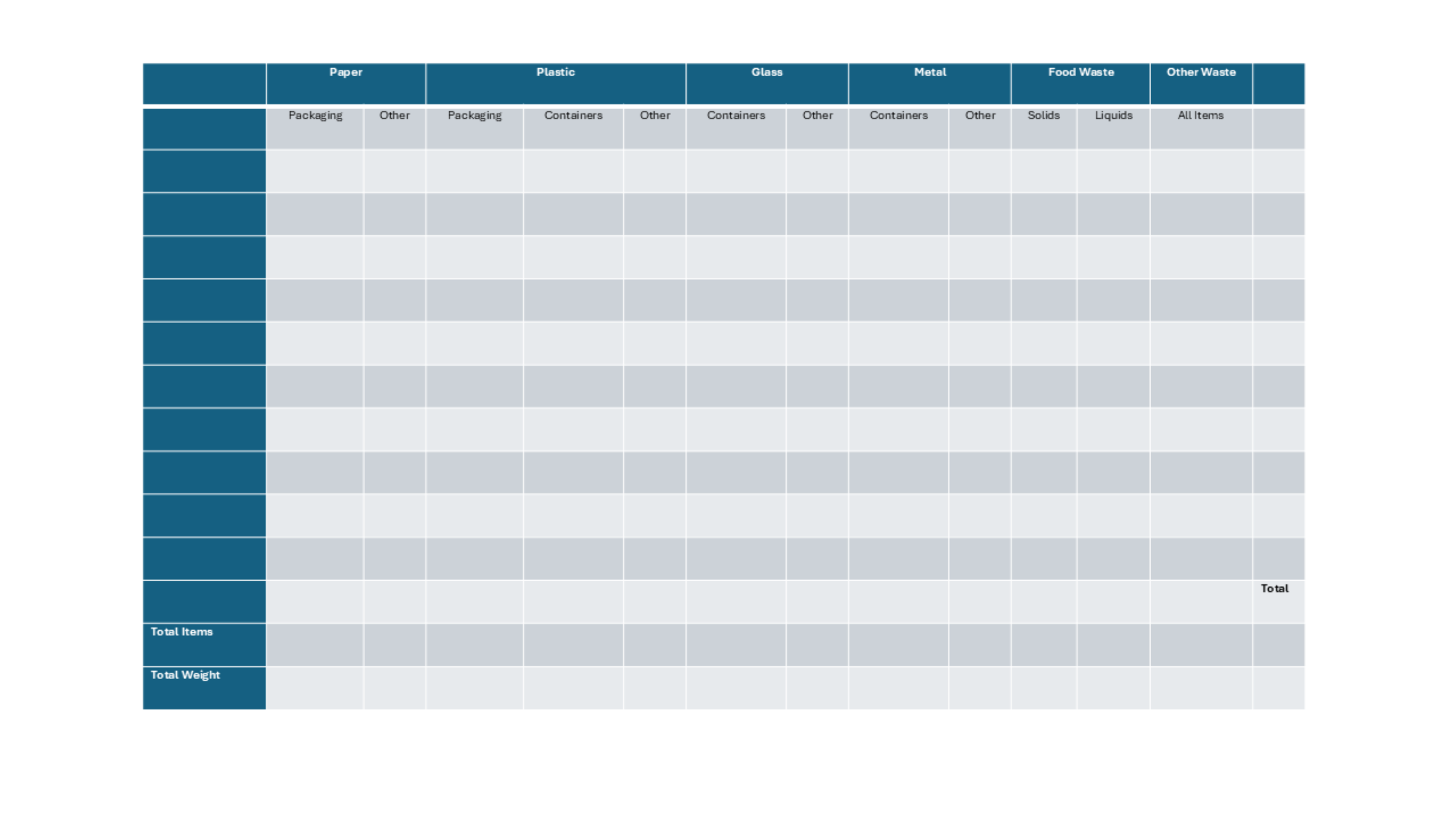
Table 1.2 Recyclable Solid Waste
Analysis
- How does your daily waste rate differ from the 5 pound average? Explain why it may be different.
- How does your recycling rate compare with the average mentioned above? Explain why it may be different.
- What category of waste was the largest proportion of your waste generation? Did you produce more recyclables or non-recyclables?
- Why do you think there are not more consistent recycling or composing programs? Research a program in your local community, district, or state. What are the benefits and limitations of the program?